
The Drawer You Never Opened Again
You are eight years old, standing in the doorway of your bedroom on a Tuesday afternoon in late October, and the light coming through the curtain is the exact color of something you cannot name but would recognize anywhere — a kind of amber diluted with dust, particular to that hour, that season, that window and no other. The bed is made with hospital corners because someone insisted on it. There is a smell of old wood and something faintly chemical, a crayon left too long near a radiator. You are not thinking about any of this. You are simply standing there, entirely inside the moment, with no awareness that the moment is happening to you, which is the only way moments like this can happen at all.

There is a drawer in the desk by the wall. Not the top drawer, which you open constantly, but the lower one, the one with the slightly warped edge that requires a specific angle to pull free. Inside it: a rubber band that lost its elasticity sometime before you can remember, three coins from a country nobody in your family ever visited, a folded piece of paper with a drawing on it that you made and kept for reasons you no longer understand, and a marble with a blue spiral center that you were once convinced had specific powers. You stopped opening this drawer at some point. There was no decision, no ceremony of farewell. The drawer simply became part of the furniture of the room the way the room became part of the furniture of your life — present without being perceived, constitutive without being acknowledged.
What nobody tells you is that this drawer did not stop existing when you stopped opening it. It continued to exist with a density and a completeness that most of your adult experiences will never achieve. The objects inside it were not waiting for you. They were simply being what they were, in the particular silence of enclosed spaces, accumulating a kind of weight that has nothing to do with mass and everything to do with the fact that enclosure concentrates meaning the way a lens concentrates light. You can feel this if you allow yourself to — not as nostalgia, which is a softened and socially acceptable version of the real thing, but as something more unsettling, closer to vertigo, the sensation that the room you grew up in continues to contain you even now, that you have never entirely left it, that part of your nervous system remains calibrated to its specific dimensions.
Every house you have lived in since has been, in some subterranean way, a negotiation with that first geometry. The ceiling height you find oppressive in one apartment, the corridor you instinctively avoid in another, the corner of a kitchen where you feel, without explanation, entirely at ease — these are not aesthetic preferences. They are the residue of an original spatial education that took place before you had language for it, before you understood that space was something that could be analyzed rather than simply inhabited. Your body learned the world through rooms before your mind learned to think about rooms, and the body does not forget its curriculum.
This is not a metaphor. The childhood room is not standing in for something else — for lost time, for innocence, for the self you used to be. It is itself. It is a material fact with a specific floor plan, a specific acoustic quality, a specific way of holding heat in winter. The reason it continues to exert pressure on your experience is not because of what it symbolized but because of what it was: the first container, the original boundary between inside and outside, the place where you first learned that space is not neutral, that it thinks back at you.
Irene
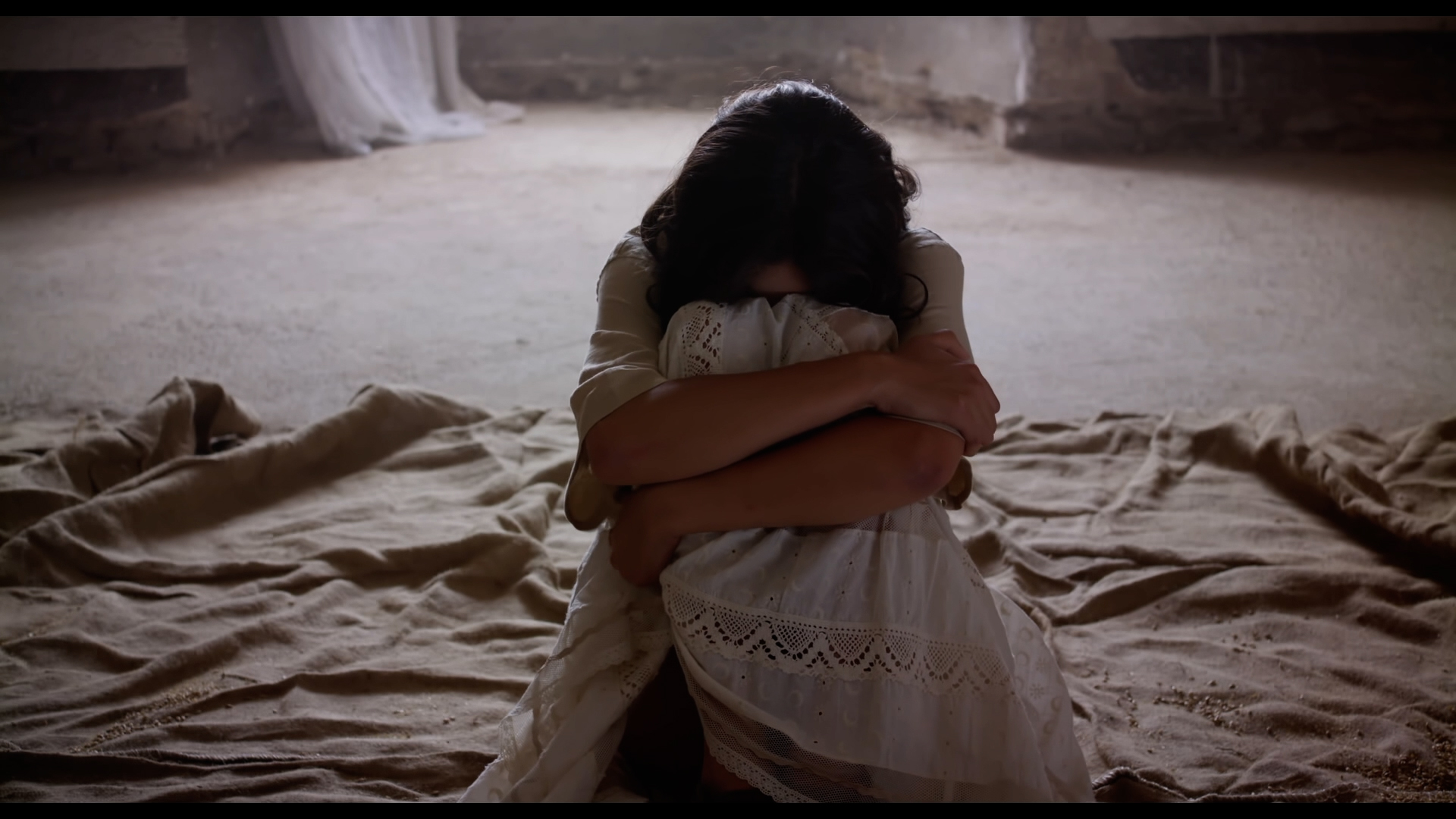
Drama, by Valerio Pampaglini, Italy, 2023.
Irene is trapped within her own unconscious, empty and ruined like an abandoned house. Through broken glass and shady figures dressed in black, a song awakens something long forgotten inside her. The film, written and directed by Valerio Pampaglini, is supported by the Rome Film Academy. It was shot in the summer of 2022 in the province of Perugia, in the municipality of Todi and at the Montenero castle.
LANGUAGE: Italian
SUBTITLES: English
Bachelard Against the Architects of Abstraction
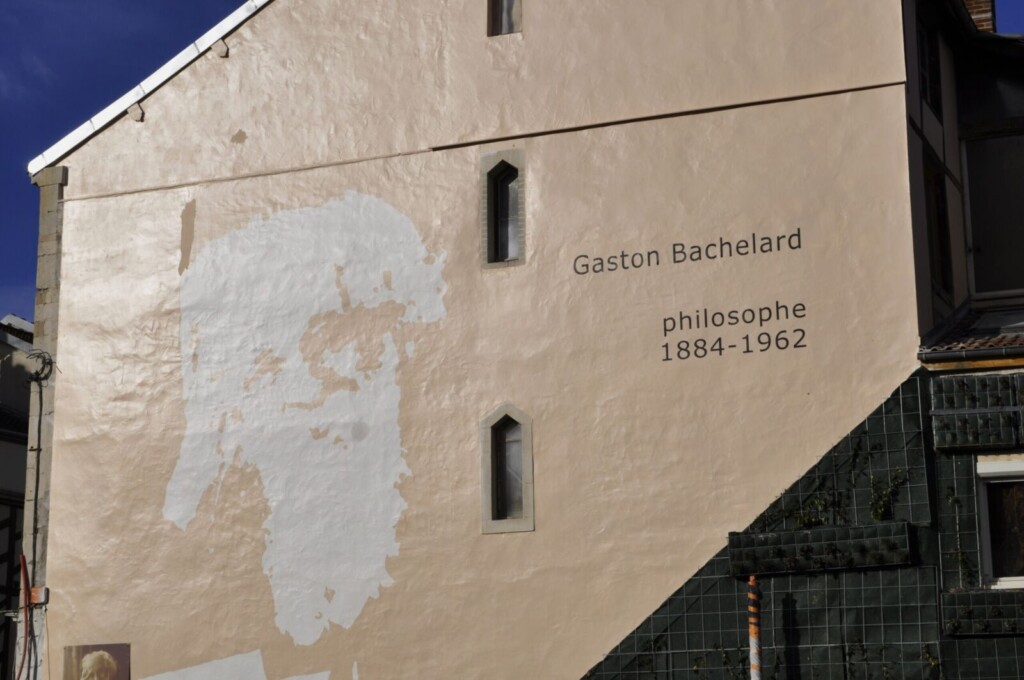
You walk into a house you have not entered in twenty years, and before you recognize the wallpaper or the smell of the kitchen, something in your body has already arrived. Your shoulders drop. Your breathing changes. The recognition is not visual, not cognitive — it is postural, muscular, almost cellular. You did not remember the house. The house remembered you.
This is not poetry in the soft, decorative sense that architects sometimes invoke when they want to justify a curved wall or an expensive material. Gaston Bachelard, writing in 1958 with the precise ferocity of a man who had spent decades as a philosopher of science before turning against his own discipline, would have insisted that what you just experienced is a datum — harder than any measurement, more primary than any floor plan. La Poétique de l’espace opens not with a definition but with a provocation: that the phenomenology of the imagination requires us to receive images before we can analyze them, and that the intimate spaces of human life — the drawer, the chest, the corner, the nest — are not symbols pointing toward psychological states but actual structures through which being organizes itself. The drawer is not a metaphor for secrecy. Secrecy learns its shape from the drawer.
What makes this intervention so quietly destructive to a century of architectural and philosophical orthodoxy is the specific enemy it identifies. Bachelard had spent the years between 1928 and the early 1950s building a rigorous epistemology of scientific knowledge, arguing in works like La Formation de l’esprit scientifique that rational thought requires a continuous breaking of intuitive images — the warm fire, the liquid water — because those images seduce the mind into false certainties. He was one of the most demanding critics of what he called the epistemological obstacle, the way our earliest sensory experiences colonize our capacity for abstract reasoning. Then, with a kind of intellectual violence that his commentators have never quite forgiven him for, he reversed the valence entirely. The same images he had identified as obstacles to science he now proposed as foundations of being. Not obstacles to be cleared. Architecture.
The philosophical machinery he used to make this turn came from Edmund Husserl and the phenomenological tradition, but Bachelard pushed it somewhere Husserl had not gone. Husserl’s reduction, the bracketing of the natural attitude to reach the pure structures of consciousness, remained largely indifferent to the spatial and material conditions of lived experience. Bachelard wanted to know what it felt like to be small inside something large, or large inside something small. He was interested in the phenomenology of the miniature — the way a child’s dollhouse or a model ship inside a bottle generates an experience of concentrated interiority that cannot be explained by the object’s scale alone. His argument, made in chapters of startling density, was that miniaturization is a cognitive operation by which the imagination takes possession of a world it cannot otherwise dominate. The tiny house in the glass case is not a representation of a house. It is an act of habitation performed at the level of attention.
This distinction matters because it cuts directly against the abstraction that had governed the dominant architectural thinking of his era. The functionalist tradition descending from the Bauhaus, the modular geometries being drawn across Paris and Chicago and São Paulo in the 1950s, operated on the premise that space is a problem of circulation, proportion, light, and program. Bachelard did not argue against any of these concerns. He simply demonstrated that they were downstream of something they had never bothered to name — the bodily, pre-reflective, oneiric dimension of enclosure, the way a corner is not a waste of square footage but a refuge that the nervous system requires before thought can begin.

The House as Psychic Infrastructure
You move into the new apartment on a Saturday in November, and by Sunday evening you cannot explain why you feel nothing. The rooms are clean, the light is adequate, the lease is signed. Everything is in order. And yet some registering apparatus inside you — not emotional exactly, more somatic, closer to the inner ear — keeps returning the same flat signal: unrecognized.
What Bachelard understood, writing in 1958 in La Poétique de l’espace, is that a dwelling is not a container for a life but a structure that actively participates in the formation of selfhood. The house is not where you keep your body; it is one of the instruments through which you become legible to yourself. Corners, thresholds, staircases, the particular acoustics of a kitchen at six in the morning — these are not decorative features but cognitive anchors, the spatial grammar through which memory, imagination, and identity are organized. To be deprived of them is not an inconvenience. It is closer to an amputation performed so gradually that the patient never identifies the moment of severance.
That severance was scheduled. Georges-Eugène Haussmann, appointed by Napoleon III in 1853, did not merely modernize Paris — he enacted one of the most systematic destructions of inhabited spatial memory in European history. Between 1853 and 1870, roughly 350,000 people were displaced from the medieval quarters of the city, their neighborhoods of dense, irregular, personally calibrated space replaced with the wide rationalized boulevards designed primarily for surveillance, military movement, and the circulation of capital. Walter Benjamin, excavating this transformation decades later in the unfinished Passagenwerk, recognized that what Haussmann destroyed was not architecture but a mode of dwelling — a relationship between body and space that had accumulated over centuries and could not be reinstalled in the new apartments, however sanitary, that replaced the old warrens. The poor were relocated to the periphery not only geographically but ontologically. They became, in a precise sense, spatially homeless while living indoors.
What followed was the institutionalization of that homelessness as a design principle. Le Corbusier’s declaration in Vers une architecture in 1923 that the house is a machine for living was not a provocation but a program. It expressed with unusual honesty what industrial modernity required of domestic space: efficiency, standardization, the subordination of the body’s idiosyncratic relationship to place in favor of reproducible units. The unité d’habitation, the housing block, the planned estate — these were not failures of the Corbusian vision but its logical extensions. A space designed to function can never simultaneously be designed to mean. Meaning in architecture accrues through accident, through weathering, through the slow negotiation between a particular body and a particular set of walls over time. Optimization abolishes that negotiation before it begins.
The psychological consequences were documented in ways that never quite achieved the cultural traction they deserved. René Spitz’s observations in the 1940s on hospitalism — the developmental collapse of infants in institutionally adequate but spatially sterile environments — pointed toward something far broader than pediatric medicine. Edward Hall‘s 1966 study The Hidden Dimension mapped the cross-cultural specificity of proxemics, demonstrating that spatial comfort is not a preference but a biological inheritance, and that its systematic violation produces measurable physiological stress. The open-plan office, the anonymous transit hub, the residential tower without a single unrepeated surface — these are not neutral environments. They are environments calibrated to produce a specific kind of subject: one who does not expect space to recognize them, and has therefore stopped recognizing themselves in space.
The question worth sitting with is whether displacement, when it becomes universal enough, stops being experienced as displacement at all — whether the unrecognized signal simply goes quiet, and you begin to call that quiet normal.
Shelter, Property, and the Colonization of Belonging

You are handed the keys on a Tuesday morning. The agent smiles, the paperwork is already signed, and you stand in the doorway of a place that is legally yours but feels entirely indifferent to your presence. The walls do not know you. The light through the window belongs to no memory you carry. You understand, standing there, that ownership and inhabitation are not the same thing — that the deed in your hand is a financial instrument, not a home.
Henri Lefebvre spent much of his career dismantling the assumption that space is simply a neutral container for human life. In “The Production of Space,” published in 1974, he argued that space is always manufactured — shaped by economic interests, political decisions, and social hierarchies that are then naturalized into something that feels inevitable, even geological. The living room, the neighborhood, the city block: none of these are innocent. They are the crystallized outcomes of struggles over who gets to be where, under what conditions, and at what cost. What Bachelard described as the intimate, sheltering quality of the corner, the chest, the nest — the places where the self gathers itself — Lefebvre would recognize as a terrain contested long before any individual ever arrived to dream inside it.
The American housing policies of the mid-twentieth century make this concrete in ways that are difficult to look at directly. The Federal Housing Administration, established in 1934, insured mortgages across the country while simultaneously codifying a system of redlining that classified predominantly Black neighborhoods as financial risks. Between 1934 and 1968, an estimated 98 percent of FHA-backed loans went to white families. The accumulation of equity, the slow sedimentation of memory into property, the generational transfer of wealth that a house makes possible — all of this was structurally withheld from millions of people not because they lacked the desire to belong somewhere, but because the legal architecture of belonging had been drawn around them as an exclusion. The phenomenological richness that Bachelard associated with the childhood home — its capacity to become the unconscious foundation of a self — was, for those families, made administratively inaccessible.
This is where the poetics of habitation meets a brutality it cannot absorb on its own terms. The daydream requires duration. A person cannot develop the layered, embodied relationship with a space that Bachelard describes if they are moved every eighteen months by a landlord raising rent, or if the neighborhood they grew up in is rezoned, demolished, and replaced with structures designed for a different economic class. Displacement does not merely inconvenience people — it interrupts the very process by which interiority is built. The philosopher Iris Marion Young, writing in “Intersecting Voices” in 1997, observed that home is both the condition of selfhood and the site of its vulnerability: to be expelled from a place is to have something taken that no law of property can name or compensate, because what is lost is not square footage but the accumulated grammar of a life.
The real estate market has no language for this. It trades in comparable sales, square footage, cap rates, and appreciation curves. When a neighborhood is described as “up and coming,” what that phrase actually announces is the systematic replacement of one population’s embodied history with another’s investment portfolio. The people who leave do not simply move. They lose the particular quality of light at a certain hour, the sound of a specific intersection, the precise texture of belonging that had been built, slowly and without intention, over years of ordinary life — and that kind of loss does not appear in any displacement statistic.
What the Cellar Knows That the Attic Refuses
You have lived in a country the way you live in a house someone else designed — moving through its rooms with a familiarity that never quite becomes belonging, because the proportions were set before you arrived, and the walls remember decisions you were never asked about.
The cellar does not invite inspection. Bachelard, in his 1958 work “La Poétique de l’espace,” identifies the basement as the space where rationality loosens its grip, where the dreamer descends not toward clarity but toward something older and less governed — the zone of buried fears, of damp foundations, of what the house cannot bring itself to display. The attic, by contrast, is orderly. It is where things are stored with the intention of being found again, catalogued by sentiment, accessible by a staircase with a known number of steps. The cellar is entered with a candle and a held breath. The attic is entered on a Sunday afternoon.
What makes this architectural distinction so politically precise is that every culture constructs exactly this vertical arrangement for its own past. The events it can narrativize — victories, founding myths, noble suffering, progress earned through recognizable sacrifice — are carried upward, dusted off periodically for national anniversaries, arranged under good light. The events it cannot metabolize are sent below: the massacres that preceded the constitution, the labor that built the monuments, the treaties signed in rooms where the other party had no chair. These do not disappear. They pressurize. The cellar is not a place of forgetting — it is a place of unprocessed retention, and Bachelard understood that what lives down there continues to shape the behavior of every person walking the floors above it, whether or not they have ever descended.
The historian Michel-Rolph Trouillot, writing in “Silencing the Past” in 1995, demonstrated that historical erasure is never passive — it requires active labor at the moment of production, at the moment of archiving, and at the moment of retrieval. The silence is not an absence; it is a construction with seams. But Bachelard’s contribution to this insight arrives from an unexpected angle: it is not only that certain histories are suppressed, but that the psychic architecture of suppression has a spatial logic — a grammar of up and down, of light and darkness, of what is shown to guests and what is never mentioned. A culture that enshrines its attic and locks its cellar produces inhabitants who experience their own interiority in exactly these terms, who have learned to rationalize their highest memories and fear their own depths.
The person who grows up inside this architecture learns, without being taught, which direction is safe. They ascend toward the approved narratives and away from the weight below. And yet the cellar exerts its pull precisely because it was sealed — because the irrational, as Bachelard insists, does not weaken with suppression but intensifies, accumulates pressure, and eventually informs the dreaming life with images that the waking mind cannot account for. Entire populations move through their civic lives carrying a subterranean unease they attribute to personal pathology, when in fact they are responding with perfect accuracy to the architecture they were handed.
The cruelest feature of this arrangement is not the suppression itself but the asymmetry of the invitation. Those whose ancestors built the attic recognize themselves in what is stored there. They move through the upper floors of national memory with a sense of ownership that feels like simply being at home. Those whose ancestors were sealed below must choose between descending alone into a dark that the house was designed to make terrifying, and remaining upstairs in rooms that were furnished for someone else’s comfort — living, as Bachelard might say, in a poetics that was written without them as the reader.
A vision curated by a filmmaker, not an algorithm
In this video I explain our vision
🏠 The Soul of Spaces: Dwelling, Memory, and the Imagination
Gaston Bachelard’s poetics of inhabited spaces invites us to see the house, the corner, the nest not as mere architecture but as the intimate geography of our inner life. These related articles explore how philosophers, writers, and artists have mapped the invisible dimensions of place — the labyrinthine corridors of the mind, the city as lived body, the genius loci that haunts every threshold. Together they form a cartography of belonging and estrangement.
Genius Loci: When Places Have a Soul
The concept of genius loci — the protective spirit of a place — resonates deeply with Bachelard’s conviction that spaces are never neutral but are charged with memory, desire, and imagination. Every dwelling accumulates a kind of invisible sediment of lived experience that transforms stone and wood into something irreducibly human. This article explores how certain places seem to possess a soul of their own, drawing us into communion with something larger than ourselves.
GO TO THE SELECTION: Genius Loci: When Places Have a Soul
Situationist Psychogeography: The City as Lived Space
The Situationist practice of psychogeography transforms the city into a text to be read with the body, mapping how architecture and urban design shape mood, desire, and consciousness — a project that runs parallel to Bachelard’s phenomenological attention to intimate space. Where Bachelard dwells in the corners of the house, the Situationists drift through the labyrinthine streets of Paris, recording the emotional charge of every alley and boulevard. Both approaches insist that space is never simply given but is always already inhabited by meaning.
GO TO THE SELECTION: Situationist Psychogeography: The City as Lived Space
Jorge Luis Borges and the Labyrinth of Identity
Borges and Bachelard share an obsession with the labyrinth as the fundamental metaphor for the human condition — a space that is simultaneously a prison and a cosmos, a place of loss and of infinite possibility. For Borges, identity itself is a maze without a center, a library whose corridors multiply endlessly without converging on a final truth. This article traces how the Borgesian labyrinth functions as both a literary architecture and an existential topology.
GO TO THE SELECTION: Jorge Luis Borges and the Labyrinth of Identity
Hannah Arendt and The Human Condition: Public and Private Space
Hannah Arendt‘s distinction between public and private space offers a powerful political counterpoint to Bachelard’s intimate phenomenology of the home. Where Bachelard reads the house as the first universe of the self, Arendt asks what is at stake when private space is invaded, colonized, or destroyed by political power. Together, these two thinkers map the full spectrum of inhabited space — from the sheltering corner of childhood to the exposed, contested ground of the polis.
GO TO THE SELECTION: Hannah Arendt and The Human Condition: Public and Private Space
Discover the Cinema of Inhabited Worlds on Indiecinema
If these ideas about space, memory, and the poetry of dwelling have stirred something in you, Indiecinema’s streaming catalog offers a rich selection of independent films that translate these philosophical visions into moving images — from intimate domestic dramas to experimental explorations of urban solitude. Seek out the cinema that dares to ask where we truly live, and let it change the way you inhabit your own world.
👉 EXPLORE THE CATALOG: Watch Indie Films in Streaming
A vision curated by a filmmaker, not an algorithm
In this video I explain our vision

