
There is something quietly revolutionary about the home movie — that intimate, often trembling gaze turned inward, toward the domestic, the familial, the achingly ordinary. Long before cinema discovered its appetite for spectacle, filmmakers were pointing their cameras at kitchen tables, backyard summers, and the unguarded faces of people they loved. What began as a technological curiosity, a bourgeois pastime of flickering Super 8 reels and grainy VHS cassettes, has evolved into one of the most emotionally potent and formally adventurous modes of storytelling the medium has ever produced. The home movie, in both its literal and its spiritual form, carries within it a philosophy of cinema that no blockbuster franchise can replicate: the belief that the smallest life, honestly observed, contains everything.

What makes the genre so endlessly compelling is precisely its resistance to definition. A home movie can be a documentary confession, a fictional narrative built from domestic ruins, an experimental meditation on memory and loss, or a mainstream studio production that borrows the aesthetic of amateur footage to create something raw and immediate. From the underground personal diaries of Jonas Mekas to the polished emotional architecture of Alfonso Cuarón’s Roma, the spectrum is staggeringly wide. The best films in this tradition share not a style but a sensibility — a willingness to sit still long enough for truth to walk into the frame uninvited.
This guide is built on the conviction that the greatest home movies demand to be seen side by side, regardless of their budgets or their origins. A Sundance darling deserves the same critical attention as a foreign-language masterpiece discovered at a midnight screening in a basement theater. A studio film that dares to look inward deserves the same respect as a first-time director filming their own family with a borrowed camera. What follows is a curated journey through the finest examples of home cinema across decades and continents — films that remind us why the camera, at its most human, is simply an instrument of love.
Skinamarink (2022)
![Skinamarink - Official Trailer [HD] | A Shudder Original](https://blog.indiecinema.co/wp-content/plugins/wp-youtube-lyte/lyteCache.php?origThumbUrl=https%3A%2F%2Fi.ytimg.com%2Fvi%2FAPQqilSTxz0%2F0.jpg)
Directed by Kyle Edward Ball and produced on a budget of around fifteen thousand dollars, Skinamarink (2022) follows two young children, Kevin and Kaylee, who wake in the night to find their father has vanished and the doors and windows of their house have inexplicably disappeared. The children retreat to the living room, bathing in the blue glow of a television playing public domain cartoons, while an unseen and deeply malevolent presence begins to communicate with them through the darkness. The narrative resists conventional explanation, offering instead a descent into pure dread built from near-static images, warped audio, and an oppressive sense of wrongness that accumulates over its runtime.
What makes Skinamarink so extraordinary within the home movie tradition is precisely its formal audacity — Ball reconstructs the grammar of childhood fear from the ground up, filming ceilings, corners, and carpeted floors as though the camera itself has forgotten how to look at the world like an adult. Where a film like Paranormal Activity (2007) used domestic surveillance footage to manufacture suspense through familiar genre mechanics, Ball’s work operates on something far more primal, tapping directly into the sensory memory of being small and terrified in a house that no longer feels safe. The grain of the image, the muffled and distorted sound design, and the deliberate refusal of resolution transform the domestic space into something genuinely alien. It is less a horror film than an excavation of childhood’s darkest psychological residue, and its existence as a micro-budget independent work — shot in Ball’s own childhood home — only deepens its haunting authenticity.
Mystery of an Employee
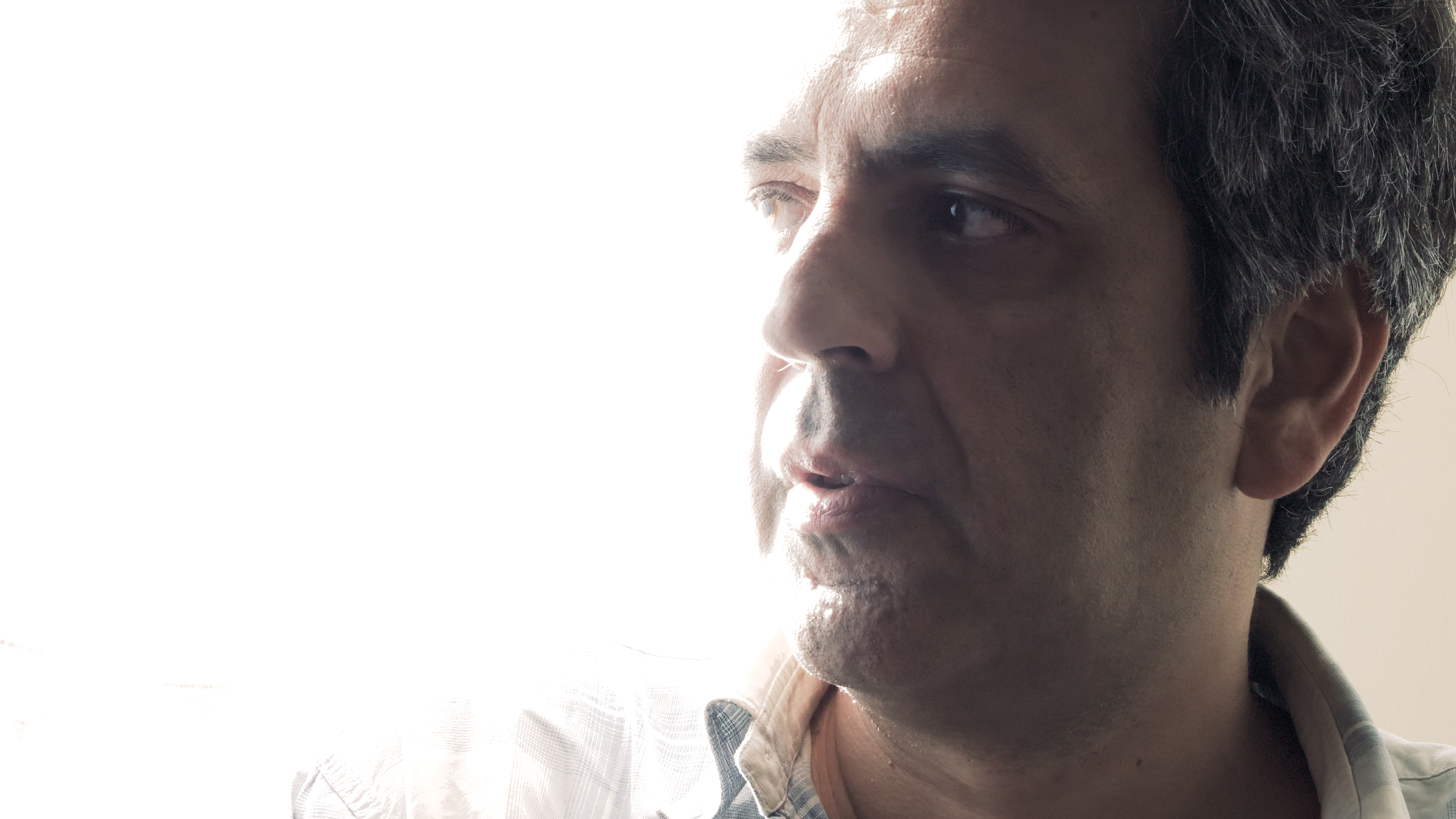
Drama, thriller, by Fabio Del Greco, Italy, 2019.
Someone wants to control the life of the employee Giuseppe Russo: the products he buys, his political and religious faith, his private life, even his dreams. But he will do anything to escape control and find his true self. Giuseppe is a man of around 45, married, with a stable job and a home of his own. His life flows seemingly peacefully when he meets a mysterious tramp who gives him some old VHS video cassettes. Giuseppe begins to see video tapes in which he is filmed in some moments of his life since he was a child, then as a teenager and as a young man. Who shot those videos that he remembers nothing about? Giuseppe has the strange sensation of being constantly observed and begins to investigate what is happening. Through his investigation of him, he begins to rediscover his true identity and become aware of who he truly is.
Employee's Mystery is a film that highlights the danger of social control and shows a society where everyone is constantly monitored and conditioned in their deepest selves. The film is also an analysis of human nature and identity. Fabio Del Greco, who plays Giuseppe, gives an engaging performance. Equally good is Chiara Pavoni, in the role of Giada Rubin and Roberto Pensa in the role of the tramp. Employee's Mystery is a film that addresses important themes in an original way, a psychological thriller that keeps the viewer glued to the screen until the end: a metaphor for contemporary society, in which people are increasingly monitored and conditioned by the media and technologies . It is a courageous and provocative work, which addresses important themes in an original way.
LANGUAGE: Italian
SUBTITLES: English, Spanish, French, German, Portuguese
The Novice (2021)

A driven college freshman joins her university’s rowing team despite having no prior experience, throwing herself into a brutal regimen of training that quickly consumes every waking hour of her life. Director Lauren Hadley — working under the name Lauren Hadley, though the film is credited to writer-director Lauren Hadley — crafts a portrait of obsession so visceral it borders on body horror. Alex Dall, played with terrifying commitment by Isabelle Fuhrman, is not chasing athletic glory so much as she is fleeing something unnameable inside herself, and the film refuses to offer easy psychological diagnoses, letting the ambiguity simmer beneath every exhausted stroke and bleeding palm.
What makes The Novice (2021) such a remarkable and quietly devastating home-viewing experience is precisely how director Lauren Hadley weaponizes the intimacy of the screen. The film’s jagged editing rhythm and dissonant sound design — oars cracking against water like gunshots, the wheeze of overtaxed lungs filling the room — demand a concentrated, close-quarters viewing environment that a home setting provides far better than a distracted multiplex ever could. Fuhrman’s performance recalls the tunnel-vision intensity of Natalie Portman in Black Swan (2010) and the quiet self-destruction of Jennifer Connelly in Requiem for a Dream (2000), yet The Novice carves its own distinct identity by grounding its psychological unraveling in the unglamorous, even mundane world of collegiate sport. There are no grand stadiums, no roaring crowds — only grey water, aching muscles, and a young woman systematically dismantling herself in pursuit of an ideal she can never quite define, a theme that resonates with shattering clarity when experienced in the private, unguarded space of one’s own home.

His House (2020)

Remi and Rial Majur, a young South Sudanese couple, survive a harrowing sea crossing to reach England, where they are placed in a decrepit government housing unit while their asylum case is processed. Forbidden from working or moving freely, they attempt to assemble a new life within four crumbling walls, only to discover that something ancient and malevolent has followed them across the ocean. Director Remi Weekes crafts a debut feature of startling emotional intelligence, using the grammar of the haunted-house film to excavate grief, guilt, and the psychological cost of survival.
What elevates His House (2020) far above the conventions of its genre is Weekes’s insistence that the true horror is not supernatural but structural. The decaying council flat becomes a precise metaphor for the asylum system itself — a space in which human beings are warehoused, surveilled, and denied agency, permitted to exist but never truly allowed to live. The creature haunting the walls, an apeth or night witch drawn from Dinka mythology, is not merely a monster but a reckoning: a manifestation of the impossible moral calculus demanded of those who escape catastrophe while others do not. In this respect the film occupies the same morally urgent territory as Get Out (2017) and Under the Shadow (2016), deploying supernatural dread as a vehicle for political and psychological truth.
The performances anchor everything. Wunmi Mosaku and Sope Dirisu carry the film’s unbearable weight with devastating restraint, their silences communicating entire histories of loss that no expository dialogue could approach. Weekes shoots the flat’s interior with a claustrophobic intimacy that makes every shadow feel inhabited, every wall potentially hollow, constructing a visual language in which domestic space is simultaneously refuge and trap. His House stands as one of the most sophisticated and genuinely unsettling horror films of its decade, proof that the genre at its finest can hold a mirror not just to our fears, but to the societies we have built and the people we choose not to see.
Vivarium (2019)

Vivarium* (2019), directed by Irish filmmaker Lorcan Finnegan, traps a young couple, Gemma and Tom, in a nightmarish suburban labyrinth from which there is no escape. After visiting a eerily sterile housing development called Yonder, they find themselves perpetually returning to the same identical house on the same identical street, no matter how far they drive. A strange child is delivered to them with the instruction that raising him will earn their release. What follows is a suffocating portrait of domesticity turned hellish, as the couple slowly unravels under the weight of a life they never chose.
Finnegan constructs his film as a razor-sharp allegory for the existential horror embedded within suburban conformity, the unspoken coercion of settling down, and the hollow promise of the nuclear family dream. The uncanny geometry of Yonder — its mint-green houses perfectly identical, its sky an artificial, painted blue — functions less as science fiction set dressing and more as a savage critique of developer housing culture and the social machinery that pushes young couples toward domestic roles they may not truly desire. The child, deeply unsettling and inhuman in his mimicry, represents obligation itself: the force that colonizes a relationship and consumes the individuals within it. In this sense, Vivarium belongs to a proud lineage of domestic horror that includes The Stepford Wives (1975) and Under the Skin (2013), films that use genre architecture to expose the violence lurking beneath normalized social expectations. What separates Finnegan’s vision is its pitiless refusal of catharsis — there is no rescue, no revelation that redeems the suffering, only the grim machinery of a system that reproduces itself endlessly, indifferent to the people it consumes.
Searching (2018)

Searching* (2018), directed by Aneesh Chaganty, unfolds entirely through screens — laptop interfaces, FaceTime calls, YouTube videos, and security camera footage — as David Kim, a widowed father played with raw, understated anguish by John Cho, desperately searches for his missing sixteen-year-old daughter Margot. What begins as a procedural thriller about a missing persons case transforms, layer by layer, into an excavation of grief, digital identity, and the terrifying distance that can grow between two people who share the same roof. The film moves at a breathless pace, pulling the audience deeper into a world mediated entirely by glowing rectangles and notification pings.
What makes Searching so striking within the landscape of modern thriller cinema is how Chaganty weaponizes the screenlife format not merely as a gimmick — as lesser imitators have done — but as a genuine instrument of character revelation. Every browser history tab, every half-deleted text message, every unsent draft becomes a confession, a wound, a clue to who Margot truly was beyond the curated image she projected to her father. The film draws an implicit and devastating parallel to the alienation explored in works like Disconnect (2012), yet it pushes further by implicating the viewer directly: we too are consuming this story through a screen, making us complicit in the very surveillance culture being interrogated. John Cho’s performance anchors the film’s emotional architecture with remarkable restraint, ensuring that the technical audacity never overwhelms the deeply human story at its core. Searching is a masterwork of formal constraint transforming into emotional liberation.
A vision curated by a filmmaker, not an algorithm
In this video I explain our vision
Hereditary (2018)

Hereditary* (2018), directed by Ari Aster in his remarkable feature debut, follows the Graham family as they unravel following the death of their deeply secretive matriarch. Annie, a miniature artist, begins to discover disturbing truths about her family’s legacy as her teenage son Peter and young daughter Charlie exhibit increasingly disturbing behavior. What begins as a portrait of grief quietly transforms into something far more sinister, pulling the audience into a labyrinth of occult terror, ancestral guilt, and psychological disintegration that refuses to release its grip long after the credits roll.
What makes Hereditary an essential entry in any home viewing canon is precisely how Aster weaponizes domestic space itself. The Graham household is never a sanctuary — it is a sealed, suffocating environment where every corner conceals generational trauma, and the miniature dioramas Annie constructs serve as a devastating meta-commentary on a family trapped inside a story they cannot escape. Aster draws from the lineage of slow-burn psychological horror pioneered by films like Rosemary’s Baby and The Shining, yet forges something entirely his own: a film about inheritance not merely as supernatural curse but as the crushing, inescapable weight of family pathology. Toni Collette delivers one of the most viscerally committed performances in contemporary cinema, anchoring the film’s most unbearable moments with raw, unguarded humanity that transforms genre spectacle into genuine emotional devastation.
Unsane (2018)

Directed by Steven Soderbergh and shot entirely on an iPhone 7, Unsane (2018) follows Sawyer Valentini, a young woman who, while seeking therapy for a stalking trauma, finds herself involuntarily committed to a psychiatric facility. Once inside, she begins to believe that her stalker is among the staff — but the institution and everyone around her refuse to validate her perception of reality. Claire Foy delivers a raw, physically committed performance that anchors the film’s relentless psychological tension, as the narrative oscillates between clinical paranoia and genuine institutional horror.
What makes Unsane a landmark entry in the home-movie aesthetic canon is not merely its production method but how Soderbergh weaponizes that method against the viewer. The iPhone’s wide-angle distortion and compressed focal depth create an ever-present sense of wrongness, of spaces that feel slightly too close and faces that loom with uncanny intensity — a visual language perfectly suited to a story about a woman whose perception of reality is constantly questioned and undermined. Where films like One Cut of the Dead use lo-fi tools to celebrate cinematic playfulness, Soderbergh uses them to induce claustrophobic dread, transforming a limitation into a statement. The psychiatric setting becomes a metaphor for the apparatus of disbelief that society imposes on women reporting trauma, and the grainy, handheld immediacy of the image forces the audience into an uncomfortable complicity with Sawyer’s unverifiable point of view — never quite certain whether they are witnessing horror or delusion.
Creep 2 (2017)

Sara, a documentary filmmaker struggling to find her next subject, answers an online ad posted by a man who calls himself Aaron. He promises her an honest, unfiltered portrait of a serial killer — himself. What unfolds over the course of a single day is a disquieting dance of manipulation, confession, and performance, as Aaron forces Sara into increasingly disturbing scenarios while insisting, with unnerving sincerity, that he is done killing and simply wants to be understood before he dies.
What makes Patrick Brice‘s sequel a genuinely unnerving achievement within the found footage tradition is its radical inversion of power dynamics. Where the original Creep (2014) operated on pure predatory instinct, this follow-up drags its horror into the light, staging it as a kind of grotesque collaboration between filmmaker and subject. Mark Duplass delivers a performance of startling psychological complexity, embodying a creature who is not hiding his monstrousness but weaponizing transparency itself — daring the camera, and the audience, to look away. The film interrogates the ethics of documentary filmmaking with the same unsettling intelligence it applies to its villain, asking whether the hunger to capture truth on camera can become its own form of recklessness. In a genre landscape crowded with jump scares and digital noise, Creep 2 achieves something rare: genuine dread built entirely from conversation, proximity, and the terrible intimacy of the lens.
Get Out (2017)

Get Out* (2017), directed by Jordan Peele, follows Chris Washington, a young Black man who travels with his white girlfriend, Rose Armitage, to meet her affluent family in their secluded estate. What begins as social awkwardness steadily transforms into something far more sinister, as Chris uncovers a grotesque conspiracy in which wealthy white patrons bid to transplant their consciousness into the bodies of Black individuals. Peele constructs the horror methodically, using domestic space itself as the instrument of dread.
What makes Get Out so indispensable to any conversation about essential home cinema is precisely how Peele weaponizes the domestic environment, transforming a place of supposed welcome and comfort into a theater of racial terror. The Armitage estate is immaculate, sun-drenched, and deeply wrong — every manicured lawn and cheerful dinner table concealing an architecture of possession and erasure. Peele draws on a lineage that includes Rosemary’s Baby and The Stepford Wives, but grounds his horror in the lived, contemporary anxiety of racial microaggression and liberal complicity, giving the film an urgency that those predecessors could not have articulated. Watching it at home, alone or with others, strips away the diffusion of a theatrical crowd and leaves the viewer confronted directly with the film’s unflinching gaze — a gaze that refuses to let its audience feel safe, comfortable, or absolved.
The Witch (2015)

Set in 1630s New England, The Witch follows a Puritan family exiled from their plantation community and forced to build a new life on the edge of a vast, foreboding forest. When their newborn son vanishes and their crops begin to fail, paranoia, guilt, and religious fanaticism fracture the family from within. Accusations of witchcraft fall upon the eldest daughter, Thomasin, as increasingly disturbing events suggest that something genuinely malevolent may be lurking beyond the treeline — or perhaps already dwelling among them.
Robert Eggers crafts a film that operates as both a meticulously researched period piece and a profound psychological study of how fear and zealotry consume a family unit in isolation — which is precisely what makes it one of the most essential home viewing experiences of the past decade. Unlike the jump-scare mechanics of mainstream horror, The Witch belongs to a tradition of slow-burn dread that echoes the domestic claustrophobia of Rosemary’s Baby and the spiritual desolation found in the films of Ingmar Bergman. Every frame — the colorless palette, the oppressive silence broken only by Mark Korven‘s dissonant score — transforms the family home and its surrounding wilderness into a pressure cooker where theology and madness become indistinguishable. Eggers understands that the most terrifying haunting is not supernatural in origin but emerges from within four walls, from the people we are supposed to trust absolutely.
Unfriended (2014)

Unfriended* (2014), directed by Levan Gabriadze, unfolds entirely on a teenage girl’s laptop screen during a group video chat. When Laura Barns, a classmate who died by suicide after a humiliating video went viral, apparently returns from beyond as a malevolent digital presence, the night spirals into a harrowing game of confession, accusation, and death. The film traps its five protagonists — and its audience — inside the glowing rectangle of a MacBook display, turning the mundane architecture of Skype, Facebook, and Spotify into instruments of dread and moral reckoning.
What makes Unfriended far more than a gimmick-driven horror exercise is its ruthless excavation of cyberbullying culture and the cowardice that festers behind screens. Where films like The Blair Witch Project pioneered found-footage as an intimacy device, Gabriadze goes further, weaponizing the very interfaces teenagers inhabit daily — the buffering cursor, the typing ellipsis that disappears before a message arrives, the muted microphone hiding a lie. Every frozen frame and pixelated glitch feels not just technologically authentic but psychologically suffocating. The film understands that social media does not merely document cruelty; it amplifies, archives, and ultimately prosecutes it. Laura’s ghost is less a supernatural invention than a metaphor for the inescapable permanence of digital harm, a reminder that nothing uploaded in anger truly disappears. As a home-screen horror film, it transforms the most familiar domestic technology — the laptop open on a bedroom desk — into the most unsettling of haunted spaces.
Creep (2014)

Patrick Brice’s Creep (2014) arrives wearing the familiar skin of the found footage thriller, but it quickly reveals itself to be something far more psychologically unsettling than its modest budget and stripped-down premise might suggest. Aaron, a videographer, responds to a Craigslist ad posted by a man named Josef, who claims to be terminally ill and wants to document a day in his life for his unborn son. What follows is a slow, suffocating dance between two men, one holding a camera, the other performing for it, as the boundaries between eccentricity and genuine menace dissolve with each passing scene.
What makes Creep so remarkable as a piece of independent horror cinema is its surgical dissection of trust, loneliness, and the peculiar vulnerability of human connection. Mark Duplass, who co-wrote and stars as Josef, delivers a performance of extraordinary calibration, toggling between disarming warmth and barely concealed menace in ways that mirror how real-world manipulation actually functions. Brice never reaches for conventional horror machinery, no elaborate set pieces, no supernatural scaffolding, only the deeply uncomfortable intimacy of two people and a camera in the woods. The film quietly interrogates what it means to be seen, and what it costs to look. Compared to found footage predecessors like The Blair Witch Project (1999) or Cloverfield (2008), Creep turns the lens inward, making the monster not a creature lurking in darkness but a man who simply refuses to stop smiling.
V/H/S Viral (2014)
![VHS VIRAL (2014) - Official Trailer (International) [HD]](https://blog.indiecinema.co/wp-content/plugins/wp-youtube-lyte/lyteCache.php?origThumbUrl=https%3A%2F%2Fi.ytimg.com%2Fvi%2FmzZsf0pyuQg%2F0.jpg)
V/H/S Viral (2014), the third installment in the found-footage anthology series, pushes the format into deliberately destabilizing territory. Directed by a rotating collective of filmmakers including Nacho Vigalondo, Marcel Sarmiento, Gregg Bishop, and Justin Benson and Aaron Moorhead, the film weaves together a framing narrative about a viral video phenomenon with three distinct shorts — Dante the Great, Parallel Monsters, and Bonestorm* — each exploiting the aesthetics of amateur footage, smartphone video, and handycam imagery to conjure a sense of grotesque immediacy. The connective tissue, centered on a young man obsessively chasing a speeding ice cream truck through a Los Angeles suburb while broadcasting live, functions as a meta-commentary on the culture of compulsive digital documentation, where recording an event becomes more instinctive than surviving it.
What makes V/H/S Viral particularly compelling within the tradition of home movie horror is how each segment interrogates a different dimension of self-filmed culture. Vigalondo’s Parallel Monsters uses the personal video diary format to explore identity and forbidden curiosity with genuine philosophical unease, while Bonestorm transforms the action-cam footage beloved by skate culture into something apocalyptic and deliriously violent, the GoPro aesthetic becoming a vessel for pure carnage. The film understands that home movies are never truly neutral documents — they are performances, confessions, and compulsions rolled into one. Compared to the raw, claustrophobic dread of the original V/H/S (2012), this installment trades psychological subtlety for visceral spectacle, a trade-off that divides critics but ultimately reflects something painfully honest about the viral age: we no longer film to remember, we film to be seen.
The Den (2013)

Zachary Donohue’s The Den (2013) plunges its audience into the murky, voyeuristic world of online video chat, following Elizabeth Benton, a graduate student conducting a social research project through a fictional platform called “The Den.” What begins as an academic exercise in digital anthropology spirals into a nightmare when Elizabeth witnesses what appears to be a live murder broadcast over her screen. As she attempts to alert authorities and investigate the footage herself, she discovers that the killers are now aware of her, and that the boundary between observer and observed has catastrophically collapsed.
What makes The Den such a remarkably effective entry in the found footage canon is its ruthless exploitation of a very specific contemporary anxiety: the false sense of security we derive from the screen. Where earlier webcam horror like Unfriended (2014) would later weaponize social media as a morality play, Donohue’s film operates with a colder, more nihilistic precision, treating the internet not as a corrupted community but as an infinite, indifferent abyss. The entire film is rendered through desktop interfaces, chat windows, and surveillance feeds, creating a layered meta-voyeurism that implicates the viewer directly. We are, after all, watching Elizabeth watch strangers, just as the killers watch her. This recursive logic of observation transforms the home movie format into something genuinely unsettling, a meditation on digital exposure where the domestic space, typically cinema’s safest sanctuary, becomes irrevocably penetrated and compromised.
V/H/S/2 (2013)

Released in 2013 as a swift follow-up to its found-footage predecessor, V/H/S/2 assembles a razor-sharp anthology of short horror segments, each directed by a different filmmaker and united by the framing device of two private investigators who break into an abandoned house and discover a disturbing collection of VHS tapes. The segments range from a man who receives an experimental ocular implant that allows him to see the dead, to a cyclist whose helmet camera records his own transformation into a zombie, to a journalist and her crew infiltrating a murderous Indonesian cult, and finally to a group of children who make contact with an alien force during a late-night sleepover. The film moves with relentless, escalating velocity, delivering each nightmare in compact, visceral bursts that leave almost no room to breathe between shocks.
What elevates V/H/S/2 above the average found-footage exercise is its rigorous commitment to the aesthetic and emotional logic of home video as a medium of personal documentation. Each camera — the body-mounted cycling camera, the cult documentary crew’s professional rig, the children’s camcorder — carries its own distinct grammar of intimacy, and the filmmakers, particularly Gareth Evans in the electrifying “Safe Haven” segment, exploit that intimacy with surgical precision. The home movie format here is not merely a stylistic conceit but a philosophical argument: the most terrifying things are those we record ourselves, mundane life transformed into evidence of the inexplicable. Where a polished studio production would sanitize the horror into spectacle, the degraded image quality and the shaky, subjective framing of V/H/S/2 create a profound sense of vulnerability, collapsing the distance between viewer and victim in ways that even landmark predecessors like The Blair Witch Project or Paranormal Activity only partially achieved.
Sinister (2012)

Ellison Oswalt, a true-crime writer desperate to recapture past glory, moves his unsuspecting family into the former home of a brutally murdered household. While settling in, he discovers a box of Super 8 home movies in the attic — each one documenting a different family’s cheerful domestic life before concluding with their savage, ritualistic slaughter. As Ellison digs deeper into the footage, he uncovers evidence of a demonic entity named Bughuul, an ancient pagan deity who consumes the souls of children, and realizes too late that his obsession has placed his own family directly in the crosshairs of something incomprehensible and ancient.
What makes Scott Derrickson‘s film so philosophically unsettling within the home movie framework is its weaponization of nostalgia itself. The Super 8 footage — grainy, sun-drenched, suffused with the warm aesthetic language of family memory — becomes the vehicle for pure horror, corrupting the very format we associate with innocence and domesticity. Derrickson and co-writer C. Robert Cargill understand that found footage is most terrifying not when it mimics documentary realism, as films like The Blair Witch Project or Paranormal Activity pursue, but when it subverts something emotionally sacred. The home movie, as a cultural artifact, represents preservation, love, and legacy. Sinister inverts that entirely, transforming each reel into a death certificate. The film’s greatest masterstroke is making Ellison’s compulsive viewing mirror our own — we watch him watch the murders, implicating the audience in the same voyeuristic complicity that ultimately destroys him.
V/H/S (2012)

V/H/S* (2012), directed by a collective of genre filmmakers including Adam Wingard, Ti West, and David Bruckner, among others, operates as an anthology horror film built entirely around the found footage conceit. A group of petty criminals is hired to retrieve a single VHS tape from a decrepit house, only to find a dead body surrounded by dozens of unlabeled cassettes. As they play each tape, a series of increasingly disturbing short films unfolds, each one a self-contained nightmare delivered through the grainy, degraded language of analog video.
What makes V/H/S genuinely remarkable as a piece of home movie horror is not merely its formal audacity but its insistence on treating the videotape itself as a vessel of dread. The anthology structure allows each director to interrogate a different anxiety lurking beneath the surface of amateur recording culture, from voyeurism and sexual violence to supernatural possession and alien encounter, all filtered through the shaky, untrustworthy eye of a handheld camera. Where a polished studio horror film might maintain a safe aesthetic distance, V/H/S collapses that distance entirely, implicating the viewer in the act of watching in ways that recall the transgressive energy of Cannibal Holocaust (1980) and the domestic paranoia of Paranormal Activity (2007). The degraded image quality is not a limitation here but a deliberate philosophical choice, suggesting that the most horrifying truths are precisely those captured when no professional eye is present to shape or sanitize them. The film understands that home video is fundamentally an act of preservation, and what these tapes preserve is utterly, irredeemably damning.
The Innkeepers (2011)

Ti West’s The Innkeepers (2011) follows Claire and Luke, two young employees working the final weekend shift at the Yankee Pedlar Inn, a New England hotel on the verge of permanent closure. Convinced the building is haunted, they spend their downtime ghost-hunting with a rudimentary audio recorder, documenting strange phenomena while an eerily small roster of guests — including a faded actress turned spiritualist — occupies the nearly empty corridors. What begins as a slow-burn comedy of millennial aimlessness gradually reveals itself as something far more suffocating and genuinely terrifying.
What elevates The Innkeepers above the crowded field of supernatural horror is West’s surgical patience with atmosphere and his refusal to exploit cheap mechanics. The film belongs to a lineage of architectural dread — evoking The Shining (1980) without ever mimicking it — in which the building itself becomes a psychological prison, its creaking hallways functioning as externalized expressions of Claire’s arrested development and quiet desperation. West understood something that blockbuster horror routinely forgets: fear is most potent when it emerges from character vulnerability rather than visual spectacle. Sara Paxton delivers a performance of disarming emotional honesty, grounding the supernatural with an aching, recognizable loneliness. The film’s low-budget restraint, shot largely on location with a skeleton crew, becomes its greatest formal asset, lending every flickering light and basement staircase a tactile, lived-in menace that no studio polishing could have manufactured.
Paranormal Activity 3 (2011)

Released in 2011 and directed by Henry Joost and Ariel Schulman — the duo behind the documentary Catfish — Paranormal Activity 3 serves as a prequel to the first two installments, transporting the audience back to 1988 to witness the childhood of sisters Katie and Kristi. When their stepfather Dennis, a wedding videographer, begins noticing inexplicable disturbances in their suburban California home, he sets up a network of cameras to document the phenomenon. What unfolds is a slow-burn escalation of dread, anchored by the innocence of childhood and the creeping violation of domestic safety.
What makes Paranormal Activity 3 arguably the strongest entry in the franchise is how brilliantly it weaponizes the home movie format against the very nostalgia it evokes. The grainy VHS aesthetic is not mere stylistic decoration — it is a deliberate excavation of memory, transforming the comforting archive of family life into something deeply sinister. Joost and Schulman, veterans of the found footage tradition, understand that the camera in a home setting carries an implicit promise of preservation and love, and they shatter that promise with surgical precision. The oscillating fan camera — one of the most ingenious contraptions in the entire found footage genre — creates a mechanical rhythm of revelation and concealment that keeps the viewer perpetually off-balance, mimicking the way repressed childhood trauma surfaces and retreats. Where films like The Blair Witch Project use wilderness as the locus of terror, this film locates its horror in the kitchen, the hallway, the bedroom — spaces where children should feel safest. That inversion is what lingers long after the credits roll.
Insidious (2010)

Directed by James Wan and produced on a shoestring budget that belies its immense atmospheric ambition, Insidious (2010) follows the Lambert family — Josh, Renai, and their three children — as they move into a new home only to find their eldest son, Dalton, falling into a mysterious coma-like state. What begins as a familiar haunted-house premise pivots sharply into something far more unsettling: the horror, it turns out, is not rooted in the house at all, but in the boy himself, whose astral body has wandered too far into a shadow realm called The Further, leaving his vulnerable shell open to demonic possession.
What makes Insidious such a towering entry in the domestic horror canon is precisely its weaponization of the home as a space of psychological betrayal. Wan, drawing on a lineage that runs from Poltergeist (1982) through The Haunting (1963), understands that the true terror of home invasion — whether supernatural or mundane — lies in the collapse of sanctuary. The Lambert house is photographed with a deliberately washed-out, overexposed palette that drains warmth and safety from every domestic corner, turning familiar rooms into liminal spaces of dread. The film’s most radical gesture, however, is its insistence that the threat travels with the family rather than residing in architecture, suggesting that modern anxieties about home are not spatial but deeply personal — the danger is inherited, carried in the bloodline, impossible to simply move away from.
Paranormal Activity 2 (2010)

Released in 2010 and directed by Tod Williams, Paranormal Activity 2 (Paranormal Activity 2, 2010) expands the mythology of its predecessor by centering on the Rey family, whose Carlsbad home becomes the setting for escalating supernatural disturbances. Following the birth of their infant son Hunter, the family installs a comprehensive security camera system after what appears to be a burglary, unknowingly creating a domestic surveillance network that becomes the film’s primary narrative and visual engine. The prequel-sequel structure weaves directly into the timeline of the original, deepening the lore surrounding sisters Katie and Kristi and the demonic entity that has shadowed their bloodline for decades.
What makes Paranormal Activity 2 so compelling within the found footage canon is its shrewd transformation of the home itself into a hostile witness. By multiplying the camera perspectives across several fixed points — the kitchen, the pool area, the nursery — Williams strips away the handheld intimacy of the first film and replaces it with the cold, bureaucratic gaze of surveillance footage, a choice that feels simultaneously more mundane and more suffocating. The horror here is architectural: the family’s sanctuary is already mapped, already watched, already compromised before the first strange event occurs. This approach draws the film into dialogue with the anxieties explored in works like Caché (2005), where the act of being recorded becomes an existential threat rather than merely a narrative device. The infant in the crib, the dog reacting to invisible presences, the kitchen pots swinging without cause — every domestic detail becomes a vector for dread, and the film earns its scares precisely because it understands that the home movie format is not simply a stylistic gimmick but a profound statement about the illusion of safety we construct around our most private spaces.
The Last Exorcism (2010)

Directed by Daniel Stamm and produced under the sharp eye of Eli Roth, The Last Exorcism (2010) presents itself as a documentary crew following Reverend Cotton Marcus, a charismatic but secretly faithless evangelical minister from Louisiana who agrees to be filmed debunking the fraudulent rituals of exorcism — until his final case, involving a deeply disturbed young woman named Nell Sweetzer on a remote farm, begins to suggest that something genuinely diabolical may be unfolding before the camera.
What makes The Last Exorcism (2010) a quietly subversive entry in the found footage canon is its willingness to weaponize sincerity against the audience. Where films like The Blair Witch Project (1999) or Paranormal Activity (2007) rely on absence and suggestion, Stamm’s film invests deeply in character — Cotton Marcus is one of the most intellectually compelling protagonists the genre has ever produced, a man whose crisis of faith becomes the true horror at the heart of the story. The mockumentary format feels genuinely earned here, the handheld intimacy exposing the raw contradictions between institutional religion, rural isolation, and the desperate human need to believe in something beyond reason. The film belongs on any serious list of essential home viewing not merely as a genre exercise but as a morally layered portrait of spiritual doubt colliding with forces that refuse to be explained away.
Cloverfield (2008)

Produced by J.J. Abrams and directed by Matt Reeves, Cloverfield (2008) drops viewers without warning into the chaos of a farewell party in Lower Manhattan, where a group of friends filming a goodbye video for their departing friend Rob suddenly find themselves documenting the unthinkable: a massive, unknown creature tearing the city apart. The entire narrative is delivered through the handheld camera wielded by the hapless Hud, whose instinct to keep filming even as skyscrapers collapse and friends die gives the monster movie genre an uncomfortably intimate, visceral realism. The footage is raw, shaky, and deliberately incomplete, mimicking the authentic panic of someone who simply cannot stop recording.
What makes Cloverfield such a precise and fascinating entry in the home movie canon is the way it weaponizes the aesthetic of amateur documentation against the polished grammar of the Hollywood blockbuster. Where films like Godzilla (1998) frame destruction through the omniscient eye of a studio camera, Reeves forces the audience to peer through a consumer-grade lens that stutters, loses focus, and captures only fragments of horror — which proves far more terrifying than any clean wide shot. The handheld format is not merely a stylistic gimmick here; it becomes a philosophical statement about mediated experience, about how young, screen-native generations instinctively reach for a camera to process reality. The personal footage framing, complete with glimpses of a happier day recorded over, adds a devastating layer of melancholy, transforming a genre spectacle into something that feels genuinely, uncomfortably human.
Paranormal Activity (2007)

Paranormal Activity* (2007) follows a young couple, Katie and Micah, who set up a camera in their suburban San Diego bedroom after Katie begins experiencing what she believes to be a supernatural presence haunting her since childhood. Micah, skeptical but intrigued, documents the escalating disturbances over several weeks, capturing doors moving, sounds in the night, and increasingly terrifying manifestations. What begins as domestic curiosity curdles into something deeply, irreversibly wrong, with the home itself becoming the site of dread.
What Oren Peli achieved with roughly fifteen thousand dollars and a consumer-grade camera remains one of the most instructive lessons in modern horror filmmaking: that the architecture of fear has almost nothing to do with budget. By confining the audience to the fixed perspective of a tripod-mounted camera in a single bedroom, Peli weaponized the very stillness of the frame, training the viewer to scan every dark corner, every shifting shadow at the foot of the bed, until the act of watching itself becomes an exercise in controlled anxiety. The home movie aesthetic, so familiar and intimate, is precisely what makes the horror land with such visceral force — we are not watching characters in a fantastical setting, we are watching something that looks indistinguishable from footage a neighbor might have shot. Where The Blair Witch Project (1999) used the wilderness as its crucible of terror, Paranormal Activity made the most ordinary domestic space — the bedroom, the hallway, the kitchen at 3 a.m. — feel like an abyss with no bottom. It redefined what found footage could accomplish and permanently altered how audiences negotiate the boundary between safety and dread within their own four walls.
Rec (2007)
![[Rec] (2007) Trailer #1 | Movieclips Classic Trailers](https://blog.indiecinema.co/wp-content/plugins/wp-youtube-lyte/lyteCache.php?origThumbUrl=https%3A%2F%2Fi.ytimg.com%2Fvi%2FKLizS5GFBQI%2F0.jpg)
A television reporter and her cameraman follow a fire crew into a Barcelona apartment building on what appears to be a routine emergency call, only to find themselves trapped inside with terrified residents and something far more sinister spreading floor by floor. As the night collapses into chaos, the camera becomes the only witness to an accelerating nightmare that the outside world is desperately trying to contain and conceal. The footage, raw and relentless, never lets the audience breathe.
Jaume Balagueró and Paco Plaza‘s [Rec] (2007) stands as one of the most formally disciplined entries in the found-footage tradition, a subgenre that too often mistakes shakiness for tension. Where lesser films use the handheld aesthetic as a shortcut to dread, [Rec] deploys it as a narrative weapon, tightening its architecture with every ascending floor of the quarantined building. The confined vertical space functions as a pressure cooker, and the camera operated by Pablo Rosso becomes both a survival tool and a confessional device — characters speak to it, hide behind it, and ultimately cannot escape its unblinking eye. The film understands something that The Blair Witch Project (1999) intuited and Cloverfield (2008) obscured: that the most terrifying thing a camera can do is simply keep recording when human instinct would demand you drop it and run. The final sequence, shot entirely in night-vision green, is arguably the most viscerally effective use of the found-footage format ever committed to film, transforming the familiar horror climax into something genuinely primordial and unwatchable in the best possible sense.
Vacancy (2007)

A couple on the brink of marital collapse — Luke Wilson‘s David and Kate Beckinsale‘s Amy — find themselves stranded at a desolate roadside motel after their car breaks down on a lonely stretch of highway. When they discover a collection of unmarked VHS tapes in their room, they realize with mounting horror that the footage was filmed in the very room they now occupy, and that the masked killers on screen are hunting them in real time. The motel manager, played with greasy menace by Frank Whaley, is only the face of a far more elaborate trap.
What makes Vacancy such a cunning entry in the home-movie horror subgenre is its weaponization of the VHS tape as an object of existential dread. Director Nimród Antal, drawing on the gritty, claustrophobic tradition of films like Psycho and the more contemporary snuff-horror aesthetic of 8MM, understands that watching yourself being hunted — through the warped, degraded lens of home video — collapses the psychological distance between observer and victim in a uniquely modern way. The tapes are not merely evidence; they are a mirror, and staring into them is an act of confronting one’s own annihilation.
Beyond its genre mechanics, the film operates as a sharp study of a fractured relationship forced into extreme intimacy. Antal uses the suffocating geometry of the motel room as a metaphor for the couple’s emotional trap, a space they cannot exit because their marriage, much like the locked doors around them, has corroded the exits. Where films like Funny Games interrogate the complicity of the audience in violence, Vacancy takes a rawer, more visceral path, trusting the primal simplicity of surveillance footage to do its unsettling work, turning the banal domesticity of a motel stay into something irreversibly, terrifyingly personal.
The Descent (2005)

Six women descend into an unmapped cave system in the Appalachian Mountains for a caving expedition. What begins as a bonding trip between old friends quickly fractures under the weight of claustrophobic tunnels, dwindling oxygen, and a devastating secret one of them carries. When they discover the cave is inhabited by sightless, feral humanoid creatures evolved for subterranean predation, survival becomes the only language left. Neil Marshall‘s film transforms adventure into nightmare with ruthless precision, never once releasing its grip on the viewer’s throat.
What makes The Descent (2005) such a staggering achievement, and such a uniquely potent home-viewing experience, is its understanding that the real horror is never the creatures lurking in the dark. Marshall constructs a film with two distinct, overlapping chambers of dread: one external and visceral, the other internal and psychological. The caves themselves function as a merciless metaphor for grief, guilt, and the suffocating weight of unspoken betrayal, and Marshall frames every tight passage as an act of psychological compression rather than mere spectacle. Watched at home, with the lights off and the sound turned up, the film achieves something few studio horror productions dare to attempt — it makes the domestic space feel as claustrophobic and inescapable as those dripping stone walls. The performances, particularly Shauna Macdonald‘s raw, almost feral lead turn, carry an emotional authenticity that elevates this well beyond genre exercise, placing it in conversation with survivor narratives like Hereditary and Midsommar without ever abandoning its commitment to pure, unrelenting tension.
Open Water (2003)

Open Water* (2003), directed by Chris Kentis, is based on the true story of Tom and Eileen Lonergan, an American couple accidentally left behind by a scuba diving boat in shark-infested waters off the coast of Australia. Shot on consumer-grade digital video with a minimal crew and a budget of roughly twenty-five thousand dollars, the film follows Daniel and Susan as they float, argue, panic, and slowly surrender to the indifferent ocean surrounding them. What begins as a vacation becomes an existential ordeal, stripped of rescue, resolution, or reassurance.
What makes Open Water genuinely remarkable within the home-movie aesthetic tradition is the radical honesty of its lo-fi visual grammar. Kentis and his wife Laura Lau — who served as producer and second unit director — shot much of the film themselves in real open water, surrounded by actual sharks, using lightweight digital cameras that lend the footage an almost documentary rawness. Unlike the orchestrated menace of Jaws (1975) or the polished dread of The Shallows (2016), this film refuses to aestheticize danger. The pixelated image, the handheld instability, the absence of a reassuring score — all of these choices collapse the distance between viewer and subject. The couple’s bickering feels achingly real, their terror unglamorous and unedited. Kentis understands that the most devastating horror is not the shark beneath the surface but the silence above it, and the camera — cheap, intimate, unwavering — becomes the perfect instrument for that unbearable stillness.
The Blair Witch Project (1999)

Three student filmmakers vanish in the woods near Burkittsville, Maryland, while documenting a local legend known as the Blair Witch. A year later, their recovered footage is all that remains. Shot almost entirely on handheld video and 16mm film by the characters themselves, the narrative unfolds through shaky frames, whispered confessions into the lens, and the unbearable tension of darkness closing in. There are no monsters shown, no explanations given — only the raw, deteriorating psychology of people who know they are lost.
Daniel Myrick and Eduardo Sánchez accomplished something genuinely revolutionary with this film, not simply by inventing the found-footage genre as mainstream audiences came to know it, but by weaponizing the home movie aesthetic itself as a vehicle for existential dread. The camera here is not a neutral observer — it is a confessor, a desperate attempt to impose order on chaos, a fragile document that the characters cling to even as their world collapses. What makes The Blair Witch Project so enduringly unsettling within the tradition of personal filmmaking is its insistence that the very act of recording can become a form of psychological unraveling. Unlike the polished terror of The Shining or the operatic horror of Suspiria, this film strips away every cinematic comfort, leaving only the primal vulnerability of a human being pointing a camera into the void and receiving nothing reassuring in return. The home movie format, typically associated with birthday parties and summer vacations, is here transformed into a document of absolute collapse.
Man Bites Dog (1992)

C’est arrivé près de chez vous* (Man Bites Dog, 1992) arrives in the canon of essential home cinema viewing not as a film that entertains in any conventional sense, but as one that fundamentally destabilizes the relationship between the camera, its operator, and the audience complicit in watching. Directed by Rémy Belvaux, André Bonzel, and Benoît Poelvoorde on a shoestring budget in Belgium, the film presents itself as a documentary crew following charismatic serial killer Ben through his daily routines of murder, casual philosophy, and surprising domesticity. Shot in raw, grainy black and white on 16mm, the aesthetic mimics the lo-fi texture of a genuine home recording — the kind of footage you might find on an unmarked cassette tucked behind a television set, which is precisely what makes it so profoundly, irreversibly unsettling. The horror here is not in the violence itself, though the violence is considerable, but in how natural everything feels when framed as documentation.
What elevates Man Bites Dog far beyond exploitation territory and into the realm of genuine cinematic provocation is its ruthless interrogation of media ethics and the voyeuristic hunger that drives audiences toward spectacle. The film predates the reality television boom by nearly a decade, yet it anticipates with surgical precision how cameras transform their subjects into performers and their operators into accessories. As the documentary crew gradually crosses the line from observers to participants — eventually becoming accomplices in murder — Belvaux, Bonzel, and Poelvoorde implicate the viewer in the same moral collapse. Watching becomes an act of endorsement. The home movie format, stripped of Hollywood grammar and polish, removes every protective buffer normally erected between an audience and screen violence, forcing a reckoning that glossy productions like Natural Born Killers (1994) famously attempted but ultimately softened through aesthetic spectacle. Seen at home, alone, on a small screen in dim light, Man Bites Dog becomes something close to unbearable — and absolutely unmissable.
🎞️ More Intimate Worlds: Cinema That Feels Like Home
Home movies occupy a unique emotional territory — raw, personal, and deeply human. If you’re drawn to the intimacy and authenticity of domestic storytelling, these related selections from our catalog will take you further into cinematic spaces where memory, identity, and everyday life become something extraordinary.
Masterpieces of Cinéma Vérité: The Cinematic Realism
Cinéma Vérité shares the same DNA as home movies — the insistence on capturing life as it is, unfiltered and trembling with reality. This guide dives deep into the masterpieces of a movement that blurred the line between filmmaker and subject, turning the camera into a confessional instrument. If home movies moved you, these works will shake something essential in how you see the world.
👉 GO TO THE SELECTION: Masterpieces of Cinéma Vérité: The Cinematic Realism
The 30 Best Films About Dysfunctional Families
The dysfunctional family is perhaps the most enduring subject of intimate cinema, a space where love and damage live side by side. This curated list explores thirty films that fearlessly portray the complexity of domestic bonds, the silences at the dinner table, and the wounds passed down through generations. It is essential viewing for anyone who found truth in the home movie form.
👉 GO TO THE SELECTION: The 30 Best Films About Dysfunctional Families
The 30 Best Found Footage Films You Must See
Found footage is the genre that most closely mimics the aesthetic and emotional logic of home movies, transforming amateur footage into something haunting and deeply personal. This definitive guide to the thirty best found footage films examines how directors weaponize intimacy to create dread, wonder, and an uncanny sense of voyeurism. It is a natural companion to any exploration of home cinema.
👉 GO TO THE SELECTION: The 30 Best Found Footage Films You Must See
Must-See Films About Loneliness
Many of the greatest home movies are ultimately films about loneliness — the solitary figure behind the camera, searching for connection through the act of recording. This selection gathers the most powerful cinematic meditations on isolation, from quiet character studies to devastating portraits of lives lived on the margins. It speaks directly to the emotional core that makes home movies so unforgettable.
👉 GO TO THE SELECTION: Must-See Films About Loneliness
The films that move us most are rarely the ones the algorithms push to the top. Independent cinema has always been the home of the raw, the daring, and the deeply human — stories that mainstream platforms bury or ignore entirely. Explore the full Indiecinema streaming catalog and discover a world of hidden gems waiting to be seen.
👉 EXPLORE THE CATALOG: Watch Indie Films in Streaming
Conclusion
What unites every film on this list — regardless of budget, nationality, or decade — is the radical intimacy of the domestic space as a stage for the human condition. The home, in cinema’s most honest hands, is never merely architecture. It is memory, conflict, desire, and identity compressed into four walls. Whether you are watching a Hollywood production carry the weight of generational trauma or a quietly devastating independent film shot on a shoestring in a single apartment, the emotional truth at the center of each frame remains the same: this is where we are most ourselves, and most afraid of what that means.
The beauty of this particular genre, if one can call it that, lies in its refusal to be contained by genre at all. Home movies — in the broadest and most cinematic sense — slip between horror and tenderness, between comedy and elegy, between confession and performance. The films gathered here remind us that the most extraordinary stories do not require epic landscapes or thunderous spectacle. They require only the courage to look closely at the ordinary, to hold the camera steady on a kitchen table, a childhood bedroom, a hallway lit by the wrong light at the wrong hour, and to trust that what is found there is enough.
As cinema continues to evolve, with streaming platforms expanding access to voices from every corner of the world and personal filmmaking tools becoming ever more democratized, the home movie in all its forms will only grow richer and more essential. The screen is becoming a mirror, and the films that dare to reflect domestic life without flinching are the ones that endure longest in the memory. Watch these films alone, or watch them with someone you love, or someone you are still learning to understand. Either way, do not look away.
A vision curated by a filmmaker, not an algorithm
In this video I explain our vision

