
The Mirror You Cannot Unsee
You are standing at the bathroom sink on a Tuesday morning, toothbrush in hand, and something stops you. Not a sound, not a pain. Just a sudden, vertiginous wrongness, like a key that fits the lock but refuses to turn. You look at your own face in the mirror and for a fraction of a second — long enough to matter, too short to name — you do not recognize what you are looking at. Not the features, not the jaw or the eyes. You recognize those. What you fail to recognize is the arrangement behind them. The person performing the morning. The person about to put on the shirt, say the right words, drive the familiar route, fulfill the legible function. For one unguarded moment, the machinery shows through, and what it reveals is not monstrous. It is simply hollow.

This moment passes. It always passes. You rinse, you spit, you move on. But something has been seen, and what has been seen cannot be entirely unseen. This is not a crisis in any clinical sense. There is no diagnosis for what happened in front of that mirror. And yet it is precisely here, in the gap between the face and the person wearing it, that one of the most consequential pressures in human psychological life begins to make itself felt.
Carl Gustav Jung, working through the enormous conceptual architecture he assembled in Psychological Types in 1921, gave a name to the structure you were wearing that morning: the persona. The word is borrowed deliberately from the Latin term for the mask worn by actors in ancient theater, and the borrowing is not decorative. The persona is not a lie, not a pathology, not something constructed by weak or inauthentic people. It is the necessary interface between the individual psyche and the social world, the functional shape a person takes in order to move through collective life without being annihilated by it. Every role carries a persona: the competent professional, the steady parent, the agreeable colleague, the person who knows how to enter a room. These are real, and they are useful, and for long stretches of life they are entirely sufficient.
The problem is not the mask. The problem is forgetting that it is one.
Jung was precise about this distinction in a way that his popular reception has consistently blurred. He was not arguing against adaptation, not romanticizing the unmediated self, not suggesting that the socially functioning adult is somehow less real than some wilder interior version. What he was tracking, with a clinical rigor that deserves to be taken seriously, is the specific psychological cost that accumulates when the persona is not worn but inhabited — when a person ceases to be the one putting on the mask each morning and becomes, instead, the mask itself. The Self, in Jung’s framework, is not the ego. It is something larger, more encompassing, the totality of conscious and unconscious material that constitutes a human being, and it has its own telos, its own directional pressure. Individuation is the name he gave to the lifelong process by which that totality attempts to realize itself, to move from fragmentation toward something like wholeness.
The tremor at the bathroom mirror is not a symptom. It is a signal. The Self pushing, quietly and without drama, against the walls of a container that has become too small. Most people will not register it as such. They will attribute it to tiredness, to stress, to eating badly, to the grey light of a Tuesday in winter. They will be efficient and sensible and they will move on. And the pressure will simply accumulate elsewhere, as pressure always does when it finds no door.
Katabasis
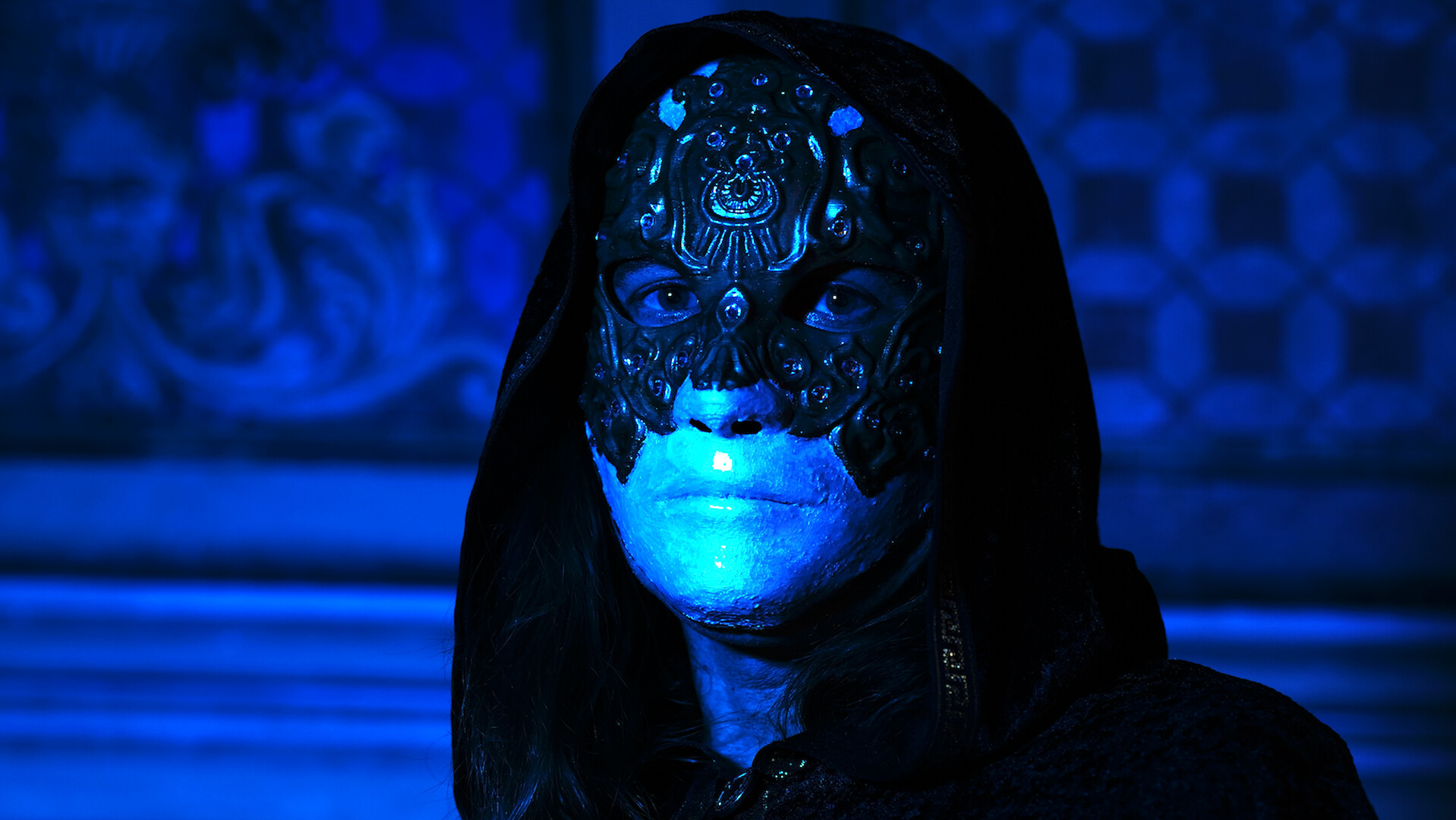
Drama, Mystery, by Samantha Casella, Italy, 2025.
“Katabasis” is a journey into the underworld. Nora experienced that dark realm as a child, when she suffered abuse. This marked her, shaping her into an ambiguous and manipulative woman, dangerous in her inscrutability, constantly seeking disturbing situations to relive the only condition she has profoundly internalized: pain. And the love story between Nora and Aron is tormented, strictly secret. Aron is a young orphan oppressed by the star system which, orchestrated by Jacob, a cynical manager, made him a star and imposes another façade of life on him. In fact, only the people who revolve around the house-prison where the couple lives are aware of Nora's existence. That majestic villa is the stage for secrets, lies, deceit, as well as unsettling episodes, since Nora is able to communicate with the souls from the beyond.
Director Biography – Samantha Casella
Samantha Casella studied various aspects of cinema, including screenwriting, directing, cinematography, and acting, across Turin, Florence, Rome, and Los Angeles. Her directing thesis, the short film "Juliette," won 19 awards, including the "European Massimo Troisi Award." She continued her path directing surreal short films including "Silenzio Interrotto," "Memoria all'Isola dei Morti," and "Agape." In 2019, she directed "I Am Banksy." At the charismatic TCL Chinese Theater in Los Angeles, at the Golden State Film Festival, she won the award for Best International Short Film. In 2020, she directed the short film "A un Dio Sconosciuto." "Santa Guerra" is her feature film debut.
LANGUAGE: Italian
SUBTITLES: English, Spanish, French, German, Portuguese
The Gold Hidden in the Lead
There is a particular kind of morning that anyone who has ever lost a role they confused with themselves will recognize. You wake up and for perhaps three seconds you are no one, and then the architecture of what you used to be comes crashing down to fill the space, and the absence of it is louder than any presence. The desk that was yours is no longer yours. The title on the email signature is gone. The meetings no one invites you to anymore were, it turns out, a significant portion of what you called your identity. You had not known this until they stopped.
Jung spent years trying to understand why this kind of collapse does not feel like liberation even when, in retrospect, everyone agrees it should have. The answer he arrived at was not psychological in the modern clinical sense. It was alchemical. Not because he was drawn to mysticism as an escape from rigor, but because he recognized in the alchemical corpus the oldest continuous record of what happens to a human being who attempts to become more fully themselves. When he published Psychology and Alchemy in 1944, he was not rehabilitating a failed science. He was arguing that the alchemists had been doing psychology all along, projecting inner transformation onto matter because they had no other language for it. By the time Mysterium Coniunctionis appeared in 1956, the year before his eighty-first birthday and what he considered the culmination of his life’s work, he had mapped the entire trajectory: the stages of the Great Work were the stages of individuation, and they began, always, in darkness.
The nigredo. The blackening. The decomposition of base matter before anything can be refined. The alchemists were not being poetic when they described lead rotting in the vessel, turning to black sludge, appearing to the untrained eye as pure failure. They were being precise. The material, under the right heat and the right containment, had to lose its original form entirely before it could become anything else. What looked like destruction was, technically, preparation.
A man dismantles a fifteen-year career and the world reads it as collapse. He had been good at what he did, which was itself part of the problem. The competence had calcified around him like armor, and inside the armor there was less and less room to breathe. When the structure finally broke, not through any single dramatic decision but through a slow accumulation of refusals, missed opportunities, a growing inability to pretend, he did not feel free. He felt like lead. Heavy, dull, oxidizing. The people who loved him used the word lost. He used it too, because it was accurate and also because he had not yet found the framework that would let him call it something else.
James Hollis, extending Jung’s work into the contemporary, writes of the larger life pressing against the provisional life we construct in early adulthood. The provisional life looks like success from the outside. It functions. It is recognized. It is also, in most cases, someone else’s idea of who we should be, internalized so thoroughly we experience it as desire. The nigredo is the moment the provisional life exhausts itself. Not fails. Exhausts. There is a difference that matters enormously. Failure implies the wrong execution of the right goal. Exhaustion implies the goal itself was never yours.
The alchemists called lead prima materia, the first matter, the raw substance from which gold could theoretically be extracted. They did not consider lead worthless. They considered it unfinished. The man sitting in the wreckage of his professional self, unable yet to name what comes next, is not at the beginning of a failure. He is at the beginning of the Work. The blackening is not evidence that something has gone wrong.

The Shadow at the Banquet Table
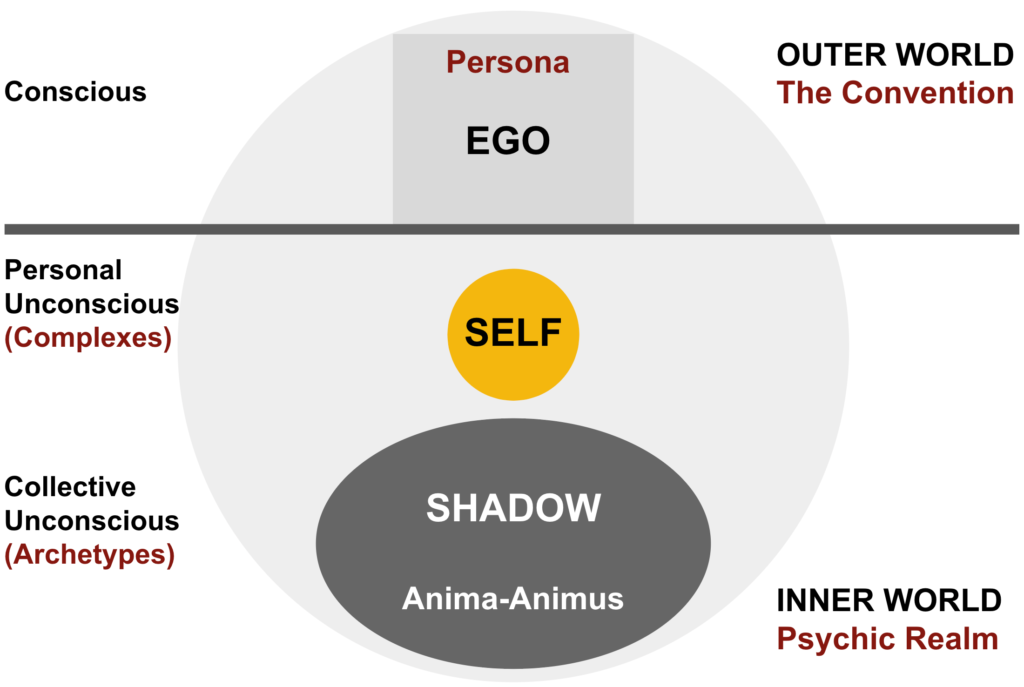
The wine is good, the laughter arrives on cue, and somewhere around the third exchange of pleasantries a person realizes — not gradually but all at once, like a floor giving way — that they have no idea who is speaking. The words coming out of their mouth are correct. The smile is warm and arrives at precisely the right moments. The anecdotes land. And yet there is something watching from slightly behind the eyes, something that has been watching all evening with a growing and terrible patience, waiting to be acknowledged. The body is present. The performance is flawless. The person themselves is nowhere in the room.
This is not the shadow that popular psychology has domesticated into a manageable concept, the dark side you journal about and gradually befriend. Marie-Louise von Franz, working from the deepest soil of Jung’s method in her 1974 study of the shadow’s appearance across fairy tale traditions, was precise about something that tends to get softened in transmission: the shadow does not present itself as darkness. It presents itself as absence. It is not what you did wrong. It is what you never became, and the energy of that unlived becoming does not evaporate — it accumulates, it pressurizes, and it eventually begins to consume the life that is being lived in its place. The charming person at the banquet table is not being devoured by their worst impulses. They are being devoured by their best ones, the ones they performed rather than inhabited.
James Hillman, who had little patience for the therapeutic industry’s cheerful relationship with light, argued in Re-Visioning Psychology — published in 1975, and still not fully absorbed by the culture it addressed — that the ego’s relentless drive toward health, coherence, and upward integration was not the solution to psychological suffering but one of its most sophisticated expressions. The insistence on being well, on moving toward the light, on resolving the shadow into something manageable and ultimately harmless: this is itself a pathology, the pathology of a self that cannot tolerate its own depths and so constructs an architecture of improvement above them, calling the construction growth. Hillman called this the heroic ego, and he did not mean it as a compliment. The hero who never descends does not become whole. He simply becomes more elaborate in his avoidance.
Jung knew this from the inside in a way that most of his commentators have been reluctant to fully reckon with. Between 1913 and roughly 1930 he produced a document of such ferocious interior honesty that he kept it locked away, showed it to almost no one, and spent the remaining decades of his life deciding whether it could ever be made public. It was not published until 2009, sixteen years after his death and nearly a century after its creation. What that document contains is not theory. It is the record of a man deliberately dismantling the identity he had constructed — the physician, the scientist, the rational inheritor of the Enlightenment — and descending into something he could not name without the very conceptual scaffolding he was dismantling. He called it his confrontation with the unconscious. He might just as honestly have called it the night he stopped performing and discovered, with appropriate horror, that the performance was almost everything he had.
Back at the banquet table, the wine continues to be good. The conversation moves to something topical, something that requires a mild opinion, and the mild opinion is produced on schedule. Nobody notices anything. That is precisely the problem. The shadow’s most effective disguise is not monstrousness. It is competence.
Irene
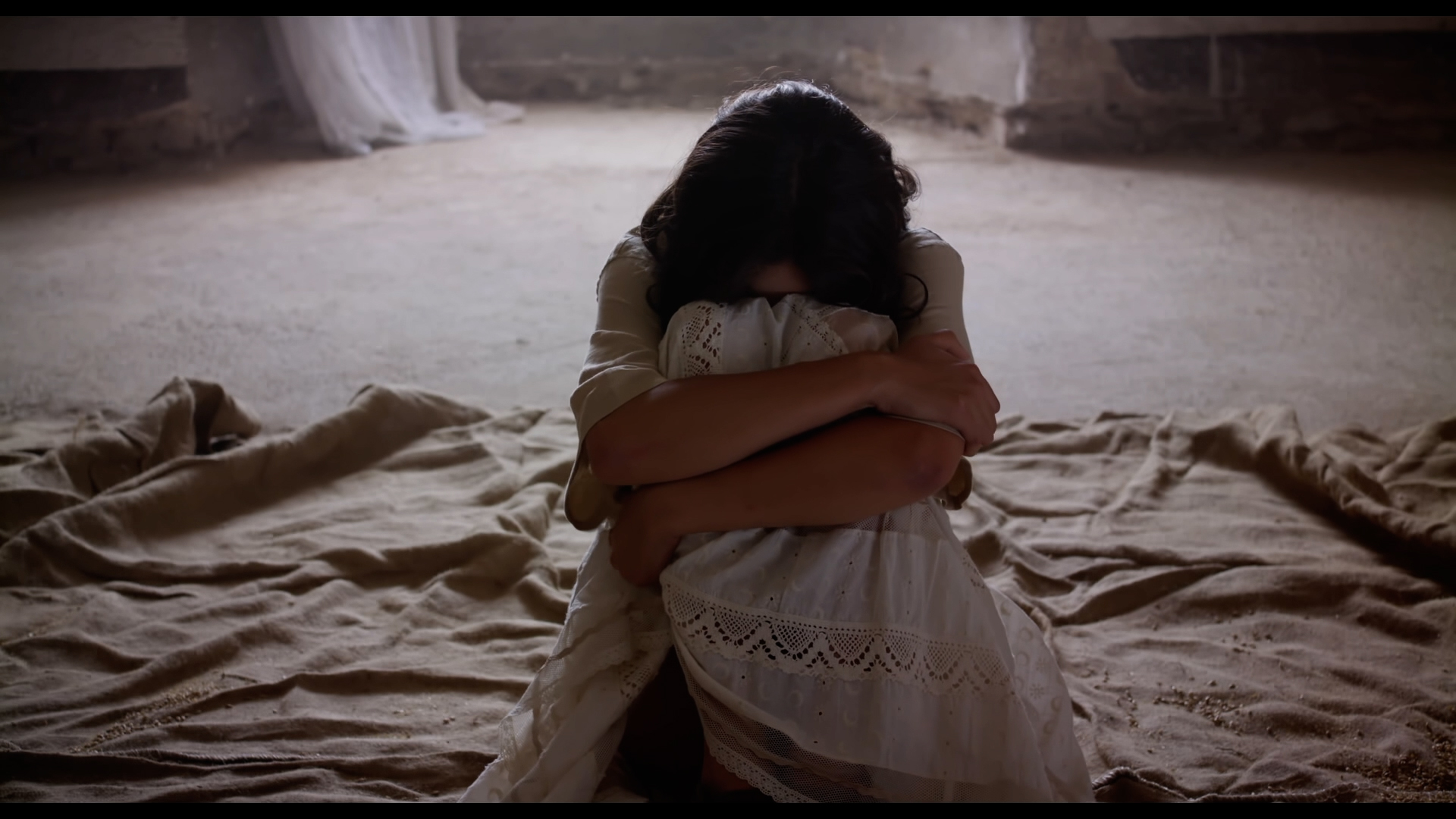
Drama, by Valerio Pampaglini, Italy, 2023.
Irene is trapped within her own unconscious, empty and ruined like an abandoned house. Through broken glass and shady figures dressed in black, a song awakens something long forgotten inside her. The film, written and directed by Valerio Pampaglini, is supported by the Rome Film Academy. It was shot in the summer of 2022 in the province of Perugia, in the municipality of Todi and at the Montenero castle.
LANGUAGE: Italian
SUBTITLES: English
Coniunctio: The Marriage That Destroys Both Partners

There is a particular kind of argument that happens between people who love each other deeply — not the screaming kind, not the cold kind, but the kind where both people go very quiet and realize simultaneously that they are no longer the person the other one fell in love with. Something has been metabolized. Something has been lost and gained in the same gesture, and neither of them consented to the exchange in any way they can clearly remember. They sit across from each other at a table they chose together and feel, beneath the love, the faint vertigo of dissolution.
This is not a failure of the relationship. This is the relationship doing exactly what it was always going to do.
What the alchemists called the coniunctio — the sacred marriage of opposites, the joining of sulfur and mercury, sun and moon, the fixed and the volatile — was never described as a gentle process. The texts are explicit in their brutality. The two substances must be broken down before they can be joined. The union does not preserve what entered it. It produces something categorically third, and the price of that third thing is the integrity of both originals. The Rex and Regina of the Rosarium Philosophorum do not emerge from their bath refreshed. They drown. The new figure rises from what was lost.
Erich Neumann, whose Origins and History of Consciousness landed in 1949 as one of the most serious extensions of Jung’s framework ever attempted, argued that the entire arc of psychological development — from the uroboric pre-ego state through the hero myths to mature selfhood — was not a story of accumulation but of successive dismantling. The ego does not grow stronger by adding to itself. It grows more real by having its false structures exposed and surrendered. Neumann traced this across global mythology with a granularity that felt almost archaeological: the dragon fight, the night sea journey, the dismemberment of Osiris, the descent of Inanna — these were not metaphors for struggle. They were maps of what happens to the organizing fiction of the self when it is forced into genuine contact with what it has excluded.
The cultural lie is that integration feels like arrival. That when the opposites finally unite, when the shadow is acknowledged and the anima or animus is met and the Self begins to consolidate, there is some sensation of completion, of relief, of coming home. There isn’t. There is something closer to the feeling of a building whose load-bearing walls have been removed — not collapse exactly, but a terrifying openness where the structure used to be.
Paracelsus understood this with a completeness that makes his biography feel almost designed as proof of the principle. He died in 1541, and in the decades before that death he was simultaneously doing what we would now recognize as early proto-chemistry — developing concepts of chemical medicine, identifying zinc, theorizing dose-dependent toxicology — and writing with complete seriousness about the three primes, about the astral body, about the spiritual dimensions of healing. These were not compartmentalized. There was no boundary in his thinking between the laboratory operation and the interior one. He held the conjunction without resolving it, which is perhaps why his contemporaries found him so unbearable. He was not a mystic with scientific interests or a scientist with mystical hobbies. He was someone in whom the coniunctio was occurring in real time, and it made him brilliant and erratic and impossible to categorize and fundamentally, structurally homeless in the world of his century.
That homelessness is not incidental. It is the signature of the process. Two people sit at a table they once chose together and feel the floor shift, and what they are feeling is not the end of something.
What the Work Actually Costs
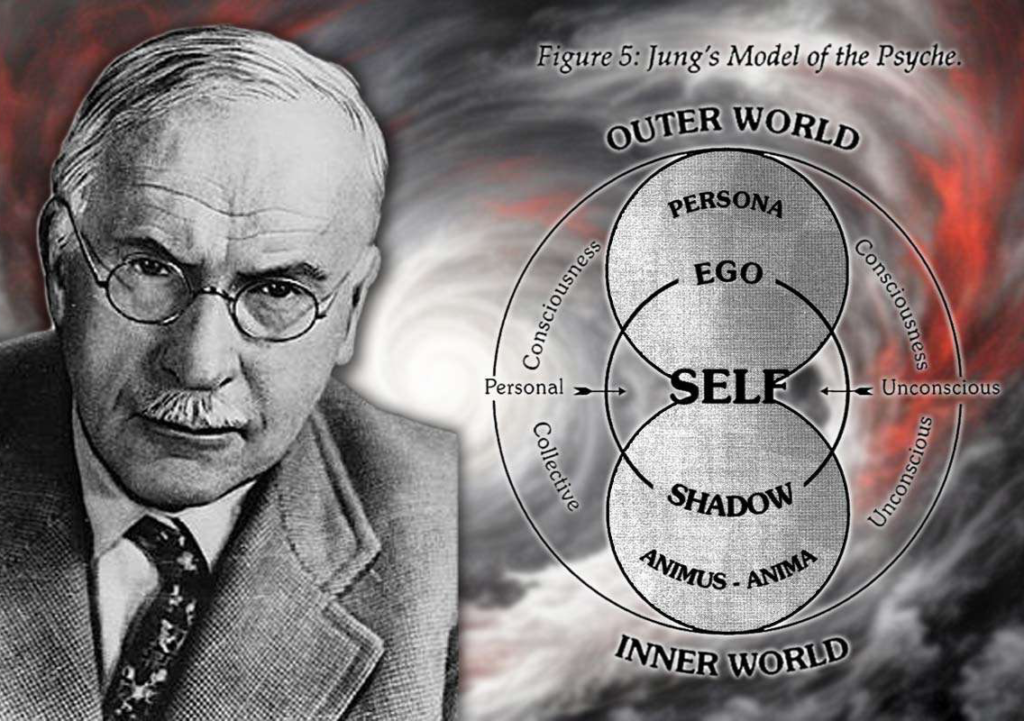
There is a particular kind of dinner party where someone returns after a long absence and the room cannot quite locate them anymore. The conversation moves in its familiar grooves — career, property, the mild complaints that function as social currency — and this person sits at the table present in body but somehow offset, like a transparency laid slightly crooked over the image beneath it. They answer when spoken to. They smile. But something in the quality of their attention has shifted, and the others feel it before they can name it, the way you feel a drop in atmospheric pressure before the storm is visible. By the end of the evening, someone will have said, quietly, to someone else: I don’t know what happened to them. They’ve become strange.
Strange is the word cultures reach for when they mean: you have moved outside the zone we agreed was real. Émile Durkheim, writing in 1897 in his study of suicide, identified anomie as the condition of the person who has slipped free of the normative framework — not through failure, but through a kind of excess of selfhood that the social body cannot metabolize. He was describing pathology. But what he was also describing, without the vocabulary for it, was the structural position of the individuated person. To have genuinely met the shadow, to have integrated what the persona spent decades suppressing, to have relocated the center of gravity from the collective expectation to the interior necessity — this is not a social promotion. It is a form of departure. And departures are experienced by those who remain as a form of abandonment.
Jung was not romantic about this. He wrote in 1916 in “The Structure of the Unconscious” that the process of individuation necessarily sets the individual apart, and that this separation is not a triumph but a burden, often a painful one. The integrated person does not become easier to live with. They frequently become harder, because they can no longer perform the negotiations that kept the peace. The false harmonies that families and friendships and institutions require — the agreed-upon silences, the distributed fictions, the carefully maintained mutual blindness — begin to feel not just uncomfortable but impossible. And impossibility, when it arrives in someone who was previously cooperative, looks from the outside exactly like madness or arrogance or ingratitude.
What the Work costs, then, is not effort in the ordinary sense. It costs the specific comfort of being legible. Abraham Maslow placed self-actualization at the apex of his hierarchy as though it were the natural endpoint of human development, serene and crowning. But Maslow’s pyramid was built on a misreading of what transformation actually does to a life. The actualized person in his model is more functional, more creative, more contributive to the world as it already exists. Jungian individuation produces something categorically different: a person who has stopped fitting the world as it exists, not because they have failed it, but because they have finally, at considerable cost, stopped lying to themselves about what it is.
A man decides, in middle age, that he cannot continue in the role the last twenty years have been building. Not because he is unhappy in any diagnosable way, but because something in him has become more real than the life surrounding it, and the friction between the two has become unbearable. He does not leave dramatically. He simply, gradually, becomes unavailable to the version of himself others need him to be. And those around him grieve him as though he had died, because in a meaningful sense, someone has.
The question that remains, and that refuses the comfort of an answer, is whether anyone genuinely chooses this — or whether the Work, once glimpsed, removes the possibility of choice entirely, and what it means to have seen something you cannot unsee, and to know that the person who could still have looked away no longer exists.
I Am Nothing
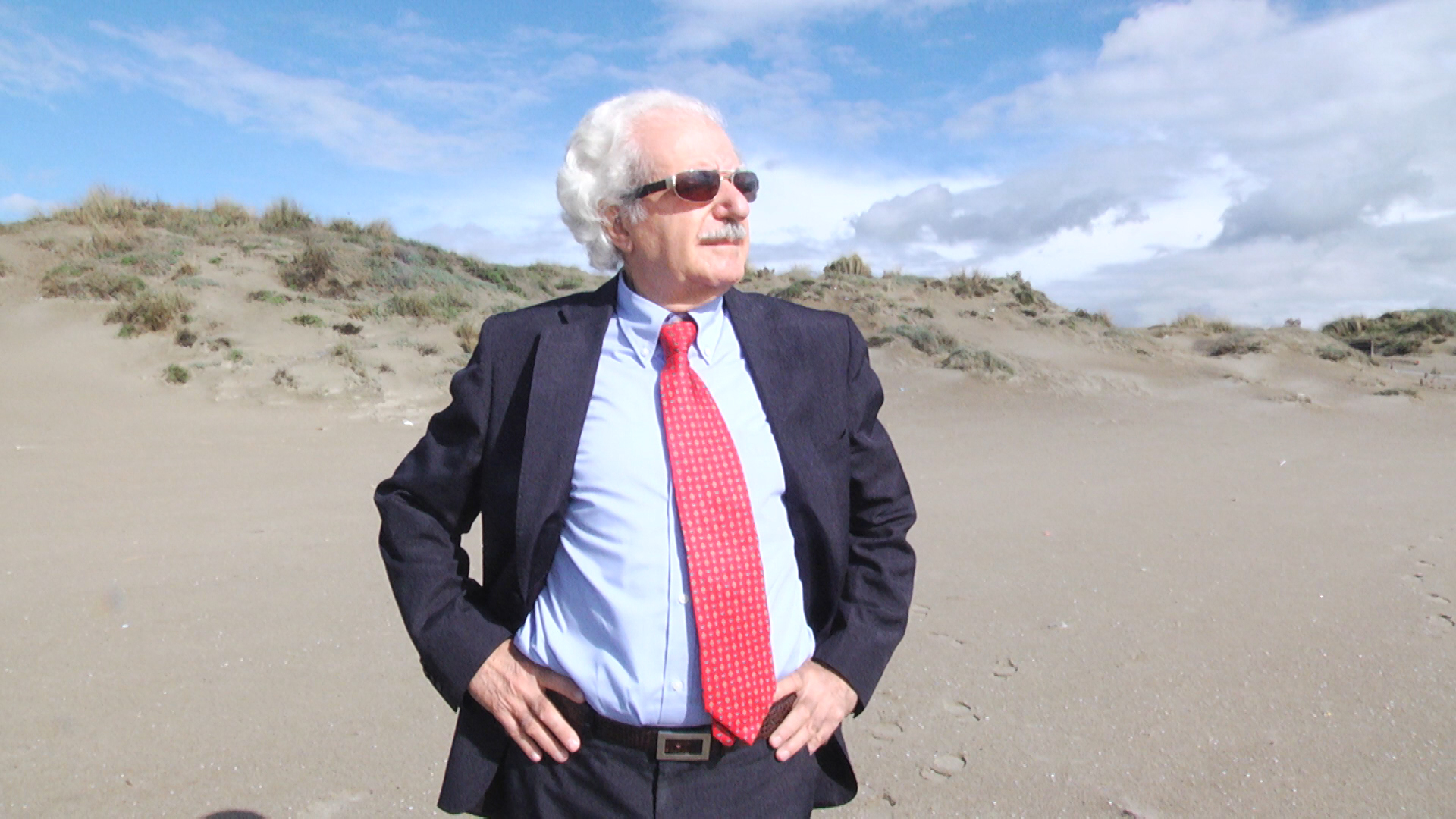
Drama, thriller, by Fabio Del Greco, Italy, 2015.
The story revolves around Vasco, a Roman builder who, at the age of 74, enjoys a life of absolute comfort. His human parable takes a dramatic turn when a mysterious encounter leads him to an ambush. Having survived, but marked by a long coma, Vasco wakes up with a new sensitivity, developing an intimate and poetic bond with nature. This new relationship with the world around him leads him to deeply explore himself, in an internal and external journey. through Italy, the United States and India, in search of a higher meaning and a cure. In parallel, the threat of a planetary cataclysm adds an epic dimension to the story.
I Am Nothing explores universal themes such as time, memory, oblivion and the connection with nature. Fabio Del Greco creates an existential drama full of food for thought. The director skillfully combines different visual materials, mixing archive images with nature photographs and dreamlike visions. This visual experimentation translates into an editing that captures the viewer's attention, guiding him through a cycle of creation and destruction. The sequences that alternate the buildings, Vasco's pride, with Indian landfills and natural landscapes create a hypnotic rhythm, underlining the beauty and fragility of life. Vasco's existential journey is a hymn to transformation and rebirth. The evolution of the protagonist, from unbridled luxury to the rediscovery of purity, represents a powerful metaphor on the meaning of life and the need to reconnect with authentic values. Io sono nulla stands out for its ability to combine introspection and visual experimentation, offering a suggestive and engaging narration. It is a film that invites us to reflect on the human condition, on our relationship with power and nature, and on the possibility of finding ourselves through change. A work that leaves its mark and lends itself to multiple readings.
LANGUAGE: Italian
SUBTITLES: English, Spanish, French, German, Portuguese
A vision curated by a filmmaker, not an algorithm
In this video I explain our vision
🜂 The Alchemical Path to the Self
Jungian Individuation and the Great Work share a profound symbolic language — one in which the dissolution and reintegration of the psyche mirrors the ancient alchemist’s labor in the laboratory. These articles trace the invisible threads connecting inner transformation, hermetic tradition, and the lifelong quest for wholeness.
Jungian Alchemy: Jung and Alchemical Psychology
Jung’s encounter with alchemical texts revealed to him a mirror of the unconscious psyche, where sulfur, mercury, and salt became metaphors for psychic forces seeking integration. This article explores how Jung reinterpreted the Great Work not as a primitive chemistry but as a sophisticated map of psychological transformation. The individuation process finds in alchemy its most ancient and precise symbolic precedent.
GO TO THE SELECTION: Jungian Alchemy: Jung and Alchemical Psychology
Magnus Opus: nigredo albedo rubedo
The three stages of the Magnum Opus — nigredo, albedo, and rubedo — correspond precisely to the Jungian phases of confronting the shadow, integrating the anima or animus, and achieving the unified Self. This article examines how these chromatic thresholds encode a universal grammar of inner death and rebirth. Understanding them is essential to grasping what individuation truly demands of the seeker.
GO TO THE SELECTION: Magnus Opus: nigredo albedo rubedo
Spiritual Alchemy: Inner Transformation and Symbolism
Spiritual alchemy operates on the premise that outer transmutation is merely a veil for the deeper work of transforming the soul, a principle that resonates deeply with Jungian psychology. This article unpacks the rich symbolic vocabulary of inner alchemy, from the prima materia to the lapis philosophorum, as stages of self-knowledge. It offers an indispensable framework for anyone approaching the Great Work as a living spiritual practice.
GO TO THE SELECTION: Spiritual Alchemy: Inner Transformation and Symbolism
The Corpus Hermeticum: Guide to Esoteric Reading
The Corpus Hermeticum forms the philosophical bedrock upon which both Renaissance alchemy and Jungian archetypal theory quietly rest. This guide to esoteric reading reveals how Hermetic principles such as ‘As above, so below’ anticipate the Jungian notion of correspondences between psyche and cosmos. Engaging with these foundational texts illuminates why individuation was never merely a psychological concept but a cosmic one.
GO TO THE SELECTION: The Corpus Hermeticum: Guide to Esoteric Reading
Discover the Cinema of Inner Transformation
If these explorations of the psyche and the sacred have stirred something within you, Indiecinema streaming is the place to continue the journey. Our curated catalog of independent and esoteric films maps the invisible territories of consciousness with the same depth and courage these traditions demand. Join us and let independent cinema be your next alchemical vessel.
👉 EXPLORE THE CATALOG: Watch Indie Films in Streaming
A vision curated by a filmmaker, not an algorithm
In this video I explain our vision
The Kempinsky Method

Drama, by Federico Salsano, Italy 2020.
The introspective imaginary road movie of a man in the maze of his own mind, his memories of his youth, his never dormant passions and contradictory truths. The road is made of water, the destination is falsely unknown. His traveling companions are three mysterious men, projections of his imagination and of different aspects of his personality: the perennial melancholy, the crazy creative, the introverted child. He is also followed by a female presence that tells the umpteenth human story. At a certain point of the crossing he decides to abandon the boat and his ghosts of him diving into the sea and arrives swimming on a deserted beach, naked, with a small Pinocchio puppet closed by a padlock.
In this splendid film life is like a long sea voyage and the human being is a small creature confronting immensity. Sometimes the ocean is calm, other times there are terrible storms. Sometimes we are captains of a boat with a well-defined route, other times we are shipwrecked in search of a land in which to save ourselves. But despite the long journey and the movement in physical space, there are other questions that resonate in the mind: who are these men I travel with? What is the mystery of this immense mass of water that seems to be made of my memories? You can circumnavigate the whole world but the main question always remains the same: who am I really?
LANGUAGE: italian
SUBTITLES: english, spanish, portuguese, german, french
Mystery of an Employee

Drama, thriller, by Fabio Del Greco, Italy, 2019.
Someone wants to control the life of the employee Giuseppe Russo: the products he buys, his political and religious faith, his private life, even his dreams. But he will do anything to escape control and find his true self. Giuseppe is a man of around 45, married, with a stable job and a home of his own. His life flows seemingly peacefully when he meets a mysterious tramp who gives him some old VHS video cassettes. Giuseppe begins to see video tapes in which he is filmed in some moments of his life since he was a child, then as a teenager and as a young man. Who shot those videos that he remembers nothing about? Giuseppe has the strange sensation of being constantly observed and begins to investigate what is happening. Through his investigation of him, he begins to rediscover his true identity and become aware of who he truly is.
Employee's Mystery is a film that highlights the danger of social control and shows a society where everyone is constantly monitored and conditioned in their deepest selves. The film is also an analysis of human nature and identity. Fabio Del Greco, who plays Giuseppe, gives an engaging performance. Equally good is Chiara Pavoni, in the role of Giada Rubin and Roberto Pensa in the role of the tramp. Employee's Mystery is a film that addresses important themes in an original way, a psychological thriller that keeps the viewer glued to the screen until the end: a metaphor for contemporary society, in which people are increasingly monitored and conditioned by the media and technologies . It is a courageous and provocative work, which addresses important themes in an original way.
LANGUAGE: Italian
SUBTITLES: English, Spanish, French, German, Portuguese

