
The Lead That Will Not Transmute
You have had this argument before. Not a version of it — this exact argument, with these exact words, the same door left half-open, the same silence that follows like a held breath. You know, somewhere below the level of conscious thought, that you will have it again. And yet the knowledge changes nothing. You return to the same table, the same chair, the same tone of voice that arrives uninvited and occupies your throat before you have decided to let it in. Something in you is performing a role so old it has worn grooves into your life the way water wears grooves into limestone, and you cannot find the source of the current.

This is not metaphor. This is Tuesday morning. This is the job you have left twice and returned to in different costumes. This is the relationship that ended and then restarted under a different name with a different person who carries the same essential quality as the last one, and the one before that. This is the self-sabotage that arrives precisely when something good is about to become permanent — the sudden illness before the important meeting, the inexplicable coldness when someone finally offers warmth without conditions. You are not broken. You are alchemical. You simply do not know it yet.
Carl Gustav Jung first encountered serious alchemical literature in 1928, when the sinologist Richard Wilhelm sent him a copy of the ancient Chinese text known as The Secret of the Golden Flower. Jung was fifty-three years old, and he had already survived his catastrophic break with Freud, his own descent into what he later called his confrontation with the unconscious, and the long years of private experiment with active imagination that he documented in the Red Book — that extraordinary private manuscript he kept hidden for most of his life, not published in full until 2009. But the Chinese text unlocked something. It showed him a symbolic language for interior transformation that felt less like theory and more like cartography. He began pulling alchemical texts from libraries across Europe, reading Paracelsus, Gerhard Dorn, Michael Maier, the Rosarium Philosophorum — texts that educated modernity had filed under superstition and abandoned there.
What he found was not chemistry that had failed. What he found was psychology that had never been named as such.
The alchemists working in their laboratories between the twelfth and seventeenth centuries were doing something that their rational successors completely misread. They were projecting. In the precise psychological sense: they were transferring onto matter the contents of their own unconscious minds. The transformations they described — the nigredo, the albedo, the rubedo, the phases of blackening and whitening and reddening that led theoretically toward the production of the philosopher’s stone — were not accounts of chemical reactions. They were, Jung argued in Psychology and Alchemy published in 1944, accounts of psychic processes that the alchemists themselves could not recognize as interior because the very concept of interiority as we understand it did not yet exist for them. They looked into their retorts and crucibles and they saw their own souls staring back, and they wrote down what they saw in the only language available: the language of matter, of metal, of fire and dissolution.
This is not a comfortable idea. It asks us to take seriously a tradition that the Enlightenment declared dead on arrival, and to find in its encoded, symbol-dense, frequently bizarre imagery something more honest about human psychological experience than much of what followed. It asks us to consider that the lead which will not transmute — that weight you carry, that pattern you repeat, that argument you have again on Tuesday morning — is not a flaw in your character but a phase in a process. A stage that has a name. A darkness that the alchemists mapped with the same seriousness a surgeon brings to anatomy.
They called it the nigredo. They knew it meant something was beginning, not ending. And they knew — this is the part we have forgotten — that you cannot skip it.
Arte
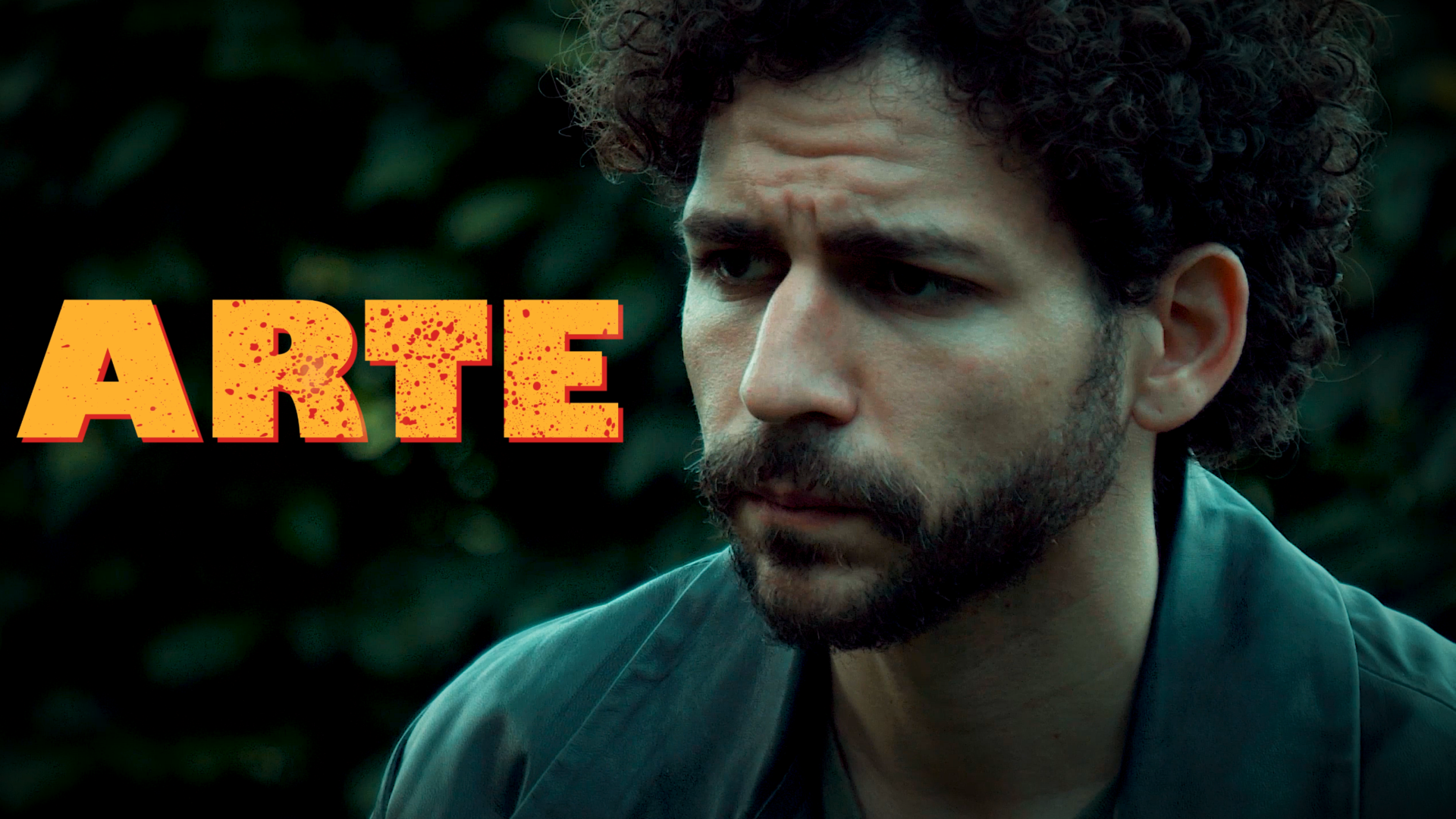
Drama, thriller, by Stefano Scala, Simone Arcidiacono, Italy, 2023.
In a secret and fascinating world, four people meet every week at the mysterious "The Circle" for a gripping game, knowing nothing about each other. However, fate has a different plan for them. As the game progresses, their lives begin to intertwine in unpredictable ways. The boundaries between the game and reality start to blur, revealing buried secrets and creating unthinkable connections. In the heart of "The Circle," the masks fall, and the players' lives will be forever changed.
LANGUAGE: Italian
SUBTITLES: English, Spanish, French, German Portuguese
The Red King and the White Queen Sleeping in Your Chest
There is a man you have probably known, or been, who stands in a kitchen at two in the morning holding something he has just broken. It does not matter whether it was a glass, a phone, a promise. What matters is the expression on his face in the moment after — not rage, not triumph, but a kind of stunned recognition, as though he has finally seen his own handwriting on the wall and cannot read it. He destroys what he loves with a precision that feels almost surgical, and the worst part, the part he will not say aloud to anyone, is that some part of him knew it was coming. Watched it happen from slightly outside himself. Could not stop.
The alchemists would have recognized him immediately. They would have said: the Sulphur is uncontained.
In the symbolic language of medieval and Renaissance alchemy, every substance carried a gender, a temperature, a psychological pressure. The Rex — the Red King — was Sulphur, solar, hot, active, the principle that drives outward into the world with force and ambition and appetite. His counterpart, the Regina — the White Queen — was Mercury, lunar, cool, receptive, the principle that holds, reflects, dissolves. Neither was superior. Neither could accomplish the Great Work alone. The alchemists understood, with an intuition that precedes any clinical language by several centuries, that something catastrophic happens when these two principles within a single psyche become irreconcilable enemies. The king burns everything down. The queen disappears into herself and cannot be reached.
Jung spent decades in the Basel and Zurich libraries, bending over manuscripts that smelled of centuries, and what he found there was not chemistry. In Psychology and Alchemy, published in 1944, he argued something that still has the capacity to disturb anyone who encounters it seriously: that the alchemists were not encoding hidden scientific knowledge, nor were they simply mystics using elaborate metaphor. They were describing the unconscious. Not their idea of the unconscious — not a theory they had constructed — but the thing itself, erupting through their imagery unbidden. The symbols of Rex and Regina, of coniunctio, of nigredo and albedo, arose from the same psychic depths that produce dreams. They were not invented. They were discovered. Found already there, like fossils in stone, waiting to be named.
This matters enormously for how we understand our own interior catastrophes. Because if the image of the Red King — that devouring, self-defeating masculine force — was not created by any alchemist’s conscious mind but emerged spontaneously across cultures and centuries, then the man standing in the kitchen at two in the morning is not simply damaged. He is living inside an archetypal pattern older than his name. His suffering has a structure. It is not chaos. It is a stage.
There is also a woman — and again, you have known her, or been her — who cannot receive what she most needs. Someone reaches toward her with something genuine, something unguarded, and she deflects it so smoothly that both of them pretend it didn’t happen. She is not cold. That is the misunderstanding everyone makes about her. She is flooded. The Mercury principle, when it cannot find its sovereign counterpart, does not become peaceful. It becomes overwhelming, a solvent that dissolves everything including itself. She contains multitudes and is exhausted by all of them. She needs the coniunctio — the sacred marriage of opposing forces — as urgently as anyone, and yet every time it approaches she experiences it as a threat to her dissolution.
The coniunctio, in Jung’s reading, was never a sentimental union. It was an ordeal. The alchemical texts describe it with imagery that is frankly violent — the king and queen submerging together, suffocating, dying in the same vessel. Transformation required that both principles lose their autonomy before something new could emerge. Jung connected this directly to the individuation process, to what he called the transcendent function, the psyche’s capacity to hold opposites in tension long enough that a third thing — something neither could have produced alone — becomes possible.
Which means your inner contradictions are not failures of character.

Nigredo: The Art of Being Utterly Destroyed
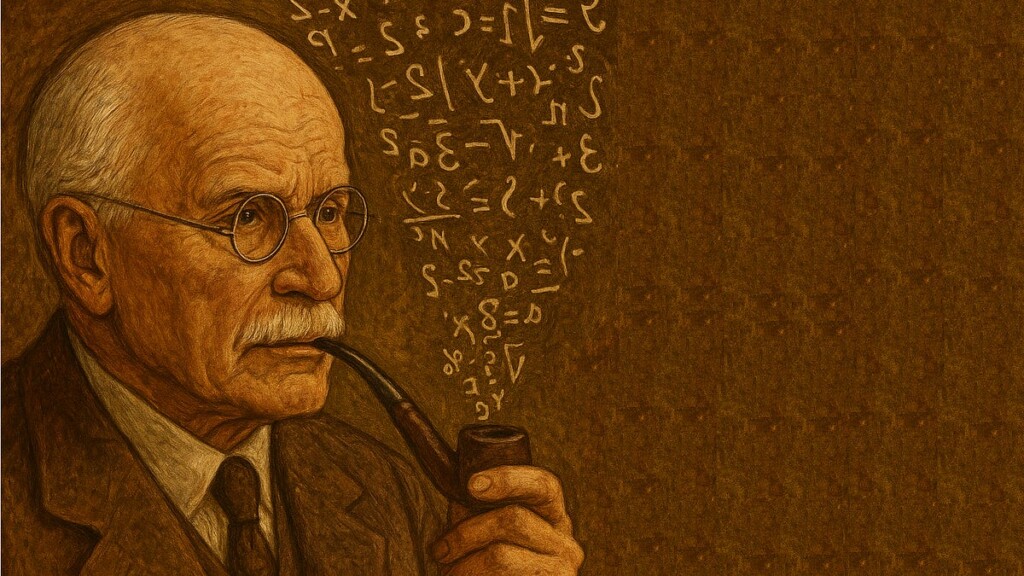
There is a moment — and almost everyone who has lived past a certain threshold of experience knows it — when you wake up and the person you thought you were simply isn’t there anymore. Not absent in the way of a bad morning or a season of doubt. Gone in a way that feels geological, as though a whole stratum of the earth has quietly collapsed overnight, leaving the surface with no visible crack, just a faint wrongness underfoot. You go through the motions. You make coffee. You answer messages. And somewhere in the middle of an ordinary Tuesday, you realize you have no idea who is performing these actions or why they should continue.
This is where the alchemical tradition places its first and most uncompromising demand. Before anything can be refined, before any gold can be dreamed of, there must be the nigredo — the blackening, the putrefaction, the systematic decomposition of whatever the prima materia was before the work began. The old alchemists were not speaking in metaphor when they described this phase as the death of matter. They meant that something real has to rot before it can transform. They meant that you cannot skip this part.
Jung understood this not as a curiosity of medieval chemistry but as the most accurate map anyone had ever drawn of what genuine psychological transformation actually requires. In Mysterium Coniunctionis, published between 1955 and 1956 when he was past eighty years old, he returned to this problem with the kind of precision that only comes from having lived it across a lifetime. The work, which represents the culmination of his engagement with alchemy that had begun decades earlier, argues something that the entire architecture of modern self-improvement cannot bring itself to accept: that the ego must be dismantled before the Self can emerge. Not weakened. Not challenged. Dismantled. The container must break. There is no workaround.
Think of a man sitting in a room surrounded by the evidence of a life that has, by every external measure, succeeded. The marriage, the career, the accumulated respect of peers — all of it present and entirely hollow. He has not lost these things. He has simply arrived at the moment when he can no longer pretend they constitute him. What he experiences in that room is not depression in the clinical sense, not grief in the conventional one. It is something closer to what the alchemists called solutio — the dissolution of fixed forms. He doesn’t know it yet, but he is in the first stage of real work. The blackening has begun.
James Hillman, who extended Jung’s vision into territory that was sometimes more radical than Jung himself had dared, insisted in Re-Visioning Psychology, published in 1975, that the soul moves through pathologizing — that its natural idiom includes symptoms, darkness, obsession, and suffering, not as unfortunate detours from psychological health but as the very medium through which depth is achieved. Hillman refused the therapeutic impulse to treat the wound as a problem requiring solution. The wound, for Hillman, is the vehicle. The symptom is the psyche speaking in its most serious voice. To silence it prematurely, to reach for resolution before the decomposition has done its work, is not recovery. It is a kind of violence against process.
This is the cultural reflex that nigredo most forcefully indicts. We live inside a civilization that treats suffering as a technical malfunction. The apparatus of pharmaceutical intervention, of cognitive restructuring, of positive reframing — none of this is without value in its proper domain, but the instinct that drives it, the instinct to fix rather than inhabit, to resolve rather than undergo, is precisely what the blackening phase refuses to accommodate. You cannot metabolize what you will not enter. The putrefaction cannot transform matter it is not permitted to touch.
The man in that room will eventually stand up. He will make more coffee. But something has already shifted in the basement of him, where the real chemistry happens, where no one can watch, where the old form is quietly, irrevocably, beginning to release its hold.
I Am Nothing
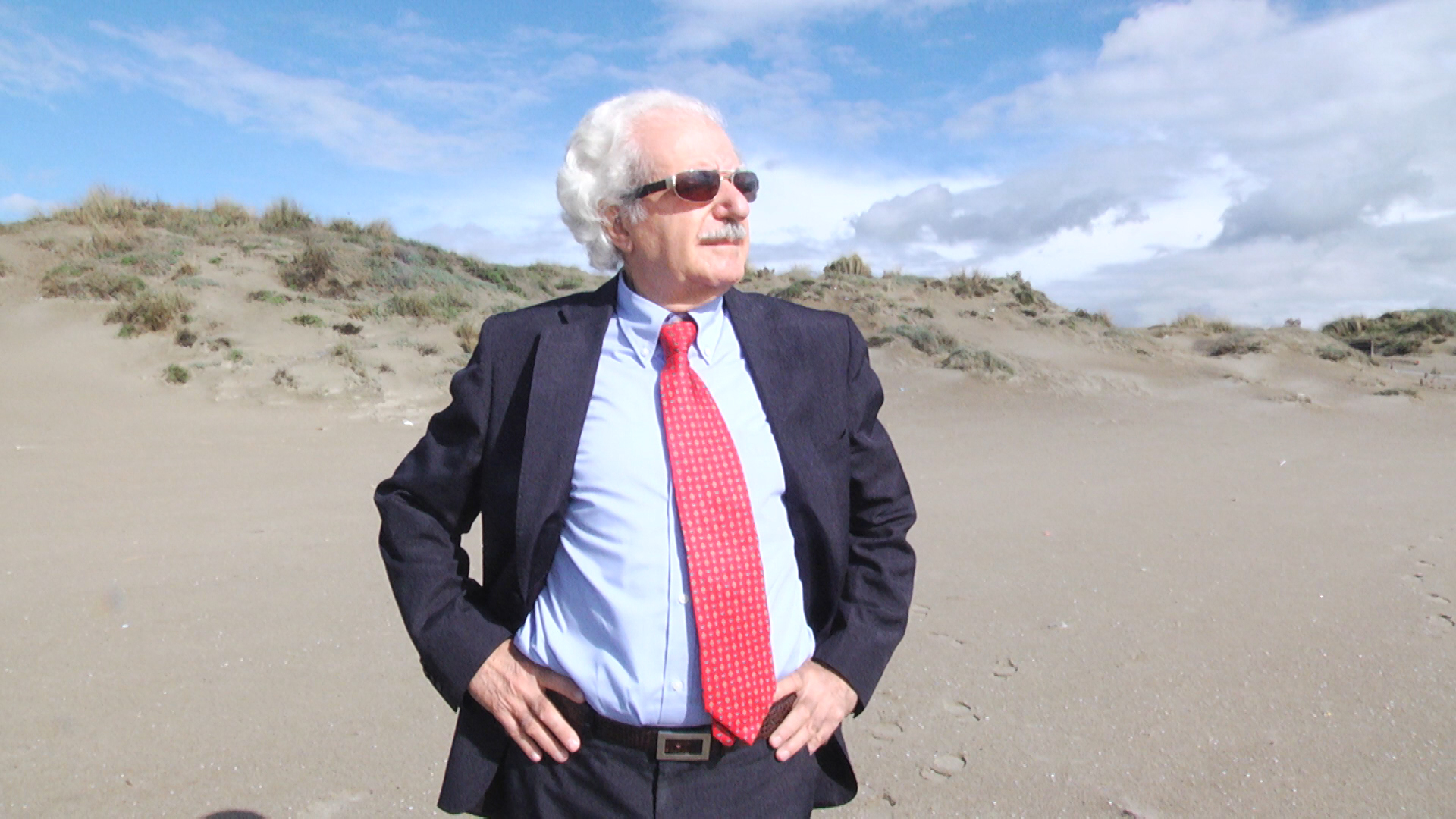
Drama, thriller, by Fabio Del Greco, Italy, 2015.
The story revolves around Vasco, a Roman builder who, at the age of 74, enjoys a life of absolute comfort. His human parable takes a dramatic turn when a mysterious encounter leads him to an ambush. Having survived, but marked by a long coma, Vasco wakes up with a new sensitivity, developing an intimate and poetic bond with nature. This new relationship with the world around him leads him to deeply explore himself, in an internal and external journey. through Italy, the United States and India, in search of a higher meaning and a cure. In parallel, the threat of a planetary cataclysm adds an epic dimension to the story.
I Am Nothing explores universal themes such as time, memory, oblivion and the connection with nature. Fabio Del Greco creates an existential drama full of food for thought. The director skillfully combines different visual materials, mixing archive images with nature photographs and dreamlike visions. This visual experimentation translates into an editing that captures the viewer's attention, guiding him through a cycle of creation and destruction. The sequences that alternate the buildings, Vasco's pride, with Indian landfills and natural landscapes create a hypnotic rhythm, underlining the beauty and fragility of life. Vasco's existential journey is a hymn to transformation and rebirth. The evolution of the protagonist, from unbridled luxury to the rediscovery of purity, represents a powerful metaphor on the meaning of life and the need to reconnect with authentic values. Io sono nulla stands out for its ability to combine introspection and visual experimentation, offering a suggestive and engaging narration. It is a film that invites us to reflect on the human condition, on our relationship with power and nature, and on the possibility of finding ourselves through change. A work that leaves its mark and lends itself to multiple readings.
LANGUAGE: Italian
SUBTITLES: English, Spanish, French, German, Portuguese
The Alchemist’s Laboratory Was Always a Mirror
There is a moment most people have had and never spoken about: you notice a word, a face, an image, and then it appears again the same afternoon in a completely different context, and then again before the week is over. You dismiss it as coincidence the first time. The second time you feel a faint unease. By the third you are no longer entirely sure what is happening. Jung had that experience with an entire symbolic system, and it reorganized the second half of his intellectual life.
He had already survived the rupture with Freud in 1912, which was not merely a professional disagreement but something closer to a psychological amputation. The break forced him inward with a violence that surprised even him. Between 1913 and 1930 he kept what he would later call the Red Book, a document that embarrassed his estate for decades before it was finally published in 2009: a handwritten, illuminated record of deliberate descent into his own unconscious, conversations with interior figures, visions that arrived with the texture of waking hallucination. He was doing something that had no clinical name yet. He was treating his own psyche as a laboratory.
A man in one of these recorded sequences keeps meeting the same figure across the span of a single night. First he sees it painted on a wall in a building he thought he knew well. Then a stranger on the street makes a gesture that mirrors the painted image precisely, the angle of the arm, the particular tilt of the head. Then in the thin sleep before dawn the figure appears again, but now it speaks. Each repetition does not simply confirm the previous one. It deepens it. Something is trying to become visible, and the repetition is the only instrument available.
This is the structure Jung recognized when he finally encountered alchemical texts in the 1920s, partly through his conversations with Richard Wilhelm, the sinologist who had immersed himself so completely in Chinese thought that he dreamed in Mandarin. Jung read the Latin manuscripts and stared at the medieval woodcuts, the crowned king dissolving in a bath, the hermaphroditic figure emerging from two bodies merging, the black bird of putrefaction, the white stone — and felt a recognition that he could only describe as shock. These were not primitive chemistry. These were his patients’ dreams. The images matched with a precision that made coincidence structurally impossible. The alchemists had been drawing the unconscious for five centuries without knowing what they were drawing.
Herbert Silberer had gestured toward this territory before Jung arrived there, in his 1914 study of symbols in alchemy and mysticism, but Silberer was working closer to Freudian territory and did not survive long enough — he died in 1923 — to follow the thread where Jung eventually pulled it. Marie-Louise von Franz, who spent decades completing what Jung began, would later write with characteristic directness in her 1980 work that the alchemist’s error and the alchemist’s genius were identical: they looked at matter and saw soul. The lead did not transform. They did. But they needed the lead to do it.
This is the mechanism von Franz called projection, though the word sounds too clinical for what it actually describes. It is not a mistake or a distortion. It is an externalization of interior content so complete that the person genuinely perceives the content as belonging to the object rather than to themselves. The alchemist did not imagine that sulfur and mercury were symbols. He saw them as agents, as real forces, because psychologically they were. The laboratory flask held something that was genuinely alive — in him.
Which is where this stops being history. What are you looking at right now that you have described entirely in terms of what it is, its qualities, its failures, its demands on you, without once asking what part of yourself you are watching? What circumstances are you certain you simply inherited, rather than, in some precise and traceable way, constructed to show yourself something you have not yet been willing to see directly?
Gold That Cannot Be Spent

There is a particular exhaustion that follows achievement. Not the pleasant tiredness of work completed, but something stranger — a hollowness that arrives precisely when the thing you wanted finally lands in your hands. The promotion comes through. The relationship begins. The recognition you spent years engineering finally appears. And in the moment you expected fullness, you find instead a faint bewilderment, as though you grabbed the map and missed the territory entirely.
The alchemists had a phrase for this confusion, one that cut clean through centuries of literal-minded treasure hunting: Aurum nostrum non est aurum vulgi. Our gold is not the common gold. They were not, in the end, trying to get rich. They were trying to become something they could not name, and they knew with precision that the gold the market traded bore no resemblance whatsoever to what they sought. The distinction was not philosophical decoration. It was the entire point.
Jung spent considerable energy in Aion, published in 1951, trying to say something similar about the Self — that it was not an achievement, not a trophy the ego could mount on its wall and admire. It was a recognition. Something that had always been operating beneath the persona, beneath the careful social architecture of competence and likability, beneath every version of yourself you had ever performed for an audience that included yourself. The Self did not arrive when you finally got things right. It was what had been seeking itself through you all along.
This is precisely where Edward Edinger becomes indispensable. In Ego and Archetype, published in 1972, Edinger mapped the catastrophic confusion that occurs when the ego inflates — when the small, historically conditioned, socially assembled self mistakes itself for the deeper center. He called this inflation, and he traced it with clinical patience through myths, through case studies, through the texture of ordinary lives where someone begins to believe that their preferences, their judgments, their accumulated self-image actually constitute the full reality of who they are. The alchemical process, understood psychologically, is precisely the systematic dismantling of this inflation. Every nigredo, every dissolution, every moment where the vessel cracks — these are not failures of the work. They are the work.
There is a scene that belongs to no particular story and every story simultaneously: a man stands in a room he has spent his entire adult life trying to reach. He is finally there. He looks around. Nothing in the room tells him what to feel. He sits down, not in triumph, not in defeat, but in something that has no social category — a kind of alert, bewildered presence that feels almost like grief but isn’t. He is not disappointed. He has simply arrived at the place where the performance runs out and something else, older and less articulate, takes over.
That something is what Jung meant by the lapis philosophorum — not the Philosopher’s Stone as a magical object but as an image for the individuated Self: a center that holds opposites without needing to resolve them. Not the person who has eliminated their shadow but the person who has learned to carry it without being carried by it. Not the ego that has won but the ego that has discovered it was never the center of the operation.
The gold that cannot be spent is useless in the economy of social approval. It buys nothing. It impresses no one. It cannot be photographed or announced. It exists, if it exists at all, in the quality of presence a person brings to the most ordinary moments — the way they sit with discomfort without needing to immediately fix it, the way they hold a contradiction without forcing it into premature resolution. Edinger understood that most people encounter this possibility briefly, then retreat into inflation because presence without achievement feels, at first, indistinguishable from failure.
And so the question that does not close itself: what exactly have you been pursuing, and what has been pursuing itself through you, patiently, underneath everything you thought you were building?
The Kempinsky Method

Drama, by Federico Salsano, Italy 2020.
The introspective imaginary road movie of a man in the maze of his own mind, his memories of his youth, his never dormant passions and contradictory truths. The road is made of water, the destination is falsely unknown. His traveling companions are three mysterious men, projections of his imagination and of different aspects of his personality: the perennial melancholy, the crazy creative, the introverted child. He is also followed by a female presence that tells the umpteenth human story. At a certain point of the crossing he decides to abandon the boat and his ghosts of him diving into the sea and arrives swimming on a deserted beach, naked, with a small Pinocchio puppet closed by a padlock.
In this splendid film life is like a long sea voyage and the human being is a small creature confronting immensity. Sometimes the ocean is calm, other times there are terrible storms. Sometimes we are captains of a boat with a well-defined route, other times we are shipwrecked in search of a land in which to save ourselves. But despite the long journey and the movement in physical space, there are other questions that resonate in the mind: who are these men I travel with? What is the mystery of this immense mass of water that seems to be made of my memories? You can circumnavigate the whole world but the main question always remains the same: who am I really?
LANGUAGE: italian
SUBTITLES: english, spanish, portuguese, german, french
A vision curated by a filmmaker, not an algorithm
In this video I explain our vision
What the Vessel Holds
There is a particular kind of morning that arrives without announcement — the kind where you wake and realize you have been inside something for months, possibly years, and you still cannot name what it is. Not depression, not transformation, not grief in any clean clinical sense. Just a sustained interior pressure, like weather that refuses to break. You move through your days. You answer emails. You appear, to everyone who watches you, to be fine. And yet something in you is sealed, and you do not know whether the sealing is a wound or a womb.
The alchemists called the container the vas — the vessel, hermetically closed, inside which the prima materia underwent its long and violent and invisible cooking. The vas hermeticum was not a metaphor to them. It was an engineering requirement. The seal could not be broken prematurely or the work was lost, the subtle substances escaped into air, and you were left with nothing but residue and the bitter lesson that patience is not a virtue but a structural necessity. Jung spent the better part of his mature intellectual life circling this image, returning to it in the volumes of his Collected Works with an insistence that reads less like scholarly analysis and more like personal testimony. By the time he was writing his late correspondence in the 1950s — letters gathered after his death into volumes that reveal a mind still actively unfinished, still testing its own conclusions against experience — he had come to believe that the vas was not a symbol of the psyche. It was the psyche itself, understood as the capacity to hold what cannot yet be known.
What modern culture has systematically dismantled is precisely this capacity. Not the ability to feel, not the ability to suffer, but the ability to remain inside a process without demanding that it declare itself. We have built entire civilizations of premature opening. We break the seal at the first sign of discomfort, flood the vessel with interpretation, diagnose the process before it has produced anything. Gaston Bachelard, writing in 1958 in The Poetics of Space, understood this before most. He argued that interiority — the experience of being inside, of inhabiting a contained space — is not a psychological state but a cognitive condition, the actual ground from which genuine thought becomes possible. The nest, the cellar, the corner, the chest: Bachelard mapped these not as comforting images but as structural necessities of the human mind. Without a container, without something that holds, the imagination has nowhere to deepen. It remains surface, restless, horizontal — spreading rather than descending.
There is a man who spent years in a single room waiting for a decision that never arrived in the form he expected. He had entered the room with an identity intact, a name, a history, a set of claims on the world. What happened inside that waiting — the slow erosion of certainty, the terrible intimacy with his own thinking when there was nothing outside it to confirm or deny — transformed him in ways he could not articulate to anyone who had not been similarly held. He emerged changed, but he could not point to the moment of change because there was no moment. The transformation had happened in the sustained duration of the sealed space itself. Retrospect was the only instrument capable of measuring it.
Jung died on June 6, 1961, with questions he had deliberately refused to close. His final essays and letters have the quality of a man who understood that premature resolution is its own kind of violence against the truth. He had spent his life inside the vessel. He had maintained the heat. He had resisted the cultural imperative to produce a finished system, a portable answer, a teaching that could be extracted from the process and handed over.
The vessel sits somewhere inside you, sealed, warm, working on materials you deposited there without knowing their name — and the only question that remains is whether you have ever trusted a container long enough to discover what it was quietly, irreversibly making of you.
🜂 Paths of the Symbolic Psyche and Hidden Traditions
Jungian alchemy is not an isolated phenomenon but a bridge between depth psychology and the great currents of Western esoteric thought. These related articles trace the deeper map of symbolic transformation, the unconscious, and the hidden traditions that shaped Jung’s visionary synthesis. Each path leads further inward, where the opus of the soul never truly ends.
The Unconscious and its Relationship With Cinema
Jung himself was among the first thinkers to recognize cinema as a projection of the collective unconscious, a modern alchemical vessel where archetypal dramas are distilled and replayed. The relationship between the unconscious and the moving image mirrors the alchemical process: raw psychic material is refined through narrative, symbol, and shadow. This article explores how film becomes an unexpected laboratory for the same inner work that Jung traced through ancient alchemical manuscripts.
GO TO THE SELECTION: The Unconscious and its Relationship With Cinema
Helena Blavatsky and Theosophy: the Woman Who Revolutionized Esoteric Thought
Helena Blavatsky, like Jung, dove into the symbolic strata of world esoteric traditions to construct a map of hidden reality that transcended orthodox science and religion. Her synthesis of Eastern and Western occultism provided a cultural atmosphere in which psychological explorations of alchemy, myth, and transformation could later flourish. Understanding Blavatsky is essential for grasping the intellectual climate that made Jung’s alchemical psychology both possible and urgently meaningful.
GO TO THE SELECTION: Helena Blavatsky and Theosophy: the Woman Who Revolutionized Esoteric Thought
Aleister Crowley: the Great Beast and the Religion of Will
Aleister Crowley and Carl Jung operated in parallel universes of symbolic inquiry, both obsessed with the transformative power of the psyche and its relationship to ancient magical and alchemical systems. While their methods and ethics diverged sharply, both recognized the Will and the Self as central axes of inner transformation. Exploring Crowley’s Great Work alongside Jung’s individuation process reveals how deeply alchemy permeated the Western esoteric imagination at the turn of the twentieth century.
GO TO THE SELECTION: Aleister Crowley: the Great Beast and the Religion of Will
Universal Consciousness
The concept of Universal Consciousness stands at the convergence of Jungian psychology and the alchemical tradition, where the personal opus of transformation opens into something vast and transpersonal. Jung’s collective unconscious is itself a form of shared universal substrate, echoing the alchemical Anima Mundi or World Soul. This article invites a meditation on how individual psychological work connects to the greater field of consciousness that alchemists believed they were awakening within matter itself.
GO TO THE SELECTION: Universal Consciousness
Discover the Cinema of Inner Transformation on Indiecinema
If these explorations of symbol, psyche, and hidden tradition have stirred something in you, Indiecinema streaming is the ideal place to continue the journey. Our curated catalog of independent and esoteric cinema offers films that dare to go where mainstream cinema never ventures — into the depths of the soul, the mystery of consciousness, and the living images of transformation. Join the community and let the screen become your own alchemical mirror.
👉 EXPLORE THE CATALOG: Watch Indie Films in Streaming
A vision curated by a filmmaker, not an algorithm
In this video I explain our vision
Mystery of an Employee
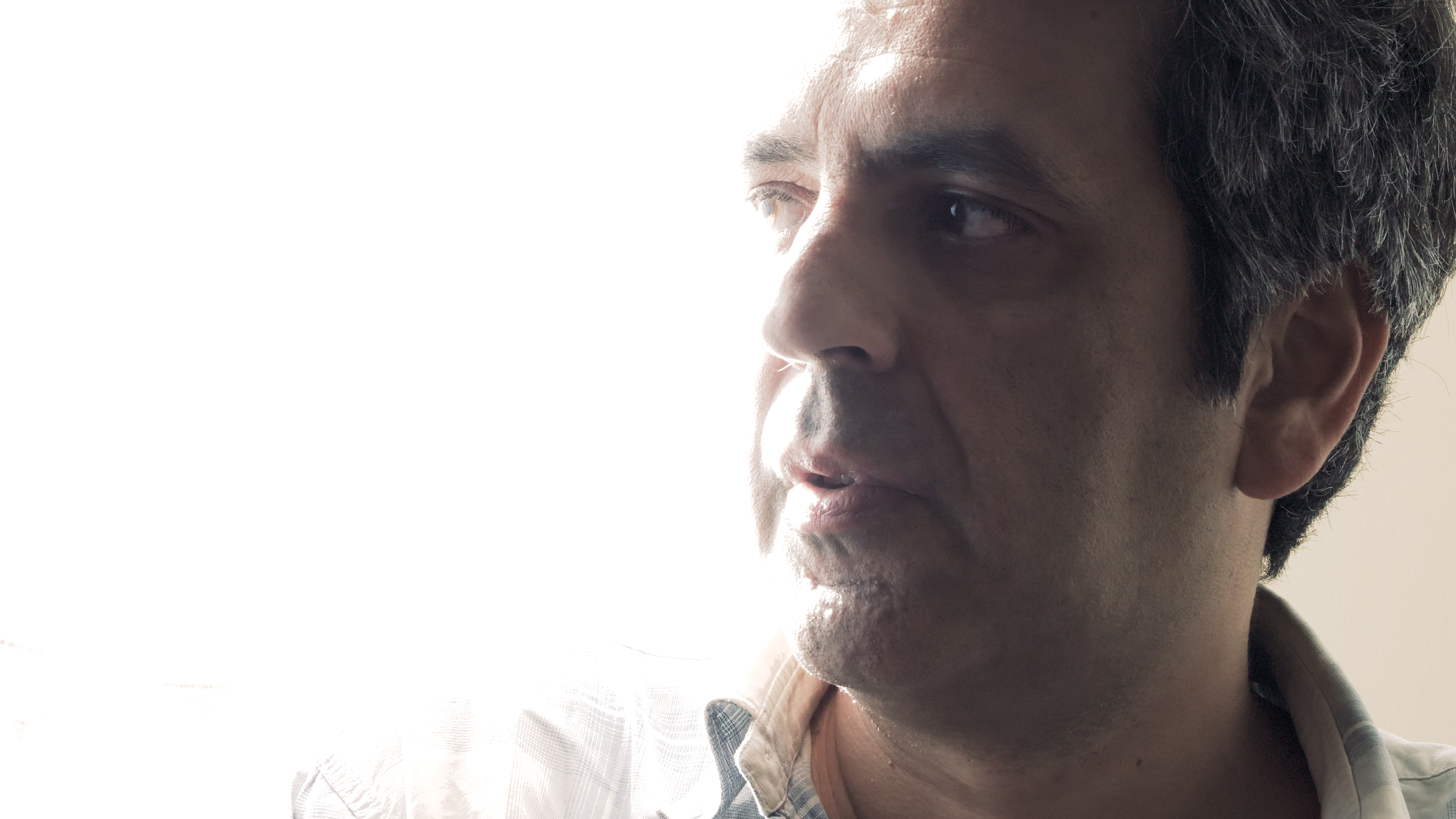
Drama, thriller, by Fabio Del Greco, Italy, 2019.
Someone wants to control the life of the employee Giuseppe Russo: the products he buys, his political and religious faith, his private life, even his dreams. But he will do anything to escape control and find his true self. Giuseppe is a man of around 45, married, with a stable job and a home of his own. His life flows seemingly peacefully when he meets a mysterious tramp who gives him some old VHS video cassettes. Giuseppe begins to see video tapes in which he is filmed in some moments of his life since he was a child, then as a teenager and as a young man. Who shot those videos that he remembers nothing about? Giuseppe has the strange sensation of being constantly observed and begins to investigate what is happening. Through his investigation of him, he begins to rediscover his true identity and become aware of who he truly is.
Employee's Mystery is a film that highlights the danger of social control and shows a society where everyone is constantly monitored and conditioned in their deepest selves. The film is also an analysis of human nature and identity. Fabio Del Greco, who plays Giuseppe, gives an engaging performance. Equally good is Chiara Pavoni, in the role of Giada Rubin and Roberto Pensa in the role of the tramp. Employee's Mystery is a film that addresses important themes in an original way, a psychological thriller that keeps the viewer glued to the screen until the end: a metaphor for contemporary society, in which people are increasingly monitored and conditioned by the media and technologies . It is a courageous and provocative work, which addresses important themes in an original way.
LANGUAGE: Italian
SUBTITLES: English, Spanish, French, German, Portuguese

