
The Silence Before the Word
It happens in the middle of a sentence you are still speaking. The office hum continues, the fluorescent lights maintain their indifferent frequency, someone three desks away is laughing at something on a screen — and then, without warning or invitation, the noise does not stop but simply becomes irrelevant, as though it were happening in a room you are no longer quite inside. You are still there. Your mouth is still moving. But something beneath the ordinary machinery of your awareness has gone completely, terrifyingly quiet. Not peaceful. Not calm in any sense that a wellness application would recognize. Quiet in the way a house is quiet when you realize, only after the fact, that the refrigerator has stopped running — an absence that reveals how loud the presence always was.

This is not a spiritual experience in any sense the word spiritual usually survives. There is no warmth, no light, no feeling of connection to anything larger. There is, instead, a kind of groundlessness that the intellect immediately moves to fill, to paper over, to explain away as tiredness or hunger or a momentary dissociation from stress. You reach for your coffee. The moment closes. The refrigerator starts again.
What you just touched — and immediately fled — a Dominican friar and theologian in late thirteenth-century Germany spent the entirety of his intellectual and spiritual life trying to describe with precision. He was not writing poetry. He was not, as the comfortable hagiography would have it, a gentle mystic dispensing consolation to medieval souls frightened of death. He was conducting what can only be called a philosophical emergency, working in the tradition of Neoplatonism and Scholasticism simultaneously, writing and preaching in both Latin and Middle High German at a moment when the Church was increasingly suspicious of anyone who claimed that the distance between the human and the divine might be, under the right conditions of interior stripping, precisely zero.
His name was Eckhart von Hochheim, born around 1260, likely in Thuringia, and he rose to become Prior of Erfurt, Vicar of Thuringia, and eventually the leading representative of Dominican intellectual life in the German-speaking territories. He studied and taught in Paris, twice held the prestigious chair of theology there, administered entire provinces of his order, and corresponded across the intellectual networks of a Europe that was, despite its apparent solidity, already fracturing under the pressure of questions it did not want to ask. He was not a marginal figure. He was, by any institutional measure, a man at the center of power and learning. And yet what he kept returning to, in sermon after sermon delivered in the vernacular so that people who could not read Latin might still encounter it, was exactly that moment you fled when you reached for your coffee.
He called it, in the German that he was helping to invent as a philosophical language, the Grunt — the ground. Not metaphorically. Not as an image. As an ontological claim: that beneath the operations of the mind, beneath willing and knowing and feeling, there is something in the human being that is not produced by experience, not shaped by history, not the accumulation of everything that has happened to you. Something that simply is. And that this ground is not separate from what he called the Grunt der Gottheit — the ground of the Godhead — not the God of prayer and petition and moral governance, but the absolute, unconditioned source before any distinction, before any name, before even the Trinity as a structure of relationship. A silence before any word, including the word God.
He was accused of heresy before he died, around 1328, with his trial still unresolved. Twenty-eight propositions extracted from his work were condemned by Pope John XXII the following year. He had seen it coming. He had said, with a clarity that must have disturbed everyone who heard it, that he was perfectly prepared to retract any error — because the error could not touch what he was actually describing.
A Dominican in the Age of Inquisition
The Rhine valley in the final decades of the thirteenth century was not the quiet spiritual landscape that later legend would make of it. It was a corridor of commercial violence, ecclesiastical anxiety, and social ferment compressed between the ambitions of territorial princes and the deteriorating authority of a papacy that had not yet recovered from its humiliation at Anagni in 1303, when French agents physically struck Boniface VIII and left the institution of the church visibly mortal. Into this world Eckhart von Hochheim was born around 1260, in Thuringia, the son of a minor knight’s household, entering the Dominican Order as a young man at Erfurt — a city that was itself a knot of contradictions, a thriving merchant center under nominal church jurisdiction, perpetually contested between the Archbishop of Mainz and its own increasingly assertive bourgeoisie.
The Dominican Order that received him was not a community of gentle contemplatives. It had been founded in the early thirteenth century precisely as an instrument of doctrinal enforcement, and by 1231 Gregory IX had formally entrusted the Inquisition to its members. The Dominicans were simultaneously the most intellectually sophisticated order in Christendom and its most reliable heresy hunters. This was not a paradox that anyone within the order found troubling. Thomas Aquinas had died in 1274, leaving behind a synthesis of Aristotelian philosophy and Christian theology so vast and authoritative that subsequent Dominican intellectuals inherited both a tradition of genuine speculation and an institutional obligation to contain that speculation within approved limits. Eckhart was brilliant enough to navigate this double inheritance for decades. He studied in Paris under the influence of Albertus Magnus‘s legacy, was appointed Prior of Erfurt, served as Vicar of Bohemia from around 1307, a position that required him to reform monasteries and impose discipline across a region administratively vast and spiritually chaotic, then returned to Paris to teach — a distinction given only to the most intellectually distinguished, one shared with Aquinas himself. He was, by any external measure, the Order’s prize.
But the Rhineland was also filling with voices the church could not quite categorize. The Beguines — women living communal spiritual lives without formal vows, outside official convents, sometimes preaching, often pursuing interior mystical experience with an intensity that made male ecclesiastical authority deeply uncomfortable — had been spreading through the Low Countries and the Rhine valley since the late twelfth century. By 1310 Marguerite Porete had been burned in Paris for her book “The Mirror of Simple Souls,” a work that described the soul’s dissolution into God in language disturbingly close to what Eckhart himself would later teach from university chairs. The Council of Vienne in 1311 and 1312 issued the decree “Ad nostrum,” condemning a list of propositions attributed to Beguine doctrine, propositions about the soul’s union with the divine, about transcending virtue once perfection is reached, about the irrelevance of external sacramental mediation for the truly illuminated. These were the live wires. And Eckhart was preaching in German to lay audiences throughout this same region, in the same decade, using a vocabulary that circled the same terrain.
What sociology later formalized, history has always demonstrated in practice: institutions do not prosecute individuals for what they believe privately. They prosecute them for what those beliefs produce when they leave the controlled space of the lecture hall and enter the circulation of common life. Norbert Elias, writing about the civilizing process and the management of social behavior through institutional pressure, understood that power tolerates deviance precisely as long as deviance remains legible as controllable exception. When it spreads, when it moves downward through social strata, when it begins to organize people’s interior lives in ways that bypass the mediating institution, then the tolerance ends and the machinery starts.
Eckhart had been prior, vicar, professor, and provincial administrator. He had been, for decades, the institution itself.

The Grunt Beneath the Latin
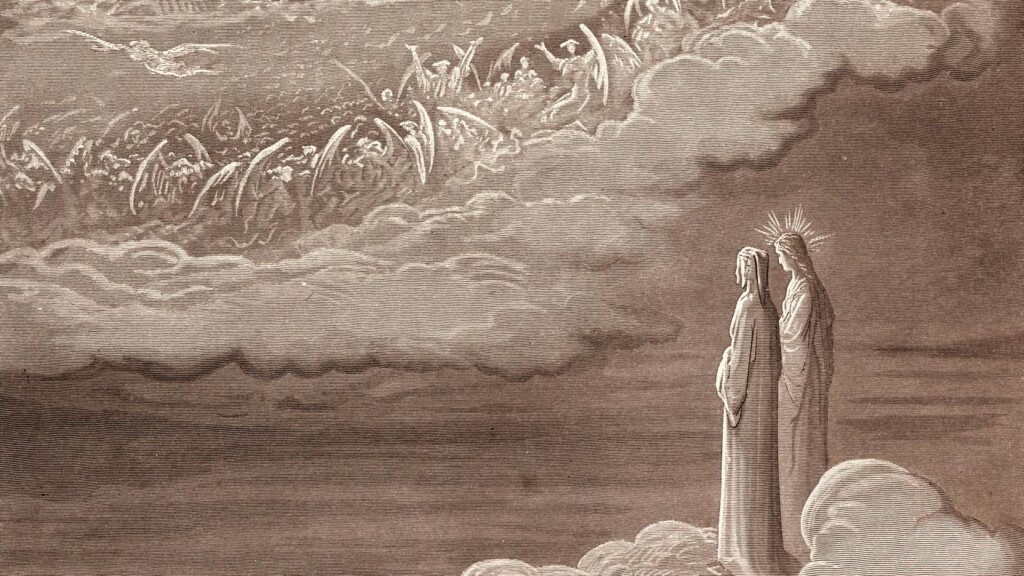
There is a moment most people have experienced and almost never discuss: hearing something you have always half-known spoken back to you not in the language you were taught to respect, but in the one you actually use. Not in the careful register you perform at work or in formal letters, but in the stripped, immediate idiom of the kitchen, the street, the argument at two in the morning. Something shifts in the chest. The idea does not arrive through the mind the way academic propositions do. It lands somewhere lower and faster, as though the body recognized it before the intellect could organize a response.
This is precisely what Eckhart did, and it was not a gesture of kindness. It was an act of calculated violence against a system of control.
Latin was not simply a language in the thirteenth and fourteenth centuries. It was a wall. It was the material substance of clerical authority, the medium through which the Church maintained its monopoly on interpretation, salvation, and truth. To possess Latin was to possess access; to lack it was to be permanently positioned as a receiver, never a reader, never a thinker, never a subject capable of direct encounter with the sacred. When Eckhart began writing his sermons and treatises in Middle High German — the vernacular spoken by merchants, beguines, craftsmen, women who would never enter a university — he was not translating doctrine into simpler terms for simpler minds. He was doing something far more destabilizing: he was suggesting that the deepest movements of the soul were available to those the institution had classified as intellectually and spiritually subordinate.
Walter Ong spent decades demonstrating that the shift from oral to literate culture is never merely technological. In his 1982 work Orality and Literacy, Ong argued that writing restructures consciousness itself, and that different languages carry different relationships to power, memory, and the body. The spoken vernacular retains what Ong called the “agonistic” quality of oral thought — it is participatory, situational, physically immediate. Latin, by contrast, had become by Eckhart’s era what Ong described as a “learned language,” no longer anyone’s mother tongue, maintained artificially by institutions precisely because its distance from lived experience gave it an aura of permanence and authority. When Eckhart collapsed that distance, he was not simplifying theology. He was reintroducing the body into a discourse that had carefully expelled it.
Ivan Illich, reading medieval textual culture with the precision of an anthropologist and the fury of a heretic, understood that the book in the high medieval period was not a democratic object. In In the Vineyard of the Text, his 1993 meditation on Hugh of Saint Victor, Illich traced how the twelfth century had begun converting the manuscript from a medium of contemplative listening into an instrument of professional reference — something to be searched, indexed, controlled. Eckhart’s turn to the vernacular cuts against this trajectory at an angle. It returns language to the breath, to the unrepeatable moment of address, to the human voice speaking directly into another human ear without the institutional machinery of translation and gatekeeping standing between them.
Language choice is always political. Every writer who has ever been told their dialect is not serious, that their accent marks them as uneducated, that the ideas they carry deserve a more elevated vehicle before anyone will consider them — they already know this. Eckhart knew it from the other direction. He chose the grunt beneath the Latin not because he could not manage the Latin — his academic sermons demonstrate a command of scholastic argumentation that matched any Dominican of his generation — but because he understood that certain truths change their nature when they pass through certain gates. Strip the gate away, and the truth does not become cheaper. It becomes dangerous.
Gelassenheit and the Trap of the Self
There is a moment, and you may have already lived it without knowing what to call it, when everything you have built holds perfectly still and means nothing. Not in the sense of despair — despair still cares, despair is grief for something that mattered. This is different. The degrees on the wall, the salary, the reputation assembled across decades of careful effort, the image others reflect back to you — all of it present, intact, and suddenly opaque. A man stands in the middle of his own life and cannot locate the person who wanted any of this. The ambition is there, documented in every decision he ever made. But the one who was supposed to arrive at the destination seems to have been a fiction the entire time.
Meister Eckhart called this moment, or rather the discipline of living inside this moment, Gelassenheit. The word resists translation precisely because every translation domesticates it into something the modern mind can absorb without being destroyed by it. Releasement, letting-go, detachment — these render it as a spiritual technique, a variety of mindfulness, something you might practice between appointments. That is almost exactly the opposite of what Eckhart meant. Gelassenheit is not a posture you adopt. It is the evacuation of the self as a project. It means releasing not your stress, not your anxieties, but your will — the very structure of wanting, choosing, and becoming that Western modernity has spent roughly four centuries consecrating as the definition of personhood.
Heidegger understood this with uncommon seriousness. In his 1959 discourse collected under the title Gelassenheit, he returned to Eckhart not as a curiosity from medieval mysticism but as a thinker who had identified something philosophy had since buried: the possibility of a mode of thinking that does not will, does not calculate, does not project. Heidegger called it Gelassenheit toward things and openness to mystery, and he was explicit that this was not passivity. It was a different orientation entirely, one that calculative thinking — the thinking that dominates technology, economics, self-optimization — structurally cannot reach. His debt to Eckhart is not decorative. The entire critique of Gestell, of the modern tendency to reduce everything including the human being to a resource to be ordered and deployed, has its quiet root in the Dominican friar’s sermons.
What Eckhart diagnosed is that the self is not a thing you find. It is a thing you manufacture, continuously, through willing. Every act of self-definition — I am this kind of person, I want this kind of life, I have achieved this — is another stone in a wall that you believe you are building for shelter but that is in fact a prison the architecture of which you have confused with your own face. The ego is not your depths. It is your surface, organized to resist depth. And Gelassenheit is the name Eckhart gave to the terrifying act of letting that surface dissolve, not into nothingness, but into what he called the ground, the Grunt — the place where the soul and God share an identical foundation that no personal identity can enter because personal identity is precisely the obstacle.
This is why that man standing in the middle of his own life, suddenly unable to remember why any of it was supposed to matter, is not having a breakdown. He is having a glimpse. The horror he feels is not the horror of loss. It is the horror of seeing that the thing he thought he was protecting was never there to begin with — that the self he spent his entire adult life constructing was always a performance for an audience that included, above all, himself. Eckhart would not comfort him. He would tell him he is standing, for perhaps the first time, at the edge of something real.
The Birth of the Word in the Soul

There is a moment you have probably lived without marking it as significant. Someone is speaking to you, mid-sentence, about something ordinary, and a thought surfaces not from what they are saying but from somewhere beneath it, a thought you recognize immediately as yours, as old, as something you must have always known without ever having found the words for it. You did not learn it in that instant. You excavated it. The difference is everything.
This is precisely the terrain Eckhart was working in his German sermons, those vernacular addresses delivered to communities of Rhineland nuns and urban laypeople who had no access to the Latin of the schools. The Predigten return, with the insistence of an obsession, to a single image: the birth of the Word inside the soul. Not as analogy, not as devotional metaphor to comfort those who would never read Aquinas, but as ontological event. Something is actually happening, Eckhart insists, and it is happening now, inside the very structure of what you are.
Orthodox Christianity had built its entire architecture around a directionality: the soul moves toward God, climbs, ascends, purifies itself through sacrament and contrition until, by grace, it is received into proximity with the divine. The distance is constitutive. God remains on the far side of a gulf that only mercy can bridge. Eckhart quietly dismantles this geography. The soul does not travel toward the origin, he argues, because the soul is where the origin perpetually arrives. The Father speaks the Word eternally, and that speaking does not happen outside of you and then reach you. It happens in the ground of the soul, in what Eckhart calls the Seelengrund, the soul’s ground, which is not a part of the soul but its most intimate depth, the place where creature and Creator share a single silence.
The theological audacity here is almost violent in its implications. If the Word is born in the soul as it is born in eternity, then the soul is not a recipient of divine action from without. It is the site where the divine action is itself constituted. The preacher who says this to a room full of women who have been told their entire lives that they are at the bottom of a hierarchy of access to God is not offering consolation. He is offering something far more destabilizing.
Hannah Arendt, working in a completely different register more than six centuries later, identified what she called natality as the fundamental human condition: the capacity to begin, to introduce something radically new into the world, to be the origin of action that was not determined by what came before. Arendt drew this concept partly from Augustine, but the Eckhartian current running through it is unmistakable. The soul in Eckhart’s sermons is precisely a site of beginning, not beginning in time but beginning as the structure of being itself. Every moment the Word is born is the first moment. There is no repetition in the Seelengrund because there is no time there to measure sequence.
Think of the man who sits across a table from someone who has just said something unremarkable, and in the pause that follows he understands that a decision he believed he made three years ago was never actually a decision. He had known the answer before the question was posed. The knowing was always there, underneath the anxiety and the deliberation, waiting not to be discovered but to be allowed. What he experiences in that pause is not new information. It is recognition. Eckhart would say he has heard the Word that was always already being spoken.
This is why Eckhart insists that the birth is not something you prepare for or earn. Preparation implies futurity, implies distance, implies that you are not yet at the place where the thing happens. But the place where the thing happens is what you are.
A vision curated by a filmmaker, not an algorithm
In this video I explain our vision
Tried, Condemned, and Absorbed
The summons arrived in 1326 not as a philosophical challenge but as an administrative procedure. Heinrich II von Virneburg, Archbishop of Cologne, initiated proceedings against Eckhart with the quiet efficiency of an institution that has long understood that the most effective way to silence a voice is not to argue with it but to reclassify it. The charge was heresy, but the deeper operation was taxonomic: to move Eckhart from the category of teacher to the category of problem, and thereby dissolve everything he had said into the amber of institutional suspicion.
Eckhart responded with a defense that remains remarkable for its composure. He did not recant. He distinguished, clarified, contextually repositioned — the standard gestures of a scholastic mind navigating ecclesial power — but he never surrendered the essential core. He declared himself a son of the Church, which was both sincere and strategic, a way of insisting that the Church had no legitimate quarrel with what he taught because what he taught was the Church’s own deepest truth, recovered rather than invented. He died before the verdict arrived, somewhere around 1328, which meant he was denied even the dignity of a direct condemnation. The machinery kept moving without him.
In March 1329, Pope John XXII issued the bull In agro dominico. Twenty-eight propositions extracted from Eckhart’s sermons and treatises were condemned — seventeen as heretical, eleven as “evil-sounding, rash, and suspect of heresy.” The language of that second category is worth pausing over. Not heretical. Suspect of heresy. Evil-sounding. This is the vocabulary of institutional unease rather than doctrinal certainty, the fingerprints of an authority that knows it cannot fully refute what it fears, and so settles for contaminating it. The bull noted, with a kind of bureaucratic magnanimity, that Eckhart himself had recanted before his death — a claim Eckhart could no longer dispute. It was a clean posthumous operation.
Michel de Certeau, writing in The Mystic Fable in 1982, identified precisely this mechanism. Mysticism as a named category, he argued, was not discovered but produced — invented in the late medieval and early modern period as a way of housing experiences that threatened to dissolve the boundary between institution and interiority, between the Church as administrator of grace and the soul as its direct recipient. The mystic is tolerated, even celebrated, only once safely enclosed within the category: extraordinary, exceptional, individual, past. What cannot be tolerated is the suggestion that ordinary thinking is itself already mystical, that the ground of being is available to anyone who stops performing selfhood long enough to notice it. That is the genuinely dangerous proposition, and it is also precisely what Eckhart taught.
The condemned propositions were not random selections. They clustered around the questions that most destabilized hierarchy: the soul’s identity with the divine ground, the poverty of will and intellect, the irrelevance of external works to interior transformation. Strip those out and you have a perfectly manageable Eckhart, a pious Dominican, a skilled preacher, a man of his time. Which is, more or less, what certain periods of Church history attempted to produce. The condemnation did not destroy Eckhart’s influence. It redirected it, filtered it, defanged it — allowed the emotional warmth of his language to survive while quarantining its structural implications.
This is how institutions absorb what they cannot defeat. The mechanism is not suppression but digestion. The radical becomes the exceptional. The exceptional becomes the inspirational. The inspirational gets framed, mounted, sold. You can buy a calendar with Eckhart’s quotations. You can find his words on wellness blogs, stripped of their ontological vertigo, reduced to affirmations about stillness and presence. The Church did not destroy Meister Eckhart. It did something more thorough: it made him safe. And safety, for a thought that was designed to undo the foundations of ordinary self-understanding, is the most complete form of erasure available.
What Cannot Be Domesticated
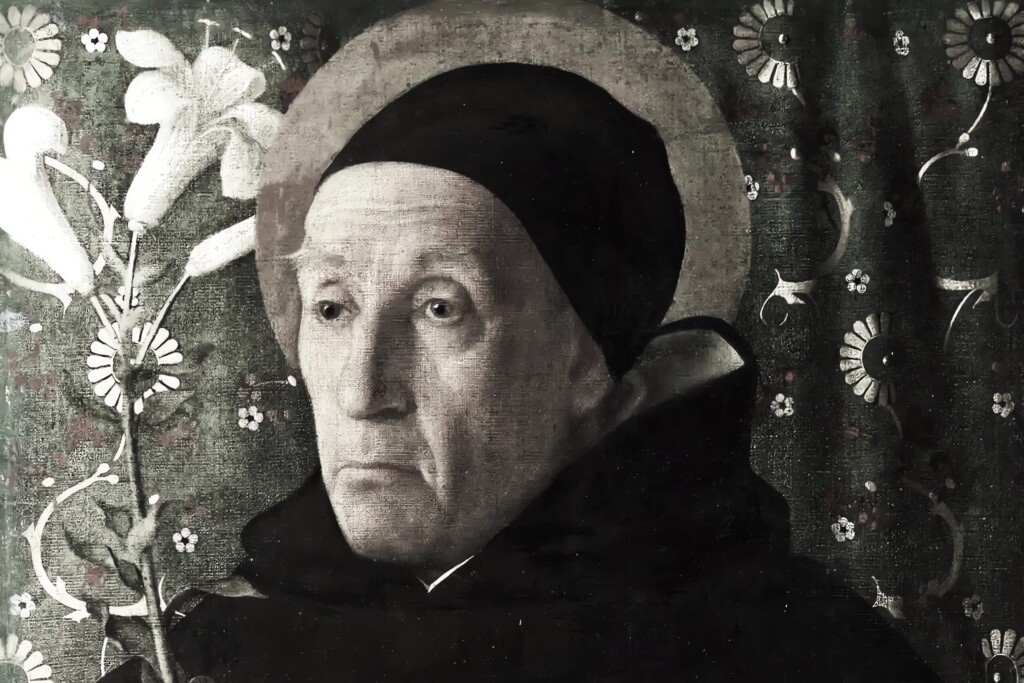
There it is again — that moment you have been in before and will be in again, the one that arrives without asking permission. The subway car empties at a station and for three seconds you are alone in it, the fluorescent hum above you, your reflection in the black window across from you, and something that is not quite thought and not quite feeling drops through the floor of your chest like a stone into water. Not peace, exactly. Not discomfort. Something prior to both. Then the doors open and people flood back in and you reach for your phone and the stone disappears and you cannot even say with certainty that it was there.
Civilization’s deepest reflex is the speed with which it hands you a name for that moment. Fatigue. Dissociation. A blood sugar dip. A side effect of the news cycle. The naming is not malicious — it is structural. Every institution, every social grammar, every therapeutic framework we have built across the last four centuries has been organized around the premise that inner vacancy is a problem to be solved rather than a threshold to be crossed. William James, writing in 1902 in The Varieties of Religious Experience, identified what he called the “noetic quality” of mystical states — the sense that they deliver knowledge of something real — and spent the rest of his career trying to give that quality a scientific address, to make it respectable, containable, useful. The domestication instinct is that powerful: even the most generous minds reach for the cage.
Eckhart did not reach for it. That is the scandal that outlasted his trial, outlasted the papal bull, outlasted seven centuries of commentary. What he described was not a technique. You cannot practice your way into the Grunt. You cannot accumulate the Abgeschiedenheit the way you accumulate a meditation streak on an app. The whole architecture of self-improvement — the premise that you are a project, that the self is a work in progress, that with sufficient effort you will arrive somewhere better — is precisely what he said must be abandoned. Not improved. Abandoned. The distinction is the difference between renovating a house and understanding that the house was never yours.
This is what happens to people in hospital waiting rooms. Not the ones waiting for good news, but the ones who have been waiting long enough that the question of good or bad news has temporarily ceased to feel like the most important thing. Something underneath the fear, underneath the hope, underneath the story of who they are and what they stand to lose — something opens. They do not choose it. It chooses them, or more precisely, it happens in the space where they had been. A man sitting with his hands on his knees, not praying, not thinking, not composing himself — simply there, and then somehow more than there, and then back again when the nurse appears at the door. He will probably never speak of it. If he does, he will call it shock, or numbness, or the strange calm before bad news. The language will close over it like water over a thrown stone.
What Eckhart insisted, in the Latin and Middle High German of the early fourteenth century, in lecture halls and convents and eventually in the formal proceedings of a heresy investigation, was that this closing-over is the original error. That the stone is not nothing. That what the stone touches on its way down is the only thing that was ever real. He never resolved the problem his own thinking created, and perhaps that is the most honest thing about him — he arrived at the edge of language and reported faithfully on what the edge felt like, without pretending there was solid ground on the other side. If you release everything, including the one who releases, what remains is not silence, because silence is still a quality, still something the mind can hold at arm’s length and name, and whatever Eckhart pointed toward is precisely what survives the loss of every name you could give it.
🌿 Mystics, Seekers, and the Architecture of the Sacred
Meister Eckhart stood at the crossroads of medieval theology, contemplative practice, and radical philosophical inquiry. His thought did not emerge in isolation — it was nourished by the spiritual and artistic world of medieval Europe, shaped by the same cathedrals, monastic traditions, and mystical currents that defined an entire civilization. These related articles invite you to explore the broader landscape that gave birth to his visionary mysticism.
Medieval Abbeys and Monasteries: History and Architecture
Meister Eckhart lived and preached within the rich institutional world of medieval abbeys and monasteries, where contemplative life was both a daily discipline and a spiritual vocation. These communities were not merely places of prayer but also centers of learning, manuscript production, and theological debate that profoundly shaped his thought. Understanding their history and architecture reveals the material and spiritual environment in which his mystical philosophy was formed.
GO TO THE SELECTION: Medieval Abbeys and Monasteries: History and Architecture
Gothic Cathedrals: History and Symbolism
Gothic cathedrals were far more than architectural achievements — they were theological statements in stone, expressing through light, verticality, and symbol the very transcendence that Eckhart sought in his sermons. The soaring naves and luminous windows embodied a metaphysics of the divine that resonated deeply with his concept of the soul’s ascent toward the Godhead. Exploring their history and symbolism offers a visual counterpart to Eckhart’s most interior and ineffable mystical insights.
GO TO THE SELECTION: Gothic Cathedrals: History and Symbolism
The Corpus Hermeticum: Guide to Esoteric Reading
The Corpus Hermeticum represents one of the foundational texts of Western esoteric and mystical thought, sharing with Eckhart’s philosophy a profound concern with the soul’s unity with the divine and the nature of inner illumination. Both traditions speak of a hidden truth accessible only through inner transformation rather than external doctrine. Reading this esoteric guide alongside Eckhart opens unexpected resonances between Christian mysticism and the broader Hermetic current.
GO TO THE SELECTION: The Corpus Hermeticum: Guide to Esoteric Reading
Rudolf Steiner and Anthroposophy: A Guide to Modern Esoteric Thought
Rudolf Steiner and Anthroposophy offer one of the most significant modern engagements with the mystical tradition that Eckhart helped inaugurate, drawing directly on the German speculative mysticism of the medieval period. Steiner explicitly acknowledged Eckhart as a precursor to his own attempt to unite spiritual knowledge with inner development. This article provides a rich context for understanding how Eckhartian mysticism continued to inspire esoteric and spiritual movements well into the twentieth century.
GO TO THE SELECTION: Rudolf Steiner and Anthroposophy: A Guide to Modern Esoteric Thought
Discover the Cinema of the Soul on Indiecinema
If Meister Eckhart’s journey into the depths of mystical experience has stirred something in you, Indiecinema is the place to continue that exploration through the power of moving images. Our streaming platform gathers independent films, documentaries, and visionary works that touch the same questions of transcendence, meaning, and inner transformation. Join us and let cinema become your own path toward the infinite.
👉 EXPLORE THE CATALOG: Watch Indie Films in Streaming
A vision curated by a filmmaker, not an algorithm
In this video I explain our vision

