
There is a cinema of horror that operates on a different frequency, a territory where terror creeps slowly under the skin rather than jumping from the shadows. The collective imagination is marked by masterpieces that defined the genre, from Psycho to The Shining, works that use suspense to explore madness. But fear is not just a jump scare; it is a state of mind.

It is a cinema that feeds on ambiguity and “slow burn.” It forces the viewer to constantly doubt the reliability of perception, where the real monster is often uncertainty itself. The lack of lavish special effects often relies on suggestion, and today a new wave of “arthouse horror,” often associated with A24, deliberately chooses psychological depth.
This guide is a journey into that territory. We will explore films that have used trauma, grief, and paranoia as the beating heart of the story. Beyond the great masters, there is an entire universe of independent cinema that uses the horror genre as a vehicle to explore the darkest corners of the human condition.
🧠 The Mind as a Trap: New Nightmares (2023-2025)
Longlegs (2024)
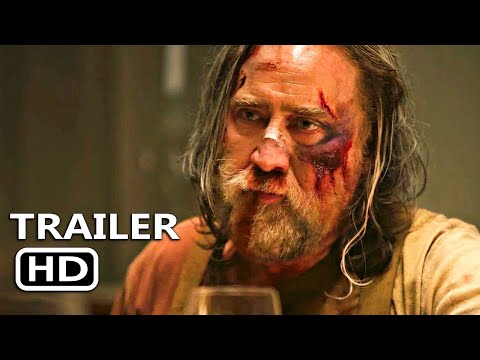
FBI agent Lee Harker, gifted with near-psychic abilities, is assigned to the cold case of a serial killer known as “Longlegs.” The killer never touches his victims but induces fathers to slaughter their own families through cryptic letters and an almost subliminal satanic influence. The investigation leads Lee to uncover a terrifying personal link to the killer. Directed by Osgood Perkins (son of Psycho‘s Anthony Perkins), this film is a masterpiece of dread. There are no classic jump scares; fear is built through wide shots, deafening silences, and a constant sense of malaise. Nicolas Cage offers an unrecognizable and disturbing performance in a film that mixes The Silence of the Lambs-style procedural with occult horror, getting under the viewer’s skin and refusing to leave.

The Substance (2024)

Elisabeth Sparkle (Demi Moore) is a fading Hollywood star, fired from her fitness show for being considered too old. Desperate, she accepts a mysterious treatment called “The Substance,” which allows her to generate a younger, more perfect version of herself (Margaret Qualley). But the two “souls” must share time in a rigorous balance: one week for one, one week for the other. When the younger alter ego starts wanting more, the psychological and physical consequences are monstrous. Winner of Best Screenplay at Cannes, Coralie Fargeat’s film is a brutal and satirical psychological body horror. It is a scream against the obsession with youth and internalized misogyny. The horror stems from body dysmorphia and self-hatred: how far can one mutilate oneself (mentally and physically) to be loved? Visually stunning and grotesque, it is destined to become an immediate cult classic.
I Saw the TV Glow (2024)

Owen, a lonely teenager, is introduced by a classmate to a mysterious late-night TV show called The Pink Opaque. The series becomes their only escape from a gray and oppressive reality. But as the years pass and the show is canceled, Owen begins to suspect that the television world was the real one and that his current life is just a suffocating nightmare he cannot wake up from. Jane Schoenbrun signs a psychological horror for A24 about identity, dysphoria, and toxic nostalgia. It is not a film that tries to scare in the traditional sense, but to deeply disorient and sadden. It uses lo-fi aesthetics and surrealism to tell the terror of living a life that does not belong to you, trapped in the wrong body or society. It is a dreamlike, neon-colored, and devastating experience.
Stopmotion (2024)

Ella is a stop-motion animator who has lived her whole life in the shadow of her mother, a celebrated and tyrannical artist. When her mother falls ill, Ella begins working on a film of her own, using raw meat and organic materials for her puppets. As the work progresses, the boundaries between her macabre creation and reality begin to crumble, and the puppets seem to come to life to torment her. This British film is a visceral nightmare about artistic madness. The stop-motion technique, usually associated with childhood magic, here becomes a vehicle for pure horror. The film explores trauma and the loss of control, visualizing the protagonist’s fractured psyche through disturbing animations that move in jerks. It is a sensory work: the sound of meat being molded and the creaking of puppet bones are as terrifying as the plot itself.
A vision curated by a filmmaker, not an algorithm
In this video I explain our vision
Heretic (2024)

Two young Mormon missionaries knock on the wrong door: that of Mr. Reed (Hugh Grant), an apparently affable and cultured English gentleman. Invited in to discuss theology, the girls soon realize they have walked into a sophisticated trap. Reed does not want to convert but to test their faith through a series of sadistic and deadly psychological games. A24 brings to the screen a “theological horror” that relies entirely on words and manipulation. Hugh Grant, in a rare villain role, is terrifying precisely because he is rational and calm. The horror here is intellectual: the film dismantles the protagonists’ (and the viewer’s) certainties piece by piece, transforming a religious debate into a fight for survival inside a house that is both a physical and mental maze.
Late Night with the Devil (2024)

Halloween, 1977. Jack Delroy, a late-night talk show host facing a ratings crisis, organizes a special episode dedicated to the occult. Guests include a parapsychologist and a young girl who survived a satanic cult’s mass suicide. As the broadcast goes live, inexplicable events begin to occur in the studio, unleashing a collective hysteria that crosses through the screen. Presented as television “found footage,” the film perfectly captures the aesthetic and paranoia of the 70s. The psychological horror stems from the protagonist’s desperation, willing to sacrifice morality and everyone’s safety just to get the ratings. It is a media satire that slides into supernatural terror, exploring how the hunger for fame can open doors that should remain closed.
Speak No Evil (2022)

A Danish family on vacation in Tuscany makes friends with a Dutch family. Months later, they accept an invitation to visit their country home in the Netherlands. What starts as an idyllic weekend slowly turns into a nightmare of social awkwardness, boundary violations, and passivity. The hosts become increasingly sinister, and the guests, paralyzed by politeness and the fear of offending, accept increasingly grave abuses until an annihilating finale. (Note: Although an American remake was released in 2024, the 2022 Danish original remains the essential and more powerful work). It is the definitive film on “toxic politeness.” The psychological horror here is unbearable because it is completely preventable: the victims could leave at any moment, but they don’t out of social convention. It is a fierce critique of modern society that prefers comfort over survival.
Beau Is Afraid (2023)

Beau (Joaquin Phoenix) is a middle-aged man paralyzed by anxiety and an unresolved relationship with his castrating mother. When he must embark on a journey to return home for her funeral, his odyssey turns into a surrealist and Kafkaesque nightmare, where all his most irrational fears take physical life. Ari Aster (Hereditary, Midsommar) abandons classic horror for a three-hour psychological black comedy. It is a journey inside the mind of a neurotic, where reality is constantly warped by paranoia. It is not scary in the traditional sense, but creates a suffocating sense of anguish. It is a divisive, excessive, and monumental film about the legacy of family trauma and the terror of existing in the world.
🧠 The Meanders of Madness: Explore Other Nightmares
Psychological horror is a vertical descent into the abyss of the mind, but fear takes many other forms. If you are done exploring trauma and paranoia, here are other dark doors to open to continue your journey into the cinema of unease.
Thriller Movies
Sometimes you don’t need monsters or hallucinations to be afraid: a human being with bad intentions and a situation with no way out are enough. If you are looking for pure suspense, mind games, and tension that keeps you glued to your seat, this is your destination.
👉 GO TO THE LIST: Thriller Movies
Supernatural Horror Movies
Often the line between madness and the paranormal is razor-thin. Ghosts, demons, and invisible presences are often metaphors for our inner demons. Discover films where the horror is not just in the head, but truly hides in the darkness of the room.
👉 GO TO THE LIST: Supernatural Horror Movies
Cult Movies
From The Shining to Rosemary’s Baby, cinema masters laid the foundations of modern horror by challenging censorship and good taste. Here you will find the immortal masterpieces that defined the rules of fear and that every enthusiast must see at least once.
👉 GO TO THE LIST: Cult Movies
Horror and Indie
Independent horror is where the boldest and most disturbing ideas are born, far from the clichés of Hollywood jump scares. Explore our streaming catalog to discover new, raw, and terrifying voices that dare to look where others look away.
👉 BROWSE THE CATALOG: Stream Indie Horror Movies
🧠 The Labyrinth of the Psyche: The Classics
Before horror became synonymous with digital jump scares, the great masters of cinema knew that the deepest fear lives not in closets, but in the silence of our own minds. From Hitchcock to Kubrick, through the disturbing visions of Lynch and Polanski, this section collects the milestones that turned madness, isolation, and paranoia into art. These are the films that taught the world that the most haunted place on Earth is the human brain, and that sometimes the most terrifying monster is the one staring back at us from the mirror.
Psycho (1960)

Marion Crane, on the run after stealing a large sum of money, finds refuge at the lonely Bates Motel. She is welcomed by the shy and seemingly harmless Norman Bates, oppressed by the invisible presence of his “Mother.”
Alfred Hitchcock shifted the axis of horror. Before Psycho, evil was supernatural (vampires, ghosts). Afterward, the monster became our next-door neighbor. This film is the founding father of modern psychological horror because its suspense derives not from the violent act (the famous shower), but from the discovery of psychosis. The horror is the splitting of identity, sexual repression, and the terrifying normality that conceals a mental abyss.
Rosemary’s Baby (1968)

Rosemary and Guy Woodhouse, a young couple seeking success, move into a prestigious but unsettling New York apartment building. When Rosemary becomes pregnant under mysterious circumstances, her paranoia grows: she suspects her eccentric elderly neighbors are part of a satanic cult with sinister plans for her baby.
Polanski orchestrates the perfect symphony of gaslighting. The true horror of Rosemary’s Baby is not (just) satanism, but the psychological abuse the protagonist endures. Her husband, her doctor, her neighbors: everyone tells her she is exaggerating, that she is just “hysterical.” The creepy atmosphere builds as Rosemary is isolated and stripped of her autonomy. Her fight for sanity against a social conspiracy is terrifying.
The Haunting (1963)

An anthropologist investigates the paranormal phenomena of the sinister “Hill House,” bringing with him two women chosen for their psychic sensitivity. Among them is Eleanor, a fragile and repressed woman, who develops a dangerous and personal connection with the house.
Directed by Robert Wise, this is perhaps the greatest haunted house film ever made, precisely because it understands that psychological horror is more powerful than visual horror. The Haunting terrorizes using sound, camera angles, and, above all, ambiguity. Is the house truly haunted, or are we witnessing the psychological breakdown of Eleanor, who projects her repressed desires and fears onto the walls? The film suggests the real haunted house is our own mind.
Don’t Look Now (1973)

After the tragic drowning death of their daughter, John and Laura Baxter move to Venice for work. The city, labyrinthine and spectral, becomes the setting for their unresolved grief. An encounter with two elderly sisters, one of whom claims to be in contact with the child, draws them into a vortex of premonitions and pain.
Nicolas Roeg uses editing in a revolutionary way to simulate the psychological state of trauma and grief. The film fragments time, mixing past, present, and future premonitions. Venice, with its foggy canals and dead-end alleys, is the mental labyrinth of the protagonists. The inner fear here is not a demon, but grief itself and the inability to process loss, which leads to an inescapable fate.
The Shining (1980)

Jack Torrance accepts a job as the winter caretaker of the Overlook Hotel, a huge, isolated hotel in the Colorado mountains. He brings his wife Wendy and son Danny, who possesses psychic powers. The isolation, combined with the hotel’s evil forces, drives Jack into a spiral of homicidal madness.
Stanley Kubrick delivers the definitive masterpiece of architectural and psychological horror. The Overlook Hotel is not just haunted; it is an entity that feeds on the psychological weaknesses of its occupants. The Shining is an exploration of writer’s block, alcoholism, domestic violence, and the weight of history. The hotel’s impossible geometry and the hypnotic use of the Steadicam make us feel as lost as the protagonists, trapped in a cycle of madness.
Blue Velvet (1986)

The discovery of a severed human ear in a field prompts the young and naive Jeffrey Beaumont to investigate. His curiosity leads him into the dark, perverse underbelly of his idyllic suburban town, plunging him into the sadomasochistic world of singer Dorothy Vallens and the terrifying Frank Booth.
David Lynch doesn’t create horror, he creates nightmares. Blue Velvet is a surrealist exploration of the American psyche, of the decay hidden beneath the polished surface. Frank Booth, with his gas mask, is the incarnation of the Freudian Id, a concentration of violent impulses. The film is a disturbing psychological descent into voyeurism and the discovery of the duality between innocence and depravity hidden in everyone.
Jacob’s Ladder (1990)
![Jacob's Ladder (1990) ORIGINAL TRAILER [HD 1080p]](https://blog.indiecinema.co/wp-content/plugins/wp-youtube-lyte/lyteCache.php?origThumbUrl=https%3A%2F%2Fi.ytimg.com%2Fvi%2FtLulu1Ovi2c%2F0.jpg)
Jacob Singer is a Vietnam veteran living in New York, haunted by disturbing war flashbacks and demonic, distorted visions. His reality begins to unravel, the lines between past and present, dream and reality, becoming indistinguishable.
This film by Adrian Lyne is one of the most effective depictions of post-traumatic stress disorder (PTSD) ever put on screen. The entire narrative structure is designed to destabilize. The viewer is forced to experience Jacob’s psychological confusion, a man whose perception of the world has been irreparably fractured. The horror is not in the monsters (real or imaginary), but in the total loss of control over one’s own mind.
The Silence of the Lambs (1991)

Clarice Starling, a young and ambitious FBI trainee, is assigned to interview Dr. Hannibal Lecter, a brilliant psychiatrist and ruthless cannibal, to gain his help in capturing another serial killer, “Buffalo Bill.
Although it is a psychological thriller, Jonathan Demme’s work is infused with pure horror. The fear stems not from explicit violence, but from dialogue. The encounters between Clarice and Lecter are psychological duels that take place in the cells of the mind. Lecter doesn’t attack Clarice’s body, but her psyche, digging into her childhood traumas. The horror is verbal, intellectual, and deeply manipulative.
Se7en (1995)

Two opposing detectives, the disillusioned veteran Somerset and the impulsive young Mills, hunt a methodical serial killer. The killer, John Doe, bases his gruesome murders on the seven deadly sins, orchestrating a descent into a moral and psychological hell.
David Fincher creates an oppressive, perpetually rainy world that mirrors psychological despair. Se7en is a masterpiece of psychological tension because its goal is not just to shock, but to destroy. The killer doesn’t just want to kill; he wants to prove a thesis, to corrupt the souls of his pursuers. The film denies us catharsis, culminating in an ending that is a psychological gut-punch, a triumph of nihilism.
The Others (2001)

On the island of Jersey, at the end of World War II, Grace awaits her husband’s return from the front. She lives isolated in a large, fog-shrouded mansion with her two children, who suffer from a rare disease that prevents them from being exposed to sunlight. The arrival of three mysterious servants coincides with strange phenomena that convince her the house is haunted.
Alejandro Amenábar directs a masterful and tense gothic film, relying entirely on atmosphere and the construction of fear. The Others is an essay on psychological repression. Grace, oppressed by a rigid religious faith and grief, denies a truth her mind cannot accept. The fear comes not from ghosts, but from doubt, isolation, and the strict rules (the curtains always closed) that turn the house into a prison of the mind.
Black Swan (2010)

Nina is a devoted and technically perfect ballerina in a prestigious New York City ballet company. The pressure to win the dual role of the White Swan and Black Swan in “Swan Lake” pushes her beyond her limits, triggering a paranoid and self-destructive descent into her dark side.
Darren Aronofsky uses body horror as a metaphor for psychological disintegration. The pursuit of artistic perfection becomes a nightmare. Black Swan is terrifying because it depicts the fragmentation of identity (the doppelgänger theme) and the psychosis arising from unbridled ambition and sexual repression. Nina’s physical transformation is merely the outward manifestation of her breaking mind.
The Babadook (2014)

Amelia, a widowed mother, struggles to raise her difficult six-year-old son, Samuel, still haunted by her husband’s violent death. When a disturbing pop-up book titled “Mister Babadook” mysteriously appears in their home, Amelia must confront a sinister presence that seems to feed on her fear and resentment.
Jennifer Kent’s debut film is a benchmark for modern “elevated horror.” The Babadook is not just a monster; it is a powerful and terrifying metaphor for unresolved grief, depression, and repressed anger. The psychological horror here explores the taboo of failed motherhood. The real fear is not that the monster will harm the child, but that the mother herself will become the monster.
Get Out (2017)

Chris, a young African-American photographer, prepares to meet his white girlfriend Rose’s parents for the first time. The weekend at their suburban estate begins with an awkward “liberal” cordiality but soon transforms into a chilling nightmare when Chris discovers the horrific truth hidden behind their smiles.
Jordan Peele redefined the genre, using psychological horror as a vehicle for powerful social critique. The horror of Get Out is gaslighting on a racial scale. “The Sunken Place” is a brilliant visual metaphor for psychological paralysis, the loss of identity, and the powerlessness in the face of a system that smiles at you while devouring you. It is a nightmare where your body and mind no longer belong to you.
Hereditary

After the death of her enigmatic mother, miniature artist Annie Graham and her family begin to unravel. Consumed by grief, they are tormented by increasingly terrifying and sinister events, discovering a dark fate they may have inherited and cannot escape. What begins as a family tragedy transforms into a nightmare from which there is no awakening.
Ari Aster’s Hereditary is a landmark of contemporary psychological horror, a work that masterfully blends a devastating family drama with an inescapable supernatural horror. Its strength lies in a terrifying ambiguity: is Annie’s psychological collapse a manifestation of an inherited mental illness, as the title suggests, or the result of a demonic conspiracy orchestrated by her mother’s cult? The film suggests that the two are inextricably linked, that generational trauma is the fertile ground on which evil takes root.
The real horror is not just the threat of the demon Paimon, but the implosion of the Graham family. Aster films grief not as a healing process, but as a contagious disease that infects every relationship, every silence, every glance. Toni Collette’s monumental performance anchors the supernatural to a psychological realism so heartbreaking it becomes almost unbearable. Her anguish is the true engine of the film, making the fear tangible and profoundly human.
The Witch

In 1630s New England, a Puritan family, banished from their community, tries to survive on the edge of a disturbing forest. When their newborn son mysteriously vanishes, paranoia, superstition, and religious hysteria take over, turning the family into a den of suspicion and accusations directed at the eldest daughter, Thomasin.
With The Witch, Robert Eggers doesn’t just make a film about a witch; he orchestrates a suffocating descent into the psychological horror of blind faith and isolation. The horror lies not so much in the supernatural presence lurking in the woods, but in the internal terror that consumes the family from within. The real threat is religious fanaticism, the fear of damnation, and the disintegration of the family unit under the weight of sin and guilt.
Eggers’ meticulous historical reconstruction, from the archaic language to the candlelight illumination, creates a claustrophobic atmosphere where faith becomes a psychological prison. The film explores how, in the absence of rational explanations, the human mind clings to superstition, turning family love into deadly suspicion. It is a work in which the fear of the devil proves less destructive than the fear of God.
Saint Maud

Maud, a home nurse recently converted to fervent Catholicism, develops a dangerous obsession with saving the soul of her terminally ill patient, a hedonistic former dancer. Her holy vocation, however, is threatened by sinister forces and her own sinful past, leading her to a terrifying crisis of faith that blurs ecstasy and madness.
Rose Glass’s debut film is an intimate and shocking portrait of loneliness, faith, and insanity. The horror of Saint Maud is rooted entirely in the unreliable perspective of its protagonist. The viewer is trapped in her fragmented psyche, forced to constantly question the nature of her experiences: are they authentic divine communications or the symptoms of a severe mental disorder? The film offers no easy answers, but explores the fine line between religious fervor and psychosis.
The psychological tension is built through the contrast between Maud’s inner world, made of ecstatic visions and conversations with God, and the squalid reality of an English seaside town. The ending, with its iconic and chilling final frame, offers the definitive interpretation, contrasting the beatific vision Maud has of herself with the brutal and terrifying external reality, leaving the viewer annihilated.
Possum

A disgraced children’s puppeteer, Philip, returns to his dilapidated childhood home. Here he is forced to confront his abusive uncle and a grotesque, arachnid-like puppet named Possum. He repeatedly tries to destroy the puppet, but it always returns, like a tangible and inescapable manifestation of his deepest trauma.
Possum is one of the most powerful and disturbing cinematic metaphors for childhood trauma and abuse. Director Matthew Holness, inspired by Freudian theories on the uncanny, creates a work where horror is not an event, but a persistent state of mind. The puppet is not just a scary object; it is the physical personification of Philip’s trauma, a symbol of his self-hatred and repressed memories.
The film’s aesthetic, gray, dirty, and decadent, perfectly mirrors the protagonist’s inner landscape. Sean Harris’s tortured performance conveys an almost unbearable sense of anguish. The psychological horror of Possum lies in its oppressive atmosphere and its depiction of the inescapability of the past. The film suggests that the real monsters are not the ones hiding under the bed, but the ones we carry inside us.
Kill List

Eight months after a disastrous assignment in Kiev, a former soldier turned hitman accepts a new job under pressure from his partner. The “kill list” drags them into an increasingly strange and dark world, where each victim seems to be part of a larger ritual. His paranoia and latent violence explode, pushing him towards a terrifying point of no return.
Ben Wheatley’s genius in Kill List lies in his ability to subvert viewer expectations through a bold and disorienting hybridization of genres. The film begins as a raw domestic drama, transforms into a brutal contract killer thriller, and finally plunges into a surreal folk horror nightmare. This structural instability is the core of its psychological impact, mirroring the progressive mental breakdown of the protagonist, Jay.
The film’s occult horror is anchored in a tangible social unease. Themes like post-traumatic stress from unpopular wars, the economic anxiety of the recession, and the erosion of the social contract create an atmosphere of desperation that makes the violence even more visceral. Kill List is not just a horror film; it is a ruthless analysis of wounded masculinity and the anger simmering beneath the surface of a society in crisis.
A Field in England

During the 17th-century English Civil War, a group of deserters fleeing a battle encounters an alchemist. Under the influence of hallucinogenic mushrooms, they are forced to search for a hidden treasure in a field. Reality disintegrates, giving way to psychedelic visions, paranoia, and a primordial violence.
Shot in stark and evocative black and white, A Field in England is a visceral and avant-garde cinematic experience. Ben Wheatley uses hallucinations as a narrative engine to plunge his characters, and the viewer with them, into a state of psychological chaos. The horror here is existential and disorienting, a questioning of the very nature of reality, time, and free will in a world that has lost its center.
The film is a sensory assault. The use of stroboscopic effects, a deafening sound design, and almost abstract images are not mere stylistic flourishes, but tools designed to psychologically “attack” the viewer. It is a bold work that explores the madness of war and the fragility of the human mind when deprived of all points of reference.
Berberian Sound Studio

A timid English sound engineer, Gilderoy, is hired to work on the audio mixing of a gruesome Italian Giallo film. Never seeing the film’s images, he is forced to recreate sounds of torture and murder by stabbing vegetables and manipulating actresses’ screams. Slowly, the line between the fiction he is creating and his own reality begins to blur in a terrifying way.
Peter Strickland’s Berberian Sound Studio is a brilliant meta-cinematic commentary on the power of sound in the horror genre. Its terror is entirely auditory: we never see the atrocities of the film-within-the-film, but we hear them through Gilderoy’s work. This choice forces the viewer’s imagination to evoke the horror, making it even more personal and disturbing.
The film is a journey into the psychological descent of its protagonist. The claustrophobic environment of the studio, the tensions with his Italian colleagues, and the macabre nature of his work progressively erode Gilderoy’s sanity. His growing paranoia and the blurring of the film’s sounds with those of his life create an atmosphere of subtle and relentless anguish, proving that the most effective horror is the one that is not seen, but heard.
The House of the Devil

In the 1980s, a college student short on cash, Samantha, accepts a babysitting job in an isolated house during a lunar eclipse. The employers are strange, and the job is not what it seems. As she explores the large, empty house, a growing sense of terror takes hold of her, leading her towards a night of ritualistic horror.
Ti West is a master of slow-burn cinema, and The House of the Devil is his masterclass. The film is an impeccable homage to the horror aesthetic of the 1980s and the satanic panic of that period, but its real strength is the almost unbearable build-up of tension. For much of its runtime, nothing explicitly scary happens, yet the feeling of impending catastrophe is palpable and suffocating.
The psychological horror arises precisely from this agonizing wait. West plays with the viewer’s expectations, using long takes, tense silences, and small unsettling details to fuel a growing sense of paranoia. When the violence finally erupts in the finale, its impact is amplified by an hour of suggested terror, proving that the anticipation of fear is often more terrifying than fear itself.
Censor

In 1980s England, during the “Video Nasties” moral panic, Enid is a meticulous film censor. Her job is to protect the public from violent and disturbing content. When a horror film seems mysteriously connected to the disappearance of her sister years earlier, her perception of reality begins to crumble.
Prano Bailey-Bond’s Censor brilliantly uses the historical context of the “Video Nasties” to tell a story of repressed memory and psychological censorship. Enid’s job is a metaphor for her own mind: just as she cuts the goriest scenes from films, her subconscious has removed the traumatic memory related to her sister.
The film’s horror lies in the collapse of this internal censor. As Enid delves into the sordid world of underground cinema, the line between the horror she watches for work and the horror she has lived becomes indistinguishable. The film progressively adopts the grainy aesthetic and saturated colors of the films Enid censors, dragging the viewer into her descent into madness, where reality and fiction merge into a terrifying nightmare.
The Blackcoat’s Daughter

Two students, Kat and Rose, are stranded at their Catholic boarding school during the winter holidays. As an evil force seems to take control of one of them, a third girl, Joan, escapes from a psychiatric institution and heads towards the school. Their stories intertwine in a tale of loneliness, possession, and despair.
The Blackcoat’s Daughter (also known as February) is a remarkably mature debut from Osgood Perkins. Its psychological horror is rooted in the deep and palpable loneliness of its protagonists. The cold and desolate atmosphere of the snow-covered boarding school perfectly mirrors the characters’ inner emptiness, making isolation as much of a threat as the demonic presence.
Through its non-linear narrative, the film explores possession not only as a terrifying violation but also as a perverse form of companionship. For the young Kat, abandoned by everyone, the demon becomes the only “presence” that remains with her. This twisted interpretation of the need for human connection makes the film incredibly sad and profoundly disturbing, an elegy on the horror of abandonment.
I Saw the Devil

When his pregnant fiancée is brutally murdered by a sadistic serial killer, an elite secret agent embarks on a ruthless hunt. Instead of bringing the killer to justice, he decides to inflict endless torment upon him, repeatedly capturing and releasing him. This spiral of violence soon transforms the hunter into a monster.
Although South Korean director Kim Jee-woon’s I Saw the Devil is a film of extreme graphic violence, its true horror is exquisitely psychological. The narrative focuses not on catching the villain, but on the moral and mental disintegration of the protagonist. The central question is not whether he will get his revenge, but what he will become in the process.
The cat-and-mouse game between agent Soo-hyun and the killer Kyung-chul becomes a terrifying study of how hunting a monster can turn a man into an equally cruel entity. The film explores the idea that revenge is not an act of justice, but a poison that corrupts the soul. The finale, devoid of any triumph, leaves the viewer with a sense of emptiness and psychological ruin, proving that once you gaze into certain abysses, they gaze back into you.
Goodnight Mommy
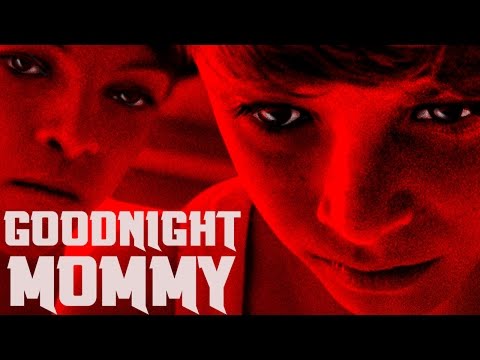
Ten-year-old twins, Elias and Lukas, await their mother’s return to their isolated country house. When she arrives, her face is completely bandaged following cosmetic surgery. Her behavior is cold and distant, and the children begin to doubt that this woman is their real mother, starting a terrifying struggle for the truth.
Goodnight Mommy (original title Ich seh, Ich seh) is a chilling depiction of grief, identity, and the breakdown of communication within a family. The Austrian film’s psychological horror is generated by the ambiguity of the mother’s identity and the children’s cold, ruthless perspective. The tension builds in a sterile, modern environment that contrasts with the psychological and physical brutality that unfolds.
The final twist, revealing that one of the twins is dead and merely a hallucination, re-contextualizes the entire film, transforming it from a thriller about an imposter into a heartbreaking tragedy about unprocessed trauma. The real “monster” is not the mother, but the fragmented psyche of the surviving son, trapped in a world of pain and denial. It is a work that demonstrates how grief can become the most terrifying form of horror.
Coherence

During a dinner party among friends, the passage of a comet causes a series of inexplicable events. The power goes out, phones stop working, and the group discovers that another house identical to theirs exists, inhabited by their doppelgängers. The evening turns into a paranoid nightmare where trust, identity, and reality itself are called into question.
Made with a minimal budget and a largely improvised script, Coherence is a masterpiece of science fiction and psychological horror. The film uses concepts from quantum physics like Schrödinger’s cat and quantum decoherence not as a scientific pretext, but as a mechanism to unleash a plausible and terrifying existential terror.
The horror is purely mental and relational. It arises from the growing awareness of the characters (and the viewer) that they can no longer trust their friends, their memories, and, ultimately, themselves. The single, claustrophobic setting of the house amplifies the paranoia, turning an ordinary dinner into a labyrinth of alternate realities where every choice can lead to catastrophic consequences.
It Comes at Night

In a post-apocalyptic world devastated by a highly contagious disease, a family has taken refuge in an isolated house in the woods, following a strict survival protocol. Their fragile balance is threatened when another desperate family seeks shelter. Fear and distrust grow, pushing both groups to the brink of madness.
The psychological genius of It Comes at Night lies in its bold decision to never show the external threat. The “It” of the title is not a monster or a zombie, but paranoia, fear, and the collapse of human trust. Director Trey Edward Shults focuses his attention on the internal horror, exploring how the fear of contagion can be more destructive than the disease itself.
The film is a Darwinian thriller where the instinct for self-preservation prevails over empathy. The tension derives not from creatures in the dark, but from the suspicions that creep among the characters, from doors left open and lies unspoken. Its devastating and nihilistic ending is a tragic demonstration that, in the face of the unknown, the most frightening monster is ourselves.
Under the Skin

An extraterrestrial entity, in the guise of a seductive woman, roams the streets of Scotland hunting for lone men. She lures them into her van and leads them into a black, liquid void where they are consumed. However, her interactions with humanity begin to erode her predatory nature, leading her to a disturbing discovery of herself and her own vulnerability.
Jonathan Glazer’s Under the Skin is a work of existential science fiction that uses an alien perspective to deconstruct the human experience. The film’s psychological horror is twofold. In the first part, it is cold, clinical, and predatory. The abstract and terrifying void in which the victims are stripped of their essence is one of the most powerful images in recent cinema, a visual representation of dehumanization.
In the second half, the horror transforms into an existential fear. As the alien develops a form of consciousness and empathy, she herself becomes vulnerable. Her discovery of fragility, fear, and human cruelty makes her prey in a world she once dominated. It is a film that forces us to look at our own species with external eyes, revealing both our beauty and our monstrosity.
The Killing of a Sacred Deer

Steven, a brilliant cardiothoracic surgeon, forms an ambiguous friendship with Martin, a teenager whose father died on his operating table. When Martin reveals a curse that will strike Steven’s family, Steven is forced to make an unthinkable sacrifice to restore a cosmic balance.
Inspired by the Greek tragedy of Iphigenia, The Killing of a Sacred Deer is a work of glacial psychological cruelty, typical of Yorgos Lanthimos’s style. The Greek director uses stiff, unnatural dialogue and deliberately flat acting to create an atmosphere of profound unease. The horror lies not in explicit violence, but in the cold, clinical inevitability of the curse and the impossible choice the protagonist must face.
The film is a terrifying parable about karmic justice and the consequences of refusing to take responsibility for one’s actions. The psychological tension is almost unbearable, built not on scares, but on a sense of inevitability and helplessness. It is a cinematic experience that leaves the viewer drained, forced to confront the absurdity and ruthlessness of an inscrutable moral universe.
Angst
![Angst (1983) Original Trailer [FHD]](https://blog.indiecinema.co/wp-content/plugins/wp-youtube-lyte/lyteCache.php?origThumbUrl=https%3A%2F%2Fi.ytimg.com%2Fvi%2FP5MSigtzSjY%2F0.jpg)
Just released from prison, a nameless psychopath is consumed by the desire to kill again. After a few failed attempts, he breaks into an isolated house and terrorizes a family. The film follows his murderous rampage entirely from his point of view, immersing the viewer in the chaos of his disturbed mind.
Angst (1983) is a revolutionary and profoundly disturbing Austrian work that deconstructs the figure of the cinematic serial killer. Unlike the often romanticized or charismatic portrayals, the protagonist of Angst is clumsy, pathetic, and driven by primary, disorganized impulses. His violence is not calculated, but chaotic and desperate.
The film’s genius lies in its unique cinematography. With the camera often strapped to the lead actor, director Gerald Kargl immerses the viewer in the subjective and feverish perspective of the killer. The result is an immersive and nauseating psychological experience, forcing one to live the horror firsthand, without filters or moral detachment. It is a film that does not want to entertain, but to shock and question our fascination with violence.
Henry: Portrait of a Serial Killer
![Henry: Portrait of a Serial Killer (1986) ORIGINAL TRAILER [HD]](https://blog.indiecinema.co/wp-content/plugins/wp-youtube-lyte/lyteCache.php?origThumbUrl=https%3A%2F%2Fi.ytimg.com%2Fvi%2FHeM8ZUkZaTQ%2F0.jpg)
Henry is a drifter who moves from city to city, leaving a trail of random and brutal murders behind him. In Chicago, he settles with his former cellmate, Otis, and Otis’s sister, Becky. Henry introduces Otis to his “lifestyle,” and together they embark on a spiral of nihilistic violence devoid of motive.
Henry: Portrait of a Serial Killer is a punch to the gut, a work that stands out for its raw, documentary-style realism. The film’s psychological horror derives not from supernatural elements or constructed suspense, but from its chilling banality of evil. Henry is not a theatrical villain; he is an empty man for whom murder is a casual act, almost a pastime.
John McNaughton’s film forces the viewer into the uncomfortable role of a voyeur, compelling them to observe violence without the filter of cinematic morality. There are no heroes or redemption, only a desolate exploration of human depravity. It is a work that questions our own complicity in watching and the terrifying reality of purposeless evil.
May

May is a socially awkward and terribly lonely young woman whose only friend is a porcelain doll named Suzie. When her attempts to form human connections with a mechanic and a colleague fail miserably, her fragile psyche shatters. She decides to follow her mother’s childhood advice to the letter: “if you can’t find a friend, make one.
May is a tragic and grotesque character study of extreme loneliness and social alienation. Lucky McKee’s film skillfully blends black humor and body horror, but its heart is a devastating psychological portrait. May’s descent from quirkiness to horror is heartbreaking, driven by a desperate need for connection that society denies her.
The film’s horror lies in its empathy for the monster. May is not born evil; she is the product of rejection and misunderstanding. Her decision to assemble a perfect “friend” using the best parts of the people who disappointed her is the logical and terrifying conclusion of her loneliness. It is a dark fairy tale about creation and the desperate desire to be seen.
Possession

Upon his return to West Berlin, a spy named Mark discovers that his wife, Anna, wants a divorce. Her behavior becomes increasingly unstable and violent, and Mark becomes convinced there is another man. The truth, however, is far more sinister and unimaginable: Anna is cultivating a relationship with a monstrous, tentacled creature in a dilapidated apartment.
Andrzej Żuławski’s Possession is the ultimate allegory for the collapse of a marriage, pushed to the extremes of body horror and existential terror. The film’s psychological horror is raw, hysterical, and almost unbearable, embodied by Isabelle Adjani’s legendary and physically devastating performance. Her famous subway scene is one of the purest and most terrifying representations of mental disintegration ever put on screen.
Set against the politically charged backdrop of the Berlin Wall, a symbol of division, the film transforms the emotional pain of divorce and betrayal into a physical monstrosity. The creature and the doppelgängers are not mere supernatural elements, but tangible manifestations of the madness, jealousy, and loss of self that accompany the end of a love.
The Eyes of My Mother

On an isolated farm, a mother, a former surgeon, teaches her daughter Francisca about anatomy and to be unfazed by death. When a stranger brutally murders the mother, the young girl’s life is forever marked. Her loneliness and trauma-scarred nature converge years later, when her desire to connect with the world takes on a dark and violent form.
The Eyes of My Mother is a work of macabre beauty, shot in a sharp, stylized black and white that accentuates its gothic and desolate atmosphere. The psychological horror of Nicolas Pesce’s film is rooted in the total clinical detachment of its protagonist. Francisca’s terrifying acts are not driven by anger or malice, but by a distorted and childlike desire for companionship, shaped by a unique upbringing and an insurmountable trauma.
The film is a chilling study of how isolation and pain can generate a monster. The coldness with which Francisca performs her actions, treating human bodies with the same anatomical curiosity her mother taught her, is profoundly unsettling. It is a horror tale that doesn’t shout, but whispers, leaving an impression of deep and irremediable sadness.
Luz

Luz, a young taxi driver, enters a police station in a state of confusion. Meanwhile, in a bar, a psychiatrist is seduced by a mysterious woman who turns out to be possessed by a demonic entity linked to Luz’s past. The psychiatrist, now a vessel for the demon, is called to the police station to hypnotize Luz, setting off a surreal and terrifying reenactment.
Shot in 16mm with an aesthetic that evokes European horror of the ’70s and ’80s, Luz is an experimental and minimalist exercise in demonic possession. Director Tilman Singer constructs a fragmented and hypnotic narrative that relies more on sound design and suggestion than on explicit scares. The story unfolds almost entirely as a hypnotic regression session, where memories, reality, and demonic influence merge.
The psychological horror of Luz derives from its dreamlike and disorienting atmosphere. The viewer, like the characters, is constantly uncertain about what is real and what is a mental reconstruction. It is a bold and stylistically rigorous film that demonstrates how a deep sense of anguish can be created with few elements, relying on the evocative power of cinema itself.
Daniel Isn’t Real
![Daniel Isn't Real - Official Trailer [HD] | A Shudder Exclusive](https://blog.indiecinema.co/wp-content/plugins/wp-youtube-lyte/lyteCache.php?origThumbUrl=https%3A%2F%2Fi.ytimg.com%2Fvi%2FgklT9gpwgeQ%2F0.jpg)
A young and shy university student, Luke, traumatized by a violent family event, resurrects his childhood imaginary friend, Daniel, to help him cope. Daniel, charismatic and self-assured, pushes Luke out of his shell, but his influence soon proves to be manipulative and dangerous, dragging Luke into a struggle for control of his own mind.
Daniel Isn’t Real skillfully blends psychological thriller with supernatural horror, using the “imaginary friend” trope to explore complex themes like mental illness, inherited trauma, and toxic masculinity. The film’s horror lies in the fundamental ambiguity of Daniel’s nature: is he a symptom of the schizophrenia Luke fears he has inherited from his mother, or is he a literal demonic entity feeding on his vulnerability?
The film visualizes Luke’s internal struggle with powerful images of body horror and cosmic terror, representing his mind as a battlefield. It is an intelligent and terrifying analysis of the fragility of identity and the fear of losing control not only of one’s life, but of one’s very being.
The Lodge

Grace, the sole survivor of a religious cult’s mass suicide, is about to become the stepmother to two children, Aidan and Mia. To get to know each other, their father leaves them alone with her in a remote mountain cabin during the Christmas holidays. Isolated by a blizzard, a series of terrifying events related to Grace’s past begin to haunt them.
The Lodge is a relentless exercise in psychological cruelty that explores the devastating effects of religious trauma and gaslighting. The film’s horror is twofold and feeds on itself: on one hand, there is the calculated and ruthless torment that the children inflict on Grace, blaming her for their mother’s suicide; on the other, there is Grace’s terrifying regression into the mentality of the cult she had fled.
The isolation of the snow-submerged cabin becomes a physical and mental prison. Directors Veronika Franz and Severin Fiala (the same duo behind Goodnight Mommy) create a suffocating and hopeless atmosphere, where the past is not just a memory, but a weapon used to destroy the psyche of an already fragile person. It is a cold, desolate, and deeply pessimistic film about the cyclical nature of trauma.
Piercing

Reed, a businessman with homicidal impulses, plans to kill a prostitute in a hotel room to rid himself of his violent fantasies. His meticulous plan, however, goes up in smoke when he meets Jackie, an enigmatic and unpredictable escort who turns out to be just as disturbed as he is. What was supposed to be a night of murder turns into a twisted psychological game.
Based on a novel by Ryū Murakami, Piercing is an original blend of psychological thriller, black comedy, and stylized sadomasochism. The film’s horror derives not so much from the violence, but from the perverse psychological cat-and-mouse game between the two protagonists. Reed’s plan is constantly sabotaged, turning the tension into a bizarre and violent negotiation of shared traumas and desires.
The retro aesthetic and almost theatrical tone create a surreal and claustrophobic world where the boundaries between victim and perpetrator are constantly renegotiated. It is a film that explores the darkest fantasies with a sharp humor and a visual elegance that make it a unique and profoundly unsettling experience.
We’re All Going to the World’s Fair

Alone in her room, teenager Casey decides to participate in a viral online challenge called the “World’s Fair Challenge.” After performing the initiation ritual, she begins to document the alleged physical and psychological changes happening to her. As she delves deeper into this horror role-playing game, the line between her performance and her true identity begins to vanish.
We’re All Going to the World’s Fair is a psychological horror for the internet age, a haunting portrait of loneliness, dysphoria, and the search for self in virtual spaces. The horror of Jane Schoenbrun’s film is subtle and existential, rooted in the ambiguity of Casey’s “transformation.” Is she really experiencing the effects of the game, is it a metaphor for her gender dysphoria, or is it all an elaborate performance for an invisible audience?
The film perfectly captures the specific anguish of digital isolation and the fluidity of online identity. Using a visual language that mimics YouTube videos and Skype calls, it creates an immersive and authentic experience that explores how the line between who we are and who we pretend to be can become dangerously thin.
Taxidermia

Through three generations of Hungarian men, the film tells a grotesque and surreal story. From a soldier with paraphilias during World War II, to his son who became a competitive eating champion in the Soviet era, to his grandson, an emaciated taxidermist who aspires to turn his own body into an eternal work of art.
Taxidermia is a masterpiece of body horror and surrealism, but its core is profoundly psychological and socio-political. The story of the three generations of the Balatony family is a powerful and disgusting allegory of 20th-century Hungarian history, from fascist repression to communist excess, to the nihilistic void of post-communism.
The psychological horror stems from the extreme, obsessive, and self-destructive behaviors of the characters. Perversion, gluttony, and self-mutilation are not mere acts of shock, but reflections of a society in a state of deep sickness and decay. It is a bold and uncompromising work that uses the body as a canvas to paint a terrifying portrait of history and the human psyche.
Funny Games

A bourgeois family arrives at their lakeside vacation home, but their tranquility is interrupted by two polite, white-clad young men who take them hostage. The two intruders subject the family to a series of sadistic and humiliating “games,” with no apparent motive other than their own amusement and that of the viewer.
Michael Haneke’s film is not a simple home invasion, but a direct attack on the viewer and a ruthless critique of violence in the media. The psychological horror lies not only in what happens to the family, but in how the film makes us complicit. Paul’s fourth-wall breaks, where he addresses the camera directly, and the infamous “rewind” scene, are not gimmicks, but tools of a psychological war against the audience.
Haneke forces us to confront our voyeurism and our consumption of suffering as entertainment. By refusing any catharsis or explanation, Funny Games leaves us with a sense of unease and guilt, proving that the real horror can be the mirror that cinema holds up to us.
Antichrist

After the tragic death of their only son, a couple retreats to an isolated cabin in the woods, named “Eden,” in an attempt to overcome their grief. He, a therapist, tries to treat her deep depression, but the surrounding nature and the woman’s psyche prove to be increasingly hostile and threatening, leading the couple into a descent into madness, violence, and self-mutilation.
Lars von Trier’s Antichrist is a brutal and allegorical exploration of pain, misogyny, and the terrifying chaos of nature. The psychological horror is visceral and frontal, a physical representation of the characters’ inner torment. The explicit violence and disturbing imagery are not gratuitous but serve to materialize the desperation and madness that arise from insurmountable grief.
The film is a controversial and difficult work that offers no comfort or answers. It is a journey into the abyss of the human psyche, where pain transforms love into hate and nature, once a refuge, becomes “Satan’s church.” It is a cinematic experience that leaves scars, forcing one to look at horror without filters.
The Vanishing (Spoorloos)

During a vacation in France, young Saskia mysteriously disappears from a service station. Her boyfriend, Rex, spends the next three years obsessively searching for her, unable to move on without knowing what happened to her. One day, the kidnapper contacts him, offering him the chance to discover the truth, but at a terrible price.
The Vanishing is the definitive psychological thriller about the horror of the unknown. The genius of George Sluizer’s film lies in revealing the kidnapper’s identity almost immediately. The suspense is not based on “who did it?”, but on the terrifying and banal “why?” and the unbearable “what happened?”. The horror is purely existential.
The film analyzes the nature of obsession and the human need for closure, even at the cost of one’s own life. The antagonist is not a monster, but an ordinary man, a chemistry professor who commits evil as an intellectual experiment. The ending, famous for being one of the most desolate and psychologically devastating in cinema history, denies any form of consolation, proving that the search for truth can lead to an end even more terrifying than uncertainty itself.
The Lingering Echo of Inner Horror
Traversing this selection of thirty films, a powerful and unsettling common thread emerges. The most persistent and terrifying antagonist is not a demon, a killer, or a ghost, but the unreliability of the human mind itself. Horror, in these works, lurks in the collapse of perception, memory, and identity. Films like Saint Maud, Possum, and Goodnight Mommy show us protagonists whose reality is fundamentally broken by faith, trauma, or grief, turning their subjectivity into a nightmare. Others, like Coherence or A Field in England, externalize this collapse, using science fiction or hallucinogenic concepts to shatter objective reality and throw the characters into a state of total paranoia.
These films are demanding. They offer no easy answers or cathartic releases. Instead, they leave the viewer with persistent questions and a deep sense of unease, forcing them to confront uncomfortable truths about the human condition. Their importance lies precisely in this: they remind us that the most frightening landscapes are not haunted houses or dark forests, but the unexplored, fragile, and often treacherous territories of our own minds. The echo they leave is not a scream, but a disturbing whisper of doubt about ourselves, proof that the truest psychological horror is the one we take home and that, with the lights off, continues to question us.
A vision curated by a filmmaker, not an algorithm
In this video I explain our vision

