
Cinema has always used the haunted house and the spirit as a powerful tool to generate fear. The collective imagination is marked by works that defined the genre, focusing on immediate effectiveness and scare mechanisms like jump scares for instant catharsis. These stories have become fundamental pillars of terror on the big screen.

But the figure of the ghost is also something deeper. It is an entity that moves in a radically different direction, transforming the theme into fertile ground for psychological terror and philosophical inquiry. The ghost, in this frame, ceases to be a bogeyman to flee from and becomes a powerful symbol of trauma, repressed memories, unresolved grief, and existential angst—an entity we are forced to reckon with rather than defeat.
This guide is a journey across the entire spectrum of the genre. It is a path that unites the great masterpieces that defined supernatural fear with the most profound independent works. From the haunted houses that terrify the viewer to the ghost stories that offer a true intellectual seduction, we will explore how cinema has given form to our most invisible fears.
Presence (2025)

Premiered at Sundance in 2024, this film by Steven Soderbergh is shot entirely from the point of view of a supernatural entity that observes a dysfunctional family move into a new house.
The terror in this film arises from the fact that the viewer is forced to become an involuntary accomplice to the ghost. We are compelled to watch the family’s intimate life, their lies and feuds, from a fixed point of view, one that cannot intervene. The fear is not based on traditional scares but on the profound disquiet of being a powerless and omniscient presence in a life that does not belong to us. Soderbergh, known for his audacious forays and his mastery, used this film as a radical experiment that challenges narrative conventions and audience perception, demonstrating that creativity can also flourish within severe restrictions.
Katabasis
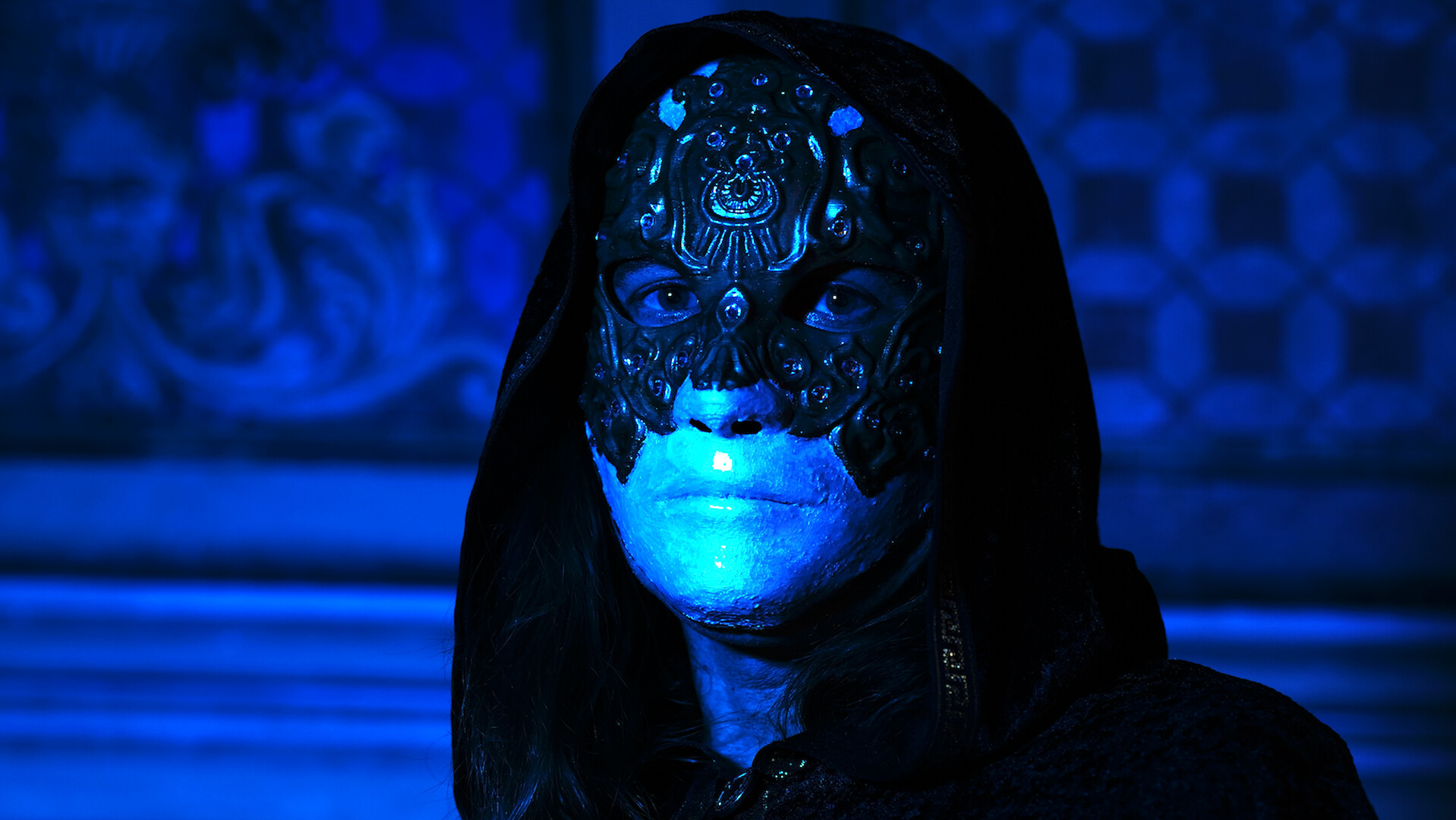
Drama, Mystery, by Samantha Casella, Italy, 2025.
“Katabasis” is a journey into the underworld. Nora experienced that dark realm as a child, when she suffered abuse. This marked her, shaping her into an ambiguous and manipulative woman, dangerous in her inscrutability, constantly seeking disturbing situations to relive the only condition she has profoundly internalized: pain. And the love story between Nora and Aron is tormented, strictly secret. Aron is a young orphan oppressed by the star system which, orchestrated by Jacob, a cynical manager, made him a star and imposes another façade of life on him. In fact, only the people who revolve around the house-prison where the couple lives are aware of Nora's existence. That majestic villa is the stage for secrets, lies, deceit, as well as unsettling episodes, since Nora is able to communicate with the souls from the beyond.
Director Biography – Samantha Casella
Samantha Casella studied various aspects of cinema, including screenwriting, directing, cinematography, and acting, across Turin, Florence, Rome, and Los Angeles. Her directing thesis, the short film "Juliette," won 19 awards, including the "European Massimo Troisi Award." She continued her path directing surreal short films including "Silenzio Interrotto," "Memoria all'Isola dei Morti," and "Agape." In 2019, she directed "I Am Banksy." At the charismatic TCL Chinese Theater in Los Angeles, at the Golden State Film Festival, she won the award for Best International Short Film. In 2020, she directed the short film "A un Dio Sconosciuto." "Santa Guerra" is her feature film debut.
LANGUAGE: Italian
SUBTITLES: English, Spanish, French, German, Portuguese
Good Boy (2025)

Premiered at SXSW in 2025, this film stands out for a unique premise: a haunted house seen through the eyes of the family dog, Indy, who is the only one able to see and perceive the spectral presences.
The film subverts the traditional role of protector, often given to the human protagonist, to entrust it to animal innocence and instinct. The story is based on the viewer’s empathy for the dog, who must fight to save his master, who is completely unaware of the danger looming over them. The horror is no longer a mystery to be solved or a force to be fought, but an invisible reality that a human cannot perceive, while an animal can. By filtering terror through an innocent and primordial perspective, the film explores the idea that there are forces beyond our comprehension that are only perceptible to those who have an instinctive connection with the invisible world.

Skinamarink (2022)

This 2022 Canadian experimental film generated heated debate among critics and audiences, dividing viewers. Shot with a deliberately grainy video quality and a nightmarish aesthetic, the film follows two children who wake up in the middle of the night to discover that the windows and doors of their house have disappeared and their father is mysteriously gone.
The terror in this film comes not from what you see, but from what you don’t. Its narrative is deliberately fragmented and disorienting, recreating the unsettling and liminal atmosphere of night terrors, where the rules of reality do not apply. The house, a place that should embody comfort and safety, is transformed into an alien and menacing entity that feeds on childish disorientation. The director, Kyle Edward Ball, didn’t make a film; he filmed a nightmare. It is based on a universal archetype of childhood fear: waking up at night and not finding your parents. The camera is often pointed in strange directions, capturing only fragments and details, forcing the viewer to surrender to the sensory experience. The film demonstrates how independent horror can transcend narrative to become a pure state of mind.
Cathnafola - A Paranormal Investigation
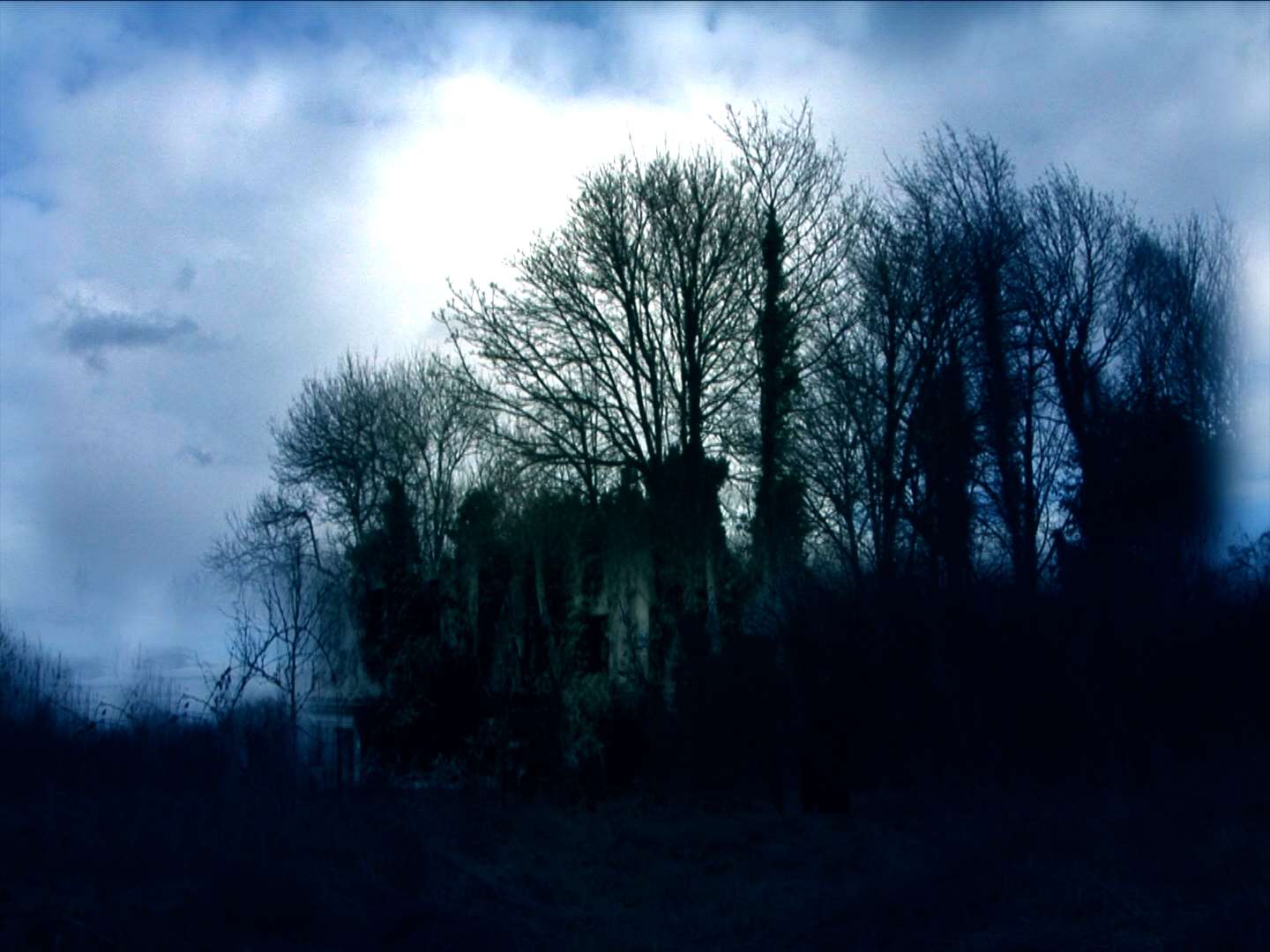
Documentary, horror, by Jason Figgis, USA, 2014.
In "Cathnafola", everything begins when renowned paranormal investigator Chris Halton of Haunted Earth UK receives footage filmed by three teenagers at the ruins of Cathnafola House in Ireland. Determined to unearth the truth behind the location’s bloody past, Halton embarks on a nighttime exploration of the infamous ruins—and soon uncovers terrifying and disturbing revelations.
LANGUAGE: English
SUBTITLES: Spanish, French, German, Portuguese
Hereditary (2018)

After the death of her secretive mother, Annie Graham begins to unravel disturbing truths about her family’s past. Strange occurrences multiply as her teenage son Peter and emotionally volatile daughter Charlie experience increasingly terrifying visions and events. Miniature artist Annie reconstructs family memories in her work, but the borders between her models and reality begin to collapse in horrifying ways. Ari Aster‘s debut feature is a relentless descent into grief, trauma, and the discovery that some inheritances cannot be refused, weaving together family dysfunction and demonic conspiracy into a tapestry of escalating dread.
Hereditary announced Ari Aster as a major voice in contemporary horror, delivering a film that functions simultaneously as a devastating grief drama and a full-throated supernatural nightmare. Toni Collette‘s performance is extraordinary — raw, frantic, and utterly committed — earning widespread critical acclaim despite being overlooked at major award ceremonies. Aster borrows liberally from the language of Roman Polanski‘s paranoia thrillers while stamping the material with his own relentless formal precision; scenes are composed with a miniaturist’s attention to detail that mirrors Annie’s own obsessive craft. The film’s final act divides audiences, but its willingness to follow its own logic to the most extreme conclusion possible is precisely what elevates it beyond conventional genre filmmaking. Hereditary understands that the most profound horror is the terror of having no control over who you become.
A Ghost Story (2017)

A 2017 film that premiered at the Sundance Film Festival, this work by David Lowery is an existential meditation on loss, love, and time. After dying in a car accident, a musician returns to his house as a ghost, covered in a simple white sheet with two holes for eyes. Trapped in a single location, he is forced to watch his beloved wife grieve and, eventually, move on with her life, while he remains anchored to that place for centuries, powerless.
The film does not aim to scare in a conventional sense but to generate a profound melancholy. Its minimalist aesthetic, from the choice of a sheeted ghost that initially creates a bold absurdity to the use of a 1.33:1 film format that creates a sense of claustrophobia, serves a precise philosophical purpose. Lowery’s work is an exercise in stillness and patience, using long takes to reflect on the futility of existence and how loss can make time feel as if it has stopped for an individual, even as the world around them continues to flow. Its narrative, which moves backward and forward in time, shows the ephemeral nature of life and the cycle of creation and destruction, asking the question “what does it mean to exist and to remember?” within a context of cosmic terror and loneliness.
Vampyr
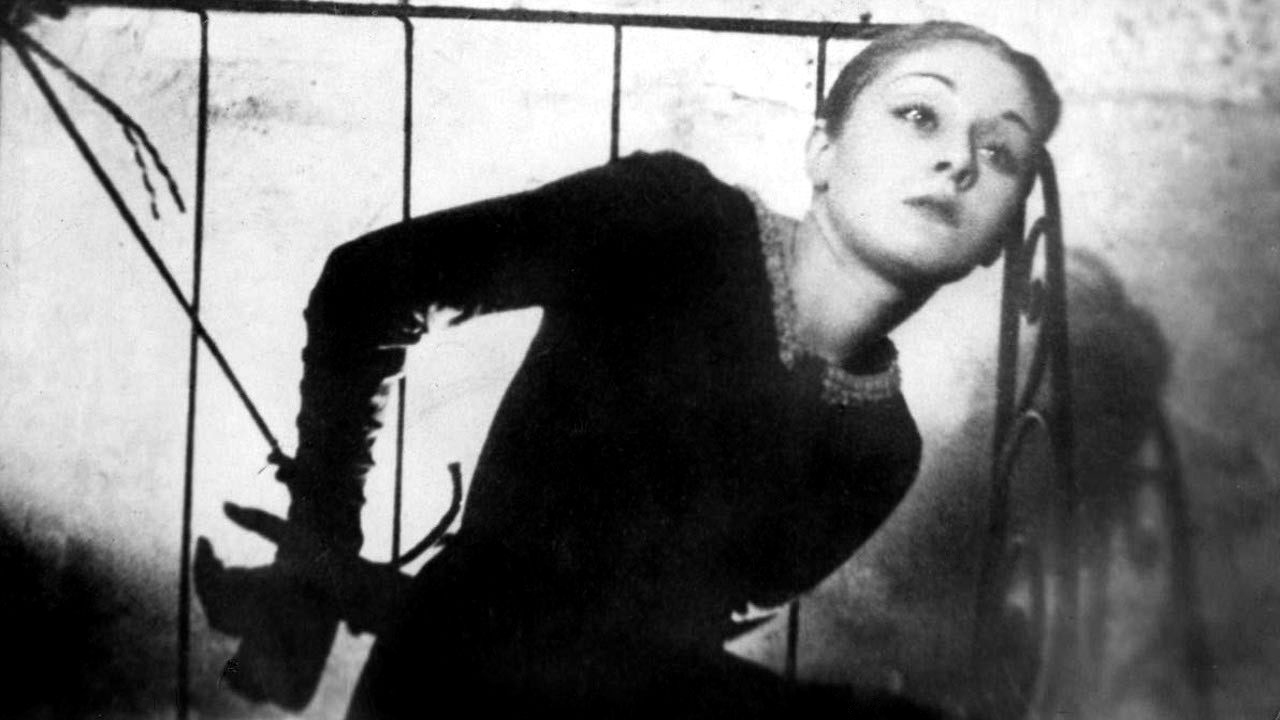
Horror, by Carl Theodor Dreyer, Germany, 1932.
Late in the evening, Allan Gray arrives at an inn near the town of Courtempierre and rents a room to sleep. Gray is suddenly disturbed by an old man, who enters the room and leaves a square package on the table: "To be opened on my death" is written on the wrapping paper. Gray takes the package and heads to an old castle where he sees an old woman and meets another old man. Looking through one of the windows, Gray sees the owner of the castle, the same man who gave him the package. The man is suddenly killed by a gunshot.
Carl Theodor Dreyer's Vampyr is made in the transition years between sound and silent cinema, using the visual language of the former to bring the horror genre into the new era. In Vampyr reigns a constant feeling of anguish, a nightmarish state of mind and invisible presences that lurk in every corner. Rudolph Maté's photography records every subtlety of light and shadow in a captivating dance. By now iconic shots, such as that of a man with a scythe ringing a bell and the sign of an inn silhouetted against a dark sky. Anthology scenes like the one in which Allan dreams of being buried alive by the vampire's henchmen, in which Dreyer uses a claustrophobic subjective view that makes the viewer "enter" the coffin. Just as in his previous film, The Passion of Joan of Arc from 1928, Dreyer uses intense close-ups to underscore the fears his characters encounter. Darkness plays an important role: the shadows move independently of their bodies and the forces of evil violate the rules of physics. Vampyr is a remarkable exploration of the boundaries between light and dark, fate and shadows, night and day. One of the masterpieces in the history of cinema that cannot be missed.
LANGUAGE: German
SUBTITLES: English, Spanish, French, Portuguese
A vision curated by a filmmaker, not an algorithm
In this video I explain our vision
A Dark Song (2017)

In this 2016 Welsh-Irish film, a grieving woman, Sophia, hires a difficult occultist, Joseph Solomon, to guide her through an exhausting and dangerous magical ritual with the goal of summoning a guardian angel to speak with her dead son. The entire ordeal takes place in an isolated house, which becomes a site of emotional purging and deep suffering for both protagonists.
The film presents occultism not as a path to supernatural power but as a brutal physical and psychological process necessary to process pain. The house transforms into a purgatory for the two characters, a place they cannot escape until the ritual, and the healing journey it represents, is complete. Sophia’s final encounter with the divine entity is not a reward for a magical feat, but the culmination of her inner purification, a moment that reveals the true purpose of the ritual was not revenge, but forgiveness. In this interpretation, the house itself is not just a set, but a metaphor for Sophia’s psyche. As the woman is forced to confront her secrets and her true intentions, the entities and sounds that infest the house become more aggressive, suggesting that the “demon” tormenting them is her own hatred and desire for vengeance, and that the trials she must undergo serve to liberate her.
The Babadook (2014)

Directed by Jennifer Kent in 2014, this Australian film redefined the independent horror genre. It follows the life of Amelia Vanek, an exhausted widowed mother who struggles with her difficult son, Samuel. Their already precarious existence is upended by the arrival of a sinister pop-up book that introduces a top hat-wearing monster, the Babadook, which soon seems to come to life in their home, relentlessly haunting them.
More than a simple monster, the Babadook is an allegory for unresolved grief. The film is not built on superficial scare tactics but on its ability to immerse the audience in the protagonist’s profound trauma. Its ineluctable presence reflects the nature of pain: it cannot be destroyed, only confronted and managed. The Babadook’s physical manifestation is nothing more than a constant, oppressive reminder of Amelia’s husband’s death and a harsh reflection on the solitude that often accompanies depression and mental suffering. Kent’s debut feature explicitly pays homage to 1920s German Expressionism, using a creature design that recalls iconic figures from silent cinema. The use of deep shadows, shrill sounds, and a deliberately unsettling aesthetic merges the horror of the past with a profoundly modern analysis of the human psyche, demonstrating that true terror lies in our own frailties.
1st Bite
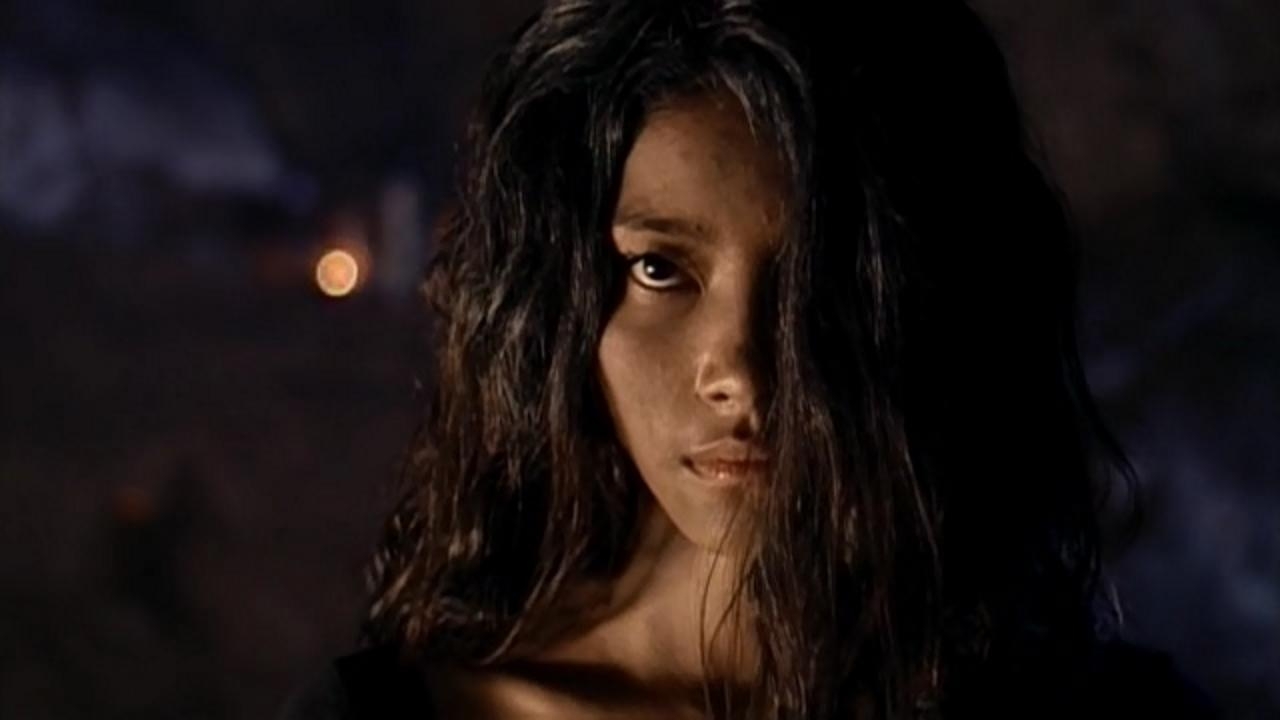
Horror, romantic, by Hunt Hoe, Canada, 2006.
Gus is a charming man who works as a cook in an oriental restaurant in Montreal. His boss sends him to a remote island in Thailand to meet a master of Zen cuisine and improve the quality of his dishes. There he meets a mysterious woman named Lake who lives in a cave and informs him that the Zen cooking master is dead. Gus goes to live in the cave and begins a love affair with Lake. But the cook's psychological balance rapidly worsens, including hallucinations, alcohol and malaise. Lake doesn't want Gus to leave, but Gus feels that he needs to escape the island and that his life is in danger.
First Bite is a very original Canadian independent film that crosses different film genres in its narration, suddenly passing from romanticism to suspense to horror. Direction and editing that is never banal, supported by shots with wide-angle lenses that increase the tension and by a cast of actors in excellent shape that offer very intense and realistic interpretations. Between mysticism, black magic, love stories and tropical islands, First Bite is the odyssey of a man who remains prisoner in a trap from which he can no longer escape, lost between passions and exotic foods. An escape from evil energies in search of spiritual meanings set between wild nature and metropolis.
LANGUAGE: English
SUBTITLES: Spanish. French, German, Portuguese
The Innkeepers (2011)

Another work by Ti West, this 2011 film focuses on Claire and Luke, two employees of a historic hotel about to close for good. Obsessed with the idea of recording proof of a haunting, they find themselves confronting the true spectral past of the building. The hotel, once grand, mirrors the characters themselves, who are stuck in a state of waiting and failure.
The haunting in The Innkeepers is a metaphor for the fear of stagnation and oblivion. The hotel is doomed to die, and so its employees seem to be, taking refuge in the search for ghosts to give meaning to their lives and their insignificant work. The story is a subtle and intelligent commentary on a generation’s anxiety in the face of an uncertain future and a lack of purpose in their jobs. The ghost is not an entity that kills out of malice but a reflection of what the characters fear becoming: trapped souls, condemned to repeat the same story of failure in an infinite loop.
The House of the Devil (2009)

This 2009 film by Ti West is a visual and stylistic homage to the slow, atmospheric horror of the 1980s. It follows a cash-strapped college student who accepts a babysitting job in an isolated house. She discovers too late that she has been lured into a satanic ritual tied to a rare lunar eclipse.
The film not only recreates the aesthetic of that decade—with its grainy cinematography, minimalist score, and use of Walkmans and rotary phones—but also captures the cultural paranoia, particularly that related to the “Satanic Panic.” The satanists here are not fantastical or exaggerated figures but an apparently normal family living their ordinary lives behind closed doors. The terror lies precisely in their familiarity and the protagonist’s sense of powerlessness in the face of an evil that slowly insinuates itself. Unlike a typical slasher, West subverts expectations: there is no masked assailant jumping out of nowhere. The threat is silent, slow, and inexorable, built on a tension that only explodes in the finale. The film rewards the viewer’s patience, demonstrating that true fear lies in the waiting and not knowing.
Lake Mungo (2008)

This 2008 Australian mockumentary follows a family trying to come to terms with the loss of their daughter Alice, who drowned in a lake. After her death, the family begins to experience strange phenomena that seem linked to her presence. The truth that emerges from this domestic investigation will, however, prove to be far more chilling than simple supernatural occurrences.
The film uses the visual and narrative language of true-crime documentaries for a destabilizing effect, but unlike them, it subverts their conventions. It offers no easy answers or a culprit to blame; the tragedy is fragmented, and the horror is tied to the unresolved. The story becomes a warning about how media can create “palatable ghosts” of victims, telling a simple and sensationalized story while ignoring the complexity and pain of their real lives. The film creates a powerful distinction between the “false ghost” that the brother creates to make sense of the grief—a mere representation of the memory the family wants to have of Alice—and the “real ghost” that is revealed in a final, terrifying moment. This second ghost is the horrific vision of how Alice died and what she was hiding in life, suggesting that our deepest suffering can create our own ghost story, and that the true horror lies in the reality we cannot face.
The Terror
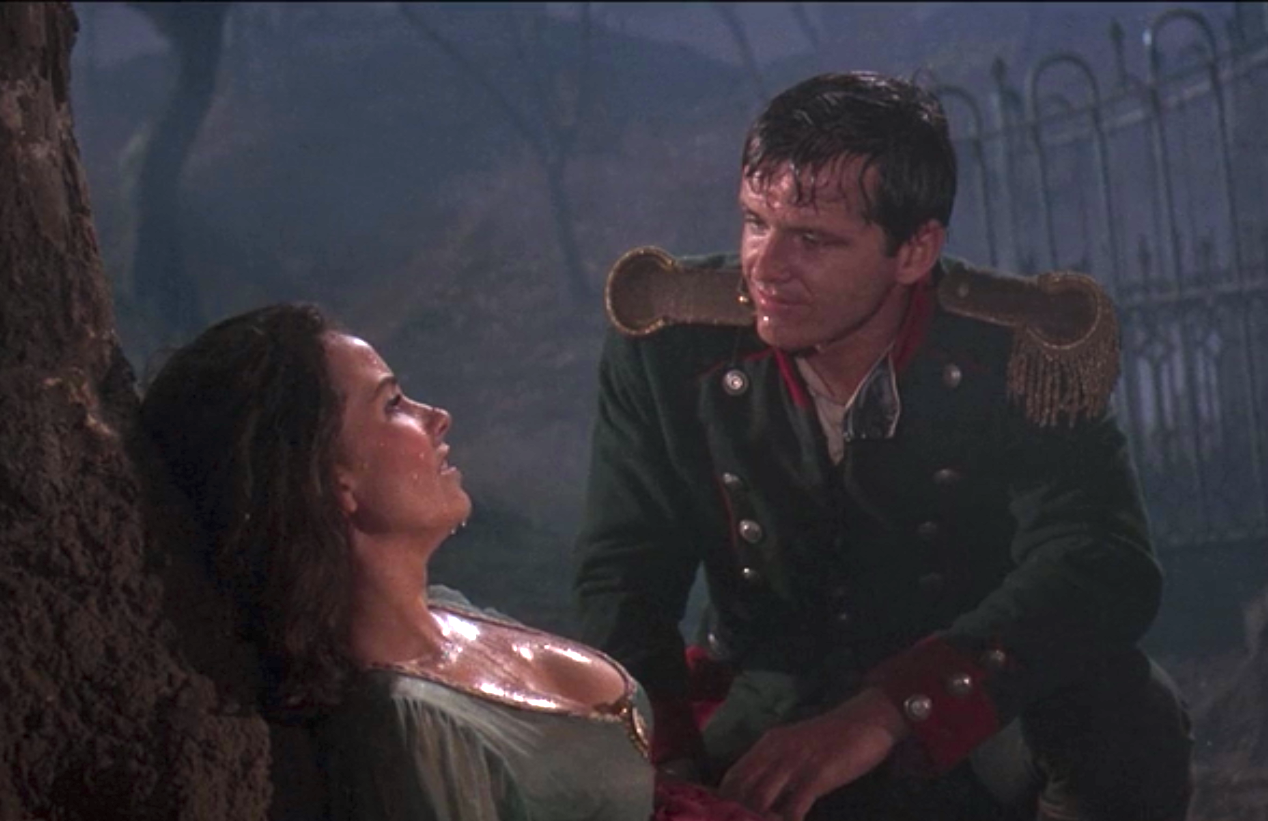
Horror, by Roger Corman, United States, 1963.
Lieutenant Duvalier (Jack Nicholson), a French soldier, loses contact with his unit and is forced to wander alone near the Baltic Sea. While searching for his regiment, he spots Helene (Sandra Knight), a mysterious beauty, walking alone. Enchanted, Duvalier begins to follow her, but she vanishes. He later joins her and follows her into a castle, where he meets the bizarre Baron Von Leppe (Boris Karloff), finds signs of witchcraft and uncovers the shocking truth about Helene. Made at a low cost within a few days by Roger Corman taking advantage of used sets and the still active contract with Karloff (he had finished the previous film early), The Terror also has some sequences shot by young directors who worked at the production factory. Corman who would become highly talented filmmakers: Francis Ford Coppola, Monte Hellman. The final scenes were instead shot by Jack Nicholson and Jack Hill.
Food for thought
All religions, with different terms, tell of the existence of "black magicians" able to take control of a body without the owner's knowledge. Black magicians use their powers for selfish ends, for revenge and other evil purposes. The phenomenon is described in various texts in a rather scientific way: it occurs by detaching the etheric bridge, which connects the physical body of the individual with the higher bodies, by attaching one's own to it. A mechanism similar to that which occurs in hypnosis and total anesthesia. The subject, however, must be attackable: his will must be fragile, his lifestyle and his balance must be precarious. If these conditions are not met, the black magician cannot take possession of him.
LANGUAGE: English
SUBTITLES: Spanish, French, German, Portuguese
The Devil's Backbone (2001)

Set during the final days of the Spanish Civil War, this film follows Carlos, a young boy deposited at a remote orphanage in the barren Spanish countryside after his father is killed in battle. The orphanage harbors many secrets: an unexploded bomb buried in its courtyard, a cruel older boy named Jacinto with violent ambitions, and the ghost of a pale, drowned child named Santi who whispers cryptic warnings through flooded corridors. Guillermo del Toro weaves together political tragedy, childhood vulnerability, and supernatural haunting into a deeply humane and heartbreaking narrative.
Guillermo del Toro has described The Devil’s Backbone as his most personal film, and that intimacy is evident in every frame. Unlike many ghost stories that use the supernatural as a source of pure terror, del Toro positions Santi’s ghost as a figure of tragedy and justice — the haunting is not predatory but mournful, a dead child demanding that his story be acknowledged. The film’s central metaphor is explicitly articulated: a ghost is someone trapped between worlds, unable to move forward, which del Toro applies equally to the orphaned children, the ideologically defeated Republicans, and Santi himself. The production design is exquisite, with the sun-bleached, dusty orphanage feeling simultaneously real and fabulist. The Devil’s Backbone demonstrates that ghost cinema at its finest is not about fear of the dead but about the unfinished business of the living.
The Others (2001)

Set in a fog-shrouded manor in post-World War II Jersey, The Others follows Grace, a deeply religious woman raising two photosensitive children in near-total darkness. Strange occurrences begin plaguing the household — doors open on their own, voices echo through empty rooms, and the children insist they have seen intruders. As Grace investigates, the line between the living and the dead begins to dissolve in ways she never anticipated. The film builds its dread slowly, relying on atmosphere and psychological tension rather than cheap scares.
Alejandro Amenábar crafts a masterclass in restrained Gothic horror, drawing heavily from the tradition of Henry James and classic haunted house narratives. Nicole Kidman delivers one of her finest performances, portraying a woman whose rigid faith becomes both a shield and a prison. The film’s greatest achievement is its commitment to a single, suffocating mood — every shadow feels inhabited, every creak of the floorboards deliberate. The twist ending, while now widely known, rewards repeat viewings because it recontextualizes every prior scene with devastating precision. Amenábar understands that true horror lies not in what is shown but in what is implied, and The Others remains a benchmark of supernatural restraint in modern cinema.
Pulse (2001)

In Tokyo, a series of seemingly unconnected individuals begin encountering ghosts through their computers and mobile phones. The spirits appear as blurred, slow-moving figures glimpsed through pixelated video feeds and sealed, forbidden rooms marked with red tape. As more people succumb to a creeping, infectious despair after these encounters — vanishing without explanation or being found as mere ashen outlines on walls — two separate storylines converge on the terrifying possibility that the world of the dead has run out of space. Kiyoshi Kurosawa‘s film is a profound and disturbing meditation on loneliness and modern disconnection.
Pulse, known in Japan as Kairo, is one of the most philosophically ambitious horror films of its era and one that has only grown more resonant with time. Kurosawa is not primarily interested in jump scares or supernatural mechanics; instead, he uses the ghost story as a vehicle for exploring the existential terror of contemporary urban isolation. The internet, still relatively new at the time of the film’s release, becomes a conduit not for connection but for an encounter with the void — a medium through which the dead communicate their most terrible secret: that death brings not peace but an eternity of loneliness. The ghosts move with an almost unbearable sadness, their jerky, glitching movements suggesting broken signals rather than supernatural menace. Pulse is slow, haunting, and deeply nihilistic in ways that conventional horror rarely dares to be.
The Sixth Sense (1999)

A child psychologist named Malcolm Crowe begins working with a troubled young boy named Cole Sear, who carries a terrifying secret: he can see and communicate with the dead. These ghosts, unaware of their own passing, wander the world in distress, seeking resolution. As Malcolm tries to help Cole cope with his extraordinary burden, their sessions reveal deeper truths about loss, grief, and connection. M. Night Shyamalan’s film builds its haunted atmosphere slowly and deliberately, delivering one of cinema’s most memorable and emotionally resonant twist endings.
The Sixth Sense marked a defining moment in mainstream ghost cinema, demonstrating that supernatural horror could coexist with genuine emotional depth. Shyamalan’s direction is restrained and precise, allowing dread to accumulate through quiet moments rather than cheap shocks. Haley Joel Osment delivers a remarkably nuanced child performance, conveying terror and vulnerability with equal authenticity, while Bruce Willis brings unexpected melancholy to his role. The film’s masterstroke lies in its structural honesty — nothing is falsified, and every scene holds new meaning upon rewatching. Beyond its famous twist, the film is a meditation on unfinished business and human connection that elevates the ghost story genre into genuine dramatic territory.
Carnival of souls
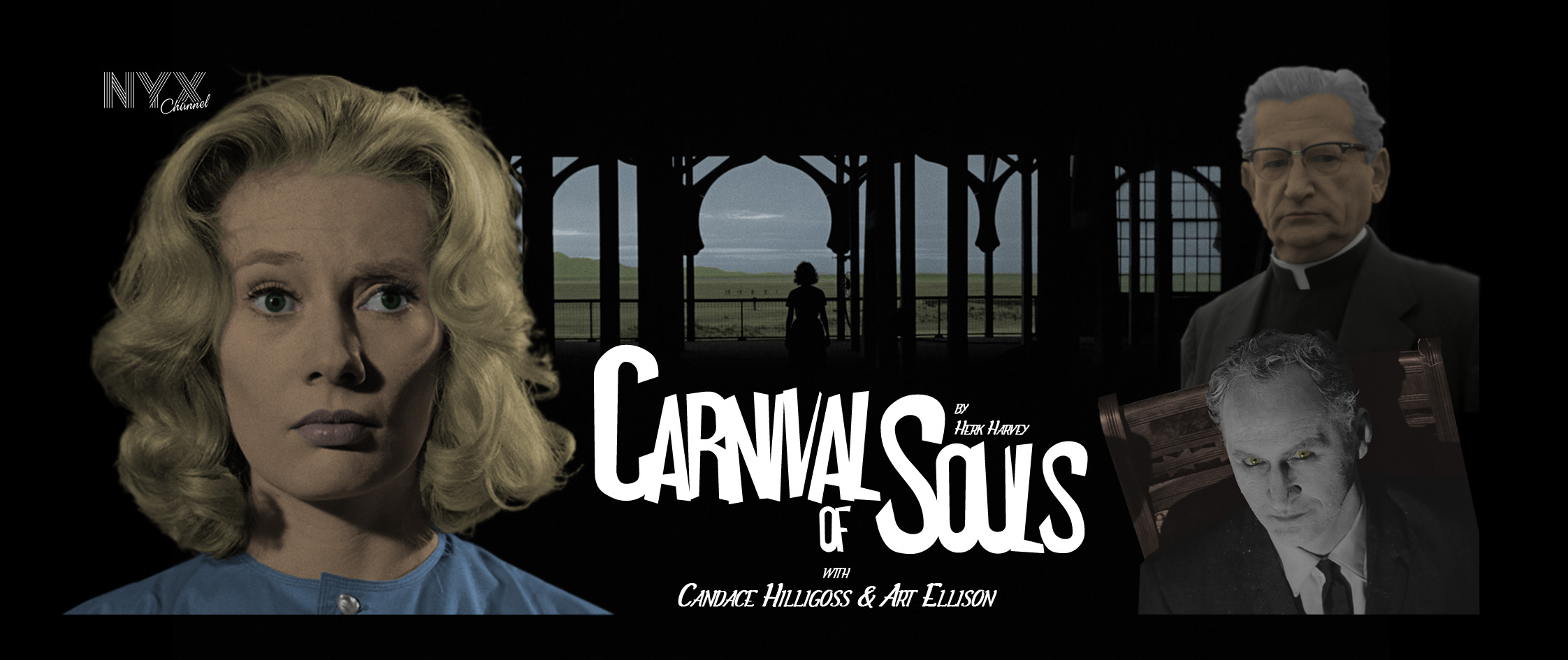
Horror, by Herk Harvey, United States, 1962.
Mary Henry emerges unscathed from a car accident that killed her two companions, and sets off on a strange adventure in Salt Lake City, where she finds herself drawn to a dilapidated lakeside pavilion and haunted by a ghostly figure (played by same director). A low-budget ($ 30,000) horror masterpiece that went unnoticed at the time of its release, it has become a cult film in the United States since the late 1980s. Sounds and images that have inspired directors such as George Romero and David Lynch (the masked man from "Lost Roads").
LANGUAGE: english
SUBTITLES: italian
Ringu (1998)

A journalist named Reiko investigates the urban legend of a cursed videotape that kills anyone who watches it exactly seven days after viewing. After watching the tape herself and receiving the phone call that confirms her fate, she enlists her ex-husband to help her uncover the origins of the curse, which leads them to the tragic story of Sadako, a young woman with psychic powers who died under violent circumstances and whose rage has somehow been imprinted onto magnetic tape. Hideo Nakata‘s film transformed international horror cinema and introduced the world to one of its most iconic supernatural figures.
Ringu’s influence on global horror cannot be overstated — it effectively launched the J-horror boom of the late 1990s and early 2000s and introduced Western audiences to a distinctly Japanese aesthetic of supernatural dread centered on long-haired, pale female spirits. But beyond its historical significance, the film remains deeply effective on its own terms. Nakata’s direction is cool and procedural, framing the supernatural investigation as almost journalistic in its methodical accumulation of detail, which makes the horror all the more shocking when it erupts. The cursed tape itself is a masterpiece of abstract imagery — a cryptic collage of dream logic that feels genuinely disturbing rather than merely transgressive. Sadako’s emergence from the television screen in the film’s climax remains one of cinema’s great shock moments, but what lingers longer is the film’s bleak central thesis: some curses have no redemption, only transmission.
Ghostwatch (1992)

Broadcast on BBC One on Halloween night and presented as a live television investigation, this television film follows a crew of presenters and journalists spending the night in a reportedly haunted suburban house in Northolt, England. As cameras monitor the home of a terrified single mother and her two daughters, what begins as lighthearted paranormal entertainment gradually descends into something genuinely threatening. A figure the children call Pipes lurks at the edges of the frame, and the live broadcast itself seems to become a conduit for something ancient and malevolent.
Though technically a television film rather than a theatrical release, Ghostwatch stands as one of the most audacious and influential ghost stories ever committed to screen, and its 1992 broadcast caused genuine public panic across Britain. Stephen Volk‘s screenplay is brilliantly constructed, using the mechanics of live television and institutional authority to lull viewers into false security before dismantling it entirely. Director Lesley Manning builds dread almost invisibly, hiding the ghost in plain sight across multiple scenes in a manner that rewards obsessive rewatching. The film anticipates found footage horror by nearly a decade and interrogates how mass media can amplify and even summon collective fear. Its climax remains one of the most chilling and conceptually bold endings in the entire haunted house genre, suggesting that belief itself is the most dangerous supernatural force.
Jacob's Ladder (1990)
![Jacob's Ladder (1990) ORIGINAL TRAILER [HD 1080p]](https://blog.indiecinema.co/wp-content/plugins/wp-youtube-lyte/lyteCache.php?origThumbUrl=https%3A%2F%2Fi.ytimg.com%2Fvi%2FtLulu1Ovi2c%2F0.jpg)
Jacob’s Ladder follows Vietnam veteran Jacob Singer, who begins experiencing terrifying hallucinations blurring the line between waking life and nightmare. Haunted by visions of demonic figures, memories of his dead son, and fragments of his past, Jacob desperately searches for the truth behind his deteriorating mental state. His chiropractor Louis serves as an anchor of calm amid the chaos, while Jacob’s journey pulls him deeper into a labyrinthine reality where the dead and the living seem impossibly intertwined. Adrian Lyne‘s film uses the haunted mind as its primary location, making Jacob’s consciousness itself the most terrifying haunted house imaginable.
Though released in 1990, Jacob’s Ladder remains one of cinema’s most psychologically sophisticated explorations of ghostly experience. Rather than populating physical spaces with spirits, Lyne and screenwriter Bruce Joel Rubin internalize the haunting, making trauma and guilt the engines of supernatural terror. Tim Robbins anchors the film with a performance of raw desperation that makes every hallucination feel genuinely threatening. The film’s visual language — strobing faces, distorted bodies, oppressive urban decay — influenced countless horror films that followed, most notably cited as an influence on the Silent Hill franchise. Its ending recontextualizes everything with devastating emotional clarity, revealing the ghost story as a profound metaphor for the human struggle to accept mortality and find peace.
Poltergeist II: The Other Side (1986)

The Freeling family, still traumatized by the supernatural terror that destroyed their home, attempts to rebuild their lives but finds themselves once again targeted by malevolent forces from beyond. A sinister preacher named Reverend Kane, whose cult followers died trapped underground, begins haunting them with renewed intensity. As the spirits grow stronger, the family must rely on Native American shaman Taylor and the returning medium Tangina to confront the dark dimension threatening to consume them entirely.
While it lacks the polished suburban dread of Tobe Hooper and Steven Spielberg‘s original, this sequel delivers genuinely unsettling moments, largely thanks to Julian Beck‘s terrifying performance as the cadaverous Reverend Kane. Beck, who was dying of cancer during filming, brings an authentically gaunt and otherworldly menace to the role that no special effect could manufacture. The film explores themes of spiritual warfare and ancestral evil with more ambition than it is typically credited for. Director Brian Gibson maintains a creeping atmosphere of domestic vulnerability, and the creature effects by H.R. Giger are memorably grotesque. It remains an undervalued entry in 1980s supernatural horror, offering a darker and more spiritually complex vision than mainstream ghost films of the era.
Poltergeist (1982)

In a sunny California suburb, the Freeling family begins experiencing inexplicable phenomena in their new home — furniture moves on its own, toys animate spontaneously, and static-filled television screens seem to communicate with the youngest daughter, Carol Anne. When she is pulled into another dimension through her bedroom closet, her terrified family must seek the help of parapsychologists and a spiritual medium to bring her back. Directed by Tobe Hooper and produced by Steven Spielberg, the film balances suburban warmth with escalating supernatural dread in ways that feel both thrilling and deeply unsettling.
Poltergeist occupies a unique cultural position as perhaps the definitive mainstream haunted house film, blending Spielberg’s talent for domesticity with Hooper’s instinct for raw terror. The genius of the film lies in its subversive targeting of the American suburban dream — the house is not a crumbling Victorian ruin but a pleasant tract home, making its corruption all the more disturbing. Zelda Rubinstein‘s performance as medium Tangina is iconic, delivering lines with an eerie, otherworldly calm that contrasts perfectly with the family’s panic. The special effects, though dated, retain a handmade quality that feels genuinely menacing. More than four decades later, Poltergeist continues to define how haunted house cinema can function as social commentary dressed in the clothing of blockbuster entertainment.
The Entity (1982)

Based on a controversial novel inspired by alleged real events, the film follows Carla Moran, a single mother in California who is repeatedly attacked and assaulted by an invisible supernatural force within her own home. Dismissed by psychiatrists who attribute her experiences to psychological trauma and repressed memory, Carla seeks help from parapsychologists determined to prove the entity’s existence using scientific methods. The film becomes a disturbing battle between institutional skepticism and a terror that refuses to be explained away or contained.
Sidney J. Furie’s film is one of the most genuinely disturbing haunted house films of the 1980s, largely because it refuses to offer its protagonist either comfort or easy resolution. Barbara Hershey delivers a fierce and emotionally exhausted performance, grounding the increasingly extreme supernatural events in raw human suffering. The film provocatively positions the haunting as an extension of the violence and disbelief women routinely face, giving it a feminist undercurrent that makes it more than a simple horror spectacle. Charles Bernstein‘s pulsing, aggressive electronic score amplifies the sense of relentless violation. Critics have long debated whether the film exploits its subject matter or genuinely confronts it, but that uncomfortable tension is precisely what makes it so difficult to dismiss and so enduring in the genre’s history.
The Changeling (1980)

Considered a Canadian classic from 1980, Peter Medak‘s film is based on events believed to have happened to its screenwriter. A grieving musician, after losing his wife and daughter in a tragic accident, moves into a mansion that hides the ghost of a child, who died as a result of a murder and a conspiracy perpetrated by a wealthy senator.
In this film, the ghost is not a threat but an entity seeking justice. The film inextricably links horror to psychological drama and mystery, demonstrating that the spirit is, in the final analysis, a character seeking redemption and help to shed light on a forgotten past. The approach is innovative for its time: the protagonist’s pain from the loss of his family merges and resonates with the pain of the child ghost, creating an empathetic bond that transcends life and death. The haunting becomes the stage where the protagonist’s memory meets and overlaps with that of the ghost, transforming terror into a profoundly human experience.
The Shining (1980)
![The Shining - Official Trailer [1980] HD](https://blog.indiecinema.co/wp-content/plugins/wp-youtube-lyte/lyteCache.php?origThumbUrl=https%3A%2F%2Fi.ytimg.com%2Fvi%2FS014oGZiSdI%2F0.jpg)
Struggling writer Jack Torrance accepts a job as winter caretaker of the isolated Overlook Hotel in Colorado, bringing his wife Wendy and psychically gifted young son Danny along for the season. As the snowbound months pass, the hotel’s dark history begins to seep into Jack’s consciousness, fueling his alcoholic rages and driving him toward violence. Danny, gifted with what the hotel’s cook calls ‘the shining,’ sees horrifying visions throughout the corridors, including ghostly twin girls and rivers of blood pouring from elevators. Stanley Kubrick‘s adaptation of Stephen King‘s novel remains one of cinema’s most analyzed and discussed horror films.
Stanley Kubrick transforms King’s haunted hotel narrative into something far stranger and more philosophically unsettling than conventional ghost fiction. The Overlook functions less as a haunted house than as an architectural embodiment of American darkness — its Indigenous imagery, its ballroom frozen in a perpetual 1920s party, and its impossible geography all suggest a place outside normal space and time. Jack Nicholson‘s performance has been criticized for being too manic too soon, but this quality is precisely the point; Kubrick wants us to understand that Jack was always the monster, the hotel merely a permission slip. Kubrick’s glacial pacing and Steadicam corridors create a sensation of inescapable pursuit that no subsequent horror film has fully replicated. The film’s ambiguities — particularly the meaning of that final photograph — continue to generate scholarly debate, testifying to its inexhaustible interpretive richness.
Burnt Offerings (1976)

A family — Ben, Marian, their son David, and Ben’s elderly aunt — rent a sprawling Victorian summer estate at a surprisingly low price from its reclusive owners. As summer progresses, the house begins subtly but unmistakably renewing itself — crumbling masonry repairs, overgrown gardens bloom, and the pool water clears. Simultaneously, the family members grow increasingly disturbed: Ben becomes violent, the aunt deteriorates rapidly, and Marian becomes obsessively devoted to an upstairs room whose mysterious occupant she tends but never sees.
Dan Curtis, best known for Dark Shadows, directed this adaptation of Robert Marasco’s novel with a slow, suffocating patience that rewards viewers who surrender to its deliberate pace. The central conceit — a house that feeds on its inhabitants to rejuvenate itself — is executed with chilling subtlety, making the horror feel ecological and indifferent rather than malicious in a personal sense. Oliver Reed gives one of his finest performances, conveying Ben’s physical vitality curdling into something dangerous and confused. Karen Black‘s transformation as Marian becomes increasingly consumed by the house is genuinely disturbing. Bette Davis as the fragile Aunt Elizabeth provides a heartbreaking counterpoint. The film understands that the most terrifying haunting is not one of loud manifestations but of quiet, insidious possession that erodes identity so gradually that neither victim nor audience can identify the precise moment of surrender.
The Sentinel (1977)

Alison Parker, a successful fashion model, moves into a beautiful Brooklyn brownstone apartment seeking independence from her boyfriend. Her neighbors prove increasingly strange, and she begins experiencing terrifying visions and violent night terrors. When she investigates the building’s history, she uncovers a horrifying secret about the reclusive blind priest who occupies the top floor apartment — and a far darker truth about her own destiny and her connection to the gateway between the world of the living and the realm of the damned.
Michael Winner‘s deeply unsettling supernatural thriller occupies a fascinating and uncomfortable space within 1970s horror cinema. Drawing from Jeffrey Konvitz‘s novel, the film builds its dread methodically through Alison’s escalating isolation and paranoia, using the apartment building as a microcosm of existential threat. The supporting cast is a remarkable assembly of talent including Chris Sarandon, John Carradine, Ava Gardner, and Burgess Meredith, whose eccentric neighbors contribute to an atmosphere of pervasive wrongness. The film’s controversial climax, which employs people with genuine physical deformities as demonic figures, remains its most debated creative choice. Nevertheless, its exploration of guilt, predestination, and sacrifice gives it a theological weight that elevates it above routine horror. It is an underappreciated gem of its decade.
House (1977)
![HOUSE [Hausu] (Masters of Cinema) New & Exclusive Trailer](https://blog.indiecinema.co/wp-content/plugins/wp-youtube-lyte/lyteCache.php?origThumbUrl=https%3A%2F%2Fi.ytimg.com%2Fvi%2F7-u8s49Lv28%2F0.jpg)
A teenage girl named Gorgeous travels with six schoolmates to her aunt’s remote country house for the summer holiday. What begins as a cheerful vacation rapidly transforms into a surreal nightmare as the house itself seems to come alive, consuming the girls one by one in increasingly bizarre and visually outrageous ways. The aunt, it turns out, is not entirely among the living, and her home has been patiently waiting for young female visitors whose life force it can absorb.
Nobuhiko Obayashi‘s deliriously inventive debut feature defies easy categorization, blending slapstick comedy, psychedelic imagery, J-pop sensibility, and genuine horror into something utterly unlike anything produced in the same era. Originally commissioned after Obayashi asked his young daughter what she found frightening, the film operates on a dream logic that makes its horror feel deeply personal and primal. The special effects are deliberately theatrical and artificial, which paradoxically heightens the film’s unsettling quality rather than diminishing it. For decades it was largely unseen outside Japan, but its rediscovery by Western audiences revealed a singularly imaginative work. It is a haunted house film that functions less like architecture and more like a living, predatory organism with its own inscrutable will.
Don't Look Now (1973)

Following the accidental drowning death of their young daughter, John and Laura Baxter travel to Venice, where John is overseeing the restoration of a church. There, Laura meets two elderly sisters, one of whom claims to be a clairvoyant who can communicate with their dead child. John dismisses the warnings delivered through the medium, but increasingly unsettling visions of a small red-cloaked figure moving through the city’s foggy canals and narrow alleyways begin to suggest that the boundary between the living and the dead is far more permeable than he is willing to accept.
Nicolas Roeg‘s masterpiece is one of cinema’s most haunting explorations of grief, loss, and the uncanny. Adapted from Daphne du Maurier‘s short story, it uses Venice not merely as a picturesque backdrop but as a labyrinthine city of water and decay that mirrors its protagonist’s psychological state. Donald Sutherland and Julie Christie give devastating performances as a couple whose shared grief has fractured their bond. Roeg’s elliptical editing, which famously intercuts past, present, and future in disorienting ways, creates a persistent sense of premonition and dread. The film treats its supernatural elements with complete seriousness, never reducing them to cheap scares. Its shocking finale remains one of horror cinema’s most discussed and debated conclusions, recontextualizing everything that preceded it.
The Legend of Hell House (1973)

A wealthy physicist hires a team of investigators — including two mediums and a skeptical scientist — to spend a week inside Belasco House, allegedly the most dangerous haunted house in the world. As the group attempts to scientifically measure and ultimately neutralize the supernatural energy within the estate, the malevolent spirit of its former owner begins asserting its terrifying influence, slowly breaking down each member of the team through psychological torment and violent physical assault.
Richard Matheson adapted his own novel for this tightly wound British haunted house thriller directed by John Hough. What distinguishes the film from its contemporaries is its fascinating tension between scientific rationalism and outright supernatural horror. Roddy McDowall delivers a quietly compelling performance as the sole survivor of a previous investigation, carrying deep trauma beneath a composed exterior. The film cleverly withholds its monster, relying instead on atmosphere, dread, and the creeping deterioration of its characters. Unlike many haunted house pictures, it treats the ghost as a genuinely malicious intelligence with history and motive, making the haunting feel personal and relentless. It remains one of the most underrated entries in the subgenre.
Kuroneko (1968)

During a period of civil war in feudal Japan, a mother and her daughter-in-law are brutally attacked and murdered by roving samurai, their farmhouse burned to ash. The two women return as vengeful spirits, luring samurai to their ghostly home in the bamboo grove and killing them by draining their blood. When a warrior named Gintoki is sent to investigate the killings, he discovers to his horror that the two female spirits are his own mother and wife, placing his duty and his love in direct and devastating conflict.
Kaneto Shindo‘s Kuroneko is a hauntingly beautiful and deeply mournful ghost film that stands alongside Kwaidan as one of the greatest supernatural achievements in Japanese cinema. Shindo’s visual approach is breathtaking — the black and white cinematography transforms the bamboo forest into a world between life and death, where fog and shadow dissolve the boundaries of reality. The two female spirits are portrayed with a heartbreaking ambiguity; they are simultaneously monsters and victims, driven by an oath of vengeance that imprisons them as thoroughly as it empowers them. The film’s central tragedy is the impossible situation of Gintoki, torn between samurai duty and human love. Kuroneko is both a rigorous genre piece and a profound meditation on war, gender, and the costs of loyalty, achieving a sustained poetic intensity that lingers long after viewing.
The Ghost and Mr. Chicken (1966)

Luther Heggs, a timid typesetter at a small-town newspaper, dreams of becoming a reporter. His opportunity arrives when he volunteers to spend the night alone in a supposedly haunted mansion where a double murder occurred twenty years prior. Luther survives the night, reporting strange and terrifying phenomena including an organ that plays by itself and bloodstains that mysteriously reappear. His story makes him a local celebrity, but when he is sued for libel, he must prove that the house is genuinely haunted before a courtroom audience.
Don Knotts‘s The Ghost and Mr. Chicken is a warm and genuinely funny haunted house comedy that takes its supernatural premise more seriously than its lighthearted tone suggests. The film cleverly uses the conventions of the haunted house genre — mysterious sounds, moving objects, inexplicable phenomena — and filters them through the comedic perspective of a lovable coward who is barely holding himself together. Knotts’s physical comedy is impeccable, and his reactions to the supernatural occurrences are timed with a master comedian’s precision. The haunted mansion itself is beautifully designed and legitimately atmospheric, suggesting that the filmmakers respected the horror genre they were playfully subverting. The film found enormous success with family audiences and remains a beloved example of how comedy and genuine suspense can coexist effectively within the haunted house tradition.
Kill, Baby… Kill! (1966)

A doctor arrives in a remote Carpathian village to investigate a series of mysterious deaths, each victim found with a gold coin embedded in their heart. The villagers live in terror of a curse tied to the ghost of a young girl named Melissa, the daughter of the sinister Baroness Graps. Those who see the child’s apparition soon die in gruesome ways. As the doctor investigates deeper, he uncovers a dark history of revenge and supernatural evil that has gripped the village for years in an unbreakable cycle of death.
Mario Bava‘s Kill, Baby… Kill! is widely regarded as one of the greatest Italian horror films ever made and a masterpiece of gothic supernatural cinema. The film’s central ghost, young Melissa, is one of the most genuinely disturbing apparitions in horror history — her pale face smiling from behind windows creates an image of pure, inexplicable dread. Bava uses color, shadow, and camera movement with extraordinary artistry, constructing an atmosphere of dreamlike, suffocating menace that few filmmakers have matched. A remarkable sequence in which a character endlessly pursues himself through identical rooms demonstrates a surreal visual logic years ahead of its time. The film was deeply influential on later directors including Martin Scorsese and Tim Burton, and its haunted village setting remains unsurpassed in its oppressive, fairy-tale horror.
Kwaidan (1964)

This Japanese anthology film presents four ghost stories adapted from the writings of Lafcadio Hearn, a Western writer who documented Japanese folklore in the nineteenth century. The segments include a samurai haunted by his abandoned first wife, a man who survives a blizzard thanks to a snow spirit’s mercy, a blind musician forced to perform for the dead, and a monk plagued by a glimpse of something he should never have seen. Masaki Kobayashi directs each segment with extraordinary visual ambition, creating painterly tableaux of supernatural menace that feel closer to visual art than conventional genre cinema.
Kwaidan is among the most visually arresting horror films ever committed to celluloid, a work of such overwhelming aesthetic ambition that it essentially transcends genre classification. Kobayashi and cinematographer Yoshio Miyajima create artificial skies painted with clouds and eyes, staging entire sequences on studio sets that deliberately refuse naturalism in favor of expressionistic dreamscapes. The effect is hypnotic — the film does not try to frighten through shock but through a sustained, hallucinatory beauty that carries within it a deep melancholy about human weakness and spiritual consequence. The segment ‘Hoichi the Earless’ is perhaps the finest, a meditation on art, obligation, and the danger of being seen by those who dwell in darkness. Winner of the Special Jury Prize at Cannes, Kwaidan remains essential viewing for anyone serious about supernatural cinema.
Onibaba (1964)

In war-ravaged feudal Japan, a woman and her daughter-in-law survive by killing wandering soldiers and selling their armor and weapons. Their desperate equilibrium is disrupted when a neighbor named Hachi returns from the battlefield and begins a passionate affair with the younger woman. Consumed by jealousy and fear of abandonment, the older woman steals a terrifying demon mask from the corpse of a samurai to frighten her companion away from the relationship. The mask, however, harbors consequences she could never have anticipated, entwining her fate with genuine supernatural horror.
Though positioned at the very edge of this article’s scope, Kaneto Shindo’s Onibaba is too powerful a ghost-adjacent work to omit from any serious discussion of 1960s Japanese supernatural cinema. Shot in stark, high-contrast black and white among towering reeds that rustle and heave like a living entity, the film creates one of cinema’s most oppressive physical environments, transforming a Japanese marsh into a landscape of moral and existential dread. Shindo’s film operates primarily as a parable about desire, survival, and the corrupting power of jealousy, with the supernatural erupting as the inevitable consequence of transgressed human limits. Hikaru Hayashi‘s percussive, relentless score amplifies the film’s erotic and violent energies into something almost ritualistic. The demon mask itself — a historical Noh artifact — becomes a profound symbol of the dangers of inhabiting another’s darkness. Onibaba is fierce, sensual, and deeply unsettling.
The Haunting (1963)

Based on Shirley Jackson‘s celebrated novel The Haunting of Hill House, this film follows a group of researchers invited by a paranormal investigator to spend time in the notorious Hill House, a mansion with a dark and deadly history. Among them is Eleanor, a fragile, lonely woman who begins to feel an inexplicable bond with the house itself. As the nights grow increasingly disturbing — with pounding walls, strange writings, and shifting perceptions of reality — it becomes unclear whether the house is haunted or whether Eleanor’s own fractured mind is the true source of terror.
Robert Wise‘s The Haunting is widely regarded as one of the greatest horror films ever made, and its reputation is entirely deserved. Rather than relying on visible ghosts or gore, Wise conjures terror entirely through camera work, sound design, and psychological ambiguity. The house itself becomes a living, malevolent presence through the use of distorted wide-angle lenses and oppressive framing that makes every room feel hostile and inescapable. Julie Harris gives a luminous, deeply internalized performance as Eleanor, whose unreliability as a narrator adds layers of interpretive complexity. The film poses a question it deliberately never answers: is Hill House genuinely supernatural, or is Eleanor suffering a profound psychological collapse? That unresolved tension is precisely what makes it so enduring and so frightening.
The Haunted Palace (1963)

In 18th-century New England, a warlock named Joseph Curwen is burned alive by the villagers he has terrorized. A century later, his descendant Charles Dexter Ward arrives with his wife to claim the inherited estate. Once inside the palace, Ward begins to fall under the malevolent influence of Curwen’s portrait, slowly becoming possessed by his ancestor’s evil spirit. The ancient warlock seeks to complete a dark ritual involving the monstrous Elder Gods, threatening both Ward’s soul and the corrupted village surrounding the cursed mansion.
Roger Corman‘s The Haunted Palace holds a peculiar place in horror history, marketed as part of his Edgar Allan Poe series but actually adapted from H.P. Lovecraft‘s ‘The Case of Charles Dexter Ward.’ This hybrid identity gives the film a richer, more unsettling mythology than many of its contemporaries. Vincent Price delivers a masterful dual performance, shifting credibly between the gentle Ward and the imperious, sinister Curwen with chilling subtlety. The atmosphere of the cursed village is palpably oppressive, and the film’s exploration of hereditary evil and possession anticipates many later horror classics. Corman’s direction is atmospheric and assured, making the most of the period setting and the impressive castle interiors. It remains one of the finest American horror films of its era.
The Innocents (1961)

Miss Giddens, a sheltered young governess, arrives at a grand English country estate to care for two precocious orphaned children, Miles and Flora. Almost immediately she begins seeing figures on the grounds — a man atop a tower, a woman at the edge of a lake — and becomes convinced that the children are possessed by the spirits of two deceased former employees who had a dark, obsessive relationship. As her certainty grows more intense, the question of whether the estate is truly haunted or whether Miss Giddens is experiencing a psychological collapse becomes increasingly difficult to resolve.
Jack Clayton‘s The Innocents, adapted from Henry James‘s The Turn of the Screw, is a film of almost unbearable refinement and psychological sophistication. Freddie Francis‘s black-and-white cinematography — all deep focus and probing close-ups — transforms the Bly estate into a labyrinth of ambiguity where every shadow might conceal either a ghost or a projection of Miss Giddens’ repressed hysteria. Deborah Kerr is magnificent in the central role, navigating the impossible interpretive gap between genuine perception and paranoid delusion with extraordinary skill. The children, played by Pamela Franklin and Martin Stephens, are genuinely unsettling — simultaneously innocent and somehow knowing in ways that resist easy explanation. What elevates The Innocents above its many imitators is its absolute refusal to resolve its central ambiguity, leaving viewers to construct their own terrifying conclusion from deliberately incomplete evidence.
13 Ghosts (1960)

Cyrus Zorba inherits a haunted house from his eccentric uncle, complete with twelve trapped ghosts and a pair of special glasses that allow the wearer to see the spirits. When the family moves in, strange and terrifying events begin to unfold. Cyrus’s young son can see the ghosts without the glasses, and a malevolent thirteenth spirit threatens to complete the collection. The film blends haunted house thrills with William Castle‘s signature showmanship, creating an entertaining and genuinely creepy ghost story.
William Castle’s 13 Ghosts is a landmark of American horror showmanship, employing the gimmick of ‘Illusion-O,’ a two-color viewer that allowed audiences to choose whether or not to see the ghosts on screen. While the trick is charming rather than frightening by modern standards, the film’s underlying ghost story is surprisingly effective. The design of each spirit is inventive, and the haunted house atmosphere is genuinely well-crafted. Castle understood popular horror instinctively, and the film balances family-friendly accessibility with moments of real dread. It remains a delightful artifact of a specific era of cinema where the theatrical experience was as important as the film itself, influencing haunted house storytelling for decades.
The Ghost of Yotsuya (1959)
![The Ghost of Yotsuya (1959) Original Trailer [HD]](https://blog.indiecinema.co/wp-content/plugins/wp-youtube-lyte/lyteCache.php?origThumbUrl=https%3A%2F%2Fi.ytimg.com%2Fvi%2FJk6VGVytrYE%2F0.jpg)
Based on the classic Kabuki play by Tsuruya Nanboku IV, this tale follows the treacherous samurai Iemon, who poisons his faithful wife Oiwa in order to marry a wealthier woman. Disfigured and dying, Oiwa curses her murderous husband with her final breath. Her vengeful spirit then systematically destroys Iemon’s life, appearing in horrifying visions and driving him to madness and ruin. This quintessential Japanese ghost story — performed traditionally before a stage production of the same play as ritual appeasement — fuses samurai drama with supernatural retribution in a tale of karmic justice.
Nobuo Nakagawa‘s adaptation of Japan’s most famous ghost story is a masterpiece of atmospheric horror that stands as one of the director’s supreme achievements, bringing extraordinary visual imagination to a tale that Japanese audiences had known for generations. Nakagawa transforms the stage classic into a genuinely cinematic nightmare, using bold color photography — unusual for Japanese horror of this era — to create hallucinatory sequences of haunting beauty and grotesque terror. The film’s portrayal of Oiwa is central to its power: she is simultaneously a figure of absolute pathos and genuine supernatural menace, her disfigured face becoming one of horror cinema’s most enduring images. Nakagawa’s formal rigor and his careful building of moral tension give the supernatural vengeance a weight of genuine tragic consequence, elevating the film far above mere spectacle. It is indispensable for any serious student of ghost cinema.
The Uninvited (1944)

Brother and sister Roderick and Pamela Fitzgerald purchase a beautiful clifftop house in Cornwall at an unusually low price, only to discover that their bargain comes with an unseen resident. Strange cold drafts, unexplained weeping in the night, and the wilting of flowers in one particular room all suggest a persistent supernatural presence. When Stella, the granddaughter of the house’s former owner, becomes inexplicably drawn to the property, the Fitzgeralds must unravel the tragic history of two women connected to the house before the ghost claims another soul.
Though released in 1944, The Uninvited remains one of the foundational texts of the haunted house film and deserves recognition even at the edge of this survey’s chronological range. Lewis Allen‘s Hollywood ghost story was notably one of the first American studio films to treat its supernatural premise with genuine seriousness rather than comic deflation, establishing conventions that virtually every subsequent haunted house film would inherit. The film’s melancholy atmosphere is masterfully sustained through Charles Lang‘s luminous black-and-white photography and Victor Young‘s iconic score, which produced the beloved standard ‘Stella by Starlight.’ Ruth Hussey and Ray Milland ground the eerie proceedings with warmth and wit, while the screenplay deftly layers psychological ambiguity over its ghost story, suggesting that grief, jealousy, and obsession persist beyond death. Its treatment of female suffering and spiritualism remains surprisingly complex and emotionally resonant.
Ugetsu (1953)
![Ugetsu (1953) ORIGINAL TRAILER [HD]](https://blog.indiecinema.co/wp-content/plugins/wp-youtube-lyte/lyteCache.php?origThumbUrl=https%3A%2F%2Fi.ytimg.com%2Fvi%2FC8Z3DYtUP0E%2F0.jpg)
Set during the civil wars of sixteenth-century Japan, Ugetsu follows two peasant men whose ambitions lead them away from their families and into ruin. Potter Genjuro becomes enchanted by the aristocratic Lady Wakasa, whose ethereal beauty conceals a ghostly secret, while his brother-in-law Tobei pursues a vainglorious dream of becoming a samurai. As the two narratives intertwine across a ravaged landscape of fog and ruin, the film builds toward a haunting meditation on desire, loss, and the spirits of those left behind by the living’s relentless striving.
Kenji Mizoguchi‘s masterwork is arguably the most artistically accomplished ghost film ever made, weaving the supernatural seamlessly into a broader humanist tragedy without diminishing either dimension. Adapted from Akinari Ueda‘s Edo-period tales, the film uses its spectral elements not for fright but for profound melancholy, treating the ghost of Lady Wakasa with as much compassion as it affords its mortal victims of war and patriarchal neglect. Kazuo Miyagawa‘s extraordinary cinematography achieves an almost painterly quality, particularly in the legendary lake-crossing scene shrouded in mist, where the boundary between the living and the dead dissolves entirely. Mizoguchi’s long takes and fluid camera movements create a dreamlike continuity that makes the intrusion of the supernatural feel inevitable rather than shocking. Ugetsu demands to be experienced as both cinema and elegy.
House on Haunted Hill (1959)

Eccentric millionaire Frederick Loren invites five strangers to spend the night in a supposedly haunted mansion, offering each of them ten thousand dollars if they survive until morning. Armed with miniature coffins containing loaded pistols, the guests soon discover that the house holds genuine terrors beyond their host’s macabre theatrics. As the night deepens, mysterious deaths and supernatural apparitions blur the line between staged fright and authentic evil, leaving everyone questioning who — or what — truly haunts the corridors of the infamous house on haunted hill.
William Castle’s gleefully lurid production remains a landmark of late-1950s horror showmanship, elevated considerably by Vincent Price’s magnificently reptilian performance as the sardonic Loren. Castle famously employed his ‘Emergo’ gimmick in theaters, sending a plastic skeleton soaring over audiences at a crucial moment, embodying the era’s belief that horror should be participatory entertainment. Beneath the carnival atmosphere, the film operates with surprising psychological cunning, layering domestic betrayal and murderous conspiracy beneath its ghost-story trappings. The black-and-white cinematography transforms the actual Ennis House — Frank Lloyd Wright‘s Mayan Revival masterpiece — into a genuinely oppressive space, its massive stone walls suggesting primordial dread. It is essential viewing for understanding how postwar American horror negotiated between supernatural belief and rational skepticism.
A vision curated by a filmmaker, not an algorithm
In this video I explain our vision

