
The Chemical Threshold of the Dancefloor
You are standing in a room that no longer has edges. The bass arrives before the sound does — you feel it in the sternum first, a low hydraulic pressure that reorganizes something in your chest cavity, and then the music catches up to itself and the two sensations collapse into a single event that is neither hearing nor touch but some third thing your nervous system was apparently always capable of registering and simply never had occasion to. The lights move in a way that suggests they are breathing. The crowd around you is not a crowd in any sociological sense — it is a thermal field, a shared atmosphere, a body made of bodies. Your own skin has become permeable. You are not sure when this happened.

What you are experiencing is not a metaphor for dissolution. It is dissolution, chemically precise and neurologically verifiable. The molecule responsible — 3,4-methylenedioxymethamphetamine, first synthesized by Merck in 1912 and rediscovered by the pharmacologist Alexander Shulgin in the late 1970s — floods the synaptic gap with serotonin at a rate the brain was not designed to sustain outside of very specific evolutionary contexts. Shulgin documented its effects in PiHKAL, published in 1991, writing about a quality of emotional openness that he described not as intoxication but as access — access to a register of feeling that ordinary neurochemistry keeps behind a door most people never find. What the dancefloor does is find the door and remove it from its hinges.
The mistake most critics of rave culture make is to treat the drug as the point. It was never the point. The drug was a key, and what it unlocked was a specific architecture of collective experience that had been assembling itself through other means for decades. Chicago house music, born in the early 1980s in the Black and queer underground clubs around the South Side, was already engineering altered states through pure sonic structure — the repetitive four-four kick, the hypnotic cycling of a bassline, the strategic withholding and release of melodic resolution. Frankie Knuckles at the Warehouse, playing from 1977 onward, was already inducing in his dancers something that neuroscientists would later describe as rhythmic entrainment: the synchronization of brainwave activity to external auditory stimuli. The chemistry, when it arrived, did not create the experience. It amplified a frequency that was already transmitting.
This matters because the entire moral and legal apparatus constructed around MDMA and the rave scene in the 1990s was built on a foundational misreading — the assumption that the substance was the cause rather than a catalyst meeting conditions that already existed. When the British government passed the Criminal Justice and Public Order Act in 1994, explicitly targeting gatherings featuring music characterized by repetitive beats, it was not responding to pharmacology. It was responding to something it found far more threatening: the sight of people in states of voluntary permeability, temporarily unmanaged by the usual hierarchies of class, race, and social performance. The drug gave legislators a medical vocabulary for a political fear.
What the dancefloor actually revealed, with or without chemical assistance, was something about the ordinary state — about how much architecture the waking mind erects to keep sensation at a manageable distance, to keep the body as a controlled instrument rather than a receiving surface. The rave did not create breakdown. It created, briefly, a different set of conditions under which the self could discover how much of itself was construction rather than fact. Most people found this terrifying in retrospect. In the moment, almost universally, they found it the closest thing to relief they had ever felt.
Manufactured Euphoria and the Architecture of Control
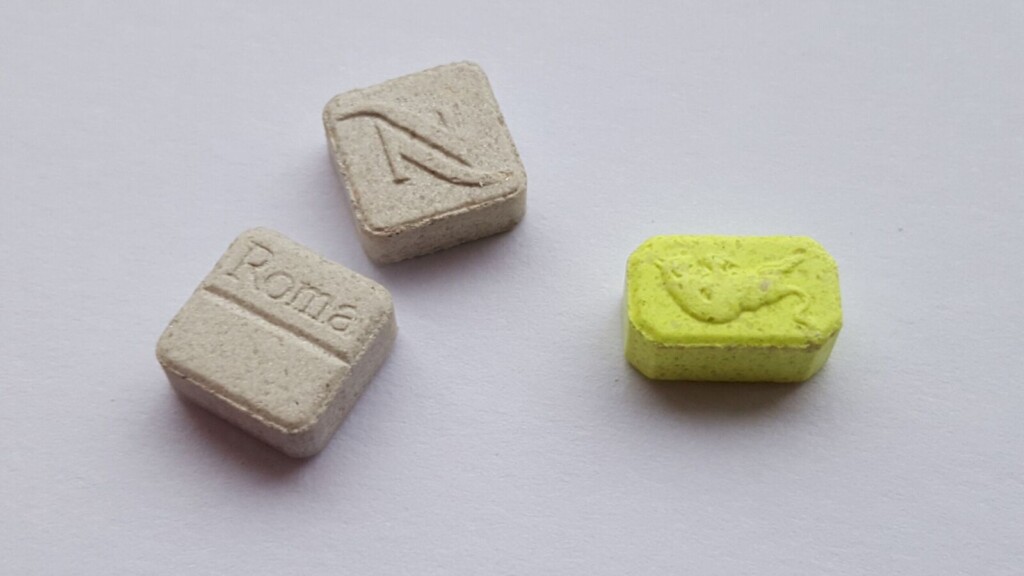
You are standing in a field in 1989, somewhere in the English Midlands, and the music has been running for six hours without a break. There is no stage, no headline act, no hierarchy of attention. The people around you have stopped performing their social coordinates — their class signals, their occupational armor, their weekend personalities — and something stranger has taken hold: a collective dissolving that feels less like intoxication and more like a structural failure of the self.
MDMA, synthesized in 1912 by the German chemist Anton Köllisch and rediscovered by Alexander Shulgin in the 1970s, does not produce hallucinations. What it produces is more threatening to social order than any hallucination could be — it systematically dismantles the neurochemical architecture of mistrust. Serotonin floods the synaptic gap, oxytocin rises, cortisol drops. The pharmacological result is not escape from reality but a radical availability to other people, a temporary erasure of the threat-detection protocols that normally govern human proximity. A person on MDMA at a rave in 1989 did not feel superior to the stranger beside them, did not calculate status, did not perform. This was not a side effect. This was the entire event.
The geography of origin matters here. Chicago’s Black and Latino gay communities developed house music across the early 1980s in venues like The Warehouse and Music Box, spaces already operating outside the sanctioned leisure economy, already coded as deviant by the state. When this sound migrated to Manchester and then detonated across Britain through 1988’s so-called Second Summer of Love, it carried with it a structural DNA that the authorities recognized before they fully understood it: this was a pleasure economy that did not require permission, did not generate taxable hospitality revenue in conventional venues, did not observe licensing hours, and did not reproduce the social stratifications that make populations legible and governable.
By 1992, an estimated half a million people were attending illegal raves on a single weekend in Britain. The Conservative government under John Major framed the response as a matter of public safety and noise ordinance. The Criminal Justice and Public Order Act of 1994 revealed the actual geometry of the anxiety. Section 63 of that legislation defined music to be criminally suppressed as sounds “wholly or predominantly characterised by the repetitive beats” — a statutory definition of prohibited rhythm so nakedly absurd that it exposed what the law was actually trying to regulate: not disorder, but a particular quality of togetherness that bureaucratic society had no mechanism to absorb.
The French sociologist Michel Maffesoli had written in 1988’s “The Time of the Tribes” about the emergence of neo-tribal formations that organize around affect and shared sensation rather than ideology or class identity. He was largely ignored at the time by institutions that still understood social movements as demanding something — rights, representation, resources. Rave demanded nothing. It was post-political in a way that made it impossible to negotiate with, to co-opt, to satisfy through reform. You cannot give a movement what it wants if what it wants is the temporary suspension of wanting itself.
What the 1994 Act actually accomplished was the acceleration of a codification that corporate culture would complete over the following decade — the slow migration of rave into licensed superclubs, branded festivals, and eventually pharmaceutical-adjacent wellness events where the same molecules are discussed in terms of therapeutic protocols and investor decks. The state did not destroy the culture. It held it at the border long enough for capital to build a customs infrastructure, so that when the music finally came inside, it arrived already taxed, already ticketed, already stripped of the specific social chemistry that had made a government reach for the word “repetitive” and mean something else entirely.

MDMA, Empathy, and the Psychiatrist's Dilemma
You are sitting across from someone you have not spoken to honestly in years, maybe decades, and for reasons you cannot entirely explain, the distance between you collapses. Not because you have resolved anything, not because the history between you has changed, but because something chemical has briefly suspended the architecture of self-protection you have spent your entire life constructing. What you feel in that moment is not euphoria in the popular sense. It is closer to recognition — a sudden, disorienting clarity that the wall you built was never as necessary as it felt.
Alexander Shulgin synthesized MDMA in a form suitable for human exploration in 1976, though the compound itself had been patented by Merck as early as 1912 without anyone understanding what it actually did to consciousness. Shulgin, a medicinal chemist working out of a backyard laboratory in Lafayette, California, documented his findings in meticulous detail in “PiHKAL: A Chemical Love Story,” published in 1991 alongside his wife Ann. What he and the psychiatrists he introduced the molecule to — among them Leo Zeff, who administered it to an estimated four thousand patients before his death in 1988 — discovered was not a euphoric drug in the clinical sense but something far stranger: a compound that selectively lowered the threshold of emotional defensiveness without collapsing cognitive function. Patients with severe trauma, couples locked in years of weaponized silence, individuals for whom ordinary therapy had produced nothing but expensive self-narration — all of them reported a similar phenomenon. The usual psychic bodyguard went quiet, and what remained was the capacity for contact.
The psychiatric community recognized almost immediately that this pharmacological property was extraordinary and, in a certain light, threatening. The drug did not produce insight through dissociation or hallucination. It produced it through proximity — to other people, to one’s own emotional interior, to the simple and devastating fact that suffering is shared. Erik Erikson had argued in “Childhood and Society” in 1950 that identity formation in industrialized Western culture depended structurally on the management of intimacy as a resource to be rationed. MDMA appeared to chemically short-circuit that rationing system. A society organized around competitive self-presentation, around the careful deployment of vulnerability as social capital, had no legitimate place for a molecule that made people temporarily indifferent to the hierarchies those performances were designed to maintain.
The DEA placed MDMA on Schedule I in 1985, classifying it as a substance with no accepted medical use and high abuse potential, overriding the objections of researchers, therapists, and an administrative law judge, Francis Young, who had recommended placing it on Schedule III. The scheduling decision was not made on the basis of demonstrated harm at therapeutic doses. It was made on the basis of recreational spread — the drug had migrated from therapy rooms into social settings, which meant it had begun to do in public what it had done in private, dissolving the carefully managed performances that social life depends on. The logic was circular and remarkably transparent: the drug was dangerous because people were using it outside of authorized contexts, and it was being used outside of authorized contexts because it produced states of connection that authorized contexts were structurally unable to provide.
What remained, after the scheduling, was a pharmaceutical ghost — a molecule that continued to circulate in exactly the spaces where the hunger it addressed was most acute, stripped of clinical support, stripped of purity testing, stripped of the therapeutic container that had made its action comprehensible. The rave warehouse was not the therapy room, but it was not nothing. People were arriving at those spaces carrying the same freight — isolation, defended selves, the chronic low-grade estrangement of lives lived inside performance — and reaching, with the tools available to them, for whatever temporary dissolution the night could provide.
The Neuroscience of Belonging and Its Exploitation

You are standing inside a warehouse at 3 a.m., and something has dissolved. Not your body, not exactly your mind, but the membrane between you and the person next to you — a stranger whose name you will never learn, whose shoulder is pressed against yours, whose heartbeat you can feel through the bassline. This is not metaphor. This is serotonin flooding your synaptic clefts faster than your neurons can reabsorb it, a pharmacological event that MDMA forces by reversing the transporter proteins responsible for serotonin reuptake, producing in roughly forty-five minutes what ordinary social bonding might require years to approximate.
What makes this neurologically remarkable is not the flood itself but what accompanies it. Oxytocin, the neuropeptide associated with maternal bonding and pair attachment, surges in parallel. Research published in the Journal of Neuroscience in 2013 confirmed that MDMA directly stimulates oxytocin release from the hypothalamus, which is precisely why the drug does not simply produce euphoria in isolation but produces euphoria oriented outward, toward faces, toward strangers, toward the very crowd that surrounds you. The rave was not accidentally communal. It was chemically engineered to be so, in the most literal sense, at the level of the hypothalamus.
Elias Canetti, writing in Crowds and Power in 1960, identified something he called the discharge — the moment inside a crowd when individual distinctions collapse and the boundary between self and mass becomes temporarily unbearable to maintain. He argued this was one of the oldest human experiences, predating language, predating religion as institution. What he could not have known was that a substituted amphetamine synthesized by Alexander Shulgin and documented in PiHKAL in 1991 would one day make that discharge biochemically accessible on a Friday night in Manchester or Detroit to anyone willing to pay twenty pounds at the door.
The music industries understood the geometry of this before the neuroscientists named it. By the early 1990s, the same record labels that had initially dismissed house and techno as regional subcultural noise were signing distribution deals that would carry artists from the Hacienda and the Warehouse into global markets. The emotional architecture of the music — the extended builds, the deliberate withholding of the drop, the way a DJ set functions as a continuous manipulation of collective anticipation — was not incidental to the drug experience but structurally isomorphic with it. Both the pharmacology and the music operated on delay, on the controlled withholding and release of reward. The industry did not invent this. It recognized a mechanism already working and built a distribution network around it.
What gets lost in that transaction is harder to quantify than revenue. The neurological state produced by serotonin dysregulation and oxytocin release is genuinely temporary — the brain, following the flood, enters a period of depletion that users in the 1990s called the midweek comedown, a grey corridor of anhedonia lasting three to five days in which the very capacity for pleasure feels surgically removed. Serotonin syndrome, in its severe form, can be fatal. But the subtler cost is conceptual: when authentic dissolution of the self becomes a product, when the felt sense of belonging is something you purchase at a pharmacy or a club, the social conditions that made belonging feel absent in the first place are never interrogated. The hunger that drives someone into that warehouse at 3 a.m. is real. The oxytocin response is real. The community that forms around a shared chemical experience can generate genuine loyalty, genuine grief when it ends.
What the commodification accomplished was to make the symptom indistinguishable from the cure, to sell the sensation of connection as a substitute for the structural conditions under which connection might actually persist.
When the Morning Comes: Comedown as Social Mirror

Someone is sitting on a concrete step outside a building they do not quite recognize, watching the sky turn the color of old dishwater. Their jacket is not warm enough. The music has stopped, or rather, the music continues inside their skull as a kind of ghost signal, the body still attempting to dance in a body that can no longer stand upright. What strikes them is not the exhaustion. It is the sudden, inexplicable weight of everything — the bus routes, the rent, the unanswered messages, the face of a colleague they do not like — all of it flooding back as if the night had held it in suspension and is now releasing it with interest.
Pharmacologically, what follows a night of MDMA use is well-documented. The compound works by triggering a massive release of serotonin, dopamine, and norepinephrine while simultaneously blocking reuptake, and the crash that follows is partly the brain’s straightforward arithmetic: what was borrowed must be repaid. Studies published in the journal Psychopharmacology in the early 2000s showed measurable depletion of serotonin metabolites in frequent users that could persist for days. But to read the comedown purely as neurochemical debt is to make the same mistake as reading hunger purely as a drop in blood glucose — technically accurate and experientially beside the point.
What the altered state had actually done was remove the anesthetic. Ordinary social life depends on a vast, invisible infrastructure of numbing — the slight dissociation you maintain from your own longing, the practiced distance from other people’s interiority, the management of meaning so that it never becomes too acute. Sociologist Erving Goffman spent a career, most decisively in The Presentation of Self in Everyday Life published in 1959, describing the micro-theatrical labor this requires: the constant performance, the calculated vulnerability, the backstage self that never fully arrives onstage. What the drug had briefly dissolved was not reality but this management system, and now the system was rebooting, and its weight was appalling.
This is what makes the comedown culturally diagnostic in a way that has nothing to do with pharmacology. The French philosopher Paul Virilio argued that every technology reveals its accident at the moment of its failure — the ship reveals the shipwreck, the airplane reveals the crash. The rave, in this light, reveals its own wreckage at dawn: not the failure of the experience but the failure of everything the experience had temporarily escaped. The grey morning is not the punishment for having danced; it is the ordinary condition made suddenly, unbearably legible.
Durkheim identified in his 1897 study of suicide the condition he called anomie — a dissolution of social bonds so thorough that the individual floats in a kind of structural freefall, deprived of the friction that gives life its texture. What he could not have anticipated was a culture that would engineer its own temporary antidote to anomie every Friday night, producing artificial collective effervescence in a warehouse, and then return its participants to the anomic structure by Sunday morning. The clinical term for this is sometimes called the Tuesday Blues, a colloquial marker inside rave subcultures that named the delayed emotional crash with more sociological precision than most academic literature managed.
The person on the concrete step is not suffering from a drug. They are suffering from the clarity of knowing, for a few hours, what connection without transaction feels like, and then being handed back the invoice for everything they temporarily forgot they owed — to their boss, their image, their credibility, the careful architecture of a self constructed to survive a world that was never designed with their actual survival in mind.
A vision curated by a filmmaker, not an algorithm
In this video I explain our vision
🌀 Between Euphoria and the Abyss: Drugs, Mind & Culture
Rave culture did not emerge in a vacuum — it grew from deep roots in altered consciousness, counterculture philosophy, and the human hunger for transcendence. To understand drugs in rave culture is to explore the history of psychoactive substances, the psychology of ecstasy, and the philosophical frameworks that have long tried to make sense of the mind beyond ordinary reality.
Drugs in History: From Origins to Modernity
Long before the first rave warehouse was ever opened, human beings had been using psychoactive substances across civilizations and centuries. This article traces the rich and complex history of drugs from ancient shamanic rituals to modern recreational use, mapping the cultural meanings that societies have attached to altered states. It provides the essential historical backbone for understanding why rave culture embraced chemical experience as a form of collective ritual.
GO TO THE SELECTION: Drugs in History: From Origins to Modernity
Huxley’s The Doors of Perception: Analysis
Aldous Huxley‘s account of his mescaline experience remains one of the most lucid and philosophically rich explorations of what happens when the mind’s filters are dissolved. His concept of the ‘reducing valve’ of consciousness speaks directly to what ravers seek when they lose themselves in sound and strobe: a wider, unmediated perception of reality. This analysis of The Doors of Perception is essential reading for anyone trying to understand the intellectual genealogy of psychedelic culture.
GO TO THE SELECTION: Huxley’s The Doors of Perception: Analysis
Michel Foucault and Drugs: Pleasure and Power
Michel Foucault‘s thinking on drugs goes far beyond simple pharmacology, situating substance use within networks of power, pleasure, and social control. He asked not what drugs do to the body, but what society does with the body that uses drugs — a question that cuts to the heart of how rave culture was criminalized and pathologized. This article explores how Foucauldian analysis illuminates the politics of ecstasy and the policing of altered states.
GO TO THE SELECTION: Michel Foucault and Drugs: Pleasure and Power
Psychedelic Movies for One-Way Trips
Cinema has long attempted to render the psychedelic experience visible, translating the dissolution of ego and the flood of color and sound into moving images. This curated selection of psychedelic films captures the aesthetic and psychological territory that rave culture inhabits — the loop, the labyrinth, the loss of self, and the strange beauty of the limit experience. Watching these films alongside a study of rave culture reveals how deeply the psychedelic imagination has shaped contemporary visual and musical sensibility.
GO TO THE SELECTION: Psychedelic Movies for One-Way Trips
Explore the Cinema of Altered States on Indiecinema
If these themes of consciousness, transgression, and collective ritual resonate with you, Indiecinema is your next destination. Our streaming platform curates independent and art-house films that dare to explore the edges of human experience — from psychedelic journeys to underground subcultures. Dive in and discover cinema that, like a rave at its best, refuses to leave you unchanged.
👉 EXPLORE THE CATALOG: Watch Indie Films in Streaming
A vision curated by a filmmaker, not an algorithm
In this video I explain our vision

