
Defining the Theatre-Cinema Boundary: Staging, Space, and the Static Camera
The screen and the stage have always existed in a state of productive tension, each borrowing from the other’s grammar while fiercely protecting its own spatial logic. To understand how theatrical dramaturgy infiltrates cinematic language, one must first establish precisely where the boundary between these two forms lies, and that boundary is fundamentally a question of space, camera placement, and the architecture of attention.

Theatre operates on the logic of the proscenium, an arrangement that positions the audience at a fixed distance from a three-dimensional action unfolding within a defined frame. The spectator cannot move. The eye cannot be directed by any mechanical agency. What the playwright and director control is blocking, the deliberate positioning and movement of bodies within a space that must remain legible from a single, collective vantage point. Every gesture is scaled to the back row. Every pause is calibrated for a room full of breathing, coughing, living witnesses. This is a fundamentally democratic form of visual attention, where each member of the audience negotiates their own focus within the totality of what is presented.
Cinema dismantles this arrangement entirely. The camera is not a passive audience member seated in a stall. It is an instrument of violent selectivity. Through framing, focal length, depth of field, and editing rhythm, the director does not present action to the viewer but constructs the viewer’s perception of it. A shallow depth of field isolates a face from its environment, collapsing the theatrical depth of a set into a single plane of emotional information. A cut from a wide establishing shot to a tight close-up performs an act of interpretation that no theatrical audience could experience collectively, because it is fundamentally an individual and imposed experience. The fourth wall, that invisible boundary between performer and audience that theatre so carefully maintains, becomes in cinema not a wall at all but a dynamic membrane that the camera penetrates, circles, and reconstructs with every setup change.
Mise-en-scène, the term borrowed directly from theatrical vocabulary and meaning literally “placing on stage,” takes on a modified function when applied to film. In theatre, mise-en-scène is the totality of what is placed before the audience. In cinema, it refers specifically to what is placed within the frame, a crucial distinction. The frame is not a proscenium opening. It is a chosen rectangle of reality, and its edges are as meaningful as its center. A director who composes a shot is making an argument about what matters, using the geometry of the image to guide interpretation in ways that a stage director, working with a fixed audience position, simply cannot replicate with the same precision.
The tension between theatrical staging logic and cinematic fragmentation becomes most visible when directors choose to resist the mobile, cutting-driven grammar of mainstream film. When a filmmaker holds a static wide shot for an extended duration, placing figures in deep space and refusing to cut, they are making a deliberate stylistic choice that echoes theatrical convention while simultaneously exposing the difference between the two media. The static camera in cinema is not neutral. It is an assertion. It carries the weight of everything the director has chosen not to do, all the cuts, reframings, and isolations that conventional screen grammar would demand. The theatrical inheritance is felt precisely through this resistance, through the sense that human bodies in space can generate meaning without the editorial intervention that cinema normally insists upon.
Establishing this foundational tension between the fixed, collective gaze of theatrical space and the mobile, selective eye of the camera is essential before examining how specific filmmakers have navigated, exploited, or deliberately collapsed the distance between these two forms.
The Theatre-Derived Techniques That Built Classical Hollywood
The migration of theatrical craft into the grammar of early Hollywood was never a simple act of translation. It was, more precisely, an act of engineering — a systematic problem of how to preserve the rhythmic and dramatic energy of stage dialogue while submitting it to the spatial logic of the camera. The solutions that classical Hollywood directors arrived at became foundational conventions so deeply embedded in the medium that we now perceive them as invisible, natural, inevitable. They are none of those things. They are inherited theatrical decisions encoded into lens choices, cutting patterns, and floor plans.
The master shot is the most honest acknowledgment of cinema’s theatrical debt. Functionally, it replicates the proscenium perspective: a wide, stable frame that captures the full geography of a scene, the complete blocking, the spatial relationships between characters. From this anchoring view, the director then moves inward, cutting to closer framings that isolate reaction, emphasis, or emotional detail. The theatrical origin of this method is transparent. A stage director composes a scene across a fixed architectural space; a film director photographs that composition first, then dismantles and reconstructs it through editing. The master shot preserves the dramaturgical integrity of the original blocking while the subsequent coverage provides the emotional granularity the stage cannot offer.
Gregory La Cava’s Stage Door demonstrates this method under particular pressure, because the film is almost architecturally theatrical in its material. A large ensemble of aspiring actresses occupies a boarding house, and the dialogue is dense, overlapping, and relentlessly witty. La Cava used deep-focus compositions and wide masters to keep multiple performers in the frame simultaneously, honoring the ensemble dynamic that gives the script its theatrical charge. When he cuts to closer shots, it is rarely for simple reaction coverage; it is timed to isolate a particular voice within the verbal counterpoint, functioning almost like a musical score’s notation of a solo instrument emerging from the texture of the full orchestra. The editing rhythm in Stage Door is consequently fast but not aggressive — it breathes with the dialogue rather than cutting against it, a technique derived directly from the theatrical understanding that speech has its own internal architecture.
Joseph L. Mankiewicz brought an even more rigorous theatrical sensibility to All About Eve, a film in which dramaturgy is not simply present but is, in effect, the subject. Mankiewicz was a writer-director whose instinct was always to serve the line, and his shooting ratios and lens choices reflected this priority absolutely. He favored medium shots and medium close-ups at relatively long focal lengths, which flattened depth slightly and kept the frame organized around the speaking figure without the distortion that wide-angle lenses would introduce into dialogue-heavy framings. His shot/reverse-shot constructions in conversation scenes are metronomic in their precision, but the cuts land on the beginning of lines rather than at their end — a subtle but critical choice that keeps the scene’s verbal momentum continuous, preventing the editing from creating pauses the script never intended.
The blocking in All About Eve is consistently theatrical: characters are positioned and repositioned within the frame with the conscious geometry of stage direction, each physical movement serving a clear dramaturgical function. When Margo Channing occupies the center of a room, it is a deliberate articulation of dominance. When Eve moves to the periphery, her marginality is spatial and therefore cinematic, but it originated as a stage director’s instinct. Mankiewicz understood that the camera, in dialogue-driven cinema, is not an exploratory instrument. It is a precision tool for making the dramaturgy legible at the scale of the human face.

Theatrical Minimalism as a Radical Cinematic Choice: Long Takes, Fixed Frames, and Dialogue Architecture
There is a paradox at the heart of theatrical minimalism in cinema: by refusing the most fundamental tool of the medium — the cut — certain directors have produced some of the most technically demanding and conceptually rigorous work in film history. The conscious decision to suppress conventional editing is not an act of limitation but one of radical discipline, forcing the camera, the performers, and the architecture of dialogue to carry the entire dramatic weight that montage would ordinarily distribute across dozens of individual shots.
Hitchcock’s Rope remains the most audacious formal experiment in classical Hollywood cinema precisely because it disguises its own construction. Shot in 1948 on a single stage-bound set, the film was composed in ten continuous takes of approximately ten minutes each — the maximum load capacity of a standard film magazine at the time — with the joins concealed by pushing the camera into the dark fabric of a jacket or the back of a piece of furniture. The result is a film that breathes like a single uninterrupted exhalation. What makes this achievement technically extraordinary is not the absence of cuts but the choreographic precision required to replace them. Every camera movement is a dramaturgical statement. When the apparatus tracks laterally across the apartment, it is not following action passively; it is redistributing audience attention with the same deliberateness that a stage director uses when blocking an actor’s cross. The deep focus photography, managed under the visual supervision of cinematographer Joseph Valentine and William V. Skall, keeps both foreground and background planes in sharp resolution simultaneously, meaning that tension operates across the entire visible field. The chest containing the body functions as a constant compositional anchor, and Hitchcock returns the frame to it with the methodical logic of a theatrical property used as a recurring motif. Blocking becomes syntax: who stands where, and at what distance from the chest, encodes guilt and complicity without a single editorial intervention.
Louis Malle‘s My Dinner with Andre operates on an entirely different register of theatrical minimalism, one that is conversational rather than spatial. The 1981 film, written by Wallace Shawn and Andre Gregory and adapted directly from their real conversations, reduces cinematic grammar to its most essential components: the close-up, the two-shot, and the eyeline match. Malle and cinematographer Jeri Sopanen construct a visual architecture of extraordinary restraint. The cutting rhythm is slow and purposeful, governed entirely by the logic of listening rather than action. When the camera holds on a face in close-up during an extended monologue, it is performing the function of theatrical concentration — directing the audience’s attention to a single source of meaning with the same authority a spotlight exercises on stage. The two-shot, deployed at key moments of conversational tension, reintroduces the spatial relationship between the speakers and reminds the viewer that drama is fundamentally relational. Eyeline matching across the table sustains the illusion of genuine exchange, but more importantly it creates a rhythm of call and response that substitutes for physical event. The dinner itself is the mise-en-scène; the food, the table, the restaurant ambient sound constitute the entire diegetic world.
What both films demonstrate is that suppressing conventional cinematic cutting does not neutralize drama — it relocates it. When the editor’s rhythm is removed, every element of the frame must become load-bearing. Performance timing, the duration of a held shot, the precise angle of a two-shot, the spatial geometry of blocking: all of these technical parameters acquire an urgency they rarely possess in conventionally edited work. Theatrical minimalism, paradoxically, makes the camera’s presence more acute, not less, because every movement and every held position is legible as a deliberate choice rather than one option among many.
Contemporary Directors and the Deliberate Theatricalization of Screen Space

What separates the contemporary auteur’s engagement with theatrical convention from earlier Hollywood anxieties about the stage is precisely the quality of deliberateness. Where the filmed plays of the 1950s often betrayed an awkward deference to their source material, directors like Lars von Trier and Roman Polanski have approached the grammar of theatre not as a limitation to overcome but as a formal instrument to wield with full technical intent. The theatricalization of screen space in their work is a choice inscribed at every level of production, from lens selection and camera height to the choreography of actors within a rigidly defined diegetic boundary.
In Dogville, von Trier strips the theatrical borrowing down to its most radical and provocative form. The film is shot almost entirely on a single soundstage in which the geography of the fictional American town is indicated by chalk lines drawn directly on the floor. Walls do not exist. Doors are gestures. The audience reads spatial boundaries through performance convention and graphic notation rather than through constructed architecture. Von Trier’s primary camera solution for establishing this world is the extreme overhead wide shot, a near-vertical bird’s-eye perspective that functions as a kind of architectural blueprint, revealing the entire stage diagram at once. This angle has no analogue in naturalistic cinema; it belongs instead to the theatrical tradition of the designer’s ground plan, the view from above that reveals the logic of a space rather than its texture. When the camera descends to eye level for closer coverage, it does so with lenses in the moderate telephoto range, compressing the shallow depth between actors and their chalk-line environment, flattening the already-abstract space further. The editing rhythm is deliberately unhurried, with long takes that force the viewer to read blocking choreography as the primary carrier of dramatic information, much as a theatre audience reads stage pictures from a fixed vantage point across an orchestra pit.
The diegetic pressure generated by this approach is specific and calculated. Because spatial fragmentation through conventional editing is withheld, the viewer cannot redistribute attention through cut-driven emphasis. There is nowhere to hide in Dogville, neither for the characters nor for the audience. The absence of walls makes privacy a performative fiction, and von Trier’s overhead compositions expose this with clinical precision.
Roman Polanski’s Carnage operates through an entirely different but equally rigorous application of theatrical logic. Adapted from Yasmina Reza‘s stage play, the film confines four adults to a single New York apartment for approximately eighty minutes of near-real-time dramatic action. Polanski’s lens choices are notably restrained, favouring moderate wide-angle focal lengths in the 28 to 35 millimetre range that preserve spatial relationships between characters without distorting the environment. Camera height stays consistently close to seated eye level, a decision that subtly equalises the power geometry of the frame and prevents any single character from claiming visual dominance through placement alone. The blocking choreography is dense and precisely timed, with actors constantly shifting positions across the apartment’s living room and kitchen in patterns that recall theatrical blocking notation more than the motivated, discovery-based movement of naturalistic screen performance.
The single-location constraint is not merely a budgetary echo of its stage origins; it is the mechanism through which Polanski generates mounting claustrophobic pressure. By refusing to open the drama outward through location cuts, by denying the audience the spatial relief of an exterior shot or a reaction cutaway, he traps the viewer within the same shrinking room as the four characters. The apartment becomes a pressure vessel, and the camera’s patient, choreography-following movement within it functions less as a cinematic eye than as a theatre patron’s gaze, unable to look away, unable to leave the auditorium.
Technical Evolution: From Theatrical Adaptation to Hybrid Cinematic Dramaturgy
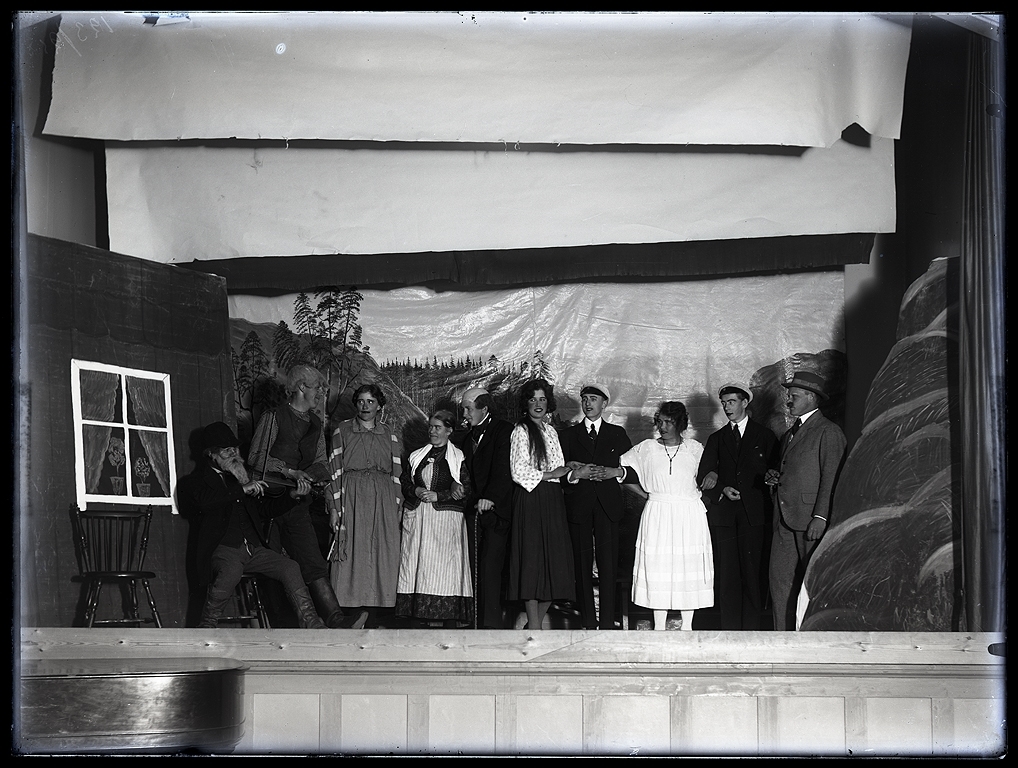
The history of cinema’s relationship with theatrical dramaturgy is not a static archive but a living negotiation, one that has shifted dramatically in both its technical vocabulary and its underlying artistic intentions across more than a century of filmmaking. What began as a constraint — the early camera’s inability to move freely, the studio’s dependence on stage-trained actors, the screenplay’s debt to the dramatic text — gradually transformed into a deliberate formal strategy, a conscious grammar that directors have chosen to employ, reject, or reinvent according to their expressive needs.
In the silent era and through the early sound period, the theatrical inheritance was largely inescapable. Cameras were cumbersome, microphones were fixed, and the entire logic of mise-en-scène was organized around a frontal, proscenium-style address to the audience. Planimetric composition — the arrangement of figures parallel to the picture plane, as if posed before a stage backdrop — was less a stylistic choice than a practical default. Actors trained in the theatre brought their vocal projection, their gestural amplitude, and their instinct for spatial hierarchy to a medium that had not yet developed the intimate technical tools to contain or redirect that energy. The result was a cinema that often felt spatially rigid, its diegetic world sealed behind an invisible fourth wall that the camera could observe but rarely penetrate.
The gradual liberation of the camera through the 1930s and 1940s introduced a fundamental recalibration of performance scale. As cinematography embraced the close-up not merely as punctuation but as a primary unit of narrative meaning, the actor’s face became a landscape in itself, capable of communicating interior states that no stage performance could register across a darkened auditorium. Directors like William Wyler, working with deep-focus photography, began to dissolve the theatrical hierarchy of foreground and background, allowing spatial continuity to carry dramatic weight that had previously been assigned exclusively to dialogue. The screenplay remained verbally dense, but the image began to assert an independent authority.
The European art cinema of the 1950s and 1960s represents perhaps the most analytically productive moment in this evolution, precisely because filmmakers like Ingmar Bergman, Robert Bresson, and Michelangelo Antonioni engaged the theatrical inheritance with full critical consciousness. Bergman never disguised his theatrical roots; instead, he forged a cinema in which the close-up became the equivalent of the theatrical soliloquy, an instrument of radical psychological exposure. Bresson, by contrast, systematically dismantled theatrical performance, replacing it with a flat, non-expressive delivery that could only function cinematically, dependent entirely on editing rhythm and diegetic sound to generate emotional resonance. These filmmakers did not escape theatre — they used its conventions as a measuring rod against which to define a purely cinematic language.
Contemporary production design and screenwriting continue to negotiate this border with increasing sophistication. The planimetric compositions of Wes Anderson or Yorgos Lanthimos are not anachronisms but quotations, formal gestures that invoke theatrical artifice as a deliberate critical stance rather than a technical limitation. Meanwhile, streaming-era drama has arguably reversed the historical trajectory, producing long-form narratives whose extended dialogue scenes, chamber-scale settings, and character-driven plotting owe more to dramatic literature than to classical cinematic construction, raising fresh questions about where the grammar of the screen ends and the grammar of the stage begins.
What this long arc reveals is that the tension between theatrical dramaturgy and cinematic language has never been resolved, nor should it be. It is precisely in that productive friction — between the spoken word and the moving image, between spatial containment and visual freedom, between the actor’s body as theatrical sign and the camera’s capacity to fragment and recompose it — that some of the most formally ambitious work in the history of the medium has been made, and continues to be made.
A vision curated by a filmmaker, not an algorithm
In this video I explain our vision
🎭 Where the Stage Meets the Screen
Theatre and cinema have always shared a complex, fertile dialogue — one that shapes how stories are told, how bodies move through space, and how language lands on an audience. Understanding the technical and artistic tools of filmmaking reveals just how deeply dramatic tradition has infiltrated the cinematic frame. These articles trace the invisible threads that connect the stage to the screen.
A Guide to Scene Composition and Auteur Mise-en-Scène
The way a director composes a scene owes an enormous debt to theatrical staging, where every body, object, and light source carries symbolic weight. Mise-en-scène — a term borrowed directly from French theatre — is the fundamental language through which a filmmaker translates dramatic intention into visual form. This guide unpacks how auteur directors use spatial composition to turn the screen into a living stage.
GO TO THE SELECTION: A Guide to Scene Composition and Auteur Mise-en-Scène
The Soul of Dialogue: Anatomy of the Shot-Reverse-Shot Technique
The shot-reverse-shot technique is arguably cinema’s most theatrical inheritance, replicating the charged exchange of dialogue that lies at the heart of dramatic writing. By cutting between two speakers, filmmakers create a rhythm of tension and revelation that mirrors the dynamic of actors performing a scene together. This anatomy of the technique reveals how dramaturgy lives inside the very grammar of editing.
GO TO THE SELECTION: The Soul of Dialogue: Anatomy of the Shot-Reverse-Shot Technique
What is the Fourth Wall in Cinema?
The concept of the fourth wall — that invisible boundary between performer and audience — was born in theatre before cinema made it its own subversive tool. When a character looks directly into the camera, they are performing a theatrical gesture of radical intimacy, collapsing the distance between the story and the spectator. This article explores how cinema inherited and reinvented this powerful dramatic convention.
GO TO THE SELECTION: What is the Fourth Wall in Cinema?
The Writing of the Gaze: A Guide to Camera Movements in Auteur Cinema
Camera movement in auteur cinema functions much like the choreography of actors on a stage, guiding the eye and shaping emotional tempo with deliberate intention. The pan, the track, and the crane shot each carry a dramaturgical logic that determines how a viewer experiences narrative unfolding in time and space. This guide reveals how the moving camera became one of cinema’s most expressive theatrical instruments.
GO TO THE SELECTION: The Writing of the Gaze: A Guide to Camera Movements in Auteur Cinema
Discover Bold Independent Cinema
The conversation between theatre and cinema is alive and ongoing — and nowhere is it more vivid than in the work of independent filmmakers who refuse to separate the two art forms. On Indiecinema, you’ll find a handpicked streaming catalog of daring, stage-influenced, and visually inventive films that push the boundaries of the screen. Explore our collection and let independent cinema surprise you.
👉 EXPLORE THE CATALOG: Watch Indie Films in Streaming
A vision curated by a filmmaker, not an algorithm
In this video I explain our vision

