
The Threshold Nobody Crosses
You have stood in front of a door that was never meant to be opened again. Not locked — something worse than locked. The hinges have surrendered to oxide, the wood has pulled away from its frame like skin retracting from a wound, and the darkness on the other side is not the absence of light so much as the presence of something older than the building itself. Your foot is on the step. You have not moved for thirty seconds, though it feels like a calculation that has been running in you for years.

The street behind you is ordinary in that aggressive way streets become when you are about to do something they cannot accommodate. A bus passes. Someone walks a dog. The whole apparatus of the sanctioned world continues its rotation, indifferent to the fact that you are standing at the precise boundary between the mapped and the unmapped, between the city that functions and the city that has stopped functioning but refuses, emphatically, to disappear. The building does not ask you to enter. It does not ask you to leave. It simply exists in a register that official geography has chosen to stop acknowledging, and the question it poses to your body is purely physical: will you cross, or will you fold back into the pavement where you belong?
There is a specific quality to the silence that pools in abandoned places that has nothing to do with quiet. A functioning room generates a low continuous noise — the friction of occupation, the thermal sounds of heating systems, the electrical hum of things plugged in and drawing current. When all of that is removed, what replaces it is not peace. It is exposure. The building breathes differently without people in it, and what you hear standing at that threshold is the structure itself, its joints and its settling, its long slow argument with gravity conducted entirely without witnesses. You are not hearing silence. You are hearing time working on matter without interruption.
The hesitation is not fear of the building. Anyone who has spent time at these thresholds understands that the structure is almost never the danger — the danger is the jurisdiction, the watchman who appears at the wrong moment, the legal category you enter the instant your weight shifts forward. But beneath that practical anxiety there is something that resists cleaner description: the sense that crossing this particular threshold is a kind of statement about who you are willing to be, about whether you are someone who moves only through spaces that have been curated and approved for movement, or whether you are capable of insisting on the existence of a place the institutional world has decided no longer counts. The city wants you to agree with its deletions. This is one place it has already erased from its working memory, and it is asking, through the simple physics of that broken doorframe, whether you will honor the erasure or refuse it.
What makes this moment different from ordinary trespass is not the law it technically violates but the contract it tears — the implicit agreement most people accept without ever consciously signing, which holds that space belongs to whoever administers it, that the boundaries of the livable city are the boundaries of the real city, that a building emptied of its function has been emptied of its significance. To step across is to argue, with your body rather than your words, that a place does not cease to matter simply because the structures of maintenance and profit have moved on. The argument is made in silence, in dust, in the particular quality of light that enters a room through windows nobody has cleaned in eleven years.
Your foot shifts. The floor receives your weight with a sound like a low chord on an instrument you have never heard played before.
Simon Marsden’s Haunted Life In Pictures
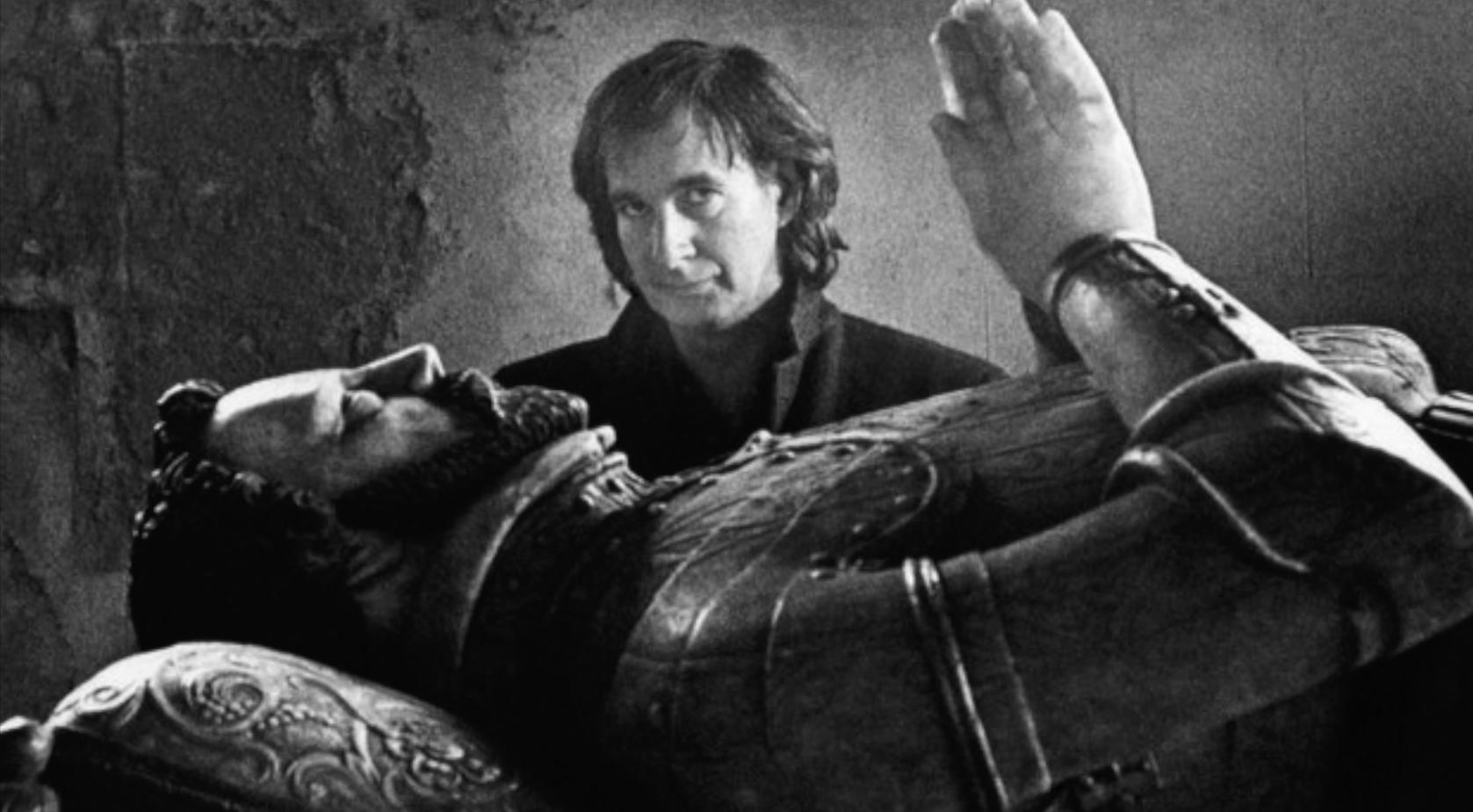
Documentary, by Jason Figgis, United States, 2019.
This documentary retraces the life and work of Simon Marsden, widely regarded as one of the foremost photographers of the supernatural. Premiered at the British Film Institute in London, the film offers a fascinating journey into his creative universe, appealing not only to photography enthusiasts but also to scholars, teachers, students, and anyone intrigued by the mysteries of the unseen. Through evocative imagery and first-hand accounts, it explores the artistic path of a photographer whose work has appeared in books, on U2 album covers, and in museum exhibitions around the world.
Although convinced of the existence of ghosts, Marsden never claimed to capture them directly with his camera. Instead, he used black-and-white infrared film to record the atmosphere and the invisible traces that, in his view, spirits left imprinted upon places. From the landscapes of Ireland to the vast expanses of Russia, passing through Venice and the American Southwest, he transformed historic buildings, ruins, and haunting locations into deeply evocative images capable of suggesting dark and unsettling stories. His photographs continue to captivate the imagination, demonstrating how the most powerful works of art can leave a lasting impression on those who behold them.
LANGUAGE: English
SUBTITLES: Spanish, French, German, Portuguese
What Forgetting Actually Requires
You walk into a building that stopped being used before you were born, and the first thing you notice is not the decay — it is the silence that has texture, the kind that presses back when you move through it. Dust has settled on surfaces in a way that suggests not neglect but ceremony, as though the air itself decided to memorialize something the city refused to.
Forgetting, it turns out, is not something that simply happens to places. It is something that is engineered. Marc Augé, writing in 1992 in “Non-Places: Introduction to an Anthropology of Supermodernity,” made the argument that late capitalism generates spaces designed to resist the accumulation of meaning — transit corridors, chain hotels, airport lounges, places where you pass through without leaving a trace and without receiving one. What his framework implies, though he does not press it this far, is that the inverse condition is equally manufactured: when a space is stripped of its function, it is not merely abandoned, it is actively unmemorialized. The bureaucratic silence around its closure, the absence of any civic marker, the failure to install even a modest plaque — these are not oversights. They are decisions made by people in rooms who understood exactly what institutional forgetting costs and chose to pay it anyway.
Michigan Central Station in Detroit closed on January 5, 1988, and for thirty years the city’s official relationship to that fact was essentially nothing. No commemoration, no acknowledgment in civic planning documents that treated the structure as a wound to be worked around rather than a history to be held. The building is eleven stories of Beaux-Arts architecture completed in 1913, designed by the same firm responsible for Grand Central Terminal in New York, and it processed hundreds of thousands of passengers annually at the height of Detroit’s industrial metabolism. By the time the last train departed, the city had already decided the station’s story was not one it wished to keep telling. What followed was not organic deterioration but a controlled collapse in which inaction served as policy: windows broken, copper stripped, floors rotted through, and the whole structure left in a condition that made demolition seem like mercy. The forgetting was architectural, yes, but it was also juridical, financial, and political — a document written in missing maintenance budgets.
What gets erased in this kind of civic amnesia is not only the beauty of a structure but the social history it contained. Stations are not neutral buildings. They are sites where class and race and labor converge under a single roof in unusually legible ways. The waiting rooms at Michigan Central were segregated. The workers who built the city’s automobiles passed through those gates. The great northward migrations of Black Americans moving from southern states into industrial cities between 1910 and 1970 — a demographic transformation involving over six million people — moved in significant part through exactly these transit architectures. When you let a station rot, you are not simply allowing a building to deteriorate. You are allowing the material substrate of that history to dissolve before anyone has to answer for it.
This is what urban explorers move through, often without fully naming it: not ruins in the romantic nineteenth-century sense, the picturesque decay that painters sought in European castles precisely because it was safely distant from living politics. These are ruins with recent receipts. The administrative files that authorized the closure are still accessible. The elected officials who signed off on deferred maintenance are sometimes still alive, still identifiable. The forgetting is fresh enough to be held against someone, and that proximity is exactly what the absence of memorialization was designed to diffuse — to let enough time pass, enough physical deterioration accumulate, until accountability softens into atmosphere.

The City as Autobiography It Never Meant to Write
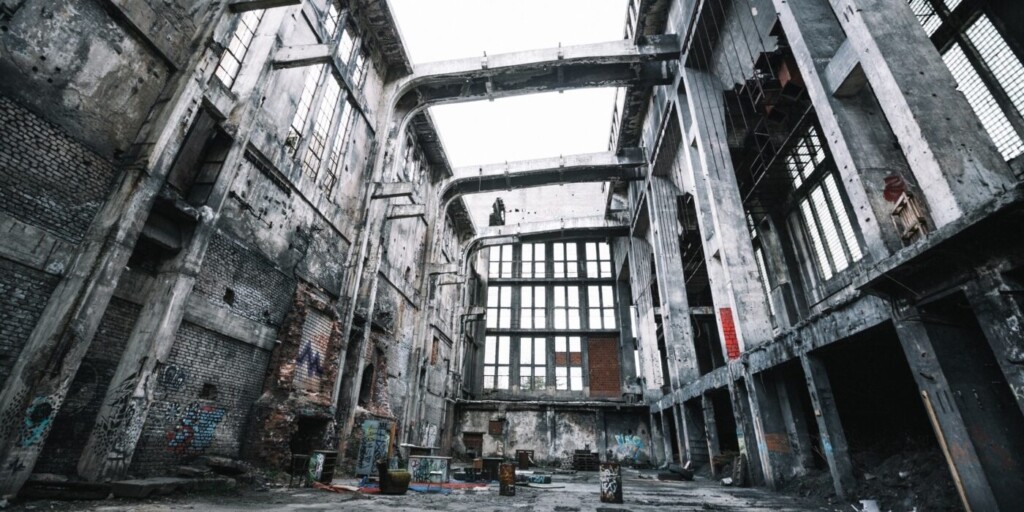
You are standing in what was once a train station, and the ceiling is still magnificent. Whoever built this place believed in arrival — believed that the act of coming home, or leaving for somewhere better, deserved marble floors and vaulted glass and iron lacework that cost more than most families earned in a decade. The grandeur was not accidental. It was a message the city sent to itself about what it was, what it intended, what it assumed its future would require.
What the city did not intend to write is what you are reading now: the water stains tracing the exact outline of a leak nobody fixed for thirty years, the turnstiles rusted open in permanent surrender, the timetable board frozen on a date that, if you look it up, turns out to be the last day regular service ran before the route was quietly cancelled and never discussed in public again. This is the autobiography. The city composed it by accident, through neglect and fiscal decisions and the particular cowardice of administrators who preferred to let things rot rather than announce they had failed. Architecture, when it stops being maintained, stops lying.
Walter Benjamin understood this before anyone had the vocabulary to describe it cleanly. Working obsessively from the early 1920s until his death in 1940, he filled thousands of pages with fragments drawn from the arcades of nineteenth-century Paris — those covered shopping passages made of iron and glass that were, in his reading, the unconscious dream-architecture of capitalism. The Arcades Project, published posthumously and never completed, argued that the detritus of an era tells you more about its actual logic than its official monuments ever could. A monument is an argument. A forgotten thing is evidence. What gets discarded reveals what was never meant to be examined.
The gap between official self-image and material record is not a modern peculiarity. In 1955, the sociologist C. Wright Mills wrote in The Power Elite that American institutions had developed a remarkable capacity for generating prestige symbols that bore no necessary relationship to the actual distribution of power or the actual conditions of ordinary life. What he was describing was a civilization that had learned to narrate itself through its best moments while letting its worst moments quietly decompose in places no one with a press credential was expected to visit. The abandoned hospital, the decommissioned factory, the school district that closed a building because the neighborhood it served had been systematically defunded — these are not anomalies. They are the text that the official narrative was written to displace.
There is a specific cruelty in how industrial ruins age. A factory that once employed four hundred people does not leave a plaque. The building simply empties, the machinery gets stripped for scrap or left to seize, and within a generation the institutional memory dissolves entirely. What remains is pure material: the poured concrete floor still bearing the shadow-marks of equipment bolted down for decades, the safety notices still laminated to the wall describing procedures for machinery that no longer exists, the lunchroom calendar stopped on a month that corresponds to a layoff announcement that was covered in the local paper for a week and then forgotten. No one commissioned this record. It is what survived because no one thought it worth destroying.
The people who move through these spaces with cameras and notebooks are, whether they frame it this way or not, doing something that resembles what a historian does when they insist on reading the footnotes instead of the thesis. The official city presents itself through its functioning infrastructure, its new developments, its ribbon-cuttings and renderings. The same city, in its abandoned shells, shows you the arithmetic it never wanted checked — the promises made to communities that were later reclassified as expendable, the civic ambitions that outlasted the tax base willing to sustain them, the version of progress that required, somewhere out of frame, an equivalent and unacknowledged regression.
Irene
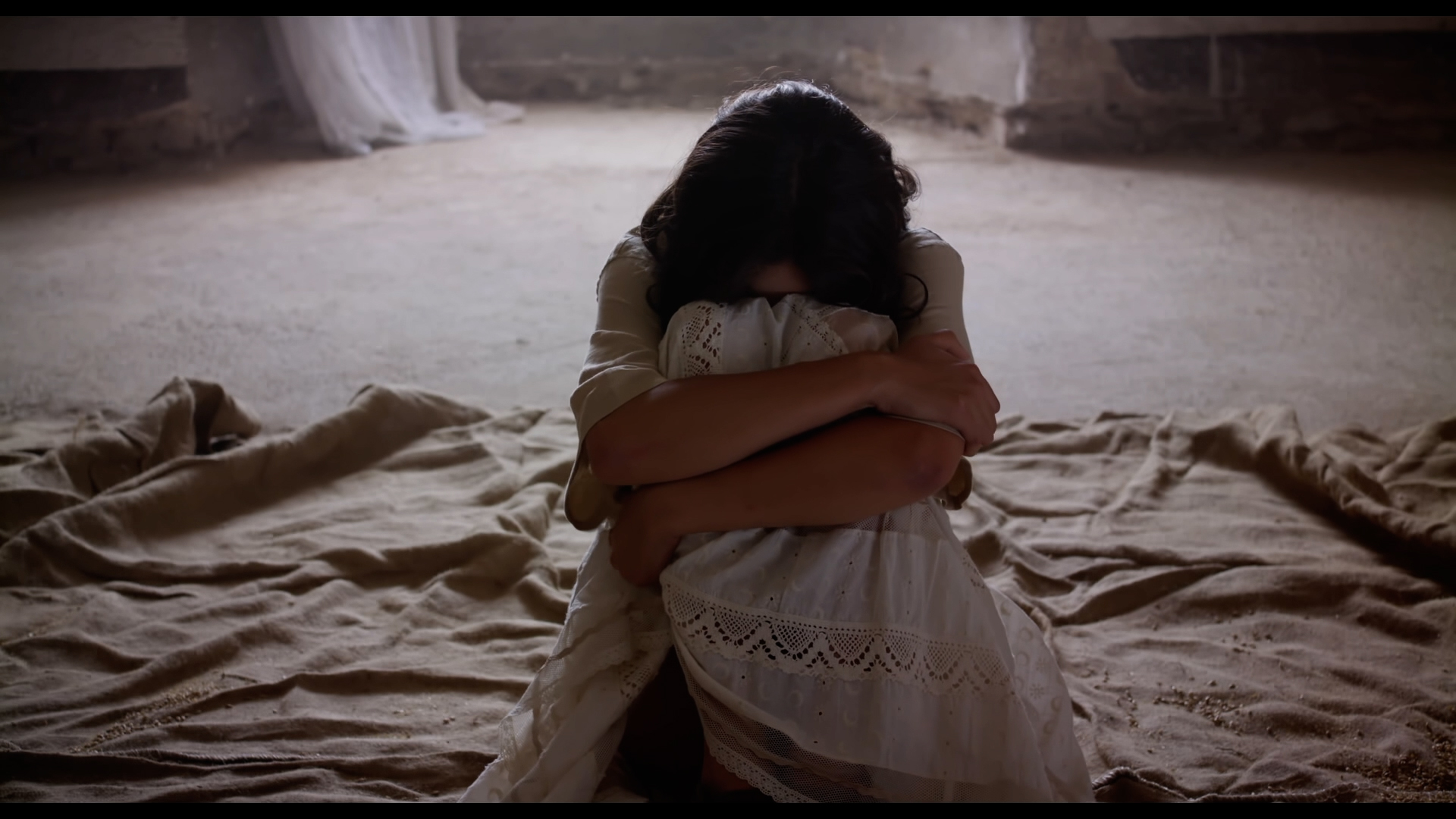
Drama, by Valerio Pampaglini, Italy, 2023.
Irene is trapped within her own unconscious, empty and ruined like an abandoned house. Through broken glass and shady figures dressed in black, a song awakens something long forgotten inside her. The film, written and directed by Valerio Pampaglini, is supported by the Rome Film Academy. It was shot in the summer of 2022 in the province of Perugia, in the municipality of Todi and at the Montenero castle.
LANGUAGE: Italian
SUBTITLES: English
Trespass as Epistemology
You step through a gap in the fence where the chain-link has been peeled back by years of anonymous hands, and for a moment the city you thought you knew becomes a different city entirely — one that was always there, running parallel, waiting to be read by someone willing to break the grammar of ordinary movement.
Michel de Certeau drew a precise distinction in The Practice of Everyday Life, published in French in 1980, between what he called strategies and tactics. Strategies belong to institutions — they are the spatial logic of those who possess a proper place, a headquarters, a legal address from which the world can be mapped and controlled. Tactics belong to everyone else. They operate inside the spaces that strategies have designed, but they move through them in ways the designers never sanctioned. A tactic has no base. It seizes opportunities, works in the margins, turns the enemy’s own terrain into its temporary instrument. De Certeau was thinking about shoppers and walkers and readers — ordinary people who consume the city’s official script while quietly authoring their own. Urban exploration simply takes this logic to its structural extreme, not by rejecting the built environment but by inhabiting it against its stated purpose.
What institutional space communicates, at its most fundamental, is permission — the invisible architecture of who is allowed to know what, and by standing where. A hospital records what happened inside it; a factory records the logic of production; an asylum records the medical epistemologies of an entire century. When these buildings are abandoned, their archives emptied and their staff dispersed, the physical structure itself becomes the only remaining document. Access to that document is legally restricted not because the building is dangerous, though it may be, but because physical presence is a form of knowing that cannot be easily managed, catalogued, or controlled. The body that walks through a derelict ward learns something that no heritage commission report can replicate, because what it learns is not only propositional but spatial — it learns through proportion, smell, light, the angle at which a door has frozen open, the way water has redistributed a building’s own decay across its floors.
This is where the epistemological claim becomes genuinely radical. Western philosophy has consistently privileged detached, disembodied observation as the condition of reliable knowledge — a tradition traceable at least to Descartes separating thinking substance from extended matter in 1641, and reinforced by every laboratory protocol and statistical methodology that followed. The urban explorer’s body refuses that separation. It enters the known-forbidden space and produces knowledge that is inseparable from risk, from trespass, from the particular tremor of crossing a threshold that an entire legal architecture exists to protect. That knowledge cannot be peer-reviewed or submitted as evidence. It cannot be adequately translated into language, which is part of why urban explorers photograph obsessively — not to document for others but to preserve the residue of what the body registered and the mind cannot fully hold.
The photograph taken inside a restricted space carries something that an identically composed photograph taken legally does not. This is not mysticism. It is a record of a different relationship between observer and observed, one in which the observer accepted exposure in order to get close. There is an entire tradition of thinking about this — about the price of proximity, about what you forfeit intellectually and morally when you insist on staying safe. Simone Weil argued in her 1949 posthumous work The Need for Roots that attention — real attention, not its simulation — requires a willingness to be changed by what you attend to. Safety preserves the observer at the cost of flattening the observed into a managed object.
The managed object in this case is history itself — specifically, the history that did not make it into the official record because the places that housed it were quietly left to dissolve.
The Second Scene: Someone Who Was Never Supposed to Leave
You find him on the third floor of what used to be a textile mill, sitting on an overturned crate near a window whose glass left decades ago, eating a sandwich with the unhurried precision of a man on a lunch break that will never end. He is not hiding. He does not startle when he hears your footsteps on the buckled hardwood. He looks up, nods once, and returns to his sandwich, as though you are the anomaly here, which, by every measurable standard, you are.
His name is unimportant to this argument. What matters is that he worked in this building for twenty-two years, left when the company folded in 1994, was hired the following month by the security firm contracted to protect the empty shell of the same building, and has been returning ever since. The building closed. He did not. This distinction, which sounds almost comedic when stated plainly, is in fact one of the more accurate descriptions of how industrial capitalism sheds its human infrastructure without ever fully discharging the obligation it created.
The French sociologist Robert Castel, in his 1995 work Les Métamorphoses de la question sociale, traced how industrial modernity produced not just workers but a specific category of person — the salaried individual whose entire social identity, civic standing, and psychological coherence were structured around stable, long-term employment within a fixed institution. When that institution disappeared, Castel argued, it was not simply a job that vanished but the entire architecture of selfhood that the job had quietly been supporting. The man on the crate did not lose a workplace. He lost the frame inside which he understood himself to be legible, purposeful, and real.
What the security contract offered was not employment in any meaningful sense. It was a fiction of continuity, a bureaucratic sedative administered to someone whose entire nervous system was calibrated to the rhythms of a place that no longer existed in any productive capacity. He patrols the same corridors where he once operated looms. He locks the same doors he once clocked through. The building has been emptied of everything except him, and the cruelty of this arrangement is that no one designed it to be cruel. It emerged, as most cruelties do, from pure administrative convenience.
Ruins scholarship, most notably the work of Tim Edensor in his 2005 study Industrial Ruins: Space, Aesthetics and Materiality, has tended to frame abandoned industrial sites as spaces that escape the normative grids of productivity and surveillance, places where the usual logics of control become inoperative. Edensor was right about the physical decay and the sensory dislocation, but he underestimated how thoroughly capital reassigns its residual obligations. The building did not escape surveillance. It got a cheaper version of it, one that doubles as a kind of psychological warehousing for men who would otherwise have no legitimate reason to return.
There is something in this arrangement that exposes the lie embedded in the very word abandonment. A place is never simply abandoned in the way a coffee cup is abandoned on a table. It is abandoned by one logic and immediately re-enrolled in another, usually a logic of liability management, insurance compliance, or speculative holding. The emptiness that urban explorers read as freedom is almost always a managed emptiness, maintained by someone like the man on the crate, whose presence is both invisible to the discourse of rediscovery and absolutely necessary to the legal and financial scaffolding that makes the ruin possible as a ruin.
He finishes his sandwich, folds the paper bag with a care that suggests he will reuse it tomorrow, and stands. He does not ask you to leave. He walks toward the east stairwell with the confident stride of someone who knows exactly where every broken board is, and you realize that his map of this building is incomparably more detailed than yours will ever be, and that the history you came here to read was always his to begin with.
A vision curated by a filmmaker, not an algorithm
In this video I explain our vision
Progress as a Demolition Permit

You have probably walked past a plaque on a wall without reading it, not because you were in a hurry, but because some part of you already understood it was decorative. Plaques get installed on buildings that replaced other buildings, and the language on them is always the same careful, civic tense — “this site formerly housed” — as if the past were a tenant who simply moved out. Nobody chose to leave. That distinction is the entire argument, and the people who built the new structure are counting on you not to make it.
Robert Moses never held elected office. Between roughly 1930 and 1968, operating through a lattice of public authorities that answered to almost no one, he demolished entire residential neighborhoods across New York City in the name of progress, highways, and housing projects that would, he promised, improve the lives of the poor. The Cross Bronx Expressway alone displaced an estimated 60,000 people beginning in 1948, carving through communities that had existed for generations. Robert Caro documented this in exhaustive detail in The Power Broker in 1974, showing that Moses chose his routes not despite the density of the neighborhoods in the way, but in some cases because of it — clearing “slums” was part of the civic vocabulary of improvement, and the vocabulary made demolition sound like medicine. The genius of that framing was its circularity: declare a place blighted, and the declaration itself becomes the evidence that it needed to be erased.
James Baldwin saw this mechanism with the cold clarity of someone it was designed for. In 1963 he told a television interviewer that urban renewal means Negro removal, and the remark landed like a stone thrown at a window — not to explain something but to shatter the glass people were looking through. He was not speaking metaphorically. Between 1949 and 1964, federal urban renewal programs displaced an estimated one million Americans, and studies at the time, including Chester Hartman’s later work compiled in Yerba Buena: Land Grab and Community Resistance in San Francisco, consistently showed that between 63 and 70 percent of those displaced were Black. The language of municipal improvement was doing something specific to specific bodies, and the specificity was not incidental.
What makes this machinery durable is that it operates on two timescales simultaneously. On the short timescale, concrete is poured and a neighborhood ceases to exist in its previous form within years. On the long timescale, the absence normalizes. A generation grows up in a city that looks the way it looks, with no particular reason to ask what was there before, because what was there before is not in the architecture and not in the curriculum. Henri Lefebvre argued in The Production of Space in 1974 that space is never neutral — it is always the materialization of social relations, and the decision about which relations get materialized is always a political one. The new apartment tower or the federal courthouse or the convention center is not simply a building. It is a claim about whose history is worth preserving in stone and whose is allowed to dissolve into the ground beneath the foundation.
Urban explorers who enter the derelict factory or the abandoned hospital are, without necessarily framing it this way, doing something that the built environment was designed to prevent — recovering the texture of a life that the city’s official version has smoothed over. The preservationist impulse that drives someone to photograph peeling institutional paint or catalog the graffiti that has grown over an old loading dock is not nostalgia, which is a private emotion. It is closer to counter-cartography, an insistence that what was here was real and that the fact of its destruction requires a reason, not a plaque.
The reason is rarely offered, because offering it would require admitting that progress has always had a preferred direction, and that direction has always had a preferred population standing in its way.
Ruins and the Lie of Continuity
You stand in what was once a factory floor in Detroit, and the light comes through the collapsed roof in shafts that make the whole space look consecrated, almost deliberately beautiful. Pigeons have colonized the rafters. Moss is advancing across the poured concrete in slow, tide-like formations. Something in you registers this as profound — as evidence of some deep corrective force at work, nature reasserting itself against the arrogance of industry. You believe, without quite deciding to believe it, that what you are seeing is healing.
Georg Simmel, writing in 1911 in his essay “The Ruin,” described exactly this sensation with philosophical precision: the ruin, he argued, achieves a peculiar aesthetic unity because it is the site where human will and natural force reach genuine equilibrium. The upward drive of architecture, the human assertion against gravity and entropy, meets the downward pull of natural dissolution — and in that meeting, a new wholeness emerges, neither purely designed nor purely wild. Simmel found in the ruin a kind of resolution, a peace between two orders of the world that are otherwise always in conflict. His reading is seductive because it flatters the witness. It makes your presence there meaningful. You are watching the cosmos correct itself.
But the buildings currently rotting across the post-industrial Midwest, across the peripheral neighborhoods of Birmingham and Marseille and Łódź, did not fall to nature. Capital did not leave because moss arrived. The chronology runs in the opposite direction: the investment withdrew first, the maintenance budget disappeared, the municipal contracts dried up, and only then did the building begin its long submission to weather. What looks like nature’s victory is actually the final visible stage of an economic decision made in a boardroom, often in another country, years or decades earlier. The moss is not reclaiming anything. It is simply the last thing left that still shows up.
This distinction is not aesthetic. It is structural. When a medieval castle crumbles, Simmel’s model holds reasonably well — there is no live economic relationship being disguised by the spectacle of decay. But a shuttered automotive plant, an abandoned public housing block, a decommissioned psychiatric hospital from the 1950s — these are not sites where human ambition simply ran its course. They are sites where human beings were rendered economically inconvenient and then spatially discarded alongside the infrastructure that served them. The ruin, in this context, is not a philosophical object. It is a crime scene that has been aestheticized into illegibility.
Sharon Zukin’s work on urban landscapes, particularly in Loft Living published in 1982, traced how the visual language of industrial decay was converted into cultural capital in New York long before any genuine community had finished grieving what those spaces once housed. Galleries moved into warehouses. Photographers moved into factories. The aesthetic of abandonment became a premium product, and the very people displaced by deindustrialization could not afford to live in the resulting neighborhoods. The ruins did not disappear — they were curated, rebranded, and sold back at a markup. The lie was not in the beauty of the images. The lie was in what the images made invisible.
Urban exploration participates in this same selective vision every time it frames a decayed space as primarily an encounter with the sublime rather than as evidence of a specific, traceable failure of collective responsibility. The shafts of light are real. The moss is real. The silence is real, and it earns its weight. But silence is also what remains when everyone who had something to say about what happened to that building has been scattered, priced out, or simply stopped being listened to. What the explorer’s camera frame typically excludes is the human process that produced the emptiness — the plant closures, the redlining, the deliberate disinvestment in communities that were deemed too expensive or too inconvenient to maintain.
The ruin does not remember what Simmel said about it.
What the Dust Knows That the Archive Doesn’t
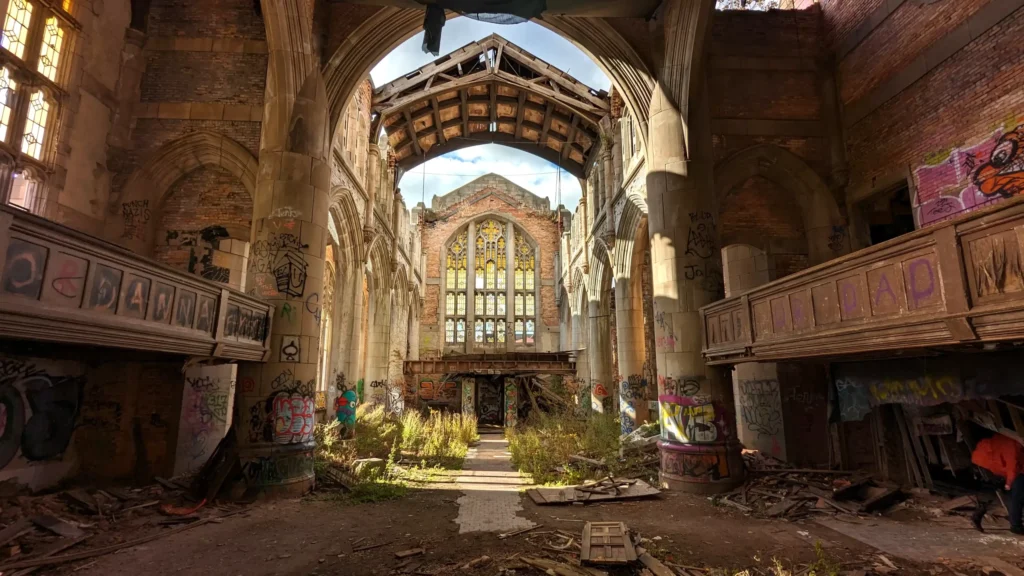
You are standing in the administrative wing of a factory that closed in 1987, and pinned to a corkboard above a metal desk is a laminated safety poster reminding workers that protective eyewear must be worn at all times in sectors three through seven. The laminate has yellowed to the color of old teeth. No one has looked at this poster in thirty-seven years except the mold growing behind it.
The official archive for this factory exists somewhere — a municipal record, perhaps a corporate filing cabinet in a building that itself may no longer stand. That archive contains production figures, labor disputes, the date of closure, possibly a brief notice in a regional newspaper. What it does not contain is the specific amber quality of the afternoon light through a broken skylight falling across that poster, or the fact that whoever last touched the pushpin did so with no sense of finality, pinning something to a board as an ordinary Tuesday gesture, unaware they were creating the last material testimony to an entire human ecosystem. History as the archive records it is a history of decisions. What decay preserves is a history of assumptions — the things people did without deciding to do them, the furniture of daily life so unremarkable that no one thought to describe it.
Walter Benjamin understood something adjacent to this when he wrote, in the Arcades Project, about the fossil-like quality of commodity culture, the way objects outlast the social relations that produced them and become cryptic in proportion to how ordinary they once were. He was writing about Parisian shopping arcades in 1940, about glass and iron and gas lamps, but the epistemological structure he identified holds for asbestos ceiling tiles with the same precision. The tile above you is not a relic. It is a sentence that was never meant to be read, written in a material whose toxicity was known by 1977, documented in the Selikoff studies from Mount Sinai, reported in congressional testimony, and yet installed anyway in schools, hospitals, and factories throughout the following decade because the cost of alternatives was inconvenient. The archive will tell you this was a regulatory failure. The ceiling tile is the regulatory failure, suspended above your head, still performing the gesture of providing insulation and fire resistance to a room that has not needed either since the last shift ended.
The clock on the wall has stopped at 14:43. This is not symbolic in any way the clock intended. It stopped because a battery died or a spring exhausted itself sometime in the years after closure, and the hands settled here by pure mechanical attrition. But the effect is a timestamp the archive cannot replicate — not the official date of closure, but an ordinary afternoon moment, suspended and preserved, a Tuesday in perpetuity. Official history records the extraordinary: the founding, the strike of 1974, the closure announcement. It has no instrument for recording 14:43 on an ordinary afternoon when nothing happened except that everyone was at their station doing what they always did.
The illegality of your presence in this room is not incidental to what you are learning here. The law that criminalizes trespass also, structurally, criminalizes this specific mode of knowing. It is not that authorities have conspired to suppress the testimony of deteriorating buildings. It is something quieter and more systemic: the assumption that knowledge worth having is knowledge someone authorized, catalogued, and stored in a retrievable format. What cannot be retrieved through proper channels is treated, legally, as belonging to no one, which means in practice that it belongs to the building, to the mold, to eventual demolition. The epistemology embedded in property law holds that a fact which requires breaking and entering to encounter is not a fact that society needs.
What the dust knows is therefore contraband — not because anyone decided it should be, but because the entire architecture of legitimate knowledge was built on the assumption that the past would cooperate with the institutions designed to preserve it.
🏚️ Lost Spaces, Hidden Worlds: Cities in Decay
Urban exploration is more than trespassing into forgotten buildings — it is a philosophical act, a confrontation with time, memory, and the silent testimony of abandoned civilizations. These articles trace the intellectual and cultural threads that connect the practice of wandering through lost spaces to broader questions about modernity, identity, and the human need to map the unmappable.
Situationist Psychogeography: The City as Lived Space
Situationist psychogeography reimagined the city as a living emotional landscape to be drifted through rather than navigated efficiently. Guy Debord and his companions practiced the ‘dérive’ — an unplanned journey through urban terrain guided purely by atmosphere and sensation. Urban explorers today are the spiritual heirs of this radical tradition, descending into forgotten infrastructures with the same hunger for unmediated experience.
GO TO THE SELECTION: Situationist Psychogeography: The City as Lived Space
Michel de Certeau: Life and The Practice of Everyday Life
Michel de Certeau drew a crucial distinction between those who plan the city from above and those who inhabit it from below, through the tactical, improvisational movements of everyday life. His concept of ‘walking in the city’ as a form of resistant speech resonates deeply with the urban explorer who reclaims derelict spaces through physical presence. To explore what the world forgot is, in de Certeau’s terms, to write an unauthorized story across the city’s official text.
GO TO THE SELECTION: Michel de Certeau: Life and The Practice of Everyday Life
Georg Simmel and the Metropolis: The Metropolis and Mental Life
Georg Simmel‘s landmark essay on the metropolis argued that modern city life overwhelms the human nervous system, producing a blasé attitude as a psychological defense against constant stimulation. The abandoned and forgotten spaces of the city represent the inverse of this overstimulation — zones of radical silence where the urban psyche can finally breathe. Simmel’s analysis helps us understand why explorers are drawn precisely to these voids the city has stopped caring about.
GO TO THE SELECTION: Georg Simmel and the Metropolis: The Metropolis and Mental Life
Franz Kafka and Urban Alienation
Franz Kafka‘s fiction transformed the modern city into a bureaucratic labyrinth of corridors, locked doors, and inaccessible authorities — a space that disorients rather than welcomes. Urban exploration literalizes this Kafkaesque experience: every padlocked gate, every crumbling stairwell, every room sealed for decades becomes part of an architecture of exclusion and mystery. To enter these spaces is to inhabit a Kafka novel, moving through a world that was designed for purposes now entirely obscured.
GO TO THE SELECTION: Franz Kafka and Urban Alienation
Explore the Cinema That Dares to Go Off the Map
If these forgotten spaces and hidden cities have stirred something in you, Indiecinema streaming is where that feeling finds its fullest expression. Discover independent films that venture into the margins of human experience — from psychogeographic documentaries to urban fiction that official platforms never show. Join Indiecinema and let cinema take you somewhere the world forgot to look.
👉 EXPLORE THE CATALOG: Watch Indie Films in Streaming
A vision curated by a filmmaker, not an algorithm
In this video I explain our vision

