
The Dream Before the Theory
You wake before dawn in a room that is not yours, in a body that is technically free. The year is 1817, the town is somewhere in northern England, and the air inside the mill already carries the particular density of cotton dust and human exhaustion that you have stopped noticing because noticing it would require an energy you no longer have. Your children — two of them, the third buried in October — will follow you into this same building in three hours. Not because anyone forced you here at gunpoint, but because the alternative is a ditch, and the ditch takes longer to die in. This is not poverty as a condition to be described from a safe distance. This is poverty as the total architecture of a life: it shapes what you dream, what you believe is possible, what questions never even form in your mind because the mind, like the body, has learned to conserve.

What the early nineteenth century produced, alongside its iron and its textiles and its extraordinary accumulations of private wealth, was a crisis of the imagination. Not a failure of imagination — precisely the opposite. People living inside the new industrial order began, urgently and with remarkable sophistication, to imagine differently. This is the thing that gets lost when utopian socialism is filed away as naive or premature: it was not dreaming in the absence of reality. It was dreaming in direct, furious response to a reality that had become intolerable with a speed that history had no precedent for. Between 1760 and 1840, England’s urban population roughly tripled. Cities like Manchester swelled from market towns into industrial organisms of extraordinary density and almost no civic infrastructure. Friedrich Engels, walking through Manchester in 1845 for what would become “The Condition of the Working Class in England,” documented mortality rates in working-class districts that rivaled active war zones. Children in certain textile regions had a life expectancy at birth of under seventeen years. Seventeen.
The standard historical account places utopian socialism as a kind of embarrassing prelude to the mature political thought that followed it — a moment of sincere but confused feeling before the arrival of rigorous analysis. This account is not merely wrong; it is a form of intellectual condescension that tells you more about those who wrote it than about those who lived the period. The men and women who began constructing alternative models of community, labor, and distribution in the first decades of the nineteenth century were not confused about what they saw. They were responding to an economic transformation so total that the inherited languages of politics, theology, and moral philosophy had all failed simultaneously to account for it. The old categories — peasant, craftsman, guild, parish — had been dissolved by the factory system faster than any replacement vocabulary could be formed.
What emerged in that vacuum was not theory in the first instance. It was architecture. Literal architecture: blueprints, diagrams, proposed communities laid out on paper with a precision that reflected genuine belief that a different spatial arrangement of human life could produce different human beings. This instinct — that environment shapes character, that misery is not a moral failing but a structural consequence — was radical in a way that is now easy to underestimate because it has become so familiar. The doctrine of original sin had for centuries provided a convenient explanation for the persistence of human suffering: people suffer because they are fallen, broken, deserving of correction rather than transformation. To say instead that the arrangement of production itself was the source, and that the arrangement could be changed, was not merely a political claim. It was a theological rupture, a reordering of causality so fundamental that it threatened every institution built on the older explanation.
The dream, in other words, came first because the emergency came first.
Saint-Simon and the Priesthood of Productivity
You have probably never noticed how often the word “merit” is used to justify a hierarchy that looks almost identical to the one it replaced. Someone is always at the top. Someone is always deemed more qualified to decide. The clothes change; the architecture of power does not.
Henri de Saint-Simon understood this problem better than most — and then, with magnificent consistency, reproduced it entirely. Born in 1760 into minor French nobility, he watched the Revolution devour its own premises and Napoleon convert republican energy into imperial machinery. His conclusion was not that power corrupts, which would have been the cautious lesson. His conclusion was that the wrong people had been holding power all along. The aristocrats and the priests had organized society around birth and ritual. What was needed, Saint-Simon argued in his 1821 treatise Du système industriel, was a transfer of authority to those who actually produced things: the engineers, the manufacturers, the scientists, the bankers. Governance was not a matter of legitimacy or consent — it was a matter of competence. And competence, he was certain, could be measured.
The seductiveness of this argument is difficult to overstate, because it arrived dressed in the language of modernity precisely when modernity was becoming a religion. Europe in the 1820s was watching steam reshape geography, watching factories absorb populations that had lived for centuries by the rhythm of harvests. In this context, Saint-Simon’s proposition felt less like political theory and more like common sense — it felt like inevitability. Of course the people who understood machines should run the world. Of course the men who built railroads and managed capital were better equipped to organize collective life than the hereditary landlords reading hunting calendars in their estates. The argument derived its power from what it was against, which is always the most effective form of persuasion.
What it was for, examined without that rhetorical shelter, was a governing class defined by its relationship to production — which is to say, defined by the very category it would then be trusted to regulate. Saint-Simon never adequately addressed what would prevent the industrialist-governors from making decisions that systematically favored industrialist-governors. He never resolved the structural identity between the ruler and the beneficiary of the rules. The technocratic imagination has never resolved it either, because the resolution would require questioning whether expertise is itself a politically neutral category, and that question destabilizes the entire premise.
By 1825, in Le Nouveau Christianisme, something even stranger surfaces in Saint-Simon’s thought. Having spent years arguing for the primacy of rational industrial organization, he pivots toward the language of spiritual mission. The new society would require not only managers and engineers but a new priesthood — intellectual and moral leaders who would bind the productive classes together through shared doctrine. Science would not simply replace religion; it would become religion, complete with its own sacred authority and its own demand for deference. The fraternity he envisioned was genuine in emotional register, insisting that the governing order had a duty to improve the condition of the poorest members of society. But the structure he designed to fulfill that duty required the poor to trust the judgment of those above them rather than exercise any determining power themselves. Benevolence was vertical. Upward movement of actual decision-making authority was not part of the architecture.
This is where Saint-Simon’s legacy splits into two incompatible inheritances. The humanitarian impulse — the insistence that poverty is a solvable engineering problem, that collective intelligence can be organized toward collective welfare — fed directly into socialist traditions that would later insist on horizontal solidarity. But the structural logic — the idea that a technically qualified elite should manage society on behalf of everyone else — flowed with equal ease into the administrative state, into technocracy, into every twentieth-century government that defended its authority through the credential rather than the vote, and found the credential always, somehow, held by the same kind of person.

Owen's Paternalism Dressed as Emancipation
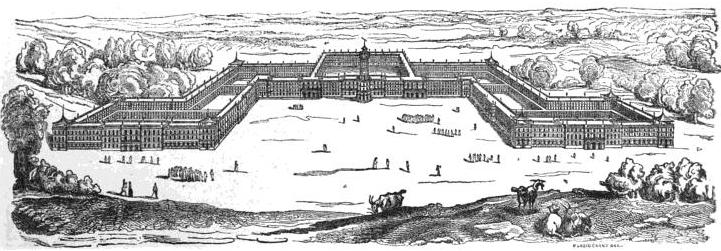
You are given a village and told it is freedom. The gates are open, the hours are reasonable, the children go to school instead of the looms, and the man who built it all stands at the center with clean hands and a theory about human nature that he is absolutely certain of. You live there. You are grateful. And you do not yet notice that gratitude, in this architecture, is not incidental — it is the foundation.
Robert Owen arrived at New Lanark in 1800 as co-owner of a cotton mill in the Scottish Lowlands and left it, two decades later, as the most celebrated social reformer in Britain. What he found was a community of roughly two thousand people living in conditions standard for the industrial age: child labor beginning at age six, endemic poverty, violence, drunkenness, and the particular degradation that comes from having no future imaginable beyond the one already in motion. What he built in its place was genuinely remarkable by any empirical measure — reduced working hours, a company store selling goods at cost, infant schools that preceded the public system by a generation, and an environment clean enough that visitors came from across Europe to witness it as proof that industry and humanity were not irreconcilable. The numbers were real. The transformation was real. And yet.
In 1813, Owen published “A New View of Society,” a text whose title announces its ambition with perfect honesty. The new view was this: human character is entirely the product of environment, and therefore the man who controls the environment controls the man. Owen was not hiding this. He stated it plainly, as a liberating insight, as the philosophical basis for his entire project. If misery is produced by bad conditions, then good conditions produce good people — and the conclusion that follows, which Owen drew without hesitation, is that someone must design and administer those conditions. That someone, in every version of Owen’s thinking, was Owen.
What is structurally significant here is not the kindness or cruelty of the administrator but the epistemological position he occupies. Owen genuinely believed that the workers of New Lanark were not yet capable of understanding what was good for them — not because they were inferior, but because their characters had been deformed by prior conditions. This is the move that recurs across a century and a half of progressive management philosophy: the worker is always in a state of becoming, always being shaped toward a potential that the institution has already defined. The reform is real, the care is genuine, and the power relation underneath both remains untouched because it has been aestheticized into benevolence.
The sociologist Richard Sennett, in “The Corrosion of Character” published in 1998, traced a long lineage of workplace cultures that replace explicit authority with something more intimate and therefore more total — cultures that demand not compliance but identification, not obedience but gratitude. Owen’s mill village is not the endpoint of this lineage but its prototype. The employee wellness program, the open-plan office designed for collaboration, the company retreat where hierarchies are suspended for a weekend — these are all descendants of a logic in which the institution demonstrates its benevolence by expanding into domains of life that were previously private, and calls this expansion care.
What Owen could not permit, structurally, was the possibility that the workers of New Lanark might diagnose their own situation and propose a remedy different from his. His later cooperative experiments in America, particularly the New Harmony colony established in Indiana in 1825, collapsed within two years under the weight of exactly this tension — the community he designed for human flourishing could not survive humans actually flourishing into disagreement with their designer. The environment had been built to produce a particular kind of person, and the particular kind of person it produced eventually wanted something Owen had not planned for.
Fourier's Radical Interiority
You are told, from the moment you are old enough to sit still in a classroom, that the problem with the world is a problem of arrangement. Move the pieces differently — redistribute land, reform institutions, redesign the factory floor — and human suffering will follow the new blueprint into extinction. This is the foundational promise of virtually every political tradition that has ever claimed to speak on behalf of the oppressed. It is also, in its deepest structure, a lie of omission so total that most people never notice it is a lie at all.
Charles Fourier noticed. And it destroyed his reputation for nearly two centuries.
What Fourier published in 1829 in Le Nouveau Monde industriel et sociétaire was not primarily a treatise on labor organization, although it contained one. It was an anatomy of desire — the first serious attempt in the Western political tradition to argue that the architecture of suffering is not built from bricks and property deeds but from the systematic mutilation of what he called attraction passionnée, passionate attraction. Fourier’s core claim was structurally violent in its simplicity: human beings possess twelve fundamental passions, including the Cabaliste, the appetite for intrigue and rivalry, and the Papillonne, the craving for variety and change, and civilization as constituted does not merely fail to satisfy these passions — it is organized specifically around their suppression. The phalanstère, the self-governing community of roughly 1,620 people he proposed as the basic social unit, was designed not to eliminate desire but to give it choreography. Work would rotate. Roles would shift. Competition would be redirected into elaborate games of productive antagonism. The erotic would not be policed. The arrangement assumed, as its central premise, that human psychology is not a problem to be overcome but a force to be composed.
Every other utopian socialist of the period — Robert Owen with his New Lanark manufactories, Saint-Simon with his technocratic priesthood of engineers and scientists — located the crisis outside the self. The environment was sick; change the environment and the person would follow, automatically, like a plant correcting toward light when the pot is moved. This is a profoundly flattering idea, because it means the reader is not implicated. The enemy is always somewhere else: in the landlord’s ledger, in the factory statute, in the king’s decree. Fourier’s framework offered no such comfort. If passionate attraction is the engine of human life, and if civilization is a machine built to run on its suppression, then every person who has ever submitted quietly to a job they hate, a marriage they inhabit out of habit, a social performance they maintain out of terror of exclusion, is not merely a victim of external coercion. They are a collaborator in their own diminishment, and they know it, and they have agreed to pretend they do not.
This is why Friedrich Engels, in his 1880 work Socialism: Utopian and Scientific, could acknowledge Fourier’s satirical brilliance — his devastating mockery of bourgeois domesticity, his precise cruelty toward the hypocrisies of commercial civilization — while simultaneously filing him under the category of pre-scientific fantasy, someone who had not yet understood that material conditions were the real lever of history. The classification was not wrong, exactly. It was strategic. To take Fourier’s theory of passionate attraction seriously would require admitting that no reorganization of production, however radical, automatically produces a reorganized interior life. It would require sitting with the possibility that the liberated worker, placed inside a genuinely just economic structure, might still choose submission, might still punish desire in themselves and others, because the habituation runs deeper than the wage relation and older than capitalism itself.
The phalanstère was never built at scale. The North American attempts in the 1840s — nearly thirty communities, most dissolved within a decade — collapsed not from lack of resources but from the friction of actual people encountering the demand to be honestly themselves with others, daily, without the usual contractual distance that civilization provides as a buffer against that particular terror.
The Word 'Utopia' as a Silencing Mechanism
You have been called naive before. Not because your argument was wrong, but because the person across from you needed it to be wrong without having to prove it. The word arrived like a trapdoor, and through it fell everything you had just said.
In 1848, Marx and Engels did something structurally identical to an entire tradition of political thought. The Communist Manifesto devoted a specific section to what they named “utopian socialism,” and the naming was the verdict. Owen, Saint-Simon, Fourier — categorized not as rivals but as precursors, sweet-tempered children who had stumbled onto the right problem before the science existed to address it. The gesture appeared generous. It was annihilating. To call someone a dreamer is to exempt yourself from answering their actual questions.
What those questions actually were is the part that disappeared. Fourier, writing in the first decades of the nineteenth century, had built an entire theory of what he called “passional attraction,” the idea that human desire, if neither suppressed nor moralized but structurally organized, could become the engine of cooperative labor. His projected communities, the phalansteries, were not fantasies about human goodness — they were architecturally and socially precise attempts to work with human psychology as it actually exists, including envy, competition, and the need for variety. This is not pre-scientific. It is a different science, one that takes subjectivity seriously as a variable rather than a problem to be overcome by historical inevitability.
The Marxist framework required history to move in one direction, through determined stages, toward a destination legible only to those with the correct theoretical apparatus. Within that framework, any emphasis on voluntary community, small-scale experimentation, or the psychological texture of daily life became, by definition, a distraction from the real engine of change. The word “utopian” was not a description. It was a border checkpoint, and it decided what kinds of thinking got to travel.
What got stopped at the border was a set of questions about scale that political theory still has not honestly resolved. Robert Owen’s New Lanark experiment, running from 1800 onward, reduced working hours, eliminated child labor, built schools and community spaces, and produced a profitable factory in the process — not as a thought experiment but as a functioning institution observed by thousands of visitors including heads of state. The question Owen was actually posing was whether human cooperation at the scale of a few hundred people produced different social possibilities than cooperation administered across millions. That question was never refuted. It was reclassified as sentiment.
The philosophical cost of this reclassification compounded quietly across the following century. When political movements inherited the Marxist contempt for “utopianism,” they also inherited its impatience with questions about human nature. The assumption that a correctly structured economy would generate correctly structured human beings meant that anyone who raised concerns about coercion, psychological complexity, or the violence latent in collective projects was already, by the logic of the framework, on the wrong side. The label preceded the argument. It made the argument unnecessary.
There is something almost elegant about how completely this worked. By 1917, the word “utopian” had become a reliable tool for dismissing any political proposal that insisted on beginning with the individual rather than the historical process. Kropotkin’s mutual aid, Proudhon’s federalism, the cooperative movements that had spread across Europe and America — all of it could be set aside with a single adjective. The thinkers who had asked the hardest questions about what voluntary human association actually required, day to day, in kitchens and workshops and town meetings, were filed under the category of people who did not yet understand how the world worked.
And the people who were certain they understood how the world worked proceeded to build it, and the results of that certainty are the most extensively documented political catastrophes of the twentieth century, running from collectivization campaigns in the 1930s to the administered famines that followed — tragedies whose scale and horror were made possible precisely by the certainty that the theory was correct and the human cost was temporary.
A vision curated by a filmmaker, not an algorithm
In this video I explain our vision
The Colony as Laboratory and Its Systematic Failures

You arrive at New Harmony, Indiana, in the winter of 1825, and what you find is not a community but a blueprint trying to metabolize itself into flesh. Robert Owen has purchased the town from the Harmonists — a German pietist sect who actually made the place work through religious discipline and shared asceticism — for $150,000, inheriting their buildings, their orchards, their infrastructure, everything except the interior gravity that held it together. Within two years, the experiment has fractured into six competing splinter settlements, each convinced it holds the correct interpretation of the original vision.
The failure at New Harmony was not accidental or a matter of bad luck. Owen believed that human character is entirely formed by environment — a conviction he laid out in A New View of Society in 1813 — and this belief, generous in its origins, contained a fatal architectural flaw: it assumed that once the environment was corrected, conflict would simply dissolve. What it could not accommodate was the possibility that people carry their social formations inside them, that the man who arrives at a utopian colony is not a blank surface waiting to be written upon but a dense accumulation of competitive instinct, wounded pride, habituated hierarchy, and private desire. The corrected environment met the uncorrected human, and the uncorrected human won every time.
Étienne Cabet’s Icarian movement pressed this contradiction even further into disaster. Cabet had published his Voyage en Icarie in 1840, a novel describing a communist republic of perfect rational administration, and by the late 1840s tens of thousands of French workers had signed onto his movement as an actual emigration project. The first advance party of sixty-nine men landed in Texas in 1848, expecting prepared land granted under terms that Cabet had catastrophically misread — the contract required specific acreage to be settled in dispersed, non-contiguous lots across the wilderness, making collective agriculture geometrically impossible. Malaria, starvation, and the death of over a dozen men reduced the vanguard to ruins before a second wave could arrive. Cabet relocated his survivors to Nauvoo, Illinois, a town the Mormons had just abandoned, and for a decade the Icarians attempted to sustain communal living through increasingly bitter internal governance disputes. Cabet himself was eventually expelled from his own utopia by democratic vote in 1856, dying weeks later in Saint Louis. The man who had designed the perfect republic was removed from it by the mechanisms of the very democracy he had championed.
Charles Fourier never lived to see a phalanstère built, which spared him the particular humiliation of watching his arithmetic of human passion collide with human reality. Fourier had calculated with genuine precision — his phalanstery would house exactly 1,620 people, the number required to represent all 810 varieties of human personality in complementary pairs — and this precision was itself the symptom of the underlying pathology. The phalanstères that were attempted in France and North America in the 1840s, funded briefly by enthusiasts like Victor Considerant, collapsed not because the participants were uncommitted but because the blueprint demanded a human type that did not yet exist and could not be conjured into being by shared meals and collective labor schedules. Considerant eventually emigrated to Texas himself, founding La Réunion near present-day Dallas in 1855, where 350 European settlers attempted Fourierist organization on land completely unsuited to the agricultural techniques they brought from the continent. The colony dissolved within three years.
What these ruins share is not incompetence but a specific category of intellectual error: the belief that social harmony is a design problem rather than a negotiation process, that conflict is a symptom of bad architecture rather than the actual medium through which human beings construct meaning together, that you can remove the friction and still have something that lives.
Gender, Work, and the Hidden Architecture of Utopia
You are standing in a model community designed to liberate you, and the kitchen roster is posted on the wall with your name on it every third day. The architect of this liberation has written extensively about the dignity of collective life, the abolition of wage slavery, the transformation of competition into cooperation — and he has not once asked who will wash the linen.
Robert Owen’s New Lanark and its successor experiments at New Harmony, Indiana, founded in 1825, were genuine attempts to reorganize social existence around mutual benefit rather than profit. Owen believed that human character was entirely shaped by environment, a conviction he laid out in A New View of Society in 1813, and that changing the conditions of labor would change the human being who performed it. What his architecture of liberation did not alter was the internal distribution of domestic work, which followed women into the cooperative with the same gravitational inevitability it had followed them everywhere else. The communal household reproduced the private household at scale. The emancipated worker came home — or rather, never left — to a set of obligations that bore no new name because they required no justification. They were simply what women did.
Henri de Saint-Simon, whose posthumous influence shaped an entire generation of French reformers in the 1820s and 1830s, went further in his mystical elaboration of a new social priesthood. His followers, gathered around the journal Le Globe, eventually constructed an almost theatrical hierarchy of spiritual authority — and then spent considerable energy debating whether a Supreme Mother, a female messianic figure, might complete the movement’s symbolic structure. The debate reveals the trap with uncomfortable precision: woman was invited into utopia as symbol, as cosmic complement, as the softening principle that would civilize industrial brutality. She was not invited as a worker with interests that might conflict with the interests of male workers, or with the interests of the male theorists constructing her redemption on her behalf.
Flora Tristan understood this distinction at a level of material specificity that neither Owen nor the Saint-Simonians had reached, because she had lived it rather than theorized it from a position of comfort. Her L’Union Ouvrière, published in 1843, was the first systematic argument in French for a permanent, dues-funded international workers’ union — predating the Communist Manifesto by five years — and its central, inseparable claim was that the liberation of the working class was structurally impossible without the liberation of women. Not as a moral appendix, not as an inspiring aspiration, but as a logical precondition. A class that oppressed half its own members could not build solidarity; a movement that reproduced domination in its own households was practicing the ideology it claimed to oppose. Tristan died the following year at forty-one, exhausted by the speaking tour she undertook to carry the argument directly to workers across France, and the argument was largely set aside.
What makes this history uncomfortable rather than merely sad is that it was not accidental. The omission of women’s labor from utopian blueprints was not a blind spot in an otherwise coherent vision — it was a structural feature, because any serious accounting of domestic and reproductive work would have required the male theorists of liberation to confront their own position as beneficiaries of that uncompensated labor. The utopia that does not redistribute the washing is a utopia that has quietly decided certain forms of exploitation are natural rather than political, and has built its gleaming future on top of them without acknowledgment.
The psychoanalyst Juliet Mitchell, writing in Woman’s Estate in 1971, identified what she called the “unhappy marriage” between socialist theory and feminist analysis — a phrase that captures something precise about the history: the two were formally joined but unequal in the partnership, with one partner’s concerns routinely deferred in favor of the larger struggle that always seemed more urgent, more universal, more real.
What Utopian Socialism Diagnosed That Marxism Refused to Treat
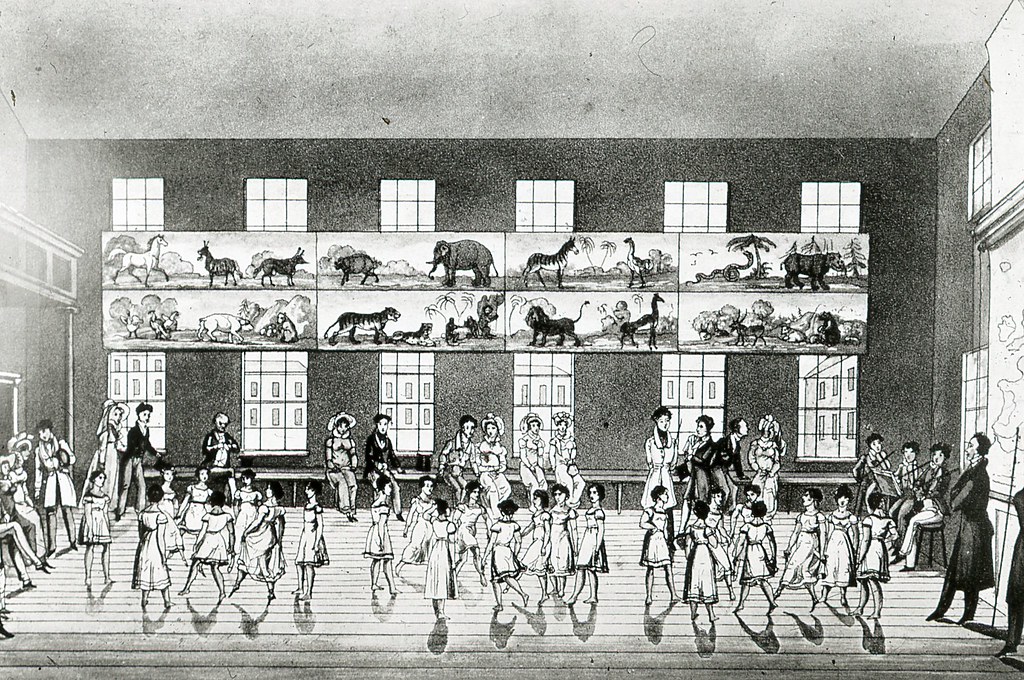
You are already living inside the diagnosis. Not the cure — the diagnosis. The factory whistle does not only steal your time; it teaches you to experience time as something that belongs to someone else. This is the distinction that Robert Owen understood viscerally when he redesigned New Lanark between 1800 and 1825, not because he was naive enough to believe that moral architecture alone could overturn political economy, but because he grasped something his successors refused to carry forward: that the wound capitalism inflicts is not merely material but ontological. It changes what you believe you are capable of wanting.
Charles Fourier spent decades constructing his elaborate vision of the phalanstère — a social unit of roughly 1,620 people organized around the free expression of human passions rather than their suppression — and the whole edifice gets dismissed as fantasy, as embarrassing excess, as the kind of thinking that serious revolutionaries outgrow. What rarely gets examined is why the passion itself was so threatening as an analytical category. Fourier’s 1808 “Théorie des quatre mouvements” insisted that civilization, as he called the existing order, did not merely exploit desire but systematically produced misery by forbidding the conditions under which genuine solidarity between people could emerge. That is not romanticism. That is a precise claim about the relationship between institutional structure and emotional life — a claim that the emerging tradition of scientific socialism had every structural incentive to bracket.
The bracketing was not accidental. Friedrich Engels famously distinguished utopian from scientific socialism in his 1880 pamphlet of that name, arguing that the utopians — Owen, Fourier, Saint-Simon — had failed because they appealed to reason and justice rather than to the material forces already moving in history. The argument has a compelling architecture, but it performs a quiet substitution: it replaces the question of what capitalism does to human interiority with the question of what historical forces capitalism sets in motion. These are not the same question. The first asks what is lost. The second asks only what is next.
Henri de Saint-Simon had already understood by the early nineteenth century that the emerging industrial order would generate new forms of spiritual vacancy alongside its new forms of productive power — which is why his late work, “Nouveau Christianisme” published in 1825, reached toward something like a moral sociology of solidarity, an attempt to name the affective infrastructure that any just society would require. His followers took this seriously enough to build actual communities around it. The scientific tradition took it as evidence of confused thinking, an idealist residue to be purged before the real work could begin.
What gets purged in that operation is the recognition that human beings are not simply bearers of class interests who will spontaneously reorganize their relationships once property structures are transformed. The utopians knew — and wrote with a directness that remains unsettling — that people habituated to hierarchy reproduce its logic even in spaces nominally free of it, that competition deforms the capacity for trust, that generations of managed scarcity produce a relationship to other people defined by calculation rather than by care. This is a psychological and anthropological claim, not a sentimental one, and it requires a different kind of politics than the seizure of historical momentum allows.
The enduring provocation of utopian socialism is not its blueprints — the phalanstères were never going to scale, and Owen’s New Harmony in Indiana collapsed by 1827 under the weight of exactly the human contradictions he had underestimated — but its insistence that the revolution which does not transform what people feel entitled to expect from one another will simply install new administrators over the same loneliness, and call it progress.
🌱 Dreams of a Just World: Utopia and Social Thought
Utopian socialism did not emerge in isolation — it grew from centuries of philosophical rebellion, collective longing, and radical imagination. The articles below trace the intellectual and social currents that shaped and challenged the dream of a fairer society, from workers’ movements to alternative communities and critical theory.
Strikes and workers’ struggle: History of the Italian labor movement
The history of the Italian labor movement is inseparable from the broader tradition of socialist thought that sought to transform society from the ground up. Strikes, solidarity, and collective action were not merely economic strategies but expressions of a deeply moral vision of human dignity and shared justice. Understanding this history illuminates the practical, lived dimension of ideals that utopian thinkers formulated in theory.
GO TO THE SELECTION: Strikes and workers’ struggle: History of the Italian labor movement
Welfare and the social state: history and European models compared
The welfare state represents one of the most concrete historical attempts to institutionalize the values championed by utopian socialists — universal protection, social solidarity, and the reduction of inequality. By comparing European models, this article reveals how different societies translated utopian aspirations into lasting political structures. The tension between ideal and compromise is at the heart of every welfare system ever built.
GO TO THE SELECTION: Welfare and the social state: history and European models compared
Alternative Communities: History, Sociology and the Ecovillage Model
Alternative communities and ecovillages are among the most direct inheritors of the utopian socialist tradition, translating philosophical blueprints into lived experiments in cooperation and collective ownership. From the Owenite communities of the nineteenth century to contemporary intentional settlements, the impulse to build the good society from scratch has never disappeared. This article traces the sociology and history of these radical social laboratories.
GO TO THE SELECTION: Alternative Communities: History, Sociology and the Ecovillage Model
Herbert Marcuse and the One-Dimensional Man
Herbert Marcuse’s critique of one-dimensional society is one of the twentieth century’s most powerful responses to the failure of utopian socialism to fully transform industrial capitalism. His analysis of how modern systems absorb and neutralize dissent speaks directly to the challenges faced by every socialist and utopian project. Reading Marcuse alongside the utopian socialists reveals both the promise and the tragic limits of radical imagination.
GO TO THE SELECTION: Herbert Marcuse and the One-Dimensional Man
Discover the Cinema That Dares to Imagine Otherwise
The dream of a better world has always found its most powerful expression not only in books and manifestos, but on screen. On Indiecinema you will find independent and auteur films that carry this restless, visionary spirit — stories that question, provoke, and inspire. Explore our catalog and let cinema open new horizons of thought and feeling.
👉 EXPLORE THE CATALOG: Watch Indie Films in Streaming
A vision curated by a filmmaker, not an algorithm
In this video I explain our vision

