
The Grammar of Stillness
You are watching a hallway. Not through it, not toward anything waiting at the end of it — just the hallway itself, with its particular quality of afternoon light and the faint geometry of its wooden beams, and the camera does not move. No one is coming. Nothing is about to happen. The shot will last several seconds longer than your nervous system expects, and somewhere in that excess of duration you will feel something uncomfortable stir — not boredom exactly, but the recognizable anxiety of a mind that has been trained to expect pursuit, to anticipate the next cut that rescues it from the weight of simply being present to a thing.

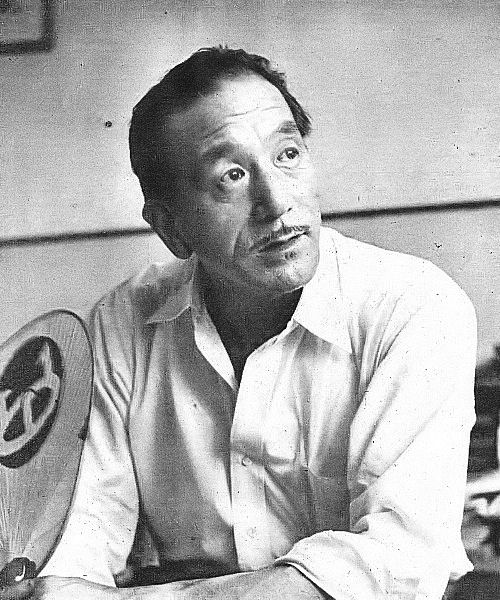
Yasujirō Ozu built an entire cinema out of that discomfort and what lies on the other side of it. His camera sits approximately three feet from the ground, at the eye level of a person seated on a tatami mat, and it almost never moves. No tracking shots hunting characters through space. No zooms pressing urgency onto a face. No crane rising above the scene to grant the viewer the god-perspective that Western cinematographic grammar treats as a natural birthright. The immobility is not a limitation. It is a theology.
Western narrative cinema inherits, without examination, a fundamental assumption: that meaning is located in movement toward resolution. The camera follows because the subject pursues. André Bazin, writing in the late 1940s and early 1950s in his essays collected posthumously as What is Cinema?, argued that cinematic realism required the deep focus and long take — a democratic openness to space. But even Bazin’s liberation was still organized around the primacy of human action unfolding in continuous time. The camera, however patient, waited for something to happen to a person. Ozu’s camera waits for nothing. It simply occupies.
The shots of teapots, rooftops, laundry lines, sake bottles, and empty corridors that interrupt his narratives — what scholars beginning with Paul Schrader, in his 1972 study Transcendental Style in Film, called “pillow shots,” borrowing a term from classical Japanese poetics — are not transitions. They are not symbolic punctuation that gestures at what a character feels. They are intervals in which the world exists independently of human interpretation, and Ozu forces his audience to sit inside that independence without a guide. The West finds this uncomfortable because it has spent three centuries constructing a subject who is the measure of all experience, the Cartesian ego that Descartes formalized in the Meditations of 1641 as the one certainty that survives all doubt. That subject cannot tolerate a teapot that simply is, without serving the drama of someone’s consciousness.
What Ozu understood — and what his Japanese critics sometimes missed because they approached his work through imported Western formalist categories — is that stillness in Japanese aesthetic tradition is not absence. The concept of ma, often translated inadequately as negative space or interval, designates the charged pause, the meaningful gap, the place where presence accumulates precisely because nothing is being forced into it. His frames do not empty themselves of significance. They refuse to coerce significance into performing on demand.
The philosophical consequence is radical. When a camera refuses to pursue, it refuses to position the viewer as a sovereign consciousness to whom the world must deliver itself. The spectator of an Ozu film cannot lean forward in the posture of someone about to catch something. The film will not throw anything. This is why his work felt, to distributors and foreign critics encountering it through the 1950s and 1960s, simultaneously too simple and somehow too difficult — a paradox that reveals more about the assumptions embedded in the word “cinema” than about any deficiency in the films themselves. His grammar was not underdeveloped. It was asking a question that the dominant tradition had decided, long before Ozu was born, it did not need to answer.
Mono no Aware and the Ethics of Incompletion
You are sitting in a tatami room and someone you love has just left it. Not in anger, not in crisis — they have simply gone, the way seasons go, and the sliding door is closed, and the space where they stood is now just space. Nothing dramatic has happened. That is precisely what undoes you.
Mono no aware — the pathos of things, the ache lodged inside impermanence itself — is not a theme that Ozu illustrates. It is the load-bearing architecture of how his films are built, what determines their pace, their silence, their refusal to let a scene end at the moment of maximum emotional payload. His camera stays. It watches the empty corridor after the daughter has gone. It holds on the sake bottle, the low table, the particular quality of morning light through paper screens. Western critics trained in Aristotelian dramatic structure have consistently misread this patience as slowness, as though lingering were a stylistic tic rather than an epistemological stance toward what grief actually is.
Norbert Elias spent much of his intellectual life documenting how European civilization, between roughly the thirteenth and nineteenth centuries, systematically relocated the raw facts of biological and emotional life behind thresholds of shame and concealment. His 1939 work Über den Prozeß der Zivilisation traces the long bureaucratic disciplining of the body and its affects — how crying became embarrassing, how mourning became a problem to be managed within an acceptable window of time, how the expression of loss was gradually reclassified from a social fact into a private pathology. What Elias mapped as historical process, the West later codified into clinical language: Kübler-Ross’s five stages, published in 1969 in On Death and Dying, gave grief a timetable, a narrative arc, an implicit destination called acceptance. To feel loss without moving toward resolution became diagnostic.
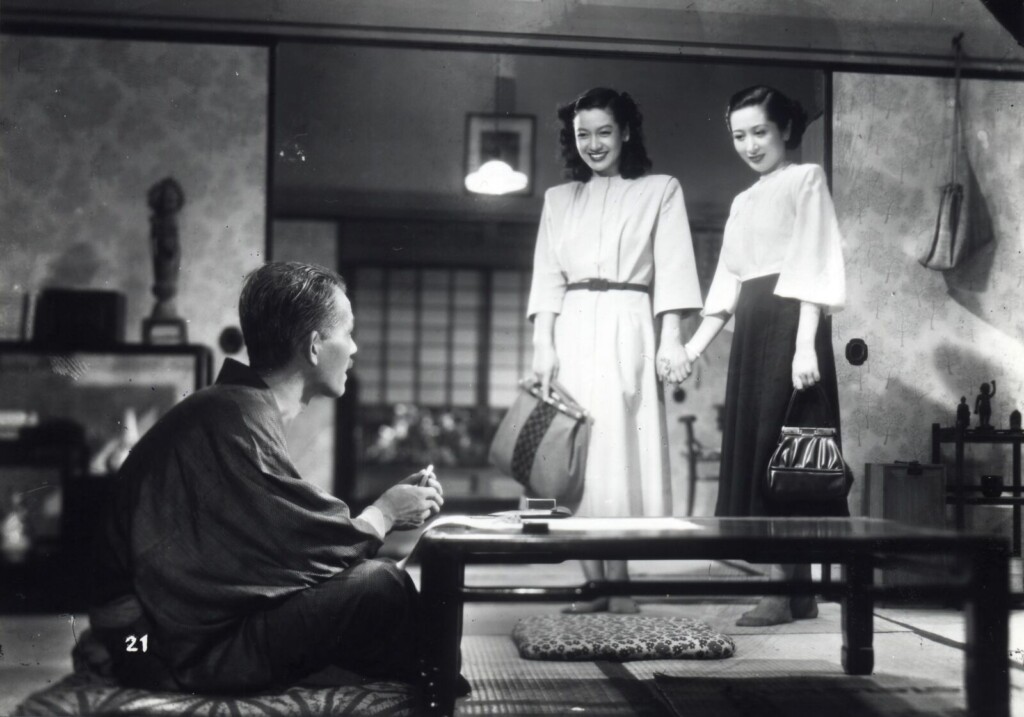
Ozu’s films operate under an entirely different contract. In Late Spring, released in 1949, the father who has engineered his daughter’s marriage sits alone at the end of the film and begins, very slowly, to peel an apple. The peeling continues. The camera does not cut away to something meaningful. The apple peel falls, and the old man’s head drops slightly, and nothing is resolved because nothing was ever going to be resolved. The film does not ask the viewer to process this. It asks the viewer to remain inside the unprocessed moment the way you remain inside a room that still holds someone’s warmth after their absence has become certain.
What this requires structurally is a fundamental rejection of instrumentality — the governing Western assumption that an emotion exists to produce something: catharsis, insight, behavioral change, the wisdom that justifies the suffering. The philosophical tradition running from Aristotle’s Poetics through Hegel’s aesthetics and into the therapeutic culture of the twentieth century treats emotional experience as raw material that narrative refines into meaning. Grief, in this paradigm, is productive when it teaches you something, when it makes you stronger, when the loss becomes the origin story of a new self. The culture industry absorbed this structure so completely that stories which do not deliver transformation feel broken, unfinished, irresponsible toward their audience.
What is actually being refused, when a viewer feels frustrated by Ozu’s endings, is the demand to be consoled — not by the film, but by the idea that experience is educative, that losing something should eventually make you someone improved. The sociologist Eva Illouz, in her 2007 book Cold Intimacies, shows how therapeutic culture in the late twentieth century transformed emotional life into a form of self-investment, a project of continuous psychological capital accumulation. Suffering that does not generate growth becomes illegible within this framework, almost morally suspect, as though grief without transcendence were a failure of character rather than the honest shape of what remains after loss.

Postwar Japan and the Architecture of Submission
You are watching a man arrange objects on a tatami floor with the patience of someone who has accepted that the world outside has already been decided without him. He lines up a teapot, a cup, a small ceramic dish. He does not look at the camera. He does not look at the door through which his daughter will soon pass on her way to a marriage neither of them chose. The arrangement takes longer than it needs to. That excess of time is not emptiness. It is the only sovereignty he has left.
By 1949, when Ozu returned to full creative productivity with Late Spring, Japan had already absorbed one of the most radical forced transformations in modern political history. The 1947 constitution, drafted under General Douglas MacArthur’s occupation administration and ratified before most Japanese legal scholars had time to read it carefully, dismantled in fourteen months a symbolic order that had organized Japanese life for centuries. Article 9 renounced war as a sovereign right. Article 24 guaranteed gender equality within the family. These were not merely legal provisions — they were anthropological surgeries performed on a culture that had never been asked whether it consented to the operation. The American administration understood that cinema was infrastructure. By 1950, the Civil Information and Education Section had processed and approved scripts for hundreds of Japanese films, with particular pressure applied to stories that featured “feudal” family structures, arranged marriages, or expressions of collective identity that could be read as proto-nationalist. Studios complied. Producers understood the economics of compliance. And within this machinery of sanctioned narrative, Ozu made eleven films.
The trap built into the occupation’s cultural policy was its own internal contradiction: it demanded that Japanese cinema show modern, individualist, democratic characters making free choices, while the very act of demanding this negated the freedom it claimed to install. Japanese directors who made overtly rebellious films were shut down. Those who made lavishly compliant ones produced something hollow that neither domestic nor international audiences trusted. Ozu did something more difficult and more durable. He made films about people who appeared to be complying — with tradition, with family expectation, with the social choreography of marriage and duty — while the formal texture of every scene quietly refused the ideological premise that individual liberation was the only legitimate human story.
The low camera angle Ozu used almost exclusively in his mature period, placing the lens roughly at the height of a person seated on the floor, is not simply an aesthetic signature. It constructs a world in which the architecture of the house is never subordinate to the human drama happening inside it. Walls, doorways, corridors, the sliding geometry of shoji screens — these elements share the frame as equals with the human figures. Western narrative cinema, operating on the premise that the individual is the engine of meaning, centers the face, follows the body, subordinates space to psychology. Ozu’s frame refuses this hierarchy. The house thinks alongside the people. It remembers differently.
What this produces, watched from inside the historical pressure of 1950s Japan, is a form of cultural memory that survives by being unclassifiable. Occupation censors looking for feudal sentiment found nothing to flag — the films showed daughters making their own choices, fathers accepting change, families bending toward the modern. But the tatami remained. The low angle remained. The silence between sentences, which in Western dramatic logic signals awkwardness or repression, remained as something else entirely: a form of attention so concentrated it becomes its own argument about what deserves to be seen. Roland Barthes, arriving in Japan in the early 1960s and writing in 1970 what would become Empire of Signs, identified something in Japanese daily culture that Western semiotics had no clean category for — a signifying system in which the center is deliberately, structurally empty, not as absence but as the condition that makes peripheral meaning possible.
The Family as Ideological Battleground
You sit across from your father at a low table, and the silence between you is not comfortable — it is load-bearing. It holds the entire architecture of something neither of you built and neither of you can name, and the tea cools in the cup between you like a small, patient argument.
Ozu understood that the family is not where people go to rest from history. It is where history goes to hide. Every film he made between 1949 and 1962 stages this concealment with the precision of a forensic examiner who refuses to announce his findings. The postwar Japanese household he returned to again and again was not a private space accidentally touched by public forces — it was the exact mechanism by which those forces reproduced themselves without accountability, without a return address. The domestic interior absorbed the shocks of defeat, occupation, industrialization, and mass psychological dislocation, then repackaged them as personal feeling: duty, gratitude, loneliness, the weight a daughter feels when her father eats alone.
Simone de Beauvoir argued in The Second Sex, published in 1949 — the same year Ozu released Late Spring — that the home functions as an ideological enclosure precisely because it presents itself as outside ideology. The repetition of domestic labor, she wrote, is not neutral rhythm but a form of social maintenance that depends on remaining unrecognized as such. The woman who manages the household is performing the continuous repair of a social order that does not name her as its worker. Ozu’s films literalize this analysis and then press further into it, because in his world the concealment is not only gendered — it is generational, structural, and woven into the grammar of obligation that everyone at the table has agreed to speak.
What makes his staging so unnerving is that no one in his films is a villain. The fathers are gentle. The daughters are not oppressed in any legible way. The social machinery operates through affection, which is precisely what makes it machinery and not simply life. When a daughter is maneuvered toward marriage she has not chosen — moved like a piece across a board by people who love her — the film does not mark this as violence. It shows it as care. The viewer who wants to locate a crime finds no body, only a series of small gestures that accumulate into an irrevocable outcome.
This is the formal intelligence of what Ozu constructed: he understood that the family’s power as an ideological instrument comes from its ability to convert structural inevitability into emotional texture. The sociologist C. Wright Mills made a related observation in The Sociological Imagination in 1959, distinguishing between personal troubles and public issues — arguing that the reduction of social forces to private feeling is itself a political act, one that forecloses collective understanding by making every shared wound feel uniquely one’s own. Ozu’s films are populated entirely by people experiencing public issues as private sorrows, and the camera never corrects them. It simply watches, with that famous stillness, as the misidentification occurs and is confirmed by everyone present.
The tatami-level shots — that distinctive low angle that places the viewer on the floor of these rooms — do not create intimacy so much as they enforce it. You are inside the space. You cannot step back into critical distance. Whatever violence is being naturalized into routine is also being naturalized into your field of vision, and you experience it not as observation but as participation. The form of the film becomes the form of the trap: you understand, gradually, that there was never a moment of entry, because you were already inside before the film began, the way anyone born into a family finds that the rules were written before their arrival and the only freedom on offer is whether or not to call them rules.
Time Without Teleology
You are sitting with someone you love, and nothing is happening. The tea has been poured. The window is open. A train passes somewhere behind the frame, and the sound arrives slightly after you expected it, and then it is gone, and the room returns to itself, and neither of you speaks, and this is not emptiness — it is the fullest moment you will have all day, and you know it, and you cannot hold it, and it passes anyway.
Henri Bergson argued in his 1889 “Essai sur les données immédiates de la conscience” that Western thought had made a catastrophic category error: it had confused time with space. Clock-time — the segmented, measurable, sequential kind — is actually a spatial metaphor imposed on something that has no segments. Real duration, what Bergson called “durée,” is continuous, qualitative, irreducible to units. You cannot cut it without destroying what it is. The entire infrastructure of industrial modernity — schedules, deadlines, narrative arcs with their obligatory resolutions — is built on the lie that time is a road with identifiable milestones rather than a tide that moves through you without asking permission.
The cinema that emerged from Hollywood understood this perfectly and chose the opposite. Editing in the classical tradition is a machine for manufacturing causality. Shot A produces shot B, which produces conflict, which produces resolution, which produces the sensation that time has been well spent because something has been accomplished. The viewer exits the theater having consumed a quantity of organized duration, the way one eats a meal with a beginning, a middle, and a dessert. The satisfaction is real. It is also a training in a particular way of being in time — purposive, forward-moving, always cashing the present moment for the value of a future payoff.
Ozu’s editing produces a physiological strangeness in viewers trained by that tradition. His famous pillow shots — a ceramic pot, a smokestack, wet laundry on a line, a corridor with no one in it — are not transitional. They do not establish the next scene or punctuate the previous one. They simply exist inside the duration of the film the way an overheard sound exists inside an afternoon. They cannot be rationalized into function, and this is precisely what makes them intolerable to certain viewers and sacred to others. The discomfort they produce is the discomfort of being refused the consolation of purpose.
Gilles Deleuze, writing in “L’Image-Temps” in 1985, identified what he called “time-images” — cinematic moments in which time is no longer subordinated to movement and action but becomes directly visible, tangible, oppressive in its purity. He argued this mode of seeing emerged historically from the rubble of World War Two, when the sensory-motor logic of purposive action had catastrophically failed to explain the world people actually found themselves inhabiting. Ozu predates that rupture chronologically, but his aesthetic seems to have arrived at the same conclusion through a different corridor — through the Buddhist sense that the present moment is neither a means to an end nor a wound to be healed, but the only place anything ever actually occurs.
What the pillow shots demand is not interpretation but presence. And presence is the one thing the contemporary viewer has been most systematically trained to avoid. Not through laziness but through a very specific cultural pedagogy: that unstructured time is wasted time, that stillness is a precondition for productivity rather than its own destination, that the value of an experience is determined by what it leads to. A sequence that leads nowhere is, by this logic, a provocation — an implicit accusation that you do not know how to simply be inside a moment without needing it to mean something beyond itself.
The great irony is that Ozu’s films are saturated with meaning.
A vision curated by a filmmaker, not an algorithm
In this video I explain our vision
Silence as Epistemology

You are sitting across from someone you have known for thirty years, and neither of you speaks, and the silence is not empty — it is the most precise thing either of you has said all evening.
Erving Goffman, in his 1959 work The Presentation of Self in Everyday Life, argued that social interaction is fundamentally theatrical, that human beings are perpetually managing the impressions they project onto others. What Goffman could not fully account for — because his framework was built from the observational material of mid-century American social life — was what happens when two performers agree, without negotiation, to step entirely off the stage. The silence that follows is not a failure of performance. It is a different epistemological register altogether.
The Japanese concept of ma — a term that resists clean translation but gestures toward the productive interval between things, the charged negative space that gives form to what surrounds it — is not a communicative absence. It is the opposite: a structured presence that carries information too dense to be handled by language without being cheapened by it. A pause in a piece of traditional Japanese music is not a rest in the Western sense, a moment of silence waiting for sound to resume. It is a sound that cannot be heard with the ear. Ozu’s films are built almost entirely from ma, from the spaces between words where something irreversible has just been understood by both parties and does not need to be spoken because speaking it would reduce it.
Western critics, encountering these films for the first time, have consistently reached for the vocabulary of suppression. The characters are repressed, emotionally constrained, victims of a cultural architecture that forbids feeling its own name. Donald Richie, who spent decades writing about Japanese cinema with genuine affection and real erudition, still sometimes fell into this interpretive trap, framing the emotional economy of these films as a kind of beautiful withholding, as though the feelings were there but locked behind a door. The door was never locked. There was never a door. The model itself was imported from somewhere these films were never built.
What Ozu’s characters do not say functions as knowledge rather than concealment. When a daughter looks at her aging father and then looks away, and neither of them mentions the arrangement that has just been made about her marriage, the silence is not a symptom of something they cannot process. It is the processing. The information has moved between them completely, without the distortion that words would introduce, without the false precision that language insists on imposing even when the thing being named resists naming. Anthropologist Edward T. Hall, writing in The Silent Language in 1959, identified cultures that operate through high-context communication — where meaning is embedded in situation, relationship, and timing rather than explicit verbal content — and distinguished them from low-context cultures where meaning is expected to arrive in the words themselves. To enter Ozu’s cinema as a low-context reader is to experience a language you cannot decode and conclude, wrongly, that nothing is being said.
The gap in dialogue is not where emotion goes to hide. It is where emotion goes to be most fully itself, before language colonizes it into something manageable and therefore smaller. A woman who has just learned something that will permanently alter the shape of her life does not need to announce it. Her body already knows. The camera already knows. The tatami mat, the sake cup, the angle of afternoon light coming through a paper screen — these carry the sentence that her mouth does not form. And the audience, if it is willing to stop waiting for words, receives that sentence with a completeness that no monologue could achieve, because monologue is always partly performance, always partly a management of the gap between what is felt and what is sayable, while silence, structured silence, the silence that both speakers enter together and inhabit fully, is the thing itself.
The Tatami Shot and the Deconstruction of Perspective
You are already sitting on the floor before the film begins. Not metaphorically — the image itself places you there, roughly eighty centimeters above the tatami, which is the height of a child seated at a low table, or of a person who has knelt without deciding to. Ozu’s camera does not observe his characters from above or beside them. It shares their elevation. And this single technical choice carries within it a philosophical rupture that most viewers absorb without recognizing.
The Renaissance constructed seeing as conquest. Leon Battista Alberti, in De Pictura written in 1435, formalized the geometric logic of single-point perspective — a system in which every line in the visual field converges toward a vanishing point that exists at the level of the standing human eye. What this model smuggles in, beneath its apparent neutrality, is a theory of the subject: the observer stands upright, at the center, and the world recedes away from him in perfect submission. Perspective is not merely a technique for representing depth. It is a declaration of who holds authority over the image. The viewer is sovereign. Everything else is arranged for his arrival.
Cinema inherited this architecture wholesale. The standard camera placement — chest height, eye level when seated in a theater chair — reproduces exactly the geometry Alberti described. The spectator looks down slightly at the action, or meets it dead-on, never from below. Even when films use low angles, they typically do so to make characters appear menacing or powerful, which only confirms the rule by inverting it temporarily. The low angle remains a rhetorical gesture within a system that takes upright superiority as its default.
Ozu refuses the default entirely. His approximately eighty-centimeter placement is not a low angle in the cinematic sense — it is not designed to make anyone look imposing. It dissolves imposition as a category. When you watch his characters eat, argue gently, or sit in silence, you are not above them managing their emotional meaning from a position of interpretive safety. You are among them, at the same level, without the perceptual leverage that allows you to feel you understand more than they do. The sociologist Erving Goffman, in The Presentation of Self in Everyday Life published in 1959, described how physical positioning in social space encodes relationships of power and deference before a single word is spoken. Ozu’s framing denies the camera — and therefore the viewer — its customary social position.
What becomes genuinely strange, once you notice this, is how much of your habitual film-watching pleasure depends on that denied elevation. The conventional cinematic experience offers you the quiet satisfaction of comprehending characters who do not know they are being watched, seeing their lives with a clarity unavailable to them, occupying the panoptic position that Michel Foucault traced in Discipline and Punish in 1975 as the defining fantasy of modern institutional power. The camera as invisible warden. The viewer as benevolent overseer. Ozu’s tatami shot dismantles this arrangement without announcing it, and the discomfort some Western critics have historically reported when watching his films — a vague feeling of passivity, of the film not giving them enough to grasp — is precisely the sensation of surveillance equipment being quietly removed from one’s hands.
What remains when the hierarchy dissolves is something harder to name. The characters do not become more legible. They become more present, which is a different thing entirely. Presence resists the interpretive move that turns another person into a case, a type, a representative of something larger than themselves. Ozu’s daughter figures, his retired salarymen, his families negotiating departure and loss — they do not yield their meaning upward to the viewer. They simply exist, at floor level, in the same plane as the camera, which means in the same plane as you, and the question of what you are supposed to do with that equivalence remains genuinely open.
What the Ordinary Refuses to Give Up
You set a bowl of rice on the table and for a moment the whole century is in the room with you — not as memory, not as grief, but as the simple fact of having eaten this way before, and before that, and before that, reaching back through kitchens you never entered but somehow recognize.
Ozu understood that the quotidian is not the absence of history but its most stubborn residue. While official narratives were being drafted — in government proclamations, in newspaper editorials, in the architectural ambitions of postwar reconstruction — the bowl remained. The lacquered tray remained. The sake flask, tilted slightly on a low table, caught afternoon light that no ideology had yet managed to requisition. These objects appear in film after film not as decoration but as testimony, and what they testify to is precisely what the surrounding culture was working hardest to forget or accelerate past.
Walter Benjamin spent the last decade of his life assembling the Arcades Project, that vast unfinished cathedral of quotation and analysis centered on the covered shopping passages of nineteenth-century Paris. His method was archaeological in a specific sense: he believed that the commodity object, the glass arcade, the iron staircase contained within their forms the compressed social relations that produced them — the labor, the desire, the class anxiety, the dream-logic of an entire epoch. He called these condensed objects “dialectical images,” moments where past and present collide in a single charged fragment that, if read correctly, illuminates both. Benjamin never finished the project. He died at the Spanish border in 1940, his manuscript in a suitcase, fleeing a Europe that had chosen a different kind of archive entirely.
What Ozu constructs across his mature films is something that functions as a counter-archive in exactly this sense, though built from the opposite materials. Benjamin’s arcade was a site of circulation, of capitalism’s dream-theater. Ozu’s objects are sites of stillness, of use so repetitive it has become ritual. The laundry hung to dry in a narrow alley between houses does not symbolize domesticity — it is domesticity, containing within its arrangement the labor of the woman who washed it, the social expectation that shaped her life, the postwar Japanese moment in which traditional forms were being simultaneously celebrated and hollowed out. The object carries what the character cannot say, because the character has been formed by a culture that regards direct speech about loss or constraint as a form of indecency.
This is the precise function of Ozu’s famous cutaway shots — the empty corridor, the kettle, the vase — which critics have long struggled to categorize. They are neither pure formalism nor simple punctuation. They are the archive breathing. They hold time open for a moment between human actions, allowing the accumulated weight of ordinary existence to press against the surface of the image without the mediation of dialogue or performance. In 1958, when Japan’s GDP was entering its period of explosive growth and the entire national project was oriented toward a future that would make the present look poor by comparison, Ozu was filming the grain of a tatami mat as though it contained a civilization’s worth of patience.
The erasure that economic modernization performs is rarely violent in any visible sense. It proceeds through replacement, through the logic that the new is simply better and that the attachment to the old is sentimentality. What gets lost in this process is not any particular object but the way of being in time that the object encoded — the slowness, the repetition, the willingness to inhabit a moment rather than pass through it. Ozu’s cinema refuses that erasure not through argument but through duration, holding the frame on a doorway long enough that the doorway becomes a kind of truth, carrying everything that walked through it and everything that never will again.
🎞️ Cinema, Soul, and the Art of Contemplation
Yasujirō Ozu’s cinema invites us to slow down and look inward, turning the everyday into a meditation on time, family, and impermanence. His work resonates deeply with a broader tradition of filmmakers and thinkers who use the moving image as a language of the soul. Explore these thematically kindred articles to deepen your journey into contemplative cinema and the aesthetics of interiority.
Slow and contemplative cinema: the aesthetic of slow cinema
Slow and contemplative cinema represents one of the most radical aesthetic choices a filmmaker can make, privileging duration, silence, and stillness over narrative urgency. Ozu stands as a foundational pillar of this tradition, alongside directors like Tarkovsky and Bresson who believed that cinema’s true power lies in its capacity to evoke inner states. This article traces the history and philosophy of slow cinema as a form of spiritual and artistic resistance.
GO TO THE SELECTION: Slow and contemplative cinema: the aesthetic of slow cinema
Japanese Aesthetics: Wabi-Sabi Mono no Aware and Yugen
Japanese aesthetics offer the deepest cultural soil from which Ozu’s cinema grew, rooted in concepts like wabi-sabi, yugen, and mono no aware — the bittersweet awareness of transience. These philosophical sensibilities shape the visual grammar of Ozu’s tatami shots, his elliptical editing, and his quiet attention to seasonal change and domestic ritual. Understanding these ideas is essential to grasping why Ozu’s films feel less like stories and more like states of being.
GO TO THE SELECTION: Japanese Aesthetics: Wabi-Sabi Mono no Aware and Yugen
Cinematography as a narrative language
Cinematography is never merely a technical craft but a deeply expressive language capable of encoding meaning, emotion, and worldview in every frame. Ozu’s fixed camera, low angles, and pillow shots demonstrate how visual choices can carry philosophical weight that transcends dialogue or plot. This article explores how cinematography functions as a primary narrative voice across the history of world cinema.
GO TO THE SELECTION: Cinematography as a narrative language
The Unconscious and its Relationship With Cinema
The relationship between cinema and the unconscious is one of the most fertile territories in film theory, revealing how the moving image speaks directly to our deepest psychological and symbolic layers. Ozu’s films, with their repetitions, silences, and emotional restraint, operate precisely on this unconscious level, triggering feelings that resist easy articulation. This article investigates how cinema taps into the hidden architecture of the human mind.
GO TO THE SELECTION: The Unconscious and its Relationship With Cinema
Discover the Cinema That Changes You
If Ozu’s cinema has touched something quiet and essential within you, Indiecinema is where that journey continues. Our streaming platform is dedicated to independent and world cinema that dares to look inward — films that breathe, wait, and resonate long after the screen goes dark. Join us and let cinema become a practice of the soul.
👉 EXPLORE THE CATALOG: Watch Indie Films in Streaming
A vision curated by a filmmaker, not an algorithm
In this video I explain our vision

