
Esotericism comes from the Greek esoteros, the meaning of the word is knowledge reserved for a few. exoteric is the word that indicates knowledge accessible to many. The characteristic of esotericism is to go beyond external knowledge to access a deeper truth, through a path of study and initiation. There are some movies that, although in appearance similar to many others, can be simple initiatory paths esotericism.

All religions, in addition to the basic knowledge of the faithful, have esoteric knowledge reserved for a few. Indeed, it could be said that esotericism is the common, hidden root of all religions. Esoteric truths are universal truths common to all ages and civilizations, which have taken different forms in different religions understandable by the mass, exoteric.
Microcosm and Macrocosm
One of the common truths of esotericism is that every manifestation of reality is identical on both the microscopic and macroscopic levels. Universal laws are the same for every object and living being, and are essentially manifestations of one universal consciousness. Small fragments of a God, of a Whole, of a Cosmic Intelligence that manifests itself in infinite forms.
Don Barry: A Quixotic Exploration
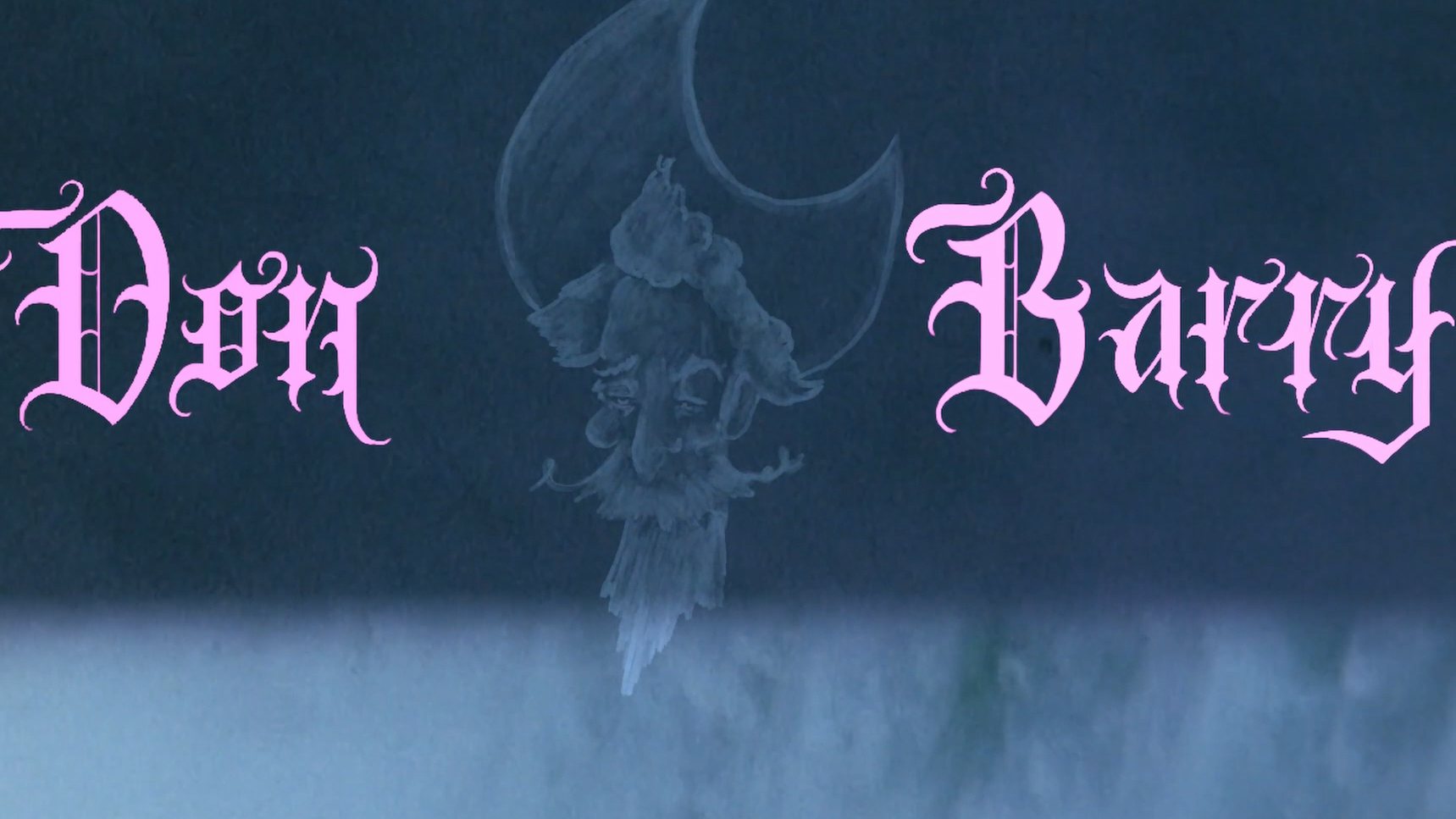
Docufiction, Experimental, by Paul Smart, Mexico, 2026.
Don Barry: A Quixotic Exploration is a debut feature that places the biography of an eighty-year-old experimental filmmaker and artist, Barry Gerson, within the metanarrative of Miguel de Cervantes’ Don Quixote. Don Barry was filmed in the city of Guanajuato during the 51st edition of the Cervantino Festival, as well as during the vibrant Day of the Dead celebrations held in the city’s UNESCO-listed tunnels. The film honors the director’s long friendship with artist Barry Gerson, drawing inspiration from Cervantes’ Don Quixote. Paul Smart’s directorial choices create something new that celebrates life and goes beyond conventional storytelling. A search for magic in our real lives. A moving film about the meaning of life, art, and death. Not to be missed.
Paul Smart is a proud outsider filmmaker with a long history of film screenings. In the 1980s, he emerged in New York’s vibrant youth art scene, working in theater production and later filmmaking, before retreating to rural upstate New York, in the Catskill Mountains, where he made a living writing and screening independent films in old parish halls for rural audiences, many of whom had never seen a film.
LANGUAGE: English
SUBTITLES: Spanish, French, German, Portuguese
Inner Change
Esotericism has as its objective the alchemical transformation of the soul and of the human interior. The transformation of lead into gold in medieval alchemy had to be practiced in secret, away from the inquisitive gaze of the Catholic and Protestant Church. The transformation of lead into gold is the metaphor of inner change in which the soul abandons all that is raw and heavy material to acquire the luminous and precious qualities of gold.
Esotericism and Angels

Another of the fundamental characteristics of esotericism is that it recognizes the existence of a hierarchy of spiritual entities. In the esoteric tradition the physical body is the last and least important manifestation of existence. Going towards spiritual dimensions higherThe esoteric occult knowledge of all religions also recognizes the existence of an angelic hierarchy, purely spiritual beings organized according to a structure that could be defined as “military”.
Esotericism and the West
The works, authors and topics related to esotericism in the West are innumerable. Many hundreds of books have survived through the centuries to the present day. Even medieval texts such as the Malleus Maleficarum, commissioned by the holy inquisition for the witch hunt, is considered a text of esoteric interest. However, esotericism began to spread as an official discipline in Europe only at the end of the 1800s, a few years before the Cinematograph.
Among the first mystics to bring esotericism to Europe is Helena Petrovna Blavatsky, founder of the Theosophical Society, in 1875. Theosophy is an esoteric discipline that seeks the common truths of all religions, all philosophies, and all the sciences of the history of humanity. Its intent is to dig deep and find the roots that unite all these spiritual traditions.
For Rudolf Steiner, founder of anthroposophy, esotericism is a “spiritual science”, an investigation of the supersensible worlds through the faculties of clairvoyance. For René Guénon , esotericism is above all the “primordial tradition”, that is, a universal metaphysical doctrine, the transmission of which is carried out above all through the language of symbols.
Development of Esotericism in the West
Esotericism, much more developed in the East, only spread to the West after World War II, thanks to some authors who wrote amazing and enlightening texts. One of them is the Romanian historian of religions Mircea Eliade, who dealt with shamanism and alchemy in his book Shamanism and the archaic techniques of ecstasy, written in 1950. From his book Another youth Francis Ford Coppola will draw a beautiful film of the same title, starring Tim Roth in 2007.
François Secret writes the Christian cabala (Les Kabbalistes chrétiens de la Renaissance, 1964) and in the same year his book is released he will become the first professor of esoteric history to Paris, at the École pratique des hautes études. His successor, at the end of the seventies, will be Antoine Faivre: the name will become History of the esoteric and mystical currents in modern and contemporary Europe.

Esoteric Movies
Esotericism and moving images find innumerable meeting points throughout history of cinema. Indeed, it could be said that cinema itself is an esoteric invention, which took place in a period in which esoteric truths recognize one of the main turning points in the history of humanity, linked to technology.
In fact, it was precisely in the years in which cinema was born, at the end of the nineteenth century, that the world known up to that moment underwent radical transformations unimaginable until a few decades earlier. Movies that have an esoteric root in a general sense are thousands. A large part of the arthouse movies and entire filmographies by great masters of cinema are nothing more than profound esoteric reflections transformed into popular art and made more accessible. Those who know esotericism, however, find in the movies themselves much broader and deeper levels of reading than an audience who, while appreciating the work of art, is unable to access these understandings.
This guide is a journey across the entire spectrum. It is a path that unites the great masterpieces of the genre with the most complex independent visions. We will explore films where esotericism is not just a backdrop, but the key to deciphering a hidden meaning, works that demand an active viewer, ready to look beyond the surface.
👁️ The Awakening of Consciousness: New Initiatory Paths
Esotericism in cinema does not stop at the classics of Jodorowsky or Kubrick. Even today, visionary directors continue to use film as a dark mirror to explore the invisible. From the interplanetary rites of passage of Dune to the Orphic descent of La Chimera, these new works demonstrate that man’s need to look “beyond the veil” of material reality is more alive than ever. Here alchemy mixes with science fiction and the psychological thriller becomes a test for the soul.
Katabasis
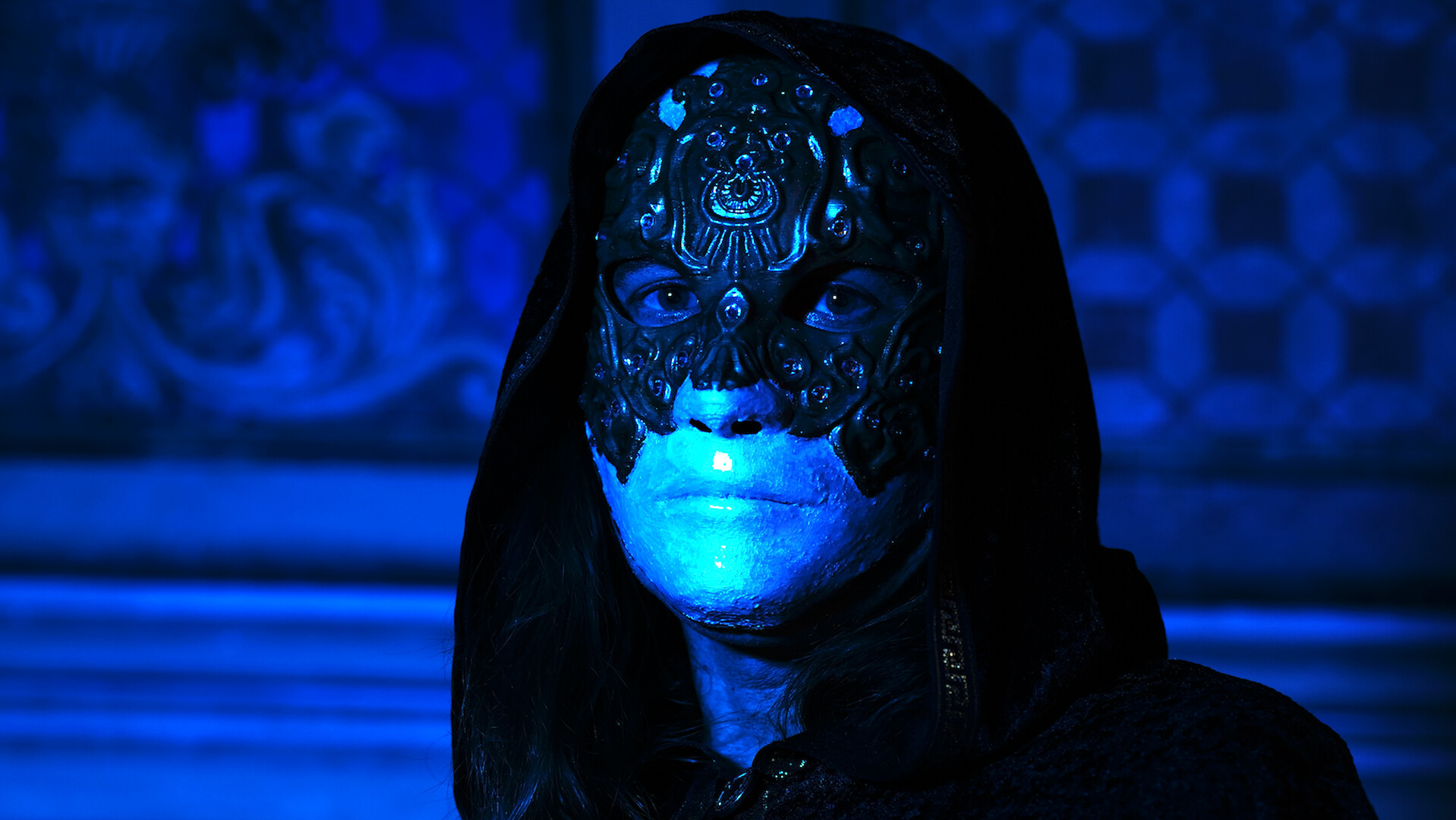
Drama, Mystery, by Samantha Casella, Italy, 2025.
“Katabasis” is a journey into the underworld. Nora experienced that dark realm as a child, when she suffered abuse. This marked her, shaping her into an ambiguous and manipulative woman, dangerous in her inscrutability, constantly seeking disturbing situations to relive the only condition she has profoundly internalized: pain. And the love story between Nora and Aron is tormented, strictly secret. Aron is a young orphan oppressed by the star system which, orchestrated by Jacob, a cynical manager, made him a star and imposes another façade of life on him. In fact, only the people who revolve around the house-prison where the couple lives are aware of Nora's existence. That majestic villa is the stage for secrets, lies, deceit, as well as unsettling episodes, since Nora is able to communicate with the souls from the beyond.
Director Biography – Samantha Casella
Samantha Casella studied various aspects of cinema, including screenwriting, directing, cinematography, and acting, across Turin, Florence, Rome, and Los Angeles. Her directing thesis, the short film "Juliette," won 19 awards, including the "European Massimo Troisi Award." She continued her path directing surreal short films including "Silenzio Interrotto," "Memoria all'Isola dei Morti," and "Agape." In 2019, she directed "I Am Banksy." At the charismatic TCL Chinese Theater in Los Angeles, at the Golden State Film Festival, she won the award for Best International Short Film. In 2020, she directed the short film "A un Dio Sconosciuto." "Santa Guerra" is her feature film debut.
LANGUAGE: Italian
SUBTITLES: English, Spanish, French, German, Portuguese
La chimera (2023)

Arthur is a young English archaeologist with a special gift: he feels the void of the earth. Together with a band of grave robbers in 1980s Italy, he seeks ancient Etruscan treasures. But while his companions seek gold to get rich, Arthur seeks access to the Afterlife to find his lost love, Beniamina. Alice Rohrwacher‘s film is a poignant and poetic Orphic journey. The “chimera” is not just the treasure, but the illusion separating the world of the living from that of the dead. The protagonist undergoes a true descent into the underworld, a rite of passage where time is annulled. It is a work steeped in pagan mysticism, where the past is never dead, but only waits to be awakened by those who possess inner “sight.”
A vision curated by a filmmaker, not an algorithm
In this video I explain our vision
Samsara (2023)

In Laos, a young monk reads the Bardo Thodol (The Tibetan Book of the Dead) to an elderly dying woman to guide her on her journey toward rebirth. When the woman dies, the film itself undergoes a transmigration: the screen closes, and the viewer is invited to live a sensory experience of light and sound (the Bardo) to then “reincarnate” in a new story on the coasts of Zanzibar. Directed by Spaniard Lois Patiño, Samsara is not just a film about esotericism, it is a cinematic ritual. It is an immersive experience attempting to represent the invisible: the passage of the soul from one body to another. Breaking the barriers of traditional storytelling, the film asks the viewer to actively participate in the cycle of death and rebirth, offering one of the purest and most spiritual representations of Buddhist doctrine ever seen in cinema.
Poor Things (2023)

Bella Baxter is a young woman brought back to life by the brilliant and unorthodox scientist Dr. Godwin Baxter, who transplanted the brain of the fetus she was carrying into her. Thus begins Bella’s accelerated evolution, as she travels across continents discovering the world, sex, philosophy, and self-determination, free from the prejudices of her time. Beneath the gothic and grotesque veneer, Yorgos Lanthimos‘ film is a perfect alchemical and Gnostic allegory. Bella is the raw matter that, through direct experience (gnosis), transforms herself into the Nigredo and then the Albedo, reaching enlightenment and full consciousness. It is the journey of the soul (the fallen Sophia) rising from ignorance to wisdom, challenging the demiurge who created her to become the divinity of herself.
1st Bite
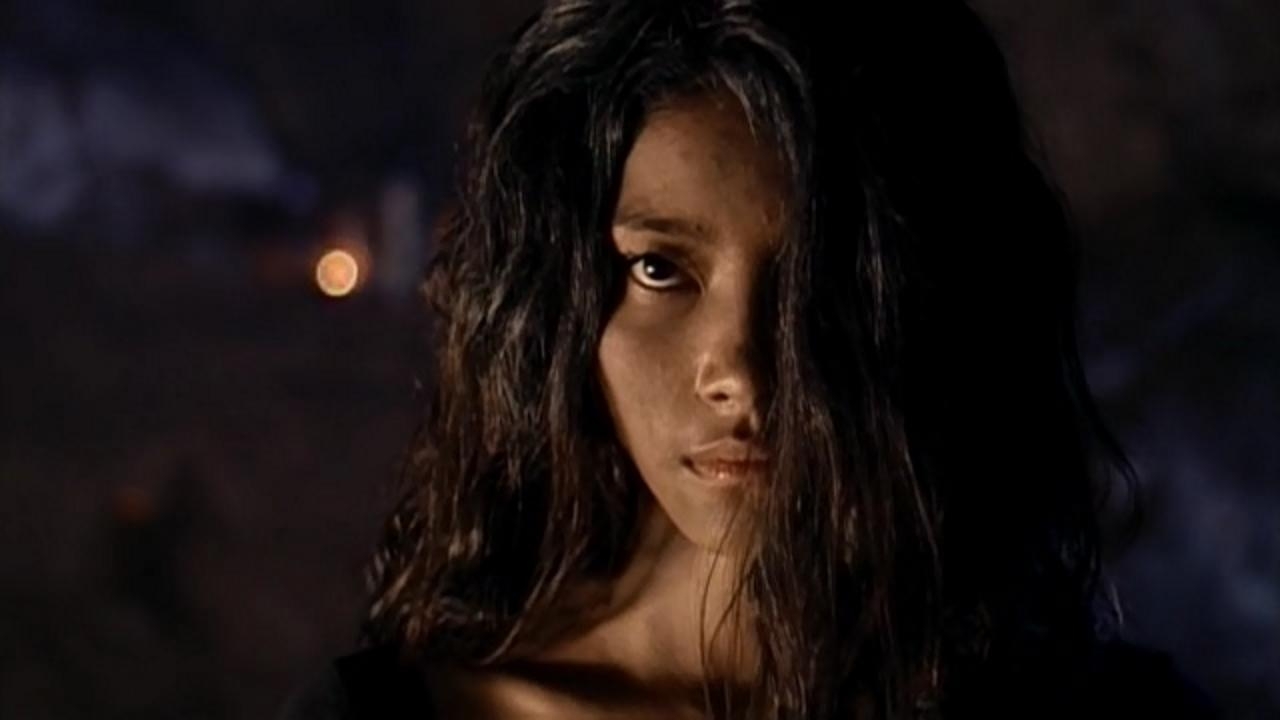
Horror, romantic, by Hunt Hoe, Canada, 2006.
Gus is a charming man who works as a cook in an oriental restaurant in Montreal. His boss sends him to a remote island in Thailand to meet a master of Zen cuisine and improve the quality of his dishes. There he meets a mysterious woman named Lake who lives in a cave and informs him that the Zen cooking master is dead. Gus goes to live in the cave and begins a love affair with Lake. But the cook's psychological balance rapidly worsens, including hallucinations, alcohol and malaise. Lake doesn't want Gus to leave, but Gus feels that he needs to escape the island and that his life is in danger.
First Bite is a very original Canadian independent film that crosses different film genres in its narration, suddenly passing from romanticism to suspense to horror. Direction and editing that is never banal, supported by shots with wide-angle lenses that increase the tension and by a cast of actors in excellent shape that offer very intense and realistic interpretations. Between mysticism, black magic, love stories and tropical islands, First Bite is the odyssey of a man who remains prisoner in a trap from which he can no longer escape, lost between passions and exotic foods. An escape from evil energies in search of spiritual meanings set between wild nature and metropolis.
LANGUAGE: English
SUBTITLES: Spanish. French, German, Portuguese
Heretic (2024)

Two young Mormon missionaries knock on the door of Mr. Reed, a kind and educated man who promises to listen to their message. Once inside, however, they find themselves trapped in a labyrinth-house. Reed challenges them to a deadly theological game: to get out, they must choose between the door of “Belief” and that of “Disbelief,” testing the true nature of their faith. This psychological thriller transforms religious debate into a dark initiatory path. The “villain” acts as a perverse high priest who wants to dismantle the protagonists’ dogmas to force them to see a higher (or terrible) truth. The film explores the Gnostic concept of the world as a trap and faith as a test, suggesting that the only true enlightenment comes when one has the courage to look beyond the veil of organized religions.
Late Night with the Devil (2024)

During Halloween night of 1977, talk show host Jack Delroy, desperate for falling ratings, decides to organize a special episode on the occult. He invites a parapsychologist and the sole survivor of a satanic cult’s mass suicide to the studio. The attempt to summon a demon on live television opens doors to forces no one can control. The film reinterprets the Faustian myth in the media age. It is a critique of the society of the spectacle, but also an accurate representation of how magical rituals require a blood price. The protagonist has made a pact (initiation into success) with a dark elite (reminiscent of the Bohemian Grove), and the broadcast becomes a mass rite where the audience is, unknowingly, a participant in the evocation. A warning about how ambition can be the most dangerous form of black magic.
Infinity Pool (2023)

Failed writer James Foster, on vacation at an isolated resort, accidentally causes a fatal accident. In the country, a brutal law applies: an eye for an eye. However, rich tourists can pay to create a “double” of themselves via a mysterious cloning procedure, and have the clone executed in their place. James watches his own death, an experience that changes him forever. Brandon Cronenberg directs a reverse initiation. Instead of elevating the spirit, the ritual of cloning and execution destroys the protagonist’s moral Self, unleashing his basest instincts. It is a Dionysian descent into vice and loss of identity, where death is not the end but a means to erase the consequences of one’s actions. A disturbing film on the nature of the soul: if you can watch yourself die, what remains of your humanity?
Haxan
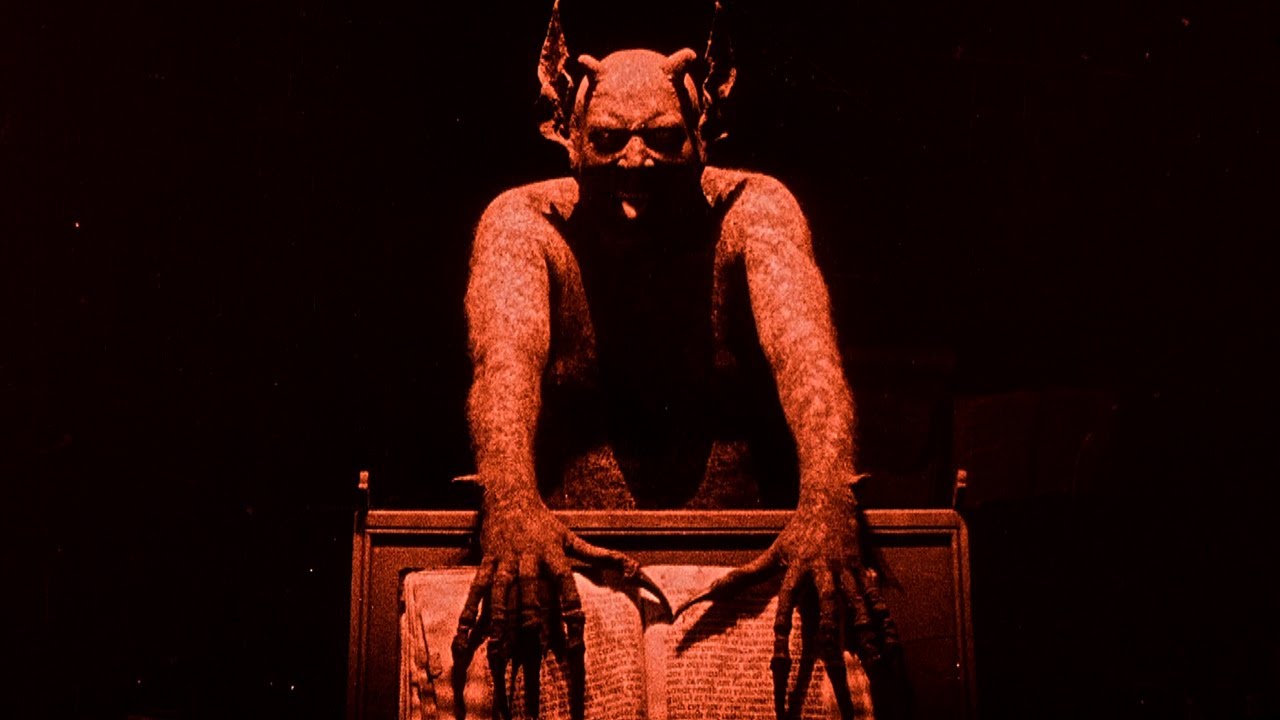
Documentary, by Benjamin Christensen, Sweden, 1922.
Desecration of tombs, torture, demon-possessed nuns and witches' sabbath: Haxan, Witchcraft Through the Ages is an incredibly original and unconventional film that has become legendary over time. Between documentary and dramatic fiction, the film guides us through the scientific hypothesis that the witches of the Middle Ages suffered from the same ills as the mentally ill of the modern era. A frightening and at the same time humorous gothic horror, with the creation of documentary and non-fiction sequences that anticipate the innovations of the Nouvelle Vague. Something absolutely unique in the history of cinema.
Food for thought
In Sanskrit Devil and Divine come from the same root, dev. Madness is the dark side of man and it is as natural as the bright side. When you are able to tell a madman that not only is he mad but that you are too, a bridge is immediately created, and it is possible to help him. The nature of life is neither logical nor rational. Life is illogical, wild and contradictory.
LANGUAGE: English, Swedish
SUBTITLES: Spanish, French, German, Portuguese
🗝️ The Doors of Perception: Other Journeys of the Soul
Esoteric cinema is a key unlocking hidden locks in our consciousness. But the initiate’s path does not end here. If you are fascinated by symbols, the mysteries of existence, and alternative realities, here are other cinematic roads to travel to continue your search.
Spiritual Movies
If esotericism is the “secret doctrine,” spirituality is the universal search for meaning. Discover works exploring the sacred, transcendence, and man’s relationship with the divine, offering food for thought that goes beyond matter.
👉 GO TO THE LIST: Spiritual Movies
Surrealism
The language of the unconscious is made of symbols, just like alchemy. The great masters of surrealism (like Jodorowsky or Buñuel) created worlds where rational logic collapses to make room for deeper, visionary truths. A mandatory step for those who love initiatory cinema.
👉 GO TO THE LIST: Surrealism
Supernatural Movies
Esotericism investigates the hidden laws of nature. Here you will find stories dealing with the invisible, the magical, and what science cannot yet explain, exploring the thin line between our world and the Afterlife.
👉 GO TO THE LIST: Supernatural Movies
Cult Movies
Many esoteric films have become cult objects for their subversive message and unique aesthetics. From The Wicker Man to El Topo, explore the masterpieces that challenged conventions and created devoted followers worldwide.
👉 GO TO THE LIST: Cult Movies
Indie and Visionary Cinema
Independent cinema is the modern alchemical laboratory, where free directors experiment with form and content to awaken the viewer. Search our catalog for hidden gems that speak directly to the soul.
👉 BROWSE THE CATALOG: Stream Indie Movies
👁️ The Eye of Knowledge: The Classics
Since its inception, cinema has been a “magic lantern,” a tool to make the invisible visible. This section collects the sacred texts of esoteric filmmaking: works that are not merely to be watched, but deciphered. From the hermetic symbolism of Jodorowsky to the dreamlike labyrinths of Lynch and Kubrick, these films are maps for the soul, initiatory paths disguised as entertainment. Here, storytelling bows to symbol, and every frame is a step toward a higher understanding of reality.
The Undead (1957)

A woman is put into a psychic trance and sent back in time directly into the body of one of her medieval ancestors, who is doomed to die as a witch. He escapes and a real witch named Livia (Allison Hayes), who works with the devil. There is also another witch, a rogue who helps Livia, and one of the psychics who takes a trip back in time with her. Produced and directed by Roger Corman, this is a B-movie that is a mix of scary: violence, reincarnation, time travel, comedy and cheesy fun. There are funny scenes with the witch and the elf transforming into numerous animals, most notably a pair of very fake looking bats. The gravedigger is also funny with his rhymes and witty discussions, as when he calls the cemetery his “meat farm. The evil one is fantastic, with his constant laughter and even a huge pitchfork. On Saturdays, he summons a trio of dead girls to climb from the grave and dance.
Course of the Demon (1957)

The paranormal psychologist Dr. John Holden (Dana Andrews) travels to England to investigate and deny the existence of Satanism and its use by the devil, The leader of the sect, Dr. Julian Karswell (Niall Macginnis). Holden is expected to meet many other professors, first and foremost Professor Harrington. When he arrives he finds out that Harrington was actually killed when he crashed his car into an electric pole and was electrocuted. Holden does not know that a demon invoked by Karswell has eliminated him. This is a leading psychological thriller created in Britain with a fantastic cast and script that focuses on the atmosphere with scary scenes. The three main stars are all superb. Andrews plays the hesitant teacher who only relies on reasoning and what can be seen, ultimately believing in the demonic curse and even witchcraft before it’s too late.
Ugetsu
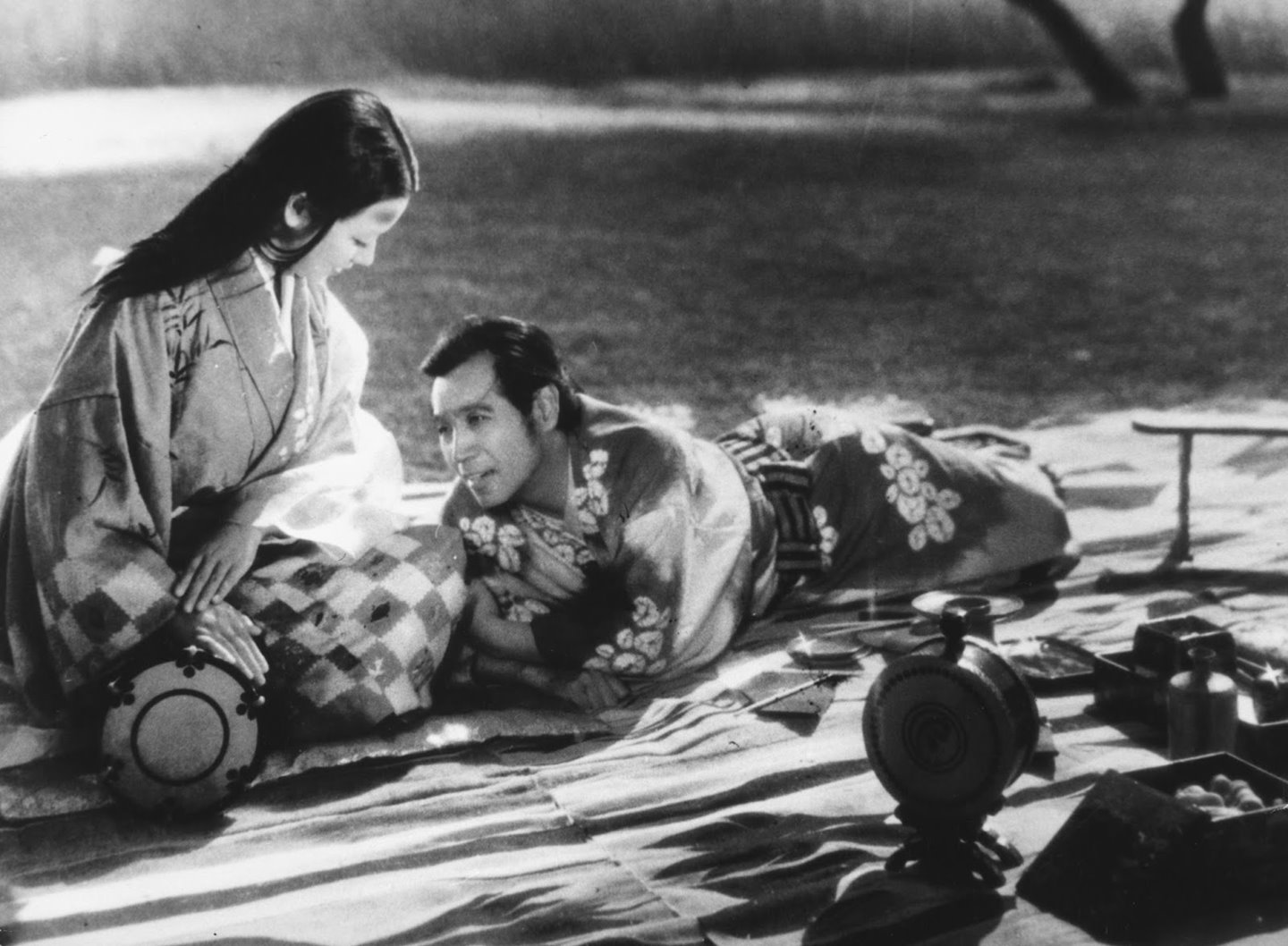
Drama, fantasy, by Kenji Mizoguchi, Japan, 1953.
Japan, late 16th century: the potter Genjurō and his brother Tobei live with their wives Miyagi and Ohama in a village in the Omi region; Genjurō, convinced that he can earn a lot of money by selling his goods in the nearby city, goes to the county of Omizo with Tobei, who joins him with the sole purpose of being able to become a samurai. Back home with a good income, the two work hard to make even more money; Tobei, increasingly obsessed with the ambition of becoming a samurai, needs the money to buy an armor and a spear while Genjurō, overcome by greed, tries to cook a batch of crockery with his brother in just one night. Legend and innovation of cinematic language, a wonderful world next to a brutal and cruel world. Mystery film that opens a discourse with the invisible planes of existence, ghosts and forays into the fantastic, made by Kenji Mizoguchi in a Japan still frozen by the two atomic bombs dropped on Hiroshima and Nagasaki. Fundamental work by Mizoguchi, recognized as one of the greatest expressions of the Seventh Art. A lofty lesson in directing that creates wonder with a dramatic tale of greed and lust for possession. A woman who is a tempting demon and a wife abandoned to a fate of war and misery, Mizoguchi uses the camera to enter "another world".
Food for thought
According to ancient Eastern traditions there are other non-physical planes beyond the physical plane. The etheric plane envelops the physical body, gives it vital energy and acts as an intermediary with the higher levels. Beyond the etheric plane there is the astral plane where entities may exist that have not been able to resign themselves to the loss of their body and wander in search of sensations. They are what are commonly referred to as "ghosts". These entities are looking for bodies that have unbalanced etheric planes to "hook up" to in order to experience sense satisfaction through them.
LANGUAGE: Japanese
SUBTITLES: English, Spanish, French, German, Portuguese
The Seventh Seal (1957)
![The Seventh Seal (1957) ORIGINAL TRAILER [HD 1080p]](https://blog.indiecinema.co/wp-content/plugins/wp-youtube-lyte/lyteCache.php?origThumbUrl=https%3A%2F%2Fi.ytimg.com%2Fvi%2FvZucwtdSvJ8%2F0.jpg)
Returning from the Crusades, the knight Antonius Block meets Death on the beach. To gain time and find answers about God’s silence and the meaning of life, he challenges him to a game of chess. Ingmar Bergman‘s masterpiece is a fundamental metaphysical work. Although not “esoteric” in the occult sense, it is an initiatory journey of the soul. The knight represents the man seeking Knowledge beyond dogmatic faith, facing the Apocalypse (the seventh seal) and the inevitability of the end. The chess match is the eternal struggle between human consciousness and the mystery of the unknown.
Black Sunday (1960)

In 1630 in Moldavia, the witches Asa Vajda (Barbara Steele) and Javuto are sentenced to death by Asa’s brother and the Inquisition. They are tortured, branded with Satan’s letter “S” and an iron mask nailed to my face is placed. 200 years later, they return from the realm dead, when a group of medical professionals discover the burial site and accidentally damage the cross and glass panel. One of the medical professionals cuts himself on the glass and his blood brings the witch back to life. Summon Javuto with the strategy of draining the blood of his relative, Princess Katia (also played by Steele), in order to gain eternal life.
This is a gothic horror created in Italy which is considered to be one of the outstanding works of art of the horror cinema. It uses a mix of atmosphere, sound, blood and its gothic surroundings to create a scary movie. It is reminiscent of the excellent black and white horror films of the 1930s like Dracula, and it would also have place to influence the scary Hammer movies that it sure is inspired by. It is notable for being the directing launch of Mario Bava and actress Barbara Steele, both mostly associated with the horror style.
Manos: The Hands of Fate (1966)

“It’s shocking! It’s beyond your imagination!” He’s incredibly bad, the king of bad movies. It is considered to be the most horrifying film ever made, making Plan 9 From Outer Space look like an epic masterpiece. It has everything that will please fans of negative films: terrible acting, bad lighting, laughable and bad discussions, jaw-dropping situations, bad lighting, and poor special effects. The story involves a family member who gets lost during the holidays and ends up staying in a residence that houses a hellish cult, including a cult leader Freddy Mercury look-alike, and a villain henchman named Torgo who has huge knees.
The film was shot on a budget of $ 19,000. Sometimes it feels like a quiet movie, with only the music from the soundtrack playing. Editing is rough due to the fact that it was shot using a 16mm Bell & Howell film camera, which can only have 32 seconds of footage at a time. Lighting is bad. There is also a scene where you can see the microphone from the film on the right side. He managed to get circulation but actually did nothing as he was virtually neglected until his appearance in the Mystery Science Theater 3000. That episode composed by Manos is considered to be one of the most effective in the collection as well as transforming into cult movie this incredibly bad movie. So, if you are a fan of shoddy movies, this is for you.
The Witches (1966)

Gwen Mayfield (Joan Fontaine) is on a missionary trip to Africa when she encounters a voodoo event and suffers from a nervous breakdown. He returns to England and takes a teaching position in a small town, hoping to recover from his traumatic experiences. Begins to find unusual events happening in the city; a woman with a mangled hand, a domestic cat following her around, a child in a coma, a voodoo doll with pins, the boy and his mom died after a conversation with one of the elderly women, the baby’s dad drowns , is trampled by a group of sheep, regresses after seeing the voodoo mask that was in Africa. All these events lead her to discover that there is a coven of witches who intend to have a virgin among their rituals.
The film is a British horror film produced by Hammer Films, which became famous for its scary films from the 1950s to the 1970s. It is based on Norah Lofts‘ exclusive The Devil’s Own. The film is much more plot-based and is slow-burning, as strange things slowly happen to the teacher in her new environment and she begins to piece the puzzle together. The last twenty minutes of the film are unforgettable: let’s find out what is happening in this community. Fontaine provides a solid performance in her latest appearance in a starring role. She is known for appearances on Rebecca, Suspicion, This Above All and The Constant Nymph.
Something Weird (1967)

A man injured by a power failure negotiates with a witch to recover his appearance; in exchange he should agree to become the witch’s lover. He too has psychic powers. They travel from town to town, facing crimes, which consist of getting rid of a ghost and also discovering a serial killer. Likewise, this insane film consists of an unusual mix of sex, murder, LSD, psychedelic lights, martial arts, séances, federal agents, and jazz. Include the mix of bad performance, over-the-top, low-cost clothing, and you’ve got an excellent low-budget movie too. Something Strange was directed by Hershell Gordon Lewis, who was recognized for unscrupulous low-budget films like Blood Feast, Two Thousand Maniacs, The Wizard of Gore, Color Me Blood Red, and The Gruesome Twosome. If you like exploitation movies, scary, gory or cheap, then you should see it.
The Holy Mountain
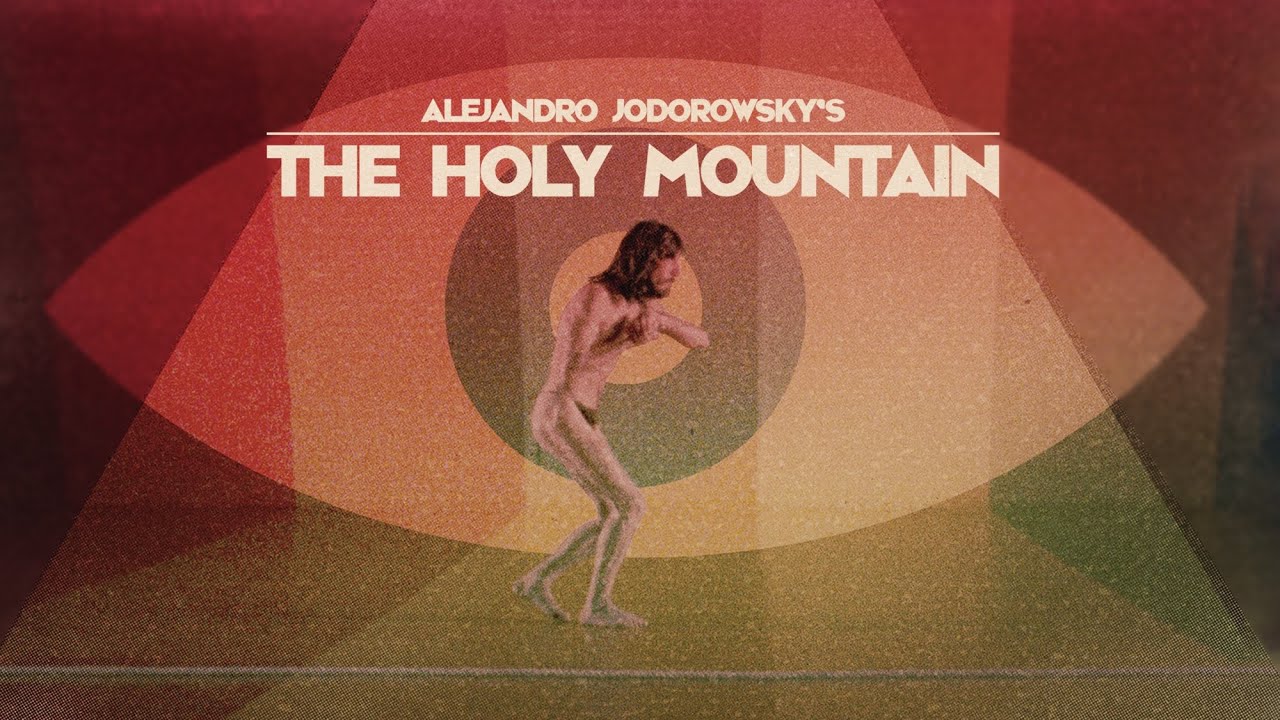
Sci-fi, drama, by Alejandro Jodorowsky, 1973, Mexico.
A man, nicknamed The thief, who represents the Fool's card in the Tarot, lies unconscious in a desert, among swarms of flies. When he wakes up he encounters a footless and handless dwarf representing the Five of Swords. The two become friends and go to the nearest town where they earn money by entertaining tourists. The thief resembles Jesus Christ, and after a quarrel with a priest, he eats the face of a wax statue of Christ, symbolically eating his body and offering "himself" to Heaven. After many misadventures he arrives at the top of a tower which is the laboratory of a mysterious alchemist. Participating in various initiation rites, the alchemist introduces him to the seven most powerful people on Earth, who work in the industries of welfare, weapons, art, entertainment, law enforcement, construction and the economy. Together they will have to reach the Sacred Mountain, a legendary mountain on a nonexistent island, where there are nine sages who know the secret of immortality. Their aim is to eliminate them and take their place.
Food for thought
In India they call the reality of the world around us Maya, which means illusion. The truth is hidden: it's like a movie screen on which you project your dreams and desires. Physicists have investigated what matter is and have come to the conclusion that it does not exist. So what is the matter of things made of? It is only condensed energy, which vibrates at very high speed, appearance. At a deep level, matter does not exist.
LANGUAGE: English
SUBTITLES: Spanish, French, German, Portuguese
The Conqueror Worm (1968)
![The Conqueror Worm (1968) ORIGINAL TRAILER [HD 1080p]](https://blog.indiecinema.co/wp-content/plugins/wp-youtube-lyte/lyteCache.php?origThumbUrl=https%3A%2F%2Fi.ytimg.com%2Fvi%2F5tvvbAyWUyc%2F0.jpg)
In 1645, England was going through a civil war and there were social and political upheavals. This is causing conflict in local towns as men take advantage of it and are able to gain power by exploiting the superstitions of witchcraft. One of these men is the witch hunter Matthew Hopkins (Vincent Price), who roams the small towns of the countries abusing the admission of the alleged witches. Likewise, he abuses his powers for sexual acts and financial gain. When a pastor is mistreated and hanged by Hopkins, his niece’s boyfriend promises to track him down and kill him.
The film is a realistic and grim take on what happened during that time, with numerous scenes of violence, torment, murder and rape. The film is noteworthy for numerous factors. It features a nice interpretation of Price as the evil Hopkins acting as if he recognizes that his weird witchcraft exams are fraud, but does the job for the gains rather than a conviction of moral justice. It has retained a cult following due to the director’s unfortunate death, followers of horror, followers of witchcraft and even Vincent Price fans. If you like any of these then you should check it out, it’s considered a British horror classic.
2001: A Space Odyssey (1968)

From the dawn of man, marked by the appearance of a mysterious black monolith, to a journey toward Jupiter guided by the artificial intelligence HAL 9000, humanity seeks its creators. Astronaut David Bowman undertakes the final journey “beyond the infinite.” Stanley Kubrick creates the quintessential alchemical film. The Monolith is the Philosopher’s Stone that triggers the evolution of consciousness. Bowman’s journey is not just spatial, but dimensional and spiritual: it is a cosmic death and rebirth that transforms man (raw matter) into the “Star Child” (the divine and evolved being), completing the Great Work of the universe.
Rosemary's Baby (1968)

Rosemary and her husband Guy move into an old New York apartment building, the Bramford. They are soon approached by their intrusive neighbors, the Castevets. When Rosemary becomes pregnant under mysterious circumstances, she begins to suspect that her neighbors are part of a coven of witches with dark plans for her baby. Roman Polanski brings esotericism to urban modernity. The film is not just about Satanism, but about the manipulation of reality and the power of rituals hidden in everyday life. It is an investigation into paranoia and the loss of control over one’s body, where horror stems from the realization that secret forces and pacts operate beyond our rational understanding.
El Topo (1970)

A gunfighter dressed in black, El Topo, travels through a surreal desert with his naked son, challenging four master gunmen who represent different stages of spiritual enlightenment. After being betrayed and left for dead, he is reborn as a humble saint in a cave of deformed people, seeking redemption. Along with The Holy Mountain, this is the sacred text of Alejandro Jodorowsky‘s esoteric cinema. It is a “mystical western” dense with Kabbalistic, Zen, and Christian symbolism. El Topo’s journey is a brutal metaphor for the death of the Ego: the gunman must lose everything (power, pride, identity) to reach true enlightenment, passing from violence to holiness through suffering.
The Wicker Man (1973)

Police Sergeant Neil Howie, a devout Christian, arrives on the remote Scottish island of Summerisle to investigate the disappearance of a young girl. He discovers a community that has rejected Christianity to return to ancient Celtic pagan cults, led by the enigmatic Lord Summerisle. This British cult classic is a theological clash between two worldviews: Christian dogmatism and pagan pantheism. The film is an accurate and unsettling depiction of fertility rites and ritual sacrifice. The ending is one of the most powerful in cinema: an act of collective “sympathetic magic” in which the protagonist becomes, despite himself, the offering necessary to renew the cycle of nature.
The Kempinsky Method

Drama, by Federico Salsano, Italy 2020.
The introspective imaginary road movie of a man in the maze of his own mind, his memories of his youth, his never dormant passions and contradictory truths. The road is made of water, the destination is falsely unknown. His traveling companions are three mysterious men, projections of his imagination and of different aspects of his personality: the perennial melancholy, the crazy creative, the introverted child. He is also followed by a female presence that tells the umpteenth human story. At a certain point of the crossing he decides to abandon the boat and his ghosts of him diving into the sea and arrives swimming on a deserted beach, naked, with a small Pinocchio puppet closed by a padlock.
In this splendid film life is like a long sea voyage and the human being is a small creature confronting immensity. Sometimes the ocean is calm, other times there are terrible storms. Sometimes we are captains of a boat with a well-defined route, other times we are shipwrecked in search of a land in which to save ourselves. But despite the long journey and the movement in physical space, there are other questions that resonate in the mind: who are these men I travel with? What is the mystery of this immense mass of water that seems to be made of my memories? You can circumnavigate the whole world but the main question always remains the same: who am I really?
LANGUAGE: italian
SUBTITLES: english, spanish, portuguese, german, french
The Tenant (1976)

The Tenant” (original title: “Le Locataire”) is a 1976 film directed by Roman Polanski. The film is an esoteric psychological thriller and is part of an unofficial trilogy together with “Repulsion” (1965) and “Rosemary’s Baby” (1968), both directed by Polanski himself and with similar themes of alienation and paranoia. Based on the novel “Le Locataire chimérique” by Roland Topor, the film tells the story of Trelkovsky, played by Roman Polanski himself, a young Polish employee who moves into an empty apartment in Paris. As he adjusts to his new home, Trelkovsky discovers that the former tenant, a young woman, has attempted to commit suicide by jumping out of the window. This event triggers a series of strange and disturbing events, and Trelkovsky begins to feel obsessed with the figure of the woman and the neighbors who seem to be acting more and more strange.
Suspiria (1977)
![Suspiria (1977) TRAILER [HD]](https://blog.indiecinema.co/wp-content/plugins/wp-youtube-lyte/lyteCache.php?origThumbUrl=https%3A%2F%2Fi.ytimg.com%2Fvi%2Fy31qSjZ2s-E%2F0.jpg)
Susy Benner, a young American ballet student, arrives in Freiburg to attend a prestigious dance academy. She soon discovers that the school is just a front for something much older and more sinister: a coven of witches governed by the mysterious Mater Suspiriorum. Dario Argento creates an esoteric fairy tale with psychedelic colors. Inspired by Thomas De Quincey‘s theories on the “Three Mothers,” the film is an initiatory journey through horror. The academy is an occult temple where magic is a physical force that bends reality. Susy must pass tests of courage and discover the secrets hidden in the very architecture of the building to defeat the ancestral evil.
Stalker (1979)
![STALKER Official Trailer [1979]](https://blog.indiecinema.co/wp-content/plugins/wp-youtube-lyte/lyteCache.php?origThumbUrl=https%3A%2F%2Fi.ytimg.com%2Fvi%2FnFLQEuQuNKM%2F0.jpg)
In an unspecified future, a guide known as “Stalker” leads a Writer and a Professor into the “Zone,” a forbidden and shifting territory where the laws of physics do not apply. Their goal is to reach the “Room,” a place rumored to grant the deepest and most secret desires of those who enter. Andrei Tarkovsky‘s masterpiece is pure visual metaphysics. The Zone is not a physical place, but a state of consciousness that reacts to the psyche of those who traverse it. The journey of the three men is a spiritual pilgrimage that strips the individual of their social and intellectual masks, forcing them to confront their true essence. It is a film about faith, despair, and the search for the Absolute.
Altered States (1980)

Scientist Eddie Jessup is obsessed with finding the origins of consciousness. Using a sensory deprivation tank and potent hallucinogenic drugs used in Mexican rituals, he begins to regress biologically, traversing genetic memory until he transforms into a primordial being. Ken Russell directs a film that blends science and shamanism. Based on the studies of John Lilly, the film explores the idea that the mind can alter matter and that ancestral memory is encoded in our DNA. It is a psychedelic and terrifying journey toward the annihilation of the Self, where enlightenment risks coinciding with physical destruction and regression to a bestial state.
Wings of Desire (1987)

Two angels named Damiel and Cassiel roam the city of Berlin invisible: they observe the Berliners and listen to their thoughts. We are in the mid-1980s, just before the fall of the Berlin Wall. The angels meet some men on their path. For example Homer, who like the Greek poet Homer dreams of peace and looks for Potsdamer Platz, a square that was one of the most beautiful in Europe before the Second World War. In its place, it finds a run-down place, a no-man’s land, and the Berlin Wall covered in graffiti.
Wim Wenders‘ masterpiece and probably one of the most explicitly esoteric movies. It is quite clear from the plot and world view that the director was familiar with many aspects of esotericism before making the film. The topics covered are in fact among the fundamental ones of occult knowledge: the invisible bodies and entities of different planes of reality, the angelic hierarchies, the attraction towards the incarnation and matter.
Beyond the Mist
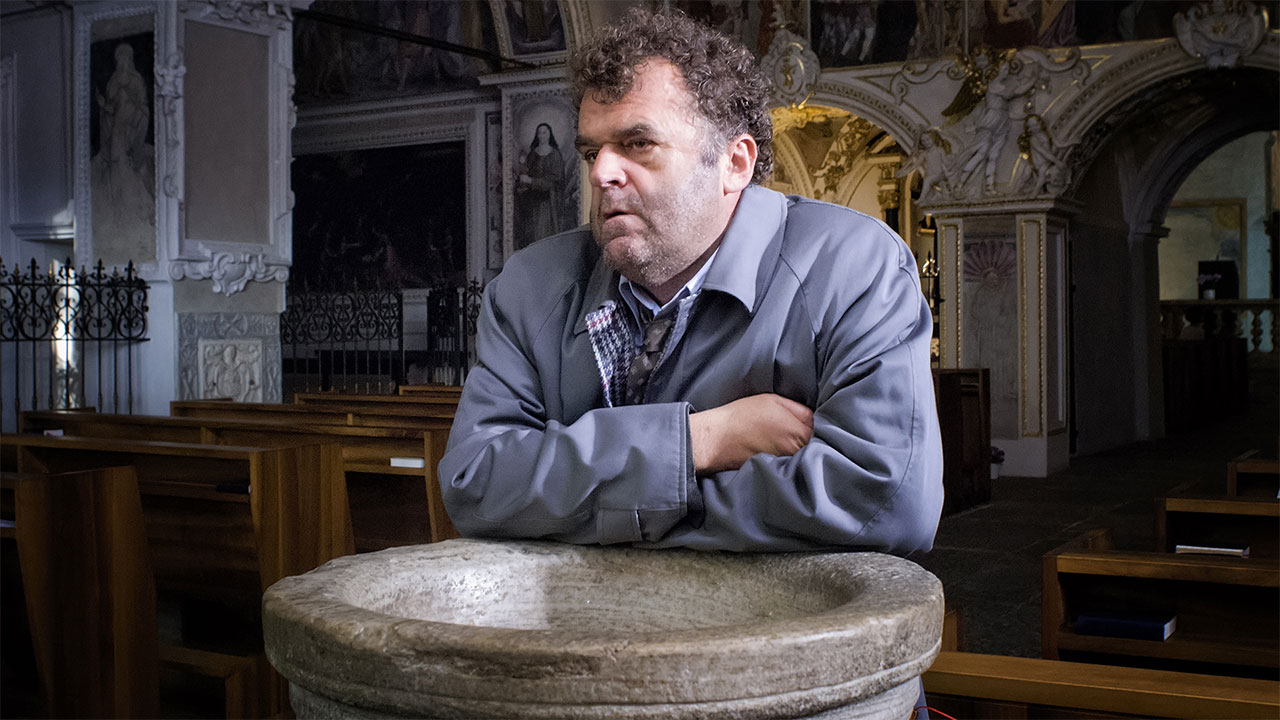
Thriller, mystery, by Giuseppe Varlotta, Italy 2018.
A week before Easter a great actor disappears from the set where he shoots a historical film. A private investigator is discreetly in charge of the fact. From the beginning he feels the disturbing perception of being somehow involved in the past events of the deceased. The places, including a former chocolate factory, where a girl had died in mysterious circumstances years before, are full of esoteric signs.
LANGUAGE: Italian
SUBTITLES: English
The Eighth Day (1996)

The Eighth Day” (original title: “Le Huitième Jour”) is a 1996 film directed by Jaco Van Dormael, a Belgian director known for his poetic and surreal style. The film is a comedy-drama that deals with themes of friendship, tolerance and diversity. The story follows two main characters, Georges (played by Daniel Auteuil) and Harry (played by Pascal Duquenne). Georges is a successful, stressed and work-obsessed businessman, while Harry is a young man with Down syndrome. Their lives intersect by chance when Georges runs away from a business meeting and ends up meeting Harry, who is escaping from an institution for the disabled.
A special and surprising friendship is born between the two. Georges decides to take time off from work and spends a week-long spontaneous fling with Harry, seeing every moment as an opportunity to appreciate life and discover the innocence and joy that can be found in the little things. The film is notable for its authentic portrayal of Pascal Duquenne, an actor with Down syndrome who won the Palme d’Or at the Cannes Film Festival for Best Actor for his performance. His screen presence and emotional performance touched the hearts of the audience and helped make the film a hit both domestically and internationally.
Lost Highway (1997)

Lost Highway” is a 1997 film written and directed by David Lynch, known for his surrealist style and disturbing atmospheres. The film is considered a psychological thriller and a neo-noir mystery, characterized by a complex and symbolic plot. The story focuses on Fred Madison, played by Bill Pullman, a successful saxophonist. Fred and his wife Renee, played by Patricia Arquette, begin receiving mysterious videotapes showing their home from different angles, hinting that someone is spying on them. In the course of events, Fred finds himself involved in a series of murders, including that of his wife Renee.
Following Renee’s murder, Fred is arrested and convicted of the crime, but appears to undergo a metamorphosis experience in prison. While in jail, he magically transforms into a young mechanic named Pete Dayton, played by Balthazar Getty. Pete begins to live a completely different life than Fred’s, with no memory of his past. As the plot develops, the line between reality and illusion becomes increasingly blurred. The film features a number of dreamlike elements, duality of characters and enigmatic symbols, characteristic of Lynch’s style. The soundtrack by Angelo Badalamenti helps to create a disturbing and surreal atmosphere that envelops the viewer in a labyrinth of mystery and ambiguity.
Pi (1998)

Max Cohen is a tormented mathematical genius convinced that nature is governed by numerical patterns. His search for a 216-digit number, which could predict stock market trends, attracts the attention of a powerful Wall Street firm and a group of Orthodox Jews who believe that number is the lost true name of God (the Shemhamphorasch). Darren Aronofsky‘s debut is a frenetic and paranoid Kabbalistic thriller. The film links pure mathematics to Jewish mysticism, suggesting that science and religion are two different languages for deciphering the same divine code. Max’s search is an ascent toward forbidden knowledge that the human mind is not structured to contain, leading inevitably to madness or self-trepanation as the only act of liberation.
Eyes Wide Shut (1999)

After his wife confesses her extramarital sexual fantasies, Dr. Bill Harford wanders through a dreamlike night in New York, eventually infiltrating a ritualistic, orgiastic, and masked party organized by a secret elite in a villa outside the city. Kubrick’s final film is dense with occult symbolism. Bill’s journey is a catabasis (descent into the underworld) into a world of power and ritualized sex hiding beneath the surface of civil society. The masks, the passwords (“Fidelio”), and the magic circles recall real initiatory ceremonies. The film is an exploration of the Veil of Maya: bourgeois reality is just a façade concealing dark and manipulative forces.
Donnie Darko (2001)
![Donnie Darko - TRAILER (2001) [HD]](https://blog.indiecinema.co/wp-content/plugins/wp-youtube-lyte/lyteCache.php?origThumbUrl=https%3A%2F%2Fi.ytimg.com%2Fvi%2FZZyBaFYFySk%2F0.jpg)
Donnie Darko” is a 2001 film directed and written by Richard Kelly. This movie is a blend of genres, including drama, psychological thriller, sci-fi, and black comedy. It has become a cult movie thanks to its complex plot, well-developed characters and uniquely addressed existential themes. The story follows Donnie Darko, played by Jake Gyllenhaal, a troubled and introspective teenager who begins experiencing visions of a giant rabbit named Frank. This strange figure predicts him the end of the world in 28 days, 6 hours, 42 minutes and 12 seconds. Frank’s apparitions push Donnie on a complex and bizarre journey in which he begins to investigate the meaning of his visions and the reality in which he lives.
The film explores themes of time travel, destiny, alternate reality and the struggle against a sense of alienation and social incommunicability. As the story unfolds, Donnie discovers shocking secrets involving his family members, his friends and the community in which he lives. “Donnie Darko” is known for its non-linear storytelling, intricate subplots, and complex connections between characters. Its enigmatic and open-to-interpretation storyline has generated numerous theories among fans, fueling extensive online discussion and analysis.
Mystery of an Employee
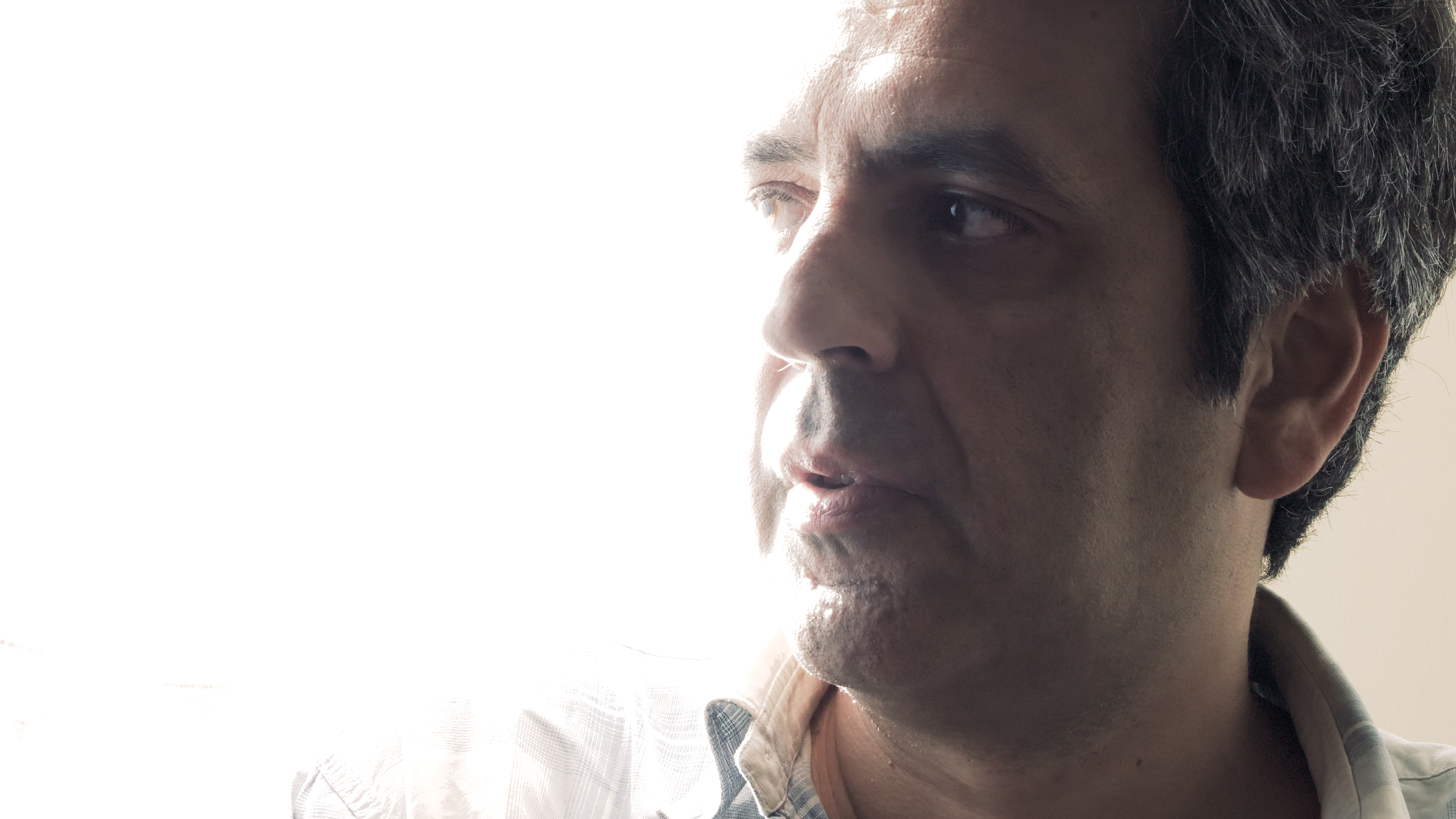
Drama, thriller, by Fabio Del Greco, Italy, 2019.
Someone wants to control the life of the employee Giuseppe Russo: the products he buys, his political and religious faith, his private life, even his dreams. But he will do anything to escape control and find his true self. Giuseppe is a man of around 45, married, with a stable job and a home of his own. His life flows seemingly peacefully when he meets a mysterious tramp who gives him some old VHS video cassettes. Giuseppe begins to see video tapes in which he is filmed in some moments of his life since he was a child, then as a teenager and as a young man. Who shot those videos that he remembers nothing about? Giuseppe has the strange sensation of being constantly observed and begins to investigate what is happening. Through his investigation of him, he begins to rediscover his true identity and become aware of who he truly is.
Employee's Mystery is a film that highlights the danger of social control and shows a society where everyone is constantly monitored and conditioned in their deepest selves. The film is also an analysis of human nature and identity. Fabio Del Greco, who plays Giuseppe, gives an engaging performance. Equally good is Chiara Pavoni, in the role of Giada Rubin and Roberto Pensa in the role of the tramp. Employee's Mystery is a film that addresses important themes in an original way, a psychological thriller that keeps the viewer glued to the screen until the end: a metaphor for contemporary society, in which people are increasingly monitored and conditioned by the media and technologies . It is a courageous and provocative work, which addresses important themes in an original way.
LANGUAGE: Italian
SUBTITLES: English, Spanish, French, German, Portuguese
Mulholland Drive (2001)
![Mulholland Drive (2001) Official HD Trailer [1080p]](https://blog.indiecinema.co/wp-content/plugins/wp-youtube-lyte/lyteCache.php?origThumbUrl=https%3A%2F%2Fi.ytimg.com%2Fvi%2FXQ5Q0CHQ0EU%2F0.jpg)
Mulholland Drive” is a 2001 film directed by David Lynch. Considered one of the director’s masterpieces, the film belongs to the genres of psychological thriller, mystery and drama, characterized by the typical surreal and dreamlike atmosphere that distinguishes Lynch’s works. The plot follows the story of a young woman with no memory, played by Naomi Watts, who is found injured and in a daze on the street of Mulholland Drive in Los Angeles. The woman is renamed “Rita” after seeing a poster for the film “Gilda” starring Rita Hayworth. Looking for help, Rita takes refuge in the apartment of Betty Elms (again played by Naomi Watts), an aspiring actress who has come to Los Angeles to seek her fortune.
Together, Betty and Rita try to discover the identity of the injured woman and the reason for her involvement in a mysterious murder story. During the research, a series of enigmatic events and encounters with strange and disturbing characters follow one another, leaving room for a multiplicity of interpretations and meanings. “Mulholland Drive” is known for its complex and non-linear plot, which winds its way between reality and dream, between light and darkness, challenging the viewer to navigate different time planes and seemingly disconnected scenes. The film uses David Lynch’s signature disturbing visuals and haunting soundtrack, helping to create an enveloping and hypnotic atmosphere.
The Fountain (2006)

The Fountain” is a 2006 film written and directed by Darren Aronofsky. This film fits into the genres of drama, science fiction and philosophy, and is known for its non-linear storytelling and the existential and metaphysical themes it addresses.
The film’s plot revolves around three interconnected timelines that follow three main characters:
- In the 16th century, Spanish conquistador Tomas Verde (played by Hugh Jackman) sets out on a quest to find the Tree of Life, believing it could grant Queen Isabella (played by Rachel Weisz) immortality.
- In the 21st century, Tommy Creo (again played by Hugh Jackman) is a brilliant scientist who seeks a cure for the cancer of his beloved wife, Izzi (again played by Rachel Weisz), who is dying. Izzi, meanwhile, is writing a story called “The Fountain,” which reflects themes of immortality and rebirth.
- In the distant future, a man nicknamed “Bubbolo” (again played by Hugh Jackman) travels through space with a tree containing Izzi’s DNA, hoping to plant it on a dying planet to give life to a new tree.
The three plots intertwine between past, present and future, and chase each other through themes of love, death, rebirth and acceptance of the finiteness of life. The film explores the quest for eternal life and the human struggle against death, offering a philosophical reflection on the nature of existence and mortality. The Fountain” was praised for its artistic vision, performances by Hugh Jackman and Rachel Weisz, and emotionally engaging score by Clint Mansell. However, the film was met with mixed reactions from critics and audiences, due in part to its intricate plot and the complex themes it tackles. Over time, the film has gained a passionate following of fans who appreciate its philosophical depth and unique aesthetic.
Synecdoche, New York (2008)

‘Synecdoche, New York’ is a 2008 film written and directed by Charlie Kaufman, known for its complex storylines and deep existential themes. This film belongs to the drama genre and is distinguished by its surreal and metaphysical nature. The plot follows the life of Caden Cotard, played by Philip Seymour Hoffman, a hypochondriac and insecure theater director living in Schenectady, upstate New York. After winning a major arts grant, Caden decides to stage an epic and ambitious play. The production becomes an ever-evolving portrayal of her life, involving an ever-expanding cast of characters playing the real people in her life.
The film explores themes of identity, creativity, human relationships, the effect of time on life and the very nature of art. The line between fiction and reality becomes increasingly blurred as the line between Caden’s play and his personal life blurs, leading to a loss of sense of reality itself. “Synecdoche, New York” uses a surreal setting and an enigmatic narrative, which unfolds in an intricate and engaging way. The film is known for its philosophical depth and the multiple interpretations it can elicit. Philip Seymour Hoffman‘s performance was particularly praised and helped make the film an immersive and intense experience for audiences.
Enter the Void (2009)

Enter the Void” is a 2009 film written and directed by Gaspar Noé, an Argentine director known for his bold and provocative style. The film is a visual and psychedelic experience, and fits into the genres of drama, psychological thriller and science fiction. The story follows the life of Oscar, played by Nathaniel Brown, a young American drug addict who lives in Tokyo, together with his sister Linda, played by Paz de la Huerta. Oscar is involved in drug trafficking and, following a police raid, finds himself trapped in a bathroom with a lethal dose of drugs. As he dies, his consciousness seems to detach from his body and he becomes a spectator of the world around him.
From this point on, much of the film is presented through the subjective point of view of Oscar’s consciousness traveling between the worlds of the living and the dead. The camera moves through spaces and places in a fluid and disjointed way, creating an intense and hypnotic viewing experience. Enter the Void” explores themes of death, reincarnation, spirituality and the concept of karma. The film deals with the perception of life and death in an experimental and provocative way, challenging narrative conventions and taking viewers on a psychedelic and hallucinatory journey.
Mr. Nobody (2009)

Mr. Nobody” is a 2009 film directed by Jaco Van Dormael, the same director of “The Eighth Day” (1996) mentioned above. This film belongs to the genres of drama, science fiction and romance, and is known for its narrative complexity and philosophical reflections on life and choices.
The story takes place in a dystopian future where the discovery of immortality has led to the existence of a man named Nemo Nobody, played by Jared Leto, the last mortal human on Earth. The man is elderly and is trying to tell his story and his life choices to a journalist. However, his memory is fragmented and uncertain, and so Nemo begins to tell different versions of his life, each of which is based on different choices he could have made in the past.
The film explores the concept of infinite possibilities and the different branches of life that open up as a result of the choices we make. Each version of Nemo’s story is an alternate reality, and the film illustrates what his life might have been like if he had made different choices in love, career, and family. Mr. Nobody” is an exciting journey through time and space, in which the past, present and future intertwine, leading to a profound reflection on existence, memory and the ephemeral nature of human life.
The Fifth Season (2012)

In a small town in the Ardennes lives a community that is about to celebrate the end of winter with a traditional bonfire. A boy and a girl are discovering love and desire. Pol, a nomadic beekeeper, also arrives in the village and settles in the center of the village in his trailer, together with his disabled son. The joy of the party vanishes when a strange event occurs, interpreted by the villagers as a bad omen: the fire of the stake does not light. The village quickly becomes a wasteland, nature seems to have gone mad. Pol’s bees disappear, the soil no longer bears fruit, the trees die and fall.
Are we truly free and can man follow his wishes, whatever they may be? According to the esoteric tradition this is not the case. The universe is a hierarchical universe, we could call it military. The universe exists within a matrix, and every existing form is controlled by this matrix. Concept told in a banal and spectacular way, with one dystopian and negative vision, in the famous film Matrix. In reality, the matrix of which esotericism speaks has nothing negative: it is a mathematical structure.
A vision curated by a filmmaker, not an algorithm
In this video I explain our vision

