
The Body as a Battlefield You Were Never Taught to Read
You know the moment. You have been running on four hours of sleep for six weeks, skipping lunches, breathing recycled office air, telling yourself you will rest when the project is done. Then one morning you wake up with a throat that feels lined with gravel, a heaviness behind the eyes, a fever creeping in like a slow tide. And your first thought, almost invariably, is: where did I pick this up? You run through the contacts, the crowded subway, the colleague who was sniffling last Tuesday. You locate the enemy outside yourself. You take something for the fever, something for the throat, and you wait for the invasion to pass.

This is not ignorance. It is a deeply installed cultural reflex, one that has been shaping Western medical imagination since Louis Pasteur formalized germ theory in the 1860s and Robert Koch established his postulates by 1884. The framework is elegant in its clarity: a pathogen enters, the body resists or succumbs, medicine intervenes. External cause, internal victim. The war metaphor wrote itself, and it has been so useful, so productive in its way, that questioning it feels almost eccentric. And yet there is a man sitting in a fluorescent-lit office right now, somewhere in any city you care to name, who has not taken a sick day in three years, who prides himself on this, who feels the tightening in his chest every afternoon around four o’clock and interprets it as something requiring only more coffee. His body has been sending signals for months with the patience of a very good teacher. He has been systematically grading them as irrelevant.
Georges Canguilhem, writing in 1943 in what would become one of the most quietly radical texts in the philosophy of medicine, argued that illness is not simply the intrusion of something foreign into a neutral body. In “The Normal and the Pathological,” he proposed that health is the organism’s capacity to establish its own norms, to adapt, to remain sovereign over its internal environment. Disease, then, is not primarily an invasion. It is a collapse of normative capacity, a moment when the organism can no longer set the terms of its own functioning. The enemy, in this reading, is not outside the gates. The gates themselves have lost their coherence.
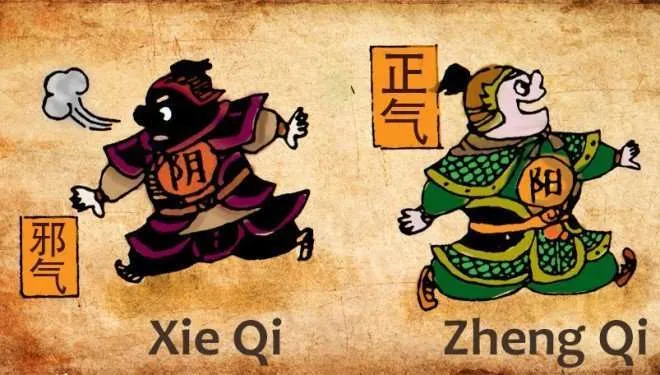
Chinese medicine arrived at something structurally similar through an entirely different cartography, one that has been developing continuously since at least the compilation of the Huangdi Neijing, the Yellow Emperor’s Classic of Internal Medicine, somewhere between the second century BCE and the first century CE. At the center of its understanding of immunity — though that word flattens what is meant — sits the concept of Zheng Qi: upright energy, correct energy, the sovereign vitality that organizes and animates the body’s capacity to remain itself in the face of everything that would destabilize it. The classical formulation is as precise as it is demanding: when Zheng Qi is strong within, external pathogens cannot penetrate. The Cold, the Wind, the Damp, the Heat — these are real forces, environmental realities that classical Chinese medicine describes with a specificity that took centuries to refine. But they are understood as opportunistic, not omnipotent. They enter where coherence has already begun to fail.
This is not a metaphor designed to shift blame onto the sick. It is something more uncomfortable than blame. It is the suggestion that the body you inhabit has a kind of intelligence you were never taught to consult, and that the exhausted man under fluorescent light, the woman who catches every virus that passes through her office in November, are not simply unlucky. They are depleted in ways that run deeper than a vitamin deficiency or a poor night’s sleep, depleted in ways that the germ-theory framework, for all its power, was never designed to see.
Zheng Qi and the Architecture of Inner Sovereignty
There is a woman who has not been truly sick in the clinical sense — no diagnosis, no pathogen anyone can name — and yet she cannot get well. Every autumn she loses three weeks to something the doctors call viral, something that lingers past its welcome, that sits in her chest like a tenant who has stopped paying rent but refuses to leave. She sleeps nine hours and wakes exhausted. She takes the supplements, tracks the metrics, optimizes the morning routine. And still, come November, she is flat on her back staring at the ceiling, wondering why her body keeps failing her when she has done everything right.
The Huangdi Neijing, assembled and codified around the second century BCE, would not have found her situation puzzling at all. The text is precise where modern medicine grows vague: when upright energy is stored within, pathogens have no way to invade. The word stored here is doing enormous philosophical work that a casual reading destroys. It does not mean accumulated, does not mean hoarded, does not point toward some quantifiable reserve one might top up with the right protocol. Zheng Qi — upright energy, righteous energy, the body’s capacity to maintain its own coherent order — is stored in the way a river is contained by its banks. Not imprisoned. Not stockpiled. Simply present in its proper form, moving in its proper direction, oriented. When the Neijing speaks of Zheng Qi being held within, it is describing a state of internal sovereignty: the organism’s ability to remain itself under pressure, to distinguish self from not-self not through combat but through the integrity of its own organization.
Paul Unschuld, in his landmark 1985 study Medicine in China: A History of Ideas, drew a line that Western readers often miss between two fundamentally different medical cosmologies. Western immunology, he argued, inherited its conceptual architecture from a military tradition — the body as territory, pathogens as invaders, white blood cells as troops mobilized for defense. The language is not incidental. It shapes what practitioners look for, what they treat, what they consider victory. The Chinese classical tradition, by contrast, conceived of health not as the outcome of successful warfare but as the natural consequence of internal harmony. The pathogen is not primarily an enemy to be destroyed but a condition that becomes possible only when the inner order has already been compromised. The external agent finds purchase because something has already loosened from within. This is not a semantic difference. It is a difference in where you look for the cause.
Byung-Chul Han, writing in The Burnout Society in 2010, diagnosed a contemporary civilization that has largely ceased to be threatened by external enemies in the old immunological sense and has become instead a society of auto-aggression. The achievement-subject — his term for the modern individual who has internalized the imperative of limitless self-optimization — does not collapse under oppression. There is no oppressor to resist, no pathogen to name. The achievement-subject destroys themselves through freedom, through the compulsive expenditure of the very self that was supposed to be expressed. Han was writing about psychology and political philosophy, but he was, without knowing it, describing exactly what the Neijing meant by the depletion of Zheng Qi through misuse of will.
The woman staring at her ceiling in November has not been invaded. She has been spending. Every day for years she has paid a tax levied by structures that were not built with her coherence in mind — meetings that required her to be someone adjacent to herself, systems that rewarded her performance of productivity over her actual capacity, a relentless demand to be legible, optimized, available. Her Zheng Qi has not been overcome by a pathogen. It has been disbursed, daily, in small denominations, until there was not enough left to hold the banks.

What Drains the Upright: The Social Pathogens No One Names
There is a man who has not slept past five in the morning in three years. He lies in his apartment — the city outside making its low, constant noise — and watches the ceiling with the focused attention of someone waiting for a verdict. He is not anxious about anything specific. That is the part he cannot explain to anyone. There is no identifiable threat. There is only the body, awake and braced, running its emergency protocols in the absence of any emergency.
Somewhere else, a woman eats standing at the kitchen sink. Not because she is rushed, exactly, but because sitting down at a table would require acknowledging that this is a meal, that she is a person having one, that the day contains something other than productivity. She finishes and rinses the bowl before she has fully registered what she tasted. The body received calories. Nothing else was fed.
And there is another person — a man in his forties, well-liked at work, described by everyone as steady — who realizes one afternoon that he cannot remember the last time he cried. Not that he suppressed it. Simply that the occasion never arose. He searches his recent years the way you search for a word you knew yesterday, and finds only a smooth surface where something used to be.
These are not pathologies in the clinical sense. They are the ambient conditions of a particular way of living, so normalized that naming them as causes of illness feels almost melodramatic. But the Huangdi Neijing — compiled over centuries and reaching its foundational form around the second century BCE — named them with precise clarity. Its five pillars of Zheng Qi nourishment are not mystical prescriptions; they are structural requirements. Diet aligned with seasonal rhythms. Sleep that honors the body’s relationship to light and dark. Emotional equilibrium — not the suppression of feeling, but its fluid movement through and out of the system. Moderate, purposeful physical movement. And meaningful social connection, which the classical texts understood as something categorically different from proximity to other people. Each of these has been systematically dismantled by the architecture of post-industrial life, not through malice but through indifference to anything that cannot be measured as output.
Gabor Maté, in his 2003 work When the Body Says No, documented what happens at that intersection with a specificity that classical medicine had intuited but biomedicine had long avoided. The physiological cost of chronic emotional suppression is not metaphorical. The same neuroendocrine pathways that process social threat and unmet emotional need are the ones that regulate immune function, inflammatory response, and cellular repair. When a person repeatedly overrides the body’s signals — works through exhaustion, smiles through grief, maintains composure at the expense of honest response — the body does not neutralize those signals. It metabolizes them as threat. The cortisol keeps circulating. The inflammatory markers stay elevated. The Wei Qi, that first layer of adaptive defense, operates in a state of perpetual low-grade alarm, and like any system running continuously without rest, it degrades.
The social demand for self-performance is perhaps the most insidious of these drains because it disguises itself as virtue. Resilience. Professionalism. Emotional maturity. The person who never burdens others, who is always available, who processes their difficulties quietly and alone — this person is praised. They are also, as Maté’s clinical record shows, significantly more vulnerable to autoimmune disease, to the cancers associated with chronic stress, to the collapse that arrives not as drama but as a quiet systemic failure, a body that has been saying no for years in a language no one taught anyone to hear.
The Neijing understood that the boundary between self and world must be maintained not through armoring but through responsiveness — through a system supple enough to meet what arrives and release what no longer belongs inside.
Nourishment as Resistance: The Practices That Restore Coherence

There is a particular kind of discomfort that arrives when a person sits down and does nothing for the first time in decades. Not meditation, not breathwork with an instructor counting seconds, not a guided visualization through forest sounds — simply sitting. A man in his late sixties, retired from something that consumed him entirely, lowers himself into a chair by a window. No phone. No purpose assigned to the next twenty minutes. And within thirty seconds, something in him begins to panic. Not dramatically. Quietly. A restlessness that feels like an itch located nowhere specific, a pressure that rises from the chest without a name. He does not know it yet, but he is meeting his own interior for the first time in years, and it is not welcoming him warmly.
Classical Chinese medicine would recognize this moment precisely. It would not diagnose the discomfort as a psychological problem or a symptom of anxiety disorder. It would read it as the body’s signal that its relationship with its own qi has become estranged — that the individual has been living so relentlessly in expenditure that the capacity for reception has atrophied. The restoration of Zheng Qi is not, in this framework, a matter of adding supplements to a depleted system. It is a matter of recovering an original coherence that was always present but has been buried under the accumulated weight of misaligned living. Ted Kaptchuk, whose 1983 work The Web That Has No Weaver remains the most rigorous and intellectually honest translation of Chinese medical thinking for Western readers, is careful to articulate exactly this: the medicine does not operate through the logic of deficiency and replacement, as Western biomedicine tends to, but through the logic of pattern and restoration. You are not building something new. You are remembering something that was always structurally yours.
The practices that classical medicine prescribes for tonifying Zheng Qi are inseparable from this logic. They are not interventions so much as alignments. Eating congee in winter is not a dietary recommendation in the way a caloric calculation is — it is a gesture of coherence with the season’s qi, a way of asking the digestive fire, the middle burner in classical terms, to work gently rather than wrestle against dense cold food. Astragalus root, known as huang qi, has been used for centuries specifically to support the wei qi, the defensive boundary at the body’s surface, and modern immunological research has found measurable effects on cytokine activity that do not exactly translate the classical concept but do not contradict it either. Jujube dates and ginger appear throughout classical formulas not as flavors but as carriers of specific qualities — warmth that enters particular meridians, sweetness that supports the earth element associated with digestion and what the tradition calls the capacity to receive. The meridian logic underlying acupuncture treatment operates on the same principle: the needle does not insert something foreign but redirects what is already moving, clearing obstruction so that the body’s own intelligence can resume its work.
And then there is shen — the spirit or mind, housed in the heart, governing clarity and presence. Its nourishment is the most counterintuitive of all, because it cannot be pursued. Simone Weil, writing in the early 1950s in Waiting for God, described attention as the rarest and purest form of generosity — a capacity to be fully present to what exists without immediately converting it into use, without making it serve a purpose. She was writing about prayer, but the description maps with uncanny precision onto what Chinese medicine calls the conditions necessary for shen to settle. The man by the window, sitting in his unnamed discomfort, is not wasting time. He is, for the first time in a long while, doing the one thing that might actually allow his Zheng Qi to reorient itself — learning to receive his own existence without immediately spending it.
The Pathogen Was Always Secondary
There is a moment, sometimes in early November, when the light changes in a way that cannot be explained by the calendar alone. A woman stands at her kitchen window holding a cup of tea that has gone cold without her noticing. Outside, the trees have completed their release. She watches a neighbor walk past below, hunched into a coat, and she feels something she cannot name — not sadness exactly, not longing, but a kind of interior weather, a pressure that has been building for weeks and that she has been expertly, habitually, ignoring. She notices, perhaps for the first time in months, that her chest feels tight. That she is bracing. That she has been bracing for a very long time, as though the body were anticipating something it had decided, without consulting her, was inevitable.
She has not caught anything yet. But something in her knows she is about to.
The entire edifice of modern medicine has been constructed around a different story — one in which the body is a territory, the pathogen is an invader, and health is the successful repulsion of external threat. Michel Foucault traced this architecture with unsettling precision in his 1963 work, showing how the clinic transformed the body into a legible object of surveillance and intervention, a site where disease could be located, named, and excised. This was not merely a medical development. It was a political one. The body that is perpetually at risk from the outside requires management from the outside. It becomes dependent on expertise, on institutions, on the authority of those who can read its signs better than it can read itself. The interior conditions that made it vulnerable in the first place vanish from the frame.
What vanishes with them is responsibility of a particular and uncomfortable kind.
In 1994, the immunologist Polly Matzinger published a paper that disturbed the foundations of immunological orthodoxy. The dominant theory had held that the immune system’s organizing principle was the distinction between self and non-self — that it attacked what was foreign and tolerated what belonged. Matzinger’s danger model proposed something stranger and more intimate: that the immune system responds not primarily to foreignness, but to damage signals emitted by the body’s own tissues. It is not the stranger at the gate who triggers the alarm. It is the distress call from within. The immune system, in this reading, is listening not to the outside world but to the interior one, waiting not for invasion but for evidence that something at home has already gone wrong.
Classical Chinese medicine had been saying something structurally identical for two thousand years, in a language that Western science spent centuries dismissing as metaphor.
When Zheng Qi is abundant — when the body’s upright energy is rooted, the circulation unobstructed, the organs in coherent relationship with one another — pathogens pass through like weather through an open landscape, leaving little trace. When it is depleted, when the interior has been eroded by grief held without outlet, or sleep refused in favor of productivity, or food consumed without presence, or connection performed without genuine contact, then the body sends out its distress signals and the pathogen finds purchase. The external agent was never the primary story. It was the condition of arrival that wrote the outcome.
The woman at the window has not yet moved. The tea is cold in her hands and she is standing at the threshold of something she does not have a name for — not illness, not recovery, but the more frightening territory between them, where the question is no longer what entered her from outside, but what she has been allowing to erode from within, and what it would cost, and what it would free, to finally stop.
A vision curated by a filmmaker, not an algorithm
In this video I explain our vision
🌿 Ancient Energies, Living Wisdom
The concept of Zheng Qi, or Upright Energy, is deeply rooted in a worldview where the body, spirit, and cosmos are inseparable. Across traditions and centuries, thinkers and healers have mapped the invisible forces that animate human life. These related articles invite you to explore the broader landscape of energetic medicine, subtle anatomy, and the philosophy of vital force.
Vital Breath: if Your Qi is Blocked, Weak, or Scattered
Qi is the fundamental breath that sustains all life in Chinese medicine and cosmology, yet its quality is never guaranteed. When vital energy becomes blocked, depleted, or dispersed, the entire organism suffers in ways that modern diagnostics often fail to detect. This article explores how to recognize the signs of disrupted Qi and restore its natural flow before illness takes hold.
GO TO THE SELECTION: Vital Breath: if Your Qi is Blocked, Weak, or Scattered
The Dance of Yin and Yang: Harmony Between Opposing Forces
The interplay of Yin and Yang forms the very foundation upon which Zheng Qi operates within the human body. Understanding how opposing forces seek balance — darkness and light, rest and activity, contraction and expansion — is essential to grasping why upright energy can be cultivated or lost. This article illuminates the dynamic dance at the heart of Chinese cosmological thought.
GO TO THE SELECTION: The Dance of Yin and Yang: Harmony Between Opposing Forces
The 12 Energetic Channels: The Secret Map of Meridians in Body
The meridian system is the hidden architecture through which Zheng Qi travels, nourishing organs, limbs, and spirit alike. Without understanding these twelve energetic channels, any attempt to protect against external pathogens remains incomplete. This article offers a detailed map of the body’s invisible pathways and explains how each channel contributes to overall vitality and resilience.
GO TO THE SELECTION: The 12 Energetic Channels: The Secret Map of Meridians in Body
Anthroposophic Medicine: Healing the Body through the Spirit
Anthroposophic Medicine, developed by Rudolf Steiner, shares a striking resonance with Chinese energetic medicine in its insistence that healing must address spiritual and vital dimensions beyond the purely physical. Like the concept of Zheng Qi, it posits that a healthy life force is the body’s first and most essential defense. This article explores how Western esoteric science arrived at conclusions remarkably parallel to those of ancient Eastern healing traditions.
GO TO THE SELECTION: Anthroposophic Medicine: Healing the Body through the Spirit
Discover Cinema That Explores the Invisible
If these reflections on vital energy and inner wisdom have stirred your curiosity, Indiecinema streaming offers a carefully curated selection of independent films that dare to explore consciousness, healing, and the mysteries of the human spirit. Step beyond the mainstream and discover cinema that nourishes the mind just as Zheng Qi nourishes the body.
👉 EXPLORE THE CATALOG: Watch Indie Films in Streaming
A vision curated by a filmmaker, not an algorithm
In this video I explain our vision

