
The Body That Won’t Move Forward
There is a particular kind of morning that arrives sometime in March or April, when the light has already shifted and something in the air smells faintly of wet earth and green beginnings, and you wake up with your jaw already clenched. Not tired exactly. Not sick. But immovable in a way that has no clean explanation. The birds are doing what birds do at that hour, which is everything all at once, and the world outside the window is visibly accelerating, and you lie there feeling the pressure of it like a hand on your chest. You have things to do. You have wanted, for months, to do them. And yet the body refuses in a way that isn’t laziness and isn’t fear and isn’t quite depression — it’s something older and more physical, something that sits just beneath the sternum and behind the eyes, a tightness that makes even breathing feel like an argument.

This is not a metaphor. This is a symptom.
What Chinese medicine identified thousands of years ago, and what Western clinical practice is only now beginning to triangulate from different angles, is that spring is not simply a season of renewal in the poetic sense. It is a season of metabolic demand. The body is asked to do something specific: to change direction, to initiate, to push upward and outward after months of inward contraction. And if the system responsible for that movement — what classical Chinese medicine calls the Wood element, centered in the liver and gallbladder — is constrained, congested, or simply depleted, the result is not a gentle fatigue. It is a particular kind of internal violence. A pressure with nowhere to go.
The Huangdi Neijing, the foundational classical text of Chinese medicine compiled across several centuries and reaching something close to its canonical form around the second century BCE, describes the liver as the organ of planning and vision, the general who sees the strategy whole. The gallbladder, its paired organ, is described as the organ of decision — the one who executes. When these two are flowing freely, a person moves through their life with a quality the classical texts call shū chàng: smooth spreading, unobstructed. When they are blocked, the same person becomes what the texts call gān yù — liver constraint — which manifests not as collapse but as explosion contained within a body that cannot release it. Irritability without clear cause. A rage that comes from nowhere and embarrasses you afterward. Headaches that start at the temples and move. A tightness under the right ribcage that no one can find a reason for. The sensation of being on the verge of something indefinitely.
What makes this particularly interesting, and particularly difficult to dismiss as cultural artifact or metaphor, is the degree to which modern hepatology and endocrinology are independently arriving at adjacent descriptions. The liver, in biomedical terms, is the organ most responsible for metabolic flexibility — for the body’s capacity to shift between states, to process and clear, to regulate the hormones that govern mood and energy and forward motion. When it is under stress, whether from inflammatory load, disrupted circadian rhythm, or the accumulated residue of a sedentary winter, the downstream effects look remarkably like what the classical texts described: emotional volatility, decisional paralysis, the feeling of pressure without outlet.
The person lying in that April bed, jaw tight, watching the light move across the ceiling, is not imagining something. They are not being dramatic or resistant or spiritually blocked in some vague self-help sense. Their body is caught in a specific physiological bind that has a name, a mechanism, and a season — and that season, with its particular cruelty, is precisely the one demanding they move.
The Body That Won’t Move Forward
There is a particular kind of morning that arrives sometime in March or early April, when the light has shifted unmistakably and something in the air carries a charge you cannot name. You wake before the alarm. Not refreshed — wired, almost agitated, as if some internal pressure valve has been slowly tightening through the night. The birds are already unreasonably loud. The window shows a sky that is doing everything right: pale blue, soft clouds, the first serious warmth pressing against the glass. And yet you lie there, unable to move. Not tired. Not sad, exactly. Something more frustrating than either of those — a kind of inner gridlock, a force pushing from somewhere deep inside that hits a wall before it can become anything useful. You think about the things you meant to start weeks ago. The project. The conversation you keep postponing. The life adjustment you have been circling like a dog that cannot settle. The season is moving. Everything outside is moving. You are not.
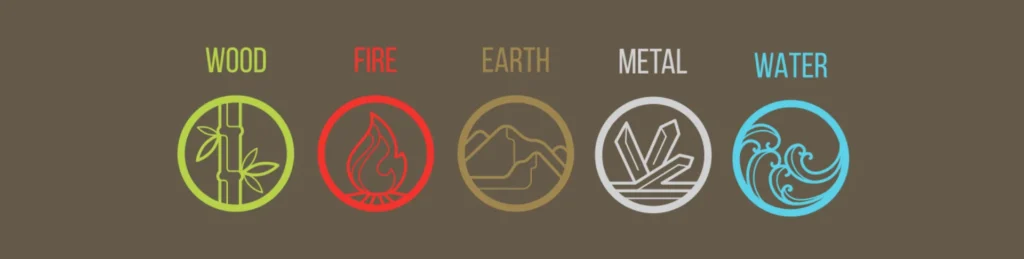
This experience is so common it has almost become invisible, absorbed into the background noise of modern life as simple stress or winter’s lingering hangover. But the body registering something that specific — that particular combination of inner pressure, irritability without clear object, and a frustrated inability to initiate — is not random. It is seasonal in a way that goes much deeper than mood. The ancient Chinese medical tradition, which spent thousands of years mapping the correspondence between natural cycles and the body’s interior landscape, identified this precise constellation of sensations as the signature of a specific energetic disturbance. Spring, in that framework, is the territory of the Wood element. And the Wood element is inseparable from the liver.
This is not the liver of hospital blood panels and dietary warnings, though it includes that organ and its measurable functions. This is the liver understood as a system of movement — the great planner, as classical texts call it, the organ responsible for the smooth flow of qi throughout the entire body. When that flow is unobstructed, you wake in spring feeling what the season actually promises: vision, drive, the clean forward momentum of something that has been compressed all winter and is now genuinely ready to extend. When it is obstructed, you get the other version. The pressure without direction. The irritability that snaps at small things because it cannot reach the large ones. The strange paralysis that visits people at precisely the moment the world seems most insistently to demand their expansion.
The physician and scholar Claude Larre, who spent decades translating the foundational texts of Chinese medicine into European intellectual frameworks, described the liver’s function as resembling a general who knows the terrain and sets the strategy. Not the force itself, but the intelligence that directs force. When that general is compromised — frustrated, blocked, working against resistance — the army does not simply stop. It turns inward. The pressure has nowhere to go, so it pressurizes the system itself. This is why liver qi stagnation, as it is technically named, does not produce emptiness. It produces a very specific kind of fullness that cannot discharge. Tension in the jaw. Tightness under the ribs. Dreams that are vivid and exhausting, full of unresolvable action. A temper that surprises even the person feeling it.
What is striking is how precisely this maps onto what millions of people in the Northern Hemisphere experience every spring without any framework to understand it. The season that biologically and symbolically insists on forward movement arrives, and a significant portion of human beings meet it feeling exactly like a river hitting a dam — powerful, frustrated, and going nowhere they intended.

What the Liver Holds That the Mind Refuses to Name
There is a man who has planned the same project for eleven years. He knows every detail of it — the sequence of steps, the resources required, the precise moment he would begin. He has told almost no one. The plan lives in him like a clenched fist inside his chest, never opening, never releasing, simply held there with a kind of furious tenderness. He is not lazy. He is not afraid of failure in any ordinary sense. Something in him simply will not move, and he cannot explain why, because the blockage has no name he recognizes from his own vocabulary.
Classical Chinese medicine would have recognized him immediately. In the tradition that coalesced through texts like the Huangdi Neijing, composed over centuries and consolidated roughly during the Han dynasty, the liver is not merely a detoxifying organ but the seat of the hun, the ethereal soul that carries vision, direction, and the capacity to project oneself forward into time. The Wood element, to which the liver belongs, governs what the classical physicians called the zhi of movement — not willpower in the Western moralistic sense, but something more biological and less punishable: the organism’s intrinsic impulse to extend, to grow, to push through resistance the way a root finds its path through compacted earth. When that impulse is blocked, the qi stagnates. The liver cannot spread its energy smoothly through the body’s meridian network, and what accumulates is not passivity but a particular kind of compressed force — something that has nowhere to go and therefore turns, slowly, against the structure that contains it.
Wilhelm Reich, working in the 1930s and articulating what he called character armoring in his 1933 work Character Analysis, described almost exactly this process in the language of somatic psychology. He observed that chronic muscular tension, particularly along the diaphragm and the lateral thorax — the anatomical territory of the liver — was not random but represented frozen emotion, vitality that the organism had learned to suppress because expressing it once carried unbearable consequences. The armor protected the person from feeling what they could not afford to feel. It also, inevitably, protected them from living.
A woman sits across from her mother at a dinner table. The conversation is ordinary, almost theatrical in its ordinariness. She smiles at the right moments. Her jaw is slightly tight. Her hands, resting on the table, are perfectly still. She has been having the same argument with this woman internally for thirty years, an argument that has never once surfaced into actual language. The rage is not dramatic. It is architectural. It has shaped her body, her schedule, her choice of profession, her difficulty sleeping between three and five in the morning — which is, not coincidentally, the liver’s peak activity window in classical Chinese circadian medicine.
What Chinese medicine mapped through centuries of clinical observation and what Reich approached through psychoanalytic dissent converged on the same recognition: suppressed forward movement does not disappear. It lodges. It becomes structure. Alexander Lowen, who extended Reich’s work into what he called bioenergetics in the 1970s, noted that the body of a person with chronic rage suppression develops a characteristic rigidity across the upper back and shoulders — a bracing, as if perpetually preparing for an impact that never comes and never quite leaves.
The liver in Chinese medicine is also called the general of the army, commanding strategy, timing, and the coordination of all other organs toward a shared direction. A general who receives no orders, who has troops but no theater of operation, does not relax. He becomes dangerous in his stillness, vigilant beyond necessity, reading threat into every neutral landscape.
That is not a metaphor for frustration. That is a physiology.
The Cultural Architecture of Stagnation
There is a particular kind of exhaustion that has nothing to do with sleep. You can feel it in the shoulders of someone sitting at a desk at two in the afternoon, the way they have contracted slightly inward, the ribcage narrowed, the breath arriving only halfway before being abandoned. It is not tiredness. It is something older than the workday, something inherited rather than accumulated.
Wilhelm Reich called it character armor — the thesis he developed through the 1930s and elaborated in “Character Analysis” published in 1933 — and what he meant was precise and devastating: the body learns to hold itself against its own impulses. The muscular tensions that form across the chest, the jaw, the pelvis, the diaphragm are not accidents of poor posture. They are the residue of suppression that became structural. The body stopped the feeling so many times that it eventually stopped needing to try. The armor does it automatically now, below the threshold of conscious decision, so efficiently that the person living inside it no longer knows what they are holding back, only that something moves differently than it should, that desire arrives muted and ambition feels faintly dangerous.
This is precisely what Chinese medicine has always located in the Liver meridian: the capacity to move outward, to project, to want without apology. When that function is suppressed long enough, the qi does not disappear. It stagnates. It turns back on itself, pressurizes, becomes the irritability that erupts at small provocations, the sighing that releases nothing, the headaches that arrive like a fist behind the eyes. The Wood element blocked is not Wood destroyed. It is Wood denied its spring.
Michel Foucault, writing in “Discipline and Punish” in 1975, documented with surgical patience how modernity built its institutions — schools, factories, barracks, hospitals — around the organization of bodies in space and time. The point was not merely control of behavior but the production of a particular kind of subject: one who had internalized the discipline so completely that external enforcement became redundant. By the time industrial capitalism had restructured daily life through the eighteenth and nineteenth centuries — pulling populations from agricultural rhythms governed by season and light into factory schedules governed by the clock and the shift bell — something was severed that had quietly organized the body for millennia. The liver, in traditional understanding, is the organ most attuned to seasonal transition. Spring was the moment of release after the contraction of winter, when movement was not only possible but biologically necessary. Industrial time abolished seasons as biological categories. Every morning became equivalent to every other morning. The body’s ancient cue to expand was simply no longer answered.
A man walks out of a room where he has been told something he cannot yet process. He does not run, does not shout, does not even change pace. He continues down the corridor with his hands at his sides, his face neutral, his chest so still it is almost architectural. Everything that happened is happening inside him, in a place that has no outlet, because he learned very early that the outlet was the problem. Somewhere in his thorax, something that should have moved became furniture.
Stagnation, understood this way, is not a personal failure of wellness or self-regulation. It is a civilizational inheritance written into the architecture of posture, transmitted through the nervous systems of parents who were themselves never permitted to move freely, encoded in the social grammar that teaches children which emotions are acceptable to embody and which must be immediately folded away. The liver does not stagnate because the individual is weak. It stagnates because the culture built walls precisely where the Wood element needed open ground.
Spring as Biological Ultimatum
There is a particular kind of exhaustion that does not come from doing too much. It comes from holding. From the sustained muscular effort of keeping something in place that has been wanting to move for months, maybe years. You see it in the jaw of someone who smiles at a meeting they despise, in the shoulders of a person who has been reasonable for so long they have forgotten what they actually want. Winter permits this. Winter is the season of contraction, of legitimate withdrawal, of gathering inward. But spring does not negotiate.
The body knows this before the mind does. Around the vernal equinox, something shifts in the liver’s metabolic rhythm that is not metaphorical but measurable — bile production increases, detoxification pathways accelerate, the organ that Chinese medicine identifies as the seat of the hun, the ethereal soul, begins processing what was stored during dormancy. Paul Pitchford, in his foundational work Healing with Whole Foods, documents how liver congestion symptoms — headaches concentrated at the temples, irritability with no apparent trigger, tendon stiffness upon waking — spike dramatically in March and April across clinical observations spanning decades. The body is attempting to move what was frozen. And if the channels are blocked, that movement has nowhere to go.
A man sits in his car in a parking garage for forty minutes after arriving home from work. His family is upstairs. He knows it. He does not go in. He is not depressed in any clinical sense — he functions, he performs, he delivers. But there is something in him that stopped flowing sometime during the previous decade, and spring has pushed it to the surface with a pressure he cannot name or resolve. This is not laziness. This is the gallbladder meridian — the paired organ of the liver in Five Element theory — failing to execute the one function it exists to perform: the translation of potential into decision. Between vision and action, the gallbladder is the organ that says yes. When it is compromised, a person can see exactly what their life requires and remain perfectly, agonizingly still.
The philosopher Henri Bergson argued in his 1907 Creative Evolution that life is fundamentally characterized by élan vital, a vital impulse that continuously seeks expression and differentiation. Suppression of that impulse is not neutral. It does not simply pause. It accumulates charge, and accumulated charge, in biological systems as in electrical ones, eventually discharges — through the body if not through will. Migraines, sudden rage disproportionate to its trigger, the eruptive breakdown that seems to come from nowhere but was clearly coming from everywhere for years. Spring is not causing these events. Spring is revealing what was already there, applying the final degree of heat to a system already under pressure.
There is a woman who, after years of managing everyone else’s emergencies with quiet competence, one morning simply does not stand up. Not from illness. From depletion so complete that the Wood element has nothing left to push against. This is the other face of stagnation — not explosion but collapse. The liver, according to Giovanni Maciocia’s clinical observations in The Foundations of Chinese Medicine, requires free flow to generate the upward, expansive movement associated with Wood. When that flow is chronically obstructed, the energy does not build indefinitely. It eventually inverts, descending rather than rising, producing not anger but its hollow opposite: resignation dressed as calm.
What spring makes unmistakably clear is that the body has been keeping score. Every suppression was noted, filed, stored in the connective tissue and the fascia and the fine musculature around the eyes. The season does not ask whether you are ready. It simply increases the pressure until something
A vision curated by a filmmaker, not an algorithm
In this video I explain our vision
The Unfinished Movement Inside Everything
There is a moment, familiar to almost anyone who has ever held something back for too long, when the body stops pretending. Not dramatically. Not with collapse or revelation. Just a subtle shift in the quality of the air inside the chest, as though something that had been held at a slight angle finally drops into its true position — and the relief is so complete, and so frightening, that the instinct is immediately to pick it back up.
Merleau-Ponty spent much of his philosophical life insisting that the body is not a vehicle the mind drives but the very medium through which we exist in the world. In the Phenomenology of Perception, published in 1945, he argued that bodily experience is not secondary to thought but constitutive of it — that we do not first think and then feel, but that feeling is already a form of knowing, and that when a movement is interrupted at the level of the body, what is interrupted is not merely physical but ontological. Something in our relationship to the world itself becomes blocked. The liver, in the language of classical Chinese medicine, governs exactly this: the smooth, continuous unfolding of movement through life — not as metaphor, but as the literal physiological and energetic architecture through which a human being encounters possibility.
What happens, then, when that unfolding is arrested? A man sits at a table across from the person he has loved for eleven years, and he knows — with the specific certainty that lives below language — that something essential has been said for the last time between them, though neither has yet spoken the words. He watches his own hands. He is not thinking about his liver. But his liver knows. The tightening beneath the right ribcage, the sudden shallowness of breath, the jaw that locks almost imperceptibly — these are not symptoms of a medical condition. They are the body registering the cost of a movement that will not be permitted to complete itself.
And this is where the Wood element’s deepest teaching becomes almost unbearable to sit with: the cost of containment is not paid once. It is paid continuously, in the ongoing metabolic expense of holding a shape that wants to change. The Nei Jing speaks of the liver as the organ of planning and vision, the general who sees the field and knows where the forces must move. When the general cannot move the forces — when the orders are countermanded by fear, by circumstance, by the slow accumulated weight of what we have told ourselves we cannot afford to feel — the army does not dissolve. It remains in formation. Exhausted. Waiting. Consuming resources that were meant for the journey forward.
A woman walks out of a building she has spent sixteen years walking into, carrying almost nothing, and the sensation she describes afterward is not freedom. It is vertigo. Because the movement she has finally allowed to complete itself had been so long interrupted that her nervous system had reorganized itself around the interruption. The stagnation had become structure. And this is perhaps the most honest thing that can be said about freeing the liver from its energetic constraint: the release is not comfortable. It does not feel like spring arriving gently. It feels, at first, like losing the only architecture you have known for so long that you forgot it was a cage.
What would it actually mean to let that movement speak — not to manage it, not to channel it into something socially legible, but to follow it to wherever it was trying to go before everything intervened — is a question the body has been asking, in its own persistent and unmetaphorical language, since the very first time you told it to wait.
🌿 Ancient Energies: Spring, Wood, and the Living Body
The Wood Element and its relationship to spring reveal a profound system of correspondence between nature, time, and the human body. To understand the Liver’s role in energetic flow, one must also explore the broader map of channels, rhythms, and vital forces that underpin traditional Chinese medicine. These related articles deepen the journey into the living architecture of Qi.
Vital Breath: if Your Qi is Blocked, Weak, or Scattered
When Qi becomes blocked, weak, or scattered, the entire body-mind system begins to lose coherence and vitality. This article explores the different qualities of disrupted vital breath and how they manifest as physical or emotional imbalance. Understanding these patterns is essential to grasping why the Liver, as the organ of free flow, plays such a central role in spring energetics.
GO TO THE SELECTION: Vital Breath: if Your Qi is Blocked, Weak, or Scattered
The 12 Energetic Channels: The Secret Map of Meridians in Body
The twelve meridians form a hidden geography through which Qi travels, nourishes, and communicates across the body’s landscape. Mapping these channels reveals how organs like the Liver and Gallbladder connect to emotions, seasons, and specific body regions through invisible yet precise pathways. This article is an essential companion for anyone seeking to understand how Wood energy moves through the body’s energetic network.
GO TO THE SELECTION: The 12 Energetic Channels: The Secret Map of Meridians in Body
The Organ Clock: Why Every Organ Has Its Time of Peak and Low Energy
Each organ in traditional Chinese medicine reaches its peak energy at a specific time of day, following the natural rhythm of the organ clock. The Liver, associated with the Wood element, governs the hours between 1 and 3 AM, a time of deep restoration and energetic renewal. Understanding this temporal map illuminates why disrupted sleep or emotional tension during these hours often signals stagnation in the Liver’s domain.
GO TO THE SELECTION: The Organ Clock: Why Every Organ Has Its Time of Peak and Low Energy
The Dance of Yin and Yang: Harmony Between Opposing Forces
The dance of Yin and Yang is at the heart of every seasonal transition, including the shift from winter’s stillness to spring’s expansive movement. The Wood element embodies the Yang impulse of growth pressing upward against the yielding Yin earth, a dynamic tension that mirrors the Liver’s need to spread Qi freely. This article offers essential philosophical grounding for understanding why balance between opposing forces is the true foundation of health.
GO TO THE SELECTION: The Dance of Yin and Yang: Harmony Between Opposing Forces
Explore the Inner Worlds on Indiecinema
If these explorations of ancient energy, living systems, and hidden forces have stirred something in you, Indiecinema is the streaming space where cinema answers back. Discover independent films that dive into consciousness, nature, healing, and the mysteries of existence — all curated for curious minds ready to see beyond the surface.
👉 EXPLORE THE CATALOG: Watch Indie Films in Streaming
A vision curated by a filmmaker, not an algorithm
In this video I explain our vision

