
The Mirror Before the Work Begins
There is a specific quality of light in a bathroom at three in the morning that exists nowhere else in human experience. It is not darkness and it is not illumination. It is something closer to exposure — the fluorescent hum of a bulb that does not flatter, does not soften, does not negotiate. You have been there. You have stood at that sink, water running or not running, and looked at the face in the mirror with the particular horror of non-recognition. Not ugliness. Not aging. Something worse: the sudden, vertiginous sense that the person looking back at you is a stranger who has been using your name, sleeping in your bed, answering to your history for longer than you can remember. The hands gripping the ceramic edge of the sink are yours. The eyes are yours. And yet.

This is not a psychological crisis. This is not insomnia’s side effect. This is, if we are willing to use a language that predates our clinical vocabularies by several centuries, the nigredo. The blackening. The first and most brutal stage of what the alchemists called the Magnum Opus — the Great Work — a process they described in the language of metals and fire but were always, underneath, describing in the language of the human soul refusing to remain as it is.
Carl Gustav Jung spent the better part of three decades mapping the alchemical tradition onto the architecture of the psyche, and the work he produced — most thoroughly in Psychology and Alchemy from 1944 and Mysterium Coniunctionis from 1955 — was not an attempt to validate medieval chemistry. It was a recognition that the alchemists had been doing something far more precise than making gold. They had been charting the phenomenology of transformation itself. The stages they named — nigredo, albedo, rubedo, with their intermediate phases and their violent reversals — described something the body already knows before the mind consents to acknowledge it. That three in the morning face in the mirror is the body’s knowledge arriving ahead of the mind’s permission.
The Magnum Opus is not a metaphor. That is the first thing to understand and the hardest to hold. It is a structure — a sequence of dissolution, purification, and integration that appears wherever genuine transformation occurs, whether in a single human life or across the arc of civilizations. It appears in the biography of a person who loses everything they believed themselves to be and must discover what remains. It appears in the history of cultures that undergo catastrophic rupture and must construct new coherence from the debris. It appears in the creative work of artists who cannot produce anything real until they have first destroyed the version of themselves that was producing something false.
What makes the framework remarkable, and what the alchemists understood with an intuition we have since buried under centuries of rationalist embarrassment, is that the process cannot be shortcut. There is no passage from lead to gold that bypasses the blackening. There is no dawn that arrives without the full weight of the dark having been sat inside. Mircea Eliade, in his 1956 study The Forge and the Crucible, traced the symbolic logic of metallurgical transformation across dozens of cultures and found the same insistence everywhere: the ore must suffer. The material must be broken down to its most formless state before anything new can be built from it.
This is what the mirror at three in the morning is showing you. Not failure. Not breakdown in the clinical sense that requires management and recovery. The beginning of something whose name you don’t yet have, whose shape you cannot yet see, whose end you cannot bargain toward. The work begins not when you decide to begin it. The work begins when you can no longer recognize yourself, and the recognition of that non-recognition is, impossibly, the first light.
Mystery of an Employee
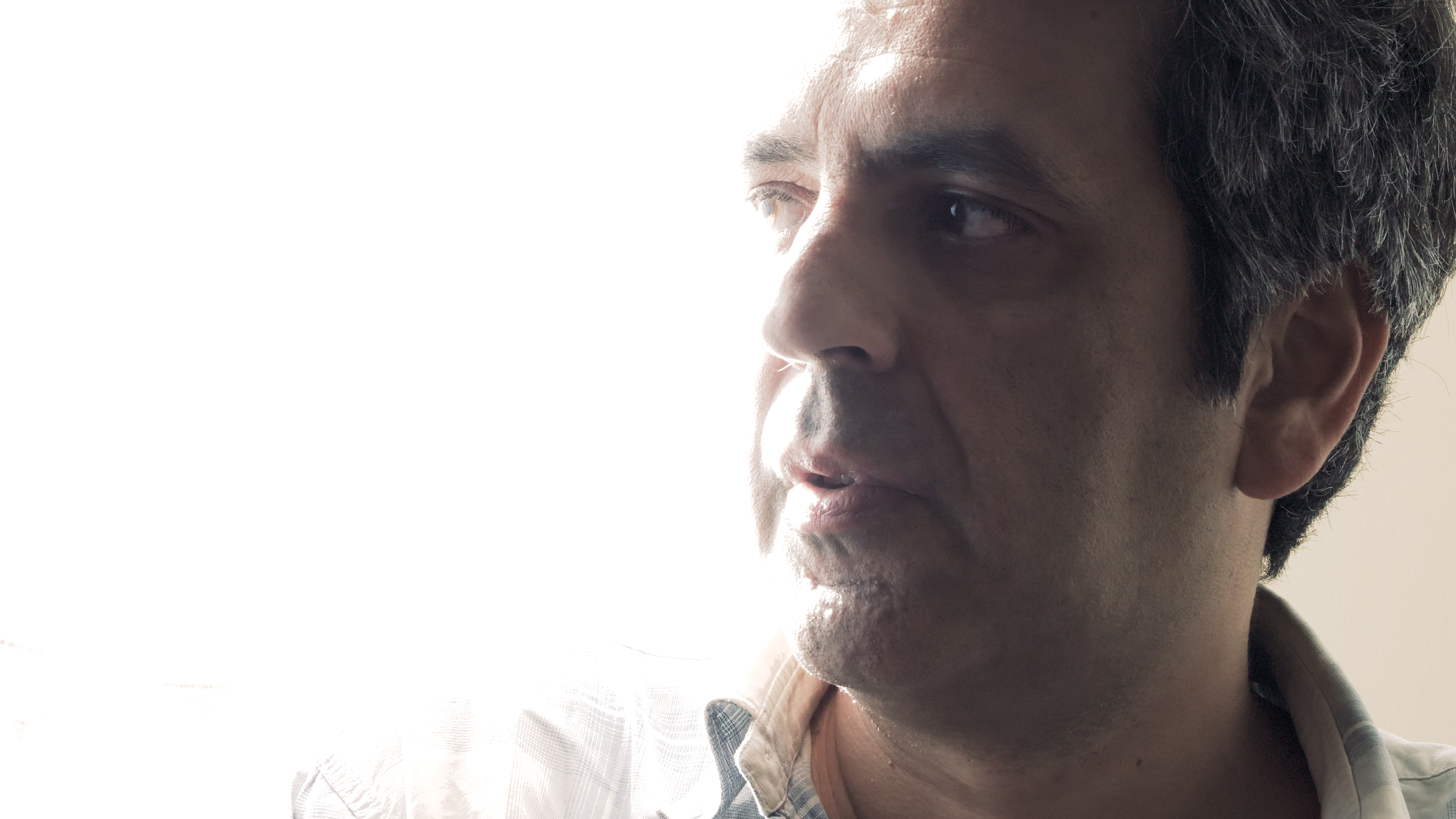
Drama, thriller, by Fabio Del Greco, Italy, 2019.
Someone wants to control the life of the employee Giuseppe Russo: the products he buys, his political and religious faith, his private life, even his dreams. But he will do anything to escape control and find his true self. Giuseppe is a man of around 45, married, with a stable job and a home of his own. His life flows seemingly peacefully when he meets a mysterious tramp who gives him some old VHS video cassettes. Giuseppe begins to see video tapes in which he is filmed in some moments of his life since he was a child, then as a teenager and as a young man. Who shot those videos that he remembers nothing about? Giuseppe has the strange sensation of being constantly observed and begins to investigate what is happening. Through his investigation of him, he begins to rediscover his true identity and become aware of who he truly is.
Employee's Mystery is a film that highlights the danger of social control and shows a society where everyone is constantly monitored and conditioned in their deepest selves. The film is also an analysis of human nature and identity. Fabio Del Greco, who plays Giuseppe, gives an engaging performance. Equally good is Chiara Pavoni, in the role of Giada Rubin and Roberto Pensa in the role of the tramp. Employee's Mystery is a film that addresses important themes in an original way, a psychological thriller that keeps the viewer glued to the screen until the end: a metaphor for contemporary society, in which people are increasingly monitored and conditioned by the media and technologies . It is a courageous and provocative work, which addresses important themes in an original way.
LANGUAGE: Italian
SUBTITLES: English, Spanish, French, German, Portuguese
Nigredo: What Putrefaction Actually Looks Like
It begins quietly, almost administratively. A man empties his apartment not in rage but in sequence — the bookshelf first, then the kitchen drawers, then the photographs still pressed behind glass. He doesn’t cry. He doesn’t explain himself to anyone watching. He moves through the rooms as though following a checklist written years ago that he is only now getting around to completing. There is no drama in it. That’s what makes it unbearable to witness. The dissolution of everything he built looks, from the outside, almost like tidying up.
This is what nigredo actually looks like. Not the romanticized breakdown, not the cinematic collapse with its swelling score, but something far more precise and far more terrible — a methodical reckoning with the hollow interior of a constructed life. The alchemists who named this phase were not being poetic. They were describing a chemical reality: that transformation cannot begin until the original substance is allowed to rot. Putrefaction is not accident. It is process.
Carl Jung, in his 1944 work Psychology and Alchemy, argued that the nigredo corresponds to what he called the confrontation with the shadow — the total complex of everything the ego has refused to integrate. Not evil in any simple moral sense, but density. Weight. The accumulated mass of disowned experience. Jung was careful to insist that this confrontation is not a spiritual event reserved for the mystically inclined. It is a psychological inevitability. Sooner or later, what has been denied presses back. The only question is whether the individual will recognize the pressure for what it is, or explain it away as circumstance, as bad luck, as someone else’s fault.
The problem is that modern culture has constructed an entire infrastructure for explaining it away. Depression becomes a neurochemical imbalance to be corrected. Burnout becomes a scheduling problem to be optimized. The marriage that has gone silent is preserved for the children, the mortgage, the appearance. The blackening is real and the systems available for interpreting it are specifically designed to prevent the interpretation from going too deep. Jung would have called this inflation in reverse — not the ego swollen with grandiosity, but the ego contracting desperately against what it cannot afford to know.
What history reveals, without sentiment, is that putrefaction at the collective scale follows precisely the same logic. The fall of Rome was not a single event but a centuries-long decomposition — the slow failure of institutions that had long since ceased to serve any living purpose, their forms maintained ritually while their substance had already vanished. The Black Death, arriving in Europe between 1347 and 1351 and killing somewhere between thirty and sixty percent of the continent’s population, did not only destroy — it dissolved the feudal structures that were already calcified beyond function. The social order that emerged from that catastrophe carried within it the first recognizable seeds of individualism, wage labor, the questioning of ecclesiastical authority. Weimar Germany, economically obliterated and culturally vertiginous, produced in its very instability an explosion of artistic and intellectual reinvention that the stable decades before it had been entirely incapable of generating.
This is not consolation. It is not an argument that suffering is secretly good or that collapse secretly serves progress. It is something more unsettling: the observation that the blackening phase cannot be skipped, only postponed, and that the postponement always makes it worse. The man emptying his apartment in silence has waited longer than he should have. The photographs behind glass, the books arranged by color rather than meaning — all of it was already a kind of taxidermy. He has been living inside a preserved thing.
What the alchemists understood, and what is almost impossible to hold in mind when you are inside it, is that the darkness has a direction.

The Lie of the Heroic Breakdown

There is a particular kind of exhaustion that arrives not with drama but with a quiet, almost polite knock. You are sitting at your desk on a Tuesday afternoon, the window light doing its usual indifferent work across the floor, and you realize you have been staring at the same sentence for forty minutes. Not thinking about it. Not blocked by it. Simply absent from it, and from yourself, in a way that feels disturbingly comfortable.
We have been told a story about this moment. The story says that what is happening is a necessary fracture, a controlled demolition of the old self to make room for something truer. The darkness, the story insists, is alchemical. It is the nigredo doing its sacred work. You are being unmade so that you can be remade. Every breakdown is secretly a breakthrough in disguise, and the disguise is suffering, and the suffering has meaning, and the meaning is yours to collect once you have endured enough of it.
It is a beautiful story. It is also, in very specific and consequential ways, a lie.
Think of a man who loses everything and rebuilds nothing. Who walks away from one life only to find himself, three years later, standing in a different kitchen with the same interior weather, the same low ceiling of feeling pressing down, the same reflexive reaching for whatever is closest when the silence gets too loud. The geography has changed. The furniture has changed. He has not. The collapse that was supposed to clarify him has simply relocated him. He moved through the fire and emerged not transformed but merely singed, carrying the same unexamined cargo in slightly more weather-beaten luggage.
This is not the story we tell about breakdown. But it is the story that happens most often.
Byung-Chul Han, writing in 2010 in what would become one of the most quietly devastating diagnoses of contemporary life, argues that the exhaustion of our era is not the exhaustion of rebellion. It is not the tiredness that comes from fighting a system. It is the tiredness that comes from performing the system so relentlessly, so internally, that the self eventually collapses under the weight of its own positivity. The burnout subject, Han writes, is not a martyr. They are an achievement machine that has simply overheated. There is no revolutionary energy in their collapse, no latent resistance waiting to be activated. The depression that follows is not a threshold. It is the system working exactly as designed, recycling the broken worker back into the same logic of performance the moment enough surface repair has been achieved.
This is a genuinely uncomfortable idea. It means that your darkness may not be heroic. It means that the collapse you experienced, or are experiencing, or are quietly approaching, may not be the universe’s way of redirecting you toward authenticity. It may simply be wear. Mechanical and unglamorous and pointing nowhere in particular.
Jung himself, who gave us much of the vocabulary we use to romanticize disintegration, was careful about something his later interpreters often softened. The individuation process has no guarantee of arrival. The confrontation with the shadow can end in integration or in identification, in the person becoming more whole or in the darkness simply becoming the new dominant persona, wearing the costume of self-knowledge without any of its actual content. A man who has named his wound does not automatically cease to be wounded by it.
The romanticization of collapse is itself a cultural product with a specific genealogy. It flatters us. It takes what is often simply a failure of structural support, a deficit of genuine rest, a chronic exposure to conditions that no human nervous system was built to sustain, and transforms it into a spiritual narrative where we are the protagonist and the suffering is the plot.
But suffering without transformation is just suffering. And the question that sits at the bottom of that Tuesday afternoon silence, the one we almost never ask ourselves honestly, is whether we are in the middle of becoming or simply in the middle of breaking.
Albedo: The Whitening That No One Warned You About
There is a particular kind of morning that arrives after the worst is over. Not a good morning, not a hopeful one — simply a morning that is neither one thing nor the other. The coffee gets made. The window gets opened. The body moves through the apartment performing its old routines, and somewhere in the middle of all this mechanical continuity, a woman sits down at the kitchen table and realizes she cannot remember what she wants. Not in a distressed way. Not even in a way that feels dramatic enough to name. She simply sits there, present and emptied, like a room whose furniture has been removed and whose walls have been freshly painted white.
This is the albedo. And nobody warned her about it.
The crisis is over. She survived it. People around her call this recovery, or progress, or getting better, and she nods because she has learned that her internal weather is not always translatable into public language. But what she is living is something far stranger than recovery. It is a suspension, a condition of almost total receptivity without any corresponding desire. She can perceive everything with a peculiar sharpness — the quality of light, the texture of silence — but she cannot orient herself inside it. There is no appetite pulling her forward. There is only presence, which is both more and less than she expected.
Marie-Louise von Franz, who spent decades excavating the symbolic architecture of alchemical texts alongside Jung, described the albedo as the lunar phase of transformation: not passive in the pejorative sense, but genuinely receptive in a way that Western consciousness has never learned to honor. In her work on the individuation process, von Franz was precise about this: the albedo is not a rest stop between destruction and construction. It is an active state of dissolution, in which the psyche becomes permeable to material it could not previously receive. The whitening is not clarity. It is the terrifying blankness that precedes form — a condition the soul must endure without collapsing it prematurely into something legible.
What Western culture does with this state is immediate and predictable: it pathologizes it. The absence of appetite gets named depression. The suspension of forward motion gets named passivity. The inability to want gets treated as a symptom rather than a stage. Pharmaceuticals arrive. Well-meaning interventions follow. And the albedo — the necessary whitening, the lunar receptivity that the alchemists understood as indispensable — gets interrupted before it can complete its function. The woman at the kitchen table gets told she should be feeling better by now.
This is not accidental. The systematic suppression of alchemical thought by the Church, accelerating from the thirteenth century onward, was never purely about theology. It was about control over transformation knowledge itself — about who had the authority to describe what happens to a human being in the process of profound change. When figures like Albertus Magnus, who died in 1280 and who had engaged with alchemical texts with genuine philosophical seriousness, were followed by institutional condemnations of the Arte, what was being erased was not mere proto-chemistry. It was an entire vocabulary for interior states that lay outside the Church’s narrative of sin, confession, and grace. Transformation that did not pass through ecclesiastical mediation was dangerous. Transformation that required silence, dissolution, and a phase of unproductive whiteness was especially so.
She finishes the coffee. She washes the cup. Outside, the city is doing everything cities do — accelerating, demanding, measuring productivity in units she no longer trusts. She is in the albedo and she does not know it, which means she is also in the peculiar position of the medieval alchemist whose texts were burned before they could be read: carrying knowledge that the surrounding culture has no framework to receive.
Emptiness as a Social Crime

There is a particular kind of panic that arrives on a Sunday afternoon when nothing is wrong. The apartment is clean, the obligations are temporarily suspended, the phone sits quiet on the table, and yet something tightens in the chest — a formless dread that feels almost indistinguishable from guilt. Most people reach for something immediately. A screen, a task, a reason to feel useful. Not because they are needed elsewhere, but because the alternative — remaining still inside that blankness — feels structurally forbidden, like trespassing on land that belongs to someone else.
This is not a private neurosis. It is a civilizational condition.
Zygmunt Bauman spent much of his later career trying to name what had happened to the self under late capitalism, and in Liquid Modernity, published in 2000, he identified something that looks almost prophetic from this distance. In a world where solid structures — stable employment, fixed identities, durable communities — have dissolved into fluid, provisional arrangements, the burden of self-construction becomes perpetual and total. There is no longer a given self to inhabit. There is only a self to be continuously assembled, performed, updated, and displayed. Identity, Bauman argued, has become a task rather than a condition. Which means that anyone who stops performing it — who falls silent, who withdraws, who allows themselves to go genuinely blank — is not resting. They are failing.
This is the cultural logic in which albedo becomes a crime.
Someone sits in a room for three days barely moving, eating almost nothing, answering no messages. Not from depression in any clinical sense, not from grief with a legible cause, but from something more elemental — a kind of interior molting, a dissolution of one self that hasn’t yet resolved into another. People who know him bring food, suggest therapists, speak in careful voices about concern. No one considers the possibility that what they are witnessing is necessary. The social apparatus surrounding him has no category for sanctioned blankness, no framework in which purposeless dissolution can be honored rather than treated. So it is diagnosed as malfunction, and the pressure to re-emerge begins almost immediately.
The data corroborates what experience already knows. The World Health Organization estimated that between 1990 and 2013, the number of people suffering from anxiety disorders or depression increased by nearly fifty percent globally — a figure that tracks with remarkable fidelity alongside the acceleration of digital connectivity, the erosion of leisure as genuine rest, and the normalization of constant self-presentation through social media. By 2019, anxiety disorders had become the most prevalent mental health condition worldwide, affecting an estimated 284 million people. These numbers are not simply evidence of individual pathology. They are the signature of a civilization that has made the interior void uninhabitable.
The philosopher Byung-Chul Han, in his 2010 work The Burnout Society, pushed this further, arguing that contemporary culture has shifted from a disciplinary society — one that says you must not — to an achievement society, one that says you can, you should, you are capable of more. The violence of the first is visible and external. The violence of the second is invisible and internal. It produces not obedience but exhaustion, not submission but collapse — and then, cruelly, treats that collapse as a personal deficiency rather than a systemic consequence.
A woman is let go from her position after years of extraordinary performance. She spends several months doing almost nothing, unable to explain why she cannot simply begin again. She is not sad exactly. She is translucent. The people around her wait for her to reassemble, suggest activities, remind her of her capabilities, unable to tolerate that what she is living through might not be failure but passage — that the whiteness she has become might be the only honest response to everything she survived to get there.
A vision curated by a filmmaker, not an algorithm
In this video I explain our vision
The Rubedo Trap: False Gold and Premature Completion
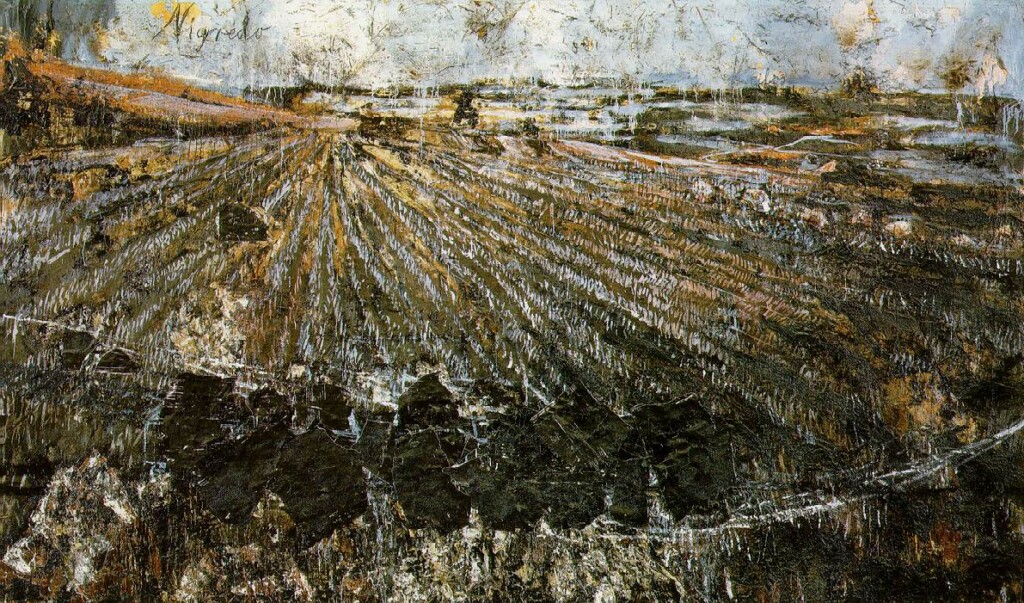
There is a man you have met. Perhaps you have been him. He comes back from somewhere difficult — a divorce, a breakdown, a period of genuine darkness he did not manufacture and cannot embellish — and he is changed. You can see it. Something in how he holds silence, how he no longer needs to fill every room with himself. For a while, the change is real and palpable and almost moving to witness. Then, slowly, almost imperceptibly, the transformation calcifies. He begins to speak about what he went through with a particular cadence, rehearsed without meaning to rehearse it. The suffering becomes a credential. The wound becomes a brand. He is no longer moving through something — he has arrived somewhere, and he will make sure you know the coordinates.
This is the rubedo trap. Not the failure to transform, but the premature declaration that transformation is complete.
The alchemists who mapped this territory with the most unsettling precision understood that the reddening phase — the rubedo, the final stage of the great work — was preceded by something they called the cauda pavonis, the peacock’s tail. It is a moment of extraordinary, blinding iridescence. Every color appears simultaneously. The material in the vessel seems to have achieved something magnificent, a dazzling plurality that suggests completion. It is precisely here that the untrained operator declares victory and removes the vessel from the heat. And precisely here that the work fails. The peacock’s tail is not the end. It is the last great seduction before the real fire begins. The colors must burn through, not be preserved. The beauty is a warning dressed as a reward.
James Hillman spent much of his career as a thinker and analyst trying to dismantle what he called the growth myth — the deeply American, deeply modern assumption that psychological work moves in a linear direction toward completion, toward a healed, integrated, finally-realized self. In Re-Visioning Psychology, published in 1975, and throughout the later work that continued to sharpen his dissent, Hillman argued that individuation in the Jungian sense was never a destination one reached and then inhabited. The soul, for Hillman, was polytheistic by nature — multiple, contradictory, never resolved into a singular narrative. The moment you believed you had individuated, you had most likely simply built a more sophisticated cage and furnished it with better metaphors.
What makes the rubedo trap so devastating is that it is built from genuine material. The man wearing his transformation as armor did suffer. The change was real. This is not performance from the beginning — it is performance that enters later, when the psyche, exhausted by genuine openness, reaches for structure. Something in us cannot tolerate indefinite becoming. We need to land somewhere, to say: this is who I am now, this is what I learned, this is the version of me that came through the fire. There is a scene that stays with you — a man who has rebuilt himself after genuine collapse, standing in a new life, new relationships, new vocabulary for himself, and yet the rigidity is identical to what came before. The content has changed entirely. The shape has not moved an inch.
The new identity is erected with the same compulsive certainty as the old one. The therapy-speak replaces the old defensiveness but performs the same function. The carefully narrated wound closes off inquiry just as effectively as denial ever did. You cannot reach him any more than you could reach him before. He has simply changed the locks and repainted the door.
Hillman’s insistence cuts here with particular force: the goal is not a self that has been completed, but a self that has learned to remain in process without being destroyed by the fact of it. The cauda pavonis is beautiful precisely because it looks like the end. That is the only reason it needs a name.
When Cultures Undergo the Opus: Three Historical Ruptures
There is a photograph — not a photograph, a memory, the kind that belongs to everyone who lived through a particular morning — of people standing in a public square, weeping and embracing strangers, their faces turned upward toward something that had not yet been named. The war was over. The rubble was still warm. And in that precise instant, before the first committee had convened, before the first treaty had been ratified, before the first brick had been laid in what would become a project of continental reconstruction, the albedo was already declaring itself complete. The white was blinding. Nobody noticed that blinding and blindness are the same thing.
This is what civilizations do at the threshold. They mistake the washing for the transformation.
The Renaissance offers the most seductive version of this confusion. What we call the fifteenth-century eruption of humanism, of perspective, of the individual standing newly upright against a backdrop of recovered antiquity, was preceded by something historians have consistently preferred to describe in neutral language: the Black Death, the collapse of feudal labor structures, the institutional rot of a Church so thoroughly corrupt that its own theologians had ceased to believe in it. Medieval Europe was not simply stagnant. It was decomposing. The nigredo, in Jungian terms that Marie-Louise von Franz spent decades elaborating, is not metaphor — it is the literal condition of a structure that has exhausted its symbolic energy and begun to consume itself. What emerged from that consumption was extraordinary. But the question Oswald Spengler would have asked, and did essentially ask in the two volumes of his great pessimistic edifice published between 1918 and 1922, is whether what looked like transformation was actually just the organism’s most elegant phase before decline. For Spengler, cultures are biological, and biology does not transform — it matures, peaks, and falls. The Renaissance albedo, in his reading, was already the beginning of the long descent into what he called Civilization, the mechanical replication of forms whose original life-force had already departed.
Arnold Toynbee could not accept this. His response, spread across twelve volumes of A Study of History completed between 1934 and 1961, argued that civilizations retain the capacity for genuine response to challenge — that the nigredo is not a death sentence but an invitation, and that what distinguishes a civilization capable of rubedo from one that arrests at albedo is the quality of its creative minority, its ability to generate new symbolic frameworks rather than merely polish old ones. The disagreement is not academic. It is the disagreement between two ways of understanding whether history has any redemptive grammar at all.
The 1917 rupture in Russia was, by every phenomenological measure, a moment of collective transformation so violent that it produced its own fever-dream aesthetic: crowds moving through streets with a purposefulness that looked, in the footage that survives, less like political action than religious ecstasy. A woman carries a child above her head as though offering it to a future she can already see. The white heat of collective conviction. But the nigredo had not been genuinely processed — it had been renamed. The old putrefaction of Tsarism was replaced not with integration but with a different form of the same compulsive structure: hierarchy, secrecy, the punishment of deviance. The albedo was a whitewash, in the most literal sense. The rubedo never came.
Post-1945 Europe attempted something rarer. The Marshall Plan, the Coal and Steel Community of 1951, the slow institutional architecture of what would become a continental project — these were genuine efforts to build from dissolved premises. And yet Spengler’s ghost walks through every subsequent decade of that project, asking the same uncomfortable question: whether what looks like new life is sometimes only the most sophisticated possible arrangement of what was already dying.
Red: The Color No One Can Sustain
There is a face — and you have seen it, though perhaps you did not stop long enough to understand what you were looking at. It belongs to someone who has come through something, not triumphantly, not cleanly, but through. The skin holds it all: the residue of collapse, the particular stillness that follows the long white silence, and then something else — a warmth, a density, a quality of presence so complete it almost hurts to witness. Not radiance in the religious sense. Something more ordinary and more terrifying. The look of a person who has nothing left to perform.
Paracelsus, writing in the early sixteenth century, described the rubedo not as the destination of the Opus but as its recognition — the moment when the matter being worked, the prima materia dragged through calcination and dissolution and purification, finally reveals its own nature. He understood it bodily, almost medically: the reddening as the return of heat to matter that had gone cold and pale, the restoration of what he called the sulphuric principle, the animating fire that blackening had extinguished and whitening had refined but not yet released. For Paracelsus, the red was not a new color. It was the original color, finally able to show itself because everything false had been burned away and everything dissolved had been gathered back.
Jung recovered this formulation in the mid-twentieth century, most completely in Mysterium Coniunctionis, published in 1955 when he was eighty years old and had spent decades watching the alchemical texts reveal what clinical work had shown him from the other side: that individuation was not a linear progress but a rhythmic, cyclical, often violent process in which no phase ever truly ended. The rubedo in Jung’s reading was not the elimination of the nigredo or the transcendence of the albedo. It was their simultaneous presence within a consciousness large enough to hold all three without collapsing into any one of them. The red was integration, not resolution. It was the color of a self that had become real.
What would that mean, bodily? It would mean living without the anaesthetic. It would mean that the grief of the blackening is still there, available, not numbed or narrativized into meaning but present as a sensation in the chest, a weight behind the eyes. It would mean that the strange, austere clarity of the whitening is also still there, the capacity for detachment that is not coldness but lucidity. And it would mean that neither of these has swallowed the other, that they coexist the way organs coexist — each doing its own work, each necessary, none of them the self in full.
Politically, the question becomes almost unbearable. A culture in rubedo would be one capable of carrying its history without either drowning in it or bleaching it into myth. It would be a culture that had looked at what it actually did — not what it intended, not what it meant — and had remained, nonetheless, recognizably itself. Not innocent. Not absolved. Present. That is a different thing altogether, and there is almost no example of it anywhere in recorded political life, which may say something about the relationship between collective consciousness and the stages of the work.
The question that remains — and it does not close — is whether the rubedo is survivable. Paracelsus wrote about it as completion. Jung wrote about it as the goal. But the face you saw, the one that held all three phases without flinching, carried in its expression something that looked less like arrival and more like a permanent state of openness, as if the work had not ended but had simply stopped requiring effort, which may be the only form of completion available to anything that is still alive.
⚗️ The Three Stages of the Great Work
The Magnus Opus — nigredo, albedo, rubedo — is the supreme alchemical journey through dissolution, purification, and transformation. To understand its depths, one must explore the wider universe of hermetic philosophy, legendary figures, and esoteric symbols that gave it shape and meaning across centuries.
What Is Alchemy: History and Origins
Alchemy did not emerge from nowhere — it grew from a vast cultural and philosophical soil stretching from ancient Egypt to Renaissance Europe. Understanding its history and origins is essential to grasp why the three stages of the Magnus Opus were considered not merely chemical procedures, but a map of the soul’s journey toward wholeness.
GO TO THE SELECTION: What Is Alchemy: History and Origins
The Philosopher’s Stone: Esoteric Meaning
The Philosopher’s Stone stands at the heart of alchemical ambition, representing the ultimate fruit of nigredo, albedo, and rubedo completed. Far beyond a material goal, its esoteric meaning reveals a process of inner transmutation where base matter — and base consciousness — is refined into spiritual gold.
GO TO THE SELECTION: The Philosopher’s Stone: Esoteric Meaning
The Ouroboros: Esoteric and Alchemical Meaning
The Ouroboros, the serpent devouring its own tail, encapsulates the cyclical logic embedded in every stage of the Magnus Opus. Its alchemical symbolism speaks directly to the death and rebirth inherent in nigredo, the renewal of albedo, and the eternal completion promised by rubedo.
GO TO THE SELECTION: The Ouroboros: Esoteric and Alchemical Meaning
Paracelsus: Life and Alchemical Thought
Paracelsus revolutionized alchemical thought by insisting that the Great Work was inseparable from healing the human being in body and spirit. His life and philosophy illuminate the practical and mystical dimensions of the three stages, showing how transformation was understood as both an inner and outer medicine.
GO TO THE SELECTION: Paracelsus: Life and Alchemical Thought
Discover the Alchemy of Independent Cinema
If these hidden dimensions of transformation and mystery resonate with you, Indiecinema streaming is your portal to films that dare to explore the depths of human consciousness. Step beyond the mainstream and discover independent cinema that transmutes the ordinary into the extraordinary — your own Magnus Opus begins with a single frame.
👉 EXPLORE THE CATALOG: Watch Indie Films in Streaming
A vision curated by a filmmaker, not an algorithm
In this video I explain our vision

