
The Wanderer Who Refused to Settle
There is a kind of person who cannot stay. Not because they are running from something, though that is always the first accusation — from family, from colleagues, from the lovers left behind in cities that still hold their outline in a rented room’s window. They cannot stay because staying, for them, is a form of slow asphyxiation. You have met this person. Perhaps you have been this person, standing in a kitchen that is perfectly adequate, in a life that is by every external measure sufficient, feeling the walls breathe in just slightly too close. The restlessness is not romantic. It is almost metabolic. It is the sensation that if you do not move, something essential in you will calcify, will harden into the shape of the chair you sit in every morning, and you will become indistinguishable from the furniture of your own existence.

Philippus Aureolus Theophrastus Bombastus von Hohenheim was born in 1493, in the Swiss canton of Schwyz, near the pilgrimage town of Einsiedeln, into a world that was itself trembling on the edge of transformation. His father, Wilhelm von Hohenheim, was a physician — a man of practical science grafted onto a background of Swabian nobility that had somewhere along the line lost its financial footing. This is not an insignificant detail. To grow up in a household where knowledge was the primary currency, where the body’s interior was a subject of daily conversation, where medicine sat alongside mineral study and the quiet protocols of alchemical experiment, is to grow up understanding that the world is not made of surfaces. It is made of processes. Of transformations happening just beneath what the eye can confirm.
The family moved to Villach in Carinthia when the boy was still young, and it was there, in the mining towns that honeycombed the mountain regions of what is now Austria, that something fundamental was set in motion. The mines were cathedrals of a different kind. They descended rather than ascended. They asked not for faith but for attention — to the behaviour of metal in heat, to the diseases that accumulated in men who breathed ore dust decade after decade, to the strange and ungovernable chemistry occurring in the earth’s body. His father taught him to observe these things. The mines taught him that reality operates according to principles that no book written in a comfortable university library could fully contain.
He would later rename himself Paracelsus — a name that carries within it, depending on your interpretation, either a claim to surpass the ancient Roman physician Celsus, or simply a Latinized echo of his German name, or both simultaneously, because men of this particular temperament rarely settle for one meaning when several will do. The renaming is itself a gesture. It announces a person who intends to rewrite the terms of his own identity, who refuses the name given to him as he would refuse any address given to him: as something temporary, something to be passed through rather than inhabited.
And he did pass through. Germany, Italy, France, the Iberian peninsula, the eastern Mediterranean, Egypt, possibly further. The scholarly record of his travels is necessarily incomplete because Paracelsus himself was not a careful archivist of his own movements. He was too busy moving. By the time he was in his thirties, he had accumulated a knowledge base that no single institution could have provided him, precisely because he had refused every institution the permanence it required in return. He learned from miners and midwives, from barber-surgeons and metallurgists, from peasants who knew which root reduced fever and which compounded it. Erik Midelfort, writing on madness and society in early modern Germany, noted how radically the boundaries between learned and folk medicine were contested in this period. Paracelsus did not contest those boundaries. He simply ignored them, which is a more complete form of refusal.
The Lost Poet
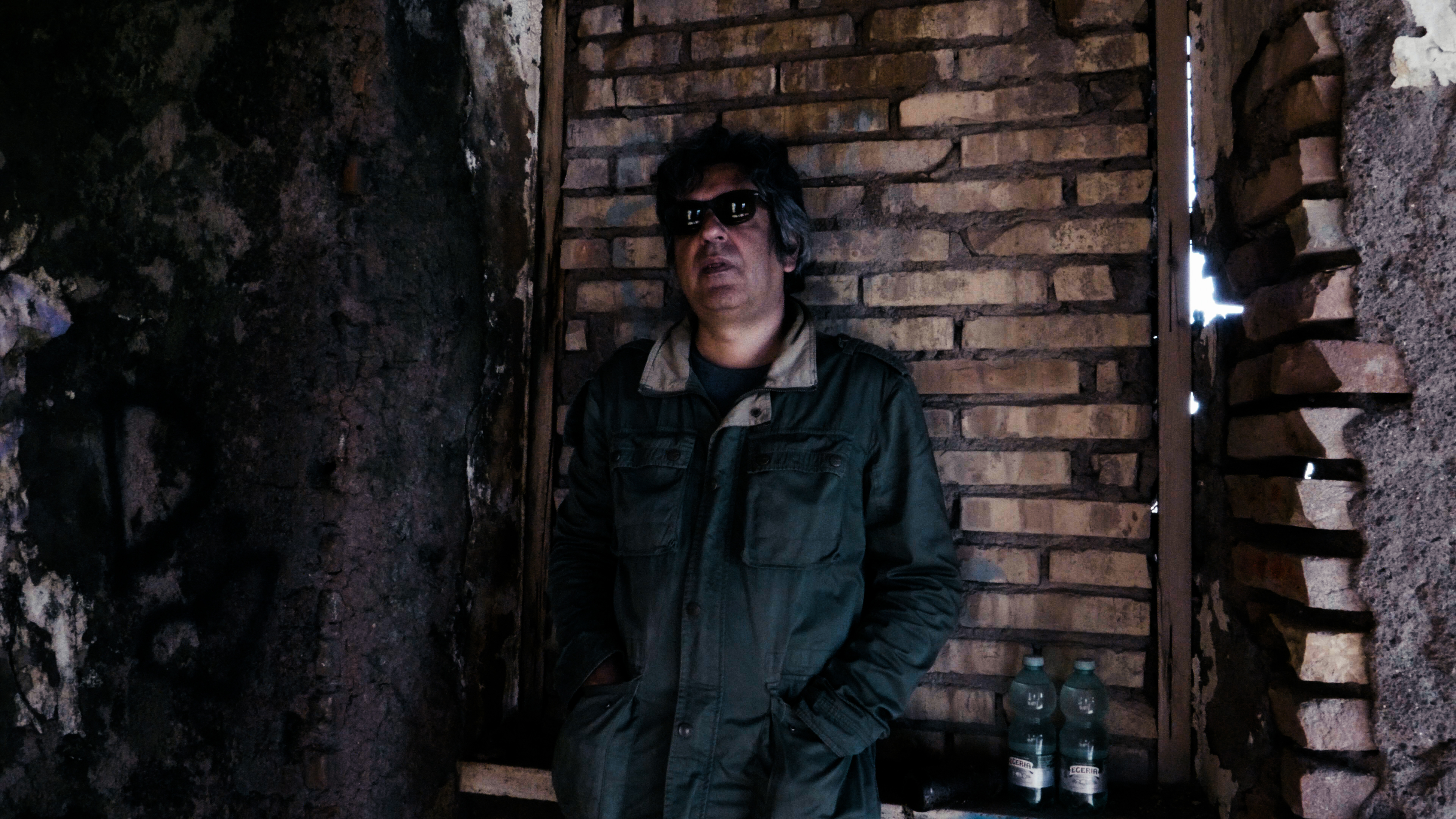
Drama, by Fabio Del Greco, Italy, 2024.
Dante Mezzadri wants to see an old friend, nicknamed the Iguana, whom he has lost sight of for many years, and who has managed to turn their shared youthful passion for poetry into a job, becoming a famous writer and poet. The man escapes from his bourgeois life and his wife to live homeless on the Roman coast, printing and trying to sell his poetry collections. At night he sleeps in a park of old carnival floats, inside a papier-mâché tank, and waits for the opportunity to meet his old friend, who however never shows up for appointments in the places they frequented when they were young, now in ruins. Dante's poetry books do not interest anyone and to support himself he is forced to "change product": he starts selling the infamous "cannibal pill" on behalf of young drug dealers, a new drug that sells like hot cakes and causes sensory and consumerist ecstasy. However, he realizes that this powerful drug is very dangerous for those who take it, he comes into conflict with his ethical conscience and throws all the pills into the sea. However, the dealers want to collect their money.
Shot over a period of 2 years, the film is a reflection on the cultural and artistic rubble of the society in which the protagonist lives, in an increasingly mechanized, consumerist and arid world. Dante Mezzadri is yet another human being who has renounced his inspiration and his creativity, but unlike many he is not willing to give his life to a system that distances him from his true identity. The physical world around him, however, seems constructed in such a way that it seems impossible to escape from this "invisible cage". The enthusiasm of the people he meets is ignited only by sensory gratification, by unreal visions of personal affirmation and success, by "metaverses" that offer an escape into an illusory and destructive reality. The poet's house on the coast, where he met with his friends as a young man, is just a pile of abandoned rubble. What happened to all those who wanted to become poets and ended up becoming something else? Are there internal forces with which that house can be "rebuilt"?
LANGUAGE: Italian
SUBTITLES: English, Spanish, French, German, Portuguese
The Body as Furnace: Rethinking What Alchemy Actually Was
There is a particular kind of person who, as a child, was told never to touch the clock on the mantelpiece. Not because it was fragile, exactly, but because it worked — and working things, the adults implied, existed in a zone beyond the reach of curiosity. Then one afternoon, alone in the house, that child takes it down anyway. Not to break it. To see what breathes inside it. The springs, the escapement, the small ordered violence of gear against gear. The revelation is not that it is complicated. The revelation is that it is comprehensible. That it moves for reasons.
This is what Paracelsus did to the human body in the early sixteenth century, and the people who had built careers on not touching the clock never forgave him for it.
The inherited image of alchemy — bubbling retorts, charlatans in pointed hats, desperate men chasing the philosopher’s stone through smoke-filled cellars — is not wrong so much as it is deliberately impoverished. It is the image that the winners of a long institutional war wanted us to carry. Lawrence Principe, in his 2013 study of the field’s actual intellectual history, demonstrated with forensic patience that alchemical writing contained serious, rigorous, empirically grounded inquiry that bore almost no resemblance to the cartoon version history handed down. William Newman, working across decades of archival recovery, showed that the alchemical tradition produced genuine theoretical frameworks about matter, transformation, and composition that informed what we now recognize as chemistry — not as its eccentric ancestor, but as its substantive precursor. Calling it magic was never a neutral act of description. It was a verdict handed down by those whose authority depended on the verdict.
Paracelsus entered this tradition and immediately broke it open from the inside. Where his contemporaries still practiced medicine according to Galen’s second-century model — a system of four humors, bloodletting, the careful maintenance of theoretical balances that had almost nothing to do with what happened in an actual body — Paracelsus insisted that the body was not a hydraulic system requiring adjustment. It was a chemical laboratory. It processed, transformed, separated, refined. It worked the way a furnace works: taking in raw material and producing something altered, something with different properties, something that had been changed by an interior operation that was real and physical and investigable.
The concept he introduced to carry this argument was the archeus. Every organ, in Paracelsus’s framework, possessed its own internal alchemist — an operative intelligence, not supernatural but chemical, that directed the transformative processes specific to that organ. The stomach did not simply receive food and dissolve it through warmth, as Galenic medicine held. It performed a separation, extracting what nourished from what did not, operating as a distillation apparatus of almost incomprehensible precision. Disease, under this model, was not imbalance. It was a failure of this internal chemistry — a corruption, a wrong process, a mineral disruption that could in principle be addressed by mineral remedies, by introducing into the body’s laboratory the substance that the archeus required to correct its operation.
This is not proto-science in the condescending sense — the half-formed groping of people who almost understood what we now know. This is a genuinely different and internally coherent model of biological function, one that anticipated the metabolic thinking that would not become mainstream medicine for another three centuries. When we speak today of enzymes, of cellular respiration, of the chemical cascades that govern digestion and immune response, we are speaking a language that Paracelsus was already trying to invent, in a different vocabulary, in a world that punished the attempt.
The clock on the mantelpiece is still ticking. He just refused to pretend he couldn’t hear it.

Burning the Books: Basel, 1527, and the War Against Received Wisdom
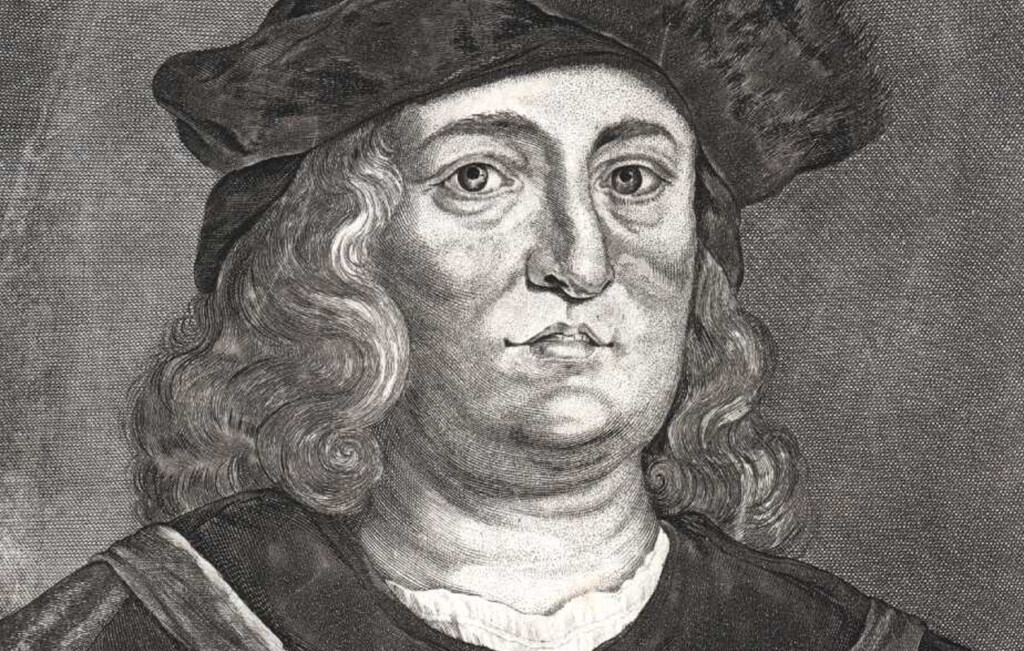
It is midsummer, and a man carries a book into a public square as though he is carrying an argument he has already won. He sets it on fire. The students watching him are not watching a madman — they are watching someone who once memorized every page of what he is burning, who knows its Latin cadences well enough to recite them in his sleep, who earned his position at the university precisely because those in power believed he would protect those pages, not destroy them. The fire is not ignorance. The fire is recognition.
In 1527, when Paracelsus stood before his students at Basel and fed the canonical texts of Avicenna and Galen to flames, the act was not a rejection of learning. It was something far more unsettling: it was the gesture of a man who had learned enough to understand what learning had been made to serve. The Canon of Medicine, Avicenna’s eleventh-century monument to systematized Greek thought, had by then spent four centuries being copied, venerated, and installed as the ceiling of medical possibility. Galen’s anatomical authority had survived longer still. These were not books. They were borders. And Paracelsus, who had spent years moving through mines and military camps, watching miners die of lung disease and soldiers of infected wounds, had arrived at a conclusion that the university’s walls were specifically designed to prevent: that the bodies of the living knew more than the texts of the dead.
He said this explicitly. His documented lectures at Basel contain the claim in almost those words — that experience and direct observation must outweigh any written authority, regardless of whose name it carries. Hannah Arendt, writing in 1951 in The Origins of Totalitarianism, identifies the mechanism Paracelsus was dismantling without naming it: official knowledge systems do not merely organize information, they produce a specific kind of subject, someone who mistakes the authorized vocabulary for reality itself. The diploma on the wall does not certify competence. It certifies loyalty to a particular language. Arendt argues that when institutions control which statements are considered legitimate, they effectively control what can be thought — because thought that cannot be expressed in recognizable institutional grammar becomes invisible, is dismissed as irrational, dangerous, or simply not knowledge at all. This is not conspiracy. It is architecture.
Someone at some point stops believing the diploma proves what it claims to prove. Not because they learned nothing while earning it, but because the earning itself revealed the gap — the distance between what the institution teaches and what the world contains. They take it off the wall. Perhaps they fold it. Perhaps they do not burn it literally, but internally the gesture is identical, the same mixture of grief and release, the same knowledge that something is being lost along with something that was already lost before this moment.
Paracelsus was expelled from Basel within the year. The city council supported his removal. The physicians who had watched him publicly humiliate the canon of their profession had no interest in debating his empirical observations — they had every interest in restoring the social order he had violated. He left, and spent the remainder of his life moving, writing, practicing, never again holding an institutional position. He published prolifically in German rather than Latin, a choice that was itself a second act of burning, a deliberate abandonment of the language that gatekeeps knowledge from those who labor with their hands.
What happens to the person who refuses to speak in the language the institution recognizes as legitimate? They are not refuted. Refutation requires engagement. They are reclassified. They become eccentric, unstable, unserious. The content of what they say is never examined, because the form in which they say it has already disqualified them from the conversation entirely.
Sulphur, Mercury, Salt: The Three Principles as a Map of the Human Condition
Sit beside a fire long enough and you begin to notice that things die differently. Wood collapses into ash, a gray powder that holds the rough shape of what it was, as if matter were clinging to the memory of its own form. Fat drips and burns with a thick, almost personal smell, leaving a residue that feels obscenely alive even in destruction. And some things — certain resins, certain oils — seem to simply flee upward, becoming smoke and then nothing, as though they refused the indignity of a remnant. This is not chemistry. This is observation of a very old and very patient kind, the kind that does not yet know it is looking for a theory and so sees more than theory allows.
Paracelsus looked at fire this way. What burned away into volatile smoke he called mercury — not the metal, or not only the metal, but the principle of flux, of that which cannot be held, which moves between states and refuses fixity. What ignited and drove combustion, the quality of burning itself, he called sulphur — the animating force, the soul of transformation. And what remained when everything else had departed, the ash, the salt crust, the mineral skeleton — that was salt, the principle of form, of body, of that which endures precisely because it has no desire to become anything else. He called these three the tria prima, and he meant them as a map not merely of matter but of everything that matter and mind share in the act of being alive.
The temptation, following Carl Gustav Jung, is to read this as proto-psychology in alchemical disguise. Jung’s engagement with Paracelsus, most fully developed in Psychology and Alchemy from 1944 and extended in Alchemical Studies from 1967, was genuinely illuminating and genuinely partial in equal measure. Jung recognized that the alchemists were projecting psychic content onto matter — that their language of transformation described something happening inside the human being as much as inside the crucible. And he was right. But his framework had a cost. By insisting that the real action was always psychological, Jung effectively spiritualized away the material dimension, turning Paracelsus into a depth psychologist who happened to work with metals. This is a kind of flattery that amounts to erasure.
Because the tria prima was not a metaphor. Or rather, it was not only a metaphor. It was an attempt to describe a structure that Paracelsus believed operated simultaneously at every scale of existence — in the body, in the cosmos, in the individual temperament, in the behavior of minerals under heat. The salt in a human being was the flesh, the bones, the density that makes you locatable in space. The mercury was the breath, the volatile nervous life, the thing that makes you unpredictable even to yourself. And sulphur was the burning quality of desire and will, the force that makes transformation possible at all, that makes a person capable of being, in some irreversible sense, consumed by what they love.
This is not a language that has been improved upon. Modern biochemistry can tell you what happens at the molecular level when a cell metabolizes glucose. It cannot tell you what it means that a human being is simultaneously a thing with weight and location, a process that cannot be stopped without ending, and something that ignites — that is capable of being lit from within by grief, by ambition, by the sight of a particular face across a room. Paracelsus was trying to hold all three of these truths in a single frame, without sacrificing any of them to the others. The reader who has ever felt themselves to be at once anchored and absolutely adrift, solid and on fire, knows exactly what he was describing, even if they have never heard his name.
The Physician as Wound: Paracelsus and the Doctrine of Signatures

There is a kind of healer you recognize the moment you see them — not by their confidence or their credentials, but by something around the eyes, a particular quality of attention that only comes from having been inside the thing they are now trying to pull you out of. They do not reassure you with clinical distance. They sit too close. They already know where it hurts before you finish the sentence, because the map of your suffering is also the map of something they carry in their own body. Paracelsus was this kind of healer, and his entire medical philosophy was built on the strange and vertiginous idea that the wound and the remedy are cousins, that nature does not hide its cures but inscribes them openly on the surfaces of things, that a doctor who cannot read the world like a text has no business reading a body.
The Doctrine of Signatures was not, as later centuries condescendingly framed it, mere magical thinking dressed in botanical language. It was an epistemology — a full and coherent account of how knowledge moves between the world and the human body. The lung-shaped leaf of the pulmonaria plant heals the lungs not by chemical accident but because resemblance is itself a form of communication, because nature is a language and likeness is its grammar. Paracelsus wrote that what the eye perceives on the outside of a plant, the body recognizes from the inside, and that recognition is already the beginning of cure. The physician’s task is translation, not invention.
Michel Foucault, mapping the Renaissance episteme in his 1966 analysis of the Western orders of knowledge, identified precisely this structure: a world held together by resemblance, analogy, sympathy, and signature, where things speak to each other across distance through the language of similitude. His archaeological account is precise and illuminating and almost entirely bloodless. What Foucault captures with brilliant clarity is the architecture of the system. What he cannot quite reach from that height is what it felt like to be Paracelsus standing over a dying miner in the Tyrolean hills, watching a man suffocate slowly on the dust his own labor had filled him with, and reaching into a conceptual framework that demanded the physician not merely observe but resemble — that the healer must carry some version of the patient’s condition inside himself in order to recognize where the cure is hidden. Foucault describes the episteme from outside. Paracelsus lived it from inside the emergency.
The miners he documented in his work on mountain sickness, published posthumously in 1567, were dying of what we now call silicosis and early pulmonary diseases produced by years of breathing metallic dust underground. No physician of the orthodox tradition had thought to study occupational disease systematically before him. He went into the mines. He breathed the air. He connected the labor to the illness in a causal chain that the humoral tradition, focused on internal imbalances of blood and bile, was structurally incapable of seeing. The body was being destroyed by its environment, and the cure had to come from understanding that relationship, not from correcting abstract constitutional tendencies.
His use of mercury compounds to treat syphilis — a disease that had swept through Europe with terrifying speed after 1495 — was similarly a clinical gamble grounded in the logic of signature and chemical affinity. The poison and the cure sharing a family resemblance, the body fighting fire with fire. His formulation of laudanum, an opium compound he called by that name and used for pain management, was not mysticism but pharmacology arriving before the vocabulary to name it existed. He was writing the language and speaking it simultaneously, treating patients with compounds his contemporaries called dangerous and posterity would call foundational, working in the gap between what medicine knew and what suffering refused to wait for.
A vision curated by a filmmaker, not an algorithm
In this video I explain our vision
The Language Problem: Why They Called Him Mad
There is a particular silence that falls over a room when someone says the thing everyone has agreed, without ever quite discussing it, not to say. Not the silence of surprise. Not the silence of thought. The silence of a group that has just recognized a threat and is deciding, collectively and without words, how to respond to it. Anyone who has ever watched a junior colleague use the wrong vocabulary at a faculty meeting — too concrete, too colloquial, too obviously borrowed from experience rather than theory — knows exactly what that silence sounds like. It sounds like the air being pulled out of legitimacy itself.
Paracelsus lived inside that silence for most of his adult life, and what is remarkable is not that it eventually broke into outright hostility but that he kept speaking anyway, and kept inventing new words when the existing ones refused to carry what he needed to say. He coined terms the way a craftsman improvises tools when none of the standard ones fit the joint. The word we now use for zinc comes from him, as does the conceptual ancestor of what we would eventually call gas, as does alkahest, the theoretical universal solvent, and gnome and sylph, borrowed and reformulated from mining folklore to describe elemental spirits he genuinely believed inhabited the subterranean world he had studied firsthand. These were not ornamental coinages. They were attempts to name phenomena that the authorized vocabulary of Galenic medicine had no slot for, because Galenic medicine had no procedure for discovering new phenomena. Its vocabulary was complete by design.
Pierre Bourdieu, writing in 1991 in Language and Symbolic Power, identified what he called linguistic capital — the accumulated authority that attaches to certain forms of speech, certain registers, certain languages — as a species of power entirely independent of the content of what is said. To speak Latin in sixteenth-century Europe was not merely to choose a medium. It was to claim membership in a community of legitimacy that excluded, structurally and deliberately, everyone who had not been formally initiated into it. Paracelsus wrote in German. He lectured in German at Basel in 1527. He used the vocabulary of miners and midwives and itinerant surgeons. From the perspective of Bourdieu’s framework, this was not just stylistically unorthodox. It was a direct assault on the symbolic economy that kept medical knowledge scarce, regulated, and profitable for those who controlled its distribution.
The charge of madness that followed him was not, at its core, a psychological assessment. It was a jurisdictional one. When knowledge arrives from illegitimate sources — from women who knew more about herbal medicine than any university graduate, from laborers who had spent decades watching how minerals behaved in heat and water, from traditions that European institutions had classified as superstition precisely because classifying them that way was cheaper than learning from them — the institution’s first move is never to evaluate the knowledge. Its first move is to discredit the carrier. This structure has proven extraordinarily durable. The midwife who understood infection before germ theory had a name. The African healers whose plant knowledge fed the pharmaceutical industry for centuries were not credited in the patents. The pattern Paracelsus encountered in 1520 has not required modification. It has only required new paperwork.
What made him genuinely dangerous was not the eccentricity of his cosmology, not the theatrical burning of Avicenna’s Canon at Basel, not even the drinking. It was that he had found a way to make the illegitimate legible — to take what the craftsman knew, what the woman gathering herbs in the mountain passes knew, and inscribe it into a discourse that could not be entirely ignored. Every new word he coined was a small act of epistemological insurrection, a claim that reality contained things the authorized language had not yet gotten around to naming because the people who had encountered those things had never been asked.
Immortality, the Homunculus, and the Obsession with Making Life
Late at night, in a room that smells of sulfur and copper and something faintly organic, a man bends over a sealed vessel. He is not trying to cure anyone. He is not composing a treatise. He is watching, with a concentration that borders on prayer, for the first sign that something inside the glass has begun to move on its own terms. This is not ambition in any ordinary sense. It is closer to a question that has become unbearable — the question of where dead matter ends and living matter begins, and whether that line is a wall or merely a membrane.
Paracelsus reached this question through the body, through wounds and fevers and the stubborn refusal of certain patients to die when everything predicted they should. His recipe for the homunculus, set down in De Natura Rerum in 1537, is routinely cited as evidence of his credulity, his medievalism, his willingness to believe impossible things. Human seed sealed in a vessel, kept at the heat of a horse’s belly for forty days, fed on human blood — and from this, he claimed, something resembling a miniature human form would emerge. The modern reader smiles and moves on. But moving on too quickly is its own kind of failure, because what Paracelsus was encoding in that strange recipe was a genuine philosophical claim: that life is not injected into matter from outside, by divine fiat or Aristotelian soul descending from above, but is latent inside matter itself, waiting for the right conditions of warmth and containment and nourishment to organize itself into something that wants to persist.
Hans Jonas, in The Phenomenon of Life published in 1966, asked essentially the same question with the tools of twentieth-century phenomenology. For Jonas, the scandal of biology is not complexity but metabolism — the fact that a living organism is never identical with its own material substrate, that it is always in the process of exchanging matter with its environment while maintaining its form, and that this process has something irreducibly purposive about it. The organism, Jonas argued, is the first thing in nature that has a stake in its own existence. This is not metaphor. It is the beginning of what we mean by freedom, by interiority, by the word want. Paracelsus did not have Jonas’s vocabulary, but he was circling the same territory with the instruments available to him, which happened to be alchemical rather than phenomenological.
His concept of the mumia belongs here too. The mumia was for Paracelsus a vital force, something like a material trace of life that persists in the body after death and can under certain conditions be transferred between bodies. Wounds could be healed at a distance by treating the weapon that caused them, because the mumia of the wounded person still adhered to the blade. This sounds like superstition, and in its literal form it is. But underneath it lies a serious intuition: that life leaves marks on matter, that matter remembers having been organized, that the threshold between the living and the formerly living is not clean. Contemporary biology is still negotiating this intuition, in discussions about epigenetic inheritance, about the persistence of cellular memory, about the ways in which organisms carry chemical records of experiences that are not strictly encoded in their genes.
His theories on the prolongation of life operated on the same premise. If life is a property of matter in certain conditions, then those conditions can in principle be adjusted, extended, refined. Not through magic but through what he called the art of knowing what matter wants from itself.
That phrase is the one that does not age. What does matter want from itself? The homunculus was never really about making a person. It was about making the question visible, giving it a body, forcing it into the world where it could be examined and contested and refused. He knew he could not answer it. He built the vessel anyway.
The Unfinished Transmutation: What Paracelsus Left Behind
He died in a rented room in Salzburg in September 1541, somewhere around his forty-seventh year, with manuscripts still unfinished on the table and no city that had permanently claimed him. Not a martyr’s death, not a triumphant one. Simply the end of a motion that had never fully stopped — a man who had kept writing and wandering because stopping would have meant accepting that the work was done, and the work was by its nature never done. He left behind a body of texts so voluminous and so internally contradictory that scholars are still arguing about the canon, still debating which manuscripts are authentic, still unable to reduce him to a single coherent doctrine. That irresolvability is not a failure of his legacy. It is the legacy.
Within decades of his death, a generation of chemical physicians — the Paracelsians, as they came to be called — transformed the pharmacological landscape of northern Europe. Figures like Petrus Severinus, whose Idea Medicinae Philosophicae appeared in 1571, systematized Paracelsian principles into forms that university-trained physicians could absorb without necessarily swallowing the mystical cosmology whole. The tria prima became a working framework for understanding how substances behaved in the body. Mineral remedies that Galenic medicine had dismissed entered apothecary practice through the back door of empirical result. By the early seventeenth century, the debate between Galenists and Paracelsians was one of the structuring intellectual conflicts of European medicine, fought in pamphlets and lecture halls and royal courts simultaneously.
Jan Baptist van Helmont, the Flemish physician and natural philosopher who died in 1644, took the Paracelsian inheritance and bent it toward something that would eventually become biochemistry. His concept of gas — a word he coined, derived from the Greek chaos — extended Paracelsus’s attention to invisible operative forces in nature into quantifiable experiment. Van Helmont weighed his willow tree experiment with the precision of a man who believed that measurement and mysticism were not opposites. The line from Paracelsus through van Helmont to the chemical revolution of Lavoisier is not straight, but it is traceable, and it runs beneath the official history of science like a subterranean current.
Then came the other appropriation. The occultists, the Rosicrucians, the esoteric revival movements of the eighteenth and nineteenth centuries, who took Paracelsus and flattened his empiricism into pure symbol. In their hands, the alchemical language stopped being a provisional vocabulary for things not yet otherwise nameable and became a closed system of correspondences, a decoder ring for hidden truths. The man who had walked through mining towns examining the sick became, in this retelling, a magus dispensing arcane wisdom. Something essential was lost in that translation — the mud on the boots, the smell of the smelter, the patient who did not respond to the standard remedy and therefore demanded a different question.
Walter Benjamin, in the vast unfinished structure of the Arcades Project, developed the idea of the dialectical image: a moment when the past and the present flash into constellation, not as continuity but as tension, as unresolved pressure. Paracelsus keeps returning not because history is cyclical but because the pressure he embodied has never been discharged. Every era that produces knowledge faster than its institutions can absorb it, every moment when the officially credentialed and the practically effective pull in opposite directions, every healer who knows something that cannot be submitted for peer review — all of these conjure him again, not as a historical curiosity but as a live problem.
And the question his life leaves open is not about him at all. It is about what any society does with knowledge that arrives in the wrong form, spoken in the wrong register, by someone who refuses to hold still long enough to be properly classified — and whether the classification was ever the point.
🜂 Alchemy, Mysticism & the Hidden Sciences
Paracelsus stands at the crossroads of medicine, magic, and spiritual philosophy, drawing from traditions that stretch across centuries and continents. His vision of the human body as a microcosm of the universe resonates deeply with other great seekers who dared to map the invisible. These related explorations will deepen your understanding of the esoteric currents that Paracelsus helped ignite.
Rudolf Steiner and Anthroposophy: A Guide to Modern Esoteric Thought
Rudolf Steiner, like Paracelsus, believed that spiritual insight and scientific inquiry were not opposites but complementary paths to truth. His Anthroposophy sought to unite the material and the supersensible in a grand vision of human evolution. Exploring Steiner’s work illuminates how Paracelsian ideas of correspondences and spiritual anatomy echoed powerfully into the twentieth century.
GO TO THE SELECTION: Rudolf Steiner and Anthroposophy: A Guide to Modern Esoteric Thought
Anthroposophic Medicine: Healing the Body through the Spirit
Anthroposophic Medicine carries forward a tradition that Paracelsus would have recognized: treating the whole human being as a spiritual entity embedded in the rhythms of nature. It challenges the purely mechanistic model of the body by invoking elemental forces and subtle energies. This documentary thread connects directly to Paracelsus’s own insistence that the healer must understand the cosmos before touching the patient.
GO TO THE SELECTION: Anthroposophic Medicine: Healing the Body through the Spirit
Aleister Crowley: the Great Beast and the Religion of Will
Aleister Crowley, like Paracelsus, was a polarizing figure who pushed the boundaries of accepted knowledge by plunging into forbidden territories of occult science and spiritual will. Both men were simultaneously condemned and revered, seen as charlatans by some and as visionary adepts by others. Their lives reveal how the pursuit of hidden wisdom inevitably brings the seeker into conflict with the orthodoxies of their time.
GO TO THE SELECTION: Aleister Crowley: the Great Beast and the Religion of Will
Helena Blavatsky and Theosophy: the Woman Who Revolutionized Esoteric Thought
Helena Blavatsky and her Theosophical project drew heavily on the alchemical and Hermetic traditions that Paracelsus had helped preserve and transform in the Renaissance. Her synthesis of Eastern and Western esotericism echoes Paracelsus’s own cross-cultural approach to natural philosophy and healing. Understanding Blavatsky’s sources offers a rich lens through which to trace how Paracelsian thought survived and mutated into modern spirituality.
GO TO THE SELECTION: Helena Blavatsky and Theosophy: the Woman Who Revolutionized Esoteric Thought
Discover the Cinema of the Invisible on Indiecinema
If Paracelsus’s search for hidden truths resonates with you, Indiecinema is the streaming platform where that quest continues through film. From esoteric documentaries to visionary independent cinema, our catalog is curated for those who refuse the surface of things. Join us and explore the depths that mainstream streaming will never show you.
👉 EXPLORE THE CATALOG: Watch Indie Films in Streaming
A vision curated by a filmmaker, not an algorithm
In this video I explain our vision

