
The Lead That Will Not Stay Lead
There is a moment, familiar to anyone who has ever cleared out a dead parent’s house, when you hold a gold ring over a flame. Not to destroy it — or so you tell yourself — but to melt it down, to recover something from it, to let the raw material outlast the specific shape grief gave it. The ring stops being a ring. The woman who wore it stops, briefly, being your mother. What remains is a small bead of molten metal, cooling on a ceramic surface, and something in you watches it with an attention that has nothing to do with sentimentality. You are watching matter change its form. You are watching the world admit that nothing it insists upon is permanent.

This is not a metaphor. It is the oldest gesture in human civilization, the one that precedes writing, precedes philosophy, precedes any organized religion we can name with certainty. Long before anyone thought to call it alchemy, someone stood over a fire and understood, at a level below language, that the apparent nature of things was negotiable. That lead did not have to stay lead. That the given world was not the final world.
Alchemy as a named and systematic practice has a history we can trace with some precision, though its origins dissolve, as origins tend to do, into a confusion of cultures and centuries. The Greek word khemeia appears in documents from the early centuries of the Common Era, most notably in the Leiden and Stockholm papyri, Egyptian manuscripts dating roughly to the third century CE, which contain what are perhaps the earliest surviving technical instructions for transmuting metals and manufacturing artificial gems. Egypt, and specifically Alexandria — that extraordinary city where Hellenistic Greek thought, Egyptian priestly tradition, and Babylonian astronomy collided and fused — is the most likely crucible for what we recognize as Western alchemy. But to say Alexandria is to name a meeting point, not a beginning.
The historian Lawrence Principe, in his meticulous reassessment of alchemical history, “The Secrets of Alchemy” published in 2012, argues forcefully against the romantic tendency to read alchemy as a purely spiritual pursuit misunderstood by later materialists. Alchemy was, in its origins and for most of its history, a serious technical discipline, conducted by people who genuinely believed they could transform matter, and who developed sophisticated laboratory procedures in pursuit of that belief. The spiritual dimension was always present, but it grew alongside the practical rather than replacing it. To spiritualize alchemy too quickly is to domesticate it, to make it safe, to rob it of the specific strangeness of its actual claim.
And the claim was radical. Not that the soul could be purified — every religion promises that. But that the physical world itself was incomplete, imperfect, in a state of arrested becoming, and that human hands and human intelligence could intervene in that becoming, could accelerate it, could bring base matter to a perfection that nature was moving toward too slowly. The philosopher’s stone, that central obsession of the Western tradition, was not imagined as a supernatural object but as a catalyst, something that could complete what matter had already begun. What alchemy insisted upon was that the universe was in process, and that the human being was not merely a witness to that process but a participant in it.
There is a man in a story — whether it belongs to a film, a novel, or someone’s actual life hardly matters — who spends years working in a small workshop, surrounded by equipment his neighbors consider useless, pursuing a transmutation no one around him believes is possible. He is not mad. He is, in fact, operating from an extremely coherent internal logic. He has simply taken seriously something the rest of the world agreed, without discussion, to stop taking seriously sometime around the seventeenth century.
That agreement, and what it cost us, is where the real history of alchemy begins.
Before the Word Existed, the Idea Already Had Hands
There is a man standing over a furnace in Alexandria sometime around the year 300 of the common era, and he is not thinking about chemistry. He is watching copper turn color under sustained heat, watching its surface bloom into something that resembles gold, and what moves through him is not the satisfaction of a craftsman but something closer to vertigo. The material world is lying to him, or telling him the truth for the first time. He cannot yet tell the difference, and that uncertainty is precisely where alchemy begins.
Zosimos of Panopolis left behind a fragmented body of writing that scholars now consider among the earliest coherent alchemical texts in recorded history, and what strikes any serious reader of those fragments is how little interest he has in the metal itself. The copper is not the point. The copper is a demonstration. What Zosimos wants to show is that matter is not fixed, that the apparent solidity of things conceals a hidden plasticity, that the world is secretly in motion beneath its surfaces. He inherits this intuition from Egyptian priestly traditions that had been metabolizing Greek philosophical concepts for generations, particularly the Stoic notion of pneuma, a breath or spirit permeating all matter, animating it from within. When he describes the distillation of substances in terms that blur continuously into the purification of the soul, he is not being metaphorical. He is being precise about a different kind of precision.
The Egypt that produced Zosimos was already ancient beyond reckoning. Its metallurgical workshops had been active for millennia, its craftsmen working gold and electrum and bronze with a sophistication that the Greek world had admired and absorbed. But the specific alchemy that emerged in Hellenistic Alexandria was not simply applied metalwork. It was the point where Egyptian ritual technology, Greek natural philosophy, and the Jewish mystical traditions carried into the diaspora collided and fused into something that had no exact precedent. The city itself was a crucible in the literal sense, a place where identities dissolved under pressure and reformed as something new. What came out of those workshops was not a science and not a religion but an intellectual practice that refused the distinction, that insisted the operations performed on metal were simultaneously operations performed on consciousness.
The Emerald Tablet, that compact and cryptic document attributed to Hermes Trismegistus and surviving in Arabic translations from around the sixth or seventh century, speaks its central claim in a sentence that has been quoted, misquoted, and argued over for more than a thousand years: as above, so below. The phrase is usually treated as mystical shorthand, a piece of occult decoration. But read against the actual workshop practices it encoded, it means something more specific and stranger. It means that the transformation visible in matter is structurally identical to the transformation possible in mind. The furnace and the psyche operate according to the same grammar. This is not poetry dressed as philosophy. It is a hypothesis about the nature of change itself.
What needs resisting is the comfortable narrative that places a clean origin point somewhere, that says alchemy began in Egypt, or in Greece, or in China, where parallel traditions of transformation and transmutation developed entirely independently during roughly the same historical centuries. The desire for a single source is itself a kind of intellectual alchemy, an attempt to reduce complexity to a pure element. But alchemy surfaced wherever fire was used seriously, wherever someone watched a solid become liquid become vapor and felt that the sequence meant something beyond its own mechanics. The Daoist texts on the cultivation of cinnabar, the Indian tantric practices working with mercury as a sacred substance, the smelting rituals of sub-Saharan ironworkers who understood the furnace as a womb requiring the same protocols as childbirth: none of these borrowed from Alexandria. All of them arrived at a version of the same recognition.
The idea had hands before it had a name.

What Alexandria Knew and We Forgot
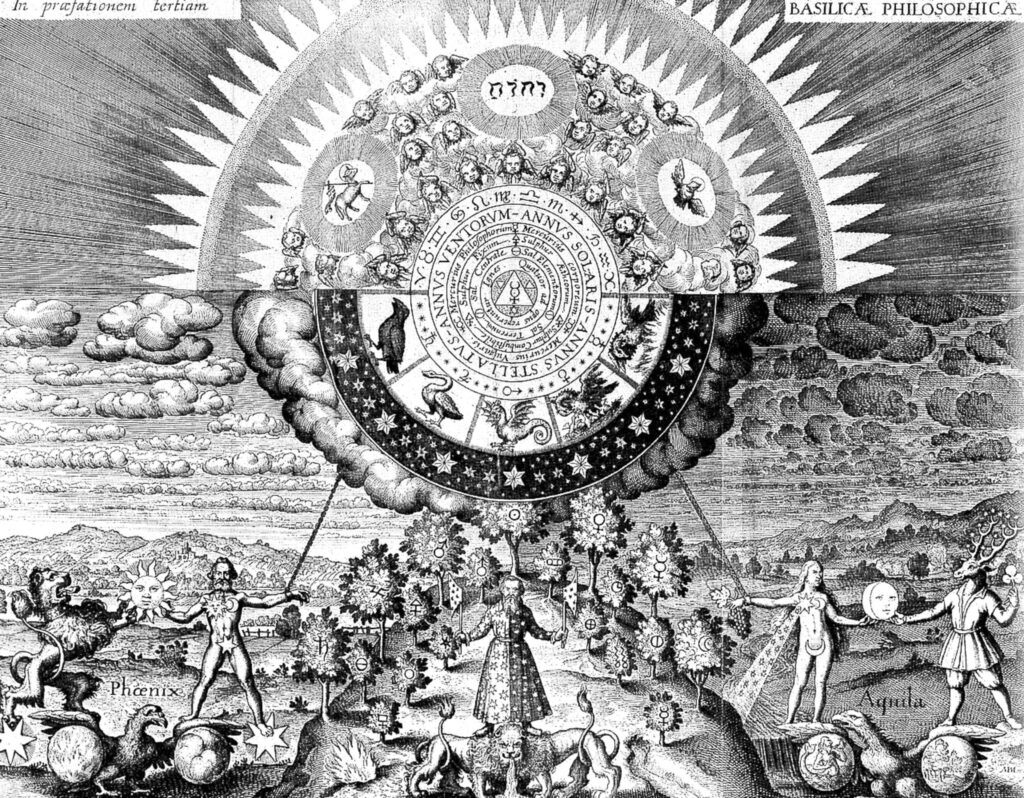
There is a specific hour of night, somewhere between two and four in the morning, when a city stops performing itself. The streets empty not into silence but into something stranger — a kind of waiting, a held breath. A man walks alone through streets he does not know, past signs in an alphabet that does not belong to him, past the smell of food he cannot name, past the sound of a language that reaches him as music rather than meaning. He is nobody here. Not because he has been forgotten, but because the city has no category for him. He exists, in that hour, as pure presence before identity — before profession, before nationality, before the accumulated architecture of who he has persuaded himself to be.
This is the condition Alexandria was built for.
Not the Alexandria that exists today, navigated by satellite and photographed for memory before the experience is even complete. The Alexandria of the third and second centuries before the common era was something the modern world has never successfully reconstructed — a deliberate collision of civilizations operating not as a multicultural experiment but as an intellectual furnace. Greek philosophical method arrived there carrying Aristotle’s categories and Plato’s obsession with forms beneath appearances. Egyptian craft knowledge — accumulated across millennia in the workshops of goldsmiths, embalmers, glassmakers, and dyers — arrived carrying something equally powerful: the understanding that matter is not passive, that substances transform, that the body of a thing is not separate from its meaning. Babylonian astrology contributed the conviction that the movements of heavenly bodies and the behavior of terrestrial substances were not analogous but identical, different registers of the same cosmic grammar. And woven through all of this, early strands of Jewish mysticism brought a theology of the hidden name, the divine spark concealed inside matter, waiting.
What emerged from this collision was not a synthesis. Synthesis is too tidy a word, implying resolution. What emerged was a productive confusion, a fertile state of not-knowing that produced texts like the Corpus Hermeticum and the Leiden Papyrus, documents that read simultaneously as religious scripture, laboratory procedure, and philosophical meditation — because for their authors, those categories did not yet exist as separable things.
At the center of all of it sat a concept that resists translation precisely because it resists definition: prima materia. The first matter. The undifferentiated original substance from which all things were said to have been made and to which all things could theoretically be returned. Not an element in the periodic sense, not a chemical compound, not even a specific material — descriptions varied wildly between authors, which was itself the point. Some called it chaos. Some called it the abyss. Some called it the darkness before the first word was spoken. What they agreed on was that it existed beneath all formed things, that it was accessible through a process of dissolution, and that encountering it was necessary before any genuine transformation could begin.
Carl Jung spent years inside these texts and arrived in 1944, with the publication of Psychology and Alchemy, at a conclusion that initially seems reductive but is actually far more unsettling than the literal interpretation. He argued that the alchemists were not failed chemists. They were conducting a real investigation — just not into lead or sulfur. The prima materia, Jung proposed, corresponded to what he called the unconscious in its undifferentiated state, the self before the ego has organized experience into a coherent narrative. The alchemical operation of dissolve and coagulate — solve et coagula — was a precise description of a psychological process: the willingness to dissolve the formed self, to tolerate the formless interval, and to allow something truer to precipitate out of that dissolution.
Which means that the man wandering the unfamiliar city at four in the morning, stripped of recognition and category, is not lost. He is, without knowing the word for it, doing the work.
The Islamic Corridor and the Debt Europe Never Paid

There is a particular kind of forgetting that does not happen by accident. You see it in the way a family retells the story of its fortune, quietly omitting the uncle who lent the money, the neighbor who gave the land, the generation whose labor built the foundation that the next generation would call its own achievement. The story is not false, exactly. It simply begins a few chapters too late.
In the libraries of eighth-century Baghdad, a man named Jabir ibn Hayyan was conducting experiments that would have been unrecognizable to the Greeks who supposedly fathered the scientific tradition Europe claims as its birthright. Where the Alexandrians had theorized and allegorized, Jabir measured, repeated, and corrected. He described the preparation of sulfuric acid and nitric acid with a precision that modern chemists recognize as procedural, not metaphorical. He distinguished between substances through systematic classification rather than cosmological analogy. The body of work attributed to him runs to several thousand texts, and even accounting for the common medieval practice of writing under a master’s name, what remains is staggering in its scope and its modernity of method. He was working within a tradition that took the laboratory seriously as a site of knowledge production, not just spiritual transformation.
What Europe would eventually call chemistry, it first received as Jabir’s work, filtered through Latin translators who rendered his name into Geber and his ideas into something the Western scholastic tradition could absorb without fully crediting. The great translation movements of the twelfth and thirteenth centuries, centered in Toledo and Sicily, passed Arabic scientific texts into Latin at a rate that transformed European intellectual life. But transformation, as the historian George Sarton documented exhaustively in his multi-volume Introduction to the History of Science, was rarely accompanied by attribution. The knowledge crossed the Mediterranean; the names often did not.
This is what the sociologist Robert Merton, writing on the mechanisms of scientific credit in the twentieth century, might have recognized as a systemic distortion rather than a series of individual oversights. Cultures do not simply forget their creditors. They restructure the narrative of inheritance so that the debt never appears in the ledger to begin with. When Renaissance humanists spoke of recovering ancient wisdom, they meant Greek and Roman wisdom, and they had to perform a careful act of historical editing to make that claim coherent, because the conduit through which most of that wisdom actually traveled was Arabic scholarship. The European Renaissance did not rediscover alchemy. It received it, partially translated, partially transformed, and reassigned to an origin story that made the recipients feel more like heirs than debtors.
Think of someone who inherits a house through a chain of transactions so long and so deliberately obscured that they genuinely believe the house was always theirs, was built for them specifically, bears their family’s character in its walls. The belief is sincere. That is what makes it worth examining rather than simply condemning.
The philosopher Ibn Rushd, whom the Latins called Averroes, and the physician Ibn Sina, whom they called Avicenna, suffered the same semantic displacement as Jabir. Their ideas entered European universities under Latinized identities, their origins acknowledged in footnotes if at all. Avicenna’s Canon of Medicine remained a standard European medical text well into the seventeenth century, long after Europe had begun constructing a narrative of scientific progress that positioned itself as the primary author of rational inquiry.
What gets lost in this mislabeling is not just historical accuracy. What gets lost is the actual shape of how knowledge moves, which is never pure, never unilateral, never the story of one civilization achieving something another civilization then receives as gift. It moves through corridors of translation, friction, and partial misunderstanding, and the corridor between Baghdad and Bologna was one of the most consequential in human intellectual history.
The Laboratory as Temple, the Temple as Laboratory
There is a kind of person you may have encountered once, in a hospital or a monastery or perhaps a research laboratory late at night — someone who performs a precise and repeating gesture with the quality of devotion. Not hurried, not mechanical. Each measurement taken as if the number itself were a word in a prayer. Each waiting period observed as if attention were the active ingredient. You watch them and you cannot decide whether they are working or worshipping, and the longer you watch, the more you suspect that distinction belongs to you, not to them.
This is exactly the texture of European alchemy between the thirteenth and sixteenth centuries, and it is almost impossible to recover now without first dismantling the wall we have built between the sacred and the empirical. That wall is a construction, not a discovery. Francis Yates understood this with unusual precision in her 1964 study of Giordano Bruno and the hermetic tradition, where she demonstrated that the recovery of ancient Hermetic texts in the Renaissance did not merely add a mystical flavoring to proto-scientific inquiry but was structurally inseparable from it. The laboratory and the temple were not two buildings. They were the same room, seen from different angles.
Roger Bacon, working in Oxford in the thirteenth century, wrote about experimental method with a rigor that astonishes modern readers, yet he embedded that rigor entirely within a theological framework in which nature was a text written by God and the experiment was an act of reading it faithfully. His Opus Majus, presented to Pope Clement IV around 1267, argued for the reform of learning through mathematics and observation, but Bacon never imagined this as secular work. The precision was itself devotional. To measure badly was a kind of spiritual failure, an inattentiveness to the sacred grammar of creation.
Paracelsus, two centuries later, shattered the inherited medical tradition of Galen and replaced it with a chemistry of the body in which sulfur, mercury, and salt were not merely substances but cosmological principles corresponding to the soul, spirit, and matter of the human being. He was simultaneously a practicing physician who transformed the treatment of syphilis and wounds, a magician in the hermetic sense, and a Protestant mystic who believed that the healing of the body was inseparable from the transformation of the self. His tria prima was not a metaphor layered over a real chemistry. It was the chemistry. The material and the spiritual were the same process running at different scales.
John Dee, working in Elizabethan England with his mathematical preface to Euclid published in 1570 and his years of angelic communication recorded in meticulous diaries, represents perhaps the most extreme and revealing case. Here is a man whose mathematical precision was indistinguishable from his angelology. He recorded the measurements of crystal scrying sessions with the same notational care he brought to navigational tables. The angels, for Dee, were not obstacles to knowledge. They were its most reliable source, and communicating with them required the same kind of disciplined attention, the same counting, the same waiting, the same iterative repetition that a modern scientist would recognize in laboratory protocol.
Yates argued that historians had systematically misread the Renaissance by projecting the later science-religion split backward onto a period when that split had no cognitive reality. The hermetic magus was not a failed scientist. He was a coherent figure whose coherence has become illegible to us because we have reclassified his activities into categories he would not have recognized. What we call mysticism was, for him, the highest form of empirical inquiry. What we call experiment was, for him, a form of listening.
The man counting in the dark, measuring the intervals between one state of matter and the next, waiting with a quality of attention that cannot quite be called anything other than prayer — he was not confused about what he was doing.
A vision curated by a filmmaker, not an algorithm
In this video I explain our vision
Gold Was Always the Wrong Answer
There is a particular kind of violence that passes for curiosity. A child pulls apart a flower to see how it works, and when the petals lie scattered and the stem is split open and there is nothing left to examine, they understand that what they wanted was never inside the flower. The knowing they were after was the flower standing. They destroyed the answer in the act of asking the question.
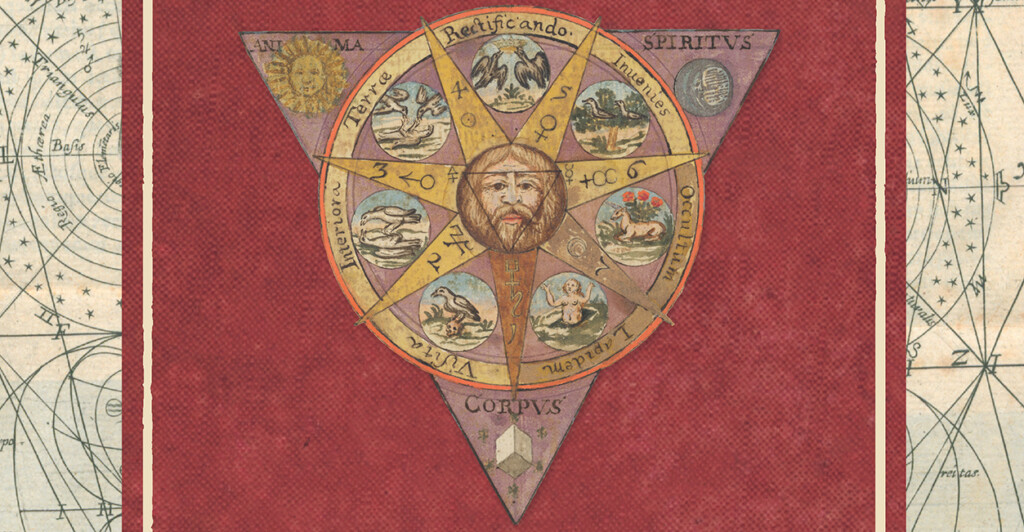
This is the image that floats beneath centuries of misreading. The alchemist, in the popular imagination, is a greedy fool — a man hunched over a furnace, sweating toward wealth that can never materialize, a figure of almost comedic delusion. The caricature is so entrenched that it has become a kind of cultural shorthand for deluded ambition, for the embarrassing prehistory of science before science grew up and learned to behave. And like most caricatures, it survives precisely because it flatters the people who repeat it. It allows them to feel that they would have known better.
Isaac Newton would not have known better. Or rather: Newton knew something that the caricature refuses to accommodate. He spent significant portions of his adult life engaged not with planetary mechanics or calculus but with alchemical manuscripts, transcriptions, and original experiments. The documents he left behind on this subject exceed one million words, and they remained largely unpublished until the twentieth century — not because they were lost, but because no one knew what to do with them. John Maynard Keynes, who acquired a substantial portion of Newton’s private papers at the Sotheby’s auction of 1936, wrote afterward that Newton was not the first of the rationalists but “the last of the magicians,” a man who believed the universe had been left as a cryptogram by its creator, and that the ancient wisdom encoded in alchemical texts was a key waiting to be turned. This was not a hobby or an aberration. It was, for Newton, a coherent epistemological project.
The historian Betty Jo Teeter Dobbs, in her foundational 1975 study The Foundations of Newton’s Alchemy, demonstrated with archival precision that Newton approached alchemical tradition with the same systematic rigor he brought to optics. He was not chasing gold. He was chasing a theory of matter that the mechanistic framework of his era could not yet supply. The Philosopher’s Stone, in this light, was never primarily a material goal. It was the name given to a kind of knowledge so total, so structurally intimate with the world, that the boundary between the one who knows and the thing being known would finally dissolve. Not gold. Not wealth. The end of the distance between mind and matter.
This is where the alchemical tradition becomes philosophically vertiginous. The French philosopher Gaston Bachelard, writing in The Psychoanalysis of Fire in 1938, argued that fire and the substances transformed by it were never merely chemical phenomena for the prescientific mind — they were screens onto which the imagination projected its deepest drives, including the drive to possess reality completely, to hold the world without remainder. The alchemical laboratory was not a workshop. It was a theater of epistemological desire.
And epistemological desire, unlike greed, cannot be satisfied by accumulation. The man who wants gold can, in principle, have enough. The man who wants to know the thing beneath the thing beneath the thing is constitutionally incapable of stopping. He will keep breaking the flower open. He will keep finding that what he destroyed was the very evidence he needed. He will note the failure with extraordinary precision, in over a million words, and he will not stop, because the goal was never the gold. The goal was the moment when knowing and being would finally coincide, and the question would swallow itself whole.
When Alchemy Became a Crime Against Reason
There is a moment, familiar to anyone who has sat through a certain kind of institutional meeting, when the room decides what counts as a serious question. It happens quietly, without a vote. Someone speaks in a register that signals they have moved past a concern, and the concern becomes embarrassing to raise again. The boundary is not drawn by argument. It is drawn by tone, by the slight adjustment of posture that says: we do not do that here anymore.
Something structurally identical happened to alchemy across the second half of the seventeenth century, and it was no more philosophically neutral than a faculty committee deciding which methods deserve funding. René Descartes had already performed the foundational surgery in 1637, separating the thinking subject from extended matter and leaving no room in that gap for sympathy, correspondence, or the idea that lead might carry within itself a secret disposition toward gold. The world became res extensa — measurable, divisible, indifferent. What had been a cosmos vibrating with hidden relations became, in one decisive move, a machine. The interiority that alchemy had always presupposed, the sense that matter participates in something, was not refuted. It was reclassified. It became the kind of thing a serious person does not say.
Michel Foucault, writing in Les Mots et les Choses in 1966, called these moments epistemic ruptures — not gradual revisions but discontinuous breaks in the underlying grid that determines what can even be perceived as knowledge. His point was not that earlier epistemes were wrong and later ones correct. His point was that the shift itself was never merely cognitive. It was also social, institutional, territorial. When Robert Boyle published The Sceptical Chymist in 1661, dismantling the Paracelsian framework of principles and replacing it with a corpuscular theory of matter, he was not simply offering better data. He was performing a boundary. He was demonstrating what a gentleman natural philosopher looked like, and what he decidedly did not look like. The Royal Society, chartered the same decade, would make this aesthetics of knowledge into an institution.
What is rarely examined is the speed with which respectability replaced argument. Isaac Newton spent a documented thirty years on alchemical manuscripts — over a million words, by most estimates, covering chrysopoeia, the green lion, the philosopher’s mercury. He never published any of it. Not because he found it wrong. Because by the time his reputation was established, the epistemic furniture had shifted enough that publication would have cost him something he was not willing to lose. His alchemy did not disappear from his thinking; it migrated underground, into private labor that continued alongside the Principia as though two different centuries were running in the same mind simultaneously.
The woman who appears later in this account — the one who spent years working in isolation on a symbolic system she could not quite name, who kept notebooks full of correspondences between metals and temperaments, between planetary cycles and psychological states — was not confused about chemistry. She was thinking in a register that the seventeenth century had made illegible, and she carried the specific exhaustion of someone whose instruments of thought have been declared contraband.
What was actually thrown away in that rupture is worth naming precisely. Not the errors — the transmutation of base metals was a dead end, and no serious argument defends it. What was discarded along with the errors was the premise that the interior life of the observer might be epistemically relevant, that knowledge and transformation of the knower could be simultaneous events, that a symbol might carry information that a quantity cannot. Foucault would say this was not progress. It was substitution: one regime of truth displacing another, each one blind to what the other saw, neither one complete.
The machine worked. It also left something unnamed on the floor of the room after everyone had gone.
The Unfinished Transformation
There is a man standing in a doorway. Not entering, not leaving. The room behind him is recognizable — a desk, a lamp, the accumulated objects of a life — and the corridor ahead is dim, leading somewhere he cannot yet name. He has been standing there long enough that the posture has stopped being a hesitation and become something else entirely: a state, a condition, a way of existing in the gap between what has ended and what has not yet begun. Anyone who has passed through a serious crisis will recognize this figure not as a symbol but as a memory. The body knows that threshold. It has stood there.
This is the image that alchemy, stripped of its furnaces and its coded manuscripts, was always trying to describe. The nigredo — that stage of blackening, of dissolution, of what the texts called putrefactio — was never simply a chemical instruction. It was a phenomenology of transformation: the recognition that what needs to become something new must first lose the coherence of what it was. Carl Jung understood this with a precision that still unsettles. In his 1944 work Psychology and Alchemy, he argued that the alchemists had not failed to do chemistry. They had succeeded in doing something else — projecting the contents of the unconscious onto matter, mapping the stages of psychological individuation onto the behavior of substances. The opus, for Jung, was always double: external and internal, material and psychic, running in parallel because the alchemists had never accepted the cut between them.
That cut — the severance of matter from meaning, of the physical from the psychological, of the quantitative from the qualitative — is precisely what modernity required in order to become itself. The Scientific Revolution was not simply a discovery. It was also a refusal. Francis Bacon‘s program for the domination of nature, articulated in the Novum Organum of 1620, demanded that the natural world be interrogated without sentiment, without the contamination of human interiority. Alchemy could not survive this demand because alchemy had never agreed to the separation in the first place. It was not defeated by evidence. It was excluded by a methodological axiom that declared its central premise inadmissible.
And yet the premise keeps returning, wearing different clothes. In quantum field theory, the vacuum state is not empty but seething — a field of virtual fluctuations, a plenum disguised as absence, matter and energy in a condition that classical physics has no language for. The alchemists called the prima materia the undifferentiated substrate from which all things emerge and to which all things return. They were not doing physics. But they were pointing at something that physics, in its most radical contemporary form, has arrived at from the opposite direction. The convergence is not proof of anything. It is a question that refuses to be closed.
Psychoanalysis, too, carries the alchemical structure in its bones — not just in Jung but in the logic of the cure itself: the idea that healing requires the dissolution of the presenting form, that the symptom must be intensified before it can be released, that the patient must pass through a state of not-knowing before genuine change becomes possible. The dark night of the soul, that phrase borrowed from the sixteenth-century mystic John of the Cross, names something that clinical practice observes weekly in consulting rooms across the world. Transformation requires a phase that looks, from the inside, indistinguishable from destruction.
The man in the doorway does not move. And the real question — the one that the long history of alchemy’s dismissal keeps circling without answering — is whether modernity rejected alchemy because it was wrong, or because accepting what it knew would have made a certain kind of progress impossible, and whether that distinction, finally, is one we are any longer in a position to ignore.
🔮 Ancient Secrets and the Hidden Sciences of Transformation
Alchemy is far more than a proto-chemistry of lead and gold — it is a doorway into a vast tradition of esoteric thought, mystical philosophy, and inner transformation. The articles below explore the same currents of hidden knowledge that gave birth to alchemy, tracing its threads through Western esotericism, occult figures, and the perennial search for the philosopher’s stone of the self.
Aleister Crowley: the Great Beast and the Religion of Will
Aleister Crowley stands as one of the most notorious heirs to the alchemical and Hermetic tradition, weaving ancient symbols into a personal religion of will and magical transformation. His work draws deeply from the same Renaissance and Kabbalistic sources that shaped classical alchemy, reframing the Great Work as the absolute realization of one’s True Will. Understanding Crowley means understanding how alchemical ideas mutated and survived into the twentieth century.
GO TO THE SELECTION: Aleister Crowley: the Great Beast and the Religion of Will
Helena Blavatsky and Theosophy: the Woman Who Revolutionized Esoteric Thought
Helena Blavatsky and the Theosophical Society revived widespread interest in ancient wisdom traditions, including alchemy, by insisting that all esoteric systems share a common secret root. Her monumental synthesis drew on Hermetic, Neoplatonic, and Eastern sources — the very wellspring from which alchemy itself emerged over millennia. Blavatsky essentially created the intellectual atmosphere in which the symbolic language of alchemy could be reread as universal spiritual science.
GO TO THE SELECTION: Helena Blavatsky and Theosophy: the Woman Who Revolutionized Esoteric Thought
Neville Goddard: the Mystic Who Turned Imagination into the Law of the Universe
Neville Goddard‘s teaching that imagination is the only creative force in the universe echoes the alchemical conviction that the inner world shapes the outer. Just as the alchemist sought to transmute base matter through focused intention and spiritual discipline, Goddard taught that consciousness itself is the crucible in which reality is forged. His work offers a modern, deeply personal translation of the alchemical Great Work into the practice of everyday life.
GO TO THE SELECTION: Neville Goddard: the Mystic Who Turned Imagination into the Law of the Universe
Universal Consciousness
The concept of Universal Consciousness lies at the philosophical heart of alchemy, which always understood matter and spirit as two expressions of a single living cosmos. Alchemists were not merely tinkering with metals but attempting to align themselves with the animating intelligence they believed permeated all creation. Exploring universal consciousness today is, in many ways, continuing the oldest experiment in human history.
GO TO THE SELECTION: Universal Consciousness
Discover the Invisible on Indiecinema 🎬
If these hidden histories and esoteric traditions have sparked your curiosity, Indiecinema is the streaming home for films that dare to explore what mainstream cinema ignores. From visionary documentaries on ancient wisdom to psychedelic journeys into consciousness, our catalog is your gateway to independent cinema that transforms the way you see the world. Join us and let the screen become your own alchemical vessel.
👉 EXPLORE THE CATALOG: Watch Indie Films in Streaming
A vision curated by a filmmaker, not an algorithm
In this video I explain our vision

