
The Snake That Eats Itself
You wake up and reach for your phone before your eyes have fully adjusted to the light. You already know you are going to do this. You knew it last night, when you told yourself you would not. The screen fills with the same notifications, the same frictions, the same low-grade noise you consumed the night before, and something in your chest contracts with a recognition so familiar it no longer registers as a feeling — it registers as weather. This is simply how mornings are. This is simply what you do.

There is a word for what you are living inside, and it is older than any word you know.
Somewhere around 1350 BCE, Egyptian funerary artists working on what scholars would later call the Enigmatic Book of the Netherworld painted a serpent curved into a perfect circle, its mouth locked around its own tail. The image appeared in the burial chamber of Tutankhamun, pressed into gold at the innermost shrine, surrounding the body of the dead king like a membrane between worlds. It was not decorative. It was cosmological. It was the shape of time itself — of everything that begins by consuming its own ending, that sustains itself by devouring what it has already been. The ancient Egyptians called it Mehen. The Greeks would later call it the ouroboros, from oura, tail, and boros, devouring. The image traveled through millennia with a persistence that should give us pause, because symbols do not survive that long through intellectual transmission alone. They survive because they describe something the body already knows.
The philosopher Ernst Cassirer argued in his 1944 work An Essay on Man that the symbolic function is not an ornament added onto human experience but its very structure — that we do not first live and then represent, but that representation is how living becomes coherent at all. The ouroboros endures not because ancient peoples found it elegant but because it pressed itself against something real, something interior, something that every human body has felt in the moment it catches itself doing the thing it swore it would not do again. That is not metaphor. That is morphology. The loop is not a way of describing experience — it is the experience’s actual shape.
Carl Jung, writing in Psychology and Alchemy in 1944, identified the ouroboros as one of the most fundamental symbols in the collective unconscious, appearing across cultures with a consistency that no single historical transmission could explain. He saw in it the image of the self-sufficient, the prima materia of the psyche, the thing that precedes differentiation. But Jung was careful about something most of his popularizers are not: he did not say the ouroboros represented peace. He said it represented wholeness, and wholeness is not the same thing as comfort. The snake eating its tail is in pain. Or it is beyond pain. Or it no longer distinguishes between eating and being eaten, between hunger and satisfaction, between what feeds it and what consumes it. That ambiguity is not a flaw in the symbol. It is precisely what the symbol is for.
Think of the person who leaves a relationship that diminishes them and six months later is sitting across from someone new who diminishes them in exactly the same way, using almost the same words. Think of the family pattern that skips no generation. Think of the argument you have had a hundred times that ends in the same exhausted silence, and how you will have it again, and how some part of you already knows this even as you begin speaking. The ouroboros is not asking you to stop. It is asking you to look directly at what you are doing. It is asking whether you know the difference between a cycle and a circle, between being trapped and being whole.
Katabasis
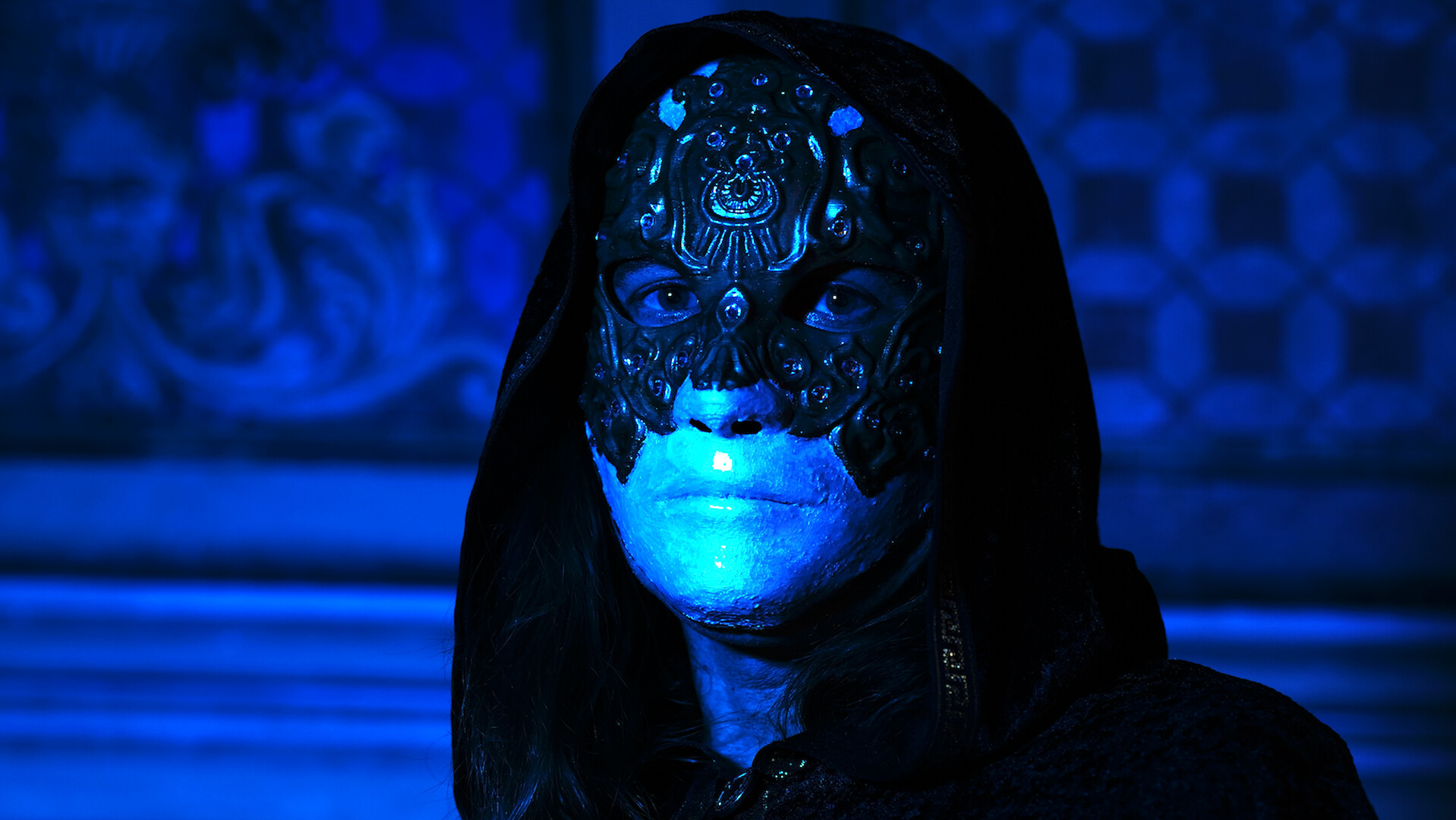
Drama, Mystery, by Samantha Casella, Italy, 2025.
“Katabasis” is a journey into the underworld. Nora experienced that dark realm as a child, when she suffered abuse. This marked her, shaping her into an ambiguous and manipulative woman, dangerous in her inscrutability, constantly seeking disturbing situations to relive the only condition she has profoundly internalized: pain. And the love story between Nora and Aron is tormented, strictly secret. Aron is a young orphan oppressed by the star system which, orchestrated by Jacob, a cynical manager, made him a star and imposes another façade of life on him. In fact, only the people who revolve around the house-prison where the couple lives are aware of Nora's existence. That majestic villa is the stage for secrets, lies, deceit, as well as unsettling episodes, since Nora is able to communicate with the souls from the beyond.
Director Biography – Samantha Casella
Samantha Casella studied various aspects of cinema, including screenwriting, directing, cinematography, and acting, across Turin, Florence, Rome, and Los Angeles. Her directing thesis, the short film "Juliette," won 19 awards, including the "European Massimo Troisi Award." She continued her path directing surreal short films including "Silenzio Interrotto," "Memoria all'Isola dei Morti," and "Agape." In 2019, she directed "I Am Banksy." At the charismatic TCL Chinese Theater in Los Angeles, at the Golden State Film Festival, she won the award for Best International Short Film. In 2020, she directed the short film "A un Dio Sconosciuto." "Santa Guerra" is her feature film debut.
LANGUAGE: Italian
SUBTITLES: English, Spanish, French, German, Portuguese
Gold From Poison: The Alchemical Inheritance
There is a specific kind of morning that follows the worst year of your life. You wake up and the room is the same room, the light comes through the same window at the same angle, but you are not the same person who once found that light ordinary. Something has been burned away. You cannot name what it was exactly — a version of yourself you had mistaken for the real one, a certainty you had carried so long it had calcified into identity. You sit at the edge of the bed and you feel, not healed, not destroyed, but strangely hollow in the way a vessel is hollow: empty because it is meant to hold something new.
The alchemists knew this morning intimately. They gave it a name before psychology existed to claim it.
In the third century of the common era, in the intellectual crucible of Alexandria where Greek philosophy, Egyptian mysticism, and nascent chemistry dissolved into one another, a body of work emerged that would perplex and fascinate for seventeen centuries. Among the manuscripts that survived this era, the Chrysopoeia of Cleopatra — not the queen, but a figure whose historical identity remains deliberately obscured, which itself seems appropriate — contains one of the earliest visual representations of the ouroboros we possess. Around the serpent devouring its own tail, the Greek inscription reads: hen to pan. One is the all. Not a motto. A technical description of a process.
Zosimos of Panopolis, writing in the same period and considered among the first systematic alchemical thinkers, described the ouroboros in terms that refuse easy translation. For Zosimos, the symbol encoded the unity of opposites that the alchemical work sought to enact: corruption and incorruptibility, poison and medicine, death and the substance that death produces. His writings, fragmentary and visionary, describe a series of dream-visions in which a figure is simultaneously priest and sacrifice, tortured and transfigured. The boundary between the one who performs the operation and the matter being operated upon dissolves. This was not metaphor for Zosimos. It was the literal structure of the work.
The alchemists organized transformation into stages they named with the precision of grief. Nigredo: the blackening, the putrefaction, the necessary collapse of the original form. Albedo: the whitening, the washing, the emergence of something purified but not yet complete. Rubedo: the reddening, the final integration, the philosopher’s stone that was never simply gold but the capacity to transmute — to turn the leaden weight of unrealized existence into something that conducts light. A man watching everything he built collapse around him is in nigredo whether he has ever heard the word or not. The dissolution is real. The suffering is chemical.
Carl Jung spent years in the libraries of Europe tracking this imagery, and what he concluded in Psychology and Alchemy in 1944 was not that the alchemists were confused proto-chemists but that they had stumbled, through the projection of unconscious contents onto matter, onto an extraordinarily precise map of psychological transformation. The alchemical vessel in which the work occurred — the vas hermeticum — corresponded to the contained psychological space in which the self undergoes its necessary destruction and recomposition. Jung understood that no one chooses this process consciously. You do not decide to enter nigredo. You find yourself in it, retroactively understanding what has been happening to you all along.
The ouroboros sits at the center of this understanding because it refuses the consolation of progress. It does not show a serpent that was once broken and is now whole. It shows the breaking and the wholeness as simultaneous, as the same gesture. The poison that dissolves the old form is the same substance from which the new form is made.

The Esoteric Bloodline: Gnosis, Hermeticism, and the Eternal Return
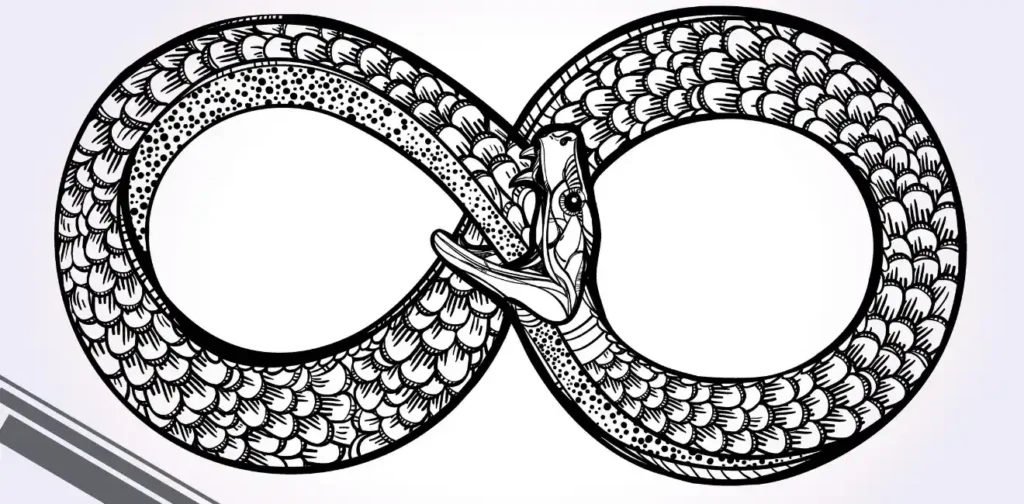
There is a moment — anyone who has thought too hard about their own life knows it — when you realize that the door you finally opened leads back into the room you were trying to leave. Not a similar room. The same room. The same afternoon light falling at the same angle across the same worn edge of the same table. You stand in the doorway and feel the air drain out of your chest, not because you are trapped, but because you understand, for the first time, that you were never not trapped.
This is the Gnostic diagnosis of existence, and it is far more precise than it is mystical. The Ophites and Sethians, Gnostic sects active in the first and second centuries of the common era, looked at the ouroboros and saw something that orthodox Christianity could not afford to admit: that the material world is not a fallen version of paradise but a closed system, a prison designed by an incompetent or malicious architect they called the Demiurge. The serpent eating its tail was not a symbol of cosmic harmony for these communities. It was the shape of the cage. The world biting itself, consuming itself, generating just enough apparent movement to convince the souls trapped inside it that something was actually going somewhere. The loop was the lie. And the Demiurge was not evil in the theatrical sense — he was worse. He was convinced he was God, convinced the loop was order, convinced that what he had built was good. There is a peculiar horror in a jailer who does not know he is one.
The Corpus Hermeticum, that strange flowering of Greco-Egyptian philosophical mysticism compiled roughly between the first and third centuries CE and rediscovered by Cosimo de’ Medici’s agents in the fifteenth century, inherited this terror and tried to metabolize it differently. Hermes Trismegistus, the composite mythological figure at its center, speaks of the soul’s ascent through concentric spheres — each one a layer of the cosmic prison to be shed, each one associated with a planetary intelligence that has stamped its particular limitation onto the incarnated being. The ouroboros in this framework is not merely the world. It is the accumulated weight of those stamps: the jealousy given by one sphere, the greed by another, the ambition by a third. To become free is to return each attribute to its originating layer as you ascend. But the question the Hermetic texts cannot quite silence is this — who does the returning? If every characteristic of the self was deposited by the spheres, what remains when they are stripped away? The texts answer with light, with nous, with divine intellect. But the honest reader feels something more vertiginous underneath that answer: the possibility that stripping the layers leaves nothing, that the self was always only the prison describing itself.
Friedrich Nietzsche, who would have found Gnosticism intellectually embarrassing and Hermeticism insufficiently rigorous, arrived in 1882 at what he called the weightiest thought — the eternal recurrence of the same. In The Gay Science, he stages it not as a doctrine but as a horror: a demon whispers to you in your loneliest moment that this life, every detail of it, every pain and every mediocre Tuesday, will recur infinitely. Not symbolically. Literally. The question he asks is whether this thought would crush you or transform you. But beneath that question is the ouroboros made philosophical flesh — the loop not as metaphor but as structure, not as image but as condition. The exit from the loop is always already inside the loop. The realization that changes everything changes nothing about what is.
A man who spent years believing that understanding his own patterns would free him from them eventually understands his patterns completely. He is still inside them.
Mystery of an Employee
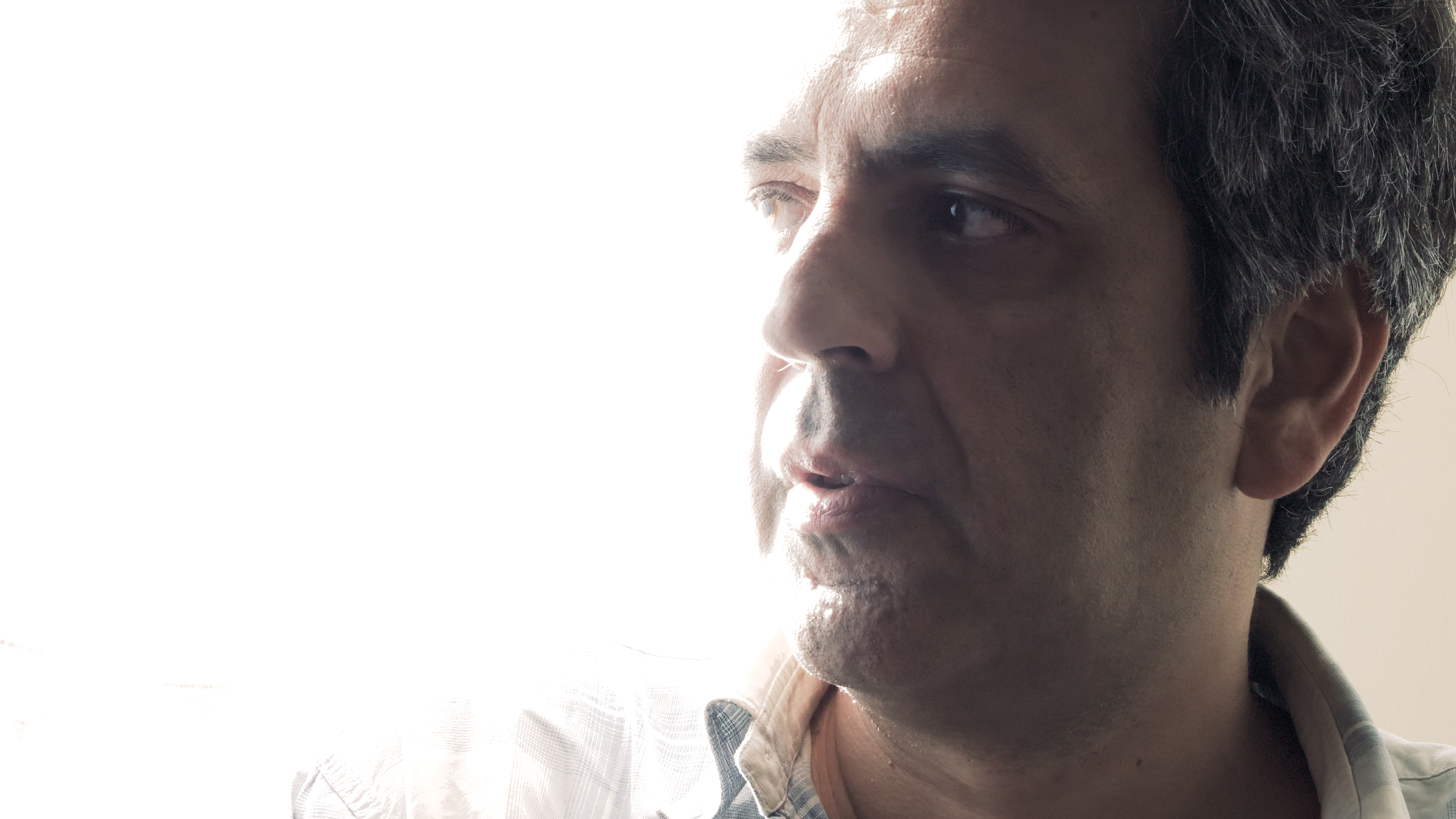
Drama, thriller, by Fabio Del Greco, Italy, 2019.
Someone wants to control the life of the employee Giuseppe Russo: the products he buys, his political and religious faith, his private life, even his dreams. But he will do anything to escape control and find his true self. Giuseppe is a man of around 45, married, with a stable job and a home of his own. His life flows seemingly peacefully when he meets a mysterious tramp who gives him some old VHS video cassettes. Giuseppe begins to see video tapes in which he is filmed in some moments of his life since he was a child, then as a teenager and as a young man. Who shot those videos that he remembers nothing about? Giuseppe has the strange sensation of being constantly observed and begins to investigate what is happening. Through his investigation of him, he begins to rediscover his true identity and become aware of who he truly is.
Employee's Mystery is a film that highlights the danger of social control and shows a society where everyone is constantly monitored and conditioned in their deepest selves. The film is also an analysis of human nature and identity. Fabio Del Greco, who plays Giuseppe, gives an engaging performance. Equally good is Chiara Pavoni, in the role of Giada Rubin and Roberto Pensa in the role of the tramp. Employee's Mystery is a film that addresses important themes in an original way, a psychological thriller that keeps the viewer glued to the screen until the end: a metaphor for contemporary society, in which people are increasingly monitored and conditioned by the media and technologies . It is a courageous and provocative work, which addresses important themes in an original way.
LANGUAGE: Italian
SUBTITLES: English, Spanish, French, German, Portuguese
The Loop as Control: How Civilizations Weaponize Cycles

There is a man who leaves his company after fifteen years, convinced that the system was the problem. He starts his own venture, works eighteen-hour days, builds something from nothing, and within a decade he has reproduced, with startling fidelity, every hierarchy he once despised. The same performance reviews. The same invisible penalties for dissent. The same rewarding of loyalty over honesty. He does not notice. He is too busy believing in what he built.
Foucault saw this not as irony but as mechanism. In Discipline and Punish, published in 1975, he argued that power does not primarily operate through prohibition but through the production of subjects who police themselves. The prison, the school, the factory — these are not cages that contain free beings. They are factories that manufacture beings who experience their own containment as freedom. The loop is not a flaw in the system. The loop is the system’s most elegant achievement.
This is where the ouroboros reveals its political anatomy. Every revolutionary movement eventually discovers that it has swallowed its own tail. The aesthetics of rupture — the new calendar, the new language, the rebrand, the revolution — become the most effective instruments of continuity. Institutions survive not by resisting change but by ritualizing it. They offer the citizen, the consumer, the subject, the exhilarating sensation of beginning again while ensuring that nothing structurally shifts. The annual product launch. The election cycle. The corporate rebrand. The spiritual retreat followed by the Monday commute. All of it is return dressed as renewal, repetition wearing the costume of transcendence.
A woman appears in this story too, though she moves differently. She walks away from everything — the apartment, the relationship, the career — carrying almost nothing. For a while she lives in a state of genuine exposure, undefined by role or expectation. Then, slowly, almost imperceptibly, she begins to reconstruct. A routine. A persona. A set of values that look different from the old ones but perform the same psychological function: they keep the unbearable openness at bay. She is not weak. She is human. The loop reasserts itself not because she failed but because the loop is also internal, written into the way consciousness seeks coherence against the void.
Georges Bataille understood this terror more honestly than almost anyone who has tried to theorize freedom. His concept of expenditure — the dépense, the sovereign act of waste without return — was not a celebration of destruction for its own sake. It was a recognition that the only authentic puncture of the loop is the act that produces nothing, that cannot be recuperated into a narrative of progress or growth. The feast that ends in ruin. The ecstasy that cannot be remembered clearly enough to be repeated. The moment of collapse that carries no lesson. These are not failures. They are the only events that genuinely escape the logic of accumulation and return.
A man sits in what was once a grand hall, surrounded by the wreckage of something that cost everything. He is not looking for meaning in it. That is precisely the point. The meaning-seeking is itself the loop’s most sophisticated hook — the insistence that suffering must yield wisdom, that loss must generate insight, that every ending must secretly be a beginning. Bataille called this the limit-experience: not the romantic darkness of existential crisis safely resolved, but the terrifying freedom of genuine uncontainment, of standing at the edge of the self’s dissolution without the reassurance of return.
The market knows this too, which is why it sells you the simulation of it — the extreme sport, the ayahuasca retreat, the controlled chaos of the festival — and charges you for the ticket home.
Swallowing the Tail: What the Symbol Actually Demands
There is a moment some people describe, usually years after the fact, when they stopped running. Not because they found courage in any heroic sense, but because the exhaustion of flight finally outweighed the terror of turning around. A man sits in a room he has furnished with distractions — work, noise, the company of people he does not particularly love — and something in him simply refuses to keep moving. The pursuit catches up. And when he finally turns to face what has been following him through decades of evasion, he discovers the face is his own. Not metaphorically. Viscerally. The thing that has been consuming him, hollowing out his mornings, poisoning his closest relationships, eating the years — it moves the way he moves. It carries the same hesitations, the same unspoken wants, the same wounds he decided at some point were easier to outrun than to examine.
This is what the ouroboros actually asks of anyone who looks at it long enough to stop admiring the craftsmanship. It is not asking you to feel at peace with cycles. It is not offering the comfort of cosmic continuity. It is showing you the structure of the trap and insisting, with a kind of cold patience, that you are simultaneously the snake and the tail being swallowed. Mircea Eliade, writing in 1949 in The Myth of the Eternal Return, drew a distinction that most readers of his work prefer to gloss over in favor of the more reassuring passages. He understood cyclical time as existing in two entirely opposed registers: as sacred repetition, in which the return to origins is regenerative and meaningful, a ritual reentry into the founding moment of existence — or as existential prison, in which the same events, the same failures, the same unexamined patterns recur not because they are sacred but because nothing has been genuinely confronted. The difference between those two modes of cyclical existence is not cosmological. It is psychological. It is a question of whether the person inside the cycle has turned to face the direction of movement or is still sprinting away from it.
James Hollis, working from within the Jungian tradition, spent decades writing about what he called the unlived life — the accumulated weight of paths not taken, desires suppressed in service of adaptation, authentic selfhood traded away for the approval of systems that were never worthy of the bargain. Hollis understood that the unlived life does not disappear. It accumulates. It finds expression in the symptoms that baffle us: the inexplicable anxiety, the restlessness that no circumstance can cure, the repetition of relational patterns we swear each time we have finally escaped. What the ouroboros encodes, in its most unsparing reading, is this very dynamic. The serpent does not swallow its tail by accident or by cosmic design. It swallows its tail because that is what a creature does when it has not yet learned to metabolize its own nature — when the energy that should move outward and forward curves back, seeking resolution in the only place resolution has never actually been found.
The alchemists who sat with this image were not sitting with a symbol of triumph. They were sitting with a symbol of the work that has no final completion. The gold they sought was not separate from the lead they started with. It was the lead, transformed by the willingness to remain in the fire long enough. And the fire, in every tradition that has touched this image honestly, is not external. It is the sustained attention turned toward the self that consumes and the self that is consumed, held in the same gaze, without the relief of looking away — which is perhaps the only question the ouroboros has ever been asking: how long are you willing to keep looking?
A vision curated by a filmmaker, not an algorithm
In this video I explain our vision
🐍 Cycles, Symbols & the Eternal Esoteric Path
The Ouroboros — the serpent devouring its own tail — is one of the most ancient symbols of cyclical existence, self-transformation, and the unity of all opposites. Its roots stretch across alchemy, Hermeticism, Gnosticism, and mystical traditions that have shaped Western esoteric thought for centuries. The articles below illuminate the deeper currents of philosophy and symbolism that flow alongside this primordial image.
Aleister Crowley: the Great Beast and the Religion of Will
Aleister Crowley devoted his life to the exploration of occult forces, ceremonial magic, and the symbolic grammar that connects human will to cosmic law. His system of Thelema drew heavily on alchemical and Hermetic imagery, including cyclical symbols of death and rebirth that echo the Ouroboros. Understanding Crowley means confronting the shadow side of esoteric tradition and the price of radical spiritual ambition.
GO TO THE SELECTION: Aleister Crowley: the Great Beast and the Religion of Will
Helena Blavatsky and Theosophy: the Woman Who Revolutionized Esoteric Thought
Helena Blavatsky laid the philosophical foundations for much of modern Western esotericism, weaving together Eastern cosmology, Hermetic alchemy, and ancient symbol systems into a grand unified vision. The Ouroboros appears implicitly throughout Theosophical thought as a metaphor for the eternal cycle of cosmic involution and evolution. Her work remains indispensable for anyone seeking to understand the deeper roots of alchemical symbolism in the modern world.
GO TO THE SELECTION: Helena Blavatsky and Theosophy: the Woman Who Revolutionized Esoteric Thought
Pyotr Ouspensky: the Mathematician Who Sought the Fourth Dimension of Spirit
Pyotr Ouspensky was fascinated by the idea of eternal recurrence and the hidden dimensions of time, themes that resonate deeply with the circular logic of the Ouroboros. His mathematical and philosophical investigations into cyclical existence brought a rigorous intellectual framework to what mystics had long expressed in symbols. Ouspensky’s search for the fourth dimension of spirit mirrors the alchemist’s quest to transcend linear time altogether.
GO TO THE SELECTION: Pyotr Ouspensky: the Mathematician Who Sought the Fourth Dimension of Spirit
Esoteric Movies to Watch
Esoteric cinema has long been a vessel for the kind of symbolic language that alchemists encoded in images like the Ouroboros — transformation, dissolution, and the return to origin. These films invite the viewer into a visual and narrative cycle that defies conventional storytelling, echoing the serpent’s endless self-consumption. Watching esoteric cinema is itself a kind of initiatory experience, where meaning spirals inward rather than resolving outward.
GO TO THE SELECTION: Esoteric Movies to Watch
Discover the Hidden Worlds of Independent Cinema
Indiecinema is your streaming sanctuary for films that dare to explore the unseen — from alchemical symbolism and mystical traditions to the furthest edges of human consciousness. If these themes have awakened your curiosity, step inside and let independent cinema guide you deeper into the maze.
👉 EXPLORE THE CATALOG: Watch Indie Films in Streaming
A vision curated by a filmmaker, not an algorithm
In this video I explain our vision

