
The Book That Was Never Meant to Be Read
There is a moment, standing in front of certain objects, when the mind performs a strange reversal — when instead of you examining the thing, the thing begins examining you. It happens in dim museum corridors, in the hushed back rooms of rare book libraries where the air itself seems thicker, pressurized by the weight of centuries. You lean forward over a glass case, and what you see stops working as an image almost immediately. It becomes something else. A field of force. A mirror that does not reflect your face but something underneath it.

This is what happens to almost everyone who encounters the Splendor Solis for the first time. Not the reproductions — those are beautiful enough, and beautiful in a way that the internet handles with its usual graceless efficiency, turning them into wallpapers and tarot card decks and album covers. The actual object. The vellum pages with their gold leaf still warm under the light, the borders crowded with flowers painted so precisely you could name their species, and at the center of each full-page illumination a scene that resists every interpretive reflex you bring to it. A king dissolving in a flask. A figure half-bird, half-human, rising from a bath of blackened matter. A sun with a human face weeping into a landscape that is somehow simultaneously a body and a kingdom.
Your first instinct is to look for a caption, a label, an explanation. Some institutional voice to tell you what you are looking at. And then you realize, slowly, with a discomfort that feels almost personal, that no caption would have helped. That explanation was never the point. That this book — this extraordinary, meticulous, almost pathologically beautiful book — was designed to do something to you that it cannot accomplish if you understand it too quickly.
The Splendor Solis was most likely produced in Germany between 1532 and 1535, at a moment when the alchemical tradition was attempting something genuinely ambitious: to dress the old Hermetic languages in the visual vocabulary of the northern Renaissance, to make the invisible processes of transformation legible through beauty rather than through argument. Its attributed author, Solomon Trismosin, remains a figure of deliberate obscurity — the name itself a compound of Hebrew and Latin that practically announces its own constructed quality, a pseudonym that wears its pseudonymity like a mask at a carnival where everyone knows exactly what masks are. Whether Trismosin was a single person, a collective, or a pure fiction serving as a philosophical signature is a question the manuscript itself has no interest in resolving.
What it does resolve, with absolute conviction across its seven treatises and twenty-two illuminated plates, is that the journey it describes cannot be separated from the experience of moving through its pages. The text — a synthesis of Paracelsian philosophy, Arabic alchemical sources, and the older Greco-Egyptian tradition running through figures like Zosimos of Panopolis — is dense, allusive, and frequently contradictory in ways that seem intentional rather than careless. But the images carry a different charge entirely. They are not illustrations of the text. They are not decorations surrounding it. They are a parallel argument conducted in a language that bypasses the categories the text uses, that works on whatever part of the reader exists before language organizes experience into propositions.
Carl Gustav Jung, who spent years with exactly this kind of material and published his findings in Psychology and Alchemy in 1944, understood this with unusual precision. He recognized that the alchemical image operated on the psyche the way a dream operates — not by conveying information but by inducing states, by activating something that was already present in the viewer but had no form until the image provided one. The Splendor Solis does not teach its reader about transformation. It attempts, with the full seriousness of a tradition that believed such things were possible, to transform them.
That ambition — extravagant, perhaps delusional, perhaps more honest about what books are actually for than anything produced since — is what makes this manuscript so difficult to look away from once you have seen it. And so difficult to explain why you cannot look away.
Gold That Cannot Be Melted
There is a man who shaves every morning with the same ritualistic precision, who angles the mirror just slightly upward so the reflection catches his jaw and forehead but never quite his eyes. He does this without noticing he does it. If you asked him he would tell you the light in his bathroom is simply better at that angle. He would believe this. And in that small, automatic adjustment lives an entire philosophy of self-evasion that the illuminators of the Splendor Solis understood with a clarity that most contemporary psychology has only recently begun to approximate.
The alchemical tradition has suffered enormously from the condescension of the rational age. We have inherited a habit of treating it as failed chemistry, as the groping of pre-scientific minds toward a material truth they lacked the instruments to reach. This is a profound misreading, and not an innocent one. Mircea Eliade, in his 1956 study The Forge and the Crucible, argued with patient insistence that the alchemist’s project was never primarily metallurgical. The smith, the smelter, the alchemist — these figures participated in a sacred drama of acceleration. They did not simply transform matter; they collaborated with time itself, hastening the Earth’s slow gestation of perfection, taking raw ore and forcing it through a process that nature would require millennia to accomplish. The laboratory was always a theater of becoming, not a factory of production. Eliade traced this understanding across Mesopotamian metallurgy, Chinese alchemical texts, Indian tantric traditions — what emerged was not a primitive science but a coherent metaphysics of suffering as necessary passage.
Carl Gustav Jung read the same manuscripts and saw something that unsettled him enough to spend years inside it. His Psychology and Alchemy, published in 1944, is not a debunking. It is a recognition. Jung understood that the alchemists had been doing psychology before psychology had a name for itself, mapping the interior landscape through the only language available to them: the language of matter transforming under heat. When the Splendor Solis shows the dismembered king — a crowned figure broken apart, his limbs scattered, his sovereignty annihilated — it is not illustrating a chemical procedure. It is illustrating something the man at the mirror knows in his body even as his mind refuses it: that whatever you have built of yourself must at some point be taken apart before anything true can come forward.
The alchemists called this the nigredo. The blackening. The first and most terrible phase of the Work, in which all previous form dissolves into a dark, undifferentiated mass. The black sun that appears in the Splendor Solis — the sol niger, radiating darkness rather than light, a sun that illuminates nothing and devours everything — is an image of this dissolution so precise that it requires no translation. You recognize it not from books but from memory. There was a period in your life, or there will be, when everything that had made you legible to yourself stopped working. The language you used to explain yourself went silent. The roles collapsed. The man at the mirror adjusts the angle because he has survived his own nigredo once already and has decided, quietly and without ever articulating the decision, never to risk it again.
But the Splendor Solis does not allow this escape. It refuses the bypassing. Plate after plate, the imagery insists on the full arc: the putrefaction, the dissolution, the suffering figure in the sealed vessel, and only then — never before — the crowned hermaphrodite, the reconciled self, the figure that has integrated what was previously split. Jung called this the coniunctio, the union of opposites. It appears in the manuscript not as a reward for the virtuous but as the inevitable consequence of the process endured completely. The gold that the alchemists sought was never the gold that could be melted. It was the gold that had already survived the fire — which is precisely why no amount of external heat could touch it anymore.
The man at the mirror has not been told this. Or he has been told it in language so abstracted from the body that it never arrived.

The Plates Speak What the Text Refuses to Say
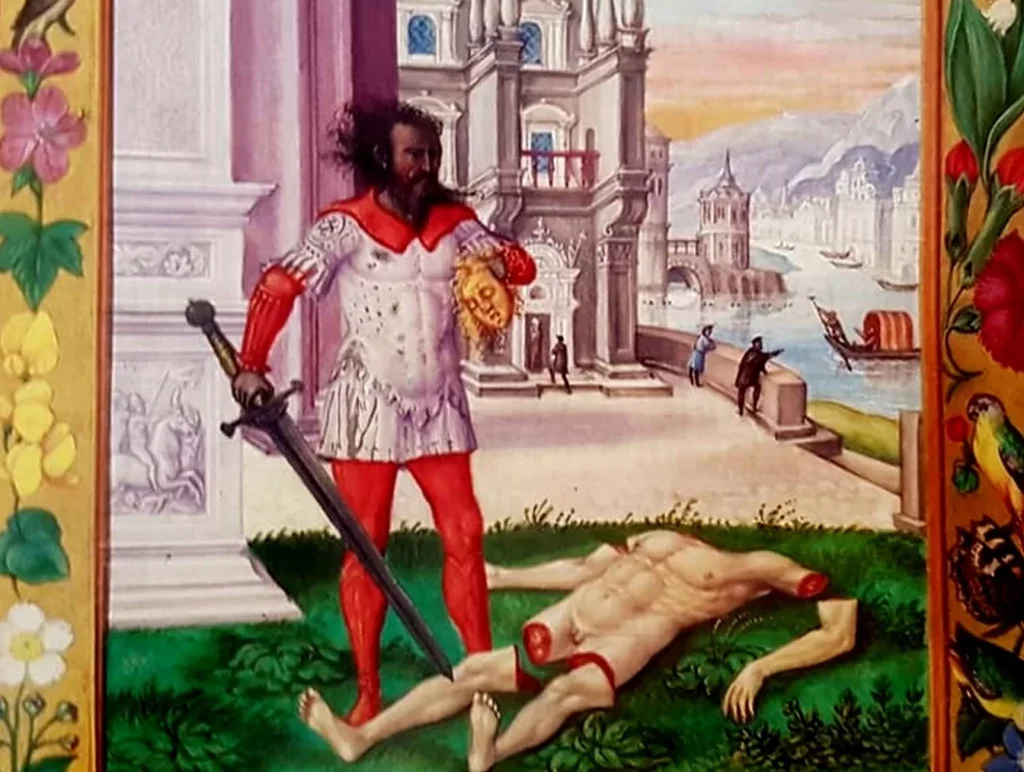
There is a woman who returns every Thursday to the same room in the same museum, stands before the same image, and leaves without being able to say why she came. She does not study it. She does not take notes. She simply looks, and something in her chest shifts, the way a key turns without opening a door completely. She has tried to explain this to people who love her. The words come out wrong every time.
The twenty-two illuminated plates of the Splendor Solis were made for exactly this kind of person. Not for scholars. Not for initiates clutching codebooks. For whoever stands before an image and feels their rational scaffolding quietly give way.
The pigments alone demand a reckoning. The lapis lazuli used in the backgrounds of certain plates was ground from stone quarried in the mines of Badakhshan, in what is now northeastern Afghanistan, carried overland across thousands of miles before arriving in the workshops of northern Europe, where it was processed into ultramarine at extraordinary cost — a blue so saturated it functions less as color than as depth, less as surface than as atmosphere the eye enters. The gold leaf applied with a precision that still confounds conservators catches light differently depending on the angle, which means the image is never the same image twice. Vermilion, made from ground cinnabar, pulses with a red that seems internally lit. These were not decorative choices. They were arguments made in the language of matter: the world you are looking at is not the world you think you inhabit.
The artist or artists behind these plates remain disputed. The manuscript tradition connecting the Splendor Solis to the Nuremberg workshop culture of the early sixteenth century is plausible but not settled, the attributions shifting depending on which scholar you consult and which manuscript copy they are examining. What remains beyond dispute is the level of technical mastery involved, a mastery so complete it renders the question of individual authorship almost beside the point. The hand that painted these plates understood that a certain quality of visual execution could bypass the gatekeeping function of conscious thought entirely.
Hans Belting, in An Anthropology of Images published in 2011, argues that images are not representations of things but presences that inhabit us, that the relationship between a human being and an image is not one of subject and object but of mutual colonization. We do not simply look at images. They look back, and in looking back they install something. The Splendor Solis plates operate on precisely this principle. A man dreams repeatedly of a figure trapped inside a flask, surrounded by what might be fire or might be light, and he wakes with the feeling that something important has been communicated to him, something he cannot translate, something that sits just below the reach of his own vocabulary. He did not choose this symbol. It chose him, which is to say the image found the gap in his rational defenses and moved through it.
Frances Yates, tracing the classical tradition of the art of memory through her landmark work of 1966, demonstrated that the medieval and Renaissance mind understood images as tools for transforming the architecture of consciousness itself. Not illustrations of ideas but the ideas’ actual carriers, possessing a mnemonic and psychic force that pure verbal language could not replicate. The Splendor Solis knew this. Its plates were sequenced so that moving through them in order constitutes a kind of internal event, a reorganization of something the viewer cannot quite name until it has already happened.
The text that accompanies the plates in the Splendor Solis is erudite, elaborate, and in certain crucial respects deliberately misleading. It speaks of sulfur and mercury, of kings dissolved and reborn, of philosophical operations that can be mapped onto laboratory procedures. The plates refuse this containment. They show a sun descending into a vessel of darkness and emerging changed, and no amount of technical commentary touches what the image actually does to the person standing before it, which is to suggest, without stating, that transformation is not a process you understand.
It is a process that understands you.
The Seven Stages as a Map of Collapse
There is a moment, somewhere around the third week after the loss, when a man stops grieving the job and starts grieving something he cannot name. The career was twenty years of early mornings and performance reviews and the particular way colleagues said his name when they needed something. Gone now. But what surfaces in the silence is not sadness about the work itself — it was never really about the work — it is the vertiginous recognition that without that structure, he does not know where he ends and the world begins. The identity was not something he had. It was something he was being held inside of, the way a jar holds water, and now the jar is broken and the water is just water, shapeless on the floor.
The Splendor Solis, in its seven treatises, understands this man completely. It was written for him, or rather, it was written because this dissolution has always been happening to someone, in every century, and every century has tried to look away from it. The manuscript’s alchemical stages — the blackening of nigredo, the whitening of albedo, the yellowing of citrinitas, the reddening of rubedo, and the stages that resist easy naming beyond them — are not a ladder ascending toward perfection. They are a cartography of what it feels like when the self loses its organizing fiction. Each stage is precise not because transformation is orderly but because collapse has its own phenomenology, its own sequence of textures and temperatures, and the Splendor Solis had the honesty to map them without flinching.
Gaston Bachelard, writing in 1938 in The Psychoanalysis of Fire, argued that fire is not merely a physical phenomenon but a psychological one — that the human imagination has always thought through combustion, and that to watch something burn is to experience a rehearsal of annihilation that the rational mind cannot fully domesticate. The alchemists knew this. Nigredo, the black stage, the putrefaction, is not metaphor. It is the actual texture of waking up in a foreign city where no one knows your name, where the social mirrors that usually return your identity to you are simply absent, and you discover something alarming: you do not miss being known. Or rather, you miss it and do not miss it simultaneously, which is worse, because it suggests the self you thought was solid was always partly performance, always partly the reflection you were catching in other people’s eyes.
James Hillman, in Re-Visioning Psychology published in 1975, argued that the soul does not seek integration and wholeness as its primary movement. It seeks depth, and depth is reached not by climbing but by descent. He called this the soul’s pathologizing, its move toward images of dissolution, darkness, and underworld — and he was clear that this was not illness but intelligence. The Splendor Solis encodes the same understanding across its illuminated pages: the figures submerged in vessels, the king dissolved in mercury, the sun blackened before it burns again. These are not failures on the way to success. They are the actual substance of the process.
This is precisely what the self-help industrial complex, generating over eleven billion dollars annually in the United States alone, has made structurally unspeakable. That economy requires the self to be improvable, which means it must first be defined, bounded, stable enough to be worked upon. Dissolution is not a product. You cannot sell a person permission to come apart. You can sell them a framework for putting themselves back together faster, more efficiently, with better morning habits and gratitude journals. But the Splendor Solis offers no such reassurance. Its seven treatises do not promise reconstruction. They describe, with the patience of someone who has watched this happen many times, what it looks like when the organizing structure of a life loses its hold — and they do not rush toward the reddening, toward rubedo and its golden completion, as though the black stages were merely inconvenient delays. They linger. They illuminate the darkness with extraordinary care.
The man who lost his career is in the nigredo. He does not know yet whether the water that spilled will ever find a new container, or whether containment was ever the point.
What the Renaissance Knew That We Pretend to Have Forgotten

There is a particular kind of vertigo that arrives not in crisis but in calm — the moment when you are sitting at your desk, having made every sensible decision, having followed every reasonable step, and you suddenly cannot remember why any of it felt like a choice. The mortgage signed, the career pivoted, the relationship ended or extended or quietly continued past the point where it made any emotional sense. You look at the map of your life and the route is perfectly logical. The logic is precisely what disturbs you.
The manuscript that circulated in at least four major copies — one in London, one in Nuremberg, one in Paris, one in Berlin — was produced in a moment of equivalent vertigo, except the vertigo was civilizational. The early sixteenth century was not a time of coherent transition; it was a time of simultaneous fractures. A German monk was nailing propositions to a church door and splitting the Christian world along a fault line that still runs beneath every Western argument about authority. A physician was declaring that the body was not a closed humoral system but a chemical laboratory in perpetual dialogue with minerals, with planets, with the invisible architectures of the natural world. The printing press, barely sixty years old, was turning private thought into public danger at a speed that no censorship apparatus had yet learned to manage. It was, in the precise sense of the word, a moment when the ground was not solid.
Into this moment, the Splendor Solis did not arrive as an escape. It arrived as a diagnosis. Pico della Mirandola had written in 1486, in his Oration on the Dignity of Man, that the human being was the only creature in creation without a fixed nature — placed at the center of the world not as its master but as its mirror, capable of descending toward the bestial or ascending toward the divine through the quality of attention brought to transformation. This was not metaphor. For Pico, it was an epistemological claim: what you work on, you become. The alchemist who heats the material in the flask is simultaneously heating something in himself, and neither process is primary. They are the same process observed from two angles.
Marsilio Ficino had built an entire architecture around this integration through his concept of spiritus — not soul, not body, but the third thing that moves between them, the subtle medium through which the cosmos communicates with the self. Ficino understood that the division of inner from outer, of matter from meaning, was not a discovery but a violence. His spiritus was the recognition that human experience is always already relational, always already embedded in the world it tries to observe. The modern secular mind did not defeat this idea. It simply stopped mourning it, which is a different and more dishonest act.
A woman in her forties, looking back at the last decade, realizes that every decision she described to herself as rational had a hidden emotional architecture she constructed first and justified second. The moment she chose the safer job over the one that frightened her, she told herself it was pragmatism, responsibility, clarity. What she had actually done was obey a terror so old she had named it wisdom. The logic was real. The logic was also cover. She is not unusual. She is the rule, documented extensively by Daniel Kahneman in his work on system-one and system-two thinking, confirmed by behavioral research showing that most post-hoc reasoning is precisely that — post-hoc, a story assembled after the decision has already been made by processes the conscious mind never supervised.
What the Renaissance knew, and what the Splendor Solis encoded in its luminous, disturbing imagery, was that this gap between the decision and its real origin is not a problem to be corrected by better rationality. It is the condition of being human in a world that is also alive — a world that speaks in symbols because symbols are the only language that reaches deep enough to where the actual decisions are made.
A vision curated by a filmmaker, not an algorithm
In this video I explain our vision
The Hermaphrodite at the Center of Everything

There is a particular moment that happens in long relationships, so gradual it arrives without announcement. You are sitting across from someone you have known for twenty years, and you realize, with a small shock that has nowhere to go, that you have become each other. Not in the romantic sense people celebrate at anniversaries. In a stranger, more disorienting sense: you have absorbed their hesitations, their syntax, their particular way of going silent before disagreeing. And they have taken on something of yours — a gesture, a preference, a fear you never named aloud. You look at this person and cannot quite locate where you end. The boundary that once felt like identity has become porous, unreliable, possibly fictional.
This is not loss, exactly. But it is not completion either. It is something the language of love has no real word for.
The image that closes the Splendor Solis is one of the most unsettling objects in the history of European manuscript illumination. A single crowned figure, robed in gold and crimson, standing on a dragon, holding the sun in one hand and the moon in the other. The body is double: male on one side, female on the other, the division running straight down the center like a seam. The face is serene in the way that faces in icons are serene — not peaceful, but beyond the category of peace, existing at a register the viewer cannot access. This is the Rebis, the res bina, the doubled thing. The culmination of the Great Work. The alchemists called it the coniunctio, the sacred marriage of opposites that produces the Philosopher’s Stone. They spoke of it in the language of triumph. And yet the image does not feel triumphant. It feels like a question asked in a dead language.
Jung spent the final decades of his active intellectual life attempting to decode what the alchemists were actually describing when they drew figures like this one. In Mysterium Coniunctionis, published in 1955 and 1956 as what he understood to be his magnum opus, he argued that the coniunctio was not a symbol of achieved wholeness but of the psychological confrontation with everything in oneself that has been denied, suppressed, or projected onto others. The union of opposites, in his reading, is not a resolution. It is an encounter so complete it threatens the coherence of the self that enters it. What emerges from the coniunctio is not the same entity that began the process. Something has been unmade in order to be made again.
Think of a person who has spent forty years being competent, contained, professionally armored — someone who organized their entire life around the suppression of a quality they could not afford to admit: tenderness, perhaps, or rage, or longing so large it would have rearranged everything. Then one morning, for no reason they can name, the quality surfaces. Not as breakdown. As recognition. As if it had been there the whole time, waiting with the patience of geological formations. The terror of that moment is not that something foreign has arrived. It is that something native has finally been seen, and now the self that was built around its absence has to account for itself.
Roberto Calasso, writing about the paradoxes embedded in mythological thinking, observed that the ancient figures who underwent transformation — gods who became animals, heroes who became constellations, mortals who became trees — were never described as having survived the change in any recognizable form. Transformation in the mythological register is not growth. It is a passage through which continuity itself is tested, and often does not pass.
The Splendor Solis offers no guidance here. The manuscript ends with the Rebis standing on its dragon, holding its celestial bodies, crowned and composed and absolutely silent on the question of what it cost to arrive there, and what, if anything, persists in that doubled figure that could still be called a self.
Someone, somewhere, is holding the manuscript open to that final plate right now, the gold still burning as brightly as it did five centuries ago, and they do not know what they are looking at.
🜂 The Hermetic Depths: Alchemy and Its Hidden Worlds
The Splendor Solis stands as one of the most visually breathtaking alchemical manuscripts ever produced, weaving together symbolic imagery and transformative philosophy into a unified esoteric vision. To truly understand its layered meanings, one must explore the broader constellation of hermetic thought, psychological interpretation, and symbolic tradition that surrounds it. These related articles open the gates to that deeper labyrinth.
Magnus Opus: nigredo albedo rubedo
The Magnus Opus — with its three great phases of nigredo, albedo, and rubedo — forms the very backbone of the Splendor Solis narrative. Each illuminated plate in that masterwork can be read as a visual meditation on these stages of inner and outer transformation. Understanding this triadic structure is essential to unlocking the manuscript’s deepest symbolic logic.
GO TO THE SELECTION: Magnus Opus: nigredo albedo rubedo
Jungian Alchemy: Jung and Alchemical Psychology
Carl Jung devoted much of his later intellectual life to decoding alchemical imagery as a map of the psyche’s own individuation process. His readings of manuscripts like the Splendor Solis revealed how the strange figures and vessels of alchemy mirror the archetypal dynamics of the unconscious. This article explores how Jungian psychology transformed alchemy from obscure proto-chemistry into a profound language of the soul.
GO TO THE SELECTION: Jungian Alchemy: Jung and Alchemical Psychology
The Corpus Hermeticum: Guide to Esoteric Reading
The Corpus Hermeticum provides the philosophical and spiritual bedrock upon which works like the Splendor Solis were constructed. Its doctrines of cosmic sympathy, divine emanation, and inner illumination echo throughout every plate and allegory of the illustrated manuscript. Reading the Hermetic texts alongside the Splendor Solis reveals a continuous tradition of esoteric wisdom stretching back to late antiquity.
GO TO THE SELECTION: The Corpus Hermeticum: Guide to Esoteric Reading
Spiritual Alchemy: Inner Transformation and Symbolism
Spiritual alchemy reframes the great work not as a laboratory process but as a journey of inner purification and symbolic rebirth. The Splendor Solis, with its richly illustrated sequence of transformation, is perhaps the finest visual document of this interior path ever created. This article illuminates how the symbolic language of metals, fire, and dissolution maps onto the landscape of the human spirit.
GO TO THE SELECTION: Spiritual Alchemy: Inner Transformation and Symbolism
Discover the Cinema of the Invisible on Indiecinema
If these hermetic depths have stirred something within you, Indiecinema streaming is the place where moving images carry the same transformative charge as the illuminated pages of the Splendor Solis. Our curated catalog of independent and esoteric cinema invites you to continue this inner journey through the art of film — where alchemy, symbol, and vision are still very much alive.
👉 EXPLORE THE CATALOG: Watch Indie Films in Streaming
A vision curated by a filmmaker, not an algorithm
In this video I explain our vision

