
The Labyrinth You Already Live In
You are standing in a room full of people you know and you feel absolutely nothing. Not boredom, not sadness — something more precise and more disturbing than either. You feel like a translation of yourself. Like the version of you that showed up tonight is a reasonably accurate rendering of the original, close enough to pass, close enough that no one will notice, including you, for most of the evening. You laugh when the moment calls for laughter. You hold your glass at the angle that says relaxed. You are performing fluency in a language you learned by watching others perform it first, and the unsettling part is not that you are doing this. The unsettling part is that you cannot remember when you started, or what was there before.

This is not a crisis. That is what makes it so persistent. A crisis has edges, a beginning, the promise of resolution. What you are living is more like weather — a permanent atmospheric condition in which the self and its presentation have become so layered with habit and social necessity that even in your most private moments you are not entirely sure which thoughts are yours and which are the residue of every room you have ever needed to survive.
Octavio Paz spent the better part of his intellectual life naming this condition with a precision that felt, when you first encountered it, almost violent in its accuracy. He was born in Mexico City in 1914, and died there in 1998, and in between he produced a body of work that spanned poetry, essay, diplomacy, cultural criticism and political philosophy, ultimately winning the Nobel Prize in Literature in 1990. But his Nobel is almost the least interesting fact about him. What matters is that he understood, decades before the language of identity politics or authenticity culture gave everyone permission to discuss these things at dinner parties, that the self most people present to the world is not a reflection but a construction — and that the construction began under duress.
His 1950 essay collection The Labyrinth of Solitude remains one of the most unsettling books written about what it means to belong to a culture, not because it diagnoses Mexico specifically, but because Mexico, for Paz, was the sharpest lens through which to examine something universal. The Mexican mask — the hermeticism, the irony, the reflexive self-concealment that he analyzed with such anthropological severity — was not a local peculiarity. It was an extreme case of something every modern person performs in every city in every language: the management of vulnerability through the architecture of persona.
Paz borrowed from existentialism without being enslaved to it. He read Freud without becoming a Freudian. He was deeply influenced by the Surrealists, particularly after his first stay in Paris in the 1940s, where he encountered André Breton and the movement’s insistence that the irrational and the unconscious were not problems to be solved but territories to be inhabited. What Paz took from all of this, and made entirely his own, was the conviction that the distance between a person and their innermost experience was not a psychological malfunction but a political and historical product. You are not alienated from yourself because something went wrong in your development. You are alienated from yourself because something went exactly as intended.
There is a moment — ordinary, brief, the kind that vanishes before you can decide whether it meant anything — when a man sits alone in a city he has lived in for twenty years and realizes he does not know a single person who would notice, truly notice, if the version of him they knew were replaced by a slightly different one. He does not feel tragic about this. He feels curious, and then afraid of his own curiosity. Paz would have recognized that fear immediately. He spent his entire life writing toward it.
Don Barry: A Quixotic Exploration
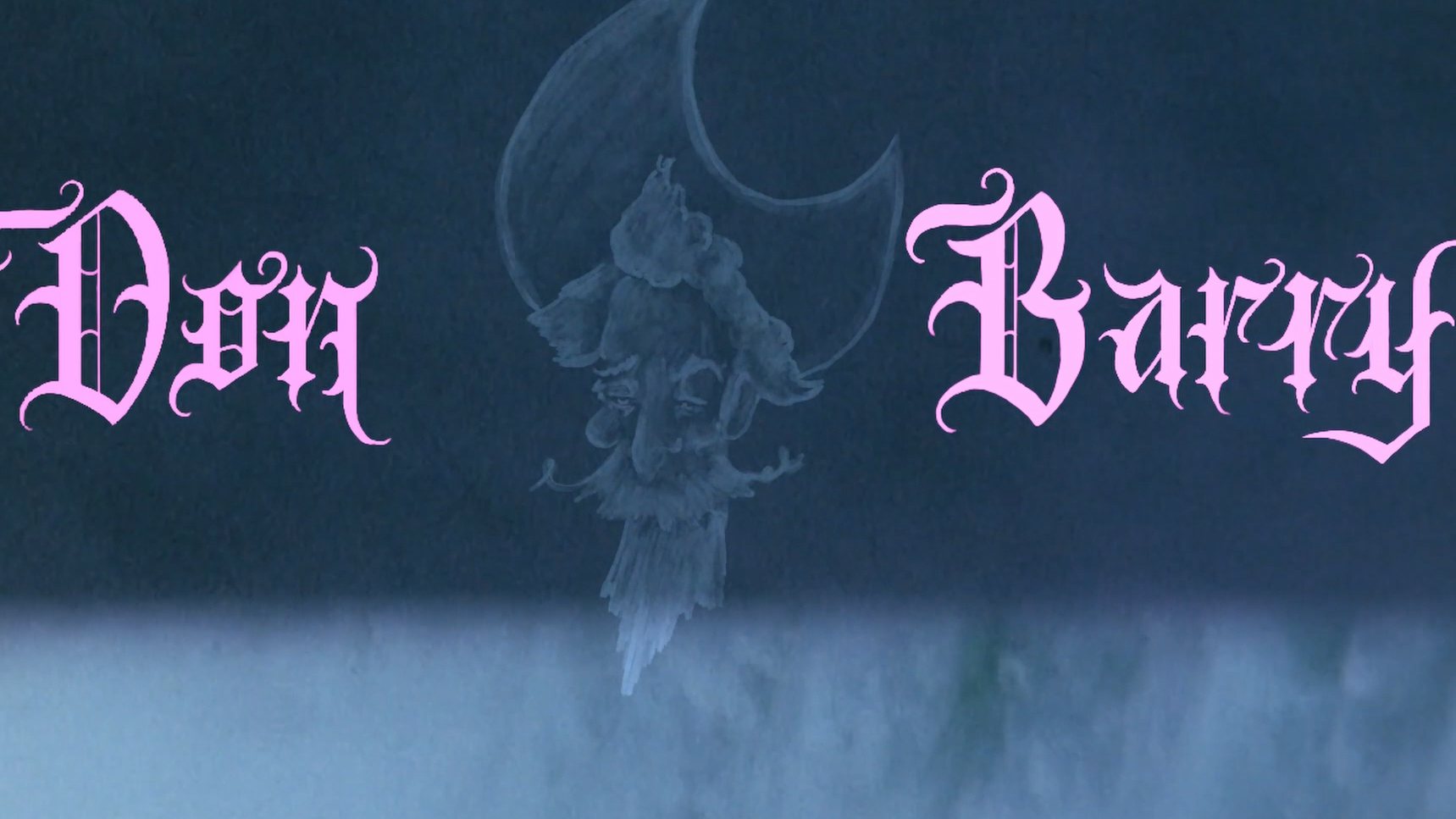
Docufiction, Experimental, by Paul Smart, Mexico, 2026.
Don Barry: A Quixotic Exploration is a debut feature that places the biography of an eighty-year-old experimental filmmaker and artist, Barry Gerson, within the metanarrative of Miguel de Cervantes’ Don Quixote. Don Barry was filmed in the city of Guanajuato during the 51st edition of the Cervantino Festival, as well as during the vibrant Day of the Dead celebrations held in the city’s UNESCO-listed tunnels. The film honors the director’s long friendship with artist Barry Gerson, drawing inspiration from Cervantes’ Don Quixote. Paul Smart’s directorial choices create something new that celebrates life and goes beyond conventional storytelling. A search for magic in our real lives. A moving film about the meaning of life, art, and death. Not to be missed.
Paul Smart is a proud outsider filmmaker with a long history of film screenings. In the 1980s, he emerged in New York’s vibrant youth art scene, working in theater production and later filmmaking, before retreating to rural upstate New York, in the Catskill Mountains, where he made a living writing and screening independent films in old parish halls for rural audiences, many of whom had never seen a film.
LANGUAGE: English
SUBTITLES: Spanish, French, German, Portuguese
Born Into Contradiction: Mixcoac, 1914
You are six years old and you watch a man who was once enormous become small. Not metaphorically small — physically diminished, as though the alcohol has been eating at the architecture of him from the inside, dissolving the beams. He sits at the table and you understand, without having words for it yet, that the table is holding him up rather than the other way around. This is not a lesson anyone teaches you. It arrives as sensation, as a shift in the gravitational field of the house. The man who was supposed to be the axis around which your world organized itself has begun to wobble, and so the world wobbles with him.
Octavio Paz was born on March 31, 1914, in Mixcoac, a village that has since been swallowed by the southern sprawl of Mexico City but which at the time existed at the edge of things — neither fully urban nor fully rural, a liminal place that seems, in retrospect, almost too perfectly suited to produce a mind that would spend its entire life thinking about thresholds. The year itself was a crucible. Emiliano Zapata’s forces were at their peak, Francisco Villa was riding north and south with terrifying momentum, and the Mexican Revolution was still undecided enough to mean something, still capable of genuine horror and genuine hope in equal measure.
His father, Octavio Paz Solórzano, was a lawyer who had attached himself to Zapata’s cause with the fervor of someone who needed a faith to replace an older, exhausted one. He rode south, carried messages, negotiated with North American journalists, and believed — or performed belief, which from the outside looks identical — in the transformation of the land and the redemption of the campesino. His grandfather, Ireneo Paz, occupied the other pole: a novelist, journalist, and liberal intellectual of the old Porfirian school, a man who had lived through enough Mexican history to be skeptical of revolutions while remaining constitutionally incapable of ignoring ideas. Between these two men, the young Octavio grew up inside a tension that was not merely familial but civilizational.
What the Revolution did to the father is what it did to many of its true believers: it failed them in the specific way that only things you love completely can fail you. By the time Paz Solórzano returned from his Zapatista commitments, Zapata was dead — assassinated at Chinameca in April 1919, lured into a trap with the cynical precision that Mexican power has always reserved for its most inconvenient idealists. The cause dissolved. What remained was the man, and the man increasingly required alcohol to remain present in his own life. He departed, in stages, the way certain catastrophes happen — slowly and then all at once.
Erik Erikson, writing about the formation of identity in childhood, argued in Identity: Youth and Crisis (1968) that the child’s first and most formative act of selfhood is the internalization of a figure against whom the self can be measured. What happens, he did not fully ask, when that figure is itself disintegrating? What kind of self do you build when the measuring stick is bending? Paz would spend decades answering this question through poetry and essay, through the labyrinthine architecture of El laberinto de la soledad, without ever quite naming it as autobiography. He displaced it onto the nation. He made Mexico the son watching the father collapse.
There is a scene — a moment that belongs to anyone who has ever lived inside a house where one person is disappearing — where a boy sits in a library that smells of old paper and tobacco, surrounded by the books of a grandfather who still believes in reason, and he understands simultaneously that reason is not enough and that it is all there is. The library is Ireneo’s. The absence in the next room is his father’s. Between those two forces, a philosophy was beginning to form.

The Mask and the Wound: El laberinto de la soledad
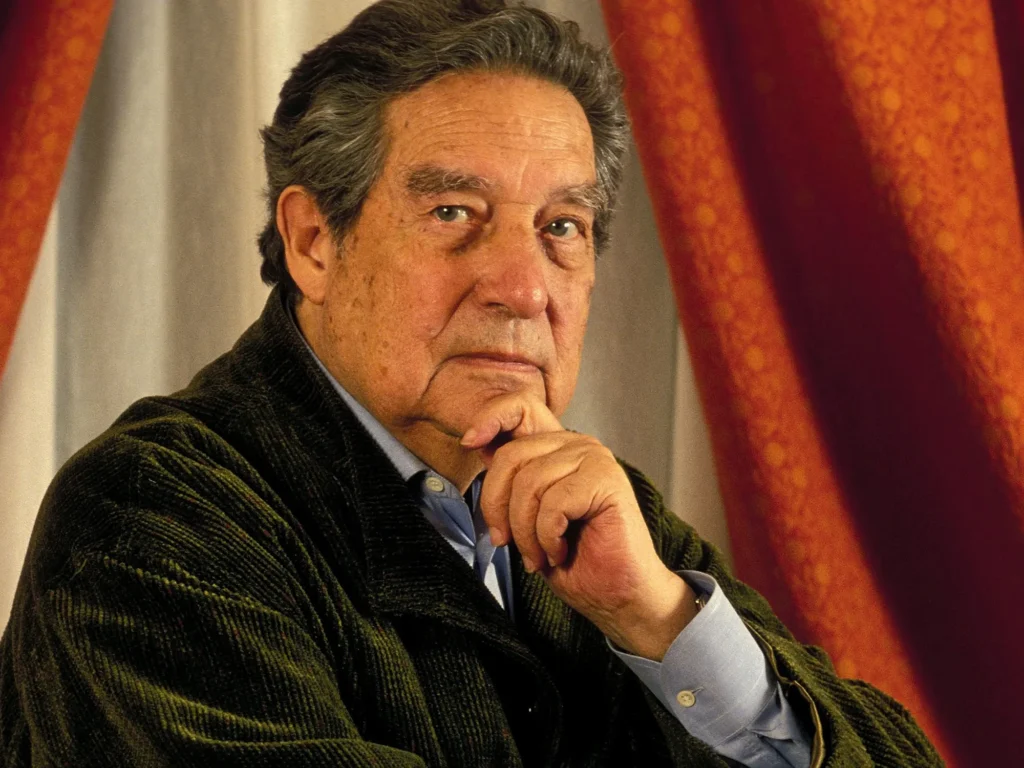
You know the moment. Someone asks how you are and you say fine before they finish the sentence. Not because you are fine, necessarily, but because the word comes up from somewhere below thought, a reflex so old it has lost all connection to actual feeling. The answer is a mask, and what is strange is not that you wear it — everyone does — but that you have worn it so long you occasionally forget there is a face beneath it.
This is where Octavio Paz begins, in 1950, not with philosophy but with gesture. El laberinto de la soledad opens on the pachuco, the Mexican-American youth in Los Angeles whose extravagant clothing and deliberate provocation Paz reads not as rebellion but as a desperate cry for identity — someone who has lost one world and been refused entry to another, and so constructs from pure surface a kind of fortress. The mask, Paz argues, is not deception. It is survival. But survival of what, exactly, and at what cost?
The book is one of those rare texts that operates simultaneously as anthropology, psychoanalysis, and confession. Paz was thirty-five when he published it, and he wrote it partly to understand himself, partly to understand why every Mexican gathering he had ever attended felt like a negotiation with an invisible enemy. His diagnosis was radical: that Mexican identity, at its core, is organized around the logic of the wound — specifically, the wound of the Conquest, which installed in the cultural unconscious a permanent structure of violation and shame. And at the center of this structure stands La Malinche, the indigenous woman who served as Hernán Cortés’s interpreter and lover, who bore his child, and who has been read for centuries as the founding act of Mexican betrayal.
Paz’s treatment of La Malinche is the most contentious and the most penetrating element of the book. She is, in his reading, the violated mother, the chingada — a word he dissects with surgical brutality — the one who opened herself to the other, who was opened by force, and whose descendants carry in their bodies the unbearable ambiguity of that origin. To be Mexican, in Paz’s formulation, is to be the child of something that cannot be named cleanly as rape or as love, as conquest or as encounter. It is to live inside a story that has no resolution because it has no legitimate beginning.
Freud understood that the wound that cannot be spoken returns as symptom. Lacan went further: the subject is constituted precisely by what it cannot say about itself, by the gap between the word and the thing the word was meant to cover. Paz intuits both without naming either. The mask in his work is not a Freudian defense mechanism in any simple sense — it is the very structure by which a self becomes possible in a culture that has been taught to experience its own existence as something shameful. You do not remove the mask to find authenticity. You remove it to find another mask, and perhaps another, until you reach something that feels less like a face and more like an open question.
There is a man at a feast, surrounded by cousins and music and the smell of meat cooking, who laughs louder than anyone in the room and has not slept well in four years. His laughter is real. His exhaustion is real. Both things occupy the same body without ever meeting. Paz would recognize him instantly — not as a case study but as a cultural product, as someone shaped by a civilization that learned, centuries ago, to celebrate precisely at the edge of the abyss, because to stop celebrating would mean looking down.
Solitude, in Paz’s hands, is not a problem to be solved. It is the condition from which all human meaning is attempted, the ontological ground beneath every mask, every feast, every reflexive answer to a question that was never quite asked.
Surrealism, Eroticism, and the Body as Revolt
You are reading a poem and your skin changes temperature. Not because the language is beautiful — beauty is too soft a word for what happens — but because something in the arrangement of words has briefly dismantled the wall between your body and the world. Paz knew this was not a literary effect. It was an ontological event.
When he met André Breton in Paris in 1945, Paz was thirty-one years old and already carrying within him a suspicion that reason alone could not redeem the human animal. Breton confirmed it with the furious clarity of a man who had watched two world wars prove rationalism’s capacity for organized murder. Surrealism, as Breton had articulated it since the first Manifesto of 1924, was not primarily about strange images or melting clocks. It was a declaration that the unconscious was a political territory, that to suppress desire was to manufacture obedience, that the dream and the erotic were not escapes from history but frontal assaults on it.
Paz absorbed this not as an aesthetic program to adopt but as a confirmation of something he had already sensed in his reading of the pre-Socratics, in the Aztec cosmologies he had grown up inside, in the violent convergences of Mexican baroque art. The surrealist encounter gave him a European vocabulary for an intuition that was already ancient and specifically his own.
The erotic in Paz is almost never about pleasure as satisfaction. It is about rupture. Think of two people in a room where the ordinary rules of selfhood suddenly cease to apply — not in the cinematic sense of seduction performed for spectacle, but in the terrifying and liberating sense that the boundary of the skin stops functioning as a limit. There is a scene of a man and a woman on a rooftop in the blue hour before dawn, pressed against each other with such density of need that the city below them becomes abstract noise, a mere backdrop to the dissolution of two solitudes into something neither of them can name or claim. This is not romance. This is what Paz spent years trying to formulate: the momentary abolition of the isolated self, not through mysticism or drugs or political ecstasy, but through the body encountering another body with full ontological seriousness.
He called solitude the deepest wound of modern consciousness. In El laberinto de la soledad, published in 1950, he mapped how Mexican identity had institutionalized this wound, built a national character around it. But already in Libertad bajo palabra, the collection he assembled and revised through the 1940s and into 1960, the poetry was proposing another way. Not a cure, but an interruption. The erotic poem as a controlled detonation inside the architecture of the separate self.
Georges Bataille, whose L’Érotisme appeared in 1957, arrived at similar conclusions from a different angle: eroticism is the affirmation of life even in the face of death, a transgression of the discontinuity that defines individual existence. Paz read Bataille with recognition rather than discovery. They were mapping the same territory from opposite banks of the same river.
What surrealism gave Paz was permission to treat the irrational as rigorous. The dream-image in a poem is not decoration but evidence. The body that merges with another body in the erotic act is not escaping thought — it is thinking in a register that syntax cannot reach. When he writes in Libertad bajo palabra of water that burns, of silence that has a mouth, of the instant that is simultaneously wound and flower, he is not being obscure. He is being precise about an experience that ordinary language was designed, perhaps deliberately, to make unspeakable.
The question the surrealists were really asking — and Paz took it seriously for the rest of his life — is whether the civilization that had learned to manage and domesticate desire had not also, in the same gesture, made itself incapable of actually living.
The Diplomat Who Refused His Government

There is a specific kind of silence that institutions produce in those who serve them. Not the silence of cowardice exactly, though cowardice lives inside it, but something more architectural — a silence built from salary, prestige, belonging, the warm certainty of being on the right side of the door. Octavio Paz spent years inside that silence, representing Mexico to the world from the extraordinary vantage point of New Delhi, immersed in a civilization that would permanently alter his understanding of time, ritual, and the sacred. He was a diplomat who genuinely loved the work of cultural translation, who found in India not exile but revelation. And then, on the second of October 1968, soldiers and paramilitary forces opened fire on a student demonstration in the Plaza de las Tres Culturas in Tlatelolco, Mexico City. The government’s own people. The government’s own future. Somewhere between three hundred and four hundred young people were killed, though the official figures insisted for decades on something far more modest, as official figures always do when the state is the murderer.
He resigned his ambassadorship within days. The letter he wrote to the Mexican Foreign Ministry is one of the more extraordinary documents in the history of Latin American intellectual life — not because it is eloquent, though it is, but because it does what almost no institutional actor ever does: it names the thing directly and walks out. He did not request a transfer. He did not express concerns through appropriate channels. He did not wait to see how the political winds would shift. He simply refused to continue representing a government that had just massacred its students, and he accepted every material consequence of that refusal.
Hannah Arendt, in her coverage of the Eichmann trial published in 1963, built her most unsettling argument not around monsters but around functionaries — around the terrifying normality of people who process paperwork, follow chains of command, and perform their institutional roles with professional diligence while atrocities accumulate at the other end of the bureaucratic chain. The banality of evil is not a description of stupidity. It is a description of the way institutions teach us to separate our actions from their consequences, to locate moral responsibility always one level above or below where we actually stand. Every ambassador who kept their post after Tlatelolco was making a choice that looked, from the inside, like no choice at all — like simply continuing, like professional responsibility, like not making things worse.
What Paz understood, and what makes his resignation something more than a political gesture, is that the structure which feeds you is also the structure that slowly teaches you what you are allowed to see. He had spent enough years inside Mexican political culture — a culture Philip Corrigan and Derek Sayer would later analyze, in their 1985 work on state formation, as one that consistently mystified its own violence through the language of revolutionary legitimacy — to know exactly what kind of pressure would follow his letter. The career foreclosure, the social ostracism among certain circles, the quiet withdrawal of opportunities that are never officially denied but simply cease to arrive. The cost of saying no to the structure that feeds you is not paid once, dramatically, in a single heroic moment. It is paid in installments, over years, in rooms where your name stops being mentioned.
There is a man who receives news of what his government has done and sits with it through the night, understanding that by morning he will have to choose between the story he has been telling about himself — the loyal servant of culture and diplomacy — and what he actually knows to be true. That choice, made in private before it is ever made in public, is the one that history rarely records. It is the choice that precedes the letter, the resignation, the clean break. It is the moment when the institutional silence becomes unbearable not because it is loud, but because it is yours.
A vision curated by a filmmaker, not an algorithm
In this video I explain our vision
India, Buddhism, and the Dissolution of the Self
You arrive somewhere and the language around you is not yours, and something strange happens: you begin to dissolve. Not dramatically, not with anguish. Just quietly, like salt in warm water. The streets do not confirm you. The faces do not recognize you. The gods on the temple walls have too many arms and not enough resemblance to anything you were taught to call sacred. And in that dissolution, something unexpected surfaces — not panic, but a kind of relief so unfamiliar it takes weeks to name.
Paz arrived in India in 1962 as Mexico’s ambassador, and he stayed until 1968. Six years in which the subcontinent did not merely expand his thinking but fundamentally destabilized its architecture. He had already spent years interrogating Western metaphysics, already written The Labyrinth of Solitude with its surgical attention to Mexican solitude and mask. But India presented a different order of challenge. Not a cultural difference to be analyzed from outside, but a philosophical pressure applied directly to the foundations of what he had assumed the self to be.
Hindu and Buddhist thought, in their extraordinary variety, converge on something that Western philosophy has rarely been willing to face without flinching: the self is not the ground of experience but its product. It is not the knower but something known, temporarily assembled, a grammatical convenience mistaken for a metaphysical substance. The Upanishads had said this. The Buddha had said this. What Buddhism calls anatta — no-self — is not nihilism but precision: the ego is a process, not an entity, and clinging to it as permanent is the original source of suffering. William James, in his Principles of Psychology from 1890, had gestured toward something similar when he described the self as a stream rather than a container, but Western culture absorbed his insight and immediately domesticated it, turning the stream back into a lake with borders.
Paz could not domesticate what India showed him. In El mono gramático, written in 1970 and published in 1974, the very form enacts the dissolution of linear certainty. The essay — if it can be called that — moves like a path that questions its own destination, doubles back, loses itself in description, in eroticism, in Sanskrit grammar, in the monkey-god Hanuman who in Hindu mythology carries the entire cosmos in his chest without knowing it. The writing refuses to arrive. It insists on the in-between, on the process of moving rather than the fact of destination. This is not poetic caprice. It is philosophical method: the text performs what it theorizes.
In Conjunciones y disyunciones, published in 1969, Paz maps the great binary of body and non-body across Eastern and Western traditions, finding in Indian thought a model where opposites do not war but interpenetrate, where the erotic and the sacred are not enemies but faces of the same reality. He draws on Marcel Mauss’s work on the gift and on Georges Bataille’s concept of expenditure to argue that societies organize themselves around what they do with excess — pleasure, death, the body — and that Western modernity’s pathological relationship with the flesh has its roots in a binary thinking that Indian philosophy structurally refuses.
A man walks through a city where every sign is indecipherable, where even his gestures mean different things, where he reaches for the categories that have always organized his experience and finds them slipping, not because they are wrong exactly, but because they are local, contingent, one answer among thousands of possible answers to the question of what a person is. He is not destroyed by this. He is, for the first time in years, genuinely curious about what remains when the familiar scaffolding comes down.
What remains, Paz found, is not nothing. But it is not the self he brought with him either.
The Political Apostasy: From the Left to Vuelta
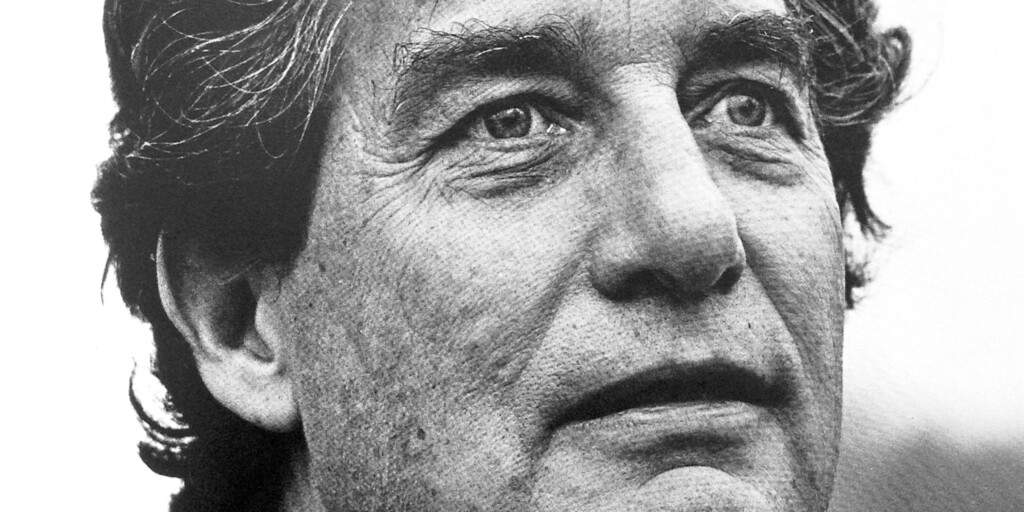
There is a particular kind of silence that falls over a dinner table when someone says what everyone in the room has privately thought but collectively agreed never to say aloud. The air does not grow hostile immediately. It grows careful. Watchful. And then, slowly, the faces rearrange themselves into expressions of disappointment, and the person who spoke feels not the relief of honesty but the specific cold of being removed from a warmth they had not realized, until that moment, was conditional.
This is approximately what happened to Octavio Paz across the 1960s and 1970s, except the dinner table was an entire ideological civilization, and the silence lasted decades.
Paz had moved through the gravitational field of the Latin American left the way most serious intellectuals of his generation did — not naively, but with genuine moral investment. He had seen fascism in Spain with his own eyes. He understood what it meant to choose sides when the sides were real. But he also carried within him a quality that Julien Benda, writing in 1927 in La Trahison des Clercs, had identified as the essential and perpetually endangered virtue of the intellectual: the refusal to subordinate truth to tribal loyalty. Benda’s argument was that the clercs — the intellectual class — had betrayed their calling by placing passion, politics and national or ideological belonging above the disinterested pursuit of truth. Paz read this diagnosis and, in time, lived its inversion. He did not betray truth for the tribe. He betrayed the tribe for truth. Which, in the sociology of intellectual communities, is the more dangerous apostasy.
His criticisms of Soviet totalitarianism were not sudden. They accumulated through the 1950s and sharpened catastrophically after 1968 — a year that functioned for him as a kind of double revelation. The Soviet tanks in Prague and the Mexican government’s massacre of students in Tlatelolco on October 2nd arrived as twin proofs that power, left unchecked by genuine dissent, devours its own justifications. He resigned his ambassadorship to India the day after Tlatelolco. That gesture had a cost, and he paid it knowingly.
But it was the founding of Vuelta in 1976 that transformed private discomfort into public rupture. The journal became the institutional home of his heterodoxy — a space where the critique of authoritarian leftism was not a footnote but a central intellectual project. In its pages, Paz argued what was, in the context of Latin American intellectual culture, close to unspeakable: that the Cuban revolution had produced not liberation but a new caste of power; that solidarity with the oppressed could not mean silence about the oppressor when the oppressor claimed to speak in the name of the oppressed. His critics called this betrayal. They used the word with the full weight of moral condemnation, as though fidelity to a political line were the highest form of integrity rather than, as Paz understood it, the subtlest form of cowardice.
What the sociology of intellectual conformity consistently reveals — and Randall Collins documented this with uncomfortable precision in The Sociology of Philosophies, published in 1998 — is that intellectual communities enforce their boundaries not through argument but through the management of belonging. You are not refuted. You are excluded. The disagreement is translated into a character defect. Paz became, for many, not someone who was wrong but someone who had sold out, who had chosen comfort, who had crossed to the other side. The accusation was inverted biography: he was the one accepting discomfort, the one standing in the cold, the one who had lost the warm assumption of being understood by those he had once stood beside.
The loneliness this produces is not the romantic loneliness of the misunderstood genius. It is quieter and more corrosive than that. It is the loneliness of someone who can see exactly why they are being misread and cannot do anything about it without becoming the thing they are accused of being.
Language as the Last Country
The prize arrived in 1990, and there was something almost ironic about the timing — a man who had spent decades arguing that modern civilization mistakes noise for meaning, accumulation for understanding, receiving the world’s most official literary confirmation. The Swedish Academy’s recognition did not vindicate Paz so much as it illustrated, with perfect unintentional precision, the very paradox he had been exploring since the 1950s: that language both crowns us and imprisons us, and the highest honor language can bestow is simply a more ornate cell.
There is a moment that stays with you — a man sitting across from his elderly father who is losing his mind to dementia, trying to speak to him, and realizing with a kind of cold vertigo that the words he is using have always been approximate, that the precision he believed in was a shared agreement, not a truth, and now that his father can no longer hold up his end of the agreement, the whole structure of meaning dissolves like salt in warm water. Language was never the bridge he thought it was. It was the illusion of a bridge, which is a different thing entirely, and perhaps more necessary for that.
This is what Paz argued in El arco y la lira, published in 1956, with a clarity that still carries a kind of intellectual violence. The poem, he wrote, does not communicate in any conventional sense. It does not transmit a message from sender to receiver like a telegram or a law. It produces a rupture. It tears open the surface of ordinary language, that surface on which we slide through our days without truly touching anything, and in that tearing it creates a moment of genuine presence — but only by destroying the coherent meaning that ordinary speech depends upon. The poem lives in the wound it makes. This is not metaphor. This is the functional mechanism of poetry as Paz understood it, drawing implicitly on Mallarmé’s conviction that the pure poem erases the poet in favor of language itself, and on Heidegger’s argument in Poetry, Language, Thought that authentic language does not describe the world but discloses it, opens it, forces it to show something it had been hiding behind its own surface.
A woman reads a letter from someone who loved her twenty years ago, and the words he used then, which she had memorized, which she had repeated to herself as evidence of something permanent, no longer mean what they meant. She has not changed her interpretation. The words themselves have shifted, quietly, the way furniture moves in a house when you are not watching. She realizes, sitting there with the letter, that what she called memory was in fact continuous rewriting, and that the original feeling she believed she had preserved was already a translation of a translation, worn smooth by handling until the original surface was gone entirely.
Paz understood Mexico’s history through exactly this lens, which is why the Labyrinth of Solitude, published in 1950, reads not as sociology but as an excavation of the lies embedded in a national language — the words colonizers imposed, the masks the colonized wore until the masks became faces, the revolutionary rhetoric that outlived its own sincerity and became ceremony. The labyrinth was not a metaphor for confusion. It was a map of what happens when a people must live inside a language that was not made for them, or was made to manage them, or was adopted with such ferocity that the adoption became indistinguishable from origin.
And so the Nobel, in the end, was not a triumph but a confirmation of something more ambiguous: that language is the only homeland that cannot be seized by armies or dissolved by exile, but that this homeland has no stable ground beneath it, only the continuous act of speaking into the dark and listening for what comes back.
🌀 Labyrinths of Thought and Spirit
Octavio Paz wandered through the infinite maze of identity, solitude, and poetic vision, weaving together East and West, tradition and rupture. His work invites us to explore the deeper currents of consciousness, symbolism, and the search for meaning that connect literature, mysticism, and philosophy across cultures.
Buddhism and 3 Documentaries to Understand it
Buddhism, like Paz’s poetry, explores the dissolution of the self and the nature of impermanence as a gateway to deeper understanding. Its contemplative traditions resonate with the Mexican poet’s immersion in Eastern thought during his years in India and Japan. These three documentaries offer an accessible entry point into a spiritual worldview that profoundly shaped Paz’s vision of the present moment.
GO TO THE SELECTION: Buddhism and 3 Documentaries to Understand it
Universal Consciousness
The idea of universal consciousness runs through Octavio Paz’s poetry like an underground river, connecting individual solitude to a cosmic whole. His meditations on love, time, and language often reach toward that transpersonal dimension where the self dissolves into shared existence. This article explores the philosophical and spiritual frameworks that underpin such a vision of unified awareness.
GO TO THE SELECTION: Universal Consciousness
Jiddu Krishnamurti: the Man Who Refused to Be God
Jiddu Krishnamurti, like Octavio Paz, refused to be confined by ideological or spiritual dogmas, insisting on the radical freedom of the individual mind. Both thinkers confronted the mechanisms of social conditioning and called for a direct, unmediated encounter with reality. Exploring Krishnamurti’s life illuminates the broader intellectual climate in which Paz’s own philosophical restlessness took shape.
GO TO THE SELECTION: Jiddu Krishnamurti: the Man Who Refused to Be God
Alchemy in Literature: From Dante to Goethe
Alchemy in literature, from Dante to Goethe, maps a symbolic journey of transformation that finds deep echoes in the labyrinthine imagery of Octavio Paz. The poet was drawn to hermetic traditions as metaphors for the transmutation of language itself into living presence. This article traces the literary lineage that connects the alchemical imagination to the modern poetic quest for essence.
GO TO THE SELECTION: Alchemy in Literature: From Dante to Goethe
Discover New Worlds on Indiecinema
If the infinite maze of ideas, poetry, and spirit moves you, Indiecinema streaming is your next destination. Our curated selection of independent and documentary films explores consciousness, culture, and the human condition with the same depth and freedom that defines great thinkers like Octavio Paz. Join us and let independent cinema open new doors of perception.
👉 EXPLORE THE CATALOG: Watch Indie Films in Streaming
A vision curated by a filmmaker, not an algorithm
In this video I explain our vision

