
The Morning You Realized the Teacher Was Watching You Back
You have been in that room. Maybe it was a weekend seminar in a hotel conference hall with the carpet the color of old mustard, or a meditation retreat where someone had arranged cushions in a circle with the careful geometry of intention. Maybe it was a talk given by a man in linen who paused before each sentence just long enough to make the silence feel earned. You sat there and something happened to you that you did not fully name at the time: you felt chosen. Not chosen by the speaker exactly, but chosen by the moment, by your own presence in that room, by the fact that you had found your way there while so many others had not. The people around you leaned forward with the same quiet hunger, and you recognized it in them while refusing to see it in yourself. This is the first seduction, and it is almost impossible to resist, because it does not announce itself as seduction. It arrives wearing the face of sincerity.

The speaker’s voice has a particular quality in those rooms. Measured. Unhurried. It implies that the person using it has passed through some fire you have not yet encountered but soon will, if you listen carefully enough. There is always the suggestion of transmission, of something passing between the person at the front and the people arranged before them in their posture of readiness. And the remarkable thing, the thing worth sitting with, is that the feeling this produces is not entirely false. Something does happen in those rooms. People do leave changed, or at least convinced of change, which for a time feels identical.
This is the architecture of spiritual authority, and it is very old. It does not require bad faith. It does not require a charlatan. It requires only the raw material of human longing and someone willing, consciously or not, to stand inside it.
In 1909, on a beach near Adyar, in the south of India, a fourteen-year-old boy was noticed by a man named Charles Webster Leadbeater, a senior figure in the Theosophical Society, an organization founded in New York in 1875 by Helena Blavatsky and Henry Steel Olcott with the stated aim of uniting Eastern and Western spiritual traditions under a universal brotherhood. Leadbeater had developed, or claimed to have developed, the capacity for clairvoyant perception. He looked at this boy and saw, he said, an extraordinary aura. A radiance that marked the child as exceptional beyond ordinary measure. The boy’s name was Jiddu Krishnamurti, and he was thin, frequently ill, not particularly distinguished by the standards of the school where Leadbeater first observed him, the son of a Brahmin clerk who worked for the Society’s estate. He had lice. He had been thought dim-witted by at least one of his teachers.
What Leadbeater saw, or decided he saw, was the vehicle for the coming World Teacher, a messianic figure whose arrival the Theosophists had been anticipating with the organized fervor of people who have made prophecy into institutional policy. The boy was taken in. He was cleaned, educated, groomed in the most literal and figurative senses. Annie Besant, who led the Theosophical Society with considerable force and genuine idealism, became his guardian. An organization was constructed around him: the Order of the Star in the East, founded in 1911, which would eventually gather tens of thousands of members across dozens of countries, all of them oriented toward this one young man as the axis of their spiritual futures.
The cruelty of this situation, if cruelty is the right word, is that it was conducted entirely in the name of love. Everyone involved believed they were doing something magnificent. They were offering a child the world, and the world was grateful for the offering, and the child had not been asked.
What no one anticipated, what the entire architecture of that beautiful and suffocating project could not account for, was that the boy would one day look back at the room and see exactly what was happening inside it.
I Am Nothing
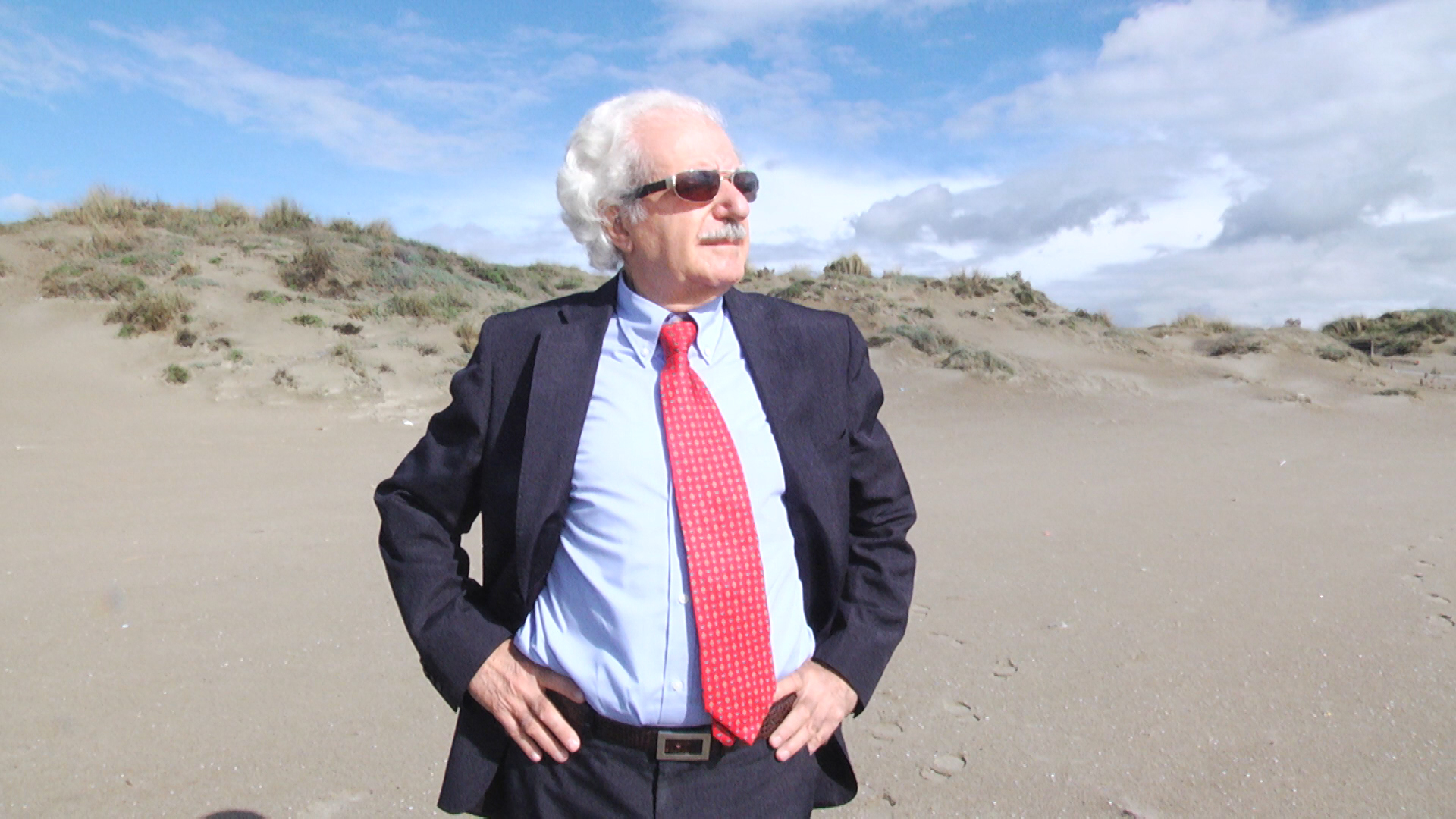
Drama, thriller, by Fabio Del Greco, Italy, 2015.
The story revolves around Vasco, a Roman builder who, at the age of 74, enjoys a life of absolute comfort. His human parable takes a dramatic turn when a mysterious encounter leads him to an ambush. Having survived, but marked by a long coma, Vasco wakes up with a new sensitivity, developing an intimate and poetic bond with nature. This new relationship with the world around him leads him to deeply explore himself, in an internal and external journey. through Italy, the United States and India, in search of a higher meaning and a cure. In parallel, the threat of a planetary cataclysm adds an epic dimension to the story.
I Am Nothing explores universal themes such as time, memory, oblivion and the connection with nature. Fabio Del Greco creates an existential drama full of food for thought. The director skillfully combines different visual materials, mixing archive images with nature photographs and dreamlike visions. This visual experimentation translates into an editing that captures the viewer's attention, guiding him through a cycle of creation and destruction. The sequences that alternate the buildings, Vasco's pride, with Indian landfills and natural landscapes create a hypnotic rhythm, underlining the beauty and fragility of life. Vasco's existential journey is a hymn to transformation and rebirth. The evolution of the protagonist, from unbridled luxury to the rediscovery of purity, represents a powerful metaphor on the meaning of life and the need to reconnect with authentic values. Io sono nulla stands out for its ability to combine introspection and visual experimentation, offering a suggestive and engaging narration. It is a film that invites us to reflect on the human condition, on our relationship with power and nature, and on the possibility of finding ourselves through change. A work that leaves its mark and lends itself to multiple readings.
LANGUAGE: Italian
SUBTITLES: English, Spanish, French, German, Portuguese
The Machine Built to Produce a Messiah
There is a photograph taken sometime around 1910 in which a boy stands very straight in clothes that do not belong to him. The suit is British, the posture rehearsed, the expression unreadable in the way that expressions become unreadable when someone has been told too many times what they are supposed to look like. He is perhaps fourteen. The people around him are adults who believe, with the absolute sincerity that makes certain forms of violence so durable, that they are in the presence of a vessel.
The Theosophical Society had been constructing this moment for decades before the boy existed. Founded in 1875 by Helena Blavatsky and Henry Steel Olcott, the Society had built an elaborate cosmological architecture in which history moved toward a climax: the return of a World Teacher, a being who would descend into human form to illuminate the age. By the time Annie Besant and Charles Leadbeater identified Jiddu Krishnamurti on a beach in Adyar in 1909 — noticing what Leadbeater described as an exceptionally pure aura — the machine was already assembled. It only needed a body to run through it.
What followed was not education in any recognizable sense. It was manufacturing. Krishnamurti and his younger brother Nityananda were removed from their father, taken to England, dressed, tutored, coached in elocution and comportment, introduced to European aristocracy, and subjected to a series of occult preparations that Leadbeater documented in a text called “The Lives of Alcyone,” in which Krishnamurti’s previous incarnations were mapped across two million years of esoteric history. By 1911, the Order of the Star of the East had been formally established with Krishnamurti as its head, a title he had not chosen, promoting a mission he had not been old enough to understand. His father, Jiddu Narayaniah, fought through the courts of Madras and then London to reclaim his sons, arguing with painful accuracy that they had been taken from him. He lost.
René Girard, writing in Violence and the Sacred in 1972, described the sacred figure as someone selected by the community to bear the weight of collective meaning — not because of who they are, but because of what the community needs to deposit somewhere outside itself. The logic is social before it is spiritual. The crowd does not project onto a figure because the figure is extraordinary. The figure becomes extraordinary because the crowd needs somewhere to project. Krishnamurti was not chosen because he was luminous. He was made luminous because the choosing required it.
Erich Fromm had traced the other side of this equation in Escape from Freedom in 1941, arguing that modern individuals — and here he meant people already living inside the anxiety of secular dissolution — find a specific psychological relief in surrendering the weight of selfhood to a leader or a doctrine. The relief is not stupidity. It is the exhaustion of freedom, the unbearable openness of being responsible for the meaning of one’s own existence. The sixty thousand members of the Order of the Star of the East who were waiting, by the late 1920s, spread across dozens of countries, were not deluded. They were tired in a way that most people are tired, and someone had offered them a shape to pour that tiredness into.
He moved through those crowds the way a person moves through a space designed entirely around their presence but not their selfhood — the rooms too prepared, the faces too open, the silence before he spoke carrying a weight that had nothing to do with what he might actually say. A young man walks into a hall and a thousand people rise. He has not yet spoken. They are not responding to him. They are responding to what they have already decided he is, which means they are, in a fundamental sense, responding to themselves. He can see this, perhaps. He is not certain what to do with what he sees.
The machine was not malicious. That is precisely what made it so hard to dismantle.

Ojai, 1929: The God Who Dissolved Himself
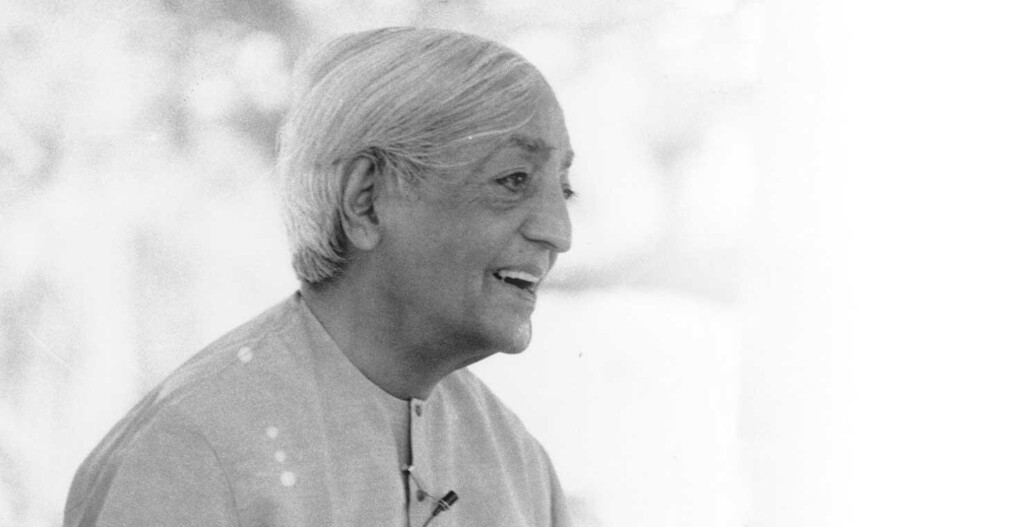
Imagine you have spent seven years preparing for this moment. You sold your house. You left your marriage, or your country, or your previous conception of what life was supposed to mean. You traveled to the Netherlands in August heat, joining three thousand others on a campsite at Ommen, and you are sitting in the crowd watching the young man walk onto the stage, the man the Theosophical Society has been grooming since childhood to be the World Teacher, the vessel of the Maitreya, the next Christ — and instead of delivering the consecration, instead of finally becoming what you have sacrificed everything to witness, he begins dismantling the altar with his bare hands.
This is not metaphor. On August 3, 1929, Krishnamurti stood before those thousands and dissolved the Order of the Star from the inside. He announced that he was disbanding the organization built around him, returning the donated funds and properties, and refusing — with a calm that must have felt like a slap — to be the spiritual authority anyone had projected onto him. “I maintain that truth is a pathless land,” he said, “and you cannot approach it by any path whatsoever, by any religion, by any sect.” He spoke for perhaps twenty minutes. The organization that Annie Besant and Charles Leadbeater had constructed over decades, the entire architecture of expectation, collapsed in a single afternoon.
What is almost never discussed is what that room felt like for the people who were not Krishnamurti.
Hannah Arendt, writing in Between Past and Future in 1961, identified something crucial about the structure of authority: it requires the willing subordination of judgment. Authority is not coercion. It does not demand obedience through force. It demands something more intimate — the voluntary surrender of your own capacity to decide, offered to another person because you have concluded they know better than you do. The follower’s gift to the leader is not merely loyalty. It is the relinquishment of their own discernment, packaged as devotion. Krishnamurti, standing at Ommen, was refusing to accept that gift. He was handing it back. And the people who had spent years learning not to trust their own judgment had nowhere to put the thing he was returning.
There is a particular texture to being disappointed by someone who refuses to be what you needed them to be. It is unlike the disappointment of broken promises, which at least gives you someone to blame. This disappointment has no villain. The person simply declined a role you had already cast them in without their consent. You built the stage. You wrote the lines. You rehearsed your own part in the scene. And then they walked on and said, quietly, that they hadn’t agreed to any of it. What collapses is not just your belief in them. It is the entire private architecture you had constructed around their existence. The years of waiting become years of having misread. The sacrifice becomes not sacred but simply costly. The wound is not betrayal. It is the exposure of how much of the drama was yours alone.
A man walks away from an enormous crowd that has gathered in his name, and the camera — if there were a camera — would not follow him. It would stay on the faces of those remaining, the ones who now have to make the long trip home with their certainty dismantled and their maps removed. The most radical act was not the speech. It was his willingness to absorb, without apology or softening, the full weight of their need and still say no.
Erik Erikson, in his 1958 study of Luther, described certain individuals who develop what he called a “negative identity crisis” — a refusal of the identity others have prepared for them — and noted that such refusals are never experienced by the surrounding community as liberation. They are experienced as abandonment.
The crowd at Ommen was abandoned. Krishnamurti knew it. He did it anyway.
Have you ever refused to be what someone needed you to be, not out of cruelty but out of a deeper honesty, and watched them carry the cost of your refusal home with them? That cost is real. The myths of spiritual courage never mention it because it makes the hero look like the cause of someone else’s suffering — which, in that moment, he genuinely was.
Truth as a Pathless Land: What He Actually Said, and Why It Unsettles

There is a particular kind of Tuesday afternoon when you are sitting across from someone you pay to listen to you, and you notice — not as a thought, but as something closer to nausea — that you have been telling the same story for three years. Different words, different entry points, occasionally a new character added to the cast. But the same story. And the person across from you nods with practiced attentiveness, and you realize, with a vertigo that has nothing to do with insight, that this nodding is also part of the story. That the room itself, the ritual of it, the fifty-minute hour, the careful language of wounds and patterns and inner children — all of it has become the architecture of your continuation. Not your healing. Your continuation.
This is the sensation Krishnamurti spent sixty years trying to point at, and failing to point at, and pointing at anyway.
He said it plainly in 1929 and never stopped saying it: truth is a pathless land. No organization can lead you there, no teacher, no method, no accumulated wisdom passed from one consciousness to another. He dissolved the Order of the Star, walked away from the machinery built to worship him, and then did something stranger — he kept talking. Hundreds of talks, dozens of books, dialogues recorded and transcribed across five decades, The First and Last Freedom in 1954, Freedom from the Known in 1969, the journals that read less like spiritual autobiography and more like a man watching his own mind the way a scientist watches a cell divide. All of it pointing toward the same terrifying proposition: the seeker is the sought. The observer is the observed. And the moment you make that into a method, into a system, into something you practice on Tuesdays at four o’clock, you have already moved in the opposite direction.
The discomfort this produces is not intellectual. It is structural. Because what Krishnamurti is describing is not a new path but the exposure of path-making itself as the problem. Thought, he argued with increasing precision across his later dialogues with the physicist David Bohm — conversations gathered in The Ending of Time in 1985 — thought is a fragmented instrument trying to comprehend the fragmentation it has itself created. The tool and the wound are the same object. Bohm, who had spent his career thinking about the implicate order of the universe, found in Krishnamurti something that resonated with quantum mechanics’ own undoing of the observer-observed distinction. Two men sitting in a room, both arriving from radically different directions, both arriving at the same vertiginous edge.
James Hillman, writing in Re-Visioning Psychology in 1975, named what Krishnamurti was circling from a different angle: the therapeutic culture’s addiction to narrative self-improvement. Hillman saw it as a kind of infinite regress — the examined life becoming not liberation but a more sophisticated form of captivity, the soul reduced to a case history, always in the process of becoming, never permitted to simply be. The story of your damage becomes the most precious thing you own. You polish it. You add nuance. You bring it to rooms with nodding strangers, and the nodding confirms the story’s reality, and the story’s reality confirms the need to keep bringing it to rooms.
Krishnamurti would not have called this therapy. He would not have called it anything. He would have asked: who is it that is seeking to be healed? And when you answer that question — when you produce the self that needs healing, describe its history, locate its wounds — he would have asked again: and who is watching that self? The regression is not a flaw in his thinking. It is precisely the point. There is no stable observer standing outside the observed. The moment you believe there is, you have begun building another organization, another Order of the Star, another Tuesday at four o’clock.
He was not offering an alternative. He was removing the floor.
The Wound Behind the Teaching: Annie Besant, the Dead Brother, and the Self That Was Never Asked
He was fourteen years old when they found him on the beach at Adyar, dirty and slightly vacant-eyed, and decided he was the vessel through which the World Teacher would speak. Not a child with opinions about the matter. Not a boy who might have preferred something else entirely. A vessel does not get consulted about its purpose. From that moment, Krishnamurti’s inner life became institutional property — shaped, monitored, interpreted by adults who loved him in the way that powerful people love things they have chosen: completely, and without ever asking what the thing itself might need.
Alice Miller, writing in 1979 in The Drama of the Gifted Child, described a pattern she had observed across years of clinical work: children who develop extraordinary sensitivity, unusual spiritual depth, a precocious capacity for empathy and abstraction — not because they are born exceptional, but because they have learned, very early, that their ordinary emotional needs are not welcome. The gifted child, Miller argued, becomes gifted in precisely the dimensions that make them useful to the adults around them, while burying the rest beneath a competence so impressive that even they stop noticing what lies under it. Reading this beside Krishnamurti’s early biography is not a comfortable exercise.
The transformation they imposed on him was described in his own private notebooks from the 1920s as something close to physical horror. He called it “the process” — episodes of acute pain, fever, dissociation, states in which he felt his body no longer belonged to him, in which he spoke in voices that did not seem his own, in which he lost and recovered consciousness across nights that left him shaking. The Theosophists around him interpreted these episodes as evidence of occult initiation, the Masters working through his nervous system, the World Teacher burning away the dross of ordinary selfhood. He endured this for years. Nobody asked him whether he consented to be burned.
There is a particular kind of loneliness in undergoing a transformation that others have designed for you, and discovering mid-process that those who designed it are not present for the cost of it — that what they see is the result they wanted, while what you inhabit is the wreckage the result required. A man agreed to something at an age when agreement means nothing, and by the time he understood what he had agreed to, the process was already inside him, remaking him from the architecture outward, and the people who initiated it looked at his agony and saw confirmation of their theory.
Then Nitya died. His brother, his companion since childhood, the one person in the entire Theosophical machinery who had no function other than being his brother. They had been told by the Masters, through Annie Besant, that Nitya would not die — that the work required him alive, that the occult protection was certain. Krishnamurti believed this. He believed it specifically because he needed to believe it, because the alternative was that the entire scaffolding of his life was constructed by people who were simply wrong about everything. Nitya died in November 1925, in California, while Krishnamurti was sailing toward him. He arrived to an absence.
What he wrote in the months afterward was not the language of a man revising a theology. It was the language of someone who had discovered that the people who owned his spiritual life could not protect the one thing he actually loved. Whether the dissolution of the World Teacher persona — which came publicly in 1929 — was a philosophical act or a grief act is a question that cannot be cleanly answered. The two are not separable. And this is precisely what makes the question interesting rather than reductive.
Because the uncomfortable thing about Krishnamurti’s radical rejection of authority — every guru, every tradition, every system that claims to stand between the individual and their own direct perception — is that it maps with suspicious precision onto the shape of his wound. He was possessed by an authority that did not see him. He loved someone that authority could not save. He spent the rest of his life telling anyone who would listen that no authority can save you, that the intermediary is always the problem, that you must look directly or not at all.
Was this philosophy? Was this survival? And if the answer is both —
A vision curated by a filmmaker, not an algorithm
In this video I explain our vision
What the Crowds Were Really Looking For, and What That Says About You
You are sitting in a room that smells of sandalwood and something synthetic trying to approximate sandalwood, and the person at the front is speaking about presence, about releasing the ego, about the radical transformation available to each of you right now, in this moment, if you simply choose it. You paid somewhere between two hundred and eight hundred dollars to be here, depending on how early you registered, and the people around you are nodding with a kind of solemn gratification that is indistinguishable from the nodding you have seen in churches, in lecture halls, in amphitheaters where thousands gathered to hear that the kingdom was within them. The vocabulary is different. The aesthetics are different. The mechanism is identical.
The global wellness industry was valued at over five point six trillion dollars in 2022. Not five point six billion. Trillion. This is not a marginal cultural phenomenon. This is one of the dominant organizing structures of contemporary life, and it is built, with extraordinary commercial precision, on the same ancient architecture as every spiritual movement that preceded it: the promise that there is something wrong with you, and that the right teacher, the right practice, the right retreat, the right subscription, can fix it. Robert Bellah identified the embryo of this in 1985, in Habits of the Heart, when he described what he called Sheilaism, named after a woman named Sheila Larson who told his research team that her religion was her own little voice, a private spirituality she had constructed from available parts. Bellah saw in this not liberation but loneliness wearing the costume of autonomy. The self-constructed spiritual life, he argued, still required external mirrors to confirm that it was real, still went looking for someone to tell it that it had found something true.
The teacher at the front of the room pauses. He says something unexpected, something that does not confirm what the audience came to have confirmed. There is a woman near the window who arrived certain that she was close, very close, to some breakthrough that would make the last three years of searching cohere into meaning. She does not get up. She does not say anything. But something behind her eyes quietly, without announcing itself, begins browsing. Not for what he is saying. For someone who will say it differently. For someone whose version of the same idea will land on her particular shape of hunger without scraping against the edges.
This happened before. It happened in 1929 at Adyar. It happened in the decades that followed, in Ojai and Saanen and Madras and Brockwood Park, where people came in thousands to a man who had spent sixty years explaining, with increasing urgency and occasional despair, that he was not the answer. That the search itself was the problem. That the moment you positioned another human being as the vehicle of your transformation, you had already foreclosed the possibility of what you claimed to be seeking.
And in his late eighties, in some of his last public talks before his death in 1986, Krishnamurti said something that has no comfortable resting place. He observed, with neither bitterness nor resignation but with the particular flatness of someone who has watched the same film enough times to no longer be surprised by it, that the audiences still arriving to hear him speak against dependence on teachers were still arriving to depend on him. That the act of listening to someone dismantle the guru-function was itself being performed as a guru-function. That even his negation had been consecrated. That you cannot warn people away from a door and simultaneously become the door they walk through to receive the warning.
There is no exit indicated here. Krishnamurti did not offer one. Recognition is not the same as freedom. You can see the loop clearly, trace its geometry, understand exactly how it works, feel the almost physical satisfaction of that understanding, and still be inside it. Perhaps more inside it than before, because now you have the additional layer of believing that seeing it means you are no longer subject to it.
The room still smells of sandalwood. The nodding continues.
🌀 Beyond Belief: Paths to Inner Freedom
Jiddu Krishnamurti’s radical refusal of spiritual authority invites us to question every system, every guru, and every dogma that claims to hold the truth. His life and thought cannot be understood in isolation — they emerge from a rich web of Theosophical movements, esoteric traditions, and deep philosophical currents. These related articles trace the invisible threads connecting his story to the broader landscape of modern spiritual inquiry.
Annie Besant: From Socialist Activism to Theosophical Leadership
Annie Besant was one of the most powerful figures in the Theosophical Society, and it was she, alongside Charles Leadbeater, who identified the young Krishnamurti as the vehicle for the coming World Teacher. Understanding her extraordinary journey from socialist activist to occult leader is essential to grasping the world into which Krishnamurti was thrust as a child. Her story reveals how deeply personal conviction and institutional power can shape — and ultimately distort — a human destiny.
GO TO THE SELECTION: Annie Besant: From Socialist Activism to Theosophical Leadership
Charles Leadbeater: The Clairvoyant Who Mapped the Invisible Worlds
Charles Leadbeater was the man who first spotted Krishnamurti on the beach at Adyar and declared him spiritually exceptional, setting in motion the events that would define the boy’s entire life. His clairvoyant investigations and elaborate maps of invisible planes formed the theological framework that Krishnamurti would later spend decades systematically dismantling. Exploring Leadbeater’s world makes Krishnamurti’s eventual rejection of it all the more striking and courageous.
GO TO THE SELECTION: Charles Leadbeater: The Clairvoyant Who Mapped the Invisible Worlds
The Theosophical Society: History, Principles and Influence on Western Culture
The Theosophical Society provided the institutional cradle from which Krishnamurti emerged and against which he ultimately rebelled. Its founding principles, global reach, and influence on Western esoteric culture created the very stage upon which the drama of his life unfolded. To understand why his dissolution of the Order of the Star was so seismic, one must first understand the immense weight of the tradition he chose to abandon.
GO TO THE SELECTION: The Theosophical Society: History, Principles and Influence on Western Culture
Buddhism and 3 Documentaries to Understand it
Krishnamurti’s mature teachings share striking resonances with Buddhist philosophy, particularly in his emphasis on direct perception, the dissolution of the self, and freedom from conditioned thought. Like the Buddha, he refused to offer a path, a method, or a doctrine — insisting that truth could only be discovered through one’s own unconditioned awareness. This article on Buddhism and its documentary portraits offers a valuable parallel journey into traditions that sought liberation beyond belief.
GO TO THE SELECTION: Buddhism and 3 Documentaries to Understand it
Discover the Cinema of Inner Freedom on Indiecinema
If these ideas stir something deep within you, Indiecinema is the streaming home for films that dare to ask the same questions Krishnamurti lived by. From meditative documentaries to visionary independent cinema, our catalog is curated for those who seek more than entertainment — those who seek truth. Join us and explore a world of films that challenge, awaken, and liberate.
👉 EXPLORE THE CATALOG: Watch Indie Films in Streaming
A vision curated by a filmmaker, not an algorithm
In this video I explain our vision

