
The Scissors as Last Instrument
You are lying in a room full of light, and the brushes are no longer yours to use. Not because someone has taken them, but because the body has quietly revoked the agreement it once made with your hands. The canvas on the wall might as well be on the other side of a continent. You are seventy-seven, then eighty, then eighty-three, and the question that arrives each morning is not whether you will make something beautiful but whether the act of making is still physically available to you at all.

This was the precise situation Henri Matisse found himself in after the surgery of 1941, when an operation for duodenal cancer left him largely bedridden and wheelchair-bound in his apartment and later his villa in Nice. He had spent half a century building a visual language through paint and canvas, through the long resistance and surrender that oil on linen demands of a painter. And now that language was structurally inaccessible, not metaphorically but in the most literal mechanical sense: standing at a canvas for hours was over. The body had delivered its verdict.
What he reached for instead was a pair of scissors and sheets of paper painted with gouache. The gesture sounds almost embarrassingly simple when you describe it. Almost childlike. And that perception — that immediate cultural reflex to diminish the tool — is precisely where the trap is set.
Erik Erikson, writing in 1950 in Childhood and Society, described the final stage of human development as a confrontation between ego integrity and despair. What he meant was that the late-life crisis is not primarily a crisis of loss but a crisis of coherence: can you look at what you have made and find it whole, or does everything fracture into regret? But Matisse seemed to sidestep the terms of that confrontation entirely, not by resolving it philosophically but by doing something far more violent and practical. He changed the instrument. He refused the elegiac posture that old age is culturally assigned.
There is a moment — in a room in postwar France, in a building full of ordinary afternoon sounds — where a man picks up scissors and cuts into color with the directness of someone who has no time left for hesitation. Not timidly. With a confidence that people who observed him described as almost aggressive. The cut was immediate. There was no underdrawing, no preparatory sketch, no the-way-painters-are-supposed-to-proceed. The scissors entered the painted paper the way a decision enters a long-postponed conversation: finally, and without apology.
What the body’s refusal actually clarified was this: that drawing with scissors, as Matisse himself articulated it, meant cutting directly into color the way a sculptor cuts into stone. The intermediary step — the separation between line and color that had structured Western painting since at least the Renaissance debates between disegno and colorito — simply collapsed. The scissors eliminated the gap. The form and its color were a single simultaneous act.
This is not a story about compensation or resilience, those consoling narratives we attach to aging artists to make ourselves comfortable with the spectacle of physical decline. It is something harder to look at directly: the possibility that constraint, when it is total enough and the intelligence meeting it is sharp enough, does not diminish the work but burns away everything in it that was habit rather than necessity. That what looks like an ending from the outside is, from the inside, a brutal and clarifying arrival at the thing itself.
The scissors were not a substitute. They were an argument. And the argument had been waiting inside the work all along.
Don Barry: A Quixotic Exploration
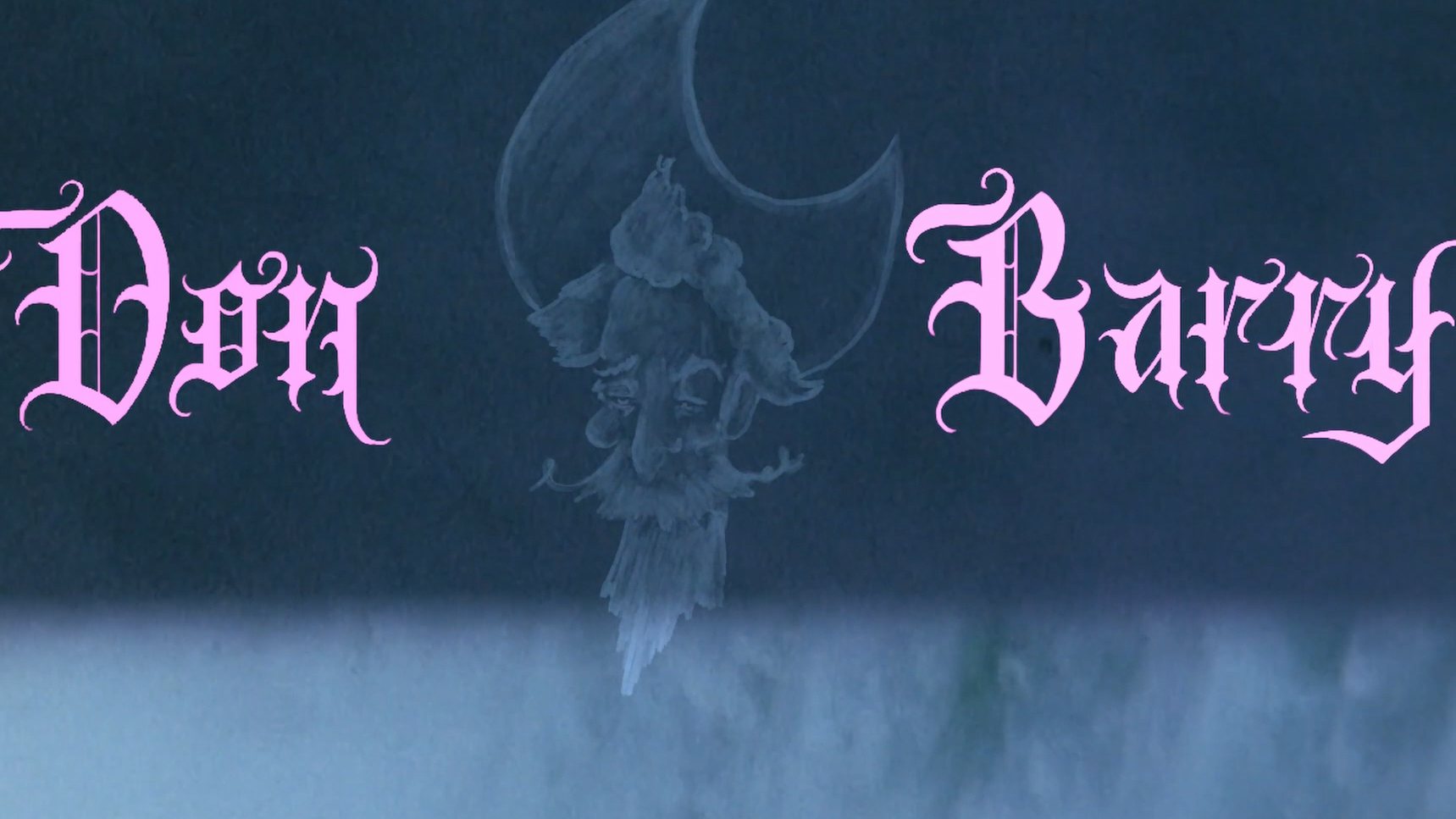
Docufiction, Experimental, by Paul Smart, Mexico, 2026.
Don Barry: A Quixotic Exploration is a debut feature that places the biography of an eighty-year-old experimental filmmaker and artist, Barry Gerson, within the metanarrative of Miguel de Cervantes’ Don Quixote. Don Barry was filmed in the city of Guanajuato during the 51st edition of the Cervantino Festival, as well as during the vibrant Day of the Dead celebrations held in the city’s UNESCO-listed tunnels. The film honors the director’s long friendship with artist Barry Gerson, drawing inspiration from Cervantes’ Don Quixote. Paul Smart’s directorial choices create something new that celebrates life and goes beyond conventional storytelling. A search for magic in our real lives. A moving film about the meaning of life, art, and death. Not to be missed.
Paul Smart is a proud outsider filmmaker with a long history of film screenings. In the 1980s, he emerged in New York’s vibrant youth art scene, working in theater production and later filmmaking, before retreating to rural upstate New York, in the Catskill Mountains, where he made a living writing and screening independent films in old parish halls for rural audiences, many of whom had never seen a film.
LANGUAGE: English
SUBTITLES: Spanish, French, German, Portuguese
What Society Does With Old Artists
You walk into a room where your own work hangs behind glass, and something quietly ruptures. Not grief exactly, not pride either. Something closer to the sensation of reading a letter you wrote to someone who no longer exists, recognizing the handwriting as yours but the voice as belonging to a stranger you once inhabited. The light in the gallery is careful, institutional, the kind designed to preserve rather than illuminate. People move slowly past the canvases, speaking in the hushed tones reserved for the recently deceased. You are standing three feet away, still breathing, and no one quite knows what to do with that fact.
This is what the cultural machinery of the West has perfected over two centuries: the art of celebrating a living creator as though they were already historical. The retrospective is the primary instrument of this operation. It arrives, typically, when an artist has reached an age that makes the culture comfortable enough to frame them as complete. The work is arranged chronologically, the catalog essays speak in the past tense about stylistic periods, the institution performs the solemn ritual of consecration. What looks like honor is also, quietly, a form of closure.
Pierre Bourdieu mapped this territory with unusual precision. In his 1983 essay on the field of cultural production and more extensively in The Rules of Art published in 1992, he described how the artistic field operates not through neutral appreciation but through a constant struggle over symbolic capital, the accumulated prestige and authority that determines whose work counts, how it counts, and for how long. Institutions, museums, academies, critical establishments, accumulate this capital by attaching themselves to recognized names. The elderly artist becomes extraordinarily useful to this economy precisely because their symbolic capital is stable. They no longer threaten the field’s existing hierarchies. They can be incorporated safely, displayed as monuments, their biography smoothed into a legible arc of influence and culmination. The danger comes when the elderly artist refuses to behave like a monument.
What the field cannot easily metabolize is the artist who, at eighty, is not summarizing but discovering. Who is not consolidating a legacy but abandoning it for something stranger and more urgent. This produces a particular kind of institutional anxiety, visible in the strained language critics use when forced to engage with late work that doesn’t conform to what they already know how to say. The gestures become too simple, the palette too bold, the method too playful, too stripped, too something. The vocabulary of mastery quietly fails, and in its place arrives a slightly uneasy praise that aestheticizes the biographical, finding in the formal choices evidence of decline or compensation rather than genuine rupture.
There is a man sitting in a room being interviewed about his early paintings, the ones that made him famous, the ones now traveling in a touring exhibition across three continents. He speaks about them with a detachment that unsettles the interviewer, who keeps trying to draw him back into nostalgia, into the warmth of origin. The man is not cold. He is simply elsewhere. His attention is not in that room at all. It is somewhere ahead of him, in a problem he has not yet solved, in a color relationship he has been thinking about for weeks. The interviewer understands this as modesty, or as age, and writes it up as such. It is neither. It is the complete indifference of someone still genuinely at work.
Bourdieu called this the illusio, the fundamental investment in the game, the belief that what one is doing matters enough to keep doing. What the cultural machinery cannot accommodate is an old artist whose illusio remains not just intact but intensified, sharpened by the proximity of its ending.

The Papiers Découpés as Philosophical Act
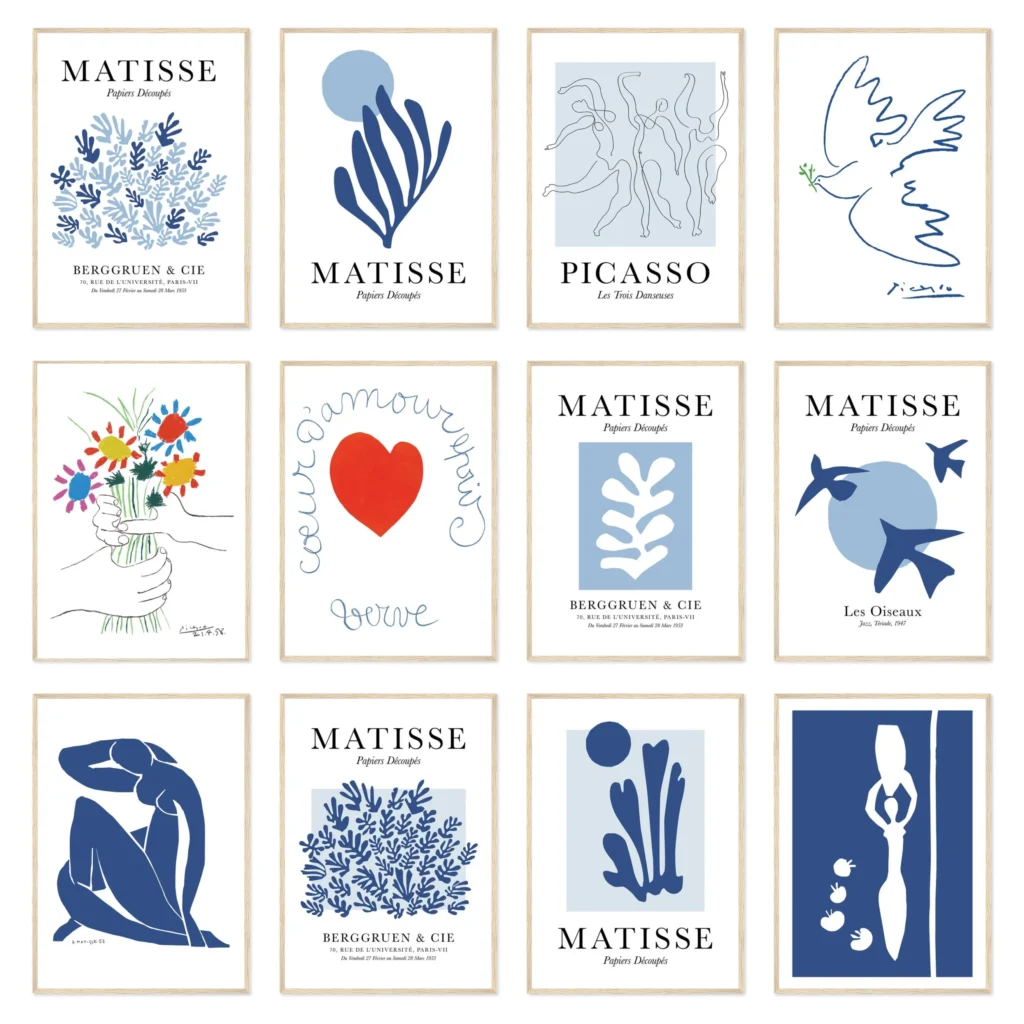
There is a woman’s back rendered in blue. Not described, not represented — declared. The shape exists the way a fact exists, without apology or elaboration, the silhouette cut so cleanly from painted paper that the negative space around it carries as much weight as the form itself. You look at it and feel something close to embarrassment, as though you have walked in on a private certainty. This is what remains when a man has spent eighty years learning what to remove.
The Blue Nudes of 1952 are not late work in the elegiac sense that phrase usually carries, the sense of diminishment, of a fire cooling to embers. They are the opposite: a reduction so radical it constitutes a kind of violence against everything Matisse had previously allowed himself. Decades of virtuoso draftsmanship, of line so fluid it seemed effortless, all of it set aside in favor of scissors and gouache-painted paper, a technique that his assistants initially treated as a workaround for an invalid. It was not a workaround. It was an arrival.
Erik Erikson, writing in Childhood and Society in 1950 and then elaborating the thought across decades of clinical observation, described the central tension of late life as the confrontation between ego integrity and despair. The person who achieves integrity, in Erikson’s framework, is not the one who has succeeded at everything but the one who has accepted the shape of their life as the only shape it could have taken — who looks backward without the corrosive need to revise. Despair, by contrast, is the feeling that time was wasted, that another life was possible and was missed. What makes Matisse so philosophically disorienting is that he appears to have achieved integrity not through acceptance of limitation but through the discovery that limitation was the condition he had been waiting for all along.
Maurice Merleau-Ponty argued, in the Phenomenology of Perception published in 1945, that the body is not the instrument of consciousness but its very medium — that we do not inhabit the world through thought but through the lived, sensing flesh that is always already engaged with surfaces, textures, distances. To know a thing is first to have touched it, reached toward it, moved around it. When Merleau-Ponty later wrote about Cézanne, and about painting more broadly, he was insisting that the hand that holds the brush is not translating an image from the mind onto the canvas but discovering the image in the act of physical contact with the world. The eye and the hand think together.
What happened to Matisse when surgery and illness made sustained traditional painting nearly impossible was not the severing of that bodily intelligence. It was its concentration. Cutting paper with scissors is a more primitive, more direct form of mark-making than drawing — the hand is closer to the result, the decision more immediate, the gesture less mediated by the conventions of the drawn line. He described it himself as sculpting in color, as cutting directly into light. The Chapel of the Rosary at Vence, completed in 1951 when he was eighty-one, combines his cut-paper logic with stained glass and ceramic tile in a space where color becomes atmosphere, where you are inside the painting rather than standing before it. He called it his masterpiece, not with false modesty or theatrical pride but with the quiet confidence of someone who had finally said the thing they had been trying to say for six decades.
Jazz, the book published in 1947, gathers circus figures and acrobats and swimmers into compositions that pulse with a kind of savage joy entirely unsuited to a man in his late seventies recovering from two operations. The joy is not despite the body’s diminishment. It comes from somewhere the diminishment exposed.
The Trap of Mastery and the Freedom of Constraint
There is a particular cruelty in the way we talk about artists who keep working after their bodies begin to fail them. We call it courage. We call it determination. We call it, with a slight tilt of the head, remarkable. What we mean, underneath all of that, is that we expect decline, and we are moved when it does not arrive on schedule. The admiration is genuine, but the framework that produces it is a lie — specifically, the lie that creative power is a function of physical freedom, that art expands the way empires do, outward and forward, and that when the body contracts, the work must follow.
Think of a man confined to a single room, a fixed camera his only instrument, the world reduced to what could be seen through one window or reconstructed in the mind from sounds coming through a wall. Not as metaphor. As actual condition. And from that condition, work of such precision and psychological density that it made everything shot with full mobility and unlimited resources feel suddenly wasteful, bloated, embarrassed by its own freedom. The constraint did not diminish the expression. It forced the expression to become only what it had always been trying to be, stripped of everything it had been using as cover.
Edward Said spent the last years of his life writing what became an unfinished manuscript, published posthumously in 2006 as On Late Style, a book that is itself an argument made partly by its own incompleteness. Said’s central provocation is that lateness is not a softening, not a reconciliation with mortality dressed up as wisdom, but something more unsettling: a refusal to resolve, an embrace of what he called intransigence, difficulty, contradiction. He was reading Beethoven’s last quartets, Rembrandt’s self-portraits, Glenn Gould‘s second recording of the Goldberg Variations — made in 1981, thirty-two years after the first, slower, more interior, almost eerily deliberate — and what he found in all of them was not serenity but a kind of productive exile from easy meaning. The late works do not conclude. They insist on remaining open in ways that feel almost aggressive.
T.J. Clark, writing about the twilight of modernism and its relationship to what comes after technical mastery, identifies something adjacent: the moment when an artist has fully absorbed every tool available to them and must then decide what to do with the silence that follows. The silence is not empty. It is, Clark suggests, the most dangerous and generative space an artist can occupy, because there is no longer anything external to blame or defer to. No developing technique, no expanding vocabulary to hide behind. Just the question of what you actually have to say.
Matisse at eighty was in that silence. Bedridden, arthritic, unable to hold a brush with the control his entire life had trained him toward, he did not retreat into smaller versions of what he had always made. He made something that could not have existed at forty, or sixty, or even seventy-five — not because it required less skill, but because it required a different relationship to limitation, one that only arrives when limitation is no longer a temporary obstacle but the permanent condition. The scissors and the colored paper were not substitutes for painting. They were the discovery, finally, of a form that matched the thought precisely.
The cultural myth says that masters lose things as they age. What Matisse found in the papiers découpés suggests something more difficult to accept: that some things can only be found by losing other things first, and that the art world’s instinct to mourn constraint is really just its discomfort with the kind of freedom that doesn’t look like freedom at all.
The Lost Poet
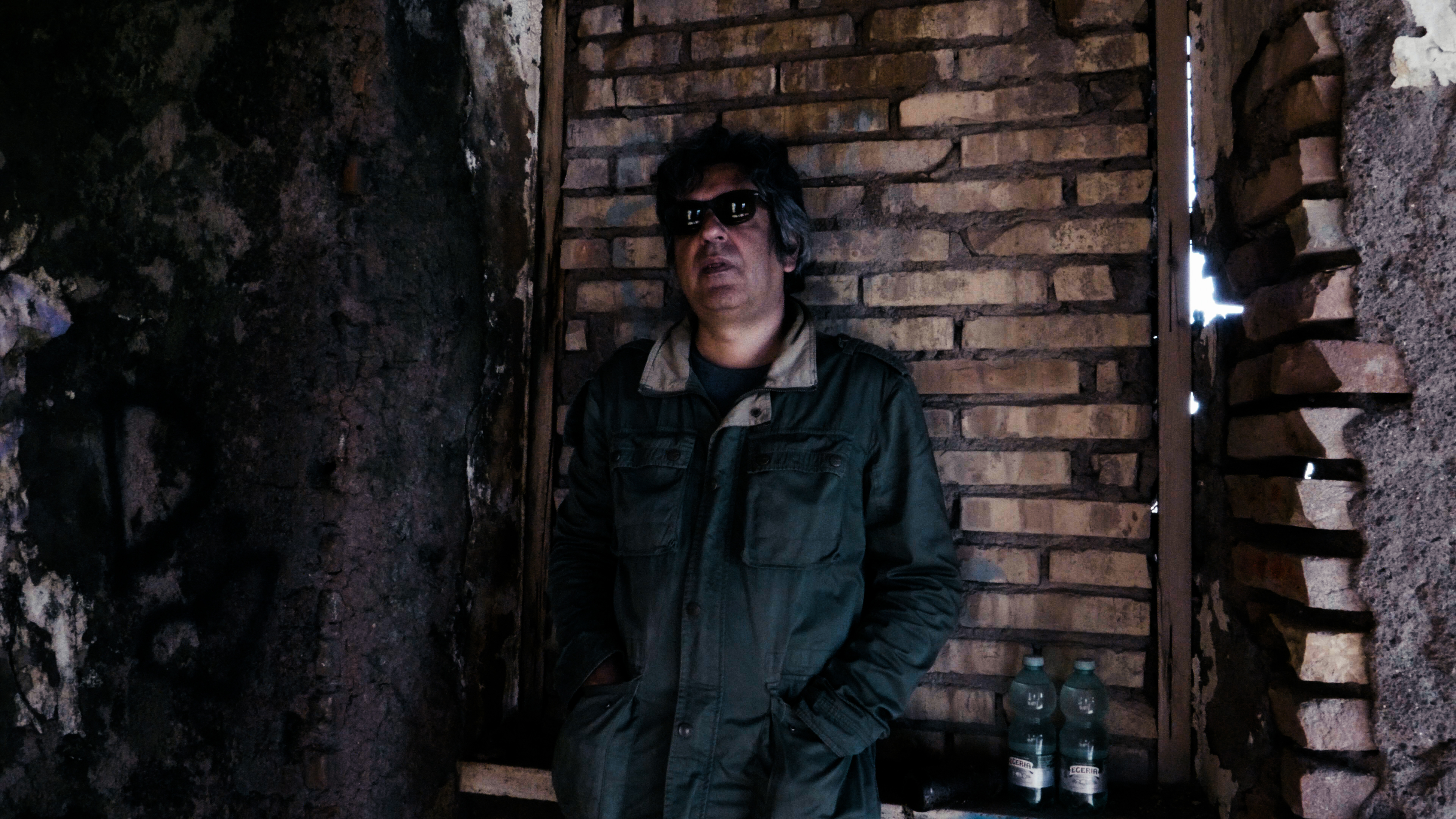
Drama, by Fabio Del Greco, Italy, 2024.
Dante Mezzadri wants to see an old friend, nicknamed the Iguana, whom he has lost sight of for many years, and who has managed to turn their shared youthful passion for poetry into a job, becoming a famous writer and poet. The man escapes from his bourgeois life and his wife to live homeless on the Roman coast, printing and trying to sell his poetry collections. At night he sleeps in a park of old carnival floats, inside a papier-mâché tank, and waits for the opportunity to meet his old friend, who however never shows up for appointments in the places they frequented when they were young, now in ruins. Dante's poetry books do not interest anyone and to support himself he is forced to "change product": he starts selling the infamous "cannibal pill" on behalf of young drug dealers, a new drug that sells like hot cakes and causes sensory and consumerist ecstasy. However, he realizes that this powerful drug is very dangerous for those who take it, he comes into conflict with his ethical conscience and throws all the pills into the sea. However, the dealers want to collect their money.
Shot over a period of 2 years, the film is a reflection on the cultural and artistic rubble of the society in which the protagonist lives, in an increasingly mechanized, consumerist and arid world. Dante Mezzadri is yet another human being who has renounced his inspiration and his creativity, but unlike many he is not willing to give his life to a system that distances him from his true identity. The physical world around him, however, seems constructed in such a way that it seems impossible to escape from this "invisible cage". The enthusiasm of the people he meets is ignited only by sensory gratification, by unreal visions of personal affirmation and success, by "metaverses" that offer an escape into an illusory and destructive reality. The poet's house on the coast, where he met with his friends as a young man, is just a pile of abandoned rubble. What happened to all those who wanted to become poets and ended up becoming something else? Are there internal forces with which that house can be "rebuilt"?
LANGUAGE: Italian
SUBTITLES: English, Spanish, French, German, Portuguese
Color That Does Not Comfort
There is a blue in the late cut-papers that has no interest in being beautiful. It simply insists. It occupies its portion of the world with a kind of territorial calm that has nothing to do with decoration and everything to do with declaration. You stand before one of the large works — the kind that fills a wall, the kind that makes the room around it feel provisional — and something happens that is not pleasure exactly, or not only pleasure. You feel, faintly, as though you have been caught doing something.
This is worth examining, because the popular mythology of Matisse is so thoroughly comfortable. The open windows, the odalisques, the flowers, the idea of the artist as a man who spent his life perfecting happiness. André Verdet visited him in the early 1950s and found him in bed surrounded by scissors and paper, and what he reported back was warmth, generosity, a man at peace. The story was irresistible. It is also, when you stand before the actual work, incomplete.
The colors in the papiers découpés do not harmonize in the way we expect harmony to feel. They coexist the way competing certainties coexist: without apology, without softening the edges of their disagreement. A green does not yield to the red beside it. A yellow does not flatter the violet it borders. Chevreul had described the law of simultaneous contrast in 1839, and every serious colorist since had worked either with it or against it, managing the optical friction between hues to produce a desired emotional effect. Matisse, in his final years, seemed to stop managing. The friction remained, but the management disappeared, and what was left was something rawer — color as bare fact, as statement without rhetorical softening.
Roland Barthes, writing about what he called the “late style” problem without using that phrase, described how certain artists reach a point where the work stops performing its own meaning and simply presents it, nakedly, without the courtesies of transition or explanation. The audience is no longer guided. It is confronted. This is not the same as difficulty for its own sake, which is a young person’s game, a form of aggression that still cares about the audience’s reaction. What Barthes was circling around was something different: the indifference of a work that has stopped needing to be liked.
Edward Said, in his late thinking on “late style,” reached for Adorno’s reading of Beethoven’s final quartets — works that are, he noted, not “reconciled” but “intransigent,” refusing the expected consolations of resolution. Said published those thoughts in 2006, gathering decades of reflection on what happens when an artist’s time runs short and the usual social contracts of making art begin to dissolve. What remains, he argued, is not wisdom or serenity but a kind of productive exile from one’s own earlier manner, a stubborn foreignness even to oneself.
This is what the blue insists on. Not beauty. Not comfort. Not the reward of having stood before serious art and emerged enriched. It insists on its own existence with the specific stubbornness of something that no longer has time to be diplomatic.
And so the question that the work leaves open — leaves suspended in the air of whatever gallery or reproduction you encounter it in — is whether what we call late style in any artist is simply the moment they stop curating the viewer’s ease, stop moderating the signal, stop translating themselves into something more palatable. Whether every artist who lives long enough eventually reaches the point where the work looks back at the audience with the same undeflected attention the audience thought it was bringing to the work, and whether we, arriving with our expectations of beauty and culmination and the harvest of a long life, are ever truly prepared for what that feels like.
A vision curated by a filmmaker, not an algorithm
In this video I explain our vision
🎨 Art, Time, and the Creative Spirit
Matisse’s late papiers découpés remind us that artistic genius does not fade with age but transforms, finding new forms of expression when the body can no longer keep pace with the imagination. These related articles explore artists and thinkers who confronted time, mortality, and reinvention with extraordinary creative courage.
Goya’s Black Paintings: Meaning and Analysis
Goya’s Black Paintings stand as one of the most haunting examples of late-period artistic transformation, created privately on the walls of his own home during his final years. Like Matisse, Goya turned inward as his physical world contracted, producing works of raw psychological intensity that transcend conventional beauty. They remain a profound meditation on darkness, age, and the unrelenting force of creative vision.
GO TO THE SELECTION: Goya’s Black Paintings: Meaning and Analysis
Verdi’s Falstaff: Last Opera and Artistic Testament
Verdi’s Falstaff, composed when the maestro was nearly eighty, shares with Matisse’s cut-outs a spirit of playful liberation achieved only after a lifetime of mastery. Rather than closing in on solemnity, Verdi chose lightness and irony as his final artistic statement, astonishing the musical world with his renewed creative vitality. Both artists demonstrate how old age can become not a diminishment but an unexpected opening toward freedom.
GO TO THE SELECTION: Verdi’s Falstaff: Last Opera and Artistic Testament
Vanitas in Art: Symbolism and Meaning
The tradition of Vanitas in art offers a rich visual and philosophical context for understanding how artists have long grappled with the passage of time and the transience of physical existence. Matisse’s vibrant cut-outs can be read as a joyful counter-response to the vanitas tradition, choosing color and life over symbolic reminders of decay. Exploring this symbolism deepens our appreciation of what it means to create beauty in the shadow of mortality.
GO TO THE SELECTION: Vanitas in Art: Symbolism and Meaning
Memento Mori: History and Meaning
Memento Mori as a cultural and artistic practice has shaped the way Western civilization thinks about aging, creativity, and the urgency of living fully. Understanding this tradition illuminates why Matisse’s late works feel so electrically alive — they are in quiet dialogue with the idea that time is finite and beauty must be seized. This article traces the long history of art made in conscious awareness of death’s proximity.
GO TO THE SELECTION: Memento Mori: History and Meaning
Discover Art and Cinema on Indiecinema
If these explorations of creativity, time, and artistic reinvention have moved you, Indiecinema streaming is your gateway to independent films that carry the same spirit of courageous vision. Discover documentaries, art films, and auteur cinema that challenge, inspire, and transform — available now on Indiecinema.
👉 EXPLORE THE CATALOG: Watch Indie Films in Streaming
A vision curated by a filmmaker, not an algorithm
In this video I explain our vision

