
The Old Man Who Laughed Last
There is a particular silence that falls when an old man says exactly the right thing. You have witnessed it. The dinner table conversation flowing in that confident, slightly too-loud register of people in their thirties and forties, everyone assuming the architecture of the room, the way the evening will move, who holds the knowledge and who merely holds the memory. The white-haired figure at the end of the table has been quietly tolerated, perhaps lovingly so, perhaps with that special tenderness reserved for those we have already, in some private corner of ourselves, begun to mourn in advance. And then he speaks. Not loudly. Not with the performance of authority. He simply says the thing that cuts through everything else, the observation so precise and so unexpected that the room goes briefly still, and in that stillness you can feel everyone recalibrating, suddenly embarrassed by the condescension they had not even noticed they were practicing.

Giuseppe Verdi was seventy-four years old when he began composing Falstaff. Sit with that number for a moment before moving past it. Seventy-four. He had already given the world Rigoletto, Il Trovatore, La Traviata, Aida, Otello. He had written a Requiem so devastating in its emotional force that Brahms, upon studying it, reportedly said there was nothing to add. He had arrived at a place where any artist would be fully justified in doing nothing further, where the legacy was so immense that silence itself would have been a dignified and defensible choice. Instead, in 1889, he picked up his pen and began writing a comic opera, his first in over fifty years, since Un Giorno di Regno in 1840, a work that had failed catastrophically and that he had spent decades treating as a wound best not examined.
This was not a man winding down. This was something closer to its opposite.
Erik Erikson, in his formulation of the eight stages of psychosocial development, described the final stage as a confrontation between what he called ego integrity and despair. The person who arrives at the end of life and finds meaning in what has been lived achieves a kind of wholeness; the one who finds only regret collapses into bitterness. But Erikson’s framework, useful as it is, doesn’t quite account for the third possibility, the one Verdi embodied: the person who arrives at the final stage and finds not closure but appetite. Not the satisfied retrospection of the elder wise man, not the corrosive despair of the disappointed one, but a furious, almost scandalous desire to do something new. Something that would surprise even himself.
Falstaff is, among many things, an act of rebellion against expectation. The world had built a cathedral around Verdi’s tragedies, had grown comfortable inside the architecture of his grief. Otello in 1887 had confirmed everything: the man was a master of darkness, of jealousy metastasizing into murder, of love consuming itself from within. And then he turned around and chose Shakespeare’s fat, lying, self-mythologizing knight, a figure of magnificent comic failure, a man who believes in himself with a grandeur entirely unsupported by evidence, and decided to spend the final creative years of his life in his company.
The philosopher Hans-Georg Gadamer wrote about how genuine understanding always involves risk, the willingness to allow what you encounter to challenge what you already are. Most artists in their final decade are done risking. They have found their form, their audience has found them, and the relationship has calcified into something comfortable and mutual. Verdi did the opposite. At seventy-four, he risked laughter. He risked lightness. He risked being misunderstood by everyone who had loved him for his darkness.
And the room went quiet.
Don Barry: A Quixotic Exploration
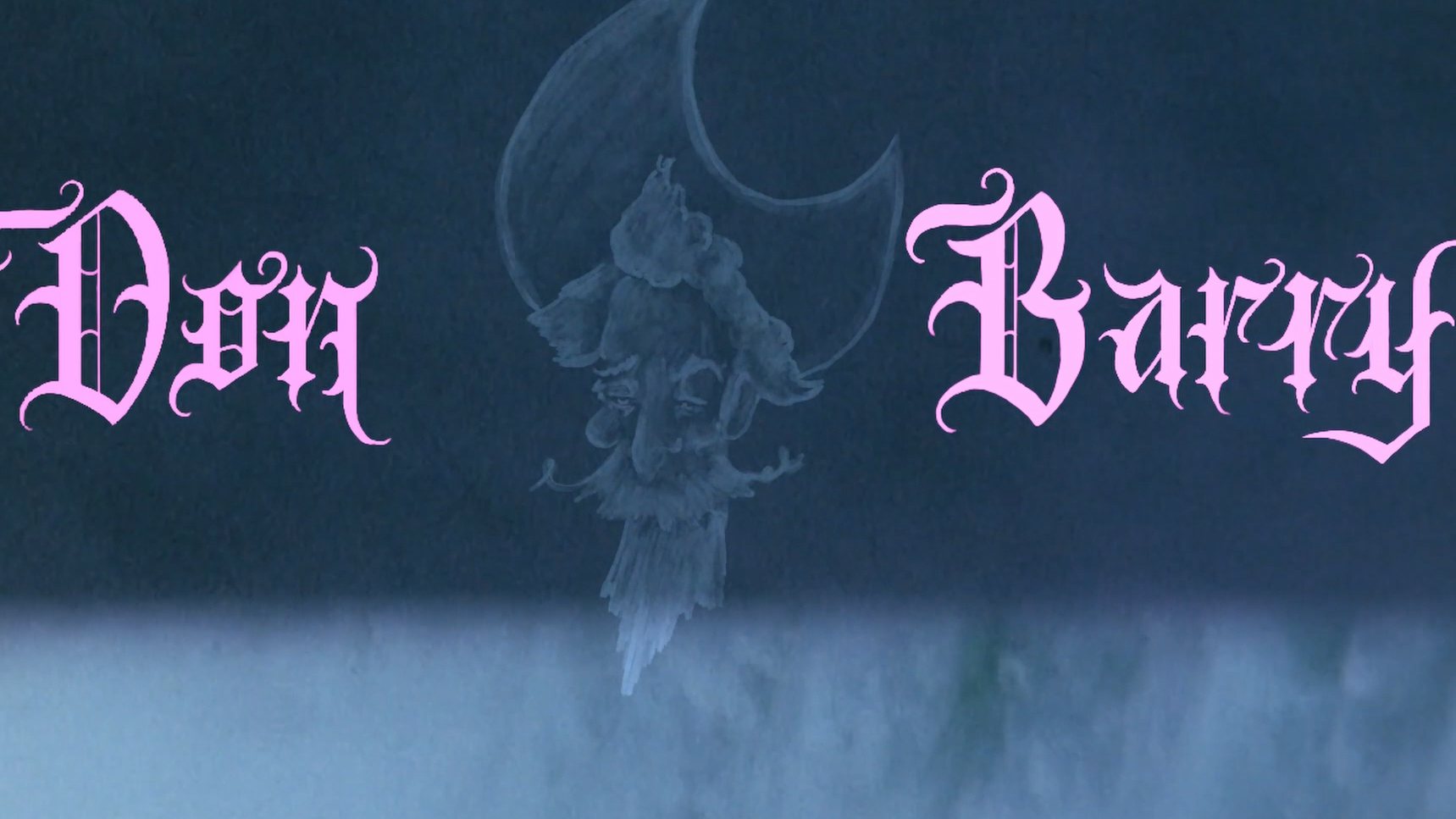
Docufiction, Experimental, by Paul Smart, Mexico, 2026.
Don Barry: A Quixotic Exploration is a debut feature that places the biography of an eighty-year-old experimental filmmaker and artist, Barry Gerson, within the metanarrative of Miguel de Cervantes’ Don Quixote. Don Barry was filmed in the city of Guanajuato during the 51st edition of the Cervantino Festival, as well as during the vibrant Day of the Dead celebrations held in the city’s UNESCO-listed tunnels. The film honors the director’s long friendship with artist Barry Gerson, drawing inspiration from Cervantes’ Don Quixote. Paul Smart’s directorial choices create something new that celebrates life and goes beyond conventional storytelling. A search for magic in our real lives. A moving film about the meaning of life, art, and death. Not to be missed.
Paul Smart is a proud outsider filmmaker with a long history of film screenings. In the 1980s, he emerged in New York’s vibrant youth art scene, working in theater production and later filmmaking, before retreating to rural upstate New York, in the Catskill Mountains, where he made a living writing and screening independent films in old parish halls for rural audiences, many of whom had never seen a film.
LANGUAGE: English
SUBTITLES: Spanish, French, German, Portuguese
What Society Does With Its Old Geniuses
There is a particular kind of dinner party that happens to great men who have lived too long for comfort. The conversation turns to their early work with a reverence that functions less as admiration than as burial. People speak of what they once made in the past tense, warmly, conclusively, the way you speak of someone who has already left the room. The subject of this tribute sits at the table, breathing, fork in hand, and is invited to agree with his own epitaph.
This is not cruelty. It is something more systemic and therefore more insidious. Simone de Beauvoir, writing in 1970 with the unflinching sociological precision that characterized her late work, identified the mechanism with clinical clarity: society neutralizes the still-vital elder by celebrating the past self at the expense of the present one. The old are permitted a kind of honorary existence, preserved and admired like objects behind glass, precisely on the condition that they stop producing, stop disturbing, stop being genuinely alive in their creative capacities. The celebration is the neutralization. The monument is the cage.
Verdi understood this more acutely than most because the monument built around him was not merely artistic but political, woven into the very fabric of Italian national mythology. His name had been written on walls, shouted in opera houses, used as a rallying cry during the Risorgimento — each letter standing for Vittorio Emanuele Re D’Italia, the king for whom a unified nation was still a desperate aspiration. That kind of symbolic conscription is a form of appropriation that leaves the individual hollowed out, a vessel for meanings he never entirely chose. By the time Italy achieved unification in 1861, Verdi had already become something that no longer quite belonged to himself. He was patrimony. He was a monument with a pulse.
The expectation that comes with that status is not spoken openly. It operates through praise, through anniversary celebrations, through the particular warmth that audiences reserve for an artist when they have already decided he has said everything worth saying. After the enormous success of Aida in 1871 and the Requiem in 1874, there was a widespread cultural assumption that Verdi had completed his arc. He was seventy-four when he began serious work on Falstaff. The Italian musical world had moved toward Wagner’s shadow; a younger generation was finding its aesthetic arguments elsewhere. Verdi had been ceremonially retired by consensus, tenderly, enthusiastically, without his consent.
What is remarkable is not that he resisted this — resistance implies acknowledging the pressure — but that he seemed genuinely indifferent to it, indifferent in the way that only someone fully occupied with an actual problem can be. The problem was Falstaff. Not Falstaff as statement, not Falstaff as comeback, not Falstaff as defiant gesture against the museum-makers, but Falstaff as an artistic puzzle that had seized him and would not let go. Arrigo Boito, who brought him the libretto, understood something essential: that Verdi’s imagination had never actually stopped moving, that the silence between Otello and the next project was not the silence of exhaustion but of a man waiting for the right material.
De Beauvoir’s argument cuts deepest here because it explains why so many artists do succumb to the monument. The social machinery is not merely external. It works inward, teaching the old artist to see himself through the eyes of those who have already finished with him, to measure his present work against the calcified standard of his celebrated past. The result is either silence or repetition dressed as consistency. What it rarely produces is a comic opera of savage structural originality, written by a man who had spent his entire career in tragedy, who had no particular reason to succeed and every social reason to stop trying.

Falstaff Is Not a Clown — He Is a Mirror
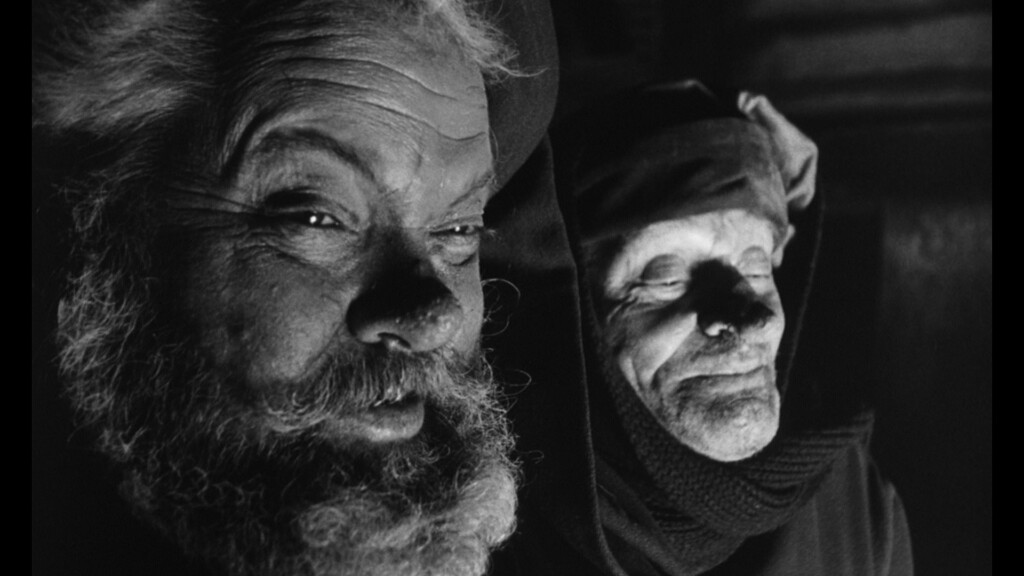
You know someone like him. Maybe you have known him for years without quite admitting it to yourself. He holds court at the end of the table, louder than everyone else, recounting stories that have grown three sizes since they actually happened, wearing his appetites like medals. He is too much — too large, too confident, too obviously in love with his own legend. Everyone else exchanges small glances, the polite muffled laughter of people who have agreed, silently and collectively, to find him ridiculous. And yet, if you are honest, genuinely honest, he is the only one in that room saying anything true.
This is where Verdi places his final protagonist. Not as a buffoon to be dismissed but as a man who has looked directly at the machinery of social life and decided, with full knowledge of the consequences, not to pretend he cannot see it. When Falstaff erupts into his great aria about honor, it is not the complaint of a defeated man. It is a precise philosophical demolition. Honor, he announces, is a word. And a word is air. And air fills the lung of a dead man not at all. He asks, with the methodical patience of someone who has thought this through completely: can honor set a broken leg? Can it feel? Can it live among the living? He traces honor’s territory and finds it empty at every border — it exists only as a performance staged for others, sustained by nothing except the collective agreement to keep staging it.
Nietzsche, writing in “On the Genealogy of Morality” in 1887, made a structurally identical argument with different vocabulary. Moral categories, he showed, are not discovered truths but invented social instruments, originally designed to manage power relationships and then gradually disguised as eternal principles so that nobody would notice the original machinery anymore. What we call virtue is largely a system of codes that the powerful impose and the rest internalize until the internalization itself feels like conscience. Falstaff, who predates Nietzsche by centuries in Shakespeare and arrives in Verdi’s operatic form in 1893, performs this same unmasking live and in front of an audience that would prefer he stop.
Erving Goffman, in “The Presentation of Self in Everyday Life” published in 1959, gave this phenomenon its most precise sociological anatomy. Every social interaction is a performance, he argued, in which individuals manage the impressions others receive of them, deploying props, costumes, tone, and timing to maintain a chosen identity. The theater is not the metaphor — the theater is the literal structure of ordinary life. What Goffman described as front-stage behavior, the curated self shown to the world, is precisely what Falstaff refuses. He has dropped the script. He performs nothing except himself, and in doing so he reveals that everyone else is performing furiously.
This is why he is dangerous rather than simply ridiculous. The people around him are not laughing at his lies — they are laughing at the exposure of theirs. His excess makes their moderation look like what it actually is: careful management, social camouflage, the daily labor of appearing to be something more contained and respectable than appetite. His size, his boasting, his shamelessness are not failures of character. They are refusals of the concealment that everyone else has agreed to treat as dignity.
His lucidity costs him everything the social order has to offer. He is mocked, soaked, bundled into a basket and dumped into the river, humiliated in a midnight forest by people disguised as spirits. The punishment is elaborate and communal because the offense is not personal — it is structural. He has seen the game. The game, therefore, must be seen to win.
The Comedy That Does Not Console
There is a particular kind of laughter that does not warm you. It lands somewhere behind the sternum, cold and precise, and you recognize it not as joy but as exposure. The finale of this opera produces exactly that sensation, and the ease with which audiences have chosen to hear it as benediction rather than verdict says more about the listeners than about the work itself.
The comfortable reading goes like this: an old master, at the end of his life, finally releases his grip on tragedy and offers us a wise, benevolent smile. The fat knight humiliated in the forest, dunked in the Thames, mocked by fairies, becomes a figure of gentle self-deprecation, and the great fugue that closes everything — all voices joining in the declaration that the whole world is a joke, that all men are born fools — arrives as a kind of absolution. Everyone laughs together. No one is left outside.
But Umberto Eco, in his extended meditation on the semiotics of the comic in “The Name of the Rose” and more systematically in the theoretical essays that orbited that novel, drew a distinction that cuts directly through this comfortable reading. There is comedy that reinforces the existing order by making transgression laughable — it disciplines the deviant, restores hierarchy, and sends everyone home reassured that things are as they should be. And then there is comedy that detonates the order from within, that uses laughter not as social glue but as solvent, dissolving the very categories that made the hierarchy possible in the first place. The first kind of comedy is carnival controlled by the church calendar. The second kind is the carnival that burns the calendar. This opera belongs, without any ambiguity, to the second category.
Consider what actually happens in the humiliation scene. An aging man — vain, broke, still convinced of his own irresistibility, still operating from a self-image formed decades before his body betrayed him — is lured into a nocturnal garden under false pretenses, surrounded by figures in costume who pinch him, mock him, strip away every remaining shred of dignity. And the people doing this to him are young. They are beautiful. They are in love with each other and intoxicated by their own cleverness. They do not see him. They see a target, a vehicle for their entertainment, a cautionary tale made flesh. The cruelty is not incidental. It is the point.
Boito’s libretto, working across two Shakespearean sources and compressing them with a poet’s precision rather than an adapter’s timidity, preserved this cruelty intact precisely because to soften it would be to falsify the insight. The knight is not redeemed by his humiliation. He is not made wiser. He absorbs the blow, steadies himself, and then joins the laughter — not because he has understood something transcendent, but because what else is there to do? The laughter in his mouth at the end is not wisdom. It is survival. It is the only remaining form of dignity available to a man who has had everything else removed.
And the fugue that follows, technically the most sophisticated ensemble writing in the entire opera, with its voices entering in strict imitation and building toward a collective declaration of universal foolishness, does not comfort. It indicts. When every character on stage — the lovers, the schemers, the humiliated old man, the respectable wives who engineered his destruction — joins in singing that everything is a joke and all men are fools, the equality of that statement is not democratic warmth. It is the equality of the grave. Everyone laughs the same way because eventually everyone will stand exactly where the fat knight stood in that garden, exposed and ridiculous, surrounded by people who cannot yet imagine that the same is coming for them.
Artistic Testament as Artistic Rupture
There is a moment, late in a career, when a master stops giving the audience what they came for. Not from fatigue, not from bitterness, but from something more unsettling: the refusal to be a monument to himself. You have witnessed this. A filmmaker you have followed for decades suddenly offers you a film stripped of the grand gestures, the soaring movements, the emotional architecture you had learned to anticipate from him. The first sensation is almost betrayal. The second, if you stay with it long enough, is the slow recognition that what looks like diminishment is actually a more radical act of intelligence.
Verdi did exactly this. At seventy-nine years old, with Otello already enshrined as a late masterwork, he sat down with Boito and began dismantling the very edifice he had spent six decades constructing. Falstaff, premiered at La Scala in February 1893, contains almost no arias in the traditional sense. The formal da capo structure, the extended solo declamation, the moment where time stops and a single voice claims the entirety of the stage’s emotional space — all of it dissolves into something radically different: a continuous conversational weave, voice against voice, phrase interrupting phrase, the orchestra darting beneath the singers like a current beneath ice. The audience that arrived expecting Aida or Trovatore found the ground had shifted beneath them.
Carl Dahlhaus, in his foundational work Nineteenth-Century Music, describes the central tension of the Romantic operatic tradition as the conflict between the demands of absolute musical form and the dramatic impulse toward psychological and narrative immediacy. For decades, Verdi had negotiated this tension through the set piece, the aria as an island of suspended time within the narrative river. In Falstaff, he abandons the island entirely. The river is all there is. What Dahlhaus identifies as the Wagnerian solution — the continuous symphonic web of leitmotif — Verdi approaches from an entirely different direction, through wit, through speed, through the conversational breath of comedy itself. The result is not Wagnerian at all. It is something that has no real predecessor and announces everything that comes after.
Stravinsky, who agreed with almost no one about almost nothing, recognized this immediately. He called Falstaff the greatest comic opera ever written and, more pointedly, one of the few works of the nineteenth century that belonged irrevocably to the twentieth. What he heard was the orchestral irony, the refusal of grandeur, the way Verdi’s late orchestration punctuates and undercuts the human voice rather than swelling beneath it. The orchestra in Falstaff is not support. It is commentary. It thinks. In the fugue that ends the opera — every character on stage simultaneously declaring that all the world is a jest, il mondo è una burla — Verdi collapses the boundary between high contrapuntal craft and pure theatrical mischief, producing something that sounds both ancient and impossibly modern.
Toscanini, who conducted the premiere and returned to the work obsessively throughout his life, spoke of it in terms that verged on the physiological. He said it moved like thought, not like music. The distinction matters. Thought does not wait for cadence. It shifts mid-phrase, doubles back, abandons its own conclusions. Falstaff is structured exactly this way, and Verdi achieved it not through the accumulation of technique but through the stripping away of every convention that had made him famous.
This is the paradox that Dahlhaus’s framework illuminates but cannot entirely contain: a composer ending a tradition from the inside, using the tradition’s own tools to show their limits. The man who in 1851 had given audiences the architectural grandeur of Rigoletto was now offering something that refused to be held in memory as a sequence of beautiful moments. Falstaff insists on being experienced whole, or not understood at all.
A vision curated by a filmmaker, not an algorithm
In this video I explain our vision
The Bodies That Keep Creating

Every morning he sits down at the piano before the house wakes up. His hands shake slightly when he reaches for the keys — not from fear, not from performance anxiety, but simply because the body at eighty has its own negotiations to conduct with gravity and time. Nobody is watching. Nobody is waiting for what he produces. He plays, corrects, plays again, crosses something out on the manuscript paper beside him with a pencil so worn it barely leaves a mark. This is not nostalgia. This is not the sentimental gesture of a man rehearsing his past. This is work, deliberate and unsentimental, undertaken because the alternative — the closed piano lid, the blank morning, the gradual retreat into mere biological continuation — would be its own species of dying.
Erik Erikson, writing in his 1950 masterwork Childhood and Society, identified the central psychological tension of late adulthood as the conflict between generativity and stagnation. Generativity, for Erikson, was never simply about producing children or leaving monuments. It was about the fundamental human drive to contribute something forward into time — to care for what comes after oneself with a quality of attention that transcends personal survival. Its opposite, stagnation, was not laziness or failure. It was the quiet calcification of the self around its own preservation, the narrowing of concern to the maintenance of what already exists. Erikson’s insight was clinical but it landed like something visceral: stagnation is a form of premature self-entombment, and the culture that equates old age with appropriate withdrawal is an active accomplice in it.
What neuroscience has since added to this picture is both more precise and more unsettling to comfortable assumptions. Michael Merzenich, whose decades of research into cortical neuroplasticity reshaped the field from the 1980s onward, demonstrated that the brain does not harden into a fixed architecture at some predetermined developmental threshold. It reshapes itself in direct response to what it is asked to do. Brains that continue to engage with genuinely novel, structurally complex challenges — problems that cannot be solved through the simple retrieval of old patterns — maintain a measurable capacity for reorganization that confounds the clean story we tell about biological decline. The creative brain that refuses habitual repetition, that insists on encountering difficulty as a condition of existence rather than an obstacle to comfort, is doing something physiologically real. It is not transcending the body through willpower or romantic myth. It is working with the body’s own stubborn capacity to change.
Verdi composed Falstaff between 1889 and 1892, beginning the project at seventy-five and completing it at seventy-eight. It premiered at La Scala on the ninth of February 1893, when he was seventy-nine years old, and received thirty-two curtain calls. The number is not here to impress anyone. It is here to do something more uncomfortable than impress: it is here to expose the specific quality of the assumption it shatters. Because the assumption is not merely that old artists produce lesser work. The assumption runs deeper and uglier than that — it is that serious creative risk is a young person’s province, that the elderly artist who still reaches for formal complexity is performing against nature, compensating for something, refusing to accept what time has settled. Falstaff is not the work of a man refusing to accept anything. It is the work of a man who had accepted everything and found that the acceptance opened, rather than closed, a door.
The fugue that ends the opera — every voice tumbling over every other voice in a deliberate, joyous chaos of counterpoint — is structurally the most demanding thing Verdi ever wrote. He saved it for last. Not as a final examination of his technique, but as a final statement about what seriousness actually looks like when it has stopped needing to prove itself.
What We Fear in Late Masterpieces
There is a particular discomfort that comes when something you thought you had already understood refuses to stay understood. You go back to it — a film you watched obsessively at twenty, the one you recommended to everyone, the one whose lines you knew by heart — and somewhere around the third reel you realize with a cold, quiet shock that it has become a completely different work. Not better or worse. Different. The camera holds on a face you remembered as triumphant and you see now only exhaustion behind the eyes. A line you once found heroic sounds, from where you are sitting now, like a man lying to himself in real time. Nothing in the film changed. The reels are the same. The light is the same. You changed, and the film found you out.
This is the mechanism that late masterpieces activate most brutally, and it is the reason they make audiences uncomfortable in a way that early or middle works rarely do. We do not go to Falstaff expecting to be found out. We go expecting confirmation — of Verdi’s greatness, of opera’s capacity for grandeur, of our own cultivated taste in having loved him for decades. What we encounter instead is a composer who no longer needs our confirmation and has, in fact, stopped asking for it entirely. Harold Bloom wrote in The Anxiety of Influence, published in 1973, about the way strong poets struggle against their precursors, misreading them creatively in order to clear imaginative space for their own voice. But Bloom’s framework describes the anxiety of the emerging artist. What happens when we reverse the lens and point it at the spectator confronting the late work? There is an anxiety there too, less discussed and more personally uncomfortable: the anxiety of finding that the monument you erected in your mind is breathing, that it has opinions about you, that it is not finished.
The sociological dimension of this discomfort is real and measurable. Late works are statistically underperformed, underrecorded, and written about with a curious tentativeness even when critics acknowledge their achievement. Edward Said observed in On Late Style, published posthumously in 2006, that late works tend to be received with a kind of nervous reverence — praised loudly and engaged with minimally. The praise functions as a barrier. If you call something a masterpiece often enough and loudly enough, you are exempted from actually listening to it. Falstaff falls into exactly this trap. It is universally acknowledged as one of the supreme achievements of operatic literature, a verdict delivered so decisively that most audiences arrive having already decided what they will find. What they find instead is a work that refuses the operatic grammar they came to celebrate — no arias built for applause, no moments where the music stops to let you feel heroic by association, no redemption offered on comfortable terms.
The man at the center of it all is fat, ridiculous, self-deluded, and philosophically correct. He understands something about the world that the people humiliating him do not: that dignity is a fiction we maintain, that desire does not expire on a schedule, that the universe is fundamentally indifferent to our pretensions. When the final fugue arrives — the entire cast singing together that the world is a joke, tutto nel mondo è burla — it is not a bow. It is a verdict. And verdicts, unlike bows, demand something from the audience. They demand that you sit with the possibility that the joke includes you, that your discomfort with this aging, wheezing, magnificent failure of a man is precisely the point, that the Verdi you came to honor has spent his last creative breath refusing to let you off easily. The monument breathes. It looks back. It has been waiting for you to get old enough to see it clearly.
Everything in the World Is a Joke — But Not the Way You Think
There is a moment when all the voices arrive at once. Not one after another, not in polite succession, but simultaneously, overlapping, each carrying its own thread of melody and each thread perfectly indifferent to the others. The effect is not chaos. It is something stranger than chaos: it is the sound of the world as it actually is, before we impose our narrative of beginnings and endings onto it.
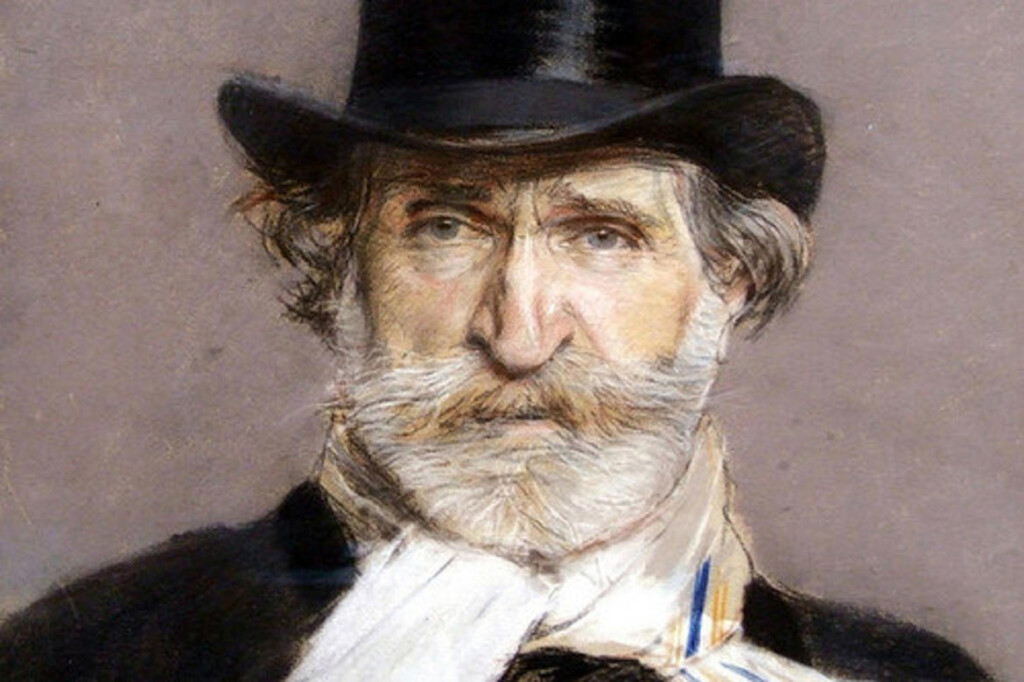
Verdi was seventy-nine years old when he finished this. He had buried his wife, buried his closest friend, buried most of the century he had helped define. He had written operas in which betrayal leads to stabbing, in which love turns into poison, in which fathers and daughters are destroyed by forces neither can name. And then, at the edge of everything, he sat down and wrote a fugue that laughs. Not because he had resolved something. Because he had finally stopped needing to resolve it.
Montaigne, in the late essays written after his own brush with death and the long settling of age, keeps returning to the same discovery: that the self is not a fixed thing to be known but a moving target, that every certainty about who we are dissolves the moment we look at it directly. “Each man carries the entire form of the human condition within him,” he writes in the Essais, and then spends hundreds of pages demonstrating that this form is irreconcilably inconsistent, contradictory, comic in its pretensions and tragic in its sincerity. The two are not opposites for Montaigne. They are the same substance under different pressures.
Schopenhauer arrives at the same place by a different road. In The World as Will and Representation, published in 1818, he argues that the comic arises from an incongruity between abstract expectation and concrete reality, the same incongruity that, perceived from a different angle, generates tragedy. The distance between what we believe we are and what we actually are is both the source of our suffering and the source of our laughter. The only difference is which direction you are standing when the gap opens beneath you.
The fugue does not choose a direction. It holds all of them at once. Every voice in it is simultaneously wrong and right, simultaneously serious and absurd. The old knight who has humiliated himself for desire, the young lovers who believe their passion is unique in the history of the world, the wives who have engineered an elaborate revenge that serves no purpose beyond its own elegance, the servant who has always known exactly how ridiculous his master is but followed him anyway, because what else would you do — they all arrive at the same phrase, at the same moment, with the same conviction. Tutto nel mondo è burla. Everything in the world is a joke.
But burla in Italian is not quite joke. It is closer to jest, to mockery, to a trick played by someone who is not entirely unkind. It implies a perpetrator, or it would imply one if the fugue did not dissolve the very idea of authorship in the act of singing it. There is no one standing outside the joke. There is no position from which to observe it as a joke. You are already inside it, have always been inside it, and the only question is whether you can hold that knowledge without needing it to be otherwise.
This is not nihilism. Nihilism is still a form of disappointment, still a reaction to an expectation that was not met. What the fugue proposes is something that costs more than nihilism: the capacity to find the whole thing genuinely funny without any distance from it, without the safety of irony, without the consolation of being the one who sees through the illusion while everyone else remains deceived — and to ask honestly whether any of us, even at seventy-nine, even at the very last bar, actually manages to pay that price.
🎭 Art, Opera, and the Legacy of the Masters
Verdi’s Falstaff stands as a towering final statement from a composer who spent decades shaping the soul of Italian opera. To understand the depth of such a late masterpiece, it helps to explore the broader currents of creativity, philosophy, and artistic transformation that defined the nineteenth century and beyond. These articles open unexpected corridors into the labyrinth of human expression.
Alchemy in Literature: From Dante to Goethe
Alchemy and literature share a secret kinship: both pursue the transformation of raw material into something luminous and enduring. This article traces how alchemical imagery and the pursuit of the Great Work echo through literary giants from Dante to Goethe, revealing how artists have long encoded spiritual ambition into their work. Verdi’s late style, stripping away excess to find pure theatrical gold, resonates deeply with this tradition of inner refinement.
GO TO THE SELECTION: Alchemy in Literature: From Dante to Goethe
Schopenhauer: Life and Philosophical Thought
Schopenhauer’s philosophy of art as the highest expression of the human will offers a compelling lens through which to read Falstaff’s serene, ironic farewell to the world. This article surveys the life and thought of the philosopher who argued that music, above all other arts, speaks directly to the essence of existence. Verdi, consciously or not, seems to have arrived at a Schopenhauerian peace in his final opera.
GO TO THE SELECTION: Schopenhauer: Life and Philosophical Thought
Jungian Individuation and the Great Work
Jung’s concept of individuation — the lifelong journey toward psychological wholeness — finds a striking parallel in the arc of Verdi’s creative life, culminating in the radiant complexity of Falstaff. This article explores how the alchemical stages of the Great Work map onto the inner transformation of the self, mirroring the way a great artist refines and transcends his earlier ambitions. Falstaff’s laughter at the end is, in Jungian terms, the laughter of a man who has finally integrated his shadow.
GO TO THE SELECTION: Jungian Individuation and the Great Work
Giordano Bruno and the Hermetic Tradition
Giordano Bruno‘s fusion of Hermetic vision and Renaissance humanism created a worldview in which art, memory, and cosmic harmony were inseparable — a sensibility that prefigures the holistic ambition of Verdi’s final operatic statement. This article examines Bruno’s thought and his place within the esoteric tradition that sought to unify all human knowledge into a single luminous image. Like Falstaff itself, Bruno’s work is a testament to the creative spirit refusing to be diminished by age or circumstance.
GO TO THE SELECTION: Giordano Bruno and the Hermetic Tradition
Discover the Films That Dare to Ask the Deepest Questions
If these reflections on art, legacy, and human transformation have stirred something in you, Indiecinema is the streaming destination where cinema meets the same courageous spirit. Explore a curated selection of independent films that, like Verdi’s Falstaff, refuse easy answers and illuminate the full complexity of being alive.
👉 EXPLORE THE CATALOG: Watch Indie Films in Streaming
A vision curated by a filmmaker, not an algorithm
In this video I explain our vision

