
The Weed You Almost Pulled
You are crouching over a crack in the pavement, fingers already pinched around the base of a green stem, and then something stops you. It is not sentiment. It is something more like recognition — the sudden awareness that this plant has been here longer than you have, that it pushed through concrete with a patience you will never possess, that it is, in some sense, doing exactly what it is supposed to do. You hesitate. The weed stays. And in that suspended moment, without knowing it, you have touched the oldest question in botany: what is this, and does it belong here, and who decided it didn’t?

The word “weed” does not exist in the plant kingdom. There is no genus, no species, no taxonomic category that corresponds to it. Weeds are a human invention, a social judgment dressed in botanical language, and the history of that confusion runs deeper than most people suspect. When you pulled back your hand from that stem in the crack, you were not simply sparing a plant. You were, briefly, suspending a verdict that civilization has been issuing for at least ten thousand years — ever since the first agricultural communities in the Fertile Crescent began deciding which plants served human purposes and which ones merely occupied space that could be used otherwise. The line between crop and weed was never biological. It was always political.
Botany, in the popular imagination, is the science of names. You walk into a greenhouse and someone with patient eyes tells you that this is a Ficus benjamina and that is a Monstera deliciosa, and you nod as though the naming has explained something. But the discipline that emerged slowly from Aristotelian natural history, that was systematized by Theophrastus in his Historia Plantarum around 350 BCE, that was revolutionized by Carl Linnaeus in his Species Plantarum of 1753, was never primarily about naming. Naming was the tool. The question was always attention — the rigorous, sustained, almost meditative practice of observing a living thing long enough to understand what it is doing and why. Linnaeus himself, who gave us the binomial system that still organizes plant science today, spent years lying in fields watching flowers open and close, tracking the rhythms of what he called the “sleep of plants.” He was not classifying. He was listening.
What botany actually demands of you is precisely what you practiced in that moment of hesitation over the pavement crack: the willingness to look at something ordinary until it becomes strange, to resist the immediate impulse to categorize and instead simply witness. Michael Pollan, in The Botany of Desire, published in 2001, made the provocative argument that plants are not passive objects of human attention but active agents in their own right — that they have, in an evolutionary sense, shaped human desires and civilizations just as thoroughly as humans have shaped them. The apple, the tulip, cannabis, the potato: each of these, Pollan argues, exploited human psychology to ensure its own proliferation across the planet. If he is right, then the plant in the crack was not merely surviving. It was, in some ancient and indifferent way, succeeding at you.
The philosopher of science Hans-Jörg Rheinberger has written about what he calls “epistemic things” — objects of scientific inquiry that are not yet fully known, that remain partially open, generating questions faster than they generate answers. Every plant, looked at honestly, is an epistemic thing. The dandelion you nearly uprooted this morning, the one with the hollow stem that bleeds white milk when broken, has been studied continuously for centuries and still holds mechanisms — its precise circadian responses, its chemical defenses, its relationship to specific fungal networks in the soil — that science has not fully mapped.
This is where botany begins. Not in the laboratory. In the moment before you pull.
Eve of the Irises
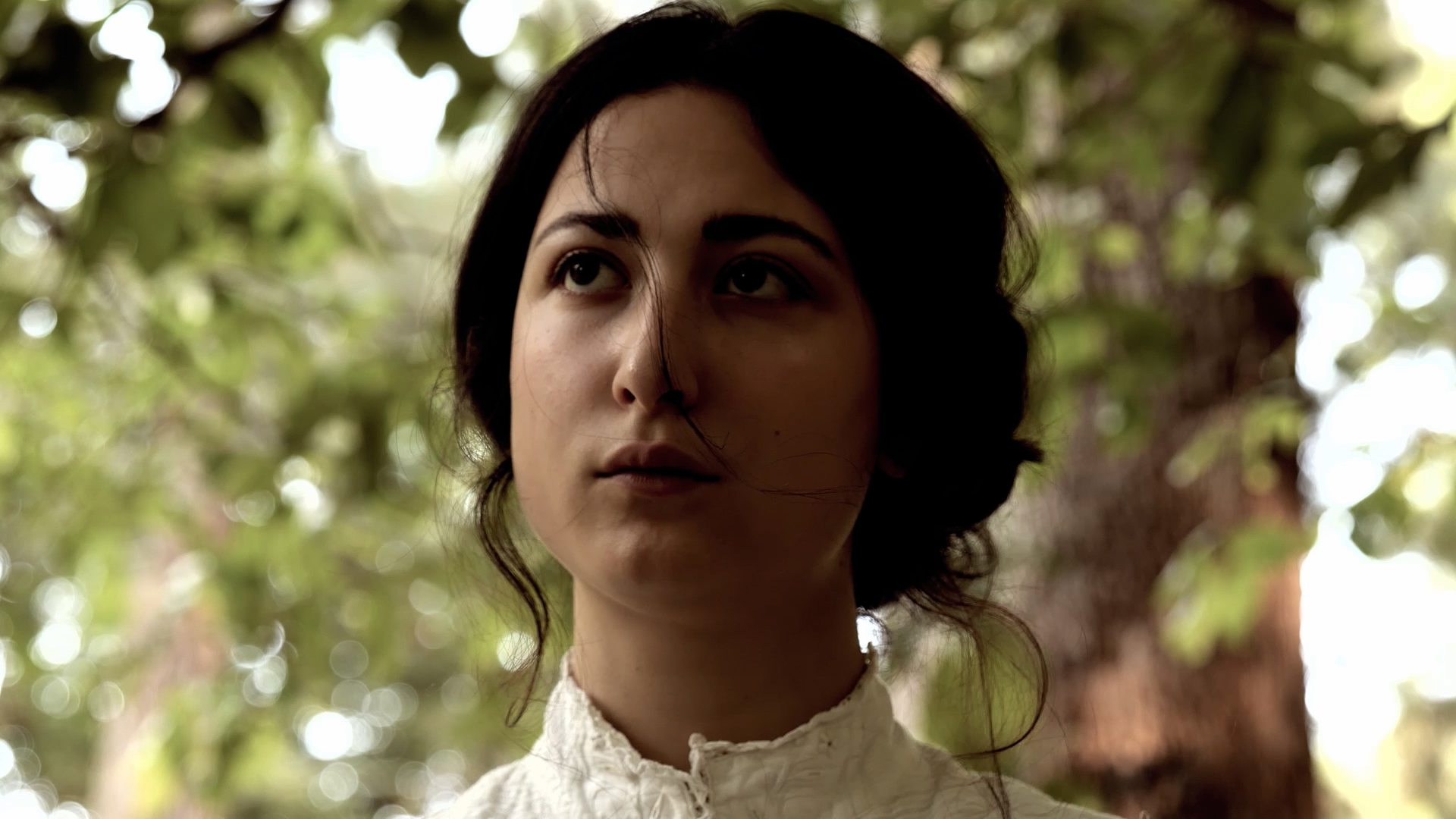
Documentary, by Isabel Russinova, Rodolfo Martinelli Carraresi, Italy, 2026
Eva of the Irises is a historical biographical docu-film about the scientist Eva Mameli Calvino, a botanist and pioneer of environmentalism in Italy, mother of the writer Italo, born in Sassari in 1886. The film, based on a multidisciplinary approach that combines several genres—such as theatre, documentary, cinema, and research—moves between memories, reflections on life, as well as the goals and missions the scholar still wished to achieve.
The multifaceted artistic sensibility of Isabel Russinova is expressed across many fields, from writing to acting, from directing to civic engagement, and finds one of its highest expressions in the docu-film Eva of the Irises, created with Rodolfo Martinelli Carraresi. The film blends scientific rigor and poetic refinement to portray the extraordinary figure of the botanist Eva Mameli Calvino, mother of Italo Calvino but above all an independent protagonist of 20th-century scientific culture. It is told through a combination of archival materials, interviews, and evocative staging capable of elegantly and profoundly conveying her intense human and professional story.
LANGUAGE: Italian
SUBTITLES: English, Spanish, French, Portuguese
A Science Born From Empire, Not Curiosity
You open a botany textbook and somewhere in the first chapter there is almost always an image of Carl Linnaeus — the Swedish naturalist, serene and authoritative, surrounded by pressed specimens, looking very much like a man who discovered the world rather than one who divided it up for European consumption. That image does a particular kind of work. It tells you that botany began with curiosity, with wonder, with the patient desire to understand living things. What it does not tell you is that the system Linnaeus published in 1753, the Species Plantarum, which catalogued approximately 7,300 plant species under a standardized binomial nomenclature, arrived at precisely the moment when European empires needed a language of control sophisticated enough to manage what they were stealing.
This is not a metaphor. The Royal Botanic Gardens at Kew, established in 1759 in the English countryside, functioned from its earliest decades as something closer to a strategic intelligence hub than a garden. Plants moved through Kew the way money moves through a clearing house — collected from colonial territories, analyzed, classified, and then redistributed as agricultural commodities or pharmaceutical resources in ways that served British imperial expansion. The rubber that eventually strangled the Amazon and built the Belgian Congo’s grotesque economy passed through gardens like Kew. The cinchona tree, whose bark produced quinine and whose knowledge belonged entirely to Andean communities for centuries before Europeans extracted it, was transplanted to British India and the Dutch East Indies in the 1860s, breaking the South American monopoly and making tropical colonization medically viable for European bodies. Without quinine, large portions of sub-Saharan Africa and Southeast Asia would have remained inhospitable to permanent European settlement. Botany did not merely describe this history. It enabled it.
What Linnaeus built was, among other things, a grammar of ownership. To name something in Latin, to assign it a genus and a species within a European taxonomic system, was to perform an act that Michel Foucault would later recognize in a completely different context: the production of knowledge as an instrument of power. In The Order of Things, published in 1966, Foucault argued that the classical episteme of the seventeenth and eighteenth centuries organized knowledge through systems of representation, through the visible surface of things rather than their hidden relationships. Linnaeus is almost the perfect specimen of this episteme — a man who believed that to see, to name, and to classify was to truly know. What his system erased, systematically and with the confidence that only imperial culture can sustain, was the prior existence of names, uses, and understandings accumulated by indigenous peoples across millennia.
The ethnobotanist Gary Paul Nabhan has documented in careful detail how plant knowledge held by communities in the Americas, Africa, and Asia was routinely extracted by European naturalists, translated into Latin nomenclature, and published under European authorship, stripping away both the human communities who had developed that knowledge and the ecological contexts that made it meaningful. This was not accidental. It was the epistemological equivalent of enclosure — the same process by which common land in England was fenced and privatized, here applied to knowledge itself. Vandana Shiva, writing in Monocultures of the Mind in 1993, called this process a second colonization: the first took land, the second took the cognitive frameworks through which land was understood.
There is something almost vertiginous about realizing that the Latin name of a plant you learned in school was often a European overwriting of a name that already existed, in a language that had been speaking about that plant for longer than European civilization has existed as a continuous project. The wonder that botany claims as its founding emotion was never innocent. It was the wonder of someone entering a room full of objects that belong to others and deciding, with the calm authority of the unopposed, to begin cataloguing them as his own.

What the Plants Were Doing Before We Named Them
You walk into a forest and feel, without quite knowing why, that something shifts. The quality of the air changes before you consciously register it. Your pulse slows. Your shoulders drop a fraction of an inch. You tell yourself this is relaxation, nature doing its predictable work on a stressed nervous system, and you keep moving along the trail with the mild satisfaction of someone who believes they have come to observe. The trees stand on either side of you. You do not consider, even for a moment, that the observation might be running in both directions.
This is the oldest confusion in the history of botany: the assumption that awareness belongs exclusively to the creature with the notebook.
What was actually happening in that forest, four hundred and fifty million years before you arrived with your binomial nomenclature and your Linnaean categories, was something that does not fit comfortably into the vocabulary we use for intelligence. Plants were already solving problems. They were already measuring time, tracking the angle of light across a season, releasing volatile chemical compounds to warn neighboring organisms of insect attack, sending electrochemical signals through root systems at speeds that, scaled to their biological architecture, are not so different from the speeds at which your own nervous system fires. They were, in every functional sense, communicating. They were doing it without a brain, without a central processor, without anything that resembles what we have agreed to call cognition, and this is precisely what makes the fact so difficult to absorb.
Monica Gagliano’s experimental work, which she pursued at the University of Western Australia and later at the University of Sydney, produced results that the botanical establishment found deeply uncomfortable. She demonstrated that Mimosa pudica, the sensitive plant, could learn to ignore a repeated stimulus that it had initially identified as a threat, retaining that learned habituation for weeks, even after the plant had been moved to entirely different conditions. This is not metaphor. This is not poetic license extended to photosynthetic organisms. This is a measurable, reproducible behavioral change that in any animal would be called memory. Gagliano was careful with her language, careful with her methodology, and the discomfort she produced was not scientific but philosophical. What she was threatening was not a data set. She was threatening a boundary.
Stefano Mancuso, whose work with the International Laboratory of Plant Neurobiology in Florence and his collaboration on Brilliant Green in 2015 brought these questions to a wider public, argued that the resistance to plant intelligence is not empirical but cultural. We have built an entire civilization on the premise that plants are passive, that they are the backdrop against which animal life performs its drama, and this premise is not innocent. It is structural. It legitimizes extraction. It makes agriculture a moral blank, makes deforestation a logistical problem rather than a violence, makes the severing of a root system something categorically different from severing a nerve.
The man walking through the forest does not know that the trees around him have already been exchanging information about his presence through fungal networks threaded beneath the soil, the mycorrhizal systems that ecologists like Suzanne Simard began mapping in the 1990s, systems through which carbon and phosphorus and chemical signals travel between trees of different species in patterns of mutual dependency that look, when you force yourself to look honestly, less like infrastructure and more like relationship. He does not know that the forest has been, in whatever sense that word can be stretched to accommodate non-animal life, paying attention for longer than the entire genus Homo has existed.
He thinks he is the one who came to see. He thinks naming a thing is the beginning of knowing it. He has not yet entertained the possibility that the four hundred and fifty million years before his arrival were not a waiting room.
The Violence Hidden in a Herbarium
There is a room somewhere — long, climate-controlled, smelling faintly of formaldehyde and old paper — where someone moves methodically between wooden cabinets. Their hands are precise. They lift a mounted sheet, examine the label, note the collection date, the locality, the collector’s name, the taxonomic revision penciled in by someone else decades later. They set it back down. They move to the next. Their face holds the particular blankness of someone who believes, with complete sincerity, that what they are doing is a form of rescue.
The herbarium is perhaps the most seductive lie in the history of natural science. It presents itself as preservation — as the generous act of stopping time for a living thing, of holding a specimen against the erosion of memory and extinction. What it actually performs is a very specific and very deliberate form of violence, so normalized by centuries of institutional repetition that it has become invisible, absorbed into the neutral grammar of scientific method. A plant is taken from its soil, from its network of fungal threads and insect visitors and seasonal rhythms, from the precise quality of light that falls on it at a particular latitude in a particular month. It is dried, flattened, pinned, labeled, and filed. It is made to mean something entirely different from what it was. And we call this knowledge.
Foucault, in The Archaeology of Knowledge published in 1969, describes the archive not as a collection of documents but as a system of rules that determines what can be said, what can be seen, what can be remembered. The archive does not preserve the past — it produces a particular version of it, one that serves the epistemic needs of whoever controls the filing system. The herbarium is an archive in precisely this sense. It does not capture a plant. It captures a decision about what a plant means within a pre-existing structure of classification, ownership, and authority. The label is not description. The label is verdict.
Consider the numbers: the Natural History Museum in London holds approximately eight million specimens, many collected during the height of colonial expansion, between roughly 1750 and 1900. The Royal Botanic Gardens at Kew maintain another seven million. These are not simply large numbers. They are the material record of a particular epistemological project — one in which European science traveled to every corner of the inhabited world, extracted its biological knowledge, stripped it of local meaning, rehoused it within Linnaean categories, and filed it in London. Indigenous names were discarded or relegated to parentheses. Indigenous knowledge systems that had classified, cultivated, and understood these plants for centuries were not merely ignored — they were structurally excluded from the archive. They could not be pressed and pinned. They did not fit the sheets.
The man in the climate-controlled room is not cruel. This is the point. He is conscientious, careful, genuinely devoted to what he understands as the preservation of biodiversity knowledge. He would be troubled by the suggestion that his work participates in a long tradition of epistemic dispossession. And yet the cabinets around him contain, among their eight million silences, the dried and flattened remains of plants whose original names no one in this institution can pronounce, collected from lands taken by force, by people who were never asked for consent and who received nothing in return except, occasionally, the honor of having a species named after a European governor.
There is a scene that recurs across different registers of human experience — the careful cataloguing of things that have been removed from where they belonged, done with complete professional seriousness, done with love even, and done in a register that makes questioning it feel almost barbaric. The tenderness of the archivist is real. It does not make the archive innocent. A thing can be simultaneously an act of care and an act of erasure. The herbarium holds both, pressed together on the same sheet of acid-free paper, and the difficulty is that you cannot separate them without destroying the specimen entirely.
Indigenous Botany and the Knowledge That Was Erased
There is a moment, somewhere in the ruins of what was once a vast library of green knowledge, where you have to stop and ask yourself what exactly was lost. Not in the abstract sense of cultural heritage, the kind of phrase that gets spoken at UNESCO conferences and then forgotten over canapés. In the concrete sense: remedies that worked, classifications that were accurate, relationships between plant and human body that had been tested across centuries of careful observation. Gone. Not because they were wrong. Because someone decided they did not count as knowledge.
In 1562, a Franciscan friar named Diego de Landa ordered the burning of Maya codices in the town of Maní, in what is now the Yucatán Peninsula. He destroyed in a single afternoon what scholars now believe represented the accumulated botanical, astronomical, and medical knowledge of an entire civilization. He wrote afterward that he found in the books nothing but superstition and falsehoods. The books, of course, could not answer him. The plants they described continued growing, indifferent to his verdict.
What happened in Maní was not an isolated act of colonial vandalism. It was a policy. The systematic destruction of Aztec botanical manuscripts, the suppression of Ayurvedic classification systems, the forced replacement of West African plant medicine with European pharmaceutical frameworks — these were not accidents of conquest. They were its instruments. To erase a people’s relationship with the land they had lived on for millennia was to sever the deepest root of their autonomy. You cannot resist what you can no longer name.
Vandana Shiva, in her 1993 work Monocultures of the Mind, made this precise argument with the kind of intellectual force that tends to make comfortable people uncomfortable. She demonstrated that what we call scientific knowledge is not a neutral accumulation of truths but a cultural construction that has historically required the invalidation of other knowledge systems to sustain its authority. The monoculture she described was not only agricultural — the replacement of thousands of varieties of rice with a handful of high-yield strains — but epistemological. One way of knowing the world was declared universal, and everything else was reclassified as folklore, superstition, or primitive intuition waiting to be confirmed by a Western laboratory before it could graduate into fact.
The pharmacological debt is staggering and almost entirely unacknowledged. Curare, the muscle relaxant derived from Amazonian plants and still foundational to modern anesthesia, was refined over generations by indigenous communities who had mapped its properties with extraordinary precision long before any European botanist arrived to take notes. Quinine, the treatment for malaria that shaped the course of colonial history, came from the bark of the cinchona tree — knowledge held by Quechua-speaking peoples of the Andes who had been using it for centuries before it entered European medicine. The active compounds in dozens of contemporary pharmaceuticals trace their lineage directly to plant traditions that were simultaneously being dismissed as unscientific by the institutions profiting from them. This is what Shiva means by biopiracy: the extraction of knowledge, the removal of its origins, and the repackaging of the result as discovery.
There is a man, in a story told in several different forms across several different cultures, who walks into someone else’s garden, takes the seeds, and returns home to plant them, and when asked where he found them, says: I found them. The story is always told as a cautionary tale about memory. What it is actually about is power — who gets to name what they found, and who gets erased from the finding.
The history of botany that fills university curricula and museum exhibits is the history of one civilization’s decision to treat its own moment of arrival as the beginning of time. Everything before it becomes prehistory. Everyone outside it becomes a source.
A vision curated by a filmmaker, not an algorithm
In this video I explain our vision
The Garden as a Political Hallucination
There is a moment when you walk through a space so perfectly ordered that your body understands something your mind has not yet formulated. The hedgerows rise on either side, clipped to a geometrical precision that no natural growth ever achieved alone, corridors of green that converge at a vanishing point someone designed centuries before you arrived. You expected to feel peace. Instead there is something else, something that sits just below the threshold of language, a faint wrongness in the chest, as though the order itself is watching you rather than the other way around.
This is not an aesthetic response. It is a political one, and you are having it in your body before your intellect catches up.
The formal garden did not emerge from a love of plants. It emerged from a theory of sovereignty. When André Le Nôtre laid out the gardens at Versailles between 1661 and 1700 across roughly eight hundred hectares, he was not making a space for nature to be appreciated. He was making a space for power to be made visible. Every axis radiated outward from the palace windows. Every tree stood as proof that the king’s gaze extended to the horizon without obstruction. The garden was a map of dominion drawn in living tissue. Louis XIV walked those allées and saw himself reflected in every trimmed surface, every fountain’s controlled explosion of water, every parterre reduced to an embroidery pattern legible only from above, from the position of God or monarch, which in that symbolic vocabulary were nearly synonymous.
Yi-Fu Tuan, in his 1984 work Dominance and Affection, makes an observation that is almost unbearable in its precision: that the desire to control living things is inseparable from a form of love, but a love that cannot tolerate the beloved’s autonomy. The topiary hedge and the bonsai tree and the trained espalier are all, in his reading, expressions of affection that require submission as their condition. You adore the plant. You also refuse to let it be what it would be without you. Tuan draws a line from the formal garden directly into the psychology of domination in intimate relationships, in pedagogy, in colonial administration, and the line is straight because the logic is identical. To geometrize nature is to insist that nature’s meaning is completed only when it confirms the human arrangement imposed upon it.
The man walking those hedgerow corridors at the great house, the corridors that seem to extend impossibly beyond the property’s actual dimensions, feels the dread without naming it. What he is sensing is not the supernatural. What he is sensing is the weight of pure intention crystallized in space, a space that has been so thoroughly colonized by a single will that it leaves no room for accident, for drift, for the small lateral freedoms that make a living landscape feel inhabited rather than administered. The maze is not a puzzle. It is a demonstration. It shows you what happens to a space when someone cares enough about control to eliminate every variable except the one that keeps you moving where they decided you should move.
And then Versailles becomes the suburban lawn of 1955, of 1972, of this morning. The scale has collapsed but the ideology has not. The American lawn, which by the early twenty-first century covered an estimated forty million acres of the continental United States, more surface area than any single irrigated crop in the country, is Le Nôtre’s geometry translated into the vernacular of private property. It announces the same thing the parterre announced: I have subdued this ground. It requires the same continuous labor of suppression, the weekly mowing that is less maintenance than it is a ritual re-enactment of conquest, a recommitment to the proposition that the ground beneath your feet exists to reflect your intentions back at you.
The dread in the hedgerow corridor is the dread of recognizing that you are not the walker. You are also, in some sense, what has been trimmed.
What Photosynthesis Means Philosophically
You are standing in a field at dawn, and the mist is doing something you cannot name. It is not moving exactly, not settling exactly, just existing at the threshold between states, and you feel — this is the part no one talks about — implicated. Not observed. Not moved in some vague aesthetic sense. Implicated, as though you have walked into the middle of a transaction that has been ongoing for three billion years and your presence, your warm animal breath, is somehow part of the accounting.
What is actually happening around you in that field is a scandal. It is a scandal in the strict philosophical sense: something that should not be possible according to the categories we use to organize reality. The leaves absorbing the first grey light are doing what no coherent materialist framework can fully domesticate. They are converting immateriality into matter. They are making substance from light. Not extracting it, not rearranging it, not borrowing it from somewhere else in a zero-sum redistribution — making it, out of photons and air and water, building carbon chains, building mass, building the architecture of living tissue from what is, in any ordinary sense, nothing you can hold.
Jan Ingenhousz came closest to feeling the edge of this in 1779, when his experiments in London finally demonstrated that plants absorb what he called “fixed air” and release something breathable, but only in light, only when light is present. The light was not incidental. The light was the engine. What he had touched, without the language to say so, was the question of whether energy and matter are as distinct as every prior century had assumed. Melvin Calvin and his colleagues spent years between the late 1940s and 1950 tracing the precise biochemical pathway — now bearing his name — through which carbon dioxide becomes glucose, mapping each enzymatic step with radioactive carbon-14 as a tracer. The cycle closed. The mechanism was legible. And yet the philosophical wound Ingenhousz had opened did not close with it. If anything, the precision of the mechanism made the scandal more acute, not less. Now we knew exactly how the impossible thing happened, step by enzymatic step, and that knowledge somehow made it stranger.
Aristotle had insisted on a distinction between what things are made of and what animates them, the material and the formal cause, and for two millennia that distinction held firm enough that nobody had to confront the moment where light, which has no mass at rest, becomes the wheat in your bread. Spinoza, moving against the grain of his century, suggested that matter and thought were not opposites but attributes of a single substance, and there is a version of that intuition that photosynthesis seems to confirm with chemical precision: the boundary between energy and structure, between process and thing, is not a wall but a membrane, and plants have been passing through it since before animal life existed.
The mist in the field does not know any of this. The leaves do not know it. And yet they are doing it, and you, standing there, exhaling the carbon dioxide that the leaves are already beginning to fix into glucose, are inside the cycle. You are not watching it. You are a participant, a metabolic partner in a transaction whose terms were set before the first nervous system existed to feel implicated by anything.
This is what botany keeps arriving at when it follows its own reasoning honestly: not a catalogue of species, not an inventory of chemical reactions, but the discovery that the categories we use to separate the living from the non-living, the material from the energetic, the self from the world, are precisely the categories that plants have never recognized and never needed.
The Plant That Grows Through the Concrete

You have walked past it a thousand times without stopping. The crack in the pavement outside your building, or along the edge of a parking lot, or splitting the grey skin of a sidewalk somewhere between where you started and where you were going — and from it, a single green shoot, unremarkable, almost offensive in its persistence. You probably thought of it as a weed, which is not a botanical category at all but a human verdict, a social judgment dressed in the language of nature. The plant does not know it is a weed. It does not know it is unwanted. It is simply doing what it has done for four hundred million years, long before there were pavements to crack, long before there were cities to interrupt, long before there was a species on this planet that felt the need to classify, to name, to own.
That organism pushing through the concrete is not a symbol of anything. It is not resilience as metaphor, not a lesson packaged by nature for your edification. It is a biological reality: a living system executing chemistry, hydraulics, and cellular mechanics with a precision that no human engineering has yet matched at that scale. The pressure generated by a growing root tip, what botanists measure as turgor pressure driven by osmosis, can exceed the compressive strength of certain building materials. The plant is not being poetic. It is being a plant, and it was being a plant before the Roman roads, before the first agricultural furrow cut into soil in the Fertile Crescent around ten thousand years ago, before Theophrastus sat down in Athens in the fourth century BCE and decided that the living world needed human sentences to make it real.
Robin Wall Kimmerer, botanist and member of the Citizen Potawatomi Nation, wrote in Braiding Sweetgrass in 2013 something that the Western scientific tradition has spent centuries training itself not to hear: that plants are persons. Not metaphorically, not sentimentally, but in the epistemological and relational sense carried by the Potawatomi language, where the animate grammatical form extends to moss, to lichen, to the sweetgrass her grandmother braided. In English, we say it is a plant, collapsing a living agent into an object. In Potawatomi, the grammar refuses that collapse. Kimmerer’s argument is not mysticism dressed as science — she holds a PhD in botany from the University of Michigan and spent decades in academic research — it is rather a confrontation with the assumption buried inside scientific language itself: that objecthood is the price of knowledge, that to know something you must first strip it of agency.
The entire history of botany, traced carefully, is also the history of that stripping. From the moment human beings began domesticating plants around twelve thousand years ago, selecting for compliance and yield, to the moment Linnaeus imposed his binomial system across the living world in the 1750s, to the moment the first genetically modified crop was patented and owned, the motion has been consistent. Control masquerading as curiosity. Taxonomy as a form of jurisdiction. Every classification system, however scientifically rigorous, begins with the assumption that the classifier stands outside the thing being classified, sovereign and separate, rather than entangled with it in the same web of dependency and mutual becoming.
The shoot in the crack does not wait for your taxonomy. It does not grow toward your attention or shrink from your indifference. It was here before your city and, given enough time and silence, it will be here after. And if you stay with that fact long enough — not as comfort, not as warning, but simply as fact — a question begins to form at the edge of thought that the whole history of botanical science, for all its magnificence and genuine illumination, may have been animated less by the desire to understand plants than by the ancient, unresolved terror of a species that has never made peace with what it cannot master.
🌿 Where Nature Meets Knowledge and Symbol
Botany is more than the science of plants — it is a history of human curiosity, symbolic meaning, and the desire to decode the living world. These articles explore adjacent territories where science, art, and philosophy intertwine, revealing how humanity has always sought hidden order beneath visible forms.
What Is Alchemy: History and Origins
Alchemy and botany have long shared a secret language, one in which plants were not merely organisms but vessels of spiritual and material transformation. Understanding what alchemy truly is — its origins, its methods, and its worldview — illuminates why herbalists and alchemists often worked side by side. This article provides the essential foundation for grasping how the natural world was once read as a living text.
GO TO THE SELECTION: What Is Alchemy: History and Origins
Paracelsus: Life and Alchemical Thought
Paracelsus was among the most influential thinkers to bridge medicine, botany, and alchemical philosophy, arguing that every plant concealed a healing signature written by nature itself. His doctrine of signatures transformed the way Europeans looked at botanical knowledge for centuries. This article dives into his revolutionary and often controversial thought, which reshaped both science and mysticism.
GO TO THE SELECTION: Paracelsus: Life and Alchemical Thought
Albertus Magnus: Alchemy and Natural Philosophy
Albertus Magnus was a medieval scholar who applied rigorous natural philosophy to the study of plants, animals, and minerals long before modern science formalized such inquiry. His writings on botany and natural history represent one of the earliest systematic attempts to catalogue the living world in the Western tradition. This article explores how his work stood at the crossroads of empirical observation and esoteric speculation.
GO TO THE SELECTION: Albertus Magnus: Alchemy and Natural Philosophy
Giordano Bruno and the Hermetic Tradition
Giordano Bruno’s vision of an animate, infinitely interconnected universe placed nature — including plant life — at the center of a grand hermetic cosmology. His radical ideas about the living world influenced how later thinkers approached natural science and the philosophical meaning of organic life. This article traces Bruno’s bold fusion of hermetic tradition and natural philosophy.
GO TO THE SELECTION: Giordano Bruno and the Hermetic Tradition
Discover the World Through Independent Cinema
If exploring the hidden layers of nature and knowledge has sparked your curiosity, Indiecinema streaming is where that journey continues. Our curated selection of independent and documentary films brings the wonders of science, philosophy, and the natural world to life in ways no textbook can. Come and discover stories that think, breathe, and grow.
👉 EXPLORE THE CATALOG: Watch Indie Films in Streaming
A vision curated by a filmmaker, not an algorithm
In this video I explain our vision

