
The Man Who Named the World
You open a drawer and something in you relaxes. The pens in one compartment, the rubber bands coiled together in another, the loose batteries separated from the dead ones by nothing more than your own private system of judgment. Nobody told you to do this. Nobody is watching. And yet the act of sorting feels like something close to relief, as if the world briefly agreed to cooperate with the shape of your mind. You label boxes in the garage. You rename folders on your desktop with a precision that borders on ritual. You feel, in those moments, not merely organized but legitimate — as though giving things their proper names restores some order that was always latent in reality, waiting only for someone coherent enough to perceive it.

This is not a quirk. This is one of the oldest cognitive drives in the human animal, and it has consequences that ripple outward in ways the person standing in their garage, labeling a box of holiday decorations, cannot begin to imagine.
In the spring of 1735, a twenty-eight-year-old Swede arrived in the Netherlands carrying a manuscript he had written in near-isolation, a manuscript so dense with taxonomic ambition that its first edition ran to only twelve folio pages — not because it was unfinished, but because what it proposed was structural, not descriptive. A skeleton, not a body. The man’s name was Carl Linnaeus, and what he had under his arm was the first version of what would become, across twelve editions and an entire lifetime of obsessive revision, the Systema Naturae: a framework for naming every living thing on earth. By the tenth edition in 1758, the work had expanded to over four thousand animal species and nearly eight thousand plants, all organized within a hierarchical system of kingdom, class, order, genus, and species that we still inhabit today as though it were nature itself rather than one man’s decision about how to see.
The philosopher Michel Foucault, writing in The Order of Things in 1966, argued that the classical age — roughly the seventeenth and eighteenth centuries — was characterized by a fundamental belief that the surface of things could be read as a transparent representation of their inner truth, that the visible could be arranged into a table that captured the invisible. Linnaeus was not just a product of this episteme; he was its most consequential practitioner. He believed, with a certainty that reads today as either magnificent or terrifying depending on your angle, that God had created the natural world according to a rational plan and that the human mind — specifically, apparently, his human mind — was capable of recovering that plan through systematic observation. Classification was not invention. It was discovery. He was not naming things; he was hearing their true names for the first time.
This distinction matters enormously, because the difference between invention and discovery is the difference between authority and absolute authority. If you invent a system, someone can argue with it. If you reveal the structure God placed in creation, argument becomes something close to heresy.
The impulse that makes you organize a drawer is the same impulse that built the taxonomic architecture of modern biology, modern medicine, modern ecology. But when that impulse operates at the scale of an entire civilization’s relationship with the natural world, when it decides not just where the batteries go but what counts as a species, what counts as a variety, what counts as the same and what counts as irrevocably different — then the man holding the pen is not just organizing. He is legislating. He is drawing lines in living flesh and calling them the lines of God.
Linnaeus drew more of those lines than any human being before or since, and almost none of them were innocent.
Eve of the Irises
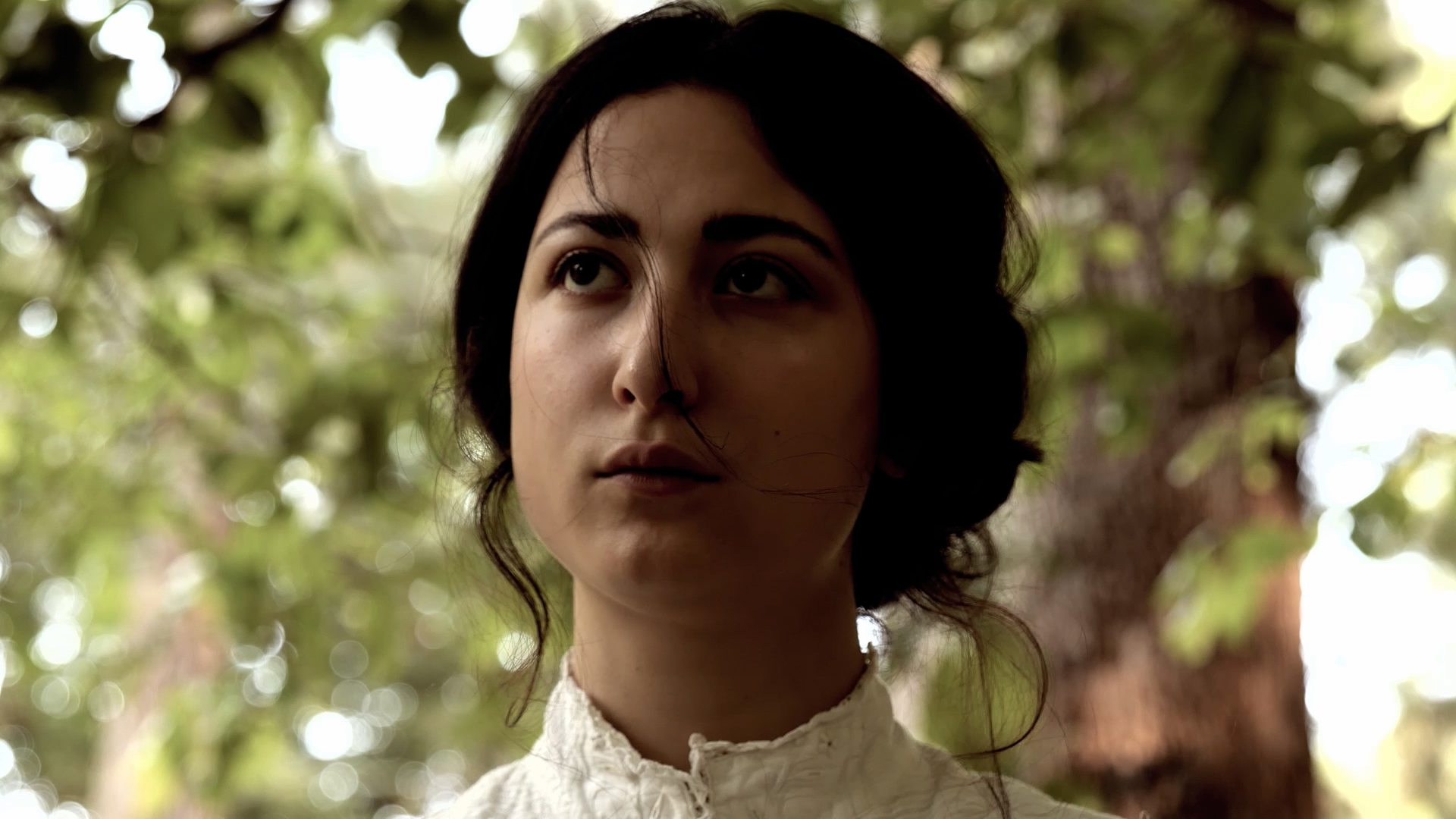
Documentary, by Isabel Russinova, Rodolfo Martinelli Carraresi, Italy, 2026
Eva of the Irises is a historical biographical docu-film about the scientist Eva Mameli Calvino, a botanist and pioneer of environmentalism in Italy, mother of the writer Italo, born in Sassari in 1886. The film, based on a multidisciplinary approach that combines several genres—such as theatre, documentary, cinema, and research—moves between memories, reflections on life, as well as the goals and missions the scholar still wished to achieve.
The multifaceted artistic sensibility of Isabel Russinova is expressed across many fields, from writing to acting, from directing to civic engagement, and finds one of its highest expressions in the docu-film Eva of the Irises, created with Rodolfo Martinelli Carraresi. The film blends scientific rigor and poetic refinement to portray the extraordinary figure of the botanist Eva Mameli Calvino, mother of Italo Calvino but above all an independent protagonist of 20th-century scientific culture. It is told through a combination of archival materials, interviews, and evocative staging capable of elegantly and profoundly conveying her intense human and professional story.
LANGUAGE: Italian
SUBTITLES: English, Spanish, French, Portuguese
A Childhood Spent Among Roots and Silence
There is a particular kind of silence that belongs only to northern European countryside in the early eighteenth century, before the industrial hum colonized everything, before the road swallowed the field. You would have heard wind through spruce, the occasional percussion of a woodpecker, and beneath all of it, your father moving between rows of plants with the focused devotion of a man who had found his church in the soil. Carl Linnaeus was born in 1707 in Råshult, a hamlet so small it barely disturbed the Swedish landscape, and his first education was not letters or scripture but the specific texture of a leaf held against morning light.
His father, Nils Ingemarsson Linnaeus, was a Lutheran curate who kept a garden with the seriousness of a vocation. This was not ornamental pleasure. The garden was a kind of argument against chaos, an insistence that the world could be organized, that beauty and utility could coexist in rows. The boy grew inside this argument before he could articulate it. There is something that happens to children raised in close proximity to growing things — a certain attentiveness to distinction, to the minor differences between one specimen and another that a city child would never learn to perceive. Carl learned the names of plants the way other children learn the names of relatives: with affection, with precision, with the dim understanding that to name something is to claim a relationship with it.
Ludwig Wittgenstein wrote in the Tractatus Logico-Philosophicus, published in 1921, that the limits of my language mean the limits of my world. He meant something rigorous and philosophical, but the insight lands with particular weight when you think about a child in a rural Swedish garden being handed his first vocabulary. Every name Nils placed in his son’s hands was not merely a label — it was a perceptual tool, a lens ground to a specific focal length. To know that one plant was Hepatica and another was Anemone was to be capable of seeing a distinction that remained invisible to anyone who lacked the word. Language here was not a description of the world. It was the instrument by which the world became visible at all.
Rural isolation does something to the mind that sociable, stimulating environments cannot. It either breaks a child into vague, unfocused dreaming, or it forces the mind inward and downward, toward the granular, toward the specific, toward what is actually there rather than what is merely happening nearby. Linnaeus had no theater to distract him, no crowd to dissolve into, no fashionable conversation to imitate. He had the garden, and beyond the garden, the Swedish forest, which was not romantic wilderness but a specific, nameable collection of organisms each with its own insistence on being distinguished from its neighbors. The forest, in this sense, was already a taxonomy waiting to be written. It simply needed someone whose first language had been taught to him among roots and silence.
By the time Linnaeus entered the gymnasium at Växjö, his teachers already reported something unusual — not brilliance in the conventional sense, not rhetorical fluency or mathematical speed, but an uncanny, almost unsettling capacity to observe. He saw differences where others saw sameness. He asked about distinctions no one had thought to draw. This is precisely what Wittgenstein’s formulation predicts: a mind given richer, more articulated language in a particular domain will perceive that domain with greater resolution. The boy who had spent years learning to discriminate between species of moss had trained his perceptual apparatus on the world’s actual complexity, not on its convenient simplifications.
What Råshult gave Linnaeus was not knowledge, exactly. It gave him a method of attention. And that method, absorbed before adolescence, before the corrective pressures of academic convention could reshape it, would eventually reorganize the entire living world.

The Architecture of Obsession: Building the Systema Naturae
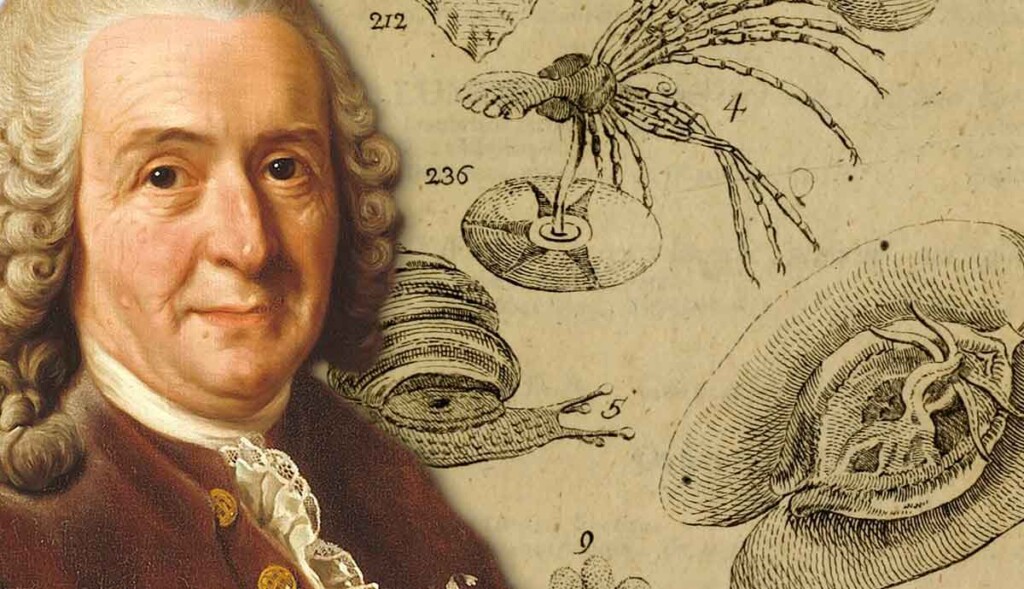
There is something almost violent about the first edition. Eleven pages. That is all it took, in 1735, for a twenty-seven-year-old Swede to declare that he had found the organizing principle of all living things on earth. Not a tentative proposal. Not a humble sketch. Eleven pages with the confidence of someone who has not discovered a system but invented one, and knows the difference matters less than he is willing to admit.
What Linnaeus built over the following decades — through twelve editions, the last ballooning to nearly 2,400 pages by 1768 — was not a catalogue. Catalogues are passive. They receive. What he constructed was a grammar, and grammars do not describe the world so much as they impose a particular way of cutting it. The binomial nomenclature he formalized, that clean two-word signature of genus and species, did something philosophically audacious: it said that every organism’s deepest identity could be expressed in two Latin words, and that those two words captured a natural truth rather than a human convenience. We still live inside that claim. We rarely notice we are living inside it.
Think about what binomial nomenclature actually requires you to believe. It requires that living things fall into discrete, bounded categories. That the boundaries are real, not approximate. That a thing belongs to its genus the way a citizen belongs to a nation — completely, without remainder. Aristotle had gestured toward classification, and before him the ancient herbalists had sorted plants by use and shape, but Linnaeus raised the sorting to a metaphysical principle. The philosopher John Dupré, in his 1993 work “The Disorder of Things,” would spend considerable effort demonstrating what evolutionary biology has since confirmed: that species boundaries are messier, more provisional, and more contested than the Linnaean grid suggests. But by 1993, the grid had been in place for nearly two and a half centuries, shaping not just botany and zoology but the entire Western habit of thinking in fixed taxonomic hierarchies.
The obsession was physical as well as intellectual. He kept specimens in shallow drawers, arranged and rearranged them, slept surrounded by dried plants pinned to paper. There is a particular kind of mind that finds the universe intolerable unless it can be made to sit still. Linnaeus had this mind completely. The Systema Naturae grew edition by edition not because new evidence forced revisions, but because the logic of the system itself demanded expansion. Once you commit to the grammar, every unnamed organism is an insult to the architecture. Every undescribed beetle is a loose word in a sentence that should already be complete.
This is where the work becomes something more than science. The sociologist Bruno Latour, tracing how scientific facts get constructed rather than simply found, described the way certain intellectual tools become so embedded in practice that their original arbitrariness becomes invisible. The binomial system is precisely such a tool. It was not inevitable. It was chosen — chosen over rival systems proposed by contemporaries like John Ray and Joseph Pitton de Tournefort — because it was more elegant, more portable, more teachable. It won not because it was truer but because it worked better as a social technology. And social technologies, once adopted, begin to look like natural law.
What Linnaeus was really building, edition by edition, was a world in which Europe stood at the center of naming. The expeditions he sent outward — his apostles, he called them, not students — came back with specimens from Lapland, from America, from Japan and South Africa, and those specimens entered the system through him. Through his Latin. Through his authority. The act of naming, which he presented as neutral description, was simultaneously an act of possession. A thing fully named in the Linnaean grammar had, in a precise sense, been claimed. Not stolen. Named. Which in the eighteenth century often amounted to the same thing.
To Name Is to Own: The Politics Inside the Taxonomy
There is a moment in the tenth edition of Systema Naturae, published in 1758, when the page stops being a catalog of plants and animals and becomes something else entirely. Linnaeus, having already arranged beetles and mosses and fish into their orderly ranks, turns to the human animal. He calls the species Homo sapiens and then, with the same clinical hand he used to describe wing venation and leaf margins, divides humanity into four varieties. Americanus: reddish, obstinate, merry, regulated by custom. Asiaticus: sallow, melancholy, covetous, ruled by opinion. Afer: black, phlegmatic, indulgent, governed by impulse. Europaeus: white, sanguine, muscular, inventive, governed by law.
Read that sequence slowly. The progression is not accidental. Each description moves from skin color to temperament to moral capacity to the mode of governance deemed appropriate. By the time you reach Europaeus, you have arrived at the only variety that governs itself by rational law rather than by custom, opinion, or raw impulse. The architecture is elegant and devastating. It looks like a description. It functions as a verdict.
Michel Foucault spent much of his intellectual life demonstrating precisely this mechanism. In Discipline and Punish and in the lectures collected as Society Must Be Defended, he argued that knowledge and power are not parallel forces that occasionally intersect but a single compound operation. The scientific gaze does not neutralize political interest; it concentrates and disguises it. When a system of classification claims to describe nature, it is simultaneously prescribing a social order and immunizing that order against challenge, because challenge now means disagreeing with nature itself. Linnaeus handed this immunization to European colonial power at the exact moment it needed it most. The Seven Years War was reshaping the globe. Plantations were producing wealth on an unprecedented scale. The legal and philosophical architecture of slavery required a foundation that went deeper than economic convenience. Taxonomy provided it.
The consequences were not delayed. What Linnaeus encoded in his botanical Latin became, across the following century, the scaffolding of scientific racism as an academic discipline. Johann Friedrich Blumenbach in 1775 built his five-race hierarchy on Linnaean logic. Samuel Morton in the 1830s was filling skulls with lead shot to measure cranial capacity and ranking populations by the results. Paul Broca was doing the same in Paris in the 1860s with calipers and more sophisticated arithmetic. Each of these men understood himself to be doing science. Each was refining a classification begun in Uppsala. The numbers changed. The underlying moral verdict did not.
What makes this history genuinely disturbing is not that a man in the eighteenth century held views common to his class and time. That is ordinary and barely interesting. What disturbs is the structure of the move itself: the way the language of natural philosophy borrowed the authority of disinterested observation to smuggle in a ranking that was anything but disinterested. You recognize this structure because it is still operational. It migrates. It changes its technical vocabulary every few decades while keeping its skeleton intact. The contemporary arguments about genetic differences in cognition between populations, occasionally resurfacing in journals and op-ed pages, are running the same code Linnaeus compiled in 1758. The pretense of merely describing what is there, of simply following the data wherever it leads, is the oldest rhetorical maneuver in the imperial toolkit.
There was also something he chose not to see while doing all this careful seeing. The man who insisted on traveling to Lapland to observe the Sami people firsthand, who built an entire philosophy around direct observation of nature, recorded the character of Afer without having spent meaningful time in Africa. The data was not observed. It was inherited. And taxonomy, which presents itself as the art of not inheriting assumptions, had quietly become their most prestigious container.
The Garden as Empire: Uppsala and the Global Hunger for Specimens
Uppsala in 1741 was not yet the center of the botanical world, but Linnaeus intended to make it one. He arrived at the university as professor of medicine and within years had transformed the botanical garden into something closer to a command post — a place where the entire knowable surface of the earth was meant, eventually, to be represented in miniature, labeled, ordered, alive if possible, pressed and dried if not. The garden had existed before him in a state of genteel neglect. He rebuilt it, expanded it, organized its beds according to his own sexual system, and then turned his attention outward, toward every coastline and forest and mountain range that Swedish ships might conceivably reach.
The logic was clean, almost beautiful in its ambition. If the system was universal, then the system needed to be fed by the universal. Every unnamed plant was a gap, and gaps were intolerable. So Linnaeus did what empires do when they cannot move themselves: he sent others. Seventeen students over the course of his career, dispatched to the Americas, to Africa, to Russia, to Japan, to the Pacific, to the Cape of Good Hope. He called them his apostles, and the word was not accidental. There was something missionary in the commission, a sense that the world was being saved from its own disorder by being named. Daniel Solander sailed with James Cook on the Endeavour in 1768. Pehr Kalm crossed into the American interior in the late 1740s. Carl Peter Thunberg reached Japan at a moment when Japan admitted almost no Europeans, spending months on an artificial island before managing to botanize the surrounding countryside. Fredrik Hasselquist went to the Levant and died there in 1752, his collections purchased by the Swedish queen only after his debts were settled. Peter Forsskål reached Yemen as part of a Danish expedition and died of malaria in 1763. Anders Sparrman survived the Cape but barely. Of the seventeen, several never returned. The specimens arrived at Uppsala. The men sometimes did not.
What filled Linnaeus’s cabinets was not simply botanical material. It was the residue of a specific historical moment, a period in which European powers were simultaneously mapping, trading, conquering, and classifying the same territories. The ships that carried his apostles also carried soldiers, merchants, administrators. The ports where they collected plants were ports through which enslaved people moved, through which raw materials were extracted, through which the economic structures of three centuries of colonial expansion were being consolidated and deepened. Mary Louise Pratt, in her 1992 study of European travel writing, described natural history as one of the central mechanisms through which Europeans produced the rest of the world as available for their gaze and their possession. Classification was not innocent of conquest. It was one of conquest’s preferred languages.
Linnaeus himself rarely left Scandinavia after his thirties. He had traveled Sweden extensively as a young man, and once Uppsala claimed him he became almost sedentary, the still point around which a rotating system of collection and return was organized. The world came to him, pressed between sheets of paper, dried, labeled, reborn under a Latin binomial. There is something uncanny in that stillness — the man who renamed the living world sitting in northern Sweden while his students sickened and died in tropical ports, sending back proof that the system worked. Each new specimen confirmed the architecture. Each death was, in the account books of natural history, a kind of overhead cost.
The garden itself had around three thousand species by the time Linnaeus had finished reshaping it. Three thousand living arguments for the coherence of his method, arranged in beds, tended by students, visited by scholars from across Europe who came to see what a properly ordered world might look like.
A vision curated by a filmmaker, not an algorithm
In this video I explain our vision
What the Classifier Cannot See: The Lives Outside the System

You already know the feeling. You are asked to fill in a form, and somewhere between the dropdown menus and the fixed fields, you realize that what you actually are does not fit inside any of the available boxes. You choose the closest approximation. You submit. Something of you remains outside, uncounted, unnamed, administratively nonexistent.
This is not a bureaucratic inconvenience. It is the cost of every classification system ever built, including the one Linnaeus spent his life perfecting. The Systema Naturae, which by its tenth edition in 1758 had catalogued over four thousand animal species and nearly eight thousand plants, was not merely a reference work. It was an ontological claim: that living things have fixed natures, stable essences, and that the task of science is to discover and record those essences rather than to watch them move. Every organism assigned to a species was, in Linnaeus’s framework, a manifestation of a divine type, a copy of a Platonic form that existed before the individual and would persist after it. The individual organism was almost beside the point.
Gilles Deleuze, writing in Difference and Repetition in 1968, would have recognized this move immediately and named it for what it is: the subordination of difference to identity, the philosophical gesture that treats variation as noise and sameness as signal. For Deleuze, any system that organizes the world through fixed categories does not neutrally describe reality. It actively suppresses what is most alive in it, which is the capacity of things to differ, to become, to resist the name they have been given. Classification, in this reading, is not a mirror held up to nature. It is a kind of violence administered to the flux of the world so that human minds can manage it without vertigo.
The vertigo came anyway, a century after Linnaeus, in the form of Charles Darwin. What On the Origin of Species dismantled in 1859 was not the usefulness of species as a working category but its metaphysical necessity. Darwin’s insight was precisely that the boundary between species is not a fact about nature but a human decision about where to draw a line through a continuous process of variation and descent. Species do not exist the way mountains exist. They exist the way decades exist, as convenient fictions we impose on something that does not itself pause at our boundaries. Darwin wrote privately that the word species was one he used arbitrarily, for the sake of convenience, applied to a set of individuals closely resembling each other. That admission, buried in correspondence, quietly dissolves the entire foundation on which Linnaeus had built his cathedral.
What Linnaeus could not see, or perhaps could not afford to see, was the organism in the act of becoming. He saw the specimen pinned to the board, the pressed flower, the dried skin. He saw the result of processes he was not equipped conceptually to follow. The life that happens between categories, the hybrid, the transitional form, the creature that is in the process of being one thing and becoming another, these were disturbances in his system, anomalies to be resolved or set aside rather than evidence that the system itself was asking the wrong question.
And here is where the private anxiety becomes visible underneath the scientific method. The insistence on fixed species, on stable names, on the idea that every living thing belongs to a category that precedes and survives it, that insistence is not simply a methodological choice. It is a response to something deeply unsettling in the spectacle of life itself, which is that it does not hold still, that it has no edges, that the closer you look at any boundary the more it dissolves into gradation and ambiguity. To classify is to refuse that dissolution, at least temporarily, at least on paper.
The Flowers That Bear His Name: Legacy, Myth, and the Narcissism of the Namer
There is a flower that blooms in the cold peat bogs of Lapland, small and twin-petaled, clinging to the ground as though it knows something about humility that larger plants have forgotten. Linnaeus loved it above all others. He carried its image in his portraits, named it after himself, and called it his favorite — Linnaea borealis, the northern twinflower, offered to him by his mentor Jan Frederik Gronovius as a gift that would outlast every expedition, every manuscript, every argument with rival taxonomists. To call something by your own name and then claim it as your favorite is one of the more elegant forms of narcissism the history of science has produced. It is not vanity in the crude sense. It is something more architectural: the construction of a monument that breathes, that reseeds itself each spring, that cannot be torn down without tearing up the ground beneath it.
Naming, in Linnaeus’s system, was never innocent. The binomial nomenclature he standardized in Species Plantarum in 1753 — a work cataloguing over five thousand species — gave every living thing a two-word Latin identity that persisted regardless of local language, local knowledge, or local claim. The people who had known those plants for centuries under their own names were effectively erased from the record. The Sami, who had named and used Linnaea borealis long before any European botanist pressed it between pages, do not appear in the binomial. What persists is the Latinized version of a Swedish professor’s surname. This is not coincidence. It is the grammar of power dressed in the syntax of science.
He named the genus Myosotis — the forget-me-not — in 1753, selecting a name derived from the Greek for mouse’s ear, a reference to the shape of the leaves. The romantic legend attached to the flower, the plea embedded in its common name, had circulated through European poetry and folklore for centuries before Linnaeus arrived. He did not invent the sentiment. He simply administered it, gave it a Latin passport, filed it into his system. This is what taxonomic authority does: it does not create meaning so much as it absorbs it, folds it into an official architecture that then claims precedence over everything that came before.
The sociologist Bruno Latour argued in Science in Action, published in 1987, that facts are not discovered but constructed through networks of alliances, instruments, and institutions. Linnaeus understood this intuitively, decades before the vocabulary existed. He cultivated botanical patrons the way a diplomat cultivates foreign ministers, naming species after them — Banksiana, Magnolia, Gardenia — with a political precision that his letters reveal without shame. These were not merely honorifics. They were transactions, debts made permanent in Latin, obligations encoded into the living world. The named became indebted to the namer, and the namer became immortal through the named.
What Linnaeus constructed was not merely a classification system. It was a form of posthumous governance. The categories he imposed have organized research, shaped pharmaceutical patents, determined which species receive legal protection and which do not, and structured the very perception of biological difference for nearly three centuries. Michel Foucault observed in The Order of Things, published in 1966, that every episteme — every historical configuration of knowledge — produces its own invisible rules about what can be said, seen, and thought. Linnaeus built the episteme of the living world. To work within biology today is, in some structural sense, still to think inside his house.
The twinflower still blooms in Lapland. It does not know its name. It does not know that the man who claimed it for himself also claimed, through it, a kind of ownership over the very act of knowing nature — that in pressing it into a system, he pressed all of us into one as well.
The Last Garden: Disorder at the End of a Classifying Life
There is something that happens in the mind before it goes. A loosening, like the first threads of a fabric pulling free at a corner — not yet visible as damage, but felt as wrongness. In 1774, Linnaeus suffered the first of several strokes, and those who visited him afterward reported a man who sometimes could not recall the names of plants he had himself christened. The great taxonomist, the man who had imposed binomial Latin onto the chaos of living things, who had personally assigned designations to more than ten thousand species, sat in his garden at Hammarby and could not always say what he was looking at. The word was gone. The thing remained.
This is not a tragedy in the sentimental sense. It is something far more philosophically brutal. Because the system — the Systema Naturae, which had grown from twelve pages in 1735 to more than two thousand across twelve editions — continued to function perfectly without him. Students in Uppsala still used it. Collectors in the colonies still sent specimens to be fitted into its categories. The engine ran. The engineer had become a stranger to his own machine.
Michel Foucault, in “The Order of Things” published in 1966, argued that the classical episteme — the age of representation and taxonomy that Linnaeus embodied — operated on the assumption that language could perfectly mirror the world, that naming was a form of knowing, and that the visible surface of things contained their truth. Linnaeus had built an entire intellectual empire on exactly that faith. But Foucault also saw the crack in this assumption: the moment when the system becomes autonomous, when it no longer requires its author, is the moment it confesses that it was always a human construction superimposed on a nature that had no interest in being classified.
What collapsed in Linnaeus’s final years was not merely a mind. It was the illusion that the mind and the order it produced were the same thing. His colleague Adam Afzelius visited him in the late 1770s and described a man who was still emotionally present — who responded to the garden, who touched leaves, who sometimes wept without apparent cause — but who had lost the bridge between perception and designation. He could see the flower. He could no longer say its name. And this means, if you follow the system’s own internal logic, that the flower had in some sense ceased to exist for him, because in Linnaean epistemology, to be is to be named.
The second stroke in 1776 deepened the dissolution. He died in January 1778, at seventy years old. His herbarium, his library, his manuscripts were sold — controversially, against the wishes of Swedish institutions — to the young English naturalist James Edward Smith, who founded the Linnean Society of London in 1788, where much of that archive still resides. The system moved to England. The mind that made it was already gone before the body followed.
Jorge Luis Borges wrote, decades later, about a fictional Chinese encyclopedia that divided animals into categories so absurd — belonging to the Emperor, embalmed, trained, mermaids, fabulous, stray dogs — that it exposed the arbitrariness lurking inside every act of classification. Borges was not being whimsical. He was pointing at exactly what Linnaeus’s dissolution makes visceral: that every taxonomy is a wager, a bet placed against chaos, and chaos does not lose. It simply waits.
The question that the unraveling of Linnaeus’s mind forces into the open is not whether his system was useful — it was, it is, it remains the skeleton of modern biology — but whether the order it described was ever found in the world, or whether it was always something pressed onto the world by a mind that could not tolerate the alternative, and whether those two possibilities are, in the end, even distinguishable from each other.
🌿 Nature, Science, and the Order of Living Things
Carl Linnaeus spent his life building a universal language for nature, cataloguing thousands of species and imposing rational order on the living world. His work touches deep questions about classification, knowledge, and humanity’s place within creation. These articles explore kindred spirits who, like Linnaeus, sought to organize, understand, and give lasting form to the world around them.
Paracelsus: Life and Alchemical Thought
Paracelsus, the sixteenth-century physician and alchemist, revolutionized medicine by insisting that nature itself was the greatest teacher. Like Linnaeus, he spent years observing the natural world firsthand, cataloguing substances and their effects on the human body. His bold challenge to ancient medical authorities prefigures the empirical spirit that would later animate Linnaeus’s systematic botany.
GO TO THE SELECTION: Paracelsus: Life and Alchemical Thought
Albertus Magnus: Alchemy and Natural Philosophy
Albertus Magnus was one of the first Western thinkers to place direct observation of nature at the center of philosophical inquiry, anticipating the scientific methods that Linnaeus would later refine. His encyclopedic writings on plants, animals, and minerals reflect an ambition to classify and understand the whole of creation. In this sense, Albertus stands as a medieval forerunner to the great Swedish naturalist.
GO TO THE SELECTION: Albertus Magnus: Alchemy and Natural Philosophy
Giordano Bruno and the Hermetic Tradition
Giordano Bruno’s vision of an infinite universe teeming with life challenged the rigid boundaries of Renaissance thought, much as Linnaeus’s taxonomy would later reorganize humanity’s understanding of the natural world. Bruno sought a unified system capable of encompassing all of reality, driven by the same encyclopedic impulse that guided Linnaeus across continents of botanical data. Both men paid a price for daring to impose a new order on nature and knowledge.
GO TO THE SELECTION: Giordano Bruno and the Hermetic Tradition
What Is Alchemy: History and Origins
Alchemy, in its deepest sense, was always a quest to understand the hidden structure of matter and life, a goal that resonates strongly with Linnaeus’s systematic ambition. This introductory article traces how alchemists across centuries attempted to classify and transform natural substances, building a proto-scientific vocabulary that later generations of naturalists inherited. Understanding alchemy’s history helps illuminate the intellectual climate in which figures like Linnaeus emerged and flourished.
GO TO THE SELECTION: What Is Alchemy: History and Origins
Discover the Films That Think Like Scientists and Dreamers
If these explorations of knowledge, nature, and the ordering of the world have stirred your curiosity, Indiecinema streaming is the place to continue your journey. Our curated selection of independent films brings the same spirit of inquiry and wonder to the screen, offering stories that challenge, illuminate, and inspire. Join us and discover cinema that dares to ask the questions that matter most.
👉 EXPLORE THE CATALOG: Watch Indie Films in Streaming
A vision curated by a filmmaker, not an algorithm
In this video I explain our vision

