
The Smell of the Garden After the Spray
There is a smell you know before you know what it means. Sharp, chemical, somehow clean in the way that bleach is clean — not the absence of dirt but the presence of something stronger than dirt. You remember it from the back garden, from the edge of the lawn where the grass met the flowerbeds, from the Saturday mornings when your father or your grandfather moved through the yard with the purposeful calm of someone doing what needed to be done. The hiss of the spray can was a sound of competence. It meant the adults were in control. The insects would die, the weeds would yellow and curl at their edges, and the garden would persist in its improbable neatness, a small civilization carved out of nature’s indifference.

This was the postwar dream made literal. The same chemical industry that had mobilized to fight a world war — manufacturing nerve agents, developing DDT to protect Allied troops from typhus and malaria — had now turned its productive machinery toward the domestic front. By the early 1950s, DDT was everywhere in American life: dusted over crops, sprayed from aircraft over entire counties, sold in hardware stores in cheerful packaging alongside lawn furniture and garden hoses. It had been celebrated on the cover of Time magazine. Its Swiss inventor, Paul Hermann Müller, had received the Nobel Prize in Physiology or Medicine in 1948, specifically for discovering its insecticidal properties. The chemical was understood, by virtually everyone, as an unambiguous triumph. Progress had a smell, and that smell was pesticide.
What followed the spraying was a silence that nobody questioned. The birds didn’t sing in the morning the way they had the previous spring — but then, birds were variable, weren’t they? The earthworms disappeared from the vegetable patch — but the soil still looked fine. The neighbor’s cat moved strangely for a week, then recovered, or didn’t, and life continued regardless. These were not absences you were taught to read. They were simply the background noise of a world that had decided, collectively and without much deliberation, that controlling nature was not only possible but morally correct. The garden was supposed to be managed. The wild was supposed to be pushed back. That was what civilization meant.
There is a particular kind of knowledge that a culture buries not through censorship but through normalization. Michel Foucault spent much of his intellectual life mapping the mechanisms by which power renders certain arrangements invisible — not by hiding them but by making them feel like the only rational option, the natural state of things. The chemical garden of postwar America was exactly this kind of normalized reality. Nobody had voted for it. Nobody had debated it in any meaningful public forum. It had arrived through the confluence of industrial production, government agricultural policy, and a profound cultural faith in technological solutions — and it had made itself at home so thoroughly that questioning it felt eccentric, almost ungrateful. The spray can hissed, and the silence that followed was interpreted as peace.
Rachel Carson had not yet written a word of the book that would change everything. She was working at the United States Fish and Wildlife Service, had already published two celebrated books about the sea, and was spending most of the early 1950s watching the data accumulate from the margins of official attention. Bird population surveys. Soil composition reports. The correspondence of a biologist named Olga Owens Huckins, who wrote to Carson in January 1958 about the private bird sanctuary she and her husband maintained in Duxbury, Massachusetts — a sanctuary where, after state aerial spraying for mosquito control, the birds had simply stopped. No dramatic die-off. No visible catastrophe. Just an absence where there had been presence. Just a garden that no longer sounded like a garden.
That silence was asking something. Carson was beginning to understand the question.
Eve of the Irises
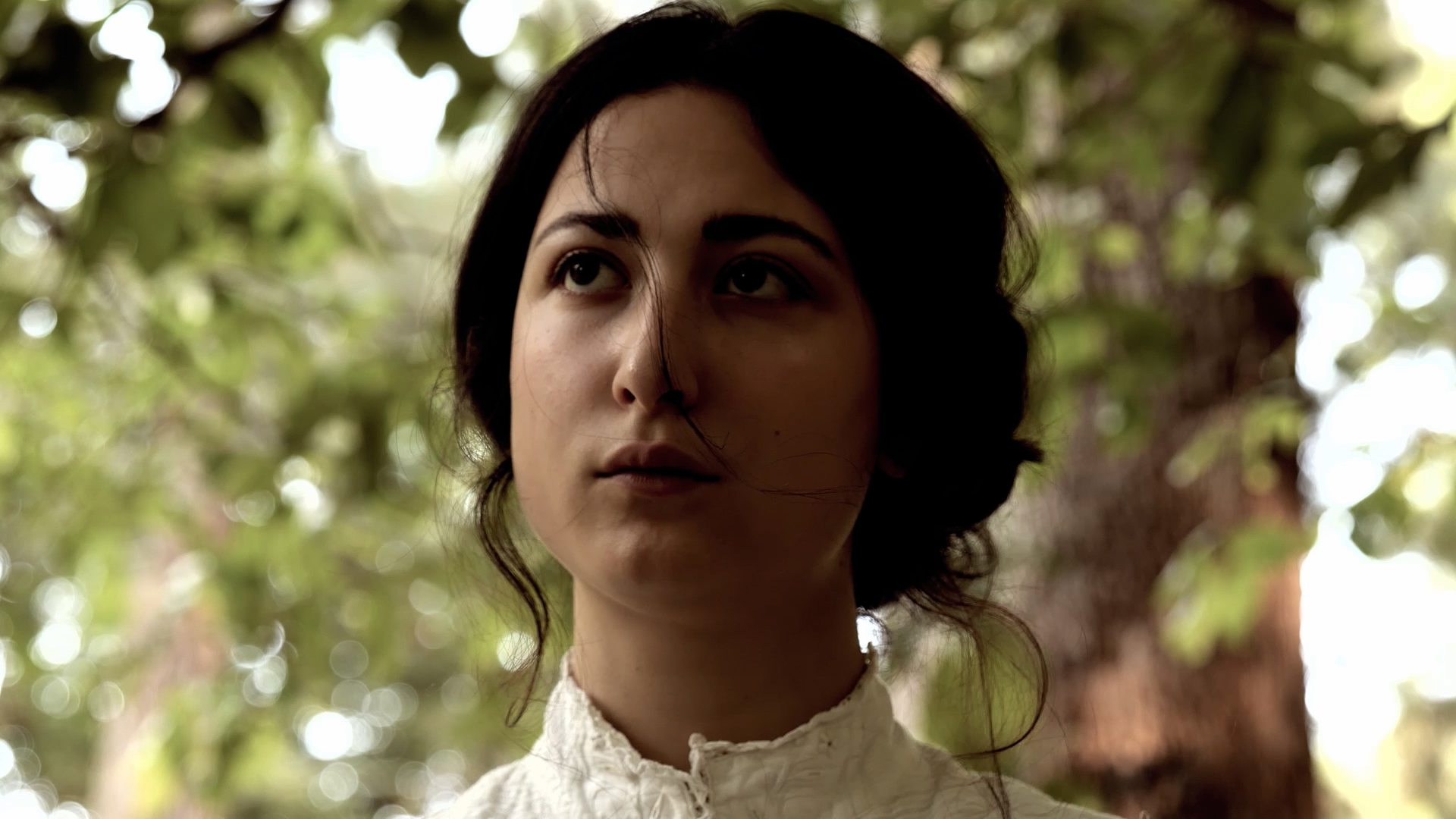
Documentary, by Isabel Russinova, Rodolfo Martinelli Carraresi, Italy, 2026
Eva of the Irises is a historical biographical docu-film about the scientist Eva Mameli Calvino, a botanist and pioneer of environmentalism in Italy, mother of the writer Italo, born in Sassari in 1886. The film, based on a multidisciplinary approach that combines several genres—such as theatre, documentary, cinema, and research—moves between memories, reflections on life, as well as the goals and missions the scholar still wished to achieve.
The multifaceted artistic sensibility of Isabel Russinova is expressed across many fields, from writing to acting, from directing to civic engagement, and finds one of its highest expressions in the docu-film Eva of the Irises, created with Rodolfo Martinelli Carraresi. The film blends scientific rigor and poetic refinement to portray the extraordinary figure of the botanist Eva Mameli Calvino, mother of Italo Calvino but above all an independent protagonist of 20th-century scientific culture. It is told through a combination of archival materials, interviews, and evocative staging capable of elegantly and profoundly conveying her intense human and professional story.
LANGUAGE: Italian
SUBTITLES: English, Spanish, French, Portuguese
A Woman Who Read the Birds’ Silence
Before Rachel Carson wrote a single word of her most famous book, she spent years learning how to listen. Not metaphorically. She had trained herself, through decades of fieldwork and scientific immersion, to notice what was missing from a soundscape — the particular quality of an absence that most people would register only as quiet. When a neighbor in Massachusetts wrote to her in 1958 describing a spring that had come without the birds she had always known, Carson did not read it as a curious anomaly. She read it as a verdict already delivered, a sentence passed before anyone had bothered to show up for the trial.
She had grown up in rural Pennsylvania, near the Allegheny River, where her mother — trained in biology, unconventional in ways that drew quiet disapproval — taught her to pay attention to living things as though they were speaking in a language worth learning. That early formation never left her. By the time she entered Johns Hopkins in 1929 to study marine biology, she carried with her something rarer than ambition: she carried a method of looking that treated the natural world as a system of meanings rather than a collection of objects. She graduated, she struggled through the Depression with a family entirely dependent on her income, she wrote government pamphlets about fish to survive, and she wrote literature about the sea to live.
The Sea Around Us, published in 1951, spent eighty-six weeks on the New York Times bestseller list. That number is worth sitting with. A book about ocean currents, geological time, the chemistry of seawater — and it outsold almost everything else on the shelves for nearly two years. It won the National Book Award. It was translated into thirty languages. What Carson had understood, and what her readers sensed without being able to name, was that she was not describing nature as a backdrop to human experience but as an entity with its own temporal logic, its own long argument, into which humanity had inserted itself very recently and with very little understanding of the consequences. The ocean she described was not romantic. It was ancient, indifferent, and utterly coherent in ways that human civilization had not yet earned the right to disturb.
The Edge of the Sea followed in 1955, and it was in some ways an even more precise preparation for what was coming. Carson spent years studying intertidal zones — the littoral margins where ocean meets land, where organisms had evolved in response to constant, rhythmic violence. What she found there was not chaos but intricate interdependence: each creature calibrated to others, each absence meaningful, each presence a kind of testimony about the conditions that made it possible. She was, without knowing it yet, developing a grammar for reading ecosystems as argument. She was learning to ask not what was there, but what the absence of something told you about what had already happened.
The philosopher of science Donna Haraway has written about the importance of what she calls “situated knowledge” — the idea that where you stand when you observe something is never neutral, that the knowledge produced from a position of attentiveness to the marginal and the overlooked is epistemologically distinct from knowledge produced from the center. Carson was situated at the edges — literal edges, the shorelines and tidal flats — and she produced from those positions a way of knowing that the centers of industrial and governmental power had no framework to accommodate, which is partly why her later book disturbed them so deeply.
When the letter from Massachusetts arrived, then, Carson was not a journalist who had stumbled onto an environmental scandal. She was a scientist who had spent thirty years developing the exact instruments of perception that the moment required. The silence in that spring was not a mystery to solve. It was a sentence she already knew how to read.

DDT and the Grammar of Progress
You have been to a county fair in the early 1950s, or your grandfather has, and there was a truck moving slowly down a residential street on a summer evening, trailing a white cloud behind it like something ceremonial. Children ran into the fog laughing. Mothers watched from porches without alarm. The chemical smell was not a warning — it was the smell of modernity doing its work, the smell of a world being made safe, clean, orderly. That fog was DDT, and it was everywhere, because everywhere was exactly where it was supposed to be.
The molecule had been synthesized first in 1874, but its insecticidal properties were not discovered until 1939, by the Swiss chemist Paul Müller. Within a decade, his discovery had helped suppress typhus among Allied troops in Naples, had been credited with saving hundreds of thousands of lives in malarial regions, had earned him the Nobel Prize in Physiology or Medicine in 1948. The prize was not an aberration or an excess of enthusiasm. It was the logical conclusion of a particular way of seeing the world — one in which chemistry was civilization’s most precise instrument, and insects were the enemy of human flourishing in the most literal sense. Malaria had killed more human beings throughout history than any war. DDT killed mosquitoes. The reasoning was not wrong, exactly. It was incomplete in a way that the era had no conceptual tools to recognize.
What Carson understood, and what took extraordinary courage to articulate in 1962, was that the problem was not the chemical. The problem was the grammar. Lewis Mumford, writing in “Technics and Civilization” in 1934, had already identified what he called the megamachine — the tendency of industrial societies to substitute mechanical efficiency for organic intelligence, to treat complexity as an obstacle rather than a condition of life. The postwar chemical industry was not a conspiracy of malicious men in laboratories. It was an entire civilization thinking in one language and refusing to acknowledge that other languages existed. The aerial spraying campaigns that covered millions of American acres through the 1950s — elm trees, marshlands, suburban lawns, agricultural fields — were not acts of carelessness. They were acts of faith. Faith in the proposition that nature was a problem space, and that problems had solutions, and that solutions were chemical.
The sociologist C. Wright Mills, in “The Power Elite” published in 1956, described how postwar American institutions had fused military, corporate, and governmental logic into a single system of decision-making that could not question its own premises. The DDT campaigns fit this structure precisely. They were organized by the Department of Agriculture, funded by federal budgets swollen with wartime industrial momentum, carried out by corporations whose entire existence depended on the expansion of markets for synthetic compounds, and cheered by a public that had been told, correctly, that chemistry had helped win the war. The grammar of progress said: if it works against one enemy, deploy it against all enemies. Scale is virtue. Coverage is success. The bird dying on the lawn was not yet data. It was not yet anything.
There is a man in a photograph from 1957, standing in his backyard somewhere in Long Island, smiling, as a low-flying plane passes overhead and the white mist settles over his vegetable garden. He is not a victim in that moment. He is a citizen of a functioning world, receiving its benefits. The categories that would allow him to see himself otherwise — the concepts of bioaccumulation, of food chain toxicity, of what the biologist would later call ecological cascading — did not yet exist in public language. Carson did not invent those concepts, but she translated them from the specialized vocabulary of field biology into something a man standing in a misted garden could eventually hold in his hands and read.
What the Fields Were Saying
There is a particular kind of silence that arrives before you understand it as silence. A farmer stands at the edge of his orchard in early spring, looking at trees that blossomed on schedule, that look healthy by every visible measure, and notices only gradually that something is missing from the air. No hum. No movement between the flowers. The blossoms will fall without becoming fruit, and for a while he will blame the weather, because the weather is always a reasonable explanation, and because the alternative — that the land itself has been quietly broken — is too large a thing to hold before coffee.
Carson documented precisely this dislocation between appearance and reality. The poisoned landscape does not announce itself. It performs health while the mechanisms of reproduction quietly fail beneath the surface. What she called the “the eerie fertility of poisoned landscapes” was not metaphor. It was a biochemical fact built into the structure of chlorinated hydrocarbons — DDT, aldrin, dieldrin, heptachlor — molecules engineered to be stable, to persist, to accumulate rather than dissipate. A single application did not leave a single residue. It entered the soil, was absorbed by earthworms, was consumed by robins, concentrated with each step up the chain. By the time it reached the bird, the fox, the predatory fish, the dose had multiplied through a process Carson described with clinical precision: bioaccumulation along the food chain, with each trophic level receiving a more concentrated inheritance than the one before.
The beekeeper who opens his hives in late summer and finds them emptied — not the dramatic carnage of visible death, but simply absence, the combs intact and the population vanished — is encountering exactly this logic made visible. Or rather, made invisible. The colony did not die in a way that leaves evidence. It became non-viable through the cumulative disruption of nervous systems and navigation, through the slow poisoning of the foragers who brought contaminated pollen back to the hive as a gift. The landscape still bloomed. The flowers were still there. The relationship between them and the animal world that depended on them had simply been severed, quietly, without a visible wound.
Robert Rudd, writing in “Pesticides and the Living Landscape” in 1964, two years after Carson, would attempt to give this process more technical elaboration, but Carson had already understood the essential point: that ecosystems do not fail catastrophically at first. They fail incrementally, in ways that look like bad luck, unexplained population declines, anomalous reproduction failures, all of which remain beneath the threshold of alarm until enough has been lost that the loss is irreversible.
A child runs through the white fog of a municipal pesticide truck on a summer evening, arms outstretched, laughing, because the fog looks like something from a carnival. The truck moves through suburban streets with institutional confidence. The parents watch from porches without alarm, because the government would not do something harmful, and because the child is laughing, and because harm, when it comes slowly and accumulates over years in fatty tissue, does not look like harm. It looks like Tuesday evening in July.
Carson was working against precisely this temporal gap between exposure and consequence. Silent Spring was published in September 1962, and by that point she had spent four years assembling evidence from ornithologists, wildlife biologists, soil scientists, and physicians — evidence that the chemical industry had not suppressed so much as simply outpaced, flooding markets with compounds whose long-term behavior in living systems had never been seriously studied. The fields looked fine. The orchards bloomed. The children played in the fog. And somewhere in the soil, in the fat deposits of a thousand small creatures, a debt was accumulating that no one had agreed to pay.
The Architecture of Denial
There is a particular kind of meeting that happens in boardrooms and never makes the news. Men in suits — and they were almost exclusively men — sit around a table with a problem that is not really a problem of truth but a problem of perception. The question on the table is not whether the science is wrong. The question is how to make enough people believe it might be.
That is the meeting that happened after 1962. The chemical industry, led by Velsicol Chemical Corporation and coordinated through the Manufacturing Chemists Association, spent over $250,000 — a figure that in today’s terms represents millions — specifically to discredit a single woman and her single book. Not to refute the data. Not to commission independent studies that might demonstrate safety. To discredit. The distinction matters enormously, because it tells you everything about what they actually believed the data showed.
The campaign had a particular texture. Carson was called hysterical. She was called a spinster, a bird-lover, a woman who preferred nature to people. One chemical industry spokesman suggested she was more concerned with birds than with the children who might starve if pesticides were restricted — a rhetorical move of extraordinary cynicism that reframed mass poisoning as the humanitarian position. She was accused of being a communist, because this was America in the early 1960s and the word still functioned as a kind of intellectual bleach, capable of dissolving any argument it touched. And then, with a cruelty that is almost too precise to be accidental, her cancer was used against her. She was dying of breast cancer while writing about the carcinogenic effects of synthetic chemicals, and this was presented not as tragic confirmation but as ironic disqualification — as if suffering from the very thing you are warning others about somehow invalidates your warning rather than deepening it.
Robert Proctor, the historian of science at Stanford, gave this phenomenon a name in his 2008 work Agnotology: the deliberate production of ignorance. Proctor’s argument is not that powerful interests simply lie. Lying is too simple, too easily exposed. What they manufacture instead is doubt — strategic, calibrated, industrially produced uncertainty. The goal is never to win a scientific argument. The goal is to postpone the moment when the argument must be settled. Every year of postponement is a year of continued sales, continued profit, continued externalizing of costs onto bodies that will never appear in a balance sheet.
What Proctor also makes clear, and what is crucial to understand about Carson’s moment, is that this machinery was not invented for her. The tobacco industry had been running the same operation since the early 1950s, when internal documents — later revealed in litigation — showed executives acknowledging privately what they denied publicly. The architectural blueprints for manufacturing ignorance already existed. What the chemical industry did after Silent Spring was simply deploy a proven infrastructure against a new target. Carson was not the first person the machine was turned against. She was merely the most famous, and the one who left the clearest documentation of how the machine operates.
You encounter this architecture everywhere once you know what to look for. It appears in the funded think tanks that produce position papers questioning climate consensus. It appears in the expert witnesses made available to defendants in asbestos litigation. It appears in the commissioned studies that always seem to find the one result that every independent researcher cannot replicate. The architecture of denial is not a conspiracy in the dramatic sense. It is a business model. It is the rational, calculated decision that uncertainty is cheaper than accountability, and that the time required to establish certainty beyond all manufactured doubt can be purchased in increments, each increment corresponding to years of continued harm.
Carson understood this. She had worked inside government science long enough to know that evidence does not speak for itself. Someone always has to speak for it, and someone else always has to be paid to speak against it.
A vision curated by a filmmaker, not an algorithm
In this video I explain our vision
Carson and the Philosophical Rupture

There is a moment when a man watches a river he has known since childhood run silent in spring, no frogs calling, no swallows diving, and he feels something he cannot name because the culture he inherited has not given him the vocabulary for it. The loss feels personal but the framework available to him insists it is merely ecological, merely technical, a management problem awaiting a chemical solution. This is not ignorance. This is the inheritance of three centuries of philosophical architecture built precisely to prevent that unnamed feeling from becoming thought.
Francis Bacon wrote in 1620, in the Novum Organum, that the aim of science was to “put nature to the rack” and force her to reveal her secrets. The metaphor was not accidental. Bacon understood domination as method, constraint as epistemology. Nature was not a community to belong to but a prisoner to interrogate. Descartes completed the structure forty years later by declaring the nonhuman world a vast mechanism, bodies without interiority, processes without meaning, matter moving according to laws that owed nothing to experience and everything to geometry. Together they built the conceptual house in which the twentieth century’s agricultural-industrial complex lived entirely at ease, spraying DDT across hundreds of thousands of acres with the serene confidence of engineers adjusting a machine.
What Carson did in 1962 was not add a chapter to environmental science. She committed a philosophical act. Silent Spring’s actual argument, beneath the documented bird deaths and contaminated water tables and disrupted endocrine systems, is that interconnection is not sentiment but biological fact, that the Baconian fantasy of mastery rests on a categorical error about what nature is. When she traced DDT through the food chain from plankton to fish to osprey, she was not making a poetic point about the web of life. She was demonstrating that the mechanical model was empirically false, that you cannot isolate a variable in a system that has no boundaries, that the rack breaks the prisoner and poisons the interrogator simultaneously.
Holmes Rolston III, whose Environmental Ethics published in 1988 built some of the most rigorous philosophical scaffolding for what Carson had intuited empirically, argued that value does not originate in human consciousness projected outward onto a neutral world. Value is intrinsic to biological systems, woven into the processes of growth, adaptation, and survival that preceded human cognition by billions of years. Carson had arrived at the same conclusion through fieldwork rather than metaphysics. The robin dying on a Michigan lawn in 1958, its nervous system destroyed by DDT absorbed through earthworms that had absorbed it through elm-treated soil, was not a symbol. It was a refutation. It was nature’s own argument against the Cartesian partition between subject and mechanism.
The Enlightenment contract with the nonhuman world had always contained a clause nobody read aloud: that human rationality exempted itself from the systems it analyzed and manipulated. Carson broke that clause open. She showed that the experimenter lives downstream. She showed that the intelligence confident enough to synthesize chlorinated hydrocarbons in a laboratory was not intelligent enough to predict where those molecules would travel, what proteins they would mimic, what reproductive cycles they would silently dismantle. The hubris Bacon celebrated as method, Carson reframed as a form of biological illiteracy.
This is why the attacks on her were never merely scientific. When her critics called her hysterical, sentimental, a spinster with no children and therefore no stake in the future, they were defending not a set of chemical claims but an entire way of organizing the relationship between mind and world. The philosophical rupture she opened was existential. If the nonhuman world is not a machine, if it has something that functions like integrity, like systemic coherence that demands to be understood rather than overridden, then the Baconian project loses not just its methods but its moral license. And that is a loss no regulatory amendment can address.
The Mirrors We Spray Into
There is a man in a white coat who never looks up from his instruments. He measures concentrations in parts per million, records the numbers in a logbook, signs the page, and moves on to the next sample. The work is meticulous and the work is real and the work tells him exactly what he is measuring and absolutely nothing about what it means. This is not ignorance. This is something more precise and more dangerous than ignorance. This is the practiced art of knowing without understanding, of data without consequence, of science in the service of its own procedures rather than in the service of the world those procedures are supposed to describe.
Somewhere else, a woman opens a jar of baby food. The label is clean, the brand is familiar, the pediatrician recommended it. She does not think about the soil in which the carrots grew, the runoff from the adjacent fields, the half-life of chlorinated compounds in fatty tissue. She trusts the jar because she trusts the system that produced the jar, and she trusts the system because the alternative, which is not trusting it, would make the act of feeding her child an exercise in vertigo she cannot sustain and still function. This is not laziness. This is survival. The philosopher Stanley Cavell wrote about the condition he called ordinary skepticism, the daily wager we make that the world is more or less what it appears to be, because full epistemic vigilance would simply stop us from moving through space. Carson understood this wager. She did not condemn the woman with the jar. She exposed the infrastructure that exploits the wager, that depends on it, that builds entire industries on the human need to believe that what is approved is safe and what is familiar is harmless.
A government official sits at a wide desk. The stack of documents before him is not small. He signs his name across approval forms for compounds whose chemical structures he could not draw, whose long-term metabolic pathways have been tested across eighteen months in rodents and nowhere else, whose commercial applications generate tax revenue and employment figures that appear in the same quarterly reports his reelection depends on. He is not corrupt in the dramatic sense. He is something more structural than corrupt. He is a node in a system that has distributed accountability so finely across so many desks and committees and review boards that no single signature ever carries the full weight of what it authorizes.
This is the architecture that Silent Spring entered like a cold draft under a door. Not the villainy of individual chemists or corporate executives, though Carson documented their decisions with forensic precision, but the collective epistemological arrangement by which an entire civilization agrees to not follow a thought to its end. The sociologist Robert Merton, writing in the 1940s on the normative structure of science, described the ethos of organized skepticism as central to scientific practice, yet Carson’s great revelation was that organized skepticism had been surgically removed from the one domain where it mattered most, which was the domain where science intersected with profit and policy. What remained was organized confidence, dressed in the same white coat, carrying the same logbooks.
You walk into a garden center and the shelves are bright with products designed to eliminate what you do not want. You use them on your lawn, which no one eats, which your children play on, which drains into the same watershed that fills the reservoir whose water you drink filtered and chlorinated and trusted. You spray your roses because the alternative is imperfect roses. The residue that settles into the soil is invisible, the connection between that residue and what appears in blood tests years from now is long and indirect and technically disputable, and technical disputability is all a system needs to continue. Carson’s subject was never the robin found stiff under the elm. The robin was a mirror. What it reflected was the face of someone who already knew and had decided, without quite deciding, to look away.
What Silence Actually Sounds Like

There is a particular kind of victory that leaves the battlefield intact. You win the argument, the law changes, the chemical gets banned, and somewhere in an office that smells of new carpet and institutional coffee, someone files the paperwork that makes it official. The machinery hums on. The paradigm that produced the problem simply learns to speak a new language, fluent now in risk assessments and impact studies, wearing the vocabulary of precaution like a well-tailored suit over the same skeletal logic it always had.
This is precisely what happened in the decade after Carson’s book reached the world. The Environmental Protection Agency was founded in 1970, a direct institutional consequence of a cultural moment she had helped catalyze. Two years later, DDT was banned in the United States. These are not small things. People point to them, rightly, as proof that one woman’s careful, furious attention to the world changed the course of policy in the most powerful nation on earth. And yet. The same industrial-chemical complex that had sprayed elm trees and marshes and the bodies of migrant farmworkers without hesitation simply pivoted, developed new compounds, exported old ones to countries with fewer protections, and continued operating under the same foundational assumption: that nature is a set of resources whose resistance to human management is a problem to be solved rather than a signal to be heeded.
Hannah Arendt wrote in The Origins of Totalitarianism that the most durable systems of power are not those that suppress thinking but those that make thinking feel unnecessary, even slightly embarrassing. The ideology becomes so ambient that questioning it feels eccentric, paranoid, romantic. Carson was called all three. The chemical industry did not merely attack her science in 1962; it attacked the epistemic posture behind the science, the suggestion that complexity might exceed our capacity to manage it, that what we do not know might matter as much as what we do. Attacking her femininity, her sentimentality, her alleged lack of credentials was not a digression from the argument. It was the argument, because the argument was always about who gets to define what counts as knowledge and what counts as mere feeling.
What she had actually written was a systems document, a demonstration that causality in living systems is nonlinear, cumulative, and frequently invisible until it announces itself as catastrophe. The robin populations collapsing. The shells thinning. The silence where there had been sound. These were not isolated incidents but symptoms of a structural relationship between industrial logic and biological reality, a relationship in which the former consistently misreads the feedback of the latter as acceptable cost.
The legislation that followed her book addressed outputs without restructuring inputs. It banned specific molecules while leaving undisturbed the assumption that the default relationship between chemical innovation and ecological systems should be deployment first, consequences later. The burden of proof remained with the world to demonstrate its own damage rather than with industry to demonstrate its interventions were safe. Decades after the EPA’s founding, that burden has not fundamentally shifted. New classes of compounds have cycled through the same pattern: widespread use, accumulating evidence of harm, eventual restriction, replacement by something newer and less studied. The silence Carson described was not primarily the absence of birdsong. It was the absence of a particular kind of attention, the willingness to sit with what cannot yet be measured, to take seriously the world’s refusal to behave as the models predicted.
There is a question that her book opens without closing, that the half-century of legislation since has not resolved, that perhaps no legislation could resolve because it lives upstream of legislation entirely: whether a civilization that has named the damage, mapped it, quantified it, and passed laws about it has actually changed its relationship to the living world, or whether awareness, in the end, is simply the most sophisticated form of the same indifference it claimed to replace.
🌿 Nature, Thought, and the Weight of Words
Rachel Carson’s Silent Spring stands at the crossroads of science, ethics, and literary power, challenging humanity to reckon with its relationship to the natural world. The articles below explore kindred minds who, like Carson, dared to look unflinchingly at uncomfortable truths and transform their observations into enduring works of meaning.
Hannah Arendt: the Philosopher Who Unmasked the Banality of Evil
Hannah Arendt, like Rachel Carson, was a thinker who refused to look away from systemic forces threatening human and natural life. Her analysis of how ordinary mechanisms can produce extraordinary harm resonates deeply with Carson’s exposure of industrial agriculture’s quiet devastation. Both women wielded intellectual rigor as a form of moral courage in the face of powerful institutions.
GO TO THE SELECTION: Hannah Arendt: the Philosopher Who Unmasked the Banality of Evil
Albert Camus: Life and Philosophical Thought
Albert Camus confronted the absurdity of a world indifferent to human suffering, a philosophical stance that echoes Carson’s portrayal of a nature systematically silenced by human negligence. His insistence on living with clear-eyed awareness despite bleak truths mirrors the tone of Silent Spring’s urgent, unsparing prose. Camus and Carson share the conviction that acknowledging darkness is the first step toward meaningful action.
GO TO THE SELECTION: Albert Camus: Life and Philosophical Thought
Montaigne’s Essays: Guide to Reading
Montaigne’s Essays pioneered the art of turning personal observation and intellectual honesty into a literary force capable of shifting cultural consciousness. Like Carson, Montaigne trusted the power of sustained, careful attention to the world as a basis for moral reflection. Reading his approach to the essay form illuminates why Silent Spring became not just a scientific document but a landmark of persuasive nonfiction.
GO TO THE SELECTION: Montaigne’s Essays: Guide to Reading
Deep Movies that Make You Think
Some films, like some books, refuse to let the viewer remain comfortable, pressing them instead toward deeper questions about existence, responsibility, and the world we inhabit. This curated selection of deep, thought-provoking cinema shares the spirit of Carson’s work: the belief that art and ideas can genuinely change how we see and act. For readers moved by Silent Spring, these films offer a natural continuation of that reflective journey.
GO TO THE SELECTION: Deep Movies that Make You Think
Explore Independent Cinema on Indiecinema
If the depth and moral clarity of Rachel Carson’s vision have stirred something in you, Indiecinema is where that conversation continues through the language of film. Our streaming platform is dedicated to independent and auteur cinema that challenges, provokes, and illuminates — the kind of stories that, like Silent Spring, refuse to be forgotten. Discover your next transformative experience on Indiecinema.
👉 EXPLORE THE CATALOG: Watch Indie Films in Streaming
A vision curated by a filmmaker, not an algorithm
In this video I explain our vision

