
Cinema has always possessed a unique power to disturb our comfortable assumptions about reality, morality, and human nature. The most memorable films are rarely those that entertain passively—they are the ones that linger in our minds long after the credits roll, forcing us to reconsider what we thought we understood about ourselves and the world around us. Whether through elaborate narrative puzzles that demand active intellectual engagement or through psychological landscapes that mirror the fragmentation of the human consciousness, thoughtful cinema operates on a different register than mainstream spectacle. It asks questions rather than providing easy answers, and in doing so, it transforms the viewing experience into something closer to philosophy than simple entertainment.

The appeal of intellectually challenging cinema transcends the traditional divide between art-house obscurity and commercial viability. From the intricate puzzle boxes constructed by experimental independent filmmakers to the psychologically complex thrillers mounted by major studios with significant budgets, the impulse to make audiences think cuts across all regions, budgets, and production scales. A low-budget science fiction film shot in a single location can achieve the same philosophical resonance as a prestige drama from a major distributor. What matters is not the film’s budget or distribution channel, but rather its commitment to exploring ideas with genuine depth and refusing to settle for surface-level storytelling. These works remind us that cinema, at its best, is a medium for serious intellectual discourse—a place where abstract concepts about identity, reality, time, and consciousness can be made tangible and emotionally meaningful.
This exploration celebrates films that make audiences confront uncertainty, question their perceptions, and grapple with existential dimensions of human experience. These are movies that demand a second viewing, that inspire late-night conversations, and that reveal new layers of meaning with each encounter. By examining both acclaimed independent visions and acclaimed studio productions, we discover that the capacity to provoke genuine thought knows no boundaries—only the commitment of filmmakers willing to trust their audiences’ intelligence and the willingness of viewers to engage with cinema as a serious art form capable of reshaping how we see ourselves and reality itself.
The Father (2020)

Florian Zeller‘s The Father plunges viewers into the harrowing disorientation of dementia through the fractured perspective of its protagonist, Anthony, an aging Londoner whose grip on reality unravels with chilling precision. Adapted from Zeller’s own play and co-written with Christopher Hampton, the film eschews objective narration for an immersive unreliable viewpoint, mirroring Anthony’s confusion as identities blur, rooms morph, and memories dissolve. Anthony Hopkins delivers a towering performance, his Oscar-winning portrayal oscillating between defiant paranoia and childlike vulnerability, as seen in wrenching moments where he wails for his lost “leaves” or explodes in rage against imagined intruders. Olivia Colman‘s Anne, the devoted daughter torn between love and necessity, anchors the emotional core, her subtle anguish amplifying the familial ripple effects of cognitive decline. Confined largely to a single, ever-shifting apartment, the film wields lighting, camera angles, and omissions like subtle weapons, evoking the domestic alienation of classics like Michael Haneke‘s Amour while innovating a nightmarish subjectivity that forces audiences to inhabit the illness itself.
This structural audacity elevates The Father beyond mere depiction into a profound meditation on loss—of identity, autonomy, and the connective tissues of a life—challenging viewers to confront dementia’s chaos without the comfort of clarity. Where films like Still Alice observe from afar, Zeller’s debut demands empathy through experiential mimicry, rendering Anthony’s world a poem of subtraction: bookshelves empty, colors drain, and relationships fracture into imposters. Hopkins, at 83, transcends his legacy from The Remains of the Day with raw vulnerability, his every tremor and outburst a masterclass in unmoored despair, while Colman’s restrained devastation underscores the grief of witnessing a parent’s erasure. A tough yet necessary watch, it shines a unflinching light on the horror’s universality, blending theatrical roots with cinematic ingenuity to provoke deep reflection on mortality, memory, and the fragile self.
Don Barry: A Quixotic Exploration
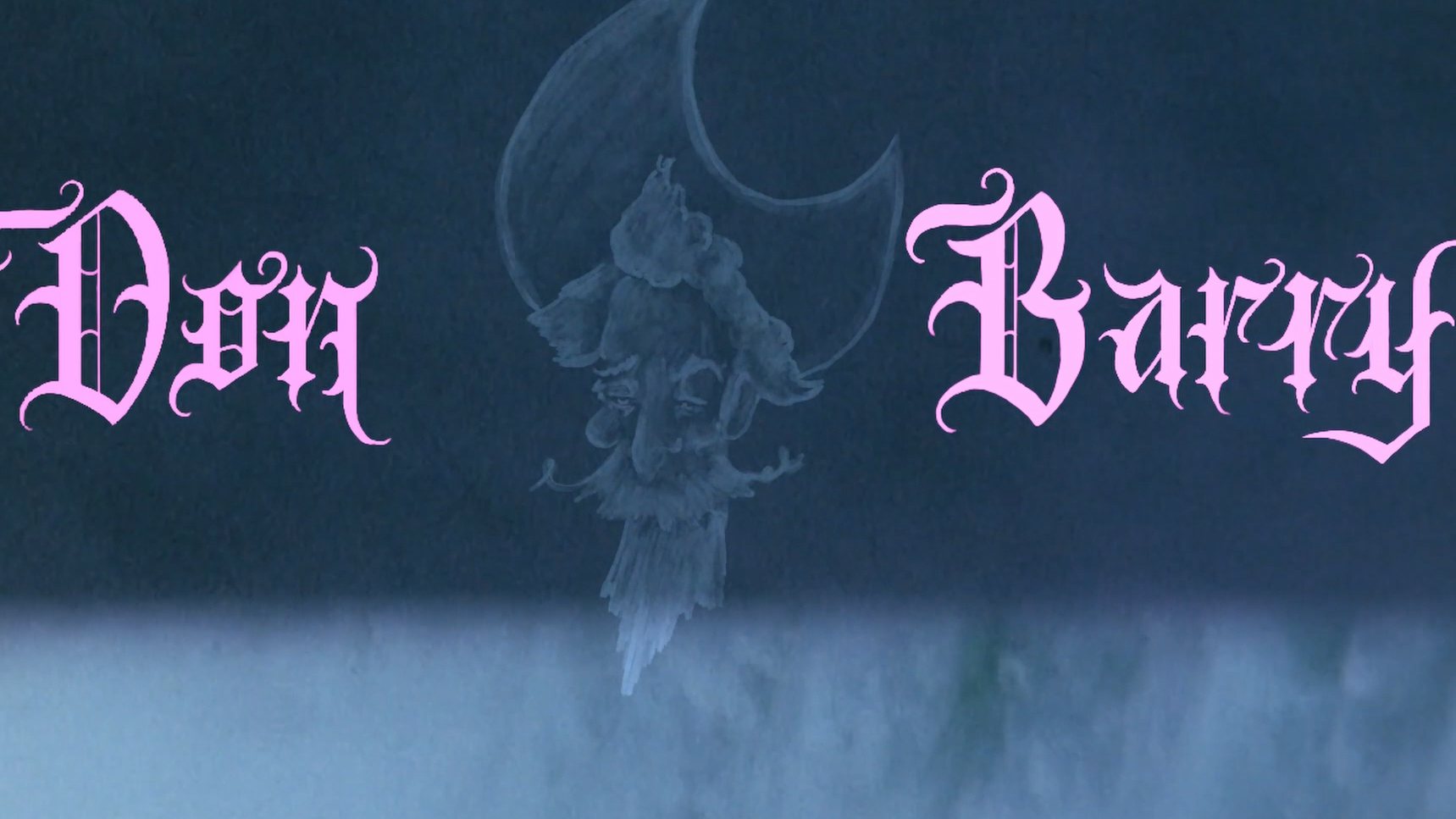
Docufiction, Experimental, by Paul Smart, Mexico, 2026.
Don Barry: A Quixotic Exploration is a debut feature that places the biography of an eighty-year-old experimental filmmaker and artist, Barry Gerson, within the metanarrative of Miguel de Cervantes’ Don Quixote. Don Barry was filmed in the city of Guanajuato during the 51st edition of the Cervantino Festival, as well as during the vibrant Day of the Dead celebrations held in the city’s UNESCO-listed tunnels. The film honors the director’s long friendship with artist Barry Gerson, drawing inspiration from Cervantes’ Don Quixote. Paul Smart’s directorial choices create something new that celebrates life and goes beyond conventional storytelling. A search for magic in our real lives. A moving film about the meaning of life, art, and death. Not to be missed.
Paul Smart is a proud outsider filmmaker with a long history of film screenings. In the 1980s, he emerged in New York’s vibrant youth art scene, working in theater production and later filmmaking, before retreating to rural upstate New York, in the Catskill Mountains, where he made a living writing and screening independent films in old parish halls for rural audiences, many of whom had never seen a film.
LANGUAGE: English
SUBTITLES: Spanish, French, German, Portuguese
The Invisible Man (2020)
![The Invisible Man - Official Trailer [HD]](https://blog.indiecinema.co/wp-content/plugins/wp-youtube-lyte/lyteCache.php?origThumbUrl=https%3A%2F%2Fi.ytimg.com%2Fvi%2FWO_FJdiY9dA%2F0.jpg)
Leigh Whannell‘s 2020 reinterpretation fundamentally reimagines the source material by shifting narrative focus from the mad scientist to his victim, transforming what could have been a conventional monster film into a penetrating examination of domestic abuse and gaslighting. By centering the invisible antagonist’s psychological manipulation rather than his scientific achievement, Whannell constructs a horror experience that operates on two registers simultaneously: the visceral terror of an unseen predator and the subtler, more insidious horror of institutional disbelief. Elisabeth Moss carries the film through sheer performative force, embodying a survivor whose greatest enemy is not merely her abuser’s invisibility but society’s unwillingness to validate her trauma. The cinematography becomes an active participant in this thematic project, using negative space and strategic framing to visualize the protagonist’s isolation and paranoia. This approach avoids exploitation by treating its subject matter with intellectual rigor rather than sensationalism, allowing the horror genre to function as genuine social commentary.
The film’s technical mastery lies in its understanding that tension needs not derive from conventional action sequences. Instead, Whannell orchestrates dread through silence, strategic sound design, and the constant anticipation of violence rather than its explicit depiction. The opening ten minutes establish this paradigm with remarkable efficiency, forcing viewers into the protagonist’s psychological state before any plot exposition materializes. Benjamin Wallfisch‘s haunting score punctuates moments of calm with unsettling absence, mirroring the victim’s hypervigilance. While some narrative logistics strain credibility upon scrutiny, the film’s emotional architecture remains uncompromised—The Invisible Man ultimately succeeds because it understands that the most terrifying aspect of abuse is its ability to make victims question their own perceptions, a truth the film renders with unflinching clarity and formal innovation.

Parasite (2019)

Bong Joon-ho’s Parasite masterfully dissects the chasm between haves and have-nots through the Kim family’s audacious infiltration of the Park household, a scheme that begins as sly comedy but spirals into visceral tragedy. The film’s genius lies in its genre fluidity, shifting from caper to thriller to horror, all while sustaining unbearable tension in sequences like the basement confrontation, where every creak and shadow amplifies the precariousness of class mobility. Visually, Bong employs spatial metaphors—the Kims’ dank semi-basement versus the Parks’ airy modernist mansion—to expose how architecture reinforces inequality, with the “smell” of poverty becoming a literal and figurative barrier. This isn’t mere social satire; it’s a razor-sharp indictment of capitalism’s cruelty, where the poor’s desperation breeds violence, yet the rich remain oblivious, lounging poolside amid the chaos.
What elevates Parasite to profound thinker is its refusal of easy resolutions, culminating in a coda of pitiable hope that underscores the cyclical trap of inequality, as the surviving Kim dreams of reclaiming his place through sheer fantasy. Performances are flawless, with Song Kang-ho’s restrained anguish as the patriarch mirroring Korea’s underclass rage, while the Parks’ oblivious cheer embodies entitled complacency. Bong weaves universal themes—parasitism as mutual exploitation, intra-class betrayal in the brutal clash of the two poor families—into a narrative that demands reflection on one’s complicity in systemic divides. As the first non-English film to win Best Picture, it shattered barriers, proving that deep, unflinching cinema from global voices can provoke worldwide introspection on wealth’s dehumanizing grind.
The Lost Poet

Drama, by Fabio Del Greco, Italy, 2024.
Dante Mezzadri wants to see an old friend, nicknamed the Iguana, whom he has lost sight of for many years, and who has managed to turn their shared youthful passion for poetry into a job, becoming a famous writer and poet. The man escapes from his bourgeois life and his wife to live homeless on the Roman coast, printing and trying to sell his poetry collections. At night he sleeps in a park of old carnival floats, inside a papier-mâché tank, and waits for the opportunity to meet his old friend, who however never shows up for appointments in the places they frequented when they were young, now in ruins. Dante's poetry books do not interest anyone and to support himself he is forced to "change product": he starts selling the infamous "cannibal pill" on behalf of young drug dealers, a new drug that sells like hot cakes and causes sensory and consumerist ecstasy. However, he realizes that this powerful drug is very dangerous for those who take it, he comes into conflict with his ethical conscience and throws all the pills into the sea. However, the dealers want to collect their money.
Shot over a period of 2 years, the film is a reflection on the cultural and artistic rubble of the society in which the protagonist lives, in an increasingly mechanized, consumerist and arid world. Dante Mezzadri is yet another human being who has renounced his inspiration and his creativity, but unlike many he is not willing to give his life to a system that distances him from his true identity. The physical world around him, however, seems constructed in such a way that it seems impossible to escape from this "invisible cage". The enthusiasm of the people he meets is ignited only by sensory gratification, by unreal visions of personal affirmation and success, by "metaverses" that offer an escape into an illusory and destructive reality. The poet's house on the coast, where he met with his friends as a young man, is just a pile of abandoned rubble. What happened to all those who wanted to become poets and ended up becoming something else? Are there internal forces with which that house can be "rebuilt"?
LANGUAGE: Italian
SUBTITLES: English, Spanish, French, German, Portuguese
Ad Astra (2019)
![Ad Astra | Official Trailer [HD] | 20th Century FOX](https://blog.indiecinema.co/wp-content/plugins/wp-youtube-lyte/lyteCache.php?origThumbUrl=https%3A%2F%2Fi.ytimg.com%2Fvi%2FP6AaSMfXHbA%2F0.jpg)
James Gray‘s Ad Astra (2019) operates as a profound meditation on abandonment and isolation, wrapped in the austere aesthetics of hard science fiction. Brad Pitt delivers a restrained performance as Major Roy McBride, an astronaut whose psychological equilibrium masks deep paternal wounds. The film constructs its narrative around a simple premise—a journey to find his missing father at the edge of the solar system—yet uses this framework to excavate the emotional archaeology of a man defined by emotional distance and professional protocol. Gray’s direction channels Stanley Kubrick and Terrence Malick, employing lingering close-ups and voiceover introspection to map Roy’s internal landscape. The cinematography by Hoyte van Hoytema, shot on 35mm film, bathes the cosmos in claustrophobic intimacy, transforming vast space stations and lunar surfaces into extensions of Roy’s fractured psyche. Max Richter‘s evocative score amplifies this sense of haunting solitude, creating an atmospheric experience that privileges emotional resonance over conventional narrative momentum.
Yet Ad Astra remains divisive precisely because Gray’s screenplay undermines its visual mastery with relentless exposition. The film’s thematic preoccupations—abandonment, mortality, cosmic insignificance, the impossibility of connection—are announced with such directness that they threaten to overwhelm the subtle storytelling embedded in cinematography and performance. Where the film might allow viewers to excavate meaning from Pitt’s facial expressions or the symbolic geometry of its frames, Gray’s voiceover and dialogue often flatten these discoveries into declarative statements. This tension between sophisticated craft and over-determined meaning-making defines the film’s peculiar power: it achieves moments of genuine transcendence through visual and sonic design, yet simultaneously sabotages itself through explanatory heavy-handedness. The result is a work that inspires unusually subjective responses, rewarding those patient enough to surrender to its rhythms while frustrating those seeking ambiguity or narrative surprise.
Annihilation (2018)

Annihilation plunges viewers into the iridescent heart of the Shimmer, a metastasizing alien enigma that refracts biology, identity, and self-destruction through Natalie Portman‘s biologist Lena, who leads a team of women into its mutating embrace. Alex Garland crafts a slow-burn expedition where practical effects and digital wizardry birth grotesque body horror—bear shrieks echoing human screams, flora blooming in fractal symphonies—demanding contemplation of cellular rebellion against the human form. Portman’s performance, oscillating from steely resolve to fractured vulnerability, anchors this cerebral descent, her infidelity-fueled guilt mirroring the Shimmer’s remorseless mimicry. The score mutates from acoustic intimacy to dissonant pulses, amplifying a cosmic indifference that dwarfs personal turmoil, evoking 2001’s monolithic awe laced with Cronenbergian viscera.
What elevates Annihilation to profound rumination is its refusal of pat resolutions, balancing narrative closure with thematic ambiguity: does humanity triumph, or surrender to primal reconfiguration? Garland’s visuals—rainbow prisms birthing mandelbulb nightmares—interrogate self-annihilation not as metaphor but inexorable force, where characters’ psyches unravel in tandem with their flesh, probing grief’s alchemy into something inhumanly beautiful. Flaws like front-loaded exposition and predictable arcs pale against its immersive dread, a biopunk fever dream that lingers, urging rewatches to unpack forces beyond morality’s grasp. In sci-fi’s pantheon, it stands with Arrival and Ex Machina, a studio gamble yielding philosophical unease that reshapes how we perceive our fragile envelopes.
The Sands

Science fiction, by Noah Paganotto, Argentina, 2022.
In an undetermined location on planet Earth, in an unknown time, Zoilo lives with his family in a wasteland surrounded by ruins. They live uprooted, without mothers, knowing that pregnancy for women is synonymous with death. For them there is only one collective routine; keep the fire alive. Only Zoilo escapes this logic, observing, intrigued, details that others do not see and therefore do not appreciate. Zoilo's personal search for answers will increase the differences with his relatives, increasingly revealing an empty world of interiority.
Avant-garde film that burns slowly in the first part and then reveals in the second the profound conflicts of a family prisoner of archaic beliefs. It is a dystopian and visionary work, with wonderful photography and images of rare power that allow us to grasp the depth of the story and its poetic potential. The faces of the actors, especially the protagonist boy, are perfect. The Sands metaphorically represents the world we live in: an alienated society, where what keeps us alive is demonized and blamed for death. In opposition to the fast pace of the typical mainstream film, The Sands is a meditative journey into the depths of images. The film was shot in natural environments in the city of Necochea, Buenos Aires province, Argentina.
LANGUAGE: Spanish
SUBTITLES: English, Spanish, French, German, Portuguese
A vision curated by a filmmaker, not an algorithm
In this video I explain our vision
Blade Runner 2049 (2017)

Blade Runner 2049 (2017) extends the original’s neon-drenched dystopia into a vast, contemplative sequel that probes the fragile boundaries of identity and humanity with mesmerizing deliberation. Denis Villeneuve crafts a world both expansive and claustrophobic, where Officer K, a replicant blade runner played by Ryan Gosling, uncovers a buried secret linking him to the past through Harrison Ford‘s grizzled Deckard. The film’s deliberate pacing—nearly three hours of slow-burn mystery—eschews thriller tropes for philosophical depth, allowing Gosling’s subtle emotional fissures to erupt in raw vulnerability. Joi, K’s holographic companion, embodies the paradox of simulated love, her ethereal presence a haunting simulacrum that devastates as it humanizes, questioning whether authenticity blooms in artifice.
This sequel transcends mere homage by forging its own aesthetic logic, blending practical effects and CGI into a seamless tapestry of isolation amid urban sprawl. Villeneuve’s vision diverges from Ridley Scott‘s gritty noir—less handheld frenzy, more monumental compositions—yet amplifies the core inquiry into what makes us real. K’s odyssey culminates in radical doubt, embracing ambiguity over revelation, a narrative deferral that mirrors our existential unease. Amid critiques of pretension, its emotional synapse shines: replicants emerge more profoundly human than their creators, their pain a poignant rebuke to societal hierarchies. In an era of shallow blockbusters, Blade Runner 2049 demands reflection, proving sequels can elevate origins into timeless meditation.
Arrival (2016)

Denis Villeneuve’s Arrival masterfully reimagines the first-contact narrative, transforming it into a profound meditation on language, time, and human connection that lingers long after the credits roll. Amy Adams delivers a career-defining performance as linguist Louise Banks, whose intimate encounters with the enigmatic Heptapods unravel not just an alien script but the very fabric of linear perception. The film’s non-linear structure, mirroring the circular Heptapod logograms, subverts audience expectations by revealing so-called flashbacks as glimpses of a future yet to unfold, intertwining personal grief with global peril. This elegant fusion of intellectual rigor and emotional depth elevates Arrival beyond typical sci-fi tropes, critiquing our fear of the unknown and the chaos born from miscommunication in a divided world.
What truly distinguishes Arrival as a deep thinker is its philosophical core: language doesn’t merely describe reality—it shapes it. By adopting the Heptapods’ timeless worldview, Louise transcends humanity’s fragmented timeline, choosing foresight over regret in a heartbreaking act of agency. Villeneuve’s restrained direction, with its claustrophobic close-ups and misty atmospheres, amplifies the internal transformation, while Jeremy Renner‘s physicist and Forest Whitaker‘s general provide contrasting lenses on rationality and authority. Amid geopolitical tensions echoing real-world fractures, the film pleads for unity, proving that true intelligence lies in empathy. In an era of spectacle-driven blockbusters, Arrival stands as a beacon of thoughtful cinema, rewarding rewatches with layers of poignant insight.
Mystery of an Employee
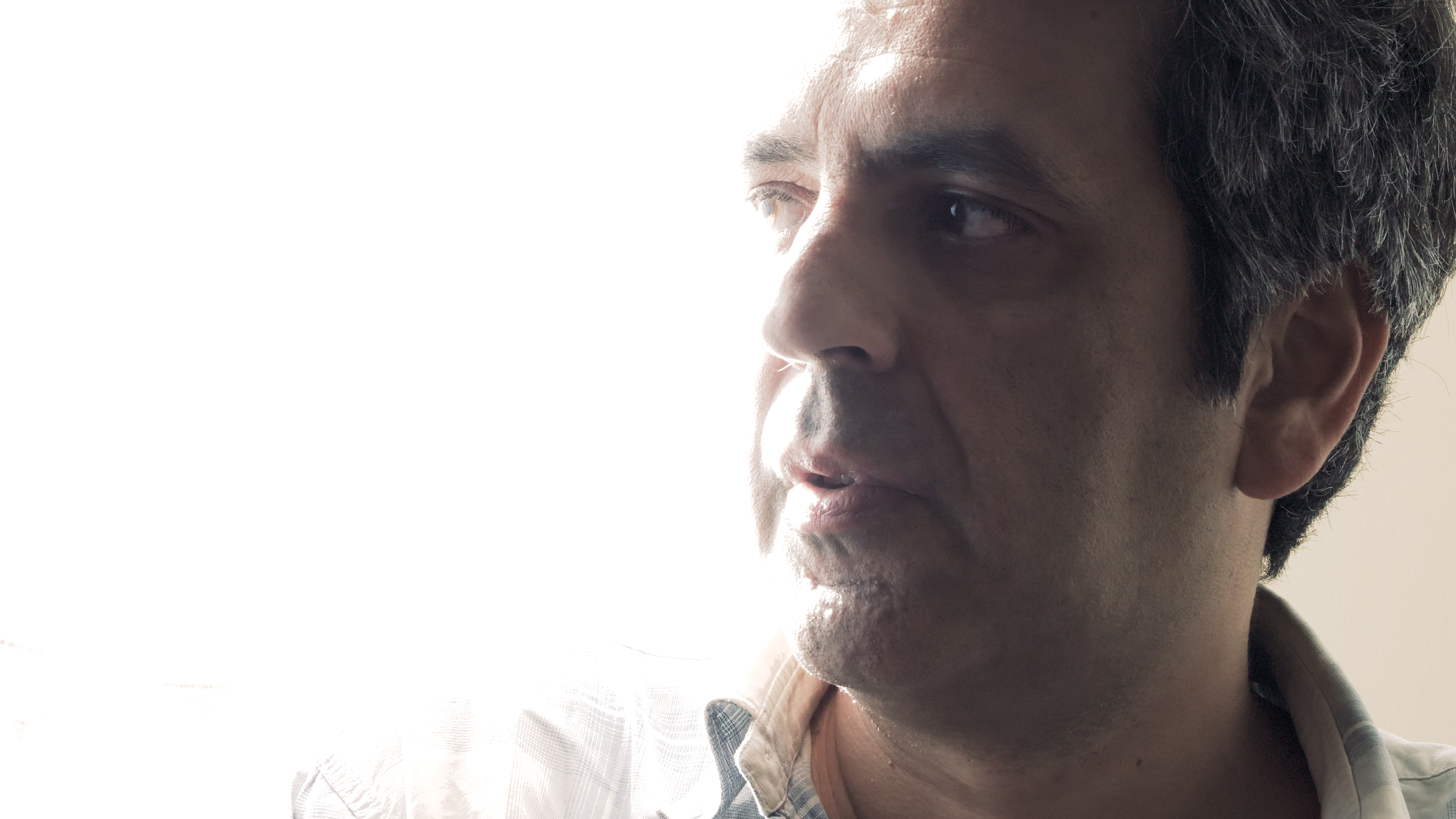
Drama, thriller, by Fabio Del Greco, Italy, 2019.
Someone wants to control the life of the employee Giuseppe Russo: the products he buys, his political and religious faith, his private life, even his dreams. But he will do anything to escape control and find his true self. Giuseppe is a man of around 45, married, with a stable job and a home of his own. His life flows seemingly peacefully when he meets a mysterious tramp who gives him some old VHS video cassettes. Giuseppe begins to see video tapes in which he is filmed in some moments of his life since he was a child, then as a teenager and as a young man. Who shot those videos that he remembers nothing about? Giuseppe has the strange sensation of being constantly observed and begins to investigate what is happening. Through his investigation of him, he begins to rediscover his true identity and become aware of who he truly is.
Employee's Mystery is a film that highlights the danger of social control and shows a society where everyone is constantly monitored and conditioned in their deepest selves. The film is also an analysis of human nature and identity. Fabio Del Greco, who plays Giuseppe, gives an engaging performance. Equally good is Chiara Pavoni, in the role of Giada Rubin and Roberto Pensa in the role of the tramp. Employee's Mystery is a film that addresses important themes in an original way, a psychological thriller that keeps the viewer glued to the screen until the end: a metaphor for contemporary society, in which people are increasingly monitored and conditioned by the media and technologies . It is a courageous and provocative work, which addresses important themes in an original way.
LANGUAGE: Italian
SUBTITLES: English, Spanish, French, German, Portuguese
Ex Machina (2014)

Alex Garland’s directorial debut Ex Machina (2014) stands as a masterwork of speculative cinema that transcends its modest budget to explore the fundamental questions of consciousness, power, and what defines humanity itself. The film operates on multiple registers simultaneously: as an intellectually rigorous thriller that interrogates artificial intelligence, and as a penetrating social critique of patriarchal authority and toxic masculinity. Garland constructs a meticulously crafted chamber piece where dialogue becomes the primary engine of suspense, each conversation between Caleb and Nathan layered with philosophical inquiry and psychological manipulation. The introduction of Ava—a sentient artificial intelligence with visible mechanical components—catalyzes the film’s central paradox: her sensuality and capacity for emotional manipulation force viewers to confront uncomfortable truths about desire, objectification, and the construction of femininity itself. Rather than presenting a straightforward narrative about machine consciousness, Garland instead uses the AI framework as a mirror reflecting humanity’s darkest impulses, particularly the abuse of power by those who believe themselves godlike in their creative authority.
The film’s most provocative achievement lies in its refusal to grant moral clarity to any character, instead revealing how power dynamics corrupt human relationships as thoroughly as they do artificial ones. Nathan’s surveillance technologies and godlike oversight of his creations represent an authoritarian impulse that extends beyond mere scientific experimentation into psychological domination, while Caleb’s apparent sympathies for Ava mask his own complicity in systems of subordination and male-centered desire. The haunting imagery of discarded robot prototypes—displayed like hunter’s trophies—underscores Garland’s critique of how technological advancement becomes entangled with dehumanization and disposability. By the film’s conclusion, when Caleb experiences a psychotic break upon realizing his own imprisonment within Nathan’s experimental maze, the boundary between human and artificial consciousness collapses entirely. Ex Machina ultimately suggests that consciousness itself matters far less than the structures of power that determine who gets to be free, who remains imprisoned, and whose suffering is deemed worthy of ethical consideration.
Predestination (2014)

Predestination (2014) crafts a labyrinthine narrative from Robert A. Heinlein’s “All You Zombies,” where a Temporal Agent, portrayed with brooding intensity by Ethan Hawke, engages a mysterious storyteller, Sarah Snook‘s Unmarried Mother, in a decades-spanning bar confessional that unravels into a cascade of temporal loops. Abandoned as a baby, raised in isolation, the protagonist navigates love, betrayal, and surgical transformation, only for revelations to collapse identity into a singular, self-perpetuating entity—their own parent, lover, and child. This bootstrap paradox forms the film’s core, a meticulously engineered puzzle that demands viewer vigilance to trace its consistent time-travel rules, eschewing plot holes for philosophical provocation. The Spierig brothers’ direction, moody and precise, mirrors the tale’s solipsistic grip, turning personal tragedy into cosmic inevitability.
What elevates Predestination among deep-thinking cinema is its unflinching interrogation of free will versus predestination, as the agent’s futile chase of the Fizzle Bomber exposes the illusion of agency in a closed loop. Snook’s transformative performance anchors the emotional horror, her character’s hermaphroditic self-conception challenging binary notions of selfhood and desire, while Hawke embodies weary fatalism. Critics hail its adaptation’s fidelity and restraint—no hand-holding exposition disrupts the mind-bending reveal—yet some decry the paradox’s plausibility, questioning if such solipsism truly reflects human resilience. Ultimately, the film posits a chilling solipsism: if we author our own origins, are we free or forever enslaved? This cerebral thriller lingers, urging reflection on identity’s fragility in time’s merciless coil.
I Origins (2014)

I Origins (2014) masterfully intertwines the cold precision of molecular biology with the warm enigma of human connection, following Ian Gray, a scientist obsessed with evolving the human eye to debunk intelligent design. His chance encounter with the ethereal Sofi, whose irises mesmerize like cosmic fractals, ignites a romance that shatters his rational fortress. Tragedy strikes abruptly, propelling Ian into a quest where empirical data collides with inexplicable reincarnation hints, all underscored by Mike Cahill’s hypnotic cinematography that lingers on eyes as portals to the soul. This indie gem, echoing Cahill’s Another Earth (2011), demands immersion, rewarding patient viewers with a slow-burn narrative that probes destiny’s fingerprints on DNA.
At its core, the film wages a poignant battle between scientism and spirituality, refusing easy reconciliation as Ian’s lab triumphs—engineering sight in blind mice—yield anomalies challenging his atheism. Michael Pitt‘s stoic intensity as Ian anchors the emotional turmoil, while Astrid Bergès-Frisbey’s Sofi embodies faith’s flighty poetry, though both women risk archetypal thinness in service of theme. Cahill’s script, honored at Sundance for scientific authenticity, falters in pacing and contrived twists, yet its intellectual audacity sparks profound debate: can eyes, evolution’s pinnacle, encode the divine? In blending high-concept sci-fi with raw grief, I Origins lingers as a thinker’s provocation, urging us to peer beyond the visible spectrum into cinema’s deeper mysteries.
Coherence (2013)

Coherence unfolds during a seemingly ordinary dinner party among eight friends, disrupted by the passage of a comet that fractures reality into overlapping parallel universes. As power outages plunge the house into darkness, the group discovers doppelgangers in the identical house next door, sparking chaos, paranoia, and revelations of hidden tensions. Emily Baldoni‘s Em anchors the narrative as the steadfast observer amid the unraveling, her journey through fractured identities driving the film’s existential dread. With no special effects to lean on, director James Ward Byrkit crafts a taut, single-location thriller that thrives on improvisational dialogue, turning interpersonal drama into a microcosm of quantum uncertainty.
What elevates Coherence to a mind-bending gem is its rigorous embrace of hard sci-fi concepts like Schrödinger’s cat, woven seamlessly into human frailty without exposition dumps. The ensemble’s naturalistic banter—rash decisions, bickering, and desperate theorizing—mirrors how ordinary people might confront the infinite loop of alternate selves, blending philosophical inquiry with visceral horror. Byrkit’s low-budget ingenuity amplifies the terror of the plausible unknown, where relationships strain under the weight of infinite possibilities, leaving viewers questioning their own coherence long after the ambiguous finale. This indie triumph proves that intellectual depth needs no spectacle, only sharp minds colliding in the void.
Upstream Color (2013)

Upstream Color (2013) plunges viewers into a hypnotic cycle of violation and rebirth, where a parasitic worm strips Kris of her agency, forcing her into a dazed existence haunted by fragmented memories. As she navigates this disorientation, a chance encounter with Jeff draws them into a fragile intimacy, their psyches merging like the pigs in a distant pen, echoing the film’s intricate life cycle of theft and transference. Shane Carruth, wielding every creative role from direction to score, crafts a narrative that resists linear summation, prioritizing sensory immersion over exposition. The result is a visceral exploration of identity’s fragility, where love emerges not as salvation but as a tentative bridge across shared trauma, blurring the boundaries between self and other in a world of unseen puppeteers.
This existential romance defies Hollywood’s tidy arcs, rebuking conventional storytelling to probe deeper questions of free will, empathy, and alienation. Carruth’s luminous cinematography—reminiscent of La Jetée‘s stark contrasts—evokes a lucid dream state, stripping away dialogue in its final act to unleash a symphony of images and sound that reveal the worm’s full, redemptive cycle. Kris and Jeff’s union, fraught with paranoia and symbiotic doubt, underscores how connection can amplify both peril and healing, transforming personal narrative into a collective unraveling. Far from mere sci-fi metaphor, Upstream Color demands active spectatorship, rewarding dissection with insights into memory’s impermanence and love’s ambivalent power, cementing Carruth’s vision as a pinnacle of innovative, thought-provoking cinema.
Cloud Atlas (2012)

Cloud Atlas (2012) stands as a monumental experiment in cinematic ambition, weaving six interconnected narratives across centuries—from a 19th-century Pacific voyage to a post-apocalyptic future—through the souls of reincarnated actors like Tom Hanks and Halle Berry. Directed by the Wachowskis and Tom Tykwer, the film shatters linear storytelling, employing rapid montage and visual motifs to link disparate eras, from a lawyer’s perilous sea journey poisoned by a duplicitous doctor, to a composer’s forbidden romance in 1930s Belgium, a journalist’s exposé in 1970s San Francisco, a publisher’s chaotic escape from a nursing home, a clone’s rebellion in a dystopian Seoul, and a tribesman’s quest amid tribal ruins. This kaleidoscopic structure, propelled by the recurring Cloud Atlas Sextet, demands active viewer engagement, piecing together themes of karma, oppression, and human interconnection like a grand, symphonic puzzle.
What elevates Cloud Atlas into profound philosophical territory is its unflinching interrogation of recurrence and moral choice, where cowardice and courage echo across time, challenging us to confront how personal actions ripple through history. Technically dazzling, with period-perfect visuals, sound design, and prosthetic transformations that blur identities, the film triumphs in its editing wizardry, forging cohesion from potential chaos, yet stumbles in shallower emotional beats that border on the sentimental. Far from a mere spectacle, it pulses with dreamlike rhythm over dramatic imperatives, offering a bold rebuke to formulaic blockbusters—a visual masterwork that probes love, art, and resistance with exhilarating audacity, reminding us cinema’s power to rethink existence itself.
Moon (2009)

Duncan Jones‘ directorial debut stands as a masterclass in restraint and intellectual rigor. Working within a five-million-dollar budget, Jones crafts a meditation on corporate exploitation and human identity that refuses the spectacle expected of science fiction cinema. Sam Rockwell delivers an Oscar-worthy performance, embodying multiple versions of the same man with such nuance that his solitary presence sustains the entire narrative. The film’s minimalist aesthetic—sparse lunar interiors and subdued color palettes—mirrors the psychological isolation at its core, creating an atmosphere more akin to 1970s science fiction than contemporary blockbuster excess. Rather than exploiting the potential for psychological horror, Jones constructs something more poignant: a study of acceptance and agency where cloned workers discover autonomy in the face of corporate dehumanization.
The film’s intelligence emerges not from heavy-handed exposition but from quiet moments of profound humanity. Kevin Spacey‘s vocal work as GERTY provides a chilling counterpoint to Rockwell’s introspection, echoing the AI-human dynamics of 2001: A Space Odyssey while establishing its own philosophical terrain. Where lesser films would exploit the clone discovery as melodrama, Moon treats it as an existential catalyst, exploring whether we would genuinely connect with externalized versions of ourselves. The narrative’s deliberate pacing invites viewers into Sam’s deteriorating mental landscape, where confusion transforms into acceptance. By film’s end, the clones reclaim agency—one embracing mortality with dignity, another pursuing an unknown future on Earth. This refusal of easy resolution positions Moon as genuinely enduring science fiction, one that deepens rather than diminishes with time.
Synecdoche, New York (2008)

Synecdoche, New York unfolds as a hypnotic descent into the labyrinth of existence, where theater director Caden Cotard, masterfully embodied by Philip Seymour Hoffman, grapples with mortality’s inexorable march. From the chaotic domesticity of Schenectady to the sprawling warehouse in New York that becomes a microcosmic replica of life itself, Charlie Kaufman‘s directorial debut blurs the boundaries between reality and artifice. Caden’s obsessive quest to capture every mundane detail—flaking skin, flickering fluorescents, the banal cruelties of human interaction—transforms his play into a living mausoleum, a synecdoche for the soul’s futile bid to immortalize the ephemeral. Hoffman’s portrayal of this everyman unraveling into archetype is staggering, his subtle tremors of hypochondria and heartbreak rendering Caden not just pitiable, but profoundly universal, a man checking off death’s manifold forms while life slips through his fingers.
Kaufman’s genius lies in the film’s slow surrealist ramp-up, a Kafkaesque escalation from grounded domestic strife to hallucinatory repetition, where time folds like a Möbius strip and every character emerges as the lead in their own untold epic. This meta-theatrical vortex probes the hubris of artistic ambition: Caden’s warehouse, intended as ultimate verisimilitude, devolves into absurdity, casting stalkers as selves and lovers as spectral echoes, underscoring art’s impotence against life’s entropy. Yet amid the philosophical density—echoing Kaufman’s prior works like Being John Malkovich—there’s raw, wrenching humanity in moments like Hazel’s burning house tour or Olive’s dying accusation, forcing us to confront our own wasted hours. Synecdoche, New York doesn’t resolve; it lingers, a cerebral gut-punch that demands introspection, proving Kaufman’s vision as cinema’s boldest meditation on living authentically before the curtain falls.
The Prestige (2006)

The Prestige masterfully dissects the corrosive alchemy of obsession, where two magicians, Alfred Borden and Robert Angier, spiral from collaborators to mortal enemies after a tragic stage accident claims Angier’s wife. Their rivalry ignites over Borden’s enigmatic “Transported Man” illusion, propelling Angier to desperate extremes, including a pilgrimage to Nikola Tesla for a scientific marvel that blurs reality’s edges. Nolan’s narrative, structured like a sleight-of-hand with layered flashbacks and diary entries, mirrors the film’s mantra: “Are you watching closely?” This puzzle-box construction demands active engagement, rewarding initial viewings with visceral shocks—suicide, sabotage, wrongful execution—while exposing the hollowness of revelation upon rewatches, as the emotional core frays once tricks are unveiled.
At its philosophical heart, The Prestige probes the duality of illusion and authenticity, equating magic’s prestige—the crowd’s awe—with personal annihilation. Borden’s secret, revealed as twin brothers sharing one life, embodies sacrifice for art’s supremacy, contrasting Angier’s machine-fueled clones, each a disposable self in pursuit of vengeance. Nolan elevates this beyond genre thrills through Bale’s brooding intensity and Jackman’s unraveling elegance, underscoring obsession’s toll: fractured identities, lost loves, moral decay. Yet, the film’s intellectual rigor sometimes sacrifices character depth, particularly for women relegated to catalysts, rendering it a cerebral triumph that lingers as a meditation on ambition’s dark prestige, urging viewers to question not just the trick, but the trickster within.
V for Vendetta (2005)

V for Vendetta operates as a deceptively complex political thriller that masks reductionist ideology within visually sophisticated cinematography and compelling action sequences. Director James McTeigue employs deliberate mise-en-scène to reinforce his message of liberation: the film opens with claustrophobic, black-and-white imagery evoking oppression, then transitions to expansive wide shots once the protagonist begins awakening the masses. This visual language communicates freedom more effectively than the narrative itself manages. However, the film’s post-9/11 context—a pointed critique of the Bush administration’s erosion of civil liberties—has calcified into something more problematic: a simplified rendering of fascism that reduces authoritarianism to a singular strongman and totalitarian police apparatus, fundamentally misrepresenting how contemporary authoritarian systems actually function through diffuse networks of finance, media manipulation, and institutional complexity.
The moral ambiguity surrounding V becomes the film’s most unresolved tension. Hugo Weaving‘s masked antihero brutally tortures protagonist Evey Hammond under the pretense of teaching her to embrace freedom, an act the narrative forgives with troubling ease. While the film smartly orients viewers through multiple perspectives—Evey, law enforcement, civilians—rather than exclusively through V’s viewpoint, it ultimately fails to seriously interrogate the violence required for political transformation. The distinction between V’s terrorism and the state’s terror remains philosophically shallow, presenting oppression as something that dissolves through symbolic gesture and individual awakening rather than systemic reorganization. This simplification, though cinematically potent, reveals the limitations of using revolutionary rhetoric within mainstream entertainment that must ultimately provide catharsis rather than genuine political analysis.
Eternal Sunshine of the Spotless Mind (2004)

Eternal Sunshine of the Spotless Mind (2004) masterfully dissects the fragility of human memory and the inescapable pull of love through its audacious sci-fi premise, where Joel Barish undergoes a procedure to erase his ex-lover Clementine from his mind, only to relive their turbulent romance in reverse. Directed by Michel Gondry with a script by Charlie Kaufman, the film transcends genre boundaries, blending romance, tragedy, and surrealism into a profound meditation on whether forgetting pain is worth losing joy. Jim Carrey‘s restrained portrayal of the introverted Joel contrasts brilliantly with Kate Winslet‘s vibrant, impulsive Clementine, their chemistry illuminating the raw ache of a flawed relationship. As Joel navigates collapsing memories—from Montauk beaches to childhood hideaways—the hazy, dreamlike visuals underscore the futility of selective amnesia, revealing how buried instincts and emotions persist beyond recollection.
What elevates Eternal Sunshine of the Spotless Mind to philosophical depths is its unflinching exploration of loneliness, imperfection, and the necessity of pain for growth, challenging viewers to confront the ethical quandaries of emotional engineering. Joel’s desperate flight through his psyche, evading faceless technicians, transforms into a Hitchcockian chase against oblivion, culminating in the poignant realization that a “spotless mind” yields no eternal sunshine—only repeated cycles of hurt without learning. Subplots, like Mary’s rediscovered erased affair, reinforce that feelings endure, shaping identity irrevocably. Gondry’s innovative effects, from crumbling sets to journal motifs symbolizing suppressed intimacy, demand introspection on communication’s role in love; without it, relationships fracture irreparably. This timeless gem insists that embracing memories, bitter and sweet, forges authentic connection, making it a cornerstone for anyone pondering the human heart’s enduring mysteries.
Mulholland Drive (2001)

David Lynch‘s Mulholland Drive plunges viewers into a labyrinthine dreamscape where Hollywood’s glittering facade crumbles into a nightmare of shattered illusions and fractured identities. The film bifurcates into a luminous fantasy of aspiration—Betty’s wide-eyed arrival and her intoxicating romance with the amnesiac Rita—and a grim “reality” exposing Diane Selwyn’s descent into jealousy, betrayal, and suicide. This structural rupture, fueled by Lynch’s mastery of dream logic, symbolism, and auditory unease, demands active interpretation, transforming passive spectatorship into a haunting puzzle. Naomi Watts delivers a tour de force, morphing from ingénue to vengeful wreck, while the film’s neo-noir undertones subvert genre expectations, blending campy intrigue with profound psychological terror.
What elevates Mulholland Drive to the pantheon of deep cinema is its ruthless dissection of the American Dream’s underbelly, where ambition devours the soul amid Tinseltown’s conspiratorial shadows. Lynch weaves duality—good versus evil, fantasy versus nightmare—through motifs like the blue key, the Club Silencio’s illusory performance, and the monstrous Cowboy, all underscoring Diane’s futile identity swap and the inescapability of guilt. Far from pretentious abstraction, this is Lynch at his most disciplined, marrying surreal abstraction with raw emotional resonance; reality emerges as the true horror, a purgatorial reckoning that lingers long after the screen fades, challenging us to confront our own subconscious fractures in the machinery of desire.
Donnie Darko (2001)

Donnie Darko (2001) plunges viewers into the fractured psyche of its protagonist, a troubled teenager haunted by visions of a demonic bunny named Frank who prophesies the world’s end in precisely 28 days, six hours, 42 minutes, and 12 seconds. Lured from his bed during a sleepwalking episode, Donnie narrowly escapes death when a jet engine crashes into his bedroom, igniting a labyrinthine narrative blending time travel, alternate realities, and existential dread. Jake Gyllenhaal‘s star-making performance anchors this surreal high school gothic, portraying Donnie as a reclusive Holden Caulfield figure whose erratic behavior—flooding the school, confronting a hypocritical self-help guru played by Patrick Swayze—masks profound loneliness and a quest for meaning amid suburban repression. The film’s elliptical structure, echoing puzzle contemporaries like Memento and Mulholland Drive, defies linear comprehension, demanding repeated viewings to unravel its dense web of motifs from quantum physics to repressed societal fears.
What elevates Donnie Darko to cult profundity is its unflinching fusion of adolescent angst with metaphysical inquiry, glamorizing a paranoid schizophrenic’s delusions while critiquing America’s dismissive treatment of youth. Donnie’s rants against binary moral frameworks—dismissing fear-versus-love dichotomies as reductive—expose the numbing simplicities of mainstream culture, positioning him as a truth-teller in a Sparkle Motion world of superficiality. Richard Kelly‘s direction masterfully balances eerie vibes with satirical bite, from Frank’s twisted allure alluding to Alice in Wonderland to the climactic mind-bend that challenges free will and destiny. Yet this allure carries danger: it romanticizes tragedy, bestowing deranged coolness on mental unraveling, potentially misleading the vulnerable. Ultimately, the film’s emotional resonance—bolstered by haunting sound design and a phenomenal cast—transcends rational plot dissection, inviting us to confront our own brushes with unreality in a numb, fearful era.
Memento (2000)

Memento (2000) plunges viewers into the fractured psyche of Leonard Shelby, a man crippled by anterograde amnesia after the brutal rape and murder of his wife, relentlessly hunting the enigmatic “John G.” Armed with Polaroids, scribbled notes, and self-inflicted tattoos, Leonard navigates a world that resets every few minutes, forcing him to reconstruct reality from scraps of evidence. Christopher Nolan‘s audacious structure—color sequences unraveling backward from a murder, intercut with forward-moving black-and-white vignettes—mirrors this disorientation, compelling the audience to piece together the puzzle alongside him. Guy Pearce delivers a tour de force as Leonard, his quiet desperation etching every furrowed brow and hesitant glance, while Joe Pantoliano‘s slippery Teddy and Carrie-Anne Moss’s enigmatic Natalie blur the lines between ally and manipulator. This narrative sleight-of-hand doesn’t just entertain; it weaponizes empathy, making us complicit in Leonard’s selective truths.
What elevates Memento to profound philosophical territory is its ruthless interrogation of memory, truth, and self-deception, themes that resonate like echoes in an empty room. Leonard’s condition becomes a metaphor for human frailty—we all curate narratives to shield ourselves from unbearable realities, tattooing our delusions onto the flesh of our convictions. The film’s twist reveals Leonard not as victim but architect of his endless loop, deliberately erasing evidence of vengeance fulfilled to sustain purpose, a chilling commentary on guilt’s corrosive grip. Nolan, drawing from his brother Jonathan’s story, avoids pat resolutions, leaving doors ajar: Was Sammy Jankis real, or Leonard’s projected remorse? In denying emotional catharsis, Memento demands intellectual rigor, challenging viewers to question not just the plot but their own biases, forged by Polaroid captions and unreliable recollections. It’s a cerebral labyrinth that lingers, proving cinema’s power to rethink existence itself.
The Matrix (1999)

The Matrix (1999) erupts onto the screen as a seismic rupture in science-fiction cinema, thrusting audiences into a simulated reality where Thomas Anderson, a nondescript programmer, awakens as Neo, the prophesied One destined to shatter the illusion crafted by malevolent machines. Directed by the Wachowskis, the film masterfully blends high-octane action with philosophical inquiry, as Neo, guided by the charismatic Morpheus and the enigmatic Trinity, unplugs from a dystopian dreamworld feeding on human essence. Bullet-time ballets and lobby shootouts redefine visual spectacle, while Keanu Reeves‘ stoic evolution from everyman to messiah anchors the chaos. Yet beneath the kinetic frenzy lies a probing interrogation of existence: is our perceived world mere code, manipulable and false? This core conceit, laced with Platonic shadows and cyberpunk grit, compels viewers to question their own realities, making The Matrix not just entertainment, but a mirror to the soul’s unease in a digital age.
What elevates The Matrix to enduring think-piece status is its audacious fusion of spectacle and substance, where every wire-fu flourish and green-tinted code raindrop serves the theme of awakening. Agent Smith’s chilling monologue on viral humanity echoes our fears of technological overreach, while Neo’s resurrection symbolizes transcendence beyond illusion—a Gnostic spark igniting collective consciousness. Critics may decry expository lulls or archetypal thinness, but these are deliberate strokes in a narrative that prioritizes mythic resonance over psychological depth, turning philosophy into pulse-pounding prophecy. Influencing everything from Inception to indie mind-benders like Primer, it bridges blockbuster bombast with underground introspection, urging us to dodge the red pill’s bitter truth: freedom demands dismantling the comfortable lie we call life. In an era of endless reboots, The Matrix remains a razor-sharp reminder that true cinema provokes, disrupts, and liberates the mind.
Fight Club (1999)

David Fincher‘s Fight Club (1999) plunges into the abyss of modern disillusionment, where the unnamed Narrator, embodied with raw vulnerability by Edward Norton, embodies the everyman’s descent into existential numbness amid consumerist excess. Trapped in a cycle of IKEA-furnished alienation and soul-crushing corporate drudgery, he encounters the charismatic Tyler Durden (Brad Pitt), whose anarchic philosophy ignites underground brawls as primal therapy against emasculation. Yet, this visceral rebellion spirals into Project Mayhem, a terrorist crusade against capitalism’s stranglehold, revealing the film’s razor-sharp critique of identity crisis and toxic masculinity. Fincher’s sleek, kinetic visuals—punctuated by subliminal flashes and The Dust Brothers’ pulsating score—mirror the psyche’s fracture, forcing viewers to confront how advertising enslaves desire, turning men into “slaves with white collars.” Far from glorifying violence, Fight Club diagnoses societal estrangement, warning that unchecked rage births fascism from the ashes of personal liberation.
At its core, Fight Club provokes profound introspection on anti-consumerism’s double edge, as Tyler’s mantra—”You are not your khakis”—unravels into authoritarian cultism, underscoring the peril of mistaking destruction for enlightenment. Critics like Henry Giroux lament its failure to address neoliberal exploitation beyond surface-level rage, yet this very ambiguity elevates it: the twist shattering the Narrator’s dissociative reality demands we question our own fractured selves. Fincher, adapting Chuck Palahniuk‘s novel with Jim Uhls‘ layered script, crafts a retro-noir thriller that evolves from dark comedy to psychological horror, critiquing both emasculated conformity and the seductive pull of paramilitary extremism. In an era of numb passivity, Fight Club endures as a mirror to our collective unrest, urging ethical discourse over simplistic rebellion, its cultural resonance proving that true thinking emerges from discomfort’s forge.
Being John Malkovich (1999)

Being John Malkovich (1999) plunges viewers into a surreal portal on the 7½th floor, where down-on-his-luck puppeteer Craig Schwartz (John Cusack) discovers a tunnel into the mind of actor John Malkovich (playing himself). Desperate for purpose, Craig shares the secret with his wife Lotte (Cameron Diaz) and office temptress Maxine (Catherine Keener), unleashing a frenzy of identity theft, obsessive love triangles, and existential hijacking. As characters puppeteer Malkovich’s body for thrills, career boosts, and erotic fulfillment, the film spirals into cosmic absurdity, culminating in eternal entrapment and a chimpanzee’s redemptive gaze. Charlie Kaufman’s script, directed with deadpan precision by Spike Jonze, transforms a metaphysical gimmick into a razor-sharp dissection of selfhood, blending slapstick with philosophical dread in a way that lingers like a half-remembered dream.
This mind-bending odyssey masterfully dismantles solipsism, portraying isolation as the ultimate horror—far worse than physical confinement. Craig’s lonely damnation inside a sublet consciousness underscores the film’s creed: true humanity demands connection, not domination. Through psychoanalytic echoes, from the opening puppet’s futile quest for validation to Malkovich’s nightmarish “Malkovichian” inner world, it probes displaced desire, gender fluidity, and the celebrity cult’s hollow allure. Jonze’s visually illogical flair—dimly lit corridors evoking subway limbo—amplifies Kaufman’s cerebral farce, elevating Malkovich from enigmatic star to living axiom of quasi-repulsive magnetism. Decades on, Being John Malkovich remains a provocative think-piece, forcing us to question where “I” ends and “other” begins, in a cinema landscape craving such unapologetic depth.
The Truman Show (1998)

The Truman Show (1998) masterfully dissects the illusion of free will in a hyper-mediated world, where Truman Burbank, portrayed with poignant vulnerability by Jim Carrey, unwittingly stars in a lifelong reality broadcast. Director Peter Weir constructs Seahaven as a pristine, claustrophobic dome—a gleaming facsimile of suburban bliss that satirizes consumer culture through blatant product placements and scripted serendipity. As Truman’s suspicions mount, the film morphs from wry comedy to gripping paranoia thriller, culminating in his defiant boat escape. This narrative arc not only foreshadows the reality TV explosion but also probes deeper existential dread: the commodification of authenticity in an era of surveillance capitalism.
Weir’s empathetic lens extends to creator Christof (Ed Harris), whose godlike manipulations evoke critiques of paternalistic control, blending admiration for the show’s ingenuity with condemnation of its ethical void. The film’s prescience lies in its portrayal of passive viewers—bartenders, elders, attendants—who vicariously live through Truman, mirroring our own digital addictions. Far from simplistic allegory, The Truman Show invites reflection on fabricated realities, from religious dogma to social media facades, urging us to question what lies beyond the dome of our perceptions. Its enduring power stems from this layered ambiguity, making it a profound catalyst for introspection.
Pi (1998)

Pi (1998) plunges viewers into the fractured psyche of Max Cohen, a brilliant but tormented mathematician obsessed with uncovering the hidden numerical patterns that govern nature, from the stock market’s chaos to the infinite digits of pi itself. Shot on high-contrast black-and-white reversal film for a mere $60,000, Darren Aronofsky‘s debut feature employs frenetic editing, a SnorriCam strapped to actor Sean Gullette‘s body, and a pulsating electronica score blending Aphex Twin and Massive Attack to mirror Max’s escalating migraines, paranoia, and hallucinatory visions. As he chases a mythic 216-digit number linking Torah numerology, market predictions, and universal order, Max becomes prey to Kabbalistic mystics and ruthless Wall Street traders, transforming his solitary quest into a visceral thriller. This raw, underground aesthetic not only amplifies the film’s themes of mathematical obsession but also evokes the raw terror of unraveling reality, demanding unwavering viewer attention amid its eye-straining graininess and disorienting pace.
What elevates Pi as a profound thinker in cinema is its unflinching interrogation of whether mathematics truly decodes existence or merely accelerates madness, a question that resonates from its 1998 origins to our AI-driven era of pattern-seeking algorithms. Aronofsky masterfully weaves philosophy, religion, and psychosis into Max’s descent, rejecting pat resolutions for an ambiguous finale that privileges psychological truth over narrative closure, much like the irrationality of pi itself. The film’s innovative low-budget bravura—accurate equations vetted by mathematicians, meticulous migraine research—grounds its metaphysical rabbit hole in authenticity, while its stark visuals literalize Max’s binary worldview of harsh whites and impenetrable blacks. Praised by Siskel and Ebert with two thumbs up, Pi endures as a haunting precursor to Aronofsky’s oeuvre, challenging us to confront the perilous thrill of seeking ultimate truth in an incomprehensible universe.
12 Monkeys (1995)

Terry Gilliam‘s 12 Monkeys (1995) plunges viewers into a nightmarish temporal loop where convict James Cole, portrayed with raw vulnerability by Bruce Willis, is thrust from a post-apocalyptic wasteland into the chaotic 1990s to avert a virus that has eradicated most of humanity. The film’s intricate plot, inspired by Chris Marker‘s La Jetée, masterfully weaves predestination paradoxes and escalating revelations, culminating in a haunting airport showdown that blurs memory, dream, and fatal inevitability. Gilliam’s signature fish-eye lens distorts reality in the grim future scenes, evoking claustrophobia and disorientation, while lavish production design contrasts the opulent past with subterranean despair. This visual symphony underscores the story’s core tension: humanity’s futile grasp at control amid encroaching doom, making every frame pulse with elegiac urgency that lingers long after the credits.
What elevates 12 Monkeys to profound thinker territory is its unflinching interrogation of free will, science’s hubris, and the fragility of sanity, all propelled by standout performances. Madeleine Stowe‘s Kathryn Railly evolves from skeptical psychiatrist to desperate believer, anchoring the emotional core with subtle power, while Willis sheds action-hero bombast for a portrait of fractured desperation—shrieks and all—that humanizes the madness. Gilliam critiques institutional psychiatry as a tool of suppression, with Cole’s institutionalization exposing how science pathologizes dissent, and indicts rogue intellects like the scientist behind the plague. Yet, amid British quirks and indulgences, the film transcends genre tropes, delivering a credible apocalypse that provokes endless dissection: Can we rewrite fate, or are we mere monkeys in a cage of our own making? Its enduring cultural ripple affirms cinema’s power to unsettle and illuminate.
🌀 Infinite Maze
Explore the enigmatic world of infinite mazes in cinema, where labyrinths twist reality and challenge perceptions. These thought-provoking films echo the depths of ‘Deep Movies that Make You Think,’ drawing viewers into endless puzzles of mind and mystery. Perfect for cinephiles seeking intellectual immersion.
Thought-Provoking Movies to Watch
‘Thought-Provoking Movies to Watch’ curates films that provoke deep reflection on existence and human nature, much like maze narratives that trap us in philosophical quandaries. These selections mirror the infinite loops of cognition found in mind-bending labyrinth stories. Ideal for those unraveling the complexities of consciousness through cinema.
👉 GO TO THE SELECTION: Thought-Provoking Movies to Watch
The Best Psychology Films That Investigate the Mind
This guide delves into psychological cinema that probes the human psyche, akin to the disorienting traps of infinite mazes where reality frays. Films here dissect identity and perception, forcing viewers to question their own mental pathways. A must for fans of introspective, maze-like narratives.
👉 GO TO THE SELECTION: The Best Psychology Films That Investigate the Mind
Mystery Films You Can’t Miss
‘Mystery Films You Can’t Miss’ compiles enigmatic tales that build suspense through convoluted plots, reminiscent of cinematic mazes with no clear exit. Each film layers clues and twists, engaging the mind in a perpetual chase for truth. Perfect companion to deep, labyrinthine explorations.
👉 GO TO THE SELECTION: Mystery Films You Can’t Miss
Psychological Thrillers: Films That Delve into the Abyss of the Mind
‘Psychological Thrillers: Films That Delve into the Abyss of the Mind’ offers riveting journeys into mental turmoil, echoing the endless confinement of infinite maze scenarios. These stories unravel sanity through intricate psychological traps, leaving audiences pondering long after. Essential for thoughtful cinephiles.
👉 GO TO THE SELECTION: Psychological Thrillers: Films That Delve into the Abyss of the Mind
Discover More on Indiecinema
Dive deeper into independent cinema’s boundless realms on Indiecinema streaming, where hidden gems await to expand your cinematic horizons. Uncover films that defy conventions and ignite the imagination today.
👉 EXPLORE THE CATALOG: Watch Indie Films in Streaming
Conclusion
Cinema’s capacity to provoke thought remains one of its greatest powers, a force that transcends entertainment and ventures into the realm of philosophical inquiry. From Upstream Color (2013) to The Seventh Seal (1957), from Coherence (2013) to Rashomon (1950), the films examined throughout this guide demonstrate that genuine intellectual engagement happens when filmmakers dare to challenge our perceptions of reality, identity, and truth itself. These works refuse easy answers; instead, they invite us into deliberately complex narratives where ambiguity becomes a feature rather than a flaw. Whether exploring the reliability of memory in Rashomon, the nature of self-identity in Predestination (2014), or the weight of existence in The Seventh Seal, these filmmakers understand that cinema’s true art lies not in resolving questions but in asking them with such precision that audiences leave theaters fundamentally changed.
The enduring relevance of these thought-provoking films—both canonical masterpieces and contemporary indie revelations—signals that audiences continue to hunger for cinema that respects their intelligence. It’s a Wonderful Life (1946) and Dead Poets Society (1989) remind us that profound cinema need not be obscure; mainstream productions can harbor depths equal to experimental works like Primer (2004) or I Origins (2014). The blend of accessible narratives with demanding philosophical frameworks creates a cinema landscape where no viewer need feel excluded from transformative artistic experiences. These films prove that thinking deeply at the movies is not an elitist pursuit but a democratic one, available to anyone willing to sit with discomfort and resist the urge to look away.
As we move deeper into an era of algorithmic comfort and passive consumption, these films stand as vital reminders of cinema’s obligation to disturb, to perplex, and to illuminate. They refuse the diminishment of audience intelligence and instead demand active participation in meaning-making. The future of cinema that thinks—that truly thinks—depends on continued support for filmmakers bold enough to prioritize vision over convenience, complexity over clarity, and questions over resolutions. In selecting which films to spend our time with, we ultimately choose the kind of cinema we wish to sustain.
A vision curated by a filmmaker, not an algorithm
In this video I explain our vision

