
The Alarm Goes Off and You Are Already Behind
The alarm goes off and before your eyes are fully open your hand is already moving toward the phone. Not because you chose to reach for it. Because the gesture has become anterior to choice, a reflex older than your morning consciousness, worn into the body the way water wears into stone. The screen lights up and in the same instant — before coffee, before the window, before any thought you could call your own — you are already behind. There are messages that arrived while you slept. There is a calendar that begins pressing on you with the specific, joyless urgency of obligations you agreed to in moments of lesser clarity. There is the news, which is to say there is the world presenting itself as emergency, as something requiring your immediate attention and your performed opinion. You have been awake for perhaps forty seconds.

This is not a complaint about technology, and it would be too easy to frame it that way. The phone is only the most recent instrument of a tempo that was already there, already working on you long before anyone put a glowing rectangle on your nightstand. The tempo is the real subject. The sense that the day arrives pre-structured, that your hours exist inside a frame someone else built, that your energy is a resource to be allocated toward ends whose legitimacy you have never seriously examined — this is not new. It has a history. It has, if you look closely enough, a theology.
You get up. You follow the sequence: the bathroom, the coffee, the clothes selected with the unconscious pragmatism of someone who has long ago decided that this particular question is not worth reopening. You eat something, or you don’t, and either way you are not quite present for it. There is a word for what is happening — not rushed, exactly, but something more like pre-occupied in the most literal sense: your attention is occupied in advance, leased out before you have had any chance to decide what it is worth or to whom you want to give it. You move through the first hour of your day the way you move through a train station, purposefully, efficiently, without actually being there.
The sociologist Hartmut Rosa, in his 2013 work Social Acceleration, describes what he calls a structural transformation in the temporal structure of modernity — not simply that we feel busier, but that the rate at which social change occurs has itself accelerated to the point where our institutions, our relationships, and our sense of self can no longer keep pace with the velocity of our own lives. The result is not progress in any meaningful sense. It is what Rosa calls desynchronization: a fundamental mismatch between the pace at which a human being can actually live and the pace at which contemporary life demands to be processed. You are not imagining it. The lag is real. The exhaustion is structural.
And yet you continue. You lock the door behind you, or you open the laptop, or you begin the commute, and the day that follows will be full — genuinely full, packed with tasks that are real, conversations that matter, work that carries weight. None of it is false. That is the particular cruelty of this arrangement: the content of the life is not the problem. The problem is something more elusive, something about the relationship between you and all of it, about whether you are living it or whether it is living you.
Somewhere in the middle of the nineteenth century, a man walked into the woods and stayed for two years, two months, and two days. He built a small house with his own hands. He grew beans. He watched the ice form on a pond. He was not running away from anything, or at least that is not the most interesting way to read what he did.
Eve of the Irises

Documentary, by Isabel Russinova, Rodolfo Martinelli Carraresi, Italy, 2026
Eva of the Irises is a historical biographical docu-film about the scientist Eva Mameli Calvino, a botanist and pioneer of environmentalism in Italy, mother of the writer Italo, born in Sassari in 1886. The film, based on a multidisciplinary approach that combines several genres—such as theatre, documentary, cinema, and research—moves between memories, reflections on life, as well as the goals and missions the scholar still wished to achieve.
The multifaceted artistic sensibility of Isabel Russinova is expressed across many fields, from writing to acting, from directing to civic engagement, and finds one of its highest expressions in the docu-film Eva of the Irises, created with Rodolfo Martinelli Carraresi. The film blends scientific rigor and poetic refinement to portray the extraordinary figure of the botanist Eva Mameli Calvino, mother of Italo Calvino but above all an independent protagonist of 20th-century scientific culture. It is told through a combination of archival materials, interviews, and evocative staging capable of elegantly and profoundly conveying her intense human and professional story.
LANGUAGE: Italian
SUBTITLES: English, Spanish, French, Portuguese
Walden Was Not a Retreat, It Was an Accusation
You already know the square footage of your apartment, probably. You might even know your monthly rent down to the cent. But could you tell me, with the same precision, what you have actually purchased with the hours you spent earning that rent? Not the furniture. Not the streaming subscriptions. The hours themselves — their specific weight, their irretrievable cost in lived time. Thoreau could tell you. He kept the receipts.
When he moved to the shore of Walden Pond on the fourth of July, 1845, he was not fleeing anything. That date was not accidental. He was making a declaration, and like all declarations worth making, it was aimed directly at the people who would read it. The cabin he built cost him twenty-eight dollars and twelve and a half cents. He recorded this with the fastidiousness of a man who understood that precision is itself an argument. He listed every nail, every board, every second-hand brick. He tracked his food expenses over eight months: rice, molasses, rye meal, Indian meal, pork, flour, sugar, lard, apples, dried apple, sweet potatoes, one pumpkin, one watermelon, salt. The total came to eight dollars and seventy-four cents. He grew beans and sold the surplus. He calculated his profit and his labor separately, because he already understood what most economists would only begin to formalize a century later: that confusing the two is where the self-deception begins.
This is not the behavior of a romantic escaping society. This is the behavior of an auditor who has grown disgusted with the books.
The opening chapter of Walden, which he titled “Economy,” is one of the most aggressive pieces of social criticism written in nineteenth-century America, and it has been systematically misread as pastoral philosophy ever since. Thoreau was not describing a simpler life. He was performing a forensic examination of the economy of attention and energy that his Concord neighbors called civilization, and he was showing, line by line, that the math did not work. The farmer who inherits a farm, he wrote, has acquired a prison. The man who works his entire life to pay off a house has traded the best years of his consciousness for walls and a roof. The transaction appears rational on the surface. It only fails when you audit the currency being spent, which is not money but irreplaceable time.
This is precisely what Hannah Arendt would later identify, in “The Human Condition” published in 1958, as the confusion between labor and work — between the endless biological cycle of production and consumption that leaves no lasting trace, and the genuinely creative act that builds something that outlasts the builder. Thoreau had intuited this distinction a century earlier and turned it into a lived experiment rather than a philosophical category. He wanted to know what remained when you stripped away every expenditure that served only to maintain the machinery of expenditure itself.
What he found was not peace. Visitors came, he talked, he walked to town, he spent a night in jail for refusing to pay his poll tax in protest of slavery and the Mexican War. The experiment was never about silence or solitude as ends in themselves. It was about finding the minimum conditions under which a human being could actually think — not react, not consume, not perform productivity, but think. He calculated that he could support himself by working six weeks out of the year. The remaining forty-six weeks were the point.
Think about what that arithmetic does to every justification you have ever made for not having time. Not as a comfort. As an accusation. Thoreau was not writing a guide to voluntary simplicity. He was holding up a mirror to a society that had decided, collectively and without much deliberation, that busyness was the same thing as meaning, and he was refusing, with meticulous bookkeeping, to agree.

What the Ledger Actually Said

He kept receipts. That detail tends to get lost in the mythology of the barefoot prophet, the man who walked away from civilization to find something purer than money. But Thoreau was meticulous in a way that would embarrass most accountants. He recorded the cost of every nail, every board foot of timber, every bushel of beans. The cabin at Walden Pond cost him twenty-eight dollars and twelve and a half cents to build. He knew this not approximately but exactly, the way a man knows a number he has turned over in his hands many times.
The ledger in Walden is not a footnote. It is the argument. Eight months of farming produced a net gain of eight dollars and seventy-one cents after all expenses. His food for eight months cost twenty-seven cents a week. He worked, by his own careful calculation, approximately six weeks a year to cover all his necessities, which left the remaining forty-six weeks for something else entirely. The question he was actually asking was not whether money was evil. It was something far more surgical: what, precisely, are you purchasing with the hours you are spending?
There is a man sitting at a kitchen table late at night, not in any film but in the kind of life that films sometimes accidentally capture with strange accuracy. He is fifty-three years old. He has laid out two pieces of paper side by side. On one, a column of debts — the mortgage balance, the car note, the line of credit opened during a bad year that never quite closed. On the other, something more unsettling: a rough count of the years he might reasonably expect to remain functional, healthy, capable of the things he still imagines doing. He is not performing despair. He is doing arithmetic. And the arithmetic is not working out the way he expected it to when he was thirty. The two columns do not meet at zero on the same line. One runs longer than the other, and it is not the column he would have chosen.
This is exactly what Thoreau was doing, with less sentimentality and more rigor. Walter Harding, who produced the definitive biography of Thoreau in 1965, noted that contemporaries dismissed the Walden experiment as eccentric posturing, as if precise record-keeping were the hobby of a man who had given up on reality. But the records were the reality. They were Thoreau’s method of forcing a confrontation that most people spend enormous energy avoiding: the confrontation between the actual cost of a life and what that life is purchasing in return. Marx, writing in the same decade, described labor power as the one commodity whose use produces more value than its own cost — but Thoreau was asking the inverse question, the one Marx never quite addressed: what does the worker actually receive in exchange for the time that cannot be recovered?
The answer, in most cases, was objects. Objects that required maintenance, insurance, replacement. Objects that generated further obligations. The cabin cost twenty-eight dollars and twelve and a half cents, and it was his. The houses in Concord cost their owners twenty years of continuous labor, and at the end of those twenty years, Thoreau observed, the houses still belonged largely to the bank. He was not romanticizing poverty. He was exposing a specific and largely unexamined transaction: you trade the irreversible hours of your life for things that depreciate, and you call this prosperity.
The man at the kitchen table understands this, somewhere below the level of language, which is why the arithmetic feels like a kind of verdict rather than a calculation. He is not counting money. He is counting time that has already been exchanged, and trying to determine whether he received fair value.
Simplicity as Violence Against the Given Order
There is a moment when someone simply stops. Not dramatically, not with a manifesto or a breakdown — they just stop agreeing to be busy. They decline the extra project. They leave the party early. They sit on the porch in the afternoon and watch the light move across the grass without reaching for their phone. And the people around them — friends, colleagues, family — begin to look at them the way you look at someone who has developed a worrying symptom. The stillness reads as malfunction.
This is what Thoreau understood and what almost nobody admits: voluntary simplicity is not a lifestyle choice in the neutral sense of preferring tea to coffee. It is a structural refusal, and the system registers it as aggression. When he wrote that the mass of men lead lives of quiet desperation, he was not offering a diagnosis in the compassionate clinical sense. He was naming an architecture — a design feature, not a bug. The desperation is quiet because it has been successfully internalized, redistributed inward, converted into private shame rather than public grievance. Thoreau published Walden in 1854, and in the century and a half since, we have built more elaborate and efficient machinery for ensuring that the desperation stays exactly that: quiet, personal, invisible.
Émile Durkheim, writing in 1897 in Le Suicide, gave this condition a different vocabulary. Anomie, for Durkheim, was not the absence of rules but the condition of being ruled by desires that have no natural ceiling — desires that expand faster than any satisfaction can contain them. Industrial capitalism, he argued, had created a moral environment in which appetite was systematically encouraged and the very concept of “enough” had been abolished as a category. What Thoreau experienced as spiritual emergency, Durkheim was already mapping as a sociological law. The person who stops — who decides that enough is a real threshold and not a failure of ambition — is not opting out of the economy. They are violating its metaphysics.
The numbers confirm what the philosophy describes. The International Labour Organization estimated in 2021 that roughly 745,000 deaths per year are attributable to long working hours through stroke and heart disease, making overwork one of the leading environmental killers on the planet. Research on time poverty — developed extensively by economists like Ashley Whillans at Harvard Business School, whose 2020 work Time Smart documents how consistently people trade time for money even when the exchange destroys their wellbeing — shows that the preference for busyness persists even when subjects are explicitly told it is harming them. This is not ignorance. This is compulsion with a cultural rationale.
Watch what happens to the man who stops performing productivity in the presence of those who have not. He becomes a mirror, and the mirror is intolerable. In one of the most quietly devastating sequences you can witness, a man simply refuses to get back on the telephone, refuses to schedule the next meeting, sits at his kitchen table eating breakfast with the particular unhurried attention of someone who has decided that this — the coffee cooling, the light changing — is the actual event of his life. His wife watches him with a fear that is not really about him. His colleagues discuss him in doorways. The word they use, eventually, is not “lazy” — lazy implies a deviation from a norm one still accepts. The word they reach for, haltingly, is something closer to “unwell.” Because the well person, in this order, is the one who keeps moving.
This is the violence that Thoreau’s simplicity performs: it makes the desperation visible by contrast. You cannot see the water you swim in until someone climbs out of the pool and stands there dripping, looking ordinary, breathing without effort. The quiet fury directed at that person is not moral judgment. It is the rage of the exposed.
I Am Nothing
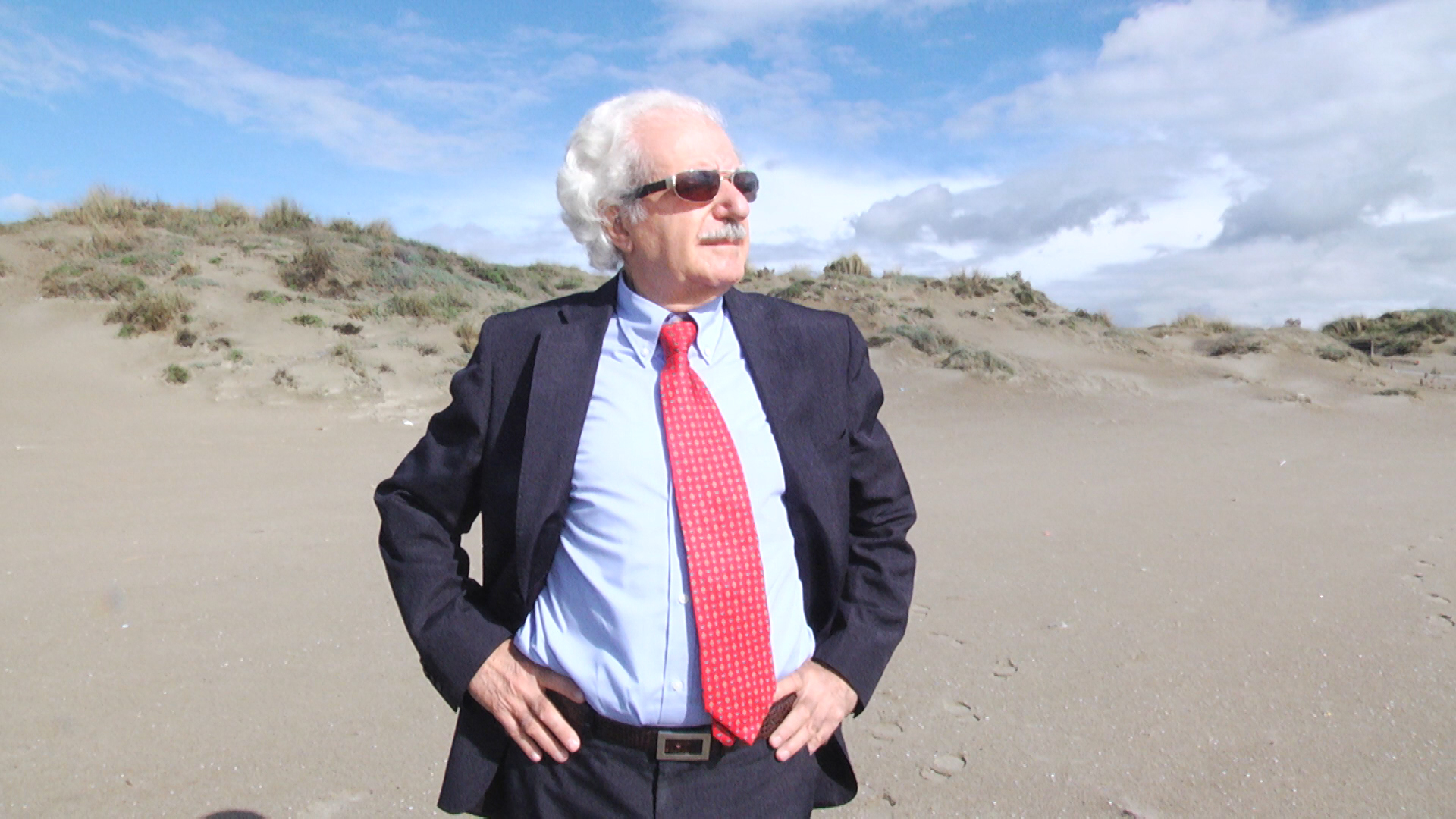
Drama, thriller, by Fabio Del Greco, Italy, 2015.
The story revolves around Vasco, a Roman builder who, at the age of 74, enjoys a life of absolute comfort. His human parable takes a dramatic turn when a mysterious encounter leads him to an ambush. Having survived, but marked by a long coma, Vasco wakes up with a new sensitivity, developing an intimate and poetic bond with nature. This new relationship with the world around him leads him to deeply explore himself, in an internal and external journey. through Italy, the United States and India, in search of a higher meaning and a cure. In parallel, the threat of a planetary cataclysm adds an epic dimension to the story.
I Am Nothing explores universal themes such as time, memory, oblivion and the connection with nature. Fabio Del Greco creates an existential drama full of food for thought. The director skillfully combines different visual materials, mixing archive images with nature photographs and dreamlike visions. This visual experimentation translates into an editing that captures the viewer's attention, guiding him through a cycle of creation and destruction. The sequences that alternate the buildings, Vasco's pride, with Indian landfills and natural landscapes create a hypnotic rhythm, underlining the beauty and fragility of life. Vasco's existential journey is a hymn to transformation and rebirth. The evolution of the protagonist, from unbridled luxury to the rediscovery of purity, represents a powerful metaphor on the meaning of life and the need to reconnect with authentic values. Io sono nulla stands out for its ability to combine introspection and visual experimentation, offering a suggestive and engaging narration. It is a film that invites us to reflect on the human condition, on our relationship with power and nature, and on the possibility of finding ourselves through change. A work that leaves its mark and lends itself to multiple readings.
LANGUAGE: Italian
SUBTITLES: English, Spanish, French, German, Portuguese
The Forest Was Always Inside
There is a moment when you stop moving and the room keeps going without you. Not sleep, not meditation in the practiced sense — just stillness, involuntary and sudden, while traffic sounds and voices and the low hum of machinery continue their indifferent rotation. And in that stillness something clarifies, not about the world outside but about the apparatus you have been using to perceive it. The lens itself comes into focus. You realize, with a quality of recognition that has nothing peaceful about it, that you have been running the wrong software for years.
This is precisely what Walden Pond was for. Not an escape. Thoreau was explicit enough about this that it almost embarrasses the romantic mythology built around him afterward. He was not fleeing civilization to find nature. He was using the friction of reduced circumstance to see the machinery of his own attention. The pond was a mirror, and like all mirrors it had no content of its own — only what you brought to it. What Thoreau brought was a mind trained on Emerson and saturated, perhaps more than any of his contemporaries recognized, in the Bhagavad Gita.
He had read it in Charles Wilkins’ 1785 translation, and read it again, and kept reading it. The passages he returned to were not the martial ones but the contemplative ones, the instructions to Krishna’s student about action without attachment to outcome, about the self that persists beneath the turbulence of circumstance. Ralph Waldo Emerson had given Thoreau the philosophical architecture — the Oversoul, the doctrine of self-reliance, the insistence that nature was not separate from mind but was mind’s own deepest grammar. But it was the Gita that gave Thoreau something harder and less comfortable: the idea that the interior life demands the same discipline as any outward labor, that consciousness is not a gift but a practice, that to see clearly is an act requiring the same muscle as chopping wood.
Emerson had written in 1836, in Nature, that the universe is “the externalization of the soul.” Thoreau took this seriously in a way that made Emerson slightly nervous. Because if the universe is the soul’s externalization, then sitting beside a pond in genuine attention is not idleness — it is the most rigorous work available. It is the attempt to watch the externalization happen in real time.
The man sits at a table in a kitchen that has not changed in forty years. Outside the window a city is being demolished and rebuilt simultaneously, cranes pivoting, glass towers rising in configurations that will seem inevitable within a decade. He is not watching the cranes. He is watching, or being watched by, something interior that the noise has paradoxically made audible. The acceleration outside has created a kind of negative space around his stillness. He has not chosen this. It has happened to him the way silence happens when a sound you stopped hearing finally ceases.
This is the Thoreauvian moment. Not the picturesque retreat, not the noble savage posture, not the Instagram wilderness. The moment when the outside world’s speed makes the interior visible by contrast, the way you only notice the current when you stop swimming with it. What Thoreau discovered at Walden was not nature. It was the structure of his own perceiving mind, and he found it easier to see there because there was less interference, fewer social performances demanding his attention, fewer mirrors showing him only the reflection other people required.
The forest was always inside. The pond was always inside. He went to Concord’s woods to prove this to himself in the most material way possible — by living it, by measuring it in cord-wood and bean rows and pages written before sunrise, by making the metaphor so literal it stopped being a metaphor at all.
A vision curated by a filmmaker, not an algorithm
In this video I explain our vision
The Trap of Interpreting Thoreau Safely
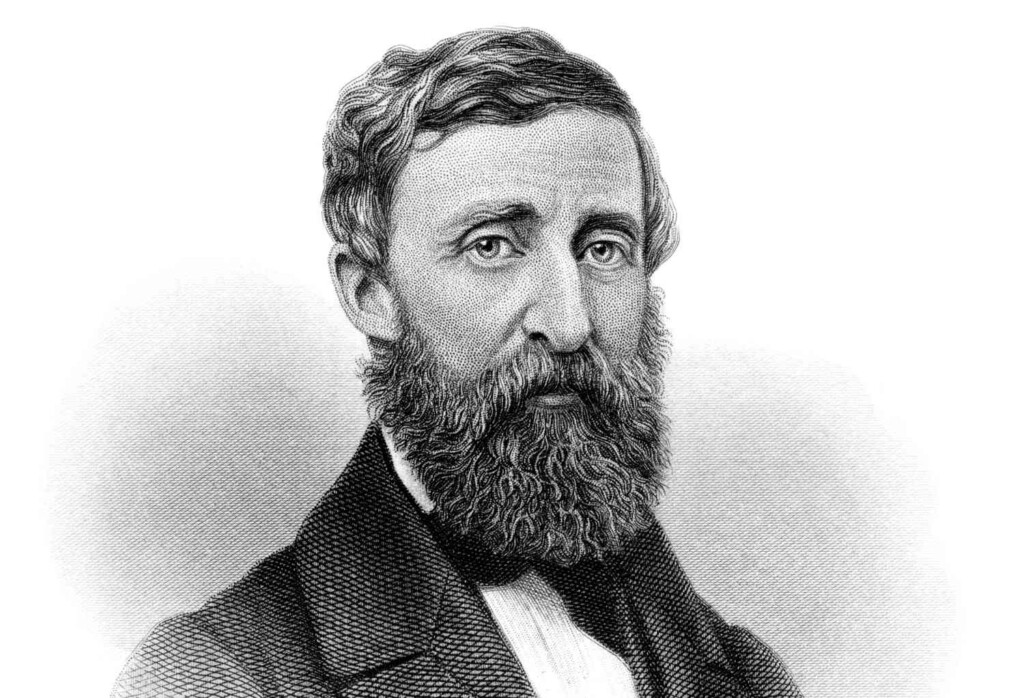
There is a moment you may recognize: someone hands you a book with the specific warmth of someone who believes they are giving you a gift, and the book turns out to be a philosophy with all its teeth removed. The cover is clean. The margins are wide. The blurb promises transformation through simplicity. You read it and feel vaguely inspired, vaguely calm, vaguely certain that you should declutter your bedroom and perhaps buy a nicer journal. What you do not feel is the cold shock of someone grabbing your shoulder and telling you that the entire economy you inhabit is a machine designed to consume your attention, your hours, your body, and your consent, and that you have been thanking it for the privilege.
This is precisely what has happened to Walden.
Thoreau died in 1862 at forty-four, of tuberculosis, having watched his book sell fewer than two thousand copies in the nine years since its publication. The first edition of 1854 was largely ignored. The lectures that preceded it were received with polite confusion. The culture he was addressing did not want to be addressed. It wanted progress, expansion, the Protestant satisfaction of labor accumulating into property. Thoreau was an embarrassment to that appetite, a Harvard-educated pencil-maker’s son who went to live in the woods and called the whole enterprise a fraud. He was tolerated as an eccentric, filed away as a naturalist curiosity, and effectively buried with his body.
What was resurrected in the decades after was not Thoreau. It was a Thoreau-shaped object that each successive era could use without being wounded by. The late nineteenth century found in him a pastoral sentiment suitable for industrialization’s guilt. The early twentieth century, particularly after the First World War, recruited him for a gentle anti-modernism that stopped well short of economic critique. The 1960s came closest to the real thing — civil rights activists read “Civil Disobedience” alongside Walden, and for a moment the fury was audible — but even then, the counterculture tendency to aestheticize poverty rather than analyze it began the slow process of softening. By the 1980s, Walden had become aspirational real estate. By the 2000s, it was a wellness text. Today it sits comfortably on the shelf beside books about the KonMari method and the Danish art of hygge, and nobody finds this alarming.
The sociologist C. Wright Mills, writing in “The Sociological Imagination” in 1959, described the process by which radical ideas are absorbed into the culture not by being refuted but by being normalized, stripped of their structural implications and returned to the individual as personal advice. Thoreau wanted you to understand that the railroad was not progress but conscription. What you received instead was a Pinterest board about tiny houses. The structural critique — the argument that wage labor is a form of voluntary enslavement, that the economy manufactures desires in order to sell you their satisfaction, that most human busyness is a collective hallucination performed to avoid the question of what life is actually for — that part was quietly set aside.
Think of the man who is handed a dossier of evidence and reads it carefully and nods and then asks, sincerely, what brand of pen was used to write it. The content has not been rejected. It has been metabolized into something harmless. He is not lying. He genuinely did not receive what was sent to him. This is not stupidity. It is the extraordinary human capacity to protect the structures we depend on by misreading anything that threatens them. We do it collectively, institutionally, across generations, and we call the result a literary tradition.
The danger of Walden is not that it preaches withdrawal. It is that it performs a precise economic autopsy on a body that is still walking around, still insisting it feels fine, still asking you how your commute was.
Civil Disobedience Was the Other Half of the Sentence
There is a version of Thoreau that has been made comfortable — the man who went to the woods to find himself, the nineteenth-century precursor to mindfulness retreats and sabbaticals, the patron saint of voluntary simplicity. That version is a careful amputation. It removes the night he spent in a Concord jail in July 1846, midway through his two years at Walden Pond, because he refused to pay the poll tax that funded a government waging war on Mexico and protecting the institution of slavery. The pond and the jail cell are not two different stories. They are the same sentence, spoken twice.
Thoreau wrote “Resistance to Civil Government” in 1849, four years after moving to the pond and three years before publishing Walden. The chronology matters because it reveals the architecture of his thinking. The withdrawal from Concord’s economy was never merely personal hygiene. It was the foundational act of a man who had decided, with absolute seriousness, that moral clarity required structural disobedience. What he called “simplicity” in his domestic life and what he called “resistance” in his political life were the same refusal, aimed at the same target — the machinery of consent that turns ordinary people into passive instruments of injustice.
The argument he made in that essay is not gentle. He wrote that under a government which imprisons any unjustly, the only true home for a just man is also a prison. He was not being poetic. He was describing a geometry of obligation in which the private and the public are not separate chambers but continuous space. Hannah Arendt, writing more than a century later in “Crises of the Republic” in 1972, would recognize in Thoreau’s position something philosophically radical — not the liberal tradition of conscientious objection that appeals to a higher law, but something closer to a direct challenge to the legitimacy of majority rule itself. Arendt was cautious about Thoreau, even critical, arguing that his refusal was too private, too rooted in individual moral purity to constitute genuine political action. But her critique inadvertently names exactly what makes him dangerous: he refused to grant the political its usual exemption from personal accountability.
The reach of that refusal traveled further than Arendt perhaps credited. Leo Tolstoy wrote directly to Thoreau’s legacy, and his essay “The Kingdom of God Is Within You,” published in 1894, draws an explicit lineage from Thoreau’s act of non-compliance to a broader theory of nonviolent resistance. Tolstoy sent that book to a young lawyer in South Africa named Mohandas Gandhi, and Gandhi later described it as one of the most decisive intellectual experiences of his life. Gandhi’s own documented account, in his autobiography, names Thoreau’s “Civil Disobedience” as the text that gave conceptual form to what he was already practicing as satyagraha — the insistence on truth as a form of force. He translated the essay into Gujarati. He cited it in correspondence. The line from a Massachusetts pond to the Salt March of 1930 is not metaphorical. It is a documented transfer of method.
What travels through that lineage is not an ideology but a gesture — the gesture of a single person deciding that their daily life and their political life cannot be allowed to contradict each other without cost. Thoreau paid the poll tax’s equivalent in two years of reduced consumption at the pond, in the labor of building his own shelter, in the deliberate refusal to participate in an economy he considered complicit. The jail cell was simply the moment the state made his private subtraction visible and tried to punish it.
To read Walden as a book about nature, or about self-reliance in the therapeutic sense, is to read only the half the culture found safe to preserve. The other half always knew exactly who it was refusing.
The Lost Poet
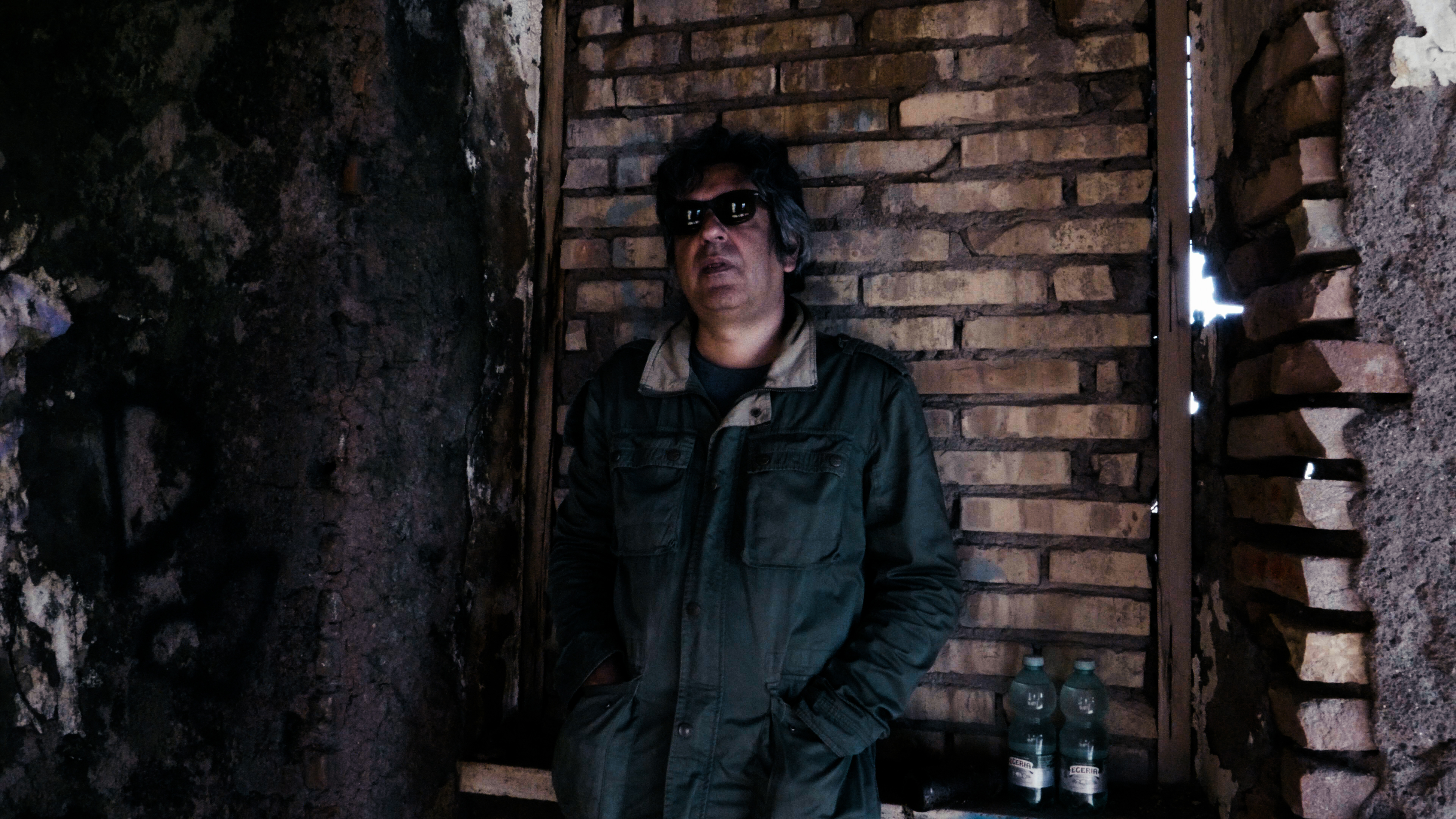
Drama, by Fabio Del Greco, Italy, 2024.
Dante Mezzadri wants to see an old friend, nicknamed the Iguana, whom he has lost sight of for many years, and who has managed to turn their shared youthful passion for poetry into a job, becoming a famous writer and poet. The man escapes from his bourgeois life and his wife to live homeless on the Roman coast, printing and trying to sell his poetry collections. At night he sleeps in a park of old carnival floats, inside a papier-mâché tank, and waits for the opportunity to meet his old friend, who however never shows up for appointments in the places they frequented when they were young, now in ruins. Dante's poetry books do not interest anyone and to support himself he is forced to "change product": he starts selling the infamous "cannibal pill" on behalf of young drug dealers, a new drug that sells like hot cakes and causes sensory and consumerist ecstasy. However, he realizes that this powerful drug is very dangerous for those who take it, he comes into conflict with his ethical conscience and throws all the pills into the sea. However, the dealers want to collect their money.
Shot over a period of 2 years, the film is a reflection on the cultural and artistic rubble of the society in which the protagonist lives, in an increasingly mechanized, consumerist and arid world. Dante Mezzadri is yet another human being who has renounced his inspiration and his creativity, but unlike many he is not willing to give his life to a system that distances him from his true identity. The physical world around him, however, seems constructed in such a way that it seems impossible to escape from this "invisible cage". The enthusiasm of the people he meets is ignited only by sensory gratification, by unreal visions of personal affirmation and success, by "metaverses" that offer an escape into an illusory and destructive reality. The poet's house on the coast, where he met with his friends as a young man, is just a pile of abandoned rubble. What happened to all those who wanted to become poets and ended up becoming something else? Are there internal forces with which that house can be "rebuilt"?
LANGUAGE: Italian
SUBTITLES: English, Spanish, French, German, Portuguese
You Already Know What You Are Not Doing

There is a specific quality to the discomfort you feel when you sit somewhere quiet enough to actually hear yourself think. Not the pleasant quiet of a weekend morning, but the kind that arrives uninvited, in the middle of an ordinary afternoon, when nothing is wrong and everything is exactly as you arranged it to be. That is when you notice. Not dramatically. Not with revelation. Just a low, persistent frequency underneath the routine, like a hum you have been mistaking for silence.
You already know what it is. You have known for longer than you would comfortably admit.
There is a moment — it belongs to the grammar of a certain kind of reckoning — where a man stands at a window and watches the street below. Not looking for anything. Not waiting. Just watching, with the particular stillness of someone who has briefly stepped outside the machinery of his own existence and cannot quite find the door back in. The life down there, the movement, the ordinary traffic of people with places to be — it looks, from that window, like something happening to someone else. The glass is thin. The distance is everything.
This is not alienation in the Marxist diagnostic sense, though Marx’s 1844 manuscripts come close to naming the texture of it — that condition in which the self becomes a stranger to its own activity, in which labor and time and choice are performed rather than inhabited. What the man at the window feels is something more intimate than a structural critique. It is the recognition that he has been narrating a life rather than living one, that the story he tells about his choices has grown thick enough to insulate him from the choices themselves.
Thoreau knew this window. Walden was written by someone who had stood at it, then decided — radically, stubbornly, at the cost of considerable social embarrassment — to go outside. Not to escape. The cabin at Walden Pond was two miles from Concord. His mother did his laundry. He walked into town regularly. The experiment was never about distance. It was about attention: what happens when you strip the anesthetic of busyness from your days and sit with what remains.
What remains, in most cases, is the thing you have been avoiding.
Henry David Thoreau spent two years, two months, and two days at the pond, from July 1845 to September 1847. He lived on roughly twenty-eight dollars a year. He grew beans. He read Homer in the Greek. He listened to loons. None of this is the point. The point is what he was refusing, and what the refusal cost him in the currency of social legibility. Emerson, his mentor, thought the gesture was finally too small — that a man of Thoreau’s intelligence should be reforming institutions, not hoeing a garden. But Emerson had not yet understood that the garden was the argument. That the examined bean row was more philosophically rigorous than any lecture podium, because it submitted thought to the discipline of consequence.
The discomfort of reading Walden is not intellectual. It does not ask you to disagree with its propositions. It asks you to look at the distance between what you believe and what you do, and to hold that distance without immediately reaching for the justification you keep in your back pocket for exactly this moment. Erik Erikson, writing on identity and the life cycle in 1950, described the central human anxiety not as the fear of death but as the fear of having not truly lived — what he called despair, the sense at the end of a life that it belonged to necessity rather than to choice.
Thoreau wrote Walden in 1854, roughly a century before Erikson named that fear, but he was writing about the same thing: the window, the glass, the street below, and the question of whether you are going to keep watching or finally open the door.
🌿 Nature, Solitude, and the Examined Life
Thoreau’s Walden invites us into a radical experiment of voluntary simplicity, where the natural world becomes a mirror for the deepest philosophical questions. The works gathered here trace the same essential path: thinkers and writers who chose to confront existence directly, stripping away distraction to find what is truly necessary and alive.
Montaigne’s Essays: Guide to Reading
Montaigne’s Essays stand as one of the earliest and most intimate explorations of the self in Western literature, asking what it means to live well and honestly. Like Thoreau retreating to Walden Pond, Montaigne withdrew into his tower library to observe his own mind with unflinching curiosity. His meandering, conversational prose opened a new tradition of philosophical introspection that still resonates today.
GO TO THE SELECTION: Montaigne’s Essays: Guide to Reading
Heidegger’s Being and Time: Guide to Reading
Heidegger’s Being and Time confronts the same existential urgency that drives Thoreau’s Walden: the imperative to live authentically rather than losing oneself in the noise of the crowd. Heidegger’s concept of ‘thrownness’ and the call of conscience echo Thoreau’s insistence on waking up to one’s own life before it slips away. Reading both together reveals a deep current of thought that runs from the New England woods to the lecture halls of Freiburg.
GO TO THE SELECTION: Heidegger’s Being and Time: Guide to Reading
Epicurus: Life and Philosophy
Epicurus built an entire philosophy around the art of living simply, seeking tranquility and friendship over wealth and public ambition — values that Thoreau would have recognized and admired. His garden community outside Athens prefigures Walden Pond as a deliberate withdrawal from the competitive world in pursuit of genuine wellbeing. Epicurean philosophy reminds us that voluntary simplicity is not privation but a form of liberation.
GO TO THE SELECTION: Epicurus: Life and Philosophy
Universal Consciousness
The idea of Universal Consciousness finds a surprising echo in Thoreau’s mystical immersion in the natural world at Walden, where individual identity dissolves into something larger and more enduring. Thoreau’s journals brim with moments of pantheistic awe, a sense that the self is continuous with the forest, the pond, and the turning of the seasons. This article opens a broader inquiry into how spiritual traditions across cultures have sought that same dissolution of boundaries between self and cosmos.
GO TO THE SELECTION: Universal Consciousness
Explore the Depths on Indiecinema
If these reflections on solitude, meaning, and the examined life have stirred something in you, Indiecinema streaming is the place to continue the journey. Discover independent and art-house films that dare to ask the same questions Thoreau asked beside his pond — films that will stay with you long after the screen goes dark.
👉 EXPLORE THE CATALOG: Watch Indie Films in Streaming
A vision curated by a filmmaker, not an algorithm
In this video I explain our vision

