
The Body That Thinks, the Machine That Bleeds
It is three in the morning and you are not sleeping. You are not exactly awake either. The screen in your hand is doing something to your eyes that isn’t quite reading, your thumb moving in a rhythm that has nothing to do with intention, and somewhere in the architecture of your chest you cannot tell whether what you feel is longing or latency, whether you are reaching for something or whether something is reaching through you. The notification arrives and your pulse responds before your mind does. This is not metaphor. This is biology meeting code at the exact threshold where the distinction stops being useful.

There is a woman who spent decades trying to explain to us why that threshold was always fictional. Not dangerous, not regrettable, not something to be lamented over in the op-ed pages of newspapers that still believe the self is a sovereign territory with defensible borders. Fictional, as in: constructed, maintained, policed, and sold back to you as nature. Donna Haraway, born in 1944 in Denver, Colorado, trained first as a zoologist before pivoting toward the history of science in ways that would permanently alter the intellectual landscape of feminist theory, science studies, and what she called, with deliberate provocation, the politics of nature. Her 1985 text, “A Cyborg Manifesto,” published initially in the Socialist Review and later collected in “Simians, Cyborgs, and Women” in 1991, did not arrive as a futurist dream. It arrived as a diagnosis, and what it was diagnosing was already decades old by the time it was written.
The diagnosis was this: the boundary between organism and machine had never been stable. What looked like a clean separation between the natural and the artificial, between the body that bleeds and the device that processes, was not a fact about the world. It was an ideological achievement, requiring constant effort to maintain, and that effort served specific interests. When you call something natural, you are not describing it. You are protecting it from scrutiny.
Haraway understood this not from abstraction but from inside the actual doing of biology. She had watched how science narrated the body, how the primate studies she dissected in her earlier work “Primate Visions” from 1989 were never neutral observations of animal behavior but dramas in which human social hierarchies got projected onto troops of baboons and then returned to us as evolutionary truth. The organism was never simply there, prior to interpretation. It was always already a story told by someone with a position, a funding source, a set of assumptions so deep they passed as perception.
This is why her work is not futurism. The cyborg she invokes is not the chrome-limbed android of science fiction, not a fantasy about 2075, not a cautionary tale about where we are heading. It is a description of where you already are, have always been, in a world where insulin pumps extend pancreatic function, where cochlear implants rewire auditory experience, where the rhythm of your attention is shaped by systems that learned your behavior faster than you did. You did not become a hybrid last year when you got a better phone. The hybridization has been proceeding for as long as tools have been making fingers what fingers are.
Michel Foucault, whose “Discipline and Punish” from 1975 mapped the ways power inscribes itself onto bodies rather than merely constraining them from outside, gave Haraway part of her vocabulary. But she took it somewhere he did not go, into the laboratory, into the chromosome, into the specific material practices through which nature gets produced as a domain separate from culture, and then used to silence political questions by calling them biological. Nature becomes the alibi of power. And Haraway, methodically, was pulling that alibi apart, holding each piece up to the light.
Eve of the Irises
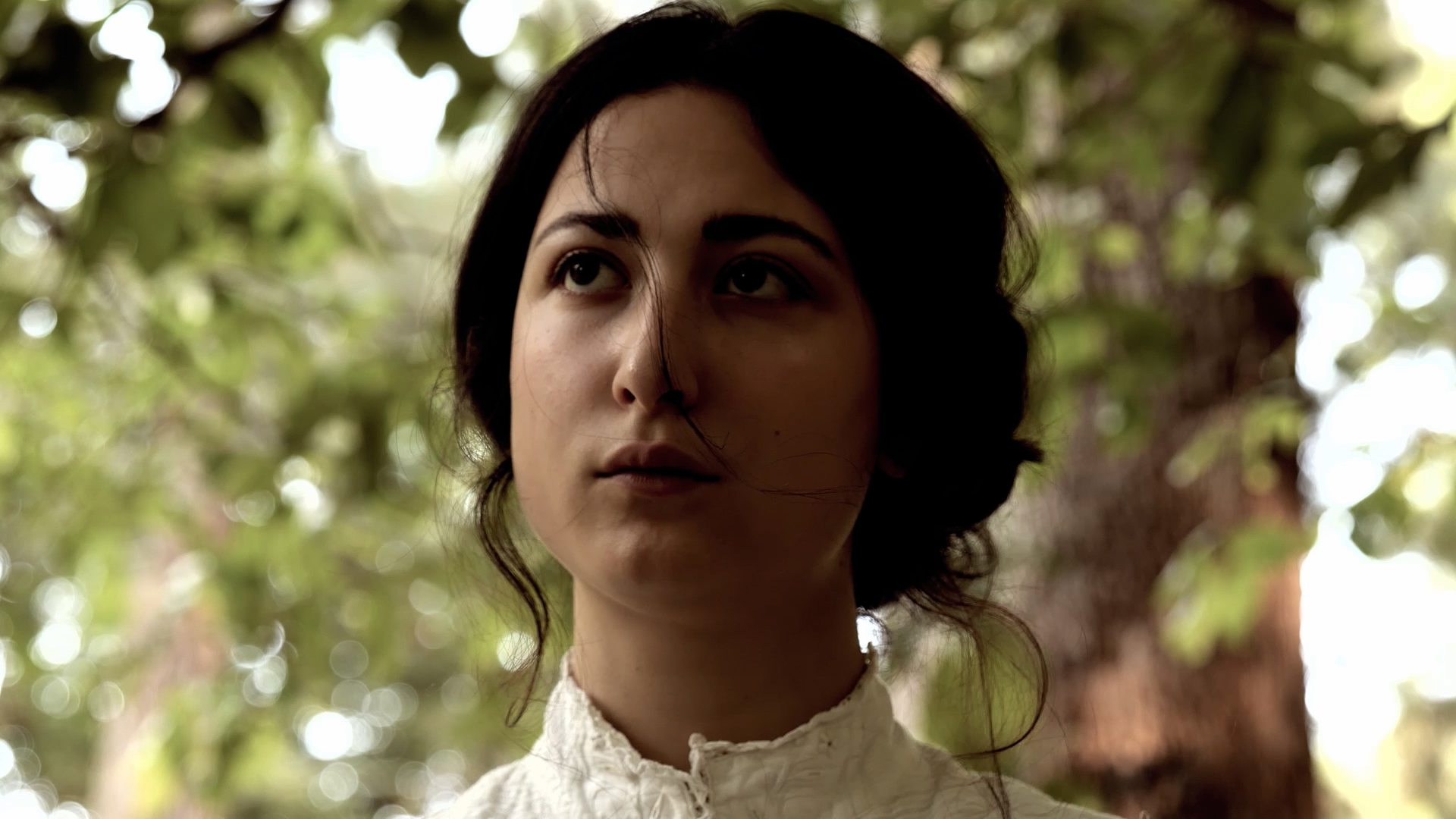
Documentary, by Isabel Russinova, Rodolfo Martinelli Carraresi, Italy, 2026
Eva of the Irises is a historical biographical docu-film about the scientist Eva Mameli Calvino, a botanist and pioneer of environmentalism in Italy, mother of the writer Italo, born in Sassari in 1886. The film, based on a multidisciplinary approach that combines several genres—such as theatre, documentary, cinema, and research—moves between memories, reflections on life, as well as the goals and missions the scholar still wished to achieve.
The multifaceted artistic sensibility of Isabel Russinova is expressed across many fields, from writing to acting, from directing to civic engagement, and finds one of its highest expressions in the docu-film Eva of the Irises, created with Rodolfo Martinelli Carraresi. The film blends scientific rigor and poetic refinement to portray the extraordinary figure of the botanist Eva Mameli Calvino, mother of Italo Calvino but above all an independent protagonist of 20th-century scientific culture. It is told through a combination of archival materials, interviews, and evocative staging capable of elegantly and profoundly conveying her intense human and professional story.
LANGUAGE: Italian
SUBTITLES: English, Spanish, French, Portuguese
Santa Fe, 1944: A Girl Who Was Taught the Wrong Maps
There is a particular kind of education that gives you extraordinary tools and then tells you to use them only inside certain rooms. Donna Haraway grew up inside those rooms. Born in 1944 in Denver, Colorado, she was raised Catholic in a household where faith was not decoration but architecture — the load-bearing walls of everything. The rituals, the Latin, the incense, the particular grammar of sin and grace: these were not simply beliefs but a way of organizing perception itself, a training in the idea that the visible world points toward something it cannot fully contain.
What the Church gave her, and what she never entirely abandoned even as she dismantled its claims, was the conviction that matter is always more than it appears. That things signify. That a body, a creature, a cell under a microscope is not merely a fact but a question addressed to whoever is looking. This is not the usual story of the bright Catholic girl who loses her faith and finds science. The faith did not disappear. It mutated. It became something that even her eventual critics could not quite categorize, because she never fully crossed to the secular side of that divide and never pretended that science was a neutral replacement for the sacred.
Colorado College in the early 1960s gave her the collision she needed. She studied zoology and philosophy and literature simultaneously, refusing the invitation to choose. This refusal was not intellectual greed but something closer to a recognition that the act of choosing was itself the trap. The Jesuit influence in her intellectual formation — not Jesuit instructors, necessarily, but the Ignatian habit of holding contradictions in productive tension, of finding God in all things including the things that disturb — left her permanently suspicious of any system that purchased its coherence by excluding what didn’t fit. She had been trained, in other words, to notice the seams.
Yale in the late 1960s was where the seams became visible as political facts. She arrived to study biology and encountered a discipline in the process of remaking itself through the molecular revolution. DNA had been cracked in 1953, and by the time Haraway reached graduate school the genetic code was being read like a text, a metaphor that was not incidental but definitional. She noticed — this is the thing about Haraway, she always noticed — that the language scientists used was saturated with assumptions about information, control, hierarchy, the masterful decoding of nature’s secrets. The organism was becoming a program. The body was becoming a system to be managed. And these were not neutral descriptions. They were stories. Specific, historically situated stories told by specific people with specific investments.
Her doctoral dissertation, completed in 1972 and later published as Crystals, Fabrics, and Fields, examined how metaphors of organism functioned in twentieth-century developmental biology. This was not a standard science history project. It was an act of philosophical surgery: showing that the concepts biologists used to describe life were not discovered in nature but imported from culture, from theology, from engineering, from politics. The sacred had not been left behind when she entered the laboratory. It had simply changed costume.
What she had been given in Denver, in church, in Sunday school, in the Jesuit-inflected classrooms of Colorado, was a map. A beautiful map, detailed and confident, showing her where everything was and what it meant. What Yale showed her was that the map was drawn by someone. That the cartographer had interests. That the blank spaces were not empty but actively erased. And that the girl who had been taught to find meaning everywhere was now going to have to learn the far more unsettling skill of finding the politics inside the meaning — without losing the sense, stubborn and possibly irrational, that meaning was still worth looking for.

The Cyborg Manifesto and the Refusal to Be Innocent
There is a moment — you have probably seen it, felt it, maybe lived it — when someone points a camera at you and tells you to be natural. Just be yourself. And something in you freezes, because you suddenly understand that being yourself requires an audience, a frame, a set of coordinates that someone else has already decided. The researcher behind the lens believes he is recording reality. He thinks the act of observation leaves no fingerprints.
This is precisely the fantasy that Haraway detonated in 1985 when “A Cyborg Manifesto” appeared in Socialist Review, a text that arrived not like an argument but like a small explosive device left quietly in the middle of a room where everyone was having a very serious conversation about the correct way to be oppressed. The journal’s editors almost certainly did not know what they were publishing. Nobody did. The reverberations are still arriving.
The target of Haraway’s critique was not simply patriarchy or capitalism in their blunt, obvious forms. It was something more insidious: the political imagination of socialist feminism itself, which had spent decades constructing a unified subject called Woman — essential, coherent, innocent — upon whose shoulders the entire edifice of emancipatory politics rested. Haraway understood that this purity was not liberation. It was another cage, slightly more comfortable than the previous one, and furnished with better rhetoric. As she wrote directly in that 1985 text, she would rather be a cyborg than a goddess. The goddess, however radical she pretends to be, still lives inside the myth of origins. The cyborg has no origin story worth telling in that mode.
What she named “the god trick” is the philosophical mechanism underneath all of this. It is the claim to see from nowhere — to occupy a position so elevated, so neutral, so scrubbed clean of interest and desire that what you see becomes Truth rather than perspective. The male researcher cataloguing the woman in his study believes he is practicing this trick successfully. He does not understand that nowhere is always somewhere. The pretense of objectivity is not the absence of a position; it is the position of whoever has enough power to make their vantage point invisible. Michel Foucault had already mapped similar territory in Discipline and Punish in 1975, tracing how the clinical gaze institutionalizes itself as neutral fact, but Haraway pushed the analysis into the body itself, into the question of who gets to be the knowing subject and who gets to be the known object.
The cyborg enters here not as a metaphor for technology but as a figure that makes the god trick impossible. The cyborg is always already compromised — part machine, part organism, stitched together from contradictions that cannot be resolved into a clean political identity. It cannot claim innocence because it has no pre-social, pre-technological self to retreat into. And this is precisely its radical potential. Donna Haraway was drawing on a tradition that included Sandra Harding’s 1986 work on standpoint epistemology — the argument that knowledge is always situated, always produced from somewhere — but she was also fracturing it, refusing to let situated knowledge harden into a new essentialism where marginalized subjects automatically possess better access to truth simply by virtue of their suffering.
The woman being photographed does not become free by asserting her authentic self against the researcher’s gaze. She becomes free — or at least more honest about her condition — when she understands that neither of them has access to an unmediated real. Both are produced. Both are partial. The camera does not lie, but it does not tell the truth either. It selects. It frames. It makes choices that appear, in the finished image, to have been made by nobody at all.
Situated Knowledges and the Violence of the View from Nowhere
There is a man standing at the front of a darkened auditorium, his face half-lit by the glow of the projection screen behind him. His laser pointer moves across an image of a village, bodies visible in the peripheral frame, a landscape of damage rendered in high resolution. His voice does not waver. He speaks in the passive construction that academic English has perfected over centuries: “it was observed,” “the data suggest,” “mortality rates were found to be.” No one did anything. Everything simply occurred, like weather. The audience takes notes.
This is not a neutral posture. It is a performance, carefully rehearsed by centuries of Western epistemology, and Donna Haraway named it with surgical precision in her 1988 essay “Situated Knowledges: The Science Question in Feminism and the Privilege of Partial Perspective,” published in Feminist Studies. What she was targeting was not bad science or biased science in the ordinary sense. She was targeting the deepest operating assumption of the entire enterprise: that the most trustworthy knowledge is knowledge produced from nowhere in particular, by no one in particular, looking at everything from an altitude so great that the particulars of bodies, histories, and positions dissolve into pure, clean, universal truth.
She called this the “God trick.” The view from nowhere that is actually the view from somewhere very specific — from a body that has never had to justify its right to speak, from a position that has been so thoroughly normalized that it reads as simply the position of reason itself. The laser pointer moves across the suffering bodies as though they were geological formations because the man holding it has been trained, institutionally and philosophically, to believe that his detachment is a virtue rather than a symptom.
Sandra Harding had been excavating related terrain since the early 1980s, arguing in “The Science Question in Feminism” (1986) that the mythological ideal of value-free inquiry had never actually existed — that knowledge production has always been shaped by the social location of the knower, and that the historical requirement for objectivity has functioned, in practice, as a requirement for the erasure of the knower’s particularity. But erasure is not equally distributed. Some knowers are permitted to disappear into the universal. Others are perpetually reminded of their bodies, their positions, their interests. A woman who argues is arguing as a woman. A man who argues is simply arguing.
Haraway pushed further, and in a direction that made her simultaneously attractive and threatening to multiple camps. She was not advocating for relativism. This is the misreading that followed her everywhere and that she anticipated with obvious impatience. Relativism, she pointed out, is merely the mirror image of the God trick — it is also a refusal of accountability, a way of claiming that because all positions are partial, no position bears responsibility for what it sees or fails to see. What she was demanding was something more uncomfortable than either objectivity or relativism: situatedness. The obligation to know from somewhere, and to account for that somewhere honestly.
The man in the auditorium is not lying. That is almost the point. He is telling the truth as it appears from his altitude, with his instruments, through his training. But the bodies in those slides do not live at that altitude. They live at ground level, where the passive construction does not protect them from anything, where “mortality rates were found to be elevated” is simply the academic euphemism for the fact that people died and someone’s choices contributed to that dying. Haraway’s situated knowledges demand that the pointer stop moving long enough for the question to be asked: who is holding it, from where, and what does that position make it impossible to see?
Primates, Women, and the Stories Science Tells Itself
There is a moment when someone opens a box they were not supposed to open — not out of prohibition, but out of collective agreement that the box would remain closed. The photographs inside are older than anyone in the room. Primates in cages, researchers in khaki, African assistants unnamed in the captions, the animals tagged and catalogued with a precision that the human beings around them were never afforded. You look at those faces — the photographed ones, animal and human alike — and something in the image looks back with a directness that the caption cannot absorb. The caption says: specimen. The image says something else entirely.
This is precisely the archive that Donna Haraway cracked open in Primate Visions, published in 1989, and the scandal it produced was not incidental to the work. It was the proof that the work had landed accurately. What Haraway demonstrated, with the methodical patience of a forensic analyst and the interpretive reach of a literary critic, was that primatology had never simply studied primates. It had used primates to tell stories about human beings — specifically about which human behaviors were natural, which hierarchies were inevitable, and which social arrangements were written into biology itself rather than into history. The alpha male who dominated the group. The females who submitted and selected. The order that emerged not from politics but from nature. These were not findings. They were prior beliefs that had traveled to Africa and returned wearing the costume of discovery.
Bruno Latour, working through the sociology of scientific knowledge and articulating what he and Steve Woolgar analyzed in Laboratory Life in 1979, showed how facts are not found but manufactured — produced through networks of instruments, institutions, funding bodies, peer reviewers, and rhetorical conventions that then systematically erase the traces of their own construction. The finished fact arrives stripped of its social history, presenting itself as something the world simply contained and science merely noticed. Haraway applied a version of this logic to an entire discipline and showed how the stories primatologists told were always simultaneously stories about race and gender, about colonial encounter, about who had the right to name and who existed only to be named. The African field assistants who made the research possible appear in the acknowledgments like furniture. The animals are individuated, given names, tracked across years. The hierarchy of observation reproduced the hierarchy of empire, and the data it generated then circulated as evidence for the naturalness of that very hierarchy.
What made this unbearable to many readers was not its radicalism but its specificity. Haraway did not argue from abstraction. She read the actual published papers, the expedition memoirs, the museum dioramas at the American Museum of Natural History — those staged reconstructions of primate family life that Carl Akeley built in the 1920s, designed explicitly to show the American urban public what a pristine, ordered, hierarchical nature looked like before civilization corrupted it. The diorama was not science. It was a moral argument dressed in taxidermy. But it was funded as science, exhibited as science, and used to anchor scientific claims for decades afterward.
The primatologists who objected to Haraway’s analysis frequently argued that she had misrepresented the data or failed to understand the methodology. What they could not answer was her simpler, more devastating question: why did the data always seem to find what the researchers already believed? Why did the dominant male appear so reliably in studies conducted by researchers who lived in societies organized around male dominance? Why did female primates appear passive and selective in studies conducted before women entered the field in significant numbers — and why did their behavior appear far more complex, more agentic, more socially sophisticated once researchers like Sarah Blaffer Hrdy and Barbara Smuts began doing the watching?
The box, once opened, cannot be closed. The photographs keep looking back.
A vision curated by a filmmaker, not an algorithm
In this video I explain our vision
The Companion Species and the Obligation to the Non-Human

There is a moment that happens every morning in cities across the world, so ordinary it has become invisible: a woman and a dog moving together through a street, the dog’s nose working the air at the base of a lamp post, decoding something — a story, a temperature, a warning, a desire — that the woman walking beside her will never access. The leash between them is taut for a second, then slack. The woman waits, not quite patiently. The dog finishes reading whatever she was reading and they move on, together, in that peculiar intimacy that is not understanding and is not indifference but something stranger and more demanding than either.
This is where Haraway’s thinking makes its most radical turn. The Cyborg Manifesto operated through irony — it wielded paradox as a weapon against the clean categories of Western humanism. But by 2003, with The Companion Species Manifesto, and then more fully in When Species Meet in 2008, the irony gives way to something that costs more: genuine obligation. Not the playful transgression of boundaries but the hard work of actual relationship across a divide that cannot be collapsed, theorized away, or romantically dissolved. The dog is not a metaphor. That is precisely the point.
Jakob von Uexküll, the Baltic German biologist writing in the early twentieth century, gave us the concept of Umwelt — the idea that every organism inhabits a perceptual world entirely its own, constructed from the signals it is built to receive and the actions it is built to perform. A tick’s Umwelt contains three things: the smell of butyric acid from mammalian skin, warmth, and the hairiness of a surface. Everything else in the universe, for the tick, does not exist. The woman on the street inhabits an Umwelt dense with language, social contract, legal obligation, symbolic meaning. The dog inhabits one flooded with olfactory data so rich and temporally layered that each lamp post is something like an archive. They share a sidewalk. They do not share a world. And yet something is being made between them every single morning, imperfectly, with friction and misreading and occasional grace.
Haraway calls this contact zone. She borrows the term from the anthropologist Mary Louise Pratt, who used it to describe colonial encounters — the spaces where radically different cultures meet with histories of coercion and asymmetry trailing behind them. Applied to the space between species, the term refuses sentimentality. It insists that the relationship between humans and dogs is not innocent. It carries twelve thousand years of selective breeding, which is to say twelve thousand years of humans shaping dogs to serve human needs, to respond to human cues, to want what humans need them to want. The dog who gazes at the woman with what looks like love has been partly constructed, across millennia, to gaze that way. This does not make the love unreal. It makes it historical.
Emmanuel Levinas argued that ethics begins in the encounter with the face of the other — that irreducible demand made by a being who looks at you and in looking calls you to responsibility. Levinas famously and awkwardly admitted uncertainty about whether a dog’s face counts in this sense. Haraway takes the uncertainty seriously rather than resolving it cheaply. If we cannot be sure, then the uncertainty itself is the ethical site. The woman on the street, waiting while the dog reads her archive of smells, is already inside an ethical relation she did not choose and cannot fully interpret. The dog makes a claim on her time, her attention, her patience, her willingness to be led by a nose into a world she cannot enter. What she owes that claim — not legally, not sentimentally, but philosophically — is precisely what Haraway refuses to answer in advance.
Making Kin in the Chthulucene: Against the Comfort of Apocalypse
There is a woman standing in what used to be a factory. The roof has partially collapsed, and through the gap, rain has been doing its work for years. The concrete floor is cracked in long seams, and from those seams something green and persistent is pushing upward. Along the rusted girders, a family of starlings has built an architecture more intricate than anything the original engineers imagined. There is no hope on her face. There is no despair either. There is something harder to name, something that looks almost like attention — the specific quality of a person who has stopped waiting for rescue and started noticing what is actually here.
This is precisely the emotional and intellectual posture that Staying with the Trouble, published in 2016, is trying to teach. Not to demand or perform. To cultivate. Haraway’s invention of the Chthulucene as a counter-term is not a rebranding exercise. It is a philosophical refusal. The Anthropocene, whatever its geological validity, carries within its name a particular story: the story of the human as the central actor of planetary history, powerful enough to name an epoch after itself, culpable in a way that remains, paradoxically, a form of grandeur. Even the guilt is imperial. The Capitalocene, a term Haraway acknowledges from Jason Moore‘s work, corrects the class blindness of that framing but still moves within a register of mastery and its consequences. The Chthulucene does something stranger and more unsettling. It names an epoch after entanglement itself, after the tentacular, the subterranean, the symbiotic — after Pimoa cthulhu, a spider of the Sonoma forests whose eight eyes and reaching limbs Haraway reads as a figure for thinking otherwise.
The injunction that emerges from this — make kin, not babies — has been misread with spectacular consistency. It sounds like a lifestyle choice. It sounds like something to put on a tote bag. It is, in fact, a structural argument about how reproduction has functioned as an instrument of power. Nationalist politics have always required wombs. Colonial projects required the management of indigenous reproduction and the forced multiplication of enslaved people. Capitalist accumulation requires an expanding labor force calibrated to its needs. The family, in its normative form, is not a haven. It is, as Friedrich Engels understood as early as 1884 in The Origin of the Family, Private Property and the State, a unit of economic organization dressed in the language of love. To say make kin, not babies is to say: what if we unhooked the obligations of care, loyalty, and mutual aid from the biological and juridical structures that have always made them serve other interests?
Anna Tsing’s work on multispecies entanglement arrives here as a necessary companion. Her 2015 study of the matsutake mushroom, The Mushroom at the End of the World, demonstrates through patient ethnographic attention how life proliferates in the ruins of capitalist expansion — not despite the destruction but through it, in the gaps it creates, in the unexpected collaborations between organisms that were never supposed to meet. The fungi threading through the factory floor are not symbols of resilience in any redemptive sense. They are evidence of what Tsing calls salvage accumulation, and also evidence of something Haraway adds: that the units of survival are never individual, never even single species. They are assemblages. They are, in Haraway’s vocabulary, sympoietic — made together — rather than autopoietic, self-making.
The woman in the ruins is not waiting for someone to restore the factory. She is also not celebrating its collapse. She is, perhaps for the first time, refusing the binary that made those the only two available responses. The apocalypse, Haraway insists, is a comfort — a narrative that relieves you of the obligation to act in a present that is neither simply doomed nor simply salvageable, but irreducibly, exhaustingly, both.
The String Figure and the Thought That Has No Owner
There is a game played with string — across Oceania, across the Arctic, across sub-Saharan Africa and the Andes — where the pattern is never yours to keep. You receive it from another pair of hands, you transform it through your own fingers, and then you pass it on, and what travels between you is not the string itself but the relationship the string makes visible. The design exists only in transit. The moment you hold it alone, it collapses.
Donna Haraway returned to this image throughout the last decades of her thinking, not as metaphor but as method. String figures — what Pacific Islanders call whakapapa in one tradition, ayatori in another — are among the oldest known forms of collaborative making, documented across cultures so geographically distant from one another that their shared practice suggests something closer to a deep structural necessity than to cultural diffusion. You cannot play alone. The game refuses solipsism at the level of its physical structure.
Watch what happens in the space between two pairs of hands when the transfer occurs. Not in either pair, not in the string itself, but in that suspension — the brief moment when neither player fully holds the figure and yet the figure persists. That interval is where Haraway locates thought. Not inside the sovereign mind, not in the archive of a single thinker’s published work, but in the mesh, in the between, in what Gregory Bateson in 1972 called the pattern that connects — that recursive, relational structure that makes a crab’s claw legible alongside a human hand not because they are the same but because they share a grammar of relation. Bateson’s mind was never located in the skull. For him, it extended into the environment, into the circuit of information that included the organism and its context together. Haraway inherited this and pushed further: the circuit includes history, colonialism, labor, grief, the microbiome, the dog sleeping at your feet, the extinct pigeon, the algorithm running in the background.
There is a scene — hands close, the camera holding on them with an almost uncomfortable patience — where something is passed between two people and you cannot quite see what it is. The object, if it is an object, exists in the giving rather than in the thing given. What arrives in the receiving hands is already different from what left the others. This is not loss. It is transformation as the only form of fidelity available to living systems. You cannot transmit a thought intact. You can only create the conditions for something related to emerge in another mind, another body, another situation. The transmission is always also a translation, and translation, as Walter Benjamin understood, does not serve the original — it reveals what the original could not say in its own language.
Haraway’s own career is a string figure of this kind. Trained in zoology and evolutionary biology, moving through the history of science and feminist theory, through cyborg manifestos and companion species and the Chthulucene, her thought has never belonged to a single discipline because disciplines, like sovereign subjects, are fictions of containment. Her 1985 “Cyborg Manifesto” was not a conclusion but a hand extended, and what came back from that extension — from science and technology studies, from queer theory, from postcolonial critique, from artists and activists and biologists and programmers — transformed the original figure into something she alone could not have made. She has said, more than once, that she thinks with others or she does not think at all.
The string is still moving. Somewhere between her work and yours, between the dead and the not yet born, between the human hands and the nonhuman ones that have always been part of the game without being named as players, the pattern is forming — incomplete, contingent, passed along by no one in particular and sustained by everyone who reaches for it.
🧬 Where Science Meets Nature, Gender, and Thought
Donna Haraway’s thought thrives at the crossroads of biology, feminism, and radical philosophy of nature. These related articles explore the thinkers and scientists whose work resonates most deeply with her vision of entangled lives, symbiotic knowledge, and the challenge to dominant narratives.
Barbara McClintock: Life and Discoveries
Barbara McClintock revolutionized genetics by listening closely to the maize plants she studied, developing what she called a ‘feeling for the organism’ — a phrase that deeply inspired Haraway’s own thinking about situated knowledge and non-hierarchical science. Her story is one of marginalization and eventual vindication, a narrative Haraway returns to in her writings on gender and scientific authority. McClintock’s holistic approach to biology anticipates many of the ideas central to Haraway’s cyborg and symbiotic frameworks.
GO TO THE SELECTION: Barbara McClintock: Life and Discoveries
Rachel Carson: Life and Works
Rachel Carson stands as one of the most powerful voices in the history of ecological thought, exposing the devastating consequences of human domination over the natural world with scientific rigor and literary grace. Her work directly challenged the techno-scientific optimism of the postwar era, a critique that runs through Haraway’s own questioning of technology and progress. Reading Carson alongside Haraway reveals a shared commitment to accountability, care, and the intertwining of species across vulnerable ecosystems.
GO TO THE SELECTION: Rachel Carson: Life and Works
Hannah Arendt: the Philosopher Who Unmasked the Banality of Evil
Hannah Arendt, like Haraway, was a woman philosopher who refused easy categorization, building a body of thought that challenged the boundaries between the political, the ethical, and the human condition. Her analysis of power, plurality, and the dangers of abstraction resonates with Haraway’s insistence on specificity, embodiment, and the refusal of universalizing narratives. Together, these two thinkers offer a compelling feminist map of how to think responsibly in times of crisis.
GO TO THE SELECTION: Hannah Arendt: the Philosopher Who Unmasked the Banality of Evil
Arne Næss: Life and Ecological Philosophy
Arne Næss founded deep ecology as a philosophical movement that called for a radical rethinking of the human relationship with the natural world, moving far beyond superficial environmentalism into questions of identity, interconnection, and intrinsic value. His ideas share important ground with Haraway’s rejection of human exceptionalism and her call for multispecies solidarity. Exploring Næss alongside Haraway illuminates how ecological philosophy and feminist science studies converge in their critique of anthropocentrism.
GO TO THE SELECTION: Arne Næss: Life and Ecological Philosophy
Discover Cinema That Thinks Beyond the Human
If these ideas spark curiosity about science, nature, and the boundaries of the human, Indiecinema streaming offers a curated selection of independent and documentary films that explore exactly these territories — from feminist science narratives to ecological visions and philosophical journeys. Step into a cinema that dares to ask the questions mainstream culture avoids.
👉 EXPLORE THE CATALOG: Watch Indie Films in Streaming
A vision curated by a filmmaker, not an algorithm
In this video I explain our vision

