
The Room Where She Was Not Supposed to Think
You are arranging your thoughts at the table while someone else speaks. The words being said are not particularly interesting — a rehearsal of opinions you have heard before, dressed in the confidence that comes not from depth but from the simple habit of never having been interrupted. You follow the thread anyway, nod at the right moments, and feel something tighten in your chest that is not quite anger and not quite sadness but occupies the exact space between them. You know more about this subject than the person speaking. You have read more, thought longer, arrived at positions that are more nuanced and harder won. And yet the room does not know this, and the room does not ask, and some part of you has already calculated — in that rapid, automatic arithmetic that women learn before they learn anything else — that this is not the moment to make it known.

That tightening. That calculation. That is where Mary Wollstonecraft begins.
Not in abstraction. Not in the serene corridors of Enlightenment philosophy, where men declared the universal rights of mankind with a confidence that somehow never extended to the other half of mankind. She begins in the body, in the specific, chronic discomfort of an intelligent person who has been handed a script that does not account for her intelligence. The script says: be pleasing. Be gentle. Be ornamental. Cultivate the graces that make you agreeable to others and never mistake agreeableness for the lesser thing it is. The script is not delivered with malice, which is precisely what makes it so effective. It arrives through mothers and schoolrooms and drawing rooms and the very structure of language itself, which in the eighteenth century — and in ways that have not entirely dissolved — organized women as the objects of perception rather than its subjects.
There is a particular kind of room that enforces this. Not a prison, nothing so legible as that. A parlour, perhaps, where the expectation is that you will perform your femininity with sufficient grace that no one feels the performance is costing you anything. A schoolroom where you are taught to read but not to reason, to appreciate beauty but not to produce arguments, to feel but never to think so hard that the feeling becomes inconvenient. The philosopher Charles Taylor, writing in Sources of the Self in 1989, describes the way selfhood is always partly constructed through the frameworks that surround it — the moral horizons that tell us what matters and who counts. What Wollstonecraft understood, with a clarity that was almost violent in its precision, is that the moral horizon of her century had been drawn in such a way as to place women permanently at its decorative edge.
She was born in 1759 into a world that had recently discovered the individual as a political and philosophical category. John Locke had already argued that rational capacity was the ground of human dignity. The Scottish Enlightenment was producing moral philosophy at speed. Across the Channel, Rousseau was writing about freedom and natural virtue with an eloquence that would intoxicate an entire generation of radicals. And yet Rousseau, in Emile — published in 1762, three years after Wollstonecraft’s birth — dedicated a full section to the education of Sophie, Emile’s ideal companion, and concluded that she should be trained not to think independently but to defer, to please, to exist in the service of a man’s development rather than her own. The sentence has the quality of a door being quietly closed.
Wollstonecraft read it. She read all of it — Rousseau, Locke, Price, Burke, the entire archive of a century that spoke endlessly about freedom while practicing a precise and systematic exclusion. And something in her refused the door.
Eve of the Irises
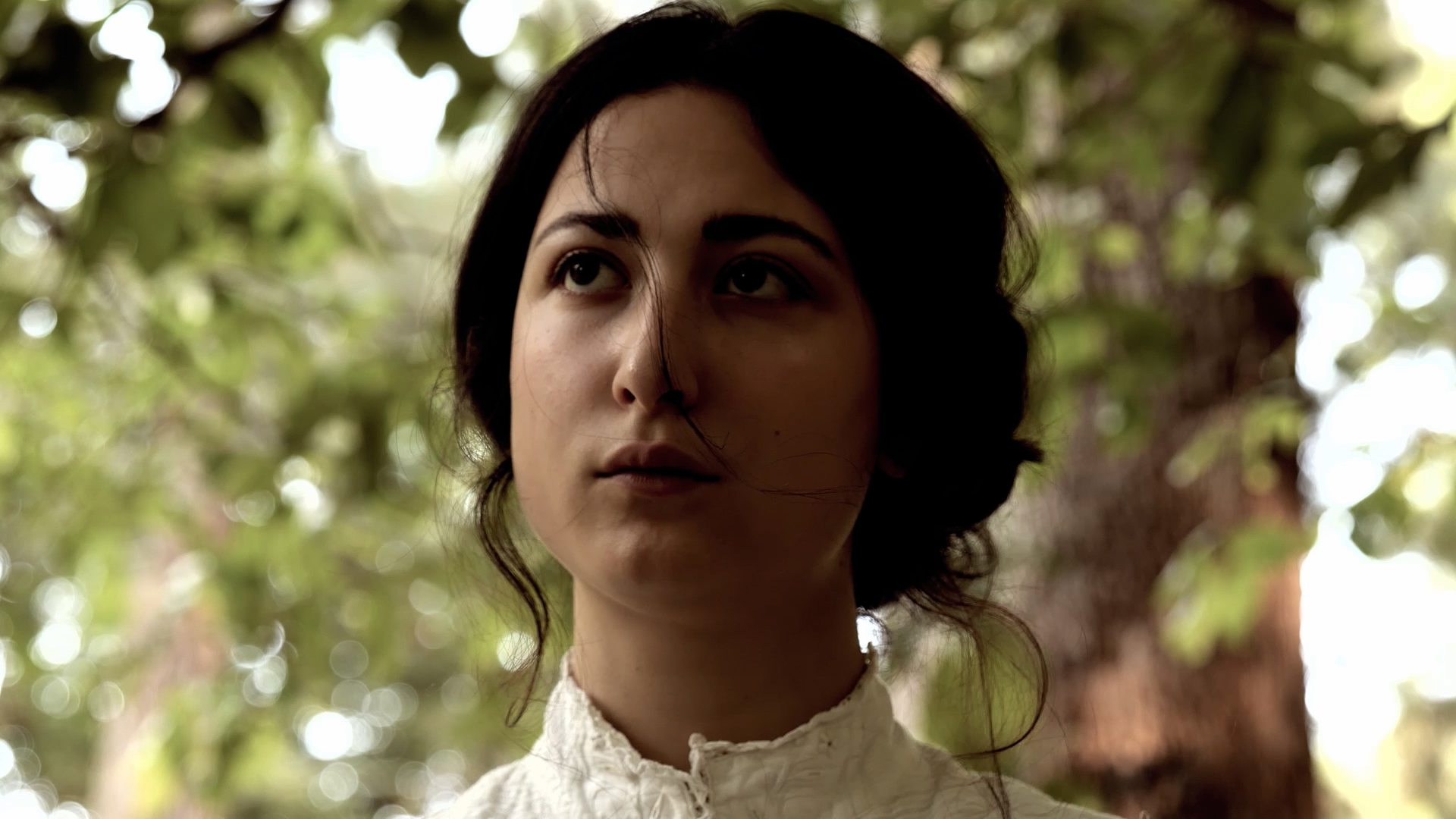
Documentary, by Isabel Russinova, Rodolfo Martinelli Carraresi, Italy, 2026
Eva of the Irises is a historical biographical docu-film about the scientist Eva Mameli Calvino, a botanist and pioneer of environmentalism in Italy, mother of the writer Italo, born in Sassari in 1886. The film, based on a multidisciplinary approach that combines several genres—such as theatre, documentary, cinema, and research—moves between memories, reflections on life, as well as the goals and missions the scholar still wished to achieve.
The multifaceted artistic sensibility of Isabel Russinova is expressed across many fields, from writing to acting, from directing to civic engagement, and finds one of its highest expressions in the docu-film Eva of the Irises, created with Rodolfo Martinelli Carraresi. The film blends scientific rigor and poetic refinement to portray the extraordinary figure of the botanist Eva Mameli Calvino, mother of Italo Calvino but above all an independent protagonist of 20th-century scientific culture. It is told through a combination of archival materials, interviews, and evocative staging capable of elegantly and profoundly conveying her intense human and professional story.
LANGUAGE: Italian
SUBTITLES: English, Spanish, French, Portuguese
Born Into the Wrong Script
You know the feeling of waking up inside a life that was arranged before you arrived. Not chosen, not negotiated — arranged. The furniture of it already in place: who you are supposed to love, what you are supposed to want, how much space you are permitted to occupy. Mary Wollstonecraft did not discover this feeling through philosophy. She was born into it in Spitalfields, London, in 1759, the second of seven children, into a household where the script had already been written and her part in it was legible from the first day.
Her father, Edward John Wollstonecraft, was a man who drank and moved and spent with equal recklessness. The family relocated repeatedly across England and Wales — Epping, Barking, Beverly, Hoxton — each move stripping away whatever fragile roots had begun to form. There is something specific about that kind of childhood, the itinerant kind, where you learn early that stability is not your birthright, that the ground beneath you is subject to another person’s volatility. You do not develop roots. You develop vigilance. You learn to read the atmosphere of a room before you have learned to read sentences, to sense the precise barometric pressure of a man’s mood as he enters through a door.
Edward Wollstonecraft was violent toward his wife. Mary, as the eldest daughter, took up a position outside her parents’ bedroom door on the worst nights. She placed her own body between the violence and her mother. She was a child doing this. Consider what that does to a person’s nervous system — not metaphorically, but structurally. It installs a set of reflexes, a constant orientation toward someone else’s survival, a chronic postponement of your own existence in favor of managing the emergency that is simply living near a certain kind of man.
Simone de Beauvoir, writing in The Second Sex in 1949, identified with forensic precision what Wollstonecraft was living without a theoretical framework to name it. De Beauvoir’s central argument was not that women are born subordinate but that subordination is manufactured — through repetition, through institution, through the thousand daily lessons that teach a girl her existence is relational rather than autonomous. She is not a subject who happens to be in relation to others. She is constituted as a relation, full stop. Her worth, her safety, her very legibility as a person depends on her proximity to and service of someone else.
What Wollstonecraft experienced in that household was not aberration. It was curriculum. The eldest daughter as emotional regulator, as caretaker, as the one who absorbs the excess so that the household can maintain the fiction of functioning — this was not a family pathology peculiar to the Wollstonecrafts. It was the standard operating procedure of an entire civilization. In England in the 1760s, a married woman had virtually no independent legal existence. Her property, her earnings, her children, her body — all passed under her husband’s jurisdiction at the moment of marriage. The violence was not incidental to this arrangement. It was protected by it.
A man watching through a window at dusk, his whole posture arranged around waiting for someone who will not come — that is the image that surfaces when you try to describe a certain kind of loneliness. But the loneliness Wollstonecraft inhabited was its precise inverse: she was never permitted to wait for herself. She was always already late to some other person’s need. Her mother eventually died in 1780, having never escaped that domestic gravity, having passed through life as the object of a man’s moods rather than the subject of her own story.
What de Beauvoir called the situation — the concrete material and social conditions that make freedom either possible or structurally unavailable — was for Wollstonecraft not an abstraction to be later analyzed but the water she had been swimming in since before she could name water.

What a Governess Knows That a Philosopher Pretends Not To
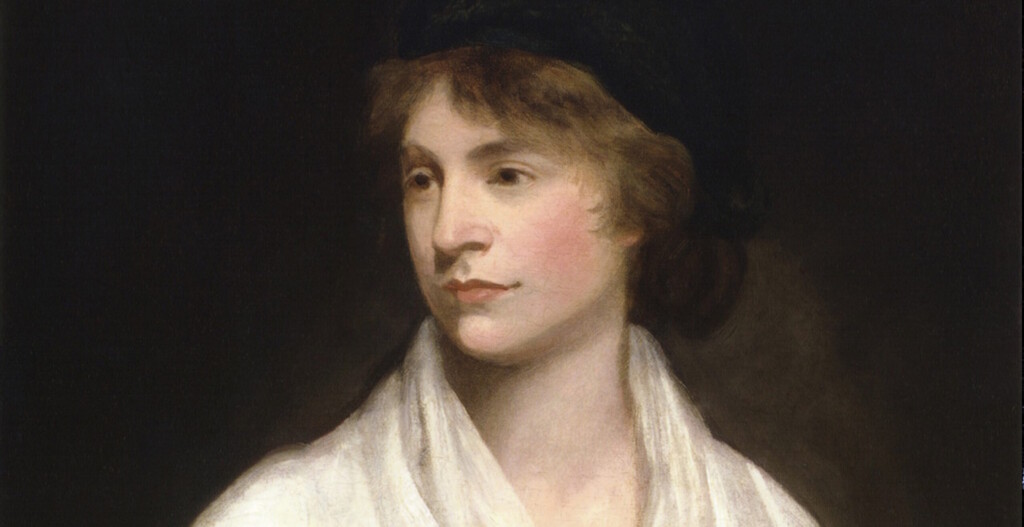
There is a particular kind of knowledge that comes from being present in a room where no one fully acknowledges you are there. You watch the children conjugate their French verbs. You watch the mother of the house drift through the morning in her loose silk wrapper, attended by a maid who anticipates her every pause. You watch the father return in the evening and fill the space with his voice, his appetite, his certainty about the arrangement of things. And you understand, with a precision that no drawing room education could have produced, exactly how the machinery works.
Mary Wollstonecraft spent years inside that machinery. She worked as a companion to a widow in Bath, then as a governess to the daughters of the Kingsborough family in Ireland, positions that placed her in the most revealing possible location: inside privilege, but never of it. She could observe the full performance of femininity from a few feet away, close enough to see the effort it required, too marginal to be required to perform it quite so completely herself. That proximity gave her something no library could. It gave her the view from the hinge.
In 1787 she published Thoughts on the Education of Daughters, a slim work that reads less like a treatise and more like a wound being examined in daylight. The book is not revolutionary in its explicit demands, but it is devastating in what it notices. Wollstonecraft describes how girls are trained from their earliest years to prioritize appearance over understanding, compliance over conviction, charm over competence. They are taught that their value lies in being pleasing, which means they are taught, systematically and with great care, to distrust their own intelligence. The education she describes is not the absence of formation. It is a very precise formation, aimed at producing a particular kind of incapacity.
Pierre Bourdieu named this mechanism almost two centuries later. In his work on symbolic violence, developed most fully in Masculine Domination published in 1998, he described how social hierarchies perpetuate themselves not through force alone but through the internalization of the terms of one’s own subordination. The dominated come to experience their condition as natural, even as fitting, even as a form of grace. They do not feel the mechanism because the mechanism has become their perception. This is why a woman who has been educated into helplessness does not typically experience herself as having been injured. She experiences herself as feminine. The distinction feels, from the inside, like a difference between damage and essence.
What Wollstonecraft saw in the Kingsborough household was this process running at full operational capacity. The daughters she taught were not being neglected. They were being exquisitely attended to, dressed and displayed and praised for exactly the qualities that would make them dependent, decorative, and ultimately controllable. The governess who understood all of this moved through those rooms with a cold, unsentimental clarity. She noted how her invisibility was itself a form of information. To be present but unacknowledged, useful but not valued, educated but excluded from the conversations her education should have permitted her to join, was to receive a daily education of a different kind altogether.
There is a scene that belongs to this experience and to thousands of women who lived it before and after her. A woman enters the library to return a book she has been reading in secret. The man of the house is there. He does not look up. The books on those shelves, the ideas they contain, the world they open, are not, by the silent agreement of every convention surrounding them, for her. She replaces the volume. She leaves. She knows something about that room that the man sitting in it will never have to know, because he has never had to think about it.
Wollstonecraft thought about it. She wrote it down.
The Vindication and the Rage Underneath It
There is a moment at a dinner table — you have seen it, maybe lived it — when a woman stops mid-sentence, looks at the faces around her expecting her to soften, to qualify, to apologize for the space her opinion is taking up, and instead she continues. Not louder. Not angrier. Just with the full weight of someone who has decided, in that precise instant, that the performance is over. The table does not know what to do with this. The silence that follows is not respectful. It is the silence of a social contract being visibly torn.
That is what A Vindication of the Rights of Woman is. Not a pamphlet. Not a historical artifact to be admired from behind glass. An act of controlled fury written in six weeks in 1791 and published in January 1792 by a woman who had watched the French Revolution declare the universal rights of man and understood immediately, with the clarity of someone who has always had to read between the lines of official documents, that universal did not mean her.
Wollstonecraft’s central argument is not complicated. It is devastating precisely because of its simplicity. Women appear inferior because they have been systematically manufactured to appear inferior. Every educational system, every social convention, every compliment paid to a woman’s delicacy or her ornamental charm has been a tool of reduction. She is not born limited. She is trained into limitation the way you train a plant to grow in one direction by blocking all others.
The target she selects is not accidental. Jean-Jacques Rousseau, whose educational treatise Émile appeared in 1762, had constructed an ideal of female education in the figure of Sophie — designed to please, to charm, to defer, to make herself useful to man’s happiness. Rousseau believed this was natural. Wollstonecraft believed Rousseau had confused the effect of oppression with evidence of nature. She wrote directly to him, through him, around him, with the relentlessness of someone dismantling an argument they have been forced to live inside. “Taught from their infancy that beauty is woman’s sceptre,” she wrote, “the mind shapes itself to the body, and roaming round its gilt cage, only seeks to adorn its prison.” The cage does not announce itself as a cage. That is precisely its design.
Mary Beard, writing more than two centuries later in Women and Power, published in 2017, traces this exact mechanism further back than Rousseau — back to Homer, back to Telemachus telling Penelope to go to her room because public speech is men’s business, back to the structural grammar of Western civilization in which the female voice is not simply ignored but actively, institutionally removed from the space of power. Beard’s argument illuminates what Wollstonecraft felt in her bones: that the silencing of women is not a side effect of patriarchy. It is one of its primary technologies. The woman at that dinner table who refuses to soften is not being rude. She is violating an architecture that has been standing for three thousand years.
What makes the Vindication still uncomfortable — not historically interesting, genuinely uncomfortable — is that Wollstonecraft does not excuse the women who have internalized the cage. She is merciless about the woman who weaponizes her own subordination, who trades intelligence for flattery, who cultivates weakness as a strategy. She understands why. She has no patience for it. There is something almost surgical in her refusal to sentimentalize victims. She wants accomplices in the act of thinking, not sympathy for those who have chosen the easier performance.
The woman at the dinner table does not finish her sentence with triumph. She finishes it as if triumph were not the point. As if the point were simply that the sentence existed, that it was said, that it took up space in a room designed to absorb and dissolve it.
Rousseau’s Lie and the Education That Cripples
There is a moment you might recognize, even if you cannot place exactly when it happened to you. A girl, perhaps eight or nine years old, solves a problem correctly — a mathematical puzzle, a logical riddle, a spatial challenge — and the adult in the room smiles not with congratulation but with a particular kind of surprise, the surprise that is also a warning. You weren’t supposed to do that quite so confidently. And something in that smile, absorbed before the child can name it, begins its slow work of dismantling.
This is not metaphor. It is pedagogy. Jean-Jacques Rousseau systematized it in 1762, in a book that educated Europe received as a masterpiece of enlightened thinking. Émile laid out a complete philosophy of human development, rooted in natural freedom, the cultivation of reason, the rejection of rote obedience. It remains one of the most cited texts in the history of Western education. It also contains, in its fifth book, a companion figure named Sophie, whose entire education is designed to produce the opposite of everything Rousseau celebrated in Émile. Where the boy learns to test reality against his own perception, the girl learns to subordinate her perception to social approval. Where he is trained toward autonomy, she is trained toward pleasing. Rousseau did not see this as contradiction. He called it nature.
Mary Wollstonecraft called it philosophical crime. Not carelessness, not cultural lag, not the innocent error of a great mind working within his limitations. A crime. In A Vindication of the Rights of Woman, published thirty years after Émile, she identified with surgical precision what Rousseau had actually constructed: a system that produces the very weakness it then points to as proof of natural inferiority. Teach a person to distrust their own observations long enough and they will perform confusion as a social grace. They will hesitate before answering questions they know the answer to. They will qualify statements that require no qualification. They will mistake their trained incapacity for their essential nature.
Watch this happen in real time: a woman reconstructing her own memory in the presence of a man who insists it went differently. Not because she lacks confidence in ordinary circumstances, but because every institution she passed through rewarded exactly this kind of yielding, this retroactive self-doubt. She does not simply change her account. She comes to feel uncertain. The revision is internal, emotional, total. This is not weakness of character. It is the precise outcome Rousseau’s Sophie curriculum was designed to produce, scaled up across a civilization and then pointed to as evidence that the curriculum was unnecessary.
Cordelia Fine spent years mapping the neuroscientific architecture of this argument and found it structurally hollow. In Delusions of Gender, published in 2010, she assembled the methodological failures behind claims of innate sex-based cognitive difference — the underpowered studies, the confirmation bias built into experimental design, the extraordinary speed with which cultural data gets relabeled as biological fact. The intellectual differences between men and women that centuries of educators treated as the natural starting point of pedagogy are, Fine demonstrates, manufactured at the output end and then misread as existing at the input end. We shape the mind and then pretend we only found it.
Wollstonecraft arrived at this conclusion through pure philosophical fury more than two centuries before the neuroimaging data existed to support it. What she understood, reading Rousseau with the particular attention of someone whose own education had been systematically starved, was that the Enlightenment’s central betrayal was not incidental. It was structural. Reason was being used to justify the prohibition of reason for half the species, and this was being called nature, and nature was being called good, and good was being taught in schools across the continent to children who were learning, above all, what they were permitted to become.
A vision curated by a filmmaker, not an algorithm
In this video I explain our vision
Love, Ruin, and the Experiment of Living Freely

There is a specific kind of solitude that comes not from being abandoned but from having chosen correctly and still finding yourself alone. You are in a city where you do not fully belong, your letters go unanswered for days, and the child in the next room is proof that you staked something real on a version of the future that has not arrived. The gap between the life you theorized and the life your body is actually living becomes a physical sensation, something close to nausea.
This was not metaphor for Wollstonecraft. It was Scandinavia, 1795. She was traveling through Norway, Sweden, and Denmark on commercial errands for Gilbert Imlay, the American entrepreneur and sometime novelist she had met in revolutionary Paris and loved with a totality that embarrassed her own arguments. Fanny, barely a year old, traveled with her. Imlay’s letters came irregularly, their warmth cooling with each iteration. She was, in the language she had spent years dismantling, a woman who had given everything and was now waiting for a man to decide what that was worth.
Imlay was not a villain in any useful sense. He was something more instructive: a man who admired the idea of a free woman until he actually had one. He had offered no marriage contract, which Wollstonecraft had initially taken as a sign of his modernity. What it turned out to be was a sign of his options. She had written in 1792 that women were taught to see themselves as helpless, dependent creatures incapable of standing alone. She had meant it as a critique. She had not fully reckoned with how deep the conditioning ran in herself, or how the body in love operates by entirely different legislation than the reasoning mind.
Simone de Beauvoir would observe more than a century and a half later, in “The Second Sex” published in 1949, that love is not the same experience for men and women within a patriarchal structure — that for women it tends toward self-annihilation, toward making oneself the project of another’s existence rather than the subject of one’s own. Wollstonecraft lived this before it had a vocabulary. She wrote letters to Imlay that she knew were too desperate, that violated her own dignity, and she wrote them anyway because theory and longing occupy different chambers of the self and do not communicate cleanly.
She attempted suicide twice. First in 1795, after discovering that Imlay had taken a mistress. Then again by jumping from Putney Bridge into the Thames in the autumn of the same year, having walked in the rain first to make her clothes heavier, to be certain. She was rescued. The clinical neutrality of that sentence is the only honest way to write it. To romanticize it would be to do exactly what she spent her life arguing against — to transform a woman’s extremity into aesthetic material.
What she had attempted to build with Imlay was not recklessness. It was an experiment. She had tried to instantiate in real life the principles she had argued for on the page — a relationship between equals, without legal coercion, sustained by reason and genuine affection. The experiment failed not because the principles were wrong but because the world had not agreed to recognize them. Freedom practiced unilaterally is not freedom. It is exposure.
William Godwin came later, and differently. They had met as early as 1791, disliked each other initially with the irritable intensity of two people who are too similar. By 1796 they were neighbors, then lovers, then — when she became pregnant with the child who would become Mary Shelley — quietly married in March 1797, both of them writing separately in their journals about the compromise they were making with their own publicly stated convictions about the institution of marriage. Even the happiness was honest about its contradictions.
The Book She Did Not Finish and the Death That Made Her Myth
She was writing about a woman locked in a madhouse by her husband when she stopped. Not because she had resolved the argument, not because the chapter was finished, but because her body gave out eleven days after childbirth, at the age of thirty-eight, leaving sentences suspended in the manuscript like a hand reaching through a wall. The novel she left behind is less a fragment than an open wound — and the culture, with characteristic efficiency, immediately began to dress it.
Maria: or, The Wrongs of Woman is the book that most people who invoke Wollstonecraft have never read, which is itself a kind of answer to what it contains. Where the Vindication argued for women’s rational capacities within a framework the eighteenth century could just barely accommodate, Maria went somewhere the century could not follow. It said that female desire exists. That it is not a danger to be managed or a weakness to be overcome but a fact of human experience with the same moral weight as any other. It said that marriage, as legally constituted in England in the 1790s, was not a sacred bond but a property arrangement in which a woman became, upon signing, the chattel of whoever had signed with her. A husband could commit his wife to an asylum and the law would assist him. He could take her children, her earnings, her correspondence. He could do this not in spite of the law but through it, with the law as his instrument and the social consensus of respectable people as his chorus.
This was not metaphor. It was the literal architecture of the Married Women’s Property Act’s absence — an absence that would persist in England until 1870, nearly eight decades after Wollstonecraft was writing. The novel’s protagonist Maria is not mad. She is sane in a place designed to make sanity indistinguishable from its opposite, which is precisely the trap. Erving Goffman, writing about total institutions in Asylums in 1961, would have recognized the machinery immediately: the institution that pathologizes resistance, that defines the refusal to comply as evidence of the condition requiring compliance. Wollstonecraft understood this not as theory but as the lived logic of a system she had watched operate on women around her for her entire life.
And then she died mid-sentence. Mid-thought. Mid-argument.
What happened next is the part that deserves more scrutiny than it usually receives. Her husband, William Godwin, published a memoir of her life within months. He meant it as a tribute. He was devastated and he was honest and his honesty was catastrophic. He disclosed her illegitimate child, her affairs, her suicide attempts, her years of living outside the sanctioned arrangements. The public, which had been willing to admire a woman arguing for women’s education, found itself much less willing to extend that tolerance once the woman in question had lived as if she meant it. The Vindication went largely unread for decades. The memoir became the story. She became a cautionary tale in the mouths of the very people who had never engaged with a single page of her argument.
This is how posthumous reputation works when the person being memorialized was dangerous. You do not suppress them directly. You reframe them. You make the life the refutation of the work. You find the evidence of suffering — the suicide attempts, the unrequited loves, the illegitimate child — and you arrange it into a narrative in which the unconventional life produced the unhappiness, and the unhappiness proves the unconventionality was a mistake. The ideas do not need to be answered. The biography answers them.
What Wollstonecraft had argued, in the unfinished novel and in everything before it, was that the container was the problem. The posthumous management of her reputation became one more container, more elegant than the ones she had named, and for that reason more difficult to see.
What Was Done to Her Name After She Died
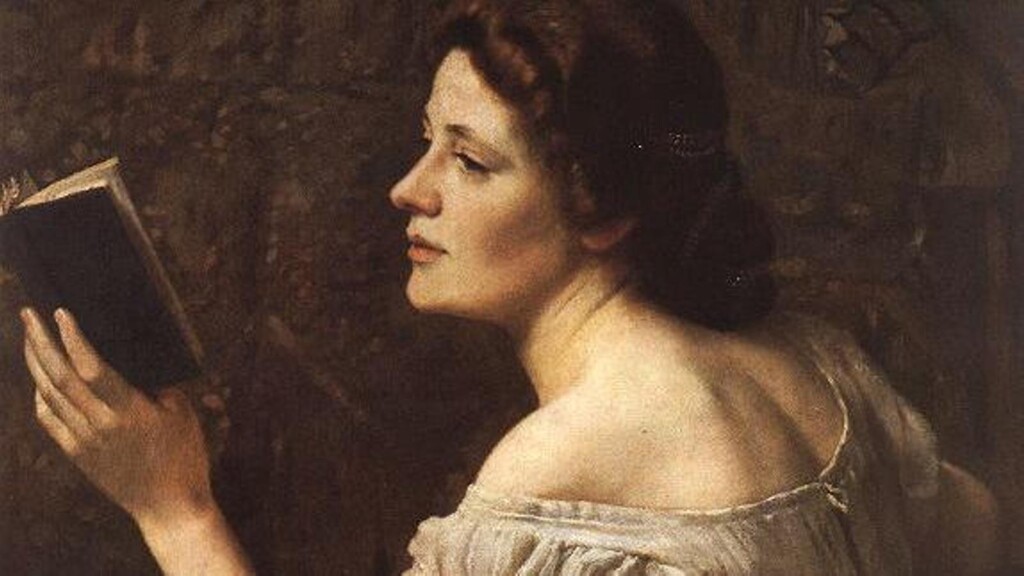
There is a portrait hanging in a drawing room. The woman in it looks composed, almost serene, her gaze directed somewhere past the viewer’s shoulder. People walk beneath it every day. They notice the careful rendering of the lace at her collar, perhaps the particular quality of light on her cheek. No one in that room speaks about what she thought. No one recites the argument she spent her life sharpening. The face remains. The mind has been quietly, methodically removed.
This is precisely what happened to Mary Wollstonecraft in the decades following her death in 1797. The mechanism was not dramatic. There was no public burning of A Vindication of the Rights of Woman, no organized campaign of censorship, no tribunal. There was something far more efficient: the weaponization of her personal biography against the integrity of her thought. William Godwin, her husband and a man who loved her genuinely, published his Memoirs of the Author of A Vindication of the Rights of Woman in 1798, less than a year after her death. He intended it as a tribute. He disclosed everything — her illegitimate child, her two suicide attempts, her relationship with Gilbert Imlay outside the bonds of marriage. The reading public received it as a confession of moral ruin. Within a very short time, her name had become, for polite discourse, a warning rather than a resource. To invoke Wollstonecraft was to invite the response that her life had already refuted her argument.
Hannah Arendt wrote, in her essays collected across the 1950s and 1960s, about the specific way that revolutionary thought is neutralized — not through direct intellectual refutation, which would require engaging it seriously, but through what might be called administrative forgetting: the slow bureaucratic erasure of the person who dared the thought, until the thought itself, deprived of its source, becomes unthinkable. What was done to Wollstonecraft’s name across the nineteenth century follows this pattern with almost clinical precision. She was not argued against. She was made embarrassing. The distance between those two operations is the distance between philosophy and gossip, and gossip won for over a hundred years.
Her name was largely absent from mainstream intellectual discourse for more than a century. When John Stuart Mill published The Subjection of Women in 1869, extending many of the same arguments she had made in 1792, he did not foreground her as his precursor. The ground she had broken was used without attribution, which is itself a form of erasure, perhaps the most common form. It was not until Virginia Woolf‘s essay of 1932, published in The Common Reader’s second series, that someone of equivalent standing looked directly at Wollstonecraft and said: this woman is still alive in the questions she asked. Woolf did not romanticize her. She understood that Wollstonecraft’s power lay not in her martyrdom but in the unresolved nature of her inquiry, which kept generating itself forward through time, finding new carriers, new urgencies, new refusals to settle.
And yet the question that presses now is whether even this reclamation — the academic revival, the feminist canonization, the commemorative editions, the university syllabi — constitutes genuine hearing or only a more sophisticated form of the portrait on the wall. To frame a thinker, to place her in a tradition, to cite her correctly and in the right footnotes, can be its own way of containing the disturbance she represented. The argument she made in 1792 was not that women deserved a seat at the table that already existed. It was that the table itself had been built to exclude them and that rationality, true rationality, demanded the whole structure be rethought from the foundation. That argument is still capable of making people deeply uncomfortable. The question is whether the discomfort is being felt, or whether the portrait simply hangs there, admired and undisturbing, the lace at the collar rendered with great care.
🌹 Voices That Changed the World: Women and Philosophy
Mary Wollstonecraft stands at the origin of modern feminist thought, her life and writings laying the groundwork for generations of thinkers who dared to question the structures of power and gender. Exploring her legacy means tracing a living constellation of ideas that extends far beyond the eighteenth century, connecting to the great women philosophers and writers who followed in her path.
Virginia Woolf: Life and Works
Virginia Woolf, like Wollstonecraft, spent her life interrogating what it means to be a woman in a world shaped by men, exploring the boundaries of freedom and creativity with radical honesty. Her novels and essays transformed the inner life into a political act, making her one of the most essential voices in the tradition Wollstonecraft helped inaugurate.
GO TO THE SELECTION: Virginia Woolf: Life and Works
Simone de Beauvoir: Life and Philosophical Thought
Simone de Beauvoir’s foundational work in existentialist feminism is unthinkable without the intellectual courage first demonstrated by Mary Wollstonecraft more than a century earlier. Her philosophical inquiry into the construction of femininity and freedom stands as a direct heir to the Vindication of the Rights of Woman, pushing the argument into the terrain of lived experience.
GO TO THE SELECTION: Simone de Beauvoir: Life and Philosophical Thought
Hannah Arendt: the Philosopher Who Unmasked the Banality of Evil
Hannah Arendt brought to political philosophy a fierce independence of thought and a refusal to accept inherited categories, qualities she shares with Wollstonecraft’s own revolutionary spirit. Her analysis of power, evil, and human dignity resonates deeply with the ethical ambitions that animated Wollstonecraft’s writing and activism.
GO TO THE SELECTION: Hannah Arendt: the Philosopher Who Unmasked the Banality of Evil
Annie Besant: From Socialist Activism to Theosophical Leadership
Annie Besant’s trajectory from radical social activist to one of the most influential women intellectuals of her era mirrors the restless pursuit of justice and self-determination that defined Wollstonecraft’s life. Her work across labor rights, women’s education, and esoteric thought illustrates how the energy of feminist emancipation can take unexpected and transformative forms.
GO TO THE SELECTION: Annie Besant: From Socialist Activism to Theosophical Leadership
Discover More on Indiecinema
The spirit of Mary Wollstonecraft lives on wherever independent voices dare to challenge convention and tell stories that matter. Explore Indiecinema’s streaming catalog for films that carry that same courage — stories of women, thinkers, and rebels who refused to be silenced, waiting for you to discover them.
👉 EXPLORE THE CATALOG: Watch Indie Films in Streaming
A vision curated by a filmmaker, not an algorithm
In this video I explain our vision

