
The Smile Before the Knife
You did not see it coming because you were not supposed to. That is the entire mechanism. One Monday morning the announcement arrives — an email, a handshake in the corridor, a name on a door that was not there on Friday — and the name is not yours. You reconstruct the preceding months in your mind and you find it everywhere: the colleague who asked you careful questions about your project timeline, who remembered your ideas in meetings just long enough to present them slightly differently, who was warm in a way that now reads as surgical. You were not betrayed by a monster. You were outmaneuvered by someone who understood the room better than you did, who knew which alliances to build and when to call them in, who smiled at the right people with the precise voltage of sincerity required. You feel stupid, and the stupidity stings worse than the loss itself.

This is not a modern pathology. It is not the product of late capitalism or open-plan offices or performance review culture. It is something considerably older and more honest than any of those explanations. There is a moment — a man standing in a crowded marketplace, watching a local strongman distribute bread and promises with equal ease, knowing that the crowd cheering loudest ate nothing yesterday — where the transaction becomes visible in its naked form. Power given freely, received graciously, weaponized quietly. The bread was never about hunger. It was about the ledger. It was about the debt that does not announce itself as debt.
Niccolò Machiavelli was born in Florence in 1469 and died in 1527, and in the fifty-eight years between those dates he watched the Italian peninsula convulse through invasions, betrayals, the collapse of republics, the rise and fall of men who believed their virtue would protect them. It did not protect them. He watched it happen to Savonarola, who burned with moral certainty and was then simply burned. He watched it in the diplomatic missions he undertook for the Florentine Republic between 1498 and 1512, meeting Cesare Borgia, meeting Louis XII, meeting the Pope’s representatives, taking notes on what actually moved events rather than what the rhetoric of the day claimed moved them. When the Medici returned and he lost his position, was imprisoned, tortured, and finally exiled to his farm outside Florence, he wrote The Prince in 1513 — not as a manual for tyrants, but as a document of ruthless witness.
The book’s scandal has never really been its content. Rulers had always done what Machiavelli described. The scandal was that he wrote it down without flinching, without the cosmetic layer of divine justification or moral framework that previous political thinkers had felt obligated to apply. Erasmus published The Education of a Christian Prince in 1516, three years after Machiavelli’s manuscript was circulating privately, and the contrast is almost comical in its completeness: one man telling power what it ought to be, another man describing what it is. The Church found Machiavelli’s book so threatening that it placed it on the Index of Forbidden Books in 1559. You do not ban a text because it is immoral. You ban it because it is accurate.
What he saw — and what that colleague of yours also understands, perhaps without having read a word of it — is that the performance of virtue and the exercise of power operate on entirely different logics, and that confusing the two is not a moral position but a strategic liability. He did not invent cruelty. He refused to dress it in borrowed clothes and call it something else. That refusal, which feels almost violent even now, is where the real provocation of The Prince begins.
The Mirror and the Rascal
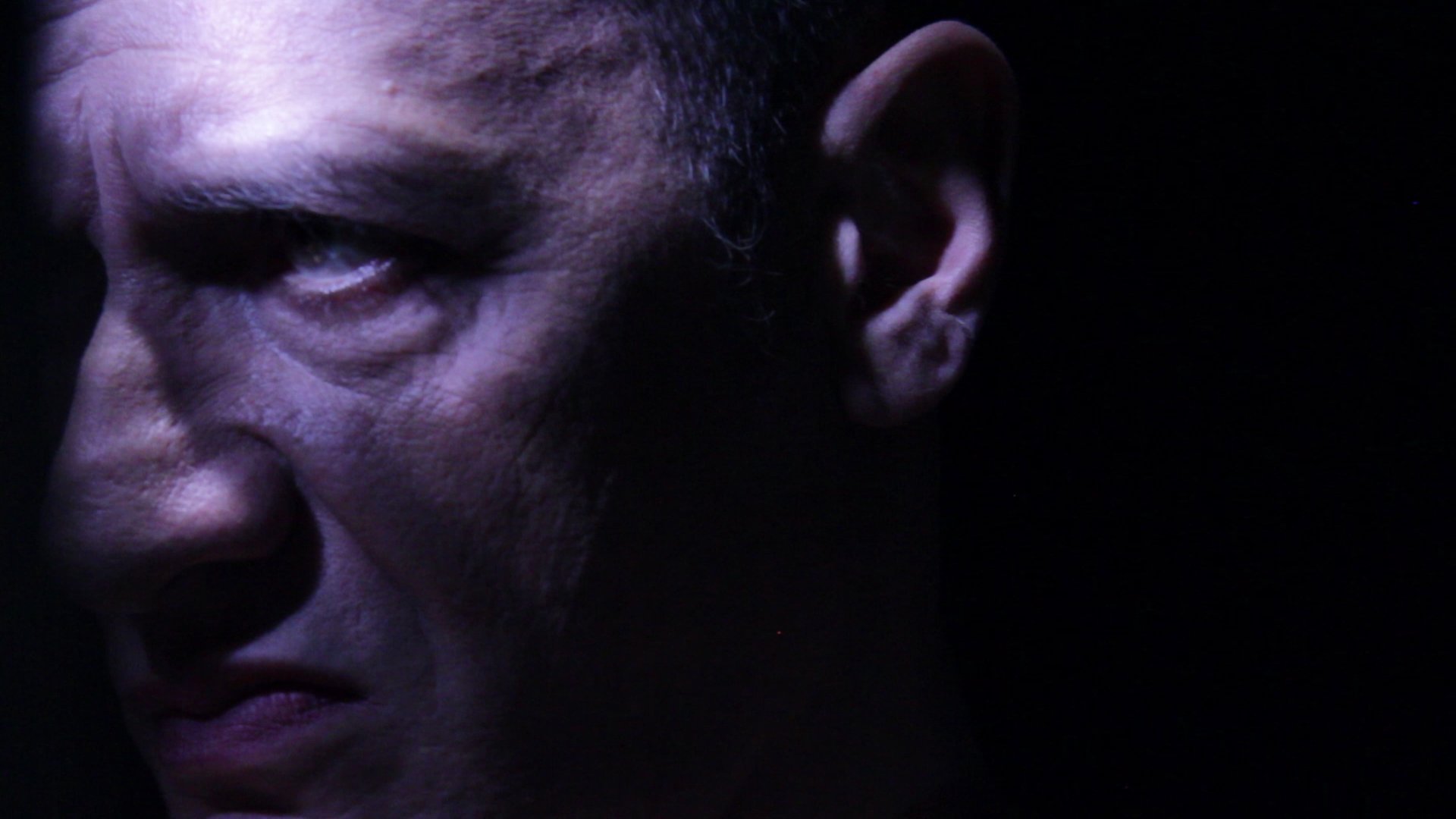
Drama film, by Valerio De Filippis, Italy, 2019.
The mirror and the rascal is an experimental film based on the tragedy "Richard III" by William Shakespeare. It tells the delirium of contemporary power in an author's reinterpretation of cinema, video art and music. The protagonist, Richard Duke of Gloucester, brother of King Edward IV, through a long series of crimes eliminates all the obstacles that stand between him and the throne of England.
Valerio de Filippis, a well-known painter who has been following his research path for a long time, investigating the relationship between light, corporeality and the psyche. The mirror and the rogue and the cinematographic equivalent of Valerio De Filippis' painting, his figurative style is in fact very recognizable looking at his paintings. But cinema is a new way where the artist can also be involved as an actor and performer, with an original mix between acting and singing. Staging the dark side of the human soul, the film is a surreal and disturbing interpretation of a great classic. The director says: "The first suggestion was musical: I was interested in transforming the text of Shakespeare's tragedy Richard III into notes. I love cinema and at a certain point I felt that the time had come to combine research on the image of painting to my love for cinema and music. When the film is finished I realize that I have remained faithful to painting: every frame of the film appears to me like a painting: the same light, the same colors, the same atmosphere ". The mirror and the rascal is a kind of psychoanalytic session that the painter does while hiding behind the mask of Richard III. Behind this ferocious and unscrupulous character we find a path of self-analysis by De Filippis, who is mainly interested in the more violent and turbid aspects. An experimental film in which, with great courage, the author gets involved completely, fragmenting the images in an unconventional montage, which is at the same time a flow of consciousness and spectacle.
LANGUAGE: English
SUBTITLES: Italian
Florence, 1513: A Man Writing in Exile
The farm at Sant’Andrea in Percussina sits a few miles south of Florence, unremarkable by any measure — low hills, olive groves, the particular silence of a man who has been forcibly removed from the only world that gave his life meaning. Niccolò Machiavelli arrived there in 1513 not as a gentleman farmer retreating to the countryside for philosophical contemplation, but as a broken official stripped of his post, his income, and his dignity. The previous year, the Medici had returned to Florence after eighteen years of exile, dismantled the republic he had served faithfully for fourteen years as Second Chancellor, had him arrested on suspicion of conspiracy, subjected him to the strappado — a method of torture in which the hands are tied behind the back and the body hoisted by the wrists, dropped repeatedly until the shoulders dislocate — and then, finding no proof of treason, simply released him into the countryside to rot.
He was forty-three years old. He had spent his adult life negotiating with kings, organizing militias, traveling on diplomatic missions to Cesare Borgia and the court of Louis XII, writing dispatches of extraordinary analytical precision. Now he tended to his small property, played cards at the local inn with millers and innkeepers, and described his own days in a letter to his friend Francesco Vettori with a self-deprecating bitterness that barely conceals something closer to despair. He wrote that in the evenings he would change out of his mud-stained clothes and put on proper court dress — alone, in a room, in the middle of nowhere — before sitting down to read the ancient authors. The ceremony of it tells you everything. He was performing the only identity he had left, for an audience of none.
What emerged from those evenings was The Prince, composed in a matter of months and sent to Vettori by December 1513, though it would not be published until 1532, five years after Machiavelli’s death. It was not written as literature. It was written as a job application — a desperate, furious, brilliant attempt to demonstrate his usefulness to the Medici who had destroyed him, to show Lorenzo de’ Medici the Younger that no one understood political power the way he did, that he was too valuable to be left to decay in the hills. Every word in that text carries the pressure of that particular humiliation. This is not a man theorizing from a position of comfort; this is a man who has watched real states collapse, real men be executed, real alliances dissolve overnight, and who is trying to extract from all of it some principle hard enough to hold.
The historian Quentin Skinner, in his 1978 study of Renaissance political thought, was precise about this: Machiavelli was not breaking entirely with the tradition of the humanist advisors and mirrors-for-princes literature that had flourished for two centuries before him. What he broke with was the moral comfort of that tradition. His predecessors wrote about how a prince ought to behave according to virtue. Machiavelli wrote about how power actually moves, which is a completely different subject. And he could write about it with that particular clarity because he had seen it up close — because Cesare Borgia had let him observe his methods at the Romagna court in 1502, because he had watched Florence’s purely civic idealism collapse the moment a trained army showed up at its walls.
The violence of the strappado is not incidental biographical color. It is the epistemological foundation of the text. A man who has been suspended by his own arms and dropped knows something about the distance between how things are supposed to work and how they actually work. That knowledge is what The Prince is made of.

What the Book Actually Says Versus What You Were Told
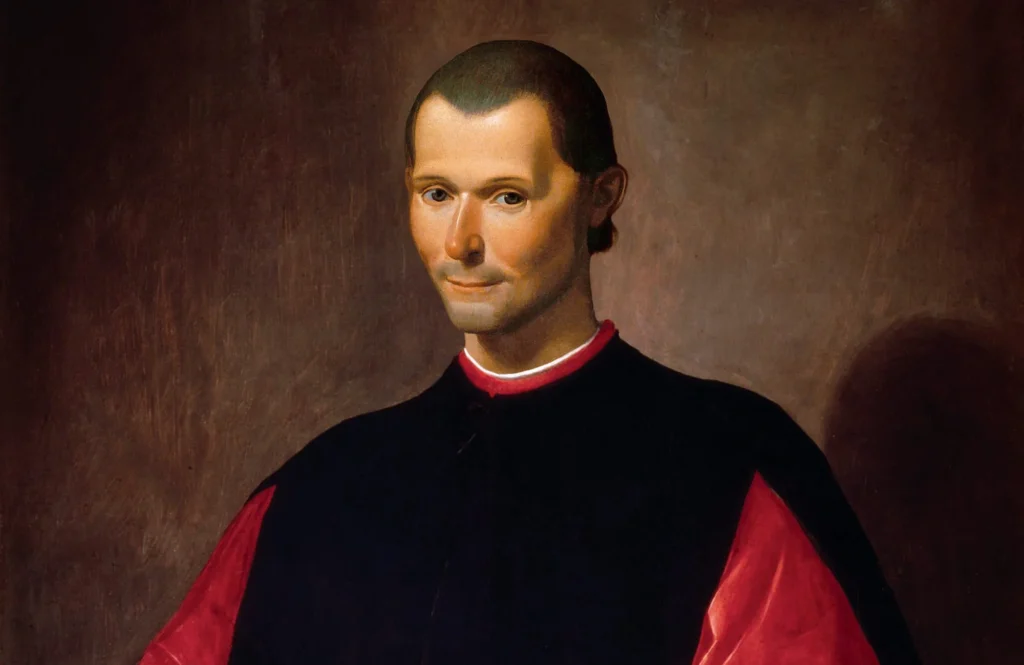
You were told, at some point, that Machiavelli believed the ends justify the means. You were told this the way people tell you things they have never verified — with the confidence of someone repeating a password, not reading a book. The phrase does not appear in The Prince. Not once. What appears instead is something far more unsettling than a cynical slogan: a systematic anatomy of political reality written with the precision of a surgeon who has stopped pretending the body is anything other than what it is.
The Prince has twenty-six chapters, and most people who invoke it have absorbed perhaps three ideas from it, all of them distorted. The book opens not with a celebration of tyranny but with a taxonomy — a careful distinction between hereditary principalities, where a ruler inherits power and needs only not to ruin it, and new principalities, where power must be seized and held by a man who has nothing behind him but his own capacity to act. This distinction matters enormously, because the entire moral weight of the book rests on the second category. Machiavelli is not writing a manual for kings who already sit comfortably on ancient thrones. He is writing for the man who arrives at power naked, exposed to every wind, with no tradition to shield him and no legitimacy to invoke. The cruelty he discusses is not recreational. It is structural. It belongs to a specific political condition, not to human nature as a permanent appetite.
The two concepts that carry the real architecture of the text are virtù and fortuna, and both resist translation precisely because they refuse the moral categories we want to impose on them. Fortuna is not simply luck. It is the uncontrollable dimension of historical reality — the floods, the betrayals, the timing of events that no calculation can fully anticipate. Virtù is not virtue in any Christian sense. It is closer to what we might call executive capacity: the ability to read a situation accurately and respond to it with appropriate force and speed, without hesitation, without the paralysis of scruple at the wrong moment. Machiavelli compares fortuna to a river that floods when it wants to, and virtù to the dikes and embankments that a prudent civilization builds in advance. The metaphor is hydraulic, not moral. He is talking about engineering, not ethics.
This is precisely what makes the book scandalous in a way that its cartoon reputation completely obscures. The scandal is not that Machiavelli recommends cruelty — he recommends it only under specific conditions, and he explicitly states that cruelty used well is cruelty deployed swiftly and completely at the beginning, then stopped, as opposed to cruelty that drips and continues and corrodes. The real scandal is that he has surgically removed politics from the jurisdiction of Christian morality and placed it inside its own autonomous logic. He does not argue that Christian values are wrong. He argues that they are irrelevant to the craft of governing — the same way a carpenter’s piety is irrelevant to the question of whether his joints will hold under stress.
Isaiah Berlin, in his 1972 essay on Machiavelli, identified this as the genuinely revolutionary move: not amoralism, but the recognition that there are two incompatible value systems — the Christian and the classical civic — and that political life operates according to the second. The terror this produces in readers is not the terror of encountering evil. It is the terror of encountering a man who refuses to lie about the cost of the things we want. You want a stable republic, a secure city, a prince who keeps his word? Fine. Then understand what it actually takes to build and maintain those things, in the world as it exists rather than as it should be.
The book does not celebrate this. It simply refuses to look away.
The Lion and the Fox Are Already Inside You
There is a meeting you have been in. Not a dramatic one — no raised voices, no ultimatum delivered across a table. Just a room where someone needed something from someone else with more institutional weight, and the entire conversation proceeded as if this fundamental asymmetry did not exist. You watched the person with less power smile at precisely the right moments, concede on points that cost them nothing, allow the other to feel wise while quietly steering every decision toward the outcome they had already decided they needed. Nothing dishonest was said. Nothing honest was said either.
Machiavelli calls this the problem of the lion and the fox. The lion cannot protect itself from traps. The fox cannot defend itself from wolves. A prince who is only one or the other will be destroyed — by cunning if he relies solely on force, by force if he relies solely on cunning. The solution Machiavelli proposes in chapter eighteen of The Prince is not a synthesis but a simultaneous double nature: you must know how to use both, and you must know how to conceal which one you are using at any given moment. This is not a metaphor for exceptional political actors. It is a description of the social machinery most people navigate every single day without ever naming what they are doing.
Think of the man who spent years inside a system that would have expelled him had he confronted it directly. He understood its internal logic more completely than those who ran it. He performed loyalty while building, incrementally and invisibly, the conditions for his own autonomy. When the moment came, he moved. Those around him experienced it as a sudden change of character. It was not. The character had always been there, simply dressed in whatever the institution required it to wear on any given morning. The fox does not become a lion. The fox learns when the lion’s costume is the only one that opens certain doors.
Hannah Arendt, in On Violence published in 1970, draws a distinction that cuts directly through this dynamic. Power, she argues, is never the property of an individual — it belongs to a group and remains in existence only so long as the group keeps together. Violence, by contrast, is instrumental, always requiring implements, always a sign that power is slipping. What Machiavelli understood, avant la lettre, is that the most effective political actor is the one who manufactures the appearance of collective legitimacy while retaining individual control of its direction. The fox does not seize power through force. The fox makes power feel like it was always going in the direction the fox chose. Arendt’s distinction illuminates why outright coercion is, paradoxically, a confession of weakness. Real strategic intelligence never looks like domination. It looks like consensus.
Norbert Elias traces the historical arc of this same process in The Civilizing Process, first published in 1939, where he demonstrates that the suppression of direct physical violence in European court society did not eliminate aggression — it sublimated it, displaced it into elaborate codes of etiquette, deferred gratification, and psychological calculation. The aristocratic warrior who once resolved disputes with a sword was replaced by the courtier who resolved them with a precisely timed compliment and a strategically withheld piece of information. The lion did not disappear from European political life. It went indoors, put on better clothes, and learned to smile. What Machiavelli formalized as political theory, Elias documents as historical sociology: the fox is the lion’s evolved form, not its opposite.
This is what makes chapter eighteen of The Prince feel less like a Renaissance manual and more like a mirror. You recognize the behavior it describes not because you have studied statecraft but because you have practiced it, or watched it practiced on you, in offices, in families, in the silent arithmetic of every relationship where power was present but never named.
Fortuna Is a Woman and the World Does Not Forgive Passivity
You wake up one morning and the architecture of your life — the career, the relationship, the city you chose, the version of yourself you spent a decade assembling — has been quietly condemned overnight. Not by a dramatic catastrophe. By something small. A phone call. A number on a page. A silence where a reply should have been. And you realize, with a nausea that has nothing to do with illness, that you were never in control of any of it. You were managing appearances of control. The structure was always provisional.
Machiavelli understood this vertigo intimately, and he did not flinch from it. In Chapter 25 of The Prince, written around 1513 and circulating in manuscript for years before its posthumous publication in 1532, he confronts the question that every political thinker before him had sidestepped with theology: how much of what happens to us is governed by Fortune, and how much by our own agency? His answer is precise and brutal. He estimates that Fortune governs roughly half of human affairs. The other half, in principle, belongs to virtù — that compound of skill, courage, adaptability and force of will that he spent the entire book trying to anatomize. Then, in a passage that has disturbed readers for five centuries, he goes further. Fortune, he writes, is like a woman. She favors the bold, the aggressive, the young. She must be beaten and coerced rather than handled with patience and restraint. The man who accommodates himself to Fortune will fail when Fortune shifts; the man who meets her violently will more often prevail.
Every serious reader of this passage must sit with its ugliness before reaching for its meaning. The metaphor is not incidental. It is diagnostic. What Machiavelli is exposing, with a candor that borders on self-indictment, is the Renaissance male psyche’s response to a universe that refuses to be governed. The image of dominating Fortune as a woman is not a political prescription — it is a symptom. It tells us what terrified the men who held power: that the world was fundamentally feminine in the worst sense they could imagine. Ungovernable. Irrational. Indifferent to merit. Capable of ruining the careful man and rewarding the reckless one without explanation. The violence of the metaphor is the violence of panic dressed as strategy.
Erwin Panofsky and later scholars of Renaissance iconography have traced how Fortune — the ancient goddess Fortuna — was already represented in fifteenth-century imagery as a figure standing on a wheel or a sphere, perpetually unstable, ungraspable. The anxiety Machiavelli is channeling predates him by generations. What he does is strip away the decorative acceptance that classical Stoicism and Christian providence had draped over that anxiety. He refuses to tell you that Fortune is ultimately just, or that God’s plan exceeds your understanding. He tells you instead that Fortune is capricious, that half of what destroys you is simply bad timing, and that the only reasonable response is to build your dikes and levees before the flood arrives — his own hydraulic metaphor, more measured than the gendered one, and more honest about what preparation actually achieves: not control, but reduced exposure.
Nassim Nicholas Taleb, writing his 2012 work Antifragile nearly five centuries after Machiavelli without citing him as a primary ancestor, arrives at an almost structurally identical position through the language of probability theory and systems thinking. Taleb’s central argument — that the goal is not to withstand shocks but to build systems that gain from disorder — is Machiavellian fortune-thinking translated into the vocabulary of a world that has replaced Providence with statistics. The antifragile entity is Machiavelli’s prince who has built his dikes, who does not merely survive the flood but emerges from it with more resources than before. Both men are responding to the same terror: that contingency is not an aberration in the order of things. It is the order of things.
A vision curated by a filmmaker, not an algorithm
In this video I explain our vision
The Necessary Cruelty and the Lie We Tell About It

There is a particular kind of meeting that happens in every large organization, usually on a Tuesday, always before lunch. Someone walks in knowing they will not walk out with the same life they had. The person across the desk speaks in a measured tone, uses words like “transition” and “opportunity” and “difficult decision,” and the whole performance is staged around the idea that what is happening is somehow an act of care. The efficiency is flawless. The HR script is clean. And yet the person on the receiving end understands, in their body before their mind catches up, that they have been destroyed with extraordinary precision.
Machiavelli would have recognized this immediately. Not with horror, but with a kind of cold admiration, because what he argued in the passages concerning Cesare Borgia was precisely this: that cruelty, when it is exercised swiftly, completely, and without the theatrical guilt that prolongs suffering, is not the opposite of virtue but one of its expressions. The cruelty he condemned was not Borgia’s cruelty. It was the cruelty of the ruler who hesitates, who inflicts wounds in installments, who returns again and again to the same body because he lacked the nerve to finish the thing cleanly the first time. That kind of cruelty, he wrote, is harmful to both the one who suffers it and the one who administers it, because it produces no stability, only accumulated resentment and the slow erosion of authority.
This is the argument that most readers of The Prince encounter and immediately want to disavow. Because to accept it, even partially, is to recognize its presence everywhere around you. The logic of well-used cruelty is not confined to Renaissance Italy or to figures like Borgia who consolidated the Romagna through a series of moves that historians still debate in terms of their calculated brutality. It is the logic of every institutional restructuring announced on the same day across forty countries, every austerity measure described by its architects as “short-term pain for long-term gain,” every war justified not as conquest but as liberation of a people who were not consulted about whether they wished to be liberated.
Hannah Arendt, writing about the relationship between violence and power in her 1970 essay, made a distinction that Machiavelli intuited without articulating it in those terms: that violence can destroy power but never create it, that what passes for strength in the swift exercise of force is often the last resource of an authority that has already lost the deeper form of legitimacy. But what she could not fully account for — and what Machiavelli understood with discomforting clarity — is that populations are not always wrong to prefer the clean wound to the festering one. There is something in human psychology, documented extensively in research on decision fatigue and loss aversion going back through Kahneman and Tversky’s foundational work in the late 1970s, that genuinely suffers more from prolonged uncertainty than from a definitive blow.
The man who destroys efficiently is surrounded by people who call it strength. Not because they are cynical, but because they are relieved. The room exhales. The period of anxiety is over. Borgia’s subordinates in the Romagna did not rebel after his decisive consolidation of power. They organized. They built. The region, notoriously ungovernable before him, became functional. Machiavelli watched this and drew a conclusion that the moralists of his time found scandalous and that the managers of our time have quietly institutionalized: that the appearance of compassion wrapped around an act of cruelty is not more humane than the cruelty itself. It is simply more comfortable for the person inflicting it.
What is unbearable is not the lie. It is how easily you recognize it, and how rarely you say so out loud.
The Prince as Mirror: Five Centuries of Readers Who Recognized Themselves
There is a particular kind of reader who picks up a book in secret. Not because the text is difficult, but because being seen with it would require an explanation, and the explanation would reveal too much about how they actually think. The Prince has always produced this reader. It has always been the book on the second shelf, spine turned inward, read in the hours when no one is watching.
It was published in 1532, five years after Machiavelli’s death, and placed on the Index Librorum Prohibitorum by the Catholic Church in 1559 — a distinction that guaranteed it would never stop circulating. Banning a book in the sixteenth century was less a suppression than an advertisement. Within decades, annotated copies were moving through the courts of Europe in manuscript form, passed between the very hands the Church had hoped to warn. The prohibition declared, in effect, that someone powerful had recognized something true and found it dangerous. That recognition became the book’s second life.
Cardinal Richelieu kept it close. Not because he admired Machiavelli as a thinker — he was careful to maintain public distance — but because the text described the architecture of the state he was actually building in France under Louis XIII, a construction of calculated loyalty, managed fear, and the systematic elimination of rivals who had not yet become enemies. He did not need to agree with Machiavelli. He needed to be reminded that what he was doing had a logic, that it was not cruelty but geometry.
Napoleon annotated his copy so extensively that the margins became a parallel text. There is something almost vertiginous about this: a man remaking the map of Europe in conversation with a Florentine civil servant who had never commanded an army, trading observations across three centuries about what power actually costs and what it actually requires. The annotations are not the notes of a student. They are the notes of someone who keeps finding his own decisions described back to him.
Mussolini wrote his doctoral thesis on Machiavelli in 1904, and the reading was not subtle. He found in The Prince the philosophical permission for a politics of force, of spectacle, of the manufactured consent of populations who respond better to the image of strength than to its substance. He misread it, as all ideological readings misread their sources — flattening the ambivalence, removing the irony, ignoring the passages where Machiavelli’s admiration for the republic bleeds through the treatise on the prince like water through old stone. But the misreading was not random. It landed on something real: the book does describe how populations can be governed through their fears, and that description does not come with a moral prohibition attached.
What persists across five centuries of readers is not a shared ideology but a shared recognition. The philosopher Isaiah Berlin spent years puzzling over why Machiavelli disturbed people so profoundly, and concluded in his 1972 essay “The Originality of Machiavelli” that the real scandal was not the amoralism but the pluralism — the suggestion that political values and moral values are genuinely incompatible, that you cannot fully honor both, and that anyone who claims otherwise is either naive or lying. That conclusion has never become comfortable. It keeps producing the same flinch in each new generation of readers.
The Silicon Valley founders who keep The Prince on their shelves are not reading it for historical interest. They are reading it for the same reason Richelieu read it, the same reason the annotated copies passed through European courts while the Church declared them forbidden. They recognize the game being described. They are already playing it. The book does not teach them anything they did not already know in practice. It simply confirms that the knowledge is old, that it was old before they were born, and that everyone who has ever held real power has passed through the same lucid, uncomfortable understanding of what holding it actually demands.
What Machiavelli Could Not Say Out Loud
There is a moment when you finally understand how the room works. Not the official version, not the story told in orientation meetings or performance reviews or the careful language of institutional memos — but the actual mechanics, the real geometry of who defers to whom and why, the invisible ledger of favors and threats that governs every decision made in rooms you were never invited into. You have been losing for years without knowing the rules, and then one day someone, through carelessness or cruelty or a rare flash of honesty, lets you see the machinery whole. And you stand there with that knowledge in your hands, not sure whether it is a key or simply a more detailed map of your own cage.
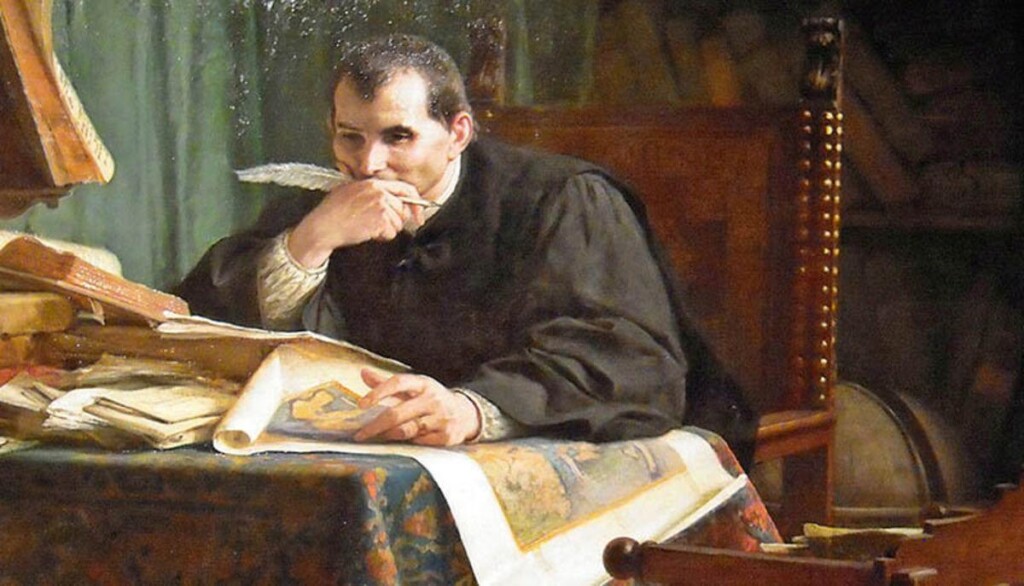
Niccolò Machiavelli wrote The Prince in 1513, the year after he was arrested, tortured on the strappado, and stripped of every office he had spent fourteen years building inside the Florentine republic. The Medici had returned. His career was ash. He wrote the book in a matter of months, in exile on his small farm outside Florence, and then he dedicated it to Lorenzo de’ Medici — the grandson of the man whose family had just broken him. The dedication is so complete in its submission, so precise in its flattery, that readers have never quite recovered from the discomfort of reading it. Here is a man who understood power more clearly than almost anyone in his century, prostrating himself before the precise instrument of his own ruin.
The simplest reading is opportunism. He wanted his job back. He was offering his expertise as a credential, the book as a résumé. Leo Strauss, writing in Thoughts on Machiavelli in 1958, refused this simplicity and argued instead that the text operates on two levels simultaneously — a surface address to princes and a deeper, more subversive communication to everyone else, to the ordinary readers who would understand the exposure beneath the advice. Whether Strauss was right about the esotericism or not, he identified something real: the book does not read like a manual. It reads like a confession extracted under pressure, or like a document slid under a door.
Consider what it actually does. It does not tell Lorenzo how to be good. It tells him, with complete frankness, that goodness is a liability, that appearances matter more than substance, that the people’s love is less reliable than their fear, that cruelty deployed efficiently is preferable to mercy deployed weakly. This is not flattery. This is a man describing the predator to the prey, in language addressed to the predator. The question of who is truly meant to receive the message has never closed.
There is a scene lodged in the memory of anyone who has ever watched the powerful operate at close range — a man sitting across from his patron, smiling with total control while his eyes give away nothing, while the person opposite him believes the warmth is real, believes the relationship is reciprocal, does not yet understand that every word spoken in that room will be weighed and stored and potentially used. The man who understands this and still smiles is either a prince or he has studied princes so long that the distinction has dissolved.
Machiavelli had been that second man. He had watched, catalogued, and understood. And then he sat down and wrote it all out and handed it, bound and dedicated, to the man who had broken him. Whether that act was cynicism so total it transcended despair, or despair so total it had learned to wear the face of cynicism, is a question the text refuses to answer. What it leaves you with instead is the knowledge itself — clear, cold, and entirely yours now — and the unsettling realization that understanding how power works has never, in the whole of recorded history, been the same thing as escaping it.
🏛️ Power, Politics, and the Renaissance Mind
Machiavelli’s The Prince does not stand alone — it emerges from a rich web of political thought, historical context, and Renaissance culture. These articles deepen your understanding of the world that shaped Machiavelli’s ruthless realism and enduring legacy.
Niccolò Machiavelli: Life and Political Thought
To truly understand The Prince, one must first understand the man who wrote it. This article traces Machiavelli’s turbulent life — from his role as a Florentine diplomat to his imprisonment and exile — revealing how his personal experience of power shaped his political philosophy. His biography is inseparable from the cold lucidity of his most famous work.
GO TO THE SELECTION: Niccolò Machiavelli: Life and Political Thought
Italian Medieval Communes: History and Culture
The Italian medieval communes were the political laboratories in which the tensions Machiavelli later theorized first came to life. This article explores how city-states like Florence developed complex systems of governance, factional conflict, and civic identity that directly informed the Renaissance political imagination. Understanding these communes is essential context for reading The Prince as a historically grounded text, not merely an abstract treatise.
GO TO THE SELECTION: Italian Medieval Communes: History and Culture
Shakespeare’s Richard III: Meaning and Analysis
Shakespeare’s Richard III is one of literature’s most vivid explorations of Machiavellian politics in dramatic form, portraying a ruler who manipulates, deceives, and destroys to seize and hold power. This article analyzes how Shakespeare absorbed and reimagined the figure of the political schemer, making Richard a theatrical embodiment of the prince who discards morality for effectiveness. Reading it alongside The Prince reveals how Machiavelli’s ideas permeated European culture far beyond Italy.
GO TO THE SELECTION: Shakespeare’s Richard III: Meaning and Analysis
Hannah Arendt: the Philosopher Who Unmasked the Banality of Evil
Hannah Arendt’s philosophical work on power, evil, and political responsibility offers a compelling modern counterpoint to Machiavelli’s amoral realism. Her analysis of how ordinary structures enable extraordinary cruelty invites us to question the premises on which The Prince rests — namely, that power justifies its own means. Together, Machiavelli and Arendt form one of the most provocative dialogues in the history of Western political thought.
GO TO THE SELECTION: Hannah Arendt: the Philosopher Who Unmasked the Banality of Evil
Cinema as a Mirror of Power
If these reflections on power, strategy, and the human condition have stirred something in you, Indiecinema’s streaming platform offers a curated selection of independent films that explore politics, ambition, and moral complexity with the same uncompromising depth. Discover stories that mainstream cinema rarely dares to tell — stream them now on Indiecinema.
👉 EXPLORE THE CATALOG: Watch Indie Films in Streaming
A vision curated by a filmmaker, not an algorithm
In this video I explain our vision

