
The Square That Remembered How to Speak
You are standing in the middle of a piazza at noon, and something is wrong. Not threatening, not dangerous — just loud in a way that feels almost indecent. Voices pile on top of voices. Someone is gesticulating so hard their sleeve catches the air. A group near the fountain has split into two factions over something that, from where you stand, sounds almost trivial, and yet neither side shows any sign of yielding. Children run through the argument as if it were a field. An old man shouts something and gets shouted back at, and neither of them looks offended by this. What you are witnessing looks like disorder. What you are witnessing is, in fact, one of the most radical political inventions in the history of the Western world.

For centuries before this noise was possible, silence had been the defining condition of European political life. Not the silence of peace, but the silence of hierarchy — the specific muteness that feudal structures imposed on anyone who was not a lord, a bishop, or a king. The peasant did not speak at the lord’s court. The artisan did not negotiate the terms of his own labor. The merchant paid his toll and moved on. Political existence, in the feudal imagination, was not a universal condition but a privilege distributed vertically, from God downward through carefully maintained gradients of birth and blood. To exist politically — to have a voice that counted in the arrangement of collective life — you had to have already arrived at the top of a structure that, by design, admitted almost no one.
Then, somewhere in the late eleventh century, in the cities of northern and central Italy, something broke. Not dramatically, not all at once — history rarely delivers its revolutions cleanly — but unmistakably. Groups of urban citizens, merchants, artisans, notaries, minor landowners, began to swear oaths to one another. The oath — the juramentum communis — was not a metaphor. It was a legal and sacred act, binding men together in mutual obligation outside the vertical chains of feudal loyalty. The commune was born from this oath, from this horizontal commitment between people who had decided, with remarkable audacity, that they could govern themselves.
By the twelfth century, communes had taken root across Lombardy, Tuscany, and the Veneto. Milan, Florence, Genoa, Pisa, Bologna, Siena — these were not simply cities. They were experiments in a form of collective political subjectivity that Europe had not seen since antiquity and would not fully understand for centuries to come. The historian Lauro Martines, in his essential study of the Italian city-states, traces how the commune created not merely new institutions but a new kind of human being: the citizen, the civis, someone whose identity was constituted not by birth-right alone but by participation, by presence, by the willingness to show up and argue in the piazza.
And argue they did. The communal assemblies — the arengo or parlamentum — were famously chaotic. Contemporary chronicles describe hundreds, sometimes thousands of men gathered in the cathedral square or the market ground, shouting simultaneously, factions forming and dissolving within a single session. This was not a failure of the system. This was the system. The noise was the proof that the experiment was working, that voices which had been structurally excluded from political life had found, at last, a place to land.
There is something almost physically disorienting about grasping this. We tend to read democracy backward, projecting it into the past as though it were inevitable, as though human communities always naturally tended toward collective self-governance. They did not. The Italian medieval commune was genuinely strange, genuinely unprecedented in its immediate context, and the piazza where people gathered to shout at one another was not a background detail. It was the entire argument made visible.
Before the Commune, There Was Only the Lord
Imagine waking every morning knowing that the ground beneath your feet belongs to someone else. Not metaphorically, not as a philosophical abstraction about property and alienation, but literally: the soil, the road, the mill, the bridge, the very air above the harvest — all of it registered under a name that is not yours and never will be. This was not poverty in the modern sense, a condition that at least carries the implicit promise of its own reversal. This was the feudal order, and it was total.
In the centuries preceding the Italian communal experiment, the landscape of the peninsula was carved into overlapping jurisdictions of extraordinary complexity. Lombard dukes, Frankish counts, episcopal lords, and the distant but never negligible shadow of the Holy Roman Emperor divided the territory not so much through clear boundaries as through layered claims of authority, each one pressing down on the one beneath it. The bishop of a city might hold temporal power over its surrounding countryside while owing spiritual allegiance to Rome and military fealty to the Emperor. The count might collect tolls on the same road the bishop considered his canonical property. And below all of them, the mass of people who worked, who traded, who built — they held no recognized standing in any of these arrangements except as subjects, as instruments of someone else’s jurisdiction.
Hannah Arendt, in The Human Condition published in 1958, draws a distinction that cuts directly to this historical wound. She argues that genuine political life requires a public realm — a shared space of appearance where human beings act and speak as equals, where words and deeds carry weight not because of who speaks them but because of the common world that receives them. Without this space, there is no politics in any meaningful sense, only administration: the management of subjects by those born or appointed to manage. What the feudal order produced, structurally and systematically, was the annihilation of this public realm for the vast majority of those living under it. There was no commons of deliberation, no forum where a merchant or an artisan or a lesser landowner could appear as a political being rather than a taxable unit.
What makes this condition particularly invisible to those inside it is that it required no active oppression to sustain itself. The hierarchy reproduced through language, through liturgy, through the yearly rhythm of dues and obligations that felt as natural as seasons. A peasant in Lombardy around the year 1000 did not experience feudal subordination as an injustice in the way we might retrospectively name it, because he had no available vocabulary for collective self-determination. The concept simply did not exist as a live option. Arendt’s observation that tyranny isolates human beings from each other, severing the threads of common action, describes precisely this condition: not a dramatic oppression but a structural absence, a world organized so that people never needed to speak to one another as political equals because there was nothing for them to decide together.
And yet something was already shifting in the interstices of this order. The great cathedral cities — Milan, Pisa, Genoa, Florence — were filling with populations that did not fit neatly into feudal categories. Merchants whose wealth exceeded that of minor lords. Craftsmen organized into guilds that carried their own internal logic of reciprocity and rule. Notaries who handled documents that traveled across jurisdictions and therefore across loyalties. These were people who had begun, almost without naming it, to accumulate a kind of social mass that the old structures could not fully contain. They were not yet citizens. They did not yet have a word for what they were becoming. But they were already living at the edge of something the feudal order had no mechanism to absorb, and that edge was about to become a city.

How a City Learns to Govern Itself
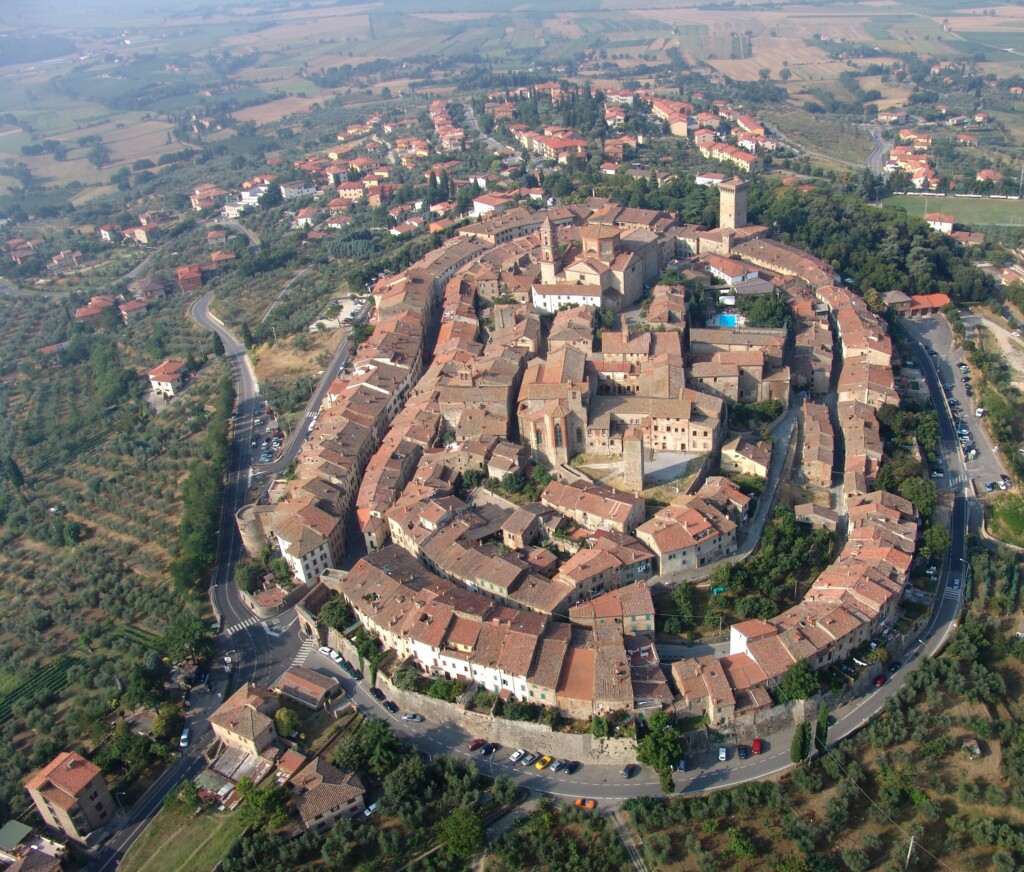
There is a moment, somewhere in the middle of the twelfth century, when a room full of men who have never been kings decide to run a city. Not because they were chosen by God, not because blood gave them the right, but because someone had to do it and they were there, and wealthy enough, and angry enough at the alternative. This is not a romantic beginning. It is a practical one, which makes it far more interesting.
Milan organized itself into a commune in 1097. Genoa followed in 1099. Florence moved in the same direction in the early decades of the twelfth century, though with the characteristic Florentine tendency to argue about everything first. What emerged in each of these cities was a system of consuls — magistrates, usually between two and twenty depending on the city and the year, drawn from the upper merchant and noble families, serving terms of one year. The number was never fixed because the system was never fixed. It grew by improvisation, by crisis management, by the accumulated weight of decisions that could not wait for a theory to justify them.
The consuls were not bureaucrats. They were men with enemies. They came from families that had competed for generations, and the commune forced them to govern together, which is perhaps the most radical political experiment embedded in all of this — not the idea of shared power, but the daily practice of it among people who had very concrete reasons to despise one another. Sociologists studying institutional trust, from Max Weber‘s foundational analysis of legitimate authority in Wirtschaft und Gesellschaft onward, have noted that what breaks institutions is not the absence of rules but the presence of interests too powerful for rules to contain. The Italian communes lived inside that tension permanently.
By the late twelfth century, the consular system began to crack under precisely that weight. The factional violence between noble families — the same violence that would later be called the Guelph and Ghibelline conflict, though the roots ran deeper than any imperial or papal alignment — made internal governance impossible to sustain when the governors themselves were parties to the bloodshed. The solution the communes invented is one of the stranger political innovations in European history: the podestà. A professional magistrate, imported from another city, a stranger with no local allegiances, hired for six months or a year, forbidden from eating with citizens or marrying locally, required to bring his own staff and leave without corruption. The foreignness was not a flaw. It was the entire point. Bologna was among the first to institutionalize the role systematically in the 1190s, and within decades virtually every significant commune had adopted it.
Alongside the consuls and the podestà sat the General Council, the broader deliberative body that could include hundreds of members, representing the interests of the merchant guilds, the minor nobility, eventually the artisan classes as the thirteenth century forced further expansions of participation. This was not democracy in any sense the word carries today, and it would be a comfortable falsification to call it that. Women were excluded. The poor were excluded. The very categories of inclusion shifted with every decade of social pressure from below. But the principle that governance required a room, a debate, a vote — that it could not simply be declared from above — was being practiced at a time when most of Europe understood power as something that descended vertically from the sacred.
What made it messy was also what made it real. The minutes of communal councils, preserved in archives in Siena, Pisa, and Venice, record arguments about grain prices alongside arguments about war. They record the mundane and the catastrophic in the same bureaucratic handwriting, as if the city itself had learned that there is no hierarchy of urgency when everything is at stake at once.
The Violence Underneath the Civic Dream
You grow up learning that the medieval commune was something close to a miracle — a spontaneous flowering of civic consciousness in the middle of a brutal age, a precocious democracy born from the Italian genius for self-governance. The textbooks frame it as an origin story, the moment when something recognizably modern first stirred in the piazzas and council halls of Tuscany and Lombardy. But origin stories are always edited. They select their details with the quiet ruthlessness of propaganda, and what gets cut is usually the blood.
The commune was, structurally, a machine for producing enemies. It drew men into shared institutions and then handed those institutions to the strongest faction, which immediately used them to destroy the second strongest. The division between Guelphs and Ghibellines — nominally about loyalty to the Pope or the Emperor, in practice about which family controlled the grain trade, the wool guild, the magistracy — was not a disagreement within a functioning democracy. It was a civil war that paused occasionally to hold elections. Hannah Arendt, writing in The Origins of Totalitarianism, observed that political violence does not erupt into civic life from outside; it is generated by the specific contradictions of political life itself, by the gap between the universal promises of a system and its particular, exclusionary reality. The Italian commune announced that the city belonged to its citizens and then spent two centuries fighting over who qualified as one.
Think of a man returning home after years of absence to find his house occupied, his name erased from the rolls, his children growing up strangers to him. Not as metaphor. As what actually happened to thousands of men on the losing side of factional shifts. When Florence expelled its Ghibellines in 1258, or its White Guelphs in 1302, the procedure was clinical: confiscation of property, demolition of towers, prohibition of return under pain of death. The exile was not a punishment that ended. It compounded daily, in the experience of someone who had built his entire self around belonging to a specific place, a specific set of stone streets, a specific angle of afternoon light on a specific river, and who now possessed none of it.
The bitterness that pours through certain voices of that era is not poetic anguish. It is the precise, corrosive fury of someone who understood exactly what had been taken and exactly by whom, and who knew that the institutions which stole it had done so while calling themselves justice. The commune did not exile its enemies in silence. It prosecuted them through the very councils, the very statutes, the very civic machinery that had once promised to protect them. The betrayal was institutional. That is what makes it unforgivable in a way that simple violence never is.
And underneath the factional war was another, quieter exclusion that the commune almost never acknowledged: the popolani minuti, the wool-combers, the dyers, the day laborers, the Ciompi who would eventually explode in 1378 in Florence’s most desperate uprising, were never genuinely inside the civic dream at all. The commune was a democracy of the propertied. The guild system, which looks from a distance like a model of organized participation, was in practice a hierarchy with a floor below which you simply did not exist politically. You could live inside the walls, pay taxes, fight in the city’s wars, and still have no more voice in its governance than a tool has in deciding what it builds.
Georges Duby, in his monumental work on medieval society, argued that the fundamental structure of the Middle Ages was not feudal hierarchy alone but the systematic production of invisibility — the mechanisms by which entire categories of human beings were made to not count, institutionally, economically, spiritually. The commune inherited this logic and dressed it in civic language, which was in some ways worse than leaving it naked.
Stone, Money, and the Architecture of Power
There is a moment, standing in the Piazza della Signoria in Florence or beneath the vaulting arches of the Siena cathedral, when you feel something pressing down on you that has nothing to do with aesthetics. It is not beauty exactly. It is will. The stone itself carries an intention, a declaration aimed not at God — or not only at God — but at every rival city within a day’s ride, at every faction that doubted, at every merchant who might consider taking his money elsewhere. The commune built in stone because stone lasted, and lasting was the point.
This was architecture as argument. When the citizens of a medieval Italian commune decided to raise a tower, a cathedral, or a civic palace, they were not primarily expressing devotion or civic pride in any sentimental sense. They were staking a claim in a language everyone in the peninsula could read. The towers of San Gimignano — once more than seventy of them crowding a single hilltop town — were not built for shelter or defense alone. They were built to be seen, to measure power in vertical feet, to broadcast the financial capacity and social dominance of the families who funded them. Height was argument. Height was credit rating made visible.
Jacob Burckhardt, writing in The Civilization of the Renaissance in Italy in 1860, identified in these communes the first emergence of the state as a work of art — a conscious construction, not a natural inheritance. What he sensed in the Renaissance had its roots exactly here, in the twelfth and thirteenth centuries, when city governments began to treat public space as a medium of political expression. The commune’s palace — the Palazzo Pubblico, the Palazzo del Comune — was designed to dwarf the bishop’s residence, to redirect civic loyalty from ecclesiastical to secular authority. The piazza in front of it was engineered for assembly, for markets, for the theater of collective life, not for processions toward an altar.
And underneath all of that stone, running through it like a nervous system, was money. The commercial revolution that transformed Italy between roughly 1150 and 1300 was not simply a matter of increased trade volume. It was a revolution in the imagination of value itself. The great merchant families of Florence, Genoa, Lucca, and Venice did not merely accumulate wealth; they invented the mechanisms by which wealth could multiply without physically moving. The letter of credit, the bill of exchange, the partnership contract known as the compagnia — these instruments allowed capital to travel faster than any cart or ship. By the late thirteenth century, Florentine banking houses like the Bardi and the Peruzzi had branches across Europe, effectively functioning as the financial infrastructure of monarchies that could not otherwise fund their wars.
It was within this precise world that double-entry bookkeeping emerged — codified most famously by Luca Pacioli in his Summa de arithmetica of 1494, though the practice had been alive in Florentine merchant ledgers since at least the mid-thirteenth century. The method was not merely an accounting technique. It was a way of thinking about reality, a demand that every transaction exist in two simultaneous dimensions, debit and credit, cause and consequence, what you gained and what it cost. The historian Alfred Crosby argued in The Measure of Reality that this double vision — quantitative, relational, always seeking the balancing entry — restructured the Western mind’s relationship to time and causality. It was, in its way, as radical as any theological innovation.
The commune both expressed and depended on this mercantile consciousness. The men who governed the city in the morning were the same men who negotiated letters of exchange in the afternoon. Civic duty and commercial interest were not in tension; they were the same metabolism, breathing in the same body, raising towers with the same hands that signed contracts.
A vision curated by a filmmaker, not an algorithm
In this video I explain our vision
The Popolo and the Betrayal of the Promise
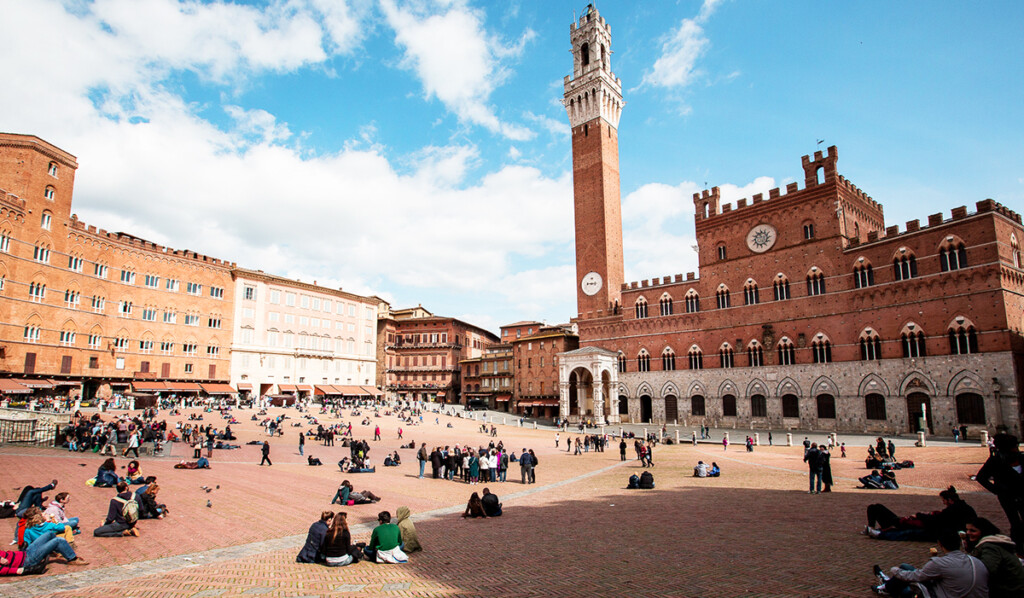
You know the feeling of having won something only to discover, much later, that the terms of the victory were written by someone else. You signed a contract you did not read carefully, and the fine print was the whole point. This is precisely what happened to the men who built the Popolo movements of thirteenth-century Italy, and the scale of the betrayal was so complete, so structurally elegant, that it barely registered as betrayal at all.
The Popolo was not a single uprising. It was a slow accumulation of organized fury, and it emerged from the workshops, the counting houses, the minor guild halls where wool-carders and notaries and small merchants had spent decades watching the magnate families — the grandi — treat the commune as a family inheritance. By the 1250s, in Florence, in Bologna, in Perugia and elsewhere, these men had built parallel institutions of startling sophistication: the Capitano del Popolo as a counterweight to the podestà, the società delle arti as a network capable of mobilizing collective action, the Ordinances of Justice in Florence in 1293 as a document that formally barred magnates from the highest offices and imposed punishments so severe they amounted to a declaration of class war. Gino Fasoli, writing on the Italian communes in the twentieth century, described the Popolo not as a mob but as a bourgeoisie in formation, already thinking in terms of institutional capture rather than mere revolt.
And yet. A man stands in the great hall where the new statutes have been read aloud, and he feels, for the first time in his life, that the room belongs to him as much as to anyone. The feeling is real. It is also a preparation for something he cannot yet see. Because the very effectiveness of the Popolo’s institutional creativity was the mechanism of its undoing. To build counter-institutions strong enough to challenge the grandi, the popular movements required leaders. Leaders required resources. Resources required alliances. And alliances, in the political economy of medieval Italy, almost always meant absorbing the logic of the very power you were fighting.
Max Weber‘s analysis of charismatic authority degrading into bureaucratic routine is a useful lens here, but it misses the more brutal dynamic: it was not entropy that destroyed the Popolo, but the deliberate strategic patience of the elite. The grandi did not disappear. They adapted. They married into merchant families, they rebranded as popolani grassi, fat people of the people, as the Florentines called the upper merchant class who shared none of the material interests of the minor guilds but had successfully colonized the language of popular legitimacy. The Ordinances of Justice, that fierce document, were amended, suspended, reinterpreted within a generation.
What followed was not the restoration of the old order but something worse: the emergence of a single strongman who promised stability to everyone exhausted by the fighting. The Signorie did not arrive like a foreign invasion. They arrived like a relief, voted in or simply accepted by communes that had consumed themselves in factional warfare so prolonged that almost any fixed point seemed preferable to continued motion. In Milan, the Visconti consolidated power through the fourteenth century over a process that lasted decades and was at each stage legitimized by weary consent. In Verona, in Ferrara, in countless smaller cities, the pattern repeated with minor variations.
Giovanni Villani, writing his chronicle in Florence in the early fourteenth century, recorded the communal drama with a merchant’s eye for cause and consequence, and what his pages reveal, beneath the civic pride, is the steady narrowing of the circle of those who genuinely counted. The Popolo had enlarged that circle dramatically, spectacularly even, for a historical moment. Then the circle contracted again, and the men left outside it were precisely those who had believed most fervently in what the opening had promised.
What the Commune Invented That We Pretend We Invented
There is a moment, familiar to almost anyone who has sat through a city council meeting or watched a municipal budget debate dissolve into theater, when you sense that the performance of democratic accountability has become entirely detached from its original purpose. The gestures remain: the open gallery, the recorded vote, the requirement that decisions be stated in public language, the notion that power must justify itself to those it governs. But the animating conviction has gone hollow, and you find yourself watching a ritual whose founding logic nobody in the room can quite articulate anymore.
That founding logic was not invented in Philadelphia in 1787, nor in revolutionary Paris, nor in the long corridors of Westminster. It was hammered out, with considerable violence and considerable ingenuity, in the consular halls and piazzas of northern and central Italian cities between roughly 1080 and 1300. The commune did not merely experiment with collective governance as a practical arrangement. It produced, for the first time in post-Roman Western history, a coherent conceptual architecture for why collective self-governance was legitimate, why rulers owed account to the governed, and why the common good was a real category of political obligation rather than a rhetorical flourish.
Quentin Skinner, in his foundational work The Foundations of Modern Political Thought published in 1978, and more sharply in Liberty Before Liberalism from 1998, makes the argument with a precision that most subsequent political theory has quietly absorbed without acknowledgment. The republican conception of liberty, Skinner demonstrates, does not originate with the liberal tradition’s negative freedom — the absence of interference — but with the older civic humanist idea that you are only free insofar as you are not subject to arbitrary power, not subject to a will that could dominate you even if it currently chooses not to. The crucial distinction is between non-interference and non-domination. And this distinction was not a Renaissance discovery; it was a communal one, embedded in the sworn associations of the Italian city-states, in the oaths that bound consuls to their office and citizens to each other, in the podestà statutes that required magistrates to submit their conduct to formal review at the end of their term.
Think about what that review meant institutionally. A governing official, at the end of his mandate, stood before a panel specifically constituted to examine whether he had acted in the interest of the commune or in his own. His assets could be frozen during the review. He could be fined, stripped of honor, barred from future office. This was not a symbolic gesture. In Bologna, Florence, Siena, and dozens of smaller cities, these syndicatio procedures generated extensive documentary records, legal disputes, and real penalties across the thirteenth century. The accountability was procedural, documented, enforceable — not aspirational.
What modern political culture has done with this inheritance is stranger than simple forgetting. It has retained the forms while evacuating the substance, and then congratulated itself on the invention. The open session, the public record, the requirement of stated justification, the principle that governing authority derives from those governed — all of this flows from the communal tradition through the civic humanist elaboration of the fourteenth and fifteenth centuries, through Marsilius of Padua’s Defensor Pacis in 1324, through the Florentine theorists Bruni and Salutati, and eventually into the broader current that Skinner traces forward into early modern republican thought. But the genealogy is rarely spoken aloud, because acknowledging it would force a reckoning with how much has been degraded in transmission.
There is something almost structurally convenient about misremembering origins. If accountability was invented by Enlightenment liberals, it remains the property of a particular ideological tradition, available to be selectively applied or quietly suspended when inconvenient. If it was invented by sworn urban communities in medieval Lombardy and Tuscany, it belongs to something older and less negotiable — something that predates the very frameworks we use to debate whether it applies.
The Wound That Became a Monument
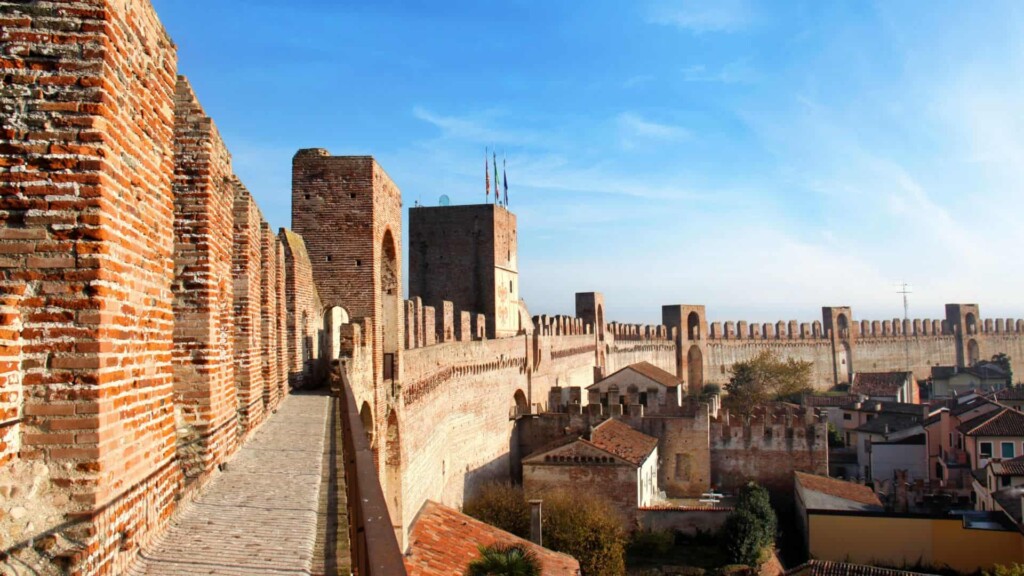
There is a piazza you have walked through a hundred times without stopping. The stones are uneven, worn by centuries of feet that no longer exist. The palazzo at the far end still carries the emblem of a magistracy dissolved seven hundred years ago. You read the inscription without reading it, take a photograph perhaps, and move on. The beauty is so complete, so archived, so framed by the consciousness of its own survival, that it no longer demands anything from you. And that is precisely the problem.
The Italian medieval commune did not simply end. It was dismantled from within and without, crushed between the ambition of signorie that converted civic power into dynastic property, and the indifference of populations exhausted by factional war, plague, and the slow erosion of the belief that collective government was worth the cost it extracted. By the middle of the fourteenth century, in most of the peninsula, the experiment was effectively over. What remained were the buildings, the statutes, the archives — and a peculiar kind of cultural longing that Italians have been managing, and mismanaging, ever since.
Giorgio Agamben, writing on the nature of heritage and ruins, observed that a community can become so fascinated by its own past that it substitutes the contemplation of that past for any living engagement with the present. The commune became, somewhere in the transition from historical fact to cultural monument, exactly this kind of substitute. The frescoes of Ambrogio Lorenzetti in Siena, painted in the 1330s, show good government as a living, bodily thing — citizens walking, merchants trading, women dancing in the streets as an expression of civic joy, builders constructing walls because the city is always in the process of becoming. By the time those frescoes were being restored and studied in the nineteenth century, they had become an elegiac image, a proof of something lost rather than a template for something possible. The aestheticization was complete. The wound had been turned into a monument.
Jacob Burckhardt, whose 1860 work on the civilization of the Renaissance in Italy remains foundational despite its contradictions, understood that the commune had produced the first fully modern political individual in Europe — someone who experienced the state not as a given order but as a human artifact, contingent, improvable, and therefore fragile. What he perhaps did not fully account for was what happens to a culture when that individual appears, builds something extraordinary, and then watches it collapse within three or four generations. The grief does not disappear. It sediments. It becomes encoded in the very way a culture relates to its own civic spaces — with reverence that contains, at its core, a refusal to believe that such spaces could be inhabited again with the same intensity.
You know this feeling even if you have never named it. You stand in a council chamber where decisions were once made by men who could be removed from office, prosecuted, held to account by the community they served, and you feel something that is not quite nostalgia and not quite mourning. It is closer to the recognition of a possibility that was real, that functioned, that produced law and art and architecture and a specific quality of public life — and that was not inevitable, was not destined to fail, but failed nonetheless for reasons that were contingent, avoidable, human. The commune was not a myth. That is what makes its absence so difficult to simply absorb and file away. Myths can be mourned cleanly. What was real and is gone leaves a different kind of mark — the kind that surfaces every time you walk through a piazza and feel, without knowing why, that the stones are asking you something you have not yet found the honesty to answer.
🏰 Power, Faith, and Stone: The Medieval World Explored
Italian Medieval Communes did not arise in a vacuum — they were shaped by theological debates, artistic revolutions, and the enduring structures of religious life that defined the Middle Ages. These articles guide you deeper into the cultural and spiritual fabric that gave birth to communal Italy.
Medieval Abbeys and Monasteries: History and Architecture
Medieval abbeys and monasteries were not merely places of prayer but powerful economic and political institutions that often rivaled the communes themselves in influence. Their architecture embodied the spiritual ideals of the age while also serving as centers of learning, manuscript preservation, and social welfare. Understanding monastic life is essential to grasping the tensions and alliances that defined communal Italy.
GO TO THE SELECTION: Medieval Abbeys and Monasteries: History and Architecture
Medieval Art: History and Meaning
Medieval art is the visual language through which communes expressed their identity, ambitions, and devotion, from civic frescoes in public halls to altarpieces commissioned by powerful guilds. This overview traces how artistic production evolved alongside the social structures of the medieval world, reflecting shifting relationships between Church, nobility, and the emerging merchant class. It offers an indispensable lens for reading the material culture of Italian communal society.
GO TO THE SELECTION: Medieval Art: History and Meaning
Medieval Mysticism: History and Main Figures
Medieval mysticism flourished precisely during the age of the communes, when urban growth and new forms of lay piety created fertile ground for visionary spiritual movements. Figures like the Beguines, the Franciscans, and the Dominicans were deeply embedded in the communal life of Italian and European cities, shaping both popular religion and political theology. This article traces the key currents and personalities that made mysticism a force in public as well as private life.
GO TO THE SELECTION: Medieval Mysticism: History and Main Figures
Romanesque Architecture: History and Main Examples
Romanesque architecture provided the monumental backdrop against which the drama of the Italian communes unfolded, with its churches, baptisteries, and civic towers still defining the skylines of cities like Pisa, Lucca, and Modena. The architectural forms reflect a society negotiating between sacred authority and secular ambition, between local identity and universal Christendom. Exploring Romanesque art is to encounter the material DNA of the world that gave rise to the commune.
GO TO THE SELECTION: Romanesque Architecture: History and Main Examples
Discover the Middle Ages Through Independent Cinema on Indiecinema
If these historical and cultural threads have sparked your curiosity, Indiecinema invites you to explore a curated selection of independent and documentary films that bring the medieval world vividly to life. From visionary art-house productions to rigorous historical documentaries, our streaming platform offers a unique cinematic journey through the centuries. Step beyond the textbook and let independent cinema show you history as it was lived.
👉 EXPLORE THE CATALOG: Watch Indie Films in Streaming
A vision curated by a filmmaker, not an algorithm
In this video I explain our vision

