
The Morning You Stopped Seeing
You wake up and the ceiling is there, exactly where you left it. The coffee maker hisses with the reliability of a sworn oath. You move through the kitchen in a sequence so practiced it requires nothing from you — not attention, not presence, not even the basic animal alertness of knowing where your body is in space. You are already somewhere else, already half-assembled around the day’s first obligations, and the mug is in your hand before you decided to reach for it. The mirror gives you a face. You accept it without negotiation.

This is not tiredness. This is not the residue of a bad night. This is something far more structural, far more total, and far more invisible precisely because it has been with you so long that you have mistaken it for the nature of things. The commute unfolds outside the window in its usual grammar of grey and motion, and you process it the way a sorting machine processes envelopes — efficiently, without curiosity, without the faintest tremor of wonder. A tree passes. You do not see a tree. You see the category tree, the file labelled tree, the placeholder that allows you to stop looking and move on. The world has become a series of confirmations rather than encounters.
Aldous Huxley understood this with a precision that was almost surgical. In May 1953, he swallowed four-tenths of a gram of mescaline in his Los Angeles home and spent the next several hours watching the fabric of ordinary perception unravel with the calm curiosity of a man who had suspected all along that something was being hidden from him. What he found on the other side was not chaos, not madness, not the psychedelic fireworks that popular imagination would later attach to the experience. What he found was a chair. A vase of flowers. The folds of his own trousers. Ordinary objects, seen as if for the first time, radiating a significance so intense it bordered on the theological. He sat in front of a small bunch of roses, irises, and a carnation and felt — not thought, felt — that he was seeing what Adam had seen on the morning of creation.
The question this raises is not about drugs. It never was. The question is about what you are doing to yourself every morning before the coffee is even finished.
Henri Bergson, writing in Matter and Memory in 1896, proposed something that neuroscience would spend the next century slowly confirming: that perception is not a window but a filter. The brain’s primary function is not to receive reality but to reduce it, to suppress the overwhelming signal of what actually exists in favour of what is practically useful for survival. You do not see the world. You see a map of the world drawn by your needs, your habits, your inherited categories, your accumulated fear of being surprised. William James, working in the same intellectual moment, called this the stream of consciousness — but what Huxley recognised, sitting in that chair watching the roses burn with immanent light, is that what we normally call consciousness is less a stream than a tightly administered channel, its banks built high, its current kept swift and purposeful, precisely so that nothing unnecessary floods in.
Nothing unnecessary. That qualification deserves to stay in the mouth for a moment. Because what gets classified as unnecessary, what gets filtered out before it ever reaches your awareness, is almost everything. The texture of the air. The particular quality of light on a familiar wall. The sheer strangeness of being a body that moves through space. The fact that you exist at all, here, on a Tuesday morning, holding a mug of coffee that you did not really taste.
The filter is not broken. The filter is working exactly as designed. And that, precisely, is the problem.
I Am Nothing
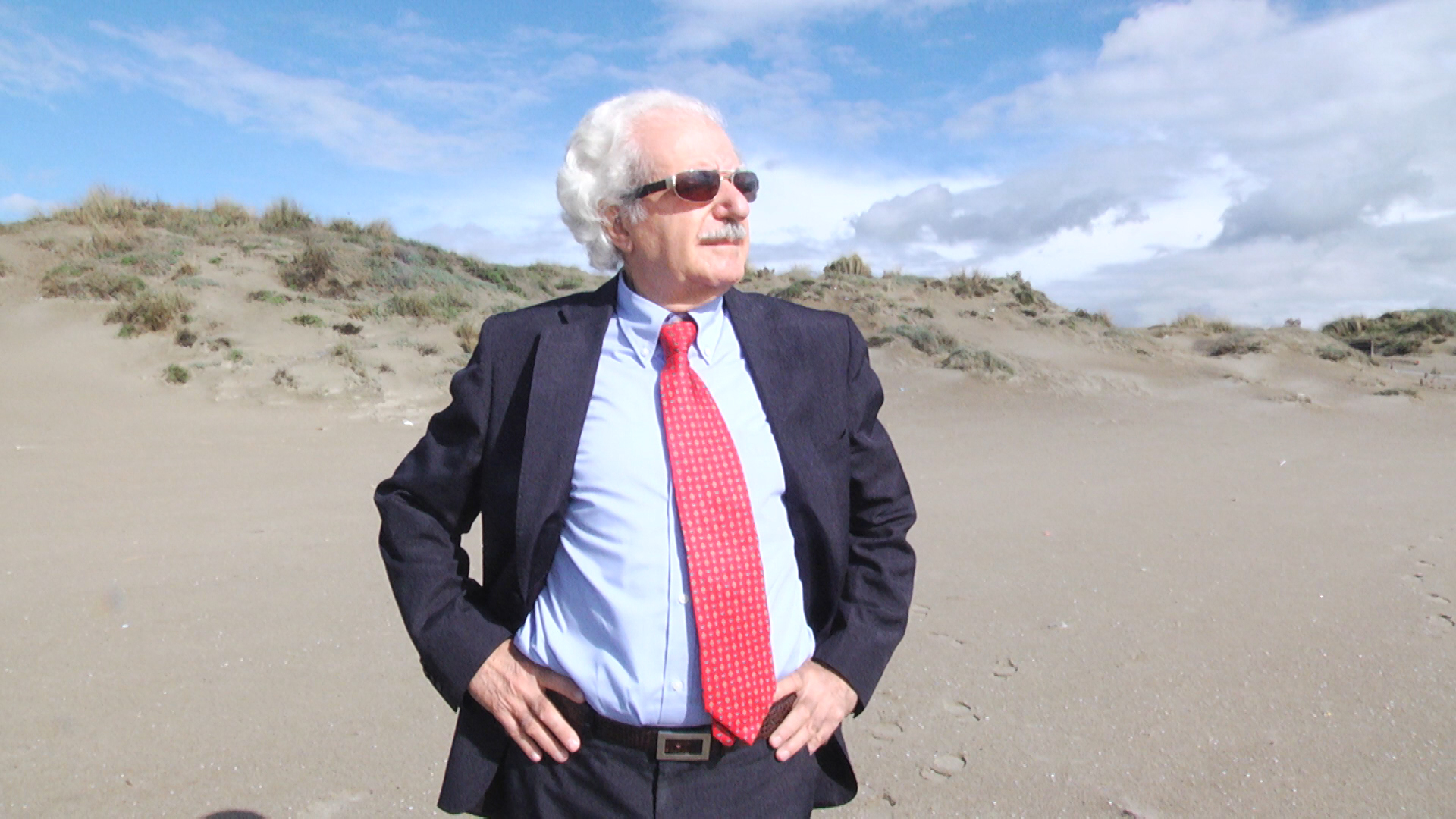
Drama, thriller, by Fabio Del Greco, Italy, 2015.
The story revolves around Vasco, a Roman builder who, at the age of 74, enjoys a life of absolute comfort. His human parable takes a dramatic turn when a mysterious encounter leads him to an ambush. Having survived, but marked by a long coma, Vasco wakes up with a new sensitivity, developing an intimate and poetic bond with nature. This new relationship with the world around him leads him to deeply explore himself, in an internal and external journey. through Italy, the United States and India, in search of a higher meaning and a cure. In parallel, the threat of a planetary cataclysm adds an epic dimension to the story.
I Am Nothing explores universal themes such as time, memory, oblivion and the connection with nature. Fabio Del Greco creates an existential drama full of food for thought. The director skillfully combines different visual materials, mixing archive images with nature photographs and dreamlike visions. This visual experimentation translates into an editing that captures the viewer's attention, guiding him through a cycle of creation and destruction. The sequences that alternate the buildings, Vasco's pride, with Indian landfills and natural landscapes create a hypnotic rhythm, underlining the beauty and fragility of life. Vasco's existential journey is a hymn to transformation and rebirth. The evolution of the protagonist, from unbridled luxury to the rediscovery of purity, represents a powerful metaphor on the meaning of life and the need to reconnect with authentic values. Io sono nulla stands out for its ability to combine introspection and visual experimentation, offering a suggestive and engaging narration. It is a film that invites us to reflect on the human condition, on our relationship with power and nature, and on the possibility of finding ourselves through change. A work that leaves its mark and lends itself to multiple readings.
LANGUAGE: Italian
SUBTITLES: English, Spanish, French, German, Portuguese
Huxley’s Wager: One Gram of Mescaline, May 1953
It is May 1953, and a fifty-eight-year-old man who has spent his entire adult life inside language — inside the machinery of words, arguments, metaphors, and distinctions — decides to step outside it. Not through meditation, not through fasting, not through any of the contemplative traditions he had studied with the disciplined curiosity of a scholar who never quite believed he could achieve what he was reading about. He decides to step outside it by swallowing four-tenths of a gram of mescaline dissolved in water, in his house in the Hollywood Hills, on a Thursday morning in May, while a psychiatrist sits nearby with a tape recorder and a notepad.
The psychiatrist is Humphry Osmond, a British-born researcher who had been working in Saskatchewan on the relationship between psychotomimetic substances and the biochemistry of schizophrenia. He would coin the word psychedelic three years later, in 1956, in a letter to Huxley himself — a term chosen deliberately over the more clinical alternatives, a Greek compound meaning mind-manifesting, chosen because it refused the pathological frame. Osmond was not a mystic. He was a methodical clinician who believed that what these substances produced was not madness but something closer to the radical end of human experience, and that studying them might illuminate the entire spectrum. He had invited Huxley into the experiment. Huxley had accepted with the focused enthusiasm of someone who had been waiting for exactly this kind of door.
To understand what Huxley was actually wagering, you have to understand what he brought to that morning. He was not a sensation-seeker. He was the grandson of Thomas Henry Huxley, Darwin’s most tenacious defender, and the brother of Julian Huxley, one of the architects of the modern evolutionary synthesis. He had been educated at Eton, had nearly lost his eyesight in his teens from a corneal disease, and had spent years reading with a magnifying glass before partial sight returned. He had written Brave New World in 1932 — not as a warning someone might heed but as a diagnosis he believed had already been delivered, a novel in which the population is not oppressed into compliance but chemically and culturally pleasured into it. He had spent the following two decades moving deeper into Vedanta philosophy, into the work of mystics across traditions, into what he would call the Perennial Philosophy — his 1945 anthology of that name being less an academic exercise than a personal argument that beneath the surface doctrines of every major religion there existed a common experiential core that philosophers had consistently failed to take seriously because it was experiential rather than propositional.
This is what he was testing in May 1953. Not whether drugs were interesting. Whether the brain, as he had come to suspect after years of reading William Blake, Henri Bergson, and C.D. Broad, was fundamentally a reducing valve rather than a generator. Broad’s formulation, borrowed and developed from Bergson’s notion of the brain as an organ of limitation rather than production, held that the function of the nervous system is not to expand consciousness but to filter it — to reduce the overwhelming totality of Mind at Large, as Huxley would call it, to the thin trickle necessary for biological survival. Mescaline, in this hypothesis, did not add something artificial to experience. It partially dismantled the filter. It did not distort reality. It allowed more of it through.
This is a philosophical wager of enormous consequence, and it has almost nothing to do with the countercultural use of psychedelics that would follow a decade later. When the tape recorder began running in the Hollywood Hills that morning, Huxley was not rebelling against anything. He was conducting an empirical test of a metaphysical hypothesis that he had held for years without any way to verify it from the inside.

The Reducing Valve and the Lie of Normal Perception

You have been looking at your hands your entire life. And yet, if you sit still long enough, if you let the ordinary hum of obligation fall quiet for even a moment, those hands become strange to you — the skin loosely draped, the knuckles architectural, the fine hairs catching light in a way that seems almost excessive, almost too much. That strangeness does not mean you are losing your mind. It means, for a brief and uncomfortable interval, your mind has stopped doing its job. Its job, under normal circumstances, is to make your hands invisible to you.
This is what Huxley understood with a clarity that has rarely been matched in modern philosophical writing: that the brain’s primary function is not to reveal reality but to conceal it. The argument, when stated that plainly, sounds perverse. We have spent centuries celebrating human cognition as the instrument by which we penetrate the world, decode its structures, illuminate its depths. And yet Huxley, drawing on Henri Bergson’s philosophy of perception, arrives at a conclusion that inverts this entirely. Bergson argued — in Matter and Memory, published in 1896 — that consciousness in its raw state receives an overwhelming flood of sensory data, a total field of experience so dense and so undifferentiated that no organism could survive within it. The nervous system does not open us to reality. It closes us down to the portion of it we can use. Perception, for Bergson, is always a subtraction. What we experience is what remains after everything biologically irrelevant has been removed.
Huxley translates this directly into his own vocabulary, borrowing from the philosopher C.D. Broad, who introduced the concept of Mind at Large — the unfiltered totality of consciousness that the brain works constantly to suppress. Broad’s idea was that each individual is, at their neurological base, potentially open to everything: every frequency of light, every register of sound, every temporal layer of experience occurring simultaneously. The brain acts as a reducing valve. It narrows this cosmic flow to the thin, serviceable stream that allows you to cross the street without dying, to recognize your name when someone calls it, to estimate whether the approaching car will hit you or not. The valve is not a flaw. It is the condition of biological survival. But it is also, Huxley insists, a lie told to you every waking moment of your life — the lie that what you perceive is what is there.
Consider color. The visible spectrum you navigate with casual confidence occupies a band of electromagnetic frequencies between roughly 380 and 700 nanometers. Above and below that range, reality continues with equal density and equal indifference to your ability to witness it. The ultraviolet patterns that guide a bee to a flower’s center, the infrared signatures of warm bodies in cold air — these are not absent from the world. They are absent from your permission slip. Your nervous system has decided they are not your business, and so you have spent your entire life inside a curated exhibition, mistaking the selection for the collection.
The same logic applies to time. What you experience as the present moment is, neurologically speaking, already a construction — a roughly three-second window assembled from discrete perceptual fragments and presented to you as continuous. The philosopher William James called this the specious present. Your sense of flowing, unbroken experience is an edit, performed below the threshold of your awareness, several dozen times a minute, every minute of your life.
What mescaline did, Huxley argued, was interfere with this editing. It did not add anything to the world. It removed the removal. The valve loosened, and what poured through was not hallucination but a form of perception that had always been available and had always been withheld — by the very organ you trust most completely to show you the truth.
When a Chair Became the Absolute
There is a moment when a man sits down in a room he has sat in a thousand times before, looks at the leg of a chair, and cannot move. Not because he is paralyzed. Because the chair has become something he has no word for. The grain of the wood is no longer texture — it is event, it is duration, it is something pressing outward from inside matter itself with a kind of urgent patience. He stares at it for what feels like geological time. He is not confused. He is, for possibly the first time in his adult life, completely awake.
This is what Huxley described, and the description has the precision of a man trying to translate a foreign language for which no dictionary exists. Under mescaline, the visual field did not distort in the way we casually imagine when we say the word hallucination. Objects did not melt or multiply. They intensified. The chair in his study became, in his own account, what the Beatific Vision must feel like to those who believe in it — not metaphor, not resemblance, but ontological identity. Being, caught in the act.
William James, writing in 1902 in The Varieties of Religious Experience, identified what he called the noetic quality as one of the four defining marks of genuine mystical experience. This is the characteristic that separates it from mere emotion or aesthetic pleasure: the sense that something has been revealed, that knowledge has been transmitted, that what you are experiencing is not just beautiful but true in a way that overrides ordinary categories of verification. James was careful not to reduce this to pathology. He insisted that states of this kind carry cognitive weight, that they make claims about the nature of reality, claims that cannot simply be dismissed because they arrived without the endorsement of syllogistic reasoning.
Huxley read James. He had read him deeply. And what the mescaline did, in his account, was not manufacture false visions but strip away the perceptual filters that ordinary consciousness maintains as a condition of functioning. The philosopher Henri Bergson had argued that the brain’s primary function is not to expand perception but to restrict it — to reduce the infinite data of the world to a manageable stream relevant to survival. Huxley borrowed this framework wholesale and called the brain a reducing valve. What leaked through when the valve opened was not delusion. It was remainder. It was what had always been there.
Think of a woman sitting in a room watching afternoon light move across a wall. She has seen this ten thousand times. She registers it as light, files it, moves on. But now she cannot move on. The light is not moving across the wall — the light is the wall, is the room, is the act of looking itself, and all of it is somehow awake, somehow directed, somehow aware of being witnessed. She is not frightened. She is annihilated in the most generous sense of that word. The self that was watching has dissolved into what it was watching, and what remains is not nothing but everything, concentrated to a point of unbearable clarity.
James would have recognized this immediately. The noetic quality is precisely this: not the feeling that something means something, but the certainty that what you are perceiving is more real than the reality you normally inhabit. Hyper-reality is not a distortion of the world. It is the world without the discount we normally apply to it to keep ourselves operational.
Huxley saw a chair and understood, briefly, completely, with a certainty that left no room for argument, that he had never actually seen one before. Not the wood. Not what wood is. The question that follows from this is not whether the mescaline was lying to him, but whether ordinary perception has been lying to us all along.
The Lost Poet
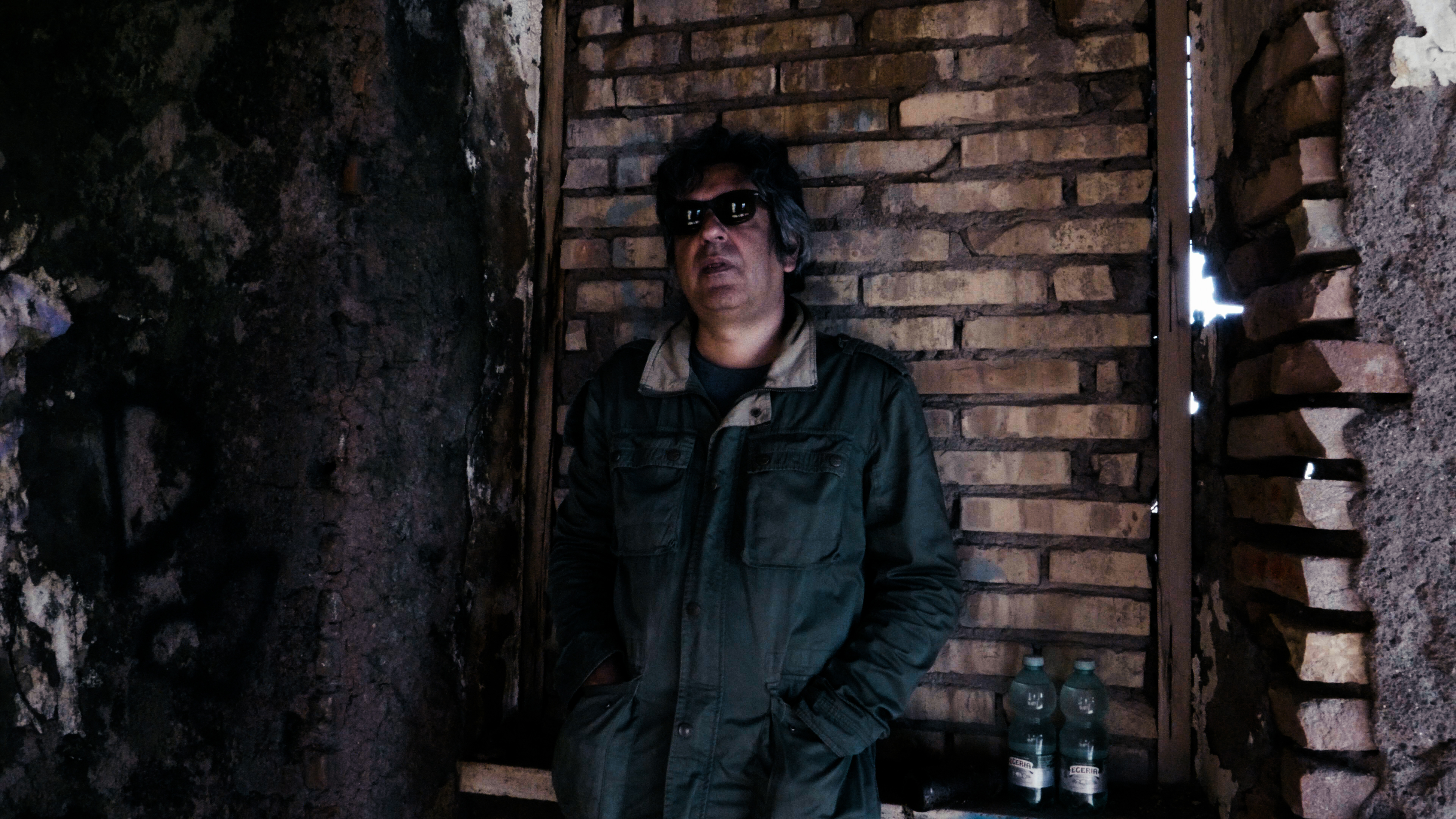
Drama, by Fabio Del Greco, Italy, 2024.
Dante Mezzadri wants to see an old friend, nicknamed the Iguana, whom he has lost sight of for many years, and who has managed to turn their shared youthful passion for poetry into a job, becoming a famous writer and poet. The man escapes from his bourgeois life and his wife to live homeless on the Roman coast, printing and trying to sell his poetry collections. At night he sleeps in a park of old carnival floats, inside a papier-mâché tank, and waits for the opportunity to meet his old friend, who however never shows up for appointments in the places they frequented when they were young, now in ruins. Dante's poetry books do not interest anyone and to support himself he is forced to "change product": he starts selling the infamous "cannibal pill" on behalf of young drug dealers, a new drug that sells like hot cakes and causes sensory and consumerist ecstasy. However, he realizes that this powerful drug is very dangerous for those who take it, he comes into conflict with his ethical conscience and throws all the pills into the sea. However, the dealers want to collect their money.
Shot over a period of 2 years, the film is a reflection on the cultural and artistic rubble of the society in which the protagonist lives, in an increasingly mechanized, consumerist and arid world. Dante Mezzadri is yet another human being who has renounced his inspiration and his creativity, but unlike many he is not willing to give his life to a system that distances him from his true identity. The physical world around him, however, seems constructed in such a way that it seems impossible to escape from this "invisible cage". The enthusiasm of the people he meets is ignited only by sensory gratification, by unreal visions of personal affirmation and success, by "metaverses" that offer an escape into an illusory and destructive reality. The poet's house on the coast, where he met with his friends as a young man, is just a pile of abandoned rubble. What happened to all those who wanted to become poets and ended up becoming something else? Are there internal forces with which that house can be "rebuilt"?
LANGUAGE: Italian
SUBTITLES: English, Spanish, French, German, Portuguese
The Cultural Machinery That Decides What Is Real
There is a moment when someone tries to describe what happened to them — not a dream, not a breakdown, but something that felt more real than breakfast, more structured than any argument they have ever won — and you watch the listener’s face perform a very specific kind of concern. Not curiosity. Concern. The slight narrowing of the eyes that precedes a recommendation, a number to call, a gentle suggestion about sleep hygiene. The experience itself becomes evidence of the problem. What was described as revelation gets quietly reclassified as symptom.
This reclassification is not natural. It is institutional. It has a history, a bureaucracy, a set of professionals trained to administer it consistently.
Michel Foucault spent years excavating precisely this machinery. In Madness and Civilization, published in 1961, he demonstrated that the category of madness is not a stable neurological fact but a historical product — something that gets drawn and redrawn according to what a given society needs to exclude from legitimate discourse. Before the great confinement of the seventeenth century, the figure of the fool moved through European life with a kind of sacred permissibility. Erasmus wrote In Praise of Folly in 1509 not as a defense of illness but as a recognition that certain forms of irrationality saw more clearly than reason permitted itself to see. What changed was not the brain. What changed was the economic and social requirement for a productive, governable subject. Madness became the outside against which sanity defined itself — and the asylum became the instrument through which that outside was physically removed from view.
Howard Becker, working from a completely different tradition, arrived at a structurally identical conclusion in 1963 with Outsiders: Studies in the Sociology of Deviance. Deviance, Becker argued, is not a quality of the act itself but the result of social labeling. The same behavior, in different contexts, by different bodies, receives entirely different names. What makes something a crime or a symptom is not its inherent nature but the power of certain groups to impose their definitions on others. The person who meditates for eleven days and reports a dissolution of selfhood in a Himalayan monastery is a mystic. The person who reports the same dissolution in a hospital waiting room is experiencing dissociative disorder. The content is indistinguishable. The institutional frame is everything.
A man sits alone in a room and watches the light change. He is not afraid. The geometry of the furniture has become oddly precise, as if the world has decided to be more honest about its own structure. He sees his hand and understands, not metaphorically but with the certainty of direct perception, that the boundary between his skin and the air is a convention. He is not suffering. He will later describe this as the most lucid hour of his life. Three days afterward, he mentions it to a doctor during a routine appointment. By the end of that conversation, it has become an episode. Something to monitor.
The diagnostic apparatus does not evaluate experience. It evaluates compatibility. Experiences that can be metabolized into productive social functioning get passed through. Experiences that cannot — that suggest the self is permeable, that consensus reality is a negotiated settlement, that the ordinary waking state is not the ceiling of human perception but somewhere around the third floor — those get stopped at the border. Not because they are dangerous. Because they are destabilizing.
And what gets institutionalized as rational is always, without exception, what serves the continuation of existing arrangements. The visionary and the psychotic report similar territories. The difference between them is almost never the phenomenology. It is the social position of the person reporting, the circumstances under which the experience occurred, and whether anyone with institutional authority decides the report is worth defending.
A vision curated by a filmmaker, not an algorithm
In this video I explain our vision
Vision as Threat: Why The Doors Were Shut

There is a moment — you have felt it, even if you have filed it away under stress or fatigue — when the ordinary machinery of your day suddenly appears to you as if from outside. The commute, the inbox, the small negotiations of office life, the performance of being functional: for a split second you see it whole, and what you see is not comforting. The absurdity is total. The question that surfaces is not philosophical but visceral — why am I doing this? — and it arrives with a clarity so sharp it feels dangerous. Then something closes. The numbness returns, reliable as a reflex, and you step back inside the routine because the alternative, sustaining that vision, is genuinely incompatible with getting through the day.
Huxley understood this closing as something more than a psychological defense mechanism. It is structural. The reducing valve that filters perception does not operate only in the individual nervous system; it is reproduced socially, institutionally, economically. The contraction of consciousness is not a bug in the system. It is the system’s primary operating requirement.
Herbert Marcuse, writing in 1964 in One-Dimensional Man, gave this argument its sharpest sociological edge. Marcuse’s thesis was that advanced industrial society had achieved something unprecedented: not the repression of desire through deprivation, but its colonization through satisfaction. Consumer culture does not forbid inner life; it pre-formats it. It offers you an endless supply of needs, images, and pleasures so thoroughly shaped by the productive apparatus that even your dissatisfactions remain within the system’s orbit. The result is a flattening of what Marcuse called the critical dimension — the capacity to perceive contradiction, to imagine genuine alternatives, to hold two realities against each other and feel the friction between them. One-dimensional man is not miserable. He is, in the most precise sense, comfortable. And comfort, at sufficient depth, becomes a form of perceptual amputation.
This is why full perception functions as a threat rather than a gift. A man sits at a kitchen table one morning and the room reveals itself to him — not mystically, but with sudden, terrible literalness. The table is a table. The coffee is cooling in a cup that is simply a cup. The sounds of the household are random and entirely without significance. Nothing is holding anything together. The categories that normally organize experience — purpose, role, meaning, trajectory — have gone momentarily transparent, and what remains is raw existence, indifferent and extraordinarily vivid. He grips the edge of the table. Within minutes he will reconstruct everything, reassemble the scaffolding of habit, return to the person his life requires him to be. But for a moment he saw. And what he saw made compliance impossible, even unthinkable.
Societies have always known, at some level below the explicit, that this kind of seeing must be managed. Huxley noted that every culture has developed its chemical or ritual technology for modulating consciousness — the question was never whether to alter perception but which alterations to permit and which to prohibit. The permitted ones, almost without exception, are the ones that consolidate belonging, reinforce hierarchy, or produce the specific release valve of controlled transgression. The prohibited ones tend to be precisely those that dissolve the categories on which social order depends, that make the arbitrary appear arbitrary and the constructed appear constructed.
Marcuse would have recognized in this prohibition the same logic he identified in the suppression of genuine artistic negativity — the way culture absorbs its own critics, packages dissent as aesthetic product, and thereby neutralizes the friction that might otherwise generate actual refusal. The doors are not shut because what lies beyond them is chaos. They are shut because what lies beyond them is clarity. And clarity, distributed widely enough, does not produce enlightened citizens. It produces people who have stopped pretending that the table is anything other than what it is.
The Artists Who Left the Door Ajar
Before Blake wrote the line, he had already lived inside its problem. The man who engraved his own plates, who saw angels in a Peckham tree as a child and never fully recovered from the vision, who described the ordinary world as a prison built from habit and fear — he was not writing metaphor when he said that if the doors of perception were cleansed, everything would appear to man as it is, infinite. He was reporting a condition he inhabited chronically, without chemical assistance, and it was costing him everything. His contemporaries called him mad. His wife said that he was always in paradise. Both were describing the same man.
The reducing valve, in Blake’s case, had been structurally compromised from the beginning. What Huxley experienced for eight hours in May 1953 under the supervision of Humphry Osmond in a Los Angeles living room, Blake lived as his baseline. The Marriage of Heaven and Hell, published in 1793, is not a theological treatise. It is a field report from a consciousness that cannot close. Every proverb in it — excess leads to the palace of wisdom, the road of excess, the tiger burning bright — is the testimony of someone who has seen the thing itself and is now trying to translate it back into a language built precisely to prevent that seeing.
Rilke attempted a more disciplined approach. The thing-poems, the Dinggedichte, written in Paris between 1902 and 1908 after he served as secretary to Rodin, are exercises in sustained, almost violent attention to the object as it actually is. An archaic torso of Apollo, a panther in its cage, a bowl of roses — Rilke was not describing these things. He was trying to see through the categories that make them merely things. The panther poem is nine lines about a consciousness annihilated by repetition, the world reduced to a single bar — and it is also a portrait of what ordinary perception does to all of us, every day, the bars multiplying until we no longer notice the cage. When the poem ends with the image of a vision that enters the animal and immediately ceases to exist, Rilke is mapping what happens to perception that has no language to survive in.
Cézanne’s obsession with Mont Sainte-Victoire is a different kind of documentation. He painted that mountain more than sixty times between 1882 and his death in 1906. Not because he could not get it right. Because he was trying to see it without the word mountain intervening between his eye and the thing. Merleau-Ponty, writing about Cézanne in 1945, understood this precisely: the painter was attempting to recover what he called the lived perspective, the world as it presents itself before our cognitive apparatus has organized it into objects and relations and stable meanings. Each canvas was a slightly different record of the failure to reach that point, and simultaneously a slightly closer approach to it.
There is a man who walks through a ruined city — streets emptied by catastrophe, light falling at an angle that makes every surface strange — and what registers on his face is not grief but something more unsettling: recognition. As though the destruction has removed the overlay, the cultural decoration that made everything legible and therefore invisible, and now the stones are simply stones, the air is simply air, and the strangeness of existing at all has become briefly, unbearably visible. That expression — not horror, not joy, something prior to both — is what the artists were after. All of them. The tools were different. The chisels and acid baths and oil paint and meter. The destination was the same gap in the wall that Huxley stepped through with four-tenths of a gram dissolved in water, the place where the reducing valve briefly stops reducing, and what pours through is not hallucination but the unfiltered weight of the actual.
What You Cannot Unsee
There is a moment, somewhere between waking and full consciousness, before the machinery kicks back in, when you catch a glimpse of something. The light through the window is just light. Your hand resting on the sheet is just a hand. Nothing is organized yet into utility or schedule or self. Then the day assembles itself around you, and that interval closes, and you will not think about it again until perhaps the next morning, if at all. What is interesting is not the glimpse. What is interesting is how efficiently it disappears.
Huxley’s argument, stripped of its mystical register, is not finally about mescaline. It is about the cost of the filtering. The reducing valve, as he borrowed from Henri Bergson’s analysis of the brain as an organ of limitation rather than expansion, does not operate neutrally. It operates in a direction. It narrows toward function, toward survival, toward the socially legible self who can hold a job and follow a conversation and not stop dead on the pavement because the grain of a stone wall has become inexplicably, overwhelmingly present. The filter is not a passive membrane. It is an active suppression, running continuously, and what we call normalcy is not the absence of something but the product of enormous, invisible effort.
This reframing has consequences that are difficult to sit with. Because if the ordinary is not a resting state but a achieved suppression, then the question becomes: what exactly are you suppressing, and why, and on whose behalf? William James, who experimented with nitrous oxide in 1882 and recorded the results in his essay on consciousness, noted that our normal waking state is only one special type of consciousness, and that all around it there lie potential forms of consciousness entirely different, separated from it by the filmiest of screens. He wrote that no account of the universe in its totality can be final which leaves these other forms of consciousness quite disregarded. James was not writing as an advocate for altered states. He was writing as a rigorous psychologist who had encountered something he could not dismiss, and whose intellectual honesty would not allow him to pretend he had not encountered it.
What you are defending, when you defend the ordinary, is partly practical and partly something else. The practical defense is legitimate. You cannot function in the sustained condition of radical openness that Huxley describes for those hours in the garden. You cannot hold a world in every leaf indefinitely and also pay a bill, make a phone call, be present to another person who needs something from you. The reducing valve serves a purpose. No serious reading of Huxley denies this. But the practical defense has a shadow attached to it, and the shadow is the defense of the suppression itself, the insistence that what has been narrowed did not exist, that the filtering is identical with reality rather than a particular and interested selection from it.
A man sits in a room he has sat in a thousand times and looks at his furniture and cannot remember ever having seen it. Not the forgetting of distraction but something deeper, a settled incuriosity that has the texture of comfort and the function of a wall. He is not unhappy. That is perhaps the most unsettling part. The happiness and the not-seeing have become the same operation, and he would not know where to locate one without the other.
You have probably sat in that room. Most of us have furnished it carefully. And the question that Huxley leaves running, the one that does not resolve itself no matter how many years pass since he first put it into prose, is whether the life you are protecting when you protect your ordinary Tuesday is the life you are actually living, or the life that has simply become the easiest shape to maintain.
🚪 Beyond the Doors: Consciousness, Mysticism and Altered States
Huxley’s The Doors of Perception opens a labyrinth that stretches far beyond mescaline and vision — it touches the deepest currents of mystical thought, the philosophy of consciousness, and the artistic imagination of the 20th century. These related articles invite you to follow the threads that Huxley himself wove, from William James to the cursed poets and the theater of the body.
William James and Consciousness: The Stream of Thought
William James, whose concept of the ‘stream of thought’ Huxley explicitly invoked, stands as one of the foundational predecessors of the psychedelic inquiry into consciousness. His radical empiricism and openness to mystical states of mind created the philosophical ground upon which Huxley built his own experiment. Understanding James is essential to fully grasping the intellectual stakes of The Doors of Perception.
GO TO THE SELECTION: William James and Consciousness: The Stream of Thought
Meister Eckhart: Life and Mystical Philosophy
Meister Eckhart’s mystical philosophy, with its insistence on the dissolution of the self into a pure ground of being, resonates profoundly with Huxley’s descriptions of the mescaline experience. Both thinkers point toward a mode of perception liberated from the filters of utilitarian consciousness. Reading Eckhart alongside Huxley reveals how modern psychedelic vision recapitulates ancient contemplative insight.
GO TO THE SELECTION: Meister Eckhart: Life and Mystical Philosophy
Antonin Artaud: Life and Thought
Antonin Artaud, like Huxley, sought to shatter the comfortable membranes of ordinary perception through radical artistic and bodily experience. His Theater of Cruelty aimed at awakening audiences to a state of heightened, almost hallucinatory awareness — a project deeply parallel to Huxley’s pharmaceutical experiment. Artaud’s thought illuminates the broader 20th-century obsession with breaking the boundaries of the conditioned mind.
GO TO THE SELECTION: Antonin Artaud: Life and Thought
Psychedelic Movies for One-Way Trips
Cinema has long served as one of the most powerful machines for simulating and representing the altered states that Huxley described in prose. This curated selection of psychedelic films explores visual and narrative strategies that mirror the dissolution of the ego and the expansion of sensory experience. Watching these films after reading Huxley transforms both experiences into a single, resonant journey.
GO TO THE SELECTION: Psychedelic Movies for One-Way Trips
Explore the Infinite Maze Further on Indiecinema
If Huxley’s journey through altered perception has opened a door in your mind, Indiecinema is the streaming platform where that door leads somewhere real. Discover independent and avant-garde films that dare to explore consciousness, mysticism, and the limits of human vision — films that cannot be found in the mainstream maze. Step inside and let the screen become your own doors of perception.
👉 EXPLORE THE CATALOG: Watch Indie Films in Streaming
A vision curated by a filmmaker, not an algorithm
In this video I explain our vision

