
The Body That Would Not Obey
You know the sensation. Not pain exactly, but something close to its shadow — the moment when a thought that felt enormous, complete, almost architectural in its clarity, simply fails to arrive at your mouth. It dissolves somewhere between the interior and the exterior, between what you are and what you can produce. You stand there, or sit there, and the person across from you waits, and what you wanted to say has already become something else, something smaller and flatter, a substitute that betrays the original. Most people experience this occasionally. Antonin Artaud experienced it as the permanent condition of being alive.

He was born in Marseille on September 4, 1896, and before he was old enough to read, his body had already declared itself the primary territory of conflict. At five years old he contracted tubercular meningitis, a disease that left visible damage — nervous instability, severe headaches, a stammer — but more than that, it left a rupture in his sense of continuous selfhood that he would spend the rest of his life trying to name. He spoke about this illness not as something that happened to him but as something that happened to his thought itself, as if the inflammation had burned through some connective tissue between intention and expression, between the self that conceives and the self that acts. What was stolen was not memory, not language, not intelligence. What was stolen was the relay.
This is not metaphor. Or rather, it is not only metaphor. Artaud’s entire subsequent philosophical project — his theories of theater, his screams on the radio, his texts that collapse syntax on purpose, his drawings made with such force that they tore the paper — all of it originates here, in the body of a five-year-old boy in Marseille whose nervous system learned, in a single season of illness, that flesh is not a neutral vessel. Flesh resists. Flesh interprets. Flesh sometimes refuses to carry the signal at all.
Most Western philosophical traditions begin elsewhere. They begin in the library, in dialogue, in the inherited problems of a discipline. Descartes begins with doubt as a method. Kant begins with the conditions of possible experience. Even the phenomenologists, Husserl and Merleau-Ponty, who would later insist on returning thought to lived bodily experience, begin with positions staked inside academic discourse. Artaud begins with a wound. He begins with the specific, irreducible, non-transferable experience of a nervous system that will not cooperate, a body that refuses to become transparent to the mind that inhabits it. Merleau-Ponty would argue in his 1945 Phenomenology of Perception that the body is not an object we possess but a perspective we are — that lived experience is always already corporeal. Artaud would have agreed violently, and then added something Merleau-Ponty could not quite say from inside the academy: that this embodiment is sometimes a form of imprisonment, that the flesh can become an obstacle so absolute that the person trapped inside it begins to doubt whether they exist at all.
This is the doubt that haunts every line Artaud ever wrote. Not Cartesian doubt, which is comfortable and methodical and ultimately resolves into the cogito’s clean confidence. But a doubt that has no resolution, that does not produce certainty even about the existence of thinking itself. He wrote in his early correspondence with Jacques Rivière, begun in 1923, that his thought abandoned him at precisely the moment it became thought — that there was a gap, an abyss, between the moment of mental germination and the moment of expression, and that in that gap, everything essential was lost.
You have felt something like this. Smaller, probably. Mercifully briefer. But the topology is familiar, the shape of a self that cannot fully reach its own surface.
The Mirror and the Rascal
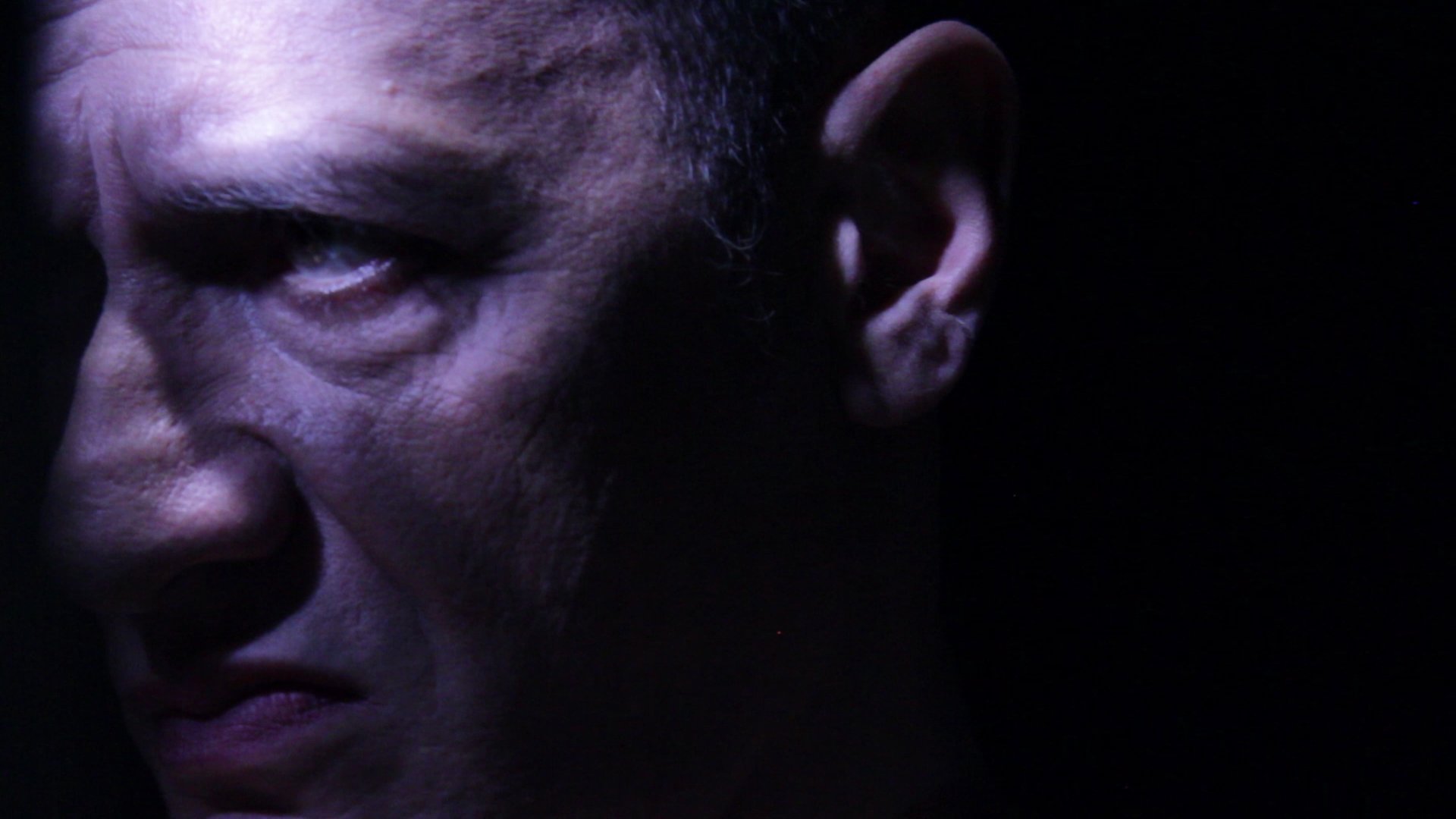
Drama film, by Valerio De Filippis, Italy, 2019.
The mirror and the rascal is an experimental film based on the tragedy "Richard III" by William Shakespeare. It tells the delirium of contemporary power in an author's reinterpretation of cinema, video art and music. The protagonist, Richard Duke of Gloucester, brother of King Edward IV, through a long series of crimes eliminates all the obstacles that stand between him and the throne of England.
Valerio de Filippis, a well-known painter who has been following his research path for a long time, investigating the relationship between light, corporeality and the psyche. The mirror and the rogue and the cinematographic equivalent of Valerio De Filippis' painting, his figurative style is in fact very recognizable looking at his paintings. But cinema is a new way where the artist can also be involved as an actor and performer, with an original mix between acting and singing. Staging the dark side of the human soul, the film is a surreal and disturbing interpretation of a great classic. The director says: "The first suggestion was musical: I was interested in transforming the text of Shakespeare's tragedy Richard III into notes. I love cinema and at a certain point I felt that the time had come to combine research on the image of painting to my love for cinema and music. When the film is finished I realize that I have remained faithful to painting: every frame of the film appears to me like a painting: the same light, the same colors, the same atmosphere ". The mirror and the rascal is a kind of psychoanalytic session that the painter does while hiding behind the mask of Richard III. Behind this ferocious and unscrupulous character we find a path of self-analysis by De Filippis, who is mainly interested in the more violent and turbid aspects. An experimental film in which, with great courage, the author gets involved completely, fragmenting the images in an unconventional montage, which is at the same time a flow of consciousness and spectacle.
LANGUAGE: English
SUBTITLES: Italian
A Theater That Burns the Audience Alive
You are sitting in a theater. The lights dim in the predictable way, the curtain opens in the predictable way, and you settle into your seat with the quiet satisfaction of someone who has already decided that what follows will not touch them too deeply. You have paid for the privilege of witnessing something safely, of feeling emotion at a controlled distance, of leaving afterward with your sense of self intact and perhaps slightly flattered by your own cultural sophistication. This is what Artaud understood as the fundamental crime of Western theater — not its occasional mediocrity, but its structural design as a machine for producing comfortable spectatorship.
When he gathered his essays and manifestos into a single collection in 1938, Artaud was not writing theater criticism. He was issuing an indictment. His central claim was devastatingly precise: that Western theater had degraded itself into literature read aloud in front of passive bodies, that the text had colonized the stage so completely that the living event — the breath, the nerve, the physical catastrophe of human presence — had been reduced to mere illustration. The playwright’s words were the substance; everything else was decoration. The actor was a sophisticated puppet. The audience was a bourgeois consumer.
Think of a man watching a performance in which the performer does not address the audience but suddenly collapses — not collapses as metaphor, not collapses as theatrical gesture, but collapses forward into the space between stage and seat, dissolving the geometry of safe observation. The audience does not applaud. They freeze. Something has happened to their bodies before their minds could intercept it and aestheticize it into appreciation. That involuntary seizing of the chest, that half-second of genuine alarm — that is where Artaud believed theater actually lived. Not in the applause afterward, but in that moment before the cognitive apparatus reassembled itself and declared: it is only a play.
His concept of cruelty has been misread so persistently that the misreading itself becomes a cultural symptom worth examining. Cruelty was never about pain inflicted on bodies for spectacle. It was about necessity — the relentless, undeflectable force of something that cannot be aestheticized away. In his own words, cruelty was the rigor of a plague, not the theater of a sadist. The plague he described in one of his most ferocious essays was not metaphorical decoration; it was a precise analog. The plague, he argued, reveals the hidden order of a society by stripping away every social pretense. When survival is immediate, the masks fall. Theater at its highest possibility could function identically — could strip the spectator of their cultivated distance and force them into contact with something they could not intellectually manage.
What Artaud was excavating, without quite naming it in those terms, was the philosophical territory that Nietzsche had mapped roughly sixty years earlier in The Birth of Tragedy, published in 1872. Nietzsche’s Dionysian principle was precisely the dissolution of the individual ego into something larger and more terrifying than individual selfhood — the merging, the loss of boundary, the ecstatic vertigo of no longer knowing where you end and the world begins. Apollonian culture, Nietzsche argued, is the culture of the beautiful form, the measured distance, the protected self. Western theater, by 1938, had become almost purely Apollonian — a series of beautiful forms arranged for protected selves to contemplate without danger.
Artaud wanted the Dionysian emergency back on stage. He wanted the spectator’s nervous system, not their aesthetic judgment. He understood, with the instinct of someone whose own nervous system had never been adequately insulated from the world, that the body knows things the mind refuses to admit. And that theater, if it meant anything at all, had to reach the body first — had to arrive before the defenses were up, before the program notes were consulted, before the comfortable distance was established.

Paris and the Surrealist Trap
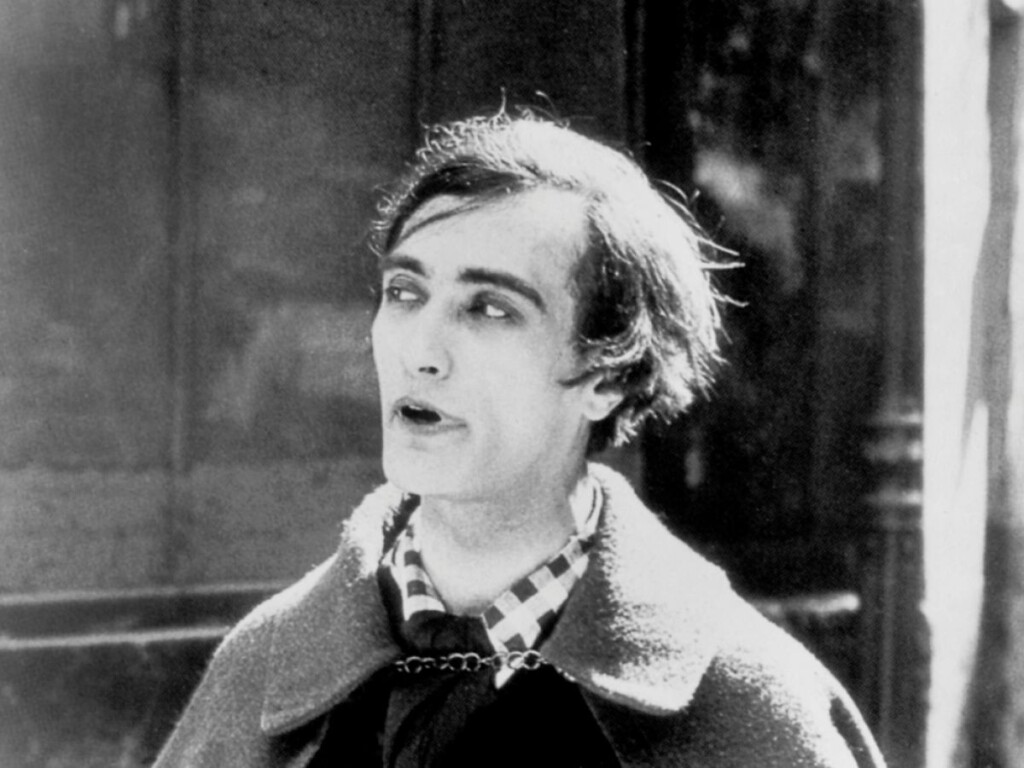
There is a particular cruelty in being invited into a room because of what you are, and then expelled from it for the same reason. The Surrealists wanted proximity to the abyss. They wanted to lean over its edge, to describe the vertigo, to make manifestos from the sensation of falling. What they did not want was someone who had already hit the bottom and could not stop hitting it.
When Artaud joined the movement in 1924, he was not a recruit. He was already in motion, already burning through the language of the unconscious with a ferocity that preceded any theoretical framework. André Breton had founded Surrealism that same year, assembling around him a constellation of brilliant men who understood the unconscious as a creative reservoir, a place you could dip into and resurface from, shaking drops of strange water and calling it art. Artaud understood nothing of the kind. For him, the unconscious was not a reservoir. It was the floor he stood on, and the floor was always giving way.
His expulsion came in 1926, barely two years after his entry. Breton’s dismissal was precise in its coldness: Artaud was too extreme, too genuinely disordered to serve the movement’s intellectual project. What this really meant — though no one said it plainly — was that Artaud was not performing. He was not romanticizing his fractures from a safe distance. He was actually inside them, and this made the other Surrealists uncomfortable in a way they could not aestheticize. You can frame a painting of a wound. You cannot frame the wound itself.
Michel Foucault, writing in 1961 in Madness and Civilization, made an argument that illuminates this moment with uncomfortable precision. Modernity, he wrote, did not simply discover madness. It produced it — constructed it as a social and medical category precisely to quarantine what it could not metabolize. The Enlightenment, which had exalted reason as the supreme human faculty, required an outside, a dark continent against which reason could define itself. The mad person became that outside: useful as a category, threatening as a presence. The asylum was not built to heal. It was built to contain.
The Surrealists replicated this structure at a smaller, more intimate scale. They needed madness as a concept, as a generator of images, as proof that the rational bourgeois world was not the only world available. But they needed it controlled, narrated, aesthetically managed. Artaud did not offer them that. He offered them the real thing — the terror of a mind that could not locate its own edges, the suffering of a body that felt its own thought processes as physical pain, as intrusion, as something happening to him rather than something he was doing. This was not useful. This was not art material. This was a man who could not stop.
Think of what it means to watch someone speak and realize, with a kind of vertigo that is not entirely unpleasant, that you cannot tell where performance ends and collapse begins — and then realize, finally, that this is because there is no performance. There is only the collapse, dressed in language because language is all he has. There is a scene that stays with you: a man on a stage, or in a room, who begins speaking and cannot find the end of his own sentence because the sentence is branching into itself, folding, because his mind will not give him the word he needs and what comes out instead is closer to a sound than a thought, and the people watching do not know whether to applaud or look away. The Surrealists looked away. They called it excess.
Foucault would have recognized the gesture. What cannot be metabolized must be classified. What has been classified can be safely ignored. Artaud was not mad in the way the Surrealists needed him to be — which is to say, he was not mad at a useful distance.
Mexico and the Peyote Road
There is a moment when a man steps off a train into a landscape that has never heard of him. Not of him personally — of the entire architecture of thought that made him. The mountains do not care that he has written manifestos. The altitude does not negotiate with his theories of cruelty. The Rarámuri people who watch him arrive from the Sierra Tarahumara in 1936 see a gaunt Frenchman with burning eyes who has come, he tells them through translators, to find what Europe has forgotten. What they make of this is not recorded. What he makes of them will consume the rest of his life.
Artaud travels to Mexico not as an anthropologist and not as a tourist and not quite as a pilgrim, though pilgrimage is the closest word for something that has no Western category. He goes because he believes, with the specific madness of the genuinely lucid, that the body knows things the mind has been trained to suppress, and that somewhere in the ritual use of peyote among the Rarámuri there exists a grammar of existence older and more honest than anything Descartes bequeathed to the civilization that produced him. He goes to be destroyed. He is, in this at least, not disappointed.
Think of a man sitting in a room that is not a room — an open space under a sky that feels pressurized, ceremonial, watching figures move around a fire with a purposefulness that is nothing like European purposefulness, which always carries its justification on its face. These movements justify nothing. They are not symbolic of something else. They are the thing itself. He watches and realizes with a vertigo that has nothing metaphorical about it that he has no instrument capable of measuring what is happening. His entire intellectual apparatus, the categories, the frameworks, the vocabulary of the avant-garde — all of it is suddenly revealed as provincial. A local dialect of reality mistaken for reality itself.
Claude Lévi-Strauss would spend decades doing something structurally opposite to this. In works like “The Savage Mind” in 1962 and the four volumes of “Mythologiques” between 1964 and 1971, he would demonstrate that myth operates according to rigorous logical structures, that so-called primitive thought is not pre-rational but differently rational, organized by binary oppositions and transformational rules as precise as algebra. It is a magnificent achievement and it keeps the analyst exactly where the analyst needs to remain: outside. Lévi-Strauss looks at myth the way an astronomer looks at stars — with clarity, with system, with the enormous reassurance of distance. What Artaud does with peyote in the Sierra Tarahumara is the annihilation of that distance. There is no outside left to stand on.
The peyote does not show him visions in the decorative sense. What he reports later — in the essays collected as “The Peyote Dance,” written over the following years — is something more terrifying and more specific: a reorganization of the nervous system’s relationship to meaning. The body stops being an object that carries a self and becomes, briefly and devastatingly, a process that generates one. He describes feeling the organs as separate intelligences, the spine as an argument, the skin as a site of transmission rather than enclosure. To read these pages is to feel slightly unwell in the precise way that genuine thought makes you feel unwell.
He comes back from Mexico a man who has been inside something he cannot explain to anyone who was not there, which is everyone. The peyote road does not end when you leave the Sierra. It continues into whatever is left of the life that receives you, and the question it keeps asking is whether what you call your mind was ever really yours, or whether it was simply the shape that a particular civilization pressed into you while you were too young to refuse.
The Nine Years of Rodez
He arrived at Rodez in 1943 already broken by years of transfer between institutions — Sainte-Anne, Ville-Évrard, four walls after four walls, each one a different shade of the same erasure. He had been confined since 1937, when he was arrested in Ireland carrying a cane he believed had belonged to Saint Patrick, having crossed the Atlantic on a conviction that certain objects carried metaphysical charge, that the body could be a conductor of forces most people had trained themselves not to feel. The French state and then the German occupation had no vocabulary for this except one: dangerous. So he was made to disappear into the system that exists precisely to make certain kinds of perception disappear.
R.D. Laing argued in The Divided Self, published in 1960, that the psychiatric institution was never primarily a medical apparatus. It was a social one. What it treated was not suffering — it managed the disruption that occurs when someone refuses to maintain the shared fiction of what is real. The schizophrenic, for Laing, was not someone whose mind had broken. He was someone whose mind had refused a particular deal: accept the coordinates of consensus reality in exchange for being called sane. The institution’s function was to bring that refusal back into line, or to contain it until it ceased to threaten anyone outside the walls.
Artaud had refused that deal his entire life. At Rodez, they used electricity to renegotiate the terms.
Ferdière administered over fifty sessions of electroconvulsive therapy between 1943 and 1945. What happens in those seconds is not subtle. The current passes through the brain and the body convulses without consent, the muscles contract with a violence the conscious mind cannot anticipate or resist, and then there is the afterward — the temporal fog, the gaps where memory used to be, the strange sense of having been partially vacated from yourself. Ferdière believed he was helping. He said so, later, with the calm confidence of a man who had never once entertained the possibility that the problem was his framework and not his patient. He encouraged Artaud to draw, to write, to engage with culture as a form of rehabilitation. As if culture were a tonic. As if what Artaud had was a deficiency.
What Artaud had was a completely different account of what a body is, what a word does, what thought feels like when it is honest about its own violence. The electroshock did not extinguish this. It entered it. The late writing — the notebooks, the letters, the incantatory texts produced in the final years — carry the shock inside them not as metaphor but as material fact. The syntax breaks and reforms the way consciousness breaks and reforms after seizure. The words sometimes cluster into sounds before meanings, the body of language stripped back to something more primary than communication. He was not writing about what had been done to him. He was writing from inside the nervous system that had been done to.
There is something precise in Laing’s insistence that the mad person often perceives something real that the sane person has agreed not to. Not that all psychosis is insight — Laing was more careful than his popularizers admitted — but that the institution’s certainty about where sanity ends was always also a political certainty, a boundary policed on behalf of those who needed it to hold. Artaud’s body became a site where that policing was administered with literal current, and what survived was not in spite of the destruction but threaded through it, transformed by it into a register that could not have existed otherwise.
He left Rodez in 1946. He had been inside for nine years. He was fifty years old and his teeth were gone and his body was wrecked and he had perhaps three hundred pages of some of the most unmanageable writing the twentieth century produced still left to make.
A vision curated by a filmmaker, not an algorithm
In this video I explain our vision
Writing as Wound, Not Expression

The notebooks from the final years do not read like writing. They read like something else entirely — like the record of a body trying to invent a new grammar for pain that existing language had already failed to hold. The pages are covered in a script that lurches between French and invented syllables, words that dissolve into phonemes, phonemes that dissolve into marks, drawings of figures whose organs have been relocated or removed or replaced by something that has no medical name. You look at one of these pages and you do not think: this man was expressing himself. You think: this man was doing something to language the way a surgeon does something to tissue, except the surgery had no anesthetic and no certain outcome and the patient and the surgeon were the same person.
This is the crucial distinction. Expression implies a prior interior that seeks an exterior form. What Artaud was doing after Rodez had no interior in that sense, because the interior itself had been the site of the violation. Nine years of electroshock, of insulin coma therapy, of institutional reorganization of his selfhood — what came out of him afterward was not expression but excavation, sometimes indistinguishable from demolition. The glossolalia that fills his later texts, the sounds he called his “daughters of the heart to be born,” were not decorative or surrealist play. They were an attempt to find a register of language that the institution had not yet colonized, syllables that existed before meaning had been assigned by a power that called itself sanity and called its procedures care.
In February 1948, a radio piece he had recorded the previous year was banned by French Radio the day before its scheduled broadcast. The director of the network, Wladimir Porché, made the decision personally. The piece ran approximately fifty minutes and had been recorded with collaborators in November 1947. It opened with a question: what would you do if you needed to release a scream? And it proceeded to do exactly that — to scream, to rattle, to xylophone the body into sound, to speak in voices that were not quite human and not quite animal and not quite anything that French Radio had agreed to transmit into the homes of its listeners. The ban was not incidental. It was the logical continuation of Charenton, of Rodez, of every institution that had looked at Artaud and said: this must be contained.
Gilles Deleuze and Félix Guattari, working together through the early 1970s in what became their two-volume collaborative project published between 1972 and 1980, took from Artaud a concept they acknowledged was not theirs. The Body without Organs — the BwO, in their shorthand — they attributed explicitly to him, to a phrase he had used. But what they did with it philosophically was to show that he had not been speaking metaphorically. He had been describing an actual project: the dismantling of the organism as a political arrangement, the refusal of the body as a hierarchy of functions assigned by a power that disguised itself as nature. The liver does this. The lungs do that. The mind governs. Artaud’s notebooks and drawings propose a body in which this governance has been suspended, not because he fantasized about biology but because he understood that the organization of the body into a system of functions is simultaneously the organization of the self into something that can be managed, medicated, restrained.
This was not abstract. It was a survival strategy in the most literal sense. If your body as institutionally defined is the thing that has been subjected to electric current and chemical force, then the dissolution of that body’s organized coherence is not pathology. It is resistance. The drawings that look like anatomical diagrams of an impossible body are not the delusions of a broken mind. They are blueprints for an escape route through the flesh itself.
The Plague as Metaphor and Mechanism
There is a moment — you have lived it, or something close enough — when you look around a crowded café, or a busy street, or a family dinner table, and a strange vertigo seizes you. Everyone is performing their part with extraordinary precision. Orders are taken, jokes are made, dishes are passed. And yet something underneath it all has already given way, silently, like a floor beam rotting in the dark, and nobody has yet fallen through because nobody has yet stopped moving.
This is the image Artaud opens with, essentially, when he turns to the plague in the first and most devastating essay of The Theater and Its Double, published in 1938. He does not use the plague as metaphor in the comfortable, literary sense — as a stand-in for evil, or war, or moral corruption. He means something far more precise and far more unsettling. The plague, he argues, does not introduce catastrophe into a healthy system. It reveals that the system was never healthy. It strips away the performance of continuity and exposes what was already dying underneath. The organs fail not because something foreign has attacked them, but because something internal has been suppressed past the point of return.
Think of a city where the garbage collectors have stopped coming. Not because of a strike, not because of a disaster — just a quiet administrative failure, a bureaucratic dissolution happening in offices nobody visits. For three days, four days, nothing changes visibly. People walk past the same corners. The shops open. The newspapers arrive. And then on the fifth day you notice the smell, and you realize the smell was already there on the second day, and you chose not to register it. This is Artaud’s plague. Not the moment of collapse. The moment of recognition that the collapse was already underway while you were looking elsewhere.
Walter Benjamin, writing in roughly the same years from a different angle of the same catastrophe, articulated something structurally identical when he observed that the state of exception — the suspension of normal order in crisis — was not an interruption of historical continuity but its secret operating principle. The exception, Benjamin wrote in his eighth thesis on the philosophy of history, has become the rule. Culture, in other words, sustains itself not despite its fragility but by continuously managing the knowledge of that fragility, suppressing it, redistributing it, aestheticizing it into forms that can be contemplated from a safe distance. Art becomes one of the primary instruments of this suppression. Theater, when it functions as entertainment, as distraction, as the confirmation of shared values, is not a mirror held up to life. It is a curtain drawn across what life actually is.
Artaud’s insistence is that theater must instead do what the plague does. It must make the suppression impossible. It must create conditions in which the audience can no longer sustain the distance between the performance on stage and the rotting they carry in their own bodies, their own cities, their own arrangements. A man continues buying bread every morning in a quarter where three of his neighbors have already disappeared. His routine is not denial exactly — it is something more structural than that. It is the organism of social life maintaining its functions past the point where the organism can survive, the way certain bodies continue breathing for hours after the brain has ceased to organize the future. Artaud looked at European civilization in 1938 and saw exactly this: an organism continuing its routines with total conviction, while beneath the routines, everything that had made them meaningful had already dissolved.
He refused to aestheticize that dissolution. He refused to make it bearable. The theater he imagined was not a place where you went to understand the plague at a safe distance. It was a place where you went and caught it.
What the Scream Actually Says
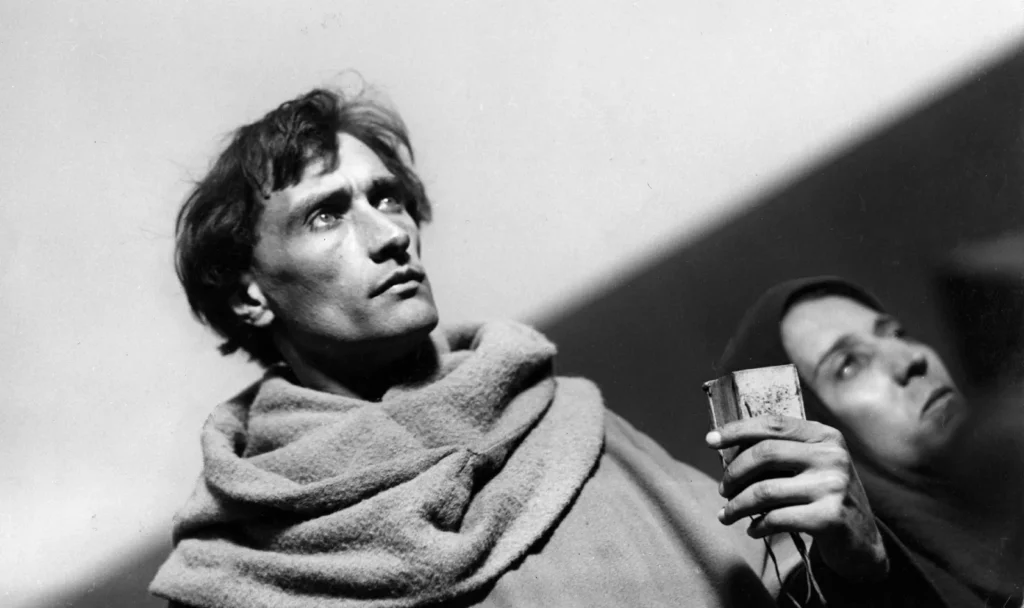
There is a man sitting in a waiting room. Not a dramatic waiting room, not a threshold of anything significant — just the flat fluorescent hum of an ordinary afternoon, plastic chairs, a number called that is not his number. And he cannot do it. Cannot arrange his face into the expression the room requires. Cannot perform the mild patience, the mild boredom, the mild presence that everyone around him is performing without apparent effort. His face keeps doing something else, something raw and unscheduled, and the other people in the room shift slightly in their seats because they feel it, this failure of the ordinary mask, and it makes them profoundly uncomfortable in a way they will not be able to name by evening.
This is not madness as spectacle. This is something quieter and more devastating: the simple inability to dissociate perception from pain, to insert the buffer that social life requires between what you feel and what you show. Erving Goffman, in his 1959 study of social interaction, described human life as a continuous performance, every person managing impressions, presenting a front, backstage and frontstage, the self as a series of calculated appearances calibrated to context and audience. The model is brilliant and largely correct. It describes, with sociological precision, what most of us do most of the time without knowing we are doing it. But the model has a silent assumption built into its foundation: that the performer retains enough distance from their own experience to manage it, that there is a gap between feeling and expression wide enough to stage something in. Artaud is the case that breaks this assumption open. Not because he was more sensitive in some romantic sense, but because for him that gap was physiologically, neurologically, constitutively absent. The performance did not fail. It was never available.
What Goffman describes as the given and the given-off — the deliberate presentation and the inadvertent leak — collapsed in Artaud into a single, unmanageable signal. He leaked everything, always. The body that would not obey, the language that kept cracking at its seams, the letters addressed to doctors and God and the void, not as literary gestures but as genuine attempts to report a condition that had no adequate vocabulary. There is a scene in which a man sits across from a woman he loves, and he wants simply to be present, to offer her the ordinary warm opacity that intimacy requires, and instead what comes across is something unbearable — not cruelty, not coldness, but total transparency, an absence of the protective surface that makes closeness possible. She does not leave because he is too much. She leaves because there is no skin.
The theater of cruelty was not a metaphor for artistic intensity. It was a description of lived phenomenology. Cruelty, for Artaud, meant the relentless pressure of unmediated experience, reality without the anesthetic of convention, sensation without the editorial mercy of habit. What he proposed for the stage was what he could not escape in his own nervous system: a total environment in which nothing is neutralized, nothing is prettified, nothing is made bearable through the consensual agreement to feel less.
And this is where the question becomes genuinely uncomfortable, not for Artaud but for everyone else. Because the functional numbness that social participation requires is not pathology. It is adaptation, it is civilization, it is the price of being able to sit in waiting rooms and eat dinner and hold conversations without screaming. Most people pay it without noticing. Some people cannot. What Artaud’s life asks — not gently, not with any interest in your comfort — is whether what we call sanity is partly a learned agreement to perceive reality at a lower resolution, and whether what his scream actually said was not that he was broken, but that he was receiving a signal the rest of us had quietly learned to filter out.
🎭 Theater, Body, and the Edges of the Mind
Antonin Artaud’s vision of the Theater of Cruelty drew from the deepest wells of psychoanalytic theory, bodily practice, and avant-garde artistic rebellion. These related articles explore the intellectual currents that surrounded and shaped his radical thought, from the politics of the body to the dissolution of the self.
Wilhelm Reich: Life and Psychology of the Body
Wilhelm Reich‘s exploration of the body as the site where psychological repression becomes physically inscribed offers a striking parallel to Artaud’s insistence that theater must act directly on the nervous system. Like Artaud, Reich saw conventional civilization as a force that armored and suffocated authentic human expression. Their shared conviction that liberation must pass through the body makes Reich an essential companion to any study of Artaud.
GO TO THE SELECTION: Wilhelm Reich: Life and Psychology of the Body
Jacques Lacan and the Mirror Stage
Jacques Lacan‘s theory of the Mirror Stage illuminates the fragmented subjectivity that haunted Artaud throughout his life and work, from his celebrated correspondence with Jacques Rivière to his asylum writings. The Lacanian subject, constituted through misrecognition and splitting, resonates deeply with Artaud’s anguished sense that his own thought escaped him. Reading Lacan alongside Artaud reveals the psychoanalytic underpinnings of the Theater of Cruelty‘s assault on unified identity.
GO TO THE SELECTION: Jacques Lacan and the Mirror Stage
The Avant-Garde Cinema: Movies to Watch
The avant-garde cinema that emerged in the twentieth century owes an incalculable debt to Artaud’s theorization of spectacle as sensory shock and ritual transformation. From Luis Buñuel to Kenneth Anger, filmmakers absorbed Artaud’s demand that images bypass rational comprehension and strike the viewer at a visceral level. This curated selection of avant-garde films offers a living testament to the cinematic afterlife of Artaud’s revolutionary ideas.
GO TO THE SELECTION: The Avant-Garde Cinema: Movies to Watch
Francis Bacon: Life and Works
Francis Bacon, like Artaud, was an artist obsessed with the scream, the flesh, and the dissolution of the human figure under invisible pressures. Bacon’s distorted bodies seem to enact on canvas precisely what Artaud demanded of the stage: a confrontation with raw existence stripped of all comfortable representation. Exploring Bacon’s life and works deepens our understanding of the broader twentieth-century project to which Artaud so ferociously contributed.
GO TO THE SELECTION: Francis Bacon: Life and Works
Discover Cinema That Dares to Break Every Boundary
If Artaud’s relentless questioning of art, body, and consciousness moves you, Indiecinema is the streaming platform where that spirit lives on. Explore a curated selection of independent and avant-garde films that challenge perception and transform the act of watching into a genuine experience. Join the community and let cinema do what Artaud always demanded of theater: shake you to the core.
👉 EXPLORE THE CATALOG: Watch Indie Films in Streaming
A vision curated by a filmmaker, not an algorithm
In this video I explain our vision

