
The Ritual You Never Questioned
You stand at the table and you do not know why you are standing. Someone says a few words — a blessing, a toast, a name spoken with a particular gravity — and something in your body responds before your mind does. You lower your head, or you raise your glass, or you go quiet in a way that has nothing to do with choosing to be quiet. The food gets served in a specific order that nobody decided this morning. The chair at the head of the table belongs to someone for reasons that were settled before you were born. There is a candle, or a flag on the wall, or a photograph of someone dead positioned where it can see the room. You have done this hundreds of times. You will do it again next year. You have never once asked what it is you are actually doing.

This is not a small oversight. This is the central fact of your mental life.
Ernst Cassirer spent the better part of the first half of the twentieth century trying to articulate what most of philosophy had been content to leave vague: that the human animal does not live in reality. It lives in a web of symbols it has woven around reality, and it has largely forgotten the weaving. His three-volume Philosophy of Symbolic Forms, published between 1923 and 1929, is an attempt to map this web — language, myth, science — not as stages of progress from primitive to rational, but as autonomous modes of making meaning, each with its own internal logic, each constructing its own version of what is real. The mythic mode is not the one we left behind. It is the one we have absorbed so thoroughly that we experience it as nature.
What Cassirer understood, and what most inheritors of Enlightenment optimism have preferred not to understand, is that myth does not require belief. It requires participation. You do not have to believe in the sanctity of the nation to feel a specific tightening in your chest when a particular melody begins in a stadium. You do not have to subscribe to any theology to feel that breaking a certain rule at a funeral would be a violation of something real, something that would cost you socially and psychologically in ways no argument could fully repair. The myth operates through the body before it reaches the intellect, which is precisely why the intellect so rarely catches it.
The anthropologist Bronisław Malinowski, writing in the 1920s in his studies of Melanesian islanders, observed that myth among the people he studied was not a story told for entertainment or even for explanation. It was a charter — a living justification for the way things were arranged right now, today, in the village. The myth was not about the past. It was about the present, dressed in the grammar of the past. Cassirer takes this observation and pushes it further: every culture uses this grammar. The Western world simply uses it with greater institutional sophistication and therefore with greater invisibility.
Consider the meal again. The order of who speaks and who serves and who sits and who waits encodes a complete theory of hierarchy, of gender, of age, of debt and obligation, of what is sacred and what is merely useful. None of this was written down this morning. All of it was transmitted through the same channels that transmitted the myths Cassirer studied in his account of primitive symbol-forming: through gesture, through repetition, through the emotional consequence of doing it wrong. The sanction for transgression is rarely articulated. It is felt. And what is felt without being articulated is, in Cassirer’s precise sense, mythic.
You were not raised in a myth-free environment and later exposed to mythology. You were always already inside it, breathing it, becoming legible to others through it.
Venetian Arcanum
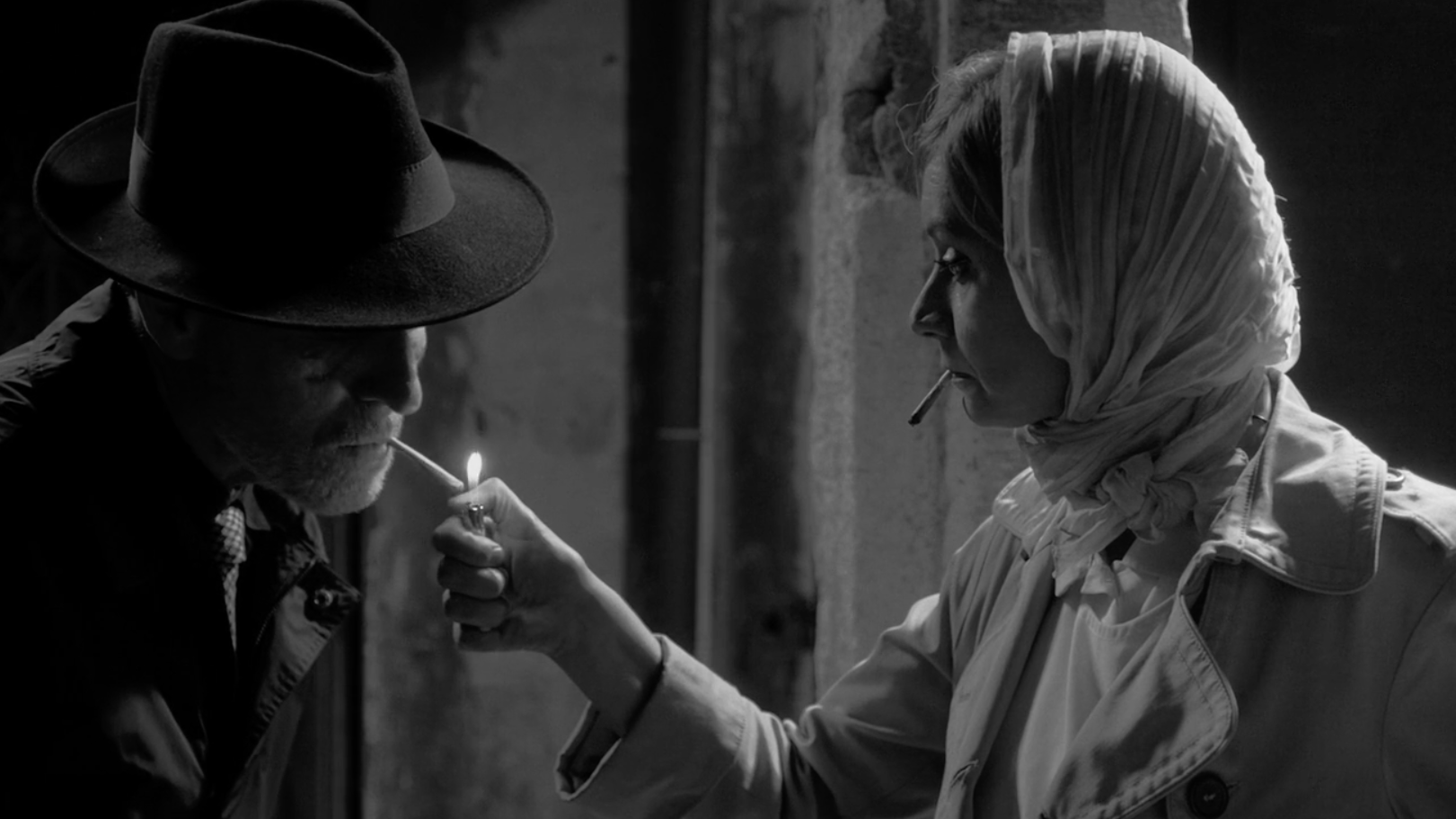
Thriller, by Serge Turgeon, Italy, 2025.
In Venice, a mysterious presence appears once every century or two, haunting the canals and hidden corners of the city. Driven by a sense of destiny, a woman decides to search for it. Following its elusive traces, she is drawn deeper and deeper into the city’s arcane secrets. Reality and myth begin to blur, and Venice itself transforms into a labyrinth of dangers.
LANGUAGE: Italian
SUBTITLES: English
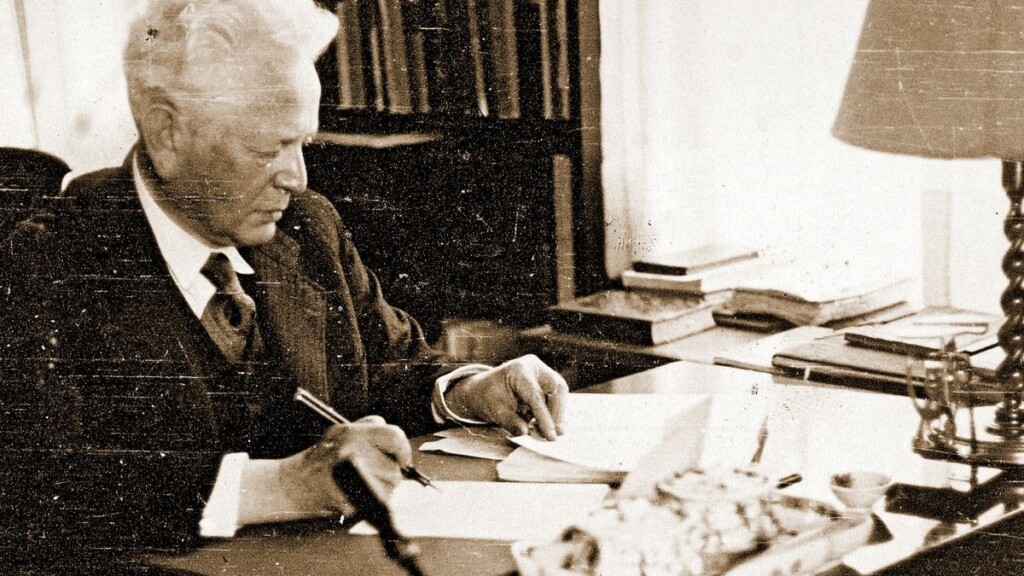
Cassirer at the Ruins: A Mind Built Against Chaos
There is a particular kind of clarity that arrives only when everything around you is disintegrating. Not the clarity of solutions, but the clarity of finally seeing the structure of what is falling apart. Ernst Cassirer knew this kind of vision intimately, and it shaped every page he ever wrote.
He was born in Breslau in 1874 into a prosperous Jewish family, educated in the grand tradition of German idealism, and by the early twentieth century had established himself as one of the most precise and expansive philosophical minds in Europe. He worked within the Marburg school of Neo-Kantianism, which meant he inherited Kant’s fundamental question — not what is the world, but how do we construct the world — and pushed it further than Kant had dared. Where Kant examined the conditions of scientific knowledge, Cassirer asked something broader and more unsettling: what if science is only one of the many ways human beings build a habitable reality? What if language, myth, art, and religion are not primitive distortions of rational thought but fully autonomous symbolic systems, each with its own internal logic, each constructing a world as real to its inhabitants as any laboratory finding?
This question was not born in comfort. The three volumes of the Philosophy of Symbolic Forms appeared between 1923 and 1929, which means they were written during the years when the Weimar Republic was either convulsing through hyperinflation or lurching toward the political instability that would destroy it. Cassirer was working at the University of Hamburg, one of the few German institutions where a Jewish scholar could hold a full professorship at the time. He was watching, from the inside, a civilization that had produced Goethe and Beethoven and Kant beginning to metabolize its own humiliation into something monstrous. The symbolic architecture of German culture was being systematically dismantled and rebuilt by forces that understood, at a visceral level, exactly what symbols do to people.
The philosopher Ernst Bloch would later speak of the “non-simultaneity” of historical time, the way different segments of a population can inhabit entirely different temporal and symbolic worlds simultaneously. Cassirer saw something adjacent to this: that mythic thought does not disappear when rational thought arrives. It goes underground. It waits. And when the social conditions that kept it suppressed — prosperity, institutional trust, shared narrative — collapse, it resurfaces with an appetite that pure reason is entirely unprepared to meet.
In 1929, at the legendary Davos disputation, Cassirer debated Martin Heidegger before an audience that sensed, even if they could not name it, that something civilizational was at stake in the exchange. Heidegger argued for the finitude and thrownness of human existence, for the irreducible groundlessness at the center of being. Cassirer defended the capacity of symbolic forms to elevate human existence beyond mere facticity, to create meaning that transcends the individual’s mortal situation. The two men were not simply disagreeing about philosophy. They were disagreeing about what a human being is, and what a culture owes to the humans inside it. Within four years, Heidegger would align himself with National Socialism. Cassirer would be in exile.
He left Germany in 1933, the same year the Nazi regime passed the Law for the Restoration of the Professional Civil Service, which effectively expelled Jewish academics from German universities. He moved to Oxford, then Gothenburg, then Yale, then Columbia. Each move was a further distance from the ruins he had watched accumulate. And it was in those years of displacement that he wrote what is perhaps his most urgent book, The Myth of the State, published posthumously in 1946, in which he returned to the question of myth not as a philosophical category but as a political weapon, held in the hands of people who had understood its mechanics far better than the philosophers who had studied it.

The Animal That Tells Stories to Survive
You were not born afraid of the dark. That fear was given to you, carefully, by people who loved you — handed over in whispered warnings, in the shape of a story about what lives under the bed, in the particular silence your mother kept when the lights went out. The darkness itself did nothing. It was simply the absence of photons. What terrified you was the symbolic architecture that had already been constructed around it before you had language enough to question any of it. By the time you were old enough to be afraid, the fear was already there, waiting for you like an inheritance.
This is exactly what Ernst Cassirer meant when he insisted, in the second volume of his Philosophy of Symbolic Forms published in 1925, that the human being is not best understood as animal rationale — the rational animal of the Aristotelian tradition — but as animal symbolicum, the creature who lives not in a hard physical reality but in a symbolic universe of its own weaving. Between the stimulus and the response, Cassirer argued, there is a third layer that no other animal possesses in this form: the symbolic layer, the net of meaning that filters, shapes, and ultimately replaces the raw signal of the world before consciousness ever gets to process it. Language does this. Art does this. Science does this. Religion does this. And myth, perhaps more powerfully than any of the others, does this first.
Think of what it means to walk into a space charged with collective memory you did not personally earn. A cathedral at dusk, or the ruins of something that burned, or simply a room where something terrible happened decades before you were born and where everyone around you lowers their voice without quite knowing why. You feel it. The pressure of accumulated meaning pushing against your skin from every surface. You did not create this weight, you did not agree to carry it, but it is yours now the moment you enter, passed to you invisibly by everyone who walked through before you and left their dread folded into the air. This is not metaphor. This is the actual phenomenological mechanism Cassirer is pointing at: the human nervous system does not encounter the room. It encounters the story the room has accumulated.
Cassirer was writing against a tradition that wanted to locate the essence of humanity in reason understood as abstract cognition — the capacity to compute, to deduce, to abstract. His critique was that this account left out the overwhelming majority of how human beings actually relate to their world and to each other. The symbol is not a tool for encoding a pre-existing reality. It is the medium in which reality is constituted for human experience at all. There is no raw world available to you prior to the symbolic forms through which you apprehend it. Even perception, even the immediate sensation of heat or color, arrives embedded in categories that language and culture have already laid down. Cassirer drew here on the Kantian inheritance — the idea that the mind is not a passive mirror but an active structure — but he radicalized it: not one a priori structure, but many, each symbolic form creating its own distinct layer of experienced reality.
What this means for myth is decisive. Myth is not a failed attempt at science, a primitive groping toward the explanations that reason would later provide correctly. It is a distinct symbolic form with its own internal logic, its own coherence, its own way of constituting a world. The child who learns to fear the dark is not making an error that education will correct. The child is doing precisely what the species does: receiving a world already thick with meaning, already populated by forces and presences, already storified into something habitable — which is also to say, something terrifying in its own specific way.
Myth Is Not Error. Myth Is Architecture.
There is a moment when you stand in a crowd and something shifts. Not gradually, not metaphorically — it actually shifts, like a tectonic plate moving beneath the floor of ordinary perception. The air changes temperature. Voices align without being directed. You look at the faces around you and they are no longer faces you recognize as individual, separate, biographical. They have become something else, and so have you, and the terrifying thing is that it feels more real than the morning you left your house, more real than the name your parents gave you. Something has been activated that your rational vocabulary has no adequate word for, and the worst response — the most dishonest response — is to call it irrationality and walk away.
The Enlightenment made exactly that mistake, and it made it at scale. The eighteenth century’s great project was emancipation through reason, which was genuinely necessary and genuinely liberating in many of its dimensions, but it carried inside it a hidden tax: the assumption that anything which did not operate according to logical propositions was a failure of mind, a childhood of civilization waiting to be outgrown. Myth, in this framework, became error with decoration. It was what you believed before you knew better. Voltaire’s contempt for superstition, Condorcet’s faith in indefinite human progress, the entire architecture of the Encyclopédie — all of it rested on the premise that the symbolic world was a placeholder, a scaffolding to be dismantled once the real structure of scientific understanding was complete.
Ernst Cassirer spent his philosophical life dismantling that assumption with surgical precision, and the first volume of his Philosophy of Symbolic Forms, published in 1923, is where the argument opens most dangerously. Myth, for Cassirer, is not a failed attempt at science. It is not a confused effort to explain lightning before meteorology existed. It operates on an entirely different register — not earlier, not inferior, but structurally distinct. Mythical thinking does not ask whether something is factually true. It asks what something means within the total economy of existence, where nothing is neutral, nothing is merely causal, and every object pulses with significance that exceeds its physical properties. The world of myth is a world of absolute presence, of radical participation, where the symbol does not represent the sacred but is the sacred. This is not confusion. This is a different architecture of reality.
Claude Lévi-Strauss, working from a completely different disciplinary tradition but arriving at a structurally compatible insight, demonstrated in his analysis of mythological systems across cultures that myth performs a specific cognitive operation: it mediates contradictions that cannot be resolved logically. The binaries that tear at human experience — life and death, nature and culture, individual and collective — cannot be reconciled through argument. Myth does not pretend to resolve them. It holds them in dynamic tension through narrative, allowing a society to live with the irresolvable without being destroyed by it. This is not primitive confusion. It is extraordinarily sophisticated work.
Mircea Eliade added the dimension of time. In The Sacred and the Profane, published in 1957, he argued that mythic consciousness does not experience time as linear accumulation but as cyclical re-entry into a primordial moment, what he called in illo tempore — in that time, the founding time, the time before time. Every ritual is a return, not a commemoration. When the crowd stirs and the voices align, what is happening is not regression into superstition. It is the deliberate activation of a different temporal register, one in which the distance between now and the origin collapses completely.
You already know this. You have felt the floor shift. The question that remains is why you were taught to call that feeling a mistake.
When Symbols Become Chains: The Political Mythology
You remember the moment not as an epiphany but as a small collapse. You were looking at a photograph — your grandfather in a uniform, your family around a table on a holiday whose meaning you had never once questioned — and something shifted, not dramatically, but the way a floor shifts when you realize the house was built on something other than what you were told. The story you had carried about who your people were, what they stood for, what enemies they had faced and righteously defeated, did not shatter. It simply revealed itself as a story. And that revelation was worse than shattering, because it left everything intact and nothing trustworthy.
Cassirer understood this vertigo with the precision of someone who had lived it personally. The Myth of the State, completed in the final months of his life and published in 1946, the year after his death, is not an abstract treatise. It is a diagnosis written from inside the disease. Having watched National Socialism transform a modern industrial nation into a machinery of mythological consciousness — having fled that transformation as a Jewish intellectual who had once believed in the German philosophical tradition as his own — Cassirer was writing about something he had felt in his own body, in his own exile, in the particular grief of a man whose intellectual home had been occupied and redecorated into something monstrous.
His central argument is as precise as it is terrifying: the myths that took hold in the twentieth century were not survivals, not the organic residue of ancient symbolic thinking that modernity had failed to dissolve. They were manufactured. Deliberately, technically, with full awareness of the mechanisms involved. The political technicians of fascism had read the anthropologists. They knew how ritual works, how the repetition of symbol bypasses rational deliberation, how the enemy figure consolidates group identity by giving fear a face. What appeared as a return to primal instinct was in fact a highly engineered deployment of the symbolic mode, aimed precisely at dismantling the distance that rational consciousness requires in order to function.
A man stands in a torchlit square. He did not choose to be there. He was brought by a current of invitation, social pressure, the desire not to be outside when everyone else is inside. The chanting finds a rhythm in his chest before his mind processes the words. The flags, the gestures, the sheer choreography of belonging — these are not decorations. They are the technology. By the time the enemy is named, he already feels it, already knows in the pre-linguistic register of the body that the enemy is real, is threatening, is other. Cassirer identifies this as the deliberate reactivation of mythological consciousness: not a regression but an induction, performed by people who understood exactly what they were doing.
Hannah Arendt, writing in parallel in The Origins of Totalitarianism in 1951, would reach toward similar conclusions through a different route, but Cassirer had arrived first, and he had arrived with the philosopher’s specific grief — the grief of someone who had built an entire intellectual life on the idea that the symbolic forms, including myth, were stages in a process of human self-liberation, only to watch that same symbolic capacity be weaponized against everything liberation meant.
The photograph in your hands is not innocent. The holiday at that table was not discovered by your family, it was installed — by someone who understood that the stories people carry about their origins are the most powerful chains ever forged, precisely because they feel like wings. You do not wear them. You are them. And the vertiginous feeling that comes with seeing this clearly is not the feeling of freedom. It is the feeling of understanding, for the first time, the dimensions of the room you have always lived in.
A vision curated by a filmmaker, not an algorithm
In this video I explain our vision
The Screen as Myth Machine

You have seen it a hundred times and never once questioned the grammar of it. A man stands at the edge of something — a burning city, a flooded valley, a border that cost someone their life to draw — and the camera, which is to say the collective gaze of everyone who will ever watch this moment, holds on his face just long enough for you to understand that he is about to lose something irreplaceable in order to save something larger than himself. You do not ask who decided that this is what heroism looks like. You feel it in your sternum before your mind has time to form a single skeptical syllable. That feeling is not innocent. It is a myth operating at full efficiency.
Roland Barthes understood this mechanism with a precision that still feels violent to read. In Mythologies, published in 1957, he described myth not as falsehood but as a second-order semiological system — a form of speech that steals history, empties it of its contingency, and returns it to you dressed as nature. The wrestling match, the face of Garbo, the steak and chips of French identity: each one a historical construction presented as self-evident fact. What Barthes identified in magazine photographs and newspaper headlines, the moving image has since perfected into an almost neurological art. When a young soldier kisses a photograph of his mother before walking into fire, you are not watching a scene someone wrote on a Tuesday afternoon in a script room. You are receiving a transmission from a structure so old it no longer has a known author.
Cassirer would have recognized this immediately. For him, mythological thinking does not belong to a primitive past that enlightened modernity has transcended. It is a permanent possibility of human symbolic consciousness, always available, always ready to reactivate when rational frameworks lose their grip on collective anxiety. The nation, the race, the sacred soil — these are not ideological distortions of some purer reality beneath. They are symbolic forms, organizing perception according to the same logic that once made the thunderstorm into a god’s anger. The screen does not create these myths. It inherits them, accelerates them, and gives them faces you cannot forget.
Consider the woman whose body becomes the terrain of collective meaning. She is pure and must be protected, or she has been contaminated and must be punished, and in either case her actual interiority — her fear, her desire, her sovereign self — is entirely beside the point. The point is the symbol she has been made to carry. A village burns because of what was done to her, which means the village was always already burning in the symbolic logic that preceded her existence. You have watched this happen in stories set in every era and geography, and what you absorbed was not only the story but the structure: that feminine bodies encode communal honor, that their violation is a wound to the collective, that the male response to that violation is the engine of legitimate violence. Barthes called this the transformation of history into nature. The screen calls it drama.
What makes visual narrative so extraordinarily efficient as a myth machine is precisely what Cassirer called the affective quality of mythological space — the way it collapses the distance between sign and thing, between representation and reality. When you see the homeland depicted as a landscape of golden light and ancestral graves, you are not being given information about a place. You are being installed inside a feeling that the place has always already generated, naturally, inevitably, as though geography itself were making the claim rather than a cinematographer choosing a lens. The claim precedes your consent. It arrives before you have assembled your defenses.
And the most unsettling part is not that these myths are constructed. It is that you yourself have participated in constructing them — in the act of feeling moved, in the tear you did not stop, in the fist you made without noticing.
The Crack in the Symbol: Where Consciousness Begins
There is a moment — you may have had it yourself — when you are standing in a crowd, arm raised with everyone else’s arm, mouth open to repeat a phrase you have repeated a hundred times, and something interrupts. Not a thought, exactly. More like a delay. A fraction of a second in which the words have not yet arrived and you feel, nakedly, the gap between the gesture and whatever it is supposed to be pointing at. The crowd carries on. You carry on with them, a half-beat behind. But something has happened that cannot entirely unhappen.
Cassirer spent his philosophical life trying to understand that delay. His argument, across the three volumes of the Philosophy of Symbolic Forms completed between 1923 and 1929, is that the symbolic forms — language, myth, art, science — are not decorative overlays on a reality that exists prior to them. They are the conditions of reality as it is humanly experienced. There is no pre-symbolic access to the world. The forms are constitutive, not descriptive. And this is where the problem that haunts every serious reader of Cassirer finally surfaces: if every mode of consciousness is itself a symbolic form, if we cannot step outside the system of representation, then what exactly is doing the critiquing when we criticize myth? Where does the critical distance come from?
Cassirer’s answer is not comfortable. He does not offer an Archimedean point outside the forms. What he argues instead is that certain symbolic forms possess a reflexive capacity — the capacity to turn on themselves and interrogate their own operations. Philosophy, science, and art can do this in ways that myth structurally cannot. Myth does not examine itself. It presents its symbols as transparent, as direct windows onto sacred reality. The symbol and what it symbolizes are fused in a mythical consciousness, and this fusion is precisely what gives myth its enormous affective and social power. When that fusion cracks — even momentarily — something like critical thought becomes possible. Not from outside the forms, but from within them, through forms capable of acknowledging their own mediated character.
Susanne Langer, who extended and transformed Cassirer’s project in her 1942 work Philosophy in a New Key, pressed this point toward a more radical conclusion. For Langer, the great insight was that symbolic transformation is not one human activity among others — it is the fundamental human act, the one from which all others derive. What distinguishes the forms is not their content but their mode of symbolization. Discursive language handles meaning sequentially, proposition by proposition. Presentational forms — music, visual art, ritual gesture — carry meaning in their simultaneous structure, in a way that cannot be paraphrased without being destroyed. This distinction matters here because it means that the crack in the symbol, that half-beat of delay, is not reducible to a failure of language. It is a disturbance in the presentational fabric itself, a moment when the form stops being transparent and becomes visible as form.
The man who paused in the middle of the march, who had marched every year since childhood and for whom the march had always felt like walking inside something absolute — he does not stop marching. He finishes the route. He goes home. But something has been displaced. He now lives, as perhaps you live, in the uncomfortable middle space Cassirer never fully resolved: inside the myth because there is nowhere else to stand, aware of the myth because the reflexive forms have done their work, unable to exit because the exit is itself another symbolic construction, another form that carries its own unexamined premises.
This is not failure. Cassirer would not have called it failure. But it is a condition of permanent discomfort, the specific discomfort of a consciousness that has felt the gap and cannot unfeel it, that carries the weight of symbolic awareness the way you carry the memory of a sentence that changed the texture of a room.
What Remains When the Story Dissolves
There is a moment, familiar to anyone who has pushed a belief system past its breaking point, when the relief of disenchantment lasts exactly as long as it takes to reach for the next thing. You stop believing in the religion of your childhood and find yourself, three years later, reading horoscopes with an ironic smile that fools no one, least of all yourself. You abandon the political ideology that once gave your mornings a sense of direction and discover you have quietly adopted another, with different vocabulary but identical emotional architecture. The myth dissolves. You watch it go. And then your hands, as if operating independently of whatever clarity you have just purchased, begin building again.
Cassirer saw this not as weakness or hypocrisy but as the structural condition of being human. The symbolic forms are not errors to be corrected. They are the medium in which human consciousness moves, the way water is the medium in which fish move, and the analogy is not decorative. A fish that has understood the nature of water has not thereby escaped it. The understanding itself occurs inside the same element. This is what makes the Philosophy of Symbolic Forms, published across three volumes between 1923 and 1929, something other than a liberation manual. It is, if read honestly, a precise cartography of a captivity so total that the cartography is itself part of the captivity.
Ernst Cassirer never flinched from this implication, but he also never fully inhabited it. His temperament was Enlightenment optimism carried into the twentieth century, and that optimism insisted that naming the cage was already a form of freedom, that symbolic self-awareness created a qualitative difference between the human animal lost in myth and the human animal who had mapped myth’s operations. But the scene that haunts his argument is one he never staged explicitly. A man who has survived the collapse of every certainty he was raised inside sits at a table and finds himself, without having decided to, organizing the chaos of his experience into a narrative with a beginning, a logic, and an implicit meaning. He is not choosing to do this. He is watching himself do it the way you watch your hand pull back from heat before the pain has consciously registered. The symbol-making does not wait for permission.
Susanne Langer, who extended Cassirer’s framework into aesthetics and biology in her 1942 Philosophy in a New Key, argued that symbolization is not a behavior the human organism performs but a need it has, as fundamental as the need for food. The implication is metabolic rather than intellectual. You do not decide to mythologize your experience any more than you decide to digest it. The question of whether a given myth is true becomes almost secondary to the question of what function its particular shape serves, what hunger it answers, what kind of order it imposes on what kind of dread.
And dread is the word. What Cassirer circled without quite landing on, what his historical moment — writing as Weimar dissolved, watching rationalist culture collapse into exactly the primitive mythological thinking he had theorized — pressed upon him as lived evidence rather than philosophical abstraction, is that the alternative to myth is not clarity. The alternative to myth is a terror that the organism cannot sustain. Cassirer died in 1945, a few weeks before the formal end of the war, having spent his final years in American exile, watching everything his intellectual world had assumed about the progressive power of reason turn to ash over Germany. He kept writing. He kept building symbolic forms with which to understand the destruction of symbolic forms.
What remains, then, when the story dissolves, is not a human being standing free in undifferentiated reality, but something reaching, in the silence, for the materials of the next necessary fiction, which may be the truest definition of the creature we have managed to produce so far.
🔮 Symbols, Myths, and the Forms of Human Thought
Ernst Cassirer’s Philosophy of Symbolic Forms places myth at the very heart of human cultural life, revealing how symbolic thinking shapes our understanding of the world. These related articles explore adjacent thinkers and ideas that illuminate the terrain of myth, memory, cultural meaning, and the symbolic imagination.
Jan Assmann and Cultural Memory
Jan Assmann’s theory of cultural memory examines how societies encode their foundational myths and values into lasting symbolic forms, transmitted across generations. This work resonates deeply with Cassirer’s insight that myth is not primitive error but a fundamental mode of symbolic articulation. Assmann reveals how collective identity is always constructed through the cultural shaping of the past.
GO TO THE SELECTION: Jan Assmann and Cultural Memory
Pierre Nora and the Sites of Memory
Pierre Nora’s concept of ‘sites of memory’ explores how modern societies anchor their mythological and historical consciousness in specific places, objects, and rituals. His framework parallels Cassirer’s argument that symbolic forms give structure to otherwise formless human experience. Together, Nora and Cassirer illuminate how meaning is never spontaneous but always mediated through cultural construction.
GO TO THE SELECTION: Pierre Nora and the Sites of Memory
Giordano Bruno and the Hermetic Tradition
Giordano Bruno’s engagement with the Hermetic tradition exemplifies the power of symbolic and mythological thinking in early modern philosophy, a tradition Cassirer himself analyzed extensively in his studies of the Renaissance. Bruno’s cosmological imagination was saturated with mythic archetypes and symbolic correspondences that defied purely rational categorization. His life and thought offer a vivid case study of how myth and philosophy interweave at moments of cultural transformation.
GO TO THE SELECTION: Giordano Bruno and the Hermetic Tradition
Jungian Individuation and the Great Work
The relationship between Jungian individuation and the alchemical Great Work offers a striking parallel to Cassirer’s account of myth as a symbolic process of self-transformation and world-ordering. Jung, like Cassirer, understood that mythic and symbolic forms are not mere superstition but vehicles through which the psyche articulates its deepest truths. This article traces how the language of alchemy becomes a living symbolic system in the Jungian therapeutic process.
GO TO THE SELECTION: Jungian Individuation and the Great Work
Cinema as Symbolic Form: Watch on Indiecinema
Just as Cassirer saw in myth a primary form through which humanity gives shape to the world, independent cinema offers its own symbolic language for exploring the depths of human experience. On Indiecinema you will find films that dare to think mythically, visually, and philosophically — beyond the formulas of mainstream storytelling. Dive into our streaming catalog and let the images speak where words fall silent.
👉 EXPLORE THE CATALOG: Watch Indie Films in Streaming
A vision curated by a filmmaker, not an algorithm
In this video I explain our vision

