
The Stranger on the Train
You are standing in a train carriage at rush hour, pressed between a man whose elbow finds your ribs every time the track curves and a woman who exhales with a faint whistle through her nose, rhythmically, without awareness. You do not know their names. You will never know them. And yet your entire body is already organized around them — your shoulders pulled inward, your jaw set at a particular angle, your eyes performing that specific urban discipline of looking without seeing, of registering without acknowledging. You are alone in a crowd, which is not the same as being alone, and somewhere in that difference lives one of the most consequential questions ever posed about modern existence.

The city did this to you. Not this city, not today — the city as a form, as a machine for producing a particular kind of human being who has learned to manage overstimulation through withdrawal, who has trained the nervous system to filter and mute, who has built an interior room with no windows facing outward. Georg Simmel, writing in Berlin at the turn of the twentieth century, watched people on trains and in cafés and on crowded Wilhelmine streets and understood something that most social thinkers of his era were too ideologically committed to admit: modernity does not liberate the individual. It saturates the individual, overwhelms them, and then forces them to construct a shell of indifference as a survival mechanism.
Simmel was born in Berlin in 1858, at a crossroads, literally — his father’s confectionery shop stood at the intersection of Leipziger Strasse and Friedrichstrasse, one of the busiest commercial junctions in a city that was expanding at a rate that had no precedent in European history. Berlin’s population grew from roughly 400,000 in 1850 to over two million by 1900, and Simmel grew up inside that acceleration, watching the human animal adapt in real time to conditions it had never evolutionarily prepared for. This is not incidental biography. It is the laboratory in which his entire sociology was formed.
What Simmel intuited, and what most of his contemporaries missed, is that the sheer number of people you encounter without knowing — the man with the elbow, the woman with the whistle — does something to the architecture of the self. It does not leave you neutral. Erving Goffman would later systematize this in his studies of interaction ritual and civil inattention, but Simmel felt it first, felt it as a philosopher feels a problem before the vocabulary exists to name it. The anonymous other is not absent from your experience. They are a weight, a pressure, a demand that you manage and deflect continuously, and that management has costs that accumulate invisibly over decades.
His 1903 essay “The Metropolis and Mental Life” — arguably the most compressed and devastating diagnosis of urban modernity ever written in under thirty pages — opens precisely with this observation: the metropolitan individual develops what Simmel calls a blasé attitude not from weakness or moral failure but from a rational defensive response to the impossibility of fully engaging with every stimulus the city produces. If you responded emotionally to every face on that train, you would be destroyed by noon. So you stop responding. You build the shell. And then you carry the shell everywhere, including into the places where you actually wanted to feel something.
That is the trap Simmel is pointing at. Not the alienation of labor, which Marx had already diagnosed with surgical precision. Not the disenchantment of the world, which Weber would name with cold theological grief. Something more intimate and more insidious: the way that proximity without connection quietly rewires the capacity for connection itself, so gradually, so thoroughly, that by the time you notice what has happened, the man with the elbow has already left the train and you cannot remember his face.
Venetian Arcanum

Thriller, by Serge Turgeon, Italy, 2025.
In Venice, a mysterious presence appears once every century or two, haunting the canals and hidden corners of the city. Driven by a sense of destiny, a woman decides to search for it. Following its elusive traces, she is drawn deeper and deeper into the city’s arcane secrets. Reality and myth begin to blur, and Venice itself transforms into a labyrinth of dangers.
LANGUAGE: Italian
SUBTITLES: English
A Life Built on the Margins
Berlin in 1858 is not the city you might imagine when you think of Europe’s intellectual capitals. It is loud, expanding, cracking at its own seams. The population is doubling within decades, the streets are being reorganized around commerce and speed, and the old certainties of religious and communal life are dissolving faster than any social theory can track. Into this particular moment, Georg Simmel is born — the youngest of seven children, to a Jewish family that had converted to Christianity, at the precise intersection where belonging is always already conditional. His father dies when Georg is young. A music publisher friend of the family becomes his guardian and leaves him an inheritance substantial enough to survive on. Which is fortunate, because the institution that should have sustained him never would.
He spends fifteen years as a Privatdozent at the University of Berlin. Fifteen years. In that system, a Privatdozent receives no salary from the university — he collects fees directly from the students who attend his lectures, which means his income depends entirely on whether people find him worth listening to. They do. Students arrive from Vienna, from Paris, from Budapest and Warsaw, packing the hall to hear a man who holds no chair, carries no title, commands no institutional authority whatsoever. Max Weber writes admiringly of his intellect. Rainer Maria Rilke attends his lectures. Henri Bergson acknowledges his influence. The academy rewards him with nothing.
The rejection letters are not even subtle about their reasoning. One evaluation, circulated among the faculty, describes him as fundamentally unsuited for a permanent position — and the language used makes clear that “unsuited” means Jewish, even after conversion, even after generations of assimilation. Georg Jellinek, one of the few who advocated for him, understood exactly what was happening. Simmel himself understood it too. What is remarkable is not that he recognized the exclusion, but what he did with that recognition philosophically.
The sociologist Lewis Coser, writing in the mid-twentieth century, identified Simmel as the archetypal “stranger” — and drew directly on Simmel’s own essay of that name, written in 1908 as part of his major work Soziologie. The stranger, Simmel argues, is not simply the person who arrives from elsewhere. The stranger is the one who arrives and stays, who is simultaneously near and far, inside and outside. The stranger sees the group’s internal logic with a clarity that full members never achieve, precisely because that clarity is the consolation prize for exclusion. You cannot romanticize the machinery of belonging when you are never permitted to touch it without scrutiny.
This is what his marginality produced epistemologically. It is not that suffering made him wise in some sentimental sense. It is that his structural position — permanently adjacent to the centers of power, perpetually evaluated and found wanting on grounds that had nothing to do with his actual thought — forced him to develop a sociology of surfaces, of interactions, of the micro-level forms through which society actually operates on human beings, rather than the grand systems that full insiders tend to construct from their comfortable positions within the machinery they are theorizing.
He finally receives a full professorship in 1914, at the University of Strasbourg, four years before his death. He is fifty-six. The appointment comes just as the First World War begins to make Strasbourg feel less like an opportunity and more like a frontier outpost. He dies there in 1918, of liver cancer, having spent the last years of his life largely cut off from the Berlin intellectual world that had shaped him and refused him in equal measure. The city that made him what he was never gave him a room of his own within it.
What the institution could not accommodate, the margins produced instead.

The Money in Your Pocket Is Not What You Think
There is a dinner you remember not because of what was said but because of the moment the bill arrived. Someone picked it up — quickly, too quickly, with a kind of practiced fluency that told you everything had already been calculated before the appetizers. The evening, which had felt like something, suddenly revealed itself as something else. A favor being returned. A relationship being maintained at a set price. You smiled across the table and understood, without wanting to, that you had never been a guest. You had been a line item.
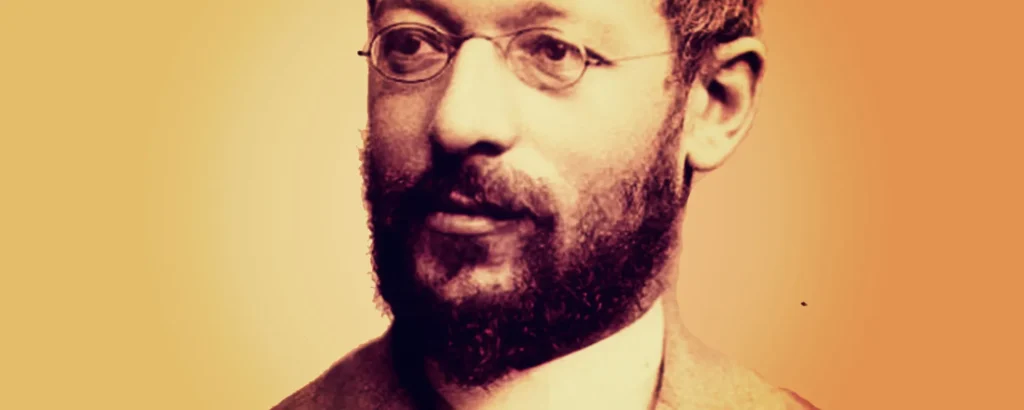
Georg Simmel published The Philosophy of Money in 1900, and it is one of the strangest and most penetrating books ever written about how human beings relate to one another. It is not an economics text. It does not care about markets in the way that Adam Smith or Marx cared about markets. It cares about something more intimate and more disturbing: how the logic of monetary exchange does not merely describe transactions but quietly colonizes the entire emotional and relational architecture of modern life. Simmel was not saying that money corrupts an otherwise pure social world. He was saying that money makes visible what social life was already doing, had always been doing, beneath its rituals of warmth and reciprocity.
The central move of the book is deceptively simple. Money is the great equalizer, the universal solvent that dissolves qualitative differences into quantitative ones. This object and that object, this hour of labor and that hour of labor, this person’s company and that person’s company — all of it becomes, through money, commensurable. All of it can be placed on a scale. And once something can be placed on a scale, it can be measured against something else, and once it can be measured, it can be replaced. The irreplaceable becomes, structurally, replaceable. This is not a moral judgment Simmel is making. It is a phenomenological observation about what happens inside us when we live inside monetary culture long enough.
Think of the gift. Not a purchased gift — the thing itself, the act of giving. Marcel Mauss, writing his essay on the subject in 1925, understood that gift exchange in pre-modern societies was never free. It bound people in webs of obligation, status, and reciprocity that were intensely social precisely because they could not be settled with money. The gift created a relationship that could not be closed. Money does the opposite. Money closes things. It settles accounts. It transforms the open-ended, asymmetrical, time-extended bond of mutual obligation into a clean, symmetrical, instantaneous exchange. And once that transformation happens inside your imagination — once you begin to experience the gift as a down payment or the dinner as a transaction — you cannot easily unlearn it.
There is a man who discovers, late in life, that his father has kept a meticulous ledger of every sum given to him over decades, every birthday envelope, every emergency loan, every quiet transfer. The love he had believed in, the particular texture of it, the specific warmth, retroactively reorganizes itself into something with a different structure entirely. The money was never incidental. The accounting was never separate from the feeling. Simmel would not say the father did not love his son. He would say that the form in which modern love expresses and sustains itself is inseparable from the monetary logic that surrounds it, shapes it, gives it its particular nervous quality.
What money does, Simmel argues, is not impose an alien rationality onto human relationships. It accelerates and clarifies a rationality that was latent in them from the beginning. The desire to measure, to compare, to know whether you are getting as much as you are giving — this is not something capitalism invented. It is something capitalism found and sharpened into a tool so fine it cuts without being felt.
Cathnafola - A Paranormal Investigation
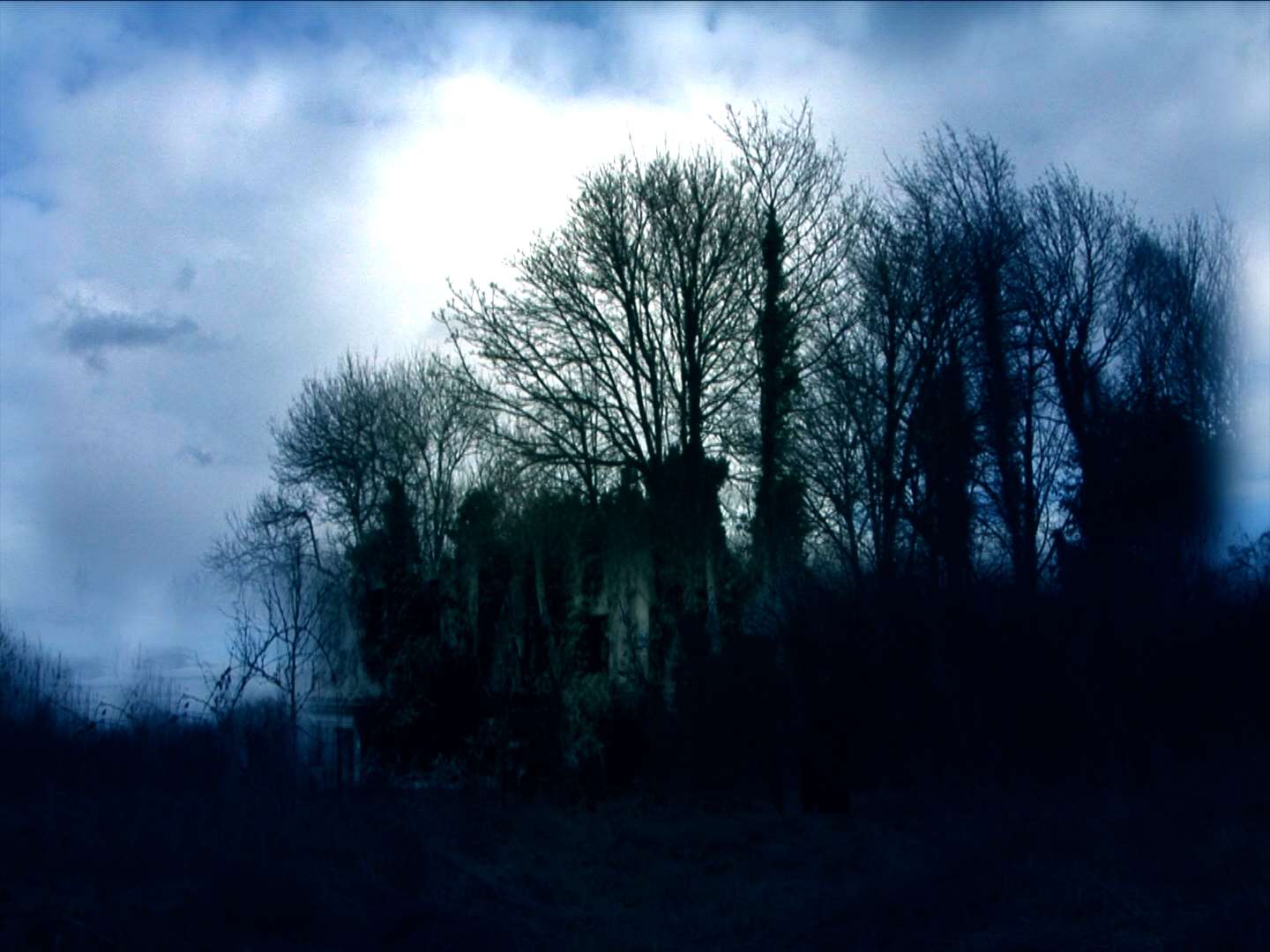
Documentary, horror, by Jason Figgis, USA, 2014.
In "Cathnafola", everything begins when renowned paranormal investigator Chris Halton of Haunted Earth UK receives footage filmed by three teenagers at the ruins of Cathnafola House in Ireland. Determined to unearth the truth behind the location’s bloody past, Halton embarks on a nighttime exploration of the infamous ruins—and soon uncovers terrifying and disturbing revelations.
LANGUAGE: English
SUBTITLES: Spanish, French, German, Portuguese
Forms That Eat Their Contents
You already know how the evening will go before you sit down. You can feel the shape of it the moment you walk into the room — the particular arrangement of bodies, the way someone is already laughing a little too loudly, the careful distance between two people who will later pretend nothing is wrong. You have been here before. Not in this room, not with these people, not about this subject. But here, in this exact structure of human behavior, you have been here a hundred times.
This is what Georg Simmel spent decades trying to articulate, and what he articulated more precisely than almost anyone before or since. Society, for Simmel, is not a thing. It is not an institution or a territory or a set of rules. It is a process, perpetually renewed through interaction, and what gives that process its strange consistency across wildly different circumstances is what he called forms. In his 1908 masterwork Soziologie, he argued that the same recurring configurations — competition, conflict, domination, exchange, flirtation, secrecy — reassert themselves regardless of what particular human beings happen to be fighting over, desiring, or hiding at any given moment. The content changes endlessly. The form endures.
Think of the argument you have had with your father, and then with your first employer, and then with someone you loved, and then with a colleague you barely knew. Different grievances, different stakes, different decades of your life. But the architecture of the conflict — who advances, who retreats, where the silence falls, how the accusation is deflected into a counter-accusation that somehow makes the original wound disappear — that architecture does not change. You reproduced it faithfully each time, without instructions, without even noticing. The form ate its contents and left the skeleton standing.
There is a man at a family gathering, somewhere in Eastern Europe, watching from the edge of the room. He has seen this particular ritual dozens of times: the toast that is really a power claim, the laughter that ratifies the hierarchy, the younger cousin who tries to speak and is gently, smilingly talked over. He does not need to hear the words to know the choreography. His eyes move across the room with the calm, slightly exhausted precision of someone reading a text they have memorized. He already knows the ending before the evening has properly begun. What he is witnessing is form operating with complete indifference to content — the ritual would work identically if they were celebrating a wedding or mourning a death, if they were peasants or professors. The occasion is interchangeable. The structure is the point.
Simmel borrowed the conceptual distinction between form and content partly from Kantian philosophy, but he drove it somewhere Kant never went — into the sociology of everyday life, into the microseconds of human encounter. Lewis Coser, writing about Simmel in 1956, noted that this formal sociology represented something genuinely strange: an attempt to do for social interaction what geometry does for physical space, to identify invariant patterns beneath the infinite variety of human surfaces. The comparison is illuminating and also slightly unsettling, because it implies that you are, to a considerable degree, a vehicle for forms you did not choose and cannot easily discard.
This is the part that resists comfort. The forms are not external constraints imposed on free subjects. They are constitutive — they shape what feels natural, what feels like a reasonable response, what feels like simply reacting to circumstances. Competition does not merely describe a situation two people find themselves in; it recruits them into a structure that produces predictable behaviors, predictable escalations, predictable gestures of withdrawal and re-engagement. The form thinks through you. The form has been thinking through people for longer than any of the specific people involved have been alive, and it will go on thinking through whoever comes next.
The Metropolis and the Armor We Wear
You walk through the center of a city on a Tuesday afternoon and the sheer density of it hits you before you can name it — the noise arriving in layers, the faces multiplying faster than attention can process them, the advertisements competing with the traffic competing with someone’s argument spilling out of a doorway. And then something happens inside you that is not quite a decision. The noise does not disappear. The faces do not thin out. But you stop registering them as things that require a response. You move through it all with a smoothness that could be mistaken for indifference, and perhaps you have mistaken it for indifference yourself. You call it being tired of people. You call it growing up.
Simmel called it something else. In 1903, delivering what would become one of the most consequential essays in the history of social thought, he described the blasé attitude not as emotional failure but as cognitive armor. The metropolis, he argued, bombards the nervous system with a volume of stimuli that the rural environment never produced and for which human biology had no prepared response. The sheer number of transactions — commercial, social, visual, auditory — that a single hour in Berlin demanded from a person in 1903 exceeded what most people in previous centuries would have encountered in a month. The mind adapts. It has to. It learns to flatten its own reactions, to register without responding, to encounter the world through a protective glass that is thin enough to see through but thick enough to keep the overwhelm on the other side.
There is a man moving through a crowded market, threading between bodies with a vacancy in his eyes that is not stupidity and not cruelty. People speak to him and he answers with the minimum the situation requires — not because he has chosen coldness as a philosophy, but because somewhere beneath the surface he is still processing everything, still being struck by everything, and the only way to stay vertical is to perform the opposite of what he feels. The flatness is the effort. The blankness is the labor. He is not absent. He is overextended, and the face he shows the world is the face of a system running too many processes in the background to display anything in the foreground.
Simmel understood this in Berlin when psychology barely had the vocabulary to describe stress, decades before the concept of sensory overload would enter clinical language. He was watching something structural produce something psychological, and he named it with a precision that most therapeutic frameworks would not match for another half century. The blasé attitude, he wrote, is “the correct subjective reflection of a completely internalized money economy” — meaning the city does not just overwhelm the senses, it overwhelms meaning itself. When every relationship is potentially a transaction, when every person you encounter is a stranger who remains a stranger, the psyche stops investing emotionally in encounters it has learned will not deepen. This is not cynicism chosen freely. It is cynicism produced by architecture, by economics, by the sheer mathematics of urban density.
What makes this insight still land with almost physical force is that Simmel was not diagnosing a pathology. He was describing a rational response to an irrational demand. The city asks too much and the mind gives less in return, not because the person inside has diminished but because giving more would cost more than survival allows. The armor is not the problem. The armor is the solution. The problem is the world that made the armor necessary, and the problem with that problem is that most people wearing the armor have long since forgotten there was ever a world without it — have come to believe the glass between themselves and everything else is simply how eyes work, simply what seeing is.
A vision curated by a filmmaker, not an algorithm
In this video I explain our vision
The Sociology of the Secret and the Lie

There is a conversation you have had more times than you can count. Someone asks how you are, and you say fine. Someone tells you they are happy for you, and you thank them. Someone explains their position with apparent sincerity, and you nod. The words move through the air between you with perfect social efficiency, landing in the right places, triggering the right responses, and the entire exchange functions exactly as it was designed to — not to convey truth, but to maintain form. What passes between two people in most of what we call communication is not the transmission of inner states but the performance of a shared fiction that both parties have silently agreed to sustain.
Georg Simmel saw this not as a failure of human honesty but as one of the most sophisticated achievements of social life. His 1906 essay on secrecy, published in expanded form in the Soziologie of 1908, proposed something genuinely unsettling: that society is not built on transparency interrupted by occasional deception, but on structured concealment interrupted by occasional disclosure. Every relationship, he argued, is constituted as much by what is withheld as by what is shared. The secret is not an anomaly in social existence. It is one of its organizing principles.
Think of the moment when two people sit across from each other and speak with complete formal courtesy, while something entirely different moves beneath the surface of every sentence. One of them smiles at a story the other tells. The other refills a glass with precise attentiveness. The room is warm. The manners are impeccable. And yet there is a knowledge — not quite admitted, not quite suppressed — that everything being said is a kind of theater, a stage set that both of them are maintaining with extraordinary skill because the alternative, which is to name what is actually happening, would dissolve not just the conversation but the entire architecture of the relationship. The surface holds because both parties need it to hold. The lie is not imposed by one person on another. It is coconstructed, sustained by mutual participation.
Simmel understood that this is not pathology but sociology. The lie, he wrote, is “one of the greatest achievements of civilization” — not in a cynical sense, but in the precise sense that social coordination requires selective concealment. You cannot share everything with everyone. The capacity to withhold is the capacity to individuate, to maintain an interior life, to exist as something more than a purely social function. Erving Goffman, whose dramaturgical sociology of 1959 owes an enormous intellectual debt to Simmel even when the debt goes unacknowledged, would later call this the management of the front stage and back stage — the systematic production of social appearance as distinct from private reality.
But Simmel went further than Goffman would. He was interested not just in the mechanics of impression management but in the metaphysics of concealment. The secret, he argued, creates a specific kind of social bond — the bond between those who share it, yes, but also the more subtle bond between the keeper of a secret and the one from whom it is kept. Something passes even in what is withheld. The other person knows, on some level, that they do not know everything. The awareness of concealment shapes the relationship even before the content of the secret is relevant. You have felt this. The sense that someone is not telling you something, and the way that sense reorganizes how you read every gesture they make afterward.
What Simmel was mapping was not dishonesty as a social problem to be corrected. He was describing the actual texture of human sociality — the way that full disclosure would not produce intimacy but destroy it, the way that the carefully maintained surface is not the enemy of genuine relation but, paradoxically, one of its necessary conditions.
Conflict as Social Glue
There is a couple you know — maybe you have been part of one — where the argument never ends because ending it would mean something far more frightening than losing. The fight about money that is never really about money. The recurring confrontation about who works harder, who sacrifices more, who is seen and who is invisible. You watch them and think: why do they stay? And then you watch more carefully and understand that the conflict is not what is destroying the relationship. The conflict is the relationship. Remove it and there is nothing left, no gravitational field, no reason to remain in the same room.
Georg Simmel saw this with a clarity that most of his contemporaries found deeply unsettling. In his 1908 essay on conflict, gathered into Soziologie alongside his other formal analyses, he made an argument that still sits uncomfortably in the mind: antagonism is not the opposite of social bonding. It is one of its most efficient engines. Conflict, he wrote, is a form of sociation — Vergesellschaftung — just as cooperation is. The two belong to the same genus. This was not provocative posturing. It was a structural observation about how human beings actually organize themselves in relation to one another.
Think of the man who has spent thirty years defining himself against his father. Not despite that opposition but through it. Every choice he makes — professional, political, aesthetic — is a coordinate on a map whose fixed point is the figure he refuses to become. The father is dead and the argument continues, invisibly, in every room he walks into. Simmel would say: this is not pathology. This is identity. The boundary between self and other is drawn through resistance, through refusal, through the accumulating pressure of opposition. You know who you are partly because you know who you are fighting.
Simmel distinguished this from simple hostility. Hatred without relation is not conflict in his sense — it is merely negation. True conflict, as he analyzed it, requires mutual engagement, a sustained orientation toward the other that paradoxically maintains the very bond it appears to threaten. Lewis Coser, who built extensively on Simmel’s framework in his 1956 work The Functions of Social Conflict, demonstrated empirically what Simmel had perceived theoretically: groups in conflict with external enemies develop internal cohesion at an accelerating rate. The shared adversary does more for solidarity than any positive program could achieve. This is why political movements that lose their defining enemy so often collapse inward. The opposition was the architecture, not the obstacle.
There is a scene that feels true to almost everyone who has worked in a competitive environment: two colleagues who despise each other, who have spent years circling the same project, the same promotion, the same territory. You expect one day that one of them will leave and the other will feel relief. Instead the one who stays seems diminished, directionless, as though a necessary friction has been removed. The rivalry was not a tax on their energy. It was the source of it. The opponent was, in Simmel’s terms, a sociological necessity — the other pole of a circuit that required both nodes to function.
This is not a comfortable observation because it forces you to look at your own conflicts with different eyes. The enemies you have cultivated, the rivalries you carry like old wounds, the adversaries against whom you have sharpened yourself over years — these are not failures of your social intelligence. They are, in the most precise structural sense, part of what has made you legible to yourself and to others. Simmel does not say this to console you. He says it because the architecture of social life is indifferent to your preference for harmony, and it was built, in no small part, out of everything you have ever pushed against.
The Web You Cannot See You Are Weaving
There is a moment that happens to almost everyone who has ever spoken in front of others — given a lecture, told a story at a dinner table, defended an idea in a meeting — when you realize, mid-sentence, that you are not saying what you prepared to say. The audience has done something to you without moving. Their silence in one place, their slight lean forward in another, the almost imperceptible shift of a face from polite attention to genuine hunger — and suddenly you are thinking thoughts you did not know you had. You leave the room different from how you entered it, and you call this experience “finding your ideas,” as though the ideas were always yours, waiting inside, and the others merely provided the occasion for their emergence. But Simmel would not let you keep that comfort. What happened in that room was not retrieval. It was production. And you were not its sole author.
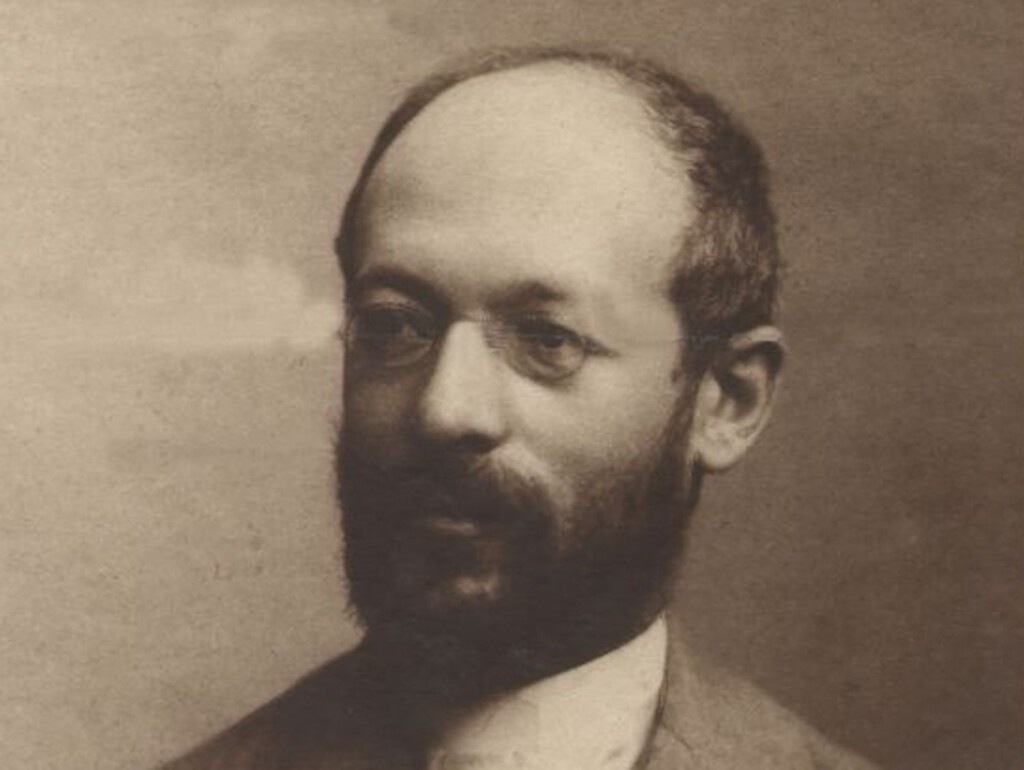
Wechselwirkung — reciprocal interaction — is the technical name Simmel gave to something almost too fundamental to name, which is precisely why it required naming. Society, for him, was not a structure above individuals, not an institution, not a collective organism in the Durkheimian sense. It was this: the continuous, mutual, moment-by-moment shaping of persons by persons. Not occasionally. Not when they choose to engage. Always. The sociologist Georg Simmel, writing at the turn of the twentieth century in texts like Soziologie published in 1908, insisted that the very boundaries of selfhood are drawn and redrawn in the act of interaction itself. There is no pre-social self that then enters into contact with others. The self is the contact. It is the sedimentation of ten thousand reciprocal acts that have been quietly interpreted as personal identity.
What makes this thought genuinely destabilizing — rather than merely interesting — is not the philosophical claim but what it does to your private inventory of yourself. The opinions you hold most deeply, the aesthetic preferences you would defend under pressure, the way you react when someone challenges your competence — all of this carries the fingerprints of others so thoroughly embedded that they have become invisible. William James, in his Principles of Psychology from 1890, observed that a person has as many social selves as there are individuals who recognize them. He meant this descriptively. Simmel pushed it further, toward something more vertiginous: those social selves are not costumes worn over a core. They are the weaving itself. The loom has no fabric underneath it waiting to be dressed.
A man walks into a party where no one knows him and finds himself unusually funny, generous, articulate. A woman returns to her childhood home and becomes, within hours, twelve years old again in ways she cannot account for. These are not mysteries of regression or performance. They are Wechselwirkung made visible by contrast — the self suddenly caught in the act of being constituted by a new set of reciprocal pressures, and for once unable to pretend the constitution is not happening. Erving Goffman would map this territory sixty years after Simmel with the precision of a dramaturgist, but Simmel had already seen the stage before anyone thought to name the performance.
He never resolved it. He could not have, because the resolution would have required stepping outside the web to describe it from a position that does not exist. You are always already mid-interaction, mid-formation, mid-sentence in a conversation whose beginning you cannot locate. The self that believes it is thinking alone, in silence, behind closed doors, is still answering voices it absorbed decades ago, still leaning forward or pulling back in response to presences long absent. Simmel did not offer a way out of this. He offered something rarer: the precise, unsettling language for what it feels like to be woven while believing you are the one holding the thread.
🌐 Society, Money, and the Modern Soul
Georg Simmel spent his life mapping the invisible forces that shape human experience in modern urban society. His reflections on money, fashion, and social interaction resonate deeply with other thinkers who questioned how capitalism and culture transform the inner life of individuals.
Veblen’s The Theory of the Leisure Class: Analysis
Thorstein Veblen‘s Theory of the Leisure Class dissects the mechanisms of conspicuous consumption and social status in capitalist society, themes that directly parallel Simmel’s analysis of money as a mediator of human relationships. Like Simmel, Veblen saw modern social life as shaped by abstract forces that replace genuine human connection with symbolic display. Both thinkers remain essential for understanding how wealth transforms culture and identity.
GO TO THE SELECTION: Veblen’s The Theory of the Leisure Class: Analysis
Thorstein Veblen: Life and Theory of the Leisure Class
Thorstein Veblen, the eccentric Norwegian-American economist and sociologist, developed his critique of capitalist culture at roughly the same historical moment as Simmel, sharing a deep suspicion of how modernity reshapes human values. His life and intellectual journey reveal a mind equally committed to understanding the social logic beneath economic behavior. Exploring Veblen alongside Simmel illuminates the transatlantic conversation about modernity unfolding at the turn of the twentieth century.
GO TO THE SELECTION: Thorstein Veblen: Life and Theory of the Leisure Class
Karl Marx and Alienation: Economic and Philosophical Manuscripts
Karl Marx’s early writings on alienation provide a foundational counterpoint to Simmel’s own analysis of how money distances individuals from authentic experience and from one another. Where Marx focused on the structural conditions of labor, Simmel extended the inquiry into the subtler psychological and cultural dimensions of modern life. Together, these two thinkers offer a remarkably comprehensive portrait of what it means to live under the dominion of abstract economic forces.
GO TO THE SELECTION: Karl Marx and Alienation: Economic and Philosophical Manuscripts
Bourdieu’s Distinction: Taste and Social Class
Pierre Bourdieu‘s Distinction explores how taste, cultural capital, and social class intersect to produce and reproduce hierarchies in modern societies, an inquiry that inherits much from Simmel’s pioneering sociology of culture. Bourdieu refined and systematized many intuitions Simmel had about the social functions of style, fashion, and aesthetic judgment. Reading both together reveals the long conversation within sociology about how symbolic forms encode and perpetuate social power.
GO TO THE SELECTION: Bourdieu’s Distinction: Taste and Social Class
Discover Cinema That Thinks
If these ideas stir something in you, Indiecinema streaming is the place to follow that thread deeper. Our catalog gathers independent and auteur films that engage seriously with society, power, and the modern human condition — the kind of cinema Simmel himself might have recognized as a mirror of social life. Come explore it and let the screen become a space for genuine thought.
👉 EXPLORE THE CATALOG: Watch Indie Films in Streaming
A vision curated by a filmmaker, not an algorithm
In this video I explain our vision

