
The Road That Ends Before It Begins
You are driving south, and at some point the road stops announcing itself. There are no more signs that confirm your progress, no milestones calibrated to a destination that expects you. The asphalt narrows, then turns to packed earth, then to something that looks like intention but feels like abandonment. The hills do not rise dramatically — they lean, exhausted, into the pale sky. You realize, with a quiet unease that is not quite fear, that the landscape does not care whether you arrive. It was not waiting for you. It will not notice when you leave. This is not the sublime indifference of the ocean or the mountain — this is something more unsettling, because it wears the face of inhabited land. There are houses here, smoke, a dog barking behind a stone wall. People live in this place. And yet the place itself seems to exist outside the coordinates that organize the world you came from — outside the grid of progress, administration, legibility, and expectation that you have always, without ever quite deciding to, called civilization.

Carlo Levi arrived in Lucania in 1935, not by choice but by sentence. A physician, painter, and anti-fascist intellectual born in Turin in 1902, he had been sentenced to political exile by Mussolini’s regime for his involvement with the Justice and Liberty movement. He was sent first to Grassano and then to Aliano — a remote village in the Basilicata region of southern Italy, a place so marginal it barely registered in the administrative imagination of the Italian state. He was thirty-two years old. He had spent his life inside European modernity: its cafés, its ideas, its revolutions of thought. Now he was in a place where time moved differently, where the state arrived only as a tax collector or a conscription notice, where malaria was as ordinary as bread. He stayed for nearly a year. He wrote nothing during that time. The book he eventually produced, Christ Stopped at Eboli, was written in hiding in Florence between 1943 and 1944, completed in a single, pressured act of testimony while Fascism was still in the room. It was published in 1945 and became, almost immediately, one of the most morally serious documents of the twentieth century.
The title is not a metaphor invented by Levi. It was a phrase the peasants themselves used. Christ stopped at Eboli — meaning he never came further south, never crossed into this territory, never brought with him the mercy, history, or human recognition that the rest of the world assumed as its inheritance. Eboli is a real town in Campania, roughly the point where the landscape shifts, where the soil changes color, where the train lines thinned out in Levi’s time and the administrative presence of Rome became increasingly theoretical. Below that line, the peasants told him, was not underdevelopment or poverty in the way an economist might classify it. It was something structurally different — an existence that modernity had not bypassed by accident but had, in some deeper sense, refused. Not through malice, exactly, but through the same categorical indifference with which an empire draws a border and then forgets what it placed outside it.
What Levi understood, arriving there as an exile who was himself suddenly outside the protections of the state, was that this refusal was not merely geographic or economic. It was ontological. The peasants of Aliano did not occupy a lower rung of the same ladder he had descended from. They inhabited a different structure of time, a different relationship to death, to the body, to the earth, to the sacred. They had not failed to become modern. They had been constituted in opposition to modernity’s self-description — defined by their absence from its story, made legible only as the negative space that gave the positive image its shape.
The Smartphone Woman

Drama, thriller, dark comedy, by Fabio Del Greco, Italy 2020.
On a bridge over the Tiber River, an elderly and severely ill man has decided to end his life, but an unusual discovery changes his mind: he comes across a lost smartphone. Intrigued, he decides to return home and watch the videos contained within it. On the screen, a series of videos unfold, telling the story of a woman who has emigrated from southern Italy to Rome to work as a teacher in schools and her struggles with integration in a social reality she cannot fully grasp.
"The Smartphone Woman" is a realistic tale of a woman's life and her complex relationship with an "infernal" city. It portrays the challenges she faces, her connection to her origins, the social discomfort she discovers in the outskirts, and the eerie presence of the ghosts of ancient Roman empire. Fabio Del Greco employs a fragmented style, using pieces of "real life" shot with the smartphone, to construct a narrative that ambiguously oscillates between fiction and truth. This creates a captivating exploration of the discomfort and alienation within the bustling city, contrasting with the peaceful village life from which the protagonist hails. The film is constructed with a variety of heterogeneous characters and situations, an emotional kaleidoscope, weaving between evenings of exploration in the Eternal City and daily struggles. Realistic smartphone-shot videos are alternated with a narrative thread reminiscent of film noir and, ultimately, surrealism in the finale. On screen, a succession of grotesque characters unfolds, representing the director's vision of a tumultuous humanity. The film's potency lies in the emotion it manages to convey and in the protagonist's naive perspective. "The Smartphone Woman" is a must-see for enthusiasts of independent and experimental cinema.
LANGUAGE: italian
SUBTITLES: English, French, German, Portuguese, Spanish
Levi, the Painter Exiled to a World Without Time
There is a man standing in front of a canvas in Turin, 1934, mixing pigments with the particular unhurried attention of someone who believes the world can be understood through color and form. Carlo Levi is thirty-two years old, trained as a physician, practicing as a painter, and circulating as one of the more restless intellectuals in the anti-fascist movement Giustizia e Libertà. Within a year, he will be arrested twice. By the summer of 1935, the Mussolini regime will have assigned him to confino — internal exile — first to Grassano and then to the remote village of Aliano, in the deep south of Basilicata, a region that sits at the instep of the Italian boot like a geological wound. He will take his paints with him.
The practice of confino was not imprisonment in any theatrical sense. It was something more architecturally cruel: you were placed inside a geography so forgotten by the modern state that your absence from civic life required no walls. Aliano had approximately one thousand inhabitants in 1935, set on a ridge of eroded clay hills called calanchi, formations that look like the earth itself has given up trying to hold together. The nearest railway connection was at Eboli, roughly three hours north by road — and in practical terms, a different civilization. Basilicata at that time was the poorest region in Italy by every available metric: infant mortality rates that rivaled sub-Saharan Africa, endemic malaria, a near-total absence of the infrastructure that fascist propaganda was busy photographing elsewhere in the country. The land had been bleeding people northward and toward the Americas for decades. Between 1876 and 1930, more than four million Italians emigrated from the Mezzogiorno, a figure that amounted not to flight but to a slow organizational abandonment of places the unified Italian state had never genuinely integrated into its self-conception.
What Levi had done, almost inadvertently, was produce a text that operated simultaneously as memoir, anthropological observation, and philosophical provocation. He was not a trained ethnographer in the manner of his contemporaries, and this absence of methodological discipline turned out to be exactly the right instrument for what he was describing. The peasants of Aliano did not live inside the categories that social science had prepared for them. They existed in a temporality that the modern Italian state — with its census forms, its conscription records, its agricultural policy directives — had no conceptual vocabulary to acknowledge. When Levi writes that Christ stopped at Eboli, he is not writing metaphor for the sake of it. He is reporting, with the precision of a physician, a condition he observed clinically: that the organizing fictions of Western progress, Christianity included as a civic technology rather than a spiritual one, had simply not arrived in these hills. The peasants he lived among had their own cosmology, their own medicine, their own relationship to death and the state, and none of it corresponded to the Italy that existed in official documents.
The painter exiled to a world without time arrived with pigments and a doctor’s bag, and found that both tools were inadequate, and necessary, in equal measure.

Two Italies, One Nation — The Fracture as Political Theology
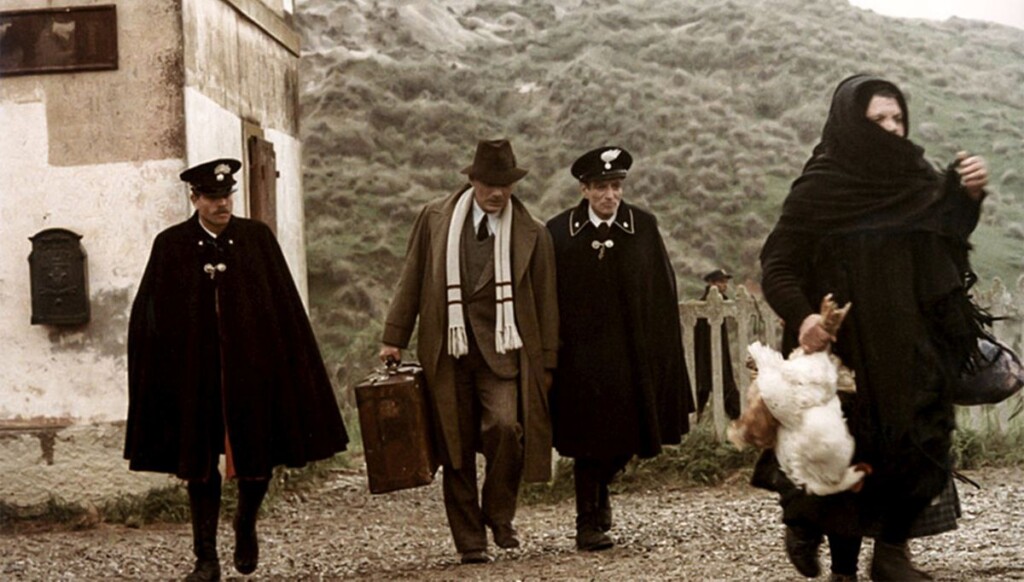
The political architecture beneath this observation had already been named, though not yet fully built, by Antonio Gramsci. Writing from a Fascist prison in the 1930s, Gramsci diagnosed what he called the Southern Question — not a regional problem of underdevelopment but a structural feature of Italian unification itself. The Risorgimento, he argued, had been a passive revolution: a modernization imposed from above by a northern bourgeoisie that absorbed southern territories without transforming them, without integrating the peasant masses into any genuine political or economic project. The peasantry, in Gramsci’s analysis in the Prison Notebooks, was a class outside class consciousness — not because the peasants lacked intelligence or suffering, but because the material and ideological conditions for collective self-recognition had been systematically withheld. They had been made invisible to the state, and in turn had made the state invisible to themselves, which is a different thing from ignorance. It is a rational response to centuries of evidence that the state was never coming for you except to take something.
What Levi adds to Gramsci’s structural diagnosis is something Gramsci, writing in abstract categories under censorship, could not fully supply: the texture of that world from inside. Levi arrives as a northern, educated, secular Jew — a man formed entirely within the civilization whose absence he is now documenting — and what destabilizes him is not the misery. It is the coherence. The South has its own medicine, its own cosmology, its own relationship to the dead and to the earth and to time. The brigands who terrorized the post-unification decades were not criminals who had failed to become citizens. They were people who had been offered a citizenship that meant taxation without representation, conscription without belonging, and land reform that transferred ownership from one class of absentee landlords to another. The brigandage of the 1860s was not social pathology. It was the only war the South was permitted to fight, and Italy responded to it with what historians have calculated as one of the largest military deployments on Italian soil in the nineteenth century — more soldiers sent against the southern peasantry after unification than were ever mobilized against Austria.
This is the fracture that runs beneath every page of Levi’s book, and it is political theology in the precise sense: a secular state that had consecrated itself through a narrative of national liberation, and that had then drawn its sacred boundary at Eboli, below which the story did not apply. The South was not outside modernity because it had failed to develop. It was outside modernity because modernity had specifically, repeatedly, and violently chosen not to include it — and had then built an entire cultural mythology about southern backwardness to explain away its own exclusion. Levi understood this not as a historian reconstructing causes but as a body moving through the consequence, waking each morning in a village where the Fascist podestà and the local priest and the malaria all operated with the same indifferent authority, each one equally certain that nothing here was ever going to change.
Magic, Fate, and the Refusal of Progress
You have probably walked past something nailed above a doorframe — a horseshoe, a dried sprig of something, an object whose origin no one in the house can fully explain — and felt nothing more than a mild ethnographic curiosity. A remnant, you told yourself. A habit outlasting its meaning. What Carlo Levi encountered in the villages beneath the Lucanian hills was something far more unsettling than remnant behavior, because it was not vestigial at all. It was a living system, internally consistent, epistemologically coherent, and absolutely indifferent to the calendar that said it was 1935.
The peasants of Gagliano did not practice magic because they lacked access to modern medicine or formal education. They practiced it because magic, unlike the state, had never once promised them something and then failed to deliver. This is the distinction that Levi’s prose keeps circling without ever stating it this flatly, and it is the distinction that most readers trained in progressive frameworks instinctively resist. We want backwardness to be an absence — a gap, a deficit, a place where something has not yet arrived. But what Levi documents is not an absence. It is a refusal, encoded over generations, of a particular relationship with time: the linear, accumulative, redemptive time that modernity sells as its primary product.
Claude Lévi-Strauss, writing in La Pensée Sauvage in 1962, made the structural argument that so-called primitive thought operates not below scientific rationalism but alongside it, with equal logical rigor, organizing the world through a different set of primary categories. Where Western science classifies by abstract function, mythic thought classifies by concrete relation — by what things touch, resemble, transform into, and remember. The bricoleur, in Lévi-Strauss’s formulation, does not lack the engineer’s tools; the bricoleur works with whatever the world has actually left behind. What looks like superstition from outside the system is, from inside it, a highly disciplined form of pattern recognition applied to the only data that has proven reliable: suffering, season, and the behavior of the powerful toward the powerless.
In Levi’s Lucania, the malaria does not arrive as a medical problem awaiting a bureaucratic solution. It arrives as a condition of existence, woven into the landscape the way the dry riverbed is woven into the landscape — permanent, cyclical, requiring management rather than elimination. The women who know which herbs reduce fever and which words spoken at which hour might redirect misfortune are not confused about germ theory. They live in a world where germ theory has no practical distribution network, no functioning clinic, no doctor who stays past his punishment posting. What they have is what works across the span of a human life actually lived there. And what works, in the absence of institutional infrastructure, is the dense web of embodied knowledge that anthropologists once condescended to call folk belief and have since, in their more careful moments, recognized as a parallel archive of survival.
The cyclical time this entails — in which history does not progress but returns, in which the powerful always come and the poor always endure and the wheat either grows or does not — is not fatalism in the passive, defeated sense. It is a cosmological realism. Mircea Eliade, in The Myth of the Eternal Return published in 1949, argued that the archaic experience of cyclical time was not a failure to conceive of linear history but a deliberate refusal of the anxiety that linear history produces: the terror of the unrepeatable, the weight of irreversible loss. The peasants Levi describes are not waiting to be rescued by the future. They have already tried the future — it arrived in the form of fascist administrators, malaria inspectors who never came, and land reforms that redistributed poverty more efficiently. What remained, after every visitation of official modernity, was the land, the body, the season, and the knowledge passed between women in doorways.
This is what makes Levi’s book so difficult to place ideologically even now. It cannot be read as a call for development without betraying its subjects entirely.
The State as Stranger, the Stranger as Witness
Edward Said, writing in Reflections on Exile in 2000, argued that exile is not simply a condition of displacement but a specific epistemological vantage point. The exile, he wrote, sees double: they inhabit the present place while carrying the ghost of another, and this double vision prevents the comfortable belonging that produces ideological blindness. The exile cannot fully naturalize. They cannot stop noticing, because nothing ever becomes invisible through familiarity. This is not a romantic condition — Said was ruthless about that. It is a form of permanent cognitive discomfort that occasionally, almost accidentally, becomes a mode of truth-telling. Levi did not choose his exile, and he experienced it as punishment. But the punishment had a structural consequence: it placed him inside a world he could observe without the anesthetic of membership.
What he observes is a civilization that has developed its entire moral and emotional architecture in direct response to the state’s absence. The peasants of Gagliano do not simply distrust authority — they have metabolized its indifference into a cosmology. When Levi writes that Christ stopped at Eboli, he is not recording a complaint. He is recording an ontology. The people he lives among do not experience themselves as forgotten citizens of a nation that failed them. They experience themselves as inhabitants of a different order of existence entirely, one that predates the Italian state, predates the Risorgimento’s promises, predates the whole apparatus of liberal modernity that men like Levi were trained to defend and reform. Their relationship to time is not progressive. Their relationship to power is not contractual. To understand this is not to romanticize it — Levi is careful, often painfully careful, not to aestheticize the poverty he witnesses. But to record it accurately requires standing outside the assumption that modernity is the destination toward which all human experience is moving.
This is where Levi’s paradox sharpens into something almost unbearable. He is the outsider who becomes intimate, the stranger who is trusted precisely because he asks for nothing, the exile who is free from the obligation to fix what he sees. The peasants bring him their sick children because he is a doctor, yes, but also because he is not from the state, not from the church, not from the landowners. He exists in a gap between all the institutions that have historically arrived in the South bearing promises and delivering extraction. His uselessness to the existing power structure is, perversely, the condition of his usefulness as a witness.
Antonio Gramsci, writing from a fascist prison in the early 1930s, had already theorized that the Southern Question could not be understood by Northern intellectuals who arrived with preformed solutions, because those solutions invariably reproduced the very hierarchy they claimed to dissolve. What Levi does — perhaps without fully theorizing it — is occupy the only position Gramsci implies might work: the one defined not by what you intend to give, but by what you are genuinely willing to lose, which is the certainty that you already know what you are looking at.
A vision curated by a filmmaker, not an algorithm
In this video I explain our vision
The Modernization Myth and What It Buried

There is a moment, sometime around 1958 or 1959, when a man from a village in Basilicata boards a train heading north and does not look back. Not because he has no grief for what he leaves, but because the logic of the new Italy — the Italy of Fiat factories and television sets and GDP growth rates that would average nearly six percent annually through the following decade — has already told him that looking back is the gesture of someone who has failed to understand the future. He is one of nearly four million southerners who make this same journey between 1955 and 1971, a migration so vast and so rapid that it constitutes one of the most dramatic demographic displacements in modern European history, accomplished not by war or famine but by the quiet, efficient pressure of economic promise. The miracle had a name. It was called il miracolo economico, and it was genuinely miraculous in the statistical sense: industrial output doubled, consumer goods flooded the market, Italy transformed from an agricultural economy into the seventh largest industrial power on earth in less than twenty years. What the statistics did not measure, because statistics are instruments designed to count what has been added and not what has been subtracted, was everything that man on the train left behind and would never recover.
Levi had written his book in 1945, and what he described in the silent world of Gagliano was not merely poverty but a coherent civilization — a relationship to time, to land, to death, to the body, to collective memory — that operated according to rules the modern state had never bothered to learn because it had never bothered to ask. The peasants of the Mezzogiorno were not pre-modern waiting to become modern. They were differently modern, organized around rhythms and solidarities that industrial capitalism had no use for and therefore classified as backwardness. The miracle did not liberate these people from their condition. It dissolved the condition entirely, along with the people inside it, and replaced them with factory workers, with consumers, with citizens who watched the same television programs and desired the same refrigerators as everyone else. The interior was not developed. It was emptied.
Pier Paolo Pasolini watched this happen and documented it with a grief so specific and so furious that it reads, even now, as something close to clinical testimony. Writing through the late 1950s and into the 1960s and beyond, he argued that Italian neocapitalism had accomplished what fascism had failed to do: the genuine cultural homogenization of the population, the destruction of subaltern particularity, the erasure of those forms of life — dialect, gesture, ritual, bodily knowledge — that had survived every previous historical catastrophe precisely because they existed beneath the threshold of official culture’s attention. What fascism imposed through force, consumer society achieved through desire, which is a far more efficient instrument of erasure because the subject participates willingly in his own disappearance. Pasolini’s diagnosis was not nostalgia in the sentimental sense. It was the recognition that what was being destroyed had contained, inside its apparent poverty, something irreplaceable — a way of being human that the market could not metabolize and therefore had to eliminate. This is precisely the civilization Levi had mapped with such patient attention two decades earlier, not as an anthropological curiosity but as a moral challenge to every assumption the modern state made about progress and the direction of history.
The tragedy is not that modernization happened. The tragedy is that it could only be imagined as happening in one direction, and that this single direction required the annihilation of everything that did not fit its logic. What Levi feared was not that the south would remain poor. It was that the price of its becoming rich would be the destruction of the only forms of knowledge and solidarity it had ever genuinely possessed, and that this destruction would be celebrated as rescue.
Development as Disappearance
There is a particular kind of violence that leaves no visible wound. No invasion, no explosion, no declared war — just a slow reclassification of what counts as knowledge, what counts as territory, what counts as a life worth administering. Carlo Levi documented a world in 1935 that, by the time his book reached Italian readers in 1945, was already marked for erasure, not by malice but by something far more impersonal: the systematic logic of the modern state deciding what it could see and, by extension, what was allowed to exist.
James C. Scott, in Seeing Like a State published in 1998, offers the theoretical anatomy of exactly this process. His central argument is that high modernist ideology — the governing faith of the twentieth century across its ideological variations, from Soviet collectivization to postwar European development programs — operates through a drive toward legibility. The state, Scott argues, cannot manage what it cannot read. It cannot tax, conscript, plan, or improve populations whose lives are organized according to local, vernacular, embodied knowledge that refuses to translate into standardized categories. What follows is not negotiation. What follows is simplification: the reduction of complex, living systems into forms that administrative grids can process. The complexity is not studied. It is deleted.
What Levi encountered in Gagliano was precisely the kind of world Scott would later theorize as illegible. The peasants did not organize their relationship to the land, to illness, to time, or to authority through the categories the Italian state had prepared for them. Their knowledge was specific, dense, non-transferable in the way bureaucracies require. They knew which plants held particular properties at which altitudes in which seasons — knowledge that could not be written into a ministry circular without ceasing to be itself. Their social bonds operated through logics of reciprocity and obligation that had no legal form, no document, no registration. They existed, in the state’s visual field, as a problem of underdevelopment. Which is to say: they existed as an absence, a deficit, a place where modernity had not yet arrived. The postwar Italian development programs, the Cassa per il Mezzogiorno established in 1950 with its billions of lire directed at southern infrastructure, operated entirely within this framing. The south was not seen as a different civilization with different rationalities. It was seen as a delayed version of the north, and the solution was acceleration — roads, schools, electrification, the dissolution of everything that had organized life before the state’s vision could reach it.
The peasants did not evolve into modern Italian citizens. The world they inhabited was administratively decomposed. Their children were educated into a language and a set of values that classified their parents’ knowledge as superstition. Their agricultural practices were replaced by techniques legible to subsidy programs and yield measurements. The saints that Levi described — those local figures whose sacred geography mapped the landscape with a precision no official cartography ever achieved — were gradually subordinated to a standardized Catholicism that, ironically, aligned far better with the state’s need for uniform spiritual administration. What was lost in this process was not merely culture in the ethnographic sense, as if we were mourning a folk costume or a regional dialect. What was lost was an entire epistemology: a way of knowing the world that had been produced by centuries of intimate, precarious, non-negotiable contact with a specific earth.
Scott’s insight cuts deepest here: the destruction was not incidental to development, it was the mechanism of it. You cannot make a population legible without first destroying the forms of organization that made them illegible. The standardization is not a byproduct. It is the point. And once you understand this, you begin to read Levi’s book differently — not as a portrait of poverty awaiting rescue, but as a record made at the exact moment before the record became impossible, a documentation of a world in the final hours before it was replaced by the administrative notation of its own absence.
What Remains When History Moves On Without You
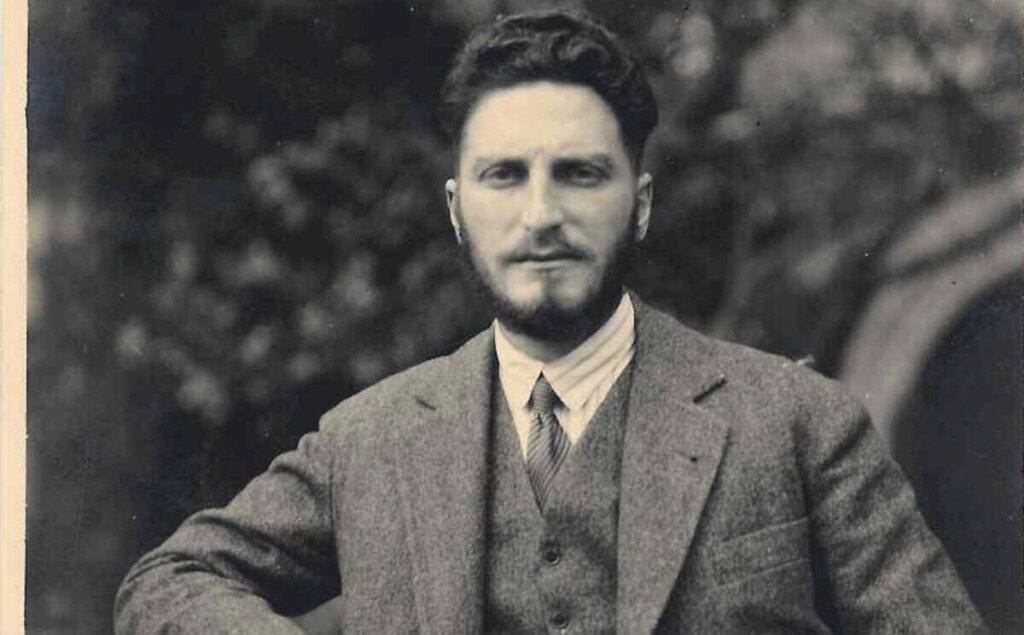
There is a moment, somewhere between reading and closing a book, when you realize the story has not ended — you have simply stopped being able to see it. Carlo Levi’s account of Gagliano does not conclude so much as it suspends, the way a held breath suspends, and what lingers is not nostalgia or pity but something more uncomfortable: the nagging suspicion that the world he described was not rescued from its condition but rather dissolved into a different one, quietly, without trial or testimony, so that no one would have to answer for what the dissolving required.
Levi arrived in Lucania in 1935 and left in 1936, and by the time his manuscript circulated in the early 1940s, the political machinery that had exiled him was already beginning its own collapse. The temptation, historically, is to read this arc as a form of justice — the witness outlives the regime, the book survives the censor, the peasants are eventually enfranchised, and Italy modernizes. But this reading performs exactly the kind of sleight of hand that Levi spent three hundred pages refusing. Modernization did not liberate Gagliano. It emptied it. The postwar land reforms of 1950, the mass emigrations of the 1950s and 1960s, the industrial pull of Turin and Milan — these did not answer the question the South was asking. They simply removed the people who were asking it.
Walter Benjamin, writing in 1940, argued that the concept of progress was inseparable from the catastrophe it perpetually produced — that the angel of history sees not a chain of triumphs but a single, accumulating pile of wreckage. He wrote this in the year Levi’s exile was still fresh memory, and the alignment is not merely chronological. What Benjamin described as the storm blowing from paradise, carrying the angel helplessly into the future, is precisely the force Levi felt pressing against the peasants of Gagliano — a future that was not theirs, arriving with the force of inevitability, authored entirely by others. The wreckage Benjamin named was not metaphorical. It had clay on its walls and dried figs on its windowsills and a name: the South.
What makes this a crime scene rather than a tragedy is the question of intent. Tragedies are impersonal; they happen to people. But the underdevelopment of southern Italy was, as Gramsci documented from his prison cell in the late 1920s and early 1930s, a structural decision — the Southern Question was not a natural condition but a political product, manufactured through the deliberate neglect that accompanied unification, reinforced through tax extraction, enforced through the criminalization of peasant resistance. When that world was later dismantled not through justice but through economic absorption, the crime was not undone. It was buried. The evidence was scattered across northern factory floors and Swiss apartment buildings, renamed as labor mobility, filed under economic growth.
And here is where the reader’s discomfort becomes its own kind of data. You live inside the world that replaced Gagliano, inside the infrastructure of that absorption — its highways, its productivity metrics, its idea that a place without economic function is a place waiting to be saved rather than a place that was already something before it was declared insufficient. The modern world did not arrive in Lucania as liberation. It arrived as the conclusion of a long argument in which the peasants had never been given the floor. Levi saw them speak anyway — in their silence, in their painted wall of the two Americas, in the way they looked past the state as though it were weather. He recorded that speech with the precision of someone who understood that it would not be heard in time.
The question is not whether the world Levi witnessed was worth preserving in the form he found it. The question is who decided it wasn’t, and what they did with the answer.
🌿 The South, Memory, and the Weight of Exile
Carlo Levi’s ‘Christ Stopped at Eboli’ is a meditation on marginality, political exile, and the deep cultural divide between modernity and an archaic, forgotten Italy. These related articles explore the broader intellectual and literary world that surrounds Levi’s masterpiece, from the social thought of Gramsci to the literary voices of the Italian South.
Antonio Gramsci: vita e pensiero politico
Antonio Gramsci’s political and cultural thought is essential for understanding the world Levi encountered during his confinement in Lucania. His concept of the subaltern — those classes historically excluded from power and culture — illuminates the peasant world that Levi describes with both compassion and philosophical depth. Gramsci and Levi shared a vision of southern Italy as a space of silent resistance and invisible civilization.
GO TO THE SELECTION: Antonio Gramsci: vita e pensiero politico
Sardinian Culture: History Traditions and Identity
Sardinian culture, with its ancient traditions and deep sense of identity rooted in a land at the margins of the Italian state, offers a powerful parallel to the Lucanian world depicted in Levi’s book. Just as the peasants of Basilicata lived in a reality untouched by modern institutions, Sardinian communities preserved an autonomous cultural memory forged by isolation and resistance. Understanding this peripheral Italy is crucial to grasping the emotional and anthropological core of Levi’s narrative.
GO TO THE SELECTION: Sardinian Culture: History Traditions and Identity
Grazia Deledda: Life and Works
Grazia Deledda, the first Italian woman to win the Nobel Prize in Literature, gave voice to a rural and pre-modern world that resonates deeply with the Southern landscape explored by Levi. Her fiction, rooted in Sardinian myths and the moral codes of peasant communities, shares with ‘Christ Stopped at Eboli’ a profound respect for archaic humanity. Both authors approached their subjects not as curiosities but as repositories of a wisdom that modernity had failed to recognize.
GO TO THE SELECTION: Grazia Deledda: Life and Works
Eribon’s Returning to Reims: Analysis
Didier Eribon’s ‘Returning to Reims’ is a contemporary meditation on class, shame, and the cultural distance between an intellectual and the working-class world of his origins, themes that echo Levi’s own experience of encountering a world radically different from his bourgeois Turin background. Like Levi, Eribon uses personal narrative to expose the structural forces that render entire communities invisible to official history. Both texts invite the reader to question who has the right to tell the stories of the forgotten.
GO TO THE SELECTION: Eribon’s Returning to Reims: Analysis
Discover Cinema That Tells the Stories the World Forgot
If Levi’s journey into the forgotten South has stirred something in you, Indiecinema is the place to continue that journey through moving images. On our streaming platform you will find independent and author films that explore marginality, memory, and the human condition with the same uncompromising honesty that defines great literature. Come and discover a cinema that dares to look where others turn away.
👉 EXPLORE THE CATALOG: Watch Indie Films in Streaming
A vision curated by a filmmaker, not an algorithm
In this video I explain our vision

