
The Woman Who Wrote in the Dark
Before the rest of the house wakes, you are already there. The kitchen holds the last warmth of last night’s fire, and the light you write by is barely enough to call light at all. You write quickly, not because inspiration demands speed but because time is borrowed and the debt comes due the moment you hear the first footstep on the stairs. The pages go somewhere no one looks — beneath folded linen, inside the binding of a prayer book, under the loose board near the hearth. You are not hiding contraband. You are hiding yourself.

This is not a metaphor. This is the precise material condition in which Grazia Deledda wrote her earliest stories, in Nuoro, in the interior of Sardinia, in the last decade of the nineteenth century. She was born in 1871 into a family of some local standing — her father, Giovanni Antonio Deledda, was a respected man in the community, educated enough to encourage her reading when she was small, unaware of what he was setting in motion. Her mother, Francesca Cambosu, represented everything the culture expected of women: gravity, silence, the management of domestic order. Between these two poles — the father who handed her books and the mother who embodied the law that said books were not for her — Deledda built her entire interior life in the gap.
Nuoro in the 1880s was not simply provincial. It was a world operating according to codes so old and so internalized that transgression did not need to be punished by others; it punished itself. A woman who wrote fiction was not merely eccentric. She was enacting a kind of symbolic violence against the structure that gave everyone around her meaning. She was saying, implicitly and then more explicitly with every page, that her inner life mattered enough to be made into art. That is an enormous claim. Most people never make it. Most people are trained, very early, to find that claim embarrassing.
Deledda had what Pierre Bourdieu, in his analysis of the literary field developed through the 1980s and culminating in The Rules of Art in 1992, would recognize as an almost constitutionally impossible position: she was attempting to accumulate cultural capital in a space that had not been built to receive her. The literary field, even in its most peripheral and regional expressions, was organized around the assumption of a male subject. To enter it as a woman from a Sardinian village, without formal education beyond a few years of elementary school, was not simply to climb a steep hill. It was to insist that the hill existed for you at all.
She published her first short story in 1888, in a Roman journal called L’Ultima Moda, at seventeen years old. Seventeen. The piece arrived in print and the world did not end, but something shifted permanently — not in Nuoro’s opinion of what she was doing, but in her own relationship to what was possible. The act of publication is not only a literary event. It is an ontological one. It tells you that the words you made in the dark can survive in the light, can travel beyond the room where you wrote them, can be read by someone who does not know your name or your family or the social weight you carry in a town of three thousand people.
But survival in print did not mean survival at home without cost. Her brothers grew resentful. The community generated rumors — about her morality, her ambitions, the dangerous idea that she believed herself exceptional. In Sardinian society, as the ethnographer Giulio Angioni documented in his fieldwork on the island’s interior cultures, female exceptionalism was not admired. It was read as a form of disorder, a breach in the collective fabric that protected everyone by keeping everyone in place.
She kept writing anyway. Before dawn. In the kitchen. Beneath folded linen.
Eve of the Irises
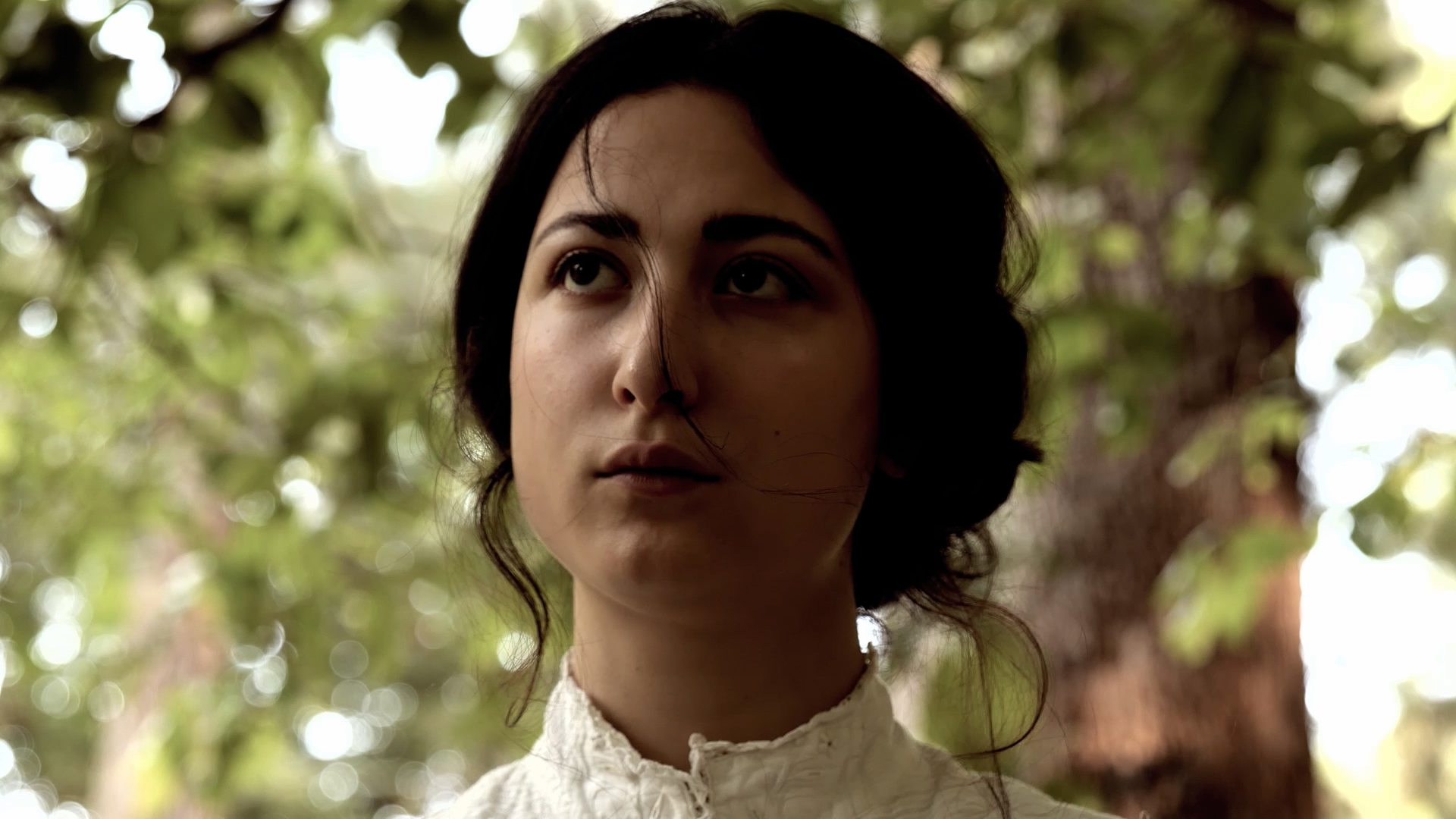
Documentary, by Isabel Russinova, Rodolfo Martinelli Carraresi, Italy, 2026
Eva of the Irises is a historical biographical docu-film about the scientist Eva Mameli Calvino, a botanist and pioneer of environmentalism in Italy, mother of the writer Italo, born in Sassari in 1886. The film, based on a multidisciplinary approach that combines several genres—such as theatre, documentary, cinema, and research—moves between memories, reflections on life, as well as the goals and missions the scholar still wished to achieve.
The multifaceted artistic sensibility of Isabel Russinova is expressed across many fields, from writing to acting, from directing to civic engagement, and finds one of its highest expressions in the docu-film Eva of the Irises, created with Rodolfo Martinelli Carraresi. The film blends scientific rigor and poetic refinement to portray the extraordinary figure of the botanist Eva Mameli Calvino, mother of Italo Calvino but above all an independent protagonist of 20th-century scientific culture. It is told through a combination of archival materials, interviews, and evocative staging capable of elegantly and profoundly conveying her intense human and professional story.
LANGUAGE: Italian
SUBTITLES: English, Spanish, French, Portuguese
An Island That Was Also a Cage
The village does not need walls. It has something more efficient — the gaze. You grow up knowing which windows face the street, which hours are appropriate for a woman to be seen walking, which silences mean approval and which mean the beginning of ruin. Nuoro, in the last decades of the nineteenth century, was a town of roughly four thousand souls perched in the granite interior of Sardinia, far from the coasts where modernity was at least visible on the horizon. It was a place where the distance between what was permitted and what existed was measured not in laws but in the texture of daily life, in the way a door closed or a name was not spoken at the dinner table.
Grazia Deledda was born there in 1871, into a family that occupied a comfortable middle position — educated enough to own books, provincial enough to believe that books were not, properly speaking, for daughters. Her brothers moved through the world of formal schooling as a matter of course. She received a few years of elementary instruction and then, according to the logic of the place and the time, that was considered sufficient. A girl of her station was being prepared for a different kind of expertise: the management of a household, the performance of modesty, the careful calibration of social visibility. The education she actually received, she built herself, in secret, out of whatever she could reach — Italian novels, folklore collections, the Bible, whatever drifted into the house and could be hidden quickly enough.
Pierre Bourdieu spent much of his intellectual life trying to articulate what he called the “feel for the game” — the way social structures are not simply imposed from outside but become lodged inside the body, inside the very capacity to imagine what is possible. In his 1980 work Le Sens pratique, he described how dominated groups internalize the limits of their condition so thoroughly that they come to experience those limits as natural, as the shape of reality itself. What makes this mechanism so durable is precisely that it does not require enforcement. The prison, once internalized, runs on its own power. The peripheral culture does not need a censor if it has produced a population that censors itself.
Sardinia in Deledda’s childhood was not medieval in any simple sense — that would be too comfortable a framing, too easy a distance to establish. It was a society in genuine historical suspension, where ancient pastoral codes coexisted with the formal structures of a unified Italian state that had been declared only a decade before her birth and which remained largely theoretical at the level of daily existence. The anthropologist Ernesto de Martino, writing decades later about the cultures of the Italian South and the islands, described what he called the “subaltern world” — not primitive, not irrational, but operating according to a coherent internal logic that the dominant culture simply could not read except as backwardness. The honor codes, the blood feuds, the rigid partitioning of space by gender — these were not survivals from some prehistoric past. They were functional systems for managing scarcity, danger, and social cohesion in conditions of historical abandonment.
For a girl inside that system, the cage was not metaphorical. It had specific dimensions: the hours she could not be outside unaccompanied, the topics she could not raise in conversation, the ambition she could not name without risking something that had no clean label — something like shame, something like erasure. And yet she read. She wrote her first stories and sent them, with an audacity that seems almost incomprehensible from the outside, to Italian mainland magazines when she was barely seventeen. The village watched the windows. She was already somewhere the village could not quite see.

What the Village Cannot Forgive
There is a specific kind of surveillance that has nothing to do with cameras or police. It lives in the glance held a half-second too long across a church courtyard, in the silence that falls when you enter a room, in the way your mother’s friends stop laughing before you are close enough to hear what they were saying. You do not need to have done anything wrong. You only need to have done something visible.
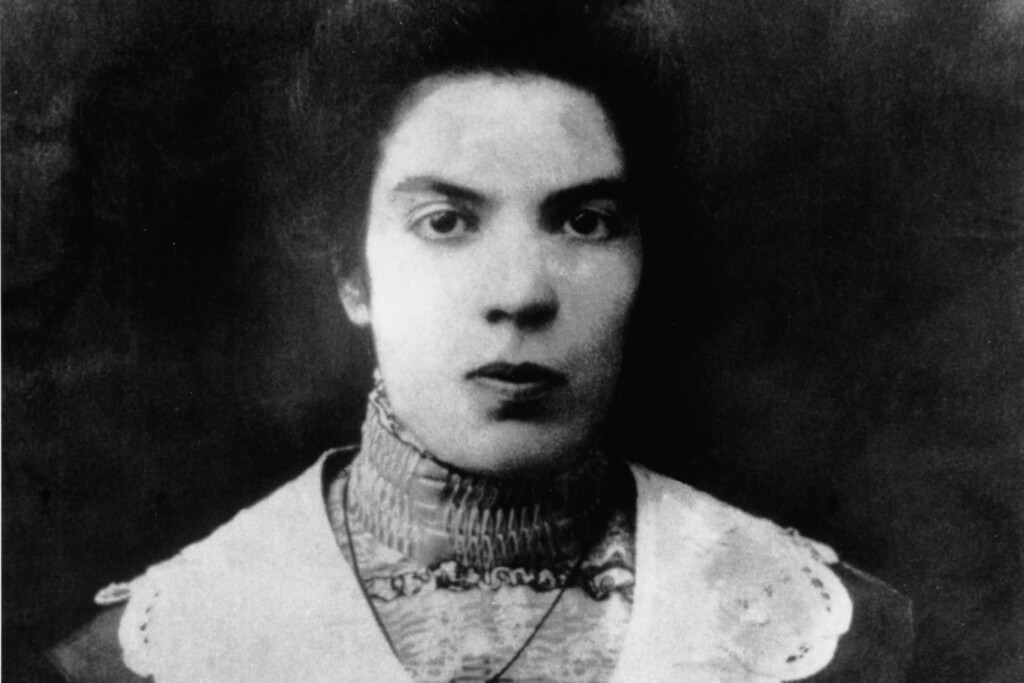
Grazia Deledda was fifteen years old when her first short story appeared in print. Not fifteen in the way we sometimes romanticize precocity, as a charming curiosity, but fifteen in a specific place and time: Nuoro, Sardinia, 1886, a town where the boundaries between private life and communal judgment were not just porous but nonexistent. The story was published in a Roman fashion magazine, Ultima moda, and the response from her own community was not admiration. It was something far more familiar to anyone who has ever stepped out of the role assigned to them by geography and birth. It was shame — but the shame was placed not on Grazia, who had done the transgressing, but on her family, who had somehow failed to prevent it.
This is the precise mechanism that small communities deploy with such efficiency. The punishment is displaced. You are not simply judged; the people who love you are made to carry the weight of your visibility. Jean-Paul Sartre wrote in Being and Nothingness that the gaze of the other does not merely observe us but constitutes us, fixing us into an object, stealing our freedom in the very act of being seen. In a village, this is not a philosophical abstraction. It is the daily texture of existence. You are seen before you speak, categorized before you act, and any deviation from the expected form is experienced not as personal growth but as communal injury.
Deledda’s family was respected. That respectability was the very thing her writing put at risk, because respectability in that world was not an individual possession. It was a collective property, maintained by the behavior of daughters, managed by mothers, enforced by neighbors. A woman who wrote — who invented, who observed, who put the interior life of Sardinian characters onto the page for distant strangers to read — was committing a kind of exposure that the community had not authorized. She was making herself legible to the outside world without permission.
Think of a woman walking through a village square where every face knows her history. She does not walk freely. She walks through a lattice of expectations so dense it has its own physical weight. The judgment is not spoken; it does not need to be. It lives in posture, in proximity, in the architecture of who stands near whom. And if she has done something the community cannot accommodate — not a crime, not a cruelty, but simply an act of self-determination — the square becomes a kind of trial she must pass through every single day without the dignity of a verdict.
The sociologist Erving Goffman described this in Stigma, published in 1963, as the management of a spoiled identity — the constant, exhausting work of navigating a social world that has decided something about you before you open your mouth. What Goffman mapped clinically, Deledda lived entirely. She was not yet twenty and already she was managing her own transgression, writing letters to mainland editors, continuing to publish, while her family absorbed the local fallout.
The cruelty of small places is not that they hate you. It is that they claim to love you while demanding your disappearance. Belonging, in that world, was always conditional on reduction. And Deledda, at fifteen, had already chosen, perhaps without fully understanding the cost, the only thing she could not give back.
The Literature of Guilt and Desire
There is a man who returns from prison carrying something heavier than whatever crime sent him there. He has served his time in the legal sense, but the real sentence begins the moment he walks back into his village, into the eyes of his family, into the ancient architecture of expectation that Sardinia has built around him like a second skin he never asked for. He falls in love with his brother’s wife. Not recklessly, not without agony — but with the full, devastating awareness of someone who knows exactly what they are doing and cannot stop. This is not a story about weakness. It is a story about the unbearable collision between what a person feels and what a person is permitted to be.
Elias Portolu, published in 1903, is one of the most psychologically precise novels of its era, and what makes it modern in a way that still disturbs is precisely this: Deledda refuses to let desire be simple. Elias does not simply succumb. He wrestles, repents, retreats into the fantasy of priesthood as a form of self-amputation — if I remove the man, I remove the want — and yet the desire persists, stubborn and alive, because desire in Deledda is never pathological. It is the most honest signal the self can send. The tragedy is not that Elias wants. The tragedy is the world that has made wanting the original sin.
Guilt in Deledda functions less like a moral verdict and more like a gravitational field. You can feel it operating on her characters from the outside, bending their trajectories, making what is natural look monstrous and what is monstrous — the slow suffocation of the interior life — look like virtue. There is a woman who spends decades in service to a debt she did not personally incur, carrying the moral account of her father’s fault as though inheritance were not just blood and bone but also shame. Her entire existence becomes an act of reparation for someone else’s failure, and the novel — Canne al Vento, 1913, the work that would anchor Deledda’s Nobel Prize in 1926 — never once suggests this is admirable. It shows it with the kind of unflinching tenderness that is more devastating than condemnation. The reeds in the wind of the title are human beings: they bend, they resist, they do not break cleanly. They simply spend their lives bending.
What Durkheim identified in 1897 as the social regulation of individual drives — the way collective norms create what he called anomie when transgressed — Deledda renders in flesh and weather and the specific light of an island that feels older than history. Her sociology is intuitive, embodied, never theoretical. She does not write about social forces. She writes about the way a mother’s hands shake when her son approaches the altar for ordination, because she knows what he is hiding, and she knows what his vocation is really made of. La Madre, published in 1920, compresses this entire architecture of concealment and sacrifice into a single night, a single mass, a single act of will that destroys the woman performing it. The mother holds her silence to protect her son’s priesthood. She dies of the holding.
This is the knot Deledda never unties, and she is right not to. Because the question her novels ask is not whether these people should have made different choices. It is why the choices available to them were so catastrophically few. Why the only exit from desire was renunciation. Why the only proof of love was self-erasure. Why a community built on the idea of spiritual life had systematically arranged things so that the most alive people in it were the ones most punished for being alive.
Leaving as an Act of Survival
She packed what she could carry and left the rest to become myth. That is how it always happens — you do not leave a place so much as you leave a version of yourself that could only survive there, and the severance is so clean and so brutal that for years afterward you cannot tell whether you escaped or amputated.
Deledda departed Sardinia in 1900, marrying Palmiro Madesani and relocating first to Cagliari, then to Rome, where she would spend the remaining decades of her life. She was thirty years old. She had already published novels, already weathered the contempt of her own community, already received letters from editors and intellectuals on the mainland who treated her island as though it were a foreign country requiring translation. And still, the leaving was not simple. It never is.
There is a particular quality of grief that belongs only to the person who chose to go. You have stood at a window watching the landscape recede — the specific grey of a winter coast, the smell of something burning in a neighbor’s chimney — and you have felt the freedom and the wound arrive simultaneously, indistinguishable from each other. What you left behind does not forgive you for surviving it. What you carried forward does not fully believe you made it out.
Simone Weil, writing in 1943 in “The Need for Roots,” described rootedness as one of the most important and least recognized needs of the human soul, a need so fundamental that its loss produces not merely sadness but a kind of spiritual hemorrhage. She was writing about entire peoples, about the violence of uprooting, but the observation cuts equally into the private life of any individual who has crossed a threshold knowing it was permanent. The roots do not die. They keep pulling from inside you, from whatever soil you carry in your chest.
What Deledda did — what all writers of her kind eventually do — was convert that internal tearing into the only material she had. Distance did not diminish her Sardinia. It clarified it with a ferocity that proximity never allows. You cannot see the shape of a room while you are standing in it. You need the corridor, the staircase, the street outside, before the proportions reveal themselves. This is not a comfortable truth, because it means that the truest writing about a place is often written by someone who is no longer there, which makes every act of authentic memory feel faintly like a betrayal.
The philosopher Gaston Bachelard argued in “The Poetics of Space,” published in 1958, that the places we have truly inhabited never leave us — they become the architecture of our imagination, the rooms in which we think without knowing we are thinking inside rooms. Deledda’s Rome was real, her life there was full, but her imagination never left the island. It stayed in the basalt and the juniper, in the codes of honor and the grammar of suffering she had absorbed before she understood that she was absorbing anything. The distance simply gave her the language to say it.
There is someone who returns to a place after many years away and stands at the edge of a village that no longer knows his name, watching children play in a courtyard he once ran through, and understands for the first time that the place existed before him and will exist after him and that his claim to it was always provisional. The belonging was real, but so was the leaving. Both were acts of loyalty — to what the place was, and to what he had to become.
Deledda never romanticized her departure. She did not dress it as liberation. She kept writing about Sardinia from Rome because that is the only honest thing you can do with a wound: you keep returning to it until it tells you something true.
A vision curated by a filmmaker, not an algorithm
In this video I explain our vision
The Nobel and the Silence Around It

The telegram arrived in 1926, and something curious happened: Italy applauded politely and then looked away. Not the loud dismissal of scandal, not the violent rejection that at least carries heat — something colder and more efficient than that. A woman from Sardinia had just become the first Italian to win the Nobel Prize in Literature, and the dominant response from the literary establishment of her own country was a kind of elaborate shrug dressed in formal congratulations.
Think about what that silence actually communicates. The Swedish Academy had read her work and found in it something they called a vivid portrayal of the life of her island, and with depth and sympathy described the human problems of general interest. General interest. That phrase matters. It is the language of universality, the highest credential a writer can receive from an institution whose entire purpose is to identify literature that transcends its origins. And yet, back home, the critics continued to shelve her next to travel writing about southern landscapes, next to ethnographic curiosities, next to what the educated north called local color.
You already know what this mechanism is. You have watched it operate across every domain where women produce serious work that inconveniently refuses to be minor. The French sociologist Pierre Bourdieu spent decades mapping exactly this terrain — in his 1992 The Rules of Art, he demonstrated how literary fields generate hierarchies that appear to be about aesthetic quality but are in fact about social positioning, about who controls the instruments of legitimation and what kinds of experience those instruments are calibrated to recognize. The question of what counts as universal is never a neutral question. It is always a question about whose particular experience gets to stand in for everyone else’s.
In practice, this meant the following: a man writing about provincial Normandy was Flaubert, excavating the universal condition of desire and mediocrity. A woman writing about provincial Sardinia was a regional voice, interesting in the way that a well-crafted folk song is interesting, admirable without being genuinely serious. The geography was not incidental — Sardinia carried the additional burden of being southern, rural, and perceived as archaic in ways that northern Italian literary culture found picturesque rather than profound. But the gender was the deeper filter. It determined which of her two disqualifications — woman, peripheral — would be named openly and which would be allowed to operate invisibly under the cover of aesthetic judgment.
There is a scene that captures this perfectly without anyone in it intending to. A woman walks through a gathering where everyone knows her name, everyone turns toward her with something that looks like recognition, and yet the conversation continues without her as though her presence were decorative rather than substantial — as though she were proof of the occasion’s generosity rather than one of its actual subjects. The warmth is genuine and the erasure is complete, and neither cancels the other. That is exactly the texture of what happened to Deledda inside Italian literary culture after 1926.
The writer Elaine Showalter, in A Literature of Their Own from 1977, identified how women writers are systematically categorized in ways that prevent their work from accumulating the kind of prestige that compounds over time. You are not ignored — that would be too visible. You are appreciated in a register that does not convert into influence, into the canon, into the syllabi where the next generation of writers learns what literature can do. Deledda was praised into a corner.
What makes this particular silence so instructive is that it required no conspiracy, no deliberate malice. It required only the ordinary operation of a system that had already decided, long before she arrived, which coordinates on the map of human experience pointed toward the universal and which pointed toward the merely local — and had never once noticed that those coordinates always seemed to favor the same kinds of people.
The Body of the Work as Autobiography of the Soul
There is a particular kind of exhaustion that has no name in any medical dictionary. You recognize it in someone who has been good for too long, who has carried the weight of other people’s needs so faithfully that they can no longer tell where duty ends and self-destruction begins. You have seen this face. Perhaps you have worn it.
Grazia Deledda knew this exhaustion from the inside. And rather than treat it as private wound, she transformed it into an entire fictional cosmology. The relationship between her life and her work is not the crude autobiographical equation that lazy criticism tends to impose on women writers — the assumption that a woman can only write what she has literally lived, that her imagination is merely transcription. What Deledda built was something far more architecturally complex: a body of fiction that externalizes the internal war without ever betraying its source. Her characters do not represent her. They enact the forces that shaped her, the pressures she absorbed, the contradictions she refused to resolve because she understood that resolving them would have been a lie.
Think of a man who walks through every room of his life carrying a debt he did not personally incur. His father’s failures have become his failures, metabolized so completely that he no longer experiences them as inheritance but as character. He punishes himself for sins committed before his birth, and the strange thing — the thing that catches in the throat — is that this punishment feels like the only honest response to being alive. This is not a psychological aberration. This is the logic of moral inheritance, the operating system of entire communities that have survived through collective guilt management. Deledda understood this logic not as a Sardinian peculiarity but as a human constant, which is precisely why her novels traveled so far beyond the island they were set on.
Elias Portolu, published in 1903, is perhaps the most visceral map of this internal architecture. Elias returns from prison already broken, already carrying a guilt that predates his crime, and the novel tracks the impossible triangulation between his desire, his brother’s claim, and the church’s demand for renunciation. What makes the novel devastating is not the tragedy of its outcome but the tragedy of its premise: Elias has internalized a moral system so thoroughly that his own desire registers to him as evidence of his unworthiness. He cannot want without immediately converting that wanting into proof of corruption. Sigmund Freud, writing about the same decade, described the superego as an internal persecutor that punishes the ego not only for actual transgressions but for unconscious wishes. Elias Portolu is a novel-length demonstration of this mechanism operating at full force, and Deledda arrived at this understanding through lived observation, not through psychoanalytic theory.
The woman who wrote these novels had herself navigated the merciless arithmetic of what others need from you. She had watched her family’s respectability erode, had been the daughter whose ambitions were treated as a form of social aggression, had married and relocated and remade herself without ever being permitted to simply become. Canne al Vento, which appeared in 1913 and remains her most translated work, gives us three sisters whose entire existence is organized around a promise made on behalf of the dead. The servant Efix carries their weight as his personal expiation for a moment of violence he may or may not have caused. The genius of the novel is that Deledda never lets the reader settle into a clear verdict. Efix’s guilt is real to him, and his reality is the only one the narrative honors.
This is where the autobiography of the soul diverges completely from the autobiography of events. What Deledda transferred into fiction was not what happened to her, but what it felt like to be the kind of person to whom certain things happen — and to remain, despite everything, unable to put down the weight.
What Survives the Woman Who Was Never Supposed to Write
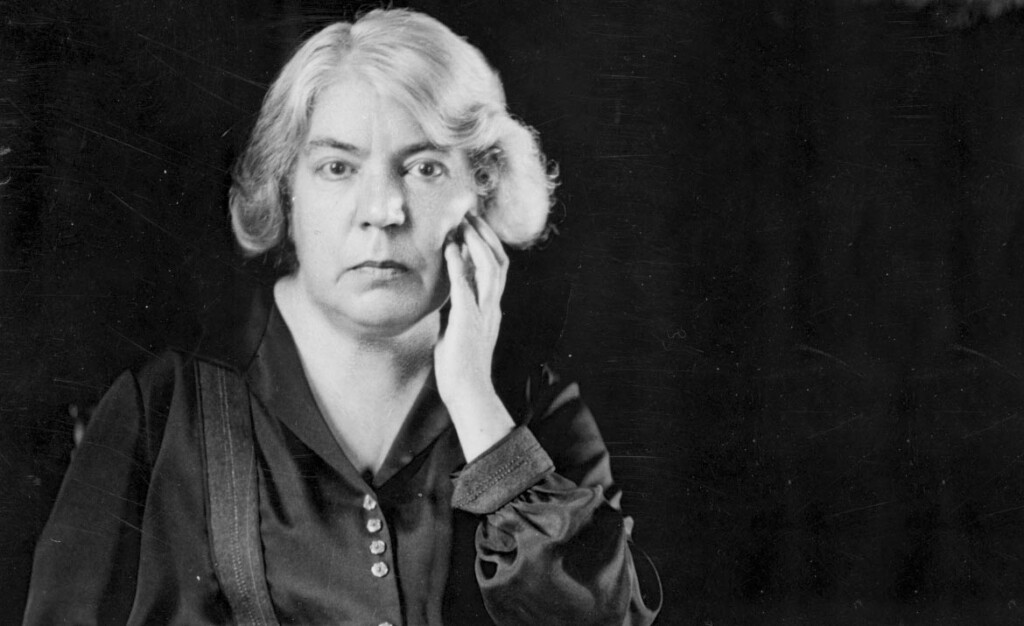
There is a particular kind of survival that has nothing to do with fame. Grazia Deledda won the Nobel Prize in Literature in 1926, became the second woman ever to receive it, and was buried in Sardinia with the honors of a nation that had spent decades treating her ambition as an embarrassment. The monument came. The postage stamps came. The street names and the school names and the museum in Nuoro came. And with all of that, something quieter and more dangerous was successfully managed: she was made safe. The provocation was framed as heritage, the rupture was repackaged as pride, and the woman who had spent her life writing about the violence hidden inside moral order was transformed into a symbol of exactly the kind of order she had spent her life interrogating.
This is what happens to writers who survive their own scandal. The culture that once rejected them finds, eventually, that absorption is more effective than exclusion. You cannot silence a Nobel laureate. You can, however, decide what she means.
What Deledda actually means — if we refuse the monument and read the pages — is something considerably less comfortable. Her novels do not offer redemption in any straightforward sense. They offer the spectacle of people crushed between what they feel and what their world allows them to feel, and they refuse to adjudicate cleanly between the two. The moral codes in her fiction are not simply wrong. They are also, in some register, the accumulated knowledge of a community that survived centuries of hardship through collective discipline. This is what makes her work philosophically serious rather than merely sympathetic: she understood that tradition is not only violence dressed as wisdom, but sometimes wisdom that has calcified into violence without anyone noticing the transformation. The question of when a code stops protecting and starts imprisoning does not have a date attached to it. It happens slowly, invisibly, and usually the people most harmed by it are the ones most deeply formed by it.
Elias Portolu carries his guilt like a second skeleton. Marianna Sirca chooses and is destroyed by her choosing. The figures in Canne al vento spend their lives honoring obligations that were never theirs to carry. None of them are free, but none of them are simply victims either. They are people living inside a structure that Deledda depicts with the precision of someone who knows it from the inside, who was shaped by it, and who chose to write about it anyway — which was itself a form of transgression the structure could not fully metabolize.
Her life poses the harder question. She is often framed as exceptional, as the singular woman who escaped, who possessed some genius or courage that lifted her above her circumstances. But this framing requires us not to ask about the others. For every Deledda who wrote and published and eventually fled to Rome and eventually won a prize, there were hundreds of women in Nuoro and across Sardinia and across every village in every country who felt the same pressure between interior life and imposed silence and who broke that pressure in the only ways available to them: in letters never sent, in diaries burned, in stories told only to daughters, in a particular quality of looking out of windows. Deledda was not exceptional in her desire. She was exceptional in her visibility. The sea was full of women breaking rules. She was simply the one we can still read.
And this is where the inheritance becomes an obligation without a clear name. To receive what she left — the pages, the refusal, the life constructed against permission — is to accept that visibility was not the whole of it. What survives her is not only a body of work. It is the unfinished question of what we owe to everything that was never given the chance to be written down at all.
📚 Voices from the Margins: Writers Who Shaped a World
Grazia Deledda, the first Italian woman to win the Nobel Prize in Literature, carved her identity from the wild landscapes and ancient traditions of Sardinia. Her work resonates with other writers and thinkers who drew deeply from their roots, their struggles, and their singular visions of human existence. These articles trace kindred paths through literature, thought, and creative defiance.
Italo Calvino: Life and Works
Italo Calvino, like Deledda, transformed the raw material of Italian culture and landscape into something universal and enduring. His career ranged from neorealism to postmodern fable, always guided by an extraordinary sensitivity to storytelling’s hidden possibilities. Exploring his life offers a vital counterpoint to understanding what Italian literature can become when it dares to reinvent itself.
GO TO THE SELECTION: Italo Calvino: Life and Works
Albert Camus: Life and Philosophical Thought
Albert Camus, born on the margins of Empire in Algeria, shares with Deledda a profound rootedness in a peripheral, sun-scorched world that shaped his philosophical and literary vision. Both writers confronted the silence and harshness of their environments as a source of existential truth rather than mere local color. Reading Camus alongside Deledda reveals how literature born from the edges of Europe can speak most powerfully to the universal human condition.
GO TO THE SELECTION: Albert Camus: Life and Philosophical Thought
Montaigne: Life and Essays
Michel de Montaigne pioneered the art of introspective writing, turning the gaze inward to examine life, mortality, and identity with radical honesty. His Essays represent a foundational act of literary self-examination that echoes across centuries, resonating with Deledda’s own unflinching portrayal of inner lives shaped by guilt and redemption. Understanding Montaigne helps illuminate the long tradition of writers who made personal truth the engine of their art.
GO TO THE SELECTION: Montaigne: Life and Essays
Juan Rulfo: Life and Works
Juan Rulfo, the Mexican master of sparse and haunted prose, shares with Grazia Deledda a gift for making remote, tradition-bound worlds feel mythically alive. His fiction is populated by characters trapped between the living and the dead, caught in cycles of fate and memory that recall the moral gravity of Deledda’s Sardinian narratives. Both writers transformed geographic and cultural isolation into a universal language of sorrow and resilience.
GO TO THE SELECTION: Juan Rulfo: Life and Works
Discover Independent Cinema on Indiecinema
The spirit that animates great literature — the courage to tell stories from the margins, to honor forgotten worlds, and to seek truth beyond convention — lives on in independent cinema. On Indiecinema streaming you will find films that share that same restless, visionary energy: works that challenge, move, and expand the way you see the world. Start exploring today and let independent cinema surprise you.
👉 EXPLORE THE CATALOG: Watch Indie Films in Streaming
A vision curated by a filmmaker, not an algorithm
In this video I explain our vision

