
The Weight of the Stone
You have been watching him for ten minutes and he has not looked up once. His hands move across the surface of the dry stone wall with a certainty that has nothing to do with thought — fingers reading the weight and grain of each piece of limestone before placing it, testing the balance, rejecting, selecting again. There is no mortar. There never has been. The wall holds because every stone is understood, not because anything binds it from the outside.

This is not picturesque. This is not a scene designed for your contemplation. The man mending the wall on the plateau above Orgosolo does not know he is demonstrating anything. He is doing what the morning requires, what the season demands, what his grandfather’s hands taught his father’s hands without a single word being spoken about it. The knowledge lives below language, which is precisely why it has survived everything that language could not.
There is a particular quality of silence in the interior of Sardinia that is unlike any other silence you will encounter in Europe. It is not the silence of emptiness. It is the silence of extreme compression — centuries of occupation, resistance, negotiation, loss, and refusal packed so tightly into the landscape and the people who move through it that speech becomes, in many contexts, almost beside the point. The anthropologist Giulio Angioni spent decades documenting this compression, showing in his 1974 work on Sardinian agropastoral culture how the gestures and labor rhythms of the island’s interior communities carried inside them entire systems of knowledge, ethics, and cosmology that formal education had never touched and colonial administration had never successfully dismantled. The wall is not metaphor. The wall is the argument.
You arrive in a Sardinian village in the early morning and the first thing you notice is that the doors of the oldest houses open directly onto the street with no threshold, no garden, no buffer zone between the interior life and the exterior world. This is not poverty of design. This is a statement about permeability — about the way a community that has learned, over millennia, that borders are temporary and invaders are cyclical, chooses to organize its relationship to space. The Phoenicians came. Then the Carthaginians. Then Rome held the island for six centuries and extracted its grain with a systematic brutality that Cicero, in his Verrine orations, described almost admiringly. Then the Vandals, the Byzantines, the Pisans, the Genoese, the Aragonese, the Spanish, the Piedmontese. Each arrival brought a new language of power, a new administration, a new set of names for things that already had names. And yet, here is the wall. Here are the hands.
The Sardinian language — or rather the Sardinian languages, because the linguistic variation between Logudorese, Campidanese, Gallurese and the other varieties is significant enough that some linguists treat them as distinct — is considered by Romance philologists to be the closest living relative to classical Latin, having diverged from it before the phonological shifts that reshaped the Italian peninsula’s vernaculars. Eduardo Blasco Ferrer, one of the foremost scholars of Sardinian linguistics, argued that this conservatism was not accidental isolation but active resistance, a community’s refusal to fully absorb the linguistic identity of whoever held administrative power at any given moment. When you hear an elderly woman in Nuoro use a word that has not existed in any other European language for roughly seventeen hundred years, you are not hearing an artifact. You are hearing a choice repeated across generations.
The man sets the final stone. He steps back, not to admire it, but to check it. His eye moves along the line of the wall the way a reader’s eye moves along a sentence, looking for the word that does not fit. He finds nothing wrong. He turns and walks back toward the village without ceremony, without satisfaction that announces itself.
The wall will stand for another generation, at least.
Eve of the Irises
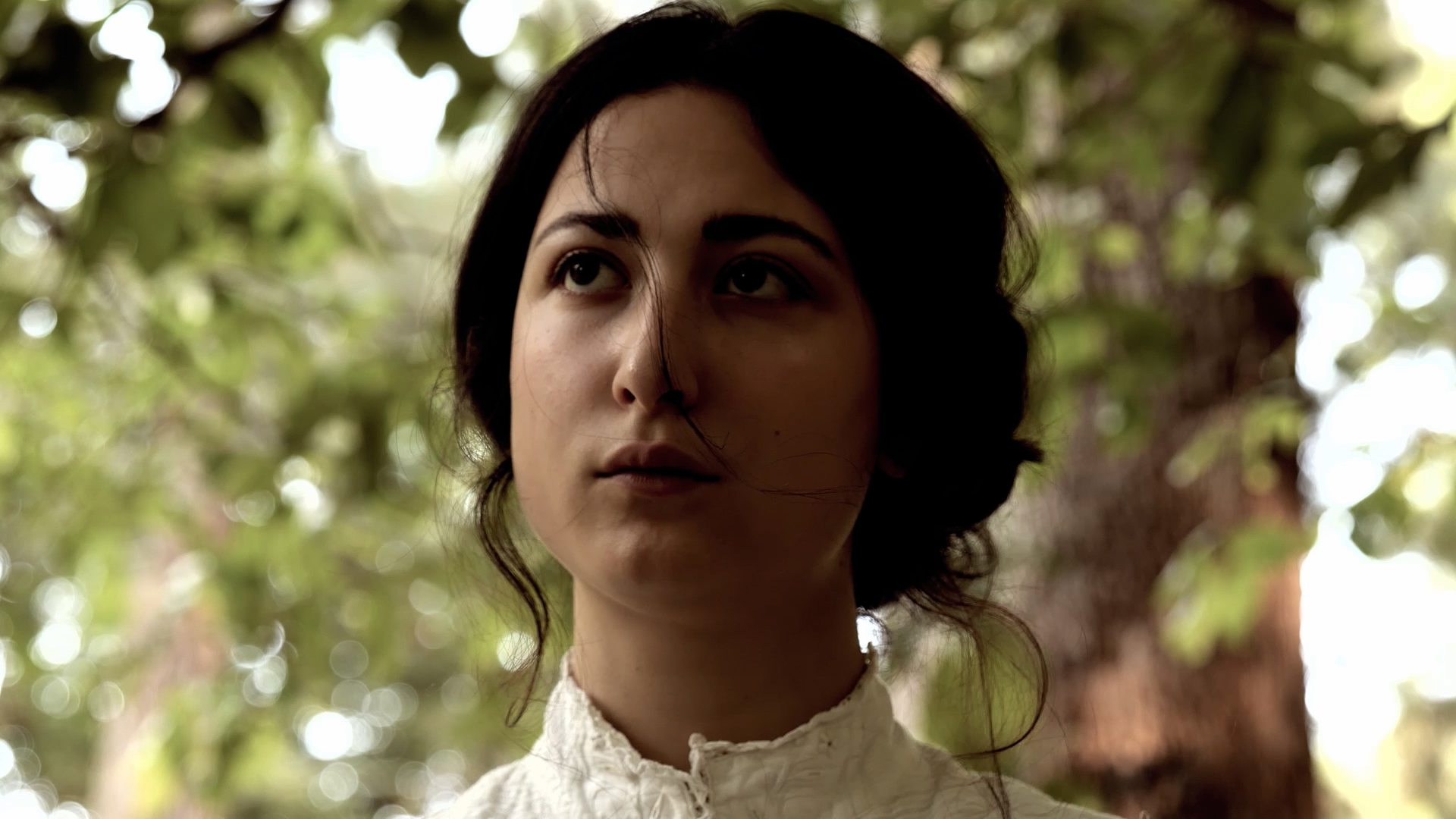
Documentary, by Isabel Russinova, Rodolfo Martinelli Carraresi, Italy, 2026
Eva of the Irises is a historical biographical docu-film about the scientist Eva Mameli Calvino, a botanist and pioneer of environmentalism in Italy, mother of the writer Italo, born in Sassari in 1886. The film, based on a multidisciplinary approach that combines several genres—such as theatre, documentary, cinema, and research—moves between memories, reflections on life, as well as the goals and missions the scholar still wished to achieve.
The multifaceted artistic sensibility of Isabel Russinova is expressed across many fields, from writing to acting, from directing to civic engagement, and finds one of its highest expressions in the docu-film Eva of the Irises, created with Rodolfo Martinelli Carraresi. The film blends scientific rigor and poetic refinement to portray the extraordinary figure of the botanist Eva Mameli Calvino, mother of Italo Calvino but above all an independent protagonist of 20th-century scientific culture. It is told through a combination of archival materials, interviews, and evocative staging capable of elegantly and profoundly conveying her intense human and professional story.
LANGUAGE: Italian
SUBTITLES: English, Spanish, French, Portuguese
An Island That Refused to Be Translated
You arrive in a village in the interior of the island and someone says something to you. Not in Italian, not in a dialect you can approximate from anything you already know. The sounds are older than that, shaped by a throat that learned them before Rome had a name for this place. You nod as if you understood. You didn’t. And the strange thing is, they know you didn’t, and they continue anyway, not to exclude you but because the language is simply what their mouth does. It is not performance. It is not resistance. It is just persistence, which is the most stubborn form of existence there is.
Sardinia has been occupied, administered, taxed, renamed and rearranged by almost every significant power in the Mediterranean. The Phoenicians came first, then Carthage, then Rome, which held the island for seven centuries and considered it a grain warehouse, a place of exile for criminals and troublesome philosophers. The Romans gave Sardinia roads, aqueducts, administrative language, and the island gave them back almost nothing culturally in return. This is not a small fact. Seven centuries of Roman occupation left remarkably shallow roots in the Sardinian linguistic and cultural substrate. Sardinian, which linguists like Eduardo Blasco Ferrer spent decades analyzing, preserves Latin phonological features that continental Romance languages abandoned a thousand years ago, but it does so on its own terms, absorbing influence without being dissolved by it. It is the oldest living Romance language, if one accepts that framing, yet it feels like no language that belongs to the Latin world as Rome imagined it.
Then came the Byzantines, then the Giudicati period of semi-autonomous Sardinian kingdoms, then the Aragonese, then the Spanish crown for nearly four centuries, then Savoy, then the unified Italian state. Each layer pressed down. None fully replaced what was underneath. Antonio Gramsci, born in 1891 in Ales, a small town in the Campidano plain, understood this from the inside, not as an ethnographer but as someone whose body carried the contradiction. He grew up speaking Sardinian before Italian, watching his island treated by the mainland as a problem to be administered rather than a culture to be understood. When he later developed the concept of the subaltern, of those social groups whose knowledge, language and self-understanding are systematically excluded from the dominant historical narrative, he was theorizing something he had already lived in his own accent. The subaltern does not simply lack power. The subaltern is someone whose way of knowing the world is not recognized as knowledge at all.
This is precisely what happened to Sardinian identity through each successive domination. It was not crushed. It was simply not seen. Spanish administrators wrote laws for the island without needing to understand how land, kinship and obligation functioned in the interior villages, because those functioning systems were invisible to the category of civilization they carried with them. Italian unification in 1861 extended that invisibility with the addition of a rhetoric of fraternal inclusion that made complaint almost impossible. You were now Italian. The fact that you had never been Italian, had never asked to be Italian, had entire dimensions of communal life that had no equivalent in the Piedmontese administrative imagination, was a detail to be smoothed over by progress.
What survived is not romantic. It is not the survival of the noble and the pure. It is something more geological, more indifferent to its own meaning. The nuraghi, those bronze-age tower-structures scattered across the island landscape in their thousands, were not maintained as monuments. They were simply never fully demolished. They remained because they were made of too much stone to remove, and because the people who lived around them incorporated them into their practical world without requiring them to signify anything beyond their own presence. That is a kind of cultural continuity that has nothing to do with nationalism and everything to do with mass.

What the Nuraghi Remember
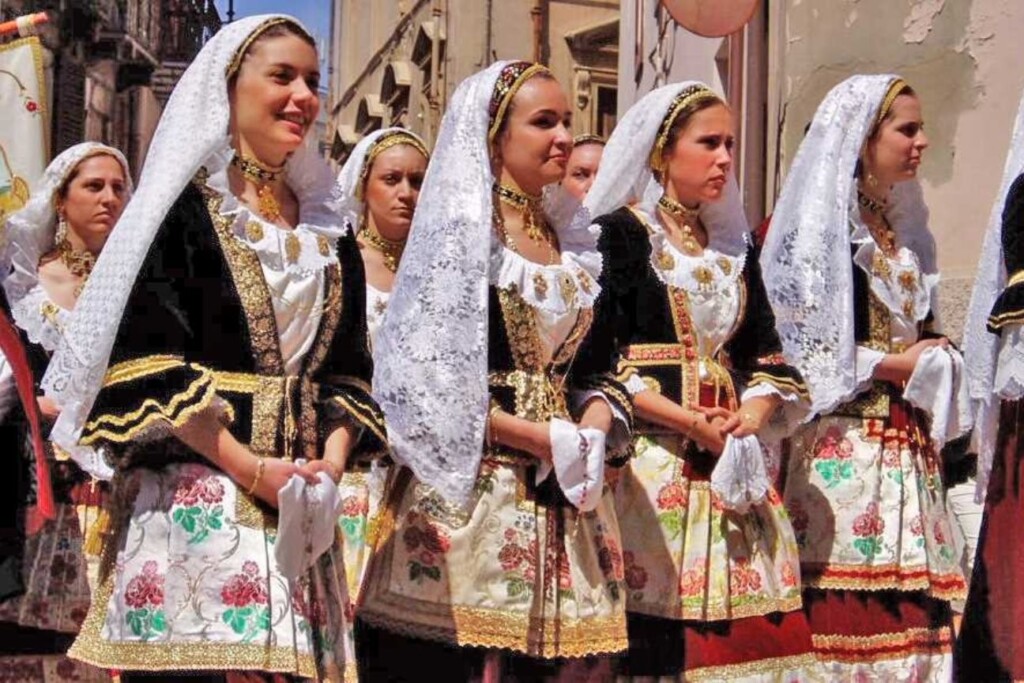
You have stood inside one of them. Maybe you did not know what it was, exactly — a truncated cone of fitted basalt rising from the scrub, its interior a spiral staircase that smells of cold stone and something older than cold, a geometry so precise it should not exist without the tools that supposedly did not exist yet. You ran your hand along the wall and felt the weight of intention in each block, the deliberate choice of angle and pressure, and then you walked back out into the Sardinian sun and the tour guide said something about Bronze Age shepherds and you nodded, because what else do you do when the explanation is clearly insufficient.
There are more than seven thousand of them still standing across the island, built between approximately 1800 and 500 BCE, which means they were already ancient when Rome was learning to read. They cluster in the valleys, crown the hills, appear suddenly in the middle of vineyards and industrial zones with the same indifference to context that only truly permanent things achieve. The nuraghi are not ruins in the conventional sense. A ruin implies a complete form that has been degraded. These were never completed in the way that word implies, because completion was never the point. They encode a different logic — one of accumulation, of vertical presence, of a structure that keeps becoming without ever declaring itself finished.
Walter Ong, in his 1982 study of the phenomenological difference between oral and literate cultures, argued that primary oral societies do not think in the abstract categories that writing makes possible. They think in situations, in aggregates, in the weight of remembered experience rather than in analyzed concepts. They know what they know because it is alive in the community, not because it is archived anywhere external to the body. The nuragic civilization left no written language. This is not a gap in the record. It is the record. What they built instead of text was stone, and stone does not summarize — it accumulates, it stands, it makes you walk around it.
The absence is the argument. A society that raises seven thousand towers across an island roughly the size of Wales, over a period of more than a millennium, is not a society that failed to develop complexity. It is a society that located complexity somewhere other than the page. Ong understood that the transition to literacy does not simply add a new tool to human cognition — it restructures cognition itself, imposing linearity, sequence, the logic of the sentence upon modes of understanding that were previously spatial, relational, embodied. What the nuragic builders left behind operates by that older logic. You do not read a nuraghe. You inhabit it, or you fail to understand it at all.
Inside the larger complexes — Barumini, Losa, Arrubiu — the rooms open off each other in patterns that resist the tourist’s instinct to find the center, the main hall, the place where the important thing happened. There is no such place, or rather every place is equally that place, which amounts to the same disorientation. A man who grew up near one of these structures, in a village where the local name for the tower predated the Italian name for the island, once said that his grandmother used the nuraghe the way other people used a church — not to worship anything inside it, but to orient herself in relation to it. To know where she was by knowing where it was.
This is what modernity cannot decode and therefore tends to dismiss as primitive: a form of knowledge that does not seek to be extracted from its location, that refuses the portability of text, that insists on being met where it stands. The stone does not travel to you. The absence of inscription is not silence. It is a different kind of speech, one that requires your body to move through space before it will say anything at all.
The Language That Lives in the Throat
You open your mouth to speak and something older than you comes out. Not a dialect, not a regional inflection, not the softened edge of standard Italian shaped by local habit. Something that preceded the Roman conquest, that bent Latin into new forms rather than surrendering to it, that kept its own logic intact through Aragonese dominion and Piedmontese administration and the slow bureaucratic suffocation of the unified Italian state. Sardinian, which UNESCO classifies not as a dialect but as a distinct Romance language, the one closest of all to classical Latin in its phonological structure, is not a relic. It is a living argument.
The argument goes like this: a people who retain their own language retain a category of thought that cannot be translated without remainder. Linguists call this the Sapir-Whorf hypothesis in its weaker form, but the Sardinian case makes it visceral rather than theoretical. When you lose a language, you lose the specific texture of certain silences, certain ironies, certain ways of naming the relationship between a person and their land that have no equivalent in the colonizing tongue. The Sardinian word “anninora,” a lullaby-cry that mothers sing to children, carries within it a coastal sadness, a tenderness edged with something unresolvable, that Italian cannot hold without spilling.
And then there is the singing that is not individual at all. Four men stand together, usually outdoors, and what emerges from their throats is not harmony in the Western sense, not voices arranged around a melody, but something more structural and more strange. The bass voice, called the bassu, holds a drone that seems to come from the earth itself. The contra voice circles it. The mesu voche bridges. The tenore leads, but “leads” is the wrong word because the system has no conductor, no score, no hierarchy that an outsider could identify. The four voices think together in real time, responding to each other’s micro-adjustments, creating a sound that UNESCO recognized in 2005 as Intangible Cultural Heritage of Humanity — not because it is beautiful, though it is, but because it represents a cognitive technology that modernity has largely abandoned.
This is the point that folklore tourism invariably misses. The cantu a tenore is not an aesthetic object. It is a method. A way of producing collective thought that bypasses the individual ego, that requires each participant to listen more than they sing, to dissolve their own impulse into the group’s emergent logic. There is no equivalent in the culture of the individual genius, the solo voice, the signed work. It belongs to a different epistemology entirely.
Luigi Pirandello, born in Sicily but writing from within the entire Mediterranean’s fractured self-consciousness, understood that identity is not a possession but a performance under pressure, and that the performance cracks precisely where outside forces demand coherence. His characters discover they have no fixed face, only the face others require of them in a given moment. Sardinian identity has lived inside this crack for centuries, asked to be Italian when convenient, asked to be picturesque when tourism required it, asked to be primitive when the mainland needed a mirror for its own sophistication. The language survives in this crack, not despite the pressure but because of it. Suppression does not always erase. Sometimes it drives the thing underground where it becomes root rather than flower, structure rather than ornament.
Today approximately 1.3 million people have some competence in Sardinian, within a total island population of roughly 1.6 million. Regional law 26 of 1997 gave the language official recognition within Sardinia’s borders, but recognition and vitality are different animals. A language that lives only in administrative documents is already half-dead. The cantu a tenore groups that still form in villages across the Barbagia region are doing something that no law can mandate and no institution can replicate: they are keeping a way of thinking alive by thinking it together, in the open air, for no audience but each other.
Blood Feuds, Silence, and the Code That Had No Name
There is a moment in a mountain village — not a dramatic moment, nothing you would recognize as a crisis — where someone asks a question and the room goes quiet in a way that has nothing to do with not knowing the answer. The silence is structured. It has edges. You feel it pressing on your sternum before you understand what it means, and by the time you understand, you have already learned not to ask again.
This is how the Codice Barbaricino worked, and works. Not as a written document, not as a formal system anyone could cite before a judge, but as a pressure distributed evenly through the air of the Barbagia, the rugged interior highlands where Nuoro stands as the last real city before the land stops pretending to be civilized in the modern bureaucratic sense. The code had no name because it needed no name. Everyone already knew it. It governed the response to insult, the obligation of retaliation, the prohibition of cooperation with external authorities, and the management of honor across generations with a precision that formal law has never matched in its ability to produce compliance.
Émile Durkheim, writing in “The Division of Labour in Society” in 1893, described what he called mechanical solidarity — the cohesion of communities bound not by complementary functions but by sameness, by shared conscience collective, by the absolute priority of the group’s moral unity over individual deviation. In societies organized this way, deviance is not merely wrong; it is existentially threatening, an attack on the fabric that holds people together when nothing else — no state, no reliable institution, no guarantee of external protection — will. The Barbagia was not primitive. It was logical. When the Savoyard state and its predecessors offered no functional justice to highland shepherds, when disputes over grazing rights and water and livestock could not be resolved through any legitimate channel that those shepherds trusted or had reason to trust, the community generated its own resolution mechanism. This is not romanticism. It is social physics.
Pierre Bourdieu would have recognized it immediately. His concept of symbolic violence — the imposition of categories of perception so thoroughly internalized that domination becomes invisible, becomes simply how things are — applies with terrible precision here, but with a twist that complicates the usual reading. In the Barbagia, the symbolic violence ran in two directions simultaneously. The state imposed its categories from without, delegitimizing local custom while offering nothing viable in its place. And the community, in response, imposed its own categories from within — categories in which to speak to police was betrayal, in which a wound to family honor could not be settled by any court, in which silence was not a choice but a structural requirement of survival. The men who died in vendettas across the nineteenth and early twentieth centuries were not victims of backwardness. They were victims of a system that had been denied access to legitimate grievance resolution for so long that it built its own, and then could not dismantle what it had built.
There were years — decades — in which certain valleys recorded more homicides per capita than anywhere else in Europe. These numbers are not there to shock. They are there to ask: what does a society have to have been denied, for how long, and by whom, before it begins to consume itself in this particular way? The answer is not culturally specific. Every society carries a shadow codex — the rules that run beneath the written ones, the hierarchies enforced through glances rather than laws, the retaliation systems that activate whenever formal justice reveals itself as theater. The Barbagia simply had less institutional camouflage over its version. The mountain stripped things down to what they actually were.
And the silence in that room, the one with the edges you felt in your chest — that silence was not absence. It was the codex speaking in its native register.
A vision curated by a filmmaker, not an algorithm
In this video I explain our vision
The Longevity Paradox
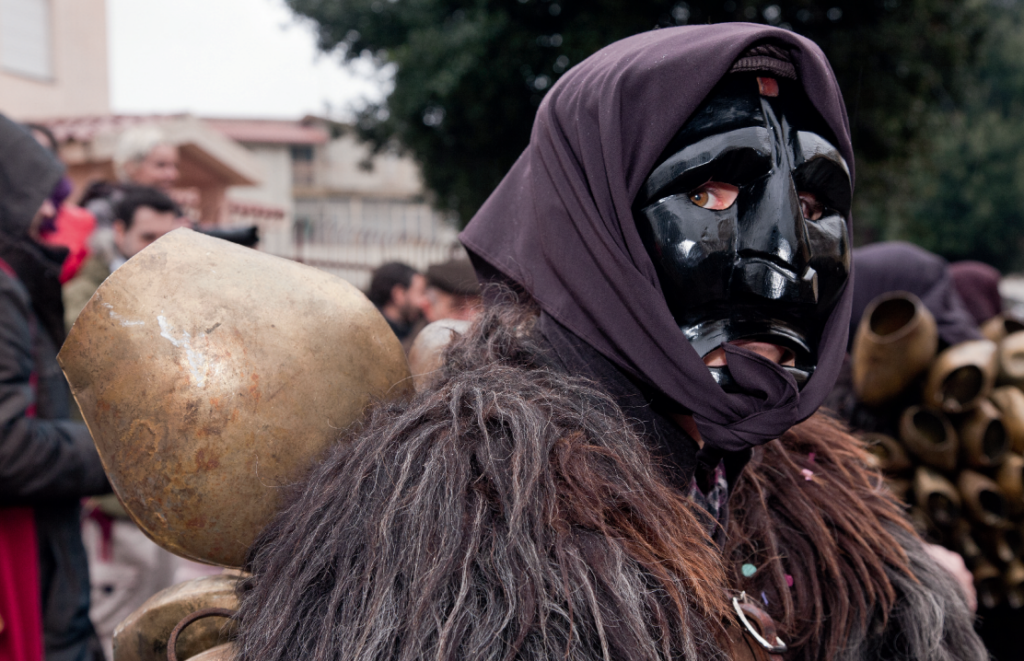
There is a man in a village in the Barbagia who is one hundred and three years old and still walks to the edge of his property each morning to check on the land. He does not do this as exercise. He does not do this as ritual. He does this because the land still needs checking, and because he is still the one responsible for it. The distinction matters enormously, and almost nobody in the wellness industry that has grown up around him understands it.
In 2004, demographer Michel Poulain confirmed what local records had been suggesting for decades: a cluster of mountain villages in the Nuoro province of Sardinia contained the highest concentration of male centenarians on the planet, with men reaching one hundred at rates roughly ten times the global statistical average. Dan Buettner, working alongside Poulain, drew a blue marker around the region on a map and named it, and the name stuck. What followed was a predictable avalanche of supplements, documentaries, and longevity tourism, each one extracting the surface data and discarding the structure beneath it.
Because the structure beneath it is not comfortable. It does not translate into a product. What Poulain’s demographic work actually revealed, when you press past the headline figures, is that these men live inside a web of obligation so dense it would be experienced as suffocation by anyone raised inside the logic of individual self-determination. They are needed. Not appreciated, not celebrated, not consulted — needed, in the most material and daily sense. Their knowledge of the land is not archival. It is operational. Their presence in the family is not honorary. It is structural. Remove them and something breaks.
Émile Durkheim wrote in 1897, in his foundational study of suicide, that the variable most predictive of premature death was not poverty or illness but the severing of social integration — what he called anomie, the condition of floating free from the obligations that bind a person to a community. He was writing about disconnection as a form of violence. The Sardinian shepherds are his inverse proof. They are so thoroughly embedded in relational obligation that their nervous systems never receive the signal that they are dispensable.
This is what the Blue Zone discourse consistently softens into something palatable. It speaks of strong family ties, plant-based diets, moderate wine consumption. It does not speak of what it costs to live inside a community that has not yet fully absorbed the idea that a person’s life belongs primarily to themselves. The very conditions that produce longevity in these mountain villages are conditions that modern liberal societies have spent two centuries dismantling in the name of freedom. You cannot have both. You cannot optimize your individual wellness routine and also be the person whose presence is structurally necessary to twelve other people’s daily functioning.
There is a scene that stays with you: a very old woman, well past ninety, being argued with by her adult children about a decision regarding the house. Not consulted. Argued with. As an equal. The children are frustrated. She is completely alive. The argument itself is the life. The moment you stop being argued with, the moment your opinion becomes something to be gently managed rather than genuinely contested, something in the body begins to understand that it is no longer required.
What Sardinian longevity actually documents is not a wellness secret but a sociological structure that the rest of the world has already decided it does not want. The data is real. The men are genuinely one hundred and three. But the mechanism is not diet or altitude or olive oil. The mechanism is the complete absence of the one freedom modern culture prizes above all others: the freedom from being needed by people who will not let you go.
Tourism and the Performance of Authenticity
There is a moment, somewhere along the northeastern coast, where you stop seeing the sea and start seeing a postcard of the sea. The water is still the same impossible color. The granite still descends into it with the same geological indifference. But something has shifted in the air, some invisible membrane has been stretched between you and the thing itself, and what you are experiencing is no longer a place but a representation of a place, a surface so thoroughly curated that presence itself feels like a form of trespassing. This is what the Costa Smeralda does to you, if you let it. And this is what capital does to beauty when it finds it undefended.
The development that began in the early 1960s under the Aga Khan’s consortium was not merely a real estate operation. It was the founding of a grammar, a language through which Sardinia would henceforth be made legible to the world. Luxury villas built in a synthetic vernacular style — local stone, archaic forms, the architectural memory of a culture reassembled as interior decoration — established the terms of a transaction that is still ongoing. What the outside world wanted from Sardinia was not Sardinia. It was the idea of Sardinia, distilled, purified of everything inconvenient, everything slow, everything that smelled of labor and necessity. Guy Debord wrote in 1967 that in the society of the spectacle, lived experience is replaced by its representation, and that this replacement is not accidental but structural. Capital does not destroy authentic life directly. It photographs it, frames it, prices it, and sells it back as experience. What remains of the original is the stage set.
The sociologist Dean MacCannell, whose 1976 work “The Tourist” remains the most precise anatomy of this mechanism, argued that tourists are not simply consumers of surfaces. They are, in fact, obsessively searching for authenticity, for backstage access, for the real thing beneath the performance. But this search is precisely what generates the performance. When a culture knows it is being watched for signs of itself, it begins producing those signs deliberately, staging what it previously simply was. The shepherd who once wore traditional dress because it was cold now wears it because it is expected. The festival that once marked a sacred calendar now marks the tourist season. The transformation is not cynical — it is, in many cases, entirely sincere — but sincerity does not prevent it from being a kind of dissolution.
You can see this in the way certain inland villages have learned to narrate themselves. The language of heritage tourism has crept into the presentation of things that existed long before the concept of heritage did. Nuragic ruins, pastoral rituals, bread-making ceremonies, the intricate craft of Sardinian textiles — all of it has been translated into a vocabulary that the outside gaze can process and consume. The translation is not wrong. It is simply incomplete. It leaves out the weight, the boredom, the argument, the grief, the grinding ordinariness that was always inseparable from those practices. What the tourist receives is the meaning without the life that produced the meaning.
And yet the people who live inside this dynamic are not passive. Identity, when it is pressured from outside to perform itself, does not simply comply. It negotiates, it resists in small ways, it holds certain things back. There are celebrations that do not appear in any itinerary. There are things said in Sardinian that are not translated. There is a privacy to the culture that survives precisely because it refuses the frame. MacCannell called this the perpetual retreat of authenticity — the way the real always moves one room further back as the tourist advances. But perhaps that retreat is not only a loss. Perhaps it is also the only form of sovereignty left when the coastline has already been sold.
What Remains When Everything Has Been Named
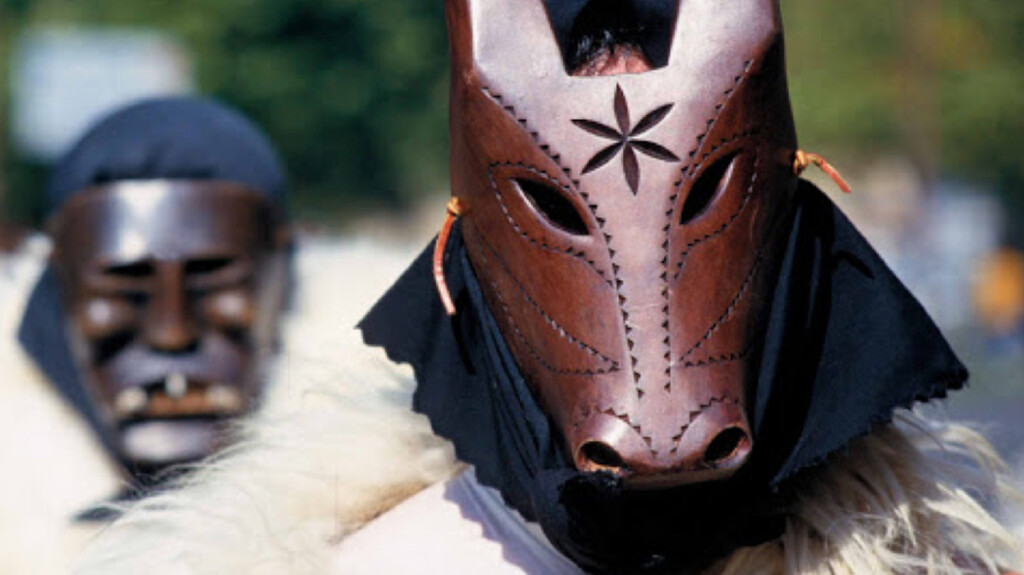
There is a woman in a village in the Barbagia who still knows the exact moment in the agricultural calendar when certain words are permitted to be spoken aloud and others must be held in silence. Not metaphorically. Literally. The knowledge lives in her body the way a language lives before it becomes a grammar, before someone decides it is worth saving and therefore begins, without knowing it, to kill it.
This is the paradox that no archive escapes. The moment you classify something, you have already begun to separate it from the living tissue that gave it meaning. Claude Lévi-Strauss understood this with uncomfortable precision when he wrote, in Tristes Tropiques in 1955, that the anthropologist arrives always too late, that the act of documentation is itself a form of mourning dressed as preservation. The notebook open on the table is not a rescue operation. It is a kind of taxidermy.
Sardinian culture has been named exhaustively in recent decades. The language received recognition under Italian Law 482 of 1999, which theoretically protected twelve minority linguistic communities. Scholars have catalogued the launeddas, the murales of Orgosolo, the textile traditions of Aggius, the nuragic cosmologies, the poetry of the gare poetiche. UNESCO added the Cantu a tenore to its list of intangible cultural heritage in 2005. Every naming was also, in some small measure, a fixing, a pinning to the board.
Meanwhile, the young people of Cagliari and Sassari navigate TikTok in Italian and English, their thumbs fluent in a grammar that has no room for the subjunctive moods of Sardinian, for the particular way the language folds time into a single verb that has no direct translation. The statistics are not ambiguous: according to surveys conducted in the early 2000s by linguists including Eduardo Blasco Ferrer, active daily use of Sardinian had already dropped dramatically among those under thirty, with transmission within families becoming increasingly sporadic in urban areas. A language does not die in a single moment. It thins. It becomes a texture you can still feel at the edge of things, but can no longer hold in the center of your hands.
There is a scene that stays with you, the kind that does not explain itself. An old shepherd sitting across from a young filmmaker, the recorder running, and the old man speaking for two hours about the land, the animals, the seasons, the signs he reads in weather that has no meteorological name. And the young filmmaker, respectful, attentive, genuinely moved, understanding perhaps forty percent of what is being said, not because the language is impenetrable but because the knowledge behind the language requires a life lived in a specific way to become fully legible. The recording exists. The knowledge does not fully transfer.
Ernesto De Martino wrote in La terra del rimorso, published in 1961, about the South as a place where history had accumulated without resolution, where the past pressed on the present not as memory but as unprocessed weight. Sardinia carries something similar but older, more geological. It is not trauma exactly. It is density. The kind that resists the lightness of documentation.
What survives, then, is not what has been named or protected or digitized. It survives in the way a gesture is made during a specific ritual that the person making it cannot fully explain, in the particular silence that falls between certain words in a conversation that happens only in Sardinian, in the knowledge that woman in the Barbagia carries in her body, the knowledge that has no institutional home and no digital file, that exists only as long as she does, pressing outward against the world in a language that was never meant to be written down, only spoken into the specific air of a specific place at the only moment when speaking it means anything at all.
🌊 Islands of Memory: Culture, Identity and Roots
Sardinian culture is a living mosaic of ancient traditions, layered histories, and a fiercely preserved sense of identity. To understand it deeply, one must explore the broader currents of Mediterranean thought, indigenous storytelling, and the literature that emerges from peripheral yet powerful places. The following articles trace the invisible threads connecting Sardinian identity to wider cultural and literary landscapes.
Grazia Deledda: Life and Works
Grazia Deledda remains the most celebrated voice to emerge from Sardinian soil, winning the Nobel Prize in Literature in 1926 for her vivid portrayals of island life, tradition, and moral conflict. Her novels excavate the inner world of a society governed by ancient codes, where honor, guilt, and redemption are felt with almost mythic intensity. Reading Deledda is essential for anyone seeking to understand Sardinian culture from the inside out.
GO TO THE SELECTION: Grazia Deledda: Life and Works
Mexican Religious Syncretism: History and Meaning
Religious syncretism is a powerful lens through which to examine how cultures preserve identity while absorbing external influences over centuries. Like Sardinia, which blended Nuragic spirituality with Roman, Byzantine, and Spanish overlays, Mexico developed a rich devotional landscape born from collision and adaptation. This article offers a fascinating comparative framework for understanding how peripheral cultures negotiate faith and memory.
GO TO THE SELECTION: Mexican Religious Syncretism: History and Meaning
Aztec Culture: History Religion and Art
The Aztec civilization, like ancient Sardinian culture, demonstrates how a society can build a profound cosmological and artistic identity rooted in the land, the ancestors, and collective ritual. Exploring Aztec history, religion, and art illuminates universal patterns of how indigenous peoples construct meaning and resist erasure. The parallels with Sardinian prehistory and its Nuragic heritage are thought-provoking and enriching.
GO TO THE SELECTION: Aztec Culture: History Religion and Art
Octavio Paz: Life and Thought
Octavio Paz spent his life meditating on what it means to belong to a culture that is both ancient and colonized, both proud and wounded — a tension deeply familiar to Sardinian identity. His essays probe the labyrinthine nature of cultural memory, solitude, and the search for an authentic self within a people. His philosophical poetry offers a mirror in which Sardinian readers may recognize their own existential landscape.
GO TO THE SELECTION: Octavio Paz: Life and Thought
Discover the World’s Hidden Cultures on Indiecinema
If these cultural journeys have stirred something in you, Indiecinema’s streaming platform is your next destination. From documentary explorations of forgotten civilizations to fiction films that breathe life into marginal and resilient identities, Indiecinema curates independent cinema that mainstream platforms will never show you. Begin your voyage into the world’s living cultures — stream now on Indiecinema.
👉 EXPLORE THE CATALOG: Watch Indie Films in Streaming
A vision curated by a filmmaker, not an algorithm
In this video I explain our vision

