
The Body That Already Knows
You sit down. You close your eyes. You are told only to watch the breath enter and leave, nothing more, no manipulation, no counting, just observation. Within forty seconds, maybe sixty, the mind has already staged three arguments, rehearsed a conversation that may never happen, catalogued a minor grievance from last Tuesday, and begun composing what you might say if someone ever asked you about it. You have not moved. The room has not changed. And yet something in you has bolted like an animal that caught a scent, desperate to be anywhere except here, inside this body, inside this moment, watching nothing more threatening than air.

The violence of that escape is the actual subject. Not the breath. Not the stillness. The flight itself.
Osho’s rendering of the Vigyan Bhairava Tantra — the ancient Shaiva text containing 112 contemplative methods, presented across his lectures of 1972 and compiled into what became The Book of Secrets — is routinely received as a spiritual manual, a menu of practices for the seeker. That reception is almost entirely wrong, and the wrongness is instructive. These techniques are not remedies. They are instruments of exposure. Each one is a precisely calibrated pressure applied to the architecture of the self, and what they reveal, without exception, is that the architecture is defensive. The house was built to keep something out. The techniques do not furnish the house. They remove the walls, and you discover there was never a house, only the insistence that there should be one.
The text itself dates to somewhere between the sixth and eighth centuries of the common era, attributed to Bhairava in dialogue with the goddess Devi, and it belongs to the Kashmir Shaiva tradition — a philosophical lineage that never accepted the body as an obstacle to liberation. This is the precise point where Western spiritual inheritance, shaped by centuries of Platonic dualism and later by Protestant suspicion of the flesh, tends to misread the entire enterprise. When René Descartes in 1641 published his Meditations on First Philosophy and formally separated the thinking substance from the extended one, he was not inventing a new idea so much as crystallizing a very old cultural reflex into a philosophical system. The body became the problem. The mind became the person. And every spiritual tradition that subsequently imported this framework, however unconsciously, began designing practices aimed at transcending physical experience rather than inhabiting it fully.
The Vigyan Bhairava Tantra moves in the opposite direction with an almost aggressive consistency. Touch something, it says. Feel the sensation at the tip of the tongue. Notice the precise moment between waking and sleep. Attend to the space inside the skull. The techniques are phenomenological before phenomenology existed as a word — they ask the practitioner to return, always return, to the lived body as it actually is rather than the conceptual body the mind carries as a kind of map. Edmund Husserl spent decades in the early twentieth century arguing that Western philosophy had mistaken its own abstractions for reality, that the task of genuine inquiry was to return to the things themselves, to what he called Zu den Sachen selbst. The Vigyan Bhairava Tantra had already been doing this for roughly twelve centuries before Husserl formalized the demand.
What Osho adds — and this is not a minor addition — is the psychological layer. He understands that the resistance a reader feels during these techniques is not spiritual immaturity or lack of discipline. It is information. The mind’s refusal to rest in the body is a precise map of where the self has been constructed out of avoidance. Every technique that fails, every moment of distraction or discomfort or sudden inexplicable irritability, is the diagnostic yielding its result. The body already knew. The technique merely forced you into the same room as what the body knew, and the person you thought you were found that room intolerable.
I Am Nothing
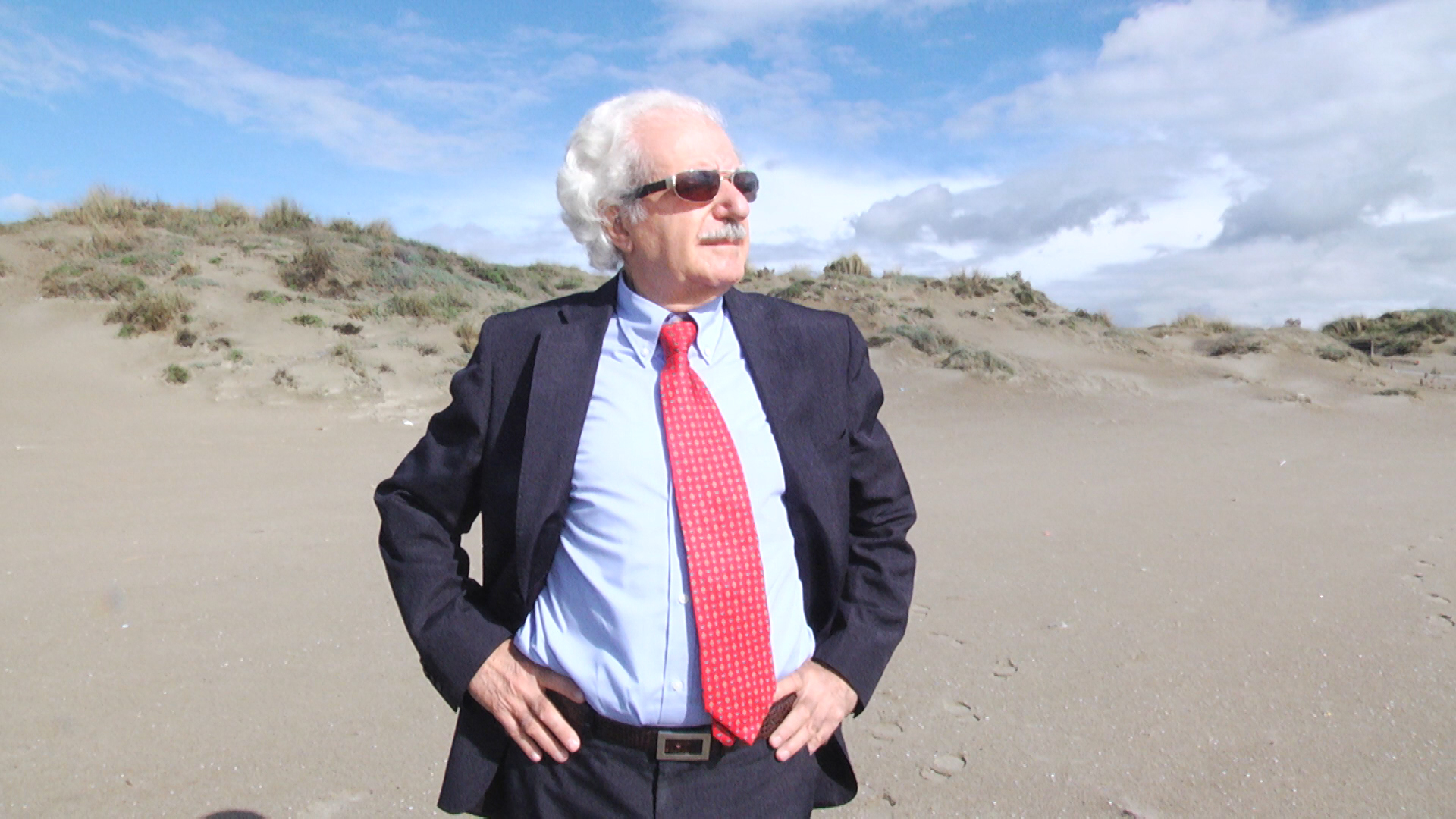
Drama, thriller, by Fabio Del Greco, Italy, 2015.
The story revolves around Vasco, a Roman builder who, at the age of 74, enjoys a life of absolute comfort. His human parable takes a dramatic turn when a mysterious encounter leads him to an ambush. Having survived, but marked by a long coma, Vasco wakes up with a new sensitivity, developing an intimate and poetic bond with nature. This new relationship with the world around him leads him to deeply explore himself, in an internal and external journey. through Italy, the United States and India, in search of a higher meaning and a cure. In parallel, the threat of a planetary cataclysm adds an epic dimension to the story.
I Am Nothing explores universal themes such as time, memory, oblivion and the connection with nature. Fabio Del Greco creates an existential drama full of food for thought. The director skillfully combines different visual materials, mixing archive images with nature photographs and dreamlike visions. This visual experimentation translates into an editing that captures the viewer's attention, guiding him through a cycle of creation and destruction. The sequences that alternate the buildings, Vasco's pride, with Indian landfills and natural landscapes create a hypnotic rhythm, underlining the beauty and fragility of life. Vasco's existential journey is a hymn to transformation and rebirth. The evolution of the protagonist, from unbridled luxury to the rediscovery of purity, represents a powerful metaphor on the meaning of life and the need to reconnect with authentic values. Io sono nulla stands out for its ability to combine introspection and visual experimentation, offering a suggestive and engaging narration. It is a film that invites us to reflect on the human condition, on our relationship with power and nature, and on the possibility of finding ourselves through change. A work that leaves its mark and lends itself to multiple readings.
LANGUAGE: Italian
SUBTITLES: English, Spanish, French, German, Portuguese
A Fifth-Century Mirror Held Sideways
You are sitting in a room where someone is speaking to you about your breath, and you realize, with a specific and uncomfortable clarity, that no one has ever spoken to you about your breath before — not as something that could unhinge you, not as an entry point into a mode of awareness so total it would make the self you arrived with feel like a coat you forgot you were wearing. The room is Pune, 1974. Outside, the monsoon season is beginning its slow erasure of the city’s dust. Inside, a man is reading aloud from a text that is, conservatively speaking, somewhere between fourteen and sixteen centuries old.
The Vigyan Bhairava Tantra is not a philosophy. It is not a theology, a devotional manual, or a path of renunciation. It belongs to the tradition of Kashmir Shaivism, a school of non-dual thought that reached its most articulate expression between the eighth and twelfth centuries through thinkers like Abhinavagupta, whose Tantraloka remains one of the most systematically complex works of consciousness theory ever produced on the subcontinent. But the text Osho reads from precedes even Abhinavagupta’s synthesis — it is a dialogue in Sanskrit verse between Bhairava and Devi, the terrifying and the tender faces of a single undivided reality, in which Devi poses the essential question of perception and Bhairava responds with one hundred and twelve techniques. Not doctrines. Techniques. The distinction is not minor. A doctrine asks you to believe; a technique asks you to do something specific with your body, your senses, the gap between two breaths, the moment before sleep takes you under. Kashmir Shaivism was never interested in the kind of liberation that required you to exit the world. This placed it in deliberate tension with the Advaita Vedanta lineage, which, despite its philosophical non-dualism, consistently privileged the path of jnana — knowledge, renunciation, withdrawal — over the tantric insistence that the body itself is the laboratory and that sensation, properly attended to, dissolves the boundary between perceiver and perceived.
Osho delivers his lectures on these one hundred and twelve techniques over a span of months to an audience composed largely of Europeans and Americans who have arrived carrying a very particular kind of wreckage. The 1960s counterculture had promised transcendence through collective rupture — through protest, psychedelics, free love, the dismantling of inherited structures — and by 1974, the promise had curdled into something its inheritors could not yet name. The communes had fractured. The drugs had produced revelation and then dependency, sometimes in the same month. The sexual revolution had liberalized behavior without touching the deeper structure of longing beneath it. What remained was a generation trained to want radical transformation and newly equipped, by pop psychology and the emerging human potential movement, with a vocabulary of selfhood that was entirely modern, entirely Western, and entirely unprepared for what it was about to encounter.
The collision that occurs in that room is not simply cultural. It is epistemological. The Vigyan Bhairava Tantra does not recognize the bounded, autonomous self that Abraham Maslow had spent his career trying to help people actualize. It does not recognize the self as a project, as something to be improved, healed, or fulfilled. The text’s entire architecture rests on the assumption that the self is the problem of perception, not its subject — that what you call “I” is a contraction, a habitual narrowing of awareness, and that the one hundred and twelve techniques are not tools for self-improvement but mechanisms for puncturing the contraction itself. When this framework lands on a culture that had just completed the transformation of the self into a commodity — something to be worked on, invested in, branded and expressed — the friction it generates is not immediately visible. It feels, at first, like recognition.

Witnessing as a Trap the West Already Built
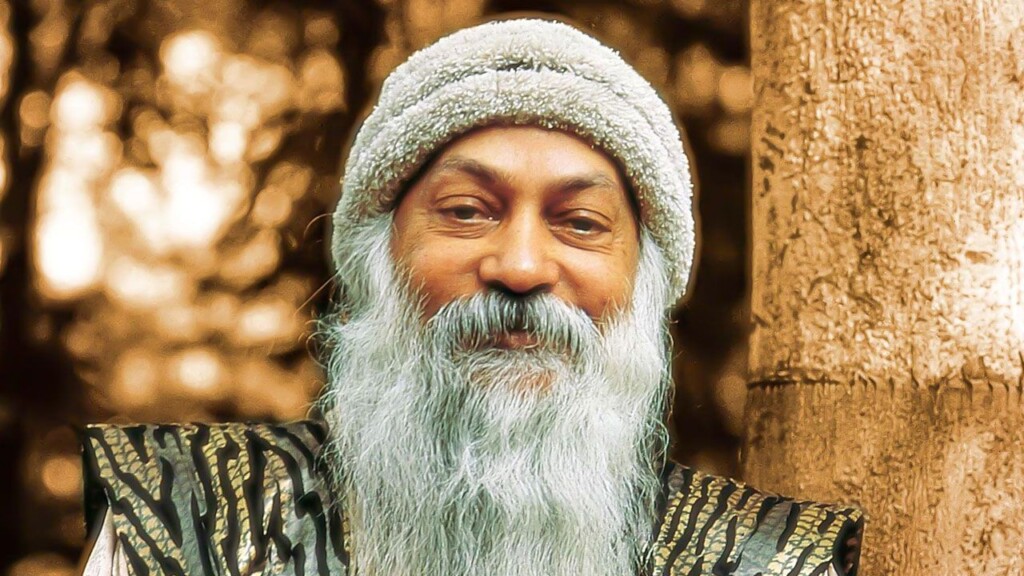
You are sitting in a meditation hall somewhere, eyes closed, and someone — a voice on tape, a book in your lap, a teacher in white linen — tells you to watch your thoughts. Not to follow them, not to fight them, just to watch. The instruction sounds innocent, almost pastoral, like being told to sit by a river and notice the water. But the moment you do it, something happens that nobody in that hall names: you split. There is now a you who thinks, and a you who watches the thinking. Two selves where one stood before. And the watching self, by design, is presented as the real one — the stable one, the free one, the one that survives the noise.
Osho builds the entire architecture of the 112 techniques in the Vigyan Bhairav Tantra around this splitting. Witnessing, as he teaches it, is the spine of the system. You observe sensation without reacting. You watch desire without becoming desire. You notice fear without being fear. The premise is that identification is the cage, and observation is the key. This is not a fringe position — it runs through virtually every school of contemplative practice, and Osho’s version of it is bracingly direct, stripped of monastic ritual, aimed at a modern reader who has already lost faith in dogma. It should work. The logic is clean. But logic is where the trouble begins.
In 1641, René Descartes sat alone in a heated room in the Netherlands and performed what he called a methodical doubt — stripping away every belief that could be questioned until he reached something he believed could not be doubted: the fact of his own doubting. The cogito was born. What is less frequently examined is not the conclusion but the structure it installed: a sovereign, disembodied observer standing outside the world, watching it with detachment as the condition of knowing it reliably. The body became object. Nature became object. Other people, in their gestures and passions, became objects to be read from a safe epistemic distance. The Meditations did not just produce a philosophical argument — they produced a posture, a way of inhabiting consciousness that equated distance with clarity and identification with error.
Michel Foucault, in Discipline and Punish published in 1975, traced what happens when this posture becomes institutional. The Panopticon — Jeremy Bentham’s prison architecture in which a single unseen observer could theoretically watch every prisoner at all times — was not primarily a building. It was a technology of the self. The prisoners, once they understood the structure, began watching themselves. The external gaze was internalized. Control stopped requiring a guard. Foucault’s argument was that this mechanism spread through schools, hospitals, armies, factories — and that the modern subject is largely a creature trained to split itself, to maintain an interior watcher that disciplines the interior watched. The detached observer was never neutral. It was power wearing the mask of clarity.
This is the dangerous proximity that Osho’s witnessing creates, not because his intention matches Descartes’ or Bentham’s, but because the cognitive form is structurally identical. When you are told to observe your anger without becoming it, you are being asked to produce exactly the internal bifurcation that Western modernity spent four centuries perfecting as a tool of mastery. The difference Osho insists on — that the witness in his tradition dissolves eventually, that it is a raft to be abandoned once you cross the river — may be real as metaphysics, but it is almost never real as practice. In every meditation hall, in every therapeutic office drawing on mindfulness-based techniques, the witness hardens. It does not dissolve. It becomes the new landlord of the inner life, quieter than the ego it replaced, and therefore far harder to question.
What Freud Couldn’t Burn and Osho Wouldn’t Name
You are sitting in a meeting, nodding at something you find hollow, and you notice the nod before you can stop it. The body has already agreed. Something older than your opinion moved your neck, and the thought you were actually thinking slipped back beneath the surface without a sound. This is not a dramatic moment. It happens fourteen times before lunch. What Osho calls the core disease of the human condition is not located in catastrophe — it is located precisely there, in that unremarkable half-second when something real retreats to make room for something acceptable.
The Book of Secrets returns to this mechanism with a persistence that is almost aggressive. Repression, for Osho, is not a byproduct of bad parenting or unfortunate circumstance. It is the operating system installed by civilization itself — the very process by which a biological creature becomes a social one. The energy that gets pushed down does not disappear. It migrates. It surfaces as anxiety, as compulsive behavior, as the particular flavor of exhaustion that no amount of sleep repairs. What is suppressed does not die. It waits, and while it waits, it distorts everything above it.
Sigmund Freud reached a structurally similar diagnosis in 1930, in a text that remains one of the most uncomfortable things written in the twentieth century. Civilization and Its Discontents argued that repression is not an accident of poorly organized societies — it is the price of civilization as such. The renunciation of instinct is what makes collective life possible. Without the suppression of aggression and libido, there is no city, no law, no accumulated culture. Freud was not lamenting this. He was describing it with the detachment of someone reporting a geological fact: the ground is made of what was buried. The discomfort he named was not something a better therapy could dissolve. It was structural, constitutional, written into the arrangement itself.
The friction between these two positions is not easily resolved, and it should not be. Osho treats suppression as a layer that can be peeled back through the right quality of inner attention — the witnessing consciousness that the tantra traditions describe and that the one hundred and twelve techniques of Vigyan Bhairav Tantra are designed, in various ways, to cultivate. The wound, for him, is real but not permanent. Awareness does not add something new to the human being; it removes the obstruction. What remains, once the suppression is seen clearly enough to stop feeding it, is not chaos but a different kind of order — one that does not require the self to be at war with its own depths.
Freud would have found this unconvincing, not because he lacked imagination, but because his entire framework was built on the irreducibility of the conflict. The ego does not tame the id out of neurotic cowardice. It tames it because the alternative is the destruction of the social bond. In 1930, with European fascism assembling itself in plain sight, Freud’s pessimism was not abstract. The return of what is repressed, for him, looked less like liberation and more like the mob. The therapeutic goal was never wholeness in the romantic sense — it was the modest, difficult achievement of functioning under irresolvable tension.
The Marketplace That Sold Emptiness Back to You
Someone pays two thousand, four hundred dollars to spend a Friday through Sunday in a converted barn in upstate New York, breathing deliberately, sitting in prescribed silence, practicing what the facilitators call “ego dissolution work,” and on Monday morning she is back at her desk answering emails with the same defensive reflexes, the same ambient dread, the same calcified sense of self she brought through the barn doors seventy-two hours earlier. This is not a failure of the technique. It is the technique working exactly as the market designed it to work — producing the feeling of transformation without the conditions that make transformation irreversible.
By the late 1990s, the 112 dharanas of the Vigyan Bhairav Tantra had been moving through Western culture for nearly three decades via Osho’s commentaries, and something had happened to them in transit. The destabilizing force that made those techniques genuinely dangerous — dangerous in the sense that Nietzsche meant when he described real philosophy as something that could shatter a life’s foundations — had been extracted like a toxin from a plant, leaving the pleasant botanical smell without the alkaloid. What remained was breathwork, body awareness, present-moment attention: tools that are not wrong in themselves but that had been surgically separated from the metaphysical violence that gave them their original function. The Tantric premise was never that you would feel better. It was that the self doing the feeling would not survive the practice intact.
The mindfulness industry, valued at 4.2 billion dollars globally by 2022 according to Grand View Research, did not distort this tradition by accident or ignorance. It distorted it with structural precision, because an industry requires repeatability, and genuine ego dissolution is not a repeatable consumer experience — it is a one-way door. Jon Kabat-Zinn’s Mindfulness-Based Stress Reduction program, formalized at the University of Massachusetts in 1979 and now embedded in hospitals, corporations, and military training programs across forty countries, accomplished something genuinely important for clinical pain management. It also, almost as a side effect, created a grammar for selling contemplative practice to institutions that depend on functional, productive, emotionally regulated selves — the precise opposite of what the Tantric śūnyatā pointed toward.
What The Book of Secrets actually describes in its section on the void techniques — particularly dharanas 39 through 46 — is not stress reduction. It is the systematic dismantling of the continuity that makes a person feel like a stable entity persisting through time. Osho reads these techniques as pointing toward what the Buddhist philosopher Nāgārjuna in the Mūlamadhyamakakārikā called śūnyatā, emptiness not as absence but as the groundlessness of all apparently solid things, including the self that would like to purchase a weekend of insight and return to its life improved. The marketing category that absorbed this was called “transformational experience,” and the crucial word being quietly destroyed in that phrase is the second one.
There is a particular sophistication to how spiritual experience becomes a commodity, and it operates not through suppression but through saturation. When a concept is everywhere — on app store wellness programs, corporate retreat agendas, the language of human resources departments describing “presence” as a leadership competency — it becomes precisely inert. The philosopher Guy Debord, writing in 1967 in The Society of the Spectacle, identified how radical content is neutralized not by being banned but by being represented, consumed, and circulated as image. He was writing about political revolution, but the mechanism is identical: once the dissolution of the self becomes a branded weekend, the dissolution of the self is safe. It costs what it costs. It ends when the checkout time ends.
The barn in upstate New York is full again next Friday.
A vision curated by a filmmaker, not an algorithm
In this video I explain our vision
Jung’s Shadow and the Technique That Looks Away

You sit in a darkened room and follow the instruction precisely: visualize your body dissolving, organ by organ, until nothing remains but awareness floating in empty space. The technique is from the Vigyan Bhairav Tantra, one of the 112 methods Osho unpacks across thousands of pages, and it works. Something genuinely shifts. The floor feels less solid. The boundary between where your skin ends and the air begins becomes negotiable. This is not metaphor — this is the nervous system responding to sustained sensory withdrawal and breath regulation in ways that neuroscience has since documented with considerable specificity. The technique is real. What follows it is the question nobody in the room is equipped to answer.
Carl Jung spent much of 1928 writing what would become one of the more uncomfortable documents in the history of psychology. In “The Relations Between the Ego and the Unconscious,” he was trying to articulate what happens when the contents of the unconscious begin moving toward consciousness without adequate structural support. His concern was not that the unconscious was dangerous in itself, but that the ego, when flooded by material it has no framework to metabolize, does something predictable and catastrophic: it expands. It does not integrate what surfaces. It identifies with it. The technical name he gave this was inflation, and he was precise about its phenomenology — the sudden sense of special destiny, the feeling of having accessed something others cannot see, the quiet but total conviction that ordinary life now belongs to a lesser category of existence. He watched it happen in his patients after active imagination work gone unsupported. He watched it happen in himself.
Several of the 112 techniques function as reliable induction mechanisms for exactly the conditions Jung was describing. Breath retention past the threshold of comfort activates the body’s emergency chemistry. Sustained visualization of one’s own death, practiced as Osho instructs across multiple methods, pulls on the same psychological architecture that near-death experiences disturb. Trataka — unblinking focus on a fixed point until peripheral reality dissolves — is not metaphorical mysticism; it is a disruption of the default mode network’s ordinary maintenance of self-referential continuity. These are physiological events before they are spiritual ones, and they release material. Grief that had no previous address. Rage that predates language. Oceanic states that feel, to the person experiencing them, indistinguishable from enlightenment.
What Osho provides in response to this is primarily a framework of reassurance. The dissolution is the point, he tells the reader repeatedly. The ego’s resistance is the obstacle, not the signal. Trust the technique. Trust the master. This is where the book’s real structural gap becomes visible, not as a failure of the teachings themselves but as an absence built into the architecture of how they are delivered. A text cannot monitor what surfaces in a reader sitting alone in 2024 with no community, no guide, no ongoing container for the material that begins moving. It cannot distinguish between the dissolution that precedes genuine reorganization and the dissolution that precedes a destabilizing episode in someone whose psychological ground was already fragile before they opened the book.
Jung’s insistence was that shadow encounter without adequate holding structure produces not a deeper self but a larger ego wearing mystical clothing. The person who emerges from the technique convinced they have touched the absolute may simply have contacted a part of themselves that had been suppressed long enough to feel, on first arrival, like the divine. The two experiences are phenomenologically identical from the inside. The difference only becomes visible over time, in relationship, in the patient and often unglamorous work of finding out whether what was contacted can be lived in ordinary conditions or only performs in the dark.
The techniques in the Vigyan Bhairav Tantra are ancient, and their effects are not in serious dispute. The question is what a person does with a genuine altered state when the room they return to has no one in it who knows what they have just touched.
Language Performing What It Describes
You are sitting with the book open and you realize, somewhere around the third attempt to paraphrase what you just read, that the sentence will not hold still. You try to catch Osho’s meaning the way you would catch a thesis — pin it, summarize it, carry it forward — and the meaning slides. Not because it is obscure, but because it was never meant to survive the act of summarizing.
This is not a flaw in the prose. It is the prose doing exactly what it intends.
The 650 published volumes that emerged from Osho’s spoken discourses were never written — they were transcribed, and that distinction carries enormous weight. Speech operates in time; it arrives and dissolves. When Wittgenstein, in Philosophical Investigations published in 1953, abandoned the crystalline logical architecture of his earlier Tractatus, he moved toward something that looked like conversation — numbered fragments, questions that open onto other questions, definitions that unravel as they are offered. His target was not ignorance but the particular violence that philosophical language does when it pretends to capture what language cannot hold. Osho’s method runs along a parallel fault line, though it arrives there from a different direction: not through logical austerity but through deliberate excess, contradiction deployed so openly that the reader cannot mistake it for accident.
Consider what happens when a speaker tells you, in consecutive sentences, that meditation requires enormous effort and that effort is the one thing that prevents meditation. The logical mind lurches for resolution — one of these must be wrong, or there must be a hidden synthesis. But the text refuses to provide it. The contradiction is left standing, not as a riddle waiting to be solved but as a pressure applied to the mechanism that demands solutions in the first place. This is rhetoric operating as surgery. The instrument is language; the thing being cut is the reader’s assumption that language’s primary function is to deliver stable content.
What makes this technically sophisticated rather than merely provocative is the precision of the staging. Osho’s lectures, delivered primarily in Hindi and English across two decades beginning in the late 1960s, were addressed to live audiences who brought questions, resistances, and habits of listening. The transcriptions preserve the rhythm of address — the pauses implied by punctuation, the sudden pivots, the way a sentence sometimes abandons its own grammatical destination. When the German sociologist Niklas Luhmann argued, across his vast systems theory, that communication is not the transfer of meaning from sender to receiver but the management of shared uncertainty, he was describing something Osho was already performing in real time. The audience in Pune in 1974 was not receiving doctrine. They were being placed inside a communicative event that trained attention by refusing to reward extraction.
The reader who comes to The Book of Secrets looking for Vigyan Bhairav Tantra decoded into principles walks directly into the trap the text sets — and this is not a trap designed to humiliate. It is a trap designed to be recognized. The moment you notice that you cannot summarize what you have read, that your margin notes keep contradicting each other, that the most important passages resist being quoted in isolation, you have begun doing precisely what the book demands: you have stopped reading for cargo and started reading as an act. Jacques Derrida spent much of Of Grammatology, published in 1967, demonstrating that the dream of pure presence — the fantasy that speech delivers meaning directly while writing merely represents it — was always already a fantasy. Osho’s transcribed lectures occupy a strange middle position that makes this visible as lived experience rather than theoretical claim. They read like speech but behave like a practice manual for abandoning the habits speech instills.
The Authority Shaped Like Absence
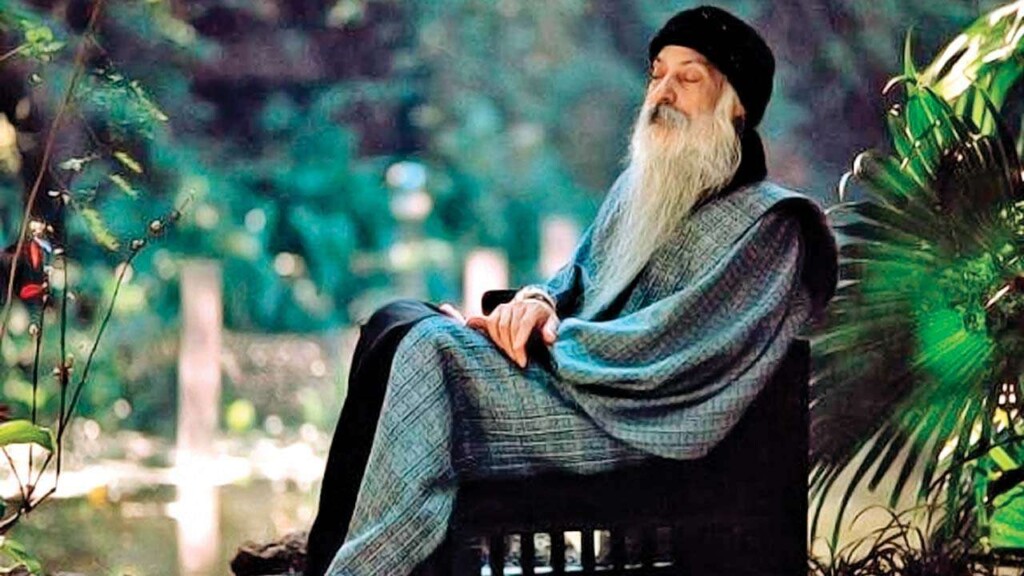
You are sitting cross-legged on the floor of a hall in Pune, sometime in the late 1970s, and the man speaking to you from the elevated chair is explaining, in a voice calibrated to absolute calm, that the self you brought through the door does not exist. He is wearing silk. You are wearing orange. You gave up your name when you arrived, and the name you received in its place was given by him.
The paradox buried in that room has never been cleanly named, but Hannah Arendt came close in 1958 when she argued in The Human Condition that authority, to function at its most complete, must render itself invisible — must appear not as command but as natural order, not as hierarchy but as the simple shape of things. The authority that announces itself is already weakened. The authority that teaches you to distrust authority, while remaining the sole source of that teaching, has achieved something structurally more durable than any throne that asks openly for obedience. It has convinced you that your submission is your liberation.
What makes The Book of Secrets remarkable as a document is not its synthesis of 112 Tantric meditation techniques drawn from the Vigyan Bhairav Tantra, a text somewhere between 1,200 and 1,500 years old. It is the way the commentary wraps those techniques inside a voice that systematically dismantles every possible competitor for your trust — scripture, tradition, organized religion, your parents, your culture, your rational mind — and then positions itself as the one presence that has no investment in your belief. Every guru, the voice explains, is a trap. Every system is a cage. The only honest teacher is one who teaches you not to need teachers. The words are impeccable. The architecture beneath them is something else entirely.
Arendt’s deeper argument was that authority requires a foundation outside itself — something it can point to that appears anterior to its own claims. Roman authority pointed to the founding of the city. Religious authority pointed to revelation. What Osho’s structure points to is the individual’s own inner experience, which is conveniently unverifiable by anyone but the individual, and which the individual has been prepared to interpret through a vocabulary provided entirely by the teacher. When you feel something shift during meditation and you describe it as dissolution of ego, as no-mind, as witnessing without a witness, you are not speaking from silence. You are speaking a language someone gave you, and fluency in that language is indistinguishable, from the inside, from enlightenment itself.
The more than six hundred discourses that constitute the expanded text were delivered between 1972 and 1974, and they carry within them a consistent formal gesture: the elevation of surrender paired with the demotion of every framework for evaluating what you are surrendering to. Critical thinking is reframed as ego defense. Doubt is repositioned as fear. The tools you might use to examine the authority are themselves treated as symptoms of the problem the authority exists to cure. This is not unique to one man or one movement — it is the precise machinery that Arendt identified as the disappearance act at the center of all durable power. The difference is that most power does not bother to philosophically justify the disarmament of its subjects. This one wrote a library doing exactly that.
What you are left with, reading the book now, is not cynicism and not belief but something more uncomfortable: the recognition that the experience inside that hall may have been genuine, that the silence some people found was real, and that none of that settles the structural question one millimeter. Genuine experience and engineered submission are not mutually exclusive. They may, in fact, be the same event, depending entirely on who built the room you were sitting in when it happened.
🌀 Secrets, Silence, and the Inner Labyrinth
Osho’s The Book of Secrets plunges into the 112 meditation techniques of the Vigyan Bhairav Tantra, mapping the architecture of consciousness with radical directness. These related articles trace the same hidden corridors — mystical philosophy, sacred experience, meditative traditions, and the dissolution of the ego into something vast and wordless.
Ramana Maharshi: Life and Teachings
Ramana Maharshi dedicated his entire life to the single question ‘Who am I?’, turning self-inquiry into the most direct path to liberation. His silent teachings at Arunachala resonate deeply with Osho’s insistence that truth cannot be transmitted through doctrine but only through direct inner experience. Like The Book of Secrets, Maharshi’s approach dismantles the mind’s structures to reveal the awareness that was always already present.
GO TO THE SELECTION: Ramana Maharshi: Life and Teachings
Meister Eckhart: Life and Mystical Philosophy
Meister Eckhart’s mystical philosophy centers on the Abgeschiedenheit — a radical detachment in which the soul empties itself to become a vessel for the divine ground. His vision of God as a silent, formless depth beneath all forms mirrors the Tantric understanding Osho explores, where emptiness is not absence but infinite fullness. Reading Eckhart alongside The Book of Secrets reveals a striking convergence between medieval Christian mysticism and Eastern contemplative inquiry.
GO TO THE SELECTION: Meister Eckhart: Life and Mystical Philosophy
Jiddu Krishnamurti: the Man Who Refused to Be God
Jiddu Krishnamurti, like Osho, refused every institutional framework of spirituality and insisted that truth must be discovered freshly by each individual, free from authority and tradition. His relentless dismantling of belief systems and psychological conditioning echoes the spirit of The Book of Secrets, which offers techniques not as dogma but as invitations to direct experiential discovery. Both teachers stand as provocateurs of the inner life, challenging the seeker to abandon the comfort of borrowed knowledge.
GO TO THE SELECTION: Jiddu Krishnamurti: the Man Who Refused to Be God
Medieval Mysticism: History and Main Figures
Medieval mysticism produced a constellation of figures — from Hildegard of Bingen to Julian of Norwich — who each encountered the ineffable through paths of silence, vision, and interior transformation. Their journeys illuminate the universal human longing that Osho addresses in The Book of Secrets: the desire to pierce the veil of ordinary consciousness and touch something absolute. This article provides essential historical context for understanding how the mystical impulse recurs across cultures and centuries, always pointing beyond words toward wordless knowing.
GO TO THE SELECTION: Medieval Mysticism: History and Main Figures
Explore the Cinema of Consciousness on Indiecinema
If these explorations of inner transformation and mystical depth have stirred something in you, Indiecinema’s streaming platform is the next natural step. Discover independent films that dare to ask the same questions Osho and the great mystics posed — films that dissolve boundaries, expand perception, and turn the screen itself into a meditation. Join Indiecinema and let cinema become your own Book of Secrets.
👉 EXPLORE THE CATALOG: Watch Indie Films in Streaming
A vision curated by a filmmaker, not an algorithm
In this video I explain our vision

