
The Boy Who Read the World Wrong
You are reading the morning paper — or the feed, or the bulletin, or whatever your era calls the daily act of ingesting the world — and for a moment, just a moment, something slips. A story you know from the inside appears translated into a language you barely recognize. The facts are not wrong, exactly. They are selected. Arranged. Framed by a pair of invisible hands that decided, before you ever arrived at the page, what counted as signal and what dissolved into noise. The disorientation lasts perhaps three seconds, and then the habituation returns, and you read on, and the world seems solid again. That three-second vertigo is where Walter Lippmann spent his entire intellectual life.

He was born in New York City in 1889, into a German-Jewish family of sufficient comfort that the boy never wanted for books, tutors, or the particular confidence that comes from growing up inside a household where ideas are treated as currency. Manhattan at the turn of the century was a machine for producing impressions — immigrant voices layered over Gilded Age money, newspapers multiplying like organisms in a warm medium, a city that manufactured public opinion the way it manufactured garments, at volume and at speed. Lippmann absorbed all of it and trusted none of it, which may be the most honest thing a boy from that city could have done with his education.
Harvard arrived in 1906, and with it a collision that would bend the rest of his thinking permanently. William James was still alive, still lecturing, still insisting with a philosopher’s stubbornness that consciousness is not a thing but a process — a stream, restless and continuous, never standing still long enough to be photographed. The young Lippmann sat inside that current and felt it move. James had published Pragmatism the following year, 1907, a book that did not ask whether a belief was metaphysically true but whether it worked, whether it functioned, whether it produced consequences a human being could actually use. This was not skepticism. It was something stranger: a philosophy that took human limitation not as a failure to be corrected but as the very ground of all serious thinking.
And then, alongside James, there was George Santayana — colder, more elegant, already composing the five volumes of The Life of Reason, which between 1905 and 1906 laid out a vision of human existence as permanently caught between animal impulse and the fragile structures of civilization that reason laboriously constructs over it. Santayana believed, with a kind of aristocratic melancholy, that most people live inside inherited images of the world rather than the world itself, that what we call common sense is mostly sediment — centuries of half-processed experience hardened into reflex. The young man listening in those classrooms was not simply absorbing a curriculum. He was being handed a diagnosis.
What these two teachers gave Lippmann, without either of them intending it as a political gift, was a framework for understanding why democracy was so much harder than its founders had assumed. The founders — Jefferson most loudly, Madison most carefully — had designed a republic around an idealized citizen: informed, rational, capable of processing the facts of public life and arriving at sound judgment. This citizen was a theoretical creature. What James and Santayana described instead was the actual creature: partial, distracted, imprisoned in the categories his culture had taught him before he was old enough to refuse them. The gap between those two portraits was not merely academic. It was the gap between a government that could function and one that could be endlessly manipulated by whoever controlled the portraits themselves.
Lippmann graduated in 1910, three years instead of four, in a hurry that feels retrospective and almost symbolic — as if the argument he needed to make was already forming and the campus had run out of room for it.
Altin in the City

Drama, thriller, by Fabio Del Greco, Italy 2017.
Altin, aspiring Albanian writer arrived in Italy aboard a large ferry in the 90‘s, works in a butcher shop when he’s selected to audition for a reality of writers and finally sees a chance to be successful with his book “the journey of Ismail.” Unfortunately, this is the begin of the adventures which will lead him to learn about revenge, loneliness and extreme poverty, to the dark side of wealth and success.
The theme of Altin in the City should not lead to the assumption that it is merely the story of a young immigrant trying to integrate. In reality, it is a tale where greed, thirst for power and success, cynicism, and ambition intertwine, creating a sort of modern-day Faust and a new "pact with the devil" belonging to the 22nd century, which we could summarize as: show business. The reality show becomes the Mecca, the keystone, and the springboard for those who wish to achieve success without effort. Del Greco presents this world with subtle irony, characterized by kitsch nuances and parodic tones. However, success without effort comes at a price: Altin has sold his soul to the devil and, from being an easy prey of television showbiz, will soon become a victim of himself.
LANGUAGE: Italian
SUBTITLES: English, French, Spanish, German.
Pseudo-Environments and the Machinery of Perception
You sit down with the morning newspaper and you believe, in some pre-reflective way, that you are touching the world. The ink, the columns, the datelines from distant capitals — they feel like windows. Lippmann had believed something similar once, with the particular intensity of a young man who had apprenticed under Lincoln Steffens and absorbed the muckraker’s faith that journalism could drag reality into the light. Then the war came, and the machinery behind the windows became visible.
In 1917, Lippmann joined the Inquiry, the secretive research body assembled by Woodrow Wilson and directed by his adviser Edward House to prepare the intellectual groundwork for a postwar settlement. Lippmann was twenty-seven, brilliant, politically connected, and operating at the precise intersection where information becomes policy. He watched governments — including his own — manufacture consent with industrial efficiency, suppress inconvenient dispatches, and dress strategic calculation in the language of moral necessity. He traveled to Paris in 1919 as part of the American delegation to the Peace Conference and witnessed the gap between the Fourteen Points Wilson had proclaimed to the world and the territorial bargaining that actually shaped the treaty. What he saw was not hypocrisy in the personal sense but something structurally stranger: serious, intelligent men acting on maps of reality that bore only an accidental relationship to the terrain.
Public Opinion, published in 1922, is the crystallization of that wound into argument. Its central claim is precise and still largely unabsorbed: human beings do not respond to the environment as it actually is but to a pseudo-environment, a representation they have constructed from fragments of information, filtered through stereotypes, institutional frameworks, and the physical limits of attention. Lippmann borrowed from Walter Cannon’s work on the nervous system and from early Gestalt psychology the recognition that perception is always already an act of selection and organization rather than a passive reception. The brain does not photograph; it edits. And in a mass democracy stretched across a continent, the editing happens almost entirely before the citizen arrives on the scene.
The word stereotype appears in this technical political sense for the first time in Lippmann’s text. He borrowed the term from the printing trade, where it named a metal plate cast from a mold — a fixed form used to reproduce identical impressions. Applied to cognition, it described the prior images through which new information is filtered and, more often than not, domesticated into familiarity. Stereotypes are not primarily failures of intelligence or symptoms of prejudice, though they produce both; they are cognitive economies, and they are unavoidable. The problem is not that we carry pictures in our heads but that we have collectively arranged political systems around the assumption that those pictures are adequate to govern public life.
Lippmann’s disillusionment cut deeper than cynicism because it was epistemological rather than merely moral. He was not saying that governments lie, which would be a recoverable situation if citizens could simply learn to distrust their officials. He was saying that the structure of modern life — its scale, its complexity, the velocity at which events in Manchuria or Morocco acquire consequences in Minneapolis — makes direct democratic knowledge impossible by definition. The world that matters politically is out of reach, out of sight, and mostly out of mind. What fills the gap is not knowledge but narrative, not fact but the emotionally satisfying shape that facts are given by the institutions, newspapers, and social allegiances that organize perception before any individual reasoning begins.
This was not a comfortable conclusion for a man who had written A Preface to Politics in 1913 with the Fabian confidence that expert knowledge could be systematically applied to democratic governance. The Paris experience did not destroy that faith entirely, but it displaced it violently — from the citizen at large toward a specific class of technical analysts who could, Lippmann believed, at least bring a more rigorous map to the territory, even if the territory itself remained stubbornly larger than any map could hold.

The Phantom Public and the Death of Democratic Innocence
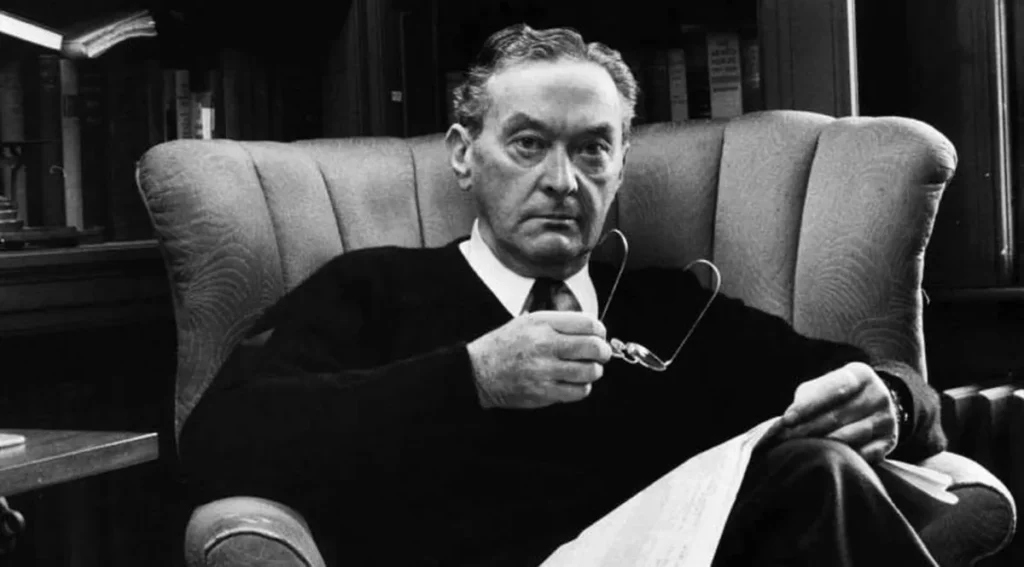
You have voted in every election since you turned eighteen. You have read the op-eds, formed opinions, argued at dinner tables, felt the quiet pride of the informed citizen doing their civic duty. And Walter Lippmann, writing in 1925, would have looked at all of that and called it a beautiful fiction.
The Phantom Public arrived three years after Public Opinion and drove the blade deeper. Where the earlier book had diagnosed the gap between reality and the pictures inside our heads, this one committed a more unforgivable act: it told the democratic public that it was not, and could never be, the sovereign protagonist of political life that republican mythology had assigned it. The omnicompetent citizen — curious, rational, engaged, capable of judging the full range of public affairs — was, Lippmann argued, a creature that had never existed outside of pamphlets and graduation speeches. The average person was busy, distracted, locally situated, and epistemically limited by the simple fact of being human. They could not master the technicalities of tariff schedules, monetary policy, diplomatic treaties, and sanitation codes simultaneously. No one could. To demand otherwise was not idealism. It was a form of institutional cruelty that set citizens up for failure and then blamed their apathy.
What Lippmann proposed instead was a theory of democratic action stripped of its transcendent pretensions. Citizens, he argued, were not equipped to initiate or administer policy. Their legitimate function was narrower and more modest: to align themselves with one side or another when a crisis became visible, and then to withdraw once the crisis passed. Democracy, in this account, was not a continuous act of collective self-governance. It was an occasional, blunt instrument wielded by outsiders who intervened when insiders failed. The rest of the time, governance belonged to experts — specialists with the training and the access to actually understand the machinery they were operating.
John Dewey read this and found it intolerable. His response, The Public and Its Problems, published in 1927, rejected not Lippmann’s diagnosis of disorientation but his conclusion. Dewey believed the problem was not human incapacity but broken community — that modernity had shattered the face-to-face social environments in which genuine democratic judgment had once been possible, and that the task was reconstruction rather than resignation. Where Lippmann saw a cognitive ceiling, Dewey saw a historical wound. The fault line between them was not really about citizens. It was about whether democracy was a form of government or a way of life, whether it was a mechanism for managing populations or a practice that transformed the people who participated in it.
This debate did not stay in the seminar room. The bureaucratic state that expanded through the New Deal, through wartime administration, through the postwar national security apparatus, bore Lippmann’s fingerprints far more than Dewey’s. The assumption that complex decisions required insulation from popular pressure — that expertise and democratic accountability existed in permanent tension — became the operating logic of twentieth-century governance almost everywhere in the industrialized world. Dewey’s vision survived in progressive education theory and community organizing traditions, but it never captured the architecture of the state itself.
The brutality of Lippmann’s position was not that he was contemptuous of ordinary people. He was not. The brutality was that he respected them enough to stop lying to them about what politics actually required. He understood that the gap between the scale of modern governance and the bandwidth of any individual life was not a failure of education or civic virtue. It was structural, permanent, and growing. Every new layer of administrative complexity, every new domain absorbed into public regulation, widened the distance between the governed and the decisions made in their name. And the rituals of democratic participation — the campaign, the ballot, the public comment period — increasingly served to manage that distance rather than close it.
What haunts his argument is not its cynicism but its accuracy.
Power Dressed as Prose
You are reading a column in your morning newspaper, somewhere in the American midwest, sometime in the early 1950s. The prose is measured, authoritative, unhurried. It does not shout. It does not need to. By the time you finish your coffee, a set of geopolitical assumptions has been deposited in you so quietly that you will spend the rest of the day mistaking them for your own thoughts.
Walter Lippmann’s Today and Tomorrow ran from 1931 to 1967, syndicated at its peak to over two hundred and fifty newspapers, reaching an estimated ten million readers three times a week. No columnist before him had commanded that kind of simultaneity — the same argument, the same framing, the same emotional register, delivered across the continent on the same morning. The scale alone would have been remarkable. What made it something else entirely was the feedback loop running in the opposite direction: the column was read just as carefully in the White House and the State Department as it was in Dayton or Des Moines. Lippmann was not merely interpreting power to the public. He was, with considerable frequency, telling power what it ought to think of itself.
His correspondence with Woodrow Wilson began during the Paris Peace Conference of 1919, where Lippmann served on the Inquiry, the group of experts assembled to prepare American negotiating positions. He was twenty-nine. His memos traveled upward. His recommendations on self-determination clauses in the proposed League covenant were read by the president. The intimacy was not accidental — it was structural. Lippmann understood early that access was a form of authorship, that proximity to a decision is a kind of co-authorship of its consequences, regardless of how the official record distributes credit.
This dynamic hardened into method over the following decades. With Franklin Roosevelt, he maintained a cautious distance — their temperaments clashed, and Lippmann had, famously and humiliatingly, dismissed Roosevelt as an unprincipled opportunist before the 1932 election, only to watch the man reshape the century. The episode is worth holding. An intellectual of Lippmann’s caliber, with his theoretical scaffolding, his European training, his genuine philosophical seriousness, got the most important American political figure of the twentieth century almost entirely wrong — not because he lacked intelligence, but because his model of leadership was built around a type: the disinterested expert-statesman, which Roosevelt spectacularly was not. The failure was not analytical. It was aesthetic.
With Lyndon Johnson the relationship reached its most instructive and most troubling configuration. Through the early 1960s, Lippmann was a supporter, a believer in the Great Society’s domestic ambitions. He had private dinners at the White House. Johnson, who was acutely sensitive to the prestige economy of Washington opinion, courted him deliberately. Then Vietnam fractured everything. By 1967 Lippmann had turned against the war with the same deliberate authority he had once brought to its tacit legitimation, and Johnson, who had treated the column as a barometer of elite consensus, felt the rupture as personal betrayal. The ferocity of that reaction reveals the actual function Lippmann had been serving: not as a critic speaking truth to power, but as a mirror in which power sought its own reflection rendered flattering and philosophically coherent.
This is the mechanism that goes unnamed in most accounts of journalistic influence. Ideas do not enter policy through argument. They enter through relationship, through the slow atmospheric pressure of proximity, through the confidence that a certain framing is simply how serious people think about a problem. Pierre Bourdieu, writing in The Field of Cultural Production in 1993, described the way symbolic capital converts into other forms of capital without ever appearing to do so — without the transaction being visible as a transaction. Lippmann’s career is perhaps the most sustained American demonstration of this conversion in operation. The column was the public surface. The dinner table was where the laundering happened.
The Good Society and the Liberal Contradiction
You are handed a book published in 1937 and told it is a defense of liberalism. You read fifty pages and realize it is something stranger and more uncomfortable than that — it is a liberal thinker watching his own tradition collapse from three directions at once and trying to hold the wreckage together with arguments he no longer fully believes.
The Good Society arrived at a moment when the political landscape had achieved a kind of terrible clarity. Fascism was not a theoretical threat; it governed Germany, Italy, and Spain with documented ferocity. Soviet collectivism had produced the Ukrainian famine of 1932 to 1933, in which somewhere between three and five million people died while the state insisted on the success of its agricultural programs. And the New Deal, closer to home, had spent four years expanding federal authority into domains — labor relations, agricultural production, banking, public works — that no previous American administration had claimed as its territory. Walter Lippmann looked at all three phenomena and concluded, with a precision that disturbed his contemporaries, that they shared a common error: the belief that human society could be consciously designed and administered from a center.
This was a genuinely radical claim to make in 1937, not because it was original — Friedrich Hayek would sharpen related arguments in The Road to Serfdom seven years later — but because Lippmann directed it at Franklin Roosevelt with the same analytical force he applied to Hitler and Stalin. The political cost of this equivalence was enormous. His former allies on the progressive left treated the book as a betrayal. H.G. Wells, who had corresponded with him warmly for years, called it a capitulation to reaction. But Lippmann’s argument was not that the New Deal was fascism; it was that collectivism of any variety, however benevolent its intentions, required a concentration of planning authority that could not, in the long run, coexist with the individual freedoms liberals claimed to protect. The administered society and the free society were not points on a spectrum. They were, at a certain threshold, mutually exclusive.
What makes The Good Society genuinely difficult rather than simply polemical is that Lippmann did not pretend this insight resolved anything. He understood that unregulated markets produced their own violence — the kind that does not announce itself with uniforms and decrees but arrives quietly through unemployment, dispossession, and the slow grinding of lives that have no political protection. His solution was a recovered classical liberalism grounded in the rule of law rather than the rule of administrators, a system in which government would establish the framework of rules within which market competition would operate, but would not substitute its judgment for the distributed decisions of millions of individuals. It was an elegant position. It was also, as his critics immediately observed, one that offered no mechanism for addressing the suffering that existed in the present tense, in the winter of 1937, in the bodies of people who could not wait for a recovered philosophical tradition to rebuild its institutions.
This is the fracture that The Good Society exposed without healing. Liberalism had always contained two distinct commitments — to individual freedom as a procedural value, and to human welfare as a substantive one — and for most of its intellectual history it had managed to hold them together by not pushing either too far. The Depression pushed both to their limits simultaneously. When freedom and administered welfare are both under pressure at once, the liberal tradition does not synthesize them; it reveals that it never had a principle capable of deciding between them. Lippmann wrote the most honest book of his career by refusing to pretend otherwise, and the honesty cost him the political home he had occupied for two decades. What no framework he proposed could answer was the question his book left standing in every room it entered: at whose expense, precisely, does a society remain free?
A vision curated by a filmmaker, not an algorithm
In this video I explain our vision
Stereotype, Consent, and the Invisible Architecture of Opinion

You are already living inside a picture that someone else drew. Not a metaphor — a structural fact. The map in your head of how a congressman behaves, what a refugee looks like, who deserves sympathy in a labor dispute: none of it was assembled from direct experience. It was handed to you, preformatted, before you had the vocabulary to question the delivery. Walter Lippmann gave this process its clinical name in 1922, in Public Opinion, and he did not invent the word “stereotype” as an insult. He borrowed it from the printing trade — a stereotype was a fixed metal plate used to reproduce identical copies — and deployed it to describe something far more unsettling than prejudice: the cognitive architecture that makes perception possible at all.
This is the move that makes Lippmann genuinely dangerous to read, even now. He is not accusing anyone. He is describing a necessity. The world, he argued, is too large, too fast, and too complex for any human mind to encounter directly. What we call reality is always the pseudo-environment — a mental representation assembled from symbols, shortcuts, and received categories that allow us to function without being paralyzed by the actual density of events. Stereotypes are not errors introduced into an otherwise clear process. They are the process. To see at all is already to have selected, compressed, and named — and the names were given to you by culture, by press, by education, by the particular slice of history you were born into. Lippmann wrote this at forty-three, having spent two decades inside the machinery of American public discourse, and the tone is that of a man who has watched the mechanism from the inside and emerged without illusions.
The darkness of this position becomes fully visible only when you place it beside what Noam Chomsky and Edward Herman built in Manufacturing Consent in 1988. The structural argument is recognizable: media systems filter reality through ownership interests, advertising dependencies, the sourcing of information from official institutions, and the suppression of inconvenient complexity. Chomsky and Herman documented this with meticulous empirical force across the preceding sixty years of American foreign and domestic coverage. But their architecture still contains a latent faith — that the filters are imposed, that behind the propaganda there is a public capable of being reached, activated, and corrected. Manufacturing Consent is, in its deepest register, a manual for resistance, even when it refuses to call itself one. The reader is implicitly invited to see through the mechanism described.
Lippmann offers no such exit. His pseudo-environment is not produced by corporate ownership or elite coordination alone — it is reproduced by the very act of cognition. You cannot think without categories, and categories are always already social. The propaganda techniques he dissected in his 1927 work The Phantom Public were not distortions of a recoverable democratic intelligence; they were refinements of a limitation that preceded the newspaper, the radio, and the press baron by centuries. What Chomsky locates in institutional structures, Lippmann locates in the structure of the mind interfacing with scale — and this distinction is not academic. It determines whether reform is possible or whether the entire project of a rationally self-governing mass public is a noble fiction that never had an empirical foundation.
The Census Bureau’s 1920 data that shaped much of Public Opinion’s urgency was stark: the United States had just passed a hundred million people, industrial urbanization had severed the small-community conditions under which direct democratic deliberation might have been feasible, and the Wilson administration’s Committee on Public Information had just demonstrated, with clinical efficiency, that a modern democracy could be mobilized for war through coordinated symbol management in a matter of months. Lippmann had been inside that committee. He knew the stereotype was not only a cognitive convenience — it was a lever, and someone was always already pulling it before the citizen reached the voting booth, before the citizen even reached the question.
The Cold War Mind and the Phrase That Colonized History
You are reading a document right now that was not written for you, and you almost certainly believe it was. That is the first trap language sets: the illusion of address. Walter Lippmann understood this as well as anyone in the twentieth century, and yet in 1947 he handed a phrase to the world that immediately began doing things he never intended, colonizing corridors of power and public imagination alike with a velocity that outran every subsequent clarification he attempted.
The phrase was “Cold War.” Lippmann used it as the title of a series of newspaper columns published in September and October of 1947, later collected into a slim but devastating volume. His purpose was not to baptize an era but to criticize a strategy — specifically to demolish the logic George Kennan had introduced in the anonymously published “X Article” in Foreign Affairs that same summer. Kennan argued for containment: American power deployed patiently and persistently around the Soviet periphery until the USSR exhausted itself or reformed from within. Lippmann found this vision intellectually reckless. He argued that containment offered no clear endpoint, no defined theater of engagement, no disciplined sense of where American interest actually stopped. It was, in his reading, a formula for permanent mobilization with permanently open costs.
The historical irony is almost architectural in its brutality. Lippmann’s critique was sharp, granular, and largely correct on its own terms. He warned in 1947 that containment would require the United States to prop up regimes of doubtful legitimacy across the globe wherever Soviet influence seemed to probe, and that this commitment would corrupt American foreign policy far more reliably than Soviet pressure itself ever could. He was describing, with uncomfortable precision, the next four decades. Yet almost no one remembers the argument. Everyone remembers the title. The phrase “Cold War” became the conceptual container into which the entire post-1945 global order was poured, and it shaped that order by naming it — by suggesting that the contest was real, total, and binary, even when the men coining the term were insisting on its strategic incoherence.
This is the mechanism that separates language from the intentions of its speakers in historical time. Lippmann was not naive about the power of words; his 1922 work “Public Opinion” had already mapped how manufactured symbols orient mass behavior before individuals have any chance to examine their own responses. He knew, better than almost any contemporary, that to name something is to grant it a kind of ontological solidity it may not deserve. And still, having released those two words into the American political atmosphere during a period of extraordinary institutional anxiety — the Truman Doctrine had just been announced, the Marshall Plan was forming, the National Security Act was weeks away — he could not retrieve them. The phrase was absorbed into the bureaucratic nervous system of the state before the ink on his critique was dry.
For years afterward, Lippmann continued arguing against the logic the phrase had normalized. Through the 1950s he criticized the militarization of containment under John Foster Dulles, what he saw as the replacement of diplomacy with ideology. He pressed for direct negotiation with Moscow at moments when the Washington consensus treated such proposals as near-treasonous. He was not ignored — his column “Today and Tomorrow” ran until 1967 and reached millions of readers — but he was systematically misread, quoted for the term while his objections to everything the term had legitimized were quietly sidestepped.
What this reveals is not a personal tragedy but a structural condition of intellectual life under modern media: the aphorism survives the argument, the frame outlives the thinker’s ability to contest it, and the public discourse that forms around a powerful phrase has no particular obligation to consult the person who first wrote it down. Lippmann had diagnosed exactly this phenomenon decades earlier when he described the pseudo-environment — the symbolic world that mediates between human beings and the reality they inhabit. He simply could not exempt himself from it.
Legacy as Trap
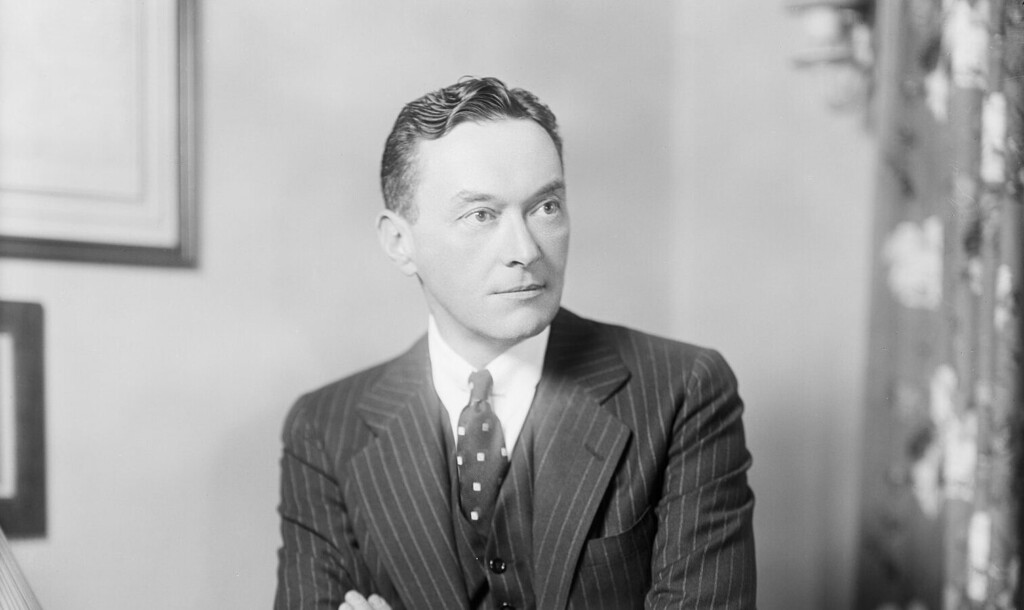
You are reading a man who spent sixty years warning you that the information reaching you had been filtered, shaped, and pre-digested by interests you would never see — and you are reading him in a curriculum designed by the very class of administrators and editors he described. That is not irony. That is the mechanism completing itself.
Lippmann published Public Opinion in 1922 at a moment when mass literacy had created a new problem for power: people could read, but they could not verify. The “pictures in our heads,” as he called them — those simplified mental maps that substitute for reality — were not a flaw in human cognition to be corrected through better education. They were a permanent structural condition that someone, inevitably, would learn to exploit. He did not celebrate this. He diagnosed it with the clinical detachment of a man who understood that naming a disease and curing it are entirely different acts. What he could not have fully reckoned with — or perhaps refused to — was that the diagnosis itself would become a tool for the diagnosed.
By the 1950s, his columns in Newsweek reached an estimated ten million readers across more than two hundred newspapers worldwide, making him the most widely distributed serious political thinker in American history. Foreign ministers read him before summits. Presidents read him before press conferences. And here the trap closes with a quiet precision: a man whose entire intellectual project was built around skepticism of elite-managed consensus became one of the primary voices through which American elite consensus was laundered into respectability. His prose gave the Cold War’s most aggressive postures an air of tragic necessity. His endorsement of containment doctrine helped transform a strategic choice into the appearance of historical inevitability.
Edward Bernays, Lippmann’s contemporary and a man who read Public Opinion the year it appeared, was candid in a way Lippmann never quite managed to be about himself. Bernays took the same structural insight — that the public does not perceive reality but only representations of it — and built an industry around manufacturing those representations. He called it public relations. Lippmann called what he did journalism. The distance between those two words is largely ceremonial.
This is not a charge of bad faith. Lippmann believed, with what appears to have been genuine conviction, in the necessity of an expert class mediating between complex reality and the democratic public. His 1925 work The Phantom Public argued explicitly that the ordinary citizen cannot govern and should not be expected to. Governance belongs to insiders; the public’s role is to choose periodically between competing sets of insiders. Read in 1925, this is a provocation. Read in the present, inside a system that has institutionalized precisely this arrangement while calling it democracy, it reads like a user manual that the machine has been quietly following all along.
What disappears in the canonization of a thinker is the danger he once posed. The graduate student who encounters Lippmann in a media studies syllabus encounters him already defanged — a historical curiosity, a predecessor, a foundational text. The system has learned to include its critics as exhibits, displayed behind glass, their urgency preserved in the amber of academic citation. Noam Chomsky, writing with Edward Herman in Manufacturing Consent in 1988, borrowed Lippmann’s own vocabulary to turn it back against the institutions Lippmann had served — and that book, too, now sits in curricula administered by the universities whose donors include the media conglomerates Chomsky was anatomizing.
The deepest function of a lucid critic inside a managed system is not to disrupt the system but to demonstrate the system’s tolerance for disruption, which is itself a form of control. Lippmann exposed the architecture of manufactured consent so precisely and so beautifully that the architects kept his blueprints on file.
🗺️ Opinion, Power, and the Architecture of Public Thought
Walter Lippmann’s work sits at the intersection of political theory, media criticism, and the philosophy of democratic governance. These related articles explore thinkers who grappled with similar questions about power, public life, individual freedom, and the forces that shape collective opinion and social organization.
Hannah Arendt and The Human Condition: Public and Private Space
Hannah Arendt‘s analysis of the human condition offers a profound meditation on the distinction between public and private space, themes that resonate deeply with Lippmann’s concerns about the nature of democratic participation. Arendt interrogates what it means to act and speak in a shared world, questioning how political life can be preserved against the encroachments of mass society. Her work, like Lippmann’s, forces us to reconsider who truly participates in shaping public reality.
GO TO THE SELECTION: Hannah Arendt and The Human Condition: Public and Private Space
John Stuart Mill: Life and Works
John Stuart Mill‘s philosophy of liberty and representative government makes him one of Lippmann’s most important intellectual predecessors in the liberal tradition. Mill’s insistence on the free circulation of ideas and his skepticism toward uninformed majority rule prefigure Lippmann’s own doubts about the capacity of the public to govern itself rationally. Reading Mill alongside Lippmann reveals the deep continuity and tensions within Anglo-American liberal democratic thought.
GO TO THE SELECTION: John Stuart Mill: Life and Works
Bertrand Russell: Life and Works
Bertrand Russell shared with Lippmann a commitment to rational inquiry and a deep concern for the role of education and clear thinking in public life. Russell’s wide-ranging writings on power, authority, and the responsibilities of intellectuals speak directly to the questions Lippmann raised about the relationship between knowledge and democratic governance. Both men were public intellectuals who believed that reason, properly cultivated, could serve as a corrective to political irrationality.
GO TO THE SELECTION: Bertrand Russell: Life and Works
Robert Putnam: Life and Works
Robert Putnam‘s sociological research on civic engagement and social capital provides a compelling empirical counterpart to Lippmann’s more philosophical and journalistic reflections on democracy. His landmark study of declining community participation in America raises urgent questions about whether the informed, engaged citizenry that liberal democracy requires is actually achievable. Putnam’s findings lend a contemporary urgency to the concerns that animated Lippmann’s entire career.
GO TO THE SELECTION: Robert Putnam: Life and Works
Explore Independent Cinema on Indiecinema
The questions raised by Lippmann and the thinkers in his orbit — about power, media, consciousness, and the possibility of a truly informed public — find unexpected and illuminating echoes in independent cinema. On Indiecinema you can discover films that challenge, provoke, and expand your perspective, just as the great intellectual voices of the twentieth century dared to do.
👉 EXPLORE THE CATALOG: Watch Indie Films in Streaming
A vision curated by a filmmaker, not an algorithm
In this video I explain our vision

