
The Man Who Refused to Be Comfortable
The letter arrived at Trinity College Cambridge in the summer of 1916, and what it contained was not a reprimand or a warning but a termination — clean, institutional, final. The college council had decided. Bertrand Russell, Fellow of Trinity, logician, author of the Principia Mathematica, grandson of a British Prime Minister, was dismissed. The charge was conduct prejudicial to the interests of the college: he had written a pamphlet supporting a conscientious objector named Everett who had refused military service, and the state had fined him fifty pounds. Trinity did not wait long after that. The building where he had lived and worked and thought for years simply became a place he was no longer permitted to enter as a member.

There is something worth sitting with in that image — not the injustice of it, which is obvious, but the texture of it. Russell was forty-four years old. He had already co-authored, with Alfred North Whitehead, one of the most formidable intellectual achievements of the century, a three-volume attempt to derive all of mathematics from purely logical foundations. The first volume had appeared in 1910. It had taken them a decade of brutal collaborative work, and Russell had described the effort as leaving him feeling that his intellect would never fully recover. He had done all of this from within Trinity, inside the ancient rhythms of high table and tutorial and collegiate fellowship. And then the institution looked at him, weighed his usefulness against his inconvenience, and showed him out.
What makes this moment historically legible is not that it was unusual for governments and universities to suppress dissent in wartime — they always have, and the Defence of the Realm Act gave British authorities sweeping powers to do exactly that. What makes it legible is the particular figure it happened to, and what that figure represents as a problem for any easy story about where ideas come from and whom they protect.
Russell was born in 1872 into the Whig aristocracy, the class that had governed Britain with a certain confident benevolence for generations. His grandfather, Lord John Russell, had introduced the Reform Act of 1832. His godfather was John Stuart Mill. The furniture of his childhood was not merely comfortable — it was historically significant. Power, reform, liberal principle: these were not abstractions in the Russell household; they were family tradition. And yet something in him never settled into the comfort that tradition was designed to provide. He began pulling at the threads very early, and he never stopped, even when the pulling cost him the very institutions that had made him possible.
This is the tension that runs through everything he ever wrote or did or refused to do. Not the tension of the outsider throwing himself against a wall, but something stranger and more unsettling: the insider who understands the wall’s construction from memory, from inheritance, from having helped maintain it — and who dismantles it anyway, piece by piece, with full knowledge of what he is undoing. There is a particular kind of intellectual courage that requires not overcoming fear of the unknown but fear of the familiar, of the world that shaped you, of the certainties that feel like oxygen because you breathed them before you had language.
When he walked — or was walked — out of Trinity in 1916, he did not become a different person. He had already published his first major philosophical work, The Problems of Philosophy, in 1912. He had already broken with the idealism of his early mentors, with Bradley and with the comfortable Hegelian mist that hung over British philosophy at the turn of the century. The dismissal was not a conversion. It was a confirmation of something that had been structurally true about him for decades, something the institution had perhaps always sensed and finally found intolerable.
Slow Life
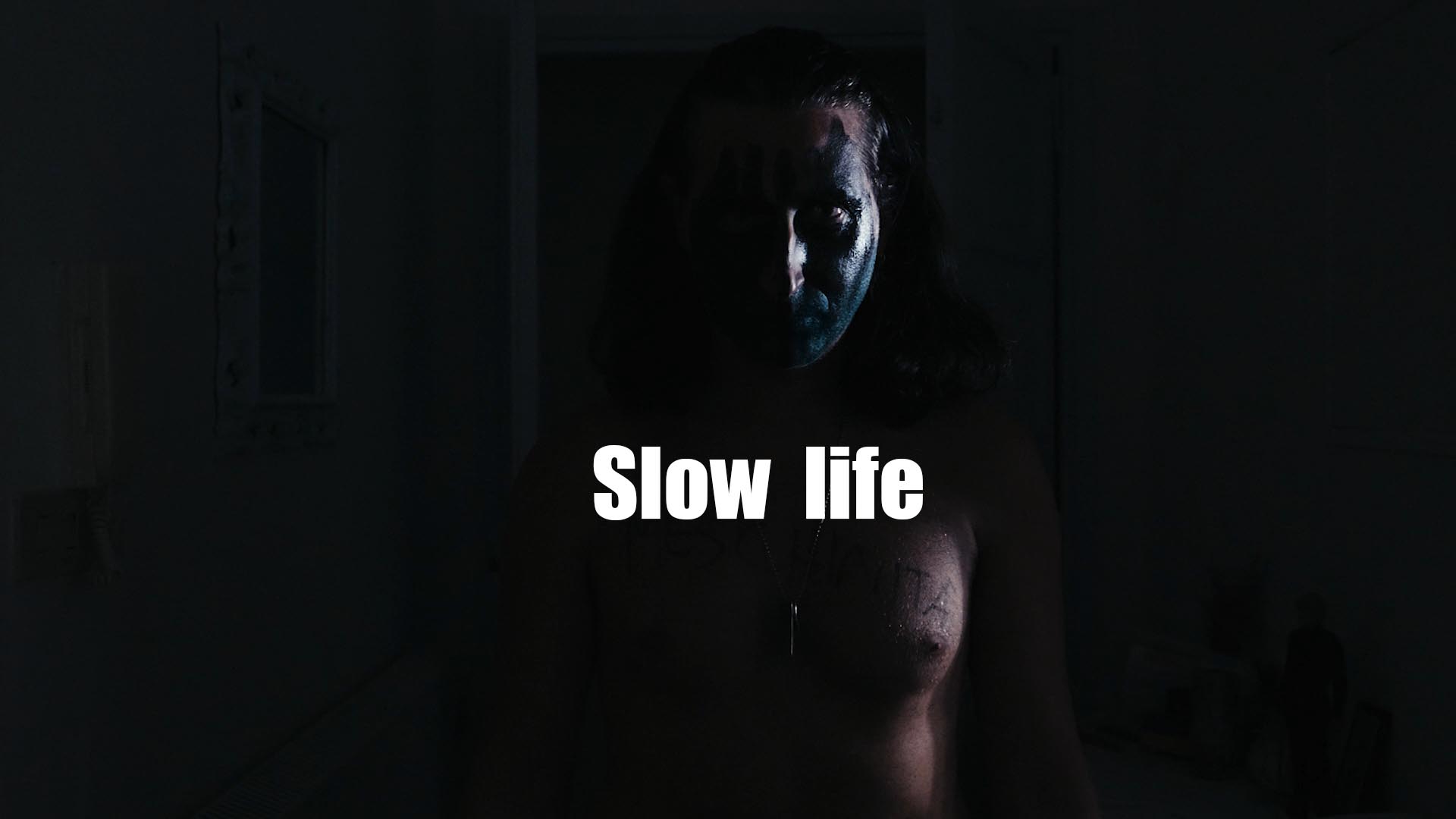
Drama, comedy, thriller, by Fabio Del Greco, Italy, 2021.
Lino Stella takes a period of vacation from his alienating job to devote himself to relaxation and his passion: drawing comics. But he did not foresee certain disturbing elements: the intrusive administrator of the building where he lives, the postman who delivers crazy fines and tax bills, an overbearing security guard, a very enterprising real estate agent, the old lady downstairs who raises the feline colony of the condominium. These characters will make his vacation hell.
Food for thought
The larger a social group is, the more rules and bureaucracy are needed, which often do not respect the individual. You have to learn to live with annoying people, but sometimes the social pressure and arrogance can become intolerable. The only laws that always come to our aid are the laws of Nature.
LANGUAGE: Italian
SUBTITLES: English, Spanish, French, German, Portuguese
Born Into the Architecture of Empire
The house at Ravenscroft did not simply shelter a child. It organized one. The rooms at Pembroke Lodge, where Bertrand Russell was delivered into the care of his grandmother after the successive deaths of both parents before he had reached his fourth year, were not merely rooms in the ordinary sense — they were a kind of ideological architecture, spaces in which the furniture and the portraits and the morning prayers all said the same thing: that the world had a shape, that England was near its center, and that the Russell family had played no small part in giving it that shape. His grandfather, Lord John Russell, had been Prime Minister twice, had shepherded the Reform Act of 1832 through Parliament, and had corresponded with the generation that remade Europe. To grow up in that house was to grow up inside a particular theory of history — progressive, Protestant, Whig — before you had the vocabulary to question it.
What happens to a mind when its first inheritance is not money but a worldview? The silverware and the portraits are easy enough to see. The epistemological furniture is harder. Russell would spend the rest of his life, in some sense, trying to determine what he actually knew as opposed to what he had been handed. The question of certain knowledge — what can be known, how it can be verified, what distinguishes a justified belief from a comfortable assumption — is not an abstract puzzle for most people. For Russell, it had the texture of autobiography.
The loneliness arrived early and stayed. He would later describe his childhood as deeply unhappy, and the unhappiness had a specific quality: it was the loneliness of someone who was present in all the right rooms but belonged to none of them. His parents, Viscount Amberley and Kate Stanley, were radicals by Victorian standards — freethinkers who had invited John Stuart Mill to be Russell’s godfather and held views on women’s suffrage and birth control that made them embarrassments to the more cautious wings of the family. They died before he could know them. What remained were their absence and the conservative grandmother who erased what she could of their influence. He was left with the ghost of an intellectual inheritance he could only reconstruct from fragments.
This is not a minor biographical detail. The philosopher who would write, in 1912’s “The Problems of Philosophy,” that the value of philosophy lies precisely in its capacity to unsettle certainty and enlarge our conception of the possible — that philosopher was shaped by a childhood in which certainty was ambient but never actually earned. Darwin had published “On the Origin of Species” in 1859, thirteen years before Russell’s birth, and by the 1870s the Victorian intellectual atmosphere was electric with the particular vertigo of a civilization that had just been told its origin story was wrong. Empire was still confident, still expanding, still producing the kind of men who believed that governing the world was a natural extension of governing a country house. But underneath that confidence, in the libraries and the letters and the arguments that ran through dinner tables and learned societies, something had cracked.
Russell grew up in that crack. Not in the confidence and not yet in the full collapse, but in the hesitation between them — the moment when an intelligent person could no longer simply receive the world as given but had not yet found the tools to rebuild it from foundations. That is precisely the position that produces philosophers rather than politicians. Politicians require a workable map. Philosophers begin to suspect the map itself.
The particular silence of Pembroke Lodge — its morning prayers, its careful proprieties, its grandmother who loved him in the way that duty sometimes resembles love — taught him something no tutor could have taught deliberately: that the most dangerous assumptions are the ones that feel like furniture.

Mathematics as a Way of Not Going Mad
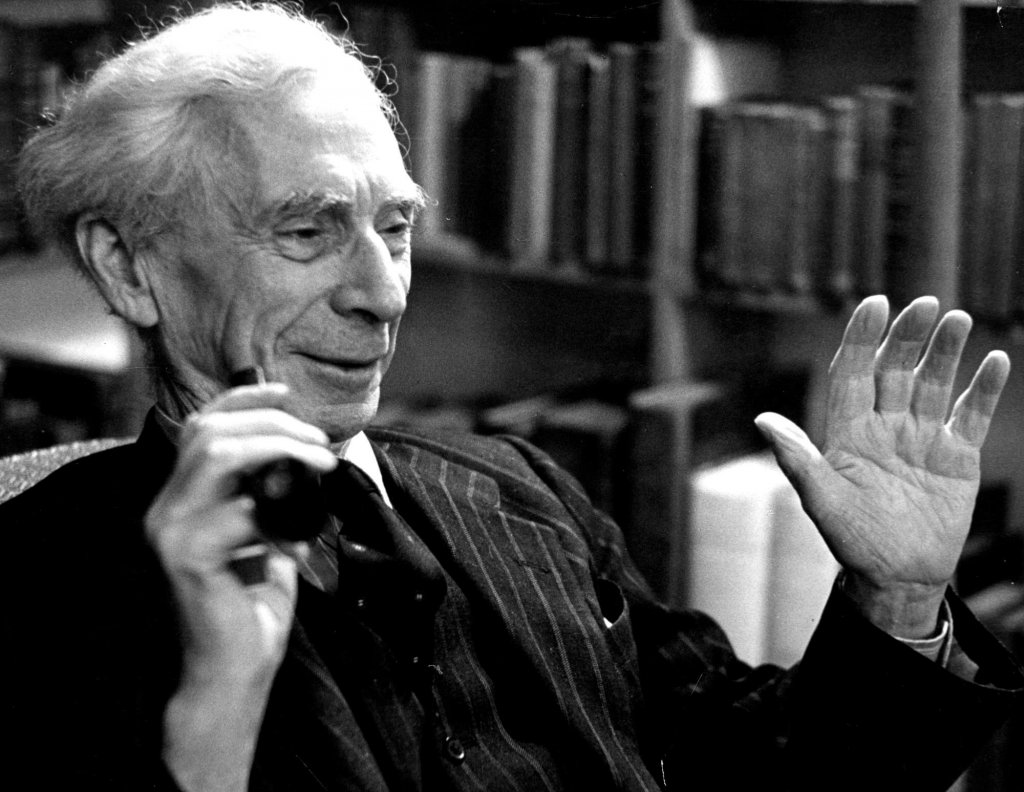
There is a moment, somewhere around the age of eleven, when a child sits down with an older brother who opens a book and says: here is where certainty begins. The book is Euclid. The brother is Frank. The child is Bertrand Russell, and what happens next is not education — it is something closer to rescue. He would later write, with the particular precision he reserved for his most confessional passages, that mathematics had been, during his adolescence, a reason not to die. Not a metaphor. A literal structural prop against a despair that had no object and therefore no bottom.
This is the emotional architecture beneath what textbooks call logicism. The Principles of Mathematics, published in 1903, and then the vast three-volume Principia Mathematica, written with Alfred North Whitehead across a decade of almost monastic labor and published between 1910 and 1913, are usually catalogued as technical achievements in the foundations of logic. They were also something more intimate: an attempt to build a floor beneath thought itself, to find something that could not collapse.
The project was this: mathematics does not rest on intuition, or on spatial imagination, or on anything that belongs to human psychology. It rests on logic alone, and logic is necessary in a way that mere facts can never be. Two plus two equals four not because we observe it, not because we feel it, but because denying it produces a contradiction, and contradiction is the one thing reality cannot sustain. If this could be demonstrated rigorously — if every arithmetical truth could be derived from purely logical axioms — then at least one corner of the universe would be immune to doubt. Russell had read Descartes. He knew what radical skepticism felt like from the inside. He was not interested in theater. He wanted the actual floor.
What he found instead was the paradox that now carries his name. A set of all sets that do not contain themselves — does it contain itself? If it does, it does not. If it does not, it does. The discovery arrived around 1901, midway through writing the Principles, and Russell described the experience as one of sustained intellectual nausea. He had built the cathedral and found the foundations floating. He wrote to Gottlob Frege, the German logician whose monumental Grundgesetze der Arithmetik was the very architecture Russell had been extending, to inform him of the contradiction. Frege’s response, written in a letter that has survived, is among the most dignified collapses in intellectual history: he acknowledged that the entire edifice was shaken, then sat down to repair what could not be repaired.
The response Russell and Whitehead constructed — the theory of types, which prohibited sets from containing themselves by organizing all mathematical objects into hierarchical levels — was technically successful enough to allow the Principia to proceed. It was also, in a philosophical sense, a kind of confession: certainty required rules, and rules required decisions, and decisions were made by minds that were not themselves logically necessary. The floor was real, but someone had chosen to pour it there.
Whitehead later moved toward process philosophy and a near-mystical vision of cosmic organism. Russell moved toward epistemology and then toward politics and then toward everything. But the Principia stood — all three volumes of it, running to thousands of pages of notation so dense that Whitehead once said he doubted twenty men in the world could read it with genuine comprehension. In 1931, Kurt Gödel would prove that any system powerful enough to express arithmetic would contain truths it could not prove. The floor had a crack built into its nature.
What does it mean to need proof the way others need comfort? It means that abstraction is not a retreat from feeling. It means the coldest-looking room in the house is sometimes where someone is trying hardest to stay alive.
Russell’s Paradox and the Ground Giving Way

It arrives not with thunder but with a quiet, almost polite notation. Russell is working through the logic of classes in the summer of 1901 when he notices something that should not be there — a question so small it looks like a typographical error, and so large it opens a void beneath everything Gottlob Frege had spent decades constructing. Consider the set of all sets that do not contain themselves. Does it contain itself? If it does, it must not. If it does not, it must. The ground does not shake. It simply ceases to exist.
Frege had been building toward a complete logical foundation for all of mathematics, and his second volume of the Grundgesetze der Arithmetik was already at the printer when Russell’s letter arrived in June 1902. Frege’s reply is one of the most devastating documents in the history of thought: he acknowledged the paradox, recognized its destructive force, and wrote that Russell’s observation had left him “thunderstruck” — because the foundation he had constructed, the axiom that allowed sets to be formed from any property whatsoever, was precisely the step that made the contradiction possible. A lifetime’s architecture collapsed at the level of its cornerstone. Frege added a hasty appendix to the volume attempting to repair the damage. He never fully recovered.
What is worth sitting with is not the technical content but what this moment reveals about systems of thought in general. Every rigorous structure, built to contain the real and hold it still, carries within it the possibility of an internal contradiction it cannot survive. Russell did not discover a flaw in Frege’s work. He discovered a flaw in a certain dream — the dream that language and logic, if made precise enough, would eventually become transparent to truth. The paradox is not an embarrassment to be corrected. It is a signal about the nature of the enterprise itself.
Russell spent the following decade trying to repair what his own discovery had broken. With Alfred North Whitehead, he produced the Principia Mathematica, three volumes published between 1910 and 1913, an attempt to rebuild mathematics on logical foundations that would simply not permit the paradox to arise. The solution, the theory of types, imposed a hierarchy on sets, forbidding any set from containing itself or referring to its own level. It worked, technically. But it was a structure built around a wound, not over it.
It was in the middle of this work that Ludwig Wittgenstein appeared at Cambridge in 1911, twenty-two years old, with no formal philosophical training and a quality of attention that Russell found immediately unlike anything he had encountered. Their relationship had the texture of an intellectual collision that neither man could walk away from. Russell saw in Wittgenstein the successor who would carry logical analysis further than he had been able to take it. Wittgenstein saw in Russell someone who had approached the edge of something essential and then, at the critical moment, stepped back. He was not wrong. The Tractatus Logico-Philosophicus, which Wittgenstein completed during the First World War and which Russell introduced to the English-speaking world in 1922, drew directly from the problems Russell had raised and proposed, in answer, that most of what Russell had been trying to say could not be said at all — only shown. Language had limits, and the attempt to speak beyond them produced not error but nonsense.
Russell found this conclusion unacceptable. He had spent twenty years trying to say things precisely, not to discover that precision itself pointed toward silence. What had begun as a collaboration became a rupture that was also, in its way, structural. Two men who had genuinely needed each other’s minds arrived at a place where continuing would have required one of them to become someone else entirely.
The Politics of a Man Who Could Not Stay Quiet
The letter arrived at Brixton Prison in the spring of 1918, addressed to a man who had just been sentenced to six months for publishing what the British government called “a statement likely to prejudice His Majesty’s relations with a foreign power.” The statement in question was the suggestion that American troops might be used to break strikes in England — a thought so plainly plausible to anyone paying attention that its criminality tells you more about the government’s anxiety than about the author’s recklessness. Russell served his sentence. He used the time to write. This is not the behavior of a man who had miscalculated. It is the behavior of a man who had decided that the cost of silence was higher than the cost of imprisonment, and who had run the arithmetic so many times it no longer required effort.
His pacifism during the First World War was not sentiment. It was a position derived from first principles about human life and collective delusion, applied without exemption to the spectacle of young men being fed into industrial slaughter for causes that would look, within a generation, like the territorial vanities of frightened aristocrats. He had watched nationalism transform itself from a cultural preference into a moral obligation, the kind of obligation that demands you celebrate the deaths of strangers wearing different uniforms. What he identified in this transformation was something that Erich Fromm would later anatomize in clinical language: the escape from individual insignificance into collective grandiosity, the surrender of the self to the crowd as a solution to the unbearable weight of having to think alone. Russell had no patience for this solution. He called nationalism what it functionally was — a form of collective narcissism dressed in flags — and he said so at a time when saying so could land you in prison, which it did.
What makes the Soviet episode particularly revealing is that he refused to perform the opposite error. In 1920 he traveled to Russia, met Lenin, observed the early Bolshevik experiment with the same undivided attention he brought to everything, and came back unconvinced. The Practice and Theory of Bolshevism, published that same year, placed him in the uncomfortable position of being neither with the revolutionary enthusiasm sweeping the Western left nor with the reactionary right that opposed it for its own reasons. He found in the new Soviet state not the liberation of human potential but its substitution — one orthodoxy replacing another, the same demand for unquestioning loyalty, the same willingness to sacrifice actual living people to the requirements of an abstract future. His conclusion was unwelcome in virtually every political salon in London. He delivered it anyway.
Decades later the logic was identical, only the weapons had grown large enough to make the stakes impossible to ignore. The Russell-Einstein Manifesto of 1955, signed by eleven intellectuals of international standing and released nine days after Einstein’s death, did not ask the superpowers to be kinder. It asked them to recognize that nuclear war had made national interest, as a category of political reasoning, logically incoherent — that you could not optimize for the survival of your nation using tools that would eliminate the preconditions for any nation’s survival. The argument was not emotional. It was structural. It followed from premises about what weapons do and what human beings are, and it arrived at a conclusion that comfort-seeking on either side of the Cold War found deeply inconvenient.
The Bertrand Russell Peace Foundation, established in 1963, was not a retirement project. It was the institutional form of the same refusal that had produced the Brixton sentence forty-five years earlier — the refusal to allow one’s conclusions to stop at the boundary where conclusions become socially expensive. Most people develop that boundary early. Russell never seemed to locate it at all.
A vision curated by a filmmaker, not an algorithm
In this video I explain our vision
Marriage, Desire, and the Ethics He Could Not Always Keep
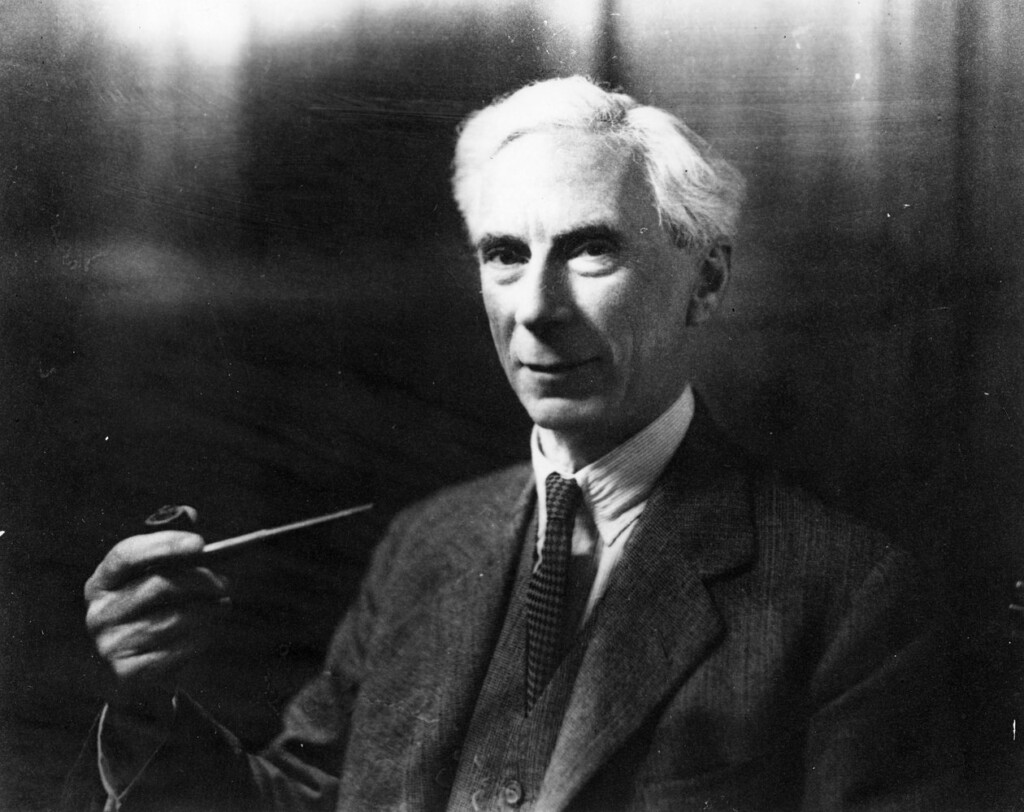
There is a particular kind of humiliation that comes not from failing to live up to someone else’s standard, but from failing to live up to your own. Russell knew this territory intimately, which may be why he wrote about it with such unusual precision.
In Marriage and Morals, published in 1929, he argued with the calm clarity of someone dismantling a machine he had studied for decades: jealousy, he wrote, is not a natural emotion but an acquired one, a property instinct dressed in the language of love. The legal institution of marriage had converted human beings into possessions, and the rage that accompanied infidelity was less heartbreak than dispossession — the outrage of an owner, not the grief of a lover. The argument was philosophically coherent, historically grounded, and morally serious. It drew on decades of thinking about what institutions do to people when they are mistaken for nature.
He was also, during those same decades, serially jealous, demonstrably possessive, and on at least one occasion so undone by a woman’s interest in another man that his behavior bore almost no resemblance to anything he had written. The distance between the study and the kitchen table, as any philosopher who has also been a husband could confirm, is not always a short walk.
He married four times. Alys Pearsall Smith first, in 1894, a Quaker woman whom he regarded one morning, apparently without prior warning even to himself, with complete and irrevocable indifference. Dora Black in 1921, with whom he founded the experimental Beacon Hill School and with whom the open marriage agreement collapsed under the weight of what turned out to be, in practice, unequal pain. Peter Spence in 1936. Edith Finch in 1952, the marriage that lasted. There were affairs in the margins of all of them, some tender, some damaging, some both simultaneously.
What makes this more than biographical gossip is precisely that Russell never pretended it wasn’t happening or tried to reconcile it into a clean narrative. He was honest about the failures in ways that most people reserve for private letters. He described his feelings toward Dora during the dissolution of their arrangement with a candor that reads more like testimony than confession, and the testimony was not flattering to himself. He had written that jealousy was a property instinct. He then experienced jealousy in a way that confirmed the diagnosis without making the fever any cooler.
The New York City affair in 1940 has become a kind of folklore, though the actual mechanics of it were almost grotesquely banal. He had been appointed to a professorship at City College. A parent filed a lawsuit. A judge named John McGeehan — who had not read the book, had read about it — ruled that Russell was morally unfit to teach, describing Marriage and Morals as an instruction manual for sexual deviancy. The appointment was revoked. The city declined to appeal. What remained was the spectacle of a man who would receive the Nobel Prize in Literature ten years later for the very body of work a municipal court had declared unfit for a classroom.
The Nobel citation in 1950 described him as a champion of humanity and freedom of thought. It did not mention McGeehan. History tends to perform these quiet corrections without acknowledging that it is doing so.
But the more durable tension lives in the private record, not the public one. Friedrich Nietzsche wrote that the most personal is the most general, meaning that what wounds us most precisely is also what exposes the widest human nerve. Russell’s inability to fully inhabit his own philosophy about desire is not a refutation of the philosophy. It is, if anything, the most honest piece of evidence he left behind — the gap between the argument and the life that produced it, which is to say the gap that most of us navigate in silence.
What He Actually Believed About How to Think
Pick up something you are certain of. Not a proposition you would defend in an argument, but something deeper than that — one of those beliefs that sits so far beneath your conscious attention that you would never think to question it, because questioning it would feel like questioning the floor beneath your feet. Now ask where it came from.
Russell spent the better part of sixty years asking exactly that question, and the discomfort it produces is not incidental. It is the point. In The Problems of Philosophy, published in 1912, he drew a distinction that seems simple until you press it: the difference between knowledge by acquaintance and knowledge by description. To know something by acquaintance is to have direct, immediate contact with it — the redness you perceive when you look at a poppy, the ache behind your eyes on a sleepless morning. To know something by description is something else entirely: it is knowing about things you have never directly encountered, through chains of inference, testimony, language, and inherited assumption. You know there was a Roman Empire not because you were there but because the description has been handed to you through a sequence of human voices stretching back across centuries.
The disturbing implication Russell never softened is this: almost everything you think you know is knowledge by description. The overwhelming majority of your beliefs about the world — about politics, about other people’s motives, about history, about your own past — were constructed at a remove, assembled from second-hand material, and then slowly cemented into the texture of certainty. You did not witness the formation of your own convictions. They arrived, as William James might have said, already packed.
By the time Russell returned to these questions in Human Knowledge: Its Scope and Limits in 1948, the tone had deepened in a way that thirty-six years of catastrophic history makes entirely comprehensible. The book is not pessimistic, but it is honest in a way that only someone who had watched two world wars detonate the confidence of rational civilization could manage. He argued that even empirical science rests on assumptions that cannot themselves be empirically verified — postulates of continuity, of non-demonstration, of structural consistency — which means that the ground beneath the most rigorous knowledge is not bedrock but something more like carefully maintained consensus. The structure holds because enough people agree to stand on it together.
What is remarkable is how this sustained technical investigation, running through decades and thousands of pages, compressed itself in Russell’s mind into something he could say in a single breath. In a 1959 BBC interview, a very old man — he was eighty-seven — sat and answered the question of what message he would leave for future generations. He said: love is wise, hatred is foolish. Five words and four. The kind of sentence that can sound like a greeting card if you hear it without knowing what it cost.
But hear it against the epistemological background he spent his life building, and the sentence becomes something else. If nearly everything you believe about other people — their worthiness, their threat, their culpability — arrives through the mechanism of description rather than acquaintance, then hatred is specifically, structurally foolish: it is a violent emotional response to a construction, not a person. You hate the description you assembled, the narrative you inherited, the shape you projected. The actual human being remains somewhere beyond it, partially inaccessible. Love, in this framework, is not naive. It is the more epistemically honest posture — the one that at least acknowledges its own incompleteness, that holds uncertainty without collapsing it into verdict.
That is not a consolation. It is a challenge of the hardest kind: to notice the architecture of your certainties precisely when they feel most solid, most justified, most like the truth.
The Loneliness at the Center
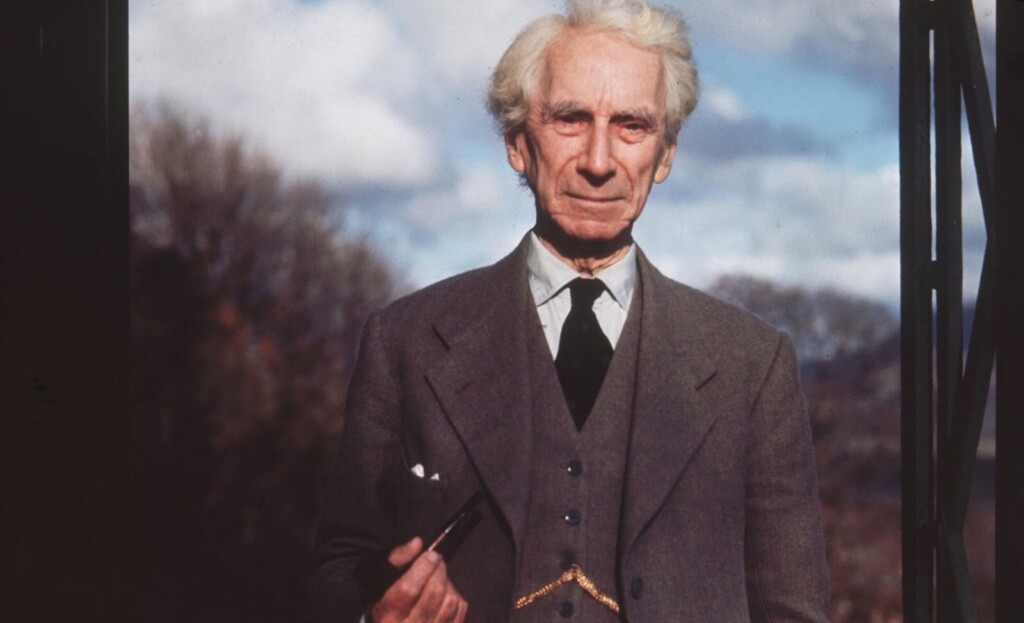
There is a letter, written in the last weeks of a man’s ninety-seventh year, addressed to no one in particular and to everyone who might still listen. The handwriting is slightly unsteady. The argument is not. It concerns the bombing of civilian populations in Southeast Asia, the gap between stated principles and practiced violence, the willingness of governments to lie in plain sight. The man writing it had been making similar arguments, in various forms, for the better part of a century. He knew they would likely change nothing. He wrote them anyway.
Russell identified three forces that had ruled his existence, and he named them without embarrassment in the opening pages of his autobiography, published when he was already in his late eighties: the longing for love, the search for knowledge, and what he called unbearable pity for the suffering of mankind. He did not present these as achievements. He presented them as hungers — things that had driven him forward precisely because they were never extinguished, never fully met. Most writers who reach the end of a long life construct a narrative of hard-won peace. Russell constructed no such narrative, and the honesty of that refusal is more disturbing than any of his philosophical arguments.
The longing for love is the one that surprises people most, given the public image of cold logical machinery. But Russell married four times, loved with genuine intensity, was abandoned and abandoned in return, sought in other people something that his own lucidity made almost impossible to find — a warmth that could survive being seen clearly. William James, whose pragmatism Russell spent years arguing against, once wrote that the greatest use of a life is to spend it on something that will outlast it. Russell spent his on several things simultaneously, and the friction between them was never resolved. His political commitments embarrassed his philosophical colleagues. His emotional life perplexed his political allies. His logic offended almost everyone at various points, and his willingness to contradict his earlier positions — on pacifism, on socialism, on the nature of mind — gave his opponents endless ammunition and his admirers endless discomfort.
What held it together was not a system. It was a refusal to pretend that certainty was available. In Human Knowledge: Its Scope and Limits, published in 1948, he argued that all empirical knowledge rests on assumptions that cannot themselves be empirically verified — a conclusion that neither comforted the religious nor satisfied the positivists, and that Russell himself seemed to find more bracing than distressing. He had arrived, by a different route, at something adjacent to what Albert Camus was writing in the same decade: that the honest response to a world without guaranteed meaning is not despair but a particular kind of stubborn, clear-eyed engagement. Russell never cited Camus approvingly, and Camus never cited Russell. They were working the same terrain from opposite directions.
He was awarded the Nobel Prize in Literature in 1950, which amused him and slightly irritated the philosophical establishment, as if the prize confirmed what they had always suspected — that he had never been quite serious enough, too readable, too willing to address the general public, too present in the newspapers. The establishment was not entirely wrong. Russell had always believed that ideas which could not survive contact with ordinary language were probably not worth much. This made him dangerous in the way that clarity is always dangerous: it removes the hiding places.
He died in February 1970, at Plas Penrhyn in Wales, still in the middle of arguments he had not finished. The world he left behind was no less violent, no less confused, no less willing to reward useful confusion over inconvenient truth than the world he had entered ninety-seven years earlier. He had not solved it. He had looked at it steadily, for a very long time, with eyes that never quite stopped being unsatisfied — and that unsatisfaction, in the end, was the most honest thing about him.
🧩 Logic, Society, and the Examined Life
Bertrand Russell’s thought spans mathematics, ethics, politics, and the philosophy of mind, making him one of the most wide-ranging intellects of the twentieth century. His work invites us to question power, language, and the foundations of knowledge itself. The articles below trace paths that intersect with his core concerns.
Thomas Hobbes: Life and Political Thought
Thomas Hobbes, like Russell, sought to apply rigorous logical reasoning to the problem of political order and human nature. His Leviathan constructs a social contract from first principles, anticipating the kind of analytical clarity Russell would later bring to philosophy. Understanding Hobbes illuminates the tradition of rational inquiry into power that Russell both inherited and challenged.
GO TO THE SELECTION: Thomas Hobbes: Life and Political Thought
William James and Consciousness: The Stream of Thought
William James and his concept of the stream of consciousness stand at the intersection of psychology and philosophy that Russell also navigated throughout his career. James’s pragmatism offered a rival theory of truth and meaning to Russell’s logical atomism, sparking one of the defining debates of early analytic philosophy. Exploring James’s thought reveals how differently two great minds could approach the same fundamental questions about mind and reality.
GO TO THE SELECTION: William James and Consciousness: The Stream of Thought
Henri Bergson: Life and Works
Henri Bergson was one of Russell’s most direct intellectual adversaries, representing an intuitionist and vitalist philosophy that Russell famously critiqued for its imprecision. Their debate over time, consciousness, and the limits of scientific reason shaped the philosophical landscape of the early twentieth century. Reading Bergson alongside Russell sharpens our understanding of what was truly at stake in the contest between analytic and continental thought.
GO TO THE SELECTION: Henri Bergson: Life and Works
Banal Evil and Radical Evil: Kant and Arendt
Russell spent much of his life warning against the banality and institutional nature of evil, anticipating Hannah Arendt‘s later reflections on how ordinary structures produce moral catastrophe. The philosophical investigation of banal and radical evil connects directly to Russell’s pacifism and his lifelong critique of authoritarianism. This article offers a rich companion lens through which to examine the ethical dimensions of Russell’s political thought.
GO TO THE SELECTION: Banal Evil and Radical Evil: Kant and Arendt
🎬 Discover the Cinema of Ideas on Indiecinema
If Russell’s passion for truth, freedom, and the examined life resonates with you, Indiecinema’s streaming catalog gathers independent films that wrestle with the same essential questions. From philosophical documentaries to daring works of auteur cinema, there is always a film waiting to deepen your thinking. Explore Indiecinema and let independent cinema expand your world.
👉 EXPLORE THE CATALOG: Watch Indie Films in Streaming
A vision curated by a filmmaker, not an algorithm
In this video I explain our vision

