
The Threshold You Cannot Uncross
You step into the courtyard before anyone else is awake. The stones are uneven, darkened at the edges where rain has settled for decades into the grout, and the walls rise around you with the particular silence of things that have been standing longer than any living witness. There is no dramatic light. No symbolic mist. Just the ordinary grey of early morning and the faint smell of something that might be lime plaster or old wood or simply time compressed into matter. And yet something shifts in your chest — not quite emotion, not quite recognition, but a third thing that sits between the two and has no clean name in any language you were taught.

You do not move for a moment. Not from awe, not from any conscious decision. You simply stop, the way a sentence stops when it has run out of the grammar that was supposed to carry it forward. The courtyard does not look at you — you know that, rationally — but you feel looked at, and the gap between those two things is precisely the territory this essay is moving through.
The Romans had a term for it. Genius loci, the spirit of a place, the presiding force that gave a location its specific character, its invisible personality. The phrase appears in Virgil’s Aeneid, but it was embedded far earlier in daily Roman religious practice — every home, every crossroads, every threshold had its genius, a subtle emanation that was neither deity nor symbol but something closer to what we might now call atmosphere if we wanted to drain the concept of everything that made it dangerous. What the Romans understood, and what a great deal of modern spatial thinking has worked furiously to un-understand, is that a place is not simply a coordinate. It is not the sum of its material properties. A site where three thousand people were killed cannot be made neutral by paving it over and building a shopping center. The ground does not forget even when the city does.
The Norwegian architect and theorist Christian Norberg-Schulz spent most of his career trying to reintroduce this intuition into architectural theory without mystifying it. His 1979 book Genius Loci: Towards a Phenomenology of Architecture argues that built environments must respond to the essential character of their location — what he called the “spirit” — or they produce spaces that are technically functional and experientially dead. He was drawing on Edmund Husserl and Maurice Merleau-Ponty, on the phenomenological insistence that human consciousness is always already embodied, always already situated, that we do not experience space as abstract coordinates but as fields of presence and pressure that shape thought before thought is aware of being shaped. A low ceiling does something to your thinking. A vast horizontal plain does something else. Neither is neutral. Neither is merely decoration.
What is harder to admit — and this is where the discomfort starts to arrive — is that this means spaces act on us in ways that bypass consent. You did not choose to feel the weight of that courtyard. The weight arrived before you had a chance to evaluate it. This is not a poetic metaphor for a mild aesthetic response. Research in environmental psychology — particularly the work coming out of the Person-Environment studies initiated by Roger Barker in the 1960s, tracking how physical settings generate predictable behavioral and cognitive patterns in the people who inhabit them — demonstrates with uncomfortable precision that places do not merely contain behavior, they script it. Barker called these configurations behavior settings: structured environments that carry implicit instructions that most people follow without ever knowing they received them.
Which means the question of who builds environments, who decides what those environments feel like, who profits from the particular emotional weather a space generates, is not an aesthetic question at all.
The Roman Ghost in the Machine
You have walked into a room and felt, before registering a single object in it, that something was already occupying the space. Not a person. Not a sound. A presence with weight and direction, as if the air itself had a posture. You adjusted your body without deciding to — shoulders pulling slightly inward, footstep softening, the volume of your own breathing suddenly audible to you. You did not call this anything. You filed it under nerves, or mood, or coincidence. The Romans would have called it accurate.
The genius loci was not a metaphor in the ancient world. It was a diagnosis. When Servius, the fourth-century grammarian, annotated Virgil’s Aeneid in his Commentarii, he was not producing poetry criticism in any sense we would recognize. He was producing a technical manual. His commentary on the phrase genius loci treats the guardian spirit of a place not as a poetic device but as a category of being that required acknowledgment the way a structural wall requires acknowledgment — because ignoring it had consequences. Servius distinguishes the genius from the soul of a person, from gods proper, and from the Lares, the household spirits tied to bloodline. The genius of a place belongs to the place alone, independent of any human presence, preceding and outlasting its inhabitants. It is not summoned. It is encountered.
What makes this genuinely strange is that Roman urban planning took the concept seriously as an engineering constraint. The augures — the religious officials responsible for reading spatial omens — were consulted before foundations were laid, not to perform ceremony but to determine whether a site’s existing genius permitted a particular kind of construction. Certain temples in Rome were oriented not toward cardinal directions or solar alignments but toward angles that preserved access corridors for invisible presences the planners apparently believed would otherwise be displaced and become dangerous. The word templum, before it ever described a building, described a delimited zone of sky or earth whose boundaries had been ratified as spiritually coherent. Architecture came afterward, fitted to a prior invisible geometry.
The modern habit is to read this as superstition dressed in bureaucratic language — primitive anxiety given institutional form. But this interpretation requires believing that an empire that produced advanced hydraulic engineering, dense legal codification, and one of the most sophisticated administrative apparatuses in the ancient world was simultaneously incapable of distinguishing between fear and observation. A more honest reading would consider whether the Romans were systematizing something experiential that modernity has simply reclassified. The phenomenologist Edward Casey, in his 1993 work Getting Back into Place, argues that place is not a container for experience but a co-constitutive force — that what we call atmosphere is not projected onto space by the human nervous system but emerges from a genuine transaction between body and environment. Casey was writing without reference to Servius, but the structural claim is identical: the place acts.
What the Roman framework added was accountability. If the genius of a location was a real presence, then damaging it — through careless construction, through neglect of the rites that acknowledged it, through the kind of spatial violence that levels everything in the name of utility — produced not spiritual offense but practical disorder. The city that forgot its genii became, by their understanding, a city that had severed itself from the informational layer embedded in its own ground. Rivers flooded in wrong seasons. Crops failed in fields that had previously been reliable. Diseases appeared without medical explanation. The Romans may have been wrong about the causal mechanism. They were not wrong that place carries information, and that humans who stop reading it become vulnerable to consequences they can no longer name.
The ghost in this machine was never meant to be exorcised. It was meant to be consulted.

What Modernity Decided to Forget
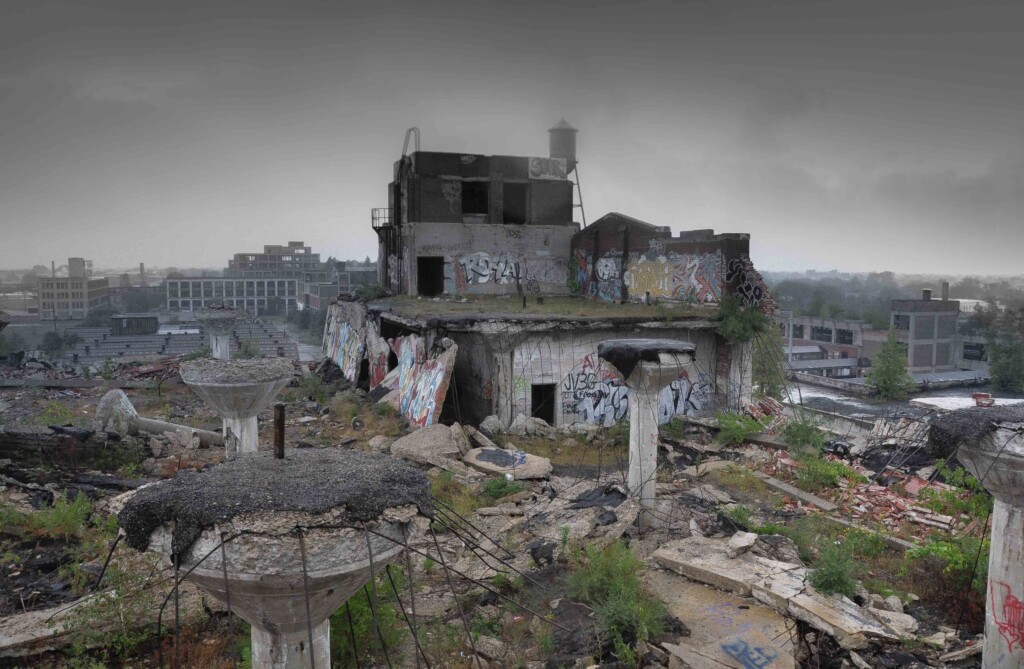
You have stood in a city center rebuilt after a war and felt nothing, not grief, not relief, just the faintly nauseating blankness of a space that has been made correct. The proportions are fine. The materials are adequate. Something is missing that no architectural review board has a vocabulary to name, because the tradition that once supplied that vocabulary was methodically retired two centuries before the building was commissioned.
René Descartes did not set out to murder place. His project in the Meditations of 1641 was epistemological hygiene, the removal of every uncertain thing from the foundations of knowledge. But the extension of that hygiene into a philosophy of space produced something with lasting consequences: the idea that space is res extensa, pure geometric extension, measurable, divisible, and above all indifferent. A location in this framework is a coordinate, not a presence. It has no inside, no character, no claim on the person standing in it. This was not a neutral description of reality. It was a choice, and like most choices that present themselves as discoveries, it quietly abolished what it could not measure.
The Enlightenment did not inherit Cartesian space passively. It weaponized it. When the great urban planners of the eighteenth century turned their attention to the reorganization of European cities, they carried with them a model of land as a blank medium into which rational order could be inscribed. Baron Haussmann’s demolition of medieval Paris between 1853 and 1870 obliterated not only buildings but the dense grain of relationship, memory, and neighborhood identity that had accumulated over centuries in those narrow streets. Approximately 350,000 people were displaced. The boulevards that replaced the old quarters were magnificent and perfectly legible and severed at the root the kind of slow, overlapping habitation through which a place develops what older traditions would have recognized as character.
What gets forgotten in most accounts of this period is that the erasure was not merely aesthetic. It was argued philosophically. The grid, the rational plan, the cleared sight line, were presented as expressions of a deeper truth about what space actually is, neutral, universal, ready to receive whatever function efficiency required. The local, the particular, the place with a specific history and a specific feeling, was reframed as superstition or sentiment, the residue of premodern confusion. To insist that a particular street corner had a quality that could not survive its demolition was to mark yourself as someone who had not yet learned to think clearly.
The anthropologist Edward Hall, writing in The Hidden Dimension in 1966, documented how profoundly human beings are shaped by the spatial configurations they inhabit, the distances they keep from one another, the territories they register unconsciously, the ways a room or a district calibrates social behavior below the threshold of conscious decision. His proxemics research demonstrated that space is never neutral to the bodies moving through it. It is a field of continuous, mostly unverbal negotiation. The rationalist city plan that ignored this dimension did not transcend human spatial psychology. It simply stopped accounting for it, and the populations left to live in the resulting environments absorbed the cost in ways that never appeared in the planner’s ledger.
What modernity decided to forget was not a primitive fantasy. It was a form of accumulated intelligence about the relationship between built environment and the human nervous system, compressed into the concept of genius loci and held, practically and not merely poetically, by everyone from Roman temple priests to medieval guild builders who oriented walls and thresholds according to principles that had nothing to do with maximizing square footage. The forgetting was so thorough that its victims would later struggle to explain what they were mourning, possessing only the blunt instrument of the word soul to point at something the available technical language had been specifically constructed to prevent them from describing.
The Body Knows Before the Mind Agrees
You walk into a room you have never entered before and something in your chest adjusts, the way a compass needle swings before the hand that holds it has registered any movement. Not recognition exactly, and not memory. Something older than either, operating at the level where breathing decisions are made.
Maurice Merleau-Ponty spent the better part of his intellectual life insisting that this is not a metaphor. In his Phenomenology of Perception, published in 1945, he dismantled the assumption that the body is a passive instrument receiving signals that the mind then interprets into meaning. Perception, he argued, is not a two-step process where the nervous system gathers data and consciousness decodes it. The body itself perceives, judges, and responds with an intelligence that runs entirely below the threshold of language. He called this the body-subject: not an object that exists in space, but a being that inhabits space, that negotiates the world through motor schemas, through posture and tension and the proprioceptive hum of muscles in continual silent negotiation with surfaces and distances and pressures. The body does not receive a room. It reads it.
What Merleau-Ponty identified in the domain of motor behavior reveals something harder and stranger when applied to place. The phantom limb phenomenon, which he analyzed in close detail, showed that the body maintains a map of itself that does not require sensory confirmation to stay active. An amputee reaches for a glass with a limb that no longer exists because the body-schema, the lived architecture of the self, has not yet been revised. If the body can sustain a presence that anatomy no longer supports, then it is also capable of detecting an absence, a wrongness, a quality of space that the conscious mind has not yet named. The hair rising on the back of the neck in a particular corridor is not superstition. It is phenomenological data.
This pre-cognitive somatic reading is exactly what makes certain spaces feel instantly hostile or instantly safe in ways that defy description afterward. The ceiling height, the acoustic density, the particular quality of light that either diffuses or concentrates, the angle at which a threshold is approached — these are not decorative variables. They are structural signals that the body processes through something closer to proprioception than to aesthetic judgment. When architects like Juhani Pallasmaa wrote in The Eyes of the Skin in 1996 about the haptic quality of great buildings, about the way rough stone or worn wood communicates something through the eye that behaves neurologically like touch, he was extending Merleau-Ponty’s insight into the professional domain of built space. A colonnade does not merely look welcoming. The body models its passage through that colonnade before the feet have moved, and the quality of that interior simulation is already an emotional event.
There is a reason why people fall silent in certain places without being asked. Not in churches necessarily, or not only in churches, but in ravines, in particular bends of rivers, in rooms where something once happened that the walls have not entirely released. The silence is not social or performational. It is somatic compliance with a signal the body has received and accepted as authoritative. Language arrives later, if at all, usually in the imprecise vocabulary of atmosphere or feeling, because the event has already passed through a register that words were not built to reach.
When a City Manufactures Its Own Myth
You are standing in a cobblestone street that has been pressure-washed at four in the morning so that it gleams authentically by the time you arrive with your coffee and your camera. The stones are real. The grime that made them real has been removed. What you are experiencing is not a place — it is the idea of a place, edited for legibility, stress-tested for emotional yield, and delivered to you as though you discovered it yourself.
This is the central operation of heritage branding, and it has become one of the most lucrative industries on the planet. UNESCO’s World Heritage List, which numbered 12 sites when it was established under the 1972 Convention Concerning the Protection of the World Cultural and Natural Heritage, had expanded to 1,199 sites across 168 countries by 2023. The economics that follow inscription are not subtle. A 2018 study published in the Journal of Cultural Economics found that UNESCO designation increases international tourist arrivals to a site by an average of 8 percent in the first year alone, with compounding effects over the following decade. What gets sold is not history — it is the feeling of touching history, which is an entirely different transaction.
Sharon Zukin, in her 2010 work Naked City: The Death and Life of Authentic Urban Places, traced the precise mechanism by which authenticity becomes a commodity. She showed that the moment a neighborhood’s rawness is identified as desirable — its industrial bones, its immigrant textures, its working-class residue — capital moves in not to destroy it but to preserve its appearance while evacuating its content. The original inhabitants, the people whose actual lives generated the atmosphere now being monetized, are displaced not by bulldozers but by rent. The aesthetic remains. The body it grew from is gone.
What replaces the body is narrative. Cities hire firms specifically to manufacture origin stories, to identify “authentic” landmarks, to curate walking routes that produce a controlled emotional arc. The global experience economy, which Pine and Gilmore identified as a distinct stage of economic development in their 1999 book The Experience Economy, had reached an estimated value of 5.6 trillion dollars by 2022. A significant and growing portion of that figure is built on selling people the sensation of being somewhere that genuinely exists — while systematically dismantling the conditions that made genuine existence possible there.
The cruelty in this is structural, not intentional. No single developer wakes up deciding to hollow out a city’s soul. The process operates through thousands of individually reasonable decisions — a zoning variance here, a boutique hotel there, a street festival that draws coverage, a mural commissioned to signal vitality — each of which makes complete sense within the logic of its own transaction and contributes, cumulatively, to the replacement of a living organism with a theme park of itself. Venice now has a day-tripper tax. Barcelona’s Barceloneta has seen more than 40 percent of its long-term residential population displaced since 2010. Dubrovnik hit 10,000 cruise passengers in a single day in 2016, a figure that exceeds its resident population by a factor of roughly seven.
What makes this particularly difficult to resist is that the product being sold is not obviously false. The cobblestones are genuinely old. The cathedral is genuinely gothic. The recipe at the restaurant is genuinely the grandmother’s. The problem is not that the signifiers are fabricated — it is that they have been severed from the living system that gave them meaning and reattached to a commercial apparatus that mimics that system’s emotional frequency. You feel something real standing in that square. The feeling is real. But it was engineered to be felt by you, at this hour, in this light, and the people who once felt something unrehearsed in that same square can no longer afford to live within walking distance of it.
A vision curated by a filmmaker, not an algorithm
In this video I explain our vision
The Wound That Stays in the Wall

She stands on a pavement that didn’t used to be there, in front of glass that reflects her own face back at her, and somewhere behind that reflection there was once a courtyard where her grandmother hung laundry and a cat slept on a warm stone step and someone always seemed to be calling someone else’s name from a window that no longer exists. The building behind the glass is new and correct and inoffensive. She doesn’t cry. She just feels slightly amputated, as though the city has quietly removed something from her body while she wasn’t looking and replaced it with a cleaner, lighter prosthetic.
Glenn Albrecht, an environmental philosopher at Murdoch University in Western Australia, gave this feeling a name in 2003, though the feeling itself is as old as displacement. He called it solastalgia — from the Latin solacium, comfort, and the Greek algos, pain — defining it as the distress caused by environmental change in one’s home territory, the grief that arrives not from leaving a place but from watching the place leave you. What made the coinage intellectually significant was not its elegance but its clinical insistence: Albrecht was arguing, in work that would eventually culminate in his 2019 book Earth Emotions, that this was not sentimentality. It was not nostalgia dressed in softer clothes. It was a diagnosable, legitimate wound, a form of loss that Western psychiatric frameworks had consistently failed to recognize because they had been built on the assumption that home is portable, that identity detaches cleanly from geography, that grief requires a corpse.
The psychiatric tradition has a long history of pathologizing attachment to place only when it becomes inconvenient. Soldiers in the seventeenth century who fell ill with an inexplicable wasting sadness while stationed far from their villages were diagnosed with nostalgia — a term coined by Swiss physician Johannes Hofer in 1688, who classified it as a neurological disease, a dangerous excess of animal spirits in the brain causing the patient to hallucinate home. The cure was sometimes forced relocation, sometimes opium. The assumption threading through the diagnosis was that the attachment itself was the pathology, not the severing. Centuries later, the architecture of that assumption remains largely intact: grief manuals address the death of people, not the death of streets.
What Albrecht’s framework forces into visibility is that the built and natural environment functions as an external structure of the self. This is not metaphor. The developmental psychologist Daniel Stern, writing in the 1980s on the formation of the infant self, described how identity coheres through repeated sensory encounters with a consistent environment — the smell of a particular floor, the sound of a specific stairwell, the quality of light through one window at one hour of afternoon. These are not decorations around experience. They are the architecture through which experience becomes self. When they are destroyed, something in the internal structure loses its corresponding external anchor, and the person doesn’t know quite how to name what has collapsed because the culture has given them no vocabulary for mourning a courtyard.
The scale at which this goes unacknowledged is staggering. Between 1950 and 2000, urban renewal programs across Europe and North America demolished entire working-class neighborhoods under the administrative logic of slum clearance and modernization — Pruitt-Igoe in St. Louis, the Bull Ring in Birmingham, the Marais in Paris before preservation battles slowed the machinery. The residents displaced from these areas showed measurable increases in depression, social fragmentation, and what researchers cautiously described as grief responses, documented in studies like Marc Fried’s 1963 paper on Boston’s West End, in which 46 percent of women and 38 percent of men reported severe and prolonged grief reactions following forced relocation. Fried titled the paper “Grieving for a Lost Home,” and the title alone was an act of professional courage in a field that had not yet conceded that home was something you could lose the way you lose a person.
Topophilia Was Never Innocent
You have stood at the edge of a landscape that felt, without explanation, like it belonged to you — the particular angle of afternoon light on a familiar hillside, the smell of a specific soil, the way a river bends in a direction your body somehow anticipated before your eyes confirmed it. That sensation is real. It is also one of the most dangerous feelings a human being can have.
Yi-Fu Tuan named it topophilia in 1974, in a book that mapped the emotional bonds between people and their physical environments with genuine tenderness and intellectual precision. He described how place becomes an extension of the self, how attachment to landscape is not mere sentimentality but a fundamental structure of human identity. The insight was profound and correct. What Tuan could not fully anticipate — or perhaps chose to hold at arm’s length — was how thoroughly that same structure had already been militarized across the preceding century, turned into an instrument of mass murder dressed in the language of belonging.
The love of a specific soil has a technical name in German political theology: Blut und Boden, blood and soil, a doctrine formalized by Richard Walther Darré in the early 1930s and absorbed into the ideological architecture of the Nazi state. What made it so lethal was not its brutality but its sincerity. The peasant’s attachment to his ancestral field, the mystical resonance between a people and their particular geography — these were not invented emotions. They were real feelings hijacked and encoded into a racial science that determined who belonged to a landscape and who contaminated it. The extermination of European Jews was presented, in its own logic, as a kind of ecological restoration.
This is not an aberration. Ethnic cleansing as a modern political project has consistently operated through topophilic language — the argument that a people and a place share an essential bond that outsiders violate by their mere presence. The Balkan wars of the 1990s ran on precisely this grammar. Serbian nationalist mythology constructed Kosovo as a sacred ground whose soil held the blood of medieval battles, making the Albanian population living there not residents but foreign matter in a body that needed purging. Landscapes were not just fought over; they were grieved over, elegized, treated as injured persons whose wounds demanded vengeance. Over two hundred thousand people died inside that poetry.
What makes topophilia dangerous is not that it is false but that it is partially true. Place does shape consciousness. The neurological literature on spatial cognition confirms that environments structure memory and identity at a cellular level — the hippocampus literally maps not just physical space but emotional experience onto that space, which is why returning to a childhood home can collapse forty years in a single sensory instant. The feeling of belonging to a place is not a metaphor. It is a physiological reality. And physiological realities, precisely because they bypass argument, are extraordinarily useful to ideologies that need to move bodies without engaging minds.
Every nationalist movement of the twentieth century understood this instrumentally. The Zionist project built its claim to Palestine partly on a topophilic longing that was two thousand years old and genuinely felt. The Palestinian resistance built its counter-claim on a topophilic attachment that was immediate, agricultural, and equally felt. Two populations, each with an authentic relationship to the same ground, each convinced that the depth of their feeling constituted a form of prior ownership. The landscape did not adjudicate. It simply absorbed the dead.
The romantic tradition taught Western culture to regard the love of place as a form of spiritual refinement, evidence of sensitivity and depth. Wordsworth wandering the Lake District, Georgia O’Keeffe dissolving into New Mexico, Bruce Chatwin mapping the songlines of Aboriginal Australia as though intimacy with landscape were the last form of authentic human experience — all of this aestheticized topophilia at the precise historical moment when states were discovering how efficiently it killed.
The Places That Refuse to Become Metaphor
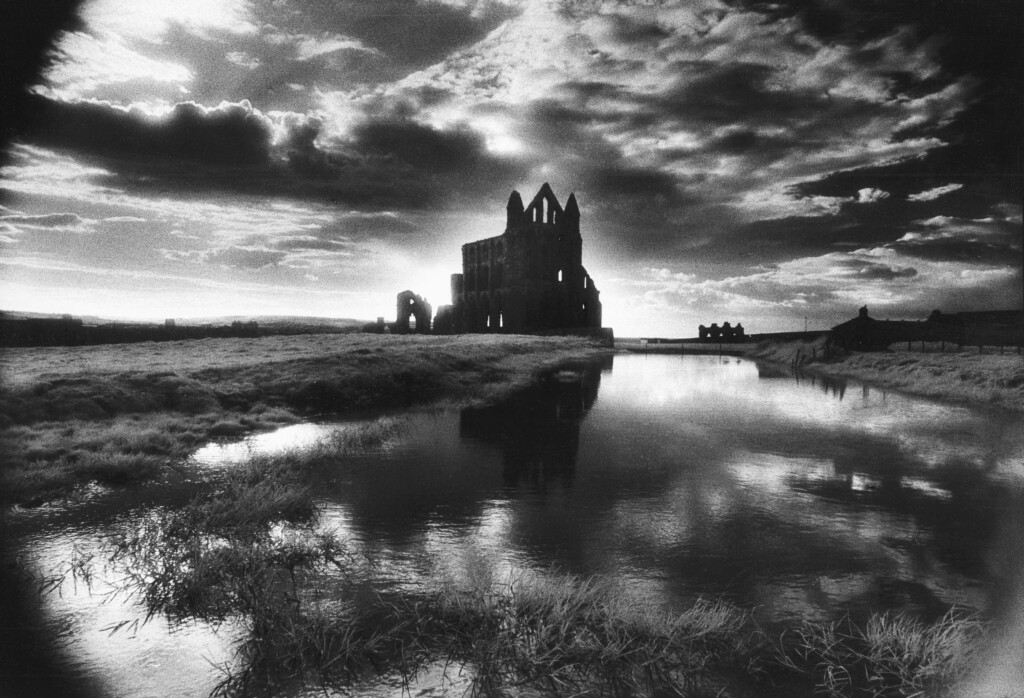
You have been to a place that defeated your vocabulary, and you knew it the moment you tried to explain it to someone who wasn’t there. The words came out smaller than the experience, and the more you added, the further you moved from the thing itself. Not because you lacked language, but because the place refused to be carried in language — it had a density that dissolved on contact with description, the way certain dreams survive only in the body, in the faint residue of feeling that vanishes precisely when you try to name it.
Peter Zumthor, writing in Atmospheres in 2006, identified something that architects usually work hard to avoid admitting: that the most powerful quality of a built space is not its form, not its materials, not even its light, but a presence that arrives before you have formed a single thought about it. He called it atmosphere, but he was careful not to make it mystical. He meant something physical, almost brutally physical — the way a room acts on you before you have decided how you feel, the way stone holds cold differently than it holds silence, the way a threshold changes the pressure of the air against your skin. His argument was structural and uncomfortable: meaning is secondary. Presence precedes story. Whatever narrative you eventually attach to a space arrives late, arrives as a kind of domestication of something that was already there and will outlast your interpretation.
This is what most theories of place quietly refuse to accept. The academic tradition of topophilia, the cultural geography of sacred landscapes, the entire architecture of heritage discourse — all of it assumes that places become significant through the meanings we invest in them, through memory and ritual and collective narration. But there are places that precede all of that and resist it. The pre-Roman sanctuary at Hal Saflieni in Malta, built between 3600 and 2500 BCE, functions on the visitor not as a symbol of ancient religion but as a physical event — the hypogeum was carved to amplify the human voice at a frequency of 110 Hz, which neurological research in the early 2000s has linked to shifts in cognitive state, to the suppression of left-hemisphere language processing. The space was not built to mean something. It was built to do something to you that meaning cannot reach.
What this exposes is a category error embedded in the very way contemporary culture relates to place. The aestheticization of landscape, the Instagram archive of ruin and wilderness, the travel essay as an act of symbolic appropriation — all of it operates on the assumption that places exist to be interpreted, that they are raw material for the self’s ongoing project of significance. The places that refuse this assumption are not mysterious in any romantic sense. They are simply more real than the frame you bring to contain them. They have a specificity that does not generalize, a thereness that does not translate into aboutness.
Zumthor understood this as an ethical demand on the architect: to build in such a way that the space itself carries more weight than any story that could be told about it, that the presence survives the evacuation of every narrative context. What he did not say, but what follows from everything he observed, is that such spaces also make a demand on the person who inhabits them — a demand not for reverence or interpretation, but for a different quality of attention, slower and more bodily, stripped of the interpretive reflex that turns every experience into content. To stand inside something that will not explain itself, that offers no symbolic exit, that simply continues to be what it is regardless of what you need it to mean, is to encounter the rarest condition modernity has almost entirely abolished: the experience of a world that does not require your narration to remain fully, stubbornly, irrevocably present.
🌿 When Spaces Breathe and Places Remember
Every place holds a silent memory — a presence that cannot be reduced to walls or landscapes. The concept of genius loci, the soul of a place, touches philosophy, literature, and spiritual thought in ways that are both ancient and urgently modern. These articles explore the invisible dimensions of inhabited space and the sacred energy that dwells between things.
Philosophy of the City: History and Theory
Philosophy has long asked what a city truly is beyond its stones and streets. This article traces the philosophical history of urban space, from ancient ideas of the polis to contemporary theories of place, belonging, and collective identity. Understanding the city as a living entity is the first step toward recognizing that spaces themselves carry meaning and memory.
GO TO THE SELECTION: Philosophy of the City: History and Theory
Situationist Psychogeography: The City as Lived Space
The Situationist International gave birth to psychogeography, a radical practice of drifting through urban environments to feel how space emotionally and psychologically shapes those who inhabit it. This article explores how Guy Debord and his companions transformed walking into a form of philosophical inquiry and political resistance. Their insight — that the city acts upon us as much as we act upon it — lies at the very heart of what genius loci means.
GO TO THE SELECTION: Situationist Psychogeography: The City as Lived Space
Eliade’s The Myth of the Eternal Return: Analysis
Mircea Eliade’s concept of the eternal return illuminates how sacred places function as centers of the world, axes where the profane and the divine converge. This article examines Eliade’s foundational text and its argument that certain locations carry a cosmological weight, a repetition of mythic time embedded in their very geography. The idea that some places are literally thresholds between worlds resonates deeply with any reflection on the soul of place.
GO TO THE SELECTION: Eliade’s The Myth of the Eternal Return: Analysis
Eliade’s The Sacred and the Profane: Analysis
In The Sacred and the Profane, Eliade distinguishes between homogeneous, empty space and those charged points where reality reveals its deepest structure. This analysis unpacks his argument that sacred space is not merely symbolic but experientially different — a rupture in the fabric of ordinary existence. For anyone drawn to the mystery of why certain places feel irreducibly alive, Eliade’s vision offers an indispensable philosophical framework.
GO TO THE SELECTION: Eliade’s The Sacred and the Profane: Analysis
Discover the Cinema That Feels Every Place’s Soul
If these ideas about space, memory, and invisible presences move you, Indiecinema streaming is where cinema answers back. Our curated selection of independent and auteur films captures places as living characters — landscapes that breathe, buildings that remember, and territories that shape the souls of those who pass through them. Come explore a cinema that never forgets where it stands.
👉 EXPLORE THE CATALOG: Watch Indie Films in Streaming
A vision curated by a filmmaker, not an algorithm
In this video I explain our vision

