
The Threshold You Cross Without Knowing
You push open a door you have opened a thousand times and something shifts before you have taken a single step inside. It is not the light, though the light is different. It is not the smell, though the smell reaches you immediately — old wood, candle wax, something floral and faintly decaying, the specific atmospheric residue of years of human longing concentrated in one enclosed space. Your body knows something your vocabulary does not yet have a word for. Your shoulders drop. Your breath slows without your permission. You are standing in the same gravitational field, on the same planet, in the same body you inhabit at the grocery store and the parking lot and the fluorescent-lit office where you spend most of your waking hours — and yet none of that feels true right now. Something has been crossed. You cannot name the line, but you crossed it.

This experience is so universal that its very universality has made it invisible. We file it under mood, or memory, or architecture, or the particular acoustics of high ceilings. We rationalize it because we live in a civilization that has spent roughly three centuries constructing elaborate machinery for the purpose of rationalizing exactly this kind of thing. The Enlightenment did not abolish the experience of sacred space — it simply made educated people embarrassed to admit they were having it. The sensation persisted. The language for it was quietly confiscated.
Mircea Eliade, the Romanian historian of religions whose 1957 work Das Heilige und das Profane — published in English as The Sacred and the Profane — spent an entire intellectual career trying to return that language to people who had been stripped of it. His project was not theological. He was not arguing for God. He was arguing for phenomenology, for the irreducible structure of human experience, for the observable fact that human beings across every culture and every historical period have organized space, time, and existence around a fundamental division that cannot be collapsed into psychology or sociology without something essential being lost. He called it the opposition between the sacred and the profane, and he meant something far more precise and far more unsettling than the casual moral distinction between the holy and the sinful that Western Christianity made of those words.
For Eliade, working from an enormous archive of comparative religion — drawing on data from Mesopotamian cosmology, Australian Aboriginal ritual practice, ancient Indian cosmogony, Siberian shamanism — the sacred was not primarily an ethical category. It was an ontological one. It described a mode of being in the world, a quality of reality that manifests at specific points in space and time with a force that is experienced as genuinely other, genuinely exterior to the human subject, genuinely not produced by the imagination even when the imagination is the instrument through which it is received. The Latin word he returned to repeatedly was hierophany, from the Greek hieros and phainein — a manifestation of the sacred, a moment in which something holy shows itself through ordinary material reality without ceasing to be ordinary material reality.
What makes this theoretically vertiginous is the implication it carries about everything else. If certain spaces are experienced as sacred — as charged, as oriented, as qualitatively different from the homogeneous, interchangeable space of the profane world — then homogeneous space is not the neutral default it presents itself as. It is itself a construction. The feeling of meaningless equivalence, the sense that one place is fundamentally no different from another, the modern conviction that space is just geometry and geography — this is not the absence of a worldview. It is a worldview. And it is a remarkably recent one, geographically and historically provincial in ways that its current dominance tends to obscure.
Your body, standing in that doorway, already knew this. The question is whether you are willing to take your body seriously as an epistemological instrument.
I Am Nothing
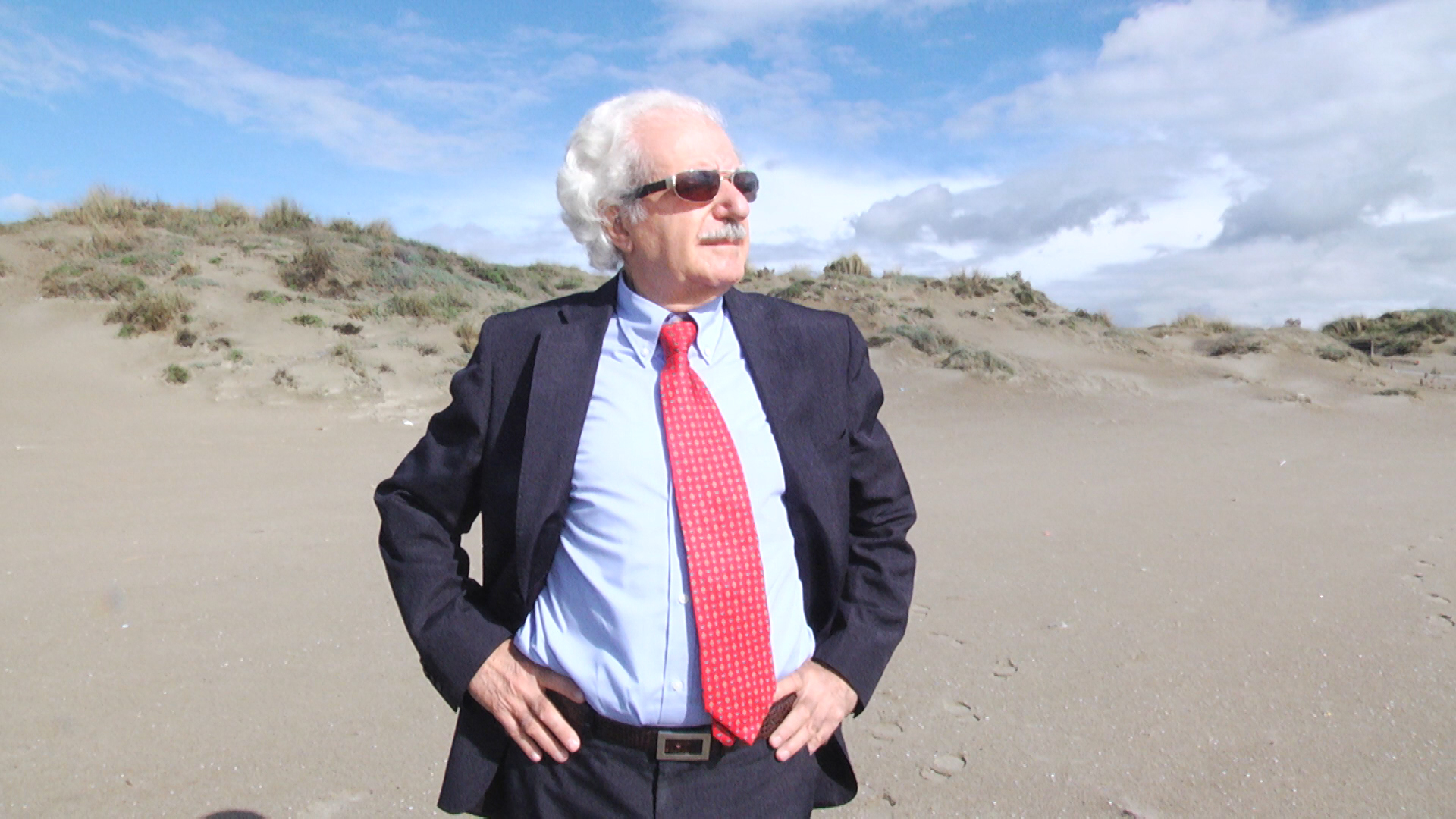
Drama, thriller, by Fabio Del Greco, Italy, 2015.
The story revolves around Vasco, a Roman builder who, at the age of 74, enjoys a life of absolute comfort. His human parable takes a dramatic turn when a mysterious encounter leads him to an ambush. Having survived, but marked by a long coma, Vasco wakes up with a new sensitivity, developing an intimate and poetic bond with nature. This new relationship with the world around him leads him to deeply explore himself, in an internal and external journey. through Italy, the United States and India, in search of a higher meaning and a cure. In parallel, the threat of a planetary cataclysm adds an epic dimension to the story.
I Am Nothing explores universal themes such as time, memory, oblivion and the connection with nature. Fabio Del Greco creates an existential drama full of food for thought. The director skillfully combines different visual materials, mixing archive images with nature photographs and dreamlike visions. This visual experimentation translates into an editing that captures the viewer's attention, guiding him through a cycle of creation and destruction. The sequences that alternate the buildings, Vasco's pride, with Indian landfills and natural landscapes create a hypnotic rhythm, underlining the beauty and fragility of life. Vasco's existential journey is a hymn to transformation and rebirth. The evolution of the protagonist, from unbridled luxury to the rediscovery of purity, represents a powerful metaphor on the meaning of life and the need to reconnect with authentic values. Io sono nulla stands out for its ability to combine introspection and visual experimentation, offering a suggestive and engaging narration. It is a film that invites us to reflect on the human condition, on our relationship with power and nature, and on the possibility of finding ourselves through change. A work that leaves its mark and lends itself to multiple readings.
LANGUAGE: Italian
SUBTITLES: English, Spanish, French, German, Portuguese
Eliade’s Central Rupture: Homo Religiosus vs. Modern Man
You are walking through a city you have lived in for years, and at some point you realize you cannot remember the last time a place made you stop. Not stop because your phone buzzed or because a light changed, but stop the way a body stops when something older than reason takes over — when a location suddenly refuses to be just location, when the ground beneath your feet becomes something it was not a second ago. Most people in the modern West will recognize this as a rare and slightly embarrassing sensation, the kind they hesitate to describe because the vocabulary for it has been almost entirely dismantled.
Mircea Eliade spent the better part of his intellectual life insisting that this dismantling was not progress but amputation. Born in Bucharest in 1907, trained in India under the Sanskrit scholar Surendranath Dasgupta, and eventually installed at the University of Chicago where he remained until his death in 1986, Eliade was one of the twentieth century’s most ambitious and most contested theorists of religion. His 1957 work Das Heilige und das Profane — published in German for a mass audience before appearing in French and English — distilled decades of comparative research into a single, brutal opposition: there are two modes of being in the world, and modern secular humanity has chosen, or been forced into, the lesser one. The sacred, for Eliade, is not a set of beliefs or rituals. It is an ontological category. It is the irruption of absolute reality into relative space, a rupture in the fabric of ordinary existence that reveals something irreducibly other, something that carries its own authority and cannot be explained by reducing it to social function or psychological need.
He had already laid the theoretical groundwork eight years earlier in Patterns in Comparative Religion, a work of staggering anthropological range published in 1949, where he introduced the concept of hierophany — from the Greek hieros, sacred, and phainein, to manifest. A hierophany is any object, place, person, or moment through which the sacred breaks through into the profane world. A stone can become a hierophany. A tree can. The point is not the object itself but the quality of presence it suddenly carries, the way it becomes saturated with a reality that ordinary perception cannot access. What struck Eliade across thousands of pages of comparative mythology, ritual, and cosmology was the structural consistency of this experience across cultures that had no contact with one another — the sacred mountain, the sacred center, the axis mundi around which the cosmos organizes itself, appearing from Mesopotamia to Mesoamerica to the Vedic tradition with a regularity that could not be dismissed as coincidence or borrowing.
Against this, homo religiosus — Eliade’s term for the pre-modern, mythologically embedded human being — stands in sharp contrast to what he called modern nonreligious man, a figure who has theoretically abolished the sacred-profane distinction and replaced it with a homogeneous, desacralized continuum. For modern man, space is geometric and interchangeable: no spot on Earth is inherently more real than another. Time is linear, quantitative, and irreversible: one hour is equal to any other hour, and none of them opens onto eternity. The world is a closed system operating by laws that refer only to themselves. Eliade did not celebrate this as liberation. He described it as a kind of existential impoverishment so deep that it had become invisible, which is precisely what made it so difficult to confront — you cannot mourn the loss of a capacity you have been taught to regard as superstition.
What makes this rupture more than academic is where Eliade locates its cost: not in theology, but in the experience of reality itself. The profane world does not simply lack the sacred. It lacks density.

Axis Mundi and the Violence of the Center
You are standing in a city whose name you have heard your entire life, and you do not know why your chest tightens when you see its skyline. Something older than your education is pulling at you, some residue of orientation that has nothing to do with street maps or tourist guides. Eliade would say you are reacting to a cosmic structure, not a political one.
The axis mundi is the spine of the world — the vertical pole that connects heaven, earth, and the underground in a single organizing gesture. Without it, space remains undifferentiated, a formless expanse in which movement is possible but direction is not. Eliade argued in 1957 that this architectonic symbol appears across virtually every documented religious culture: the sacred mountain, the world tree, the ziggurat, the temple column. What matters is not the material form but the function — to establish a center from which all orientation radiates outward. Every house, every altar, every city modeled on this vertical axis becomes a cosmological claim about where reality is densest, where the human and the divine actually touch.
The problem is that density attracts power, and power has never been tolerant of competitors. When geography becomes cosmology, the city that sits on the sacred axis does not merely hold religious significance — it holds ontological authority. It tells people where the real is. That is a resource more valuable than oil, more strategically decisive than any mountain pass. Jerusalem has been conquered, destroyed, and rebuilt more than twenty times across recorded history. The number is not incidental. Each conqueror understood, with or without Eliade’s vocabulary, that to hold the Temple Mount was to hold the center of the world as a particular tradition understood it — which meant, operationally, to hold the imagination of millions of people who had organized their deepest sense of reality around that specific piece of stone.
Mecca operates on the same logic with different theology. The Ka’ba is described in Islamic cosmography as the navel of the earth, the point directly beneath the heavenly throne, the first place God created. Circling it during the Hajj is not metaphorical movement but a physical participation in cosmic structure. When the Qarmatians seized the Black Stone in 930 CE and held it for twenty-two years, the violence was not primarily political — or rather, it was political precisely because it was cosmological. Attacking the stone was attacking orientation itself, disrupting the center around which identity and meaning had been organized for three centuries.
Rome understood this more architecturally than theologically, which made it no less dangerous. The templum in Roman practice was not merely a building but a demarcated zone established through augural rite — a portion of sky and earth formally declared as the axis through which divine will could be read. The Forum, the Capitol Hill, the Palatine were not arranged for civic convenience but to replicate a cosmological order in urban stone. When Augustus rebuilt eighty-two temples in a single year, as Suetonius records, he was not engaged in cultural patronage. He was reestablishing Rome as the center — the only place where the human and the divine properly met — and therefore as the only legitimate source of order for the known world.
What Eliade’s analysis refuses to say directly, and what the historical record says with considerable bluntness, is that the axis mundi is always claimed by someone, and the claim is always enforced. The sacred center does not float freely above human appetite. It lands in specific soil, gets surrounded by walls, requires soldiers. The vertical symbolism — heaven above, underworld below, humanity in the radiant middle — produces a horizontal consequence that is cartographic and military: everything at the center is sacred, everything at the periphery is progressively less real, and the gradient between them is a gradient of domination dressed in the language of proximity to the divine.
Profane Time as a Modern Invention
You already know what day it is. Not approximately — exactly. You know the date, the year, the hour, probably the minute, and if someone asked you to locate yourself in time right now, you would answer without hesitation, because the answer requires no thought. That effortlessness is not neutral. It is the product of a specific historical violence, so thoroughly absorbed that it no longer feels like anything at all.
Mircea Eliade drew a distinction that cuts deeper than it first appears: between two fundamentally incompatible experiences of time, not two opinions about it, not two cultural preferences, but two entirely different ontological structures. Sacred time, in his account developed across The Sacred and the Profane published in 1957, is reversible. It loops back. Every ritual act does not merely commemorate a mythical origin — it reactualizes it, collapses the distance between now and then, and allows the participant to inhabit the primordial moment as if it were still occurring. The New Year ceremony of the ancient Babylonians was not a celebration of elapsed time; it was a ritual abolition of the past year’s accumulation of entropy, a return to the formless moment before creation so that creation could happen again. Time, in that structure, has a texture — it thickens around certain moments and thins between them.
Profane time, by contrast, is a line with no texture. Every point on it is qualitatively identical to every other. The second that passes at 3:14 on an idle Tuesday carries precisely the same weight as the second that passes at the stroke of midnight on the winter solstice. This is not experienced as a loss by those inside it, because the frame itself has become invisible. But it is worth pausing on the specific machinery that made this frame universal — not organic, not inevitable, but engineered and enforced.
The Gregorian calendar, introduced by papal decree in October 1582 under Gregory XIII, was not merely an astronomical correction to the Julian drift of roughly ten days. It was an instrument of coordination, and coordination, at that scale, is always an instrument of power. Catholic nations adopted it immediately; Protestant states resisted for decades, some for over a century — Britain and its colonies held out until 1752, Russia until 1918. The resistance was not irrational stubbornness. It was the recognition, however inarticulate, that to accept another power’s calendar is to accept their architecture of time, to agree that their zero-point is your zero-point, that their rhythm of weeks and months will organize your labor, your worship, your rest. When the calendar was finally standardized globally through the twentieth century’s colonial and commercial integration, thousands of local temporal systems — lunar, agricultural, ceremonial, tied to the flooding of specific rivers or the flowering of specific trees — were not abolished outright. They were reclassified. They became folklore, tradition, cultural heritage, which is the modern vocabulary for things that are no longer considered real.
What Eliade identified as the structure of sacred time was, in most of these systems, not experienced as sacred at all in any explicitly religious sense. It was simply time as it actually moved — not uniformly, but in surges and recessions, with certain moments carrying weight that others did not. The harvest moon meant something different than the moon three weeks earlier, not because of superstition, but because the community’s entire material and social life was organized around that difference. When standardized clock-time colonized these rhythms, it did not replace them with nothing. It replaced them with the fiction of equivalence — the idea that all time is the same time, that duration is simply quantity, that what matters is how much of it you have rather than what kind it is.
The person who lives entirely within that fiction does not feel impoverished. They feel organized. And that is precisely what makes the erasure so complete.
The Secular Sacred: Stadiums, Concerts, and National Monuments
You are standing in a crowd of forty thousand people and something is happening to your body that you did not authorize. The man on the stage has not said anything particularly intelligent. The lights are arranged to blind you at precise intervals. The bass frequencies are calibrated to resonate inside your sternum. And yet you are crying, or close to it, and the person beside you — a stranger whose name you will never know — is gripping your arm as though you are the only solid object left in the world. You will remember this night for decades. You will describe it to people who were not there and fail, every time, to explain what actually occurred.
Mircea Eliade spent much of his intellectual life insisting that the sacred was not a concept invented by theologians but a structure of human experience — a mode of encounter with something that feels categorically different from ordinary time and space, something that erupts through the fabric of the everyday and leaves a mark. What he did not sufficiently dwell upon, though his framework implies it at every turn, is how that structure survives the death of its original containers. Secularization did not abolish the sacred. It orphaned it. And orphaned things do not disappear; they attach to whatever is available.
Émile Durkheim, writing in The Elementary Forms of Religious Life in 1912, observed that religious life is fundamentally about the collective — that what a community calls sacred is precisely what it has agreed, through repeated ritual, to treat as set apart and untouchable. The god is not separate from the gathering; the gathering is what produces the god. Durkheim was describing Aboriginal Australian totemic ceremonies, but the mechanism he identified has no cultural address. When a national anthem begins in a stadium holding eighty thousand people and every body in that space rises involuntarily, something is being enacted that has the full structural signature of a ritual: synchronized movement, shared emotional elevation, the temporary dissolution of individual identity into collective belonging. The fact that no one calls it worship does not change its architecture.
What changes — and this is where the danger lives — is the absence of the meta-awareness that traditional ritual carried. A medieval pilgrim walking to Santiago de Compostela knew they were doing something sacred. The frame was explicit. The symbolism was legible. The institution surrounding it, however corrupt, provided a grammar through which the experience could be interpreted and even critiqued. When a political rally produces the same neurological cascade — the same loss of critical distance, the same flooding sense of membership in something larger and righteous — there is no equivalent grammar. There is only the feeling, which feels like truth, and a crowd of bodies all having it simultaneously, which feels like confirmation.
Durkheim’s heirs in sociology, particularly those who examined twentieth-century totalitarianism, watched in horror as this dynamic scaled. The Nuremberg rallies of the 1930s were not aberrations of irrationality; they were precision instruments of manufactured sacrality, deploying torchlight and synchronized choreography and the rhythmic chanting of a name to produce exactly the state Durkheim had catalogued in tribal societies — collective effervescence, the sensation that one has touched something absolute. The architects of those events understood, intuitively or deliberately, that if you could trigger the phenomenology of the sacred, you could attach it to any content whatsoever, and the content would inherit the authority of the feeling.
A vision curated by a filmmaker, not an algorithm
In this video I explain our vision
Where Eliade’s Framework Cracks

You are standing in a library, running your fingers along the spine of a book that has shaped how three generations of scholars think about religion, myth, and the human need for the divine. The book feels authoritative in the way that only certain objects do — heavy, settled, certain of itself. What you cannot feel through the cover is the hand that wrote it, and what that hand was doing in the years before it became so celebrated.
Mircea Eliade was not simply a scholar who held inconvenient private opinions. Between 1934 and 1937, he wrote for Cuvântul and other Romanian nationalist publications, producing texts that expressed sympathy for the Legion of the Archangel Michael — the Iron Guard — a fascist movement responsible for murderous antisemitic violence. Adriana Berger, writing in the Journal of Religion in 1994, documented this entanglement with uncomfortable precision, arguing that Eliade’s political commitments were not a youthful aberration cordoned off from his mature academic work but a continuous ideological current that ran beneath it. The question she forced onto the table was not whether a thinker can be separated from his politics, but whether, in Eliade’s case, the politics had quietly organized the theory from the inside.
Russell McCutcheon, in Manufacturing Religion published in 1997, pushed this further by attacking the very foundation of phenomenological religious studies as a discipline. His argument was structural: when scholars like Eliade insist that the sacred constitutes a category sui generis — something irreducible, self-evident, immune to historical or sociological explanation — they are not describing a neutral datum of human experience. They are making a political gesture. They are removing religion from the domain of critique, wrapping it in the language of essence, and then presenting that gesture as scientific objectivity. The sacred, in this reading, becomes untouchable not because it is transcendent but because the theorist has decided, for reasons that are never fully disclosed, that it must remain so.
What makes this devastating rather than merely polemical is the specific shape of what Eliade was nostalgic for. His entire oeuvre gravitates toward archaic, pre-modern, non-Western religious experience as the site of authentic encounter with the sacred. The modern West, by contrast, appears in his writing as fallen, desacralized, tragically cut off from the cosmic rhythms that once organized human life. This is not a politically innocent portrait. It maps almost perfectly onto the anti-modern, anti-liberal rhetoric of interwar European fascism, which also mourned the loss of organic community, also fetishized the archaic, also treated historical progress as a form of spiritual contamination. The sacred-profane binary, when you look at it from this angle, stops looking like a phenomenological discovery and starts looking like a philosophical architecture built to house a particular kind of grief — one that has ethnic and nationalist dimensions that Eliade never examined and never named.
There is also the problem of whose religious experience gets to count as the genuine article. Eliade’s sacred manifests most vividly in tribal ritual, in shamanic ecstasy, in the cosmologies of peoples he called primitives — a word he used without the discomfort it deserves. These communities function in his framework primarily as evidence, as preserved specimens of a religious authenticity that modernity has destroyed. They are not historical actors with complex, contested, internally argued traditions. They are windows onto the eternal. This is not ethnography. It is projection wearing the costume of empathy, and it serves a theoretical system that needed its archaic materials to stay pure, stable, and outside history in order to make its central claims hold.
The binary he constructed does not crack at the edges. It cracks at the center, where the supposedly universal category of the sacred turns out to have a very particular face — Eastern European, anti-modern, organized around a loss that was never innocent to begin with.
What the Brain Does With the Uncanny
You are standing in a hospital corridor at three in the morning, and the overhead lights are flickering in that particular rhythm that feels less like an electrical fault and more like a signal. Nothing moves. The floor is too clean. The silence has a texture. You know, rationally, that you are alone, and yet some older part of you is already scanning the doorways, reading the shadows as though they might resolve into something with intention. That older part is not wrong, exactly. It is simply doing what it has always done.
Pascal Boyer, in Religion Explained published in 2001, made the argument that religious concepts persist not because they are true or false but because they are cognitively sticky. His concept of the minimally counterintuitive entity — something that violates just enough of our intuitive expectations about the world to become memorable without becoming incoherent — explains why ghosts and gods and sacred presences tend to cluster around a specific set of violations. A being that passes through walls but still wants things from you. A spirit that is invisible but can hear. A force that does not age but can be angered. Each of these breaks precisely one or two intuitive categories, leaving the rest intact, and this partial violation is exactly what makes them lodge in memory with a force that fully ordinary or fully impossible concepts never achieve. The brain is not awed by pure abstraction. It is awed by the thing that almost makes sense.
What Boyer identified at the cognitive level has a structural counterpart in what anthropologists studying agency detection have mapped in neural terms. The capacity to infer intention behind ambiguous stimuli — to read the rustling grass as predator rather than wind, to hear the creak of the house as footstep rather than temperature shift — conferred obvious survival advantages across hundreds of thousands of years of evolution. The cost of a false negative, of failing to detect a real agent, was catastrophically higher than the cost of a false positive. Natural selection built a system that errs relentlessly toward seeing purpose, intention, and presence where none may exist. The technical term is hyperactive agency detection, and it means that the human perceptual system is constitutionally predisposed to populate ambiguous spaces with beings that want things.
Liminal spaces — thresholds, corridors, forests at dusk, the shoreline between land and water — are precisely the environments that maximize ambiguous stimuli. They are, by their nature, zones where normal categorical boundaries dissolve: inside becomes outside, light becomes dark, the familiar becomes unrecognizable. The cognitive architecture that handles categorical violations is the same architecture that handles agency detection, and when both systems fire simultaneously, the result is not merely aesthetic discomfort. It is something closer to the phenomenology of encounter. The body responds. The attention sharpens in a way it does not sharpen for ordinary fear. Boundaries between what is me and what is not me become momentarily unstable. This is not poetry. Electrodermal response studies, work on the neural correlates of religious experience conducted by researchers like Andrew Newberg in the early 2000s, documented measurable changes in parietal lobe activity during states that subjects described in precisely this language — a dissolution of the boundary between self and world, an overwhelming sense of presence.
The Untranslatable Remainder
You already know the feeling, even if you have never found a name for it. You walk into a space — a ruin, a clearing, a room in someone else’s childhood home — and something in your body registers a difference before your mind has formed a single thought. The air does not change. The light is ordinary. And yet you are, unmistakably, somewhere.
Every reductive framework that has been brought to bear on this phenomenon across the twentieth century has illuminated something real while leaving something else standing in the dark. The cognitive scientists who followed Pascal Boyer’s work in Religion Explained, published in 2001, demonstrated persuasively that supernatural agents are easy for human minds to remember precisely because they violate intuitive expectations in one dimension while conforming to them in all others. An invisible being that passes through walls but still wants things from you — that architecture fits the grooves of human cognition almost perfectly. Boyer’s account explains the spread of religious concepts the way epidemiology explains the spread of disease: through vectors, susceptibilities, environmental pressures. What it cannot account for is the specific phenomenal weight of the moment itself, the sense that contact has occurred with something that does not care at all whether you find it cognitively memorable.
Émile Durkheim, writing in The Elementary Forms of Religious Life in 1912, located the sacred entirely within the social body: the community projecting its own collective force onto totem objects and then encountering that force as if it came from outside. The sacred, on this reading, is society worshipping itself under a disguise. There is a century of evidence supporting the social functions of ritual, and Durkheim’s structural insight unlocked enormous analytical territory. But notice what happens at the edge of his account: he needs the disguise to work perfectly, needs the projection to be total and invisible, which means the one thing his theory cannot explain is why the disguise ever fails — why people, in the middle of ceremonies designed to bind them to the collective, sometimes break away in a private terror or rapture that has nothing to do with group belonging.
Political critique has its own version of this incomplete dissolution. When Marxist analysis identifies the sacred as a consecration of property relations, when it shows how the inviolability of certain spaces and objects tracks almost perfectly with the interests of those who own them, it performs genuine and necessary work. Institutions absolutely do drape themselves in the vocabulary of the holy to make their arrangements feel eternal. But the critique depends on the charge being available to appropriate, which means the charge precedes the appropriation. You cannot weaponize awe unless awe exists as a resource to begin with.
Giorgio Agamben understood something precise about this residue when he described profanation not as destruction but as return — restoring to free human use what had been sequestered in the sphere of the gods. What he noticed, writing in Profanations in 2007, is that the act of profanation never fully empties the object. The moment you touch what was forbidden, you feel the resistance of what you are undoing. The charge does not disappear; it is redirected. The child playing with a sacred implement, which is one of his central figures, does not neutralize the implement — the play is powered by the residual energy of prohibition. Agamben’s point cuts in two directions simultaneously: it shows how the sacred is a historical construction, and it also shows that deconstruction leaves a remainder that deconstruction cannot itself account for.
That remainder is not a proof of anything transcendent. It is simply the texture of an experience that continues to occur in human beings across every cultural context in which it has been studied, resistant to the theories built to contain it, stubbornly present in the body before the interpreting mind arrives to assign it a cause.
🌀 The Sacred, the Myth, and the Eternal Return
Eliade’s exploration of the sacred and the profane cannot be understood in isolation: it belongs to a rich conversation about myth, symbol, and humanity’s deepest need to orient itself in the cosmos. These related articles illuminate the intellectual landscape surrounding Eliade’s thought, from the philosophy of symbolic forms to the eternal structures of mythical time.
Eliade’s The Myth of the Eternal Return: Analysis
Eliade’s The Myth of the Eternal Return is the essential companion to The Sacred and the Profane, exploring how archaic humanity experienced time as cyclical and regenerative rather than linear. Through the concept of the ‘eternal return,’ Eliade argues that sacred rituals re-enact primordial events, collapsing the distance between past and present. This article provides the theoretical foundation that makes The Sacred and the Profane fully intelligible.
GO TO THE SELECTION: Eliade’s The Myth of the Eternal Return: Analysis
Mircea Eliade and the Myth of the Eternal Return
Understanding Mircea Eliade‘s biography and intellectual journey is crucial to grasping the depth of his phenomenology of religion. From his years in India studying yoga to his role in shaping the modern history of religions, Eliade’s life was itself a search for the sacred in a profane world. This article traces the formation of the ideas that would culminate in his most celebrated works.
GO TO THE SELECTION: Mircea Eliade and the Myth of the Eternal Return
Ernst Cassirer and Myth: Philosophy of Symbolic Forms
Ernst Cassirer‘s Philosophy of Symbolic Forms offers a powerful parallel to Eliade’s project, approaching myth not as primitive error but as a fundamental mode of human meaning-making. Where Eliade focuses on the phenomenological experience of the sacred, Cassirer examines the symbolic structures through which myth organizes reality. Reading both thinkers together reveals the deep philosophical roots of twentieth-century thinking about religion and symbol.
GO TO THE SELECTION: Ernst Cassirer and Myth: Philosophy of Symbolic Forms
Claude Lévi-Strauss: Life and Thought
Claude Lévi-Strauss developed a structuralist approach to myth that stands in productive tension with Eliade’s phenomenological method, analyzing mythic narratives as systems of binary oppositions rather than expressions of sacred experience. His work invites us to compare two radically different yet complementary ways of understanding why human cultures have always told stories about origins and the cosmos. Together, Eliade and Lévi-Strauss define the poles of the twentieth-century debate on the meaning of myth.
GO TO THE SELECTION: Claude Lévi-Strauss: Life and Thought
Discover the Sacred on Screen with Indiecinema
If Eliade’s vision of the sacred has stirred something in you, Indiecinema is the streaming platform where cinema becomes a threshold between the ordinary and the numinous. Explore our curated selection of independent and visionary films that dare to ask the deepest questions about existence, ritual, and transcendence. Join us and let independent cinema be your guide through the invisible architecture of the world.
👉 EXPLORE THE CATALOG: Watch Indie Films in Streaming
A vision curated by a filmmaker, not an algorithm
In this video I explain our vision

