
The City Before You Name It
You are already moving through it before you are awake enough to name it. The light is wrong — too gray, too early, or too orange and failing — and the street receives your footsteps with that particular indifference that only stone can manage. A shutter somewhere is half-raised. A delivery truck idles at the corner with the patience of something that has always been there. You smell coffee and exhaust and something older underneath, something that belongs to the walls themselves, a mineral residue of ten thousand mornings exactly like this one. Your body knows where it is before your mind has bothered to confirm it. The city has already entered you through the soles of your feet, through the specific acoustics of this particular canyon of buildings, through the angle of whatever light is managing to arrive. You have not yet thought the word city. And yet here it is, doing what it does.

This is where philosophy should begin, and almost never does.
The canonical approaches to urban thought tend to arrive after the fact — after the sensory flood has been drained, sorted, and filed under categories that were invented elsewhere, by someone who was not standing where you are standing. The grid was drawn on paper before it was poured in concrete. The zoning ordinance existed as legal language before it existed as the reason there is no bakery within walking distance of where you sleep. The city as it is planned and the city as it is lived are not two versions of the same thing. They are, in a very precise sense, two different things sharing the same coordinates.
Henri Lefebvre spent decades trying to force this distinction into the open. In The Production of Space, published in 1974, he proposed that space is not a neutral container into which human activity is poured but is itself produced — actively, politically, bodily. His tripartite framework cuts through the comfortable assumption that a city is simply what its architects drew and its administrators manage. There is conceived space, the space of planners and urbanists and developers, the abstract representations that live in blueprints and models and municipal reports. And then there is lived space, the space of inhabitants and users, saturated with symbolism, memory, desire, and resistance, always richer and more contradictory than any plan could accommodate. Between them, there is perceived space — the rhythms and routines through which people actually navigate and produce their environment through daily practice. The planners conceive. The body perceives. Life, stubbornly, lives.
What makes this framework more than academic scaffolding is the violence it quietly implies. When conceived space is treated as the real city and lived space is treated as mere usage — as something to be optimized, corrected, or cleared — what disappears is not just a neighborhood but a particular form of knowing. The woman who has walked the same block for forty years knows something about that block that no urban model contains. Her knowledge is non-transferable, non-scalable, and therefore, in the language of modern city-making, essentially worthless.
You feel this, standing at your corner in the half-light, even if you have never read a word of Lefebvre. The city is doing something to you that the city’s designers did not design. The way the wind moves through this specific gap between buildings, the sound of that shutter, the quality of waiting that settles over a street at this hour — none of this appears in any document. It is not infrastructure. It is a philosophical condition, something that precedes your choices and survives your interpretations, something that was already shaping you before you were old enough to know you were being shaped.
The city, in other words, is not where you live. It is something closer to how you think.
Venetian Arcanum
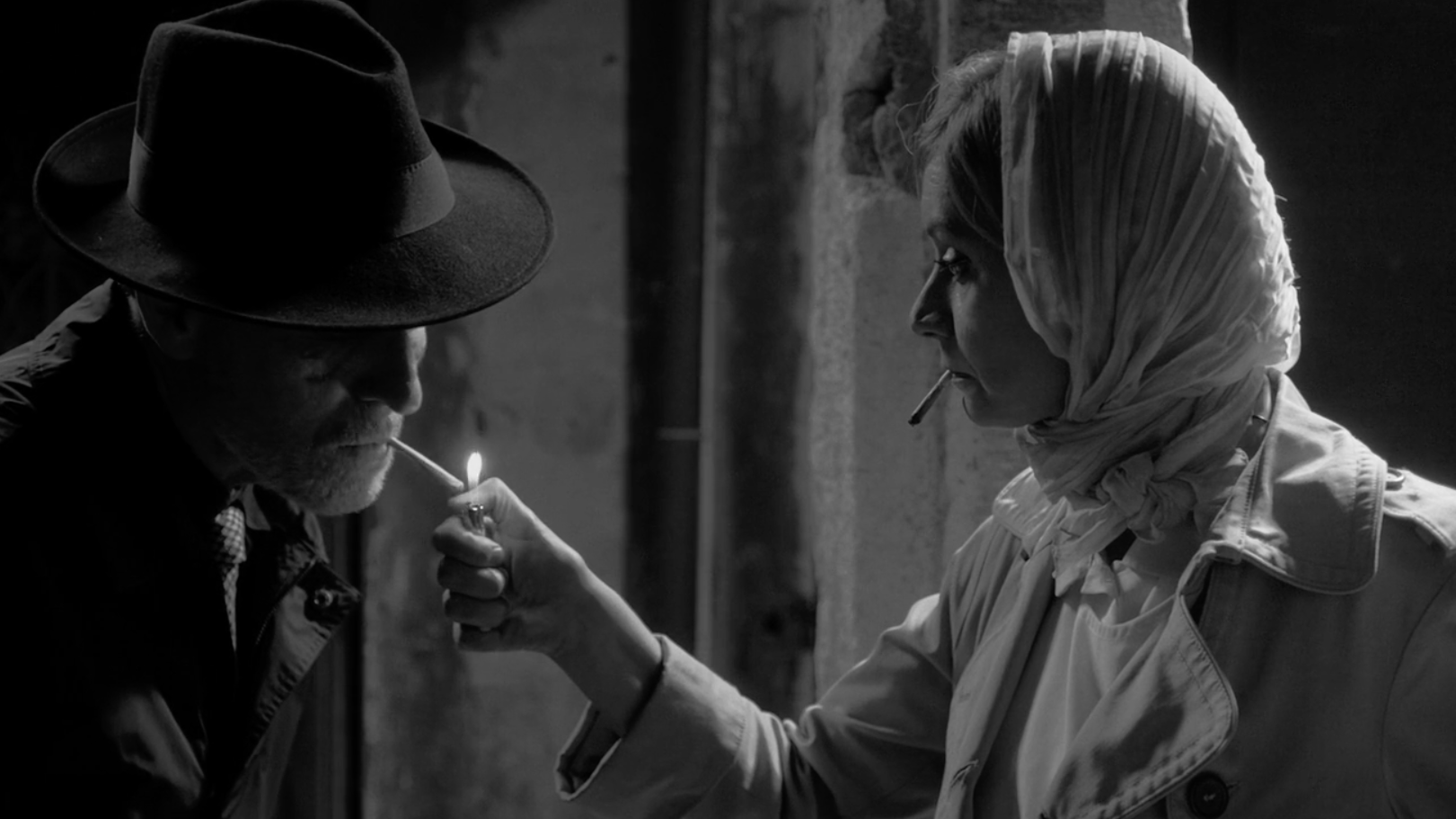
Thriller, by Serge Turgeon, Italy, 2025.
In Venice, a mysterious presence appears once every century or two, haunting the canals and hidden corners of the city. Driven by a sense of destiny, a woman decides to search for it. Following its elusive traces, she is drawn deeper and deeper into the city’s arcane secrets. Reality and myth begin to blur, and Venice itself transforms into a labyrinth of dangers.
LANGUAGE: Italian
SUBTITLES: English
Stone and Power: The Ancient City as Cosmological Argument
You know the feeling without having named it. You are walking through a city that is not yours, or perhaps it is yours and you have simply never paid attention this way before, and you notice that the streets are not offering you options so much as issuing instructions. You turn left because the wall says so. You arrive at the square because the avenue has been narrowing almost imperceptibly for three hundred meters, compressing you toward that point like a sentence compressing toward its period. The architecture is not backdrop. It is grammar. And the grammar was written by someone who is no longer present but whose authority is still, at this precise moment, being enforced on your body.
This is not a modern discovery. It is the original fact of the city itself.
When the inhabitants of Uruk raised their ziggurat sometime around 3200 BCE, they were not solving a problem of civic organization. They were making a claim about the structure of reality. The stepped pyramid did not merely dominate the skyline; it enacted a cosmology, placing the divine at the apex and the human at the base in a spatial hierarchy that required no written argument because you lived inside it daily. The city was not built to house people. It was built to demonstrate a proposition: that the vertical order of heaven had a corresponding order on earth, and that the priesthood standing at the summit was the living proof. Lewis Mumford understood this with a clarity that most urban theorists have since retreated from. In his monumental 1961 work The City in History, he argued that the ancient city was above all a ceremonial container, that its walls and temples and processional routes were instruments of psychic transformation rather than convenience, designed to overwhelm the individual into a recognition of their subordinate place within a cosmic order. The city was, in his word, a theater — but a theater in which the audience could not leave and the play had only one moral.
Aristotle arrives at the same territory from a different angle. In the Politics, he makes the claim that seems at first generous and almost tender: the city, the polis, is the condition of possibility for the good life. Man is a political animal, he writes, meaning not that humans enjoy governance but that outside the structured community of the city, the human being cannot become what it essentially is. But look at what this argument quietly contains. If the city is the precondition of human flourishing, then the city’s designers are the precondition of human flourishing, and whoever controls the form of the city controls the terms on which a good life is even conceivable. The philosophical generosity conceals a profound act of enclosure.
Babylon understood this without needing Aristotle to name it. The great Processional Way, the Ishtar Gate built under Nebuchadnezzar II in the sixth century BCE, was a machine for manufacturing awe, a corridor of glazed blue brick and lion reliefs that made the king’s power feel indistinguishable from the divine order of the universe. You did not walk that street as a citizen exercising your rational faculties. You walked it as a body being instructed in its own smallness.
Rome then scaled this principle to an empire. The forum, the triumphal arch, the road system radiating outward from the Milliarium Aureum, the golden milestone at the center of everything: all of it said the same thing in different registers. Power does not announce itself. It organizes space, and space organizes you, and by the time you have noticed what has happened, you have already agreed to it with your feet, your daily routes, the entirely voluntary way you have arranged your life around streets that were never yours to design.

The Grid and the Lie of Neutrality
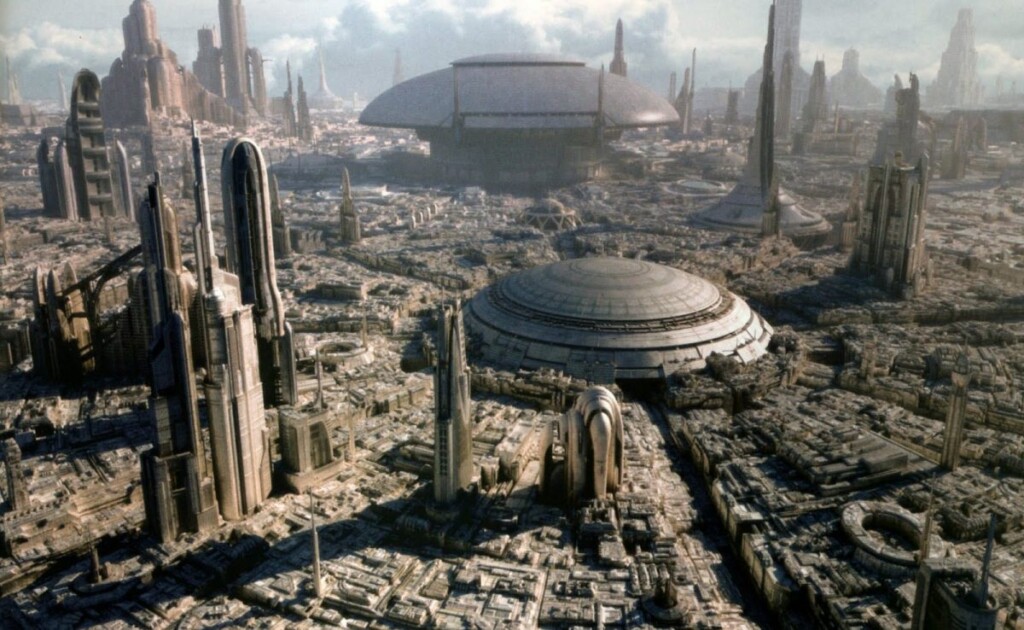
You have walked this street before. You are certain of it. The block ahead looks identical to the block behind, the same measured intervals between intersections, the same right angles asserting themselves with the confidence of people who have never been wrong. You check the numbers on the buildings to confirm you are moving in the right direction, because your body has lost the ability to know. The grid has taken that from you quietly, without asking.
This is not a minor inconvenience. It is the material experience of a very specific idea about power, one that dressed itself in the language of reason and convinced an entire civilization that geometry is innocent.
When New York’s commissioners sat down in 1811 to lay their plan across the island of Manhattan, they described their work as a practical decision, a matter of convenience for commerce and habitation. Twelve avenues running north to south, one hundred and fifty-five streets cutting east to west, the whole island parcelled into identical rectangles as if the land had no memory, no topography worth preserving, no prior life. The few diagonal roads that survived, Broadway chief among them, did so because they had been there too long to erase entirely. Everything else was overwritten. The plan explicitly acknowledged that irregular ground might have offered more picturesque variety, but concluded that straight lines were better suited to the buying and selling of real estate. The admission is almost touching in its honesty: rationality here was always the rationality of capital.
Foucault understood this mechanism with a precision that still feels unsettling. In 1975 he traced how modern institutions — the prison, the hospital, the school — organized space not merely to contain bodies but to produce them, to shape conduct through the geometry of visibility and arrangement. The grid city operates by the same logic. When every street is legible, every block equivalent, every movement measurable, the urban fabric becomes a surface of control so total it no longer needs to announce itself. Discipline disappears into the architecture. The person who feels vaguely watched on a perfectly ordered avenue is not paranoid. They are perceptive.
Haussmann understood this intuitively, though he would not have used the word. Between 1853 and 1870 he carved his great boulevards through the medieval entrails of Paris, demolishing the dense, winding neighborhoods where the barricades of 1848 had been built precisely because narrow streets were impossible to navigate with cavalry. The new Paris was beautiful, luminous, impossible to defend. The straight line as military doctrine. The vista as preemptive suppression. Over three hundred thousand working-class residents were displaced to make room for the spectacle, pushed to the periphery so that the center could gleam with the particular brightness of a city that has forgotten its poor.
Walter Benjamin spent years trying to name what that brightness concealed. In his unfinished excavation of nineteenth-century Paris he kept returning to the phantasmagoria, the way the modern city produces a dazzling surface of commodities and images that passes itself off as reality, as the natural condition of things, while the historical violence beneath it grows invisible through sheer accumulation of spectacle. The grid is perhaps the most successful phantasmagoria of all: it presents itself as neutral infrastructure, as mere convenience, and in doing so makes the power relations embedded in its geometry literally unspeakable. You cannot protest a right angle. You cannot petition against a numbered street. The form has absorbed the politics so completely that the politics appear to have been absent from the beginning.
And yet something in the body knows. The faint suffocation of identical corners, the mild vertigo of a city that offers no landmarks because every point is as important as every other, which is to say every point is equally without importance — these sensations are not aesthetic preferences. They are a kind of knowledge the intellect has not yet caught up with.
What the Stranger Reveals
You are standing on a platform in the middle of the afternoon rush and something shifts. Not the crowd — the crowd stays exactly as it is, a continuous and indifferent river of shoulders and eyes that never meet yours. What shifts is the sudden awareness that not one person on this platform knows your name. Not your history, not the argument you had this morning, not the shame you carry from three years ago, not who you were before you became who you are now. For one vertiginous second, you could be anyone. The sensation is not quite terror and not quite liberation. It is both, simultaneously, and the fact that you cannot separate them is the most honest thing the city has ever told you about itself.
Georg Simmel understood this before urban sociology had even stabilized as a discipline. In 1903, delivering what would become one of the most cited essays in the history of social thought, he argued that the metropolis does not simply gather people — it produces a specific form of mental life, organized around the blasé attitude as a defense mechanism. The urban inhabitant, bombarded by a volume and velocity of sensory stimulation that no village or small town could generate, learns to reduce everything to a kind of psychic dimmer switch. You do not respond to faces because you cannot afford to respond to faces. There are too many. The blasé is not coldness — it is survival. But survival extracts its price, and the price is a peculiar isolation that lives inside density, a loneliness that is paradoxically more acute when surrounded by thousands than when genuinely alone.
Simmel’s insight was structural, not moral. He was not lamenting the city. He was diagnosing the specific trade it offers: in exchange for the anonymity that makes individual freedom possible, you surrender the organic embeddedness that made you legible to others and to yourself. The city does not recognize you, and that is exactly why you can reinvent yourself in it. Every great urban migration in history has been, underneath its economic surface, a flight toward anonymity — toward the intoxicating blankness of being unknown. Ellis Island processed over twelve million immigrants between 1892 and 1954, and what almost every memoir and testimony from that passage describes, under different names, is that same vertigo on the platform: no one here knows who I was.
Richard Sennett pushed this further in 1977, arguing that the decline of public life in modern cities is not simply a social failure but a philosophical one. When the city stops being a theater of strangers — a space where you perform and are performed at, where the public role is understood as distinct from the private self — it collapses inward toward a suffocating cult of authenticity. The stranger becomes threatening precisely when the city stops being organized around the productive tension between proximity and distance. A city that cannot tolerate the stranger has lost the philosophical nerve that made it a city in the first place.
The data on contemporary urban loneliness does not contradict this — it illustrates it at scale. Studies conducted across Tokyo, London, São Paulo, and New York in the decade between 2010 and 2020 consistently show that reported loneliness is higher in the densest urban districts than in suburban or rural areas. The megacity has produced the most efficient anonymity-generating machine in human history and also, by the same mechanism, a form of invisible suffering that has no adequate name in the existing vocabulary of social pathology.
There is a man walking away from a crowd after years of being surrounded by people in a city that taught him everything except how to be seen. He has learned the blasé perfectly. He is fluent in it. And he cannot remember when exactly fluency became indistinguishable from disappearance.
The City as Memory Machine
You return to a city you left fifteen years ago and something immediately goes wrong. Not wrong in a way you can name. The street is there, the corner is there, but you keep turning a few meters too early, keep expecting a building that no longer exists, keep feeling the pull of a doorway that has been sealed for a decade. Your body walks toward a ghost. Your feet carry knowledge your mind has already updated, and the two systems refuse to reconcile. This is not nostalgia. Nostalgia is soft and willing. This is something harder, something almost neurological, a mismatch between what the world now contains and what your nervous system was trained on.
Maurice Halbwachs, writing in the final years before his death in Buchenwald in 1945 and published posthumously in 1950, understood that memory is never individual in the way we like to believe. In “The Collective Memory,” he argued that we remember through our social frameworks, through the groups we belong to, and crucially, through the spatial environments that anchor those groups in time. The city is not a backdrop to memory. It is a structure of memory. When the structure changes, the memory does not simply become historical. It becomes homeless.
Aldo Rossi pushed this further in “The Architecture of the City,” published in 1966, insisting that urban form carries what he called “permanences” — not just buildings that survive, but patterns of meaning that outlast the physical objects that once embodied them. A street grid persists after the buildings along it are demolished. A square remains a gathering point even when nothing marks it as one. The city accumulates time in layers that do not simply replace each other. They coexist, they press against each other, they create a kind of urban palimpsest in which older forms haunt newer ones without permission.
This is not metaphor. The research on displaced communities from urban renewal projects in the United States during the 1950s and 1960s — when entire neighborhoods were bulldozed under the banner of slum clearance — documented grief responses in displaced residents that clinicians at the time struggled to classify. Marc Fried, studying the West End of Boston after its demolition began in 1958, found in his 1963 paper “Grieving for a Lost Home” that the majority of displaced residents experienced symptoms indistinguishable from mourning a death. Not inconvenience. Not nostalgia. Grief. The kind that arrives in waves, that disrupts sleep, that makes a person feel that something essential has been taken from inside them rather than from around them.
A man walks through a neighborhood he grew up in and it has been replaced entirely — new towers, new pavement, new silence where there used to be a particular quality of noise. He knows intellectually that the old buildings are gone. But he keeps gesturing toward places that no longer exist when he tries to explain his childhood to someone walking beside him. His hands point at air. He cannot stop them. The body insists on its own cartography even when the map has been redrawn by someone else’s decision about what should remain.
This is what it means to say that cities store memory the way bodies do. Not in files. Not in records. In posture, in reflex, in the specific angle at which you approach a corner because something was once there that shaped how you moved. Archive memory can be corrected. Bodily memory leaves a scar. And a city that has been aggressively redeveloped doesn’t erase the past. It creates a population of people whose grief is geographically precise but spatially unverifiable, mourning with coordinates but no corresponding object, pointing at the exact location of what is no longer there.
A vision curated by a filmmaker, not an algorithm
In this video I explain our vision
Capital’s City: When the Street Became a Product
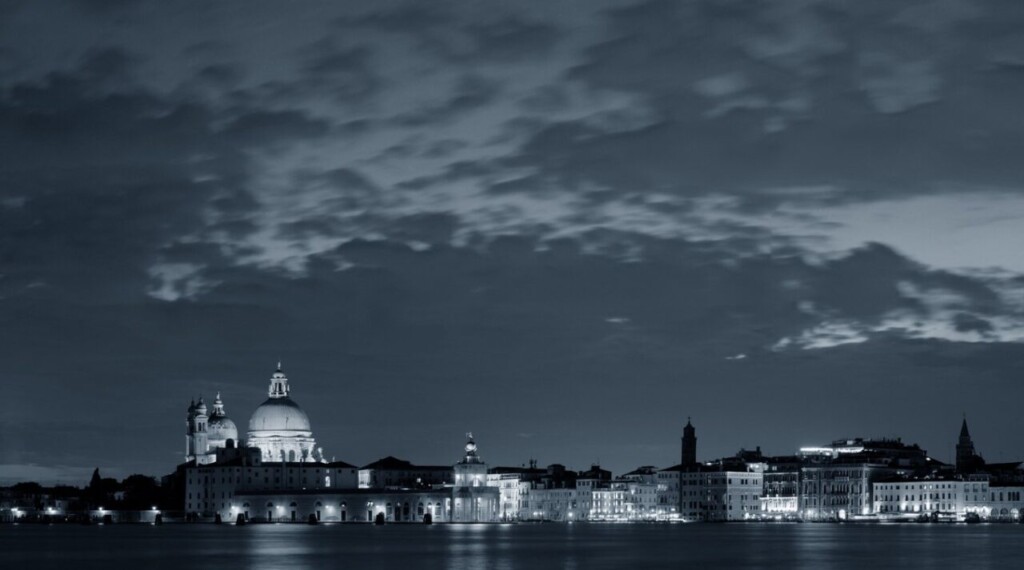
You return to a street you knew and something is wrong, though you cannot immediately name it. The buildings are still there. The proportions are intact. But the bakery that smelled of grease and sugar at six in the morning is now a concept store selling reclaimed wood furniture. The bar where old men argued about football over cheap wine is a cocktail lounge with exposed brick and a menu printed on kraft paper. Everything has been improved. Everything has been made beautiful. And the beauty is the violence.
This is not destruction. Destruction would be easier to grieve. What has happened instead is a replacement so total it has left the shell intact while removing every organ. The street looks like itself. It no longer is itself.
David Harvey, writing in 2008, described the right to the city not as a right to access what already exists, but as a right to remake the city according to the needs of those who inhabit it. He was precise about this: the city is perpetually reshaped by capital, and the question of who controls that reshaping is, at bottom, a question of political power disguised as urban planning. What he saw accelerating through the 1980s was the systematic transfer of that power from residents to investors, from use to exchange, from the logic of living to the logic of return.
Guy Debord had already diagnosed the mechanism forty years earlier with surgical coldness. In 1967 he described a society in which lived experience had been replaced by its representation, in which the image of a thing had become more real, more valuable, more commercially legible than the thing itself. The cocktail lounge with exposed brick is not selling drinks. It is selling the image of a neighborhood that once existed, the aesthetic residue of a working-class culture that has been displaced to make room for the performance of that same culture, sanitized and priced.
San Francisco lost roughly fifty thousand low-income residents between 1990 and 2011, a displacement so concentrated in specific neighborhoods that entire communities vanished not through demolition but through incremental rent increases and lease non-renewals, the quiet administrative violence that leaves no rubble. London’s gentrification of Brixton, Peckham, and Hackney followed the same grammar: first the artists arrive, drawn by cheap rent, and their presence signals safety to capital; then the cafes follow the artists; then the rents follow the cafes; then the artists leave, priced out of the very neighborhoods their presence transformed into desirable real estate. In Barcelona, between 2013 and 2019, average rents in the Poblenou district rose by over forty percent as former industrial spaces became creative hubs and then luxury apartments, while the families who had lived there for three generations quietly scattered to the metropolitan periphery.
What makes this philosophically distinct from ordinary real estate speculation is precisely what Marx identified when he separated use-value from exchange-value. A street has use-value when it serves the people who live on it, when it organizes daily life, holds memory, sustains relationship. It acquires exchange-value when it becomes attractive to those who do not live on it, who see in it not a place to inhabit but a return on investment. The catastrophe is not that exchange-value exists. The catastrophe is the moment it becomes the only value that counts, the only language the city speaks to itself.
There is a man watching his childhood street from a bus window. He recognizes the geometry and nothing else. The faces are different. The sounds are different. The density of language and noise that once meant home has been replaced by something curated, something performing its own aliveness for an audience that has not yet arrived. He is not being nostalgic. He is witnessing a philosophical event: the moment a commons became a product, and the product was marketed as an improvement.
The Unfinished City: Periphery as Philosophy
You take the last bus that runs past midnight, the one that empties gradually as it moves away from the center, shedding passengers at each stop like a tree losing leaves in autumn, until by the time it reaches your stop there is no one left but you. You step down onto a street where the pavement ends abruptly, replaced by packed earth and gravel, and you turn to look back at the skyline glittering several kilometers away. And something shifts. For the first time, perhaps, you see it not as a city you inhabit but as a spectacle someone designed for a particular kind of viewer, and you are not that viewer. You are standing in the wings, watching the stage from behind, where the machinery is visible and the illusion dissolves.
The periphery is not the city’s failure. It is the city’s confession.
Mike Davis calculated in 2006 that approximately one billion human beings live in informal settlements, a number that represented roughly one in six people alive on the planet at that time. He traced how the structural adjustment programs of the 1970s and 1980s, imposed by the International Monetary Fund on the Global South, systematically dismantled public housing and urban investment, manufacturing what he called a “planet of slums” not through neglect but through policy, through deliberate disinvestment that served specific economic logics. The favela, the banlieue, the township: these are not spontaneous eruptions of poverty. They are the built consequence of decisions made in rooms the residents of those places would never enter.
AbdouMaliq Simone spent decades studying how people inhabit African cities in conditions that urban planning theory has no adequate language for, and he arrived at a concept he called “people as infrastructure.” In cities like Douala or Johannesburg, he observed, the social networks of the periphery function as the actual connective tissue of urban life, substituting for roads that were never built, utilities that never arrived, institutions that never materialized. The informal settlement is not a city waiting to become real. It is already real, already dense with what Simone calls “incessant mobility and improvisation,” a form of urban intelligence that the center refuses to recognize precisely because recognizing it would require admitting that the center’s own coherence is partially borrowed from the periphery it claims to have left behind.
You watch the skyline and understand, perhaps without the vocabulary for it yet, what Roberto Esposito spent years elaborating through his philosophy of the communitas. Esposito argued that community is not built on what people share but on what they owe each other, on an originary debt that precedes any social contract. The Latin munus, he showed, carries within it the double meaning of gift and obligation, something given that immediately creates a burden. The periphery carries that burden visibly. The center has offloaded its munus, externalized the debt, pushed the obligation to where the pavement ends. What glitters from a distance is partly made of what was taken from the place where you are standing.
The unfinished building on the corner of your street, the one with rebar still protruding from the roof, waiting for a second floor that never came, is not a ruin. It is a document. It records a moment when money stopped, when a decision was made elsewhere, when the future was simply withdrawn. Everywhere in the periphery the city expresses its actual priorities in concrete and rebar, in the distance between bus stops, in the hours it takes to reach work. The center performs completion. The periphery tells the truth about what urban life costs and who is made to pay it, with their time, their bodies, their daily arithmetic of distance and exhaustion. And standing there with the last bus gone and the skyline glittering in the distance, you are not outside the city. You are reading it from the only angle where it remains legible.
To Walk Without Arriving
There is a moment that arrives somewhere around two in the morning, when you have been walking for hours without intention, when the city stops being a backdrop and becomes something else entirely — a pressure, a syntax, a system that reads you back to yourself in languages you did not know you spoke. The streets empty of their daytime rationality. The grid, which felt like a cage in the afternoon, becomes something more ambiguous, more alive, and you find yourself turning not because a sign told you to but because a shadow deepened on one side and a smell of rain-soaked stone drew you the other way. You are not going anywhere. That is precisely the point.
This is what the Situationists understood with a ferocity that their theoretical language sometimes obscured: that to move through the city without destination is not laziness or vagrancy but a form of knowledge. The dérive — that practice of surrendering to the affective pull of urban terrain — was never merely aesthetic provocation. It was an epistemological claim: that the city contains psychic geographies that official cartography has no instruments to measure, and that the body in unscripted motion is the only apparatus sensitive enough to detect them. Guy Debord wrote in 1956 that zones of the city exert a constant psychological attraction, that certain streets accelerate desire while others induce a specific melancholy, and this was not metaphor. It was phenomenological reportage from a body paying attention.
Maurice Merleau-Ponty had already given this body its philosophical coordinates a decade earlier. In the Phenomenology of Perception, published in 1945, he argued that the body is not an object moving through space but the very medium through which space becomes possible at all. We do not perceive the city from inside our skulls and then send the body to navigate it. The body is the perception. The turning of the shoulder before the turn of the street, the slight lean into a slope before the mind registers the incline — these are not mechanical adjustments but the city and the self negotiating their mutual existence in real time. What you feel when you walk without a map at two in the morning is not freedom from the city. It is a deeper entanglement with it.
Rebecca Solnit, in Wanderlust published in 2000, traced the history of walking as a philosophical act with the patience of someone who understood that ideas live in the legs as much as in the head. She recovered the flaneur not as a nostalgic figure of nineteenth-century leisure but as a diagnostic instrument — someone whose aimlessness was a form of attention that the efficient city was designed to make impossible. To walk without arriving is a political act in a landscape organized entirely around destination, productivity, the optimized route. Every pedestrian navigation app is a small act of epistemological enclosure, training you to treat the city as a delivery system rather than a living argument.
And yet the question that surfaces in those nighttime hours, when your feet have been deciding for you and the city has been answering in corners and doorways and the particular quality of light on wet pavement, is not simply whether walking liberates you from the city’s logic. It is something more unsettling. You turn a corner because something pulled you there, but who pulled? The tension you have carried all evening between the self as author and the city as text, between the flaneur as sovereign observer and the dérive as submission to forces larger than intention, does not resolve — it intensifies with every step. The city shapes you by giving you surfaces to press against, angles to navigate, densities to feel as weight or release, and what walks through the night is not purely you, but also every street that has ever decided where you went before you knew you were choosing, every city that has already made the person it needed in order to be walked at all.
🏙️ Cities, Power, and the Architecture of Thought
The philosophy of the city is never simply about bricks and streets — it is about how power is organized, how memory is inscribed in space, and how human beings relate to the collective structures they inhabit. These articles trace the intellectual currents that shaped urban thought, from political philosophy to cultural theory.
Thomas Hobbes: Life and Political Thought
Thomas Hobbes conceived the city and the state as artificial constructs born from the human need to escape the chaos of nature. His Leviathan remains one of the most radical attempts to theorize the political foundation of collective urban life, asking what authority must look like for civilization to hold together.
GO TO THE SELECTION: Thomas Hobbes: Life and Political Thought
Italian Medieval Communes: History and Culture
The Italian medieval commune was one of the first experiments in urban self-governance in Western history, forging new relationships between citizens, institutions, and shared public space. Understanding these communes is essential to grasp how the city became not merely a place to live, but a political and cultural form in itself.
GO TO THE SELECTION: Italian Medieval Communes: History and Culture
Pierre Nora and the Sites of Memory
Pierre Nora‘s concept of ‘sites of memory’ offers a powerful lens through which to read the city as a landscape of collective remembrance, where monuments, neighborhoods, and ruins carry the weight of historical identity. His work illuminates how urban space is never neutral — it is always haunted by the memories a society chooses to preserve or forget.
GO TO THE SELECTION: Pierre Nora and the Sites of Memory
Calvino’s Invisible Cities: Meaning and Analysis
Calvino’s Invisible Cities, written as a dialogue between Marco Polo and Kublai Khan, is one of literature’s most profound meditations on what a city truly is — a mirror of desire, memory, fear, and utopia. Each imaginary city in the book functions as a philosophical thought experiment about the relationship between human consciousness and the built environment.
GO TO THE SELECTION: Calvino’s Invisible Cities: Meaning and Analysis
Explore the Cinema of Ideas on Indiecinema
If the philosophy of the city stirs something in you — a curiosity about how we live, how power shapes our spaces, and how culture is born from collective life — then independent cinema has much more to offer you. Discover films that dare to ask the same questions on Indiecinema, your streaming home for bold, thoughtful, and visionary independent filmmaking.
👉 EXPLORE THE CATALOG: Watch Indie Films in Streaming
A vision curated by a filmmaker, not an algorithm
In this video I explain our vision

