
The City That Swallows You Whole
You step off the train at Howrah and the city doesn’t greet you — it ingests you. The crowd on the bridge moves like a single organism with no discernible head, a body made of ten thousand bodies pressing forward with the particular urgency of people who have never had the luxury of slowness. The smell arrives before anything visual resolves: diesel exhaust braided with marigold garlands, the iron-blood scent of the Hooghly at low tide, something frying in mustard oil from a stall you cannot locate. You are not a visitor passing through a place. You are material the city is already metabolizing.

This is not metaphor. Every serious writer who has tried to render Calcutta on the page has eventually confessed to the same disorientation — the discovery that the city refuses the passive role of setting. It insists on agency. It plots. Rabindranath Tagore, whose family mansion at Jorasanko was woven into the northern arteries of the city like a nerve cluster, understood this not as romanticism but as ontological fact. In his prose and poetry alike, Calcutta is not the place where things happen — it is the condition under which consciousness itself becomes possible and then impossible. The city provides the pressure that cracks a self open. What spills out is what the literature captures.
What makes this strange is that Calcutta was, by any colonial accounting, a city invented for extraction. The British East India Company established its trading post at the bend of the Hooghly in 1690, and by 1773 Calcutta had been declared the capital of British India — a designation it held for nearly a century and a half, until 1911, when the colonial administration relocated to Delhi, an act many Bengali intellectuals experienced as a kind of deliberate amputation. A city built to funnel indigo and opium and jute outward became, by some perverse inversion of purpose, a place that pulled everything inward. It accumulated people, ideas, catastrophes, and intelligences the way a drain accumulates everything that flows near it.
Bankim Chandra Chattopadhyay wrote the first novel in Bengali — Durgeshnandini, 1865 — in a Calcutta already convulsing with the contradictions of colonial modernity, a city where English-educated clerks filed papers for the same administration that had engineered the Bengal famine of 1770, killing an estimated ten million people, roughly one third of the province’s population. The literature that emerged from this specific violence was never simply literature. It was a form of metabolic resistance, a way of processing what the body politic could not otherwise survive. And the city was both the wound and the organ doing the processing.
Manik Bandyopadhyay, writing in the 1930s and 1940s, found in Calcutta’s teeming banks and waterways a biological metaphor that was really a sociological argument: human beings arranged by poverty into creatures governed almost entirely by appetite and fear, stripped of the interiority that bourgeois fiction takes for granted. His 1936 novel Padma Nadir Majhi — The Boatman of the Padma — uses the river as an extension of the city’s logic, a system that demands absolute submission and offers survival as the only available reward. The dream is not abolished in this literature. It is rerouted. It flows beneath the surface at a pressure that occasionally and violently finds an exit.
There is a particular quality to the light in Calcutta in the late afternoon, when the sun drops behind the buildings on the western bank and the whole city enters a kind of amber suspension before the dark. Writers have reached for it obsessively, as though it contains a message. What they are really reaching for is the sensation the city produces in anyone who has stayed long enough — the feeling that you came here with a self and the city has quietly begun the work of composting it into something it finds more useful.
The Colonial Wound That Never Closed
You walk through a city that was never built for you. The streets follow a logic that predates your birth by centuries, a grid laid down not by inhabitants but by accountants — men who measured land in yields and populations in labor-hours. The buildings that still stand along the old trading routes were not raised to shelter anyone from rain or grief. They were raised to make extraction legible, to give profit an address.
Job Charnock arrived at the banks of the Hooghly in 1690 and planted the East India Company’s ambitions on three villages — Sutanuti, Gobindapur, Kalikata — that would be consolidated into a single administrative fiction called Calcutta. The city did not grow from settlement. It grew from calculation. What the Company needed was a node, a point where goods could be funneled from the interior of Bengal toward the ocean and then toward London. Every street, every warehouse, every judicial building that followed was an instrument of that logic. And yet something else happened inside that instrument, something the accountants never planned.
Ranajit Guha spent decades arguing, most fully in his 1983 work Elementary Aspects of Peasant Insurgency in Colonial India, that colonial subjects were not passive recipients of history but active agents whose consciousness was systematically erased from the official record. The archive, he showed, was itself a weapon — organized to make certain lives illegible, certain resistances invisible. What Guha’s subaltern historiography revealed was not simply that colonialism was violent, which everyone already knew, but that the very categories of knowledge used to describe colonial society were produced inside the same machinery of domination. Calcutta was the city where that machinery ran hottest, and it was also the city where the people living inside it began to reverse-engineer its tools.
The Bengal Renaissance did not emerge in spite of colonial modernity. It emerged because a particular class of Bengali intellectuals were educated inside institutions designed to produce compliant administrators and instead produced something the British administrators found genuinely alarming: men who read Locke and Voltaire and then asked why those arguments stopped at the borders of empire. Rammohun Roy, writing in the early decades of the nineteenth century, used the colonial administration’s own Enlightenment vocabulary to dismantle the justifications for that administration. The contradiction was not accidental. It was structural. You cannot build a city on the premise that certain minds are capable of governing and then restrict which minds are permitted to exercise that capacity without eventually producing the exact argument you were trying to prevent.
This is why Calcutta’s literary tradition carries a particular kind of vertigo that other cities do not. Bombay’s literature is animated by arrival, by the shock of ambition meeting a place that does not yet know your name. Delhi’s literature circles power, the way proximity to the administrative center warps every sentence with awareness of who is listening. Calcutta’s literature is animated by something older and stranger: the knowledge that the city’s foundations are a lie, and that the most sophisticated intellectual tradition on the subcontinent grew directly out of that lie’s contradictions. Rabindranath Tagore, who would win the Nobel Prize in Literature in 1913, wrote his earliest poems inside a city that was simultaneously a wound and a laboratory.
The schizophrenia is not a metaphor. It is the literal condition of a place that was designed to extract and accidentally became the site of the most sustained critique of the very civilization doing the extracting. Every writer who has ever tried to write Calcutta honestly has had to find a way to hold both of those things at once — the ledger and the lyric, the warehouse and the rage — without letting one cancel the other out, because the city itself refuses that simplification.

Tagore’s Calcutta and the Illusion of Refinement
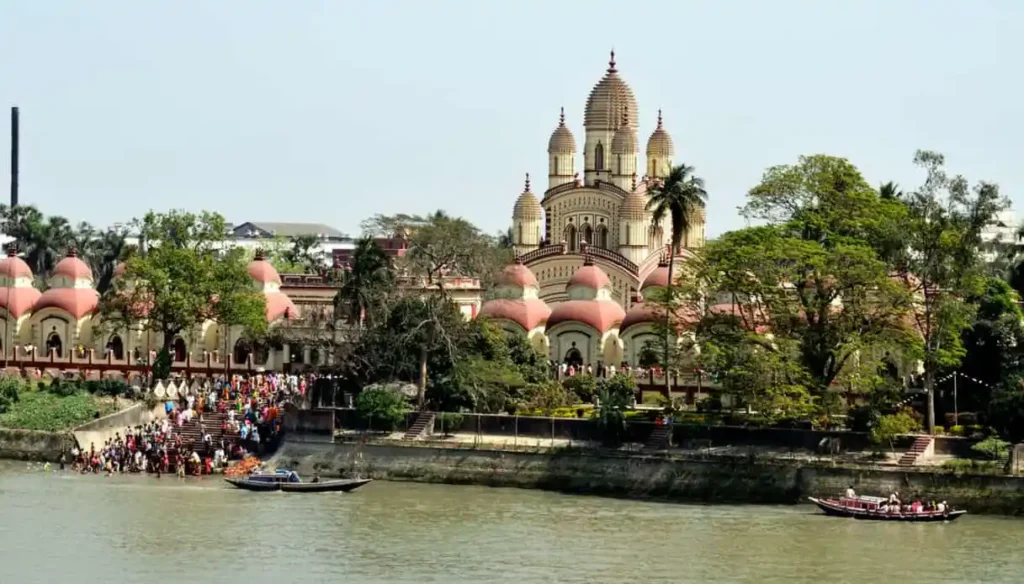
You have read the poems. Most people who cite Rabindranath Tagore have never read the poems — they have read the idea of the poems, which is a different and more durable object. After 1913, when the Nobel committee handed a Bengali writer the prize that European modernism had assumed was its own private territory, something calcified in the way Calcutta’s educated middle class understood itself. The bhadralok, that carefully maintained class of refined sensibility and Sanskrit-tinged propriety, acquired a international certificate for its inner life. A city of malarial lanes and colonial extraction became, in the cultural imagination, the birthplace of a universal humanism. The poverty did not disappear. It simply became decorative.
Tagore himself was not naive about this. Ghare Baire, published in 1916, places its drama inside a zamindar’s household at the exact moment when the Swadeshi movement is convulsing Bengal with its boycotts and its fierce, intoxicating nationalism. What the novel actually performs, beneath its love triangle and its arguments about self-determination, is a dissection of the Bengali intellectual’s relationship to insulation. Nikhil, the liberal landlord, debates principle while his tenants absorb the economic violence of the boycott. The house — the ghar — is not merely a domestic space. It is a epistemological position, a way of holding suffering at the correct aesthetic distance so that it can be contemplated without being touched. Tagore built the critique into the architecture of the plot, and the middle class responded by making him a national saint, which is the most efficient method of not listening to someone.
The Bengal famine of 1943 killed somewhere between two and three million people, and the scholarly consensus that has hardened around Madhusree Mukerjee’s Churchill’s Secret War makes clear that the deaths were not the consequence of drought or crop failure alone, but of deliberate policy — of grain diverted, of import restrictions maintained, of a colonial administration that calculated Bengali lives as an acceptable variable. Calcutta was where bodies appeared on the streets in the hundreds. The city’s literary intelligentsia, many of them occupying the same genteel North Calcutta neighborhoods that Tagore’s world had consecrated, were physically present during the famine. Some wrote about it. But the cultural apparatus built around the Nobel prize, around the image of Calcutta as a city of thought and sensitivity and song, proved remarkably durable even as corpses were removed from pavements a few streets away.
There is a particular mechanism by which aesthetic prestige immunizes a class from moral reckoning. Pierre Bourdieu mapped its logic in Distinction in 1979, showing how cultural capital functions not as a supplement to economic power but as its most effective disguise — the capacity to appreciate beauty becomes indistinguishable, in bourgeois self-understanding, from the capacity to feel deeply, which then becomes indistinguishable from moral seriousness itself. The bhadralok did not simply enjoy Tagore’s poetry. They used it as evidence. Evidence that their class possessed a quality of inner life that placed them in a different category from the question of what they owned and who worked it.
What makes this particularly difficult to see from inside is that Tagore’s work genuinely contains the critique of this very dynamic. The intellectual inheritance and the immunizing function operate on the same material, reading selectively in opposite directions. A man can quote Gitanjali in a drawing room in Ballygunge while his household employs a servant whose children have never eaten a full meal in consecutive weeks, and experience no contradiction, because the poetry has been absorbed into the atmosphere of his refinement rather than into any demand on his behavior. The Nobel prize did not create this capacity for self-deception — it simply provided it with an address that the whole world had officially recognized as distinguished.
The Famine as Literary Rupture
You are walking through a market in north Calcutta sometime in the autumn of 1943, and the woman selling rice has nothing to sell. The baskets are empty not because the harvest failed — it did not fail, not entirely — but because someone, somewhere, decided that military logistics and imperial price controls mattered more than the bodies of three million people who would be dead before the year turned. The Bengal Famine was not a natural disaster. It was an administrative one, a finding that Amartya Sen would later formalize in Poverty and Famines in 1981, demonstrating that food availability in Bengal that year was not dramatically lower than in non-famine years — what collapsed was entitlement, the structured human right to access what exists. When that distinction entered the historical record, it retroactively indicted every romantic sentence ever written about Calcutta’s luminous evenings and melancholic rivers.
What the famine did to Bengali literature was not gradual. It was surgical. The entire aesthetic tradition that had treated poverty as picturesque, as the atmospheric backdrop for spiritual longing or nationalist sentiment, became suddenly obscene. Manik Bandyopadhyay, who had already been moving toward a bleak materialist realism in Padma Nadir Majhi — published in 1936, tracing the compressed world of fishermen on the Padma River with an almost biological coldness — found his aesthetic instincts violently confirmed by history. His prose had always refused consolation, always insisted on the body as the primary site of social reality, on hunger and sexuality and exhaustion as forces more governing than any ideology. The famine did not change his method; it annihilated the credibility of every competing method.
Bibhutibhushan Bandyopadhyay’s naturalism operated differently but arrived at the same rupture from another direction. Where Manik stripped language of ornament through ideological conviction, Bibhutibhushan did it through an almost terrifying attention to the physical world — soil textures, the specific weight of afternoon light, the sensation of walking on an empty stomach for eight hours. His characters did not experience poverty as metaphor. They experienced it as the precise and unrepeatable sensation of a body consuming itself. After 1943, this was no longer a literary technique. It was the only honest register available.
The rupture matters because it reoriented what Bengali and later Indian literature in Calcutta understood itself to be doing. Before the famine, even socially conscious writing tended to preserve a certain narrative distance — the author looking at suffering with sympathy, which is to say with the implicit safety of the observer’s position intact. Sympathy requires separation. What post-famine writing destroyed was that separation, not through sentimentality but through its opposite: a prose so unsparing in its documentation of institutional indifference that the reader could no longer occupy a comfortable outside. The city itself became the evidence. Calcutta’s streets, its relief lines, its swollen bodies on pavements that witnesses described in diaries and administrative records with the flat tone of people who had run out of the language for horror — all of this entered literature as raw material that refused to be aestheticized.
Survival, in this new literary grammar, ceased to be the precondition for story and became the story itself. This was philosophically radical in ways that critics have underweighted. Survival as a philosophical condition means that the ordinary categories through which literature organizes human experience — aspiration, identity, love, moral choice — are revealed as luxuries available only to those whose next meal is not in question. The famine forced Bengali writers to ask what subjectivity actually looks like when stripped to its biological minimum, and the answer they produced was not nihilistic but devastatingly precise: consciousness does not disappear under starvation, it sharpens into a single unbearable point, and that point sees institutions with a clarity that comfort makes impossible.
Partition and the Geography of Grief
You arrive in a city that is already full, and you bring with you nothing but the outline of a house that no longer exists. The streets of Calcutta in the months after August 1947 absorbed something that no census could accurately count — not merely bodies, though the bodies were innumerable, but entire interior geographies, the precise weight of a courtyard in Dhaka, the particular angle of light through a window in Sylhet, the smell of a kitchen in Jessore that would never again be anyone’s kitchen. By 1951, the refugee population pressing into Calcutta’s southern and northern margins had swollen past one million, and the camps at Salt Lake and Jadavpur were not temporary — they calcified into neighborhoods, into identities, into a permanent condition that Bengali literature would spend decades trying to metabolize.
What Ritwik Ghatak understood, with a ferocity that his contemporaries found almost unbearable, is that Partition did not divide a country — it bisected a self. His narrative universe is populated almost entirely by women who carry the wound without knowing they are carrying it, who search for something they cannot name because the name itself was erased at the border. The displaced woman in his work is not a symbol for the nation, which would be too clean, too allegorical; she is a specific human being whose grief has been made socially illegible, whose mourning has no sanctioned form because the loss itself was never officially acknowledged as a loss. His families do not shatter dramatically. They dissolve, incrementally, under a pressure that looks from the outside like ordinary poverty but is in fact something closer to a sustained psychic hemorrhage with no tourniquet available.
The literature that emerged from this period does something that political history categorically refuses to do: it refuses the border as a final fact. Saadat Hasan Manto, writing from the other side of that same catastrophe in Lahore, produced in “Toba Tek Singh” a story in which a lunatic asylum becomes the only honest map of Partition, because the asylum’s inmates cannot understand why the land beneath their feet has changed nationality while they were sleeping. The story was published in 1955, and it remains arguably the most precise political document of 1947 precisely because it treats political geography as a symptom of collective madness rather than a neutral administrative event.
Amitav Ghosh, writing nearly three decades after Manto, advances this argument into explicit theory in The Shadow Lines, published in 1988. Ghosh’s narrator spends the novel discovering that the line between Calcutta and Dhaka, between India and what became Bangladesh, is not a geographical fact but a psychic construction — one maintained through collective agreement, enforced through violence, and ultimately legible only in the distortions it produces in human memory and desire. The border exists, Ghosh argues, because people agree to behave as though it exists; its power is entirely dependent on that performance of belief. What literature can do, and what cartography cannot, is render the border’s interior architecture — the way it reorganizes longing, the way it makes certain memories contraband.
Calcutta became, after 1947, a city permanently haunted by its other self across a border that its own population had not requested and could not fully absorb. The refugee neighborhoods that grew up on its margins developed a culture that was neither fully the old East Bengal nor fully Calcuttan — a hybrid formation sustained by a grief that was also, paradoxically, a form of creative pressure. The novelist Sunil Gangopadhyay and the poet Shakti Chattopadhyay both emerged from this milieu, and both carried within their work a restlessness, an inability to settle into any single register of belonging, that was not a personal temperament but a historical inheritance passed down like a property with no deed.
What the refugee carries into the city is not the past but the negative space where the past was — and negative space, as any painter knows, has a shape.
A vision curated by a filmmaker, not an algorithm
In this video I explain our vision
The Naxalite Imagination and the Betrayed Generation
You are sitting in a courtroom in 1964, watching a poet be tried for writing a poem. The charge is obscenity. The poem in question, “Stark Electric Jesus,” written by Malay Roy Choudhury, contains passages that the state of West Bengal has decided constitute a threat — not to public morals exactly, but to something more fragile: the agreement between a city and its intellectuals that literature should remain decorative, that language should dress itself before entering the room. The trial does not feel like a legal proceeding. It feels like a city prosecuting its own nervous system.
The Hungry Generation — Hungryalist, as they called themselves, borrowing the word from a phrase by Geoffrey Chaucer about a hungry generation treading down another — emerged in 1961 as a deliberate affront to the Westernized, drawing-room literary culture of Calcutta’s Bengali intelligentsia. They were not simply rejecting aesthetic convention. They were diagnosing a class condition: the Bengali bhadralok, that peculiar social formation of educated, upper-caste respectability, had built a literary culture that processed the city’s suffering into beautiful objects safe enough to frame. Choudhury’s arrest in 1964, and the subsequent trial that drew signatures of support from Allen Ginsberg and other international figures, revealed the machinery behind that process. The state protects certain silences. It charges the men who break them.
What makes this specific historical rupture so revealing is that it coincided almost exactly with the beginning of a political radicalization that would consume an entire generation. By 1967, the Naxalbari uprising in northern Bengal had given a name and a direction to a fury that had been accumulating in the margins of the Bengali left since Partition. Young men and women — many of them college students from the same bhadralok families who funded the literary salons — walked out of their classrooms and into a movement that believed parliamentary politics was a theater built to exhaust the poor. Sunil Gangopadhyay, one of the most important Bengali novelists of the twentieth century and a figure who straddled the establishment and the rebellious, wrote in Arjun and later in the Kakababu series with an awareness that the city’s romance with revolution was also a romance with self-destruction. His 1974 novel Aatmaprakash captures the particular psychic weather of a Calcutta intellectual who has watched idealism calcify into dogma without ever finding a way to stop believing in the original impulse.
The Naxalite movement between 1967 and 1972 produced not only political martyrs but a literary atmosphere charged with urgency and grief. Poets wrote on walls. They were arrested. Several were killed in police custody or simply disappeared into the logic of state repression that the Emergency years would later normalize across all of India. What literature absorbed from this period was not a set of arguments but a register of feeling — the specific sensation of a generation that had chosen the street over the career and discovered that the street offers no guarantees. The city that had celebrated Rabindranath Tagore with its full institutional weight, that had built temples to its Nobel laureate, had no infrastructure for writers whose work required danger to breathe.
The Nostalgic Trap of the Adda
You have spent three hours in a room where everyone is brilliant and nothing has been decided. The tea has gone cold twice. Someone quoted Gramsci with the ease of a man reaching for salt. Someone else dismantled the previous argument with a precision that bordered on cruelty, then smiled, then ordered more mishti. The conversation moved from Bengal’s partition to the nature of capital to whether Ritwik Ghatak was more important than Eisenstein, and by the time you stepped outside into the Calcutta night, you felt simultaneously enlarged and oddly hollow — as though you had witnessed a magnificent rehearsal for a performance that would never open.
This is the adda, and it is one of the most seductive social inventions in the history of urban life. Dipesh Chakrabarty, writing in Provincializing Europe in 2000, theorized it as a form of non-instrumental time — a deliberate refusal of the logic of productivity, a mode of being together that resists the Protestant-capitalist imperative to make every hour accountable to an outcome. In a world increasingly organized around the measurable, the adda offered something philosophically radical: conversation as its own justification, thought untethered from utility. This was not laziness dressed in intellectual clothing. It was, Chakrabarty argued, a genuinely different relationship to time, one that European modernity had either never possessed or had violently suppressed in the name of efficiency.
But there is a cost buried inside that freedom, and Bengali literature has been circling it for over a century without quite naming it directly. Rabindranath Tagore saw the contours of it — in Ghare Baire, written in 1916, the drawing room debates are exquisitely conducted and ultimately catastrophic, because the men who speak most beautifully about liberation are precisely the ones whose speaking substitutes for acting, whose eloquence becomes the mechanism by which nothing changes except the temperature of the argument. The novel is not anti-intellectual. It is something more uncomfortable: a portrait of intelligence becoming its own alibi.
What adda culture produced in Calcutta’s literary ecosystem was a particular aesthetic of incompleteness elevated to a virtue. The unfinished sentence, the essay that refuses its own conclusion, the novel that dissolves rather than resolves — these became marks of sophistication, signals of a mind too capacious for the vulgarity of answers. Buddhadeva Bose, who edited the literary journal Kavita from 1935 and shaped Bengali modernism for decades, wrote with a restlessness that never quite settled, a quality that reads simultaneously as intellectual honesty and as a trained incapacity for arrival. His prose is genuinely beautiful. It is also, in a specific structural sense, a literature of permanent departure.
The political consequences of this aesthetic were rarely examined from the inside. Calcutta was a city that produced more manifestos per decade than perhaps any other in South Asia, and fewer sustained institutional transformations. The left intellectual culture that dominated Park Street and Coffee House conversations from the 1940s through the 1970s was extraordinarily fertile in analysis and remarkably consistent in its failure to convert that analysis into durable structures. This is not an argument that ideas must immediately become policy — that reduction is its own kind of violence. But there is a specific pathology in a culture where performing the critique becomes indistinguishable from enacting it, where the sharpness of one’s diagnosis earns the same social reward as the difficulty of building something in the wreckage.
Mahasweta Devi understood this from a different angle entirely. She wrote about Calcutta’s dispossessed not from inside the Coffee House but from district courts and tribal settlements in Jharkhand, and the friction between her journalism and her fiction was itself a kind of argument — the argument that language which does not move between registers, that stays comfortable inside its own eloquence, eventually becomes a form of enclosure dressed as a window.
The City That Contemporary Writers Cannot Leave or Return To
You leave Calcutta before you understand it, and spend the rest of your life writing about it as though understanding were still possible.
That displacement is not incidental to the literature it produces — it is the literature. Jhumpa Lahiri’s The Namesake, published in 2003, stages Calcutta as a city glimpsed through the back window of a departing car, felt most precisely at the moment of its disappearance. The Ganguli family does not abandon Calcutta so much as carry it with them as a kind of internal weather, a pressure system that governs emotional responses to everything that follows — the smell of a Boston winter, the acoustics of a university corridor, the particular silence of a suburb that has no history pressing against its walls. What Lahiri constructs is not nostalgia in the conventional, softening sense. It is something closer to what the psychoanalyst Nicolas Abraham described in 1972 as incorporation: the refusal to grieve a loss by swallowing the lost object whole, carrying it sealed and undigested inside the self, never truly mourned and therefore never truly relinquished.
Amit Chaudhuri works the same territory from the opposite direction in A Strange and Sublime Address, written in 1991, but his Calcutta is not approached through absence — it is approached through the unbearable specificity of presence. The sound of a pressure cooker in an adjoining flat. The particular quality of afternoon light in a North Calcutta lane during a power cut. The texture of a mosquito net touched from the inside. Chaudhuri’s method is phenomenological in the strict Husserlian sense: consciousness does not observe the city so much as constitute it through the act of attention itself, meaning that the Calcutta his prose inhabits could not exist without the perceiving subject, and the perceiving subject could not fully exist without Calcutta generating him moment by moment. This is a profound epistemological trap disguised as lyric prose.
What makes both projects historically significant is that they arrive at a moment when Calcutta the political entity was already being reclassified. The city that had been the capital of British India until 1911, the city where the Bengal Partition of 1905 first made nationalism a mass emotion rather than an elite debate, the city that had absorbed somewhere between two and four million refugees following the 1947 partition and then again after 1971 — that city was, by the 1990s, in full economic recession, losing population, losing relevance to the new India of Bangalore and Hyderabad. The diasporic writer arriving at the page with Calcutta in mind is therefore not simply mourning a private childhood. They are mourning a city that history itself had begun to mourn, a place whose grandeur was always already elegiac, whose very identity had been constructed through successive waves of loss so catastrophic they became constitutive.
This is where the contradiction the earlier literature explored — Tagore’s entanglement of spiritual yearning with social critique, Bibhutibhushan’s collision of provincial innocence with metropolitan hunger, the Hungry Generation’s attempt to rupture the aesthetic that covered the city’s wounds — arrives at its terminus in contemporary writing. The dream and the wound can no longer be separated because the distance of diaspora has fused them into a single sensation: the city as a self that was never stable, mourned as though it were once whole. The writer cannot return because the place they would return to required their departure to become what it now is in the imagination. And they cannot fully leave because the Calcutta they carry is not a memory of an actual city but the architecture of a longing that the actual city can no longer satisfy or disprove.
What remains is a literature suspended in the conditional tense, writing a city that exists most completely in the act of being written, real only at the precise moment it is being lost again.
🌆 Cities of the Soul: Literature, Identity, and Myth
Calcutta is not merely a city but a living contradiction — a labyrinth of colonial ghosts, spiritual ferment, and literary imagination. To understand it fully, one must trace the deeper currents that connect urban space to literature, identity, and the ineffable. These related articles open pathways into the same restless territory.
Rabindranath Tagore: Life and Works
Rabindranath Tagore was born in Calcutta and shaped the city’s soul as much as the city shaped his. His poetry and prose drew directly from the Bengal landscape, its rivers and contradictions, weaving a vision of India that was both deeply local and universally resonant. To read Tagore is to encounter Calcutta at its most luminous and most melancholic.
GO TO THE SELECTION: Rabindranath Tagore: Life and Works
Sri Aurobindo: Life and Works
Sri Aurobindo began his intellectual and spiritual journey in the very streets of colonial Calcutta, where nationalist fire met Vedantic depth. His evolution from revolutionary writer to mystic philosopher mirrors the city’s own restless search for an identity beyond British domination. Understanding Aurobindo is essential to grasping how Calcutta became a crucible of Indian modernity.
GO TO THE SELECTION: Sri Aurobindo: Life and Works
Franz Kafka and Urban Alienation
Franz Kafka’s meditation on urban alienation resonates powerfully with the Calcutta imagined by its greatest writers, from Tagore to Amitav Ghosh. The city as a maze of bureaucratic indifference, anonymous crowds, and impossible desires is a theme that crosses continents and literary traditions. Kafka’s vision offers a surprising mirror in which Calcutta’s contradictions find their European echo.
GO TO THE SELECTION: Franz Kafka and Urban Alienation
Georg Simmel and the Metropolis: The Metropolis and Mental Life
Georg Simmel’s landmark essay on the metropolis and mental life provides one of the most compelling theoretical frameworks for reading a city like Calcutta. His analysis of how urban overstimulation produces both nervous exhaustion and creative intensity speaks directly to the city’s paradoxical energy. Simmel helps us understand why Calcutta has always been simultaneously a place of collapse and an engine of extraordinary literary production.
GO TO THE SELECTION: Georg Simmel and the Metropolis: The Metropolis and Mental Life
Discover World Cinema on Indiecinema
If the literature of Calcutta stirs in you a hunger for stories that refuse easy answers, Indiecinema is your next destination. Our streaming platform brings you independent and world cinema that shares the same spirit of contradiction, beauty, and depth you find in the great cities of literature. Explore films that dare to look at the world the way Calcutta’s writers always have — with wonder, pain, and unrelenting honesty.
👉 EXPLORE THE CATALOG: Watch Indie Films in Streaming
A vision curated by a filmmaker, not an algorithm
In this video I explain our vision

