
The Smile You Were Never Asked to Wear
You are at a dinner table you did not choose, surrounded by people whose laughter arrives slightly before the joke does, and somewhere between the appetizer and the main course you feel it — a tight, specific pressure behind your sternum, the kind that has no clinical name but every human body knows. Someone says something that diminishes you, lightly, the way people have learned to do it in polite company, wrapped in a tone that makes protest seem disproportionate. And you smile. Not because you decided to. Because the smile was already climbing your face before the thought could form, trained into your muscles by years of practice so thorough it no longer registers as performance. You swallow whatever was rising. You reach for your glass. The conversation moves on, and you move with it, and by the time dessert arrives you have almost convinced yourself that nothing happened.

That almost is where the interesting damage lives.
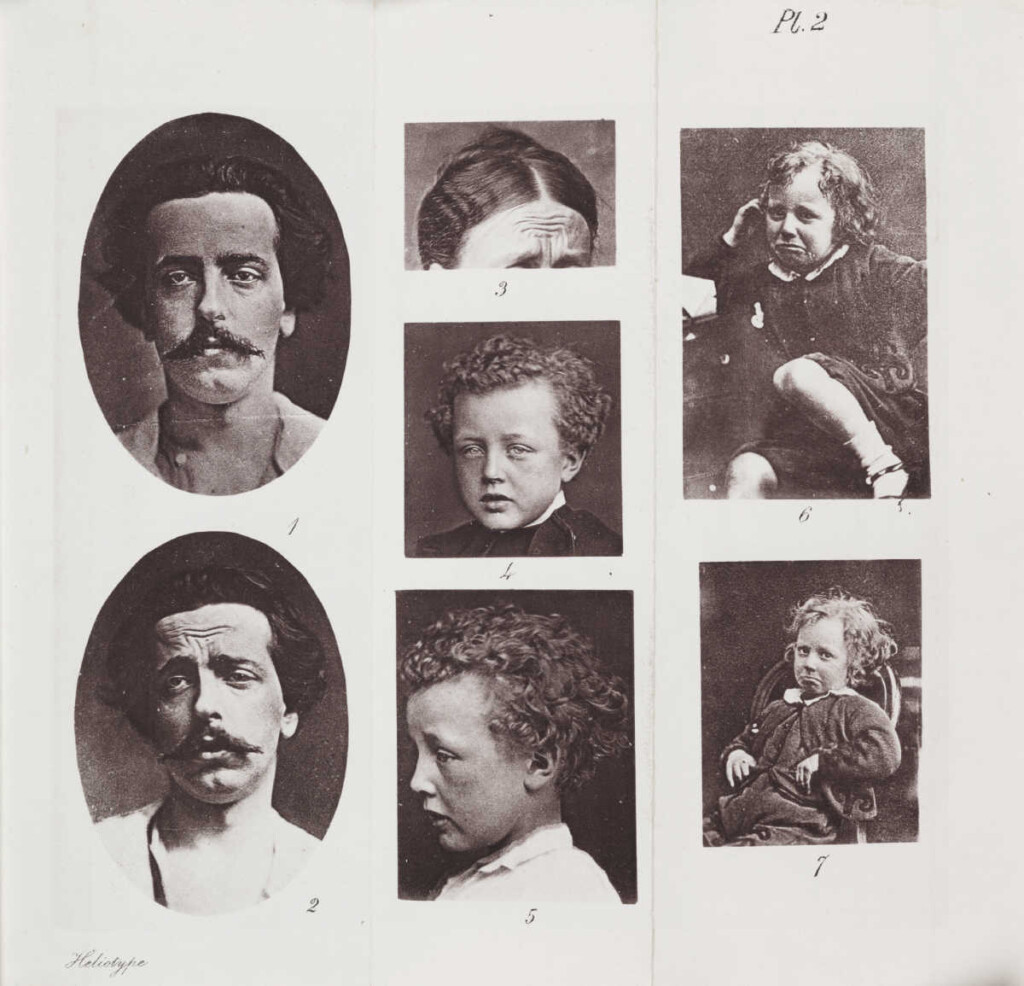
The suppression of feeling is not a modern pathology or a symptom of a particular neurosis. It is a technology, refined over centuries, distributed through families and institutions and the architecture of social space itself. Darwin, in his 1872 work The Expression of the Emotions in Man and Animals, observed that emotional expression is not merely a byproduct of feeling but constitutive of it — the body that cannot grimace processes grief differently from the body that can. What he could not have fully anticipated was the degree to which industrial civilization would treat that constitutive process as a liability. The factory floor, the open-plan office, the family dinner, the performance review: each is a space engineered to extract productive behavior while neutralizing the emotional weather that would otherwise complicate it. The smile you were never asked to wear was, in fact, requested — not in language, but in the design of every room you have ever been required to enter and behave correctly inside.
Sociologist Arlie Hochschild named this process emotional labor in her 1983 study The Managed Heart, tracking how flight attendants were trained not merely to perform friendliness but to feel it, to colonize their own affective states in the service of a commercial transaction. The insight that followed was more disturbing than the finding itself: that the distinction between authentic and performed feeling, once eroded often enough, becomes genuinely difficult to locate. A person who has smiled professionally for a decade does not know, at a dinner table with no professional stakes, whether the smile is chosen or automatic. The suppression runs so deep it begins to resemble nature.
What makes this particularly difficult to confront is that the mechanism presents itself as courtesy, as maturity, as the ordinary friction-reduction that social life requires. You were told, in some form or another, that people who express everything they feel are exhausting, volatile, unsafe. The vocabulary of emotional restraint was offered to you as a gift — self-control, composure, discretion — when it was in fact a set of instructions for making yourself easier to be around, which is not the same thing as making yourself more whole. The two goals have been deliberately confused for so long that most people cannot tell them apart without considerable effort and some willingness to be temporarily inconvenient.
Psychoanalytic theory, long before it became a cultural reference rather than a clinical practice, located the problem in what it called repression — not the dramatic erasure of traumatic memory, but the low-level, continuous management of impulses that cannot safely surface. Freud’s 1915 paper on repression described it as the mechanism by which the ego protects itself from feelings that would destabilize its relation to the external world. The external world, in this framing, is not neutral. It has requirements.
Thirsty
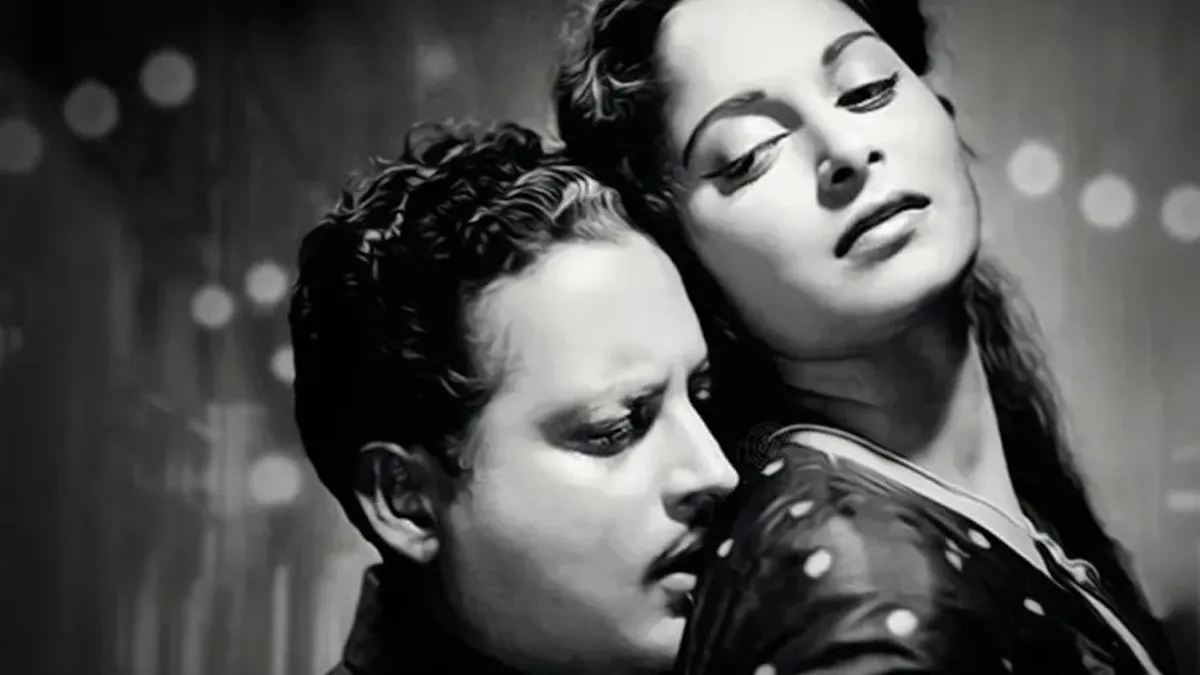
Drama, musical, by Guru Dutt, India, 1957
Thirsty is the heartbreaking story of Vijay, a young poet living in Calcutta who dreams of giving voice to the suffering and injustice of the world through his verses. Idealistic and sensitive, Vijay clashes with a society that despises his art because it is not profitable and does not cater to the tastes of the public. His brothers consider him a failure, the woman he loves leaves him for a marriage of convenience, and his poems are ignored by publishers. Only Gulabo, a prostitute with a pure heart, recognizes the beauty and truth of his words. When a misunderstanding leads everyone to believe Vijay is dead, his name and poetry suddenly become famous, exposing the hypocrisy of those who had previously rejected him.
Watching Thirsty means immersing oneself in a work that goes beyond melodrama, blending poetry, music, and imagery into a profound reflection on the human soul and the value of art. Guru Dutt, director and protagonist, creates one of the most intense and poetic films in world cinema, where black-and-white cinematography, expressive framing, and evocative lyrics produce an atmosphere of poignant melancholy. It is a film about the misunderstanding of the artist, pure love, and society’s hypocrisy, but also a universal critique of materialism and opportunism. Even today, Thirsty moves and provokes thought because it sincerely tells the story of the need to remain true to oneself in a world that measures people’s worth solely by their success.
LANGUAGE: Hindi
SUBTITLES: English, Spanish, French, German, Portuguese
The Architecture of Acceptable Feeling
You are eating alone at a long table set for twenty, and the silence between the silverware feels institutional, as though the room itself were designed to make certain feelings impossible. Not suppressed by force. Made structurally unavailable, the way a building with no windows does not forbid you from seeing the sky.
Norbert Elias spent years inside European archival material before publishing The Civilizing Process in 1939, and what he found was not a story of moral progress but an engineering project. Between the twelfth and seventeenth centuries, the management of bodily and emotional life in Western Europe underwent a systematic reorganization that had almost nothing to do with individual virtue and everything to do with the spatial and social arrangements of power. Medieval feasts were loud, physically uncontained events where grief and rage and hilarity occupied the same room without apparent contradiction. People wept openly at public executions, not from cruelty but because emotional expression was not yet sequestered into private registers. The body was porous to feeling in ways that later centuries would classify as pathological or simply uncivilized.
What changed was not human nature. What changed was the court. As European nobility consolidated around centralized royal households in the fifteenth and sixteenth centuries, proximity to power became a survival variable, and survival required a new fluency: the ability to show the right feeling at the right moment to the right person, and more critically, to conceal every other feeling with the precision of a trained actor who has forgotten he is acting. Baldassare Castiglione’s Book of the Courtier, published in 1528, was essentially a manual for this performance, teaching sprezzatura — the art of making deliberate self-management look effortless. The emotional norm was no longer simply what you felt. It was what your feeling communicated about your social competence.
This is the architectural moment: when emotional expression stopped being a symptom of inner states and became a signal within a hierarchy. The infrastructure was invisible precisely because it was social rather than physical, but it operated with the same coercive logic as a narrow corridor that allows only one direction of movement. You could technically feel anything. You simply could not afford to show it, and over enough generations, the gap between feeling and showing collapsed inward until the showing became the only form the feeling could take. Elias called this the internalization of external constraints, and he traced it in the most banal historical documents he could find: etiquette manuals, table conduct guides, instructions about where not to blow one’s nose. The trivial was his evidence precisely because triviality is where power buries its deepest instructions.
By the seventeenth century, shame had migrated. In medieval social life, shame was largely a public mechanism — you were shamed by your community in observable, theatrical ways. The pillory was not metaphorical. But as courtly emotional norms seeped downward through the social structure across two centuries, shame became internal and anticipatory. You did not need to be caught. You needed only to imagine being caught, and the regulation was already complete. Michel Foucault would later map this same movement across different institutional terrains, but Elias had already identified the emotional core of it: the policeman moved inside.
What this means for desire specifically is almost too precise to be comfortable. Desire does not disappear when it is structurally unavailable. It transforms. It finds the shapes that the architecture permits and inhabits them so thoroughly that after a generation or two, no one remembers the original form. A culture that prohibits the direct expression of longing does not produce people without longing. It produces people who experience longing as anxiety, as ambition, as a chronic low-grade restlessness they interpret as personality rather than as suppression wearing a different coat.

Freud's Bargain and the Price Nobody Disclosed

You agreed to a contract you never read. Most people sign it somewhere around age four or five, when they first learn that the feeling rising in their chest — fury, hunger, the desperate need to be held — must be managed before it can be expressed. The signature is not written in ink. It is written in shame.
Sigmund Freud argued in 1930, in what he considered his most important and most discomforting work, that civilization is not a gift humanity gave itself. It is a transaction, and the currency is suffering. Civilization and Its Discontents lays out with almost brutal economy the central mechanism: the instincts that drive human beings — toward pleasure, toward destruction, toward erotic fusion with another person — are not compatible with organized collective life. Society survives only by suppressing them, redirecting them, sublimating them into labor, art, religion, and law. What you build, what you worship, what you obey — these are the transformed residue of what you were not permitted to want.
The particular genius of Freud’s diagnosis is that it refuses to assign blame to any identifiable villain. There is no tyrant who installed the repressive apparatus. The repression is structural, baked into the very logic of what it means to live among others. You cannot have roads and hospitals and the rule of law without also having guilt. The two are not incidentally connected. Guilt is the psychological mechanism through which the renunciation of instinct becomes stable and self-enforcing. Once a child has internalized the prohibitions of its parents, external surveillance becomes unnecessary. The superego takes over — relentless, punishing, incapable of being satisfied because it targets not only action but desire itself. You are condemned not for what you did but for what you wanted to do, even privately, even silently.
What Freud could not fully anticipate — writing in the late Weimar years, watching the fascist tide prepare to break — was how efficiently modern consumer societies would discover a partial workaround. Rather than simply forbidding desire, twentieth-century capitalism learned to monetize it. The instinct is not suppressed; it is redirected toward a product. Desire is kept alive, perpetually stoked, but never allowed to reach its actual object. The result is not satisfaction but a managed restlessness — a population that remains hungry enough to keep buying while never hungry enough to question why the hunger never resolves. Herbert Marcuse, writing in 1955 in Eros and Civilization, pushed Freud’s framework further and named this operation precisely: repressive desublimation, the process by which apparent liberation actually deepens control, because it substitutes a permitted outlet for the genuine claim the drive was making.
The unstated cost embedded in this arrangement is not merely psychological discomfort. It is the systematic mistranslation of the self. When a man is told from childhood that tenderness is weakness, that dependency is shameful, that grief must be metabolized silently and quickly, he does not simply repress individual feelings. He loses the language for them. By his thirties, he may be genuinely unable to locate what he feels, not because he is emotionally shallow but because decades of managed suppression have degraded the very cognitive infrastructure through which interior states are recognized and named. Alexithymia research — pioneered in clinical literature by psychologist Peter Sifneos in the early 1970s — documented this as a diagnosable condition: an inability to identify and describe one’s own emotional states. What begins as a social demand becomes a neurological fact.
Freud’s bargain is therefore not simply a philosophical metaphor. It has a biological execution. The price that was never disclosed is not paid once, at the moment of socialization. It compounds across a lifetime, and it is collected in a currency most people never even realize they are spending — their capacity to know what they actually feel.
What Sociology Named and Then Forgot
You are sitting across from someone whose job it is to make you feel welcome. Not to feel welcome themselves — that distinction collapsed somewhere around 1983, when Arlie Hochschild published The Managed Heart and handed American sociology a concept it immediately began to misuse. Hochschild had spent years studying flight attendants and bill collectors, two professions that seemed to have nothing in common until she realized they were mirror images of the same mechanism: one group was paid to induce warmth, the other to induce anxiety. Both were paid, in other words, not for what they did with their hands or their minds, but for what they manufactured inside themselves and delivered to a stranger.
Hochschild called this emotional labor, and she was precise about what the term meant: the management of feeling to create a publicly observable facial and bodily display, sold for a wage. It was not metaphor. It was not a loose complaint about hard jobs. It was a structural diagnosis of what the American service economy had quietly been building since the postwar expansion of the 1950s pushed more than half the working population into roles where the product was an interpersonal experience. By the time The Managed Heart appeared, roughly sixty percent of American workers held service-sector positions. The number has since climbed past eighty. Which means that the majority of people in the wealthiest economy in human history now go to work not to produce objects but to perform states of feeling that someone else has scripted.
The performance has a price structure. Hochschild documented how airlines trained their flight attendants to think of the airplane cabin as a living room they personally owned, so that hostility from passengers would feel like a violation of their domestic space rather than an occupational hazard — a psychological reframe designed to produce more convincing warmth at no additional wage cost to the employer. The management of feeling was being systematically externalized onto the worker while the economic benefit flowed upward. This was not incidental. Delta Air Lines, where Hochschild conducted much of her fieldwork, was at the time operating with profit margins directly tied to customer satisfaction scores that were themselves proxies for emotional output. The smile was a unit of production. It was simply never listed as one on any balance sheet.
What happened next is the part sociology tends to skip. Hochschild’s framework was absorbed into academic discourse, cited in thousands of papers, translated into curricula, and then quietly domesticated into a language of individual burnout and personal boundaries. The structural economic argument — that capitalism had found a way to commodify the interior life itself, to treat the felt experience of another human being as raw material — was blunted into a softer claim about workplace stress. Self-help literature colonized the vocabulary. Emotional labor became the word people used to describe explaining something patiently to someone who should have already known it. The concept migrated from a diagnosis of an economy to a complaint about a conversation, and in doing so it stopped being dangerous.
What Hochschild had actually identified was a form of alienation that Marx’s framework had not anticipated because Marx was still thinking in a world of objects. The factory worker was alienated from the product of their hands. The service worker was alienated from the product of their nervous system — from the feeling itself, which had been trained, shaped, monitored, and in certain cases surgically suppressed to match a corporate standard of emotional output. Hochschild noted that long-term flight attendants reported a particular kind of numbness, a difficulty identifying what they actually felt in private life, as though the chronic performance had eroded the instrument of feeling itself. This was not metaphor either. It was a clinical pattern, and it was happening at scale, invisibly, inside an economy that counted everything except the cost it was extracting from the people who ran it.
A Man Weeps in a Boardroom
He has been in the room for four hours when it happens. The quarterly numbers are catastrophic, three hundred jobs will be cut before Friday, and somewhere between slide fourteen and the projected restructuring timeline, something in his face simply breaks open. Not dramatically — no table struck, no voice raised. Just a jaw that stops holding, eyes that go liquid, and a silence that spreads through the room like a spill no one knows how to clean up. His colleagues study the carpet. Someone refills a glass of water that was already full. The VP of Operations coughs once, formally, as if to signal that the institution itself is clearing its throat.
What follows is not comfort. It is management. Two people guide him efficiently toward the corridor, as if spontaneous grief were a fire to be contained before it reaches structural walls. The speed of their response reveals something important: the room did not know how to witness him. It only knew how to remove him.
Norbert Elias spent decades mapping the long historical process he called the civilizing process — the gradual internalization of bodily and emotional controls that European societies engineered between the thirteenth and twentieth centuries. His central argument in “The Civilizing Process,” published in 1939, was that self-restraint is not a natural human tendency but a constructed social technology, one that intensified precisely as court society required individuals to perform composure as a mark of distinction. What he documented was the slow colonization of the interior life by institutional demand. The boardroom did not invent this. It merely inherited it, retrofitted with fluorescent lighting and quarterly targets.
The violence of that corridor removal is structural before it is personal. It does not require malice. The people guiding him out are not cruel — they are correct, in the precise sense that they are executing the room’s unspoken code with accuracy. Arlie Hochschild named this kind of labor in her 1983 study “The Managed Heart,” documenting how organizations demand that workers commodify their emotional states, suppress what does not serve the transaction, and perform what does. She was writing primarily about flight attendants, but the logic she exposed belongs to every professional context where a person is paid not only for their work but for the affective presentation of that work. The man in the corridor has violated a contract he never signed in writing.
There is a specific grammar to who is permitted distress in institutional life. Anger, deployed with sufficient control, often reads as leadership. Anxiety, converted into urgency, passes as drive. These are the acceptable dialects. Grief, however — raw, unhierarchical grief that does not point toward a decision or a strategy — has no institutional translation. It arrives as pure interruption. And interruption, in an organization, is synonymous with dysfunction.
What makes the scene unbearable to the room is not the emotion itself but its refusal to be useful. A man who weeps because he has lost a deal can be metabolized — there is a narrative arc there, a defeat that implies a future comeback. But a man who weeps because three hundred people will lose their livelihoods before the week ends, because he helped build the logic that made this outcome inevitable, because somewhere in the architecture of his professional life there is a grief he has never once been offered the vocabulary to name — that man is showing something the institution cannot afford to recognize. He is not having a breakdown. He is having a moment of accurate perception.
The most suppressed knowledge in professional culture is not strategic or financial. It is the knowledge that the structures we maintain daily are themselves a kind of ongoing wound, and that competence, for most people in most organizations, requires a continuous low-grade act of self-amputation to stay operational inside them.
A vision curated by a filmmaker, not an algorithm
In this video I explain our vision
The Historical Invention of Emotional Interiority

You have been told, at some point in your life, that your feelings are uniquely yours — that somewhere beneath the social performance, the professional mask, the careful sentences, there exists a private interior where the real you resides, feeling things purely and without contamination. This belief feels so self-evident that questioning it seems almost violent. But the private emotional self is not a discovery. It is an invention, and a surprisingly recent one, engineered under specific political pressures for purposes that had nothing to do with your liberation.
William Reddy’s 2001 work “The Navigation of Feeling” makes a case that is difficult to absorb on first encounter: emotional regimes are not simply cultural colorings applied over natural feelings, but active structures that produce what people experience as inner life. In post-Revolutionary France, the period between 1787 and roughly 1820 saw the construction of what Reddy calls a sentimentalist regime — a political and cultural architecture that elevated sincere emotional expression as the mark of authentic citizenship. The new Republic needed subjects who felt correctly, who wept at the right monuments, who experienced patriotic tenderness in the presence of the right symbols. Emotion became civic infrastructure. And to make that infrastructure work, it had to appear entirely spontaneous, entirely private, entirely beyond the reach of the state that was in fact orchestrating it.
What the Romantic era produced was not a discovery of the interior self but the manufacturing of a specific kind of interior self that could be monitored through its public expressions. The confession, the diary, the intimate letter — these were not escapes from surveillance but its most refined instruments. When Jean-Jacques Rousseau published his “Confessions” between 1782 and 1789, the text did not simply reveal a private man. It modeled a new genre of subjectivity, teaching an entire readership how a properly feeling person was supposed to narrate his own depths. The rawness was the product. The vulnerability was the form.
This has a structural consequence that most people never examine. When you believe your emotions are the most authentic thing about you, you become extraordinarily susceptible to any authority that claims to know what your emotions really mean. Therapy, advertising, political rhetoric, religious confession — all of them operate by first ratifying the premise that you have a rich interior, and then offering themselves as the necessary interpreter of it. The depth they honor is the depth they need you to have in order to sell you something: a product, a movement, a salvation, a vote.
What gets called emotional repression in the twentieth century is, in many cases, not the suppression of pre-existing feelings but the failure to produce the feelings that the current emotional regime requires. A man who does not weep at his father’s funeral is not necessarily numb; he may simply be failing to perform the emotional script that grief narratives in his culture demand. The pathology diagnosed is often the gap between lived experience and the authorized form that experience is supposed to take — a gap that clinicians can then promise to close.
The historian Barbara Rosenwein introduced the concept of emotional communities in her 2006 work “Emotional Communities in the Early Middle Ages” to describe how groups across history have shared norms about which feelings matter, which can be expressed, and at what intensity. What her research makes visible is that the medieval person did not have less emotional life than the Romantic-era bourgeois; they had a differently organized one, governed by different permissions and prohibitions. The interiority that the nineteenth century declared natural was, by any historical comparison, a peculiar and politically loaded construction.
And yet here you are, defending that construction as if it were bone, as if dismantling it would leave nothing behind — which is itself the most elegant proof of how thoroughly the invention has succeeded.
Control Through Inexpression
You are handed a performance review and told your “affect” needs improvement — not your work, not your output, not your ideas, but the temperature of your face while you do it. The feedback lands like a bureaucratic sentence, clinical and absolute. You walk out holding a piece of paper that has, in the language of corporate wellness, just told you that the wrong feelings are leaking through.
What looks like a productivity concern is something far older and more deliberate. Herbert Marcuse argued in 1955, in a work that most institutions would prefer remained a graduate school curiosity, that the suppression of erotic energy — broadly understood as the life drive, the instinct toward pleasure, connection, and non-instrumental being — is not a side effect of civilization but its primary mechanism. Surplus repression, as he called it, is the quantity of instinctual restraint demanded beyond what is strictly necessary for social coexistence. The surplus is the profit margin of power. You do not repress people because their desires are dangerous. You repress them because redirected desire becomes labor, compliance becomes productivity, and the body that has learned not to want freely is a body that will accept almost anything in exchange for the controlled release of what was taken from it.
This is why consumer culture does not abolish repression but refines it. The desire that cannot be expressed directly — toward rest, toward radical intimacy, toward a life organized around something other than output — is siphoned into purchasable substitutes. A weekend, a bottle, a vacation advertised with the word “escape” printed across a turquoise ocean. The market sells back to you a diluted version of the feeling that the market itself suppressed in the first place. What appears as freedom of choice is the management of a pressure valve, and the pressure is never fully released, only modulated enough to prevent rupture.
Foucault mapped the institutional architecture of this process across hospitals, schools, prisons, and clinics throughout the 1970s, showing how the normalization of bodies — their postures, their schedules, their acceptable emotional registers — creates docile subjects not through brute force but through the internalization of surveillance. The genius of the system is that it eventually needs no external enforcer. The repression becomes grammatical, embedded in the structure of how people describe their own interiority. You do not say you are longing for a different life. You say you are “a little stressed lately.” The language miniaturizes the wound.
Power has always understood what psychology took centuries to articulate: that unfelt feeling does not disappear. It migrates. The historian Barbara Ehrenreich traced in 2009 how the American positive thinking industry — worth billions of dollars annually and structurally hostile to any negative emotional expression — correlates historically with periods of economic precarity. When job security collapses, the cultural demand for mandatory optimism intensifies. The instruction to smile harder arrives precisely when there is least to smile about. This is not coincidence. A workforce that cannot express despair cannot organize around it. Inexpression is not the absence of politics. It is politics pursued by other means.
The child who is told not to cry at the funeral learns something that no civics class ever teaches: that emotional legibility is a social contract, and some feelings are simply not included in the terms. By adulthood, this lesson has been so thoroughly absorbed that the prohibition no longer needs to be spoken aloud. People police their own inner weather with the diligence of border agents, flagging the feelings that are too large, too inconvenient, too ungrateful, too unproductive to be allowed passage into expression. The border was built by someone else, maintained now by no one and everyone simultaneously, and most people will spend their lives defending it without ever asking who it was originally built to protect.
The Feeling That Has No Name Yet
You have felt it before — that specific weight that settles in the chest when someone leaves a room and you realize, only after the door closes, that something has shifted permanently between you, and you had no word ready to catch it before it fell.
The Portuguese carry a word, saudade, that has resisted clean translation into English for centuries — a longing for something loved and lost that is simultaneously a form of pleasure in the grieving itself, documented in literary form as early as the thirteenth-century cantigas of Dom Dinis, and theorized by the twentieth-century philosopher Teixeira de Pascoaes as the very engine of the Portuguese national soul. What English speakers experience as a vague, slightly embarrassing nostalgia, Portuguese culture crystallized into a named, honored, philosophically dignified state of being. The naming did not create the emotion. But the absence of a name does something far more insidious than mere silence — it renders the feeling socially invisible, and what is socially invisible tends, over time, to become psychologically suspect.
Benjamin Lee Whorf proposed in the 1930s and 1940s, through what would later be formalized as the Sapir-Whorf hypothesis, that the language available to a speaker shapes the categories through which reality becomes thinkable. The strong version of this claim has been contested, but what cognitive linguists like Lera Boroditsky demonstrated experimentally in the 2000s is subtler and more damaging to comfortable assumptions: language does not imprison thought, but it taxes it — it makes certain perceptions easier to hold, faster to access, more likely to be communicated and therefore validated. An emotion with a name gets shared. An emotion without one gets swallowed.
The Yagán people of Tierra del Fuego had a single word, mamihlapinatapai, to describe the look exchanged between two people who both want something from each other and neither is willing to be the first to ask for it. Entire novels in English have tried to map that territory and failed to occupy it as precisely. What is striking is not the cleverness of the word but the cultural decision to name that particular dynamic at all — a decision that reveals a community which noticed desire at its most socially suspended, at the exact moment it becomes a shared vulnerability rather than a private one, and decided that this moment deserved to exist in language. Western industrial culture, by contrast, has produced extraordinarily precise vocabulary for transactions, legal obligations, and professional hierarchies, and has left vast stretches of relational emotional life either unnamed or borrowed from other languages with a kind of self-conscious irony that itself signals discomfort.
The psychologist Lisa Feldman Barrett, in her 2017 work How Emotions Are Made, argues that emotions are not fixed biological programs waiting to be triggered but are actively constructed by the brain using prior experience, bodily sensation, and crucially, conceptual knowledge — which includes the emotional concepts available in a person’s language and culture. This means that a person who lacks the concept for a specific emotional state is not simply unable to describe what they feel; they are statistically less likely to construct that emotion as a discrete experience in the first place. The unnamed does not wait patiently in some pre-linguistic holding room. It dissolves. It gets metabolized into anxiety, into restlessness, into a physical symptom that visits the body because it could find no door into consciousness.
What this means for a culture that has systematically under-named grief, longing, ambivalence, and erotic complexity is not that its people feel less but that enormous portions of lived emotional experience are perpetually being processed as noise rather than signal, as malfunction rather than meaning, as something to be managed rather than understood. The feeling that has no name is not absent — it is orphaned, and orphaned things do not simply disappear; they find other ways to make themselves known.
🔒 When Feelings Are Forbidden: The Hidden Cost
Repressed desire is not simply a personal wound — it is a social architecture, built brick by brick by norms, conventions, and shame. From literature to psychology, the question of stifled feelings runs through entire civilizations, leaving its mark on art, bodies, and broken lives. These related articles trace the invisible borders society draws around the heart.
Ismat Chughtai: The Writer Who Challenged India’s Modesty
Ismat Chughtai wrote about female desire and domestic repression at a time when Indian society treated both as unspeakable crimes. Her story ‘Lihaaf’ provoked an obscenity trial, revealing how deeply the silencing of women’s inner lives was institutionalized. Reading her today is to understand how literature becomes the last refuge of the forbidden.
GO TO THE SELECTION: Ismat Chughtai: The Writer Who Challenged India’s Modesty
Social Hypocrisy: The Double Face of Respectability
Social hypocrisy functions as the cultural enforcement mechanism of repressed desire, rewarding those who perform respectability while punishing those who feel too visibly. Society constructs a double face: one turned toward public virtue, the other concealing the very impulses it condemns. This tension between mask and wound is at the very heart of what it means to live under collective moral surveillance.
GO TO THE SELECTION: Social Hypocrisy: The Double Face of Respectability
Gaslighting: Psychology and Culture
Gaslighting is one of the most insidious tools used to suppress not just desire but the very capacity to name one’s own feelings. When someone is made to doubt their emotional reality, the repression becomes internal — the cage is rebuilt inside the mind. Understanding this mechanism is essential to grasping how societies and intimate relationships conspire to silence authentic feeling.
GO TO THE SELECTION: Gaslighting: Psychology and Culture
Alexander Lowen’s Bioenergetic Analysis
Alexander Lowen’s bioenergetic analysis holds that repressed emotions are not merely psychological abstractions but are literally stored in the tension of muscles and the rigidity of posture. Society’s demand that we contain our desires leaves a physical imprint — a body armored against its own aliveness. Lowen’s work offers a radical counter-narrative: that liberation from repression must pass through the body itself.
GO TO THE SELECTION: Alexander Lowen’s Bioenergetic Analysis
Discover Cinema That Dares to Feel
If these themes stir something unspoken in you, independent cinema offers the most honest mirror available. On Indiecinema you will find films that refuse to look away from desire, repression, and the cost of conformity — stories told with the courage that mainstream culture rarely allows. Come and explore a streaming space built for those who feel deeply and think freely.
👉 EXPLORE THE CATALOG: Watch Indie Films in Streaming
A vision curated by a filmmaker, not an algorithm
In this video I explain our vision

