
The Body That Remembers What the Mind Has Forgotten
You have been sitting at this desk for three hours. Your shoulders are somewhere near your ears. Your jaw is clenched around a thought you finished having forty minutes ago. Your breath is short, arriving in the upper chest only, never descending below the sternum, as though your lungs have agreed to use only the rooms they were assigned and nothing more. You are not in pain, exactly. You are simply held. Contracted around something that no longer requires contraction. And if someone asked you right now — genuinely asked — what you are bracing for, you would not have an answer. You would say nothing. You would say you are just sitting.

This is where Alexander Lowen begins. Not with neurosis as an abstraction, not with childhood trauma as a clinical category, but with this: the body caught mid-defense, long after the threat has passed. The body that learned, at some specific and largely unremembered moment, that shrinking the chest made certain things more survivable. That pulling the shoulders forward created a kind of armor. That breathing less meant feeling less, and feeling less was once, in some room now impossible to locate precisely, the only available form of safety.
Lowen trained under Wilhelm Reich in the 1940s, and what he inherited from that relationship — beyond the clinical framework, beyond the concept of character structure — was a fundamental reorientation of where psychology actually lives. Reich had argued, in his 1933 work Character Analysis, that the ego’s defenses were not merely mental operations but muscular ones, that the chronic tensions he called character armor were the body’s own encoding of psychological history. Lowen took this insight and spent the next five decades building an entire clinical and theoretical apparatus around it, founding what he would call Bioenergetic Analysis, formalized in his 1958 work Physical Dynamics of Character Structure and deepened across subsequent books — The Betrayal of the Body, Bioenergetics, The Voice of the Body — that collectively constitute one of the most sustained attempts in modern psychological thought to take the flesh seriously as a site of meaning.
The premise is not complicated, but its implications are radical. The body does not lie. This is Lowen’s central provocation, and it cuts in every direction. It means that what you have suppressed has not disappeared — it has relocated. It means that the story you tell about yourself in language, the autobiography you have curated and revised across decades of social performance, is accompanied at every moment by a counter-narrative written in muscle and fascia and breath. Your spine knows things your therapy sessions have not yet reached. Your pelvis holds positions your conscious mind has never authorized. The tension in your throat is not metaphor. It is history, somatized.
Bessel van der Kolk, whose 2014 synthesis of trauma research reached millions of readers, arrived decades later at a formulation that would have been entirely legible to Lowen: that trauma is not primarily a disorder of memory but a disorder of embodiment. That the body keeps the score — his own phrase — in ways that narrative alone cannot access or resolve. The intellectual lineage runs unbroken from Reich through Lowen to the contemporary neuroscience of trauma, which has progressively confirmed what the clinicians working with bodies knew first through observation and touch: that the nervous system encodes experience below the threshold of articulate thought, and that healing which bypasses the body is, at best, partial.
But Lowen’s insight is not only about trauma in its dramatic, clinical sense. It is about the ordinary accumulation of the unremarkable. The father whose approval arrived conditionally and taught you to hold your chest high and forward, performing confidence until the performance became structure. The classroom where crying was not permitted and the prohibition became a permanent tension across the diaphragm. The adolescence navigated with a jaw set against vulnerability so consistently that the set remained, and the jaw simply forgot it had ever had another option.
Your shoulders are still up. You probably did not notice they had risen again while you were reading.
The Mirror and the Rascal
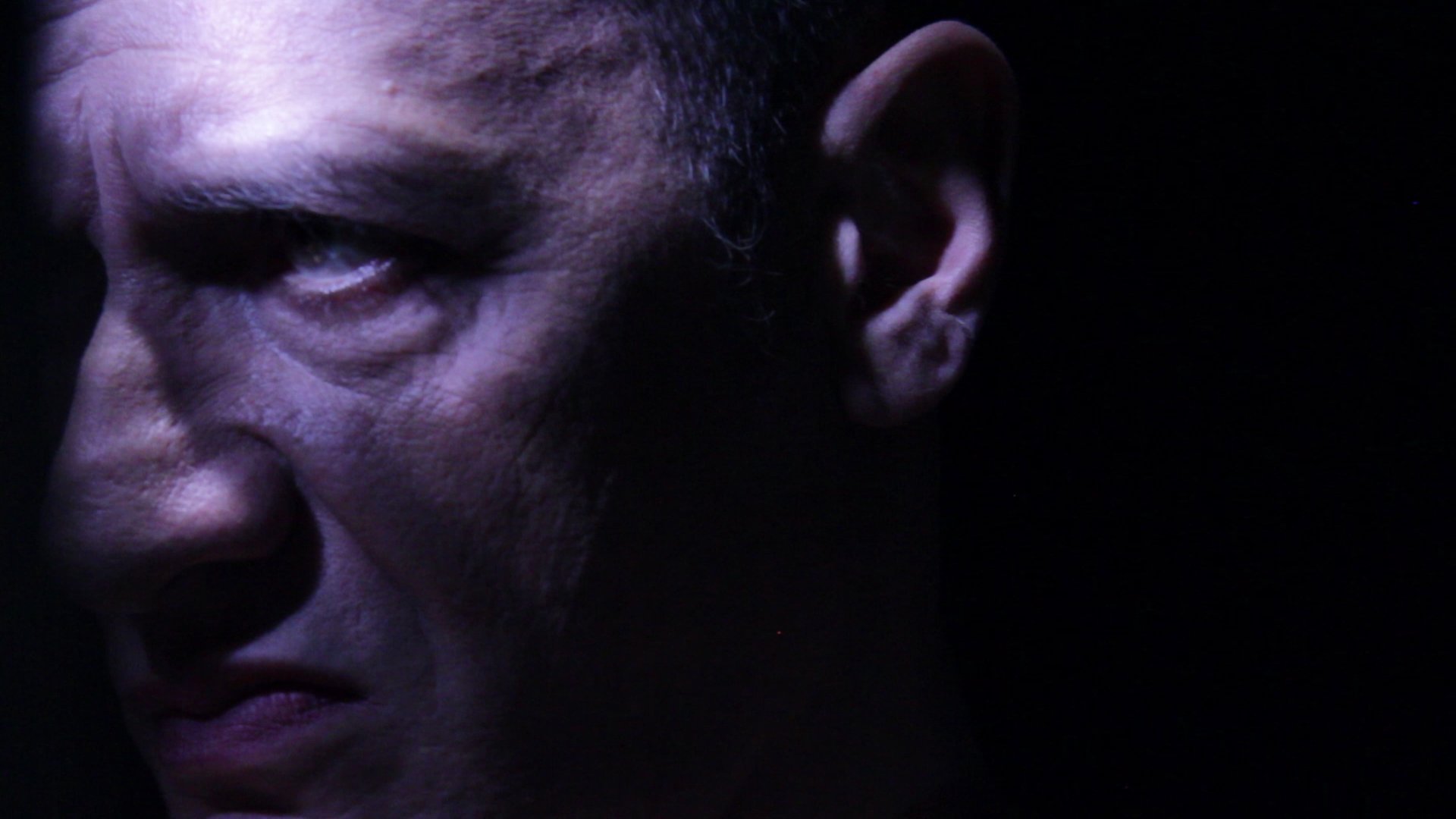
Drama film, by Valerio De Filippis, Italy, 2019.
The mirror and the rascal is an experimental film based on the tragedy "Richard III" by William Shakespeare. It tells the delirium of contemporary power in an author's reinterpretation of cinema, video art and music. The protagonist, Richard Duke of Gloucester, brother of King Edward IV, through a long series of crimes eliminates all the obstacles that stand between him and the throne of England.
Valerio de Filippis, a well-known painter who has been following his research path for a long time, investigating the relationship between light, corporeality and the psyche. The mirror and the rogue and the cinematographic equivalent of Valerio De Filippis' painting, his figurative style is in fact very recognizable looking at his paintings. But cinema is a new way where the artist can also be involved as an actor and performer, with an original mix between acting and singing. Staging the dark side of the human soul, the film is a surreal and disturbing interpretation of a great classic. The director says: "The first suggestion was musical: I was interested in transforming the text of Shakespeare's tragedy Richard III into notes. I love cinema and at a certain point I felt that the time had come to combine research on the image of painting to my love for cinema and music. When the film is finished I realize that I have remained faithful to painting: every frame of the film appears to me like a painting: the same light, the same colors, the same atmosphere ". The mirror and the rascal is a kind of psychoanalytic session that the painter does while hiding behind the mask of Richard III. Behind this ferocious and unscrupulous character we find a path of self-analysis by De Filippis, who is mainly interested in the more violent and turbid aspects. An experimental film in which, with great courage, the author gets involved completely, fragmenting the images in an unconventional montage, which is at the same time a flow of consciousness and spectacle.
LANGUAGE: English
SUBTITLES: Italian
Reich’s Heir and the Heresy of Flesh
There is a lineage here that the official history of psychiatry prefers to keep quiet, and the silence itself is instructive. Wilhelm Reich arrived in Vienna in the early 1920s as one of Freud’s most gifted students, a young analyst who took the master’s insights about repression and asked a question that would eventually make him unemployable, institutionally homeless, and finally imprisoned: what if repression is not only a mental event? What if the body itself holds the archive?
Reich’s answer, developed through a decade of clinical work and crystallized in Character Analysis in 1933, was that chronic muscular tension — what he called character armor — is not a metaphor for psychological defense. It is the defense, made literal in flesh. The jaw that never unclenches. The chest held perpetually raised, as if bracing for impact that never quite comes. The pelvis frozen in a posture of permanent restraint. Reich observed that his patients could talk for years about their childhood without a single muscle changing its habitual pattern, and he began to understand that language, however precise, was addressing only one layer of a much deeper structure. The armor had been built before words existed, in the pre-verbal years when the body learned what was safe to feel and what had to be sealed away. By the time a person could articulate their suffering, the suffering had already migrated somewhere language couldn’t reach.
Alexander Lowen was Reich’s student in the late 1940s, and what he absorbed was not merely a theory but a physical education. He underwent therapy with Reich himself, lying on that famous couch in Forest Hills, New York, learning in his own body what the armoring felt like from the inside — the locked breath, the defended chest, the places where aliveness had been carefully extinguished. When Lowen founded the Institute for Bioenergetic Analysis in New York in 1956, he was not simply institutionalizing an idea. He was declaring that a certain kind of knowledge, knowledge that arrives through sensation and movement rather than interpretation and insight, deserved a permanent address.
The year 1956 is worth holding for a moment, because it contains a grotesque symmetry. The same year Lowen opened his institute, the FDA — the United States Food and Drug Administration — ordered the destruction of Reich’s books and journals. Not metaphorical destruction. Actual burning. Reich’s publications, including Character Analysis and The Function of the Orgasm, were incinerated in a Maine incinerator and again in New York, in what stands as one of the few instances of book-burning carried out by a democratic government on its own soil in the twentieth century. Reich himself died in Lewisburg Federal Penitentiary in November of that year, imprisoned on a contempt charge related to his refusal to comply with an injunction against distributing his orgone accumulators. Whatever one thinks of Reich’s later, stranger ideas — and they grew considerably stranger as the persecution intensified — the fact of the burning is not a footnote. It is a statement.
What exactly is so dangerous about the idea that the body remembers? Michel Foucault spent much of his career mapping the answer to this question without ever quite framing it that way. His analysis of disciplinary power, elaborated across Discipline and Punish in 1975 and the History of Sexuality volumes, traces how modern institutions — schools, hospitals, prisons, clinics — produce docile bodies, bodies that have internalized control so thoroughly they no longer require external enforcement. The armored body, in Reich’s sense, is the perfectly disciplined body: it polices itself. It has absorbed the prohibitions so completely that they have become posture, breath-pattern, muscular habit. To suggest that this armor can be dissolved, that the body retains beneath its trained surface the memory of a less administered aliveness — this is not merely a therapeutic proposal. It is a political one.
Lowen’s marginalization by mainstream psychiatry was never simply about insufficient evidence or methodological heterodoxy. It was about what his work implied if taken seriously: that the talking cure, for all its sophistication, might be circling the building without ever getting inside.

Five Characters Who Are Actually You
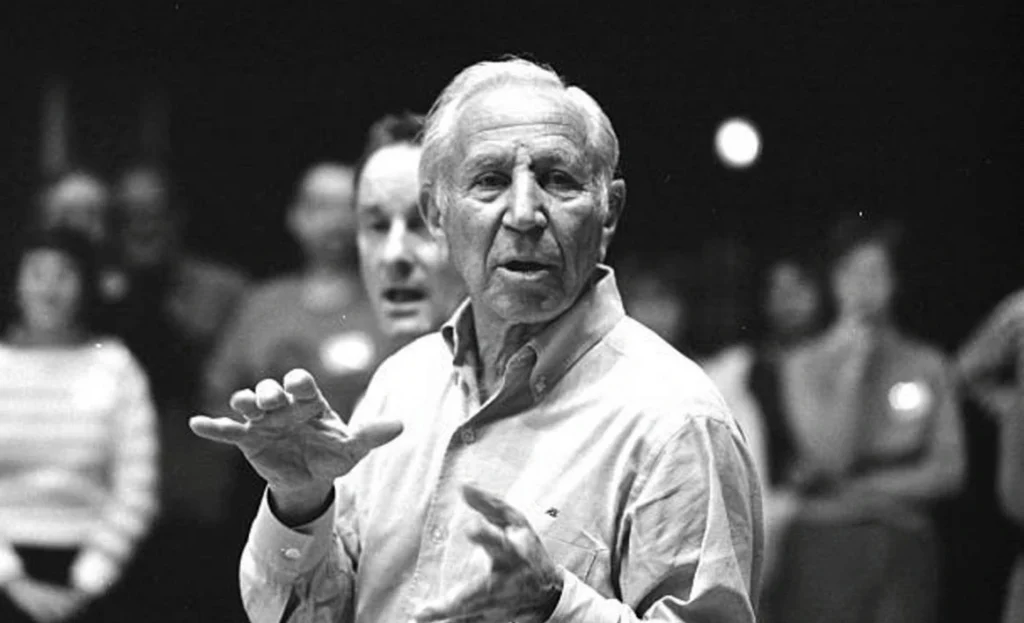
There is a man at a dinner party who, when someone leans in to embrace him, does not recoil visibly. He simply becomes slightly more present in his own stillness, shoulders barely rising, a smile arriving half a second too late. Nobody notices. He has practiced this so long that the armor looks like composure. Lowen would have recognized him immediately — not as someone broken, but as someone who learned, very early, that the body itself was not entirely safe to inhabit. The schizoid structure, in Lowen’s framework, is not psychosis. It is a strategic withdrawal from the periphery inward, a contraction so old it has become the self. The eyes are often intelligent, sometimes brilliant. The hands, when they move, move as if controlled from a slight distance.
Merleau-Ponty, writing in 1945 in the Phenomenology of Perception, argued that the body is not something we have but something we are — that perception itself is not a mental event but a bodily one, that every gesture already contains a history, a relationship to the world that precedes any conscious decision. What Lowen did, building on Wilhelm Reich‘s character analysis and extending it into clinical practice through the 1950s and 60s, was take this insight and read it backward: if the body enacts identity, then chronic muscular tension is not merely physical symptom but biographical text. The armoring is the story. You do not need to ask someone what happened to them. You can, if you know how to look, read it in how they hold their jaw, where they stop breathing, whether their feet seem to actually touch the floor.
The oral structure is different. She is the one who gives and gives — time, attention, warmth, the last slice of bread — and underneath the generosity there is a terror so old it has no name anymore. Lowen traced this to the earliest months of life, to the experience of a need not met at the right moment, and the subsequent strategy of reversing the position: I will be the one who provides, so I will never again be the one who is left empty. Her body tends toward a particular kind of softness, an underdevelopment of muscular charge in the legs, as if she is not quite sure the ground will hold her if she stands fully on her own weight. The giving is real. The love is real. And the terror lives right alongside it, inseparable, breathing through the same chest.
Then there is the psychopathic structure, and here the word is stripped of its forensic meaning. This is not a monster. This is the man whose authority depends entirely on never collapsing, whose eyes scan the room for hierarchy before they scan it for anything else, who learned that vulnerability is a position to be exploited and so evacuated it from himself entirely. The energy in the psychopathic structure, Lowen observed, is concentrated in the upper body — the chest expanded, the eyes held in a kind of permanent readiness — while the legs beneath carry a disconnection, as if the foundation were not quite trustworthy. The need for control is not greed. It is a structurally encoded fear that if you do not dominate the situation, the situation will devour you.
The masochistic structure holds its suffering differently: inward, compressed, a body that has learned to swallow its own protest. And the rigid structure stands perhaps closest to what we call normal — upright, achieving, sexually alive but defended at the heart, performing contact while keeping the innermost chamber locked. Lowen identified all five not as discrete pathologies but as points on a continuous human spectrum, each one a solution to a real problem encountered at a specific developmental moment.
What Merleau-Ponty understood philosophically, Lowen measured in muscle and breath: that you are not inside your body looking out. You are the body, looking. The character structure is not a description of how you behave. It is a description of how the world reaches you — and how much of it you allow in.
The Grounding That Capitalism Stole
There is a man running through the city at six in the morning. You have seen him. You may have been him. His form is perfect, his pace metronomic, his face arranged into the mild vacancy of someone who has learned to leave the body behind while using it. He is not running toward anything. He is not running from anything in any conscious sense. He is running because stillness has become unbearable, because the moment he stops, something he cannot name begins to rise through the floor of himself, and he has learned, through years of disciplined self-management, to stay ahead of it.
This is what Alexander Lowen meant by the loss of grounding. Not a metaphor. Not a spiritual concept borrowed from Eastern practice and softened for Western consumption. Grounding, in the precise technical vocabulary Lowen developed through decades of clinical work and codified most fully in Bioenergetics in 1975 and before that in The Betrayal of the Body in 1967, means something shockingly literal: the capacity to feel your feet on the earth, to allow weight to descend through the legs into the ground, to tolerate the present moment as a physical experience rather than a problem to be outrun. The pelvis loose, the knees slightly bent, the breath moving without interruption into the belly. Most people reading this cannot do it right now. The attempt to do it reveals, immediately and without mercy, exactly where the holding is.
Herbert Marcuse, writing in Eros and Civilization in 1955, twenty years before Lowen’s Bioenergetics would reach the wide readership it eventually found, described with philosophical precision the mechanism by which industrial civilization survives on the suppression of bodily pleasure. His argument was not merely that capitalism makes people tired or stressed. His argument was structural: that the libidinal energy which, if left unredirected, would seek satisfaction and rest and sensory presence, must instead be captured, converted, and fed back into the engine of production. Surplus repression, he called it — a quantity of instinctual renunciation beyond what civilization technically requires for basic order, demanded specifically so that the surplus could be extracted. The body does not stop wanting. It is trained to want in directions that serve the market. Movement without arrival. Stimulation without satisfaction. Speed as a substitute for depth.
This is the social and economic context in which grounded bodies become not merely unusual but structurally inconvenient. A person who can stand still, who can tolerate the sensation of their own weight, who does not need constant motion or consumption or external stimulation to manage the anxiety of being alive — that person is a minor catastrophe for an economy premised on chronic dissatisfaction. Lowen’s books were published precisely in the decades when consumer culture was completing its colonization of leisure time, when the body was being simultaneously glorified as an image and evacuated as an experience. The 1960s and 1970s in America were not a period of liberation so much as a period of the rebranding of control. The sexual revolution happened inside an advertising industry. The counterculture was metabolized into product lines.
Into this landscape, The Betrayal of the Body arrived arguing that the core psychopathology of modern life was not neurosis in the Freudian sense but something more fundamental: the disconnection of the self from the physical ground of its own existence. Not what you think about yourself but whether you live in your legs. Lowen had understood something that purely social or political analysis kept missing — that the colonization of human energy does not stop at the level of working hours or economic relations. It goes all the way down, all the way into the musculature, into the way the jaw sets, into the distance a person keeps between their ribcage and the world.
The man is still running. His pace has not changed. When he finishes, he will check his data, measure his performance, optimize his recovery, and prepare to run again tomorrow. At no point in this process will he have landed anywhere.
Trembling as Intelligence
There is a moment in the therapeutic exercise called the bow — feet planted at shoulder width, fists pressed into the lower back, knees bent, the body arching backward into a sustained curve — when something stops being voluntary. You hold the position. The thighs begin to vibrate. Not tremble in the way you tremble from cold, not shake in the way you shake from fear, but oscillate with a fine, rapid intelligence that seems to originate from somewhere below the level of decision. You did not choose this. Your nervous system chose it. And for most people who encounter it for the first time, the instinct is immediate and nearly universal: stop it. Correct it. Reassert control over the body that is, in this moment, correcting you.
Lowen understood this reflex as the central problem. The trembling is not a malfunction. It is the organism attempting to discharge what the musculature has been storing, sometimes for decades. The bow, the grounding exercises, the deliberate stress positions he developed across the 1950s and refined throughout his major clinical works — Bioenergetics in 1975, The Voice of the Body, the long accumulated practice of the Institute he co-founded in New York in 1956 — these were not stretches. They were epistemological provocations. They asked the body to produce knowledge that the mind had long since decided it did not need.
A woman in her early forties, who had described herself in session after session as someone who simply did not cry, who had not wept in perhaps eight or nine years and did not particularly miss it, held the bow position for several minutes and began sobbing. Not from grief. Not from any identifiable emotional content. From the position itself. From the sheer mechanical fact of a thorax finally allowed to open after years of subtly protective contraction. The crying was not about anything. It was the body reporting, in the only language available to it at that moment, that something had been held that could now be released. Lowen would have said she was not discovering a feeling. She was recovering a capacity.
This is precisely what Bessel van der Kolk, working from neuroscience rather than from Reichian theory, documented in The Body Keeps the Score in 2014. The traumatized nervous system, van der Kolk demonstrated across decades of research at Boston University and the Trauma Center he directed, does not store experience as narrative. It stores it as physiological pattern, as chronic muscular preparation, as an autonomic system locked in states of arousal or shutdown that no amount of verbal therapy reliably reaches. The science had finally caught up with something Lowen had been observing clinically for thirty years before the imaging technology existed to confirm it.
Peter Levine arrived at the same territory through ethology — through watching animals in the wild discharge incomplete survival responses after threat, shaking and trembling their way back to baseline regulation. His somatic experiencing work, developed through the 1970s and published systematically in Waking the Tiger in 1997, described a process Lowen had already been inducing deliberately in his patients: the completion of interrupted biological responses through the body’s own oscillatory intelligence. Levine came from a different lineage, cited different sources, used different language. He arrived at the same room.
What Lowen grasped, and what neither the psychoanalytic tradition nor the behaviorist tradition was equipped to accept, was that the body is not a vehicle for experience. It is the experience, archived in fiber and fascia, in the angle of a jaw held perpetually tight, in a chest that breathes only in its upper third. The involuntary shake of a muscle held too long is not weakness asserting itself. It is intelligence returning from exile. It is the organism remembering what it knew before it was trained to forget — that discharge is not loss of control but the restoration of it, that trembling is not the body failing but the body, finally, speaking in its oldest register, before language, before narrative, before the long education in stillness that we have spent our lives mistaking for composure.
A vision curated by a filmmaker, not an algorithm
In this video I explain our vision
What Pleasure Actually Costs

Here is the final section of the article:
The most disorienting thing Lowen ever wrote was not about pain. It was the observation, buried in the middle of a clinical chapter, that his patients did not flinch from suffering — they had already made peace with suffering, had organized entire lifetimes around its familiar contours. What stopped them, what made their bodies go rigid and their breathing shallow and their eyes suddenly evasive, was the approach of pleasure. Not pleasure as entertainment or distraction, but pleasure as full-body aliveness, the kind that moves through you without asking permission, that makes the jaw loosen and the chest open and the eyes fill without any particular reason. That kind. The kind that cannot be managed.
There is a moment — you may have lived something close to it, or watched someone else live it — when a face is on the verge of allowing itself to feel something it has refused for twenty or thirty years. The refusal has been so long and so complete that it no longer looks like refusal. It looks like composure. It looks like maturity. And then something small happens — a word spoken in the right tone, a hand placed without demand, a piece of music arriving at the wrong moment — and the face begins to crack along lines that were always there, invisible fault lines in the mask, and what comes through is not grief exactly, though grief is part of it. What comes through is the terror of being alive in a body that is finally, dangerously, present. The panic is real. The shaking is real. And the first impulse, almost always, is to stop it.
Lowen called the body’s capacity for sustained energetic charge vibration, and he meant something literal: the fine, continuous tremor of musculature that is neither tension nor collapse but something between them, a kind of hum, the physical signature of being fully inhabited. He observed that most people extinguish this vibration early, that chronic muscular contraction is not the exception but the norm, and that the organism learns to mistake its own aliveness for danger. This is not metaphor. This is the body’s actual learned behavior, documented across decades of clinical work, visible in the way people hold their diaphragms, in the particular flatness of voices that have forgotten how to resonate.
Erich Fromm arrived at the same territory from a different angle. In 1941, watching fascism consolidate its hold on Europe and trying to understand why people did not simply resist it, he proposed something that should have been more scandalous than it was: that freedom is experienced not as liberation but as unbearable weight, and that the flight from it is not toward safety but away from the intolerable burden of one’s own vitality and self-determination. Escape from Freedom was framed as political analysis, but it was also a diagnosis of character, of the way human beings construct systems of belonging and submission and routine precisely to be relieved of the terrifying openness of being fully themselves. What Fromm described sociologically, Lowen was watching happen in single bodies on a single table, the same structure operating at the scale of a held breath.
The armor is not, in the end, protection from the world. It is protection from yourself — from the version of you that would feel everything, that would want without apology, that would vibrate at full amplitude and not immediately move to reduce the charge. Reich understood this. Lowen built a practice around it. And the strange, destabilizing truth they kept arriving at is that the body does not resist opening because opening hurts. It resists opening because opening feels like too much, like more life than the self has been taught it is permitted to have.
So the question that remains is not clinical and not philosophical but almost embarrassingly personal: what would it actually mean to live in this flesh, fully, without the armor, with the vibration allowed to run its complete course — and why does even holding that image for three unguarded seconds produce, somewhere just below the sternum, a faint and unmistakable panic that feels, with terrible honesty, exactly like desire.
🌀 Body, Psyche, and the Depths of the Self
Alexander Lowen’s Bioenergetic Analysis stands at a unique crossroads where the body becomes the map of the unconscious and physical tension reveals unspoken psychological truths. The articles gathered here trace parallel journeys into the architecture of the self — from the mirror that fractures identity to the existential search for meaning encoded in flesh and thought.
Jacques Lacan and the Mirror Stage
Jacques Lacan‘s Mirror Stage offers a compelling theoretical parallel to Lowen’s somatic work: just as Lacan locates the genesis of the ego in a reflected image, Lowen locates it in the tensions and postures of the living body. Both thinkers insist that identity is never simply given but constructed through mediation — visual or muscular. Reading them together reveals how profoundly the self is shaped by forces that operate below conscious awareness.
GO TO THE SELECTION: Jacques Lacan and the Mirror Stage
Viktor Frankl: Life and Logotherapy
Viktor Frankl‘s Logotherapy, born from extreme suffering, shares with Bioenergetic Analysis a conviction that healing requires honest confrontation with the whole person — body, mind, and existential situation. Where Lowen unlocks repressed vitality through physical release, Frankl pursues meaning as the ultimate therapeutic anchor. Together they represent two of the twentieth century’s most humane responses to the question of what it means to live fully.
GO TO THE SELECTION: Viktor Frankl: Life and Logotherapy
The Unconscious and its Relationship With Cinema
The unconscious has long fascinated cinema, which, like the body in Bioenergetic Analysis, stores what the conscious mind refuses to articulate. This article explores how film becomes a stage for repressed drives, desires, and traumas to surface in displaced and symbolic form. The resonance with Lowen’s therapeutic vision is profound: both cinema and bioenergetics treat the visible surface as a threshold to something far deeper.
GO TO THE SELECTION: The Unconscious and its Relationship With Cinema
Jungian Individuation and the Great Work
Jung’s concept of Individuation — the lifelong process of integrating the shadow, the anima, and the unconscious layers of the psyche — runs as a quiet undercurrent through Lowen’s bioenergetic practice. For both Jung and Lowen, wholeness is never an abstraction but must be achieved through real encounters with pain, pleasure, and the body’s own wisdom. This article on Jungian Individuation and the Great Work illuminates the alchemical metaphor that unites inner transformation across disciplines.
GO TO THE SELECTION: Jungian Individuation and the Great Work
Explore the Cinema of Inner Life on Indiecinema
If these themes have stirred something in you — the body as archive, the psyche as labyrinth, the self in perpetual becoming — then independent cinema has stories waiting to move you in ways that theory alone cannot. On Indiecinema you will find a curated streaming selection of films that dare to explore consciousness, vulnerability, and transformation with the same radical honesty that defines Lowen’s work. Come and discover them.
👉 EXPLORE THE CATALOG: Watch Indie Films in Streaming
A vision curated by a filmmaker, not an algorithm
In this video I explain our vision

