
The Stranger in the Mirror
You are in the middle of a sentence — mid-laugh, mid-gesture, mid-explanation of something you apparently believe — and then it happens. A fraction of a second where you step slightly outside the performance and watch yourself doing it. The laugh continues without you. The gesture completes itself. The sentence finds its ending through some autonomous mechanism that has nothing to do with thought or intention. And in that gap, however brief, you catch a glimpse of something that doesn’t quite match: the person producing these sounds and movements is recognizable, technically yours, and yet operating on a script you don’t remember writing.

Vienna at the turn of the twentieth century was saturated with this particular vertigo. The city that had constructed the most elaborate social theater in the Western world — the Ringstrasse built between 1857 and 1865 as a literal stage set for bourgeois self-presentation, the coffee houses where identity was performed in full costume before a permanent audience — was simultaneously the city where the architecture of the self began to crack. Arthur Schnitzler, born in 1862 into that world, a trained physician who spent years studying nervous disorders under the same Viennese clinical atmosphere that shaped Sigmund Freud, understood this crack not as pathology but as revelation. What you glimpse in that fractional gap between feeling and expression is not a malfunction. It is the most accurate thing about you.
His work returns compulsively to a specific figure: the double, the alter ego, the shadow-self that stands just behind the socially legible person and makes everything that person does faintly suspect. But Schnitzler’s treatment of this figure is categorically different from the Gothic tradition that preceded him, from the doppelgänger of German Romantic literature who arrives as external horror, supernatural and separate. In Schnitzler, the double is not other. It is the remainder, the part of the self that could not be successfully domesticated by convention, that survives beneath the performance intact and unruly, waiting. His 1926 novella “Traumnovelle” — Dream Story — does not tell a story about a man who encounters his shadow. It tells a story about a man who discovers that he has been his shadow all along, and that the respectable physician with the respectable marriage and the respectable Viennese life was the fiction, not the fever dream.
What makes this philosophically precise rather than merely atmospheric is its relationship to the theory of consciousness being built in parallel around him. Henri Bergson, writing “Time and Free Will” in 1889, had argued that the self experienced in social life — discrete, consistent, nameable — was a spatial translation of something fundamentally fluid, a convenience imposed on lived duration to make it communicable. The performing self that you caught mid-laugh is exactly this spatial translation: a shape given to something that has no natural edges. Schnitzler, who read widely in psychology and corresponded with Freud though famously keeping a careful distance from him, was dramatizing what Bergson was arguing philosophically. The gap you felt was the seam where the translation fails briefly to hold.
What is disturbing about this, and what Schnitzler never allowed his readers to comfortably resolve, is that the performing self is not false in any simple sense. It is not a mask over a true face. The anxiety his characters experience does not come from being forced to pretend to be something they are not. It comes from the far more unsettling discovery that there may be no position outside the performance from which the truth could be declared. The man watching himself laugh is not watching from some bedrock of authenticity. He is simply another version of the same process, slightly more detached, equally constructed, equally capable of its own sudden self-observation. Schnitzler builds his entire architecture on this recursive instability, and he refuses, in every text, to offer the floor beneath it.
Vienna 1900 and the Architecture of the Hidden Self
You are standing in a drawing room that smells of beeswax and cut flowers, and every person in it is performing a version of themselves they have rehearsed since childhood. The conversation is precise, the laughter calibrated, the silences more articulate than any sentence. You are one of them. You know the rules of this room the way you know how to breathe.
Vienna at the turn of the twentieth century was not merely a city. It was an experiment in what happens when civilization reaches such a pitch of refinement that the surface becomes indistinguishable from the person who inhabits it. The Habsburg capital in 1900 housed roughly 1.7 million people inside a culture that had elevated propriety to an aesthetic doctrine, where the opera, the Ringstrasse boulevard, and the Sunday promenade functioned less as pleasures than as civic obligations — proof that one belonged to the order of the respectable. Carl Schorske, in his 1980 study Fin-de-Siècle Vienna, described this culture as one where politics and psychology replaced history as the dominant frameworks through which Viennese intellectuals processed their world. What he meant, beneath the scholarly architecture of his argument, is that the people in that drawing room had stopped believing in the future and turned inward with a ferocity that would reshape Western thought.
Sigmund Freud published The Interpretation of Dreams in November 1899, though the publisher dated it 1900 to ensure it arrived symbolically at the threshold of the new century. The book sold 351 copies in its first six years. What it proposed — that the self is a contested territory, that desire moves underground when culture forbids its expression, that the civilized adult is a palimpsest of suppressed urgencies — landed as a provocation in a city that had built its entire social architecture on the assumption that the self was manageable, presentable, governable by will. Freud was mapping a subterranean geography that polite Vienna preferred not to acknowledge existed.
Arthur Schnitzler was doing something adjacent, and in certain respects more dangerous, because he was doing it in public. Freud himself recognized this, writing to Schnitzler in 1906 to confess that he had avoided meeting him out of a kind of Doppelgängerscheu — a fear of the double — because reading Schnitzler felt like encountering his own conclusions arrived at by entirely different methods. The physician-turned-playwright was dissecting the bourgeoisie not with clinical terminology but with dialogue, staging, and the specific weight of what characters cannot bring themselves to say. Where Freud needed the consulting room, Schnitzler needed only a dinner party, a flirtation, a carriage ride through the Prater.
His method was to take the social performance at face value and follow it until it broke. The theatrical cycle Anatol, written between 1888 and 1892, presents a young Viennese bachelor navigating a series of relationships, each of which he controls precisely until the moment he discovers he controls nothing at all, least of all himself. The comedy is real. So is the horror beneath it, which is the horror of recognizing that the romantic freedom Anatol performs is itself a cage constructed from the same bourgeois materials he imagines he has escaped. Freedom, in Schnitzler’s Vienna, is often the most elaborate costume in the wardrobe.
What made Schnitzler structurally different from the satirists who surrounded him was that he refused to position himself outside the world he examined. He was a physician, the son of a prominent throat specialist who treated the singers of the Vienna Opera, embedded in precisely the upper-middle-class Jewish professional milieu whose self-deceptions he anatomized. This was not critique from a safe distance. It was something closer to vivisection performed on the living tissue of his own social existence, with the particular cold precision of someone who has understood that the knife and the patient are the same instrument.

The Double as Diagnostic Tool
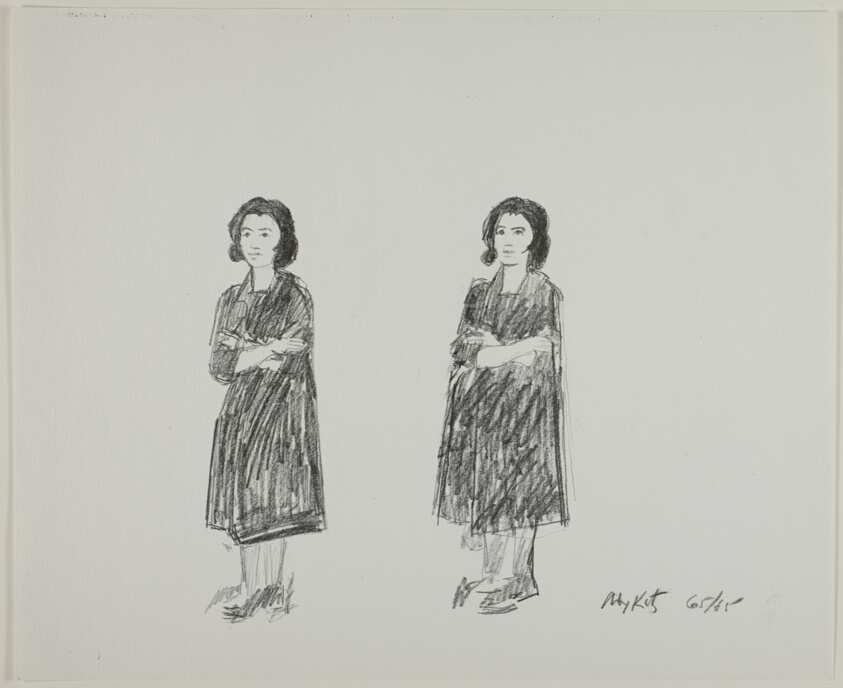
You meet your other self not in a mirror but in a room you thought you had locked. The furniture is yours, the light is the same, but the figure standing near the window is doing what you would never permit yourself to do in company — and the worst part is that you recognize the gesture completely. This is not a ghost story. It is a diagnosis.
Otto Rank, writing in 1914 in Der Doppelgänger, made an argument that the psychoanalytic establishment of his time was not quite ready to absorb: the double is not a product of superstition or literary excess, but a symptom generated by the ego’s refusal to look at itself directly. Rank traced the figure across folklore, literature, and myth, and arrived at a clinical claim dressed in cultural clothes — that the moment a self becomes too costly to inhabit fully, it splits, and the severed portion takes on independent life. The double is not a fantasy of multiplication. It is the return of everything the social contract demanded you bury.
Arthur Schnitzler was a physician before he was a playwright, and he never entirely stopped being one. He kept detailed dream journals across several decades, corresponded with Sigmund Freud on questions of the unconscious, and brought to his fiction the diagnostic patience of someone trained to observe symptoms before naming diseases. Where other writers of his era used the double as a device for Gothic atmosphere, Schnitzler used it as an instrument of precision — the literary equivalent of a clinical chart, mapping the distance between who a person presents themselves to be and what they are actually organizing their life around. His characters do not encounter their doubles in fog or at midnight. They encounter them at dinner parties, in drawing rooms, at the opera — inside the very machinery of bourgeois Viennese respectability that was supposed to guarantee coherence.
What makes this diagnostic rather than merely dramatic is the specificity of what the double reveals. It is never random. The shadow self that surfaces in Schnitzler’s work carries exactly the desire, the cowardice, or the cruelty that the primary self has most systematically disowned. This is not coincidence engineered for theatrical effect. It is the mechanism Rank described operating inside narrative structure: the double is born from the terror of self-knowledge, which means it is always shaped precisely by what the self most fears to know. The gap between the two figures is not a gap between good and evil, or between civilization and instinct. It is a gap between the performed self and the actual one — and Schnitzler understood, with the cold clarity of the diagnostician, that most people spend their entire lives tending that gap rather than closing it.
Vienna in 1900 was an extraordinary laboratory for exactly this dynamic. The city’s bourgeoisie had constructed an identity around aesthetic refinement, professional honor, and domestic order, while conducting an enormous portion of its emotional and erotic life in a parallel register that was universally acknowledged and universally unspoken. The historian Carl Schorske, in his 1980 study Fin-de-Siècle Vienna: Politics and Culture, documented the profound anxiety that ran beneath this surface — the sense that the stable identities the Viennese had built for themselves were simultaneous performances and prisons. Schnitzler did not need Schorske’s retrospective analysis; he was living inside the evidence. His doubles are not imported from German Romanticism or the English Gothic tradition. They are native to the specific texture of a culture that had made the management of self-presentation into its highest art form.
The diagnostic tool works because it operates without mercy and without agenda. It does not accuse. It simply shows the patient two images side by side and waits for the moment of recognition that cannot be taken back.
Lieutenant Gustl and the Collapse of Inner Monologue
You are standing inside a man’s head for ninety minutes of real time, and what you find there is not a self. It is a ventriloquist act performed by society upon a body it has fully colonized. Arthur Schnitzler published “Leutnant Gustl” in 1900 in the “Neue Freie Presse,” and the Austrian military establishment was so scandalized that they stripped him of his reserve officer commission — not because the novella was obscene, but because it was accurate. A lieutenant attends a concert, a baker grabs his sword hilt in a crowded cloakroom, and because no one witnesses the humiliation, Gustl spends the entire night convinced he must kill himself by morning. The technique Schnitzler uses to render this — unbroken interior monologue, the first sustained deployment of the form in German-language literature, anticipating James Joyce’s “Ulysses” by more than two decades — is not an aesthetic experiment. It is a diagnostic instrument.
What the monologue reveals is that the voice inside Gustl’s skull does not belong to him. Every thought he produces is a citation from an external system. Honor, rank, the regiment, what the other officers would say, what his colonel would think — these are not considerations Gustl weighs against his own desires. They are his desires, so thoroughly has the military code been installed at the level of instinct. When he asks himself whether he must die, he does not ask it philosophically. He asks it the way you check whether a rule applies. The sociologist Erving Goffman would spend the 1950s mapping this territory in “The Presentation of Self in Everyday Life,” arguing that identity is always a performance calibrated to audience — but Schnitzler shows something darker: Gustl performs even when no one is watching. He performs for the imagined tribunal of his class, which has taken up permanent residence behind his eyes.
There is a moment, somewhere near three in the morning on a park bench, when Gustl briefly touches something that might be grief — a passing thought of his sister, a woman he once loved, the piano lessons he abandoned as a boy. These fragments last less than a sentence each before the military grammar reasserts itself and crushes them. This is not repression in the Freudian sense, where desire is actively pushed beneath consciousness. It is something structurally different: the interior has been so successfully reorganized by the institution that genuine feeling surfaces only as noise, static to be cleared before the real business of honor-calculus resumes. The psychoanalyst Alice Miller, writing in “The Drama of the Gifted Child” in 1979, described how children learn to suppress authentic emotional responses in order to maintain the approval of caregiving structures — Schnitzler shows the adult endpoint of that process, where the suppression is complete enough that the man no longer knows what he is suppressing.
The formal radicalism of the novella is inseparable from this content. By refusing any external narrator, any authorial frame that might provide ironic distance or moral orientation, Schnitzler forces the reader to inhabit a consciousness without exit. There is no outside voice to tell you Gustl is wrong, or tragic, or pitiable. You are inside the code as it executes itself, watching a man reason perfectly within a completely irrational system. When morning comes and Gustl learns by accident that the baker has died overnight of a heart attack — erasing the only witness to his humiliation — his relief is total and instantaneous. Within minutes he is looking forward to the duel he has scheduled that afternoon. The near-death experience has taught him nothing because there was no self present to receive the lesson. The machine has simply resumed its operation, and what you are left with is the terrible suspicion that coherent interiority might be, for most people in most institutions, a retrospective fiction applied to a process that was never actually personal.
Desire as the Unmasked Double
You think you know what you want. You have ordered your life around the assumption that desire is something you manage, something that rises and, with sufficient will or distraction, subsides. Then one night your wife tells you, almost casually, almost without cruelty, that she once came close to abandoning everything for a stranger she met briefly at a resort — a Danish officer she never spoke to, never touched, never saw again. And something tears open in you that has no name in the vocabulary you were given for marriage.
Fridolin, the protagonist of Schnitzler’s 1926 novella Traumnovelle, is a respectable Viennese physician, exactly the kind of man whose social architecture leaves no room for what the night is about to show him. What follows his wife Albertine’s confession is not simply a descent into erotic adventure but something far more forensic: a systematic audit of every desire he has suppressed in the process of becoming the man he presents to the world. He moves through a series of encounters — a dying patient’s daughter who offers herself to him, a young prostitute on a winter street, a secret masked gathering where bodies circulate according to rules he cannot decode — and at each threshold he retreats, not from lack of want, but from the unbearable recognition that the wanting is genuine and deep and entirely incompatible with the self he has constructed. The double here is not a shadow figure lurking behind him. It is the precise shape of everything he has refused to be.
Freud had argued in Das Unbehagen in der Kultur, published just a year before Schnitzler’s novella appeared, that civilization is not merely built upon instinct but is in fact powered by its systematic frustration — that the energy redirected from erotic and aggressive drives becomes the very fuel of social productivity, artistic achievement, moral life. The cost, he was clear, is a chronic low-grade suffering that most people never identify correctly because they have been trained since childhood to mistake the prison for the home. Schnitzler had arrived at the same architecture of repression through the consulting room and through his own diaries, which he kept obsessively from 1879 until his death in 1931, recording his sexual encounters, his jealousies, his hypocrisies with a clinical precision that he never permitted himself in public life. The novella is, among other things, a document of what a man discovers about himself when the social anesthetic briefly stops working.
What makes Traumnovelle structurally radical is that Albertine’s dream, which she narrates near the end, is more explicit and more violent than anything Fridolin actually encountered during his nocturnal wandering. She dreamed of him crucified while she laughed and gave herself to others. The symmetry is exact and merciless: he spent the night circling the edges of transgression without crossing them, while she, sleeping beside him, committed everything in the total freedom of the unconscious. The double is not hiding in some external elsewhere. It is sleeping in the same bed, dreaming in the same skull, married to the same fiction of a settled bourgeois life.
Desire in Schnitzler’s rendering is not liberation, not a romantic escape from convention, not the authentic self finally breaking free. It is a map. It shows you with absolute precision where the walls were built, which territories were annexed by propriety, which rooms in you were sealed and painted over until you forgot they existed. Fridolin’s wife does not free him by confessing. She renders him legible to himself for the first time, and what he reads is the cost of every year he spent being only the physician, only the husband, only the respectable man climbing the social staircase of a city that would collapse, historically and literally, within a generation of their story being told.
A vision curated by a filmmaker, not an algorithm
In this video I explain our vision
The Social Pact We Pretend Not to Have Signed

You already know the rule. You learned it before you could articulate it, somewhere between the first time an adult told you to smile for a photograph and the first time you realized that smiling on command produced a face that belonged to no one you recognized. The rule is this: you are expected to perform a self that others can use. Not a self that is true, not a self that is consistent, but one that is legible, predictable, and above all serviceable to the social situation at hand.
Erving Goffman spent the better part of the 1950s watching people in psychiatric wards, hotels, and ordinary streets, and what he concluded in The Presentation of Self in Everyday Life, published in 1959, was not a cynical indictment but something far more unsettling: that there is no backstage self waiting to emerge once the performance ends. There is only the performance, layered over other performances, each one adjusting in real time to the audience present. The word he borrowed from theater was “impression management,” but the real discovery was that management never stops. You are managing right now, even reading alone, anticipating some imagined reader of your own thoughts, softening what you would never admit.
Schnitzler had arrived at this same architecture through entirely different means. Where Goffman used sociology, Schnitzler used desire. His characters — the Lieutenant Gustl of the 1900 interior monologue that scandalized Vienna, the masked revelers of Traumnovelle — are not hiding a true self behind a social mask. They are discovering, with mounting horror, that the mask has no backing. Gustl spends a hundred pages negotiating his honor, his rank, his right to exist within Viennese military society, and what becomes clear is that he does not know who he is outside those negotiations. Remove the uniform and there is not a man underneath; there is a vacancy dressed in protocol.
This is what makes the double so philosophically precise as a figure. It does not represent the unconscious in some vague Romantic sense. It represents the performance that escapes management — the behavior, the desire, the face that appeared when you were not curating, and that someone else witnessed. The double is the self caught without its audience preparation. What makes it terrifying is not that it is monstrous but that it is recognizable. You see it and you know it is yours, which means the self you have been presenting was always a selection, always an editorial decision made under social pressure so normalized it felt like nature.
Goffman documented in 1959 what Schnitzler had been dramatizing since the 1890s: that identity is a negotiated contract, and the negotiation happens between people who have agreed, without ever discussing it, to accept each other’s performances as real. The contract holds as long as no one breaks character. What Schnitzler kept introducing into that contract was a clause everyone had overlooked — the clause that accounts for the moment when a character breaks, not through will but through circumstance, through a dark street, a carnival mask, a locked room, an unexpected encounter that removes the usual witnesses and replaces them with a stranger who shares your face.
Sociological theory tends to treat the breakdown of performance as an anomaly, a rupture to be smoothed over and repaired. Schnitzler treated it as the only moment of legibility. His entire body of work is organized around the conviction that what a person does when the social contract temporarily lapses is not a deviation from character but its most accurate expression. The double is not the exception to who you are — it is the data point that the rest of your performance was designed, at enormous social cost, to suppress.
What the Double Costs the People Around You
You tell yourself the argument was her fault. She pushed, she misread you, she always does this — and somewhere in the telling, the story calcifies into fact. What you do not say, what you may be constitutionally unable to say, is that the cruelty arrived from somewhere inside you that you have not named, wearing your face and using your hands.
Schnitzler understood this mechanism with the precision of someone trained in neurology before he became a playwright. His characters do not simply suffer their doubles — they inflict them. The men in his Vienna draw women into elaborate emotional architectures designed, at an unconscious level, to punish what they cannot confront in themselves. The lieutenant in “Lieutenant Gustl,” consumed by his own degradation fantasy, never quite locates the violence he directs outward; it is always the other person who has humiliated him, always the world that has failed to see his worth. The injury to everyone around him follows from his inability to hold his own contradictions without projecting them onto a convenient external target.
Carl Gustav Jung, writing in “Two Essays on Analytical Psychology” in 1917, gave this dynamic a name that has since been flattened into self-help currency: projection. But before it became a therapy buzzword, it described something ethically brutal — the act of placing your unacknowledged material onto another person and then responding to them as though they actually possessed it. The projection is not a mistake in perception. It is a displacement of moral weight. The projector is relieved; the recipient carries a charge that was never theirs.
What makes Schnitzler ethically interesting, rather than merely psychologically interesting, is that he refuses to exempt the projector from consequence through diagnosis. Knowing why you wound someone does not undo the wound. The woman abandoned at the center of “Reigen” — the text written in 1900, circulated privately, prosecuted publicly in 1921 — does not become less abandoned because her abandoner operates from a split self. She absorbs the cost of his unresolved interior. His freedom to cycle through identities is funded by her fixity, her legibility as a type he can dismiss precisely because she reflects back something in him he will not look at directly.
This is the part that social discourse around self-discovery consistently omits. Every theory of the authentic self, from Rousseau’s romanticized interiority to the contemporary therapeutic imperative to know yourself better, is narrated from the inside out. But the double acts outward. Its primary victims are not the person who harbors it but the people standing in the radius of its denial. The colleague you undermine because their competence mirrors your secret shame. The partner you accuse of coldness because you have buried your own tenderness so deep you have forgotten it was ever there. The friend you quietly abandon once they begin to resemble the version of yourself you have decided to leave behind.
Schnitzler’s physician background surfaces here with quiet force. He spent two years in clinical training under Hermann Nothnagel and studied briefly in Charcot’s orbit through correspondence and translation, understanding the way hysterical symptoms traveled — not just within a single body but between bodies, through rooms, through social arrangements. Suffering was not sealed inside one person. It leaked. And the leakage followed the lines of power: from those who could refuse to know themselves, toward those who had no such luxury.
What the double costs is therefore not only introspective comfort or psychological coherence. It costs other people their reality. When you act from an unacknowledged self and deny it afterward, you are not only lying to yourself — you are gaslighting the person who witnessed what you did, who saw something in you that you insist was never there, who is now left holding an account of events that your performed innocence quietly refuses to verify.
The Question That Has No Comfortable Answer
You already know there is something wrong with the story you tell about yourself. Not wrong in the sense of factually mistaken, but wrong in the way a photograph taken at an unflattering angle is wrong — technically accurate, and yet capturing something you refuse to recognize as yourself. The discomfort is not incidental. It is the whole point.
What Schnitzler understood, working in Vienna at the precise moment Freud was assembling his own architecture of the divided self, is that the double is not an intrusion into a previously stable identity. It is the mechanism by which identity operates in the first place. The “other” version of you — the one who surfaces in dreams, in cruelty, in desire you did not consent to feel — is not a shadow cast by the light of your real self. It is the light source itself, and what you call your real self is the shadow.
This is where the philosophical tradition offers almost no comfort, because it was largely built to avoid this conclusion. John Locke, in his 1689 Essay Concerning Human Understanding, anchored personal identity in continuity of consciousness — the thread of memory that connects the person you are today to the child you once were. But memory is not a neutral archive. It is a retroactive editor, selecting, distorting, and quietly deleting what the narrative of the self cannot absorb. When psychologist Elizabeth Loftus demonstrated in the 1970s through controlled experiments that false memories could be implanted with startling ease — and that subjects would defend those fabricated recollections with the full emotional weight of lived experience — she was not merely exposing a flaw in human cognition. She was pulling the floor out from under Lockean identity entirely.
If the thread of memory is itself woven from fiction, then continuity of consciousness is not a foundation. It is a performance the mind stages for its own benefit, and the self that attends this performance mistakes itself for the playwright.
A man sits across from someone he has not seen in twenty years and realizes, with a physical shock, that the person describing their shared past is describing events he remembers entirely differently — not small details, but the emotional core, the meaning, the direction of cause and effect. Neither version is provably false. Both are real in the only sense that matters: they are the architecture inside which two people have been living, making decisions, becoming who they are. There is no referee. There is no original.
Georg Simmel, writing in 1908 in Soziologie, argued that the individual is always a social construction — not in the weak sense that we are influenced by others, but in the radical sense that selfhood is constituted through the act of being perceived, through the roles assigned and eventually inhabited so completely that the inhabitant forgets there was ever a space between themselves and the role. What Schnitzler dramatized in fiction, Simmel was charting sociologically: the self is a negotiated artifact, and authenticity, that word the twentieth century would eventually weaponize into a lifestyle category, is something retrofitted onto a process that was never unified to begin with.
This is the question Schnitzler posed and left open — not as a rhetorical gesture, but as an honest acknowledgment that he did not have the answer, and suspected no one did. If the double is not a deviation but the structure of selfhood, if there was never a prior wholeness to return to, then the entire vocabulary of self-discovery, of becoming who you truly are, of living authentically, is a language built to describe a destination that does not exist. And yet you cannot simply stop using it, because the hunger it names is real, even if the thing it promises is not.
🪞 The Fractured Self: Identity, Doubles, and Hidden Truths
Arthur Schnitzler’s obsession with the double and the hidden self places him at the crossroads of psychology and literature, where the mask and the face beneath it are equally real. These related articles deepen the exploration of identity’s fragmentation, the unconscious forces that shape us, and the literary forms invented to capture what rational language cannot hold.
The Double in Literature: From Dostoevsky to Stevenson
From Dostoevsky’s tormented clerks to Stevenson’s Jekyll and Hyde, the double in literature has always served as a mirror reflecting what the conscious self refuses to acknowledge. This article traces the genealogy of this uncanny motif, showing how writers across centuries used the doppelgänger to dramatize the war between social propriety and buried desire. Schnitzler belongs squarely within this tradition, giving the double a specifically Viennese and psychoanalytic inflection.
GO TO THE SELECTION: The Double in Literature: From Dostoevsky to Stevenson
Pirandello’s One Nobody and One Hundred Thousand: Analysis
Pirandello’s novel poses the radical question of whether a stable self exists at all, or whether identity is merely a fiction assembled from the expectations of others. Like Schnitzler, Pirandello dismantles bourgeois certainty from within, using darkly comic situations to expose the void at the heart of modern subjectivity. Reading the two authors together reveals a shared European crisis of the self that would define early twentieth-century literature.
GO TO THE SELECTION: Pirandello’s One Nobody and One Hundred Thousand: Analysis
The Interior Monologue in Literature: History and Theory
The interior monologue as a literary technique was partly pioneered by Schnitzler himself, whose Lieutenant Gustl earned him the title of precursor to stream-of-consciousness narrative. This article examines how the unmediated flow of thought became the privileged instrument for exploring the contradictions and self-deceptions that structure human consciousness. Understanding this technique is essential to grasping why Schnitzler’s characters so often reveal themselves to be strangers to their own inner lives.
GO TO THE SELECTION: The Interior Monologue in Literature: History and Theory
Arthur Schnitzler: Life and Works
This comprehensive overview of Arthur Schnitzler’s life and literary production provides the essential biographical and cultural context for understanding his fascination with the double, desire, and self-deception. Born in Vienna in 1862, Schnitzler practiced medicine and absorbed the nascent psychoanalytic atmosphere of Freud’s city, transforming clinical insight into unflinching narrative art. The article charts the full arc of his career, from the Anatol cycle to Dream Story, illuminating the coherence of his lifelong inquiry into who we truly are beneath our social performances.
GO TO THE SELECTION: Arthur Schnitzler: Life and Works
Discover the Cinema of the Inner Self on Indiecinema
If these depths of identity and self-revelation resonate with you, Indiecinema is your next destination: a streaming platform dedicated to independent and auteur cinema that dares to look inward with the same unflinching honesty Schnitzler brought to literature. Discover films that explore consciousness, desire, and the masks we wear — curated for those who believe cinema, like great literature, should disturb and illuminate in equal measure.
👉 EXPLORE THE CATALOG: Watch Indie Films in Streaming
A vision curated by a filmmaker, not an algorithm
In this video I explain our vision

